TOPIK & Beyond
Welcome to TOPIK & Beyond! Whether you're just starting to learn Korean or preparing to pass the TOPIK exam, this podcast is your companion on the journey. In each episode, we’ll explore useful vocabulary, essential grammar, and real-life stories from daily life in Korea to help you master the language and feel more confident. Tune in to learn practical tips, cultural insights, and much more, taking your Korean skills beyond the classroom!
#77: Why Your Korean Sounds Correct But Not Natural - And How to Fix It
Have you ever been told your Korean is good - but conversations still feel stiff, slightly off, or emotionally flat? In this episode of TOPIK & Beyond, the Korean language learning podcast for TOPIK exam prep and everyday Korean, host Eliza breaks down the gap between correct Korean and natural Korean - and gives you practical tools to start closing it.
This episode covers three reasons why grammatically correct Korean can still sound unnatural: sentence-by-sentence thinking, missing fillers and reactions, and lack of rhythm. It then teaches 8 Korean expressions and concepts that form the building blocks of natural...
#76: 잖아요, 거든요, 네요 - The Small Korean Endings That Change Everything
Korean sentence endings carry meaning that English often leaves unsaid. In this episode of TOPIK & Beyond - the Korean language learning podcast for TOPIK exam prep and everyday Korean - host Eliza breaks down three of the most common and most misunderstood Korean sentence endings: 잖아요, 거든요, and 네요.
Inspired by a comment from a listener after Episode 75 on 서운하다, this episode explores why Korean feels like such a precise language - not just because of its vocabulary, but because of what its endings encode: the speaker's relationship to the listener, what they assume is shared, and how they're positioning themselves in the conversation.
...#75: The Korean Emotion English Has No Word For - 서운하다
서운하다 is one of the most searched Korean emotion words - and one of the hardest to translate. English gets close with 'a little hurt' or 'slightly disappointed,' but neither captures the quiet sting of an unmet expectation that 서운하다 describes. In this episode of TOPIK & Beyond, the Korean language learning podcast for TOPIK exam prep and everyday Korean, host Eliza goes deep on this one emotion and builds an entire vocabulary world around it.
Using an anonymous student story as the anchor, this episode teaches 12 Korean words and expressions that describe how 서운하다 is felt, what causes it, what Koreans do with it...
#74: How to Start a TOPIK II Essay Without Sounding Like Everyone Else
Struggling with TOPIK II writing? The problem is probably not your grammar or vocabulary. In this episode of TOPIK & Beyond - the Korean language learning podcast for TOPIK exam prep - host Eliza identifies the real reason most learners stay stuck at TOPIK Level 3: they don't know what to write, and they're opening every essay the same way examiners have seen hundreds of times.
This episode breaks down the three most overused TOPIK II essay opening patterns - 최근 ~가 증가하고 있다, 현대 사회에서는 ~, and ~에 대해 논의해 보겠다 - explains exactly why they hold your score back, and teaches three concrete strategies for writing openings that signal Level 4 and Level 5 thinking from the very...
#73: Why Koreans Say Sorry Instead of Thank You - 12 Korean Words to Know
Have you ever heard a Korean person apologise when you expected them to say thank you — and wondered what was really happening? In this episode of TOPIK & Beyond, the Korean language learning podcast for TOPIK exam prep and everyday Korean, host Eliza explores one of the most culturally layered dynamics in the Korean language: why 미안하다 and 감사하다 so often appear in the same moment.
Using a real student experience as the anchor, this episode unpacks the cultural logic behind Korean expressions of gratitude and apology — and teaches 12 essential Korean words and expressions that explain what's happening underneath.
This episode is su...
#72: 아침 먹었어? (Did you eat?)
The Real Meaning Behind One of the Most Common Korean Questions: Why do Koreans ask “밥 먹었어요?” so often?
For many Korean learners, this question can feel confusing at first. Are people really asking about food every time?
In this episode of TOPIK & Beyond, Eliza shares a personal story about her daily phone calls with her father in Korea — and how a simple question like “아침 먹었어?” carries much deeper meaning in Korean culture.
Through this story, you’ll learn real Korean words and expressions that rarely appear in textbooks but are used constantly in everyday Korean conversations.<...
#71: From Korea to France: Learn Korean Vocabulary Through My Language Learning Story
Want to learn Korean vocabulary in a way that actually sticks? In this episode of TOPIK & Beyond - the Korean language learning podcast for TOPIK exam prep and everyday Korean - host Eliza shares her personal language learning story and teaches essential Korean words and expressions through real context.
These are not textbook words. They are the words that describe what learning a language actually feels like from the inside - the frustration, the blank panic, the slow shift toward naturalness. If you are preparing for the TOPIK exam or simply want to improve your Korean...
#70: Why Your TOPIK Writing Still Feels Like Level 3
Are you aiming for TOPIK Level 4 or 5, but your writing still feels simple, repetitive, or stuck?
In this episode of TOPIK & Beyond, Eliza breaks down a common frustration among intermediate to advanced Korean learners:
Why your TOPIK II writing might still feel like Level 3 - even if you know the grammar.
This episode goes beyond vocabulary and grammar review. You’ll learn what TOPIK examiners actually look for in high-scoring essays, why sentence-level thinking limits your score, and how to shift toward structured paragraph development.
If you’ve b...
#69: 설날: What Textbooks Don’t Tell You About Lunar New Year in Korea
What is 설날 (Seollal) really like in Korea?
In this special Lunar New Year episode of TOPIK & Beyond, Eliza shares the cultural, emotional, and linguistic layers behind one of Korea’s most important traditional holidays.
Beyond the textbook definitions of 설날, 차례, and 세배, this episode explores what Lunar New Year in Korea actually feels like — including family expectations, generational differences, emotional nuance, and real-life Korean expressions you’ll hear during the holiday.
If you’re learning Korean for real connection — not just vocabulary — this episode will deepen your understanding of Korean culture and communication.
In this episode, you’l...
#68: Why Korean Conversations Can Feel Polite but Distant
Have you ever had a Korean conversation that felt polite, correct, and smooth — but somehow still distant?
In this episode of TOPIK & Beyond, Eliza explores a common but rarely explained experience among Korean learners: why conversations can feel polite on the surface, yet emotionally disconnected underneath.
This episode goes beyond grammar and pronunciation to look at how connection is actually built in Korean conversations — through acknowledgment, emotional alignment, and subtle language choices that textbooks often overlook.
If you’ve ever felt that your Korean is “correct but not connecting,” this episode will help you u...
#67: From Translation to Intuition: How Korean Starts to Feel Natural
Many Korean learners don’t struggle because they lack vocabulary or grammar.
They struggle because everything still has to pass through another language first.
In this episode of TOPIK & Beyond, Eliza revisits a key turning point in the Korean learning journey — the shift from translating to relating to Korean more directly.
This episode explores what happens when Korean begins to feel less like a mental exercise and more like a lived language.
Not fluent.
Not perfect.
But more natural.
If you’ve ever felt that you “know” Korean but...
#66: Before You Try to Speak Korean Again, Listen to This
If speaking Korean feels heavy, overwhelming, or emotionally draining right now, this episode is for you.
In this quiet, grounding episode of TOPIK & Beyond, Eliza invites you to pause before trying to “fix” your Korean or push yourself to speak better.
Instead of techniques or study tips, this episode focuses on the moment before speaking — where pressure, tension, and self-judgment often appear.
This is not an episode about performance or improvement.
It’s an episode about permission, safety, and approaching Korean more gently.
Perfect for learners who:
#65: Why Speaking Korean Feels So Mentally Exhausting (And What to Do Instead)
Do you feel mentally exhausted when you try to speak Korean?
Does your mind go blank, feel crowded, or shut down even though you’ve studied?
In this episode of TOPIK & Beyond, Eliza explains why speaking Korean feels so mentally draining — and why this has nothing to do with your intelligence, effort, or motivation.
Instead of focusing on grammar or vocabulary, this episode looks at what’s happening inside your brain when you speak Korean, and how pressure, perfectionism, and overthinking create mental overload.
You’ll also learn simple, practica...
#64: How to Use Korean Even on Busy Days (Without Studying More)
Many Korean learners stop studying not because they don’t care — but because life gets busy.
In this episode of TOPIK & Beyond, Eliza shares practical, realistic ways to use Korean even on busy days, without adding extra study time or pressure. Instead of long study sessions, this episode focuses on small, real-life moments that help you stay connected to Korean — and that also build a strong foundation for TOPIK.
If you often feel like you’re “too busy” to study Korean, this episode will show you how busy-day Korean still counts.
In This Epis...
#63: A Simple Korean Routine You Can Actually Keep in 2026
The start of a new year often comes with pressure — new goals, new plans, and the fear of repeating the same cycle with Korean learning.
In this first episode of 2026, Eliza offers a different approach.
Instead of resolutions or strict study schedules, she shares a simple, realistic Korean routine designed to fit real life — even when you’re busy, tired, or inconsistent.
This episode introduces the FLOW routine — a gentle learning rhythm based on:
Rather than doing everything every day, listeners are encouraged to stay connected to Korean i...
#62: How I’d Learn Korean in 2026 (If I Were You)
As 2025 comes to a close, this episode offers a calm, honest reflection on how to approach Korean learning in the new year — without pressure, burnout, or unrealistic resolutions.
In this final episode of 2025, Eliza shares how she would learn Korean in 2026 if she were starting (or restarting) today: with less perfectionism, more consistency, and a gentler, more sustainable routine.
This episode is not a study plan or a New Year’s resolution.
It’s a mindset shift — designed to help Korean learners feel confident, supported, and motivated going into 2026.
In This Epi...
#61: A Cozy Christmas Abroad - A Gentle Story in Korean
This special Christmas episode is a gentle Korean listening experience — no studying, no pressure, just listening and feeling.
In this episode, Eliza shares a short Christmas story in Korean about spending the holidays abroad. She reflects on the contrast between Christmas in Korea, which often feels quiet and low-key, and Christmas in France, where streets are filled with lights, trees, busy shops, and families preparing for holiday meals.
Told at an A2 friendly pace, this episode is perfect for Korean learners who want to relax, enjoy the sound of Korean, and connect emotionally with th...
#60: How TOPIK Graders Actually Read Your Essay
Many learners lose points not because their grammar is bad, but because their writing lacks clear structure, logical flow, or consistent written style (문어체).
In this episode, Eliza explains how graders scan essays, what they look for first, and why clarity matters more than “advanced” grammar. If you’ve ever felt frustrated thinking “My writing isn’t that bad, so why is my score low?” — this episode will help everything finally make sense.
In This Episode, You’ll Learn:
✔ How TOPIK graders read essays - What graders focus on — and what they don’t care about as much a...
#59: Why TOPIK Writing Feels Hard — And How to Finally Make It Click
If you feel like TOPIK Writing is confusing, overwhelming, or just “too hard”… you’re not alone.
In this episode, Eliza explains the real reasons TOPIK Writing feels difficult — and why it has nothing to do with your intelligence or Korean ability.
You’ll hear a simple, beginner-friendly Korean story about a common TOPIK mistake (writing exactly like you speak)… and you’ll learn how to shift from spoken Korean to written Korean (문어체) in a clear, stress-free way.
Finally, Eliza gives you one of her signature frameworks for Level 4–5 writing, so you can instantly improve your next TOPIK...
#58: Your Korean Year-in-Review: What You Actually Learned in 2025
December is the perfect moment to pause, breathe, and look back at your Korean learning journey.
In today’s gentle episode, Eliza helps you realize something important: You improved more in Korean this year than you think.
We explore a simple, personal story from Eliza’s life in France — a moment that revealed how language growth often happens quietly and naturally. Then, we break down three signs of invisible progress that Korean learners often miss.
Whether you’re preparing for TOPIK, learning Korean for daily life, or rebuilding your study routine, this episode will hel...
#57: What November Looked Like for Me – in Korean (TOPIK II Listening Practice)
This week’s episode is for all my intermediate learners preparing for TOPIK II or wanting to improve their listening comprehension through real-life Korean stories.
It’s a slow-natural monologue based on my real November — full of projects, parenting, and wisdom teeth drama 😅
In this episode:
Hear a realistic monologue using B1 grammar & vocabularyPractice with comprehension questions (TOPIK-style!)Learn 4 high-frequency expressions with real examplesGet listening in just 15 minutesGreat for you if:
You’re prepping for TOPIK II (Level 3–4)You want to hear natural Korean used in contextYou’re tired of boring listening drill...#56: Speaking vs. Writing in Korean: Why You Struggle with One (But Not the Other)
Do you ever feel confident speaking Korean… but totally freeze when writing an essay or TOPIK answer? Or maybe your written Korean is polished, but your mind goes blank during a conversation?
This episode breaks down why that gap exists — and how to fix it.
You’ll learn the real differences between speaking and writing, what traps learners fall into, and one simple but powerful exercise to start improving both skills together.
Whether you’re studying for real-life fluency or prepping for TOPIK II, this episode will help you move forward with more clarity...
#55: How to Use Examples in TOPIK II Writing (Without Sounding Basic)
Are your writing examples helping or hurting your TOPIK score?
In this episode of TOPIK & Beyond, we’re diving into one of the most overlooked ways to boost your TOPIK II writing: giving better, stronger, more logical examples. If your essays tend to sound vague or too personal, this episode will show you how to upgrade your writing — with real-life phrases, expressions, and a sample prompt practice.
What You’ll Learn:
Why your examples may be lowering your scoreThe 3R Rule for effective examples: Relevant, Realistic, ReasonableNatural Korean expressions to introduce examples (like “실제로,” “한 조사에 따르면…”)How to practice using real prompts to so...#54: TOPIK II Writing Mistake - Tone Problems That Lower Your Score
If you’ve been practicing TOPIK II writing, you probably already know how hard it is to find the perfect sentence structure, grammar, and vocabulary…
But what if your biggest score drop isn’t from grammar — but from tone?
In this episode, we’re talking about:
What “tone” means in Korean essaysThe most common tone mistakes learners makeHow to sound natural, formal, and confident (not stiff or casual!)Real examples of high-scoring writing toneA mini checklist to instantly improve your toneMini Challenge:
Choose a writing sample you’ve already done — and edit it with today...
#53: Write With Me: Answering a Real TOPIK II Question Step-by-Step
Struggle with organizing your ideas for TOPIK II Writing?
In this “write-with-me” episode, Eliza walks you step-by-step through a real TOPIK II question using her signature WRITE to BUILD framework — a clear, logical method that helps you write confidently, even when you don’t know where to start.
You’ll learn how to define, explain, and conclude your essay naturally in Korean using five easy steps — and by the end of the episode, you’ll have a full, well-structured paragraph ready to go.
What You’ll Learn
How to organize your thoughts for TOPIK II Writing...#52: Korean Writing Expressions Koreans Actually Use in Reports (That TOPIK Loves)
Do you freeze when you see a chart or graph in the TOPIK II Writing section? 😰
You’re not alone! Many learners repeat basic words like 많다 and 적다 — but those won’t get you a high score.
In this episode, Eliza teaches you how to describe charts and comparisons using natural report-style expressions that Koreans actually use — and that TOPIK examiners love to see.
You’ll learn essential patterns, advanced verbs, and ready-to-use sentences that instantly make your writing sound more fluent, formal, and professional.
What You’ll Learn
Real expressions Koreans use in reports and essa...#51: The #1 Mistake in TOPIK II Writing (and How to Fix It)
Are you losing valuable points in your TOPIK II Writing section without even realizing it? You’re not alone. In this episode, Eliza breaks down the #1 mistake most students make - focusing on complex grammar instead of clear structure - and shows you exactly how to fix it.
You’ll learn a simple 3-step essay framework, natural Korean connectors that instantly improve your writing, and a short practice exercise you can do right now to boost your score.
Whether you’re preparing for your first TOPIK II or trying to level up your writing score, this e...
#50: Speak More Korean - Even If You’re Busy (Chuseok Edition)
Chuseok (추석) is here and whether you're in Korea or not, this season is a reminder that life gets busy.
But does that mean your Korean practice has to stop?
Absolutely not.
In this episode, I’ll show you how to:
Practice speaking Korean with just 60 seconds a dayUse simple daily moments (like cooking or driving) as language timeLearn & use real Chuseok phrases Koreans actually sayPlus: I’ll share 4 speaking activities you can try this week - no textbook required.
Useful Korean You’ll Hear:
추...Bonus: Korean Roleplay Chaos - My First Day at Work Went Terribly Wrong (Korean Roleplay)
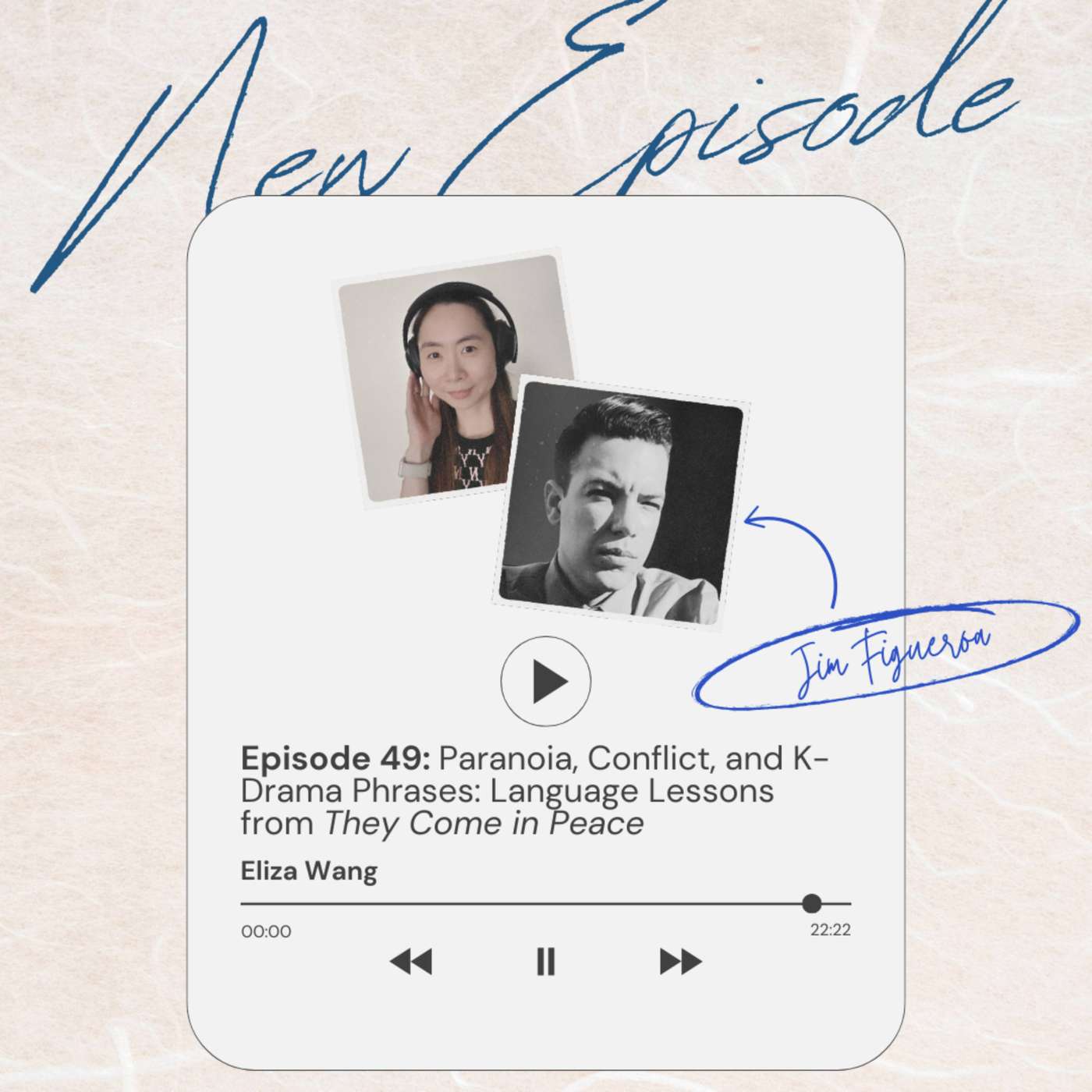
In this fun bonus episode, Eliza and Jim Figueroa dive into a totally unscripted roleplay that’s full of surprises, real emotions, and natural Korean expressions.
You’ll hear:
An awkward street encounterAn unexpected boss revealSome funny food demands (만둣국, anyone?)Real-life Korean listening practice with guided supportEliza also pops in with explanations and breakdowns to help you follow along - so don’t worry if some parts feel tricky.
This episode is great for learners who want to:
Improve Korean listening skillsHear real Korean and deliveryLearn daily-use expressions in contextLike the pod...
#49: Paranoia, Conflict, and K-Drama Phrases: Language Lessons from They Come in Peace
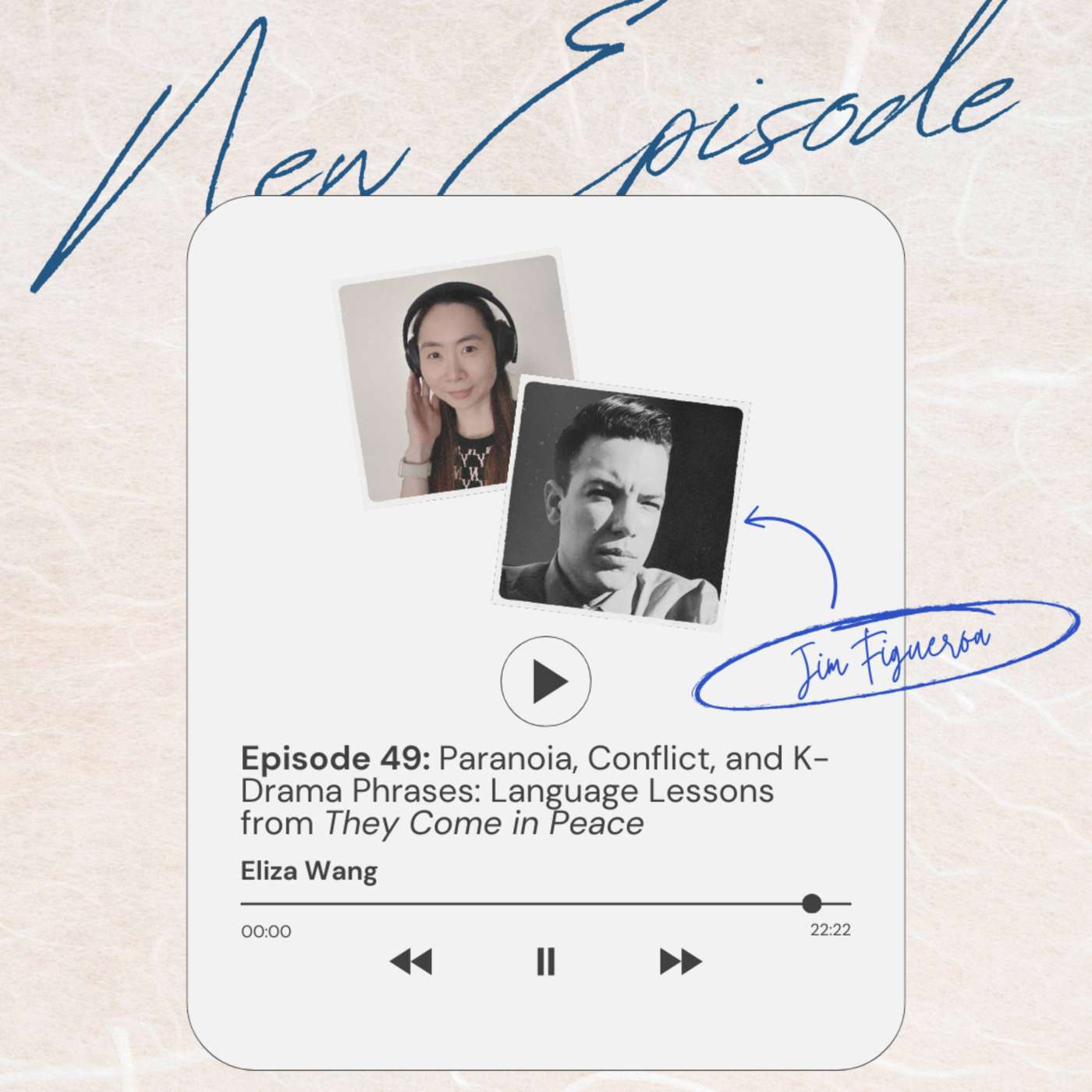
Want to watch this conversation?
We recorded the full interview on video - catch it here: https://www.joaacademy.com/jim-figueroa-korean-culture-interview
In this special episode of TOPIK & Beyond, Eliza welcomes author Jim Figueroa to talk about his book They Come in Peace - a gripping sci-fi thriller that weaves in Korean culture and the realities of trust, paranoia, and survival.
Jim shares his experiences living and working in Korea, and together we explore how language shapes connection - whether in a tense thriller moment or a romantic K-drama scene.
You’ll e...
#48: 5-Minute Korean Habits That Actually Work
What if just 5 minutes a day could completely shift how you speak Korean?
This week on TOPIK & Beyond, we’re breaking down the tiny daily habits that help you build confidence — no matter how busy your life is.
In this episode:
Why short and consistent beats long and inconsistent3 Korean speaking habits you can do in under 5 minutesNatural Korean phrases to add to your daily reflection routineHow to train your brain for real conversation in small momentsHeads Up!
📣 Get your FRE...
#47: Are You Using Korean or Just Learning It?
Many learners are studying a lot… but when it’s time to speak?
>> Their brain goes blank.
>> Their mouth doesn’t move.
In this week’s episode, we’re shifting out of passive learning and into real-life use. Because memorizing grammar doesn’t help if you never say the words out loud.
You’ll learn:
✅ The signs you’re stuck in passive study
✅ Easy everyday Korean sentences to practice speaking
✅ Mini grammar hacks to sound more natural
✅ A 3-step challenge to practice today
If your Korean is “in your head,” this...
#46: Back to Korean — How to Reset After Summer (Even If You Feel Behind)
Back to school.
Back to work.
Back to Korean.
If you’ve taken a break over the summer — or if you’re feeling a little behind — this episode is for you.
Eliza shares five real Korean expressions to help you restart gently, rebuild confidence, and reconnect with your goals — without guilt or overwhelm.
In This Episode:
Common emotional blocks in September — and how to shift them Korean phrases for saying “I’m starting again” (in real life) Speaking practice: repeat-after-me segments to get back into your flow What’s coming to TOPIK & Beyond this s...#45: How to Practice Real Korean: From Hesitation to Confidence
You’ve studied vocabulary.
You’ve memorized grammar.
But speaking still feels awkward... and confidence? Still missing?
This episode is for you.
We’re wrapping up the summer series with a powerful transition into your next stage of Korean learning. Eliza shares the exact mindset + method shift that helps learners finally move from passive study → to real, confident Korean usage.
Inside the episode:
Why you're stuck and it's not what you thinkWhat “real” Korean practice looks likeHow to build confidence even if you feel unsureA free tool to help you shift your pra...#44: What I Wish Korean Learners Knew Before They Hit B1
You've studied for a while.
You're not a beginner anymore…
But real conversations still feel hard, and your confidence wavers?
You’re not alone and you’re not doing it wrong.
This week’s episode dives into the "pre-B1 plateau" that so many Korean learners hit — and what you actually need to focus on before trying to level up.
We’ll talk about:
Why B1 is where most learners feel stuckWhat I wish students knew before hitting this levelThe mindset shift that builds lasting fluencyHow I guide my students through the “I should...#43: You Know Hangul… Now What?
You’ve learned Hangul — the Korean alphabet.
Now what?
If you're feeling stuck between reading syllables and actually understanding or speaking Korean, you’re not alone. This episode is your gentle, structured guide to what comes next.
We’ll talk about:
Why the “post-Hangul slump” is so commonWhat skills to build next (without overwhelm)What not to focus on firstHow to build real understanding, not just rulesA sneak peek of the FLOW method you’ll use in Joa Academy’s upcoming program✨ You don’t need more flashcards. You need flow.
📩 Want pe...
#42: Summer Drop Series_Let’s Learn Korean Sounds Together – Part 2
In Part 2 of our summer pronunciation series, we’re stepping it up just a little. Today, Eliza helps you practice some of the most confusing — but important — sounds in Korean:
✅ Double consonants (ㄲ, ㅃ, ㅆ…)
✅ Compound vowels (ㅘ, ㅝ, ㅟ, ㅢ…)
✅ Double 받침 (like 읽다, 앉다, 닭)
Repeat each section out loud to build rhythm, listening accuracy, and pronunciation flow — no visuals needed!
🗣 You’ll Practice Words Like:
꺼내다 (to take out)뽀뽀 (kiss)희망 (hope)귀 (ear)닭 (chicken)값 (price)…and many more.
This is the kind of episode you can play 3–4 times this week — the more repetition, the better.
💡 Why This Episode Matters:
If you already learned Hangul, but you’re still un...
#41: Summer Drop Series_Let’s Learn Korean Sounds Together – Part 1
Are you still unsure about how to pronounce Korean words out loud? Do you know Hangul but hesitate when speaking?
This episode is for you 💛
Inspired by a listener request, Eliza walks you through the most essential Korean sounds — slowly, clearly, and with real-life vocabulary you can repeat and remember.
This is Part 1 of a 2-episode pronunciation mini series designed for A0–A1 learners, or anyone who wants to reconnect with Korean from the ground up.
What You’ll Practice
14 core syllables: 가, 나, 다, 라, 마, 바, 사, 아, 자, 차, 카, 타, 파, 하5 simple words per sound — repeat after ElizaNatural pronunciation rhythm (no reading required!)Confidence...#40: Summer Drop Series_Summer Review
Before we say goodbye to July, let’s take a calm moment to reflect.
In this short all-Korean episode, Eliza guides you through a gentle review of what we learned this month, some fun expressions that came up, and how to prep your mindset for the rest of the summer — without pressure.
Perfect for intermediate learners who want to slow down, listen actively, and keep Korean close in daily life.
You’ll Hear About:
Common expressions we covered in JulyA few simple questions to reflect on your study flow...#39: Summer Drop Series_Your Summer Reset
Feeling off track lately? In this short reset episode, Eliza guides you through a few reflection prompts — in Korean — to help you check in, breathe, and gently reconnect to your Korean goals.
No judgment. No pressure.
Just a chance to regroup and realign.
What You’ll Hear:
A calming summer check-in in KoreanQuestions to ask yourself about your Korean journeyEliza’s own mini reset routineVocabulary to describe this “off season” with graceVocabulary Highlights:
흔들리기 쉬운 시기 – a shaky/off-balance season다시 정리하는 시간 – regrouping/reset...

