JAMA+ AI Conversations

Discover the future of medicine with JAMA+ AI Conversations. This collection of interviews with clinicians, researchers, and AI experts explores how AI is impacting medicine – from clinical practice to training and research. Join us to uncover what lies ahead at the intersection of AI and medicine.
JAMA AI: A New JAMA Network Journal

Launching in 2027, JAMA AI will be the newest journal from the JAMA Network. JAMA AI Editor Roy H. Perlis, MD, MSc, and Associate Editor Yulin Hswen, ScD, MPH, discuss the details of this new journal, which opens for submissions in early 2027, as well as some recent AI publications across the JAMA Network that provide insight into articles the editors are hoping to publish.
Related Content:
Will Women Physicians Face an AI Gap?

In this episode of JAMA+ AI Conversations, Roy Perlis, MD, MSc, and Rochelle Walensky, MD, MPH, professor of medicine at Harvard Medical School and former CDC Director, discuss the potential for AI deployment in health care to adversely impact women physicians, and why simply avoiding these technologies is not a realistic response.
Related Content:
Beyond the AI Alarm: How ARPA-H Is Rethinking Innovation in Health Care

Yulin Hswen, ScD, MPH, Associate Editor of JAMA+ AI, speaks with Advanced Research Projects Agency for Health (ARPA-H) Program Manager Bon Ku, MD, MPP, about rethinking AI in health care from alarm fatigue and aviation-style simulation to patient-centered design and what it will take to safely move AI from promising models to real-world care.
Related Content:
Related Link:
Bon Ku's Bio
From Aging to AI and Beyond: A Conversation With Eric Topol

In this episode of JAMA+ AI Conversations, Roy Perlis, MD, MSc, and Eric Topol, MD, move from the science of aging to how to think about AI-enabled medicine. Topol discusses what it will take for AI to move medicine from reactive to predictive, why some well-validated imaging AI remains underused while large language models have spread rapidly, and whether AI is actually giving clinicians more time with patients.
Related Content:
ADVOCATing for Patients With Heart Failure

In this episode of JAMA+ AI Conversations, Roy Perlis, MD, MSc, and Haider Warraich, MD, sort out the prospects for AI-driven heart failure care that doesn't entail a human in the loop. Warraich is a program manager at ARPA-H, the Advanced Research Projects Agency for Health, responsible for ADVOCATE, an effort to support the development of AI to guide heart failure treatment, seeking to create AI agents that can pass muster with the FDA.
Related Content:
Enriching Clinical Trials With Machine Learning

In this episode of JAMA+ AI Conversations, Roy Perlis, MD, MSc, and Joseph Geraci, PhD, of Queen's University discuss using machine learning to analyze clinical trials and related FDA interactions. Geraci's work focuses on identifying subpopulations with different responses to help plan and analyze future trials.
Related Content:
From the JAMA Network: Acoustic Analysis of Primary Care Patient–Clinician Conversations to Screen for Cognitive Impairment

Interview with Joseph T. Colonel, PhD, author Acoustic Analysis of Primary Care Patient–Clinician Conversations to Screen for Cognitive Impairment. Hosted by Cynthia E. Armand, MD.
Related Content:
From the JAMA Network: AI Scribes Are Here, but Is Health Care Ready?

The rise in use and function of ambient AI scribes is arguably one of the fastest technologic changes ever seen in health care. In this episode of Healthy Dialogue, host Derek Angus, MD, MPH, is joined by Vincent Liu, MD, MS, Chief Data Officer of The Permanente Medical Group in Kaiser Permanente, to discuss the rapidly changing world of ambient AI.
Related Content:
From Silicon Valley to the Vatican: The Expanding Debate on AI Ethics

In this episode of JAMA+ AI Conversations, Roy Perlis, MD, MSc, and Yulin Hswen, ScD, MPH, discuss Anthropic's participation in the Vatican presentation of Pope Leo XIV's AI encyclical, Magnifica Humanitas. The conversation explores AI ethics, interpretability, governance, AI safety, and the growing role of health care, public health, and global institutions in shaping the future of AI.
Related Content:
The Wizard of Oz in Medical AI

Is it enough for AI to be accurate, or are we mistaking performance for impact? Does AI change clinician behavior, improve patient decisions, or simply create a convincing performance of intelligence? Yun Liu, PhD, research scientist at Google Research, speaks with JAMA+ AI Associate Editor Yulin Hswen, ScD, MPH, about what is behind the curtain in these AI systems.
Related Content:
Teaching AI to Read Patient Histories

Every patient has a story, but in modern health care that story is buried across thousands of notes, lab results, and fragmented records. Nigam H. Shah, MBBS, PhD, of Stanford University Department of Medicine joins JAMA Associate Editor Yulin Hswen, ScD, MPH, to explore how researchers are building AI systems that can read and understand a patient's full medical history in seconds.
Related Content:
Designing Trustworthy Clinical AI

Join JAMA+ AI Associate Editor Yulin Hswen, ScD, MPH, for a conversation about the practical implementation of trustworthy clinical AI. Guests Emily Tat, MD, and Peter Brodeur, MD, discuss ARISE, a research network focused on the real-world effects of AI on clinical care.
Related Content:
AI at the Policy Table

As artificial intelligence increasingly shapes population health decisions, evidence and accuracy matter. In this episode of JAMA+ AI Conversations, Associate Editor Yulin Hswen, ScD, MPH, speaks with Sandro Galea, MD, MPH, DrPH, Editor of JAMA Health Forum, about how AI is entering health policy, when it is ready for use, and what rigorous, policy-focused AI research is most needed.
Related Content:
AI Drug Safety in Pregnancy

Why can signals that appear consistent across many studies still reflect shared bias; how do sibling comparisons help recalibrate cumulative evidence; and what AI-enabled approaches can add to large-scale evidence integration? Viktor H. Ahlqvist, PhD, from the Karolinska Institute joins JAMA and JAMA+ AI Associate Editor Yulin Hswen, ScD, MPH, to discuss why automated drug safety surveillance during pregnancy is urgently needed and how AI and computation can strengthen or undermine causal inference.
Related Content:
Understanding Disease Trajectories With AI

How might AI amplify epidemiological insight into neurodegenerative and systemic disease? JAMA+ AI Associate Editor Yulin Hswen, ScD, MPH, speaks with Fang Fang, MD, PhD, professor at Karolinska Institutet and head of the Integrative Epidemiology group. Drawing on Fang Fang's work in ALS, Parkinson disease, dementia, energy metabolism, immune modulation, and gut microbiome interactions, their conversation probes how AI methods might help map disease trajectories, identify prognostic markers, and ultimately support precision prevention and translational research, while preserving scientific rigor and interpretability.
Related Content:
AI Chatbots and Youth Mental Health

What are the safety, evidence standards, and transparency needed for AI chatbots used in mental health contexts, particularly for young people. John Torous, MD, MBI, JAMA Psychiatry Author Interviews podcast host, joins JAMA+ AI Associate Editor Yulin Hswen, ScD, to discuss risks, data protections, and the clinical safeguards required to ensure responsible use.
Related Content:
Leaping Forward Into… What? An Interview With Dr Robert Wachter

Dr Robert Wachter, chair of the Department of Medicine at UC San Francisco, speaks with JAMA+ AI Editor in Chief Roy Perlis about his new book, "A Giant Leap." Their discussion addresses multiple potential impacts of AI in medicine in terms of clinical practice but also training the next generation of clinicians.
Related Content:
AI and "Do No Harm"

In this episode, JAMA+ AI Associate Editor Yulin Hswen, ScD, MPH, speaks with David Wu, MD, PhD, and Adam Rodman, MD, MPH, about what safe clinical use of LLMs requires. Drawing on the framework of Do No Harm, they examine failure modes, limits of accuracy-based evaluation, clinician AI interaction, and safeguards needed as medical AI moves into patient care.
Related Content:
Stumbling Toward AI in the Clinic

In this episode of JAMA+ AI Conversations, Editor in Chief Roy Perlis and Associate Editor Yulin Hswen debate recent articles highlighted in JAMA+ AI, including work on patient messaging and suicide screening, plus a call for more critical thinking in medicine.
Related Content:
Chatting With a Chatbot: The History of the First Clinical Chatbots, Straight From an LLM

A large language model (LLM) details the history of 2 early chatbots, ELIZA and PARRY, in conversation with JAMA+ AI Editor in Chief Roy Perlis. This podcast was recorded using OpenAI's ChatGPT in voice mode, via web interface, running on GPT-4o.
Related Content:
Seeing Health Through the Eye and AI

Retinal images are becoming powerful windows into human health. Cecilia Lee, MD, MS, joins JAMA and JAMA+ AI Associate Editor Yulin Hswen to explore how AI-enhanced imaging reveals early disease signals, leverages large datasets, and shifts clinical practice in ophthalmology.
Related Content:
Multiple Reasoning Models and the Future of AI Chatbots

AI chatbots have advanced rapidly, incorporating new reasoning architectures that reshape decision-making and medical education. Jonathan Chen, MD, PhD, and Ethan Goh, MD, MS, of Stanford University join JAMA and JAMA+ AI Associate Editor Yulin Hswen, ScD, MPH, to discuss the latest generation of AI models, the importance of evaluating benefits and harms, and sycophancy in AI systems.
Related Content:
Discussing the Latest Research in AI and Health

JAMA+ AI Editor in Chief Roy Perlis and Associate Editor Yulin Hswen discuss some of the most cited AI papers in 2025 across the JAMA Network. A little bit of gen AI, some prediction models, and deep learning from videos as well as an increasing awareness of the challenges of real-world deployment.
Related Content:
Designing AI for Uncertainty: A Conversation With Eric Horvitz

How can AI systems reason safely in the open world of medicine? JAMA+ AI Associate Editor Yulin Hswen, ScD, MPH, talks with Eric Horvitz, MD, PhD, Chief Scientific Officer at Microsoft, about the future of AI in 5 years to 100 years, from neurons to the nebulous, and how we can guide AI to be copilots while maintaining integrity and safety in the clinical arena.
Related Content:
AI for Drug Discovery

Will AI usher in a new era of rapid drug discovery? In this episode of JAMA+ AI Conversations, Editor in Chief Roy Perlis interviews Ajamete Kaykas, Chief eXploration Officer at Insitro, a biotech company looking to apply AI to develop new therapeutics.
Related Content:
AI, Health, and Health Care

Derek Angus, MD, MPH, joins JAMA+ AI Editor in Chief Roy Perlis, MD, MSc, to discuss a special communication from JAMA Summit: Artificial Intelligence.
Related Content:
AI, Health Care, and What to Expect in 2026

How will 2026 shape the world of AI in health? Editor in Chief Roy Perlis and Associate Editor Yulin Hswen discuss in this special episode marking one year since the launch of JAMA+ AI. Hosted by Roy H. Perlis, MD, MSc and Yulin Hswen, ScD, MPH.
Related Content:
Maintaining Safety and Trust When Patients Engage Google: A Conversation With Dr Michael Howell

How is Google Search evolving with AI and how do we ensure that language models maintain safety? JAMA+ AI Editor in Chief Roy Perlis, MD, talks with Michael Howell, MD, chief health officer at Google, about how he aims to balance innovation and safety in AI-driven medicine, building on his own work in hospital-based quality and safety.
Related Content:
AI in Women's Health

In this special edition of JAMA+ AI Conversations, editor in chief Roy Perlis is joined by Linda Brubaker, editor in chief of JAMA+ Women's Health and deputy editor at JAMA. They speak with Linda Moy, inaugural vice chair of AI for the NYU Department of Radiology and former editor of Radiology, about the opportunities and risks of applying AI in medical imaging. Will these new tools be a net positive for women's health?
Related Content:
Navigating Transparency and Trust With AI in Health Care

Michelle Mello, JD, PhD, MPhil, professor of law and health policy at Stanford University, joins JAMA+ AI Editor in Chief Roy Perlis, MD, MSc, to discuss her recently published JAMA Perspective that lays out a framework for when and how health care organizations should disclose AI use to patients. Dr Mello shares insights on the importance of patient trust and surveys that suggest many patients currently mistrust the use of AI in their care.
Related Content:
Changing Opinions About AI in Health Care

In this episode of JAMA+ AI Conversations, Microsoft CMO David Rhew, MD, discusses his journey from clinical practice to technology leadership, rapid progress in AI, its potential impacts on health care, and the challenges and opportunities that lie ahead for clinicians and researchers.
Related Content:
From the JAMA Network: Socially Assistive Robots, Part 2
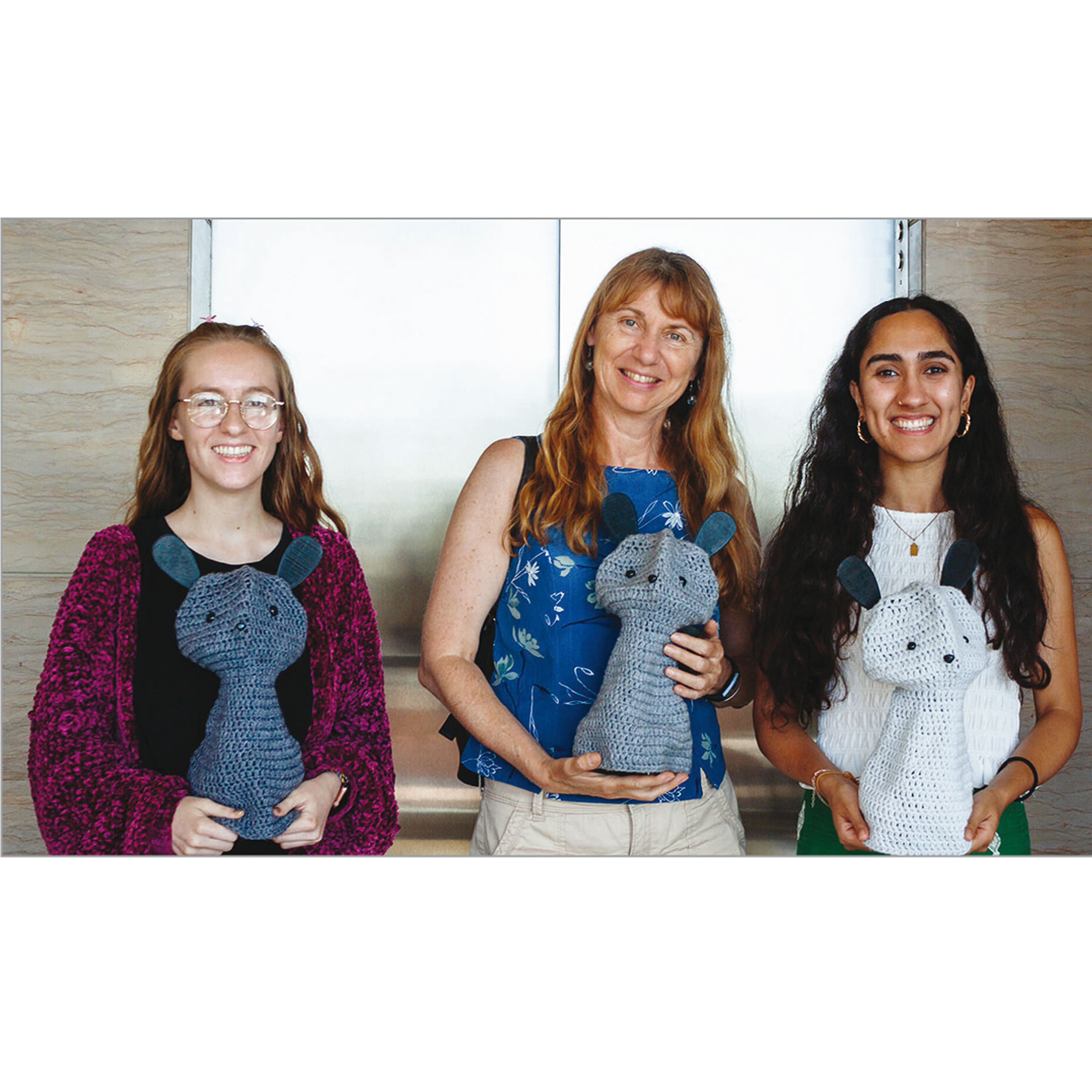
In this follow-up to a 2017 interview with JAMA Medical News, the University of Southern California's Maja Matarić, PhD, the computer scientist who pioneered the field of socially assistive robotics, discusses how artificial intelligence is advancing the field in areas ranging from autism to physical rehabilitation to anxiety and depression.
Related Content:
Can AI Improve Cost-Effectiveness of 3D Total-Body Photography?

3D total-body photography is used to detect lesions and melanoma in patients at high risk of developing skin cancer. The cost-effectiveness of this technology was examined in a recent study published in JAMA Dermatology. Roy Perlis, Editor in Chief of JAMA+ AI, joins economist Daniel Lindsay, PhD, to discuss the clinical and economic outcomes of this recent study.
Related Content:
Checking in Between Checkups: An AI App to Track Asthma Symptoms
Despite recommendations from health care professionals, most patients with asthma do not track their symptoms, leaving limited data to help them discuss care options with their clinicians. JAMA Associate Editor Yulin Hswen, ScD, MPH, spoke with Robert S. Rudin, PhD, a senior information scientist at RAND, and a professor of policy analysis at the Pardee RAND Graduate School, about a randomized clinical trial published in JAMA Network Open examining the potential benefits of using AI for between-visit asthma symptom monitoring.
Related Content:
Harnessing AI and Genomics in Clinical Trial Enrollment
The Dana-Farber Cancer Institute (DFCI)'s MatchMiner tool was developed to increase historically low clinical trial enrollment rates in adults with cancer. Roy Perlis, MD, MSc, Editor in Chief of JAMA+ AI, spoke with Kenneth Kehl, MD, MPH, about his recent study published in JAMA Network Open evaluating the AI tool's ability to fulfill its purpose through genome sequencing.
Related Content:
AI-Based Analysis for Parkinsonism

Delaying diagnosis of parkinsonism can mean delaying care. In a study recently published in JAMA Neurology, David Vaillancourt, PhD, and colleagues tested the ability of an AI model to differentiate between Parkinson disease and other neurodegenerative disorders when paired with MRI. He joins JAMA and JAMA+ AI Associate Editor Yulin Hswen, ScD, MPH to discuss.
Related Content:
Should Employers Offer Digital Mental Health Programs to Support Workforce Well-Being?

Employer-sponsored digital health solutions help patients with behavioral health conditions increase workplace productivity. Yulin Hswen, ScD, MPH, Associate Editor of JAMA+ AI, spoke with Molly Candon, PhD, and Adam Chekroud, PhD, about their recent work published in JAMA Network Open evaluating the financial return on investment for companies participating in these AI health care programs.
Related Content:
When Do Nudges Help?
Susan Athey, PhD, of Standford University joins JAMA+ AI Editor in Chief Roy H. Perlis, MD, MSc, to discuss her research on machine learning to target behavioral nudges for college students and their potential implications for health care.
Related Content:
Real-World Performance of AI in Screening for Diabetic Retinopathy

Diabetic retinopathy remains a leading cause of preventable blindness worldwide, and AI may facilitate screening, if such models continue to perform well when they are deployed in the real world. Coauthors Arthur Brant, MD, of Stanford University, and Sunny Virmani, MS, of Google join JAMA+ AI Editor in Chief Roy H. Perlis, MD, MSc, to discuss a new study published in JAMA Network Open.
Related Content:
Can Open-Source LLMs Compete With Proprietary Ones for Complex Diagnoses?

A recent study published in JAMA Health Forum suggests that institutions may be able to deploy custom open-source large language models (LLMs) that run locally without sacrificing data privacy or flexibility. Coauthors Thomas A. Buckley, BS, and Arjun K. Manrai, PhD, from the Department of Biomedical Informatics at Harvard Medical School join JAMA+ AI Editor in Chief Roy H. Perlis, MD, MSc, to discuss.
Related Content:
