CR101 Radio - Podcast Network

Taxation
Taxation is not morally neutral. From David’s census to modern tax policy, Scripture and history warn that the power to tax can become the power to destroy liberty. When taxation moves beyond justice and becomes a tool to confiscate property or reshape society, it crosses into theft something God plainly forbids (Exod. 20:15).
The answer, however, is not revolt but repentance. Bad government reflects bad morality. Real change begins with the people, returning to faith and righteousness only then can just rule follow.
The Pure in Heart

The sixth Beatitude, “Blessed are the pure in heart: for they shall see God,” confronts us with an apparent impossibility, since Scripture makes clear that the human heart is naturally corrupt and incapable of purifying itself; yet Christ does not mock us with an unattainable promise, but offers what He Himself gives. Purity of heart is not achieved by moral effort or self-discipline, for no man can change his own nature, but is granted by God when He gives a new heart through Jesus Christ. The pure in heart are therefore not those who trust in their own goodness, but...
Honest Work
Paul is clear: Christians must learn to practice honest work so that they are not unfruitful or idle (Titus 3:14). The church cared for the truly needy, but it never excused refusal to work. Responsibility and diligence are marks of faith lived out.
Work matters to God. Honest labor honors Him; dishonest or idle living offends Him. Christians are called to be workers whose lives give credit to Christ and His church.
The question is personal: does your work honor God or offend Him?
The Second Commandment (Remastered)
You can carve an idol out of your hopes.
God sets the terms of approach not you. When man designs the way to God, he ends up dictating the morality too. That's Hinduism. That's humanism. That's every parent "just praying" instead of applying godly discipline.
Rebellion is as the sin of witchcraft. Stubbornness is idolatry.
The only lawful approach is Christ, who kept every jot and tittle of the Law-Word.
The False Focus
When church life becomes about managing people, filling pews, or meeting personal expectations, something vital is lost. Worship turns into pressure, and faith shifts from honoring God to fixing others. That false focus makes it harder not easier to come before the Lord.
Christ’s church exists first for God’s Kingdom and His righteousness (Matt. 6:33). When faith is reduced to “what it does for me,” the center moves from God to man. The question that exposes everything remains:
What is the focus of your faith God, or yourself?
Easy Chair No. 165, March 10, 1988 - Pragmatism
Rushdoony and Scott examine pragmatism, the American form of existentialism, which defines truth by what “works” rather than by God or eternal standards. Pragmatism dominates education, politics, business, law, and even religion, leading to consumer-oriented, self-centered thinking, situation ethics, and the erosion of merit, permanence, and moral restraint. It fosters a society focused on immediate gain, social conformity, and personal advantage, while undermining truth, craftsmanship, and enduring values in art, architecture, and culture.
They note how pragmatism corrodes Christianity, shifting emphasis from God-centered faith to man-centered self-help, and produces spiritual emptiness even in materially prosperous societies. Modern art...
The Recovery of Memory
Rushdoony argues that memory personal and cultural is essential to being fully human: when memory collapses (as in senility), a person can remain socially polished yet be stripped of identity, continuity, and direction. He extends that to cultures: history is “social memory,” and when a society becomes present-obsessed and contemptuous of the past, it heads toward cultural senility barbarism because “people who have no past have no future.”
He warns that modern humanistic education and media intentionally warp or replace historical memory. Marxists (and “neo-Marxists”) understood that to create a “new man,” you must rewrite the past; and he claims th...
Man's Sole Purpose
When civilizations lose hope, they fall back on the same lie: “Eat, drink, and be merry, for tomorrow we die.” It’s an ancient slogan of despair, echoing from Babylon to Rome and still heard today. It reduces life to pleasure because it expects nothing beyond death.
Paul answers with truth: Christ is risen, victory is real, and our labor is not in vain (1 Cor. 15:57–58). Man was not made for death, but for eternal life. Our purpose is to serve and glorify God and to enjoy Him forever.
Restitution
In “Restitution,” Rushdoony argues that restitution stands at the very heart of Biblical justice, grounding both God’s law and Christ’s atoning work in the principle that wrongs must be made right. Scripture consistently requires offenders to restore what was taken often multiple times over so that crime does not pay, a standard fulfilled perfectly in Christ’s obedience and sacrificial death as restitution before God for His people. Where restitution governs, justice is stable and meaningful; where it is abandoned in favor of sentimental “love,” probation, or imprisonment, crime becomes profitable and law decays into inequality, coercion, and pressure p...
Promoted, Then Nearly Killed: The Biblical Cost of Leadership
At seventeen, Joseph was given the robe of rule, and before he opened his mouth his brothers said, "Let us slay him." Jacob was not playing favourites: Reuben, Simeon, Levi, and Judah had broken the commandments one by one, and no father building an inheritance for his children's children could hand it to the wicked. But the robe was never just a gift. It was a burden Joseph could not take off, the cost of ruling among men who hate you, and it is the pattern of Christ, who rules in the midst of His enemies.
Whom the Lord Loveth
Scripture teaches that God’s discipline is not cruelty but care. The Hebrew paquadh means both “to visit” and “to chasten” to punish and to care. Like a kite, we only rise when there is restraint. Without it, we crash.
Our age confuses freedom with the absence of limits, but true freedom is found in obedience. “Whom the Lord loveth he chasteneth” (Heb. 12:6). God’s restraints are not bondage they are love in action, guiding us to soar rather than fall.
Blessed are the Merciful

The fifth Beatitude, “Blessed are the merciful: for they shall obtain mercy,” teaches that true mercy is neither sentimental softness nor indulgence toward evil, but a grace born out of personal repentance and forgiveness. Mercy is not forgiving wrongs done to others something that costs us nothing nor is it a denial of justice or a blurring of the distinction between good and evil; rather, it is the costly act of forgiving those who have wronged us, returning good for evil, and extending to others the same mercy we ourselves have received from God. Genuine mercy recognizes the demands of G...
The Early Thinkers: From Plato to Augustine (History of Thought) (Remastered)
This talk argues we need a “map” to understand philosophy: the ancient world didn’t start with God at the top it started with the state as the “highest good,” treated truth as a tool of rulers (even the “right” to lie), and saw reality as one continuous chain where men could become “divine.” That worldview swings between totalitarianism (the One) and anarchism (the Many). The Christian breakthrough, he says, was the Trinity one God, three Persons giving a foundation for unity without tyranny and individuality without chaos, and ultimately for Western liberty.
#Philosophy #Worldview #Trinity #OneAndMany #ChristVsCaesar #We...
Pruning
Jesus reminds us that fruitful branches are pruned not punished so they may bear more fruit (John 15:2). Discipline is not a sign of rejection, but of love. Undisciplined growth weakens; pruning strengthens.
God knows where we need correction and growth. His pruning is purposeful, gracious, and necessary. Submit to His hand, and the result will be greater fruitfulness not loss.
Injustice in the Name of Justice
In “Injustice in the Name of Justice,” Rushdoony contends that modern society loudly proclaims justice while systematically denying its very foundation by rejecting God as Lawgiver, leaving justice as a hollow façade for humanistic power. When the state identifies its own will with justice, legality replaces morality, and coercion forced abortions, suppression of religious speech, and state control of the church is justified as righteousness. Rushdoony warns that many churches aid this injustice by embracing antinomianism, confining Christ’s lordship to private faith while granting the state sovereign authority over law and public life. Scripture, however, teaches that justice...
Who Are the Debtors of America?
In America, the poor carry the least debt because they are generally considered bad credit risks, the middle class holds moderate debt primarily for homes, farms, and small businesses, while the rich borrow most easily and carry the highest proportion of personal debt; corporations are actually the largest debtors outside the government, funding expansions, acquisitions, and operations, and on top of this, the enormous debts of cities, states, and the federal government create a system of economic bondage reminiscent of slavery. #DebtInAmerica #EconomicSlavery #WealthInequality #CorporateDebt #FiscalResponsibility
The Implications of Modern Philosophy: The Will To Fiction (History of Modern Philosophy) (Remastered)
Rushdoony argues that when modern philosophy narrows reality to inner experience excluding God and “things-in-themselves” it produces a “will to fiction” that reshapes art, literature, politics, and daily life: earlier figures like Rubens still worked as disciplined, reality-tethered artisans and businessmen, but modern “artists” increasingly treat imagination as truth and self-mythologize, illustrated by Thoreau’s largely staged Walden, Whitman’s carefully constructed “common man” persona borrowed from George Sand, and D.H. Lawrence’s messianic self-delusions and nature-mysticism; this cultural shift fuels a mass appetite for fiction (novels, serials, radio, film, TV) so intense that people live inside invented worlds for hours a day...
The Truth and the Lie
Jesus declared, “I am the truth” (John 14:6). To know Him is to live in reality, not imagination or compromise. There is no middle ground between truth and lies neutrality itself becomes a lie.
Truth often demands sacrifice; lies promise advantage. But the real cost of a lie is what it does to the one who lives by it. To follow Christ is to choose truth, whatever the price and to reject the lie, however tempting.
The Dream of Reason
This position paper argues that the Enlightenment’s exaltation of human reason has produced a recurring and destructive dream: the creation of a perfectly rational, planned society ruled by philosopher-kings, with the Turkish Empire presented as an early and revealing model of this ideal. Admired by Western romantics and humanists for its supposed order and rationality, the Ottoman system subordinated all people rulers and subjects alike to the state, treating human life as expendable in service to an abstract ideal of reason. This same vision reappeared in the French and Russian Revolutions and persists today in modern welfare-technocratic states, wh...
Did God Really Silence Women?
Few topics generate more heat and less light than the question of women's roles in the church and family — but what does Scripture actually say when freed from both feminist ideology and culturally accumulated assumptions? In this episode, Andrea Schwartz and Charles Roberts work through the key passages — from Genesis 1 and Galatians 3:28 to 1 Peter 3:7, 1 Corinthians 11 and 14, and Ephesians 5:24 — examining apparent contradictions and unpacking what Paul and Peter were actually addressing in their original contexts. Drawing on R.J. Rushdoony's insight that "a help meet is not a doormat, but a subordinate and necessary partner," they argue that the kingdom of God...
Thy Light is Come
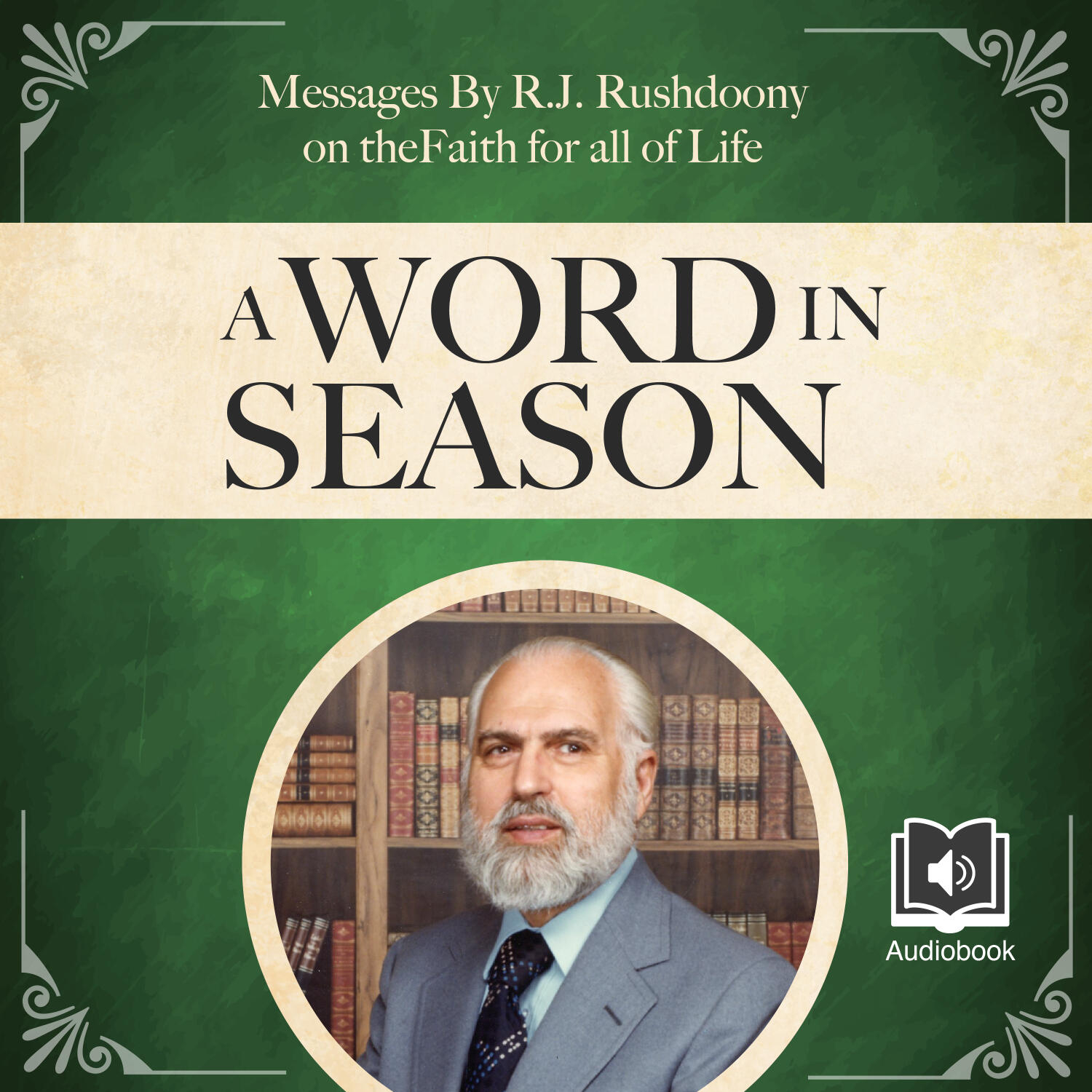
Zacharias proclaimed that Christ’s coming meant salvation with power, victory without fear, and light breaking into darkness (Luke 1:67–79). Christmas was not sentiment it was the dawn of a new world. The “dayspring from on high” announced that the King had come, bringing peace and a fearless life in Him.
Though darkness surrounds us, it has not overcome the light (John 1:5). The light of Christ still shines, undimmed and triumphant. Isaiah’s call remains: “Arise, shine; for thy light is come” (Isa. 60:1).
The only question is are we people of the light?
Blessed are They that Hunger and Thirst

The fourth Beatitude, “Blessed are they which do hunger and thirst after righteousness: for they shall be filled,” teaches that true blessedness requires a holy discontent not with the world, but with ourselves. Scripture calls us to contentment in our station, yet here our Lord blesses those who are dissatisfied with their own sinfulness and who long, above all else, to be righteous before God. This hunger is not a desire for a better society, honest neighbors, or moral reform in others such wishes can exist even in unrighteous men but a deep awareness of our own rebellion, laziness, and...
The Choice
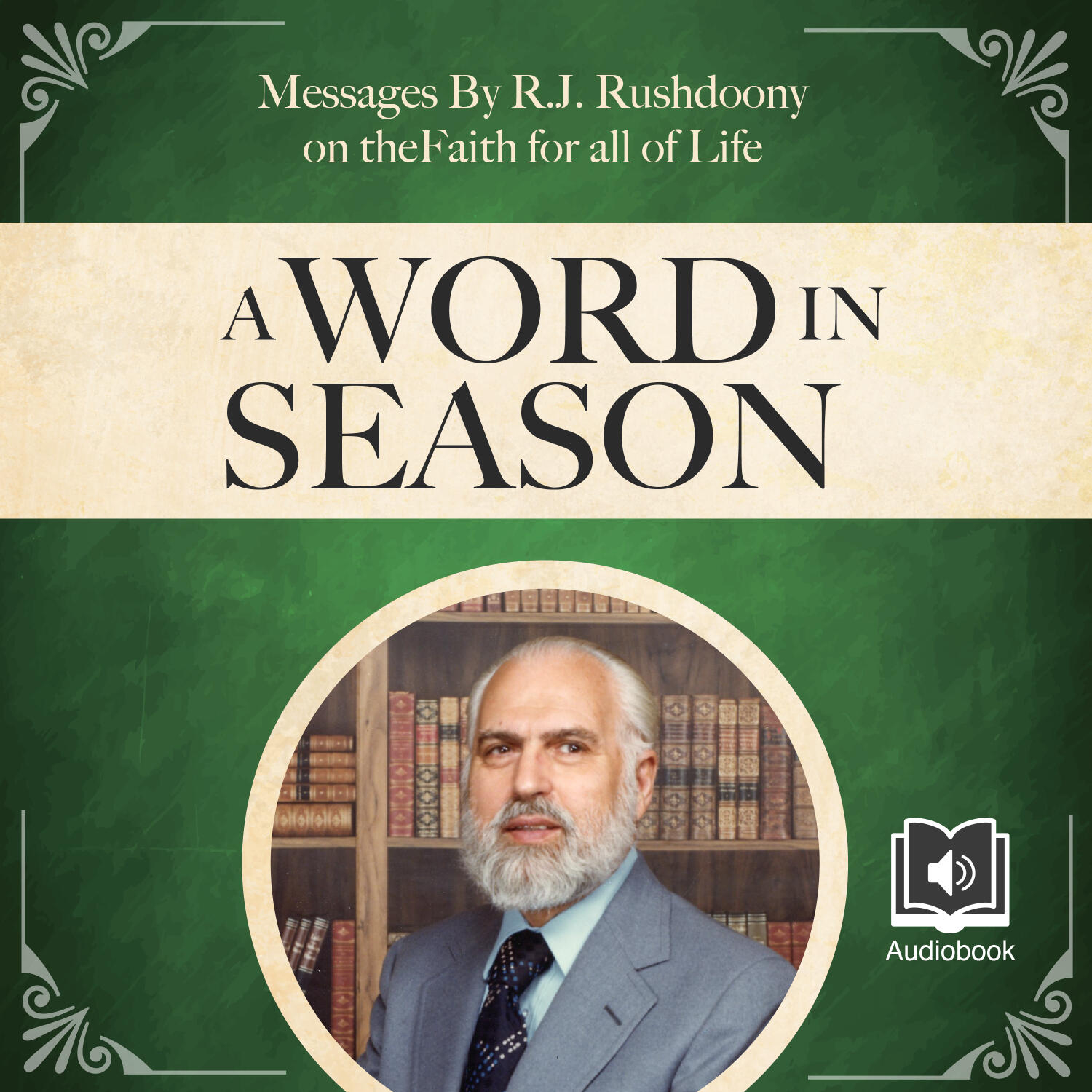
Scripture leaves no room for indecision. Joshua and Elijah both confronted God’s people with the same demand: stop halting between two opinions and choose whom you will serve. Compromise may feel safe, but history shows it is the prelude to decline.
Every age of crisis requires clear allegiance. To refuse the choice is to make one by default. The call still stands: “Choose you this day whom ye will serve.”
Law as Power and Discrimination (Remastered)
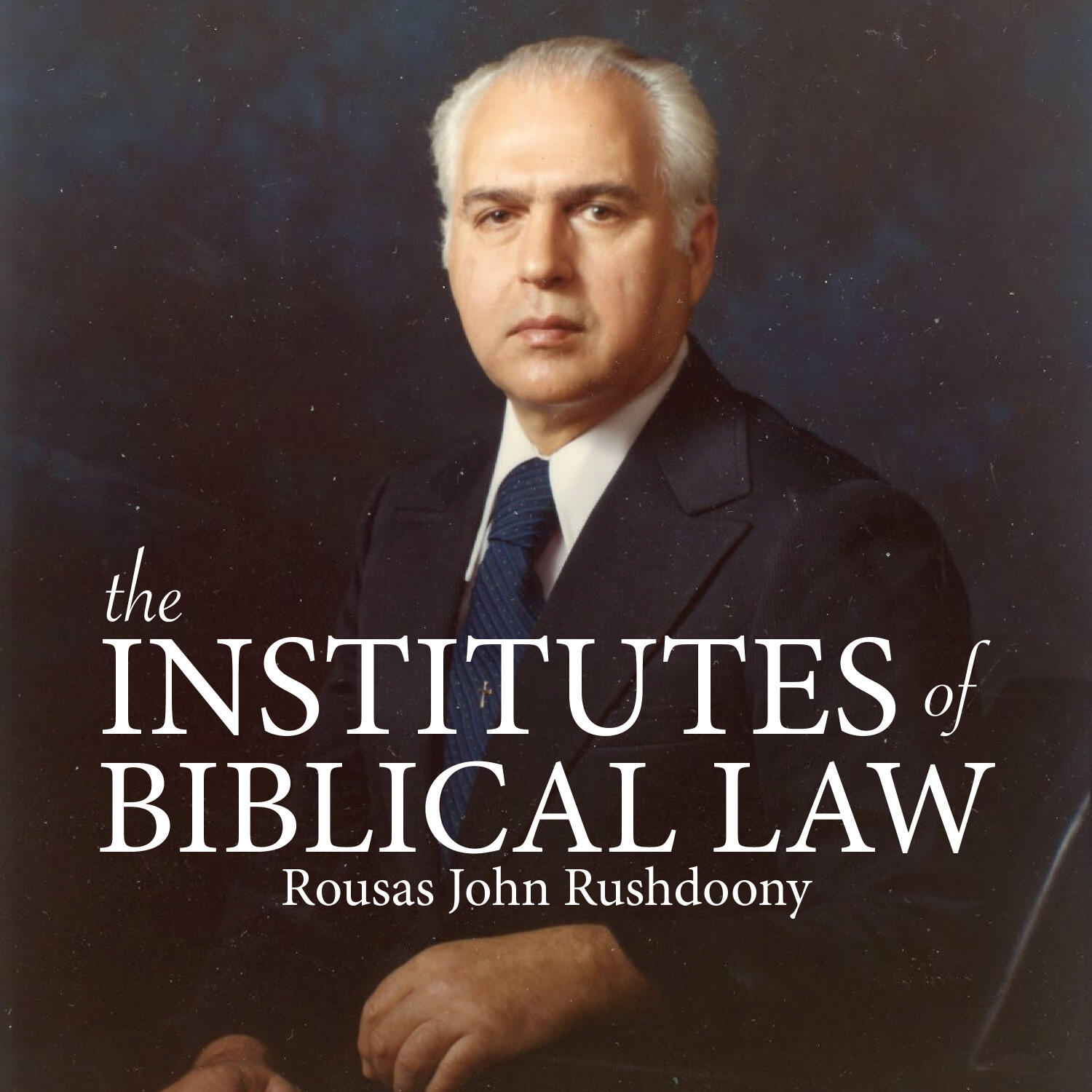
Romans 13: rulers are meant to be a terror to evildoers.
Today the evildoers terrorize the government and the government pays them for it.
Law without power isn't law. Power without righteousness isn't law either it's totalitarianism in robes.
When the state becomes the source of law, the state has become the god.
"Thou shalt have no other gods before me" including the one in Washington.
Easy Chair No. 164, February 11, 1988 - The New Paganism
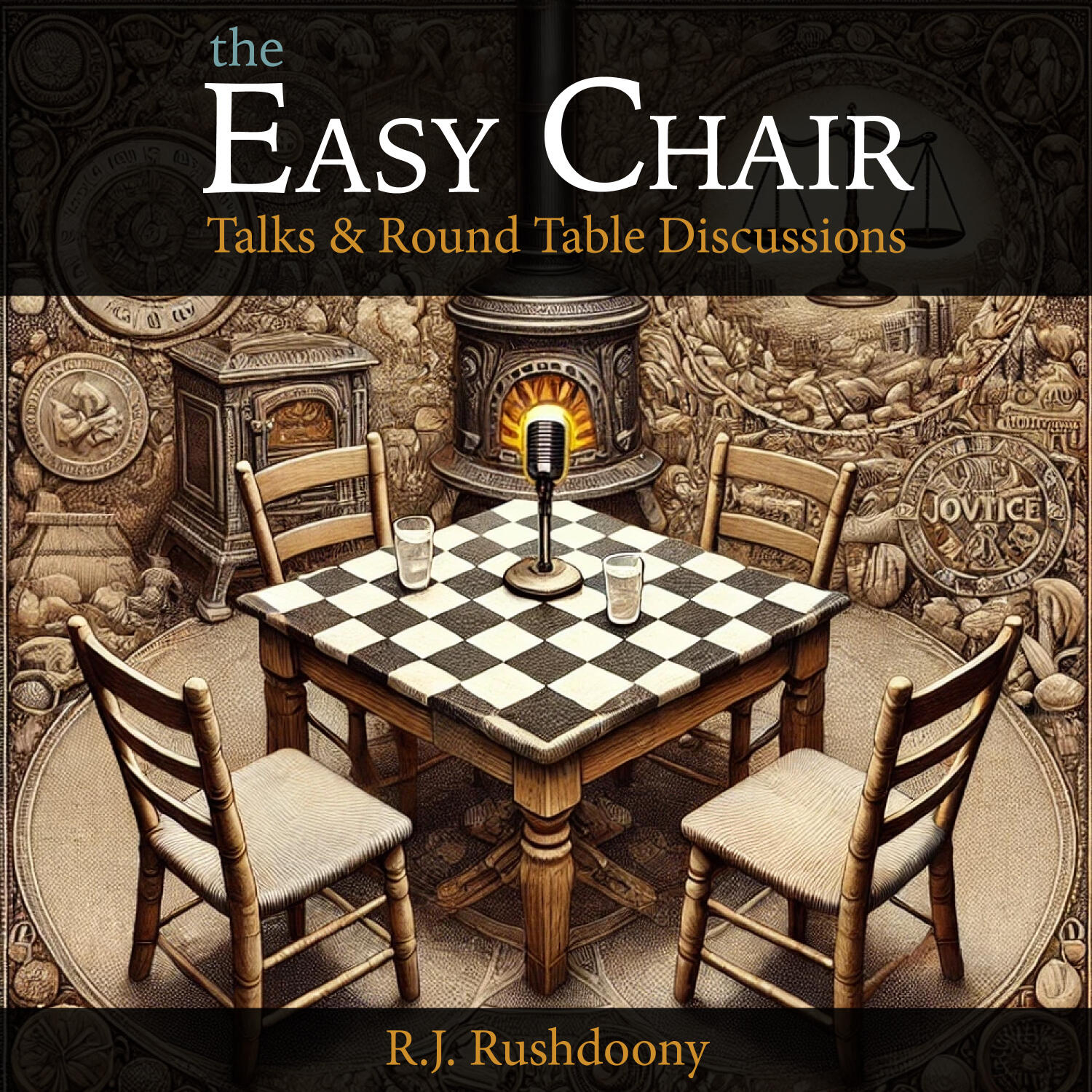
R.J. Rushdoony and Otto Scott examine Darwin and the cultural impact of evolution, highlighting Michael Denton’s Evolution: A Theory in Crisis, which critiques Darwinian theory from a molecular biology standpoint, concluding that evolution lacks conclusive evidence and serves as a foundational myth for 20th-century secularism. They trace Darwin’s influence as removing purpose and God from natural processes, creating a worldview in which humanity could see itself as self-directing, a concept embraced by Marx and Engels to justify materialistic and social theories.
They discuss the consequences of Darwinian thought on society, science, and morality: it fost...
The Death of Herod Agrippa I
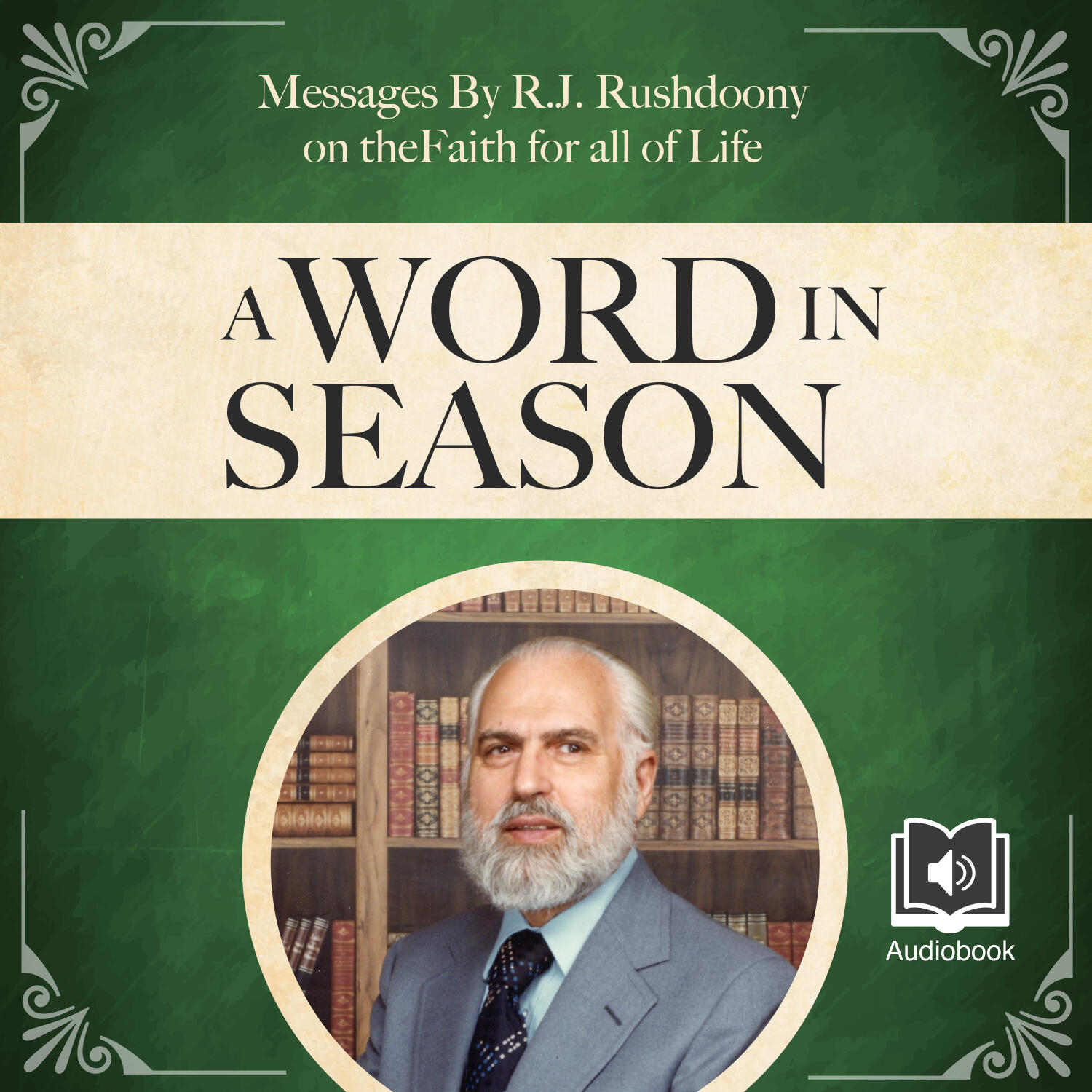
Herod Agrippa accepted worship as a god, basking in public praise and political favor but in that very hour, God struck him down (Acts 12:23). The same crowds who hailed him as a messiah turned savage once the handouts ended, exposing the emptiness of power built on flattery and false glory.
False messiahs rise on applause and fall under judgment. Public works, popularity, and praise cannot replace giving God the glory. The Herods of this world have no future only those who honor the true King do.
Morality and Growth
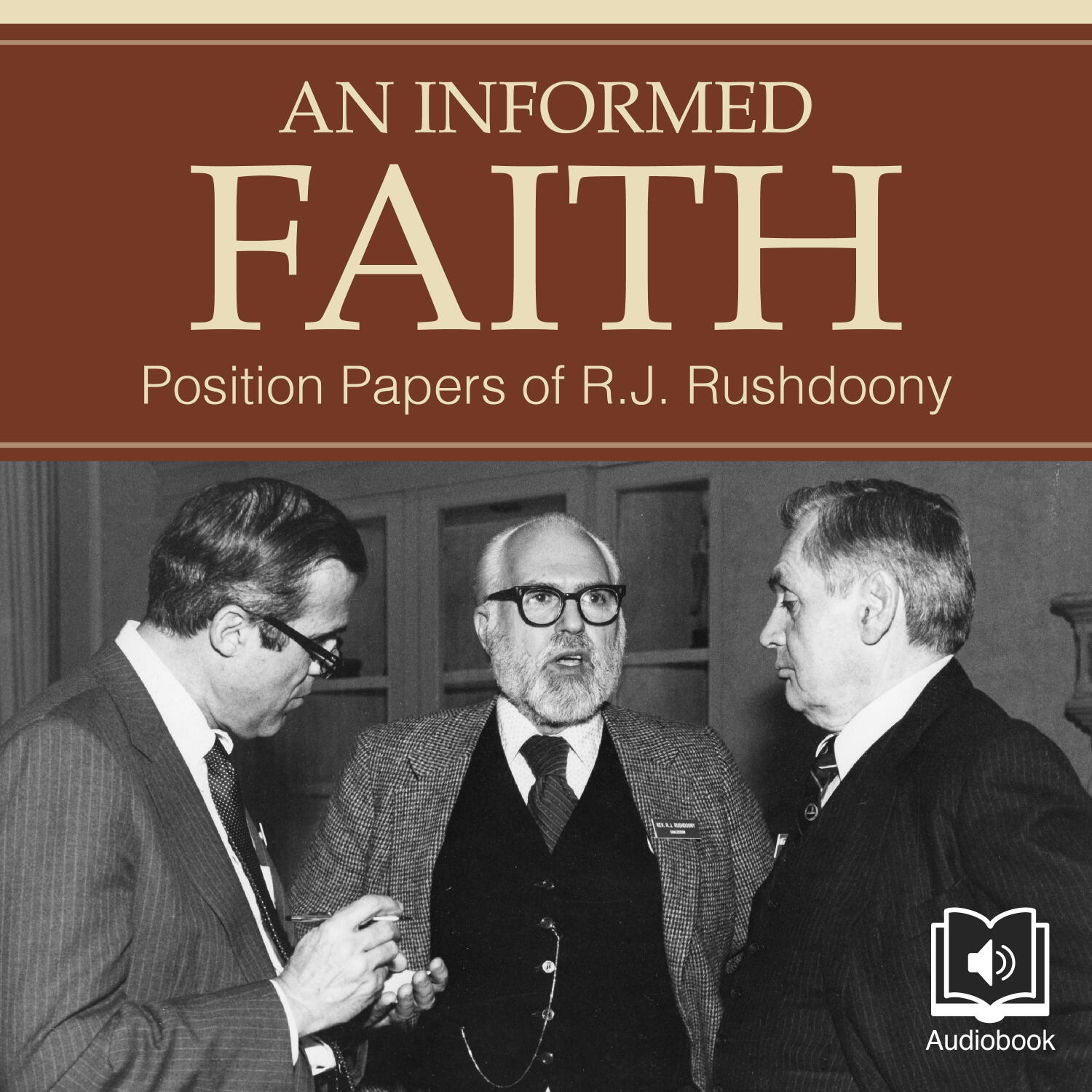
A common error in the church is assuming unbelievers share Christian moral standards and simply need Christ “added” to their lives. Scripture teaches the opposite: fallen man is at enmity with God and requires regeneration, not supplementation. Modern culture compounds this error by denying morality altogether, redefining human problems as technological, environmental, or educational rather than moral and spiritual.
\Because we live in a moral universe, growth is unavoidable either toward maturity or decay. In Christ, salvation begins a lifelong process of sanctification and growth, not instant perfection. Societies and churches that reject moral categories or deny the...
Our Professional Thieves
It’s easy to blame the taxman but the deeper problem is us. When we demand subsidies, special services, and benefits from the state, we are asking civil authorities to take money from our neighbors by force. The theft may be legal, but the guilt is shared.
Scripture is clear: “Thou shalt not steal” (Exod. 20:15). Ordering theft through the state is still theft. When stealing is called virtue, society becomes a jungle and judgment follows. God’s way is different: honest labor, personal responsibility, and generosity born of obedience (Eph. 4:28).
Social Justice
In “Social Justice,” Rushdoony argues that modern social justice is not a Biblical concern but a humanistic doctrine rooted in the self-deification of intellectual elites who replace God’s law with their own autonomous reason, making justice whatever they declare it to be. Whereas Biblical law flows from the nature and authority of the sovereign God repeatedly grounded in the declaration “I am the Lord” social justice arises from man as the ultimate judge, turning law into a weapon of moral absolutism wielded by those who see themselves as virtue incarnate and their opponents as evil or subhuman. Historically embodied i...
Joseph's Coat Wasn't About Colours — It Was About Command
Everyone knows Joseph's coat of many colours, except the Bible never says it. The Hebrew phrase, ketonet passim, appears in only one other place, on the king's virgin daughters, and it names a royal robe reaching to the hands and feet that made manual work impossible. Jacob wasn't spoiling a favourite son; he was commissioning an administrator over a household of thousands, under the covenant charge of Genesis 18:19 to command his children in justice and judgment. God forms rulers in the home: faithful over four brothers first, then faithful over all of Egypt.
The Blessed Meek

The third Beatitude, “Blessed are the meek: for they shall inherit the earth,” defines meekness not as weakness or cowardice, but as a wild and rebellious nature that has been disciplined and tamed by God. Meekness is the fruit that follows poverty of spirit and godly mourning: when men see their sin, grieve over it, and submit themselves to the Lord’s correcting hand. Like a wild horse that is stunted and useless until it is broken to the harness, so man remains spiritually unproductive until he yields to God’s rule; the breaking process is painful, but it alone pr...
King John's World
Modern culture confuses efficiency with wisdom. King John is praised today not for character or leadership, but for expanding bureaucracy and record-keeping. Yet good paperwork didn’t save his reign and it won’t save ours.
We now live in a data-bank world where records replace judgment and systems replace wisdom. Scripture reminds us that salvation, order, and success do not come from files and forms, but from the Lord through sound faith, godly character, and obedience. Data is no substitute for wisdom
The Impact of Philosophy on Religion: The Principle of Modernity (History of Modern Philosophy) (Remastered)
This lecture exposes why modern thought dominates the culture: it has an inner logic and consistency, while Christians and conservatives often operate with a “smorgasbord philosophy,” mixing incompatible beliefs and never following ideas to their conclusions. Tracing the shift from theology as the “queen of the sciences” to philosophy ruling religion, it shows how Descartes, Butler, Schleiermacher, and later modern theologians relocated certainty from God and history to the autonomous human mind and subjective experience, turning truth into probability, faith into feeling, and God into history, the future, or human potential itself. The result is natural inspiration, historical relativism, and the...
Are We Misjudging our Prison Convicts?
Our prisons have become breeding grounds for violence and extortion, as illustrated by a young man murdered for refusing to pay $5 a week to a gang in Los Angeles Men’s Central Jail, highlighting that the humanistic assumption that prisoners are “good at heart” blinds us to their evil nature; misjudging criminals as unfortunate or reformable only endangers society, and true safety requires recognizing sinfulness and holding offenders accountable. #PrisonCrisis #CriminalJustice #HumanNature #PrisonViolence #Accountability
Christ vs. Caesar
Early Christians were executed for one simple refusal: they would not call Caesar “lord.” To them, state-controlled religion was no freedom at all it made the church a creature of the state. The issue then, as now, was lordship: Christ or Caesar?
History warns us that when the state claims authority over the church, the result is tyranny, no matter how many “rights” are promised on paper. The question that faced Speratus in A.D. 180 faces us again today:
Who is your Lord?
The Modern State, an Ancien Regime
In “The Modern State, an Ancient Regime,” Rushdoony argues that the modern humanistic state is not a new creation but a revival of ancient pagan sovereignty, claiming to be both the incarnation of man and the ultimate source of law and morality, thereby usurping the role of God and mirroring—by inversion—the Biblical doctrine of Christ as the true Adam and federal head of redeemed humanity. By making itself the lawgiver, the state becomes the arbiter of good and evil, demanding religious allegiance and imposing moral reform through bureaucratic agencies rather than divine law, while steadily encroaching on family...
Taxation
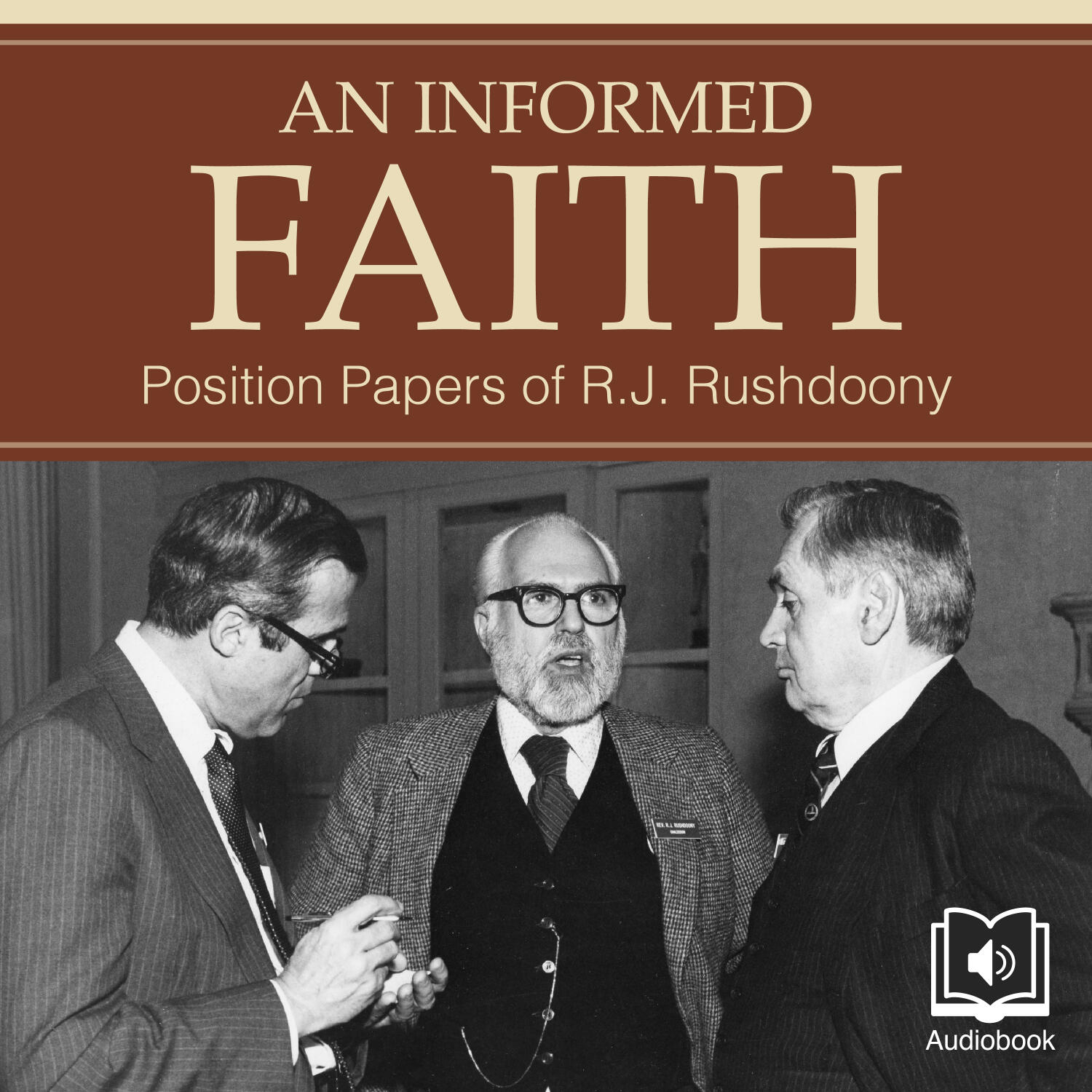
This position paper argues that taxation is fundamentally a religious issue because it rests on the question of sovereignty who is lord, God or the state. It rejects the common claim that churches are wealthy tax dodgers, showing instead that church-owned property historically provided extensive social services, while modern states hold vast tax-exempt lands yet increasingly burden the people through expropriative taxation. Scripture teaches that only God, as Creator and Lord, has ultimate authority to govern, legislate, and tax, with the tithe serving as a confession of Christ’s sovereignty, while the state is limited to a narrow ministry of...
From Artisan to Artist: Art in the Modern Culture (History of Modern Philosophy) (Remastered)
This lecture traces a cultural earthquake: **from artisan to “artist,” from craft to “inspiration,” from God-centered meaning to man-centered self-expression.** Medieval art served worship; Enlightenment art borrowed heaven’s imagery but transferred “apotheosis” to monarchs and “man as the new god.” Then modern art arrives after modern philosophy has gutted meaning, and the serious artist can no longer portray the body with significance because he “does not believe in the soul,” so art turns to **break-up, fragmentation, and disintegration** not merely as technique, but as confession. Once “inspiration” is no longer received from above (God’s Word) but generated from within (natural/existen...
The Name of the Lord
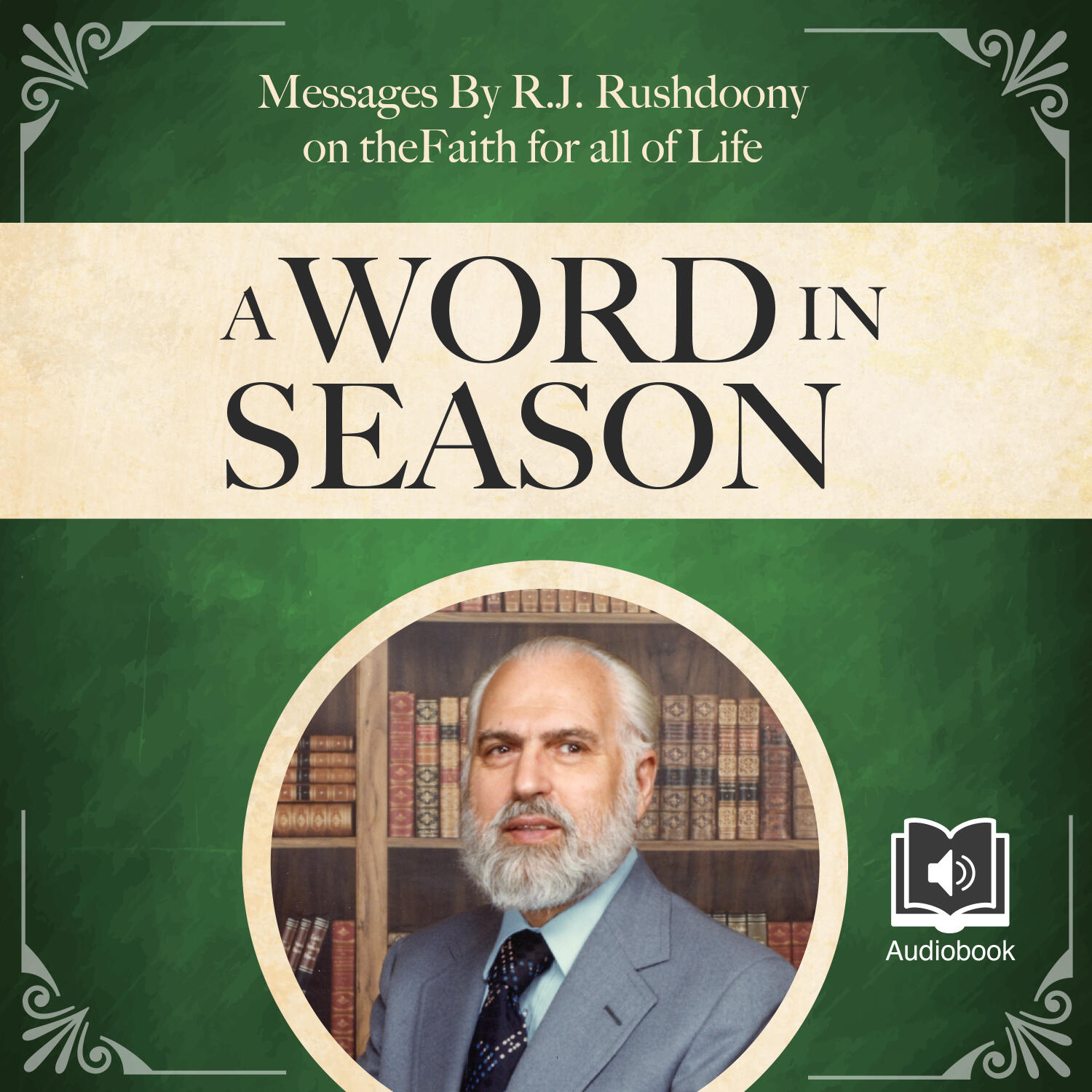
Genesis tells us that when Seth named his son Enosh “mortal” men began to call upon the name of the LORD (Gen. 4:26). The contrast is deliberate: man is defined as frail and dying, while God is revealed as YHWH the self-existent, eternal “I AM.”
To call on the name of the Lord is far more than religious language or sentiment. It is to know God as He has revealed Himself in His Word, not as we imagine Him to be. True faith begins by admitting what man is and worshiping God for who He is.
...What If Aloneness Isn't About Loneliness?
Is being alone the same thing as being lonely? After saying goodbye to a beloved dog and noticing the new silence in her house, Andrea Schwartz sits down with Gwen Saunders, a widow of seventeen years whose husband died suddenly just as they were preparing to move across the country. Gwen describes how the hectic years after John's death kept grief at bay, and how loneliness arrived only when her youngest daughter married and moved away — until she came to see that a believer who knows the Lord is always present is never truly alone. Together they discuss the we...
