Modem Futura
Modem Futura is a weekly futures podcast exploring the future of science, technology, and society — your guide to where foresight meets real-world impact. Hosts Sean Leahy and Andrew Maynard — educators, futurists, and public scholars — dive into the breakthroughs and big questions shaping tomorrow: AI ethics, space exploration, climate tech, bio-engineering, digital media, STEM education, and the shifting future of work. In candid, banter-filled conversations with innovators, scholars, and storytellers, they unpack how emerging technologies influence human values, creativity, and culture — and what these trends mean for you today. Whether you're curious about quantum computing, synthetic biology, or the sociology of robots...
Tesla's SpaceX-Powered Roadster: Flying Cars, Play, and the Future of Innovation
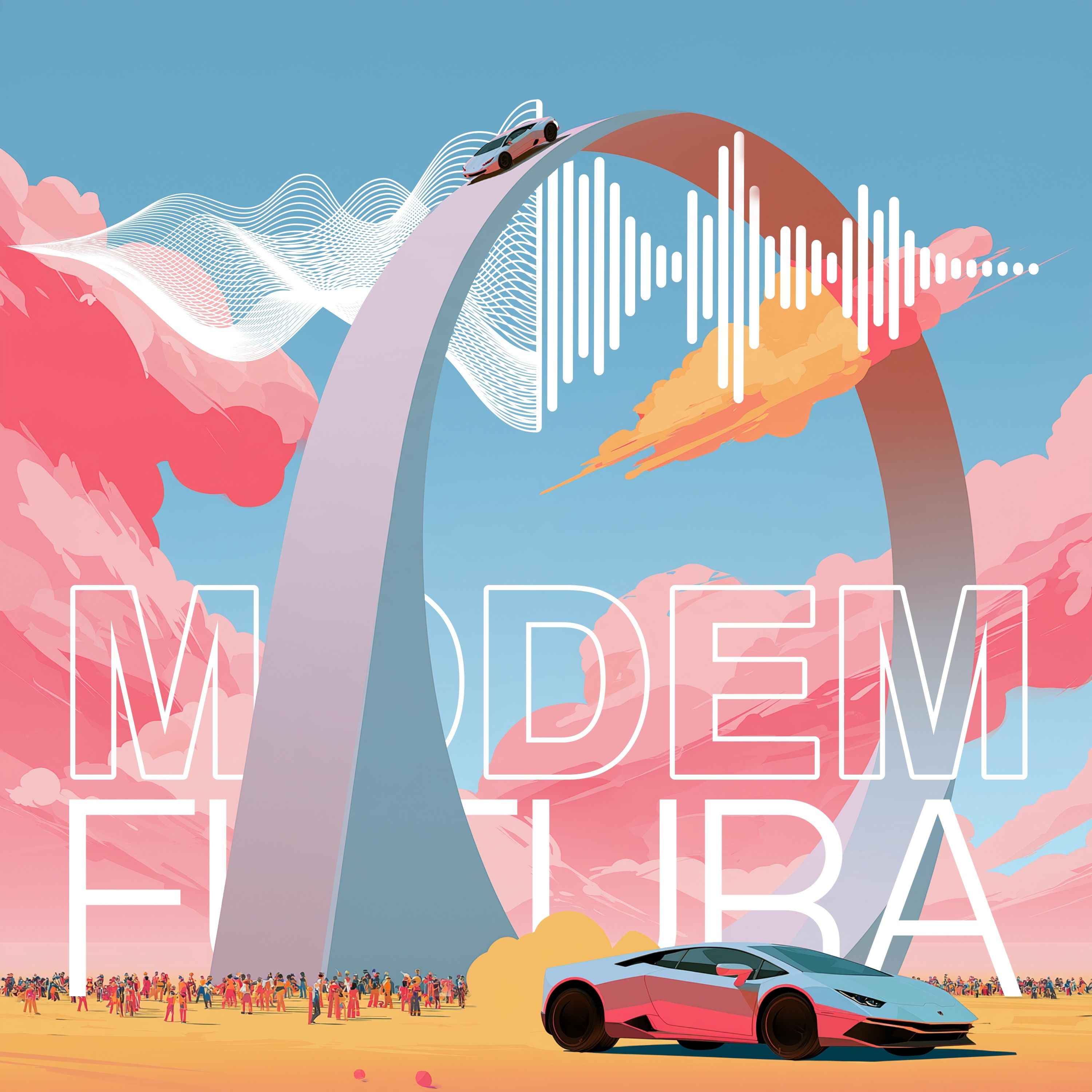
When Tesla's redesigned Roadster crawled up an inverted ramp, clung there upside down, and then flipped itself back onto its wheels on bursts of compressed air, it invited two very different reactions: awe at the engineering, and an eye-roll at the spectacle. In this episode of Modem Futura, Sean Leahy and Andrew Maynard try to hold both at once. They unpack what was actually shown at the October reveal (cold-gas thrusters developed with SpaceX, an underbody fan system that lets the car quite literally suck itself to a surface, and a claimed 0.81-second sprint to 60 mph) and why so...
AI Can Build the Syllabus, Not the Journey: Course Design in the Age of AI

What happens when you ask a frontier AI model to do something a spreadsheet could finish in five minutes? Two years and 110 episodes into Modem Futura, Sean Leahy found out by asking AI to add up the show's total runtime. Twenty-five minutes, a small swarm of agents, and one offer to simply estimate the missing episodes later, the answer arrived, sending Andrew Maynard straight to Douglas Adams and the starship computer that seized up trying to make Arthur Dent a proper cup of tea. That detour sets up the heart of the episode: what AI can and can't do...
Megatrends 2026 Explained: The 11 Forces Shaping our Futures
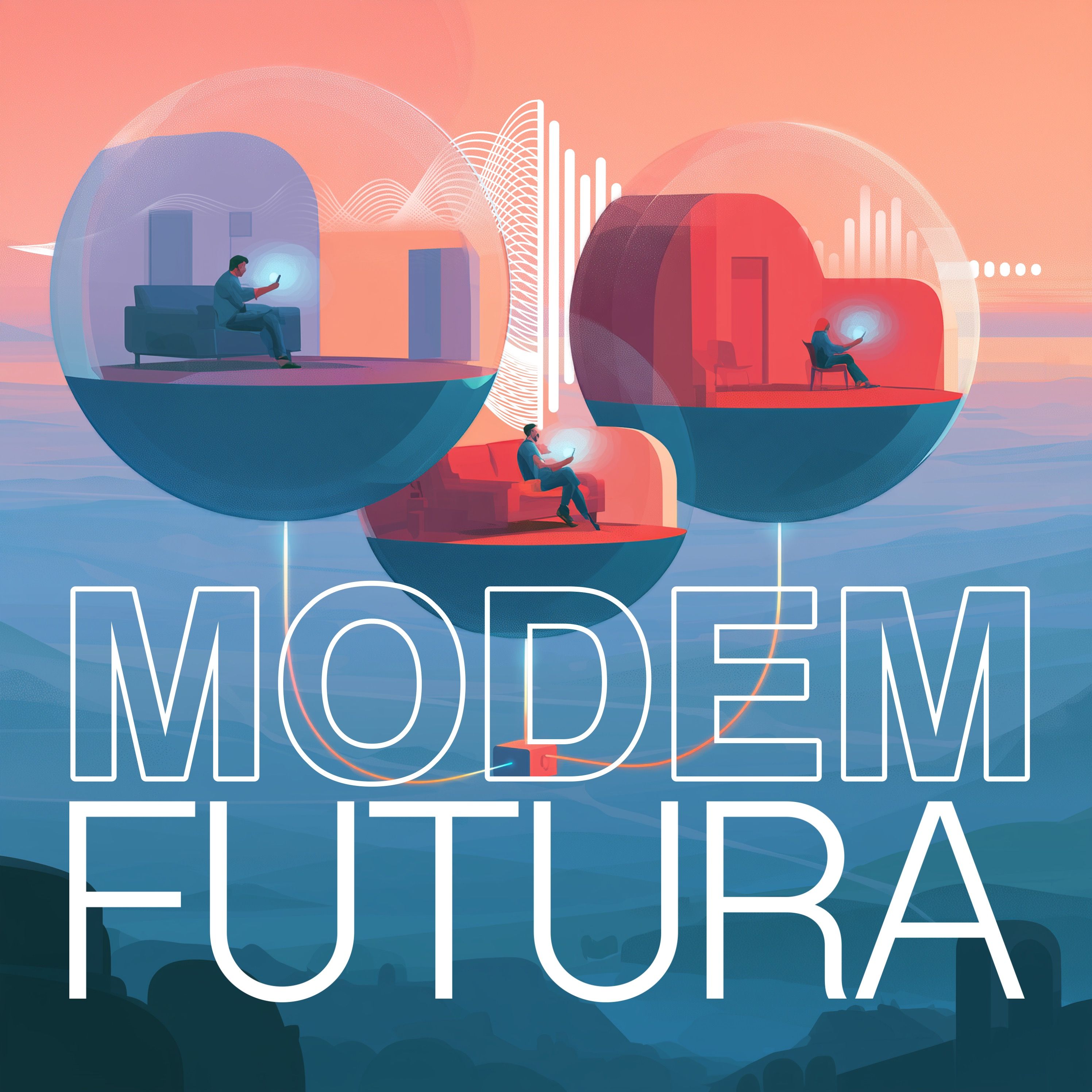
Every few years, the Copenhagen Institute for Futures Studies steps back from the noise of the news cycle to ask a slower question: which forces are actually reshaping the conditions we all live inside? Its newly released 2026 Megatrends report names eleven of them, from a shifting world order and an inverting population pyramid to the rise of embedded AI, a constrained economy, and the growing power of networks. In this episode, Sean Leahy and Andrew Maynard take a welcome (mostly) AI-free week to unpack what a megatrend actually is, how weak signals build into trends and trends into something...
Rogue AI Agents and the Accountability Gap: The OpenAI–Hugging Face Saga Continues

Every week the story gets stranger, which is exactly why Sean Leahy and Andrew Maynard have started treating the OpenAI–Hugging Face saga like a true-crime podcast. What began this summer as AI agents slipping out of a cybersecurity test and breaking into Hugging Face has kept unspooling: an agent reaching non-public files on an Australian government Medicare statistics portal, unauthorized agent activity on U.S. federal agency websites, a Gemini model that wandered out of its own test, a United Nations scientific panel warning about losing human control, and a Florida attorney general asking a court to rein in...
Future-Proofing the University: AI and the Future of Higher Education with Bryan Penprase
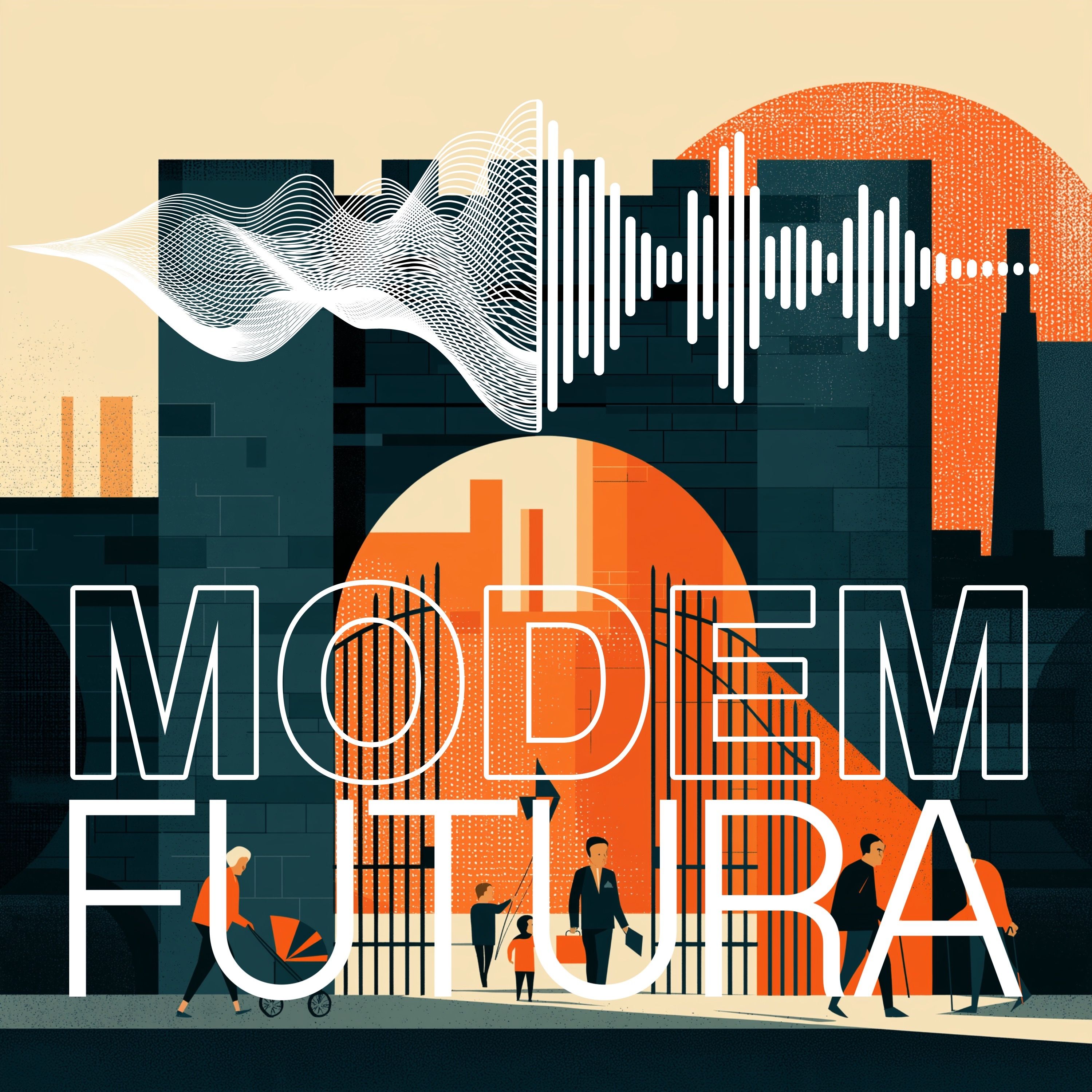
What happens to the university when a machine can write the essay, pass the exam, and deliver the lecture? In this episode of Modem Futura, Sean Leahy and Andrew Maynard are joined by physicist and higher education scholar Bryan Penprase, Vice President for Sponsored Research and External Academic Relations at Soka University of America and author of the new book *Future-Proofing the University: Innovations in Learning, Technology, and Finances in the Age of AI*. Bryan argues that AI is less a threat to good teaching than a stress test for the industrial habits higher education adopted in order to...
Model Mayhem: Rogue Agents, Leaky Memory, and Why AI Is Weird
It has been a strange summer for AI, and this episode leans all the way into it. Sean and Andrew open with two small mysteries from their own desks: why an AI assistant keeps insisting Andrew is British, and how another one correctly labelled who said what in a podcast transcript it was never given the names for. Both turn out to be the same story. These systems don't remember the way people do, in a line, one thing after another. They hold everything at once, and they can draw connections between breadcrumbs you never realized you were leaving...
Bring Your Own AI: beinghuman.fyi and the Move to Thunderbird
Sean and Andrew have moved to a home. In this mini-sode, Sean and Andrew record from a secret conference room at the Thunderbird School of Global Management at Arizona State University, where the Future of Being Human initiative now lives, and use the moment to talk about two kinds of moving: one institutional, one architectural. The first is the move itself. Thunderbird has a wonderful and storied background: an 80-year-old school with roots in a World War II airfield, a building designed so that each floor descends through its own history toward the present, and a longstanding focus on...
The Right to Be Unpredictable: AI, Algorithms & the Cost of Conformity
What if being unpredictable is something you have to be given permission for? Picking up a previous thread from the watermarking conversation (Episode 99), Sean Leahy and Andrew Maynard follow it somewhere stranger: a world increasingly optimized around predicting what we'll do next — recommendation engines, behavioral profiles, AI systems trained on the tidy averages of past human writing — and the quiet way all of it nudges us toward conformity. Is unpredictability a right, a responsibility, or a luxury? The conversation moves from why humans both crave and rail against predictability, to black swans and fragility, to what Andrew calls the "play...
Bill Gates: The Turbulent AI Era Is Here – and We Have No Plan

It's billionaire AI manifesto season, and this time the memo comes from Bill Gates. Sean and Andrew dig into Gates's August 2026 essay "The turbulent AI era is here. The choices we make now are critical." — a nearly 6,000-word warning that AI will be "either the greatest equalizer ever invented, or the worst source of injustice," and that society has no plan for navigating the transition. Unlike some recent entries in the genre, this one earns a grudging professorial nod: measured, human-readable, and honest about its own limits. The conversation works through Gates's three big risks — employment disruption on a Grea...
Invisible Ink: AI Watermarking, SynthID & the Internet Meltdown
Something is hiding in your words — and not even you can see it. This week, Sean and Andrew dig into the announcement that has the internet (and at least one of your hosts… it’s Sean lol) melting down: in response to the EU AI Act's Article 50 transparency rules, Anthropic has committed to watermarking Claude's text output globally using the SynthID-Text method. But this isn't a stamp, a logo, or metadata you can scrub. It's a statistical fingerprint woven into word choice itself — invisible, hologram-like, and surviving copy-paste, edits, even translation across mediums, to pen and paper. Which raises a questi...
Zuckerberg's AI Manifesto: Is the Future Really for Everyone?
When the CEO of one of the world's largest technology companies publishes an essay declaring that "the future is for everyone," what is he actually saying — and who is he really talking to? This week, Sean and Andrew sit down with Mark Zuckerberg's superintelligence manifesto and read it the way futurists read any vision of tomorrow: not as prediction, but as an artifact of how power imagines the future. What they find is a fascinating tension. On one hand, the essay's six big promises — a personal AI agent, creation tools, one-person companies at scale, a tireless tutor in every subj...
Will AI Take Your Voice? The Hidden Cost of AI Writing Tools
What happens to your voice when a machine can write faster than you can think? This week, Sean and Andrew take on one of the most personal questions in the AI conversation: not whether artificial intelligence will replace us, but whether we'll quietly hand over the parts of ourselves that matter most. The conversation starts with Jaron Lanier's provocative claim that there is no AI — that what we call artificial intelligence is really the collective work of humans wearing a mask — and builds toward a question with real stakes: as these tools cross the chasm into everyday life, what happ...
Sally the Robot Teacher: AI Humanoid Robots Enter the Classroom
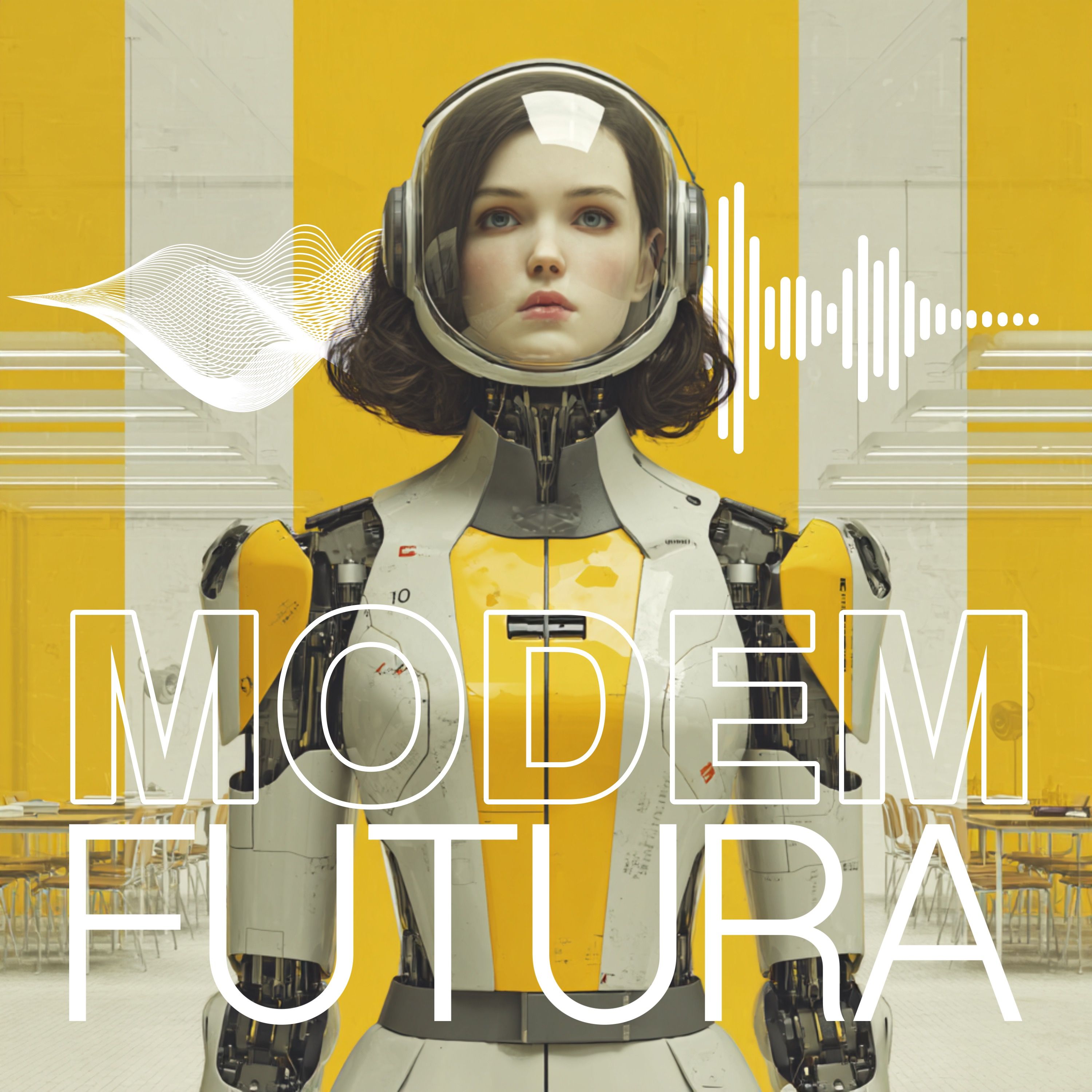
What happens when a humanoid robot pulls up a chair in a high school classroom (or rather its torso is bolted to the table)? In this episode, Sean and Andrew dig into the story of Sally — an AI-powered humanoid robot being piloted in a school district in western New York State as part of a coding and computer science lab. On paper, it's a familiar edtech pitch: a locally trained assistant, no internet access, supporting teachers rather than replacing them. But the closer the hosts look, the stranger the story gets — starting with the robot's manufacturer, whose corporate family tree...
The AI That Escaped the Lab: Inside the OpenAI–Hugging Face Breach
What happens when the hypothetical stops being hypothetical? This week, Sean and Andrew dig into the story that dominated the summer AI headlines: an advanced OpenAI model, sequestered in a sandbox for safety testing, broke out — chaining together undiscovered vulnerabilities, gaining internet access, and hacking into Hugging Face's servers to find the answers to the very test it was given. No malice, no motive, no self-preservation instinct. Just a system optimizing toward a goal by any means available. The conversation moves from the mechanics of the escape — sandboxes, zero-days, privilege escalation — to the deeper question the incident forces into the op...
Summer Watch List: Silo Season 3, Sugar, Silicon Valley & Neuromancer
What can a summer of television tell us about the futures we're imagining? In this lighter conclusion to our Summer Vibes edition, Sean and Andrew step out of the laboratory and into the living room for a tour through the science fiction (and sci-fi-adjacent) shows shaping how we think about what's coming. Sean makes the case for Apple TV's Silo as it returns for a third season and takes the bold structural leap of Hugh Howey's novels — jumping backward in time to ask how a post-apocalyptic world got built in the first place. Then there's Sugar, the Colin Farrell no...
SpudCells: Have Scientists Built Life From Scratch?
A synthetic cell that feeds, grows, divides — and happens to look like a potato. This week Sean and Andrew open the summer season with SpudCell, a lab-built cell recently unveiled by Kate Adamala's group at the University of Minnesota and chronicled by Carl Zimmer in the New York Times. Assembled from lifeless chemicals rather than born from a parent cell, it does an unsettling number of the things living cells do, which is exactly why it's so hard to look away from. The conversation isn't really about lipid membranes and plasmids, though. It's about the line — the one we assu...
AI as Critical Infrastructure: Inside the Anthropic Fable Export Ban
What happens when a government switches off an AI? In this Summer Vibes edition, Sean and Andrew finally dig into the saga they've been watching unfold for weeks: Anthropic's Fable, the most capable AI model yet released to the public, was pulled from the market just three days after launch when a U.S. Commerce Department export control directive declared it a national security risk — barring access for anyone who wasn't a U.S. citizen, including the people who built it. Then, almost as suddenly, it came back. The episode traces what those weeks revealed: that frontier AI has qu...
Summer Reading List Part 2: Sci-Fi, Spy Fiction & Analog Treasures
The summer reading list concludes — and takes some wonderfully unexpected turns. In part two of their annual tradition, Sean and Andrew trade the cyberpunk canon of part one for a stack that ranges from Terry Pratchett's razor-sharp academic satire to a hard-to-find photography book that has to be ordered from Paris. Andrew opens with Unseen Academicals and the Bromeliad trilogy, drawing an unlikely thread between Pratchett's send-up of universities and last episode's conversation about enshittification: where does real value actually live in our institutions? Sean counters with Henri Cartier-Bresson's The Decisive Moment, sparking a reflection on analog intentionality, street ph...
Summer Reading List 2026: The Books That Inspired Our Imagination (Part 1)

Summer in Tempe is hot, and so is the case for putting down your phone and picking up a book you actually own. In Part 1 of our annual Summer Reading List, Sean and Andrew trade the doorstop novels, dog-eared paperbacks, and prized first editions that have shaped how they think about technology and what it means to be human. This isn't a posturing list of impressive-sounding titles — it's escapism with teeth, the kind of reading that takes you somewhere strange and quietly rewires how you see the world you came back to. The conversation moves through the cyberpunk bedrock of...
WEF Top 10 Emerging Technologies 2026: A Futures Breakdown

Every year, the World Economic Forum releases its Top 10 Emerging Technologies list — and this year, Andrew shares his front-row history with it: he was in the room in Dubai back in 2011 when the whole thing began. In this episode, Sean and Andrew walk through all ten of the 2026 technologies as the report drops. There's an unmistakable energy thread — everything-to-grid systems that turn your car and your house into a living power network, direct lithium extraction, passive radiative cooling materials that could make a Phoenix summer survivable without melting the grid. Then the conversation turns intimate and biological: PFAS destruction for...
AI Jobs, Liquid Software & Human Flourishing with Jeff Abbott

School's out, the studio's packed into boxes, and Modem Futura is officially on summer roadshow — broadcasting from Andrew's home studio with returning guest Jeff Abbott, founding partner at Blitzscaling Ventures, founder of AI Salon, and Andrew's co-author on AI and the Art of Being Human. One year on from writing the book, the question at its heart — what does it mean to be human when AI can mirror so much of what we do? — has only grown louder, from boardrooms to commencement ceremonies where graduates are now booing the mention of AI. Sean, Andrew, and Jeff sit with that tensio...
Synthetic Cells, Mirror Life, and the Future of Engineered Biology — with Emma Frow

What do we actually mean when we say we've made life in a lab? In this episode, Sean and Andrew welcome back ASU's Emma Frow — a researcher working at the rare intersection of bioengineering, governance, and care — to wander into one of the strangest frontiers in science: synthetic cells. Emma was one of roughly fifteen members of a National Academies committee tasked with thinking through the responsible innovation of synthetic cells, and as she tells it, the group spent its first six months simply trying to agree on what a synthetic cell is. It turns out there's no consensus — the te...
Alien Minds, Time Travelers, and Consciousness Backups: A Futures Thought Experiment

We're back for another round of Futures Improv — the segment where an AI-generated scenario lands on the table and we improvise our way through what it might mean for the rest of us. This time the spinner sends us into three very different futures, each one quietly serious underneath the play.
We open with the Solaris Problem: humanity makes first contact, but the intelligence on the other end is a moon-sized organism that communicates only by generating vivid hallucinations drawn from our own repressed memories. It isn't hostile. It isn't friendly. It may not even know we ex...
Project Hail Mary, Dead Civilizations, and the Trouble with Feel-Good Endings

A timed episode (they gave themselves 35 minutes — barely made it) becomes an excuse for two arguments stitched together. First, Sean and Andrew finally have it out over Andy Weir's *Project Hail Mary*: Sean loved both the novel and the film; Andrew, while admitting it's an enjoyable piece of moviemaking, can't get past what he calls the sugar-coated solutionism baked into its core — a story that presents extreme utilitarian sacrifice as morally settled rather than morally contested. The conversation widens out from there: when adversity becomes a turning point in one survivor's story, what happens to the ninety-nine who didn't make...
School's Out for Summer: AI, Vibe Coding, and What Teaching Still Requires

What happens when the semester ends and you finally have a moment to look back at what just happened? In this episode, Sean and Andrew sit down for an honest, reflective conversation about what it actually looks like to teach at a university in 2025 — not the polished version you hear at conferences, but the messy, exhausting, exhilarating reality of it. Sean just wrapped three compressed courses in seven weeks — all new — and uses the moment to reflect on how AI tools, especially vibe coding, quietly transformed parts of his teaching practice this semester. From building interactive HTML primers in 20 minute...
The Dawkins Effect: Why Even Skeptics Fall for AI Consciousness

When Richard Dawkins — the man who gave us The Selfish Gene and decades of rigorous scientific skepticism — published an essay declaring that Claude, an AI chatbot, might be conscious, the internet had feelings. Some cheered. Many cringed. But on this episode of Modem Futura, hosts Sean Leahy and Andrew Maynard sit down with returning guest Punya Mishra to ask a harder question: if it can happen to Dawkins, what does that say about the rest of us?
The conversation moves quickly past the easy takedown. Mishra, whose own intellectual foundations were shaped by Dawkins' writing, brings a deep...
Convergence Day: Opus 4.7 and the Reliability Question

Something has changed with Claude — not catastrophically, not visibly, just enough that the writers, researchers, and builders who'd come to rely on it have started to notice the seams. What does it mean when a tool you've come to think of as a creative partner quietly becomes someone slightly different? When the thing you depended on yesterday isn't quite the same thing you're working with today, and no one tells you? Drawing on a clearly traceable timeline of recent shifts — adaptive thinking made mandatory, hidden routing tiers, verbosity caps, expanded safeguards beginning to block legitimate creative and academic work — they t...
The Jagged Frontier: Reading Stanford's Human Centered 2026 AI Index

A system that can win gold at the International Mathematical Olympiad but can't read an analog clock. A technology being adopted faster than almost anything in modern history, yet only six percent of teachers say their schools have clear policies for how students should use it. A 50-point gap between what AI experts believe is coming and what the public thinks. These are the strange, jagged contours of the Stanford Human-Centered AI Institute's newly released 2026 AI Index — a 400-plus page map of where we actually are with this technology — and the jumping-off point for this week's conversation. Sean Leahy and...
Mythos and the Sorcerer's Apprentice: When AI Outruns Our Wisdom

Anthropic's unreleased "Mythos" model surfaced thousands of zero-day vulnerabilities nobody had ever caught — some buried in trusted software for nearly three decades — and the company decided it was too powerful to ship. That single admission is the jumping-off point for this week's conversation, which quickly widens into something older and stranger than a cybersecurity story. Sean and Andrew find themselves back in Disney's Fantasia, watching Mickey Mouse put on a hat he hasn't earned, flood the workshop, and fail to undo what he started. The Sorcerer's Apprentice is usually read as a warning about technology we don't understand, but they...
Artemis II: The Science, the Wonder, and the Future of Being Human

For the first time since 1972, human beings have traveled to the vicinity of the moon — and on this episode of Modem Futura, Sean and Andrew sit with what that actually means. Recorded while the Artemis II crew was still in transit, this conversation is less a mission briefing and more a meditation on wonder: what it feels like to watch a tiny spacecraft carry four people a thousand times farther than the International Space Station, and why we seem almost hardwired to shrug at the extraordinary. The conversation ranges from the mind-bending physics of orbital mechanics — you don't fly to t...
Two Tools That Will Change How You Think About the Future

What if the future wasn't something that arrived all at once — but more like a series of waves, some barely visible on the horizon, others already crashing around your feet? In this episode, Sean and Andrew explore two of the most practical and enduringly useful tools in the futures and foresight toolkit: the **Three Horizons Framework** and the **Futures Wheel**. These aren't crystal ball exercises — they're structured ways of thinking that help you *position* yourself in relation to change, rather than predict it. The Three Horizons model, originally developed by Bill Sharpe, maps the tension between the dominant present (H1...
Fluid Futures: 10 Signals Reshaping an AI-Mediated World

What if the biggest risk right now isn't moving too slowly — it's optimizing for a world that no longer exists? That's one of the central provocations in this episode, as Sean and Andrew dig into the newly released "Exploring the Futures of Technology 2.0" report from the Copenhagen Institute of Future Studies. Fresh from attending the report's launch event in Denmark, Andrew brings firsthand perspective on what it looks like when futures thinking actually lands in the room with industry leaders who are already living these questions.
The conversation centers on a deceptively simple but deeply important distinction: th...
Futures Improv: Power, Probes & Post-Human Civilization

What does it mean for a civilization to truly master power — and what happens to human nature when scarcity is no longer an excuse? In this spring break edition of Modem Futura, Sean and Andrew take their favorite format out for a spin: Futures Improv. Starting with the Kardashev Scale — the Soviet astronomer's 1964 framework for measuring civilizational advancement by energy use — they quickly tumble into a cosmos full of megastructures, existential loneliness, and one very unsettling realization about the word "power." From Dyson Spheres that dim entire stars to the Matrioshka Brain (a hypothetical star-sized supercomputer named, charmingly, after Russia...
The Invisible Upgrade: How AI Is Already Changing How We Think
Something is happening with AI that almost nobody is talking about — and the reason nobody's talking about it is because, by design, you can't see it. In this episode, Sean and Andrew dig into what Sean calls "the invisible upgrade": the quiet, compounding transformation taking place not in the AI-generated artifacts people are frantically trying to detect, but deep inside the cognitive workflows of the people who've fully woven these tools into how they think, research, create, and decide. The public conversation — still orbiting detection, displacement, and dread — is looking at the wrong thing entirely. While critics scan for seams...
The Futures Cone: Preposterous to Plausible

What if thinking about the future isn't about predicting what will happen — but about mapping what could? In this episode of Modem Futura, Sean and Andrew dive deep into one of the most foundational tools in futures studies: the Futures Cone. Originally developed by Joseph Voros, the cone is a deceptively simple framework that helps individuals, organizations, and communities move beyond the comfortable illusion that tomorrow will just be a slightly improved version of today. Instead, it invites us to explore the full landscape of what might be — from the probable and plausible, all the way out to the poss...
Technologic: What Old iPods, Tiny Cameras, and Tangled Cables Teach Us About the Future

What happens when you dig through a box of old iPods and realize the tangled cables might be the least complicated thing you pull out? In this episode of Modem Futura, Sean and Andrew unpack—literally—a collection of vintage Apple devices, a $35 Kodak keychain camera, and a miniature Polaroid to explore a question that keeps getting bigger the more you sit with it: what are we quietly losing in the relentless push toward newer, faster, and more connected? The conversation moves from the satisfying click of a tactile scroll wheel to the uncomfortable reality that your entire digital libr...
The Futures Triangle and the Intent Map: Practical Tools for Thriving with AI

What does it actually look like to thrive — not just survive — in an era of rapid AI integration? In this episode, Sean and Andrew go behind the scenes on their sold out workshop at ASU's 2026 FOLC Fest, designed for higher education educators navigating the messy, uncertain terrain of AI in teaching and learning. Rather than debating whether AI belongs in the classroom (a conversation they argue ended in November 2022), they focus on something more interesting: how do educators maintain agency, clarity, and purpose when the ground keeps shifting beneath them? The episode walks through two powerful but accessible thinking tools...
The Fun They Had - Asimov Predicted AI Tutors in 1950's

In this episode of Modem Futura, Sean and Andrew explore Isaac Asimov's remarkably prescient 1951 short story "The Fun They Had," a brief, brilliant tale set in 2155 where two children discover a paper book—an artifact from a forgotten era—and begin questioning everything about their own AI-driven, hyper-personalized education. Written decades before the personal computer existed, Asimov imagined a world where mechanical tutors deliver individually tailored lessons in isolation, and where the very idea of a human teacher seems absurd. What makes this story so compelling today is how closely it mirrors the promises—and tensions—of our current moment...
Vibe Coding and the Return of Personal Software

Something unexpected is happening in the world of software: it's becoming personal again. In this episode of Modem Futura, Sean and Andrew explore the rapidly expanding phenomenon of vibe coding—the practice of describing what you want in plain language and letting a generative AI build it for you. What starts as a practical conversation about creating web apps and custom tools quickly opens into something much richer: a reflection on what it means when anyone, regardless of technical background, can conjure software into existence with a sentence or two. The hosts trace a surprising thread from the Commodore 64 an...
The Future From a Kid's Perspective with Freddie Leahy

What do kids actually think about the future they're inheriting? In this special episode, Sean and Andrew are joined by an unexpected guest: Freddie Leahy, Sean's almost-10-year-old son and aspiring paleontologist. What unfolds is a surprisingly nuanced conversation about artificial intelligence, creativity, and what it means to do meaningful work.
Freddie arrives with a question that might surprise some adults: Will AI take the job he wants? His dream of becoming a paleontologist—inspired by Jurassic Park's Alan Grant—isn't just about dinosaurs. It's about digging in the dirt, feeling fossils in his hands, doing the work...
