Relatively Stable
In Relatively Stable we delve into the journeys of those who have faced challenges, uncovered their passions, and discovered resilience along the way. Whether you're here for the stories, seeking inspiration, or simply drawn to the wisdom we glean from horses—and life—you’re in the right place. Let’s dive into the narratives that remind us how to stay relatively stable, no matter what comes our way. stableroots.substack.com
Fierce Things Have Feelings, Too
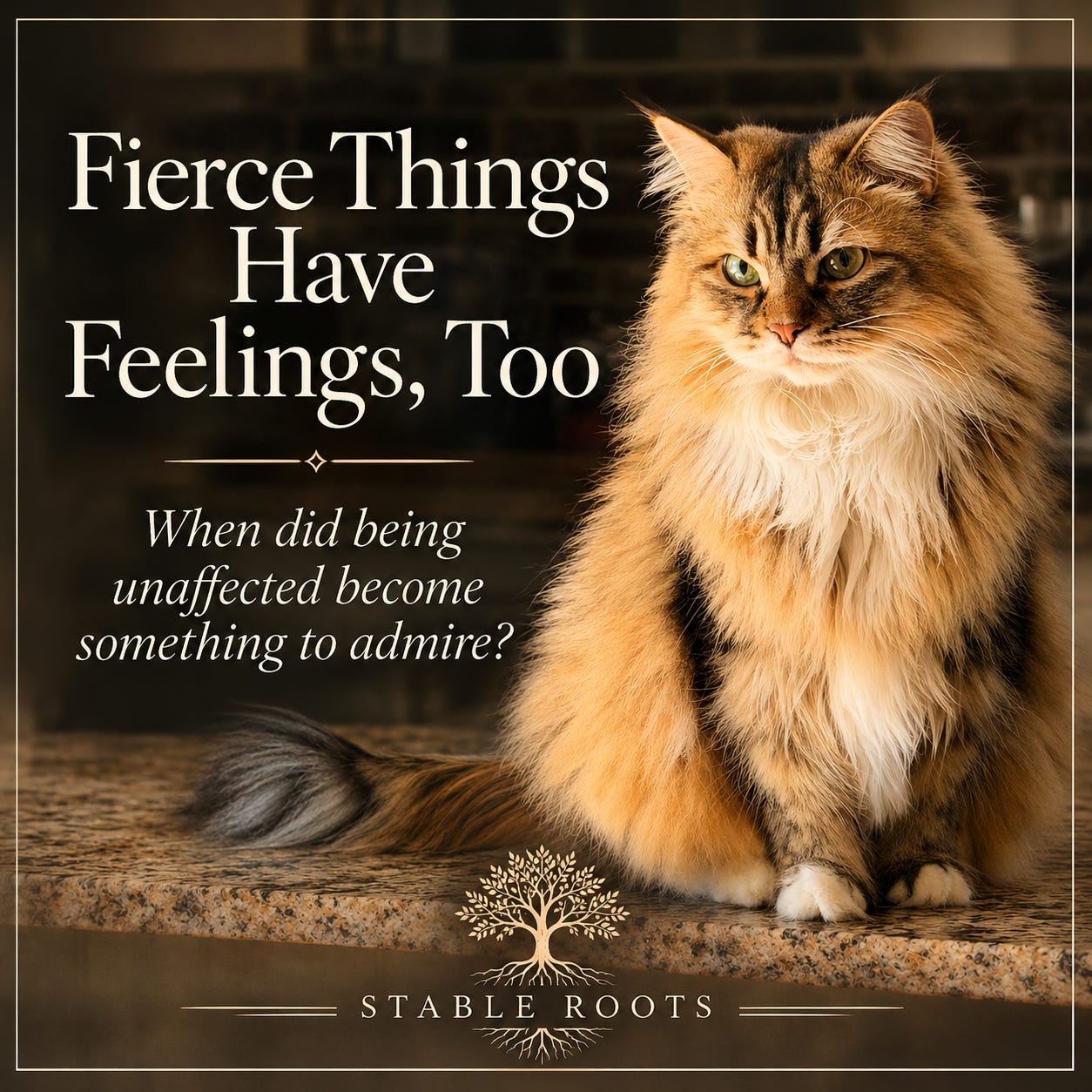
Fierce Things Have Feelings, Too
Why We Mistake Emotional Coldness for Strength
When did being unaffected become something to admire? And why do we so often mistake emotional coldness for strength?
In this week's Stable Roots, Kim Carter explores the complicated relationship between emotional intelligence, ambition, vulnerability, and the cultural expectation that strong people should be impervious to their feelings.
Drawing on her childhood in the horse world, decades of business ownership, and some difficult lessons in leadership, Kim examines the difference between emotional regulation and emotional suppression. From a frightening...
I Didn’t Expect to Fall in Love with a Chicken
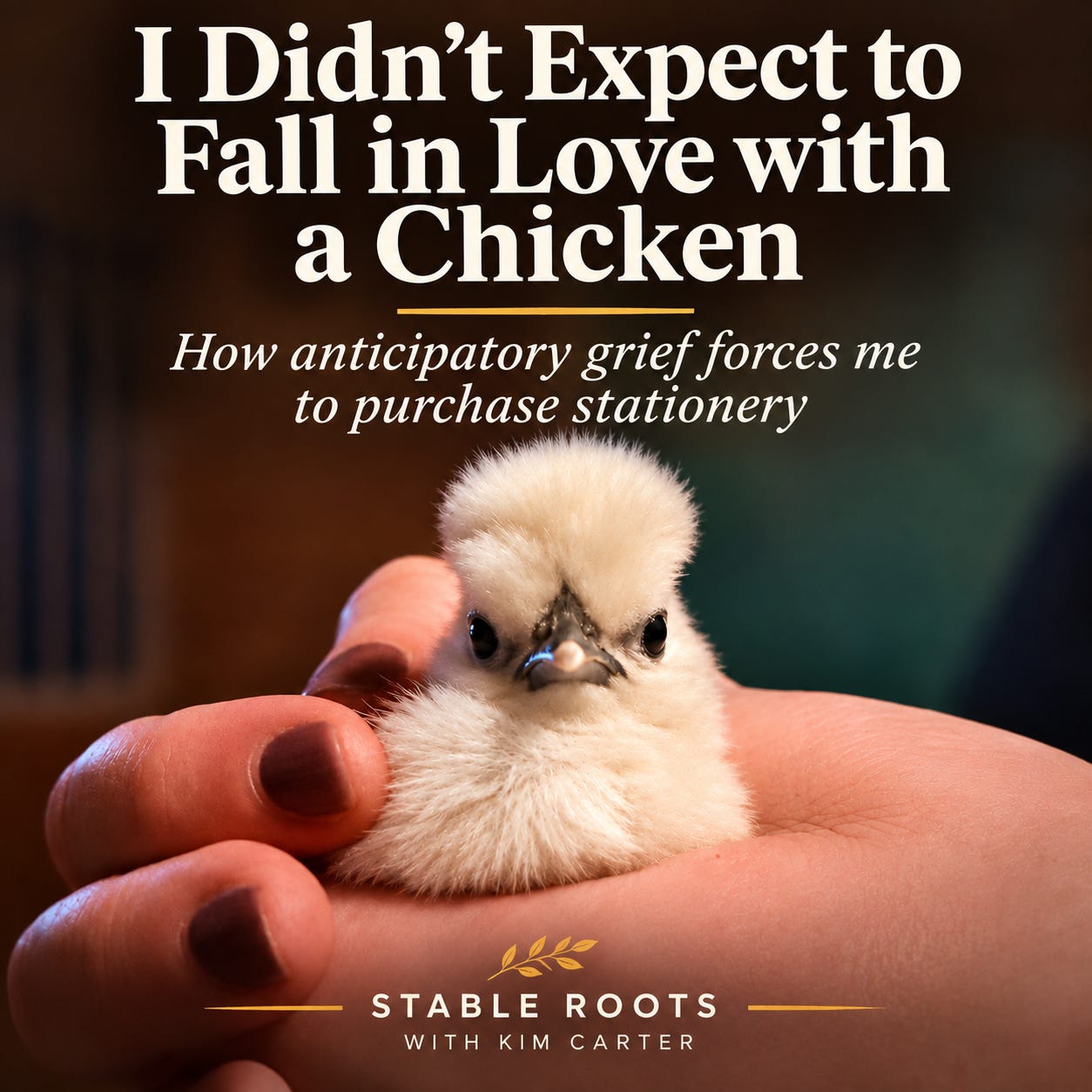
I Did Not Expect to Fall in Love with a Chicken
Stable Roots | Audio Edition
What do a dying chicken, a fountain pen, a small funeral, and an alarming amount of stationery have in common? Apparently, my nervous system.
This week in Stable Roots, I'm writing about the ways grief announces itself before we even know what we're grieving, the unexpected heartbreak of loving a tiny Silkie chicken, and the holiness of dawn when you've spent the night tending a sick animal.
There's also a nine-year-old with a better understanding of...
Oxytocin Has Entered the Chat
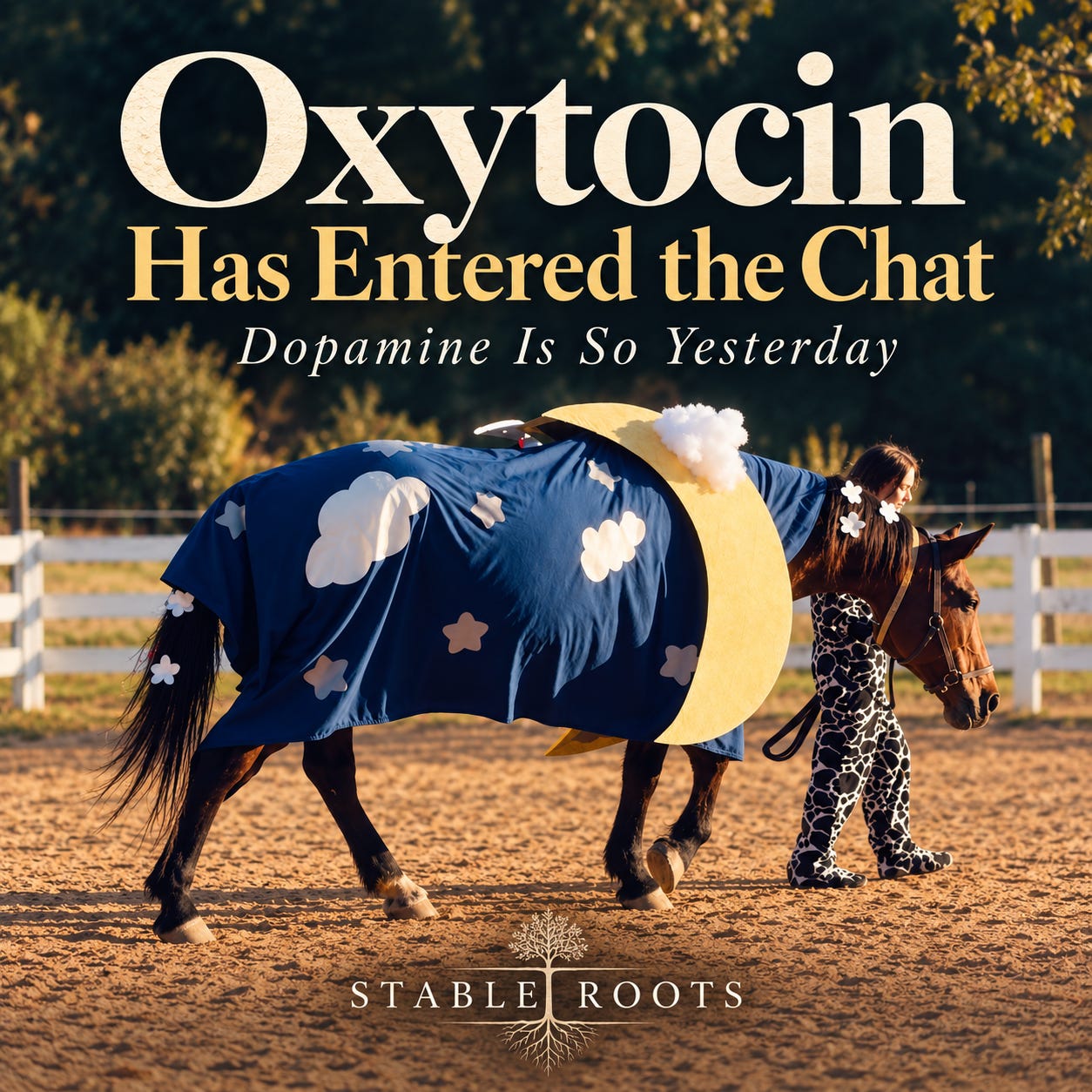
Oxytocin Has Entered the Chat: Dopamine Is So Yesterday
What happens when you've spent most of your life preparing for danger and suddenly find yourself somewhere you feel safe?
This week in Stable Roots, I'm exploring the biology of belonging, the role of oxytocin in our relationships with horses and humans, and how our brains can learn new ways of experiencing the world.
I'm sharing the terrible advice that helped inspire Bramblewood, a memorable lesson from Rupert Isaacson's visit to the farm, and why emotional safety deserves as much attention as physical safety.<...
It’s Just Anxiety, Darling
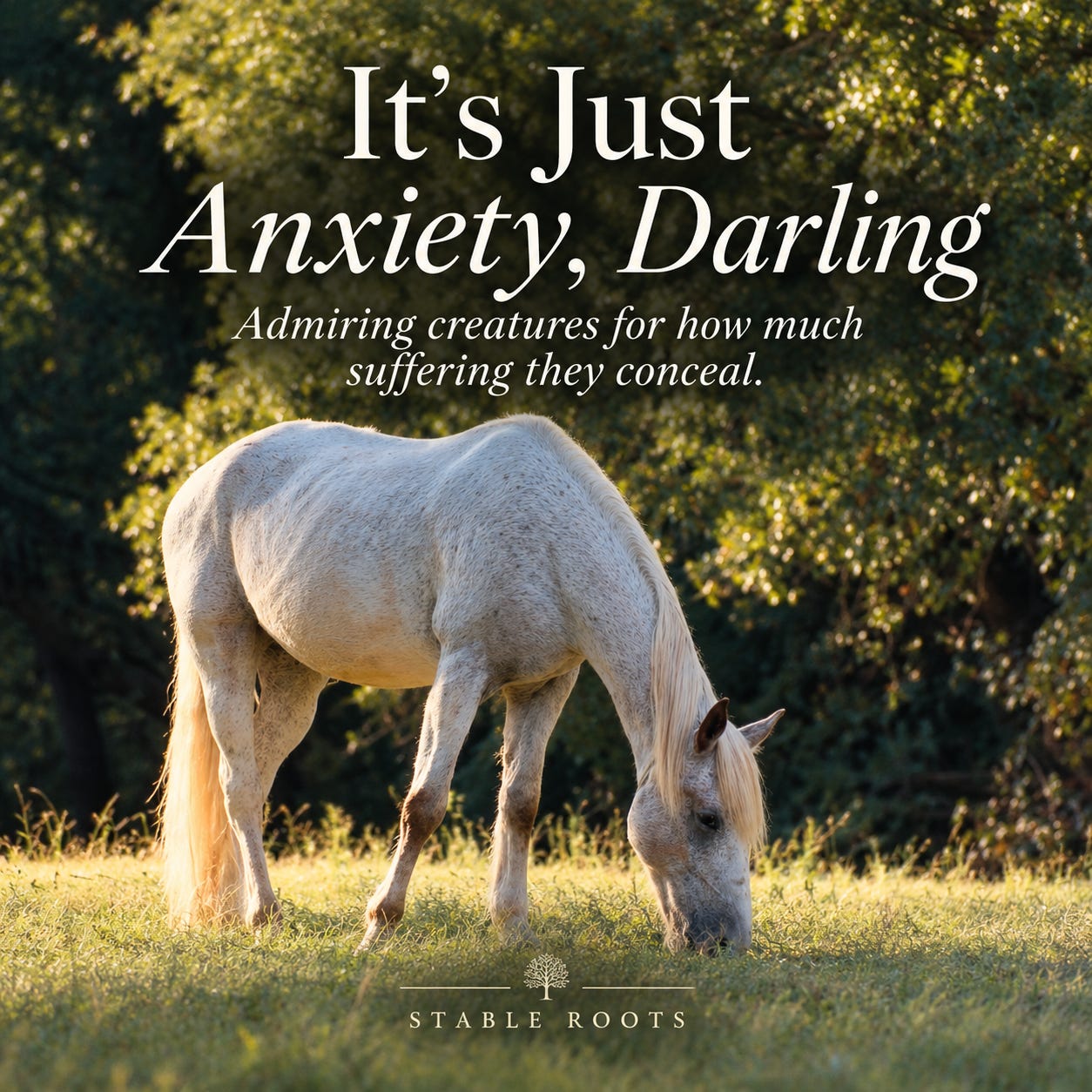
What happens when we become so good at tolerating discomfort that nobody notices we're suffering?
After three years of being told the numbness in my hands was anxiety, a nerve conduction study revealed severe damage that required surgery on both hands. Along the way, I encountered some rather strong opinions from my longtime shavings delivery guys, an unexpected lesson in the effects of epinephrine, and the realization that we're super glad to tell others how we're feeling without taking a good look at ourselves.
In this episode of Relatively Stable, I explore the uncomfortable similarities...
Hope Always Goes Clean
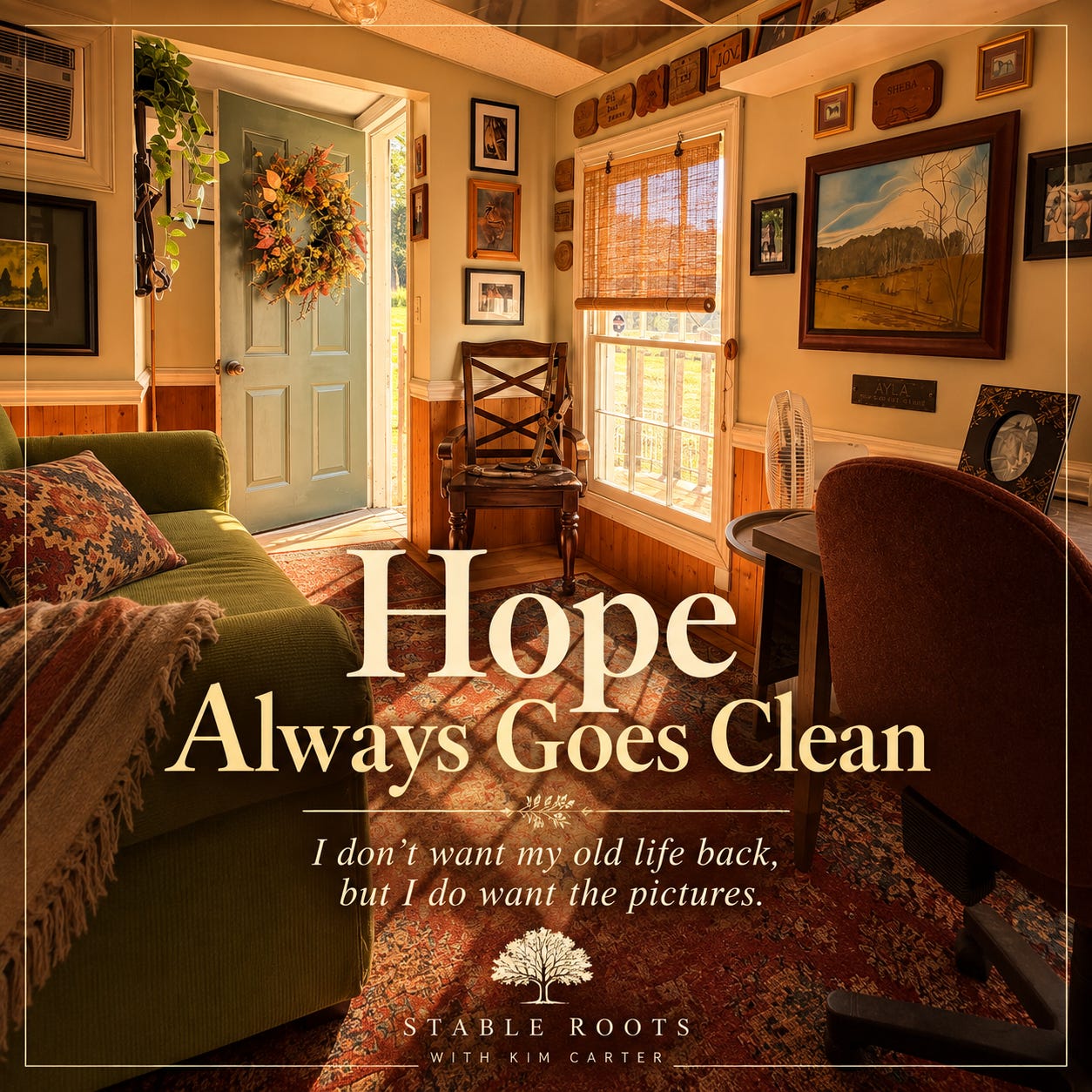
What happens when you find an old version of yourself in a box of dusty photographs, and realize you don’t miss her, but you’re awfully glad somebody took her picture?
This week in Stable Roots, I’m turning a forgotten little building at Lavender Hill into a home for thirty years of Bramblewood Stable's history. Along the way, I’m thinking about the power of photographs, the people and horses who make us who we are, and what it means to look honestly at the life behind you without either wishing it away or wanting it back...
Practical Farm Magic
What if Lot’s wife had OCD?
My mother has been asking this question for a long time. Maybe Lot's wife wasn't longing for Sodom. Maybe she was simply halfway down the road when she thought: Wait. Did I turn off the stove?
This week in Stable Roots, I’m taking you with me while I close the farm at night: a ritual of cats and chickens, old horses and water buckets, gates checked and checked again, and one long walk toward the Secret Meadow where something is moving through the dark Appalachian woods.
Fr...
Mane Character Energy
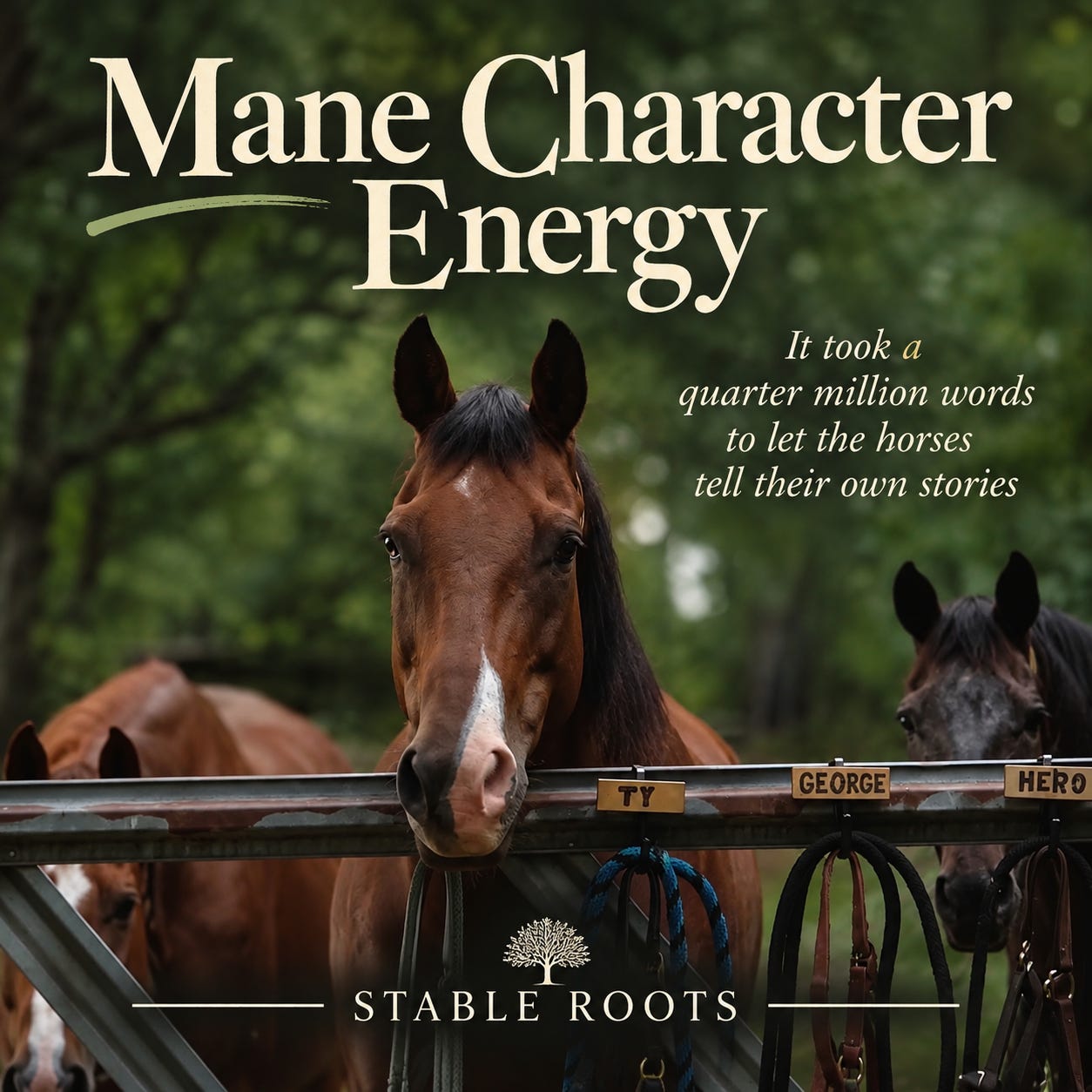
It took a quarter million words to let the horses tell their own stories.
This week in Stable Roots, I’m talking about what happened when I accidentally stopped writing around the horses and started writing about them.
It began with a conversation about horse shows, a Facebook post I mostly forgot about while mowing and listening to Demon Copperhead, and a phone that would not stop dinging. Then I started telling the individual stories of the horses at Bramblewood—Penny, Max, Hero, Pepper, Moose—and something unexpected happened.
People started bringing me their...
Julian Thinks the Barn Is Stupid

What’s the difference between being in control and being controlling?
This week in Stable Roots, I’m thinking about all the ways I’ve confused the two — from spending four hours trying to convince Max to get on a horse trailer, to watching well-meaning humans become complete doormats in the name of giving horses a voice, to one very opinionated chestnut gelding who spent an entire thunderstorm explaining exactly what he thought about being put in a stall.
We’ll talk about consent-based horsemanship, horse training, groundwork, boundaries, and what it really means to listen whe...
The Four Seasons
The Four Seasons: An almanac for those who are emotionally dependent on mowing grass
Kim has a problem.
Summer isn’t even over yet, and she’s already worried about what will happen when the grass stops growing.
After one full trip through the seasons at Lavender Hill, mowing has become more than another farm chore. It’s three uninterrupted hours on a machine, moving slowly enough to notice things, loudly enough that nobody can talk to her, and leaving behind the deeply satisfying evidence that something has been accomplished.
So what h...
Alpha is a Misnomer
Alpha is a Misnomer: On horses, wolves, the Cold War, and our need to know who is in charge
Who is actually in charge in a herd of horses?
For a very long time, we thought we knew.
We built entire systems of horsemanship around dominance, hierarchy, and the idea that a good human needed to establish themselves as the leader. Somewhere along the way, the language of Natural Horsemanship became tangled up with Alpha wolves, Cold War thinking, and our very human desire to arrange the world into neat little pyramids with...
A Total Eclipse of the Foxtail
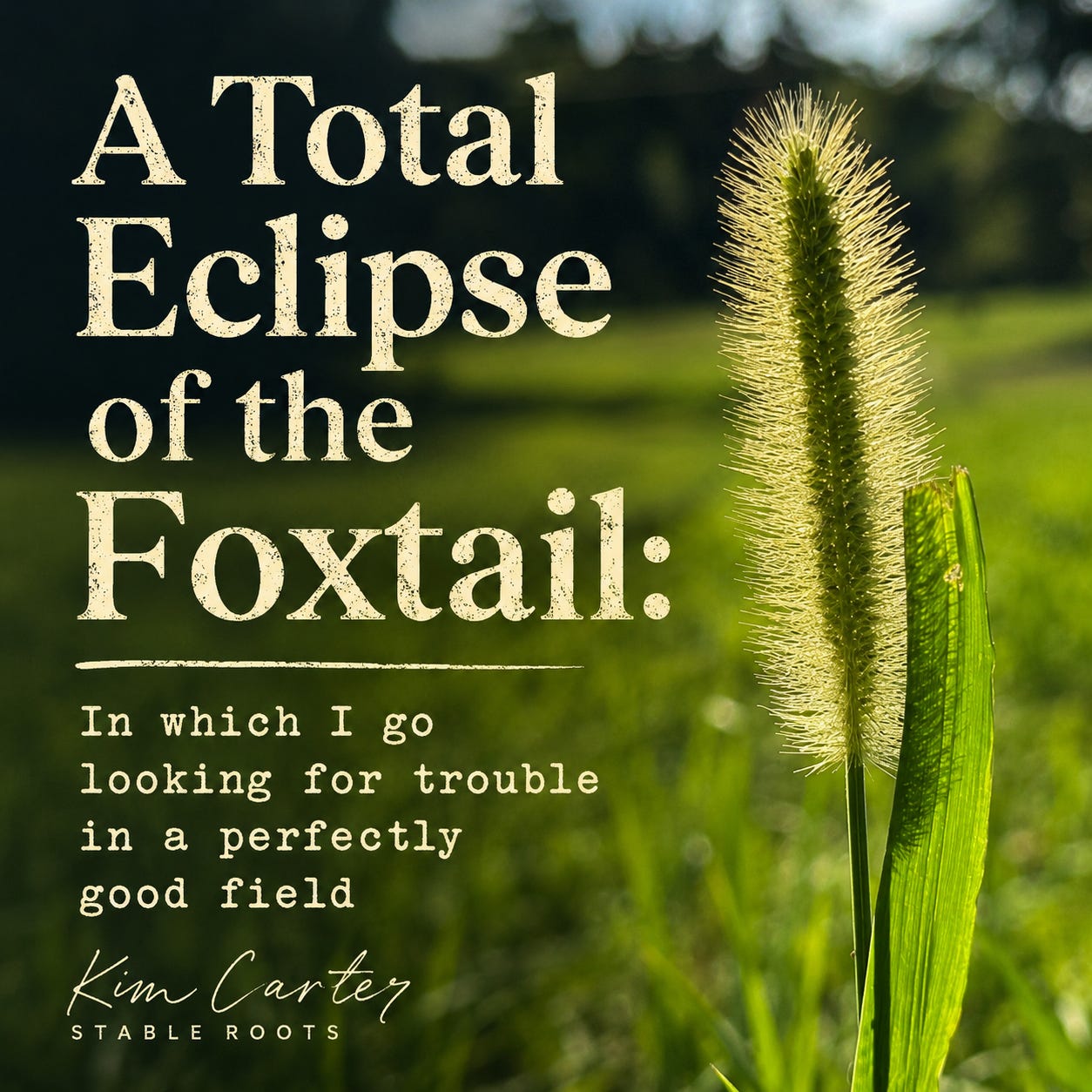
A weed can be growing beside you for years without causing a bit of trouble. Then somebody teaches you its name — and tells you to be afraid of it.
Suddenly, it’s everywhere.
This week, between two eclipses, I am roaming a horse pasture hunting foxtail, an ancient grass that has followed agriculture for thousands of years and that I had been conditioned to fear during my unfortunate former life selling hay.
There are horses. There are weeds. There are extremely particular hay buyers. There is a basic white girl ordering at Starbucks. Ther...
I'm Sorry, Please Forgive Me
I'm Sorry, Please Forgive Me
(I love you, thank you)
This week, I’m thinking about all the things we apologize for that might not require an apology at all.
Things like: talking to ourselves, talking to horses, taking up space, having bodies that change. Things like having feeling things we would rather pretend we don’t feel.
It begins with a client asking me if it’s okay to speak to a horse and Penny, our resident Amish unicorn, once again refusing to walk over a pole. It wanders through the st...
But Will There Be Riding?
But Will There Be Riding?
A social media post that took five minutes for me to write reached more than 40,000 people in a couple hours.
It wasn't my weekly essay, nor a podcast. It was just a little announcement for an introvert-friendly book club held in the hallway of a horse barn.
As strangers began signing up for an event built around silence, I found myself wrestling with an unexpected question: How do you protect something whose greatest value is that almost nothing happens?
This week, I'm writing about social media...
A Time for Everything
This week in Stable Roots, a rug becomes much more than a rug.
As I begin clearing out the room where my father died, I unknowingly prepare my heart for the loss of a dear friend. A conversation over Middle Eastern food, a horse covered in mysterious welts beneath the moonlight, and an old hospice nurse's wisdom all converge into a single realization: we almost never understand the purpose of our ordinary moments until they're behind us.
This week's essay is about grief, timing, horses, and the unrelated threads that stitch our life together.
<...Horse with a Pearl Earring
Horse with a Pearl Earring
What do a missing pearl earring, a flea-bitten gray mare named Penny, and three teenagers sleeping in a horse pasture have in common?
This week in Stable Roots, I follow a story that began with the certainty that one of my horses had swallowed an earring and ended somewhere entirely different.
Along the way, I explore why horses instinctively take the fewest steps necessary, why humans so often invent extra ones, and how living on our new farm is teaching me the difference between responsibility and carrying imagined...
The Trees Speak
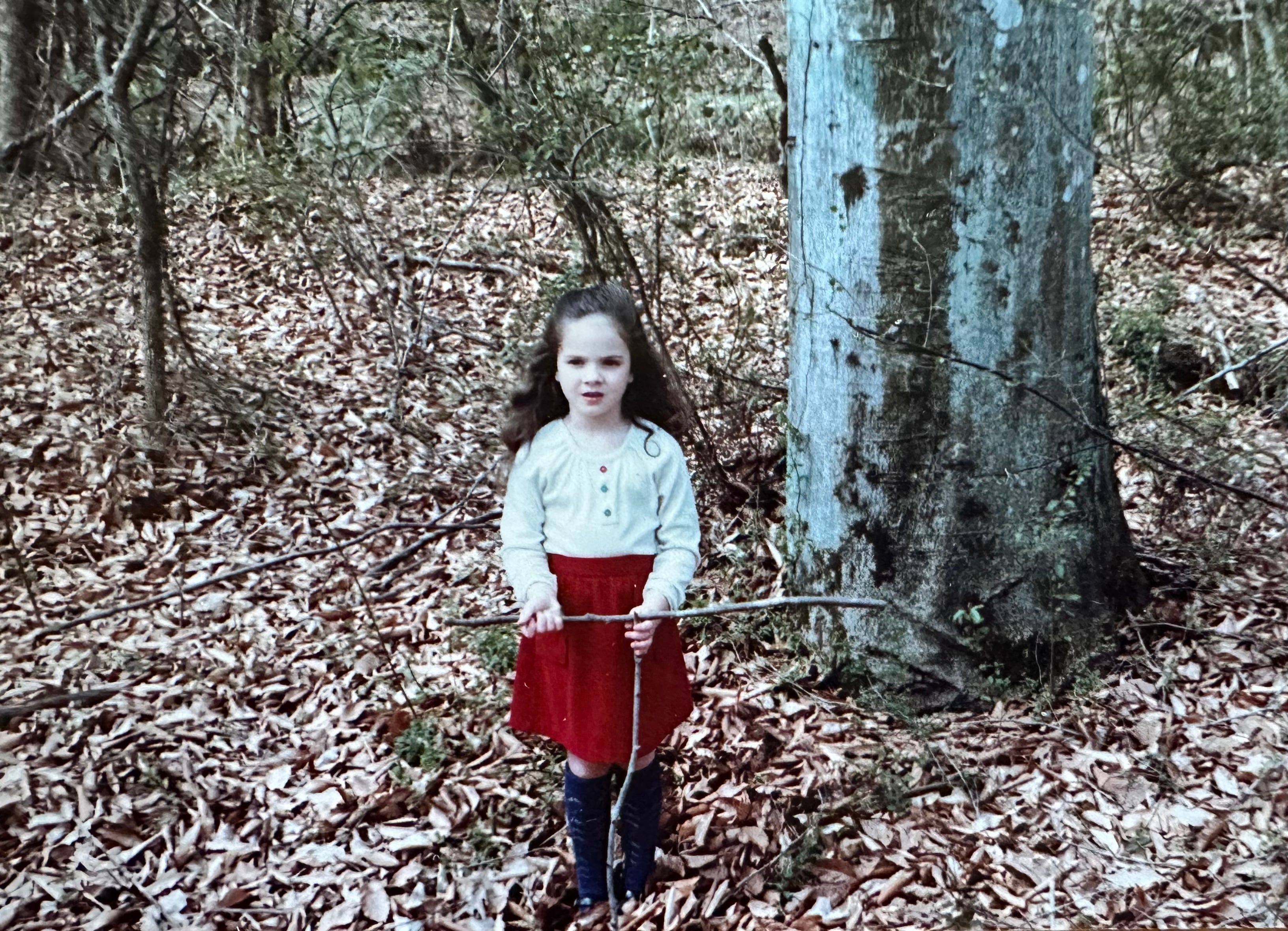
A few weeks before my wedding, a tree started singing.
Christopher and I were standing beside an old pond, preparing to say our vows beneath its branches, when we heard a sound neither of us could explain. We listened. Then we moved our ceremony.
Days later, Hurricane Helene forever changed the landscape around us.
This week on Stable Roots, we follow the language of the forest through folklore, forestry, science, and one unforgettable South Carolina forester who seemed to live on an entirely different timeline. Along the way, we explore the mystery of...
The Joy of Mowing
What if mowing wasn't a chore?
This week in Stable Roots, Kim Carter reflects on why climbing onto a tractor has become one of the most restorative parts of life at Lavender Hill. What begins as a story about bush hogging pastures unfolds into a meditation on attention, empowerment, Elizabeth Gilbert's All the Way to the River, the surprising history of lawns, the secret language of roadside ditches, and why Johnson grass might have more to teach us than we'd like to admit.
Sometimes the most ordinary work invites us into the deepest conversations—with ou...
Granny Magic
Granny Magic: A witness statement from the Blue Ridge Mountains
What if the old women knew something we've forgotten?
This week, I'm taking you back to one hot summer afternoon when I ran into a burning kerosene heater, my cousins called Aunt Daisy, and she "talked the fire" out of my burn with a prayer passed down through generations.
That memory opens the door to a much larger conversation about Appalachian folk traditions, the rise of cottagecore and grannycore, the tension between faith and science, and why so many of us are suddenly...
Shut Up and Listen
The Ability to Be Taught
Why horses care less about what we think we know.
What if the most important learning skill isn't intelligence?
This week, Kim Carter begins with a one-minute drone video of horses running across a field in Upstate South Carolina and follows an unexpected thread into a much bigger question: What does it mean to pay attention?
From horse-crazy barn rats and child labor law research in the pre-internet era to a stubborn girth buckle, fragmented attention, working memory, and the surprising science behind learning styles, this...
A Future Me Problem
What year is your problem from?
In this week's Stable Roots, Kim explores a simple thought experiment that came to her in the wee hours between waking and sleeping: What happens when you take a problem you're facing today and place it in another time period?
Would a fallen tree have felt different in 1825? What about a dead mouse in a feed bag? Would the problem still exist, or would it reveal itself as a product of modern technology, expectations, and endless decision-making?
Through stories from life at Lavender Hill—including a storm-damaged wa...
I'm So Glad I Was Evicted
The best solutions often come at the worst cost.
For two decades, Kim grew a business and a life inside the protective casing of fear—terrified of what would happen if she were ever forced to leave the farm she called home. But human time moves fast, and when an eviction notice arrived to signal that the land was being developed, a twenty-year tenancy vanished in a blink.
In this audio essay, Kim reflects on the long, overlapping histories we leave on borrowed ground, the difference between a grand illusion and a true sanctuary, and ho...
The Dreaming
This week's essay started as a dream about a house I didn't know I owned.
Then, it became something bigger — an investigation into why the nature of my dreaming changed the moment I moved to Lavender Hill Farm, and what it means that I'm finally, for the first time in my life, sleeping straight through the night.
In this episode I'm reading the full essay, which traces the dreaming through the science of REM sleep, the mystery of the Voynich Manuscript — a fifteenth-century illustrated codex full of plants that don't exist and a script no one...
The Grass Isn't Always Greener
This week's episode is the audio companion to the Stable Roots essay — and it starts with Hero, my little chestnut Quarter Horse, army-crawling under an electric fence in the middle of the night to graze the forbidden rushes by the pond.
I thought he was being a pain. Turns out, he was a prophet.
What begins as a pasture management problem in the middle of a Foothills drought opens into something much bigger — the difference between forcing compliance and allowing recovery, in the land, in our horses, and in ourselves.
In this episode:
We Don't Save Old Farms
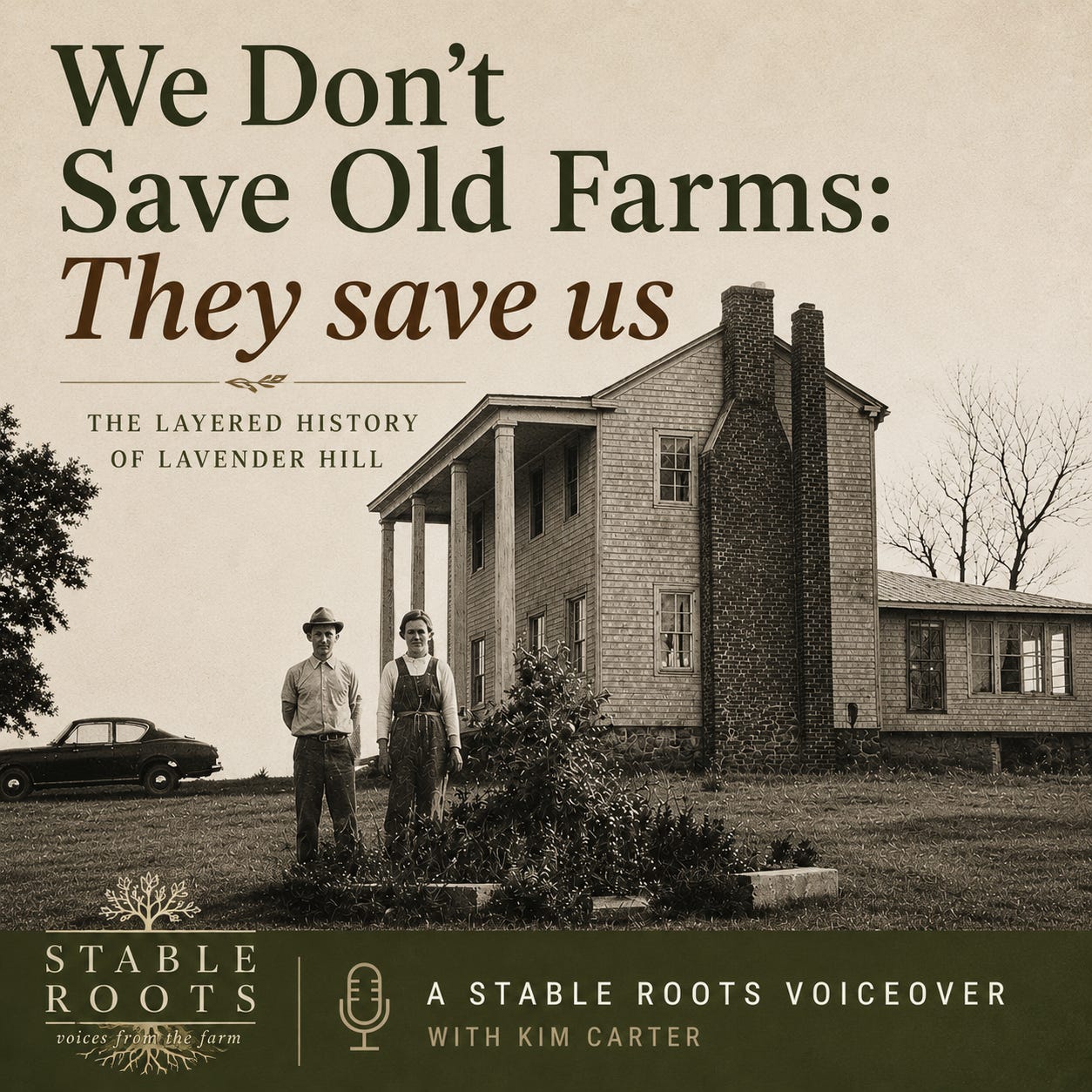
We Don't Save Old Farms: (They Save Us)
In this week’s Stable Roots, Kim Carter traces the layered history of Lavender Hill — the 200-year-old farm in Simpsonville, SC now home to Bramblewood Stables — through old letters, photographs, buried spring stones, and an antique hand plow that may have originated from the land itself.
What begins as research into the farm’s past slowly becomes something more intimate: a meditation on stewardship, memory, and the feeling of stepping into a conversation already underway long before your arrival.
This episode explores:
- The tran...
Your New Neighbors are Costing You a Fortune
In 2020, the world tilted on its axis. For the Upstate of South Carolina, that tilt sent a wave of 100,000 new residents crashing into our pastures. As we cross the milestone of one million neighbors, the infinite horizon of the American South has officially hit a bottleneck.
This week, Kim dives into the canyon between agricultural value and development prices. From the ingenious survival strategy of European track systems to the personal desperation of cashing out a retirement to save her farm by purchasing thirty acres, we’re talking about the high cost of holding the line. Is a...
We Are All Watching the Same Shoreline
We Are All Watching the Same Shoreline
This week I did something I don't usually do — I went down a rabbit hole that started with my clients asking about rain and ended at a United Nations report declaring global water bankruptcy.
I work outside every day. I watch the same fields, the same fence lines, the same pond across the street from my kitchen window. And what I've been watching all winter is a shoreline that keeps moving in the wrong direction. Most people around me have no idea we're living inside the driest stretch th...
You’re Not Lost, You’re Just Relocating
You're Not Lost, You're Just Relocating
We’ve been taught that running is a sign of weakness, a character flaw, or a symptom of fear. But if we look at the architecture of the horse, we see a different story. A horse doesn't run to disappear; it runs to gain the distance required to turn around and face the threat.
In this episode, we dive into the "biology of the turn." We explore why we feel so exhausted by the modern world (it’s not the running—it’s the lack of resolution) and how to disti...
The Witness
Bearing Witness — What It Means to Be Seen, to See Others, and to See Yourself
This week in Stable Roots, Kim Carter writes about witnessing — what it truly means to be present for someone, and how our instinct to fix things often gets in the way.
After a surprise visit from two of the most important people in her life, Kim found herself thinking about the kitchen table, a hidden drawer full of medicine, and what it looks like when someone actually stays in the field of hard things with you instead of trying to move...
The Biological Prayer
The world is talking. It has always been talking. We are the only species that decided, somewhere along the way, to stop transmitting.
This week's episode is the second in the Invisible Altar series — and it goes somewhere unexpected. We start in the barn, with the frozen silence of a person who has just been offered a list of options and can't locate, anywhere inside themselves, what they actually want. And we end with humpback whales singing across four hundred miles of open ocean, elephants grieving into the ground, wolves locating each other across valleys and forests, an...
The Invisible Altar
A few weeks before our cat Indigo was diagnosed with FIP, she started purring constantly.
Every night, pressed against me, making biscuits on the duvet. I thought she was finally at peace after the hardest year of our lives. I was wrong.
A cat's purr vibrates between 25 and 150 hertz — a frequency clinically shown to stimulate bone density and accelerate tissue repair. She wasn't contented. She was in triage. Her body was running the only repair instrument it had, alone in the dark, while I lay there reading her distress as gratitude.
I had be...
The Nutrients of Disruption
The Nutrients of Disruption
When we arrived at the new farm, I thought my first responsibility would be to maintain the tidy lawns and pastures that had been carefully tended for generations. My plan was simple: mow early, manage the weeds, and keep the landscape looking orderly.
But spring had other ideas.
Before I could get the mower started, the fields erupted with plants most people would call weeds—henbit, chickweed, dandelion, wild onion, violets, shepherd’s purse. As I paused long enough to identify them, I discovered that nearly every one of thes...
The Elephant in the Room
The Elephant in the Room
In this episode, I read a new essay from Stable Roots written in response to an anonymous letter that arrived at our farm.
The letter accused me of harming my horses, misusing donations that supported the relocation of Bramblewood Stables, and failing the community that helped make our move possible.
Rather than responding through rumor or secondhand conversation, I chose to answer the only way I know how: openly and in writing.
This piece explores what transparency actually means when your work is visible, vulnerable, and...
That Time I Bought a Cat

That Time I Bought a Cat (And Then Purchased Another)
In this week’s episode, I’m reading my latest Stable Roots essay — a piece about cats, yes, but also about grief, land, financial contraction, hospice care, and the quiet investments that hold us steady when everything else feels uncertain.
The year I bought two Siberian cats was the same year my father entered hospice, we lost the farm we had stewarded for two decades, and Christopher and I signed for a historic property that would become Lavender Hill.
I had never purchased a cat...
The Book Beneath the Barn

In this voiceover essay, I trace the long arc from cleaning stalls in the Dark Corner of the Blue Ridge Mountains to stewarding a farm, leading a community, and finally turning toward the book I have been circling for decades.
What begins as a reflection on land loss and self-censorship widens into something more foundational: free expression, oral tradition, and the responsibility of carrying forward knowledge that lives in land, animals, and lived experience. I speak candidly about fear, second-guessing, and the temptation to edit myself in a cultural moment that rewards sound bites over substance.
<...Cultivating Empathy

Cultivating Empathy
In a world that tries to drain it out of you
In this reading of my weekly, Stable Roots, essay, I explore what empathy actually is — and what it isn’t.
We hear the word constantly. It’s praised, politicized, misused, and often confused with emotional intensity or moral agreement. But empathy, practiced well, is deeper and more complex than that. It isn’t about absorbing everything or proving how deeply we feel. It’s about listening carefully enough to receive another person’s experience without overtaking it.
Through stories of c...
Why Not Me?

In this essay, I write from the days surrounding my father’s death and our first quiet Christmas at Lavender Hill Farm. What I expected to be rest turned into a confrontation with how my body and mind responded after months of caregiving, loss, and responsibility, and with an old folk practice that gave language to something I didn’t yet know how to name.
Sin Eating weaves together farm work, folklore, and a Christmas Eve medical scare with one of our mares. I reflect on the impulse to take responsibility for loss, to keep internal ledgers, and...
Keeping Vigil

Keeping Vigil
At the threshold of the Fire Horse
This piece was written in the slowed time of dying and published at the turning of the year. It traces what happens when clocks stop mattering, when mirrors become witnesses, and when keeping vigil becomes the only meaningful work left. Moving between hospice rooms and hay fields, folklore and neuroscience, agitation and clarity, it asks what it means to stay with someone all the way to the edge—and how to know when staying gives way to letting go.
Keeping Vigil explores end-of-life presence, te...
The Practice

The Practice: How repetition, devotion, and the oldest meaning of the word keep us rooted in an unpredictable world
This week’s essay is an exploration that began with the idea of creative routines and ended somewhere far more human. I'm reading the full piece to you here and bringing you into the fields at Lavender Hill: the old fencing we inherited, the hurricane debris still shaping the horizon, the unexpected gunfire along the geldings’ field, and the small acts that keep us tethered to ourselves when the world slips off its axis.
This is what...
Cats in the Walls

Cats in the Walls
Inherited ghosts, holiday garland, and being ambushed by forgiveness
This week’s essay didn’t go where I expected it to go. I sat down to talk about shadow work with horses, and instead found myself inside my lived story of hospice care, old family fractures, and forgiveness coming before I'm ready to let go.
You’ll hear about the move to Lavender Hill, the grief that followed us there, the ghosts my father is wrestling with, and the ones I’ve carried far too long. You’ll also hear how a...
A Beginner’s Guide to Shadow Work

A Beginner's Guide to Shadow Work
This week, I’m taking you into the barn aisle at Lavender Hill -- into the fog, the quiet, and the shifting inner landscape we all carry. We talk a lot about showing up for our lives, but we rarely talk about the selves that show up instead of us: the crisis-trained parts, the exhausted parts, the dreamers, the watchers, and the ones bracing for storms that never fully arrive.
In this episode, I explore the “crowd inside us”—the sub-selves shaped in childhood, the ones that still pull the stri...
