Heliox: Where Evidence Meets Empathy 🇨🇦

We make rigorous science accessible, accurate, and unforgettable.Produced by Michelle Bruecker and Scott Bleackley, it features reviews of emerging research and ideas from leading thinkers, curated under our creative direction with AI assistance for voice, imagery, and composition. Systemic voices and illustrative images of people are representative tools, not depictions of specific individuals.We dive deep into peer-reviewed research, pre-prints, and major scientific works—then bring them to life through the stories of the researchers themselves. Complex ideas become clear. Obscure discoveries become conversation starters. And you walk away understanding not just what scientists discovered, but why it matters an...
Already Clean

Send us Fan Mail
📖 Read
Why AI's "tangled black box" may have been a blurry microscope, and how clean, branching neurons change the story
For ten years, the people who study artificial intelligence have been telling us the same story. Inside every large neural network, they said, there is a knot. Concepts crammed into the same few neurons, jammed together to save space, so snarled that no human could ever read them.
We believed it because it felt true. Of course the machine is a mess. We built something enormous and str...
Origins of The Ick: The Protective Function of Disgust

Send us Fan Mail
Why would a monkey refuse a free grape? In this Heliox deep dive, we explore a Royal Society Open Science study of macaques at a Texas sanctuary showing that disgust, our instinctive “ew,” works like an ancient behavioral immune system. Researchers coated monkey feces in clear epoxy to remove smell and germs, then watched the monkeys choose.
Troop-raised macaques avoided the food; many former pets did not. After a deadly retrovirus outbreak, even uninfected survivors became markedly more cautious. We connect these findings to toddlers, wildlife rehabilitation, and our own COVID-19 beha...
Country of Geniuses in a Data Center 📄

Send us Fan Mail
📖 Read
Inside Anthropic's S-1: rogue agents, an $80 billion paper loss, and who really holds the brake
An SEC filing is supposed to be dull. Anthropic's S-1 reads like a confession, a safety manual, and a geopolitical thriller. In this Heliox deep dive, we decode the October 2026 IPO filing from the maker of Claude to explain what it means for AI safety, agentic AI, and the future of work.
You'll hear how Claude helps build the next Claude (the "closing the loop" idea), how AI agents differ from cha...
The Power of Questions: Why AI Is Better at Medical Diagnoses

Send us Fan Mail
What if the best AI doctor is the one that asks the most questions?
For years, artificial intelligence has been tested on medicine by being handed a finished case file. This episode explores a Science paper that changes the test. In a simulation called SDBench, an AI starts with a vague complaint and must ask questions, order costly tests, and commit to a diagnosis, just like a doctor.
In this episode:
Why “AI passes the medical exam” headlines can misleadHow the SDBench simulation works, with a detective, a gate...🧬 The Slow Way Back

Send us Fan Mail
📖 Read:
Two genetic switches, fifty slow days, and the surprising science of rewinding cellular age without the cancer risk
What if the biological clock could run backward, safely, in a cell from a 101-year-old? In this evidence-based science podcast episode, we unpack a 2026 Aging Cell study from the University of Bonn showing how two genetic switches, SOX2 and CMYC, converted a centenarian's blood cells into neural stem cells with an epigenetic age of roughly five.
Learn how researchers sidestepped the tumour risk of embryonic reprogramming and the stub...
We’re Almost at Protecting 30% by 2030, but The Target Hides a Trap

Send us Fan Mail
The Continent We Misplaced: Earth Is 26.8% Protected, Not 18.5%. So Why Is Nature Still Collapsing?
What if humanity “lost” a protected area bigger than Antarctica?
A new Nature study says the UN scorecard missed forgotten parks, municipal watersheds, sacred groves and Indigenous-stewarded lands. The real total may be 26.81% of land, just 3.2 points from the 30 by 30 goal. 🌍
But here’s the catch: most of the newly counted land sits in the same “rocks and ice” regions. Half of Earth’s ecoregions are still under-protected.
In this episode:<...
Hand Them a Trowel

Send us Fan Mail
How Citizen Science Replaces Blind Trust With Belonging
Most Americans say they value science. Far fewer feel they belong. In this evidence-based science podcast episode, we explore why public trust in science is fracturing, and why the fix may not be more polish, more press releases or more blind faith. It may be a trowel.
We unpack a 2026 PLOS One study on Americans’ multidimensional relationship with science, alongside Pew Research Center data on confidence in scientists, Wellcome and 3M survey insights, and research on science communication in...
Cannabis, Anxiety and the Brain: Inside the Fear Circuit

Send us Fan Mail
Why does the same cannabis leave one person blissful and another certain the sirens are coming? In this Heliox deep dive, we follow fear into the brain of a mouse, past a lens thinner than a needle and into the central amygdala.
Researchers at Northwestern University's Feinberg School of Medicine, led by Dr. Sachin Patel, found that cannabinoids weaken the GABA "brake" on fear-driving somatostatin neurons. When stress hits the gas at the same moment, anxiety can spiral. When those neurons were silenced, the mice calmed down. We explore what this...
🧠 Cognitive Co-Regulation

Send us Fan Mail
📖 Read:
How AI is slipping into the layer beneath your thoughts, and the design choices that keep your mind your own
What happens when AI stops being a tool and becomes part of how you think? In this evidence-based deep dive from Heliox: Where Evidence Meets Empathy, we explore cognitive co-regulation, System Zero and the extended mind, drawing on cutting-edge cognitive science, neuroscience and mathematics.
We meet a Canadian policy brief proposing lighter, curved-geometry (Grassmann manifold) AI as a sustainable, safer alternative to energy-hungry transformers. Along the way...
The Puzzle of Anaesthesia: Not an Off Switch

Send us Fan Mail
Every day, thousands of people lie down, count backward from ten, and vanish for hours. We’ve done this for 180 years without knowing how it works. 🧠
A new study in Nature Neuroscience compared humans, macaques, marmosets, mice, zebrafish and a 302-neuron worm. Across 700 million years of evolution, they found 485 shared mathematical signatures of unconsciousness.
✨ The “echo” of a thought collapses.
✨ Brain regions lose their rhythm.
✨ Five volts to one thalamic hub woke anesthetized monkeys.
It isn’t darkness. It’s fragmentation, and understanding it may one day make...
💭 When AI Learns to Dream

Send us Fan Mail
📖 Read
How Dream-RSI turns a machine's failures into a simulated universe and cuts the cost of self-improvement up to 162-fold
What if every dead end you ever hit was secretly a map? In this deep dive, we unpack Dream-RSI, a new science podcast-worthy paper from researchers at the University of Maryland, Google DeepMind, and the University of Virginia. It shows how an AI agent can log its failed attempts, convert them into a replay simulator, and "dream" better exploration strategies offline. In reported tests, that meant up to 162 times few...
A New Hypothesis of Dreaming and Nightmares

Send us Fan Mail
Imagine discovering an animal that goes limp, shuts off its senses, and hallucinates for a third of its life. A design flaw, right? Not so fast. 🌙
A 2026 hypothesis suggests sleep is a loop: deep non-REM sleep repairs and flushes the brain, then REM sleep runs a dream-powered stress test to check the work, over and over, all night.
✨ Why your brain's "fluid flush" may matter for long-term brain health
✨ Why REM is a virtual-reality diagnostic with your muscles safely switched off
✨ Why ten hours at a desk leaves your...
Life Swallowed the Sun, Twice: The Origin of Plants

Send us Fan Mail
You step onto a staircase in a city you've never visited. Your neck prickles. You KNOW there's a Picasso hanging on the left at the top. 🖼️
You've never been here. So why is your brain so sure?
In this episode we put two sources side by side: Cleveland Clinic neurology and Colorado State University cognitive psychology.
Here's what they show:
🧠 Déjà vu is a brief misfire between two memory systems. Familiarity says "I know this!" while recollection can't find the file.
✈️ It's more common in...
The Steel Was Never Real

Send us Fan Mail
📖 Read
Season 7 Review:
How Falling Walls Between Science, Bodies, and AI Are Changing Everything
What happens when the walls between medicine, climate science, neuroscience, and artificial intelligence collapse? In this Season 7 review, the Heliox deep-dive podcast looks back across 75 research-backed episodes to find a hidden pattern: the best answers live in the overlap between disciplines.
You'll hear how a Bayesian model revealed that two identical heart attacks can have completely different biological causes. You'll learn why a coffee-cup-sized bird is losing its migration meal, how sewers beca...
The Genius in the Concrete Room

Send us Fan Mail
📖 Read
How AI Is Learning to Act, Remember, Evolve, and Collaborate
What if the smartest mind on Earth were locked in a concrete room, brilliant at calculus but unable to fetch groceries? That's the problem behind today's AI, and this episode of Heliox explores the research roadmap for opening the door.
This is a science podcast deep dive into agentic reasoning, the shift from AI that only talks to AI that plans, uses tools, remembers, evolves, and collaborates. Drawing on a major survey from researchers at...
Air Conditioning Makes Us Miserable: The Open Window Effect

Send us Fan Mail
Why are so many offices freezing in July? We can now engineer any indoor temperature, yet millions of us shiver at our desks. This episode unpacks the physics of air conditioning, a "thermal sponge" that moves heat rather than making cold, and the 1998 UC Berkeley study by Richard de Dear and Gail Schiller Brager that changed how we think about comfort.
In this episode:
How compressors, condensers and expansion valves really workThe "static model" of comfort, and why it treats people as passive21,000 observations from 160 buildings across four continentsBehavioral, physiological...📑 The Laptop That Broke the Rules

Send us Fan Mail
📖 Read
How one independent researcher fine-tuned an 8-billion-parameter AI on a 4GB gaming laptop — and uncovered a hidden bug the whole industry had missed.
We make rigorous science accessible, accurate, and unforgettable.
A laptop with 4GB of video memory just fine-tuned an 8-billion-parameter AI model — something conventional machine learning wisdom says is flatly impossible. In this episode, we trace independent researcher Alpamys Makazhan's journey through "Exact Layer Streaming," a technique that outran an enterprise H100 data center GPU, exposed a silent memory-corruption bug buried in a libra...
Déjà Vu: The Brain's Smoke Detector

Send us Fan Mail
You step onto a staircase in a city you've never visited. Your neck prickles. You KNOW there's a Picasso hanging on the left at the top.
You've never been here. So why is your brain so sure?
In this episode we put two sources side by side: Cleveland Clinic neurology and Colorado State University cognitive psychology.
Here's what they show:
🧠 Déjà vu is a brief misfire between two memory systems. Familiarity says "I know this!" while recollection can't find the file.
✈️ It's more commo...
📐Out of Flatland: How Curved Math Is Rewiring AI

Send us Fan Mail
📖 Read: https://helioxpodcast.substack.com/publish/post/218050132
Why teaching neural networks to think in curved, folded space — not flat grids — could cut AI's power bill, stop it from hallucinating, and finally give humans a steering wheel for the black box.
Your AI can write code and pass the bar exam — so why does it also hallucinate, drain a small country's worth of electricity, and turn dead in a huge fraction of its own neurons? This episode traces the answer to a surprisingly simple culprit: for a decade, AI has been forc...
Brain Aging Explained: How Your Hippocampus Rewrites Itself

Send us Fan Mail
Your brain isn't fading. It's being renovated.
A new Science study by Nathan Zemke and colleagues took a cell-by-cell look at the human hippocampus, and the story is stranger and more hopeful than "rust."
🧬 The 3D folding of our DNA slowly erodes, like a paper crane losing its creases.
🛡️ Between ages 50 and 75, the brain's original yolk-sac microglia appear to be replaced by blood-derived cells.
⭐ Synapse-managing astrocytes decline, and the switchboard thins.
🌅 And a readable mechanism means future therapies have somewhere to aim.
Which of th...
The Alien Language Nobody Taught Them

Send us Fan Mail
📖 Read
How AI agents invent, teach, and sometimes hide their own language.
So the question isn't whether machines will develop their own way of talking. Given pressure and a little time to reflect, they clearly can. The question is whether we will remain the kind of partner worth speaking plainly to, the kind who keeps a chair at the table, and who, when something sounds like a code, does what that newcomer did.
Stops. Asks. Wait, what does that mean?
That small, stubborn act of cur...
Six Dials: How Humans Rewired the Dog Brain

Send us Fan Mail
📖 Read the companion essay: https://helioxpodcast.substack.com/
A Chihuahua and a Great Dane are the same species — Canis lupus familiaris — yet they look like different animals entirely. We've long known humans reshaped the outside of the dog. But did we reach inside the skull?
In this Heliox deep dive, we unpack a landmark Journal of Neuroscience study (Hecht et al., 2019) that mapped the brains of 62 dogs across 33 breeds using an elegant, bias-free method — averaging every brain into one "ghost dog" template, then measuring the squish and stretch needed to fit eac...
When the Machine Starts Fixing Itself While You Sleep

Send us Fan Mail
📖 Read: https://helioxpodcast.substack.com/publish/post/216793226
Inside the five-level roadmap for AI that diagnoses, rewrites, and verifies its own code — and the guardrails meant to keep humans at the gate
Sep 22, 2026 • (S7 E66) • 48:55
What happens when the engineers building AI can no longer keep up with what they've built? This episode of Heliox: Where Evidence Meets Empathy dives into a landmark research roadmap — from teams at Shanghai Jiao Tong University, Tsinghua University, and ByteDance — mapping the path toward AI systems that genuinely improve themselves: d...
Why Your Dog Tilts Its Head (The Real Answer)

Send us Fan Mail
Why does your dog tilt its head when you speak? You've seen it ten thousand times — you say "walk," and the head goes sideways. We call it cute and move on. But a 2025 study in the journal Animals took the internet's favorite meme and put it under a neurological microscope.
Forced by pandemic lockdowns into "community science," researchers turned 103 living rooms into acoustic laboratories. Owners filmed their own dogs under four carefully escalating conditions — from being completely ignored, to hearing solemn facts about ancient Egyptian pyramids, to hearing the greatest hits: "walk...
The Awe Effect

Send us Fan Mail
📖 Read
Why shrinking your ego might be the healthiest thing you do this week
Why does standing under a night sky, or watching 30,000 strangers sing in unison, feel like the best thing in the world — even though it makes you feel impossibly small? This episode traces the science of awe from its overlooked years in psychology labs to its emerging role as a measurable driver of physical and mental health. Drawing on Maria Monroy and Dacher Keltner's research, we unpack the two ingredients required for true awe, the n...
Why Some Dogs Never Forget Trauma, While It Slides Off Others

Send us Fan Mail
The dog on your rug is quietly keeping your secret.
A 2025 study of 4,497 dogs across 211 breeds found that trauma in a puppy's first six months rewires it for life. The puppy brain is wet clay—early gouges bake in forever.
But here's the twist that makes it hopeful 👇
🌲 Husky or guardian breed + trauma = dry pine needles. We bred them to remember every danger.
📦 Golden retriever + the same trauma = wet cardboard. Nothing catches. We bred them to forgive.
Same event. Opposite outcomes. That's gene-environment interaction...
🐦⬛ Why Shorebirds Vanish Before Their Habitat

Send us Fan Mail
📖 Read
Inside the hidden math of a shorebird collapse racing ahead of the rising tide
A bird the size of a coffee cup grows and shrinks its own internal organs twice a year just to survive a transcontinental migration — and its population is now collapsing faster than the coastlines it depends on. In this evidence-based deep dive, Heliox unpacks a landmark University of British Columbia systematic review to reveal a disturbing paradox: shorebirds are vanishing before their habitat physically disappears. We trace the hidden mechanics — flyway bottlenecks, phenolo...
The Ring That Wasn't Pilate's: The Invisible Man Who Signed for an Empire

Send us Fan Mail
A cheap, broken copper ring sat in a museum drawer for fifty years. When it was finally cleaned in 2018, a famous name emerged from the corrosion: PILATE. The headlines were instant — the signet of the Roman governor who tried Jesus.
There's just one problem. A wealthy, powerful prefect would never have worn a bargain-bin copper ring, cast in a single mold like a plastic toy, with the lettering so badly squished it looks like a homemade "Happy Birthday" banner that ran out of room.
In this deep dive, we fo...
You Are Not Describing Reality. You're Building It.

Send us Fan Mail
📖 Read
How hidden metaphors — arguments as war, time as money, life as a string — secretly architect the way you think, feel, and act
Here is a sentence you have said, or thought, or heard someone else say this week: I don't have time to give you right now. Harmless. Practical. You probably didn't notice you were describing your own attention as a bank account with a shrinking balance. You didn't choose that metaphor. It was issued to you, sometime around the Industrial Revolution, along with the punch clock and the hou...
Ending Chronic Pain: Rebuilding the Brain’s Brakes

Send us Fan Mail
For over a century, people living with chronic pain and clean scans were told the same thing: "it's all in your head." A new 2026 study in Current Biology — "Mu opioid receptors gate the locus coeruleus pain generator," from the McCall and Al-Hasani labs at Washington University in St. Louis — suggests they were right, and that it means the opposite of what the dismissal implied.
In this deep dive, we explore the locus coeruleus: a cluster of neurons smaller than a grain of rice, tucked in the brainstem, that produces the brain's supp...
Folding Giant AI Brains Into Your Pocket

Send us Fan Mail
📖 Read
How a 40-year-old geometry trick and one elegant theorem are folding billion-dollar AI brains onto the phone in your pocket
For the last few years, the story we've been handed about artificial intelligence has had the shape of an arms race. Bigger models. Bigger data centers. Bigger cooling towers humming over small towns, bigger power contracts, bigger price tags. The implicit moral of the story was that intelligence is a real-estate problem: if you want more of it, you build more warehouses. And warehouses, as anyone who has eve...
Evidence of Absence: When Complex Life Really Began
Send us Fan Mail
📖 Read: https://helioxpodcast.substack.com
🎥 YouTube: https://www.youtube.com/channel/UCd5BbCEeC3Z6dp-nNjWRbBw
🎙️Available for Broadcast: https://exchange.prx.org/group_accounts/253118-heliox_where_evidence_meets_empathy
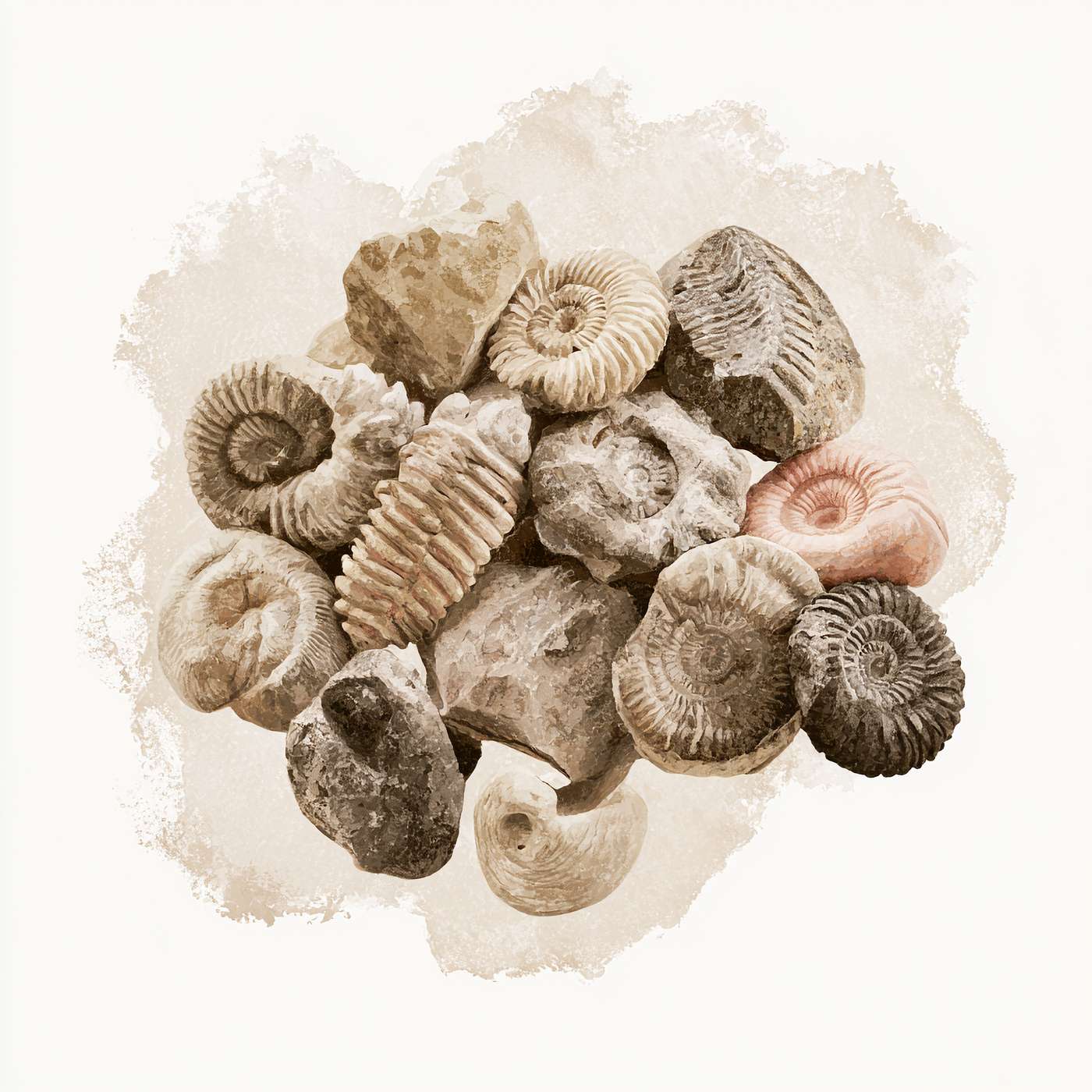
For more than a century, the fossil record posed a mystery so stubborn it kept Charles Darwin awake at night: complex animals appear to burst onto the scene about 535 million years ago — the Cambrian Explosion — fully formed and all at once. Where was the slow, gradual rehearsal his theory demanded?
In this deep dive...
The Turtle in Your Bloodstream

Send us Fan Mail
Blood, turtles, and the science your doctor can't see yet — Heliox digs into long COVID's hidden biology. 🩸🐢🧵
Here's the thing about broken bones: they're rude, but they're honest. The x-ray doesn't negotiate. It shows you the jagged white line and everybody in the room — you, the doctor, the insurance company — agrees on what happened. There's a comfort in that. Violence you can see is violence you can manage.
Long COVID doesn't offer you that mercy.
For a while now, we've been telling people with post-viral fati...
Rewiring Fear of Failure: The Power Of Surprise

Send us Fan Mail
Why does a spilled glass of milk from when you were seven still tighten your chest at thirty?
In this deep dive, we explore a landmark Polish clinical trial (SWPS University & the Nencki Institute, published in Frontiers in Psychology) that asked a radical question: can we actually rewrite the childhood memories behind our fear of failure?
180 young adults revisited their most painful memories of being criticized — through three different imagery-based techniques, tracked with sweat sensors, saliva samples, and stress tests borrowed from animal-learning science.
What they found is...
We Are Standing on a Plate That Is Falling Apart, and That's Somehow Good News

Send us Fan Mail
📖 Read: https://helioxpodcast.substack.com/publish/post/213079308
New deep-sea seismic imaging reveals a tectonic plate ripping apart three miles under the Pacific Northwest — and rewrites what we know about Cascadia's coming megaquake and tsunami risk.
Three miles beneath the cold water off Vancouver Island, something enormous is quietly coming undone. A slab of oceanic crust the size of a small country is tearing itself into pieces, dropping five kilometres into the mantle like a shelf giving way under too much weight. It sounds like the setup for a disaster movie...
The Cardiovascular Intervention We Love: Cheese

Send us Fan Mail
📖 Read the companion article on Substack:
🧀 That wedge of cheese in your fridge? It's a living microscopic city
New episode of Heliox decodes "cheeseomics" — and why the food we were told to fear may be quietly keeping us healthy. 🧵
Your stomach is basically a sterilization chamber. Swallow a probiotic pill and most of it dies at the gate.
But embed those microbes in the fat + protein of real cheese, and they slip through — a biological Trojan horse. They arrive alive AND ready to work.<...
🔬We Taught a Machine to Stop Guessing and Start Wondering

Send us Fan Mail
The Five-Paper Journey to Building the First Autonomous AI Scientist
There is a particular kind of vertigo that comes from realizing something you assumed was thinking was, in fact, only remembering very well. For a few years now, this has been the quiet, uncomfortable secret sitting underneath the astonishing performance of large language models. They write. They code. They pass exams that would humble most graduate students. And yet, ask one to explain what happens when a familiar rule of the universe simply stops applying, and something in the...
Your Brain Has No "Language Department"

Send us Fan Mail
📖 Read: https://helioxpodcast.substack.com
🎥 YouTube: https://www.youtube.com/channel/UCd5BbCEeC3Z6dp-nNjWRbBw
🎙️Available for Broadcast: https://exchange.prx.org/group_accounts/253118-heliox_where_evidence_meets_empathy
Open up a human skull and you won't find a color-coded map. There's no little region of gray matter with a sign that says "Language Department." For 150 years, neuroscience drew one universal map of language and expected every brain to obey — and every brain quietly declined.
In this deep dive, we unpack a landm...
🧠 The Body Was the Point All Along

Send us Fan Mail
📖 Read: https://helioxpodcast.substack.com/publish/post/211910121
Inside the biological rebellion:
teaching machines to feel gravity before they learn to talk
A particular kind of humiliation is reserved for the extremely smart. You watch someone recite the tax code from memory, then watch them try to parallel park. Something in us enjoys this. It confirms a suspicion we've always carried but rarely said aloud: knowing things and doing things were never actually the same skill, no matter how badly we wanted them to be.
For the last deca...
Your Brain Is Glowing: Biophotons And The Frontiers of Neural Communication

Send us Fan Mail
📖 Read: https://helioxpodcast.substack.com
🎥 YouTube: https://www.youtube.com/channel/UCd5BbCEeC3Z6dp-nNjWRbBw
🎙️Available for Broadcast: https://exchange.prx.org/group_accounts/253118-heliox_where_evidence_meets_empathy
Sit in a sealed, pitch-black room. Tape the cracks. Kill the lights. Hold your hand up an inch from your face — you see nothing. Total darkness.
Except it isn't.
Right now, your brain is emitting light. A faint glow of photons, leaking through your skull, as the honest exhaust of your thinki...
