WHY DESIGN?

Why Design is a podcast exploring the stories behind hardware and physical product development. Hosted by Chris Whyte, founder of Kodu, the show dives into the journeys of founders, senior design leaders, and engineers shaping people and planet-friendly products. Formerly "The Design Journeys Podcast", each episode uncovers pivotal career moments, lessons learned, and behind-the-scenes insights from industry experts. Whether you’re a designer, engineer, or simply curious about how great hardware products come to life, Why Design offers real stories, actionable advice, and inspiration for anyone passionate about design and innovation. Join us as we listen, learn, and connect through th...
Why the Best New Design Leaders Change Nothing in Their First 90 Days | Stephan Clambaneva
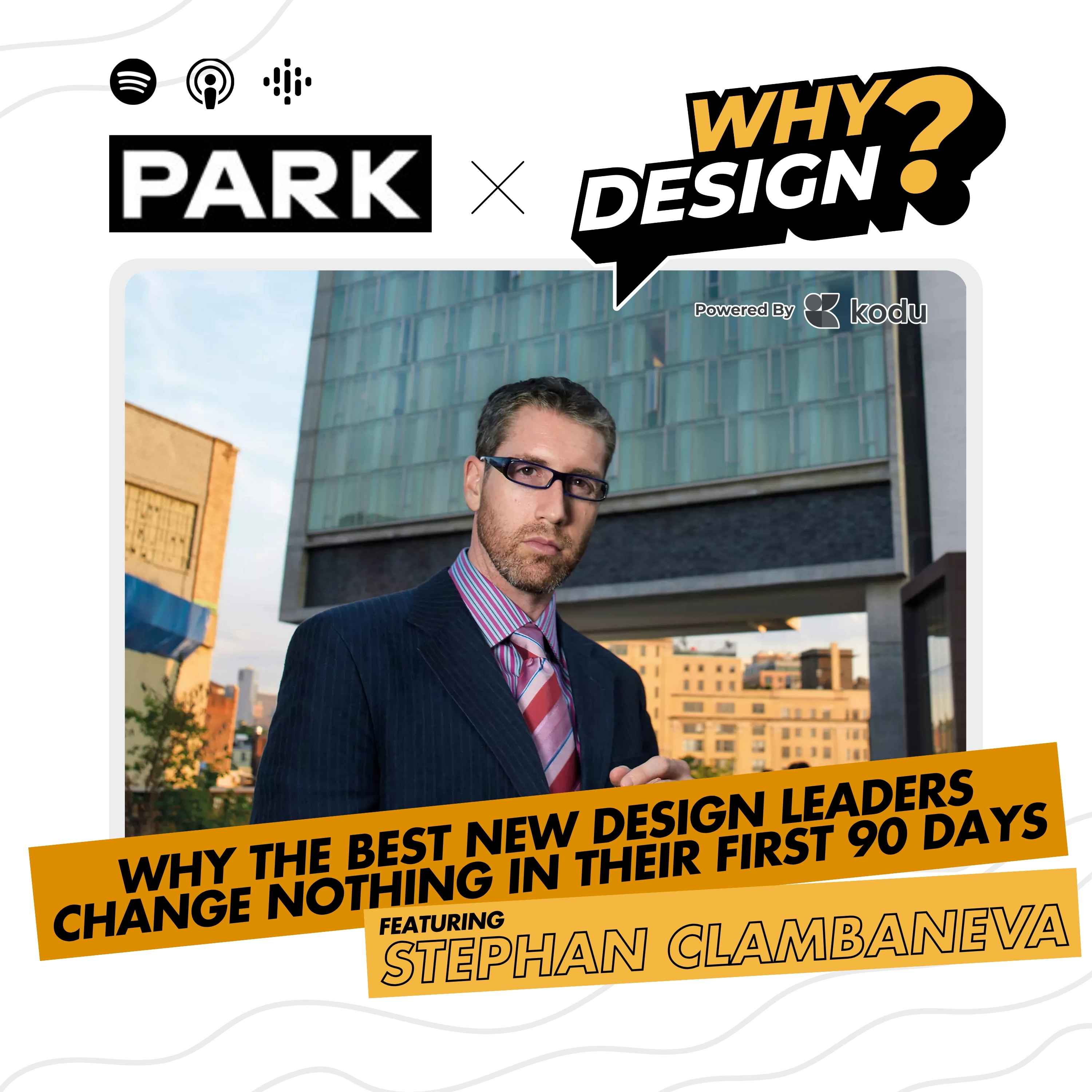
Are you designing for the middle of the bell curve, or for the people who need it most?
In this episode of Why Design, Stephan Clambaneva shares the belief that sits at the heart of his work: that industrial design's greatest contribution is at the front end of product development, where 80% of environmental impact is determined, where material choices get locked in, and where the decisions that actually matter are still open.
Rather than taking the conventional path of pure industrial design consultancy, Stephan built a career across mechanical engineering, CAD work, sustainability research, design...
The SOSV Partner Who Says the Best Persuaders Are Introverts (And Why He Backs Them First) | Bill Liao
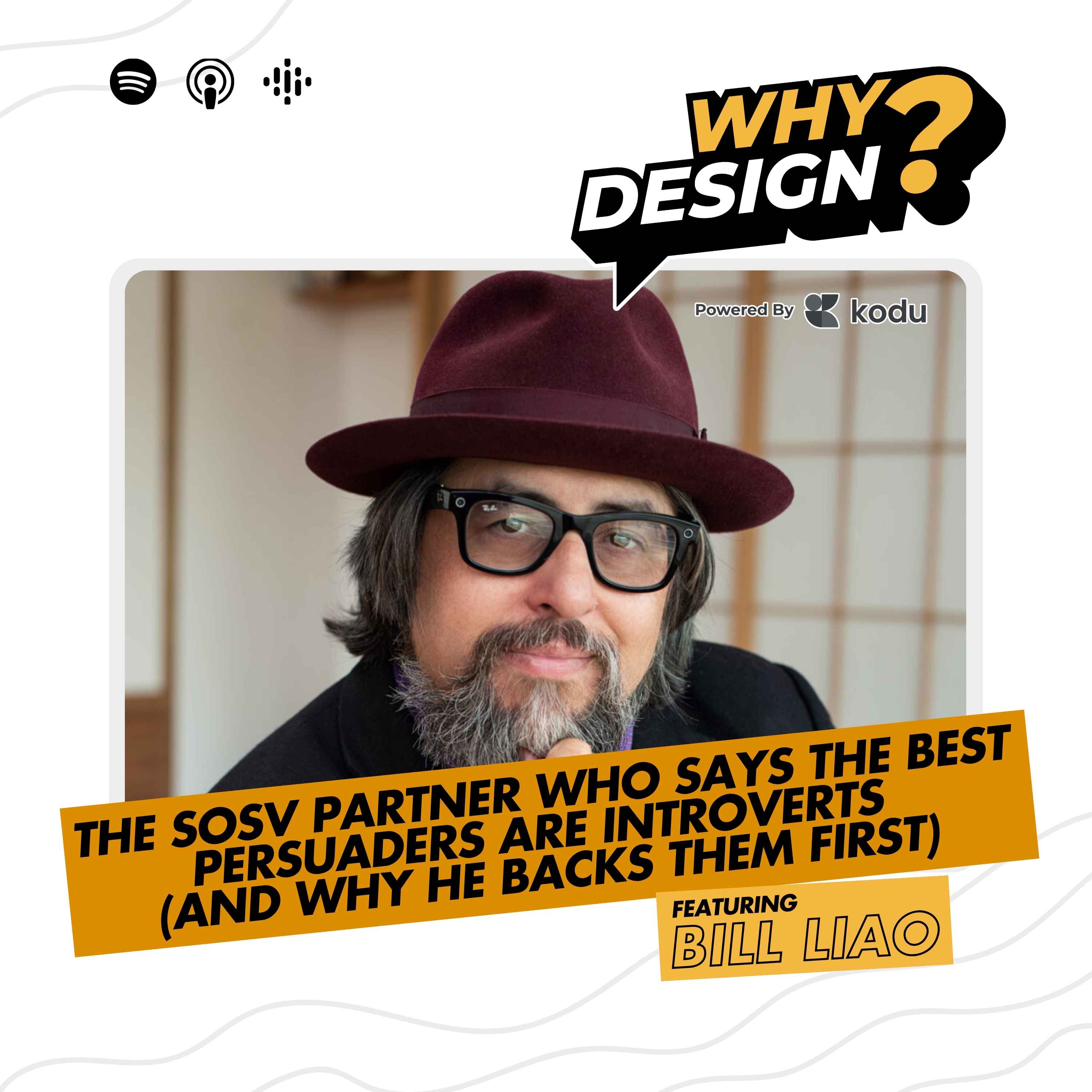
What if the science works, the market is ready, and your company still dies?
In this episode of Why Design, Bill Liao shares the belief that sits at the heart of his work: that the stories we co-believe in are our civilisation, and that the words you choose, the values you name, and the futures you speak aloud determine not just what you build, but whether it survives.
Rather than following a conventional path from engineer to executive, Bill built a career at the intersection of technology, persuasion, and purpose. From co-founding WeForest to investing...
Why Design Is Still a Polite Cost Centre With Good PR | Lisa Gralnek
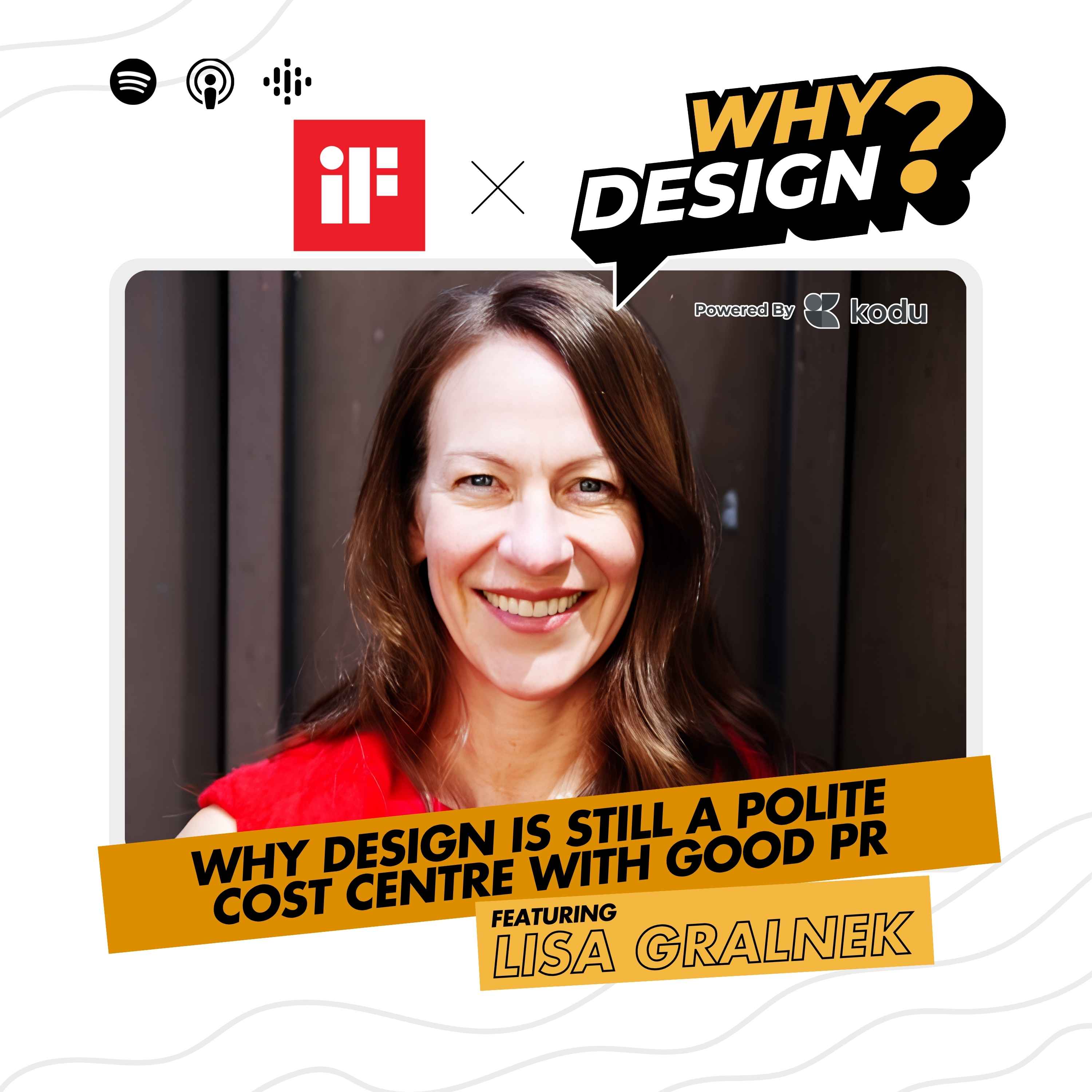
What does it take to build brand presence for one of the world's most rigorous design institutions in a market that barely knows it exists?
In this episode of Why Design, Lisa Gralnek shares the belief that sits at the heart of her work: that design is not just products and packaging, but platforms, places, and policies and that if designers cannot speak the language of business, they will always be treated as a cost centre.
Rather than staying in a thriving solo consultancy, Lisa chose to take the first role she had ever been...
How He Built a Sports Car Company Without an Engineering Team | Mark Tapscott
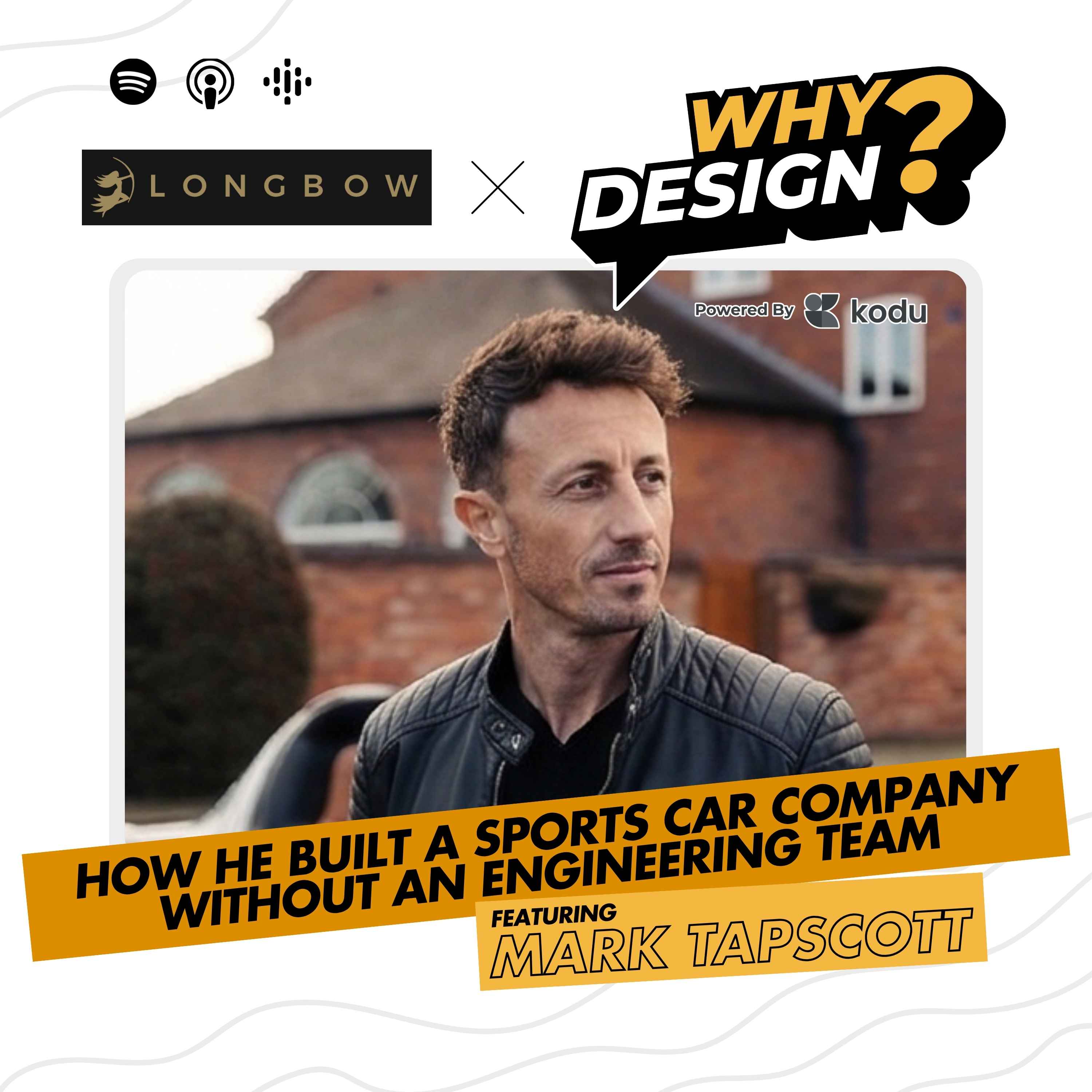
When was the last time a car company asked you what you actually wanted in the car before they built it?
In this episode of Why Design, Mark Tapscott shares the belief that sits at the heart of his work: that lightness is not a compromise. It is the design. That an electric sports car under 900 kilograms, built in Britain, engaging to drive and priced within reach of ambitious buyers, is not just possible but necessary. And that the automotive industry has spent decades walking in the wrong direction.
Rather than building a vertically integrated...
Why Bob Schwartz Walked Into GE Healthcare Carrying 50 Dream Catchers
How do you spend thirty five years inside hardware giants, take 22 IDEA medals out the door, and still end up best known as the guy who refused to chant “I am GE”?
In this episode of Why Design, Bob Schwartz shares the belief that sits at the heart of his work: design without a strategy is just decoration, and strategy without trust and respect is just paperwork.
Rather than waving his hands above his head about how great design is, Bob spent decades being subversive with goodness in his heart. That decision led to a $50,000 Busi...
No Engineering Degree. No Prototype. He Signed Up for CES Anyway | Floyd Freeman
What does it take to solve a problem that everyone experiences and nobody has fixed?
In this episode of Why Design, Floyd Freeman shares the belief that sits at the heart of his work: that the most obvious problems are sometimes the hardest to solve not because the technology does not exist, but because no one has connected the pieces. FlushLocks a smart lock and unattended tap payment system for commercial restrooms is the result of one afternoon in Boulder, Colorado, a nappy emergency and a door with a code that said customers only.
Rather...
What Building the Production Machine Teaches You About the Design | Matt Batchelor
What does it actually take to get something you designed onto a supermarket shelf at scale?
In this episode of Why Design, Matt Batchelor shares the belief that sits at the heart of his work: that the best design does not stop at the render. It runs all the way through the material choice, the tooling, the supply chain, and the factory floor and the designer should know all of it.
Rather than staying in the comfortable upstream of concept and CAD, Matt and his co-founder Nick Paget built Instrument into a studio that also...
Why Getting Into John Lewis Still Wasn't Enough | Phil Staunton
What does it actually cost to build a hardware brand from inside a design agency?
In this episode of Why Design, Phil Staunton shares the belief that sits at the heart of his work: that product design is only as good as the honesty you bring to it.
Not just the honesty with clients about what their product needs, but with yourself about what you do not know yet.
Rather than staying comfortable in the consultancy model, Phil chose to put his own money into a consumer pushchair brand, take it to John...
Why the best hardware careers look like wrong turns from the outside | Felicity Boyce
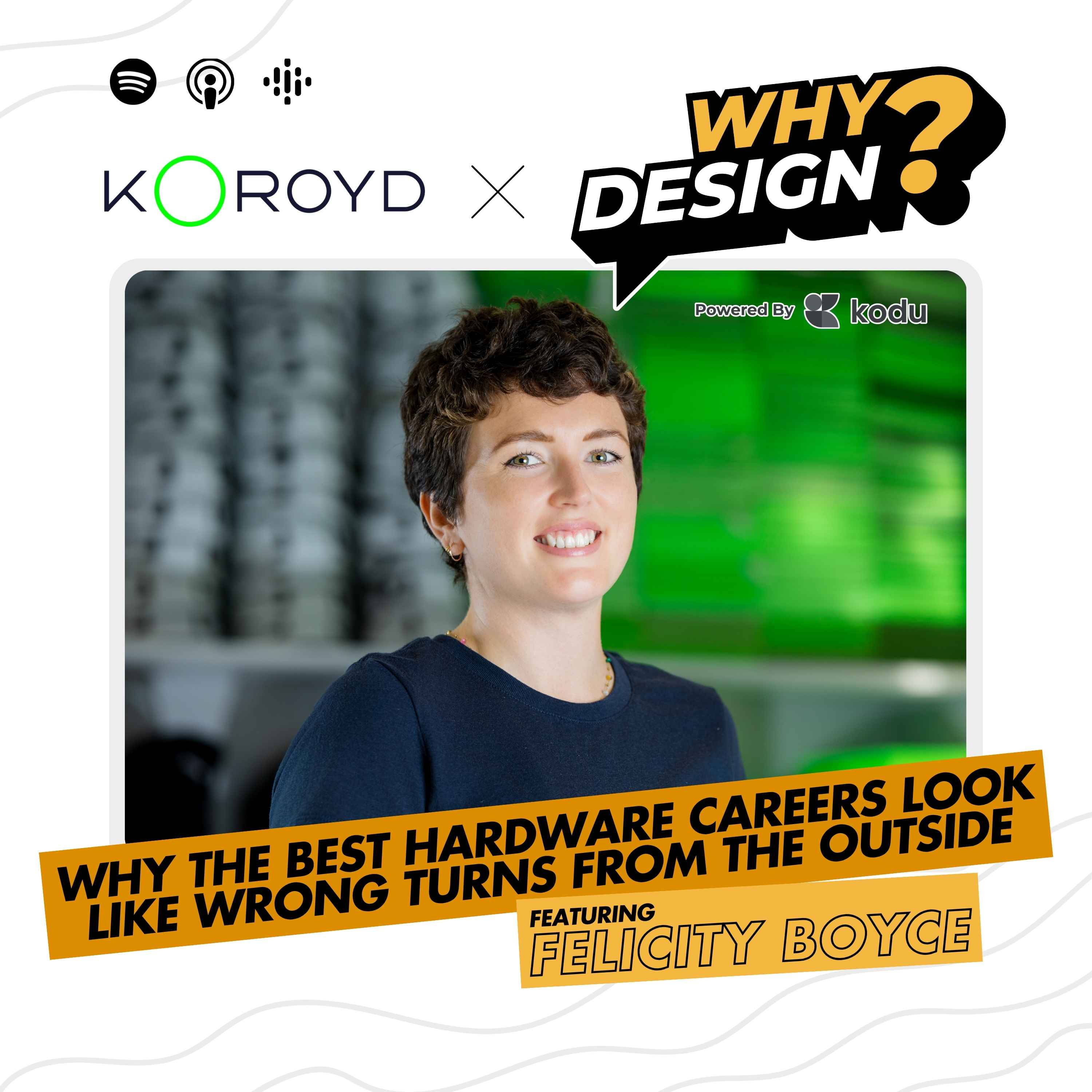
What do you do when the work you're best at starts to feel like the problem?
In this episode of Why Design, Felicity Boyce shares the belief that sits at the heart of her work: that understanding how something is made, at factory scale, under pressure, with the wrong release agent and a cycle time that doesn't add up, is more valuable than any theory you carry out of university.
As Head of Material Innovation at Koroyd, she leads the development of the tubular core technology that is now inside helmets and body protection products...
Why the Softest Fruit is the Hardest Engineering Problem, And Robotics’ Potential | Sid Shaikh
What does it take to solve a problem nobody else is willing to attempt, in a country 10,000 miles away, with a 15-person team and an active fundraise running in the background?
In this episode of Why Design, Sid Shaikh shares the belief that sits at the heart of his work: that the hardest engineering problems are the right ones to go after, and that the difference between a startup that scales and one that stalls is almost always about whether the team is solving the actual bottleneck or just the comfortable one.
Rather than staying...
Why Half the Country Can't Access Clean Energy, And What’s Changing | Rob Hallifax
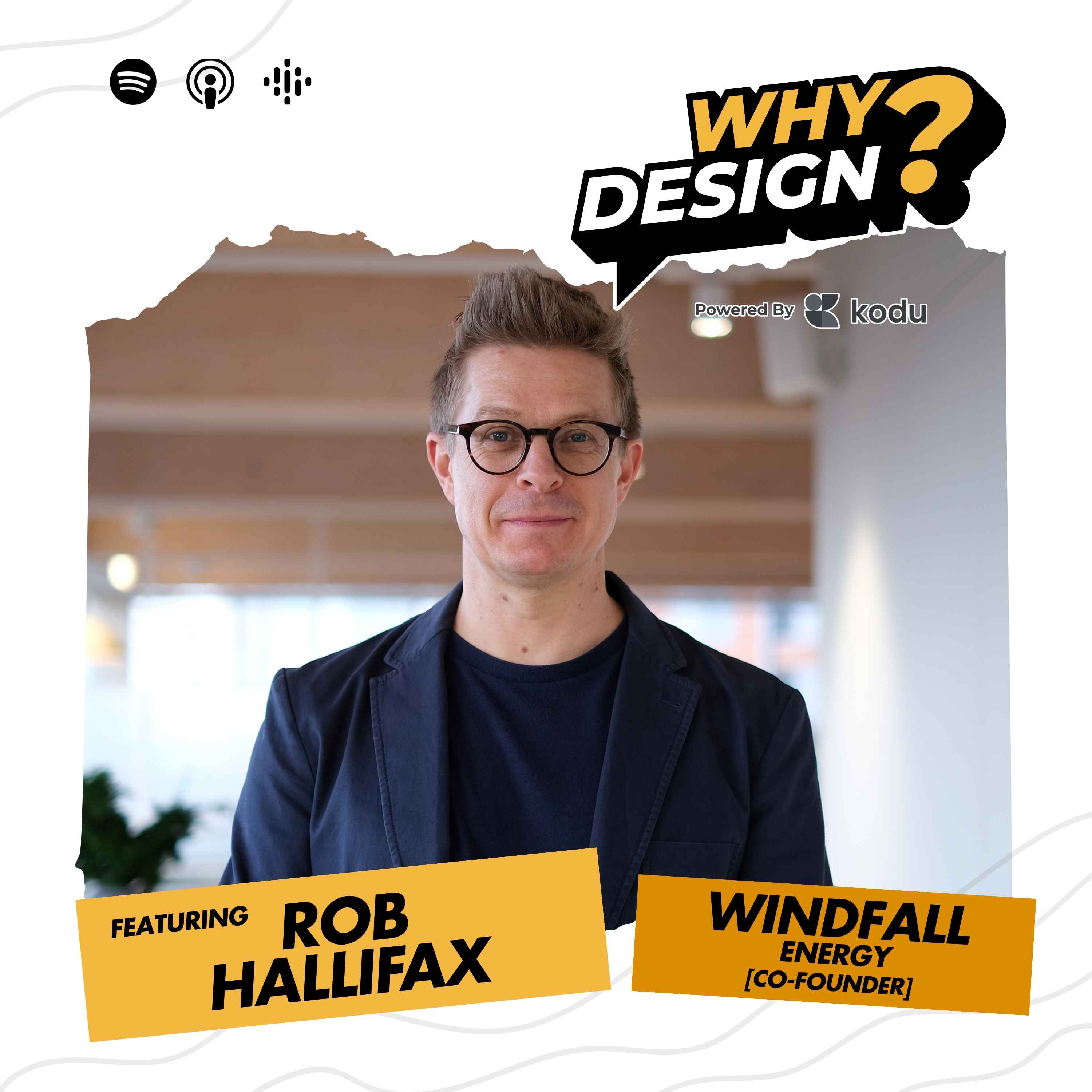
What if the biggest gap in the clean energy transition isn't technology or politics, but simply who the products were designed for?
In this episode of Why Design, Rob Hallifax shares the belief that sits at the heart of his work: that half the country has been left behind by clean energy, and that the right physical product can change that. Rob is co-founder of Windfall Energy, a company building a compact home battery specifically for renters and flat-dwellers, the people for whom solar panels, heat pumps and big home batteries have never been a realistic option.<...
Why Nobody Fixed This $12 Billion Surgical Problem, Until Now | Liz McGloughlin
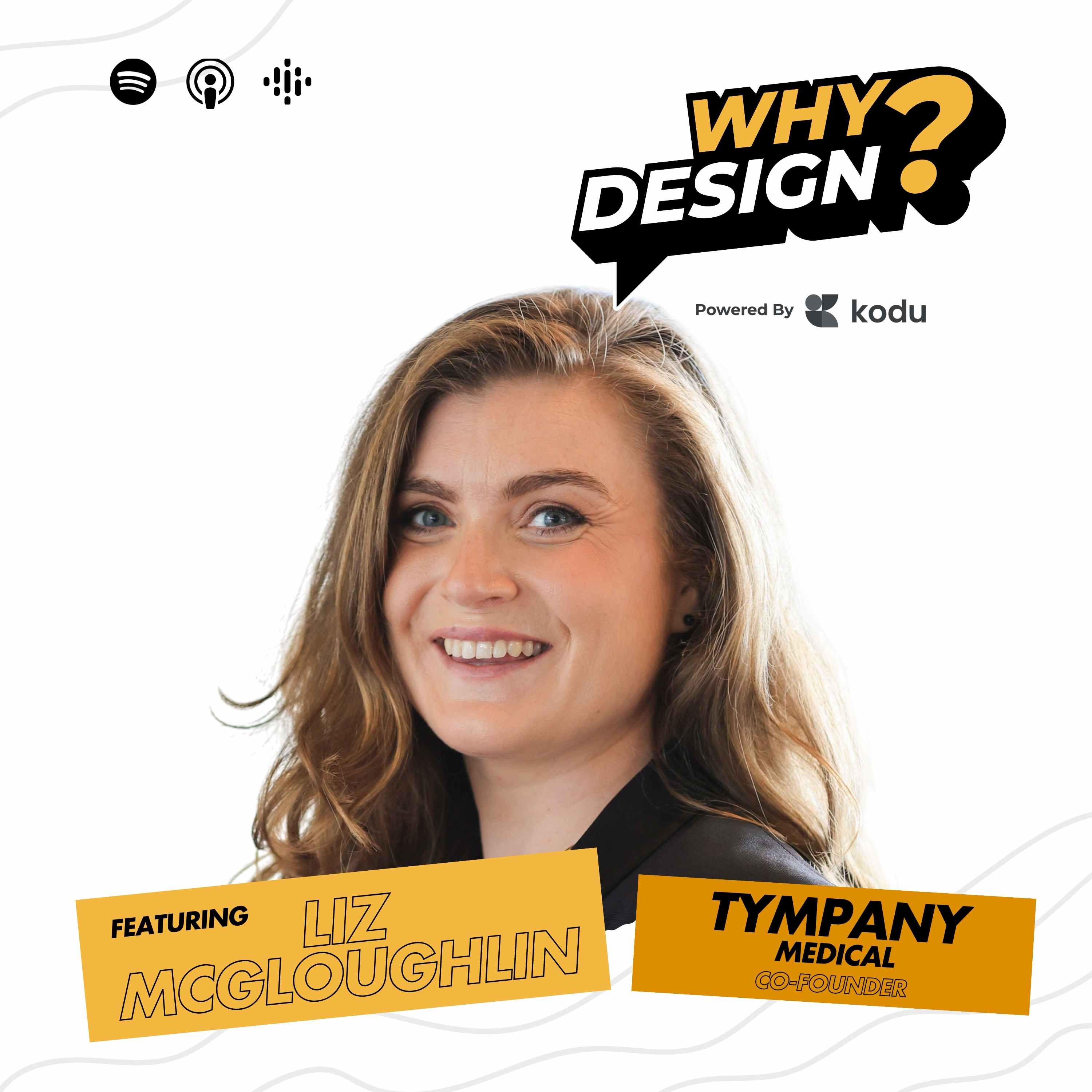
What does it take to redesign a surgical instrument that nobody has touched in sixty years?
In this episode of Why Design?, Liz McGloughlin shares the belief that sits at the heart of her work: that hardware problems worth solving are the ones nobody has bothered to solve yet, and that the best place to find them is not a trend report but an operating room.
Rather than following a conventional route into medical devices through engineering alone, Liz brought a clinical lens to a design problem, co-founding Tympany Medical after watching surgeons work around...
Why the Worst Thing You Can Do Is Be the Designer Everyone Wants You to Be | Dan Salisbury, Automata
What does it take to walk into a deep tech startup as the only industrial designer... Earn the trust of thirty engineers, and...
Build a design identity so thoroughly baked into the product that no one can ever cost-optimise it out?
In this episode of Why Design, Dan Salisbury shares the belief that sits at the heart of his work: that design isn't a layer you apply at the end, it's the structure you build from the inside, or it's nothing at all.
Rather than staying in consultancy, Dan chose to go in-house...
Why Fertility Treatment Is Broken (And What Needs to Change) | Tess Cosad on Building Béa Fertility

What if the most important fertility treatment of the last decade wasn’t invented in a clinic, but built from scratch, during a lockdown, by someone who had never worked in medicine?
In this episode of Why Design, Tess Cosad shares the belief that sits at the heart of Béa Fertility: that compassionate, clinical-grade care should be available to everyone, not just those who can afford a private clinic, survive a two-year waiting list, or live near the right postcode.
Rather than accepting the gap between DIY conception and IVF, Tess chose to fill it...
From Folding Bikes to Electric Aircraft: The Design Philosophy of Mark Sanders
What connects a folding bicycle, a kitchen tool, and an electric ultralight aircraft?
For Mark Sanders, the answer isn’t the category, it’s the thinking.
In this episode of Why Design, Mark joins host Chris Whyte to reflect on a career that spans more than four decades of designing, engineering, and inventing across radically different industries. From his early work as a mechanical engineer at Rolls-Royce, to retraining at the Royal College of Art, to licensing over 100 commercialised products, Mark’s work is united by a clear philosophy: elegance through simplicity.
This is a c...
The Quiet Discipline Behind Long-Lasting Design Businesses with Paul Metaxatos
In an industry that often celebrates rapid growth, visibility, and bold ambition, there’s a quieter reality that rarely gets attention:
The design businesses that last aren’t built through speed.
They’re built through discipline.
Through showing up consistently.
Through making careful decisions when shortcuts are tempting.
Through taking responsibility for outcomes, not just ideas.
In this episode of Why Design, Paul Metaxatos, Principal and Owner of Motiv Design, joins host Chris Whyte to unpack what it actually takes to build a consultancy that endures, not just c...
Why Design Should Take Over the World: A Conversation with Tylan Tschopp
What if design wasn’t just a function… but a way of thinking about the world?
In this episode of Why Design, Tylan Tschopp shares a belief that sits at the heart of his career: that design, when combined with engineering rigour and ownership, has the power to shape better products, better teams, and ultimately, better outcomes for people.
Rather than choosing between design or engineering, Tylan chose the space in between. That decision led him to roles defined by responsibility, momentum and scale where success wasn’t measured by aesthetics alone, but by execution, standa...
How Paul Marshall Built Rapid Fluidics into a Global Microfluidics Partner Through Curiosity and Good Engineering
What connects offshore engineering, inkjet printers, molecular diagnostics and a small workshop in a church in Newcastle?
For Paul Marshall, it’s all part of the same journey: a lifelong fascination with how things work, and a belief that good engineering can solve meaningful problems.
Paul is the co-founder of Rapid Fluidics, a UK consultancy and prototyping company specialising in microfluidic cartridges. What began as a part-time side project; evenings, weekends and two 3D printers in a rented room has grown into a profitable, globally recognised business serving life sciences startups, research labs and multinational phar...
Leading with Purpose: How Will Butler-Adams Scaled Brompton into a Global Icon
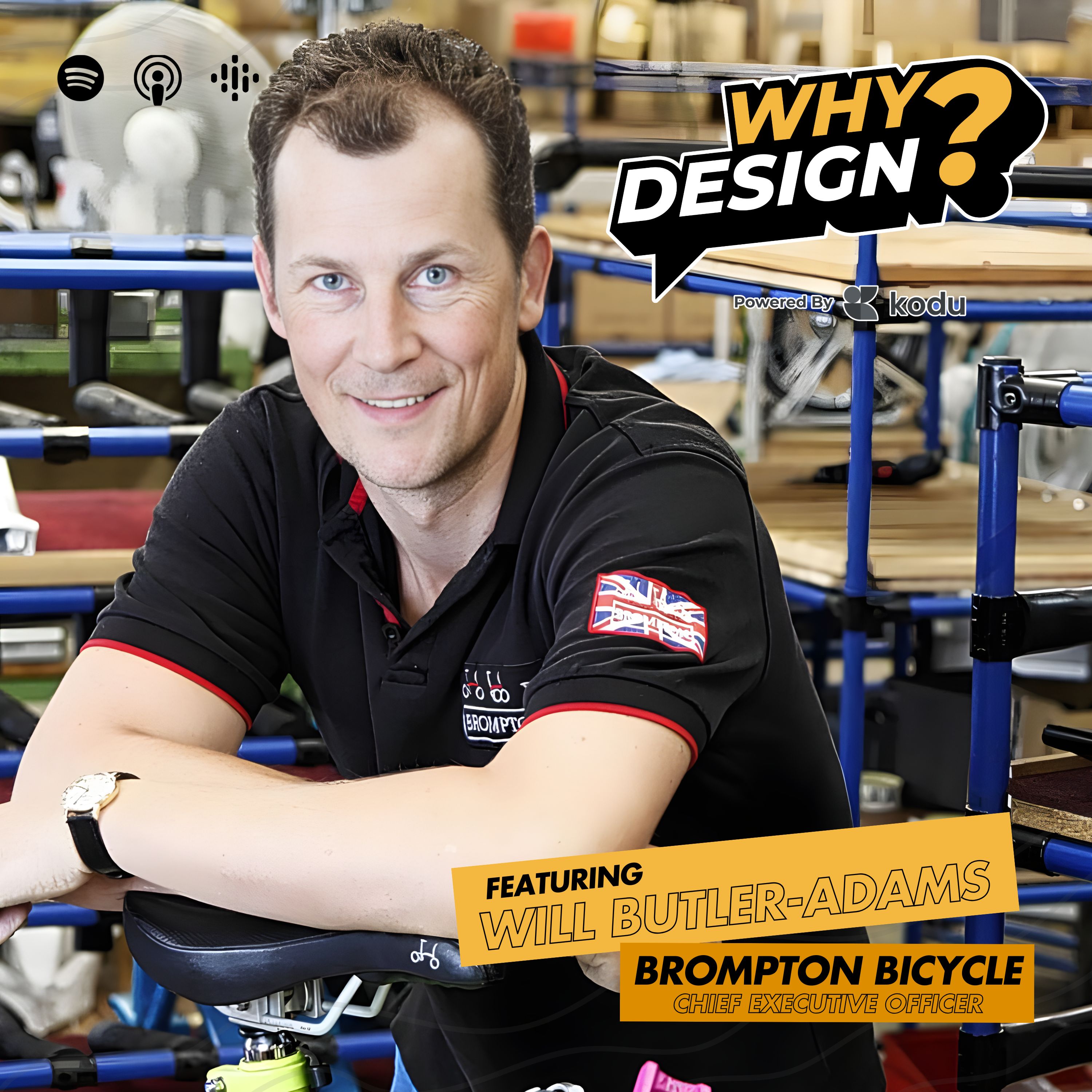
What happens when you mix engineering instinct, a folding bike prototype built by an eccentric inventor, and a chance conversation with a stranger on a London bus?
For Will Butler-Adams, it became the start of a 20-year journey transforming Brompton from a tiny, chaotic workshop into one of Britain’s most recognisable global brands.
Today, Brompton bikes are commonplace in cities across the world. But when Will joined in 2002, the company had “a stock turn of one… tons and tons of racking pallets… and squeezed in the edges where people actually adding value.”
In this episod...
Designing Play: How Rémi Bigot Built Bitpong and a Creative Hardware Studio in Berlin
What do furniture exhibitions, glowing tables, and digital design have in common?
For Rémi, founder of Diplik, they’re all stops on a creative journey that ultimately led to Bitpong; a tech-enhanced, interactive ping-pong table that feels equal parts sport, art installation, and arcade.
From early ambitions in car design to studying industrial design in northern France, to guest lecturing and building his own hardware studio in Berlin, Rémi’s story is a reminder that creative careers rarely move in straight lines. Bitpong didn’t emerge from a sudden idea. It came from years of e...
How FutureWave’s Joachim Blends Engineering, Intuition & Innovation Across Mobility, Tech & Robotics
What connects electric bikes, mobility systems, high-end wellbeing devices and robotics?
For Joachim, it’s the same mission: design technology that feels intuitive, human, and full of possibility.
With a career spanning Brussels, Copenhagen and London, and now as co-founder of FutureWave, Joachim has spent the past six years building a 25-strong design and engineering studio working across mobility, consumer tech and deep electronics. From shaping early concepts for startup disruptors to helping global brands reimagine their five-to-ten-year vision, his work sits at the intersection of creativity, engineering, and intuition.
In this episode of Why...
Designing at Scale: How Rich Thrush Turned Curiosity into a Career Across Brands
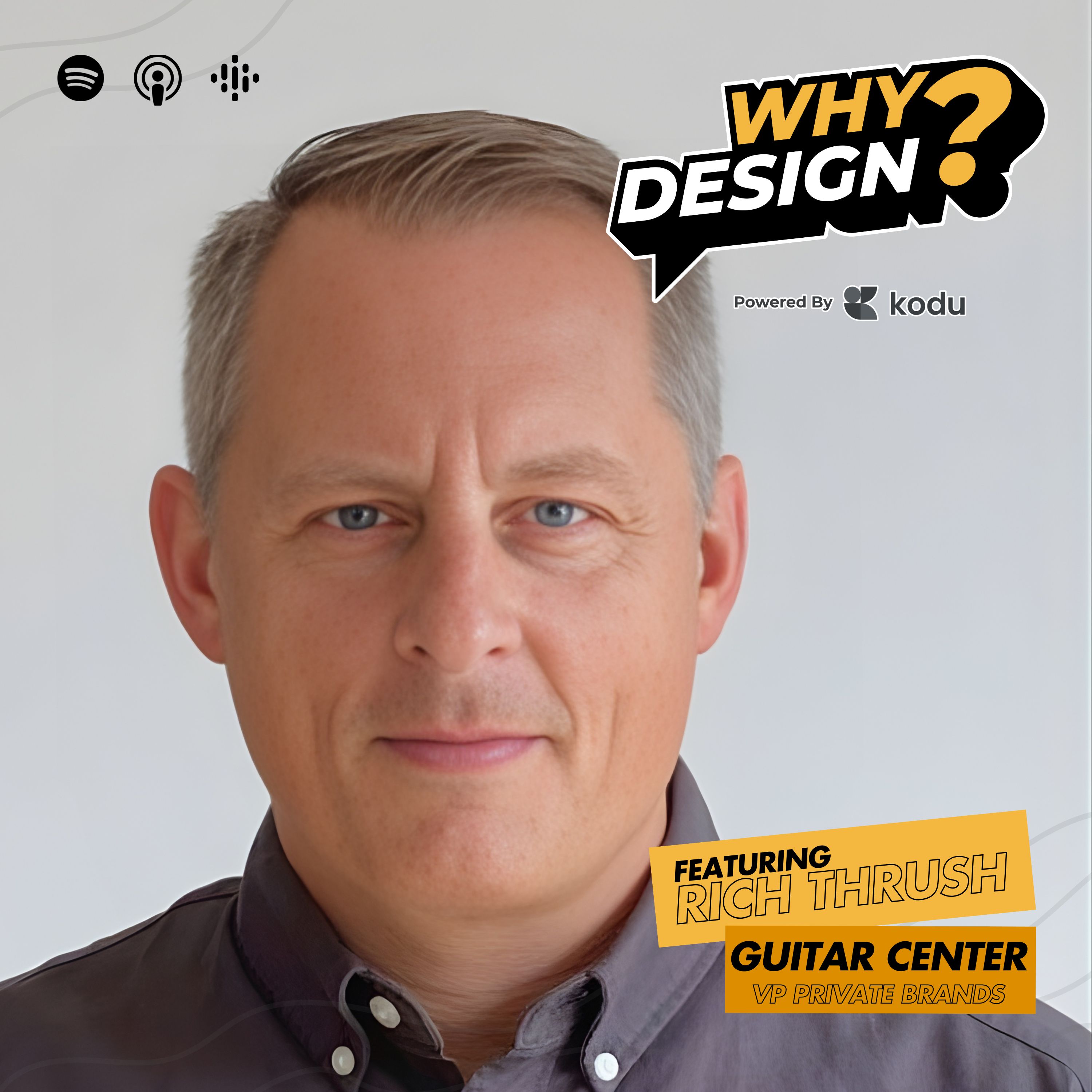
What connects toy blasters, beauty tools, and musical instruments?
For Rich Thrush, it’s all part of the same mission: to make products people love to use.
With a career spanning Hasbro, Motorola, Helen of Troy, and now Guitar Center, Rich has led design and innovation teams across some of the world’s most recognisable brands. From developing Braun’s non-contact thermometer to Revlon’s One-Step Volumizer, his work has shaped how millions interact with everyday products.
In this episode of Why Design, Rich joins host Chris Whyte to unpack the art and strategy of...
Dr Vicky Lofthouse: Why Context Matters More Than ‘Less Plastic’ in Sustainable Design
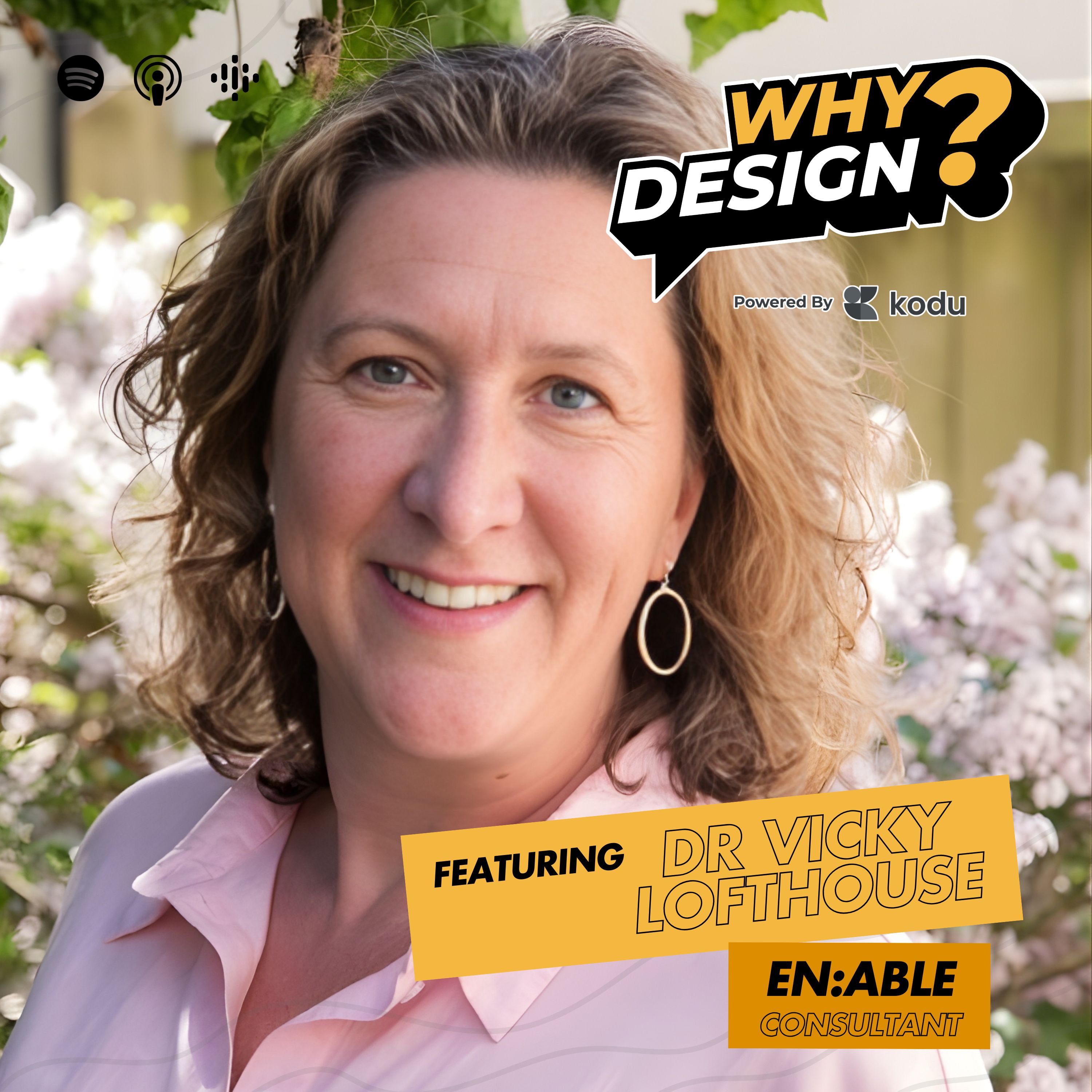
When it comes to sustainability, good intentions aren’t enough.
For Dr Vicky Lofthouse, sustainability isn’t a checkbox or a materials swap, it’s a mindset shift.
As a designer, educator and now founder of En-Able Sustainability, she’s spent over two decades helping companies move past the buzzwords and into the messy, meaningful reality of sustainable product design.
In this episode of Why Design, Vicky joins Chris Whyte to explore what sustainability really looks like in practice; from balancing carbon impact with commercial constraints to understanding why context matters more than any single...
From BBC to Newlane: How Dom Cotton Built What Everyone Said Was Impossible
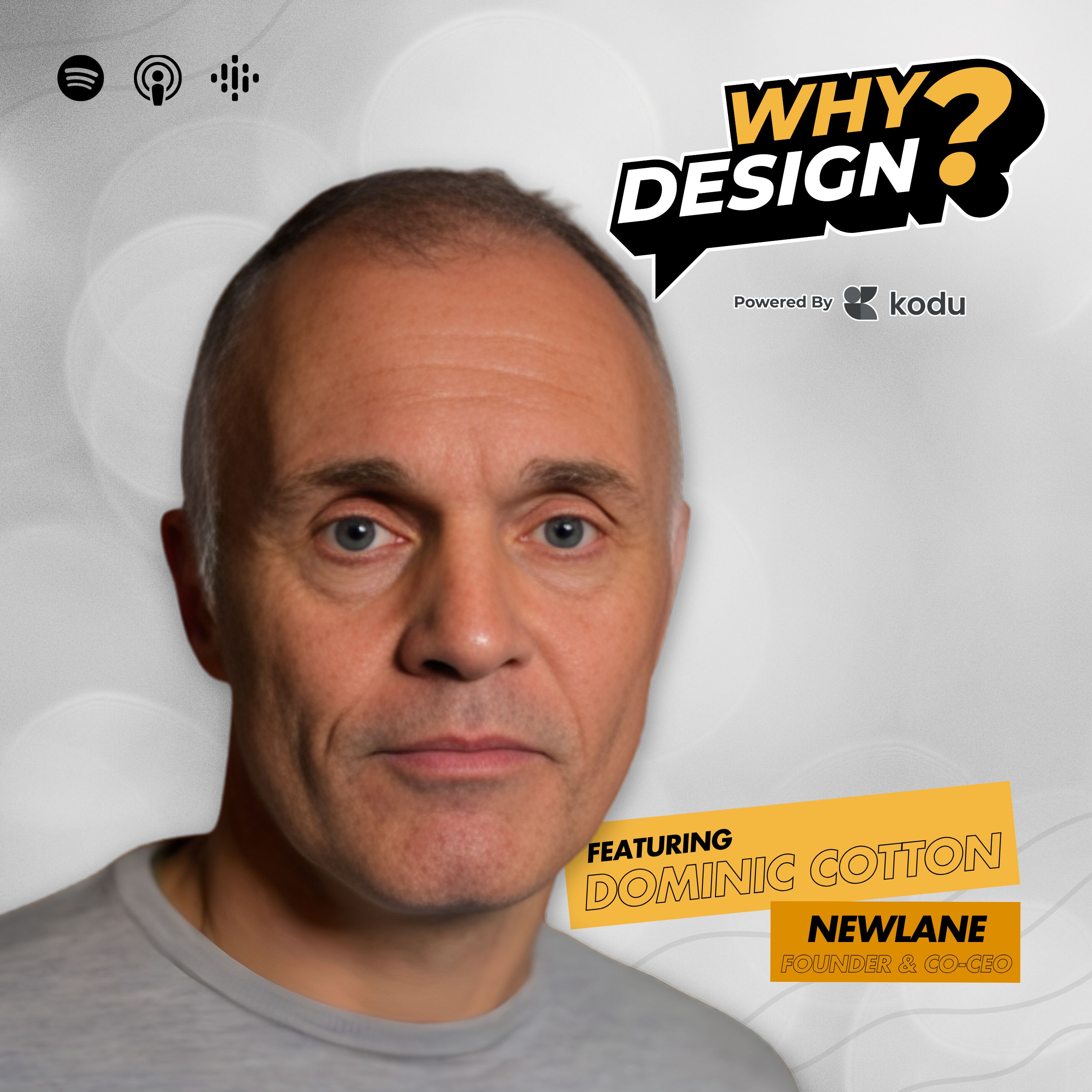
What makes someone leave a 20-year BBC career to build a helmet everyone said couldn’t exist? For Dom Cotton, it wasn’t a midlife pivot, it was a mission. After years spent covering stories about courage and competition, he decided to live one.
Seven years, countless prototypes, and a steep learning curve later, Dom co-founded Newlane; the company behind the world’s first safety-certified, foldable commuter helmet.
In this episode of Why Design, he shares how curiosity, persistence, and a touch of naivety helped him turn rejection into progress and an idea into reality.
Don’t...
Why the World Needs Designers Now More Than Ever With Dan Harden, CEO of Whipsaw
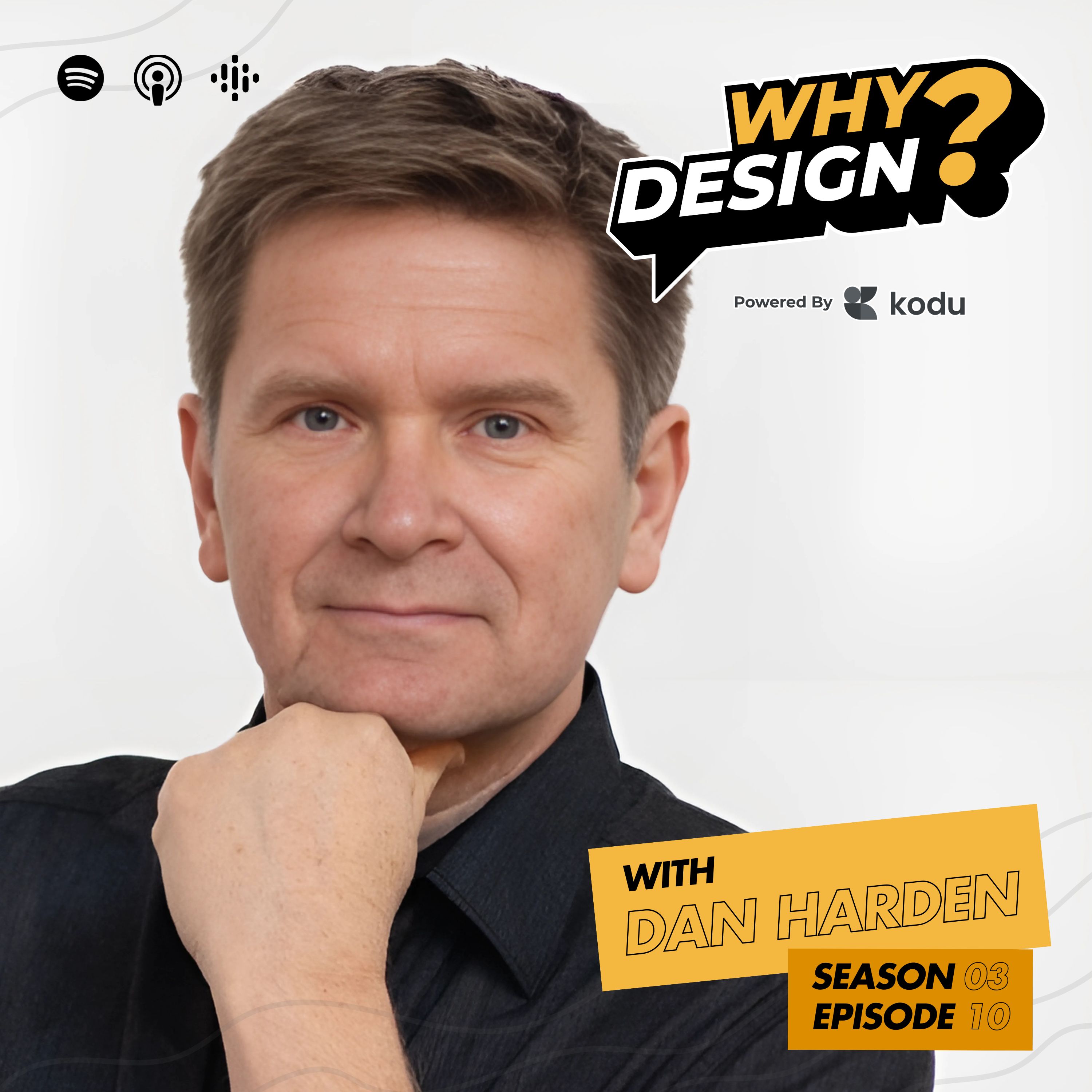
“The world needs design more now than ever.”
Most designers want to make beautiful things.
Dan Harden wants to make meaningful ones.
From building dangerous go-karts as a kid to designing more than 1,000 products (and winning 350+ awards), Dan’s career has been a masterclass in lasting impact. As CEO and founder of Whipsaw, Dan has shaped the modern design landscape while staying grounded in what truly matters: solving real problems for real people.
In this episode of Why Design, Dan shares how he turned a passion for sketching and making into a globally...
From Brain Surgery to Breakthrough: How Kenny Perkins Built the First E-Bike Helmet for Kids
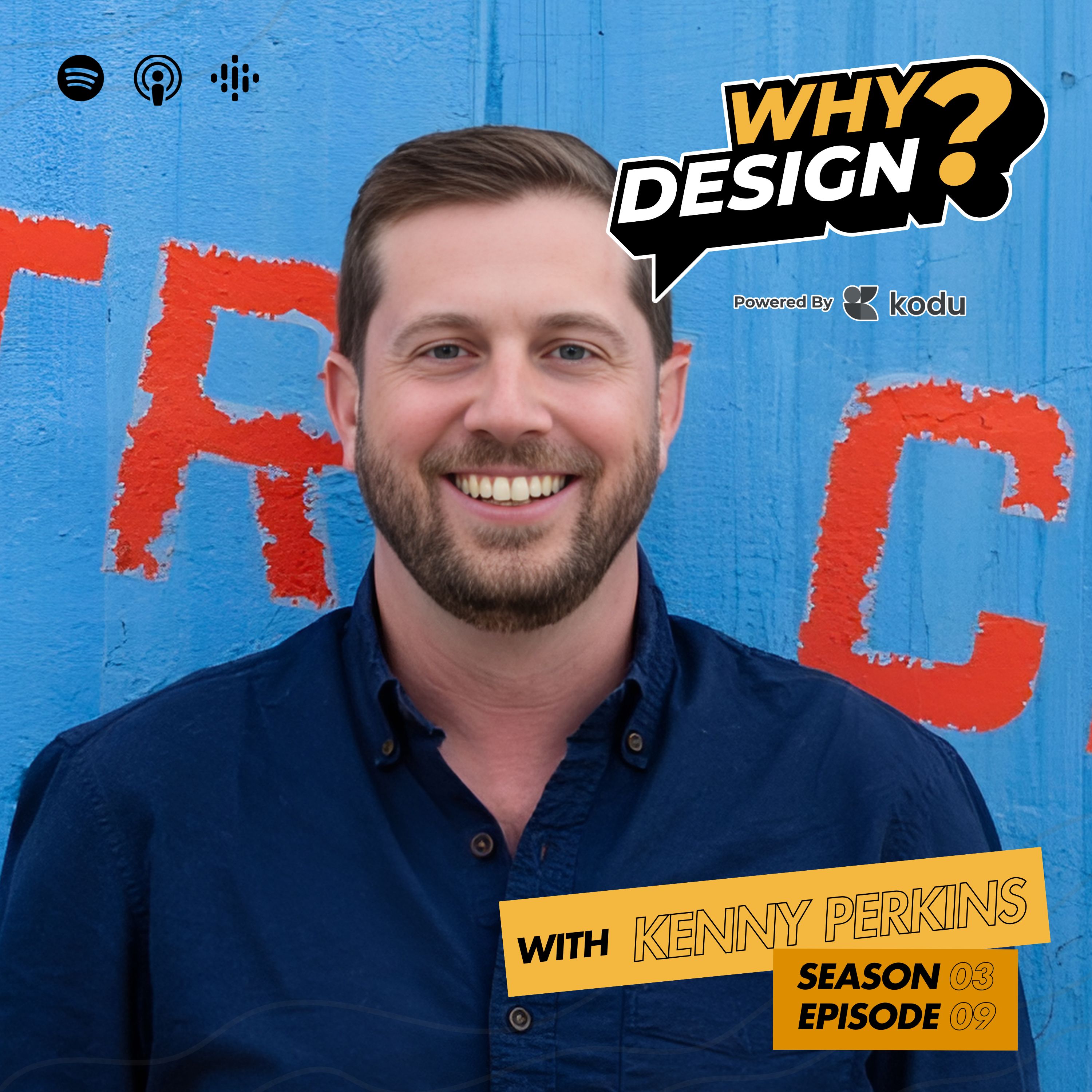
“You have to be a certain kind of crazy to be a founder, especially in physical products.”
Most people want to build something.
Kenny Perkins actually did.
After nearly dying in a car accident his senior year, Kenny clawed his way into the design world; starting at Fossil, shifting to helmets, and eventually co-founding Osmo, the first kids’ helmet to meet the e-bike safety standard.
In this episode of Why Design, Kenny shares the journey from rebuilding a Mustang with his dad at 15 to building Impact Lab, a startup studio funding its own co...
How Jordan Diatlo Went From Layoff to Leadoff
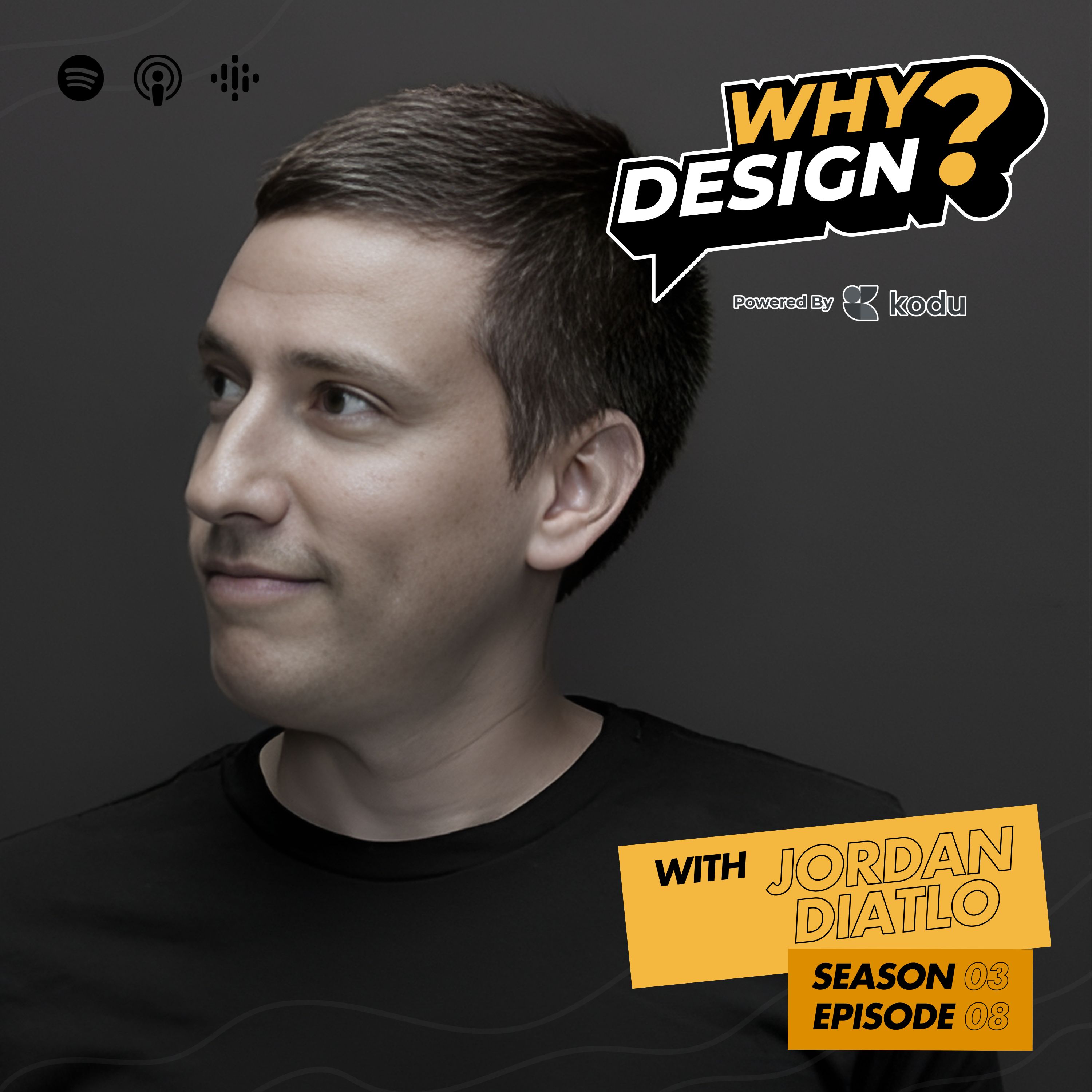
“I got laid off weeks before my first child was born… and I was so happy.”
Most people panic when they lose a job.
Jordan Diatlo built a business.
Just weeks before becoming a dad, Jordan was laid off. Instead of spiraling, he used it as fuel to start Leadoff Studio — now one of New York’s go-to design consultancies for health & wellness brands.
In this episode of Why Design, Jordan shares how he went from rejected by corporate to building a values-driven studio that’s helped startups like Roman and Dame become cate...
How Jordan Diatlo Went From Layoff to LeadOff
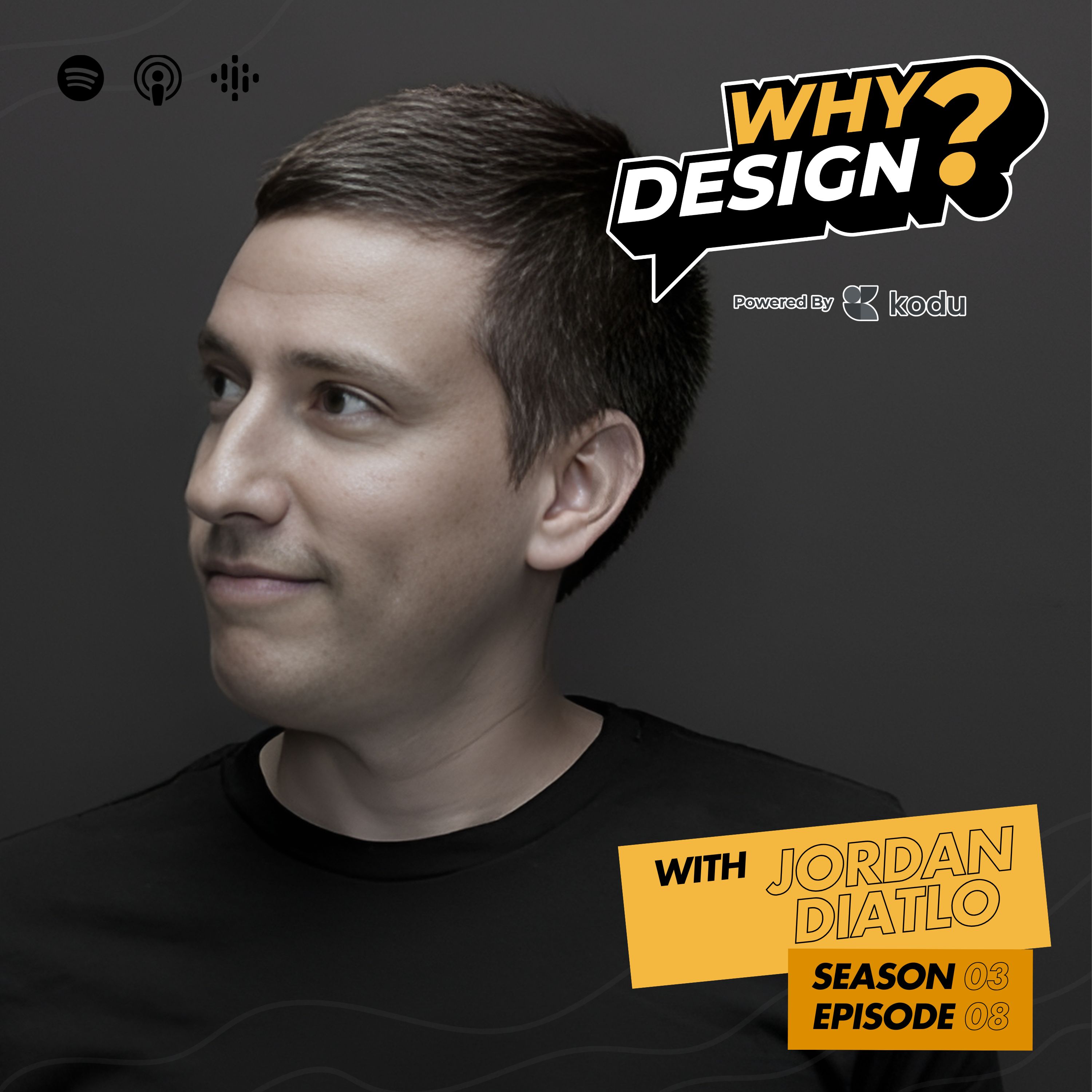
“I got laid off weeks before my first child was born… and I was so happy.”
Most people panic when they lose a job.
Jordan Diatlo built a business.
Just weeks before becoming a dad, Jordan was laid off. Instead of spiraling, he used it as fuel to start Leadoff Studio — now one of New York’s go-to design consultancies for health & wellness brands.
In this episode of Why Design, Jordan shares how he went from rejected by corporate to building a values-driven studio that’s helped startups like Roman and Dame become cate...
From Basement to 8-Figures: Reekon Tools & the Future of Hardware with Christian Reed
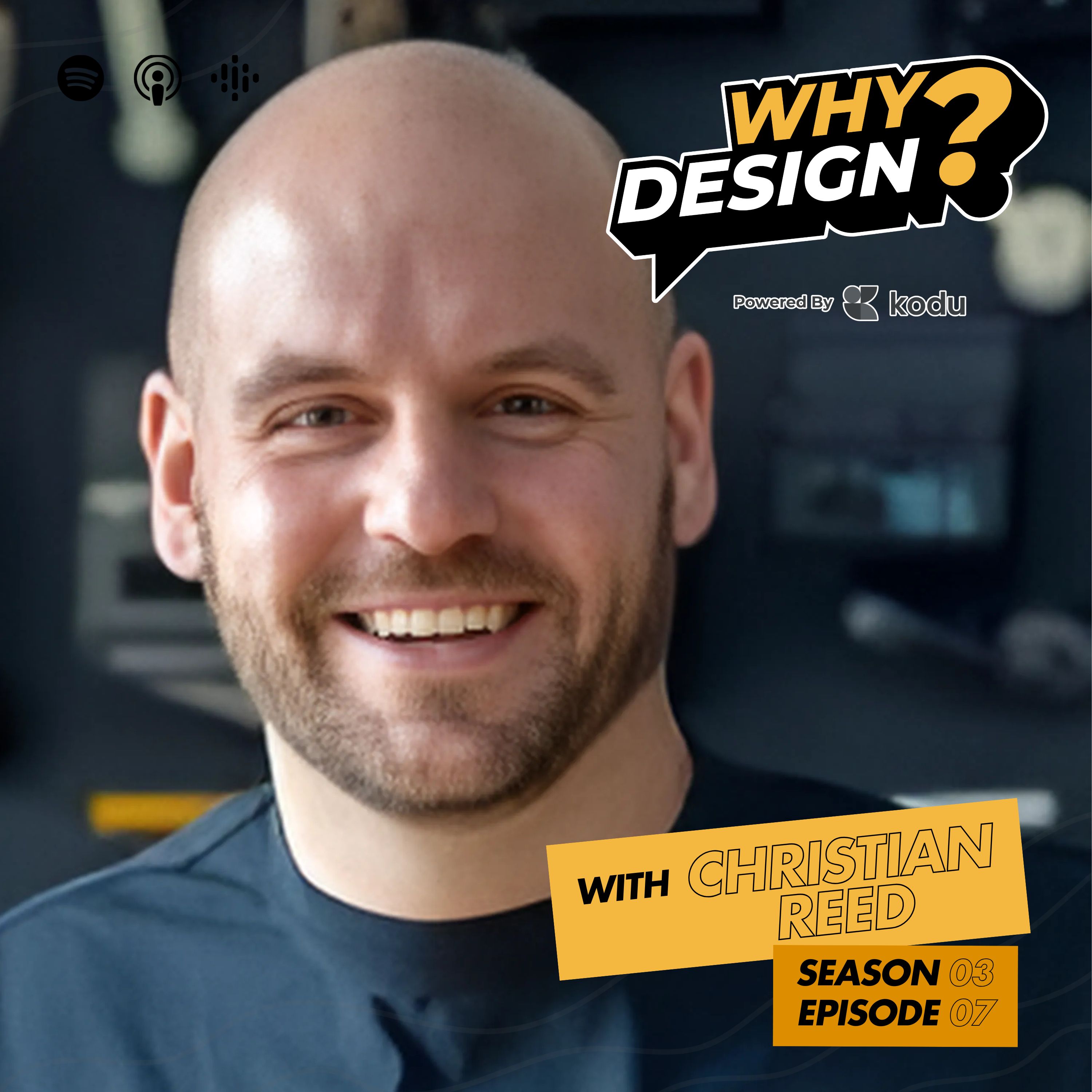
Most hardware startups die broke.
Christian Reed’s didn’t.
He turned a basement side project into Reekon Tools, an 8-figure construction-tech brand with tools that don’t break, content that hit 300M+ views, and a cult following of tradespeople.
In this episode of Why Design, Chris sits down with Christian to break down exactly how he went from MIT → military → Formlabs → scaling one of the most talked-about startups in hardware.
👉 Want more insights from world-class builders? Join the Why Design community → teamkodu.com/events
What You’ll Learn
How a Kickstarter side...Daydreaming and Other Unconventional Career Lessons with Jude Pullen
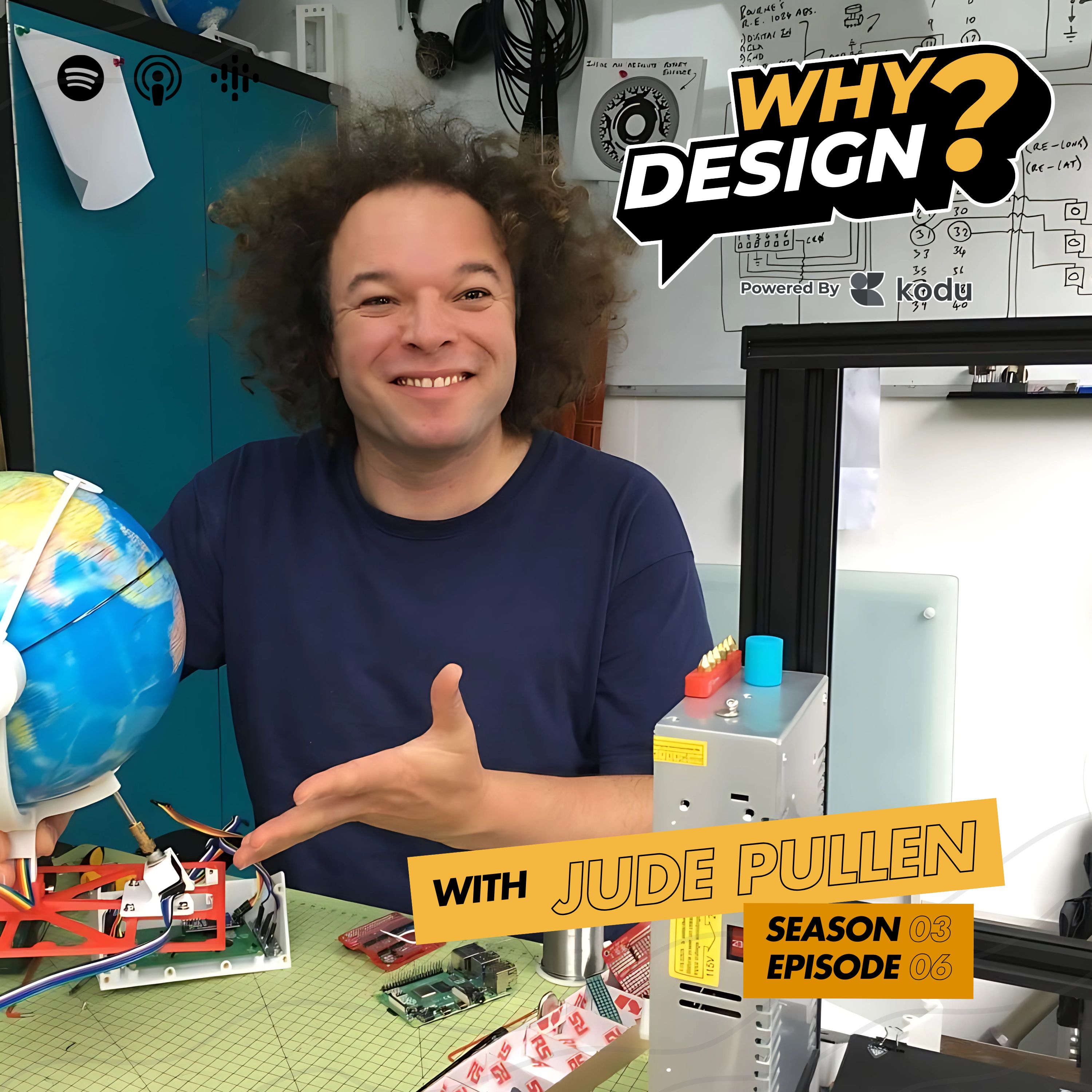
Most careers follow a path. Jude Pullen chose not to.
“I like being intellectually promiscuous; finding new tribes, then coming back with fresh ideas.”
In this episode of Why Design, Chris talks with Jude Pullen; creative technologist, prototyper, and storyteller. Jude’s career spans Dyson, Sugru, and Lego, with projects ranging from poetic air-quality monitors to complex hardware systems. Today, he splits his time between the RCA and Lego, while advising companies on technology, creativity, and play.
From challenging the myth of the “forever job” to reframing daydreaming as essential design work, Jude shares how po...
Why Most Design-Led Founders Fail (And How to Avoid It) | Jordan Nollman, Sprout
Most founders obsess over the product. Jordan Nollman says that’s the wrong game.
“We don’t just design the product. We design the tribe around it.”
In this episode of Why Design, Chris talks with Jordan Nollman, CEO and Chief Creative Officer of Sprout Studios. For over 20 years, Jordan has helped brands like Nike, Bose, and Microsoft create products that don’t just look good — they shape culture.
From launching a consultancy during the 2008 recession to building a multi-disciplinary team across hardware, packaging, UX, and venture design, Jordan reveals what early-stage founders usually get...
$1,000, a Suitcase, and a Portfolio: How Stuart Lee Built Prime Studio on Grit and Relationships
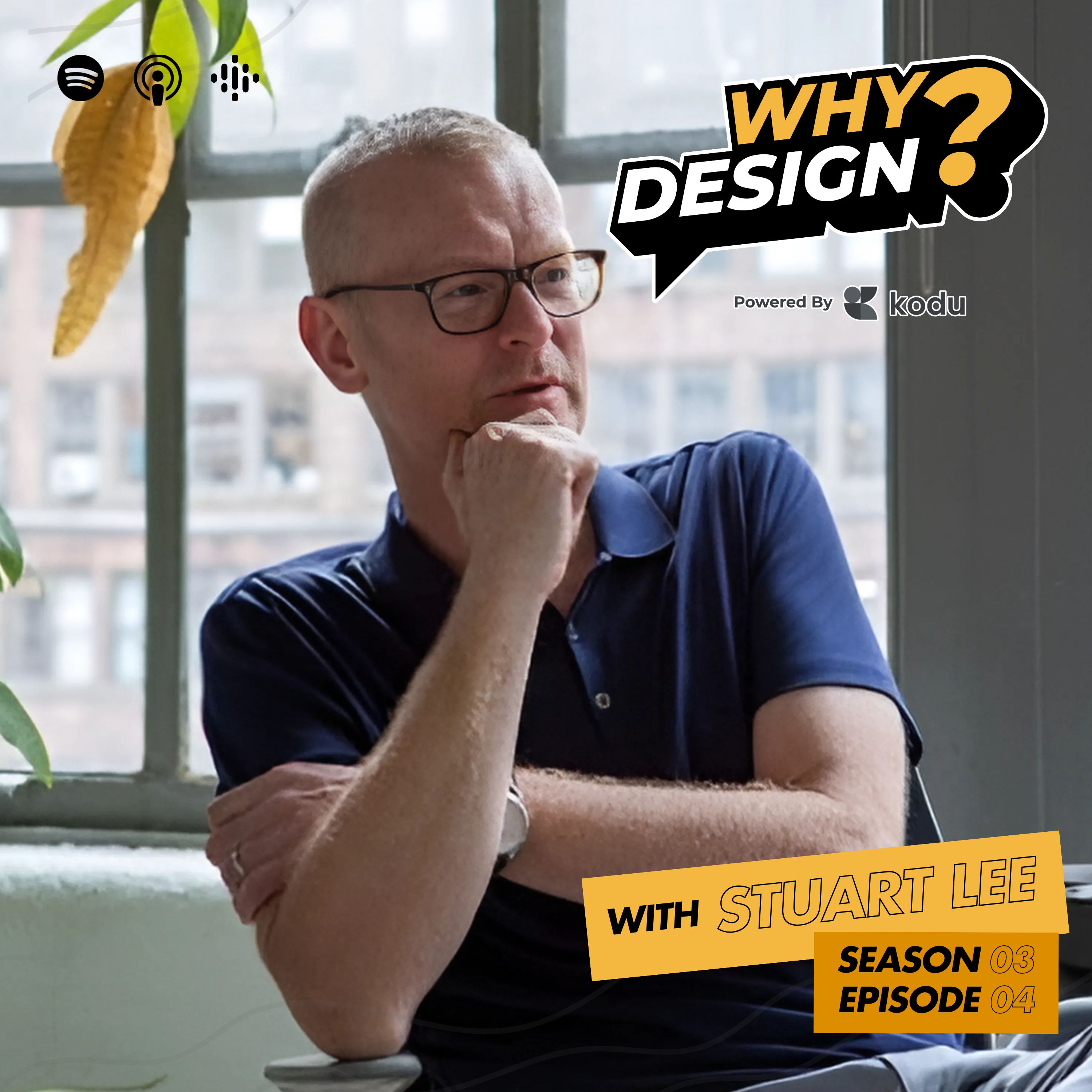
From Scarborough to Midtown Manhattan, Stuart Lee’s journey is one of grit, curiosity, and unshakable design intuition. In this episode, Chris sits down in person with Stuart to explore the formative moments that led to the founding of Prime Studio — the product and brand design consultancy behind household names like Harry’s, Welly, and MoMA.
Stuart shares how rewiring motors and welding steel during his early apprenticeship helped him think more empathetically about design for manufacture, why he sees himself as a design doer (not a design thinker), and what still excites him after 27 years leading his own...
From Prototype to 200k Products: The Embr Labs Story with Sam Shames
“What happened was just the market need was so strong… it kept pulling us forward.” — Sam Shames
In this episode, Chris sits down with Sam Shames — materials engineer, MIT grad, and co-founder of Ember Labs, the company behind the Ember Wave: a wearable that helps people regulate temperature and reclaim comfort on their terms.
Over the last 12 years, Sam has led Ember from a student side project to a real business, launching two hardware generations, shipping over 200,000 units, and recently pivoting to a subscription model that’s rare in consumer wearables.
We talk produ...
How to Launch a Consumer Tech Product That Actually Matters with Emilie Williams
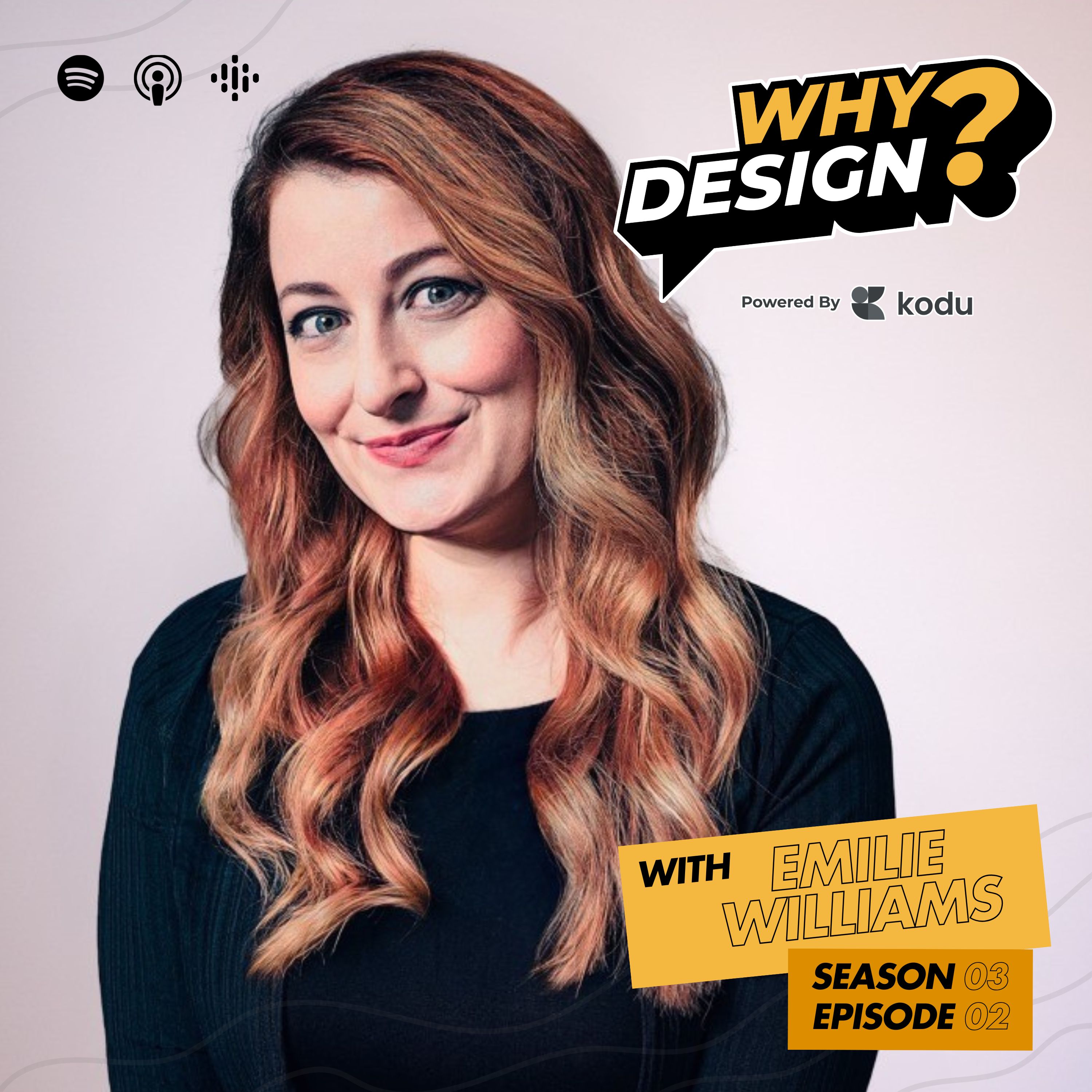
“It wasn’t just about a new product — it was about a new category.”
In this episode of Why Design, I speak with Emilie Williams, industrial designer and co-founder of Hydrific, a new venture within LIXIL focused on building smarter, more sustainable water products for the home.
Based in New York, Emilie has led the creative direction behind dozens of kitchen and bath products for household names like American Standard, Brizo, and Delta. Now at Hydrific, her work spans product design, branding, and business development — all aimed at rethinking how we use and value water in everyday...
How Brett Lovelady Helped Shape Modern Industrial Design (and Why He’s Still Just Getting Started)
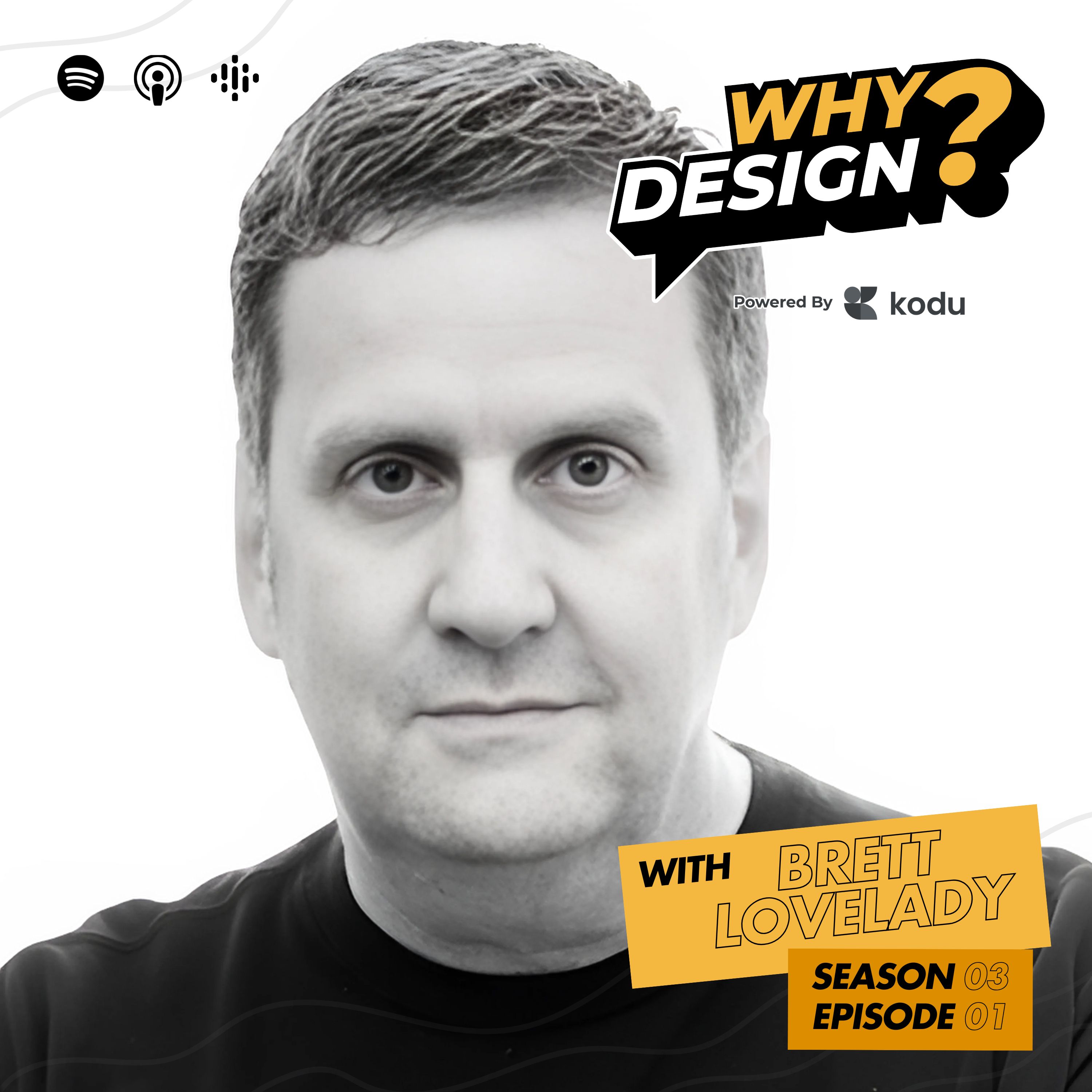
“The goal was always to amplify design’s value — not just make pretty stuff.”
We’re kicking off Series 3 with a true heavyweight in the world of industrial design — Brett Lovelady, founder of the legendary ASTRO Studios and spin-off brand ASTRO Gaming.
Brett has spent three decades leading design, brand, and product strategy for culture-shifting companies like Nike, Xbox, HP, Sony, Dell, Logitech, and many more. His work has helped generate over $100 billion in new revenue for clients worldwide, and shaped some of the most iconic tech and lifestyle products of the last 30 years.
In this conv...
How to Stand Out in a Crowded Job Market | Bonus Episode
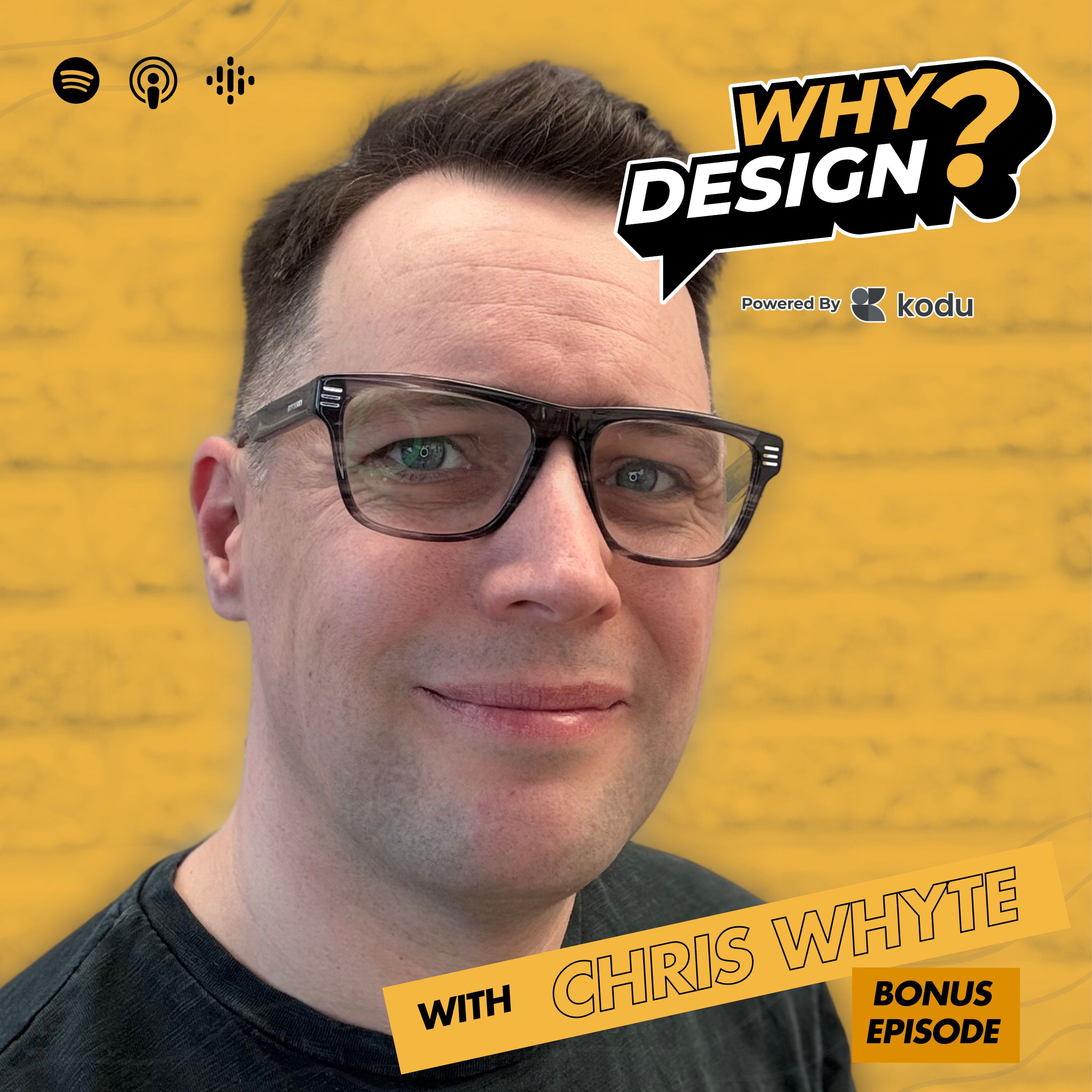
Episode Summary
In this special live episode, Chris Whyte, founder of Kodu and host of Why Design, delivers an energetic and insight-packed session to design students on how to stand out in a competitive job market. Drawing from 12+ years of experience and dozens of podcast conversations with design leaders, Chris shares practical advice on everything from CV writing to LinkedIn networking, preparing for interviews, and unlocking hidden job opportunities.
This is a must-listen for any early-career designer or student ready to land that first big opportunity.
What You’ll Learn
Crafting St...
Why Nick Ford Drove a Lorry Over a Prototype (and What It Taught Him About Design)

“We weren’t going to prove durability with a spreadsheet — we needed to drive a lorry over it and watch what happened.”
In this final episode of Series 2, I sit down with Nick Ford, founder of PipSqueak 3D and Patent Ferret, to explore how a nontraditional path — from sweeping workshop floors to designing urban furniture used across London — shaped his approach to design, business, and innovation.
Nick shares the full story behind one of his most iconic projects, the Westminster Tulip Bollard, including the now-famous moment when they drove a lorry over the prototype to prove its du...
Why 97% of Hardware Startups Fail (and How to Avoid It) with Sera Evcimen

"97% of hardware startups fail. And a lot of the time, it’s the same mistakes repeated over and over again."
In this episode of Why Design, I’m joined by Sera Evcimen, Founder of Pratik Development, Innovation Advisor at FORGE and Techstars Paris, and host of the hardware startup podcast The Builder Circle.
Sera has built a career around one goal — helping hardware startups avoid the common pitfalls that so often derail promising ideas. She’s worked hands-on across cleantech, space, consumer tech, and robotics before launching Pratik to support deep tech founders with everything from sys...
Designing a Better Future with Seaweed: Georgios Gkotsis on Replacing Plastics at Scale

“There’s a huge amount of innovation in sustainable materials—but very few are truly built around the problem.”
In this episode of Why Design, I’m joined by Georgios Gkotsis, CTO at Kelpi, a Bristol-based startup creating high-performance seaweed-based coatings to replace fossil plastics in long shelf life packaging.
Georgios has built a career at the intersection of material science, sustainability and engineering strategy. From early R&D at Procter & Gamble and Unilever to cutting-edge biomaterials at Xampla and now Kelpi, he’s seen firsthand what it takes to take an idea from la...
Why Most Hardware Startups Fail (and What Damon Bonser, CEO of British Design Fund Looks for Instead)

"There’s a huge amount of design talent in the UK—we just need more founders brave enough to commercialise it."
In this episode of Why Design, I sit down with Damon Bonser, founder and CEO of the British Design Fund—a team of operators-turned-investors backing early-stage product businesses with real-world impact.
Damon knows firsthand why most hardware startups fail—because he’s been through it himself. After launching over 400 products, navigating stock finance headaches, and scaling a business across the UK, US, and Asia, he sold his company and switched sides of the tab...
