Complex Systems with Patrick McKenzie (patio11)
We live in a world where our civilization and daily lives depend upon institutions, infrastructure, and technological substrates that are _complicated_ but not _unknowable_. Join Patrick McKenzie (patio11) as he discusses how decisions, technology, culture, and incentives shape our finance, technology, government, and more, with the people who built (and build) those Complex Systems.
The charity that is also a time machine
Patrick McKenzie (patio11) reads his 2022 Bits about Money essay on the infrastructure behind American charitable giving, prompted by the wave of AI-generated wealth expected to flow into philanthropy. He explains donor-advised funds, a chimera that is legally a charity but works for donors like a financial institution that can time travel: someone with a windfall takes the tax deduction now and recommends grants for years afterward. Along the way he covers why the IRS-required donation receipt is simple enough for a seven-year-old to produce while the industry still spends billions on record-keeping, why DAFs still mail so many paper...
The $900 million wire that wasn't final
Patrick McKenzie (patio11) reads his 2022 Bits about Money essay "Finality does not exist in payments." It argues that how final a payment is depends on the rails, the parties, and the governing law, not on the payment method alone. He explains why the reversibility of credit cards is what made internet commerce possible. He also covers the "hold harmless," the brief phone call between operations staff that quietly unwinds wire mistakes every day. He then applies the essay to Citibank's 2020 accidental wire of nearly $900 million to Revlon's lenders: a district court let recipients keep about $500 million before an appeals...
Why banks pay you to use their credit cards
Patrick McKenzie (patio11) reads his Bits about Money essay on how credit cards make money. The prompt was a listener who wondered how a card can include free travel insurance for someone who never carries a balance. He covers the four ways a card earns revenue (net interest, interchange, fees and marketing contributions), and explains why rewards competition makes some customers in the middle of the credit score ladder persistently unprofitable. He also explains why Europe's interchange cap left cards at about half of electronic payments, while Japan's uncapped interchange quietly pays for the rest of its consumer...
Stranded? Who pays when air travel breaks
Patrick McKenzie (patio11) got stranded overnight after a backhoe severed a single fiber optic cable, knocking out air traffic control across much of the eastern US. His airline declined to pay for the hotel. In this episode, he walks through who actually owes you what when air travel breaks: federal refund rules, the airlines' "controllable delay" commitments, credit card trip delay coverage, and the goodwill credit a well-placed phone call can unlock. Along the way, he explains why checkout-page travel insurance pays back only about 40 cents on the dollar and why 5,000 apology miles are worth about $60.
–
Forced vacations are a fraud control
Patrick McKenzie (patio11) reads his Bits About Money essay "Financial systems take a holiday" (originally published February 2024), prompted by a conversation with a prior guest about how even exchanging calendars between financial institutions is hard. He explains why banks run at something closer to "five twos" of uptime than Google's five nines, using Japanese banks' idiosyncratic, company-specific "Company Foundation Day" to show how a holiday can be entirely real and consequential while appearing on no official list anywhere.
–
Full transcript available here: https://www.complexsystemspodcast.com/forced-vacations-are-a-fraud-control/
–
Presenting Sponsors: Mercury & Granola
C...
Everyone wants to be your wallet
Patrick McKenzie (patio11) reads his Bits About Money essay on the business of wallets, with new commentary, prompted by paying his barber $100 over Venmo and wondering why PayPal so badly wants to be in the middle of that transaction. He walks through the economics that make wallets irresistible to anyone already moving money for users: funds enter the ecosystem at card interchange rates, move inside it at the cost of a database transaction, and get topped up over ACH pulls that cost about five cents at scale. From there he covers co-branded debit and credit cards, the loss-sharing language...
How AI detection actually works, with Pangram’s Max Spero
Patrick McKenzie (patio11) is joined by Max Spero, co-founder and CEO of Pangram Labs, which builds models that identify AI-generated text and images. Max goes under the hood to explain how AI detection actually works. They also discuss the institutions that quietly assumed writing was expensive: credit bureaus that negotiated the right to shred templated dispute letters, grant committees where reading the application is five percent of the work, and unemployment offices staffed for a world where claims cannot plausibly rise two hundredfold.
–
Full transcript available here: https://www.complexsystemspodcast.com/how-ai-detection-actually-works-with-pangrams-max-spero/
–
Prese...
Two banks can't agree on fourth-grade math | Alex Elliott
Patrick McKenzie (@patio11) is joined by Alex Elliott (@alexpotato), who has spent his career in SRE and operations roles at financial firms ranging from ten-person fintechs to global investment banks, to discuss what the back office actually does all day. They cover the life cycle of a trade: execution, clearing, settlement, and the constant reconciliation between counterparties who don't quite agree on what happened. Alex recounts the Friday afternoon when twenty million shares went out to the street instead of five, and Patrick explains what happens between 4:15 and 4:30 when one bank owes another $36 million and the person who owns...
LLMs and the economics of Evil, Inc., with Manish Goregaokar

Patrick McKenzie (patio11) is joined by Manish Goregaokar, a senior software engineer and member of the Rust security response team, to discuss what LLMs do to the cost side of running a sophisticated con. They walk through a scam built for programmers: a plausible company, a few rounds of interviews, and an NDA signed via "sign in with email" that quietly hands an attacker the identity account everything else resets against. A version of it hit at least five people in the Rust community within days of Manish publishing on the subject, and Patrick describes being targeted himself by...
The economics of putting germicidal light in every room, with Misha Gurevich and Vivian Belenky of Aerolamp
In this episode, Patrick McKenzie (patio11) is joined by Misha Gurevich, CEO of Aerolamp, and Vivian Belenky, its chief scientist and a researcher at Columbia, to discuss why UVC, a wavelength of light that inactivates airborne pathogens but is absorbed harmlessly by the dead outer layer of human skin, remains almost entirely undeployed. They explain the physics and safety case for 222 nanometers, the economics of installation, and preliminary South African trial results showing 90% suppression of tuberculosis transmission in hospital wards.
–
Full transcript available here: https://www.complexsystemspodcast.com/the-economics-of-putting-germicidal-light-in-every-room/
–
Presenting Sponsors: Mercury & Mongo...
Cheap cognition, supercharged surveillance, and AI risks, with Garrison Lovely
Patrick McKenzie (patio11) is joined by Garrison Lovely, journalist and author of Obsolete: The AI Industry's Trillion-Dollar Race to Replace Us and How to Stop It, to map the three-sided debate over AI risk and why the arguments keep talking past each other.
They then turn to what cheap cognition does to surveillance that already exists: FinCEN receives roughly 4 million suspicious activity reports a year and reads almost none of them, ICE agents run about a million queries against that database annually, and every podcast ever recorded is now transcribable for approximately nothing. The conversation covers c...
What you're actually getting paid in, with Leila Clark
In this episode, Patrick McKenzie (patio11) is joined by Leila Clark, founder of Stardrift and formerly a software engineer at Jane Street, to discuss her essay "What Are You Getting Paid In?" They cover how a Jane Street manager staffed the firm's least lucrative corner by paying people in culture, why Ken Griffin is worth roughly fifty Taylor Swifts, and how a longtime Google product manager quietly ends up with Grammy-winner money. The conversation ranges from academia's brutal tournament structure and YC as a script to founderdom to the one currency Taylor Swift holds that Ken Griffin's $50 billion buys o...
What LLMs can and can't do for writers, with Clara Collier of Asterisk Magazine
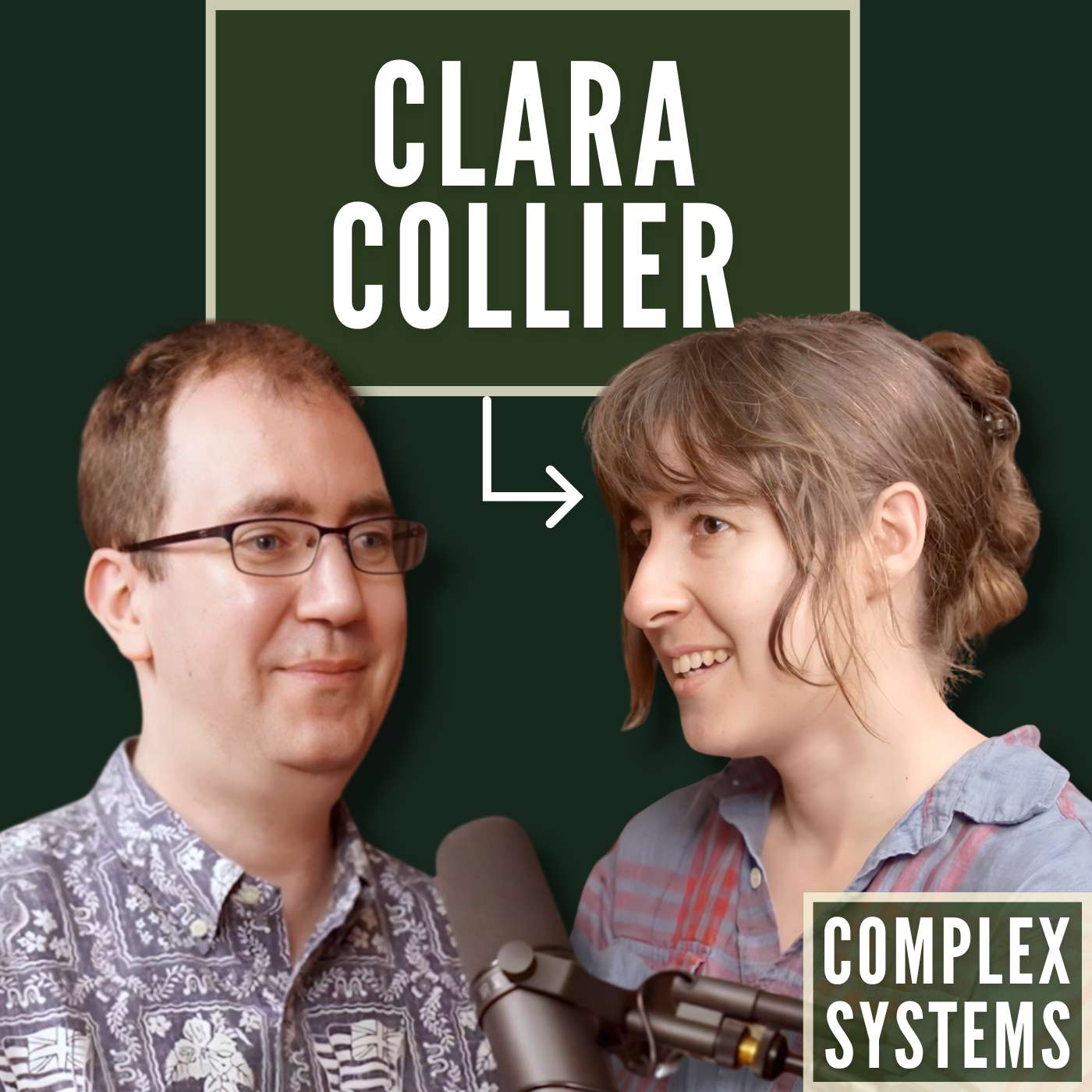
Patrick McKenzie is joined by returning guest Clara Collier, editor-in-chief of Asterisk Magazine, to discuss how working writers and reporters actually use LLMs. Patrick walks through the machinery behind his recent SPLC reporting, including "parallel construction" with LLMs: when sources can't go on the record, models can surface public confirmation of the same facts in unguarded podcast interviews, press releases, and prepared remarks. They also cover why the best smoking gun sat unnoticed on the coalition's own Twitter account, the David O. Selznick theory of the corporate memo, and where hardball politics in a democracy ends and crimes begin.<...
YouTube economics now, with Justin Kuiper
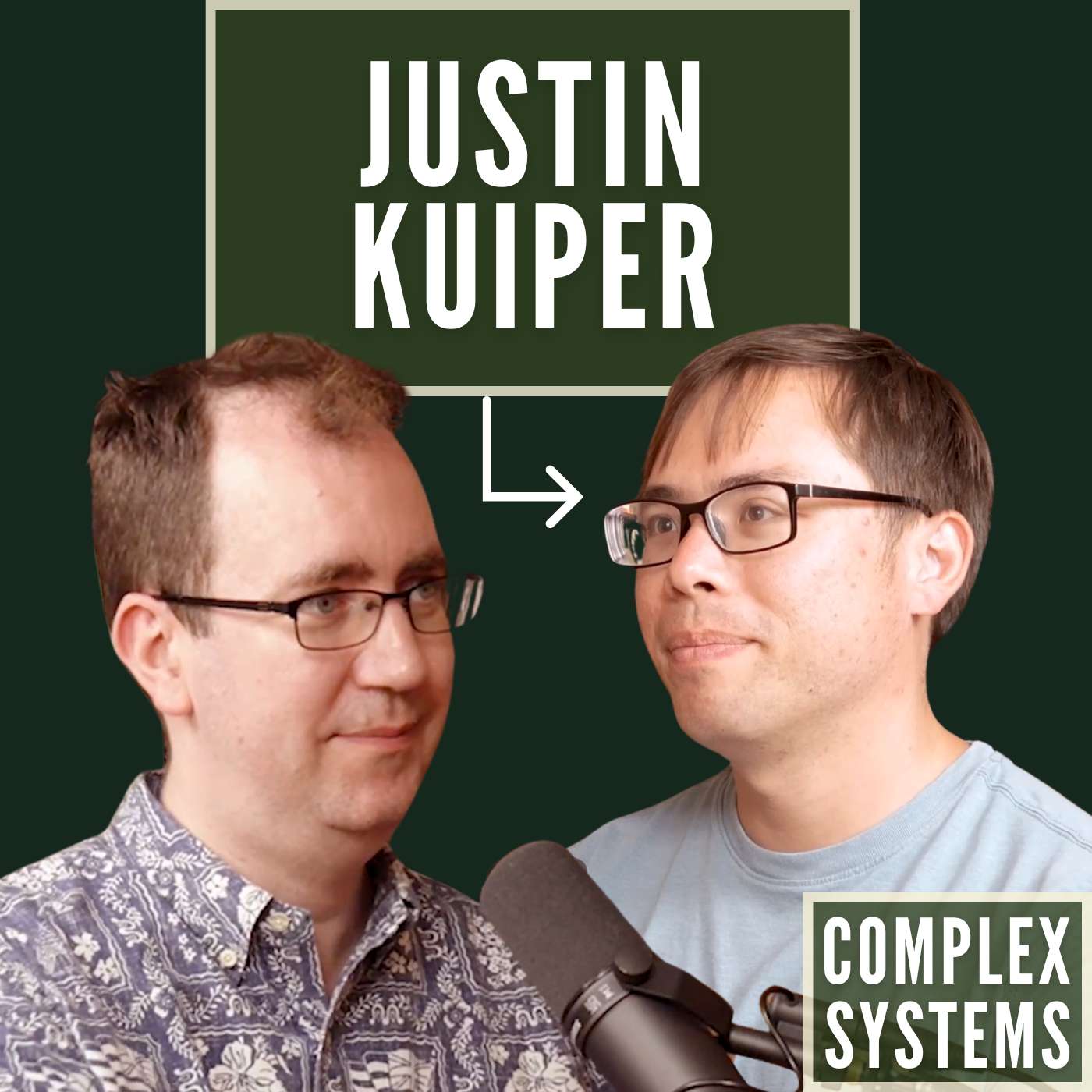
In this episode of Complex Systems, Patrick McKenzie (patio11) is joined by Justin Kuiper, a longtime writer for MatPat's Game Theory family of channels and now creator of Proof Positive, to discuss the microeconomics of YouTube. They break down how creators actually get paid — from $3–$20 CPMs and the leaky funnel where a million views yields perhaps 50,000 actual ad views, to sponsor reads, Super Chats, and MrBeast selling chocolate bars as his own advertiser of last resort. Along the way, they explore how a successful channel becomes a firm that absorbs specialist labor from less successful peers, why the algorithm give...
The structural footprint of a bank run
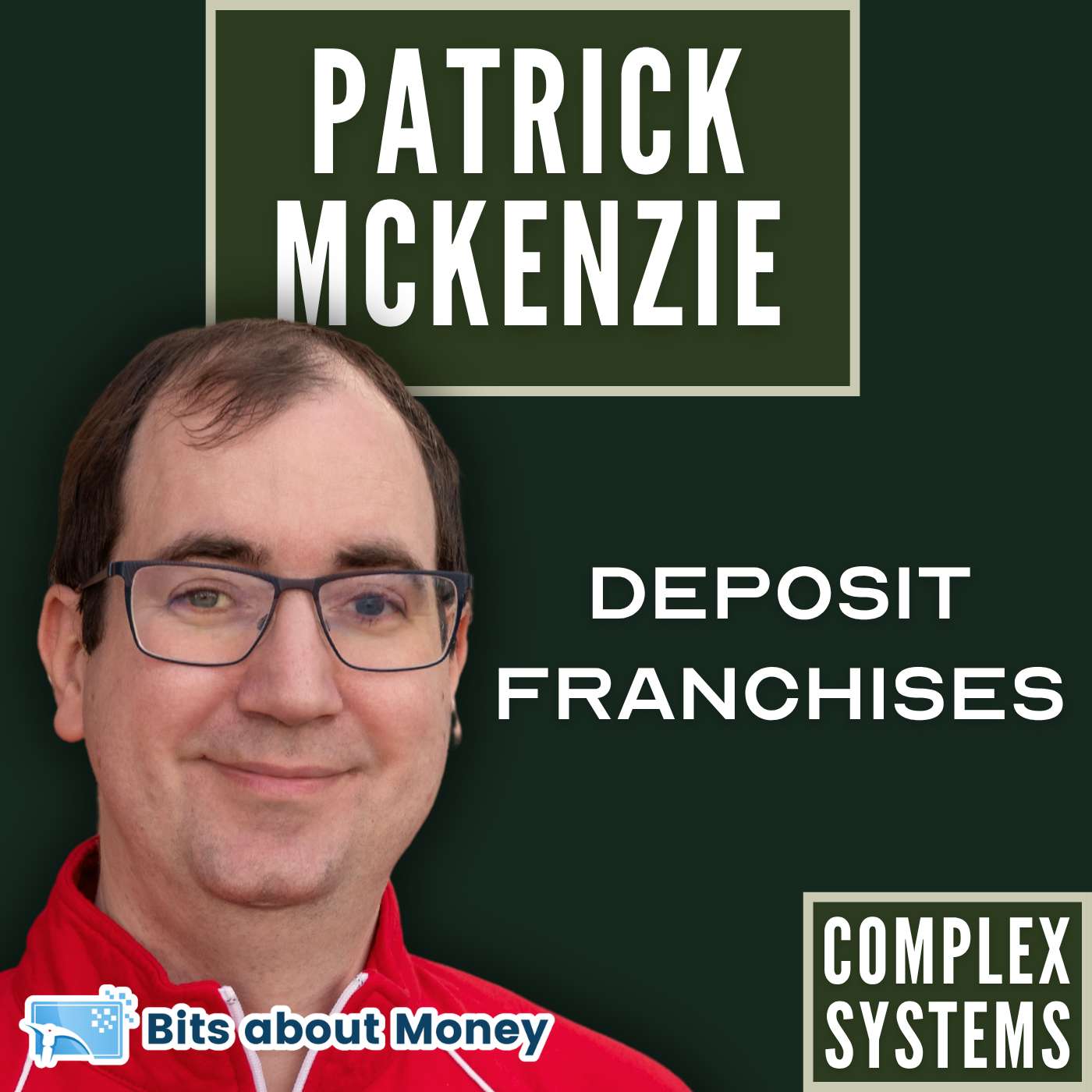
Patrick McKenzie (patio11) reads his 2023 essay "Deposit Franchises as Natural Hedges," written seven weeks into that year's banking crisis, making the case that deposit franchises are a natural hedge against interest rate risk (one regional banks were quietly encouraged to sell off by loading up on agency MBS). He walks through why "sweat and smiles" deposits were assumed to be sticky enough to fund long-duration assets, why that assumption broke down for retail and sophisticated depositors alike once rates rose, and how the resulting losses moved through bank balance sheets. Patrick closes with two years of hindsight: what the...
Forty ways to pay for coffee in Japan
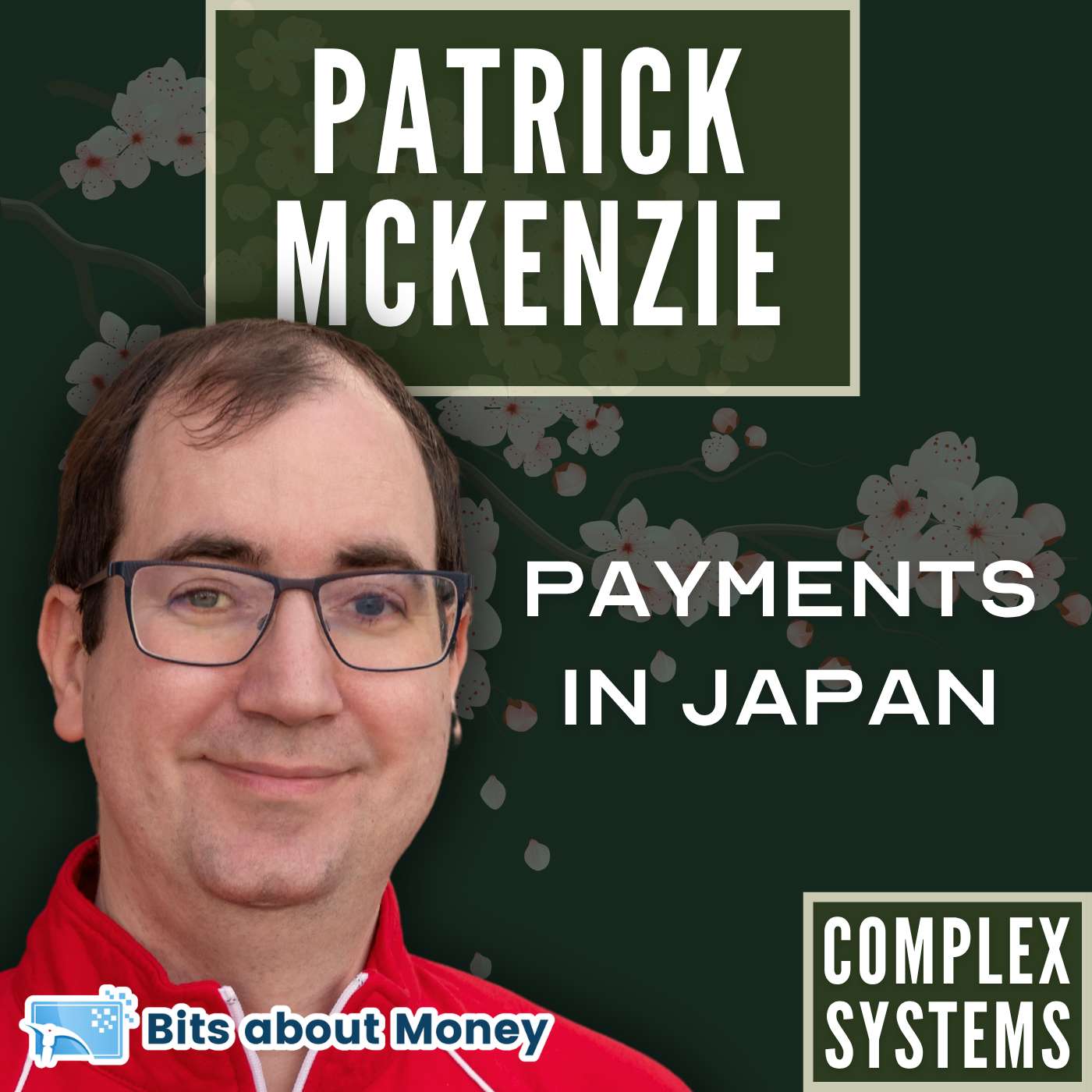
Patrick McKenzie (patio11) reads his 2021 essay "Payments in Japan," tracing how Japanese consumers navigate a landscape with dozens of competing payment methods at once: credit cards, electronic money, QR-code super apps, convenience-store cash vouchers, and bank transfers. Along the way he covers the JFTC's campaign to force credit card networks to disclose interchange rates, how Rakuten and 7-Eleven each bought a bank to solve a payments problem blocking their core business, why PayPay's subsidized 2018 launch let it run away with the QR code market, and why konbini payments remain popular despite a user experience frozen in the late 1990s.<...
The factory behind your home loan

Patrick McKenzie reads from his 2022 Bits About Money essay on mortgages, making the case that a mortgage is best understood as a manufactured product, not a simple loan between a bank and a customer. He walks through the assembly line behind every home loan, the loan officer and back-office staff who build the 700-page document. Then he traces the supply chain it gets sold into, where GSEs insure against non-payment risk, servicers buy the right to collect monthly checks, and pension funds and other private capital end up holding the economic exposure, because they want it more than banks...
How brokerage transfers actually work
Patrick McKenzie reads from his 2024 Bits About Money essay on ACATS, the Automated Customer Account Transfer Service that governs how Americans move investment accounts between brokerages, then updates it with regulatory developments (and industry infighting) from early 2026. The essay covers why a system underpinning trillions of dollars in assets was deliberately designed to skip verifying whether transfers are actually authorized, what the three-business-day shot clock means in practice, and how a bad actor armed with a stolen identity and a mobile app can drain someone's retirement account before they notice it's gone. (Good news, though: they’ll almost certainly ge...
Wrong numbers and why they survive, with Aaron Brown
Patrick McKenzie (patio11) is joined by Aaron Brown, author of Wrong Number, to examine why institutions that produce bad statistics face so few consequences for doing so. They trace the pattern from Aaron's 1975 summer job, where two credentialed experts confidently produced opposite conclusions about whether American tractors ran on diesel or gasoline, through decades of case studies involving the NTSB, COVID-era research, and the eviction moratorium. Along the way they discuss why financial markets are unusually good at error-correction, why "wanna bet?" functions as a tax on bullshit, and what it means that every senior economist Aaron told about...
Defendant, Censor, Politico, Spy
The improbable but true story of how non-profits operating a private intelligence agency to combat terrorism decided to interfere with campaign infrastructure in a U.S. election.
This piece includes original public interest reporting, following on the previous episode on how the Southern Poverty Law Center became financial infrastructure. If you have previously read Bits about Money's reporting on this subject, note there are two major additions here: 1) direct evidence of interference in campaign infrastructure for a declared candidate in a U.S. election, which was newly developed after our original reporting and 2) responses...
How the SPLC became financial infrastructure
Patrick McKenzie reads from his latest Bits About Money essay, walking through why bank fraud charges are a prosecutor's favorite tool, how the Bank Secrecy Act's surveillance regime is designed to force criminals into impossible tradeoffs, and why lying to a bank is one of the easiest crimes to prove. He then applies that framework to the April 2026 DOJ indictment of the Southern Poverty Law Center, tracing how a covert informant-payment scheme run through fictitious shell entities to become a near-textbook bank fraud case. Part 2 releases next week.
–
Full transcript available here: www.complexsystemspodcast.com/splc-financial-infrastructure/
–
P...
The honey badger of payments
Patrick McKenzie (patio11) reads his classic Bits about Money essay on how checks shaped the entire American payments infrastructure, from the origins of ACH to why a standard US bank account is, technically, a credit product. He then examines what happened when DOGE tried, via Executive Order 14247, to eliminate federal paper check disbursements by September 2025. The carve-outs Treasury eventually had to make map almost exactly onto the essay's original argument. Checks are the honey badger of payments: the numbers keep dwindling, but the edge cases are irreducible, and the second-best pathway for reaching them doesn't really exist yet.
<...Cash received is not revenue earned
Patrick McKenzie (patio11) reads his classic Bits about Money essay explaining why revenue recognition in software is more complicated than most engineers, founders, and financial reporters think. The essay covers the accounting rules behind SaaS subscriptions, the deferred revenue problem that surprised him when he sold his own companies, and the surprisingly intricate standards governing virtual goods in mobile games. He then turns to AI labs, where rapid revenue growth has prompted questions about whether the numbers mean what they seem. They mostly do, but understanding why requires knowing the difference between bookings, deferred revenue, and a minimum commit.<...
Your bank balance isn’t in the bank, and other alchemy
Patrick McKenzie (patio11) reads his classic Bits About Money essay on why your bank deposit is not what you think it is. He explains the capital stack that makes deposits appear riskless while funding genuinely risky businesses, and why the "no questions asked" property of money took the United States roughly a hundred years to engineer.
Patrick updates the essay with commentary on SVB's collapse, the Voyager collapse and emergency injunctions about the finer points of ACH plumbing, and the GENIUS Act's stablecoin interest ban. He argues that crypto keeps rediscovering the same hard...
Payroll, pins, and punch cards
In this episode of Complex Systems, Patrick McKenzie riffs on why public sector payroll modernization is even more likely to fail than the typical public software procurement project. He then goes into a wider discussion about payroll providers and their role as software, payment rails, and a sink for an enduring controversy in political economy. We want robust state capacity and hate income taxes. He breaks down the history of tax withholding as a state-deputized collection mechanism and explains how providers like ADP manage a lucrative "conveyor belt" of money to earn interest on the "float". Finally, he discusses...
Delve into compliance theatre
Patrick McKenzie (patio11) explains how compliance regimes designed to be viral brought many more firms into the scope of frameworks like SOC 2. This created a market demand for compliance-on-the-cheap by companies like Delve. Delve has been accused in an anonymous bit of investigative journalism as engaging in Potemkin compliance.
Patrick contrasts what real audits look like with what Delve allegedly delivered. He argues that selling compliance theater as compliance is fraud, not the sort of benign rule-breaking celebrated in startup culture.
–
Full transcript available here: https://www.complexsystemspodcast.com/delve-into-compliance-theatre/
–
Presenting Spon...
Understanding consumer debt collections: the underbelly of finance
Patrick McKenzie (patio11) reads his classic Bits about Money essay explaining why the debt collection industry earns its “river of effluvia” metaphor. From the accounting standards that force banks to "charge off" delinquent accounts to the large CSV files that constitute the only proof of a debt's existence, he explores how the system prioritizes accounting finality over legal and factual accuracy. The conversation reveals why the single most effective way to resolve a debt is often forcing a collector to read and write paper. They can’t, operationally, and don’t see that as an impediment to making money, especial...
Inference engineering and the real-world deployment of LLMs, with Philip Kiely
Patrick McKenzie (patio11) and Philip Kiely, early employee at Baseten, discuss the inference stack: the critical layer of software and hardware that sits between a model’s weights and a user’s prompt. They cover inference engineering, how intermediate layers are evolving over a technical stack that is changing every six months, and how sophisticated organizations are actually consuming LLMs beyond just writing their questions into chatbot apps.
–
Full transcript available here: www.complexsystemspodcast.com/inference-engineering-with-philip-kiely/
–
Presenting Sponsors: Mercury, Meter, & Granola
Complex Systems is presented by Mercury—radically better banking for founde...
Secrets designed to be divulged and other payment oddities
Patrick McKenzie (patio11) deconstructs the "original sin" of payments: building a global financial substrate on shared secrets that were distributed promiscuously to function. He examines the multi-decade game of Whack-a-Mole played by the industry to balance the "optimal amount of fraud" against the catastrophic conversion hit of high-friction security. From the physical failure of terminal buttons to the smartphone finally solving the lifecycle problem of cryptographic tokens, Patrick explores the technical and social reasons why we’ve moved from "something you know" to the "continuity of access" provided by the device in your pocket.
–
Full tran...
Understanding government procurement, with Luke Farrell
Patrick McKenzie (patio11) and Luke Farrell examine the structural "technical imagination" gap that prevents the US government from delivering high-fidelity digital services. They discuss why states routinely pay full price 29 times for the same buggy codebase, why failure is the default outcome, and why rooms full of government administrators cannot muster the expertise to say a two line code change should be trivial. They also discuss Luke’s work on the "means testing industrial complex,” why the government redundantly pays a private vendor to do a SQL query for information the IRS already knows, and what vendors would say abou...
APIs of evil: studying fraud as infrastructure
Patrick McKenzie (patio11) reads an essay about "industrial-scale" fraud and why it should be treated as a professional business process rather than a series of isolated accidents. He explains how fraudsters leverage specialized supply chains—shared CPAs, incorporation agents, and "least attentive" banks—to loot public funds. Patrick argues that the government’s "pay-and-chase" model is fundamentally broken and suggests that simple "proof of work" functions, like a 30-second cell phone video of a workspace, could provide the visceral signal that paperwork lacks, and examines the state’s lack of "object permanence" regarding serial fraudsters and how scaled data provides...
Why check cashing businesses exist
Patrick McKenzie (patio11) reads an essay about the business of check cashing, a misunderstood industry. He explains why cashing a check is actually a "new credit extension" where the bank bets on both the writer and the payee, and why profit-maximizing institutions often decline to bank individuals who represent even a "material risk" of a single bounced check. From the manual "rituals" of endorsement to the way fintechs like Ingo Money and Cash App use persistent identity to narrow the risk envelope, Patrick examines the technical and social reasons why some people pay to access their own wages, others...
Claude Code makes several thousand dollars in 30 minutes, with Patrick McKenzie
Patrick McKenzie (patio11) walks through a coding session with Claude Code to demonstrate what the fuss is about. The business problem: recovering failed subscription payments that required coordinating APIs across Stripe, Ghost, and email providers, and the surprising experience of watching Claude read documentation, resolve dependency conflicts, and make sensible security choices. The episode offers a pedantic level of detail on why the sharpest technologists use words like “fundamentally transformed” to describe the impact of LLMs on coding.
–
Full annotated transcript available here: www.complexsystemspodcast.com/claude-code/
–
Sponsor: Framer
Building and main...
We should stop burning pharma trials’ lab notes, with Ruxandra Teslo
Patrick McKenzie (patio11) is joined by Ruxandra Teslo to discuss why drug development keeps getting more expensive despite revolutionary new treatment modalities from GLP-1 agonists to gene therapies. They discuss Eroom’s Law (Moore’s Law in reverse) and Ruxandra's Common Technical Document Project, which aims to build the "Stack Overflow of clinical development" by making regulatory submissions publicly accessible. This will fill a present hole in the education of researchers, lower barriers for small biotechs, and accelerate drug discovery.
–
Full transcript available here: https://www.complexsystemspodcast.com/ruxandra-teslo/
–
Sponsor: Framer
Building and maint...
Your support rep is also trapped in this call, with Des Traynor of Intercom
Patrick McKenzie (patio11) sits down with Intercom co-founder Des Traynor to examine customer support through the lens of Conway's Law, Goodhart's Law, and several decades of accumulated organizational scar tissue. They discuss how AI agents are democratizing white-glove service, why modern LLMs have retrained user expectations around “chatbots” very quickly, and the surprisingly liberating effect of talking to something that will never judge you for missing a loan payment.
–
Full transcript available here: www.complexsystemspodcast.com/des-traynor/
–
Sponsor: MongoDB
Tired of database limitations and architectures that break when you scale? MongoDB is the d...
The magic spell that makes banks give you your money back
Patrick McKenzie (@patio11) reads his latest Bits about Money essay explaining why he “loves Regulation E more than any rational person does.” He explains how Reg E created a privately-administered legal system processing over 100 million complaints annually—dwarfing the formal U.S. court system—and why banks are now trying to avoid these obligations for Zelle's nine figure fraud problem.
–
Full transcript available here: www.complexsystemspodcast.com/the-magic-spell-reg-e/
–
Sponsors: MongoDB & Framer
Tired of database limitations and architectures that break when you scale? MongoDB is the database built for developers, by developers: ACID compliant, E...
2025 in review, with Sammy Cottrell
Our annual year-in-review episode covers some recurring themes from 2025 and some behind-the-curtains discussion of running a podcast. Patrick McKenzie (patio11) sits down with producer Sammy Cottrell to discuss the most popular episodes of the year, the impact of AI coding tools, the challenges of video podcasting, Sammy's role as a "fixer" finding guests, and much more.
–
Full transcript available here: www.complexsystemspodcast.com/2025-in-review-with-sammy-cottrell/
–
Sponsor:
Framer is a design and publishing platform that collapses the toolchain between wireframes and production-ready websites. Design, iterate, and publish in one workspace. Start free at fr...
Gift cards and the fraud supply chain
For this week's holiday-inspired Complex Systems, Patrick reads his essay from Bits about Money on the gift card paradox: a legitimate payments rail, yet also a primary vector for fraud that leaves victims without recourse.
–
Full transcript available here: www.complexsystemspodcast.com/gift-cards-and-the-fraud-supply-chain/
–
Sponsors: Givewell & Framer
Support proven charities that deliver measurable results and learn how to maximize your charitable impact with GiveWell. Go to givewell.org, pick “Podcast” and enter Complex Systems at checkout.
Framer is a design and publishing platform that collapses the toolchain between wireframes and productio...
Understanding perpetual futures
In this episode, Patrick McKenzie (patio11) walks through how perpetual futures work, from funding rates to liquidations to the surprise of automatic deleveraging. Perps are the dominant trading mechanism in crypto (6-8X larger than spot volume) and exist primarily to let exchanges and market makers run casinos more capital-efficiently. He explains why this intellectually interesting innovation probably won't escape crypto, despite what crypto enthusiasts might expect.
–
Full transcript available here: www.complexsystemspodcast.com/understanding-perpetual-futures/
–
Sponsor: Framer is a design and publishing platform that collapses the toolchain between wireframes and production-ready websites. Desi...
The economics of discovery, with Ben Reinhardt

In this episode, Patrick McKenzie (patio11) is joined by Ben Reinhardt, founder of Speculative Technologies, to examine how science gets funded in the United States and why the current system leaves much to be desired. They dissect the outdated taxonomy of basic, applied, and development research, categories encoded into law that fail to capture how actual breakthrough science happens.
–
Full transcript available here:
www.complexsystemspodcast.com/the-economics-of-discovery-with-ben-reinhardt/
–
Sponsors: GiveWell & Framer
Support proven charities that deliver measurable results and learn how to maximize your charitable impact with GiveWell. First-time dono...
