Senior Safety Advice
A podcast focused on the topics of senior safety, aging in place and caring for older adults.
How to Stop Dreading the Hard Conversations and Start Feeling Ready
Difficult conversations about driving, home safety, caregiving, and independence can leave families feeling anxious and unprepared. In this episode, Senior Home Safety Specialist Robin Schiltz explains how to organize your concerns, choose a calmer approach, and begin the discussion without making an older adult feel attacked or controlled.
Listeners will learn how to use specific examples, offer choices, handle resistance, and keep the focus on safety and independence.
Visit SeniorSafetyAdvice.com for more guidance and practical resources.
When The Answer Is No And It Stays No: A Caregiver’s Guide To Coping
You bring the groceries, you offer to help, and she says no — again. In this episode, retired Occupational Therapist, Certified Aging in Place Specialist, and Dementia Care Specialist Esther Kane explains what a parent’s refusal is actually made of, why explaining it better never works, and how to sort your worries into the ones worth fighting for and the ones to let go. She also covers what changes when memory loss is part of the picture, when to bring in a doctor instead of the family, and how to cope on the days the answer stays no. Visit Seni...
New Guidelines on Preventing Medication Errors at Home
New medication safety guidance is placing greater attention on accurate medication lists, careful pharmacy checks, safer liquid measurements, and medication reviews after hospital stays or prescription changes.
In this episode, Robin Schiltz, a Senior Home Safety Specialist and Dementia Care Specialist, explains how older adults and family caregivers can turn these recommendations into a simple home routine. She also discusses high-risk medicines, safe storage, disposal, and what to do when a possible error occurs.
Visit SeniorSafetyAdvice.com for more practical home safety and caregiving resources.
A Rollator Is Not A Walker With Wheels — And That Mix-Up Is Sending People To The Hospital
Families almost always buy the rollator — four wheels, hand brakes, a padded seat — because it looks like the upgrade. It usually isn’t, and for someone who needs to lean, it can roll right out from under them. In this episode, retired Occupational Therapist, Certified Aging in Place Specialist, and Dementia Care Specialist Esther Kane explains the real difference between a standard walker, a two-wheel walker, and a rollator, who each one is actually for, and the three measurements to take before spending a dollar. She also covers why the rollator is often the wrong choice when dementia is part o...
How to Set Boundaries as a Family Caregiver Without Guilt
Family caregivers often feel guilty when they say no, ask for help, or protect their personal time. In this episode, Senior Home Safety Specialist Robin Schiltz explains why healthy boundaries are an important part of safe, sustainable caregiving. She shares practical ways to communicate limits, divide responsibilities, and manage feelings of guilt without losing compassion.
Visit SeniorSafetyAdvice.com for more caregiving guidance and senior safety resources.
The Most Dangerous Room In Your House Is The One You Relax In
Everybody checks the bathroom for fall hazards. Almost nobody checks the living room — which is where older adults spend most of their waking hours and stand up out of a chair a dozen times a day. In this episode, retired Occupational Therapist, Certified Aging in Place Specialist, and Dementia Care Specialist Esther Kane walks through the five things that actually catch a foot in a living room, three free ways to see a room you’ve stopped looking at, and a ten-minute fix-three-things routine anyone can do today. She also explains why the usual advice reverses when dementia is part...
When Your Parent Asks the Same Question Again: What to Say
When an aging parent asks the same question repeatedly, even a loving caregiver can become frustrated. In this episode, Senior Home Safety Specialist and Dementia Care Specialist Robin Schiltz explains why repeated questions happen and shares calm, practical ways to respond.
Listeners will learn how reassurance, simple answers, written reminders, gentle redirection, and caregiver breaks can make these moments easier.
Visit SeniorSafetyAdvice.com for more caregiving and senior safety resources.
The Best Shower Chairs and Transfer Benches for Aging in Place
Choosing the wrong shower chair can create new problems instead of solving them. In this episode, Robin Schiltz, Senior Home Safety Specialist, explains the differences between shower chairs, stools, standard transfer benches, sliding models, and heavy-duty options. She shares simple tips for measuring the bathroom, selecting the correct seat height, and creating a safer bathing setup.
Visit SeniorSafetyAdvice.com for more aging-in-place safety tips and caregiver resources.
You’re Not Failing. You’re Running On Empty. There’s A Difference
Most caregiver advice goes straight to your feelings — the guilt, the resentment, the sense that you’re not doing enough. This episode goes somewhere else entirely. Retired Occupational Therapist, Certified Aging in Place Specialist, and Dementia Care Specialist Esther Kane makes the case that what exhausted caregivers are calling failure is very often physical depletion instead: broken sleep, meals eaten standing up, water rationed on purpose, and years of deferred care of their own. She walks through the safe-transfer basics nobody teaches family caregivers, why one unbroken block of sleep beats seven broken hours, what changes physically when dementia is p...
You’re Not Failing. You’re Running On Empty. There’s A Difference
Most caregiver advice goes straight to your feelings — the guilt, the resentment, the sense that you’re not doing enough. This episode goes somewhere else entirely. Retired Occupational Therapist, Certified Aging in Place Specialist, and Dementia Care Specialist Esther Kane makes the case that what exhausted caregivers are calling failure is very often physical depletion instead: broken sleep, meals eaten standing up, water rationed on purpose, and years of deferred care of their own. She walks through the safe-transfer basics nobody teaches family caregivers, why one unbroken block of sleep beats seven broken hours, what changes physically when dementia is p...
"Dad Keeps Driving Even Though We Think He Shouldn't — Help!"
When an aging parent continues driving despite growing safety concerns, families often feel frightened and unsure of what to do. Senior Home Safety Specialist Robin Schiltz explains the warning signs to watch for, how to begin a respectful conversation, and when to consider a medical review or professional driving evaluation. She also shares practical ways to protect a parent’s independence by creating reliable transportation alternatives.
Visit SeniorSafetyAdvice.com for more senior safety tips and caregiver resources.
Alone Is Fine. Lonely Is Not. What The New Research Actually Found
We’ve all been told that older adults living alone are the ones at risk — but a major analysis published in July 2026, pooling eleven long-term studies of more than 175,000 adults across eighteen countries, found something different. Feeling lonely was linked to declining memory and a shorter life, while simply spending time alone was not. In this episode, retired Occupational Therapist, Certified Aging in Place Specialist, and Dementia Care Specialist Esther Kane breaks the research down in plain English, clears up three stubborn myths about loneliness and aging, and shares what actually seems to help — including the one health check nobody...
How to Set Up a Safe Bathroom for a Senior Living Alone
A bathroom can present serious safety challenges for an older adult who lives alone, but a few thoughtful changes can make daily routines much safer. In this episode, Senior Home Safety Specialist Robin Schiltz explains how lighting, grab bars, non-slip surfaces, shower seating, emergency devices, and better organization can support independence and confidence.
Listeners will learn practical ways to reduce bathroom hazards without making the space feel clinical or restrictive.
Visit SeniorSafetyAdvice.com for more senior home safety tips and resources.
The Money Talk Nobody Wants To Have (And How To Actually Have It)
Most families don't have the money conversation too early — they have it too late, in a hospital hallway, with a clipboard involved. In this episode, retired Occupational Therapist, Certified Aging in Place Specialist, and Dementia Care Specialist Esther Kane explains why this particular talk is the hardest one in the house, how to open the door without sounding like an ambush, and the five things you actually need to know (none of which is how much money your parent has). She also covers why money is often where memory changes show up first, what to watch for, and how to...
How to Make a Staircase Safer in Five Minutes
A safer staircase may be only five minutes away. In this episode, Senior Home Safety Specialist Robin Schiltz guides older adults and family caregivers through a quick check for clutter, poor lighting, loose handrails, slippery surfaces, and unsafe habits. Listeners will learn simple ways to reduce fall risks while protecting independence and confidence at home.
Visit SeniorSafetyAdvice.com for more practical home safety tips and resources.
The Most Dangerous Walk You Take All Day Happens At Two In The Morning
Most nighttime falls don’t happen because someone got lost in their own home — they happen because aging eyes need far more light and far more time to adjust to the dark than anyone realizes. In this episode, retired Occupational Therapist, Certified Aging in Place Specialist, and Dementia Care Specialist Esther Kane explains which nightlights and motion sensor lights are actually worth buying, why warm light beats bright light, and why lighting the path matters more than lighting the bathroom. She also covers the one lighting rule that changes completely when memory loss is part of the picture, plus a si...
When Caregiving Feels Like a Full-Time Job on Top of Your Full-Time Life
Caregiving can feel like a second full-time job, especially when it must be balanced with work, family, household responsibilities, and personal needs.
In this episode, Senior Home Safety Specialist Robin Schiltz discusses the invisible work of caregiving and offers practical ways to reduce the pressure, set boundaries, organize responsibilities, and ask for meaningful help.
Listeners will be reminded that rest and support are not signs of failure, but important parts of providing safe, sustainable care.
Visit SeniorSafetyAdvice.com for more caregiver guidance and home safety resources.
My Parent Keeps Forgetting Their Medication — What Do I Actually Do?
You open the pill organizer, and Thursday is still full. Most families read that as a memory problem and start bracing for the worst — but retired Occupational Therapist, Certified Aging in Place Specialist, and Dementia Care Specialist Esther Kane says missed doses usually have a much more fixable cause. In this episode she walks through the real reasons pills get skipped, the fixes in the order she’d actually try them, the pharmacy service most families have never heard of, and the point at which a weekly pill box stops helping and starts creating risk. She also shares why the...
What the Latest Fall Prevention Research Means for Your Parent
What does the newest fall-prevention research actually mean for your aging parent? In this episode, Senior Home Safety Specialist Robin Schiltz explains why exercise, personalized risk assessments, medication reviews, and properly chosen home modifications work better than simply telling someone to be careful. She also discusses near falls, fear of falling, alert devices, and what families should do after a fall.
Visit SeniorSafetyAdvice.com for more practical tips to help older adults remain safe, confident, and independent at home.
How to Navigate a Hospital Discharge Safely — The Questions Nobody Tells You to Ask
Everybody treats hospital discharge like the finish line. It isn’t — it’s the starting line, and it’s the part of the whole hospital stay with the least supervision and the most risk. In this episode, retired Occupational Therapist, Certified Aging in Place Specialist, and Dementia Care Specialist Esther Kane walks through the questions that actually matter before anyone signs a discharge paper, the one request families almost never make out loud, and the three things that cost nothing at all. She also covers what changes completely when memory loss is part of the picture, and why the first se...
How to Avoid Caregiver Burnout Before It Starts
Caregiver burnout often develops slowly, making it difficult to recognize until the caregiver is already overwhelmed.
In this episode, Senior Home Safety Specialist and Dementia Care Specialist Robin Schiltz explains how caregivers can spot early warning signs, set healthy limits, accept practical help, and protect their own health. Listeners will learn simple steps they can take now to make caregiving more sustainable.
Visit SeniorSafetyAdvice.com for more caregiving and senior safety resources.
A Simple Nighttime Routine That Cuts Your Fall Risk — And Costs Almost Nothing
Most falls at home don’t happen on the ice or on the stairs — they happen in the dark, between the bed and the bathroom, at two in the morning. In this episode, retired Occupational Therapist, Certified Aging in Place Specialist, and Dementia Care Specialist Esther Kane walks through a simple ten-minute nighttime routine that removes the four things that actually cause those falls, including the one free step she’d keep if she could only keep one. She also covers what changes when memory loss is part of the picture, why the light should always be pointing where you wa...
The Best Pill Dispensers and Medication Reminders for Seniors
Choosing a pill dispenser can feel overwhelming, especially when every device promises to make medication management easier.
In this episode, Senior Home Safety Specialist Robin Schiltz explains the differences between simple pill organizers, automatic rotating dispensers, smartphone reminders, and connected systems that alert family caregivers.
She discusses popular options such as Hero, MedReady, LiveFine, MedMinder, MedaCube, and the Medisafe app while sharing important questions families should ask before buying.
Visit SeniorSafetyAdvice.com for more practical medication-management and home-safety guidance.
Finding Small Moments of Joy in the Middle of a Hard Season
Some seasons are just hard, and no amount of looking on the bright side makes them easier. In this episode, retired Occupational Therapist, Certified Aging in Place Specialist, and Dementia Care Specialist Esther Kane makes the case that small moments of joy aren’t a luxury for caregivers and older adults in a difficult stretch — they’re fuel, and ten minutes is enough. She walks through where those minutes actually hide, why guilt convinces so many caregivers that misery is loyalty, what changes when dementia is part of the picture, and how to tell the difference between being worn out an...
"How Do I Know When It's Time for Assisted Living?" Signs Families Shouldn’t Ignore
How can a family tell when an aging parent needs more support than can safely be provided at home? In this episode, Robin Schiltz, Senior Home Safety Specialist, discusses common warning signs involving falls, medication, meals, household tasks, memory, loneliness, and caregiver stress.
She also explains why assisted living does not have to mean losing independence and offers a calm way to begin the conversation.
Visit SeniorSafetyAdvice.com for more safety tips and caregiver resources.
The Box On The Table: What 2026’s Aging-In-Place Tech Actually Does
Half of the technology sold to older adults right now is nonsense with a nice font — and the other half is quietly the biggest change in aging in place in a generation. In this episode, retired Occupational Therapist, Certified Aging in Place Specialist, and Dementia Care Specialist Esther Kane walks through the 2026 tools that actually earn their plug, from motion-activated lighting and cameraless radar fall sensors to automatic pill dispensers, plus three fixes that cost nothing at all. She covers what changes when memory loss is part of the picture, and the one question that separates safety from surveillance be...
How to Prepare for a Power Outage If Your Parent Has Medical Equipment
A power outage can quickly become dangerous when an older adult relies on electrically powered medical equipment. In this episode, Senior Home Safety Specialist Robin Schiltz explains how families can prepare backup power, protect refrigerated medication, plan transportation, and decide when relocation may be necessary. Listeners will learn practical ways to create an emergency plan before the lights go out.
Visit SeniorSafetyAdvice.com for more senior home safety tips and caregiver resources.
The Long-Distance Caregiver’s System — Built From Your Couch In One Weekend
When the phone rings at eleven at night and you’re four states away, the problem usually isn’t the distance — it’s that nobody ever built a system. In this episode, retired Occupational Therapist, Certified Aging in Place Specialist, and Dementia Care Specialist Esther Kane lays out the four pieces every long-distance care plan needs, the local eyes and ears most families never think to ask, and the three fixes that cost nothing at all. She also covers what changes when memory loss is part of the picture, and why the organized daughter three time zones away often helps mo...
The One Phone Setting Every Senior Should Turn On Right Now
A smartphone may already contain one of the most useful emergency tools a senior can carry. In this episode, Senior Home Safety Specialist Robin Schiltz explains how Emergency SOS works, why it matters, and how older adults and caregivers can set it up safely. She also discusses emergency contacts, medical information, accidental-call concerns, and the importance of practicing before an emergency occurs.
Visit SeniorSafetyAdvice.com for more practical senior safety tips and resources.
Why Cooking Wears You Out Now — And The Twenty-Minute Fix That Costs Nothing
Cooking dinner didn’t used to leave you exhausted, and most people quietly blame their age for that. In this episode, retired Occupational Therapist, Certified Aging in Place Specialist, and Dementia Care Specialist Esther Kane makes the case that the tiredness usually isn’t coming from the cooking at all — it’s coming from the walking, the bending, the reaching, and the standing. She shares the one rule that decides where everything in your kitchen should live, the free habits that cut your work in half, and what changes when memory loss is part of the picture. There’s nothing to...
How to Stay Present With Your Parent When Your Mind Is Everywhere Else
When you're caring for an aging parent, it's easy to be physically present while your mind is consumed by responsibilities, appointments, and worries about the future. In this episode, Senior Home Safety Specialist Robin Schiltz shares simple, practical ways to slow down, reconnect, and make the most of the everyday moments you spend together.
Whether your parent is aging independently or living with dementia, these gentle strategies can help strengthen your relationship while reducing caregiver stress.
Visit SeniorSafetyAdvice.com for more resources, expert guidance, and practical advice for seniors and family caregivers.
My Sister and I Disagree About Mom’s Care — Who Decides?
One sibling lives twelve minutes away and sees everything. The other flies in for a Saturday and says Mom seems fine. Sound familiar? In this episode, retired Occupational Therapist, Certified Aging in Place Specialist, and Dementia Care Specialist Esther Kane explains why both siblings are usually telling the truth, what’s really underneath the argument, and who actually has the authority to decide — an answer that surprises most families. She also shares four practical ways to get unstuck this week, and how the question changes when memory loss is part of the picture. Visit SeniorSafetyAdvice.com for more practical tips...
What's Changing in Medicare Coverage for Home Safety Equipment
Many older adults hide the fact that they're struggling because they fear losing their independence. In this episode, Robin Schiltz, Senior Home Safety Specialist, explains the subtle warning signs that may indicate an aging parent needs more support than they're willing to admit.
Listeners will learn what changes to watch for, how to start a compassionate conversation, and how small interventions can help seniors remain safe and independent at home.
Visit SeniorSafetyAdvice.com for more expert advice and practical aging-in-place resources.
Technology Made Easier for Older Adults With Bill Vicary
Technology can help older adults remain independent, connected, and safe—but only when they feel confident using it.
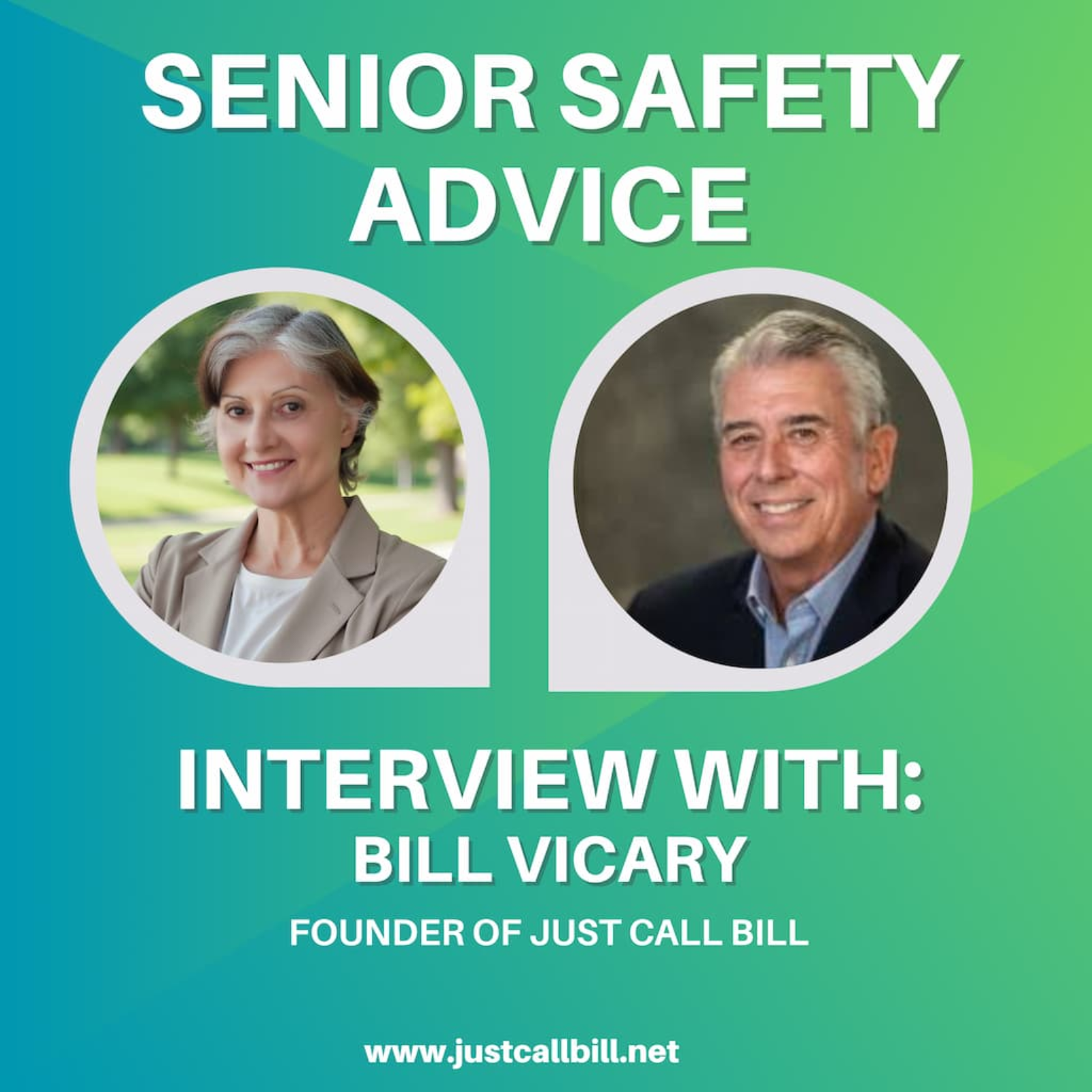
In this interview, Esther Kane speaks with Bill Vicary, founder of Just Call Bill, about his work helping older adults understand smartphones, tablets, computers, online safety, and the everyday technology that has become part of modern life.
Bill explains why many older adults feel pressured by family members to adopt new devices, even when no one has taken the time to teach them how to use those devices comfortably. His approach is simple: older adults should use as...
The Binder That Speaks For Your Parent When They Can’t
When a medical emergency hits, families are asked questions they can’t answer — what medications is she on, who is her doctor, does she have an advance directive? In this episode, retired Occupational Therapist, Certified Aging in Place Specialist, and Dementia Care Specialist Esther Kane walks you through building a simple emergency binder for an aging parent, one page at a time. She covers exactly what belongs inside, how to bring it up without offending your parent, what to add when memory changes are part of the picture, and how to keep it from going out of date. No lawy...
Signs Your Parent May Need More Help Than They're Admitting
Many older adults hide the fact that they're struggling because they fear losing their independence. In this episode, Robin Schiltz, Senior Home Safety Specialist, explains the subtle warning signs that may indicate an aging parent needs more support than they're willing to admit.
Listeners will learn what changes to watch for, how to start a compassionate conversation, and how small interventions can help seniors remain safe and independent at home.
Visit SeniorSafetyAdvice.com for more expert advice and practical aging-in-place resources.
Smoke Detector Check: The 60-Second Habit That Could Save Your Life
In this episode of the Daily Senior Safety Advice Podcast, Esther Kane, a retired Occupational Therapist, Certified Aging in Place Specialist, and Dementia Care Specialist, walks listeners through a simple sixty second smoke detector check that could save a life. Esther explains why a lit indicator light doesn't guarantee a working sensor, why smoke detectors need replacing every ten years, and what family caregivers should know about smoke alarms and loved ones living with dementia. Listeners will come away with a clear, easy routine for testing their smoke detectors, checking manufacture dates, and choosing the right alarm for hearing...
Medical Alert Devices: Which Ones Are Worth the Money in 2026
Are medical alert devices really worth the cost in 2026? In this episode, Senior Home Safety Specialist Robin Schiltz explains how today's medical alert systems have evolved, what features truly matter, and how to choose a device that fits your lifestyle. Whether you're aging in place yourself or helping an older loved one, you'll learn what to look for before spending your money.
Visit SeniorSafetyAdvice.com for more expert guidance and practical resources to help seniors live safely and independently.
Interview with Kabir Bhatia & Mark Leavitt - co-founders of Hello-Everyday
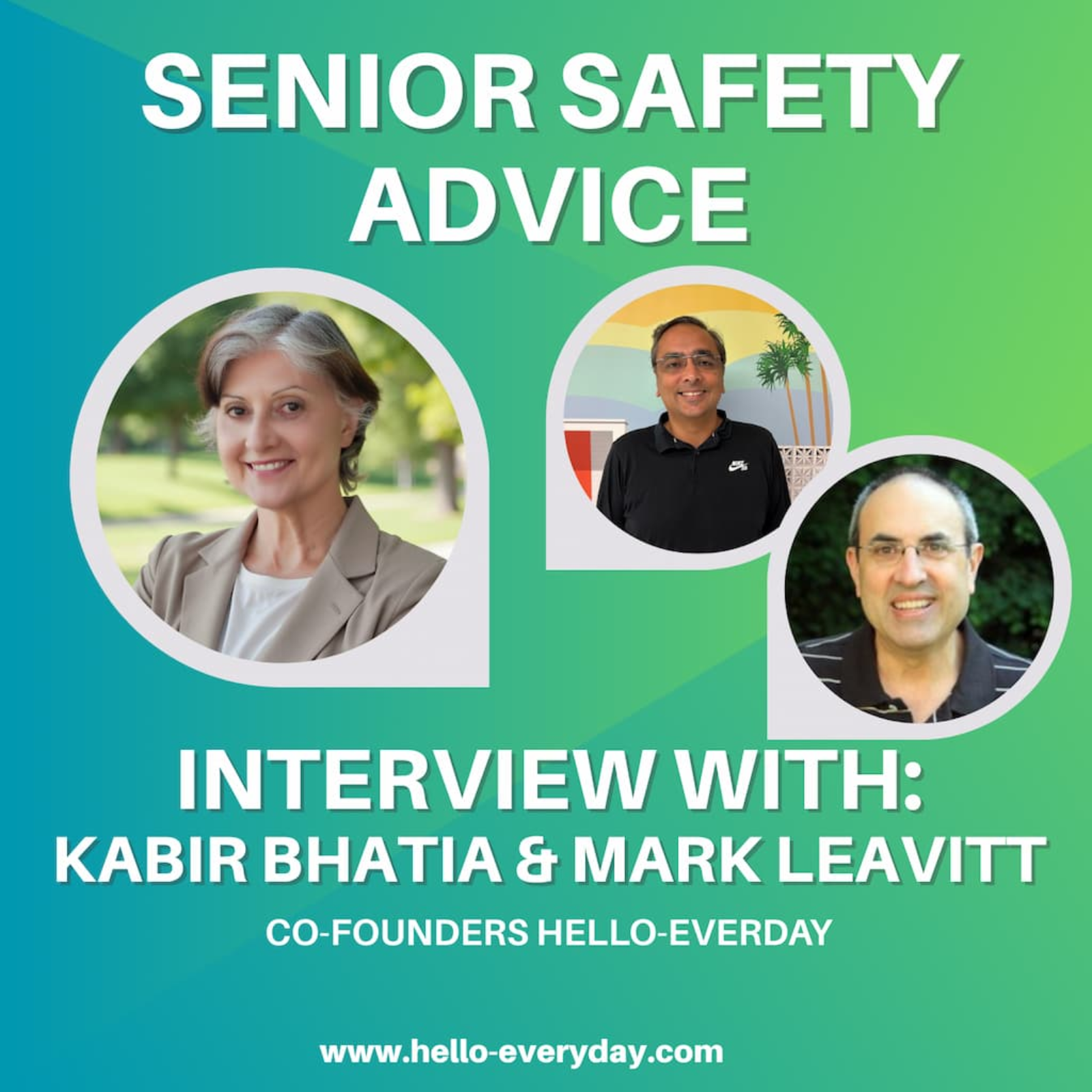
How can technology help an older adult live alone safely, without cameras, wearables, or constant check-in calls?
In this interview, Esther Kane speaks with Kabir Bhatia and Dr. Mark Leavitt, co-founders of Hello Everyday, about creating simple, respectful technology that supports aging in place. Kabir is the company’s CEO, while Mark is a retired internal medicine and geriatrics physician, engineer, inventor, and the company’s Chief Science Officer.
They discuss how Hello Everyday uses a discreet home activity sensor to provide reassurance that a person is following their normal routine. When unusual inactivity is dete...
When Caregiving Feels Like Too Much: Permission to Ask for Help
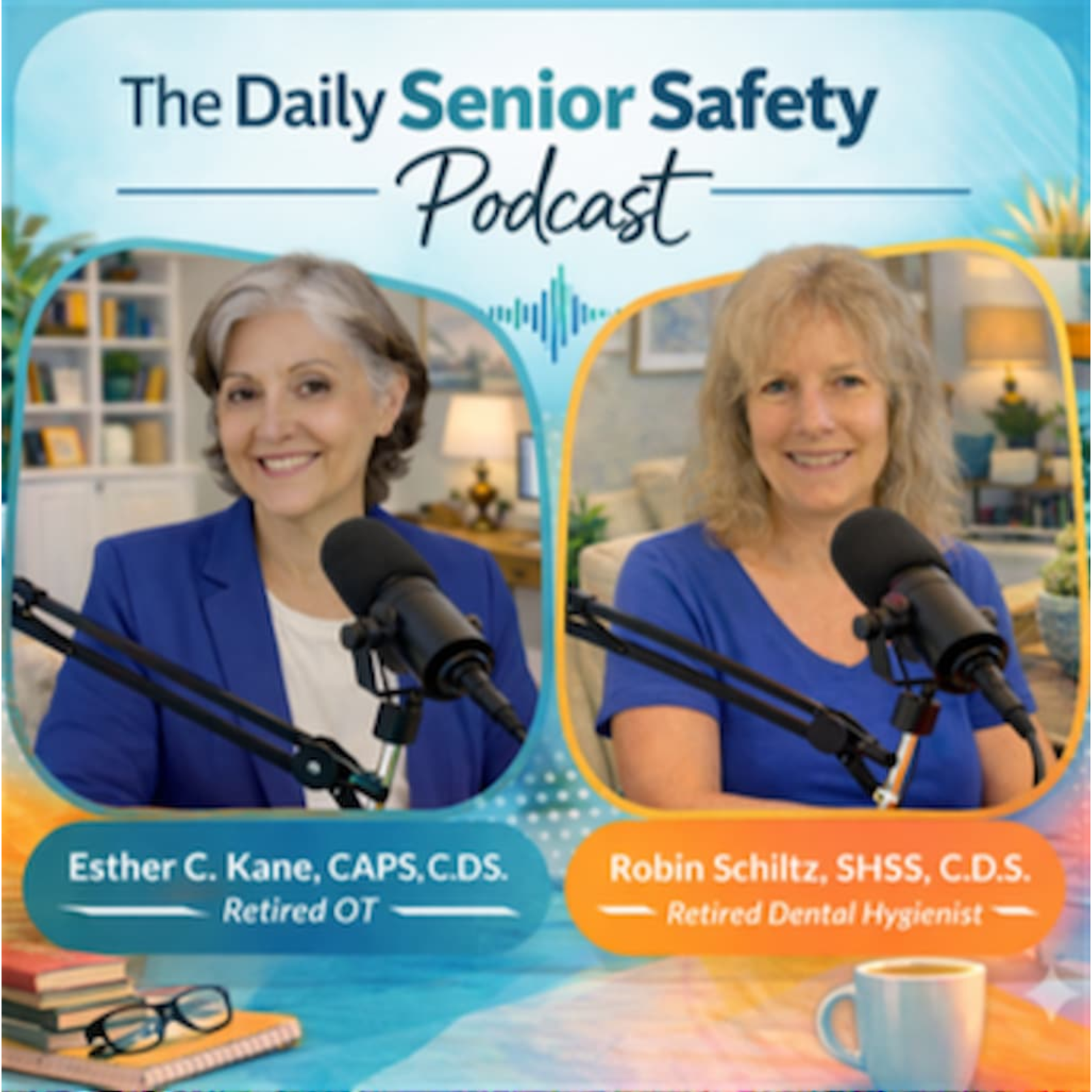
When caregiving starts to feel like too much, many family caregivers push through in silence — overwhelmed, exhausted, and unsure where to turn. In this heartfelt episode of the Daily Senior Safety Advice Podcast, host Esther Kane — a retired Occupational Therapist, Certified Aging in Place Specialist, and Dementia Care Specialist — gives caregivers something they rarely receive: permission to ask for help. Esther explores the emotional weight of caregiver guilt, the physical and mental signs of burnout, and the practical steps caregivers can take to find support without feeling like they've failed. Drawing on her clinical background, she shares why asking for he...
