WorkforceRx
There has never been a stronger need for workers to adapt. To keep up with the speed of change, we must be prepared to shift into new job roles and pick up new skills. Traditional approaches no longer suffice. Futuro Health CEO Van Ton-Quinlivan interviews leaders and innovators for insights into the future of work, future of care, future of higher education, and alternative education-to-work models. We will need to draw on our collectively ingenuity to uncover ways to develop work, workers, and economic opportunity.
Dr. Joshua Travis Brown, Assistant Professor at Johns Hopkins School of Education: How Higher Education Went From Mission-Driven to Margin-Obsessed
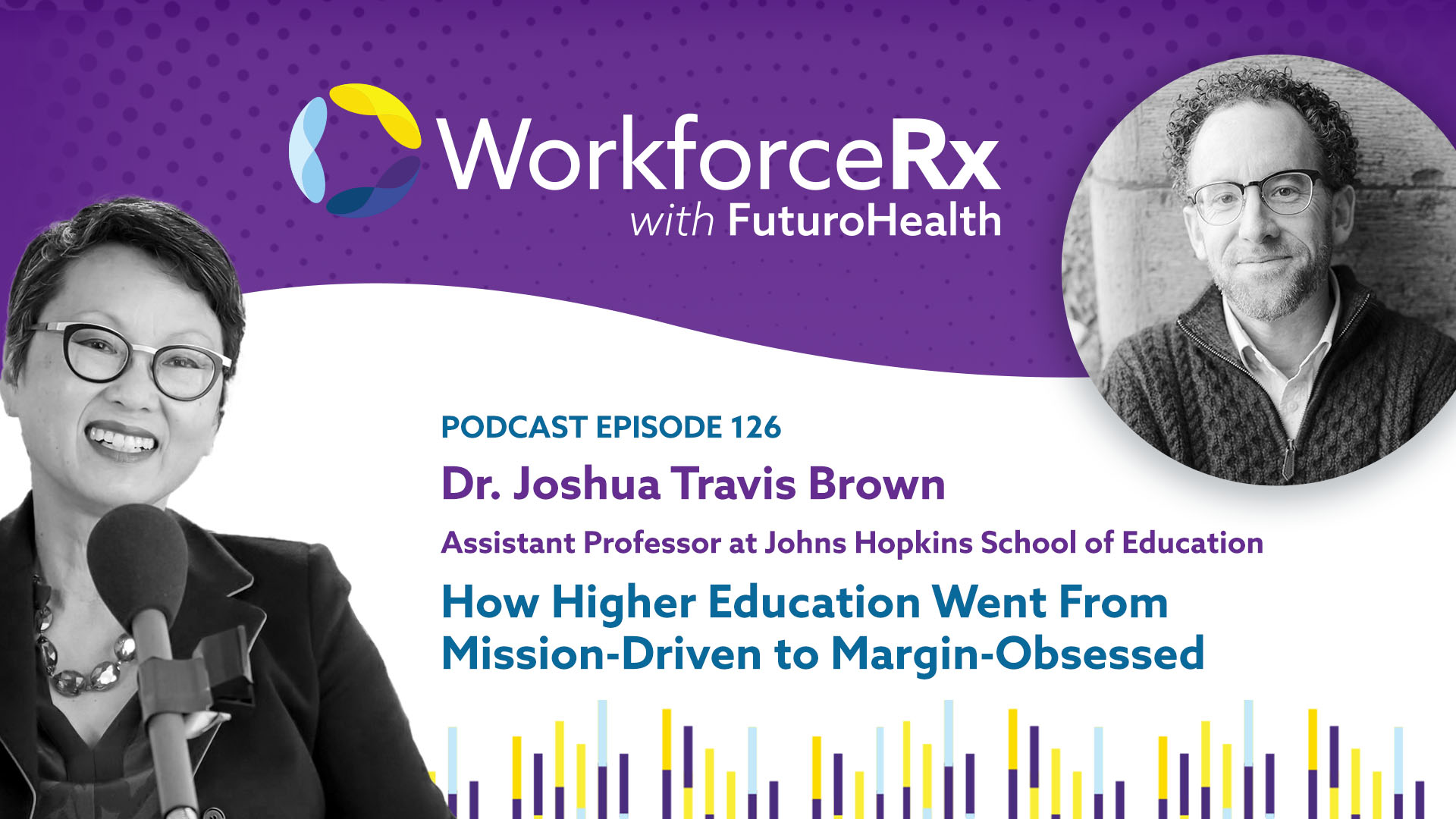
Market competition and the consequences of federal education policy have fundamentally changed our system of higher education and distorted the values of mission-driven schools. That's the stark reality depicted by Dr. Joshua Travis Brown of the Johns Hopkins School of Education in his book, Capitalizing on College: How Higher Education Went From Mission-Driven to Margin-Obsessed, which we’ll be exploring on today's episode of WorkforceRx. The deeply researched book draws on 150 in-person interviews with leaders at religious institutions to detail the non-traditional strategies they pursued to generate needed revenues, and analyzes what those choices mean for current and future students an...
Dr. Andrea Austin, Emergency Medicine Residency Program Director at Ascension Sacred Heart Hospital: How to Create Changemakers in Healthcare
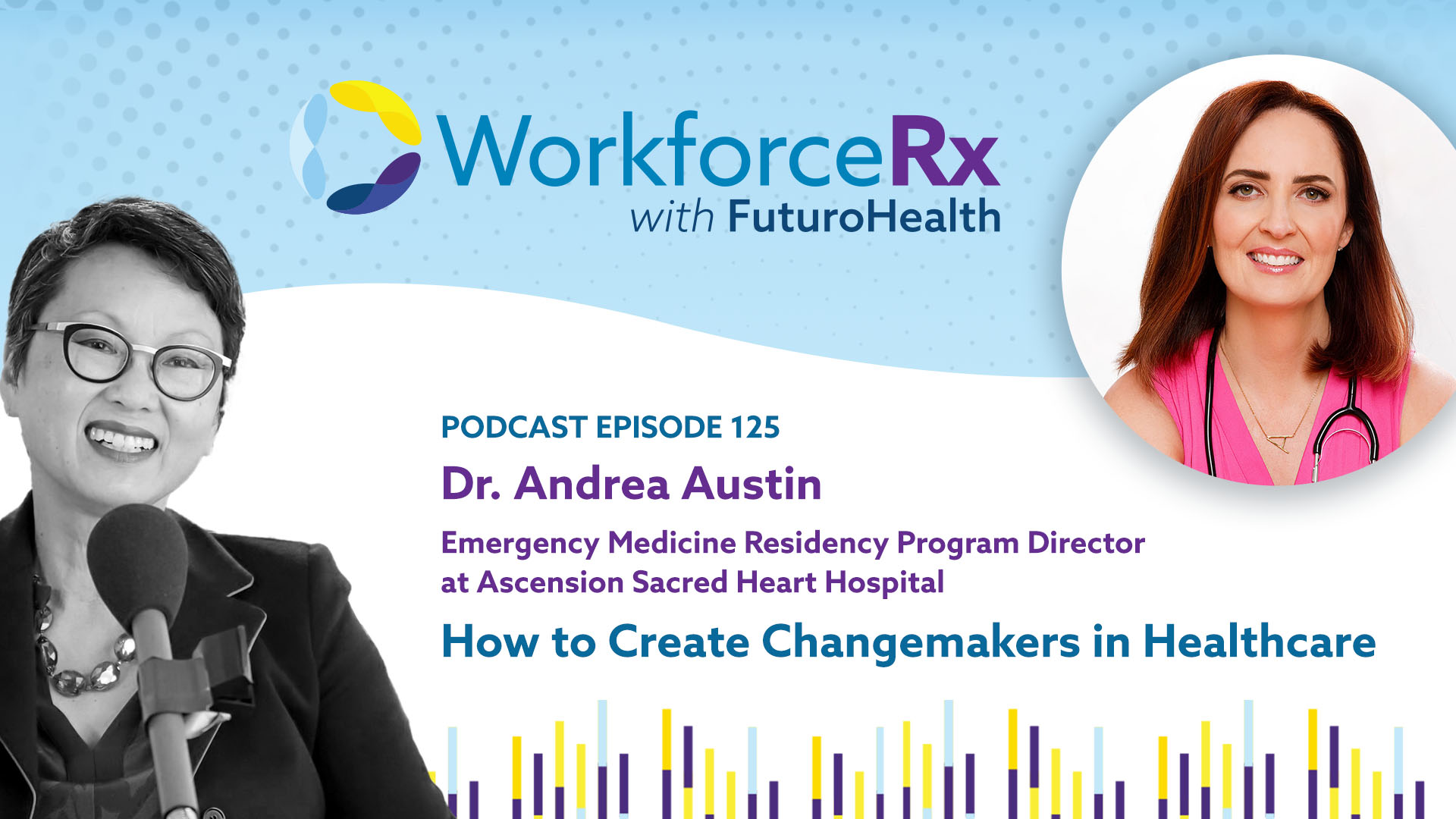
What characteristics do changemakers in healthcare have and how can the system cultivate more transformational leaders? As provider organizations grapple with a growing number of complex problems -- including physician burnout and increased demand for care -- there’s a growing sense of urgency to find answers to those questions. Our guest today, Dr. Andrea Austin, has been focused on that task, and on this enlightening episode of WorkforceRx, she shares the results of her research on changemaking and her insider’s perspective on how to encourage it based on her work as an emergency medicine specialist and medical educator. As s...
Dr. Pam Eddinger, President of Bunker Hill Community College: Blurring Traditional Education Boundaries
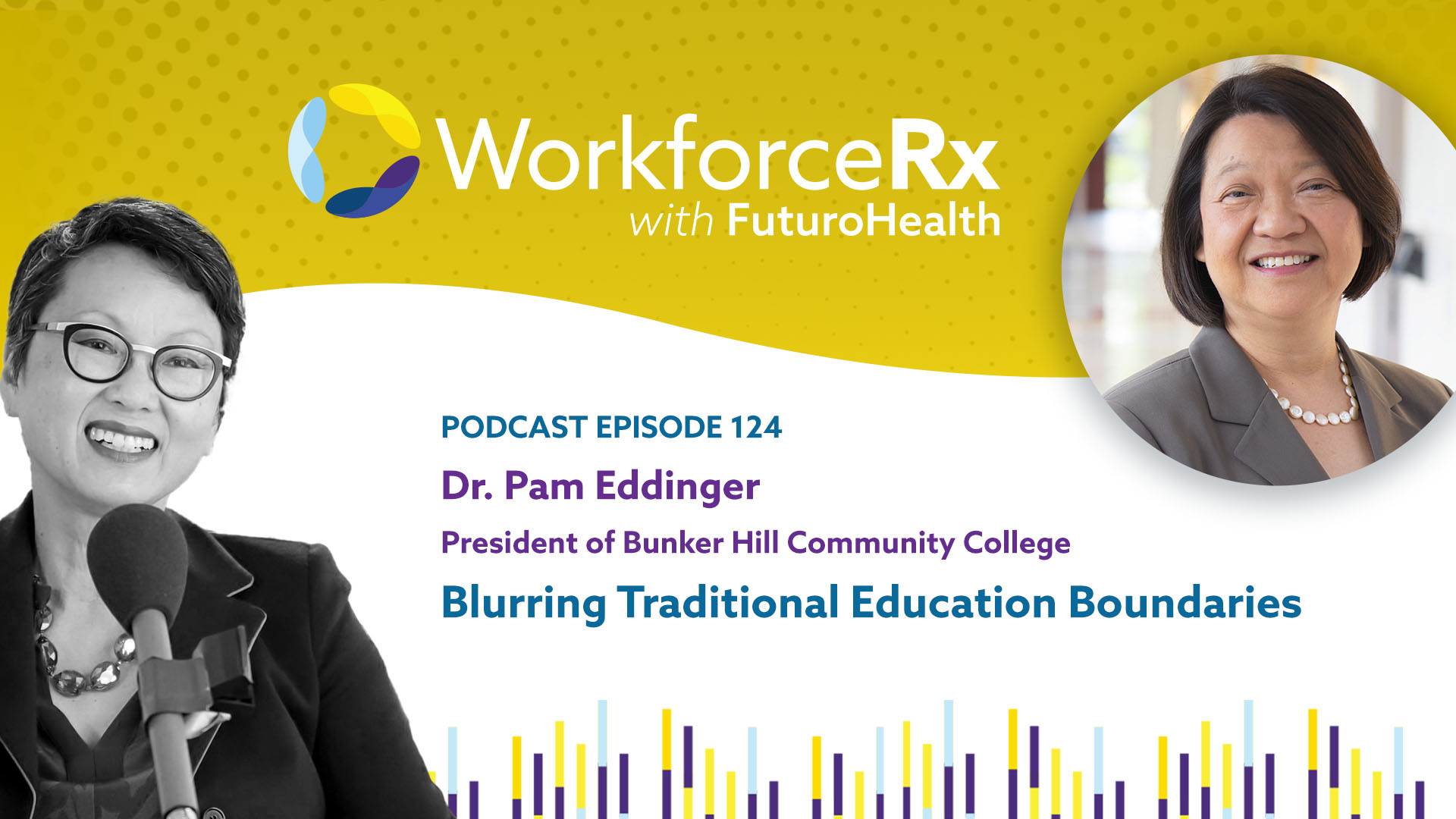
Offering only one degree; developing a cloud computing program in collaboration with Amazon Web Services; working with high schools so students can earn an associate degree before graduation: these are examples of the kind of innovation community colleges must pursue to stay relevant to students and employers alike, according to our guest today, Dr. Pam Eddinger, president of Bunker Hill Community College. “This is where the next iteration of community college must be. We can’t just stay in a classroom. It doesn’t work that way anymore.” Those examples and others are included in the new book Dr. Eddinger is co-ed...
David Zuckerman, President & CEO of Healthcare Anchor Network: Boosting the Local Economic Impact of Hospitals
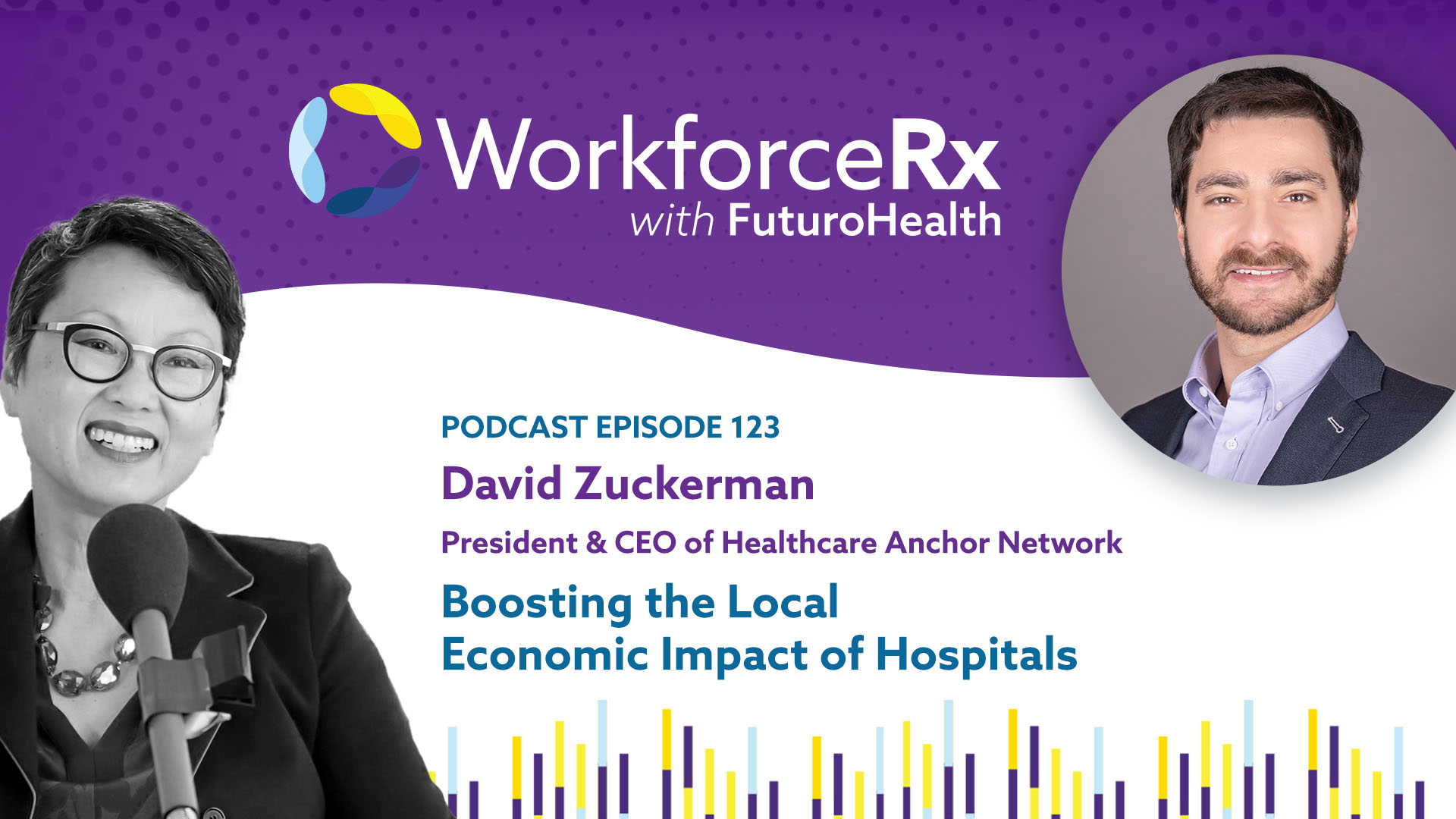
“How do we leverage what we have more intentionally to have greater impact in our communities?” That purposeful question is posed and answered in this thought-provoking episode of WorkforceRx by David Zuckerman, president and CEO of the Healthcare Anchor Network (HAN), whose seventy health systems and 1,000 hospitals are committed to improving economic equity, vitality and community health through their hiring, purchasing and investment decisions. The approach is built on the acknowledgement that healthcare organizations, as well as institutions of higher education, are “anchors” of local economies due to the scale of their economic activity, and it is fueled by the appealin...
Teresa Chapman, Chief People Officer with Santa Clara Family Health Plan: Helping Employees Adjust to AI Disruption
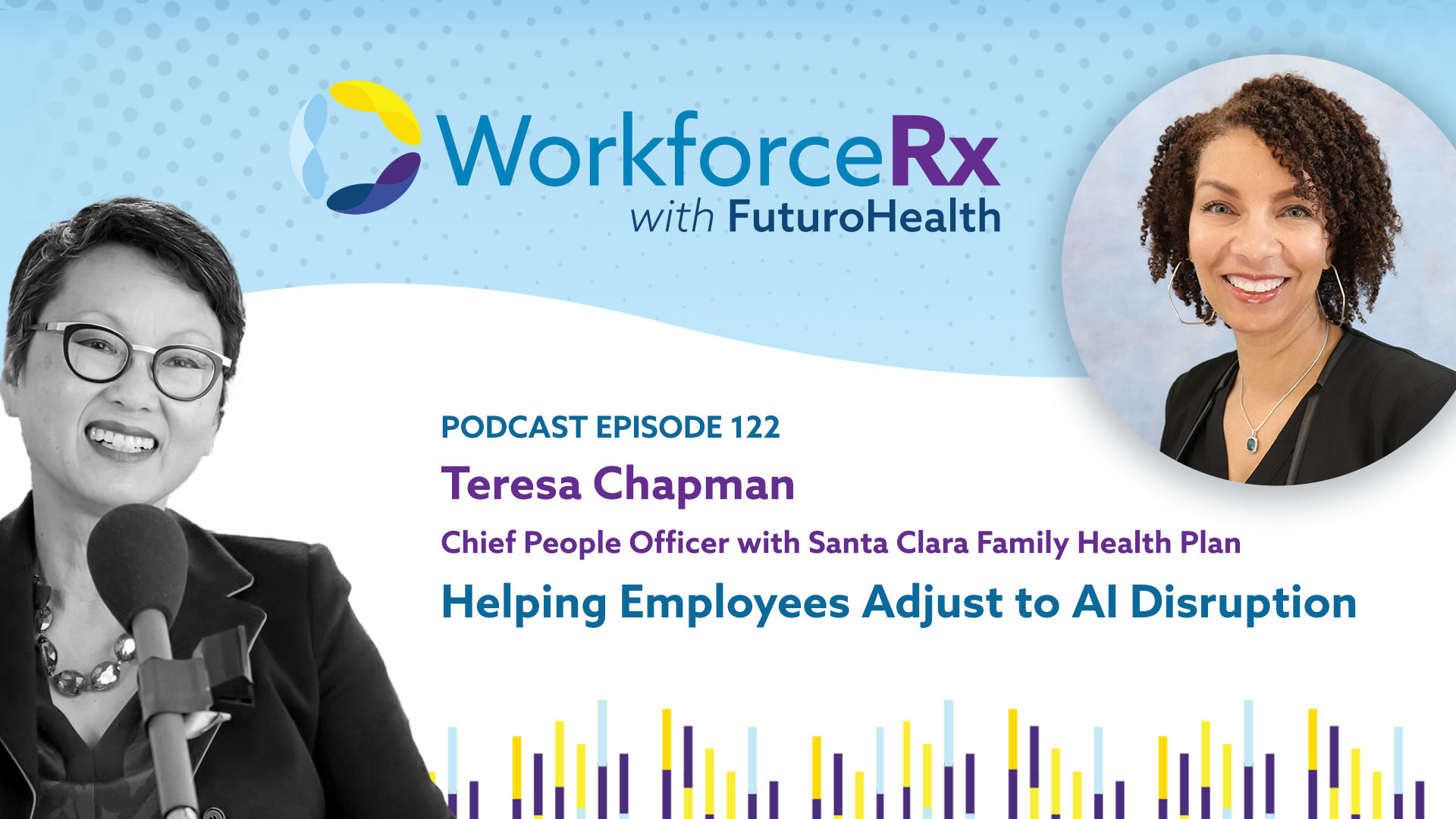
Even though use of artificial intelligence in the workplace has nearly doubled for US employees in the past two years, a recent Gallup poll found that only 22 % of companies have a clear, communicated strategy for integrating AI. On today's episode of WorkforceRx, we’re going to explore how organizations can help their employees adjust to AI disruptions and redefine their value in an AI context with Teresa Chapman, Chief People Officer with Santa Clara Family Health Plan, which serves over 300,000 members across California’s Santa Clara County. “We want to make sure to equip our employees to be expert users of a m...
Kaitlin Lemoine and Julian Alssid, Partners At Work Forces: Moving Workforce Development to the Center of Education
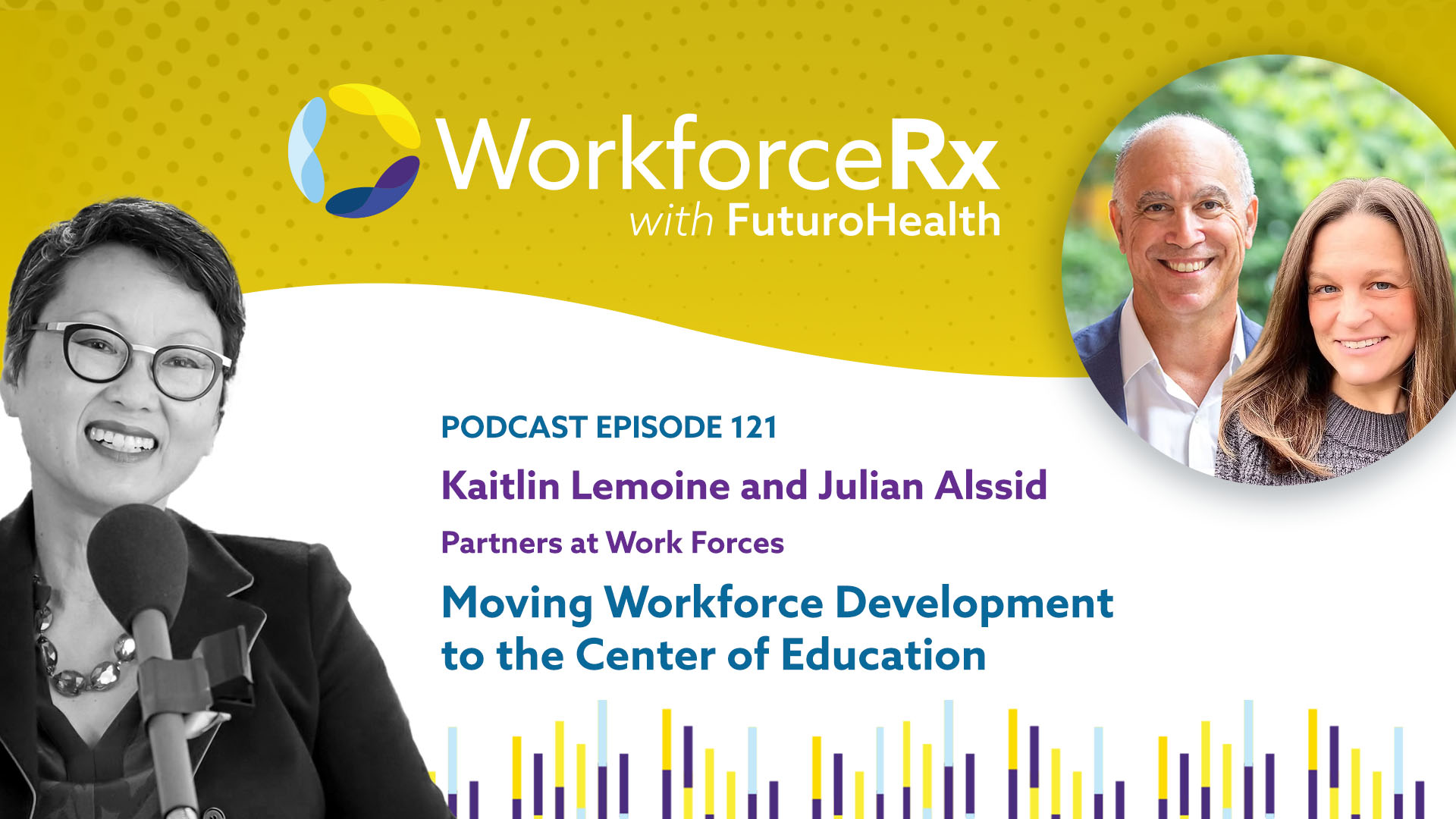
“There are persistent and critical gaps between education and industry that hinder economic advancement and we share a belief that those gaps need to be bridged,” says Julian Alssid, summing up why he and his business partner, Kaitlin Lemoine, created Work Forces, a consulting company that serves stakeholders in those sectors and beyond. On this episode of WorkforceRx, they join Futuro Health CEO Van Ton-Quinlivan for an informative dialogue on how to create and sustain effective workforce development partnerships based on insights gained during their decades of work in the space. They also discuss trends they’re learning about in their...
Professor Mitchell Stevens, Stanford University: Linking the Conversations About AI, Learning and Longevity
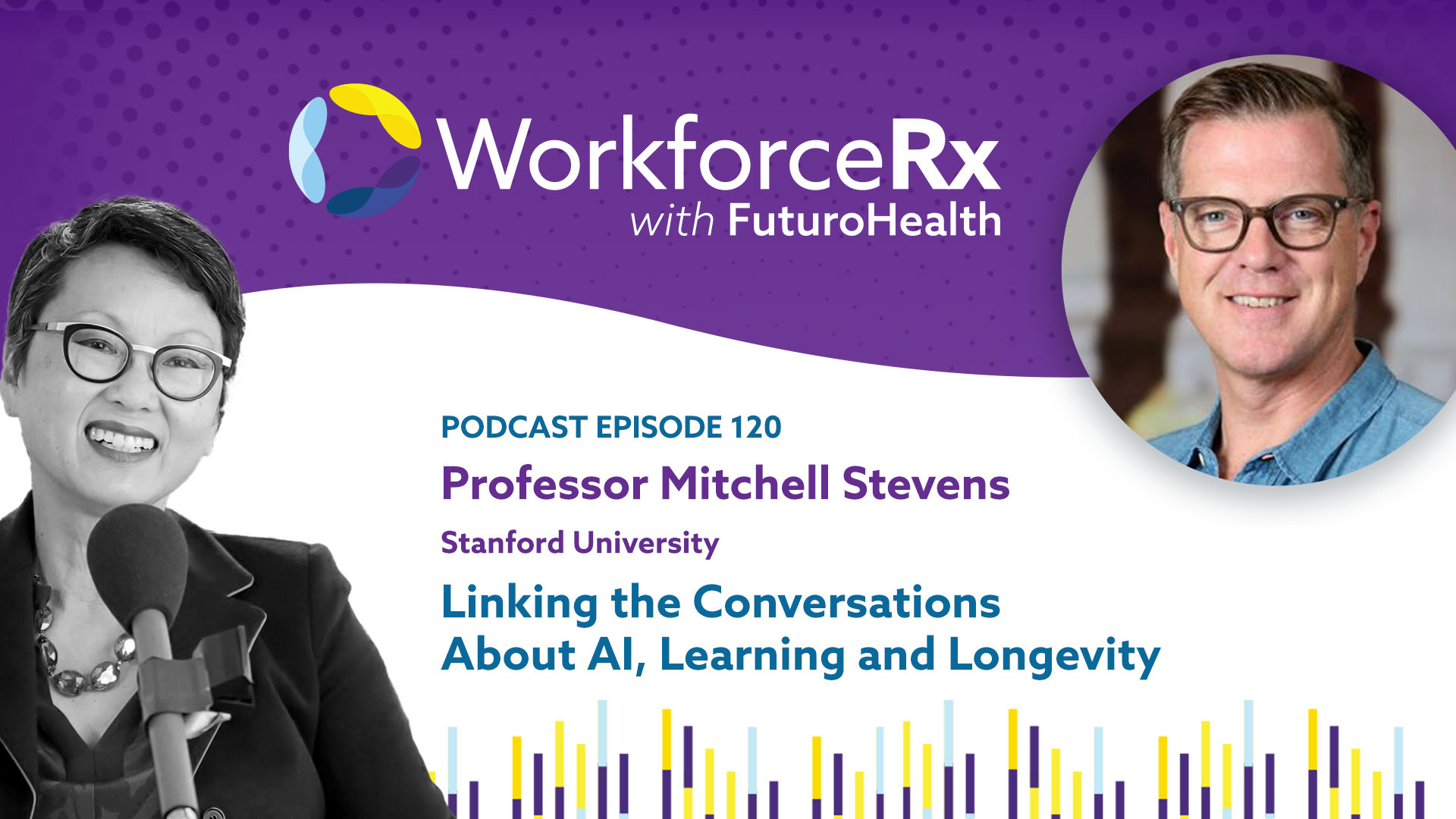
We start the new year by bringing you a fresh perspective on key sources of concern for American society at large and the workforce development sector in particular: AI disruption in the workplace and education, and the many challenges presented by our rapidly aging population. For Professor Mitchell Stevens of the Graduate School of Education at Stanford University, a shift from anxiety to optimism about these changes is urgently needed. “I’m not trying to say that the future will be all good, but that the future can only be good if everyday people, politicians and corporate leaders sort of ambi...
Lisa Larson, CEO of Education Design Lab: How Micro-Pathways Can Boost Workforce Development Success

According to recent studies, micro-credentials are experiencing a surge in interest and acceptance by learners and employers, which is creating both a challenge and an opportunity for educators trying to meet the demand for them. One of the major players helping educators in this task is the Education Design Lab, which is working with more than 100 community colleges and state community college systems to implement “micro-pathways” that map to 100 different job roles. “What colleges need to be concerned about is the relevancy of these programs to high demand jobs and careers, and that people need short-term options to move towards their...
How to Unleash Your Inner Innovator: Dr. Tessa Forshaw and Richard Braden, Co-Authors of Innovation-ish
“There are so many myths that we’re left brain, we’re right brain, we’re creative, we’re analytical, but none of that’s true. We’re all whole-brain humans and we all have the ability to be creative,” says cognitive scientist Dr. Tessa Forshaw, co-author, with design strategist and CEO Richard Braden, of the new book, Innovation-ish, which aims to demystify creativity and make it accessible to everyone in the workforce. But while we may all have creative potential, studies show that less than 50% of people see themselves as being creative, largely due to socialization that discourages embarrassment and risk-taking...
How Hospice Care Has Changed and Why It Matters: Fran Smith, Co-author of Changing the Way We Die
Hospice care in the US has undergone major shifts in recent years, with a significant jump in usage and a 400% increase in private equity ownership as major factors driving it to become the most profitable subsector in healthcare, according to a 2023 RAND Corporation study. To understand these trends what they mean for healthcare workers, patients and families, we turn to Fran Smith, co-author of Changing the Way We Die: Compassionate End of Life Care and the Hospice Movement, an Amazon bestseller. As she explains to Futuro Health CEO Van Ton-Quinlivan, what started as a non-profit, mission-driven movement has evolved into...


