The Context
Do you ever watch the news and wonder, “How did we get here?” Or think to yourself, “Things are bad . . . What can I do?” The Context is here to help. Our show breaks down the ideas, history, and trends that are shaping democracy. And you don’t need to be an expert to follow along. Every other Tuesday, host Alex Lovit talks about timely topics with big-picture thinkers and hands-on practitioners, like activists, writers, historians, and community leaders. The topics are heavy, but we try to have fun along the way. To build the future we want, we’ll need knowledge—bu...
People Power in the Twin Cities
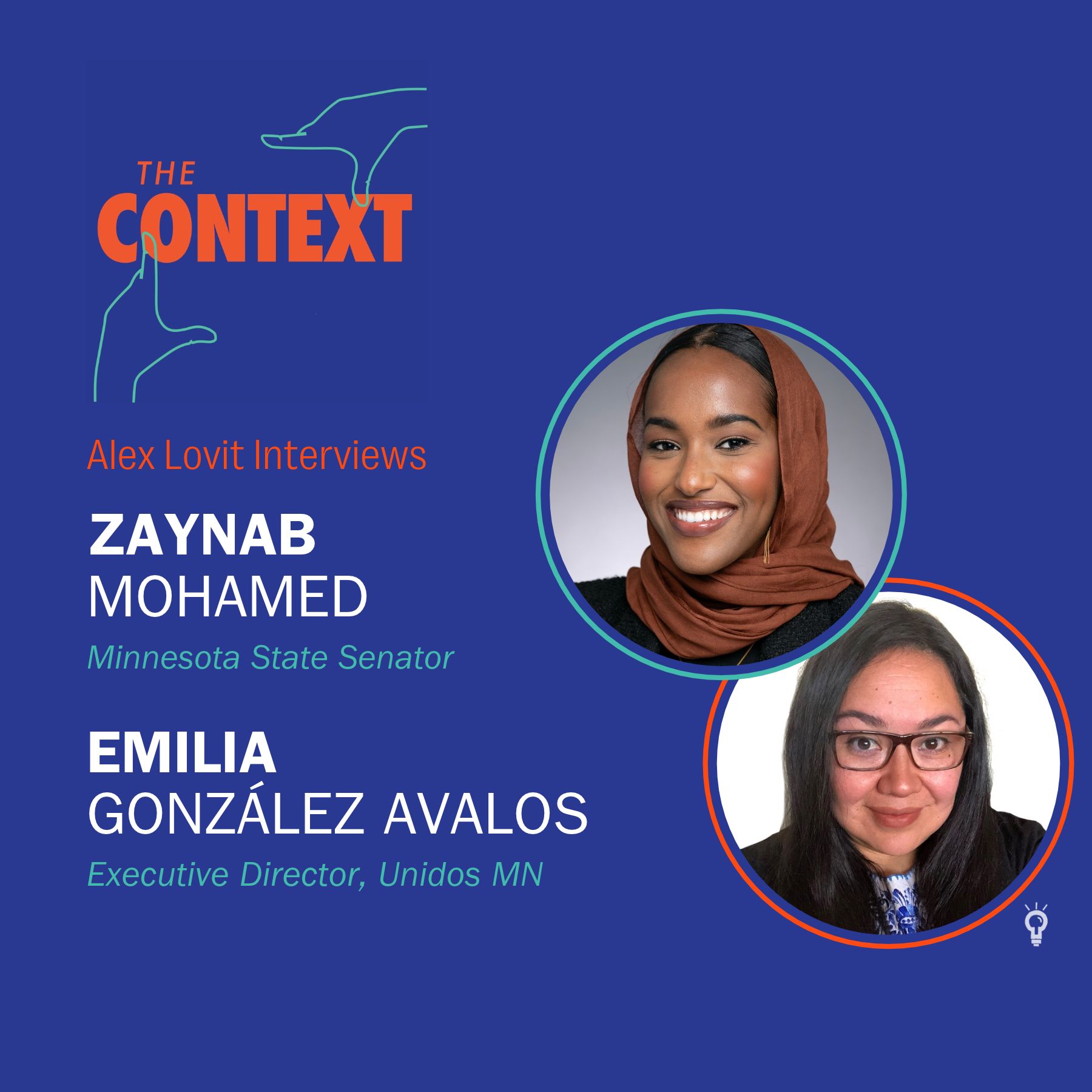
Beginning in December of 2025, Minnesota was targeted by an aggressive, authoritarian action by federal immigration agencies: Operation Metro Surge. At least 3,000 federal immigration officers descended on the Twin Cities—Minneapolis, St. Paul, and the surrounding communities. And a large number of diverse community members fought back to protect their neighbors in myriad ways—protesting, monitoring federal agents, and delivering food and transporting students for families who couldn’t leave their homes. Two organizers from Minnesota join host Alex Lovit to tell stories of tragedy and resilience during Operation Metro Surge. Zaynab Mohamed is a Minnesota state senator who has worked both i...
Is Democracy Possible? Timothy Snyder Live at WYSO
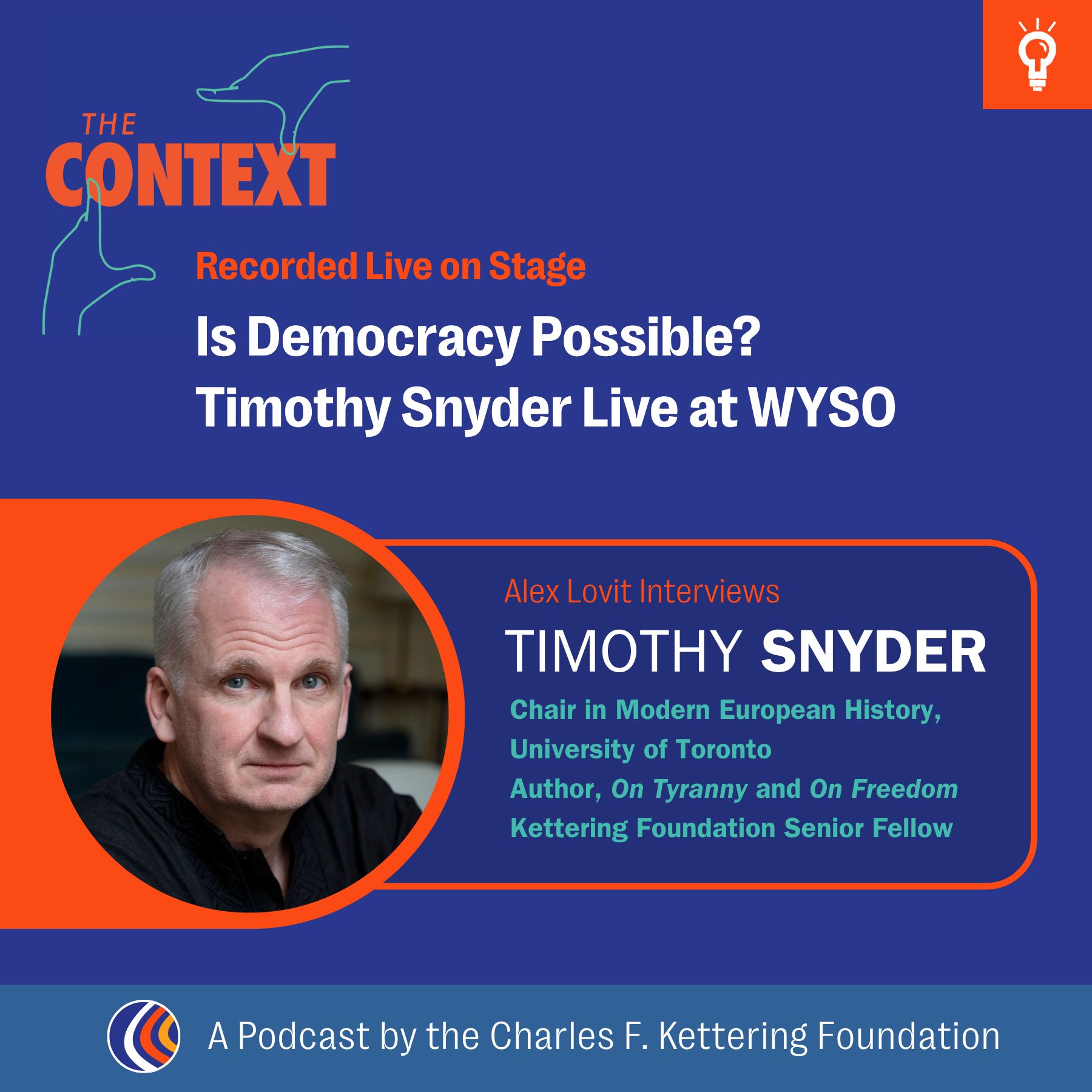
Historian and political analyst Timothy Snyder joins host Alex Lovit to discuss the power of the electorate and the inherent challenges of democratic participation on the verge of the 2026 midterm elections. This episode was recorded in partnership with community-owned public radio station WYSO 91.3 FM in front of a live audience at WYSO’s studios in Yellow Springs, Ohio, on October 30, 2026. Timothy Snyder is the chair in Modern European History, supported by the Temerty Endowment for Ukrainian Studies, at the Munk School of Global Affairs and Public Policy at the University of Toronto. He has written several best-selling books, including On Ty...
Live with William J. Barber II and This Day Podcast
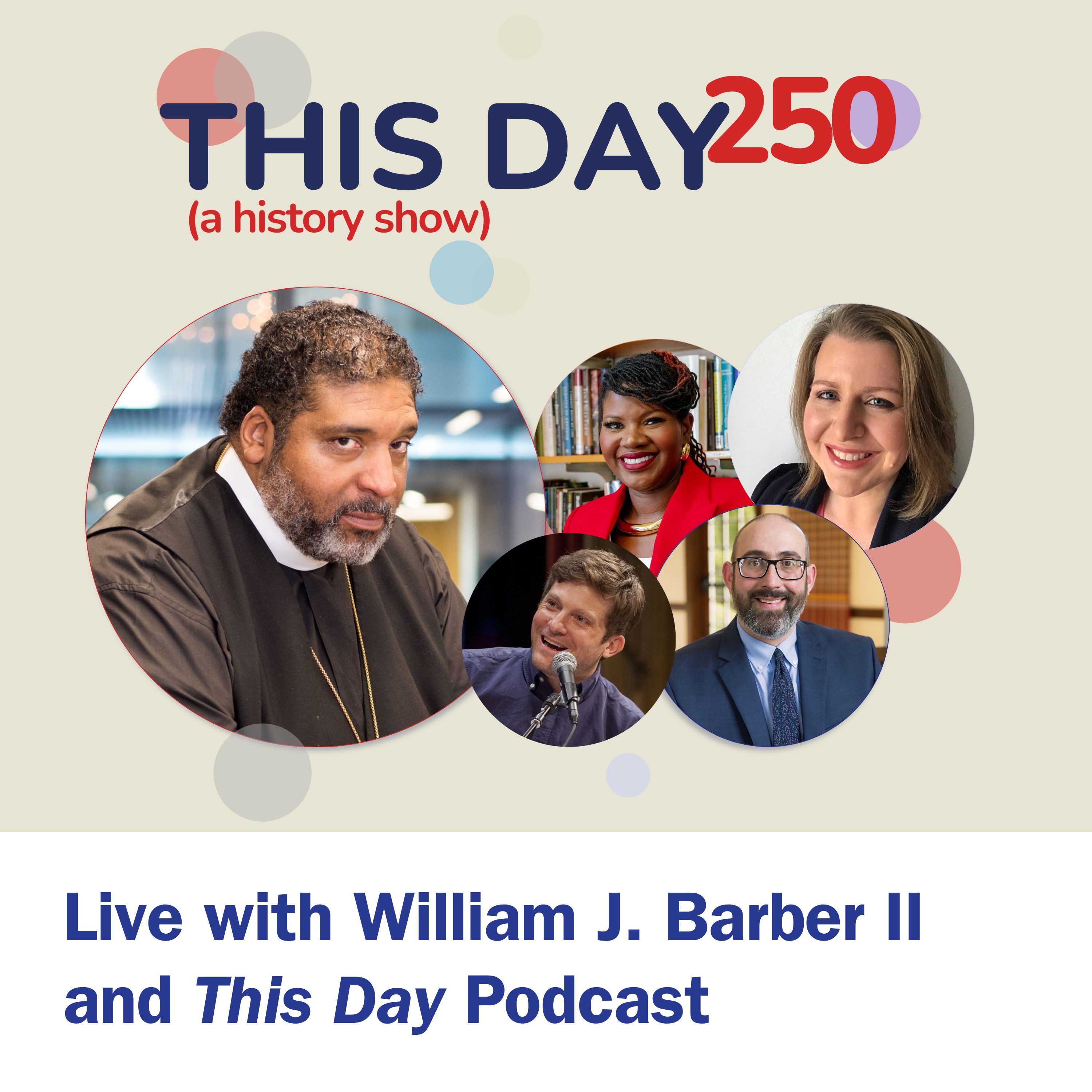
Is the next big realignment in American democracy on the horizon? Alex Lovit joined the This Day podcast team on stage at the Howard Theatre in Washington, DC, to discuss what history can teach us about the historical moment we’re living through and the path forward. Featuring special guest Rev. Dr. William J. Barber II—bishop, author, founder of the Poor People's Campaign and the Moral Mondays movement, and Kettering Foundation senior fellow. This live recording was the culmination of our month-long America 250 series with This Day about the unexpected historical moments that shaped our democracy. If you missed the...
Democracy Is People Power
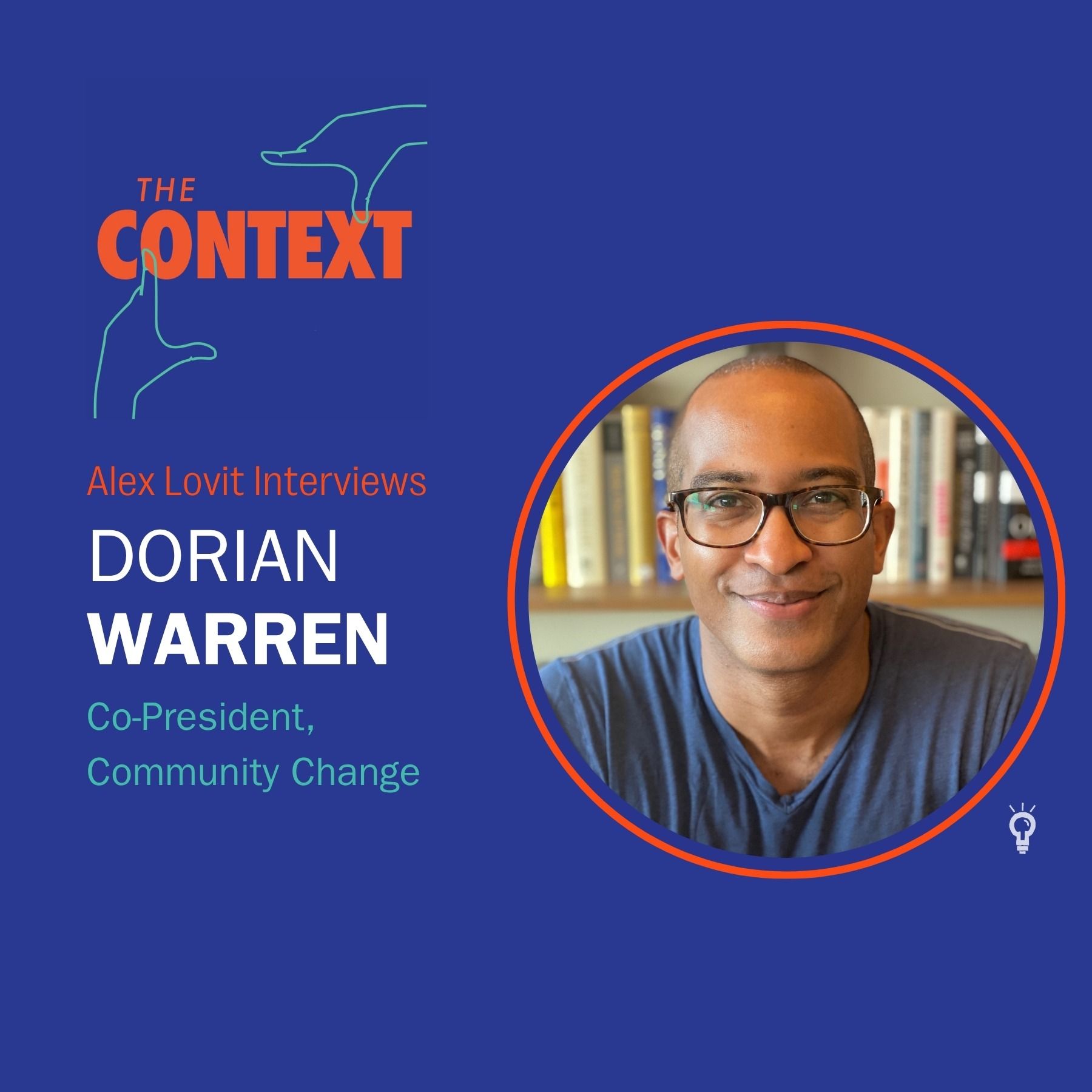
Is democracy still possible? Can the people still hold government accountable? Yes, but that requires working together. And working together requires organizing. Dorian Warren joins host Alex Lovit to talk about building people power, some of the victories that collective organizing has already achieved, and why he believes the United States is on the precipice of building a fairer and more inclusive democracy. Dorian Warren is the co-president of Community Change, a national organization founded in 1968 to build the power of low-income people, especially people of color, to create a multiracial democracy and a fair economy where everyone can thrive. ...
How to Get More Americans to Vote
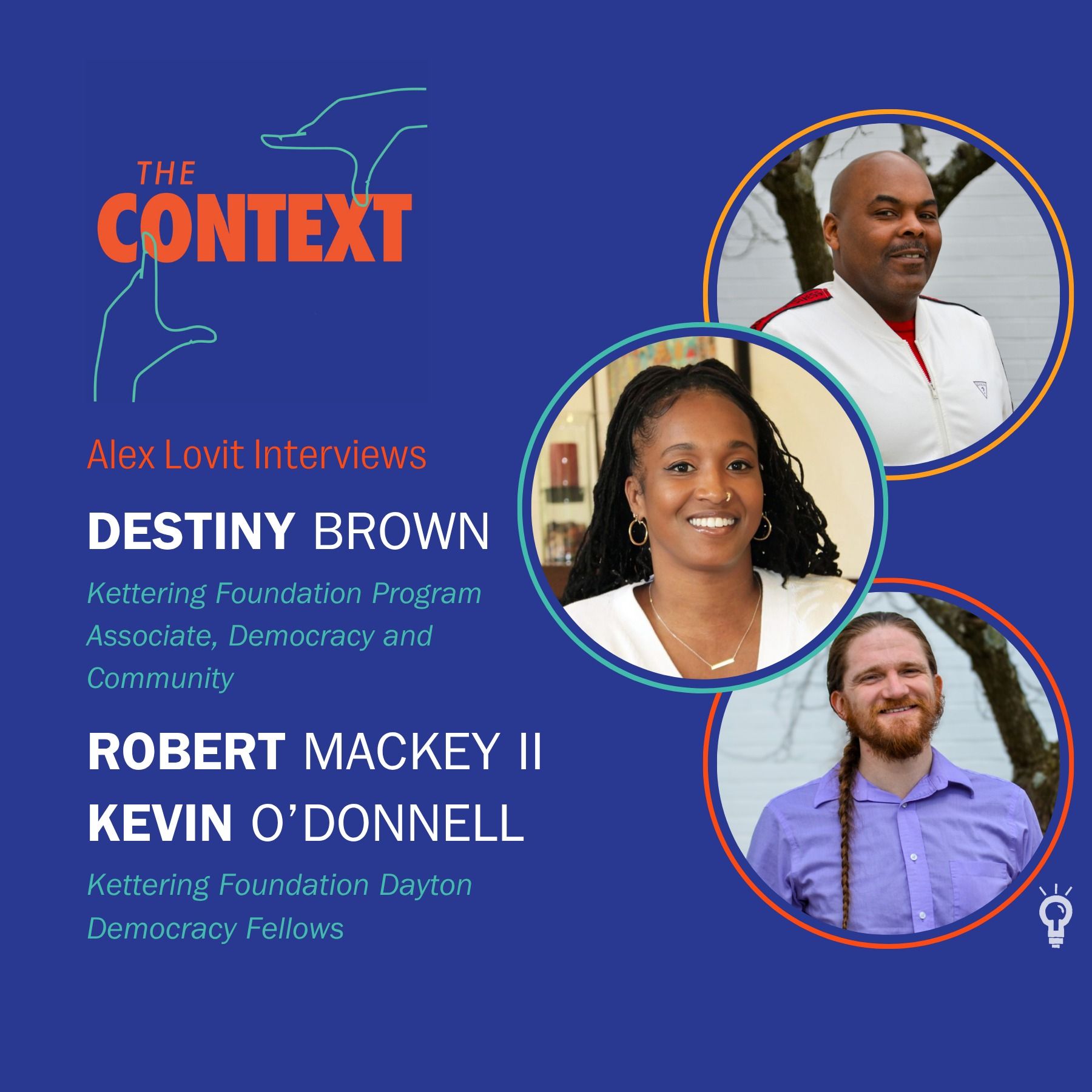
For the Americans who feel—justifiably—that they’re excluded from participating in elections, what can be done to help them claim their place at democracy’s table? Meet three activists from Dayton, Ohio, who’ve found a way. With a high-stakes midterm election right around the corner, we’re highlighting the work of local community members who’ve been thinking about and working on election engagement for years. Host Alex Lovit is joined by Destiny Brown, Robert Mackey II, and Kevin O’Donnell, all of whom have been working to educate and empower voters in the Kettering Foundation’s hometown of Dayton...
Citizens United (Part 1): Special Series with This Day Podcast
For the fourth and final installment of our month-long collaboration with the This Day podcast, we go to 2010 and the Supreme Court's Citizens United decision—which enshrined corporate spending as protected speech and unleashed a new era of dark money in American politics. This Day hosts Jody Avirgan, Nicole Hemmer, and Kellie Carter Jackson are joined by Celina Stewart, CEO of the League of Women Voters, to trace how we got here: from the Tillman Act of 1907 through Watergate, the FEC, the McCain-Feingold Act, and the long effort to keep corporate money out of elections. How much of the problem pr...
Southern Realignment (Part 1): Special Series with This Day Podcast
For the third installment of our month-long collaboration with the This Day podcast, we go to 1964 and a moment when the two major parties in this country, in a sense, switched. This Day hosts Jody Avirgan, Nicole Hemmer, and Kellie Carter Jackson are joined by Eric K. Ward, executive vice president of Race Forward, to trace the story from Jim Crow through the New Deal and into the Civil Rights Act—and to understand why the Democratic coalition that produced it was always too contradictory to survive. How did Black voters move from Lincoln’s party to LBJ’s? And what d...
Seneca Falls (Part 1): Special Series with This Day Podcast
For the second installment of our month-long collaboration with This Day, we go to western New York in the summer of 1848. This Day’s hosts, Jody Avirgan, Nicole Hemmer, and Kellie Carter Jackson, are joined by Deva Woodly, Kettering research fellow and professor at Brown University, to discuss the Seneca Falls Convention on women’s rights—the characters who cooked it up over afternoon tea, the Declaration of Sentiments they wrote in the shadow of the Declaration of Independence, and the one resolution that nearly didn’t pass, until Frederick Douglass stood up to speak. Plus: why western New York was the...
Bill of Rights (Part 1): Special Series with This Day Podcast
Special series announcement! For the next four weeks, we’re bringing you a special series as part of Kettering’s America 250 initiative, “Democracy, Under Construction.” It’s about key events in American history that have brought us toward, or away from, an inclusive democracy—and the work that remains to be done. We coproduced this series with our friends at a podcast called This Day. It’s a history show, and they’re doing a whole year of episodes about major events that shaped our nation. So, for the next four Tuesdays, you’ll be hearing episodes of This Day in our feed, where...
Religion, Racism, and Representation
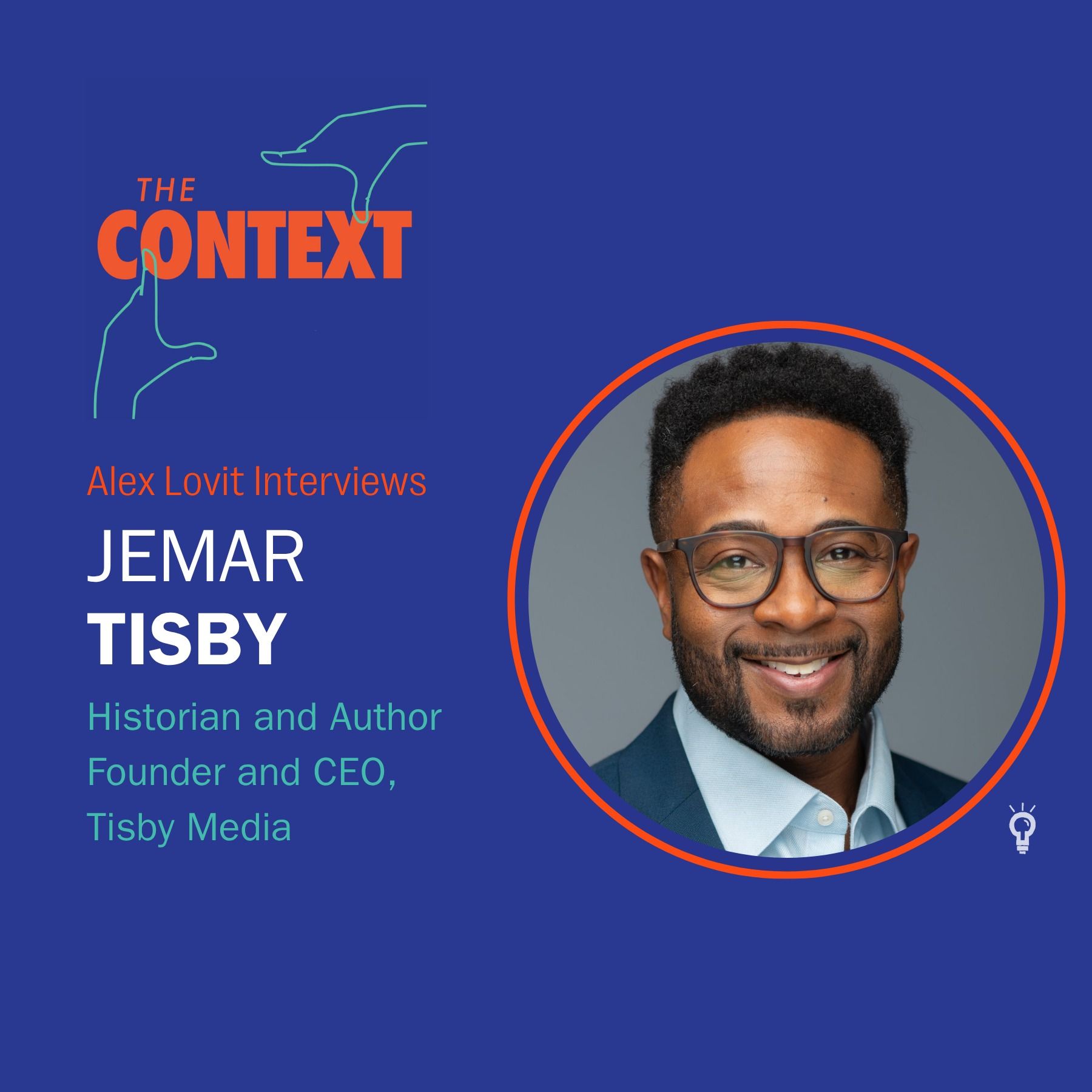
Faith-led movements in the US have catalyzed some of our greatest expansions of civil rights. But, at the same time, Christianity has also been used as justification for some of the worst evils in American history. How do people of faith reckon with this tension? And what will it take for Americans of all racial backgrounds, ethnic origins, and faith traditions to commit to dismantling faith-cloaked racism? Jemar Tisby joins host Alex Lovit to discuss how to protect the progress toward racial equity, while continuing to take steps forward toward an inclusive democracy. Jemar Tisby is a historian, author, and...
Who Gets to Be American?
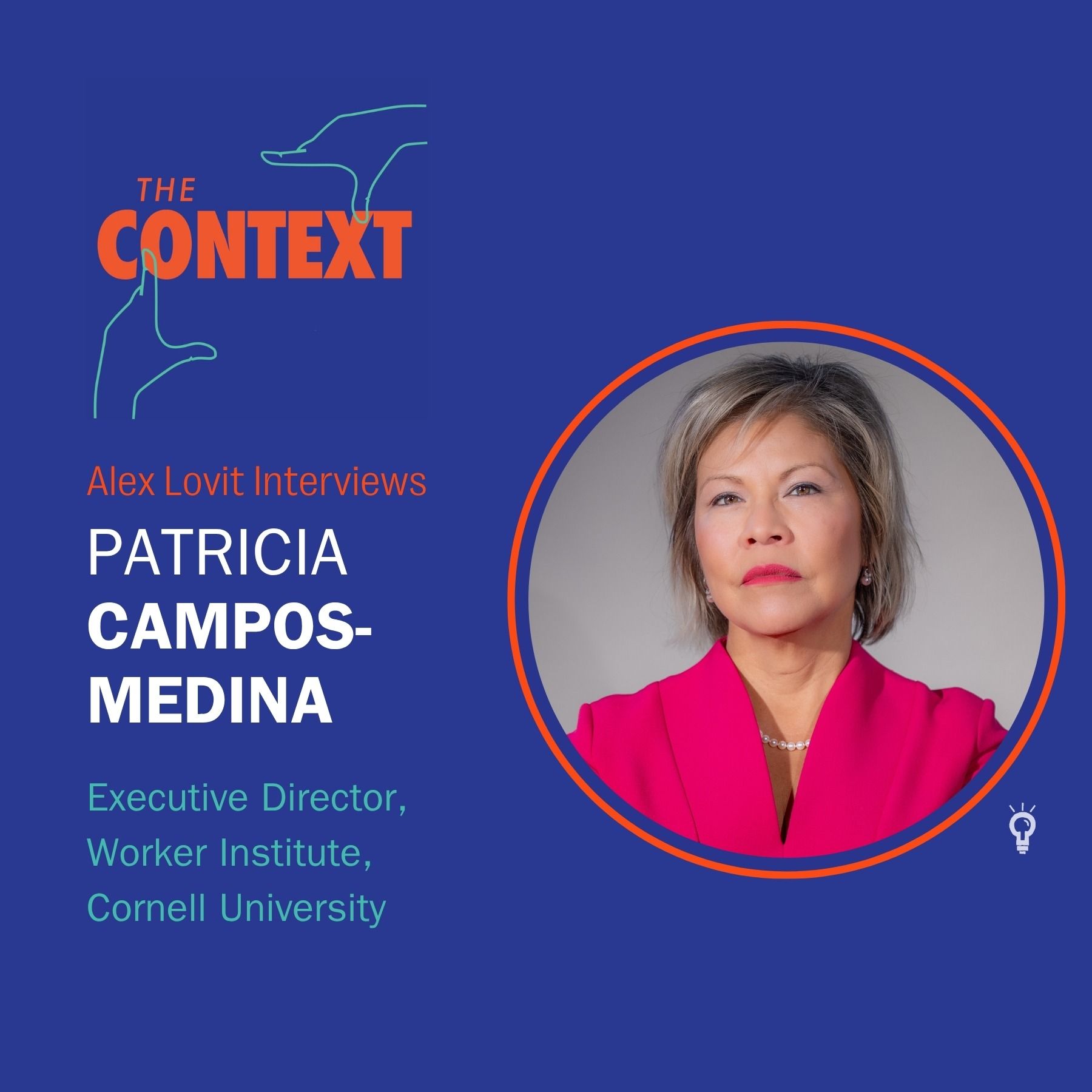
How long do people have to live in America before they’re considered American? How long does it take to prove themselves as productive, peaceful members of society? For millions of immigrants who have lived in the United States for decades, the answer seems to be, “never.” Immigrants without documents or with temporary status are vulnerable to exploitation by their employers and have been made scapegoats by xenophobic politicians. Patricia Campos-Medina joins host Alex Lovit to discuss how problems with the United States’ immigration, labor, and democratic systems are connected—and what it will take to fix them. Patricia Campos-Medina is a schol...
The Making of a Dissident
How does a dissident become a dissident? The Atlantic staff writer Gal Beckerman joins host Alex Lovit to discuss his new book, How to Be a Dissident. It’s part instruction manual, part history, and part call to action to resist the oppressive forces of our own times. Gal Beckerman is a writer and editor. His previous books include The Quiet Before: On the Unexpected Origins of Radical Ideas and When They Come for Us, We’ll Be Gone: The Epic Struggle to Save Soviet Jewry. https://www.galbeckerman.com/how-to-be-a-dissident https://www.galbeckerman.com/ Hosted by Simplecast, an AdsWizz comp...
How Oligarchy Undermines Democracy
In the United States, elections hold our representatives accountable. But voters get a limited slate of options—and significant economic redistribution is usually excluded from the ballot. Meanwhile, economic inequality in the United States is growing to record levels, and many wealthy Americans are paying a lower effective tax rate than most of their fellow citizens. Jeffrey Winters joins host Alex Lovit to discuss American oligarchy, how it distorts our democracy, and what we can do about it. Jeffrey Winters is a professor of political science and director of the Equality Development and Globalization Studies program at Northwestern University. He is...
The Constitution Is Not the Problem
The US Constitution is more than two centuries old. For most of that time, its purpose has been to maintain representative government and the peaceful transfer of power. That’s started to break down in recent years. Politicians try to win elections by gerrymandering voters, rather than convincing them. More and more power has been consolidated in the executive branch, bypassing traditional checks and balances. Melissa Murray joins host Alex Lovit to talk about the Supreme Court’s role in this democratic decline and how the Constitution can be a roadmap to reverse it. Melissa Murray is the Frederick I. and...
Want to Save Democracy? Focus on What Voters Care About.
Democracy is a conversation. In the United States, and every other democracy, we’re continually talking with one another about what issues deserve our attention, what our nation stands for, and what we want from our government. Politicians, parties, and media organizations compete for attention by telling compelling stories. This marketplace of ideas offers citizens and voters a wide selection of storylines and solutions. But even when free speech is protected, that doesn’t mean everyone is equally skilled at crafting compelling narratives. In this conversation, taped in front of a live audience, Sarah Longwell joins host Alex Lovit to desc...
What Does Conservatism Mean in a Changing World?
Authoritarianism is gaining ground in democracies around the world—often with populist, nativist rhetoric. In the United States, this trend threatens to demolish democratic government. And shifts in American foreign policy are also uprooting the previous world order around the globe. William Kristol joins host Alex Lovit to discuss what’s changed in the last few years in American politics, in international relations, and in his own beliefs. William Kristol is editor-at-large at The Bulwark and cohost of the podcast Conversations with Bill Kristol. He’s also a senior fellow with the Charles F. Kettering Foundation. He was previously the founde...
Building Peace, One Story at a Time
The line between peaceful politics and violent conflict can be fragile. In recent years, there have been many instances of election-related violence around the world. One of the worst examples occurred in Kenya. Following a disputed election in 2007, opposing political and ethnic factions clashed in the streets. More than a thousand people were killed, and more than 300,000 were forced from their homes. As is often true, these hostilities were based in cultural narratives—the stories people tell themselves about who they are, who their enemies are, and the sources of that conflict. Sellah King’oro, who has worked to build peac...
The Country We Have, the Country We Want
The history of the United States is littered with injustices. What should patriotism look like when our country does wrong? And how can we be patriotic, in spite of injustices? Can we hope for better? Nikole Hannah-Jones joins host Alex Lovit to talk about America’s history, our country's truest historical heroes, and how we can push for a more inclusive democracy in the future, Nikole Hannah-Jones is the Knight Chair in Race and Journalism and the founder of the Center for Journalism & Democracy at Howard University. As a staff writer for the New York Times Magazine, she created The 1619 Pr...
The Unfinished Fight for Transgender Freedom
LGBTQ+ people have been part of the American story from the beginning, fighting for the right to pursue happiness long before Stonewall. In recent decades, the movement has achieved major cultural, political, and legal gains. Yet these advances have disproportionately benefited middle-class individuals who can conform to cultural norms and can afford to assert their legal rights. Jules Gill-Peterson joins host Alex Lovit to discuss who has been left behind, why solidarity matters, and how to build a broader sense of shared interests within and beyond the LGBTQ+ community. This is the second episode in our series, “Democracy, Under Construction,” whic...
The 14th Amendment Redefined America
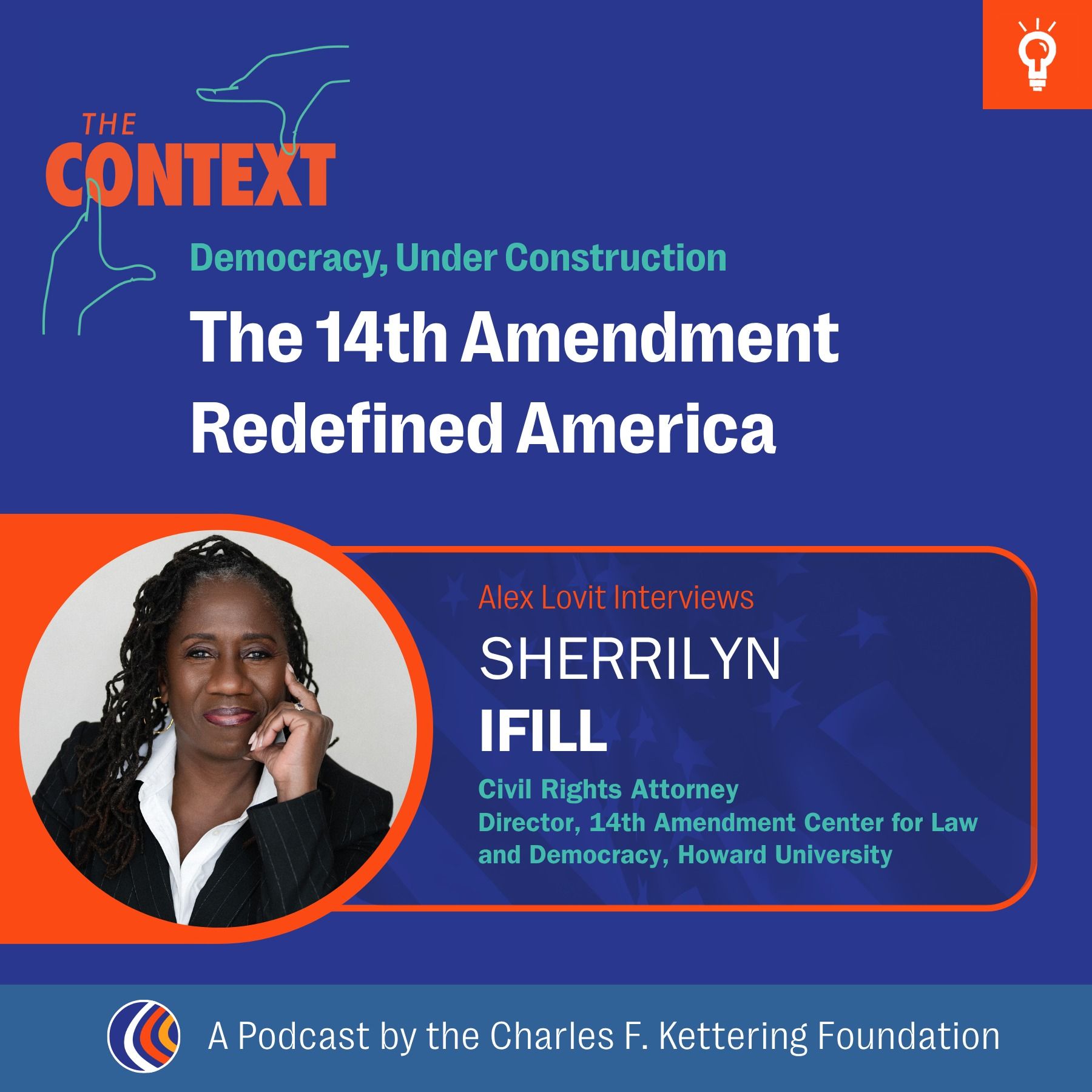
In this first episode of our series, “Democracy, Under Construction,” Sherrilyn Ifill joins host Alex Lovit to discuss the Second Founding, when the Reconstruction Amendments—and in particular the 14th Amendment—fundamentally changed American rights and who was defined as American. Birthright citizenship, protections from abuses by state governments, and equality before the law all entered the Constitution following the ratification of the 14th Amendment in 1868. The “Democracy, Under Construction” series commemorates America’s 250th anniversary by focusing on the moments when our country became a more inclusive democracy and celebrating the historical figures who pushed the country to live up to its idea...
Changing Minds Is Hard—Especially Your Own
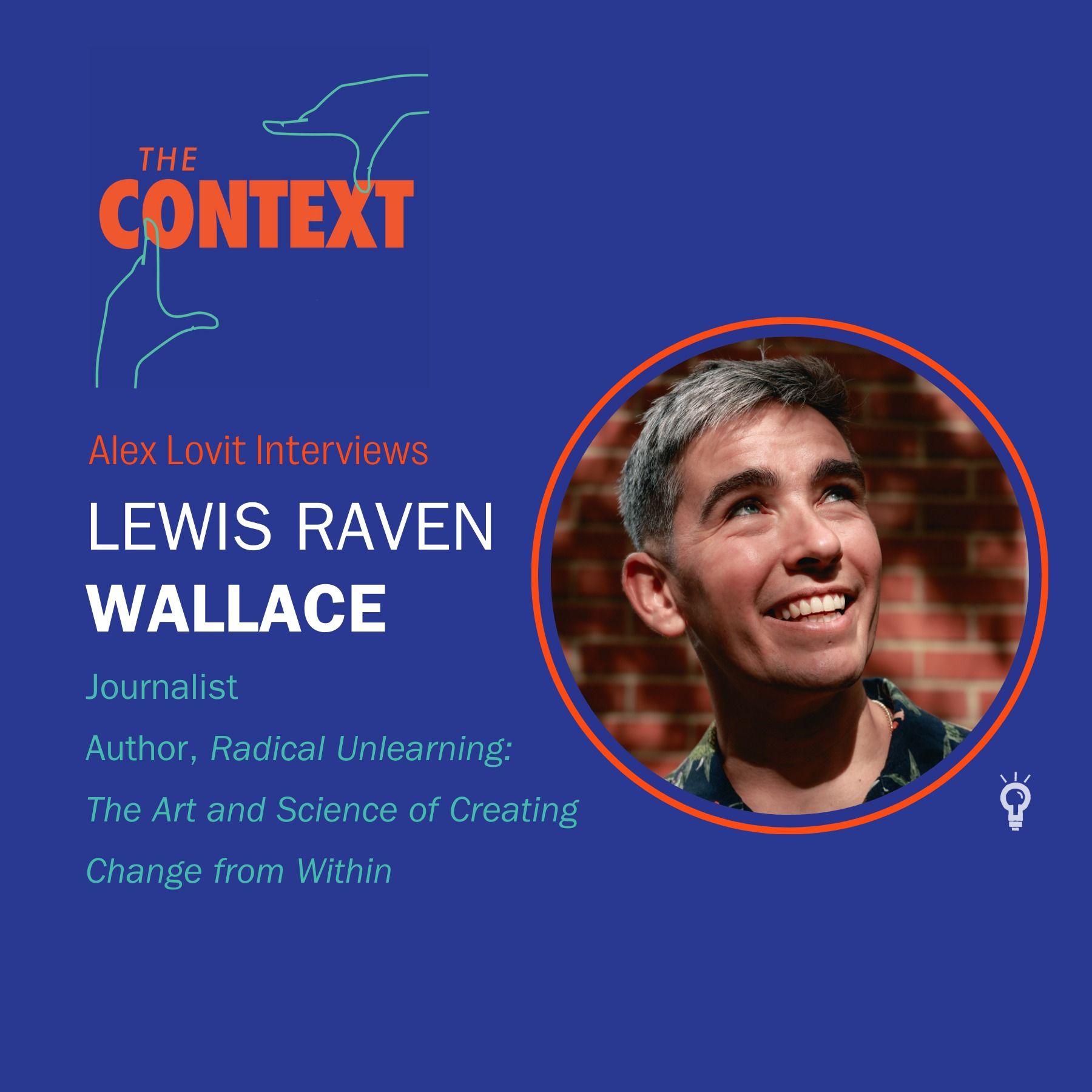
Lewis Raven Wallace joins host Alex Lovit to discuss the conditions that make it possible for people to change their minds. Children gradually learn about the world: what to expect from themselves and from others, who is or isn’t part of their social group, and what society looks like. But for adults, learning new ideas requires unlearning old ones first. Wallace has advice for anyone who wants to shift their own perspectives or encourage others to do the same. Lewis Raven Wallace is a journalist. He is the abolition journalism fellow with Interrupting Criminalization. He has written multiple books, in...
Can the Courts Protect the Ballot?
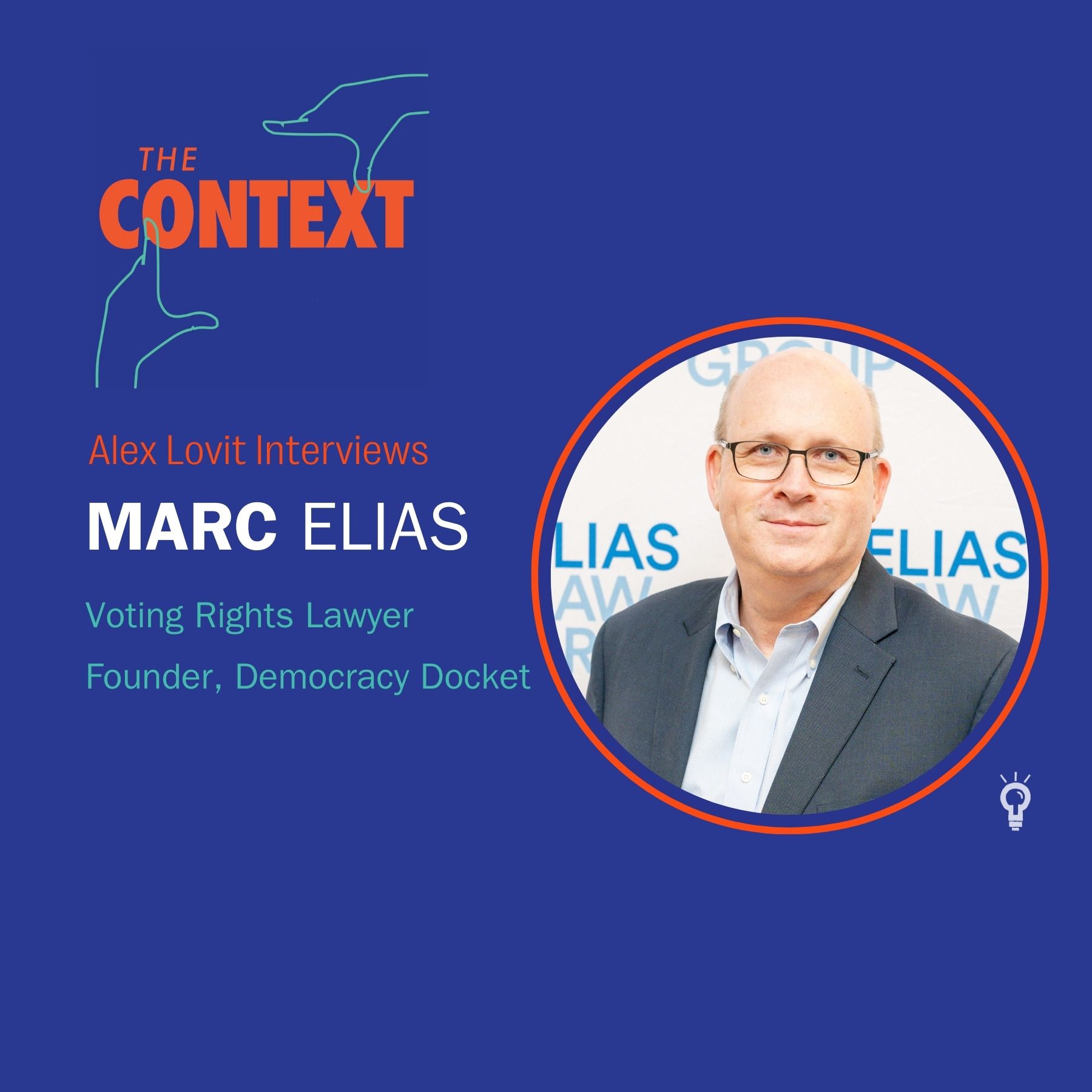
The decisions judges make during the coming months in various active legal cases will affect who can vote, which districts they vote in, and what political advertising they see—among many other factors. What’s at stake is not just the outcomes of this year’s elections but also the future integrity of democracy in the US. Voting rights attorney Marc Elias joins host Alex Lovit to discuss threats to ballot access in the United States, how lawyers are fighting back, and what the rest of us can do to help. Marc Elias is one of the most experienced and promin...
Saying No to Authority When Yes Is Easier
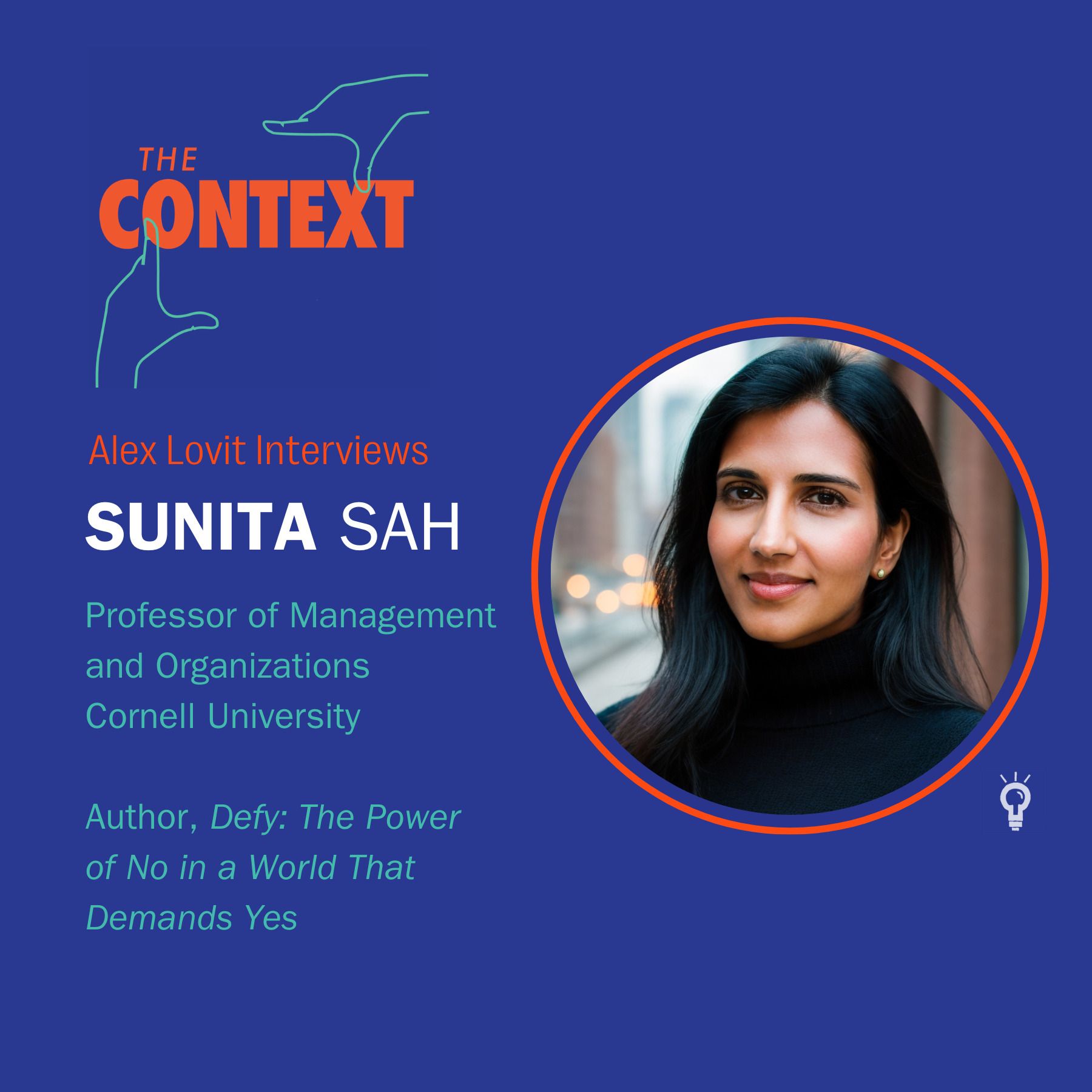
As the United States continues to experience democratic backsliding, people are looking for ways to rise to the moment. But what does it take for someone to stay true to their values and say, “no, I refuse to participate in this?” Organizational psychologist Sunita Sah joins host Alex Lovit to discuss why people have more trouble standing up to injustice than they think they will and how we can prepare ourselves to make difficult choices. Sunita Sah is professor of management and organizations at Cornell University's SC Johnson Graduate School of Management and the author of Defy: The Power of No i...
How Christian Nationalism Undermines Democracy
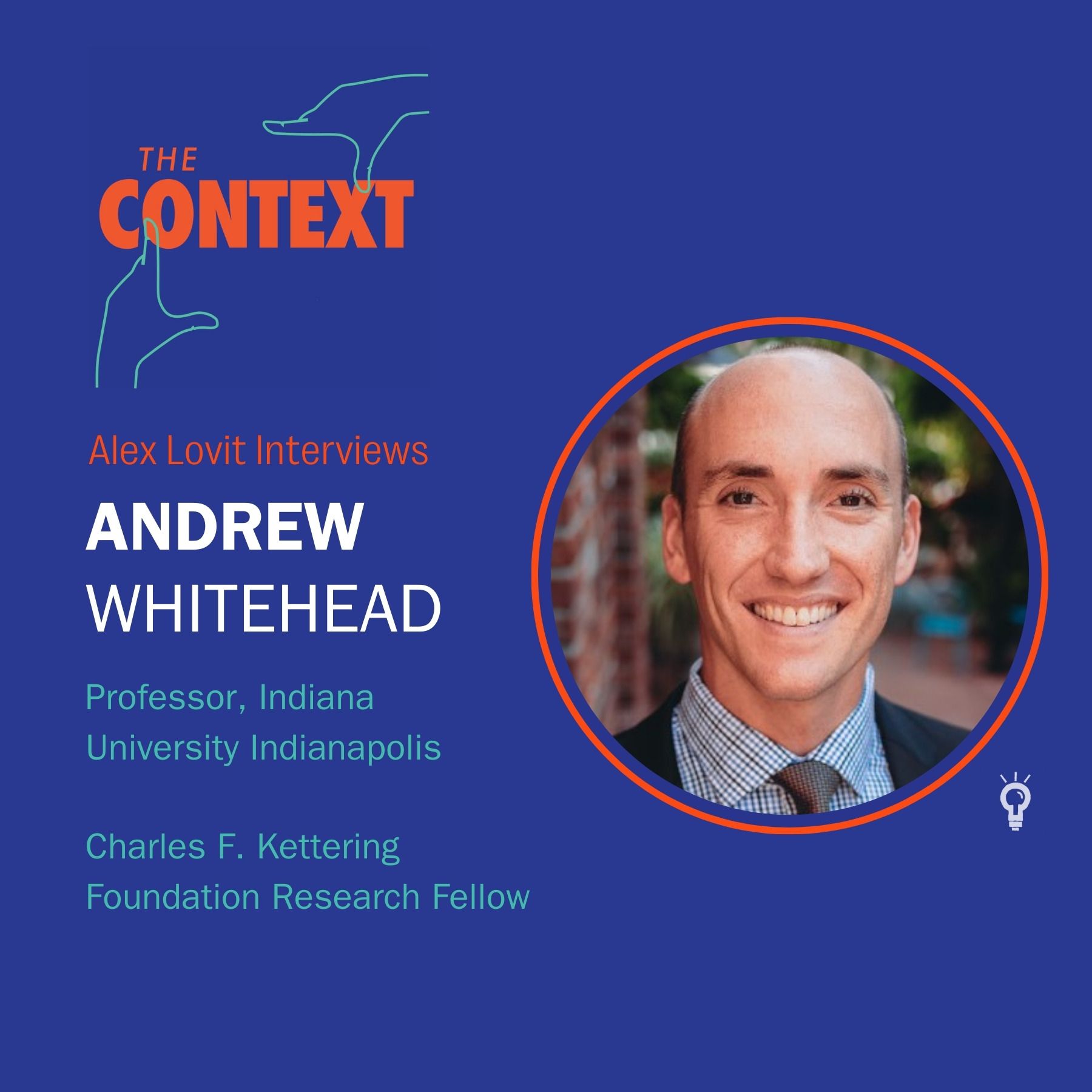
Christian nationalists view other religious, cultural, and racial identities as less than fully American. Andrew Whitehead joins host Alex Lovit to discuss the threat that this poses to democracy. Andrew Whitehead is a professor of sociology and executive director of the Association of Religion Data Archives at the Center for the Study of Religion and American Culture at Indiana University Indianapolis. He is also a research fellow for the Charles F. Kettering Foundation. https://andrewwhitehead.substack.com/ https://www.axismundi.us/podcasts/american-idols https://kettering.org/author/alwhitehead/ Hosted by Simplecast, an AdsWizz company. See https://pcm.adswizz.com for...
In a Polarized Country, Latinos Are Still Making Up Their Minds

Latinos are the largest and fastest growing minority group in the United States, which means they have growing political influence. In recent elections, Latino voters have been split between the two major parties, with Republicans gaining significant vote share (though not quite a majority) in 2024. Sergio Garcia-Rios joins host Alex Lovit to discuss what Latino Americans want from their government and what to expect in upcoming elections. Sergio Garcia-Rios is an assistant professor and the associate director for research at the Center for the Study of Race and Democracy at the LBJ School of Public Affairs, University of Texas at Austin. He is also the director fo...
What’s Required for a Free and Fair Election in 2026?

Free and fair elections are an essential component of democracy. But fair elections face a number of threats in the United States right now. Onerous ID and proof of citizenship requirements exclude millions of legal voters. And lack of legal clarity about the process to certify results creates the risks of post-election chaos. Samantha Tarazi joins host Alex Lovit to discuss these and other threats to American elections. Samantha Tarazi is the cofounder and chief executive officer of Voting Rights Lab, a nonpartisan, nonprofit organization securing and expanding the freedom to vote in all 50 states since 2017. Her voting and elections...
You Should Care about the National Archives. Here’s Why.

Transparency is essential to hold democratic governments accountable. That requires preserving documents and making them accessible to the public. Colleen Shogan joins host Alex Lovit to discuss the important role that the National Archives and Records Administration plays in our democracy—and how history shapes national identity. Colleen Shogan served as the 11th Archivist of the United States from 2023 until 2025. She currently serves as the CEO of In Pursuit, a history and civics education initiative from the pro-democracy organization More Perfect. https://www.inpursuit.org/ Hosted by Simplecast, an AdsWizz company. See https://pcm.adswizz.com for information about our co...
Seven Ways Anyone Can Fight Authoritarianism

We’ve gotten a ton of excellent advice from our guests this year about how everyday people can get involved in fighting authoritarianism and encouraging citizen engagement. So, in this year-end lookback episode, we decided to put the top seven suggestions together in one place. Featuring clips from Ece Temelkuran, Jeffrey Winters, Deva Woodly, Maria Stephan, Sharon Davies, Steven Levitsky, and John C. Yang. Hosted by Simplecast, an AdsWizz company. See https://pcm.adswizz.com for information about our collection and use of personal data for advertising.
We Are Under Cultural Stress. Art Can Help.

Hosted by Simplecast, an AdsWizz company. See pcm.adswizz.com for information about our collection and use of personal data for advertising.
American Identity Is Under Attack

The Trump administration is trying to restrict who gets to be an American: who can be in the country, who has citizenship, who has the right to vote, and who can access government services. American identity has always been complicated and contested, but this administration is narrowing the scope in dangerous new ways. John C. Yang joins host Alex Lovit to describe how these policies harm all Americans, and especially the Asian American community, which has been uniquely targeted historically and today. And he outlines what his organization is doing to fight back against this administration’s exclusionary policies. John C...
AI Is Coming for Democracy

Recent advances in artificial intelligence have drawn a lot of media attention. But little of this has focused on how this new technology may affect democracy. Spencer Overton joins host Alex Lovit to discuss how AI may push the United States away from becoming an inclusive, multiracial democracy—or toward it. Spencer Overton is the Patricia Roberts Harris Research Professor of Law and the director of the Multiracial Democracy Project at George Washington University Law School. https://ssrn.com/abstract=4754903 https://papers.ssrn.com/sol3/papers.cfm?abstract_id=5196382 Hosted by Simplecast, an AdsWizz company. See https://pcm.adswizz.com fo...
Maybe Don’t Get All Your News from Podcasts, America

How did right wing voices take over podcasting? Media analyst Angelo Carusone joins host Alex Lovit to discuss how the online media ecosystem came to be dominated by anti-inclusive and authoritarian narratives and what that means for democracy. Angelo Carusone is the president of Media Matters, a nonprofit media watchdog organization. https://www.mediamatters.org/ https://www.mediamatters.org/google/right-dominates-online-media-ecosystem-seeping-sports-comedy-and-other-supposedly https://www.mediamatters.org/tiktok/study-interacting-these-popular-right-leaning-comedy-podcasters-can-turn-your-tiktok-feed Hosted by Simplecast, an AdsWizz company. See https://pcm.adswizz.com for information about our collection and use of personal data for advertising.
Nonviolent Resistance Works. Here’s Why.

Nonviolent movements are more effective at combatting authoritarianism than violent resistance, according to research from today’s guest. Maria Stephan joins host Alex Lovit to discuss the implications of her research for the United States in this moment of political upheaval and growing authoritarianism. Maria Stephan is the co-lead and chief organizer of the Horizons Project. She’s written several books, including co-authoring the award-winning Why Civil Resistance Works: The Strategic Logic of Nonviolent Conflict. https://horizonsproject.us/ https://freedomtrainers.net/ Hosted by Simplecast, an AdsWizz company. See https://pcm.adswizz.com for information about our collection and use of pers...
Bonus: Gen Z is Taking Their First Steps onto the Political Stage (from Disrupting Peace podcast)

This week, we bring you an episode of the Disrupting Peace podcast, from the World Peace Foundation. In this episode, host Bridget Conley talks with two guests about how Gen Z Americans are—and aren’t—engaging in democracy and what people of all ages can do to encourage the next generation of peaceful leaders. Find more episodes and subscribe here: https://disrupting-peace.captivate.fm/ Hosted by Simplecast, an AdsWizz company. See https://pcm.adswizz.com for information about our collection and use of personal data for advertising.
What Makes Social Movements Win

Deva Woodly joins host Alex Lovit to discuss the importance of social movements for American democracy and the role they can play at this precarious moment in American political history. We need these networks of trust and coordinated action to push the country away from authoritarianism and toward a democracy that works for everyone. Deva Woodly is a scholar of social movements. She is a professor of political science at Brown University and a research fellow at the Charles F. Kettering Foundation. Hosted by Simplecast, an AdsWizz company. See https://pcm.adswizz.com for information about our collection and use...
Practical Advice for Reclaiming Democracy

Want to know what you can do to fight authoritarianism? Organizer Daniel Hunter joins host Alex Lovit to give practical advice for people seeking to reclaim democracy in the United States. Daniel Hunter has studied authoritarianism and resistance around the world. He is an educator with Freedom Trainers and the director of Choose Democracy. https://choosedemocracy.us/what-can-i-do/ https://freedomtrainers.net/ Hosted by Simplecast, an AdsWizz company. See https://pcm.adswizz.com for information about our collection and use of personal data for advertising.
Why Democracies Unravel Under Leaders Like Trump

In the United States, today’s Republican Party is what political scientists call “personalist.” Power is concentrated with one individual, and other party elites don’t have much ability—or willingness—to oppose that leader. In other countries around the world, when personalist parties have won control of national government, the result has been democratic backsliding and growing authoritarianism. Understanding why this is a problem for the future of democracy can also help us understand what to do about it. Erica Frantz studies authoritarian politics, with a focus on democratization, democratic backsliding, conflict, and development. She is an associate professor of political...
Authoritarianism Isn’t Coming. It’s Here.

Steven Levitsky, a leading expert on authoritarian regimes, joins host Alex Lovit to talk about the US’s current slide into authoritarianism and what we can do about it. Democracies tolerate dissent. In a democracy, citizens and institutions can criticize, protest, or file legal claims against the government, without fear of reprisal. That is no longer true of the US today, which means that the US is no longer a full democracy. Steven Levitsky is the David Rockefeller Professor of Latin American Studies and professor of government and director of the David Rockefeller Center for Latin American Studies at Harvard Un...
From Barber to Banker: The Man Fighting for Financial Justice in Little Rock

We can’t have a full democracy without financial justice. Host Alex Lovit speaks with Arlo Washington, a banker creating access to loans, credit, and financial literacy training for his underbanked community in Little Rock, Arkansas. Arlo Washington is a barber, entrepreneur, and the founder and president of People Trust Community Federal Credit Union, a Community Development Financial Institution in Little Rock, Arkansas. People Trust is the first Black-owned financial institution established in Arkansas. Washington is also the subject of the 2024 Oscar-nominated short documentary, The Barber of Little Rock. https://www.newyorker.com/culture/the-new-yorker-documentary/barber-of-little-rock-arlo-washington-wealth-gap https://www.peopletrustloans.org/ Ho...
Only Bad People Have Bad Politics. Right?

Americans are constantly arguing about politics—on the internet and at the family dinner table. But we rarely change one another’s minds, and we often emerge from those disagreements feeling frustrated and distrustful. Host Alex Lovit is joined by research psychologist Keith Payne to discuss the science behind the political divide and how the psychology of political disagreements can help us have more productive political conversations. Keith Payne is a professor of psychology and neuroscience at the University of North Carolina. He is the author of The Broken Ladder: How Inequality Affects the Way We Think, Live, and Die and...
