Degrees of Living
We exist to connect the dots across health disciplines, and to share information that gives you the agency to change the trajectory of your own health journey - wherever you are at. The health industry is siloed, confusing and means we're often in the back seat, with little to no belief in our autonomy to improve our health status. We're here to change that and to highlight the ways that you can too.Subscribe on YouTubeListen on SpotifyListen on Apple Music Hosted on Acast. See acast.com/privacy for more information.
The Bacteria We Were Never Meant to Lose | Dr. Christopher Lowry
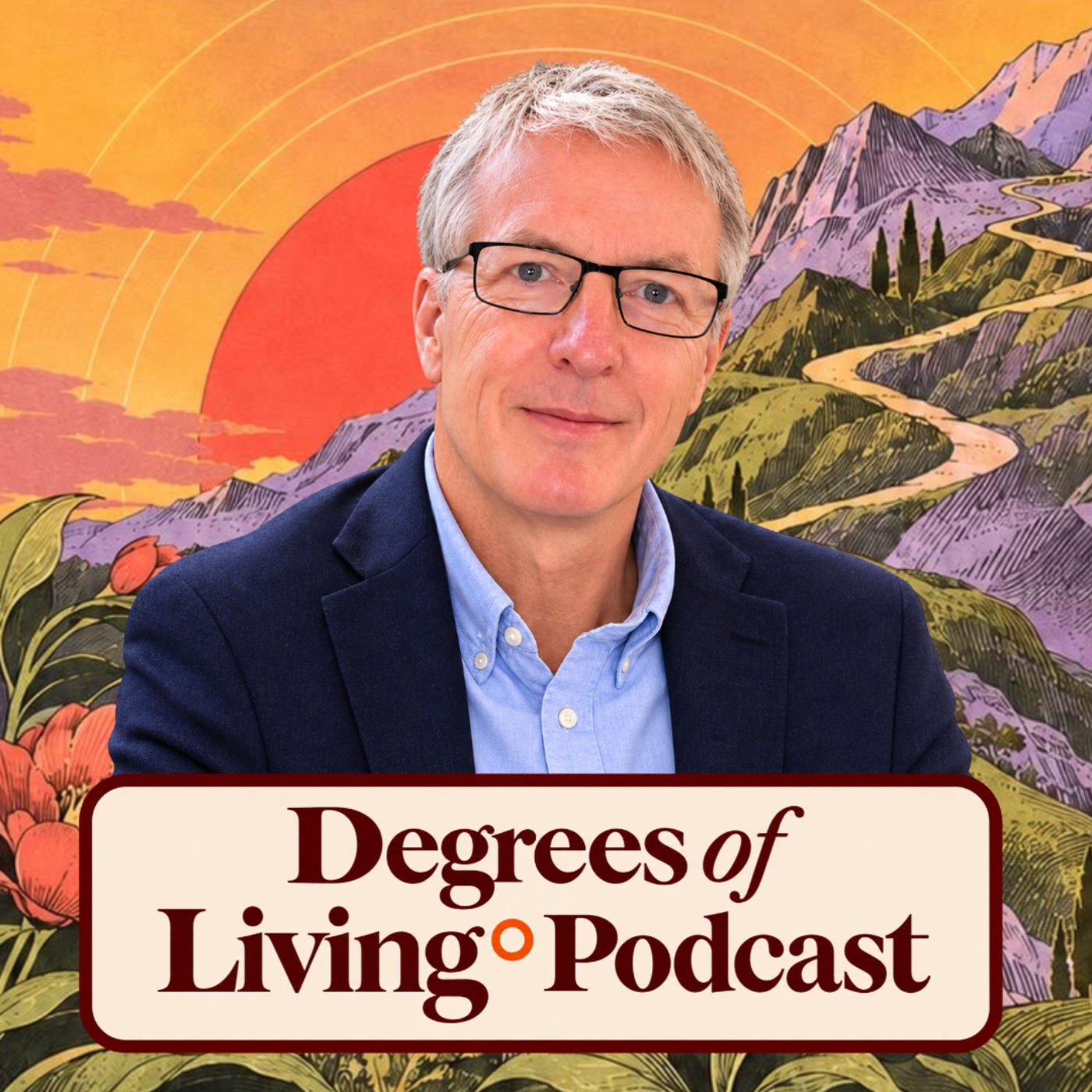
Dr Christopher Lowry of the University of Colorado Boulder joins Ben on Degrees of Health to introduce us to some very old friends: the microbes humans evolved alongside for millions of years, and which may play a surprising role in keeping inflammation, stress and mental health in check.
From farms to forests to the food on your plate, Christopher explains why modern, ultra-clean city life may be cutting us off from the bacteria our immune systems depend on, and what we can do to get them back.
In this episode, we get into:<...
You’re Never Fully Awake: The Hidden States Between Sleep and Consciousness | Professor Vladyslav Vyazovskiy
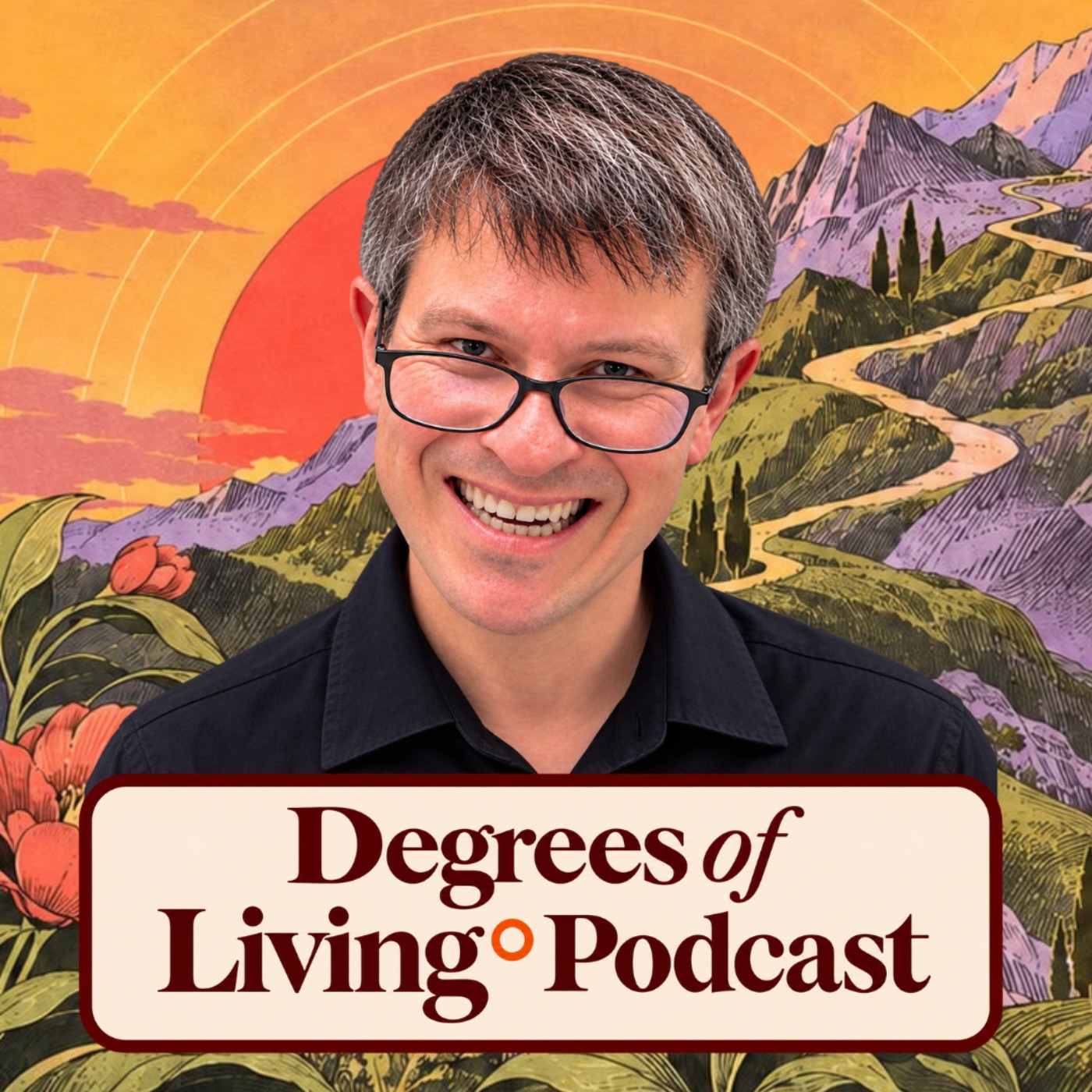
Oxford sleep researcher Professor Vlad Vyazovskiy joins Ben on Degrees of Health to flip everything you thought you knew about sleep on its head.
Most of us think we’re either awake or asleep, simple as that. Vlad has a very different view. To him, sleep is our default state, wakefulness is a spectrum we climb up when we need to, and sleep can’t be understood by looking at the brain alone. It’s about the whole body and how it interacts with the world around it.
In this episode, we get into:
...
Rewiring Your Brain Isn’t Always a Good Thing | Dr. Anna Chambers
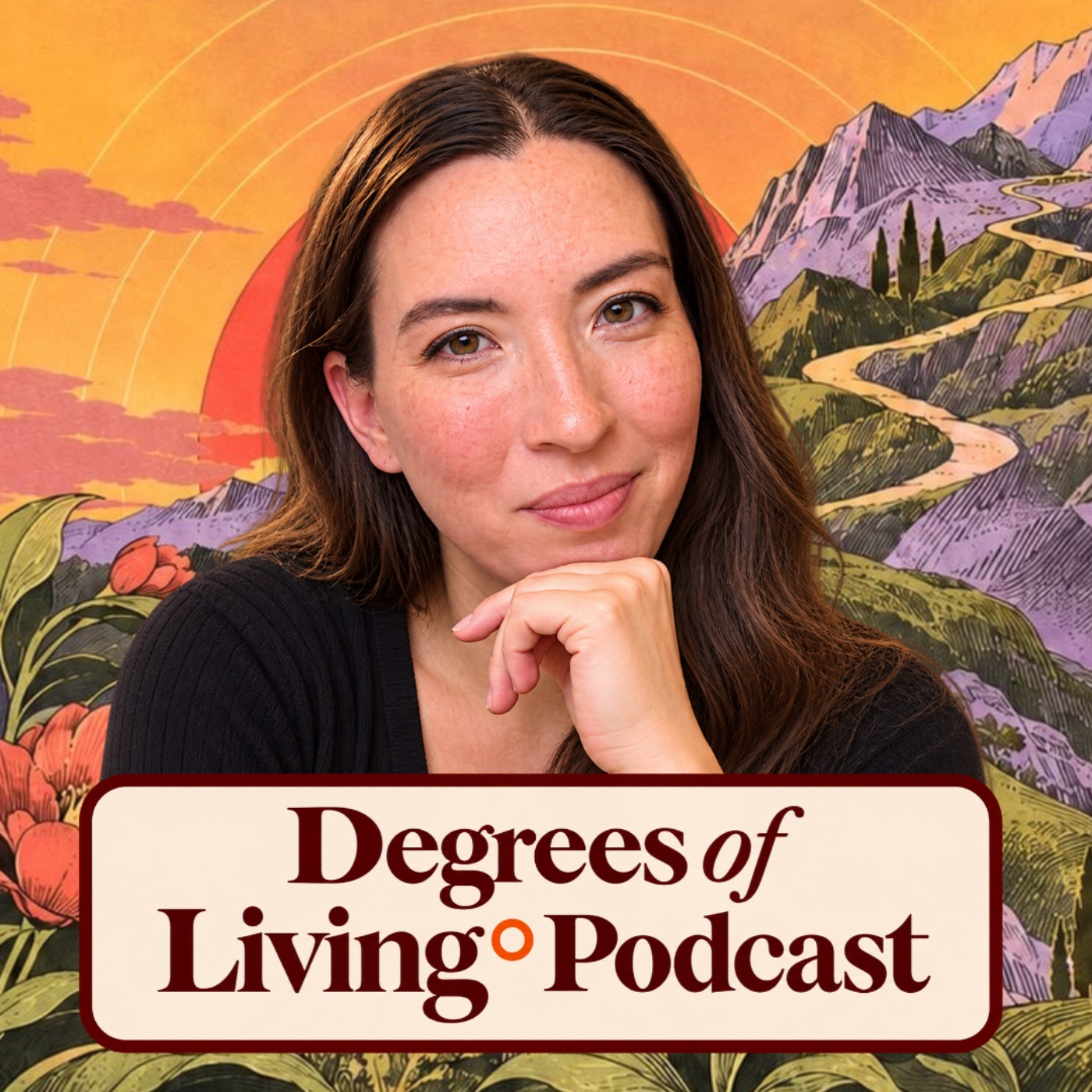
Harvard neuroscientist Dr. Anna Chambers joins Ben on Degrees of Health to take us under the hood of the human brain, and it turns out what you see depends entirely on the tools you look through.
Anna has spent almost 20 years studying how the brain works, from recording one neuron at a time to watching thousands fire at once. In this conversation, she unpacks why a detailed map of the brain is not the same as understanding it, and why your brain runs on loops rather than simple cause and effect.
In this...
Podcast update ramble | Benjamin Hopkins
Hello from Ben, our founder and host! Almost three years ago, Degrees of Health began as a way to explore heat and cold exposure and all the benefits it brings to the body and mind.
Then, when Ben’s mum was diagnosed with a very aggressive cancer, the podcast became a way to learn everything we could about metabolic health and the different ways we can look at disease. We’re so happy to share that she has since been given the all-clear.
Since then, the podcast has grown into a space to foll...
Psychological tools for an epic life | Dr. Todd Kachdan
Ben Hopkins speaks with psychologist Todd Kashdan, a George Mason University professor who has spent 25 years studying curiosity, purpose, relationships, and well-being. Kashdan explains how to explore a meaningful direction without mistaking it for a rigid life plan, and why discomfort, attention, perspective-taking, and the shadow self can help us live more fully.
What if the emotions we try to avoid, like anger, envy, and frustration, can help us live more fully? Ben Hopkins talks with psychologist Todd Kashdan about purpose, meaning, attention, and how to work with the less comfortable parts of ourselves.Todd shares...
Attachment and Synchronicity | Dr. Pascal Vrticka
Social neuroscientist Pascal Vrticka explains how hyper-scanning lets researchers study brain and body activity during real interactions, and what it can, and cannot, reveal about relationships. He clarifies common misconceptions about attachment, why attachment patterns can change across life, and why synchrony is not always a sign of a healthier connection.
Can your attachment style change?
Is "more in sync" always better? In this episode, Ben Hopkins talks with social neuroscientist Dr. Pascal Vrticka about relational neuroscience, the field that studies what happens in our brains and bodies when we interact. They also...
The Mindset Behind an Extraordinary Life | Cory Gregory
Ben Hopkins interviews entrepreneur and fitness coach Cory Gregory about building a life around discipline, purpose, and ambitious goals. Gregory compares scaling MusclePharm to creating Max Effort Muscle, shares lessons from mentors Arnold Schwarzenegger and Louie Simmons, and explains how daily streaks and a clear purpose shape his work and family life.
What does it take to build a big life and keep showing up for it for decades? Ben Hopkins sits down with fitness icon Cory Gregory to dig into the mindset and "operating system" behind his career. They cover his daily habits, his high-volume...
Parkinsons, Stem Cells and Dopamine | Roger A Barker
What if we could replace the brain cells lost in Parkinson’s disease?
In this episode, Professor Roger Barker of the University of Cambridge explains how cutting-edge stem cell research could help restore dopamine function in the brain, and what early human trials are revealing about this promising approach. We explore why Parkinson’s is so difficult to treat, whether exercise can make a meaningful difference, and how researchers are working towards therapies that go beyond managing symptoms to repair the brain itself. We also discuss the limits of current treatments, the potential of stem cell tran...
Why Ketone Supplements Can Slow Down Ketosis | Dr Kaja Falkenhain
Are exogenous ketones the same as being in ketosis? Not quite. In this episode, Ben sits down with Dr Kaja Falkenhain, a nutritional physiology researcher who has spent years studying ketones both as a supplement and as a product of fasting and ketogenic diets. Kaja explains why the context your ketones come from changes what they do in your body, how a ketone drink taken before a meal can lower blood sugar spikes by around 25% in people with type 2 diabetes, and why ketones are now being studied as signalling molecules that behave a lot like hormones. Ben also brings...
Crafting mental habits that serve you | Dr Jud Brewer MD PhD
Why is it so hard to break a bad habit, and what if willpower was never the answer?
In this episode, Ben Hopkins sits down with psychiatrist and neuroscientist Dr Jud Brewer to explore the science of habit change. Jud breaks down the three elements every habit is built on, why your brain keeps repeating behaviours that feel rewarding, and how simply paying attention can make old habits lose their grip. His approach has delivered five times the quit rates of gold-standard smoking cessation treatment and a 67% reduction in anxiety in a randomised controlled trial.
<...Metabolic Health, Metabolic Psychiatry and more | Rachel Frase RD
Can changing what you eat change how you think and feel?
In this episode, Ben Hopkins sits down with registered dietitian Rachel Frase to explore metabolic psychiatry, the fast-growing field using ketogenic therapy to support depression, anxiety, bipolar disorder and more. Rachel shares how her own gut health struggles led her into low-carb nutrition, then into a psychiatric practice where she spent three years working with patients using personalised ketogenic diets alongside or instead of medication.
Together they unpack why ketones give the brain more energy than glucose, why mental and metabolic conditions...
A Deep Dive On Fisetin | Dr Juliette Tavenier
Could removing damaged cells help us age better and reduce the risk of age-related diseases? In this episode, Ben Hopkins sits down with researcher **Juliette Taverner** to explore the science of cellular senescence, senolytics, and the potential of compounds like fisetin in the field of longevity research.
As we age, some damaged cells stop dividing but remain active, releasing inflammatory signals that can affect surrounding tissues. These are known as *senescent cells*, sometimes nicknamed “zombie cells”. Scientists are investigating whether senolytics, compounds designed to selectively eliminate these cells, could help reduce their harmful effects and improve heal...
The Neuroscience Of Unlocking Human Potential | Dr Josh Turknett
Dr Josh Turknett: The Genius and the Impostor | Degrees of Health
In my early twenties, I read everything I could get my hands on, because I’d picked up the idea that my brain would basically stop changing at 25. That turns out to be completely false. It also worked, because it made me take learning seriously. Which is sort of the whole point of this conversation.
Dr Josh Turknett is a neurologist, and his new book The Genius and the Impostor takes apart what he calls the special brain story: the idea that yo...
Your perception is your reality | Dr Ellen Langer
How much of what you think you know is actually true?
In this episode of Degrees of Health, Ben Hopkins sits down with Dr Ellen Langer, the first woman to be tenured in psychology at Harvard and the researcher who has spent fifty years studying mindfulness, almost none of it involving meditation.
Ellen makes a simple case with enormous consequences. Mindfulness isn’t something you sit cross-legged to achieve. It’s just noticing. And the moment you decide you know something, you stop noticing it entirely. Her definition of the opposite state is one...
I Followed Mentzer For 2 Years. It Nearly Ruined Me | Dr Nash Jocic
Dr Nash Jocic: Philosophy, Bodybuilding and the Golden Era | Degrees of Health
Every so often, a conversation goes somewhere you didn’t expect. This was one of them.
Dr Nash Jocic came to bodybuilding through philosophy, not the other way round. He started with Hermann Hesse, arrived at a view that a person exists as three entities physical, intellectual and spiritual — and realised philosophy was only giving him two of them. Bodybuilding was the only thing he could find that was challenging enough for the third.
That was forty years ago...
100 Years of Keto… So Why Don’t More Doctors Use It? | Dr Eric Kossoff
Can changing what you eat really help control seizures?
In this episode of Degrees of Health, Ben Hopkins sits down with Dr. Eric Kossoff, a leading neurologist at Johns Hopkins who has spent decades researching ketogenic diet therapies for epilepsy.
The ketogenic diet has been used to treat epilepsy for over 100 years, but there’s still a lot people don’t know about how it works. And it turns out, it might not just be about ketones.
Eric explains why ketogenic diet therapy can be effective for children and adults with...
We’re Getting Longevity All Wrong | Professor Colen Murphy
How much do we actually know about living longer?
In this episode of Degrees of Health, Ben Hopkins sits down with Professor Coleen Murphy, a leading researcher in aging and longevity at Princeton University, to talk about what the science really tells us about how we age.
They get into some of the biggest ideas in longevity right now, from calorie restriction and exercise to GLP-1s, peptides, vaccines, AI and the possibility that viruses could play a role in age-related disease.
Coleen also explains why she thinks we shouldn't...
Keto vs Mediterranean And The Different Health Outcomes | Dr Max Petersen
What actually matters when it comes to improving metabolic health, losing weight, or the diet you use to lose it?
In this episode of Degrees of Health, Ben sits down with Dr Max Petersen to unpack his research comparing three very different diets: a true ketogenic diet, a Mediterranean diet, and a very low-fat plant-forward diet. The study was designed to answer a fascinating question: if people lose the same amount of weight, do different diets produce different effects on metabolic health? Max explains how the study controlled weight loss by providing participants with all of...
Exercise Snacks Deep Dive | Prof. Jonathan Little
What if you didn’t need a full workout to get meaningful health benefits from exercise?
In this episode of Degrees of Health, Ben sits down with Professor Jonathan Little to explore the science behind exercise snacks short bursts of vigorous exercise that can be sprinkled throughout your day.
Jonathan explains where the idea came from, what the research actually shows, and whether a few minutes of exercise here and there can really make a difference to fitness, blood sugar and metabolic health.
We get into what counts as an ex...
Using Sleep to Understand how we learn | Dr Rebecca Spencer
What actually happens in your brain while you sleep and how does it change what you remember?
On this episode of Degrees of Health, Ben sits down with sleep researcher Dr Rebecca Spencer to explore how sleep shapes learning, memory and our everyday performance.
Rebecca explains how the brain processes and organises information overnight, why the sleep stages matter, and why pulling an all-nighter might be working against the very thing you’re trying to learn.
We also get into the fascinating role of naps, from why they’re so impo...
Can Creatine Keep Your Brain Sharp After a Sleepless Night? | Dr Ali Gordji-Nejad
What happens to your brain when you miss a night of sleep and could creatine help keep it sharp?
In this episode, Dr. Ali Gorgi discusses his research on creatine, sleep deprivation, and cognitive performance, revealing how creatine can mitigate cognitive decline under stress and the potential for future studies in neurodegenerative diseases.
Dr Ali Gorgi explores the science behind creatine, sleep deprivation and cognitive performance. We dive into how creatine works in the brain, what happens when you’re running on little sleep, and whether it could help support your thinking when yo...
You Think You Understand… But Do You? The Science of Human Explanation | Dr. Tania Lombrozo
What makes us ask why? And what actually happens in our brains when we try to understand something?
In this episode of Degrees of Health, Ben Hopkins sits down with psychologist and cognitive scientist Dr. Tania Lombrozo to explore the science of explanation, curiosity and how we make sense of the world.
We get into why explaining something can be one of the most effective ways to learn it, how our brains can convince us we understand something when we don’t, and why the explanations we find satisfying aren’t always the ones...
MORE COFFEE OR BETTER FOCUS? The Surprising Science of Caffeine & Breathing | Dr Sedat Arslan
Does more coffee actually make you perform better, or does it just make you feel more switched on?
In this episode of Degrees of Health, Ben Hopkins chats to Dr. Sedat Arslan about his new study looking at caffeine, L-theanine and breathing in professional esports players.
They get into whether adding L-theanine to caffeine can improve reaction time, why slow breathing produced a surprisingly similar result, and what this might mean for anyone trying to focus better.
From gaming to studying, work and even getting ready for a podcast, the conversation...
Her Schizophrenia Vanished, Nobody Was Treating It | Dr Bret Scher
We've traced the metabolic roots of cancer, kidney disease and Alzheimer's on this show. Keep going down that rabbit hole, and you arrive somewhere most people have never heard of: metabolic
psychiatry.
Dr Bret Scher spent over twenty years as a cardiologist before the revolving door of patients who weren't getting better sent him looking for what conventional medicine was missing. He now leads Metabolic Mind at the Baszucki Group, funding and connecting the researchers building the evidence base for ketogenic therapy in serious mental illness.
He and Ben get into...
We Banned The Only Healthy Light Bulb | Dr Martin Moore-Ede
Part one with Dr Martin Moore-Ede passed half a million views, so he's back with the revised edition of The Light Doctor, and this time the conversation goes beyond the visible spectrum entirely.
Dr Moore-Ede led the Harvard team that located the human body's master circadian clock. In this episode, he makes the case that the light entering your eyes matters as much to your health as the food you eat, the water you drink and the air you breathe and that modern LED lighting has quietly stripped out most of the spectrum our biology evolved...
Is Alzheimer’s Really a Disease of the Mitochondria? | Dr. Russell Swerdlow
What if one of the biggest clues to Alzheimer’s disease lies inside our mitochondria?
In this episode of Degrees of Health, Ben Hopkins is joined by Dr. Russell Swerdlow to explore the mitochondrial cascade hypothesis of Alzheimer’s — and why mitochondrial dysfunction could be playing a much bigger role in the disease than we once thought.
Russell talks through the research that led him to this hypothesis, including his early cybrid experiments, which found that mitochondrial DNA from Alzheimer’s patients could transfer reduced cytochrome oxidase activity into cell models. From there, the rese...
Glycation, Blood Sugar & Healthy Ageing | Professor Paul Reynolds
Could something as simple as the way our bodies handle sugar play a bigger role in ageing and chronic disease than we realise?
In this episode, Ben Hopkins sits down with Professor Paul Reynolds for a fascinating conversation about glycation, what it is, why it happens, and why it might be something we should all know a little more about.
Glycation is essentially what happens when sugar sticks to things in our bodies that it shouldn't. While some of this happens naturally, Paul explains why frequent blood sugar spikes may increase the amount...
Everything You've Been Told About Anxiety Is Wrong | Dr. Nicole Cain
Anxiety affects millions of people, but what if everything we have been taught about it is wrong?
In this episode, Dr. Nicole Cain shares a completely different way of thinking about anxiety, panic attacks, and healing. Drawing from her own experience and years of clinical practice, she explains why anxiety is not the problem but a signal from your body that something needs attention.
We talk about trauma, the nervous system, neuroplasticity, gut health, mitochondria, natural ways to support anxiety, and the practical steps you can take to feel calm again. This conversation...
How Ketones Boost Brain and Body Health | Dr Mark Mattson
Dr. Mark Madsen discusses the science behind intermittent fasting, ketosis, and their effects on health, aging, and brain function. He explores mechanisms like BDNF, autophagy, and evolutionary perspectives on stress responses.
Key Topics
- Mechanisms of fasting benefits: calorie restriction, glycation, inflammation
- Role of ketones as signaling molecules and energy sources
- BDNF and brain plasticity
- Exogenous ketones and athletic performance
- Evolutionary perspective on stress and adaptation
Chapters
00:00 Introduction and guest introduction
00:11 Ben's fasting...
Catching Up with Dr Mary Newport | Ketosis, Cholesterol and Brain Health
In this episode, Dr. Mary Newport discusses the latest insights on cholesterol, the benefits of coconut oil, and the role of ketones in brain health and metabolic diseases. Discover how dietary fats influence health and the potential of ketogenic strategies for longevity and disease management.
KEY TOPICS
Rethinking Biology: Energy and Information | Dr Nirosha Murugan
In this conversation, Dr Nirosha Murugan discusses the evolving understanding of biology through the lens of energy dynamics and information transfer. She emphasises the importance of viewing health and disease not just through chemical interactions but as a complex interplay of energetic signals. The discussion covers the implications of energy resistance in health, the role of light in cancer treatment, and the need for a multidisciplinary approach in scientific research. Dr Murugan also explores the concept of consciousness as an emergent property of energy interactions, advocating for a new perspective on how we understand life and health.
<...
The Surprising Lack of Breakthroughs in Life Extension Science Over 40 Years | Siim Land

Uncover the surprising truths about longevity with Siim Land, a leading voice in the emerging world of life extension. Despite decades of research, the biggest breakthroughs in drastically extending lifespan remain elusive, with the strongest evidence pointing towards fundamental factors like calorie restriction and genetics. Siim reveals how current science shows us what not to do and why that matters more than ever if we're serious about living longer, healthier lives.
This episode dives deep into the concept of longevity escape velocity, where science might one day enable us to outpace ageing itself and why genetics...
The Truth About Aging Clocks and Biomarkers | Dr. Matt Kaeberlein

In this episode, Ben Hopkins sits down with longevity scientist Professor Matt Kaeberlein to unpack the biggest questions in aging, health span, and the science of living longer.
They cover the promise and pitfalls of biological age clocks, why resveratrol failed to live up to the hype, how to think about aging as entropy and resilience, and which interventions actually look promising today. Matt also explains where lifestyle, hormones, and medications like rapamycin, SGLT2 inhibitors, GLP-1 agonists, and more fit into a practical longevity strategy.
If you’re interested in evidence-based longevity, proactive he...
Women’s Metabolism Explained: Menstrual Cycles, PCOS, Ketogenic Diets & Postpartum Depression | Dr. Madison Kackley

How does female metabolism differ from male metabolism? Why do energy levels, performance, hunger, and recovery fluctuate throughout the menstrual cycle? And what does the latest research say about ketogenic diets, metabolic flexibility, PCOS, and postpartum depression?
In this episode, Ben Hopkins sits down with Dr. Madison Kackley, researcher and director of SHE IS Labs at The Ohio State University, to explore the fascinating relationship between metabolism, hormones, and women's health.
Dr. Kackley breaks down why women are metabolically dynamic, how estrogen and progesterone influence fuel usage throughout the month, and why many...
Revolutionising Health: The Power of Learning, Language, and Mitochondria | Professor Thomas Seager

Join us as Professor Thomas Seager delves into the transformative power of learning, the impact of language on scientific understanding, and the crucial role of mitochondria in health. This episode explores how these elements can revolutionise healthcare, personal growth, and scientific thinking.
In This Episode:
Discover Professor Seager's unique approach to lifelong learning and curiosity-driven experimentation.
Understand how language acts as a technology for thought, enhancing communication and comprehension.
Explore the importance of interdisciplinary synthesis and systems thinking in health and science.
Learn about the evolutionary story of mitochondria...
Why Overcomplicating Your Longevity Routine Could Be Holding You Back | Annie Nosh

What does it really take to slow biological ageing without obsessing over every new trend?
In this episode, Ben Hopkins sits down with Annie Nosh, one of the top-ranked participants in the Rejuvenation Olympics, to discuss the simple habits that have helped her achieve an exceptionally slow pace of ageing.
Annie shares how she moved away from extreme optimisation and focused on sustainable fundamentals: quality sleep, zone 2 cardio, strength training, nutrition, stress management, daily movement, and strategic supplementation. She also reveals the surprisingly simple skin protocol that has helped reduce her measured skin age by...
The Hidden Link Between Metabolic Health and Heart Disease You Need to Know | Dr. Philip Ovadia

Unlock the surprising truth about heart disease that the medical consensus has been missing, and learn how you can actually stay off the operating table. Dr. Philip Ovadia, a heart surgeon with over 20 years of experience, reveals why relying solely on cholesterol levels and outdated diets is failing us and what the real root causes, metabolic health, insulin resistance, and inflammation, mean for your risk.
Time Codes:
0:00 - Introduction and Dr. Ovadia's perspective on heart surgery1:42 - The consensus opinion on cholesterol and its failures3:04 - The real root causes: insulin resistance and metabolic health5:24...What If Depression Is Actually a Brain Energy Problem? | Drew Decker

What if depression is partly a metabolic problem?
In this episode, Ben sits down with researcher Drew Decker from Dr. Jeff Volek’s lab to explore groundbreaking new research on the ketogenic diet and mental health.
Drew shares the results of a pilot study investigating the effects of nutritional ketosis on individuals suffering from major depressive disorder — with participants seeing an average 70% improvement in depression scores.
The conversation dives into:
* The connection between metabolism and mental health
* Why ketones may act as an alternative fuel sour...
Rethinking Modern Medicine: Metabolic Health and Why Calories Don’t Work | Dr. Adrian Soto-Mota

Why is modern medicine so slow to adapt to new science? In this episode, we sit down with physician and physiologist Dr. Adrian Soto-Mota to challenge some of the most deeply entrenched dogmas in healthcare and nutrition.
Dr. Soto-Mota explains why he shifted gears from traditional internal medicine to metabolic research, sharing a fascinating look into the slow evolution of science—often progressing "one funeral at a time." We dive deep into the remarkable real-world success of using carbohydrate restriction and carnivore diets to treat Inflammatory Bowel Disease (IBD), the biological flaws of the "calorie" model, an...
The Hidden Dangers of Plant Toxins | Dr Anthony Chaffee

Some people find health through green smoothies. Others find it in 3 kilos of steak cooked in ghee.
Dr Anthony Chaffee is a neurosurgical registrar and ex-professional rugby player who’s been running on nothing but animal products for years. No salads. No supplements. No exceptions. In this conversation, we get into the weeds of his theory, that many modern illnesses (autoimmune conditions, metabolic disorders, mental health struggles) are not mysterious at all, they are the result of eating the wrong fuel.
🥩 Why plants aren’t as innocent as they look
🧬 Autoimmunity, inflammati...
