Paratus

Latin for "prepared," Paratus is a podcast sponsored by Veritas International University. Paratus is dedicated to helping Christians develop a Biblical worldview, assisting listeners to think scripturally and soundly about the world today.
Irreducible Complexity: Can Darwinian Evolution Build Molecular Machines? | Casey Luskin & Jonathan McLatchie
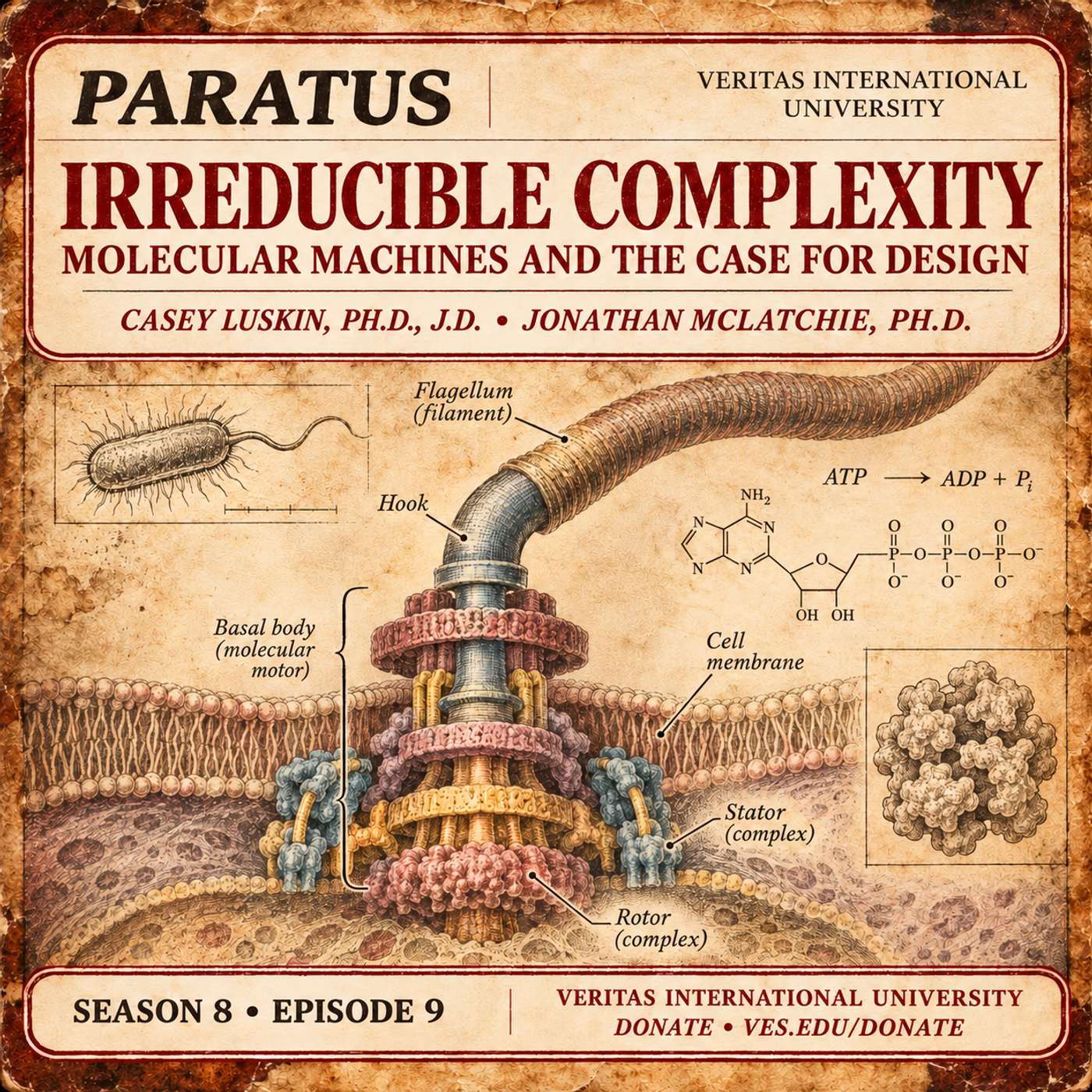
Can Darwinian evolution build the irreducibly complex molecular machines found inside living cells—or do these systems point beyond unguided processes to intelligent design?
Host Luke Betzner welcomes back Casey Luskin, Ph.D., J.D., Associate Director, Research Director, and Senior Fellow at Discovery Institute’s Center for Science and Culture, and Jonathan McLatchie, Ph.D., Resident Biologist and Fellow at the Center for Science and Culture. Together they examine the biochemical challenge of irreducible complexity: systems whose coordinated parts must work together to accomplish a higher-level function.
The discussion moves from Darwin’s own propos...
Fine-Tuning: Does the Universe Point to a Designer? | Brian Miller, Ph.D. & Bruce L. Gordon, Ph.D.
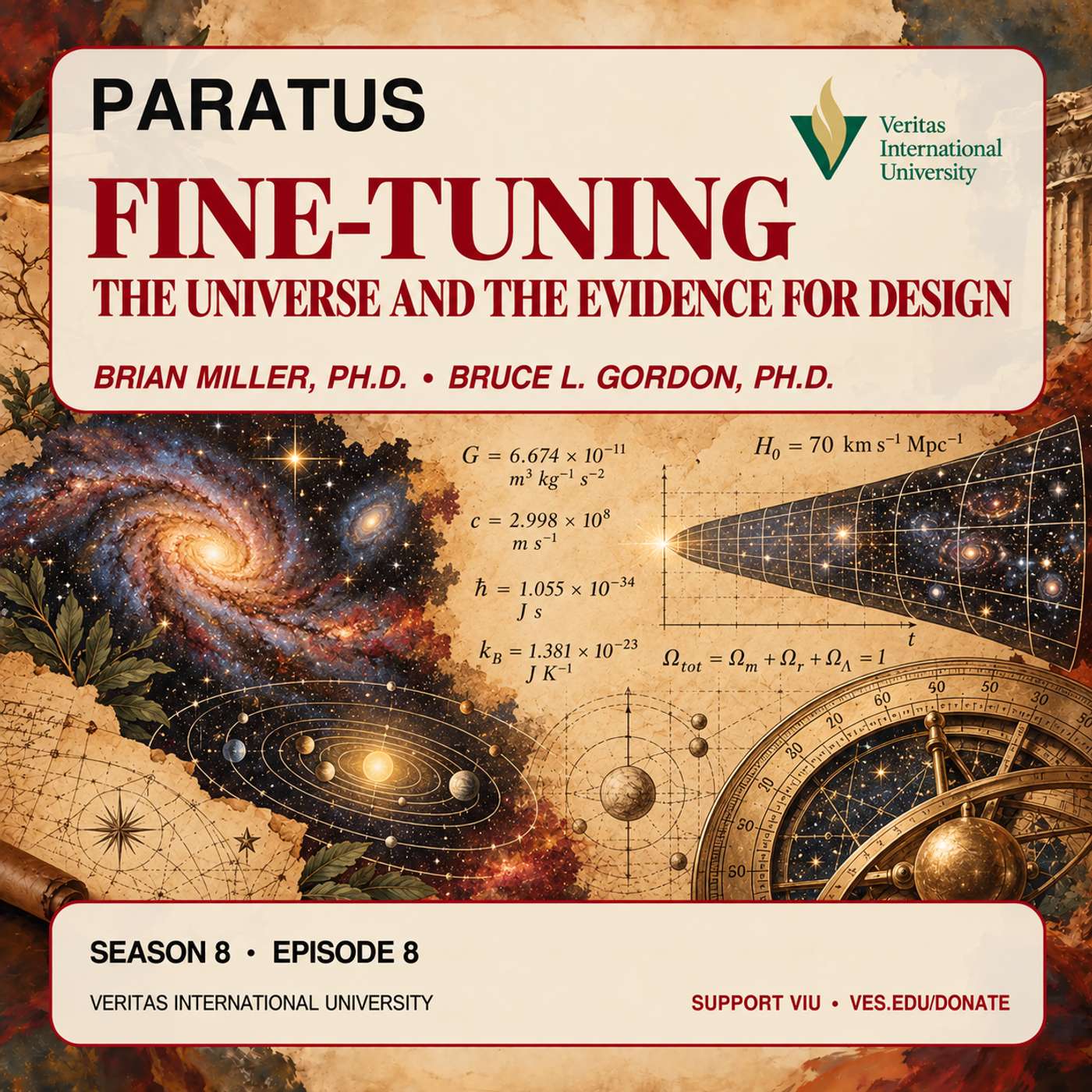
Does the fine-tuning of the universe provide evidence of purpose and intelligent design? Luke Betzner welcomes physicist Brian Miller, Ph.D., and philosopher of physics Bruce L. Gordon, Ph.D., for a rigorous and accessible exploration of the physical conditions that make life possible.
The conversation examines the form of nature’s laws, physical constants, and the universe’s initial conditions; Fred Hoyle’s prediction of the carbon resonance; cosmic expansion, dark energy, inflation, and entropy; and the interconnected requirements for galaxies, stars, planets, chemistry, biological life, and technological civilization. Miller and Gordon also explain how fine-tuning probab...
The Positive Case for Intelligent Design | William A. Dembski, Ph.D.
Can intelligent design make a positive, testable scientific case—or is it merely a criticism of Darwinian evolution? Luke Betzner welcomes mathematician, philosopher, and intelligent-design theorist William A. Dembski, Ph.D., Ph.D., M.Div., for a wide-ranging discussion of how scientists detect the effects of intelligence in nature.
Dembski explains the logic of design inference, distinguishing induction, deduction, and inference to the best explanation. Drawing on examples from SETI, forensic science, archaeology, molecular biology, information theory, genetics, medicine, and paleontology, he argues that intelligent causation can be investigated rigorously and can generate testable expectations. The conversation ex...
Design in Nature: Does Biology Reveal Intelligent Design? | Emily Reeves & Brian Miller
Does nature merely look designed, or does biology provide testable evidence of intelligent purpose?
Host Luke Betzner welcomes biochemist Emily Reeves, Ph.D., and physicist Brian Miller, Ph.D., of Discovery Institute’s Center for Science and Culture for a wide-ranging discussion of design in nature.
Reeves and Miller explain why human beings reliably recognize design, how scientific testing can distinguish purposeful organization from accidental patterns, and why natural selection may describe the filtering and optimization of existing biological variation without explaining the origin of organisms’ integrated architecture. They examine biological archetypes, constrained variation, molecular mach...
Why Intelligent Design Matters | William A. Dembski
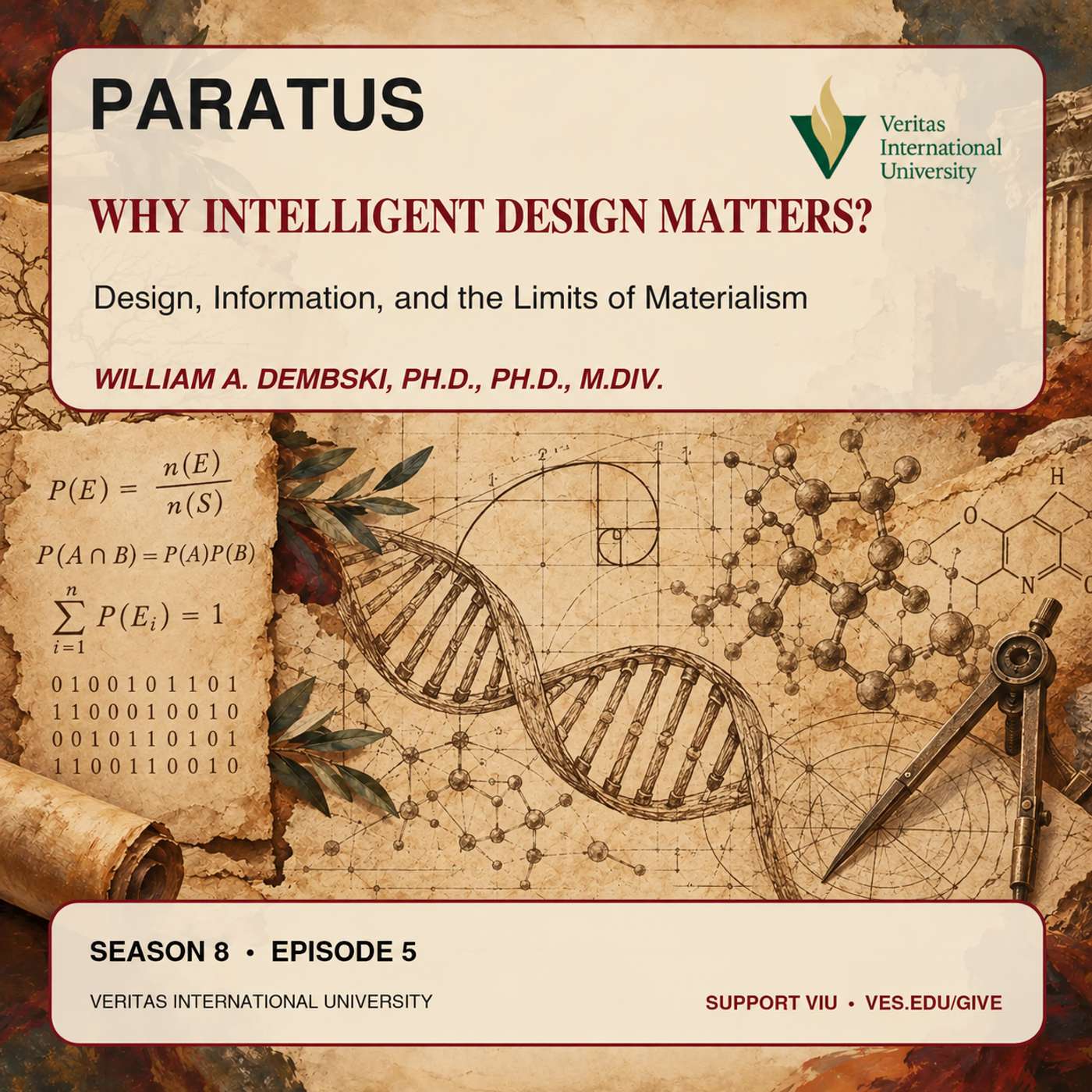
Can patterns in nature provide reliable scientific evidence of intelligence—and why does that question matter for Christian faith and contemporary culture?
Dr. William A. Dembski joins host Luke Betzner to explain the foundations of intelligent design, the logic of design detection, and the profound consequences of treating intelligence as fundamental rather than merely an accidental product of matter. Drawing upon mathematics, probability, information theory, philosophy, biology, and theology, Dembski shows why highly improbable, independently recognizable patterns can warrant an inference to intelligent causation.
The conversation examines specified complexity, DNA as a genuine coding system, th...
What Is the Biblical and Scientific Case for a Historical Adam and Eve? | Casey Luskin & Michael Keas
Were Adam and Eve real historical people, and how should Christians evaluate scientific arguments about human origins? Host Luke Betzner welcomes Dr. Casey Luskin and Dr. Michael Keas to examine the biblical case for a historical Adam and Eve, the fossil and genetic evidence discussed in debates over human ancestry, and proposals for reconciling Christianity with evolutionary accounts of human origins.
Drawing on The Comprehensive Guide to Science and Faith, the conversation explores Jesus’ and Paul’s references to Adam and Eve, four alternative models of human origins, questions surrounding biblical genealogies and the dating of humanity, and...
Has Science Refuted Miracles and the Supernatural? | Jonathan McLatchie & Brian Miller
Has science refuted miracles and the supernatural? Paratus host Luke Betzner welcomes Discovery Institute scholars Dr. Jonathan McLatchie and Dr. Brian Miller to discuss what scientific inquiry can tell us about extraordinary events, how historical reasoning differs from laboratory experimentation, and the philosophical questions raised by claims of divine action.
Continuing Season 8's exploration of science and Christian faith, the conversation draws on Richard G. Howe's chapter in The Comprehensive Guide to Science and Faith, edited by Joseph M. Holden, William A. Dembski, and Casey Luskin. The guests examine David Hume's objections, the historical case for Jesus...
Faith and Reason: Is Christianity Rational? | Dr. Don Deal
Can Christian faith be intellectually responsible—and what role should reason play in knowing and trusting God? Host Luke Betzner is joined by Christian apologist and scholar Dr. Don Deal for a careful exploration of faith, reason, evidence, logic, revelation, and truth.
Dr. Deal explains why biblical faith is neither blind belief nor skeptical paralysis. Faith and reason perform distinct but cooperative roles: reason evaluates evidence and exposes contradiction, revelation supplies truths human inquiry could not discover on its own, and faith entrusts the believer to what God has revealed. The conversation also examines how Christians can re...
Science and Faith: Are Christianity and Science Compatible? | Casey Luskin & Jonathan McLatchie
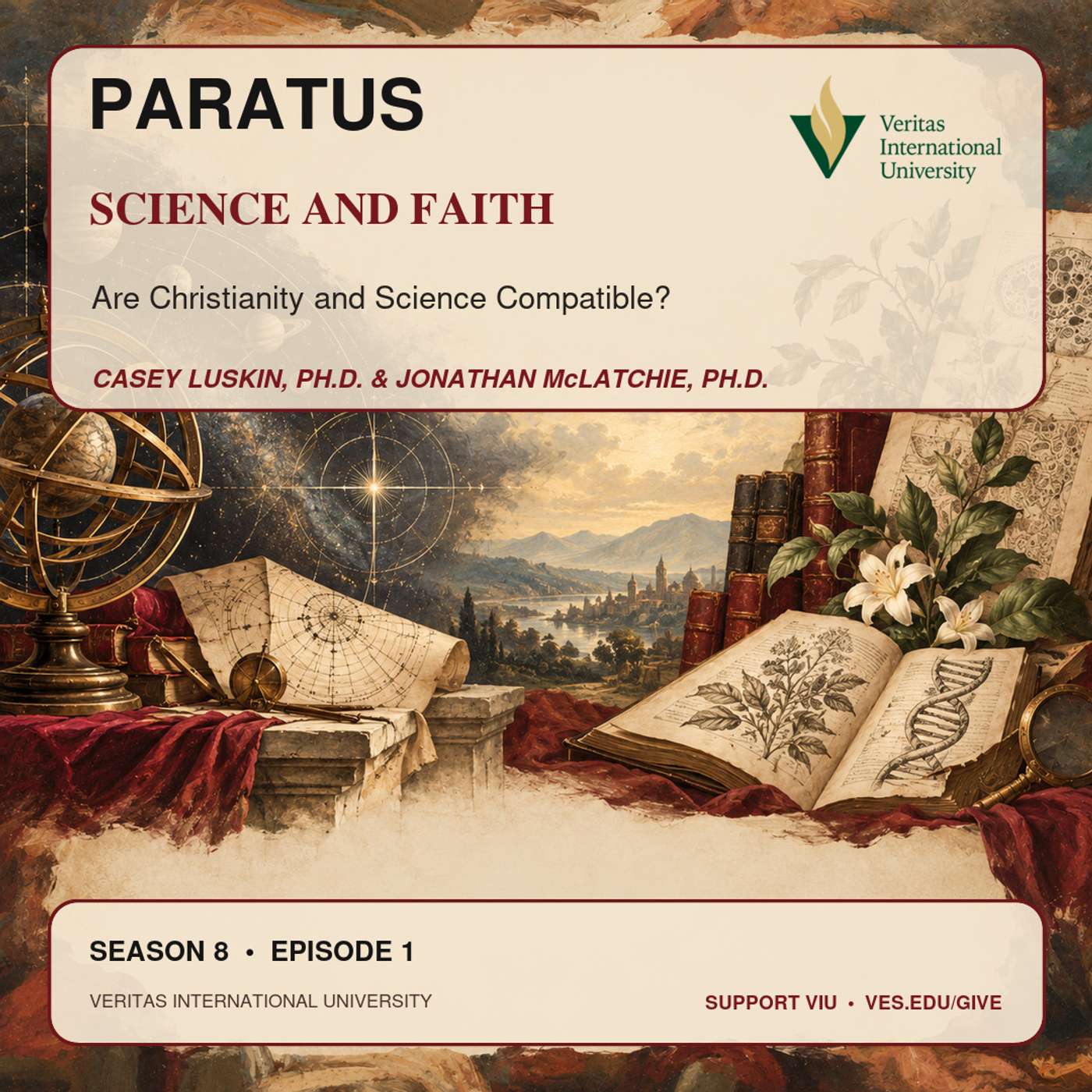
Are science and Christianity fundamentally at odds—or can they converge in a common pursuit of truth?
Host Luke Betzner opens Season 8 of Paratus with Dr. Casey Luskin and Dr. Jonathan McLatchie of the Discovery Institute’s Center for Science and Culture. Together they examine what science is, what biblical faith is, and whether the two are genuinely incompatible.
The conversation moves beyond the familiar “science versus faith” conflict. Luskin and McLatchie consider the limits of scientific consensus, the difference between evidence and authority, methodological naturalism, scientism, confirmation bias, and the importance of testing every claim. T...
The Necessity of Grace
God’s grace is a central feature of salvation. Without grace, people can’t be saved. As the Apostle Paul wrote in Ephesians 2: 8-9: “For by grace you have been saved through faith, and that not of yourselves; it is the gift of God, not of works, lest anyone should boast.” Because of God’s unmerited favor, we have access to the Father by one Spirit, with Christ as our cornerstone. Therefore, grace is an essential doctrine of the Christian faith.
The Bodily Resurrection of Christ

Christ’s resurrection stands at the core of the Christian faith. Without the resurrection, Christianity is nothing more than moral teachings. It’s as the Apostle Paul declares in I Corinthians 15:14: “If Christ has not been raised, our preaching is useless and so is your faith.” Hence, the resurrection is a crucial doctrine to defend. Why? Without it, Christianity stands or falls, offering no real means of salvation. Therefore, the resurrection is an essential doctrine of the Christian faith.
Christ's Atoning Death

Christ’s atoning death is the heartbeat of the Christian faith, leading to the resurrection. As the Apostle Paul states in I Corinthians 15:3: “Christ died for our sins according to the scriptures.” And it’s because of Christ’s death and resurrection that salvation is made possible for all who believe. This makes the atoning death of Jesus central to the Christian faith. Because Christ sacrificially atoned for human sin on the cross, Jesus died for the unjust—that’s you and me, enabling God to be the Perfect Sacrifice for salvation.
Christ's Sinlessness

If Jesus had two biological parents, then He would have been a sinner like the rest of us. And unless Jesus was without sin, then we are without a Savior, one who can offer true salvation. Classical Christianity holds that Jesus was completely without sin, following the Apostle Paul’s statement in 2 Corinthians 5:21: “ For He made Him who knew no sin to be sin for us, that we might become the righteousness of God in Him.”
Christ's Virgin Birth

Throughout history, there’s been challenges to the veracity and accuracy of the virgin conception of Jesus, saying it should not be considered an essential doctrine of the Christian faith. Some question if it if it occurred at all. But here’s the thing to remember: if Jesus had two biological parents, he’d be born into sin, and therefore unable to provide a pure sacrifice to redeem the world. The fact that His perfection is protected through Mary’s genealogy (as described in the Gospel of Luke) is a clue to Jesus’ divine, miraculous conception.
Human Depravity

Because a perfect God can do nothing less than create a perfect world, God created all things perfect. But due to the fall of humanity through a misuse of free will, sin entered the world, wreaking havoc. Since the fall of Adam and Eve, people are born with a sin-nature. Every human being—except Jesus Christ—has been born a sinner. And because of this, Christ’s redemptive mission is to save us from our sin and establish a right relationship with God.
Why? Because humans are unable to earn our own salvation. Furthermore, if there wa...
Christ's Humanity

The nature of Christ—that He is both human and divine—is foundational to a Biblical understanding of the Christina faith. Not only did the Old Testament predict the Messiah would be deity, but Jesus claimed to be the Messiah.
Furthermore, Jesus’ humanity is a fundamental doctrine for our salvation. As God, Jesus had direct access to the Father; as man, He could reach to humanity, offering the gift of salvation to all who believe.
Christ's Deity

The nature of Christ—that He is both human and divine—is foundational to a Biblical understanding of the Christina faith. Not only did the Old Testament predict the Messiah would be deity, but Jesus claimed to be the Messiah.
Furthermore, Jesus’ deity is a fundamental doctrine for our salvation. As God, Jesus had direct access to the Father; as man, He could reach to humanity, offering the gift of salvation to all who believe.
God's Tri-Unity

Not only is God’s unity essential to a Biblical understanding of the Christian faith, so is His tri-unity. The Bible teaches that not only is God one, but He is three in one. Without this foundational teaching, Christianity loses its unique position, falling into various non-Biblical teachings.
Biblical Christianity teaches there are three co-equal and co-eternal Persons, the Father, Son, and Holy Spirit. And here’s the thing: this doctrine is important for our salvation. Why? Because the Father, Son, and Holy Spirit play distinctive roles in the salvation process.
God's Unity
In a pluralistic world there are many views of God, ranging from monotheism, polytheism, dualism—and everything in-between. So, standing on the Biblical position—that God is absolutely One in His being with no separate parts—is essential. In other words, a correct view of God’s nature is foundational to our faith, and to move away from a Biblical position is to move outside an orthodox stance.
Episode 14: Wisdom and Contemporary Issues
On this episode, Dr. Holden and Professor Betzner discuss current issues facing Christians.
Episode 13: Is the Bible the Word of God?
Dr. Holden and Professor Betzner answer the question "Is the Bible the Word of God?"
Episode 12: Did Jesus Rise from the Dead?
Hosted by Brian Nixon, Dr. Holden and professor Betzner answer the question, "Did Jesus Rise from the dead?"
Episode 11: Did Jesus Claim to Be God?
On this episode, Dr. Holden and professor Luke Betzner answer the question, "Did Jesus claim to be God?"
Episode 10: Is the New Testament Reliable?
Dr. Joseph Holden, Professor Luke Betzner and Brian Nixon answer the question, Is the New Testament Reliable?
Episode 9: Are Miracles Possible?
Dr. Holden, Luke Betzner answers the question--are miracles possible?
Episode 8: If There is a God, Why is there Evil, Pt. 2?
Episode 7: If There is a God, Why Is there Evil, Pt. 1?
On this episode Joe Holden, Luke Betzner, and Brian Nixon explore evil, defining what it is and where it originated.
Episode 6: Worldviews, Pt. 2.
On this episode Dr. Holden, Luke Betzner, and Brian Nixon continue their discussion on worldviews, digging deeper into seven outlooks on life.
Episode 5: What is a Worldview, Pt. 1?
Have you ever wondered why people do what they do or say what they say? Much of this behavior is a clear indication of the person's worldview i.e. the way they view the world. The majority of these views are largely different from the Christian worldview. Listen in as Joe, Brian, and Luke give a 'birds-eye' view of these often-mystifying and misunderstood lenses. In this first part of a two-part episode of Paratus, Dr. Holden, Dr. Nixon, and Luke Betzner discuss worldviews, providing an overview of seven prominent perspectives.
Episode 4: What About Evolution?
Are we here by random chance or by the act of a creator? Evolutionists do not really ask 'if' evolution happened, but 'how' which is just another way of assuming it did. But is this about micro- or macro- evolution? Listen in to find out more about this much contested topic. Joe, Brian, and Luke dive right into the heart of the matter. Don't miss this episode! [Dr. Joseph Holden, Dr. Brian Nixon and Luke Betzner ask "What About Evolution?".] https://viu.ves.edu/
Episode 3: Does God Exist?
A classic question of Ontology! Does God exist? How do we answer the questions 'where did we come from, why are we here, and where are we going coherently without a proper understanding of this question. Is it possible to live a life consistent with the true values of atheism or agnosticism? Listen in as Joe, Brian, and Luke discuss the implications of and answers to this question. [Dr. Joseph Holden, Dr. Brian Nixon and Luke Betzner ask "Does God Exist?". ] https://viu.ves.edu/
Episode 2: What is Truth?
What is truth? Does it go away if you simply deny it? If you say 'there is no truth' is that statement 'true'? Truth is a self-defining absolute. Listen in to Joe, Brian, and Luke to find out more about the unique properties of truth and why you need more of it in your life. [Dr. Joseph Holden, Dr. Brian C. Nixon, and Luke Betzer ask the question, "What is Truth?"]
Episode 1: What is Apologetics?
What is 'Apologetics'? Is it the art of saying 'I'm sorry?' or is it the practice of providing an explanation for something? Welcome to our weekly podcast, Paratus. Listen in as Joe, Brian, and Luke discuss the art of building relationships through the rational discussion and defense of (an apology for) the Christian faith.
Dr. Joseph Holden, Dr. Brian Nixon, and Luke Betzner discuss apologetics. https://viu.ves.edu/
