Devex Podcasts

We're the world’s leading independent news organization covering global development.
This Week in Global Dev: #161: Bypassing the traditional aid system: The big bet to end starvation
This week, we discuss our in-depth story on Operation End Starvation, a new initiative aiming to remake the global malnutrition supply chain. With a focus on cost-effectiveness, the project pairs public cash for ready-to-use therapeutic foods, or RUTFs, with philanthropic dollars to fund manufacturers, transporters, and delivery partners worldwide. The initiative represents a wider shift in foreign aid — for example, it bypasses the traditional multilateral system — and critics argue it still isn't cost-effective enough and is siphoning away crucial resources from broader hunger prevention efforts. We also reflect on our key takeaways from the Africa Food Systems Forum, including the inno...
Theory of Change: #13: Is it OK to take 'tainted money'?
In the latest episode of the Theory of Change podcast, human rights activist Kavita Nandini Ramdas discussed the deep systemic contradictions of modern philanthropy, its uneasy relationship with grassroots activism, and why nonprofit organizations must stop playing quiet to keep elite funding. Ramdas, currently a senior strategic adviser at the International Planned Parenthood Federation, has spent years fighting both inside and outside major philanthropy — including as a close adviser to some of the world’s most prominent foundation leaders. What she sees today is a philanthropic sector that is “running afraid from Trump” and recipient organizations that rarely challenge their funders...
The fight over $7.5B in expiring aid and a rejected State Department grant
We recently reported that roughly $7.5 billion in international affairs funding is set to expire by the end of this month. In a letter, more than 100 U.S. lawmakers have urged the State Department to spend the money. We unpack the situation and what it means for development spending, including the $3 billion previously slated for global health programs. While some politicians are urging the State Department to spend its expiring budget, Samaritan’s Purse is turning down a $300 million federal grant. The organization’s president, Franklin Graham, maintained that the group has “always relied on God, not government, for funding.” We discuss...
Theory of Change: #11: Can communities help refugees where governments fail?
In the latest episode of the Theory of Change podcast, Nazanin Ash, CEO of Welcome.US, discussed how community-driven sponsorship could revolutionize refugee resettlement, bypass political gridlock, and offer a scalable alternative to overburdened government systems. Global forced displacement is at an all-time high, and standard, bureaucratic response models are failing to keep pace. Ash argued that mobilizing local communities rather than relying solely on government aid can unlock massive potential and provide orderly, human-centered pathways for newcomers. The problem: Traditional global systems are built for short-term, state-versus-state displacement, but modern conflicts — predominantly civil wars — are protracted, lasting decades on aver...
This Week in Global Dev: #159: The water sector’s funding challenge and Asia’s philanthropy push
At World Water Week in Stockholm, financing took center stage ahead of the U.N. Water Conference in Abu Dhabi this December. The annual gathering saw around 2,000 participants discuss water governance, security, and the rising pressures of a global water bankruptcy. However, attracting private investment remains difficult, with water projects often seen as offering low returns and traditionally relying on public funding. This has prompted a renewed focus on the World Bank’s "Water Forward" initiative, which aims to make the sector more attractive to investors. Meanwhile, the Asian Venture Philanthropy Network conference in New Delhi, India, brought together philanthropists, im...
Theory of Change: #11: What does 'country ownership' really mean?
What is “country ownership,” really? And what gets in the way of making it a reality? Against a backdrop of historic cuts to development assistance by many of the world’s largest donors, the chorus of voices calling for national governments to set — and finance — their own development agendas is growing louder. Yemi Osinbajo, the former vice president of Nigeria and co-chair of the Future of Development Cooperation Coalition, has seen firsthand what happens when international donors and national development priorities are aligned — or not. Osinbajo joined the Devex Theory of Change podcast to challenge the myths and misconceptions around state capaci...
Special edition: Rethinking the housing crisis
What if housing finance could help solve today's biggest challenges? In this special episode, Habitat for Humanity’s Jacqueline Innocent reveals why housing is an upstream catalyst for health, education, and equality — and how inclusive finance can transform global housing systems.
This Week in Global Dev: #158: Famine reporting goes dark in 3 crisis zones, and COP31’s critical test
Afghanistan, Somalia, and Yemen, three of the world’s most hunger-prone nations, were removed from the latest reporting by the Famine Early Warning Systems Network — a U.S.-based data and monitoring system which tracks hunger levels across the globe. The move leaves aid organizations supporting these countries in the dark, even though all three have seen an escalation in humanitarian needs. It’s part and parcel of the Trump administration’s broader posture toward the three nations, which have been virtually cut off from foreign assistance since early 2025. In Haiti, the Inter-American Development Bank is developing a $44 million agricultural program...
Theory of Change: #10: Is impact investing due for a reckoning?
Twenty-five years ago, when Jacqueline Novogratz founded the impact investing nonprofit Acumen, she still had to prove that markets and entrepreneurship could work for people living in poverty — and help lift them out of it. In the years since, that has moved from a relatively fringe approach to fighting poverty, to the center of global development efforts. Development finance institutions, philanthropies, and asset managers are all looking for investable opportunities — and speaking the language of impact. But something else has happened to — or hasn’t happened — Novogratz said on Devex’s Theory of Change podcast. The institutions and individuals who could provid...
This Week in Global Dev: #157: Inside the State Department's pivot to faith-based organizations
In this episode of This Week in Global Development, Business Editor David Ainsworth sits down with Senior Reporters Michael Igoe and Sara Jerving to discuss the U.S. State Department’s announcement to allocate nearly $2 billion to partnerships with faith-based and community organizations providing global health and humanitarian aid. It is the largest funding package of its kind in over two decades, and this week’s guests discuss how the move is driven by the U.S. government's belief that faith-based groups are more cost-efficient, with the Trump administration arguing they have the potential to be more financially sustainable in the...
Special edition: Are jobs for youth development's silver bullet?
In this week’s special edition episode of the This Week in Global Development podcast, sponsored by the International Youth Foundation and the Caterpillar Foundation, we examine how shifting labor markets, automation, and artificial intelligence are reshaping the job landscape, leaving millions of young people out of work even as employers face widespread skill shortages. We’re joined by Christina Sass, president and CEO of IYF, and Asha Varghese, president of the Caterpillar Foundation and head of corporate social responsibility for Caterpillar Inc., to explore why addressing this transition from education to employment is not just a youth issue, but a cr...
Theory of Change: #9: Mark Dybul says this was never the plan for PEPFAR
For over two decades, the U.S. government has been a lynchpin in the global fight against HIV, pouring billions of dollars into treatment, prevention, and health systems strengthening through initiatives like the U.S. President’s Emergency Plan for AIDS Relief, or PEPFAR. Then came Elon Musk, the foreign aid freeze, and a disruptive set of reforms to U.S. global health programs under President Donald Trump’s “America First” Global Health Strategy. Against the backdrop of this tumultuous moment, the question remains: Was the old framework built to sustain solutions, or merely to sustain itself? Mark Dybul, who led PEPF...
This Week in Global Dev: #156: Tracking the real-world impacts of US foreign aid cuts
This week, we discuss The Aid Report, a project supported by a media grant from the Gates Foundation to track the real-world impacts of U.S. foreign aid cuts. Over the past couple of months, the initiative has documented more than 1,000 verified impacts across multiple countries and sectors. We examine the major trends and surprises that emerged, discuss what lessons policymakers and donors can take away, and explore the questions that still remain unanswered. To unpack these findings, Rumbi Chakamba sits down with Kelli Rogers and Rashad Nimr for the latest episode of our weekly podcast series. The podcast is...
Theory of Change: #8: How Kakenya Ntaiya turned pain into progress
Philanthropists and global development donors have made a lot of promises about supporting local leaders and community-based organizations. But their insistence on finding scalable models might be getting in the way of a simpler achievement: helping people. Kakenya Ntaiya is a one-woman case study in persistence. As a girl in southwestern Kenya, she underwent the traditional Masaai practice of female genital mutilation — a precursor to marriage and motherhood. But she negotiated with her father to stay in school, secured a scholarship to attend college in the United States, and used her education to scrutinize the very cultural practices that she — and...
This Week in Global Dev: #155: The new era of US and European foreign assistance
This week we look back at the last 18 months of U.S. foreign assistance — a period defined by the dismantling of USAID and the absorption of foreign aid strategy into the State Department. We break down the types of initiatives the Trump administration is prioritizing and where the funding is flowing. On the other side of the Atlantic, the European Union is currently in the process of negotiating the bloc’s next seven-year budget. The new financial framework could mark a turning point for European aid, formalizing a shift from development-first spending toward an approach that increasingly serves member states’ geopol...
Theory of Change: #7: Jim Richardson believes we can still agree about US foreign aid
U.S. foreign aid advocacy groups are soul-searching in the wake of the Trump administration’s dismantling of the U.S. Agency for International Development and deep cuts to U.S. foreign assistance. Bipartisan support for U.S. aid programs crumbled quickly in the face of Elon Musk’s attack on the agency via the Department of Government Efficiency, and USAID’s legacy is now viewed through a starkly polarized political lens. In the aftermath of that collapse, advocacy organizations are trying to regain their footing — including by hiring conservative political veterans into key roles. Jim Richardson, a longtime congressional staffer...
This Week in Global Dev: #154: Turning World Cup hype into impact and governing AI for good
With the FIFA World Cup entering its final week, we explore how NGOs operating in participating nations can leverage the tournament’s spotlight to advance their work. While tournament hype is notoriously fleeting, we break down how NGOs can translate a short-term spike in curiosity into sustained long-term impact. We also discuss our key takeaways from the United Nations’ Global Dialogue for AI Governance and the International Telecommunication Union’s AI for Good Summit, both of which we covered on the ground in Geneva, Switzerland. From the absence of major AI labs to how lower- and middle-income countries are demanding an equ...
Theory of Change: #6: Ebere Okereke believes global health is about power
Global health is entering a period of profound upheaval. As governments reassess foreign aid, donors rethink decades-old models, and African leaders push for greater ownership of their health systems, one question looms over the sector: Who should hold the power to shape global health? Dr. Ebere Okereke is a prominent voice in that conversation. She joins Theory of Change for a wide-ranging conversation with Devex Senior Reporter Michael Igoe about the risks and opportunities of this massive global health shakeup. "Everything's about power. Everything is about politics. But it's also about understanding what power you have," Okereke says. She reflects...
This Week in Global Dev: #153: Uncertainty over UNAIDS’ future and avoiding sexual abuse in Ebola response
With uncertainty lingering over its future, we discuss a new UNAIDS interim report outlining potential pathways forward — including further downsizing the secretariat, turning it into a U.N.-hosted hub, or merging it with another health entity. During the conversation, we explore UNAIDS’ alternative suggestions, as well as how this imminent transition fits into the wider restructuring of the global health architecture. As the Ebola emergency continues across eastern Democratic Republic of Congo, responders are facing a lack of community trust. During the 2018–2020 outbreak of the disease, aid workers subjected the locals to widespread sexual abuse and exploitation. We discuss whethe...
This Week in Global Dev: #152: US aid leadership changes and a controversial UN merger
This week we discuss Jeremy Lewin’s departure from the U.S. State Department’s foreign aid bureau to the White House. His transition to the National Security Council ends a controversial leadership marked by the retreat of the U.S. from its long-held role as the world’s leading bilateral donor. He is expected to be replaced by Andrew Veprek, who has pushed immigration and refugee restrictions at the State Department. As the United Nations continues to face budgetary constraints, we also analyze the potential merger of two major U.N. development agencies: the U.N. Development Programme, or UNDP...
Special edition: Live from Hamburg: Can governments still invest in the future?
This special two-part edition of This Week in Global Development comes to you from the Hamburg Sustainability Conference, where leaders from across development, government, business and civil society gather to debate the big questions facing the global economy — from climate and debt to security, trade, and the future of international cooperation. In part one, Devex Global Development Reporter Ayenat Mersie speaks with Achim Steiner, chair of the Hamburg Sustainability Conference and former administrator of the United Nations Development Programme, to explore a question at the heart of today’s geopolitical moment: Are governments preparing for the wrong kinds of threats? As d...
Special edition: The blueprint for better lung cancer screening

In a special edition of the This Week in Global Development podcast, Devex cofounder and Executive Vice President Alan Robbins sits down with Brazilian thoracic surgeon Dr. Ricardo Sales do Santos to discuss a revolutionary approach to tackling lung cancer in medically underserved communities in Brazil. As the most lethal form of cancer globally, lung cancer often goes undetected until its final stages, but Dr. Santos and the Bristol Myers Squibb Foundation are working to change that narrative through a combination of mobile technology and local capacity building. By bringing advanced CT scanning units directly into high-risk, low-income communities, they...
Theory of Change: #5: Why Rachel Kyte doesn’t listen to climate polls
Rachel Kyte has spent decades shaping global climate change policy — from the World Bank to the United Nations to the United Kingdom. More than a decade since the signing of the Paris climate agreement, Kyte — the U.K. special representative for climate — is both inspired by how much has been done to tackle the climate crisis, and clear-eyed about the fact that it is not enough. "It's joyful, tinged with deep sadness and regret,” she told Devex Senior Reporter Michael Igoe on the latest episode of Theory of Change. Against the backdrop of a sweltering London Climate Action Week, Kyte outlined...
This Week in Global Dev: #151: Live from London Climate Action Week
As London Climate Action Week gets into full swing, we break down the key talking points from the conference so far. With the city in the midst of a scorching heat wave, the discussion of climate change feels even more urgent than usual. We explore the transactional landscape that developing nations face, where much-needed capital is increasingly tied to the private sector. Beyond the balance sheets, one of the current tensions is the collision between green ambitions and economic survival. From the push for rapid electrification to the rollout of Europe’s Carbon Border Adjustment Mechanism, African nations are being fo...
Theory of Change: #4: William Easterly still believes development is freedom
Development economist William Easterly famously does not mince words about the disappointments of anti-poverty megaprojects and far-fetched foreign aid plans. For much of his career, Easterly has taken aim at experts who export their visions onto other people’s countries and communities — drawing from his own experience as one of those very experts. In his latest book, “Violent Saviors: The West’s Conquest of the Rest,” Easterly unearths the long history of what he calls “the development right of conquest,” a worldview that has sacrificed individual rights and agency at the altar of material gain. He traces the long-standing tension between those...
This Week in Global Dev: #150: Fact-checking US aid claims as the State Department continues to hire
In our landmark 150th episode, we discuss a common theme in global development over the past 18 months: the state of U.S. foreign aid. We’re seeing the State Department steadily replenish its workforce, with dozens of open roles across the agency’s global health, international aid, and disaster response bureaus. On the topic of U.S. foreign assistance, last week Secretary of State Marco Rubio claimed the U.S. remains the world's top aid provider "by far" despite the closure of the U.S. Agency for International Development. While provisional figures from the Organisation for Economic Co-operation and Development indi...
Theory of Change: #3: Gayle Smith on the next fight for foreign aid
U.S. foreign aid is undergoing one of the most tumultuous transformations in its history. The Department of Government Efficiency’s dismantling of USAID and transfer of its remaining programs to the State Department upended the U.S. global development industry. But it’s much more than a question of organizational charts and institutional responsibilities. At stake are fundamental questions about America’s national interests, how the well-being of people in other countries should influence economic and trade policy, and the nature of public support for a long-term vision of development investment. Gayle Smith has faced those questions from a variet...
This Week in Global Dev: #149: Development banks pivot strategies as global volatility deepens
At this year’s annual meeting of the European Bank for Reconstruction and Development in Riga, Latvia, discussions centered on a critical structural shift: what development finance should look like in an age of persistent volatility. Ukraine is increasingly shaping the answer, as the bank’s sustained financing during the war emerges as a potential blueprint for future conflicts. We were also on the ground for the World Bank Fragility Forum, an event uniting global stakeholders to address the challenges of operating in areas experiencing fragility, conflict, and violence. The deteriorating situation in the Democratic Republic of Congo emerged as a ce...
Theory of Change: #2: Seth Berkley has seen our pandemic future
Much of Seth Berkley's career has been an attempt to answer the question: How do you get vaccines to people who aren’t well-served by an inequitable global health system? When the COVID-19 outbreak exploded in early 2020, that question took on new urgency — along with a mind-spinning slew of political, economic, technological, and cultural complications. Berkley, then the CEO of Gavi, the Vaccine Alliance, had a pretty good idea what was coming. As early as February 2020 he was warning publicly that if researchers were successful in developing a COVID-19 vaccine, lower-income countries would struggle to access them. That is exactly what...
This Week in Global Dev: #148: The latest on the Ebola outbreak response
This week, we unpack the latest on the Ebola outbreak in the Democratic Republic of Congo and Uganda. With no approved vaccines or treatments for the Bundibugyo species driving the spread, we dive into the race to develop a vaccine and the critical funding shortfalls standing in the way. While pledges have been made, much of that support has yet to reach those affected on the ground. We also discuss the congressional hearings on Trump’s fiscal year 2027 foreign affairs budget request, which featured a debate on the Ebola crisis. With this being the first outbreak since the dismantling of US...
Theory of Change: #1: How Alexander Berger weighs the world’s biggest problems
Coefficient Giving, one of the world’s largest effective-giving funders, is about to go even bigger. On the heels of its biggest funding year ever in 2025 — in which it channeled over $1 billion to highest-impact causes — the organization formerly known as Open Philanthropy and funded by Facebook cofounder Dustin Moskovitz and his wife Cari Tuna is eyeing annual growth upward of 50% and bringing on more staff to get it done. The person behind that vision is Alexander Berger, Coefficient Giving’s cofounder and CEO. Berger is in charge of turning Facebook wealth — and, increasingly, funds from other donors — into as many lives saved...
This Week in Global Dev: #147: Can domestic resources and private capital fund development?
In this episode, we look back at the conferences we reported from over the past few weeks, reflecting on how global development narratives are evolving across both the global north and the global south. With traditional donors stepping back, the African Development Bank is using its annual meetings to urge governments to fix tax inefficiencies and better mobilize domestic resources to drive sustainable economic development. We found similar themes at the OECD’s Future of Development Co-Operation conference in Paris and the Global Partnerships Conference in London, where unlocking private capital and prioritizing country-led development emerged as key talking points. To...
This Week in Global Dev: #146: Live from the World Health Assembly
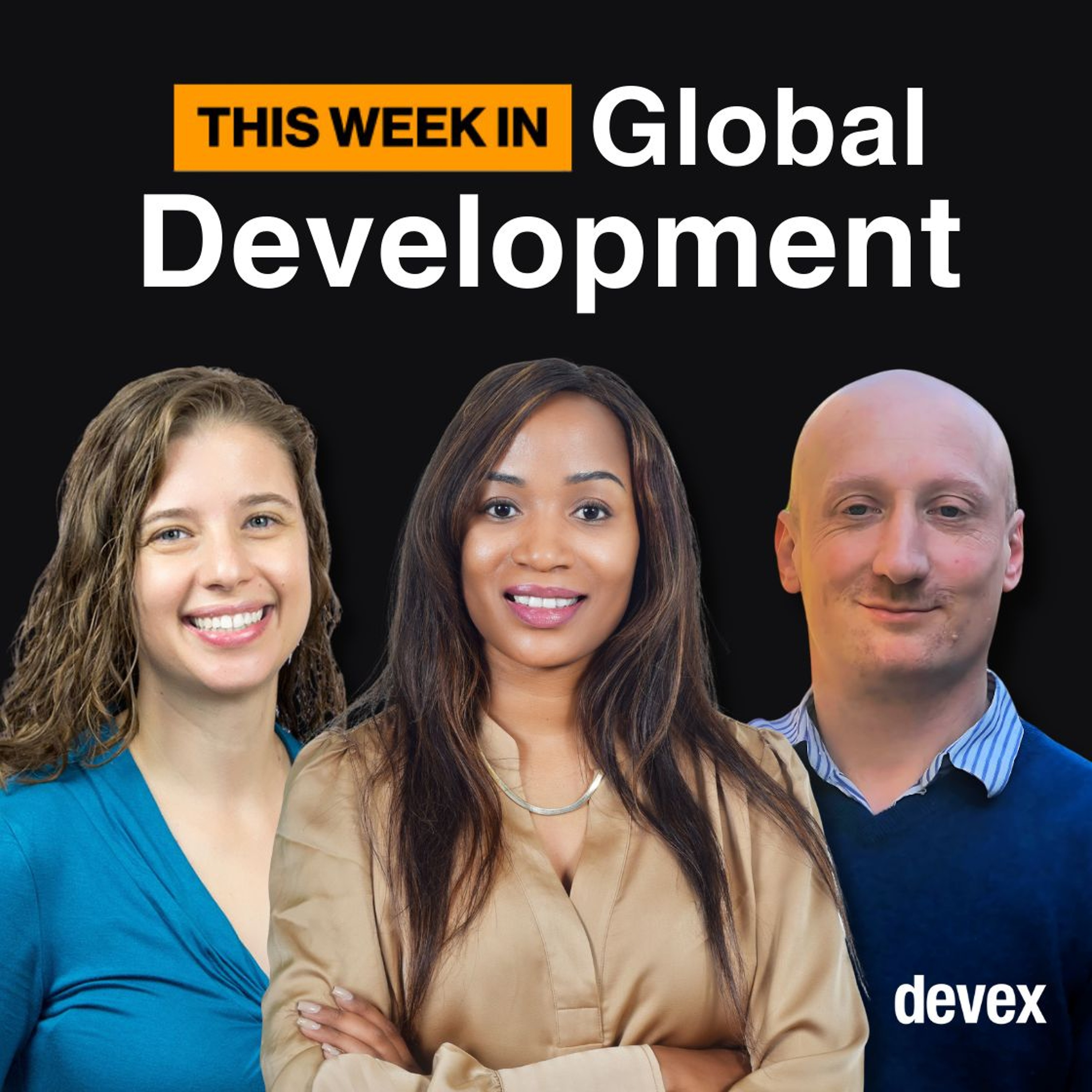
Filmed live from Geneva, Switzerland, on the sidelines of the World Health Assembly, this episode of This Week in Global Development delves into the critical debates unfolding on the ground in Geneva. That includes the tense atmosphere following the World Health Organization’s rare decision to proclaim a global health emergency over the latest Ebola outbreak, mounting fears regarding the virus tracking into dense urban centers, and how containment efforts are hindered by strict funding restrictions that leave the vast majority of voluntary budgets tied up. The discussion also looks at the highly anticipated — yet heavily criticized — joint strategy to reform...
Special edition: Early detection in Brazil is a game changer for lung cancer care
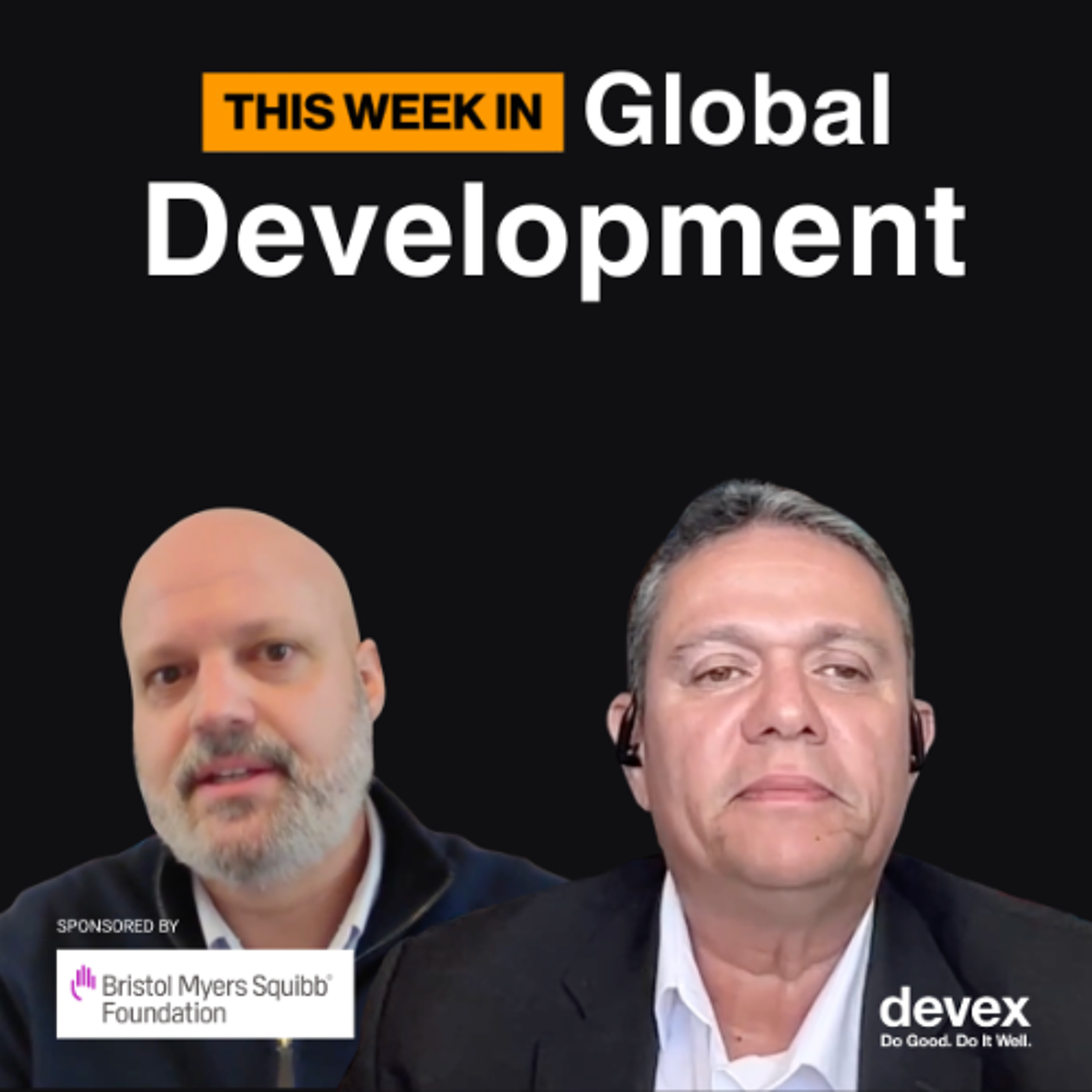
In a special edition of the This Week in Global Development podcast, Devex cofounder and Executive Vice President Alan Robbins sits down with Brazilian thoracic surgeon Dr. Ricardo Sales do Santos to discuss a revolutionary approach to tackling lung cancer in medically underserved communities in Brazil. As the most lethal form of cancer globally, lung cancer often goes undetected until its final stages, but Dr. Santos and the Bristol Myers Squibb Foundation (are working to change that narrative through a combination of mobile technology and local capacity building. By bringing advanced CT scanning units directly into high-risk, low-income communities, they a...
This Week in Global Dev: #145: What can we expect from the 79th World Health Assembly?
This week, we look ahead to the key talking points at the 79th World Health Assembly, where the Devex team will be reporting from next week. As the World Health Organization continues to operate on a deficit, and with the U.S. withdrawal from the agency, we dig into what the future holds for WHO and how this shifting financial landscape will reshape the global health architecture. With WHO facing funding constraints, we explore how this financial shortfall could impact the agency’s response to the new hantavirus outbreak and its ongoing fight against HIV. During the episode, we also hi...
Special edition: Turning sustainable energy into a viable asset class in Africa
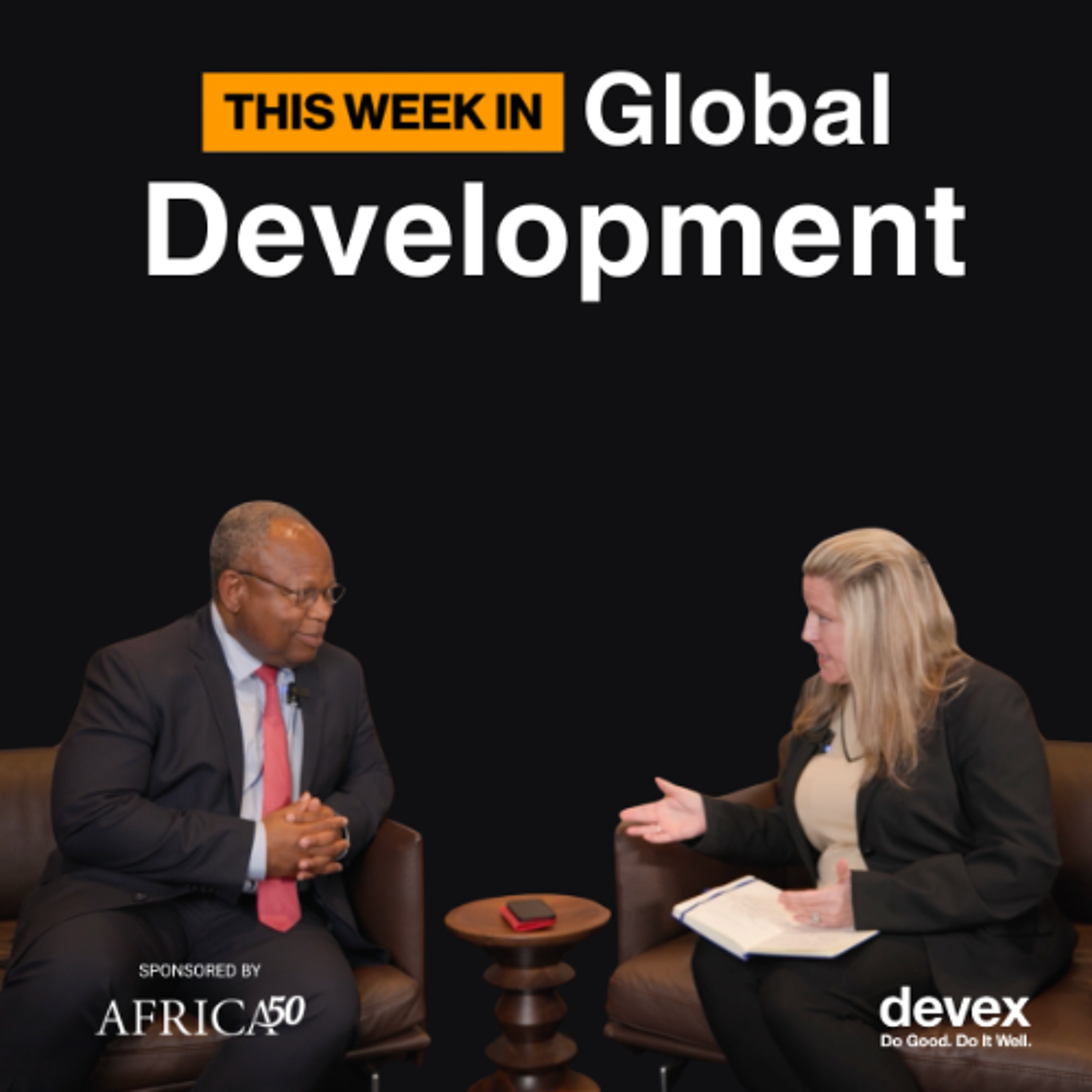
In this special episode of This Week in Global Development, Alain Ebobissé, CEO of Africa50, joins Devex Managing Editor Anna Gawel to discuss a paradigm shift in African infrastructure investment. Africa50, a pan-African investor, is moving beyond one-off projects to aggregate large-scale, “institution-grade” sustainable energy assets. By shifting the narrative from a development imperative to a viable commercial opportunity, Ebobissé explains how his organization is attracting both global and African capital to bridge the continent’s massive energy gap, which currently leaves around 600 million people without basic electricity. A centerpiece of the conversation is the critical role of private sector particip...
This Week in Global Dev: #144: Inside the corruption scandal that tarnished the UN
This week, we take you inside a Devex exclusive: the $60 million fiasco at the United Nations, a complex story with an equally complex set of characters, including Vitaly Vanshelboim, whose rise and fall left a black mark on a key U.N. agency. Once revered as a financial wizard, Vanshelboim was the man credited with pulling UNOPS back from the brink of bankruptcy. However, as our investigation reveals, behind the diplomatic prestige and profits lay a shadow world of secret side deals, luxury cars, and a $60 million trail of broken promises. Now, as the former U.N. assistant secretary-general faces...
Global Progress in the AI Era: What happens when AI labs and social enterprises build together?
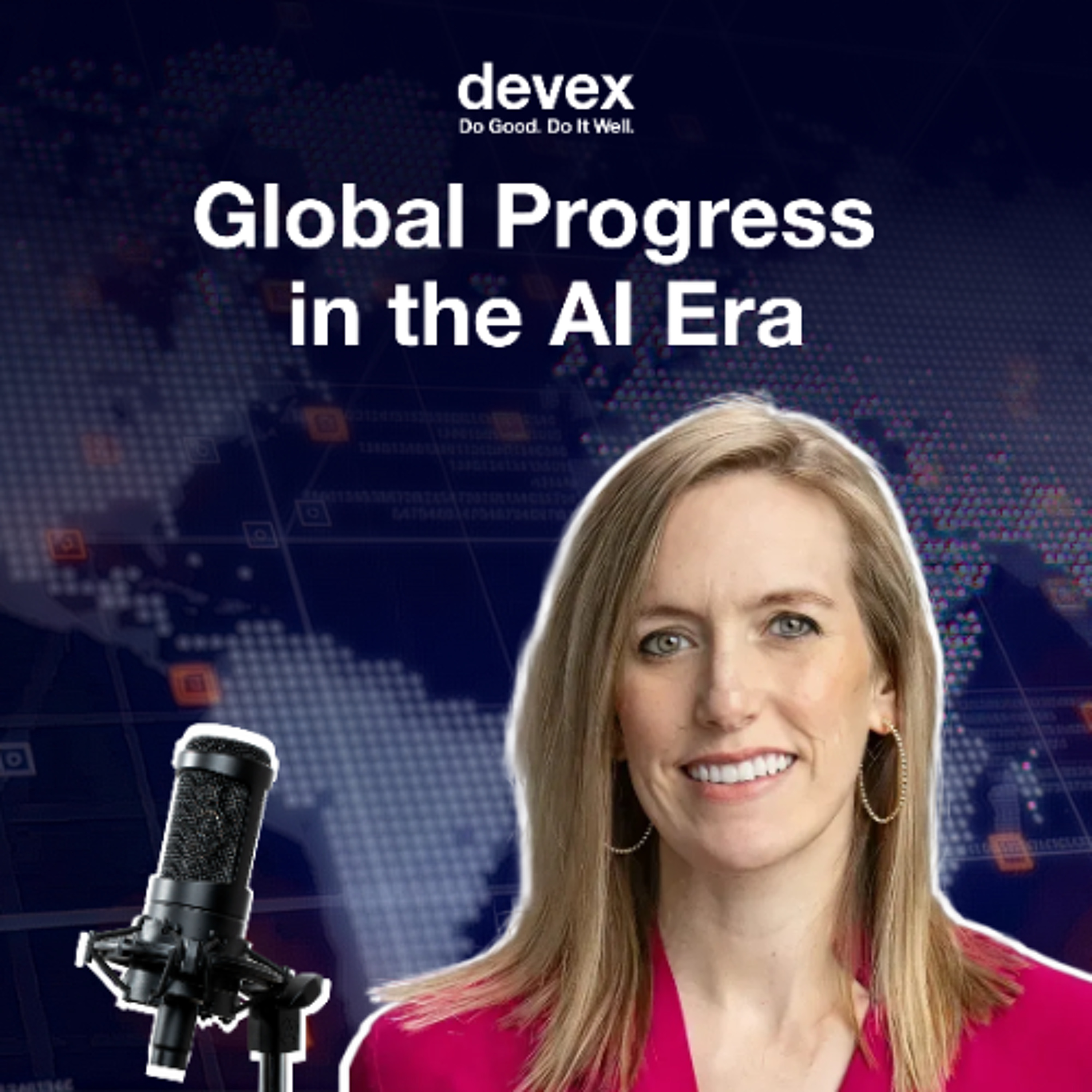
As AI models scale globally, social enterprises are increasingly working with frontier AI labs to test, adapt, and improve the technology in local contexts. This episode explores how those partnerships could determine whether AI reinforces existing inequalities — or helps close them.
This Week in Global Dev: #143: Reform or be defunded: The Trump administration’s demands for the UN
In an internal memo seen by Devex, the Trump administration has threatened to withhold hundreds of millions of dollars in funding to the United Nations unless it adopts a slate of nine “quick win” reforms. We break down the demands and what they reveal about the United States’ new road map for multilateral engagement. We also received a recent congressional notification which reveals that USAID has up to $19.2 billion to close out terminated foreign assistance awards. We explore what that funding would be spent on. To discuss these stories and others, Devex Business Editor David Ainsworth speaks with reporters Colum Lynch...
This Week in Global Dev: #142: The new world order of aid: Inside the Skoll World Forum
This week, we are on the ground in Oxford for the Skoll World Forum, an annual international convening of social entrepreneurs, philanthropists, and leaders across government and civil society. While the global development community faced significant headwinds from foreign aid cuts this time last year, the atmosphere at this year’s forum remains optimistic and focused on resilient solutions. During the conversation, we explore why the forum remains a cornerstone for the global development community, as well as share what we are learning about how philanthropic organizations see their role evolve in the post-aid era. To discuss the latest news fr...