Autistic and ADHD Kids Parenting Strategies: Every Brain is Different

Welcome to Every Brain is Different, the podcast designed for parents raising kids with Autism, ADHD, and other neurodiverse conditions. Discover practical parenting strategies, expert insights, and real-life stories that highlight the strengths and challenges of neurodivergent individuals. Join us to connect with a supportive community of parents, gain tools to help your child thrive, and celebrate the unique ways every brain works. If you're looking for inspiration, effective parenting strategies, or simply a sense of connection, tune into Every Brain is Different and join a community that truly understands. Website: www.everybrainisdifferent.com Instagram: www.instagram.com/everybrainisdifferent TikTok...
Why Your PDA Child Isn’t Being Defiant and How to Support Them (Ep. 143 Rerun)
In this episode, Samantha and Lauren discuss strategies for effectively parenting children with Pathological Demand Avoidance (PDA). They emphasize the importance of collaboration over direct demands to help children feel more in control and safe, which mitigates reactive behaviors.
They explain how giving children choices and involving them in decision-making can prevent the activation of their parasympathetic nervous system, which is linked to anxiety and defensive behaviors.
Practical examples like offering options instead of direct commands are given and the importance of flexibility and patience in parenting, particularly for neurodivergent families is discussed.
...
What are Non-Traditional Therapies? | Ep. 179
Samantha and Lauren discuss non-traditional, child-led approaches to therapy for kids diagnosed with autism, ADHD, and related needs, contrasting them with more compliance-based, clinical models and emphasizing that therapy should match the child.
They highlight alternatives that can complement traditional services like OT, speech, and PT, including equine-assisted services, animal-assisted interventions, aquatic/swim therapy (including water safety), creative arts therapies (music, art, dance/movement, drama) provided by credentialed professionals, nature-based/outdoor therapy, and technology/gaming/special-interest-based approaches like Minecraft and GarageBand.
They stress these therapies are not about reducing autistic traits but improving quality of...
What to Expect When Your Child Needs an Evaluation (ADHD, Autism, and More) | Ep. 178
Connect with Samantha: https://everybrainisdifferent.com
Join the Neurodivergent Parenting Community: https://everybrainisdifferent.com/membership
Samantha and Lauren explain the child evaluation process for concerns like ADHD, autism, anxiety, and learning differences. They normalize parents’ nervousness about labels and judgment, emphasizing that evaluations don’t change a child but provide baseline understanding, shared language, and access to resources.
They describe signs that may warrant discussion with a primary care provider, encourage trusting instincts, and outline steps: talk to a pediatrician or school staff, get referrals (developmental pediatrician, psychologist, neuropsychologist, psychiatrist, specialty clini...
Embracing Your Different Ability with Katey Fortun | Ep. 177
Connect with Samantha:
https://everybrainisdifferent.com/
Connect with Katey:
Website: https://yourdifferentability.com/
Book: https://yourdifferentability.com/book
Book Preview (Katey made this free for this podcast's listeners!): https://yourdifferentability.com/welcome
Instagram: https://instagram.com/kateyfortun
Personal Website: https://kateyfortun.com/
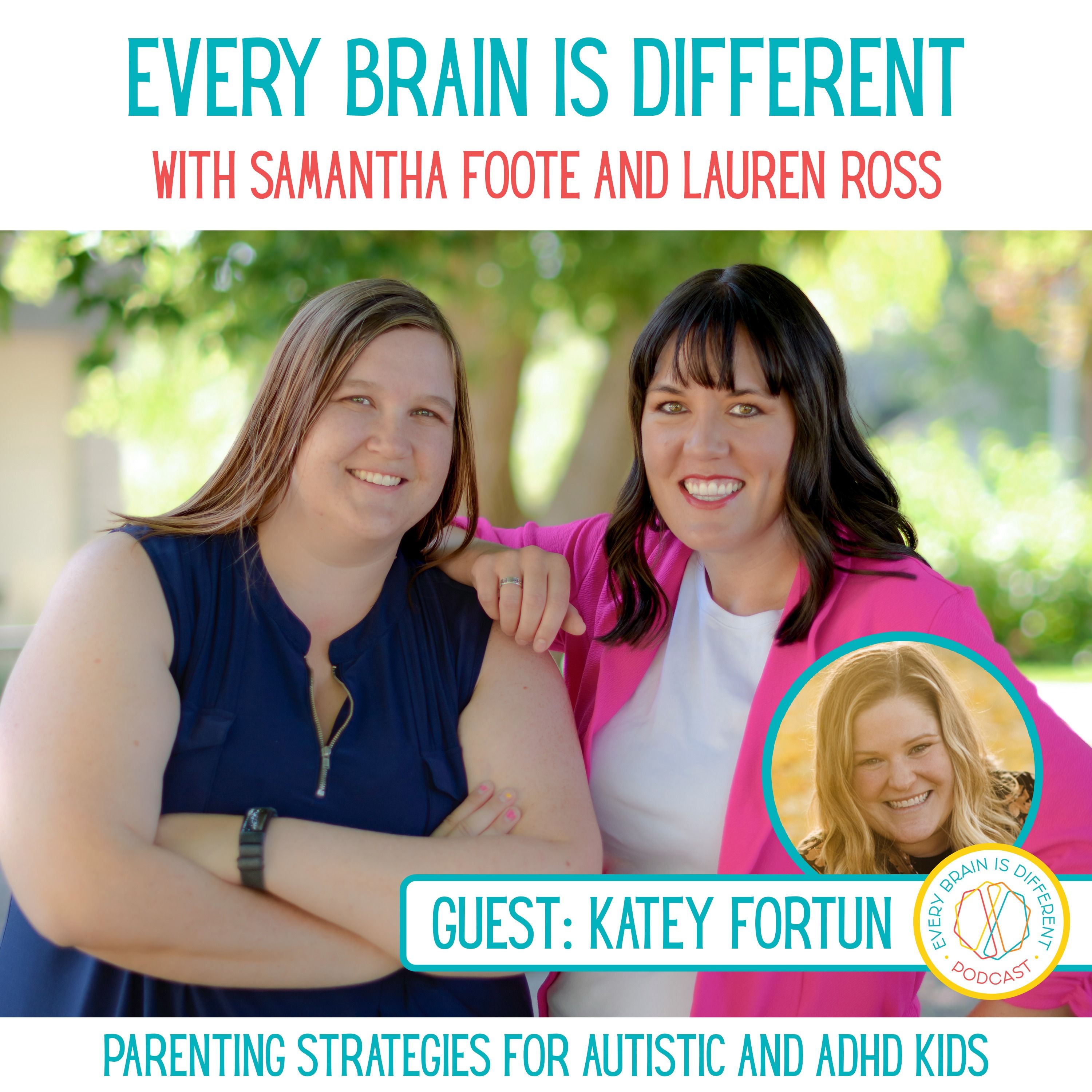
Samantha and Lauren welcome back disability advocate and dyslexic speaker Katey Fortun to discuss her newly published book, "Embracing Your Different Ability," available in standard print, dyslexic-friendly print, and audiobook, along with her "Different Ability Podcast."
Ka...
What is the Third Thing to do After Your Child Gets an Autism Diagnosis? | Ep. 176
Join the Neurodivergent Parenting Community: https://everybrainisdifferent.com/membership
Connect with Samantha: https://everybrainisdifferent.com/
Samantha and Lauren discuss the third step after a child is diagnosed with autism: building a support system. They recap the first two steps—learning about autism by getting curious about your own child and connecting with autistic adults and other parents, and applying early for resources like Medicaid and therapy waitlists.
They validate how overwhelming ongoing therapies and frequent specialist appointments can be, emphasizing that parenting isn’t meant to be done alone and that some...
What is the Second Thing to do After Getting an Autism Diagnosis? | Ep. 175
Connect with Samantha: www.everybrainisdifferent.com
Download the Guide to Raising Your Neurodivergent Child: www.everybrainisdifferent.com
Samantha and Lauren continue their discussion on what to do when you suspect or receive an autism diagnosis, revisiting the idea of “being a detective” to learn what makes your child tick while also debating the line between respecting boundaries and pushing kids to get out into the world for social learning and health.
They emphasize acting early to access supports, highlighting Medicaid options like the disability-based Katie Beckett Waiver (which can cover broad healt...
What is the Number 1 Thing To Do After Your Child Gets Diagnosed With Autism? | Ep. 174
Connect with Samantha: https://everybrainisdifferent.com/
Join the Neurodivergent Parenting Community: https://everybrainisdifferent.com/membership
Suzanne Jabour Episode About Grief: https://podcasts.apple.com/us/podcast/is-it-normal-to-grieve-after-your-childs-autism-or/id1697406719?i=1000750957793
Samantha and Lauren discuss the number one thing they would do after getting an autism diagnosis for your child: learn about your child, not just autism. Samantha emphasizes that a diagnosis is a tool for understanding, not fixing, and that parents may feel relief and grief, all of which are valid.
They stress that autism presents differently in each person, c...
How to Build a Supportive Mental Health Network | Ep. 173
Connect with Samantha: https://everybrainisdifferent.com/
Join the Neurodivergent Parenting Community: https://www.everybrainisdifferent.com/membership
Get the Guide to Parenting Your Neurodivergent Child: https://everybrainisdifferent.com/
Samantha and Lauren discuss why building a supportive network matters for mental health and how to do it, drawing from Samantha’s postpartum psychosis and breakdown in 2016 and the challenges of parenting children with medical needs.
They outline key benefits of support, which include emotional encouragement, practical help, accountability, perspective when “your brain is lying to you,” and connection.
They describ...
Why Your Child Falls Apart After Vacation (And What to Do About It) | Ep. 172
Join the Neurodivergent Parenting Community: https://www.everybrainisdifferent.com/membership
Atomic Habits: https://jamesclear.com/atomic-habits
Samantha and Lauren discuss how returning home from vacation can be dysregulating for neurodivergent kids due to transitions and delayed stress responses from masking, sensory input, uncertainty, and social demands.
They recommend not scheduling extra activities immediately after returning, prioritizing rest and recovery over productivity, and giving kids (and parents) grace during reintegration.
They advise returning to familiar routines without trying to overhaul life, focusing on connection before correction, debriefing the trip to b...
Why Family Vacations Feel Hard with Autistic and ADHD Kids (And What Actually Helps) | Ep. 171
Download the Guide to Raising Your Neurodivergent Child: https://everybrainisdifferent.com/
Connect with Samantha: https://everybrainisdifferent.com/
Samantha and Lauren discuss how to help vacations go more smoothly for neurodivergent kids by prioritizing safety, predictability, and regulation over nonstop activities.
They explain how vacations disrupt routine, sensory input, and expectations (new places, foods, people, airports, planes, theme parks, beaches), which can overwhelm autistic and ADHD children. They recommend preparing kids in advance with photos, maps, videos, itineraries, visual schedules, and honest communication about uncertainty; using supports like airport assistance (Sunflower lanyards, p...
Dance as Self-Care for Parents with Annett Bone | Ep. 170
Samantha and Lauren welcome dance artist and creative coach Annett Bone to discuss dance as self-care—especially for stressed parents raising neurodivergent kids.
Annett shares that returning to dance at 43 after a 20-plus year hiatus helped her heal and that dance can be expression, creativity, processing, release, or a way to get out of your head. She encourages starting with the end in mind, then taking small, realistic steps, sometimes just a few minutes alone with music, without fear of judgment.
The conversation offers practical ideas like family dance parties, using Just Dance for guidance, ex...
The Neurodivergent Family Road Trip Survival Guide | Ep. 169
Connect With Samantha: https://everybrainisdifferent.com/
Join the Neurodivergent Parenting Community: https://www.everybrainisdifferent.com/membership
Samantha and Lauren introduce a multi-part series on road tripping, focusing in this episode on strategies for smoother car travel, especially for kids with autism.
They explain why road trips are hard-loss of routine and predictability, sensory overload, limited autonomy, sibling noise conflicts, motion sickness, and movement needs—and emphasize that success is about regulation, not perfection.
Tips include planning seating ahead of time, packing comfort items and regulation tools first (headphones, sunglasses, wei...
How to Help Your Child With Dyslexia and Dysgraphia with Daniela Feldhausen | Ep. 168
Connect with Samantha: https://www.everybrainisdifferent.com/
Join the Neurodivergent Parent Community: https://www.everybrainisdifferent.com/membership
Samantha and Lauren interview Daniella Feldhausen, a former DC attorney who founded Kids Up Reading Tutors after earning a master’s in special education and focusing on helping children with reading and spelling challenges, including dyslexia and dysgraphia.
Daniella explains that her team tailors one-on-one, high-dosage tutoring (multiple sessions per week) based on a detailed skills evaluation rather than relying on a diagnosis, aiming to help students catch up quickly and build confidence.
00:00 Welcome an...
Why Good Kids Get Bad Grades: Becoming Your Child’s Ally with Linda Silbert | Ep. 167
Join the Neurodivergent Parenting Community: https://www.everybrainisdifferent.com/membership
Connect with Dr. Linda Silbert: https://stronglearning.com/
Samantha and Lauren interviews Dr. Linda Silbert of Strong Learning Incorporated about supporting neurodivergent learners and reframing bad grades as symptoms rather than reasons for punishment.
Dr. Silbert urges parents to stop blaming children or schools, become detectives about root causes (academic, social, emotional, bullying, sensory, or anxiety), and approach teachers and IEP meetings collaboratively.
She emphasizes repairing parent-child friction by apologizing, listening, and teaching practical study skills in short, effective b...
Why Your Child Holds It Together at School, Then Explodes at Home (And How Masking Plays a Role) | Ep. 166
Join the Neurodivergent Parenting Community: https://www.everybrainisdifferent.com/podcast
Samantha and Lauren discuss how neurodivergent children may mask at school or other settings: suppressing stims, sensory distress, and authentic behavior to appear “typical” and then have meltdowns at home because home feels safest, a pattern also described as after-school restraint collapse.
They emphasize that these explosions are nervous system and stress responses, not manipulation, and that chronic masking drains executive functioning and can leave kids in fight-or-flight.
The episode outlines signs a child may be struggling at school (shutdowns, irritability, control-seeking, sibling conf...
Why Your Child ‘Falls Apart’ at Home (But Not at School) | Ep. 165
Connect with Samantha: https://everybrainisdifferent.com/
Join the Neurodivergent Parenting Community: https://www.everybrainisdifferent.com/membership
Samantha and Lauren open by discussing mom guilt and the importance of giving yourself grace when you miss commitments, lose your cool, or have hard parenting moments, emphasizing that apologies and tomorrow-as-a-reset matter.
They then explain masking: children, especially neurodivergent kids, may hold it together at school and unravel at home because home is emotionally safe, not because parents are doing something wrong or the child is being manipulative.
They describe how cognitive f...
How to Handle Finances When You Have ADHD with Julian Kohlbrand | Ep. 164
Connect with Samantha: https://everybrainisdifferent.com/
Join the Neurodivergent Parenting Community: https://www.everybrainisdifferent.com/membership
Samantha and Lauren interview Julianne Kohlbrand, an ADHD financial coach who became debt-free after $107,000 in consumer debt and a later-in-life ADHD diagnosis at 42, and now helps neurodivergent families simplify money management.
Julianne shares how motherhood intensified overwhelm and led to her diagnosis, and explains that neurodivergent people often need different, less perfection-driven approaches than strict dollar-by-dollar budgets.
Key strategies include giving yourself grace, automating bills, weekly calendar check-ins, reducing tempting triggers (like removing b...
Why are Neurodivergent People Literal Thinkers? | Ep. 163
Join the Community: https://www.everybrainisdifferent.com/membership
Samantha and Lauren discuss why many neurodivergent people may interpret language literally and communicate more directly, which neurotypical people can misread as rude.
They define literal thinking as interpreting exact words rather than implied meaning, sarcasm, or social context, and share examples such as misunderstandings around figurative phrases (“break a leg”), social pleasantries (“we should hang out sometime”), sarcasm (“nice job”), vague directions (“do the dishes” vs. “clean the kitchen”), and hidden social rules (“make yourself at home”).
They explain contributing factors, including a preference for clarity...
What is the difference between ADHD and Auditory Processing Disorder? | Ep. 162
Join the Community: https://www.everybrainisdifferent.com/membership
Episode 18 with Dr. Tosha Strickland: https://podcasts.apple.com/us/podcast/18-dr-tosha-strickland-and-central-auditory/id1697406719?i=1000636604839
Samantha and Lauren discuss how ADHD and Central Auditory Processing Disorder (APD) can look similar, distractibility, not following directions, zoning out, school struggles, but involve different underlying challenges: ADHD affects attention regulation and executive functioning, while APD involves difficulty processing spoken information despite normal hearing.
They share examples and comparisons (e.g., difficulty in noisy classrooms, frequently saying “what,” slow verbal response time, mishearing similar words, and doing...
What is the Difference Between Sensory Processing Disorder and Autism? | Ep. 161
Join the Neurodivergent Parenting Community: https://www.everybrainisdifferent.com/membership
Samantha and Lauren discuss sensory processing disorder (SPD) versus autism spectrum disorder, explaining what SPD is, where it overlaps with autism, and why sensory challenges alone do not mean autism; they note ADHD can also include sensory differences.
They define SPD as difficulty detecting, modulating, or interpreting sensory input and emphasize it is used clinically but is not in the DSM-5, which can limit insurance resources, comparing this to PDA and sharing an example of a bipolar misdiagnosis used to access care.
What to Know About Women and ADHD with Dr. Gilly Kahn | Ep. 160
Get the Book: https://a.co/d/0fOrLF7d
Connect with Dr. Gilly Kahn: https://www.drgillykahn.com/
Samantha welcomes back psychologist, mom, and writer Dr. Gilly Khan to discuss her book Allow Me to Interrupt, which focuses on emotional dysregulation and rejection sensitivity dysphoria (RSD) in females with ADHD.
Dr. Kahn explains how she approaches families seeking or newly receiving an ADHD diagnosis, including considering psychological testing, consulting a psychiatrist, and discussing family preferences around medication and stigma. She describes how emotional dysregulation is strongly tied to ADHD but not i...
What is the Difference Between a 504 and an IEP? | Ep. 159
Join the Neurodivergent Parenting Community: https://www.everybrainisdifferent.com/membership
Samantha and Lauren explain key differences between 504 accommodation plans and IEPs to help parents know what to request when a child struggles at school. They describe how unsupported neurodivergent kids may be mislabeled as misbehaving, defiant, lazy, or unmotivated, and emphasize that children need an environment that works with their brain, not to “try harder.”
A 504 plan is generally easier to obtain, doesn’t require a diagnosis, and provides accommodations (e.g., extra test time, movement breaks, preferential seating, reduced homework, sensory supports) within...
Why Are Autistic Kids Labeled as Rigid? (Part 2) | Ep. 158
Get the Parenting Guide: https://everybrainisdifferent.com/
Samantha and Lauren continue their discussion on why autistic and ADHD kids may seem like rigid thinkers, focusing on their need for clear rules and consistent expectations to feel regulated and safe.
They explain how inconsistent enforcement or differing rules across households can create confusion, dysregulation, and even meltdowns, and suggest strategies like clearly explaining why rules differ, writing down major house rules for caregivers, and building routines that allow exceptions without breaking the “system.”
They reframe “rigid” as a misunderstanding of neurodivergent needs for struc...
Why are Autistic Kids Labeled as Rigid? (Part 1) | Ep. 157
Get the Summit Replay: https://www.everybrainisdifferent.com/summit
Connect with Samantha: https://everybrainisdifferent.com/
Samantha and Lauren begin a two-part discussion on why autistic people are often labeled “rigid.” They argue the label frequently reflects a neurotypical expectation that others should do things “the correct way,” while autistic people may rely on predictability for clarity, structure, and safety.
Using a “manual vs. automatic transmission” analogy, they explain how unclear expectations increase cognitive load and anxiety, which can look like inflexibility or lead to meltdowns.
They reframe routines (same breakfast, clothes, rout...
Is Medication Right for Your Autistic/ADHD Child? | Ep. 156
In this episode, Samantha and Lauren talk about one of the most common and controversial questions parents ask when raising neurodivergent kids: whether children with ADHD, anxiety, or executive functioning challenges should take medication. They discuss why medication decisions can feel so heavy for parents and emphasize that every brain is different, so what works for one child may not work for another. Samantha and Lauren explain how medication can sometimes help regulate an overwhelmed nervous system and act as a “pattern interrupter,” allowing kids to better learn coping, emotional regulation, and executive functioning skills.
They also talk...
How Does Connection Change Behavior for Autistic and ADHD Kids? | Ep. 155
Samantha and Lauren share Samantha’s experience competing for Mrs. Idaho to encourage parents, especially those raising neurodivergent kids, not to feel guilty for doing something for themselves with the right support.
They then discuss choosing “real connection” with a child over society’s idea of “right connection,” emphasizing that behavior improves when children feel connected, safe, and understood, and that a dysregulated nervous system can’t learn or be reasoned with.
They explain how typical expectations like eye contact, loud praise, adult-led conversation, or insisting on “proper” responses can backfire, and encourage observing needs (hunger, tiredness...
Is It Normal to Grieve After Your Child’s Autism or ADHD Diagnosis? | Ep. 154 with Suzanne Jabour
Samantha and Lauren welcome certified grief educator and coach Suzanne Jabour to the podcast to discuss grief beyond bereavement, particularly the grief parents may feel after a child’s diagnosis. They explore how grieving the loss of an imagined future does not reflect a lack of love for a child, and how acknowledging emotions can help parents more fully accept and support their kids. Suzanne shares her perspective that diagnoses and labels can be embraced as practical tools to access educational and government systems, resources, and advocacy leverage, even when the label may evolve over time; she also describes he...
How Can Clothing Support Emotional Regulation in Kids? | Ep. 153
In this episode, Samantha and Lauren discuss strategies for parenting neurodivergent children, particularly focusing on issues related to clothing. They share personal anecdotes and emphasize the importance of giving children autonomy over their clothing choices. This can help build their identity, confidence, and ability to navigate the world more successfully.
Samantha and Lauren provide practical tips such as buying multiples of favorite clothing items, prioritizing sensory comfort over aesthetics, and involving kids in the shopping process while managing their overwhelm with choices.
They also advocate for allowing children to wear unconventional outfits as a way...
Why Do Neurodivergent Kids Ignore New Clothes? | Ep. 152
In this episode, Samantha and Lauren talk about the patterns of clothing preferences in children with autism and ADHD. They discuss common scenarios where children suddenly favor previously ignored clothes and share insights from an occupational therapist on managing these behaviors.
The conversation encompasses practical strategies from other parents, the importance of sensory safety, and the impact of new clothing on a child's nervous system.
Emphasizing the need for comfort over social expectations, they address the pressures parents face and offer solutions for creating a stress-free clothing environment for neurodivergent children.
00:00 I...
Can Simple Sensory Inputs Interrupt an Anxiety Spiral? (Featuring our Guest: Ryan Miele and Turbobo!) | Ep. 151
Samantha and Lauren talk with Ryan Miele, the creator of the Tubrbobo Relief. Ryan describes how Turbobo features five clinically-proven elements to reduce anxiety by targeting physiological symptoms, including a weighted body, fidget tail, tactile ear patches, and customizable sensory inserts.
The conversation highlights the product's success in over 400 schools across the US and positive testimonials, such as its calming effect on students. He also emphasizes the importance of using stress-relief tools proactively and shares insights into his foundational research, mentorship experiences, and how Turbobo can help individuals of all ages find calmness and focus in their...
Shoving the Shoulds We Carry as Neurodivergent Parents with Jessica Frew | Ep. 150
Jessica Frew is back with her book, 'Shove Your Shoulds,' focusing on the unique challenges faced by neurodivergent parents.
Samantha, Lauren, and Jessica discuss the emotional struggles of navigating family dynamics and the societal expectations of parenting.
Jessica introduces the concept of 'mini grief' and the importance of acknowledging and processing these emotions without guilt. Emphasizing the need to release unhelpful stories and pressures, she encourages parents to let relationships develop naturally and on their own terms, fostering a safe and empowering environment for their children.
Jessica also highlights the significance of...
Being Specific with Dr. Temple Grandin (Ep. 64 Rerun) | Ep. 149
Dr. Temple Grandin is a renowned animal behaviorist, autism advocate, and professor of animal science at Colorado State University. Diagnosed with autism at a young age, she has used her unique perspective to revolutionize livestock handling systems, designing humane facilities that are used worldwide. Dr. Grandin is also a best-selling author and a leading voice in the neurodiversity movement, advocating for early interventions and supportive environments for individuals on the autism spectrum. Her groundbreaking work has earned her numerous accolades, including being named one of Time magazine’s 100 most influential people. A sought-after speaker, she inspires countless people with he...
The Feedback Mistake That’s Crushing Your Neurodivergent Kid's Confidence | Ep. 148
In this episode, Samantha and Lauren continue their discussion on how to communicate positively with neurodivergent children, ensuring your child receives more positive than negative feedback.
They explore various strategies such as praising effort over outcome, naming invisible skills like regulation and flexibility, and using descriptive feedback instead of generic praise to help neurodivergent kids feel understood and appreciated.
Samantha and Lauren emphasize the importance of catching small, neutral moments and separating behavior from identity to avoid feelings of shame. They also discuss the significance of building positive feedback into daily routines and reflecting strengths...
Why Encouragement Matters More Than You Think for Neurodivergent Kids | Ep. 147
Samantha and Lauren discuss the negative impact of constant corrective feedback and emphasize the importance of recognizing children's efforts rather than just their outcomes.
They share personal experiences and research findings that show how neurodivergent kids often receive more negative feedback than their neurotypical peers. They highlight the importance of creating a supportive home environment that counterbalances the critical feedback children might receive from schools and other settings.
The episode ends with a promise to provide practical tips on giving meaningful positive feedback in the next discussion.
00:00 Introduction
00:39 New Y...
Building a Sustainable New Year for Your Neurodivergent Family | Ep. 146
In this final episode of the year, Samantha and Lauren discuss the societal pressures of New Year's resolutions and advocate for a more realistic approach, especially for neurodivergent individuals and parents of neurodivergent children.
They highlight the overwhelming nature of setting too many goals and emphasize the importance of focusing on one or two manageable objectives at a time to avoid burnout and shame.
They also stress the importance of self-compassion and creating a supportive environment for personal growth and effective parenting.
00:00 Introduction
00:51 New Year, No Pressure
02:30 T...
Why Autistic and ADHD Kids Need Rest During the Holidays | Ep. 145

In this episode, Samantha and Lauren talk about the importance of taking a break during the holiday season, particularly for families with neurodivergent members.
They discuss the challenges that arise from the busy holiday schedules and emphasize the necessity of rest for mental health and overall well-being.
Samantha and Lauren share personal experiences and provide insights on how to manage holiday stress, suggesting that prioritizing rest and downtime can mitigate meltdowns and enhance the holiday experience for both parents and children. They also touch upon the societal expectations to be constantly productive and how this...
Anneke Elmhirst and Emotional Regulation Tips for Parents and Kids (Ep. 70 Rerun)
Anneke (pronounced UH-nuh-kuh) is a coach with a background in both corporate and clinical settings, having worked as a clinical director, supervisor, and behavior analyst. Based in Pittsburgh, PA, she supports clients worldwide through phone and video conferencing. Anneke specializes in coaching professionals with ADHD, autism, and related neurodivergent experiences. She brings personal insight to her practice, as she has been diagnosed with ADHD, depression, anxiety, and PTSD.
Website: www.Anneke-Elmhirst.com
Instagram: www.instagram.com/allforlovecoaching
Join the Neurodivergent Parenting Community: https://www.everybrainisdifferent.com/membership
<...
Why Your PDA Child Isn’t Being Defiant and How to Support Them | Ep. 143
In this episode, Samantha and Lauren discuss strategies for effectively parenting children with Pathological Demand Avoidance (PDA). They emphasize the importance of collaboration over direct demands to help children feel more in control and safe, which mitigates reactive behaviors.
They explain how giving children choices and involving them in decision-making can prevent the activation of their parasympathetic nervous system, which is linked to anxiety and defensive behaviors.
Practical examples like offering options instead of direct commands are given and the importance of flexibility and patience in parenting, particularly for neurodivergent families is discussed.
...
Shove Your Shoulds with Jessica Frew | Ep. 142
In this episode, Samantha and Lauren engage in a compelling conversation with Jessica Frew, the author of 'Shove Your Shoulds,' a pivotal book aimed at helping ambitious women shed societal conditioning and make bold decisions without guilt or fear. Throughout the discussion, Jessica shares insights into the importance of setting personal boundaries, trusting one's intuition, and the role of parents in modeling behavior for their children.
Jessica’s teachings are for everyone, particularly those raising neurodivergent children, advocating for a parenting approach free from societal 'shoulds'. She provides real-life examples of navigating difficult relationships, establishing firm bo...
Autistic Burnout and What You Can Do About It | Ep. 141
In this episode, Samantha and Lauren discuss autistic burnout, especially prevalent during the holiday season. They explain the difference between stress and burnout, and share personal experiences to illustrate the impact of prolonged masking and sensory overload on neurodivergent children.
Samantha and Lauren provide detailed signs of burnout, including increased irritability, emotional outbursts, and physical symptoms, along with practical advice on how to support recovery through reduced demands, predictability, sensory rest, and encouraging autonomy.
They emphasize the importance of parental regulation and offer strategies to prevent future burnout, such as prioritizing recovery time, practicing energy...