Learn Japanese with Noriko

Hi, I’m Noriko 🌸—a certified Japanese teacher and Neurolanguage Coach®. Learn Japanese with Noriko is for intermediate to advanced learners. If you're an intermediate student, please start from Season 1—I speak slowly at first, then gradually faster. Season 3 is a level-up version with real-life dialogues, philosophy, and language learning topics. Join Japanese Together for our Podcast Conversation Club & Book Club, and sign up for my newsletter at Japanese with Noriko to learn about my coaching service. Enjoy listening!
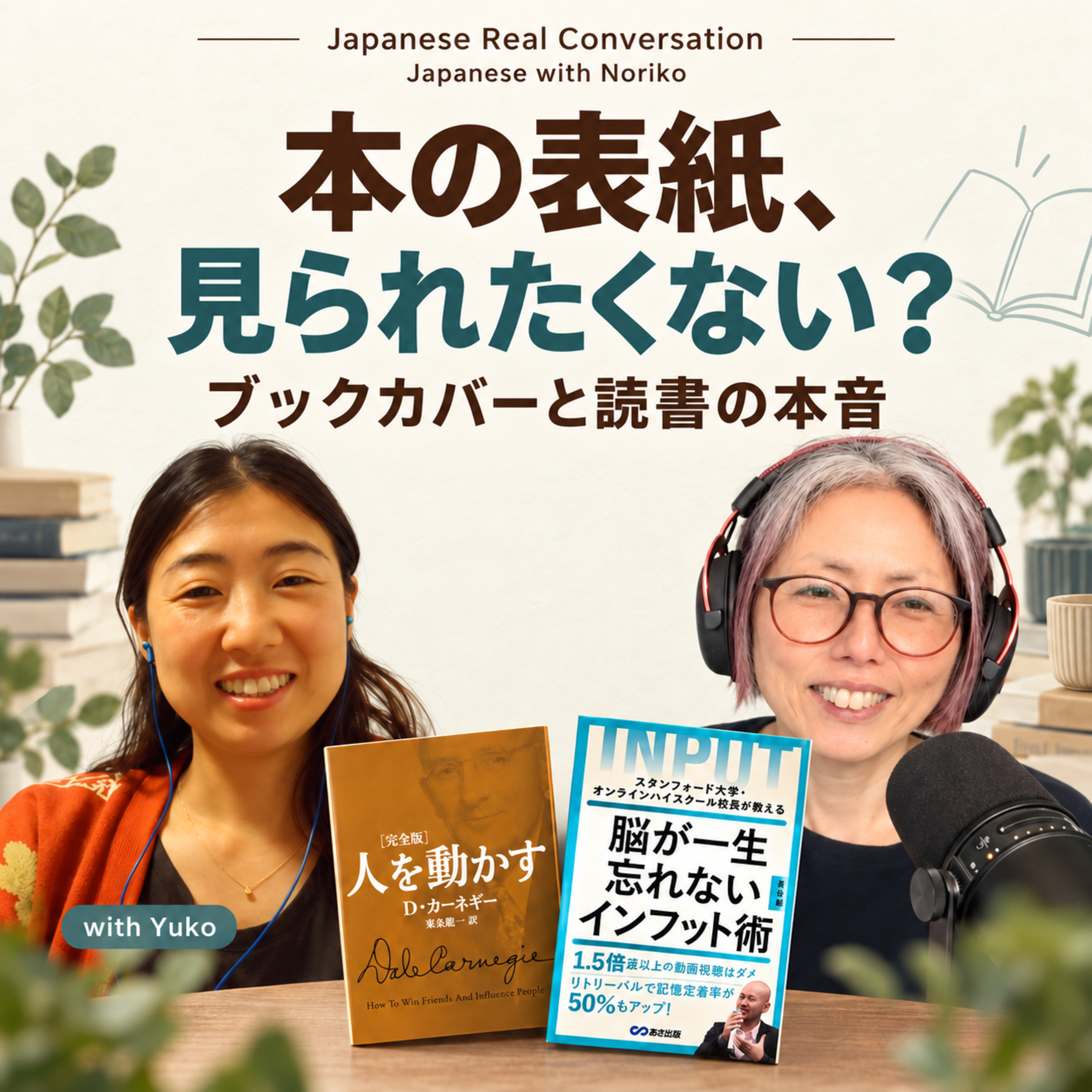
Season 3-172 本の表紙、見られたくない?ブックカバーと読書の本音 with Yuko
Jeff Kinney 『Diary of a Wimpy Kid』
村上春樹『ノルウェイの森』
太宰治『人間失格』
太宰治『斜陽』
太宰治『女生徒』
夏目漱石『こころ』
デール・カーネギー『人を動かす』
星友啓『脳が一生忘れないインプット術』
清少納言『枕草子』
鴨長明『方丈記』
Summary
今回の本の話では、ゆうこさんとのりこさんが、最近読んでいる本や、これから読みたい本について話します。
ゆうこさんは、読書チャレンジで英語の本を読んでいます。男の子の日記の形になっている本で、毎日一日分を読むことを目標にしています。また、以前は途中で読むのをやめた『ノルウェーの森』にも、もう一度挑戦しています。今回は、思っていたほど難しくないと感じているそうです。
のりこさんは、太宰治の『人間失格』と『斜陽』を読みました。孤独や絶望などの重いテーマに心が疲れ、主人公の行動を理解する難しさを感じています。一方、ゆうこさんは、その話を聞いて、自分とは違う考え方を知るために読んでみたくなりました。
ゆうこさんが紹介する『人を動かす』からは、相手をすぐに責めず、その人にも理由があると考えることが話題になります。また、本の表紙を人に見られる恥ずかしさや、手作りのブックカバーについても話します。
最後に、のりこさんは『脳が一生忘れないインプット術』を紹介します。本を閉じて内容を思い出したり、自分の言葉でノートにまとめたりする工夫について話し、ゆうこさんも古典を読むときに試してみたいと話しています。
In this episode of Book Talk with Yuko, Noriko and Yuko discuss their recent reading, from an English diary-style book to Japanese classics and personal development books.
For the Japanese Together Reading Challenge, Yuko is reading one day’s entry at a time in a book narrated by a schoolboy. Its humour and manageable sections help her enjoy reading in English. She has also returned to Haruki Murakami’s Norwegian Wood, finding it less intimidating than during her previous attempts.
Noriko shares her unsettled reactions to Osamu Dazai’s No Longer Human and The Setting Sun. Their themes of loneliness, despair and self-destruction leave her struggling to understand the characters. Yuko, however, becomes curious about exploring perspectives very different from her own.
The conversation then turns to How to Win Friends and Influence People, understanding other people’s reasons before criticising them, and feeling self-conscious about book covers in public. Yuko shows a cover made from Japanese snack wrapping paper.
Finally, Noriko discusses a book about learning and memory. She describes closing a book to recall its contents and writing notes in her own words. This Japanese podcast offers natural Japanese listening practice alongside reflections on reading habits, empathy and putting ideas into action.
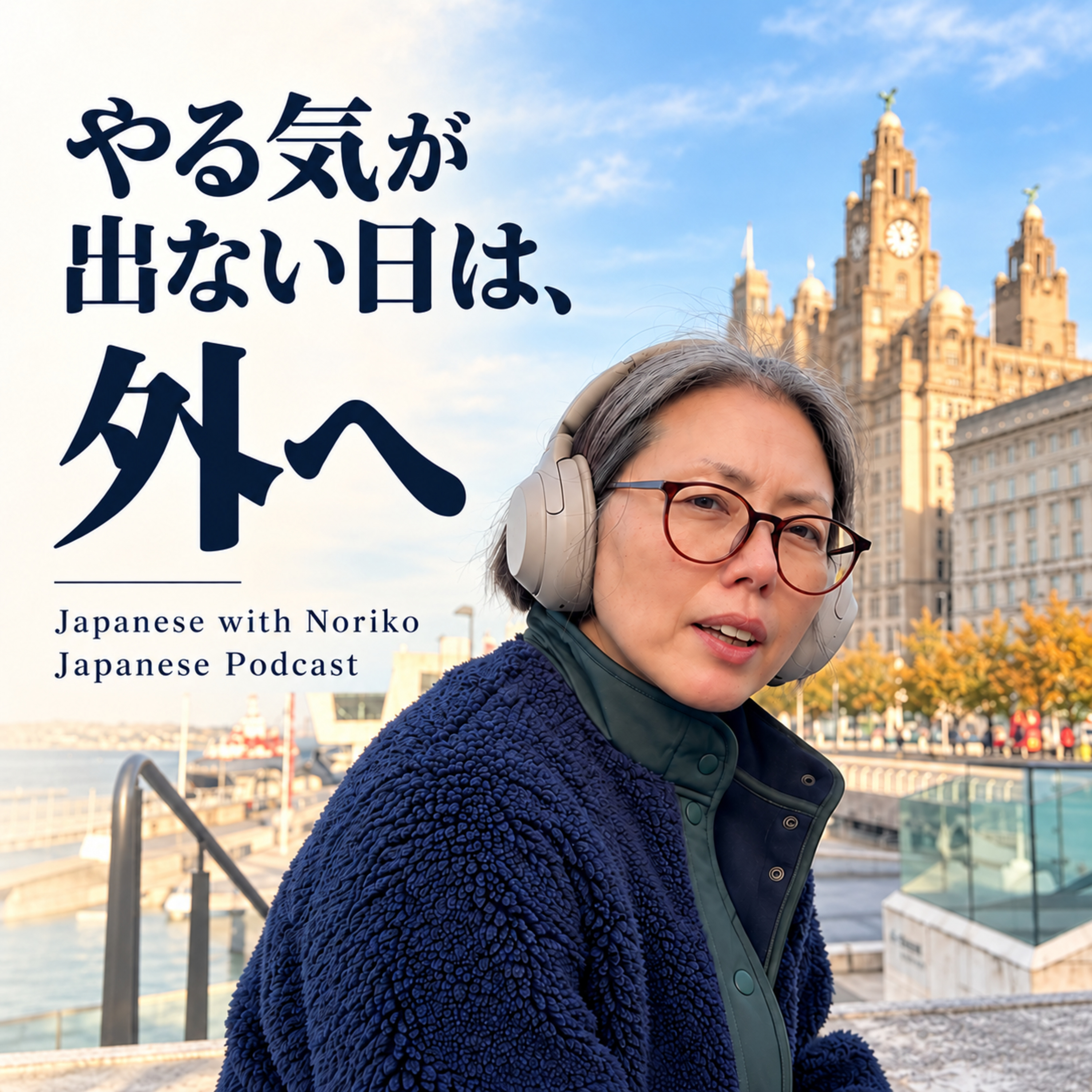
Season 3-171 やる気が出ない日は外へ|読書・会話・芸術からもらう元気
Transcription
Noriko's instagram
Japanese Together Community
Summary
今回は、のりこさんが秋のリバプールを散歩しながら、最近の読書や日常の出来事について話します。
今読んでいるのは、韓国人作家の短編小説を英語に翻訳した本です。これまであまり読まなかった宇宙や未来の話ですが、登場人物の悩みや価値観は今の人間と変わらないことに気づき、楽しく読んでいます。
また、日本人女性が経営するパン屋で買い物をした後、エレベーターで知らない女性に話しかけられました。パンやケーキについての短い会話でしたが、温かい気持ちになりました。この経験から、知らない人に話しかけることへの考え方が少し変わり、自分も機会があれば声をかけてみたいと思うようになりました。
秋は疲れがたまり、やる気が出なくなることもあります。のりこさんは、そんなときに外に出て、新しい場所や芸術に触れることを勧めています。最近見たモダンダンスや、好きな音楽を聴きながら歩くことも、気分転換になっています。
Join Noriko for an autumn walk in Liverpool as she shares recent reading discoveries, an unexpected conversation, and small ways to refresh her motivation.
She is enjoying an English translation of a Korean author’s science fiction short stories. Although she previously thought science fiction was not her genre, she finds the characters’ worries, values, and inner conflicts surprisingly familiar. Their journeys also prompt questions about space travel and moving to distant planets.
After visiting a Japanese-style bakery with her husband, Noriko had a brief conversation with a stranger in a car park lift. A woman noticed her bakery bag and asked what she had bought. This simple exchange left Noriko feeling happy and helped her reconsider the assumption that talking to strangers might be unwelcome. She reflects on her experiences in Japan, Belfast, and Liverpool, and considers trying a conversation herself when the circumstances feel right.
Noriko also discusses autumn tiredness and changing energy levels. A recent modern dance performance exploring healthcare gave her a fresh perspective, while walking to energetic K-pop helps lift her mood. This Japanese podcast offers listening practice through everyday reflections on books, human connection,
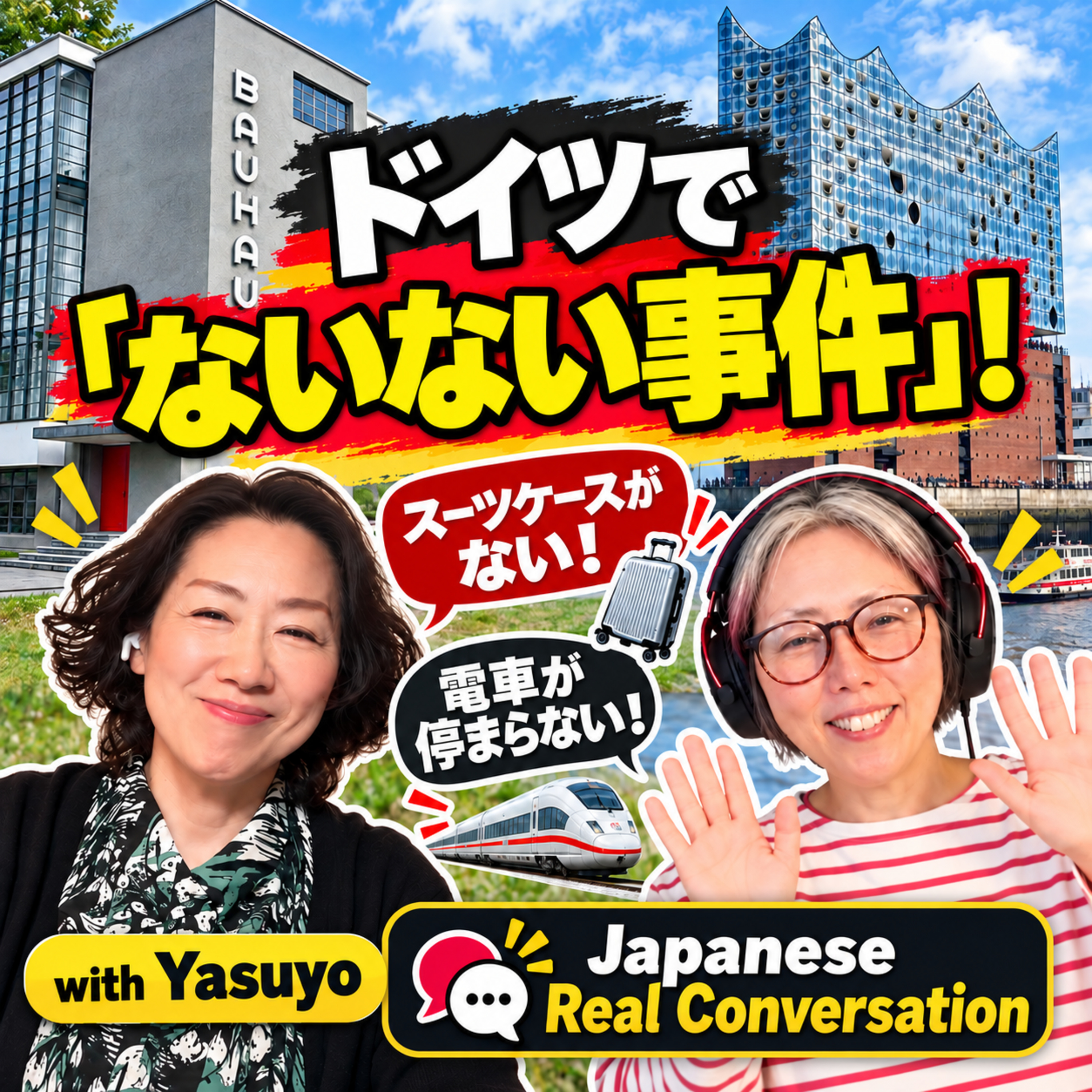
Season 3-170 スーツケースがない!電車が停まらない!ドイツ一人旅のハプニング with Yasuyo
Free Transcription
Join our community Japanese Together.
Key word : 便乗する / びんじょうする / to join someone else’s plans; to tag along
Yasuyoさんが訪れた場所
World Cup Trip — USA & Mexico
Dallas, USA(ダラス)
Monterrey, Mexico(モントレー)
Kimbell Art Museum, Fort Worth, USA(キンベル美術館)
Modern Art Museum of Fort Worth, Fort Worth, USA(フォートワース近代美術館)
Solo Trip — Germany
Berlin(ベルリン)
Hamburg(ハンブルグ)
Elbphilharmonie, Hamburg(エルプフィルハーモニー)
Bauhaus Dessau, Dessau(バウハウス・デッサウ校)
Japanese summary
今回は、ゲストのやすよさんと、最近の旅行について話します。
やすよさんは、サッカーが大好きな家族と一緒に、ワールドカップの試合を見に行きました。自分は熱心なサッカーファンではありませんが、家族の旅行に「便乗」したそうです。会場では、メキシコの人たちも日本を応援していて、知らない人と喜びを分かち合いました。テレビでは味わえない臨場感や高揚感が、特に心に残っています。美術館も楽しみ、旅行の計画は娘に任せて、気楽に過ごしました。
一方、ドイツへの一人旅では、困ったことが次々に起きました。空港でスーツケースが入れ替わり、その後は電車のチケットが見つからなくなりました。さらに、間違った電車に乗ってしまい、予定より遠い場所まで行くことになりました。帰りの電車に乗るときも、ホームの案内に困り、最後は走って乗りました。それでも、見たかった建築や美術館を訪れることができ、満足できる旅になりました。
のりこさんも、家族と行ったスペイン旅行や、暑さが大変だったパリ旅行について話します。二人は、誰かに任せる旅と、自分で問題を解決する一人旅には、それぞれ違う面白さがあると振り返ります。
English summary
In this episode of Japanese with Noriko, returning guest Yasuyo shares two very different travel experiences: a family trip to watch World Cup football and a solo adventure in Germany. After chatting about autumn in New York and the UK, they explore useful Japanese expressions through stories of excitement, unexpected problems and personal discovery.
Yasuyo describes joining her football-loving family in Dallas and Monterrey, Mexico. Although she is not a die-hard fan, the atmosphere inside the stadium, the shared celebrations and Mexican supporters cheering for Japan made the experience memorable. Museum visits were another highlight, while letting her daughter handle the planning gave her mind a welcome rest.
Her solo trip to Germany required much more independent problem-solving. A suitcase mix-up, a missing train ticket and boarding the wrong train led to a long, expensive detour. Confusing platform information added another challenge. Despite these difficulties, visiting architecture and art destinations made the journey worthwhile.
Noriko also reflects on family travel in Alicante and the challenges of extreme heat in Paris. T
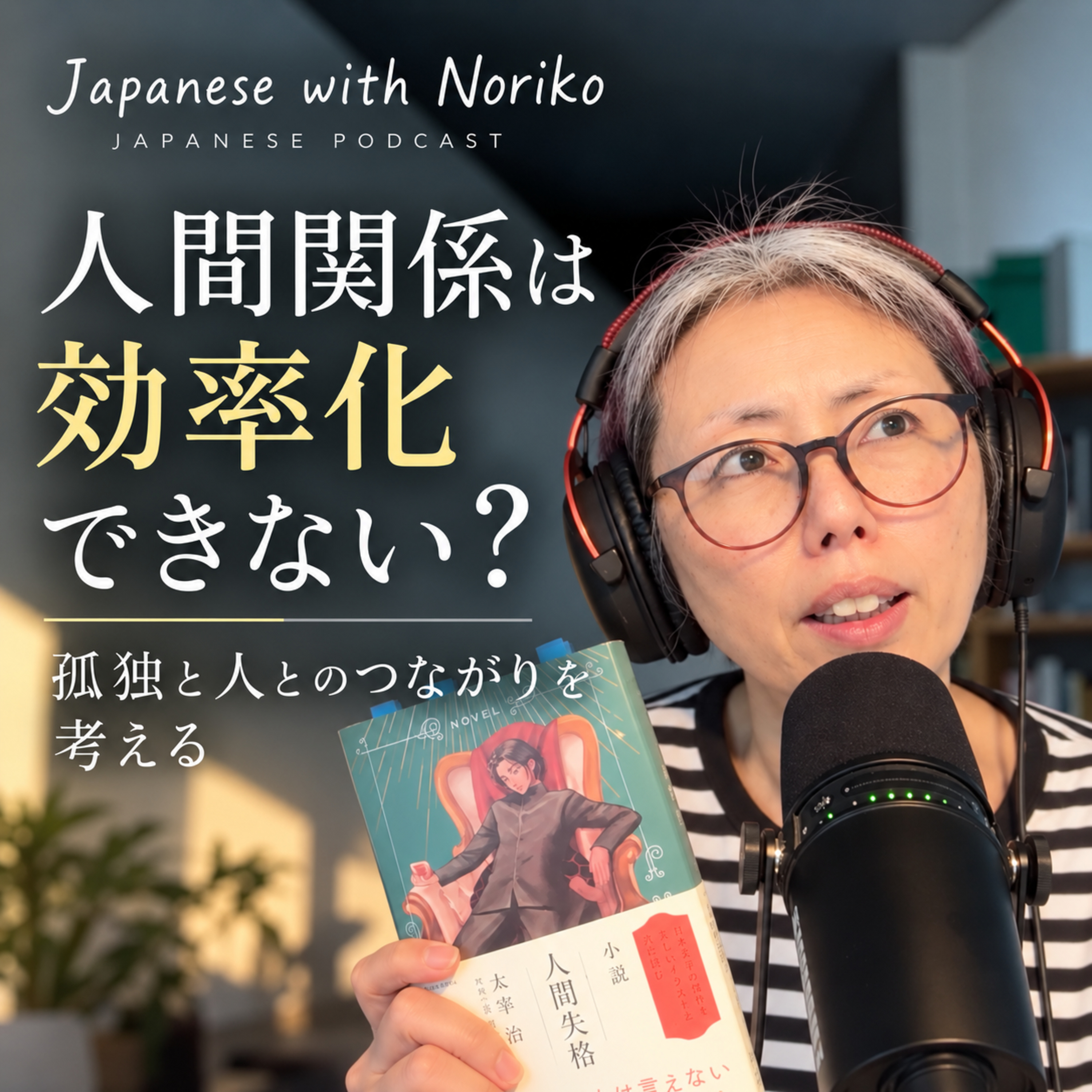
Season 3-169 人間関係は効率化できない?孤独と人とのつながりを考える
質問
今、人とつながっているなぁと感じていますか? オンラインで知り合った人と、 本当の意味で深い関係を作ることはできると思いますか? 一人でいることと、孤独であることはどう違いますか?Summary
今回のテーマは「孤独」と「人とのつながり」です。今はSNS、ビデオコール、Zoom、オンラインコミュニティなどを使って、世界中の人と簡単につながることができます。しかし、つながる方法が増えても、深い人間関係を感じられず、孤独を感じる人もいます。
コロナの後、仕事、勉強、買い物など、多くのことがオンラインでできるようになりました。生活はとても便利になりましたが、お店の人と話したり、近所の人と挨拶したり、知らない人と自然に話したりする小さな交流は減っているのかもしれません。
のりこさんはリバプールに引っ越してから、ブッククラブや哲学のディスカッションクラブなどに参加し、実際に人と会う交流を意識するようになりました。また、太宰治の『人間失格』を読んで、周りに人がたくさんいても、本当の自分を見せられなければ深い孤独を感じることがあると考えました。
一方で、オンラインでも深い関係を作ることはできると考えています。ただ、同じコミュニティに参加するだけでは十分ではありません。相手に興味を持つこと、話を聞くこと、何度も会うこと、コメントや返信をすることなど、小さな努力を続ける必要があります。
人間関係を作るためには時間がかかり、誤解されたり拒絶されたりする可能性もあります。それでも、自分から連絡したり、誘ったり、相手に歩み寄ったりすることが大切です。人間関係には効率化できない「面倒くささ」があり、その面倒くささこそが、人と深くつながるために必要なのではないか、ということを考えるエピソードです。
In this episode, Noriko explores loneliness and human connection in a world where technology makes it easier than ever to communicate. Social media, video calls, remote work, and online communities allow us to connect with people across the globe, yet many people still struggle with loneliness and a lack of meaningful relationships.
Reflecting on life after COVID, Noriko considers how convenience may have reduced some of the small, spontaneous interactions that once happened naturally in everyday life. She shares her experiences of joining a quiet book club and a philosophy discussion group in Liverpool, where in-person conversations have helped her build a stronger sense of local community.
She also connects the topic to Osamu Dazai’s No Longer Human, examining how someone can be surrounded by people while still experiencing profound loneliness when they cannot reveal their true self.
Finally, Noriko reflects on both online and offline relationships. Meaningful connection, she argues, requires time, curiosity, commitment, courage, and repeated effort. Human relationships cannot be completely optimized for convenience or efficiency. Sometimes, the inconvenient and difficult work of reaching out is exactly what allows deeper relationships to grow.
Season 3-168 芸術の秋:Frida Kahlo フリーダ・カーロと私のメキシコの思い出
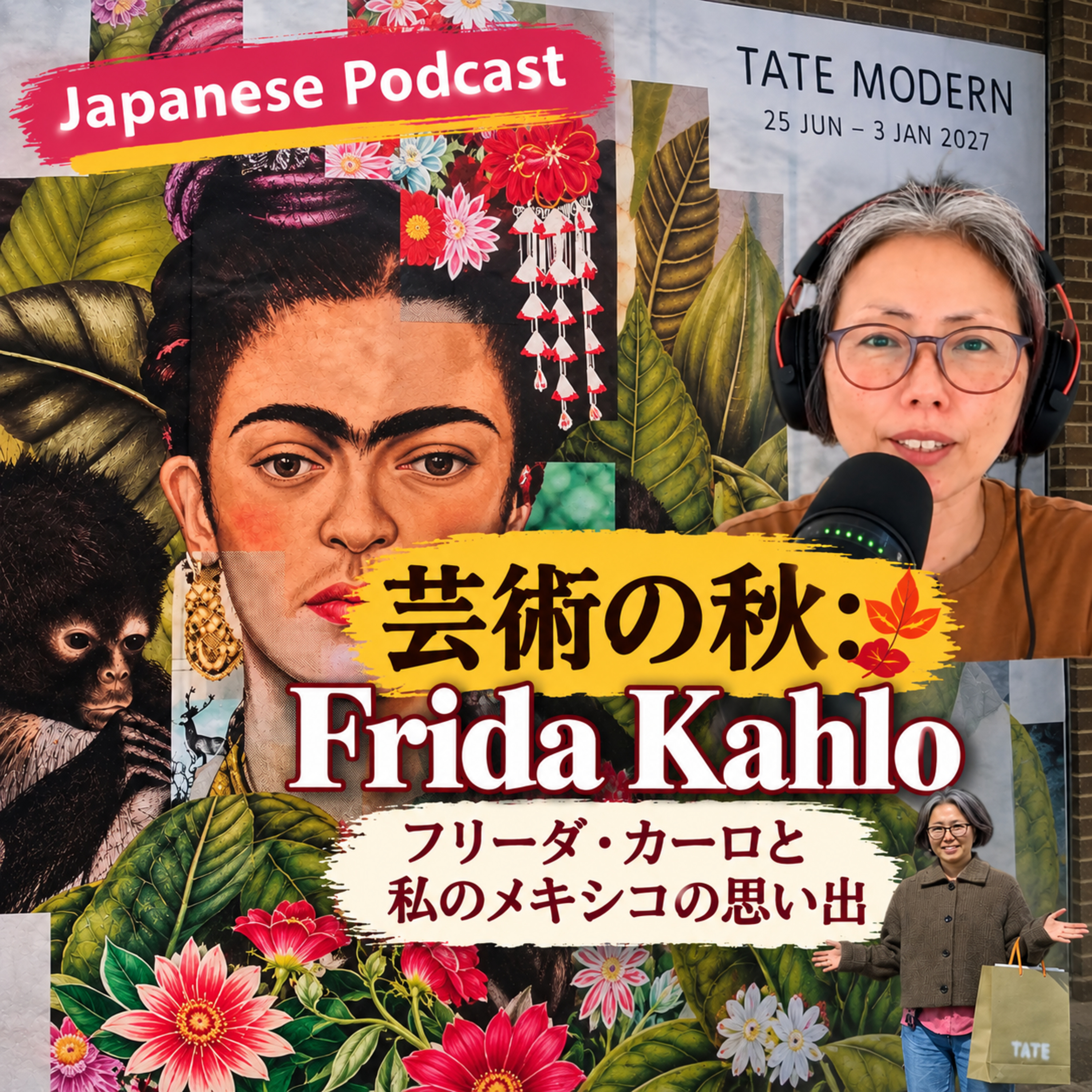
質問:あなたにも、何年経っても心に残っていて、もう一度見たい作品や、もう一度訪れたい美術館がありますか?それはあなたの人生や思い出とどのようにつながっていますか?
Summary
今回のテーマは「芸術の秋」です。Norikoさんは夫とロンドンのTate Modernへ行き、大好きなメキシコの画家、Frida Kahloの特別展を見ました。
フリーダは1907年にメキシコシティで生まれました。子供の頃に病気になり、18歳のときには大きな交通事故に遭いました。もともとは医者になりたかったそうですが、事故によってその夢を続けることが難しくなりました。長い治療生活の中で絵を描き始め、自画像を通して体の痛み、孤独、愛、怒り、そして自分のアイデンティティを表現しました。
また、フリーダの人生では、画家ディエゴ・リベラとの複雑な関係も重要でした。二人は芸術や政治的な考え方を通して惹かれ合いましたが、離婚と再婚も経験しました。フリーダの伝統的で色鮮やかなメキシコの服装も、彼女を象徴するものになっています。
Norikoさんがフリーダを好きになった背景には、20代後半に一人でメキシコを旅行した経験があります。メキシコシティの「青い家」を訪れた思い出は今でも強く残っています。今回の展覧会は、フリーダの作品を見るだけではなく、若い頃の自分やメキシコでの思い出ともう一度つながる機会にもなりました。
In this episode of Japanese with Noriko, Noriko explores the idea of “autumn for the arts” through the life and work of Mexican painter Frida Kahlo. After visiting a special exhibition at Tate Modern in London with her husband, she reflects on Kahlo’s paintings, personal struggles, identity, and lasting influence.
Noriko introduces key moments from Kahlo’s life, including her childhood illness, the serious traffic accident she experienced at eighteen, and the long periods of treatment that followed. Originally interested in medicine, Kahlo began painting while spending extended periods in bed. Her self-portraits became a powerful way to express physical pain, loneliness, love, anger, and questions about identity. Noriko also discusses Kahlo’s complicated relationship with Mexican muralist Diego Rivera and her iconic traditional Mexican fashion.
The exhibition also brings back Noriko’s memories of traveling alone through Mexico in her twenties. She recalls the vivid colors of Mexican cities and her visit to Kahlo’s famous Blue House in Mexico City. Through art, travel, and memory, this Japanese podcast episode explores how meaningful places and artworks can stay with us for many years.
Season 3-167 お風呂で読書!? 本好きトーク Book Talk with Yuko 14
私のサイトにTranscriptionがあります。勉強につかってみてね。https://www.japanesewithnoriko.com/season-3-transcription
ビートたけし『アナログ』東畑開人『カウンセリングとは何か』吉本ばななさん『TUGUMI』村上春樹『ノルウェーの森』村上春樹『遠い太鼓』
Japanese summary
今回は、いつもの本の紹介とは少し違い、のりこさんが本好きのYukoさんに読書についていろいろな質問をしました。
Yukoさんは、ストーリーのある本や情報が入った新書をよく読みます。本を選ぶときは、最初の1ページや1行目を読んで、そのときのフィーリングを大切にしているそうです。しかし最近は、信頼している人から直接おすすめされた本なら、中身をあまり確認しなくても買うことがあると話しました。人からすすめられた本は、その人と一緒に話したいという気持ちもあり、最後まで読みやすくなるそうです。
読書をするお気に入りの場所は、お風呂と階段です。特にお風呂ではタオルを使いながら本を読みます。また、本にメモをするときにはフリクションペンを使い、コーヒーやお茶を飲みながら読むこともあります。
本は図書館で借りるより書店で買うことが多く、本屋さんに行くと店内を一通り歩くのも好きです。また、友達と本を貸し合う楽しさや、中身を隠して本を渡す方法についても話しました。
買った本をすぐ読むこともあれば、「積読」してしまうこともあります。そして、Yukoさんが読書を好きになったきっかけは、学生時代に教科書で吉本ばななさんの『TUGUMI』の一部を読んだことでした。
最後には、Yukoさんが『ノルウェイの森』に再チャレンジしていること、のりこさんが村上春樹さんの旅行エッセイ『遠い太鼓』を読み終えたことについて話しました。二人にとって、本は一人で読むだけではなく、人とつながり、会話を楽しむきっかけにもなっています。
本好きの人に聞いてみよう
- 普段、どんなジャンルの本をよく読んでいますか。- 本を選ぶとき、何を基準にしていますか。- 最初の1ページや1行目を読んでから、買うかどうか決めていますか。- 本の表紙やデザイン、装丁を見て、内容を知らずに思わず買ったことはありますか。- 「この本はやめておこう」と思うのは、どんなときですか。- 本を読むお気に入りの場所はありますか。- 読書をするときの決まった習慣や、お供にしているものはありますか。- 本は書店で買うことが多いですか。それとも図書館で借りることが多いですか。- 図書館に定期的に通っていますか。- 必ず立ち寄る書店はありますか。- 買った本をすぐに読む派ですか。それとも積読する派ですか。- 読書が好きになったきっかけは何ですか。- 今読んでいる本や最近読んだ本を、一冊紹介してもらえますか。
Japanese Brain-Friendly Coaching 8: 「みんなが使っている」は正解?日本語学習とバンドワゴン効果
YouTubeでは、Video Podcastが見られます。Japanese Togetherコミュニティに参加しませんか。毎週いろいろなMeet upをしていますよ。有料チャレンジは定期的にやっています。私のサイトJapanese with NorikoのニュースレターにSign upしてみてね。ニュースレターでお知らせをしています。
In this episode of the Brain Friendly series, Noriko explores the “bandwagon effect”—our tendency to be attracted to products, ideas, or choices simply because many other people seem to support or use them. From social media advertising to popular products, phrases like “everyone is using this” or “the most popular choice” can easily influence our decisions.
Noriko introduces four ways to avoid being swept along by the bandwagon effect: form your own opinion first, give yourself time before making a decision, actively look for opposing opinions, and ask yourself what you genuinely want.
She then connects the concept to Japanese language learning. Popular apps, flashcards, textbooks, courses, and study methods may be effective f...
Season 3-166 「穴があったら入りたい!」恥ずかしい経験を日本語で話そう
YouTubeでは、Video Podcastが見られます。Japanese Togetherコミュニティに参加しませんか。毎週いろいろなMeet upをしていますよ。有料チャレンジは定期的にやっています。私のサイトJapanese with NorikoのニュースレターにSign upしてみてね。ニュースレターでお知らせをしています。
Japanese summary
今回のテーマは「恥ずかしい経験」です。まず、Norikoは、人生の中で経験した自分の失敗について話します。
その後、4人の生徒さんの恥ずかしい体験が紹介されます。結婚式に高いヒールを履いて行き、靴が石畳にはまってしまった人、レストランのトイレで鍵をかけ忘れ、ドアを開けた人とその後、隣のテーブルで会ってしまった人がいました。
また、フランス旅行中に臭いが強くなったカマンベールチーズを友達の家のトイレの窓から外にぶら下げた人もいます。最後は、クロアチアの小さな島で、裸で過ごしていたカップルの近くにボートで何度も近づいてしまった人の話です。
その時はとても恥ずかしくても、時間がたつと笑って話せる思い出になることがあります。今回のエピソードでは、失敗や予想外の出来事を人と共有する面白さも伝えられています。
Season 3-165 昔の旅と今の旅
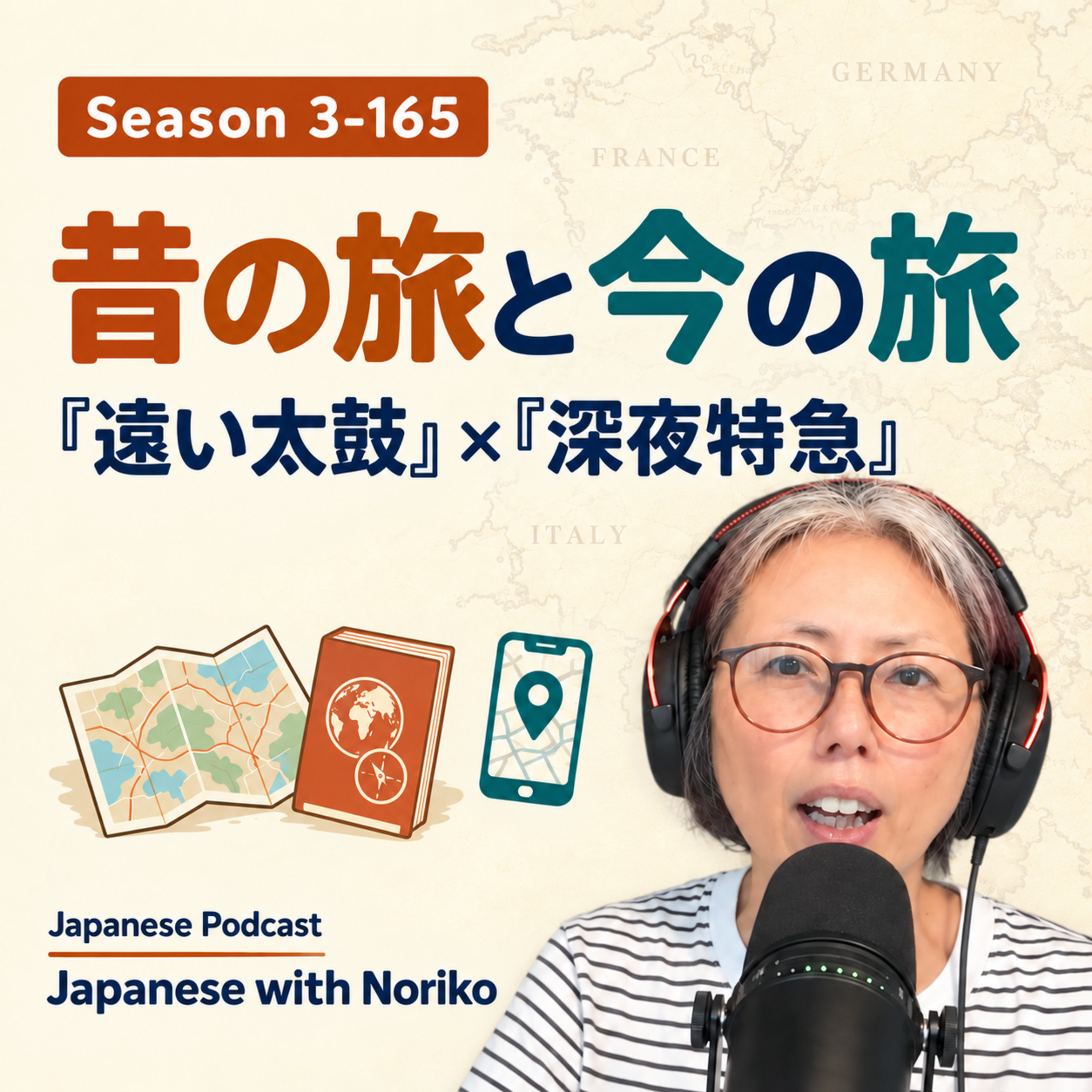
今回のエピソードでは、まずポッドキャストの新しい実験について話します。YouTubeではビデオポッドキャストを公開し、Spotifyでは音だけを聞けるようにする予定です。動画や字幕などの情報が多すぎると、学習するときに頭の中で処理することが増えるためです。また、聞く前に概要欄のサマリーを読んで内容を知っておくことも、より深く学ぶための方法として紹介しています。
今回の大きなテーマは「本と旅」です。最初に紹介するのは、村上春樹さんの旅行エッセイ『遠い太鼓』です。村上さんが1986年から1989年ごろまでヨーロッパで生活しながら旅をした経験が書かれています。当時はスマートフォンやインターネットがなく、交通、郵便、役所の手続きなど、今より大変なことがたくさんありました。しかし、そのようなトラブルも旅を深い経験にしてくれます。
次に、沢木耕太郎さんの『深夜特急』について話します。この本は、のりこの人生に大きな影響を与えました。20代の時にこの本を読み、自分も世界を旅したいと思い、安定した仕事を辞めて旅行に出ました。その経験がきっかけとなり、日本語教師という新しい道につながりました。
一方、53歳になった今では、若い時と同じ旅行はできないと感じています。体力やお金、旅行に求める快適さが変わったからです。また、スマートフォン、インターネット、AIによって旅行はとても便利になりましたが、迷ったり、自分で問題を解決したりする経験は少なくなっています。便利さによって旅の「物語性」が少し失われているのではないかと考えます。
本や旅は、人生を変えるきっかけになることがあります。そして、旅行の失敗やトラブルも、時間が経つと大切な思い出になるかもしれません。今回のエピソードは、昔と今の旅を比べながら、便利さ、成長、年齢、人生のタイミングについて考える内容です。
Season 3-164 この本で走り始めました Book Talk with Yuko 13

At Japanese Together, we have a Book Club every month. 📚It’s a relaxed session where you can bring any book you’re currently reading, enjoy some quiet reading time together, and then chat about your book in Japanese.Every autumn, we also run a 5-week Reading Challenge, exclusively for Japanese Together community members. And yes, we’re doing it again this year — it will be our 5th Reading Challenge! 🍂📖If you love reading and want to enjoy more Japanese through books, we’d love to have you join us at Japanese Together.🌏 Japanese Together Community Learn, practise, and grow with other Japane...
Season 3-163 Tadoku 多読で伸びる学習法|Hitomiさんとの対談

HitomiさんのSubstack
星新一のショートショート『ボッコちゃん』アメリカの作家シェル・シルヴァスタインの絵本『ぼくを探しに』今回のエピソードでは、スコットランド・エジンバラで日本語教室を運営し、「Joyful Japanese Reading」を通して多読教材を作っているHitomiさんがゲストとして出演しました。
ひとみさんは、多読とは「自分のレベルに合った読み物をたくさん読むこと」だけではなく、「いろいろなジャンルの文章を読むこと」も大切だと話します。知らない言葉があっても、まずは文や写真から意味を考えながら読み進め、必要な言葉だけ後で調べる方法をすすめています。
また、ブッククラブでの経験や、学習者が本を選ぶときのサポートについても紹介しました。日本語の小説を読みたい人には、短編や子ども向けの本から始めることをおすすめしています。
最後に、多読は急ぐものではなく、旅のように楽しみながら続けることで、自然に日本語力が伸びていくと伝えています。
Season 3-162 見た目に自信がない私がビデオポッドキャストを続ける理由
紹介した小説:南綾子『痩せたらかわいくなるのにね?』
今回のエピソードでは、年齢を重ねることや、自分の体と見た目との向き合い方について話しています。ルッキズムとは、人を見た目で評価する考え方です。私は、この考え方に挑戦し、自分らしく年齢を重ねたいと考えています。また、自分の体を無理に好きになる「ボディーポジティブ」よりも、体の機能に感謝する「ボディーニュートラル」の考え方に共感しています。
※注記:このエピソードでは、小説の内容を説明するために、「デブ」という言葉を数回引用しています。これは作品中の表現をそのまま紹介しているものであり、私自身の考えや価値観を表すものではありません。この小説は、外見による偏見やルッキズムを問い直す作品です。
Note: I use the Japanese word 「デブ」 a couple of times in this episode because I am referring directly to the language used in the novel. I am quoting the author's wording to explain the story, not expressing my own opinion. The novel itself questions and critiques appearance-based judgment.
Season 3-161 時間はなぜ大切?学校では好きなことができる?|にほんごのじかん・Yukiさんと対話
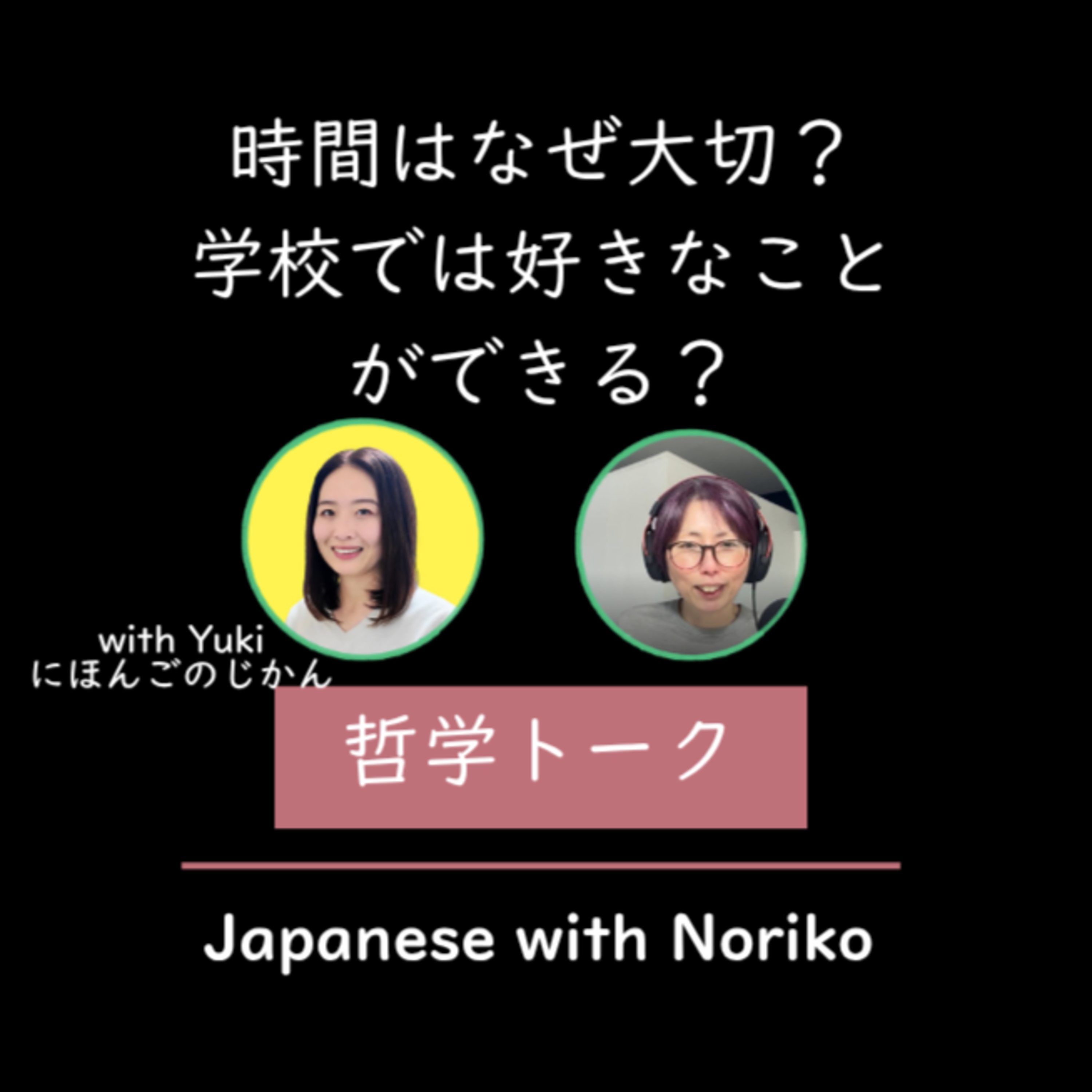
今回は、日本語学習チャンネル「「にほんごのじかん」」のYukiさんをゲストに迎えて、「哲学おしゃべりカード」を使いながら二つのテーマについて話しました。
一つ目のテーマは「時間はどうして大切なの?」です。二人は、時間は限られているから大切だという考えに共感しました。しかし、効率よく行動することだけが時間を大切にすることではないという話にもなりました。何もしない時間や、ゆっくり休む時間にも意味があり、そのような時間が心や体にとって大切だという意見を交換しました。
二つ目のテーマは「学校では好きなことができる?」です。学校では好きなことだけをすることはできませんが、さまざまな教科や人との出会いを通して、自分の興味や可能性を見つけるきっかけになるという考えが紹介されました。また、学校は社会に出るための練習の場でもあり、人間関係や集団生活を学ぶ大切な場所ではないかという話になりました。
最後に、AI時代の学校の役割についても触れ、これからの教育について考えるきっかけになる対話となりました。
Season 3-160 この本、読んだ?Book Talk with Yuko 12
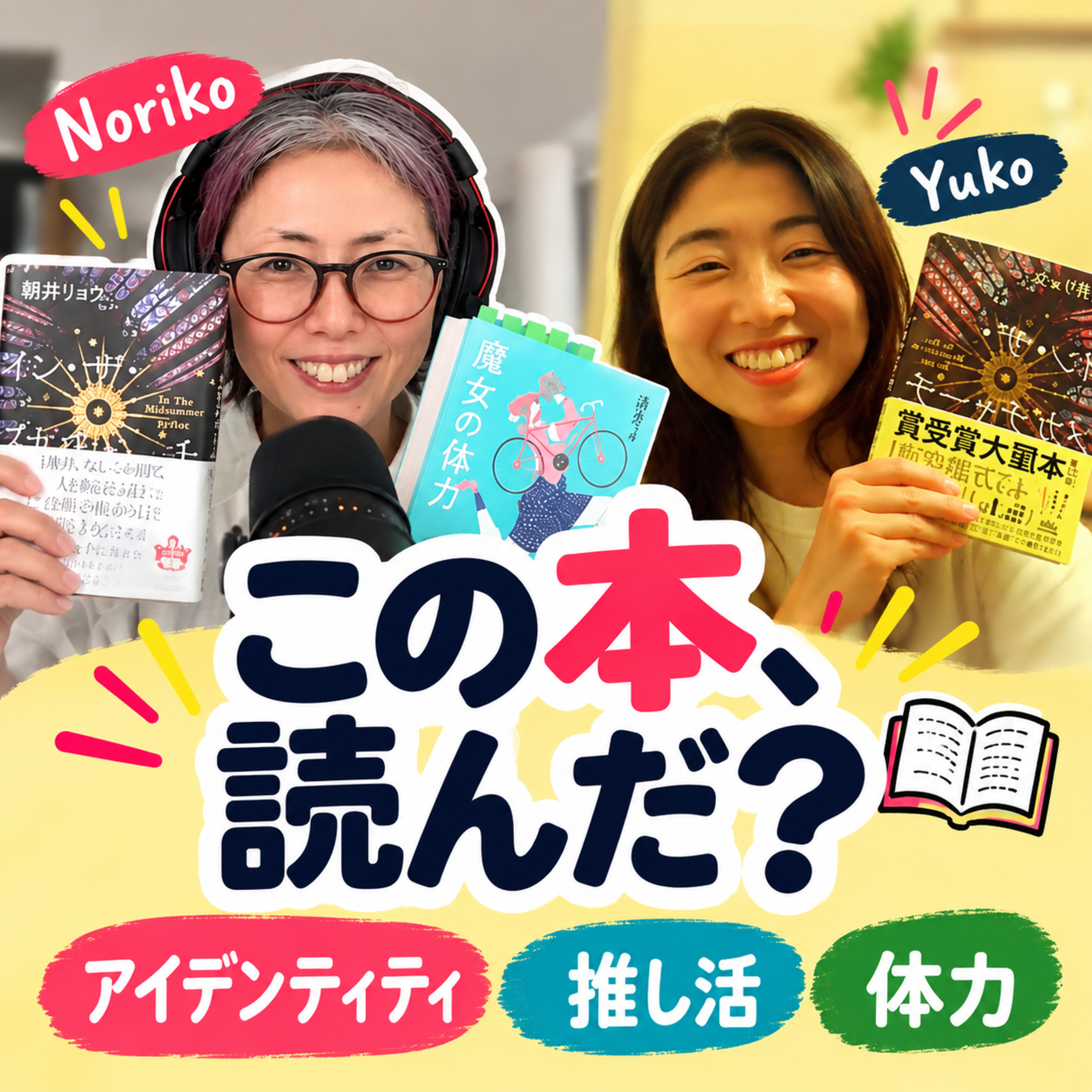
とある中国人のむいむい『とある中国人のむいむいの「私たちはどうしても日本にムキになる』 イ・ヨンミ『魔女の体力 』朝井リョウ『イン・ザ・メガチャーチ』川上未映子『乳と卵 』あかね的日本語教室『マンガで学ぼう! 生活で使える日本語文法』
私のサイトには無料スクリプトがあります。そして、Japanese Togetherというコミュニティでは、Yukoさんと私がBook Clubをやっています。
今回のエピソードでは、最初に日本とヨーロッパの暑さや天気について話しました。ヨーロッパではヒートウェーブ(熱波)が続き、エアコンがない家も多いため、とても大変だったという話がありました。
そのあと、おすすめの本を紹介しました。一冊目は、中国出身のYouTuber・むいむいさんのエッセイです。日本語を学ぶ人の気持ちや、日本で生活する中で感じたことが書かれていて、日本語学習者にも日本人にもおすすめできる本だと紹介しました。また、「日本人を理解したいけれど、日本人そのものになりたいわけではない」という考えについても話し合いました。
続いて紹介した『魔女の体力』では、40代から運動を始めた女性の体験を通して、「読書・運動・外国語学習」の共通点や、年齢を重ねても健康のために体力をつけることの大切さについて話しました。
Japanese Brain-Friendly Coaching 7: 旅行先で日本語を使わないなんてもったいない!Mistakes Help You Learn
今回のエピソードでは、Norikoがスペインのアリカンテへ旅行した経験を通して、学習中の言語を実際に使うことの大切さについて話しています。
Norikoは約20年前にスペイン語を熱心に勉強していましたが、イギリスへ移住してからは英語学習を優先し、長い間スペイン語の勉強をしていませんでした。しかし、今年アリカンテへ旅行することが決まり、もう一度スペイン語の勉強を始めました。
旅行中はレストランやカフェで積極的にスペイン語を使うことに挑戦しました。その中で注文の言い方を間違えることもありましたが、現地の人に訂正してもらいながら学ぶことで、強く記憶に残ったと話しています。
また、教科書だけでは学べないリアルな言葉やアクセント、騒がしい環境での会話などを体験し、旅行は最高の言語学習の機会だと感じました。
最後に、日本へ旅行する機会があれば、小さな日本語チャレンジを作り、失敗を恐れずに実際に日本語を使ってみてほしいと伝えています。
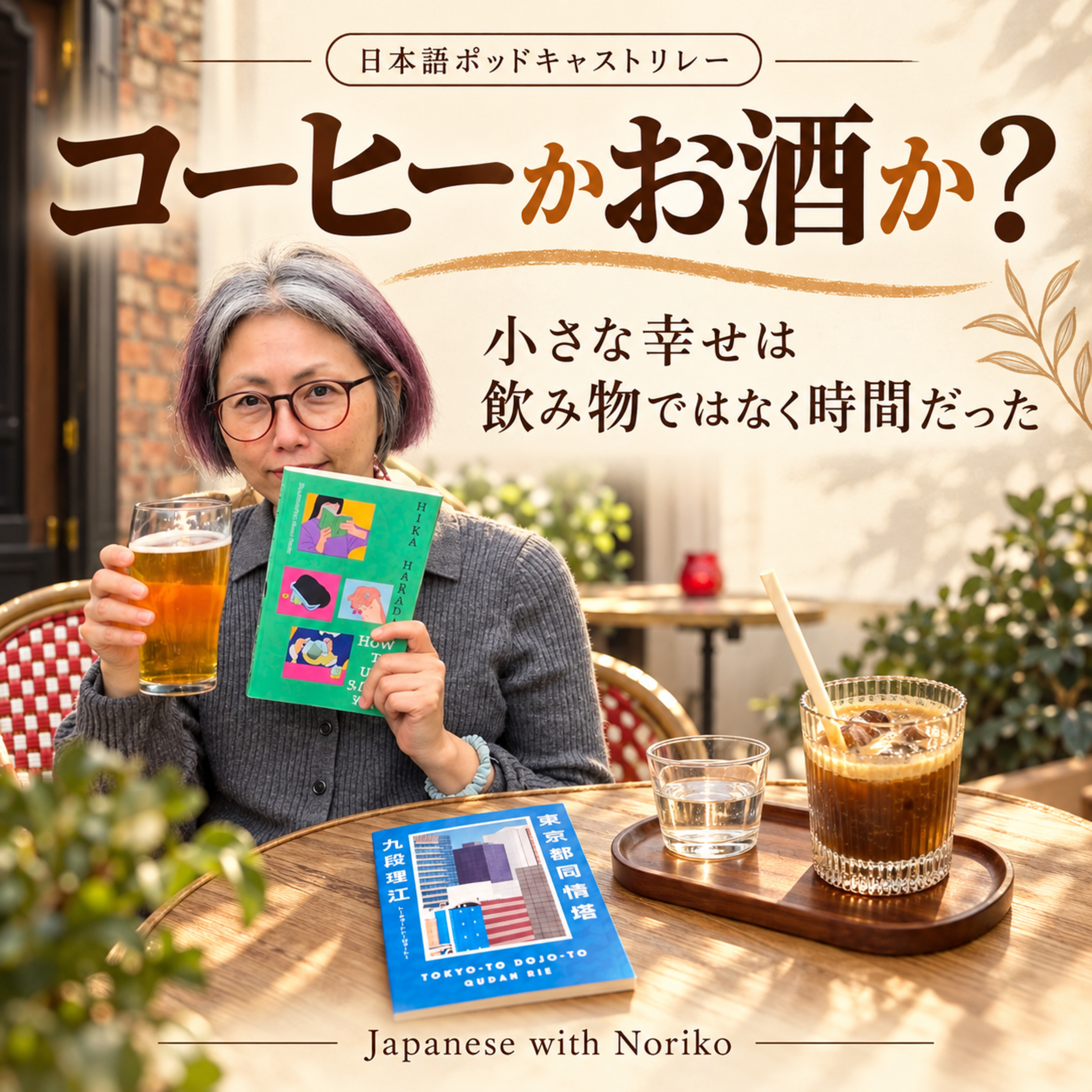
[日本語ポッドキャストリレー] コーヒーかお酒か?小さな幸せは飲み物ではなく時間だった - Season 3-159
🎙️ 日本語ポッドキャストリレー特別企画!
これは、日本語学習者向けポッドキャストの運営者が、同じお題でそれぞれエピソードを作って公開する特別企画です。
この企画は、Let's Talk in Japanese のトモさんが中心となって始まりました。
👇 下のリンクから、参加しているポッドキャストのリストを見ることができます。また、次のお題をリクエストすることもできますので、ぜひ参加してみてください!
https://ruby-s.net/jpr/
私はこの企画がとても好きなので、第2弾、第3弾もできるだけ参加したいと思っています。
どうぞお楽しみに!
🎙️ Japanese Podcast Relay – Special Collaboration!
This is a special collaboration where podcast creators for Japanese learners each make and publish an episode based on the same topic.
The project was started and organised by Tomo from Let's Talk in Japanese.
I'm really enjoying this project, and I hope to take part in the second and third rounds as well.
Stay tuned!
Season 3-158 Spain Alicante アリカンテ旅行の準備

Would you like to learn some vocabulary and useful phrases from this episode? Check out the study content on Substack. Here’s the link:
https://nihongostorytime.substack.com/p/packing-for-spain-japanese-travel
Join our community Japanese Together
Japanese Summary
今回は、のりこさんが2026年最初の旅行としてスペインのアリカンテへ行く前の準備と、実際に旅行した後の感想について話しています。
出発の4日前ということで、荷造りの様子を紹介しました。夫婦で大きなスーツケースを一つだけ持って行く予定で、その理由は家族や友人へのプレゼントやお土産をたくさん準備したからです。また、10年以上使っているお気に入りの無印のバックパックについても紹介しました。収納が多く便利で、今でも大切に使っています。
旅行にはお気に入りのTシャツや本を持って行く予定で、とても楽しみにしている様子が伝わってきます。
後半では、実際に訪れたアリカンテについて紹介しています。アリカンテはスペイン南東部の地中海沿岸にある人気のリゾート地で、美しいビーチや新鮮なシーフードが有名です。特にイカ墨のパエリアやティント・デ・ベラーノがお気に入りだったそうです。
また、アルテアやビジャホヨサといった近郊の町も訪れ、美しい景色やチョコレートで有名な町の魅力を楽しみました。家族と過ごした充実した1週間の旅行について語っています。
In this episode, Noriko shares both the preparation and highlights of her first trip of 2026, a one-week family vacation to Alicante, Spain.
She begins by describing her packing process four days before departure. To keep things simple, she and her husband decided to travel with just one large suitcase, although they had already filled part of it with gifts and souvenirs for family members and friends they planned to meet during the trip. Noriko also introduces her favorite backpack, a Muji bag she bought in Japan about ten years ago and has continued using ever since because of its practical design and storage space.
She talks about choosing clothes, preparing gifts for her niece and nephew, and selecting three books to bring along for the journey. Her excitement about the upcoming trip is clear throughout the discussion.
In the second half of the episode, Noriko reflects on her time in Alicante. She describes the city as a beautiful Mediterranean resort destination known for its beaches, seafood, and sunny climate. She especially enjoyed swimming in the sea, eating seafood paella and squid-ink paella, and drinking tinto de verano.<
Season 3-157 褒められるのが苦手ですか? with Yasuyo
Join our community Japanese Together
この会話では、のりこさんとやすよさんが「褒めること」と「褒められること」という、意外に複雑なテーマについて話しています。最初に、日本語スピーキングチャレンジでの気づきとして、多くの学習者が褒められると恥ずかしい、または気まずいと感じることが紹介されます。また、褒め言葉に対して、説明を加えたり、自分の成果を小さく見せたりする人もいることが語られます。
二人は、どんな褒め言葉なら素直に受け取れるのか、またどんな褒め方がプレッシャーになるのかを考えます。服や見た目についての自然な一言は、裏の期待がないため受け取りやすい一方で、成績やパフォーマンスに関する褒め言葉は、評価されている感覚や「次も頑張らなければ」という圧力につながることがあります。
さらに、教育、子育て、コーチング、日本語学習における現代的なフィードバックのあり方にも話が広がります。結果だけでなく、努力や成長、その人自身の経験を認めることの大切さが語られます。タップダンスの発表会やピエロのワークショップの話を通して、本当に心に残る褒め言葉は、成功を評価するものではなく、その人らしさや努力を見てくれる言葉なのだと伝わってきます。
In this conversation, Noriko and Yasuyo explore the surprisingly complex topic of giving and receiving compliments. The discussion begins with observations from a Japanese speaking challenge, where many learners shared that being praised often makes them feel embarrassed or uncomfortable. Some people instinctively downplay compliments by giving explanations or dismissing their achievements.
The hosts reflect on when compliments feel genuine and when they can create pressure. They discuss how simple comments about appearance or personal style are often easier to accept because they do not contain hidden expectations. In contrast, praise connected to grades, performance, or achievement may unintentionally make someone feel evaluated or pressured to maintain results.
They also examine modern approaches to education, parenting, coaching, and language learning. Rather than focusing only on outcomes, they highlight the importance of recognizing effort, growth, and individual experiences. Personal stories from tap dancing, performance experiences, and creative workshops illustrate how meaningful feedback often comes from being truly seen and understood.
The episode ultimately suggests that effective praise is less about judging success and more about acknowledging a person’s unique journey, effort, and authentic self.
Season 3-156 Books We Couldn't Stop Talking About 最近読んだ本が全部当たりだった!- Book Talk with Yuko 11
あかね先生:日本語オノマトペの本『生活で使える日本語オノマトペ』八木詠美『空芯手帳』綿矢りさ『グレタ・ニンプ』嶋津輝『カフェーの帰り道』夏目漱石『こころ』朝井リョウ『そして誰もゆとらなくなった』楊双子『台湾漫遊鉄道のふたり』(Taiwan Travelogue )
In this episode of BookTalk, Noriko and Yuko reconnect after a break and discuss several memorable books they have recently read. The conversation begins with a book about Japanese onomatopoeia, which Yuko highly recommends for both Japanese learners and teachers because it makes a difficult topic approachable and enjoyable.
They then move on to Kūshin Techō, a novel about a woman who tells a lie about being pregnant after becoming frustrated with how she is treated at work. The discussion explores why readers may sympathize with the character and how the story raises interesting questions about honesty, social expectations, and personal survival.
A major part of the episode focuses on Cafe no Kaerimichi, a novel set from the Taishō era into the postwar period. Both hosts praise its portrayal of...
Season 3-155 子どもの頃の夢と今の私|日本の小学生の将来の夢ランキング
Check my links https://bio.site/japanesewithnoriko
1) 問いかけ・振り返りの質問
子どもの頃に思い描いていた将来の夢は、現在の自分の価値観や生き方にどのような影響を与えていると思いますか。
「何になるかより、何をやるかの方が大事だ」という考え方について、あなたはどのように感じますか。
人の職業観は家庭環境や育った社会からどの程度影響を受けると思いますか。
子どもの頃に憧れていた職業と、実際に選んだ進路が異なる場合、その変化にはどのような意味があると考えますか。
夢を周囲に話すことには、どのようなメリットとデメリットがあるでしょうか。
「大きなことを100個言って一つ叶えばいい」という考え方は、挑戦する姿勢にどのような影響を与えると思いますか。
将来の夢を持つことと、自分に合った生き方を見つけることは、どのような関係があると考えますか。
In this episode, Noriko talks about childhood dreams and future career aspirations. She introduces the results of a Japanese survey that asked elementary school boys and girls what jobs they want when they grow up. Surprisingly, “company employee” ranked very highly for both boys and girls, alongside more traditional dream jobs such as YouTuber, professional baseball player, kindergarten teacher, and pastry chef.
Noriko reflects on how children’s career aspirations may be influenced by their parents, environment, and everyday experiences. She then invites listeners to think about their own childhood dreams and share them in the comments.
Looking back on her own life, Noriko explains that her dream changed many times. At different stages, she wanted to become a piano teacher, an elementary school teacher, a writer, and even a flight attendant after being inspired by a television drama. She also reads an essay she wrote at age fifteen about her future dreams. Many of the hopes she expressed then—traveling abroad, meeting people from different countries, and finding a suitable profession—have become reality through her work as a J
Season 3-154 世界はあなたの庭|旅が教えてくれた新しい視点 with Yasuyo
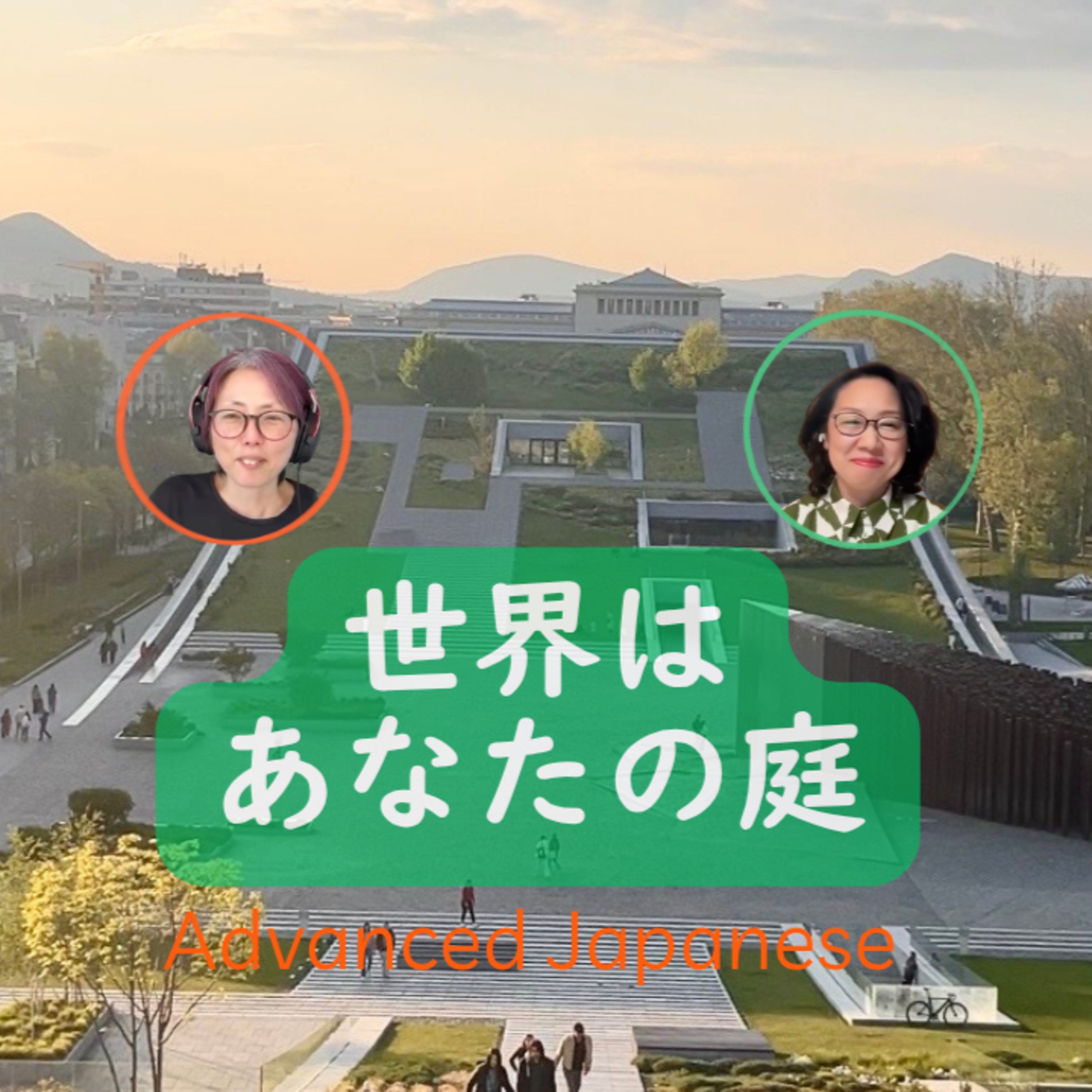
やすよさんのインスタグラム
Join our community Japanese Together
「旅モード」と「日常モード」の違いは、本当に場所によって決まると思いますか。
建築や空間のデザインが、人の感情や考え方に与える影響についてどう思いますか。
「世界があなたの庭」という考え方から、どのような生き方を想像しますか。
旅行中に仕事を続けるスタイルには、どんなメリットやデメリットがあると思いますか。
歴史や芸術を事前に学んでから旅行することは、体験をどのように変えると思いますか。
In this episode, Yasuyo returns as a guest to talk about her busy April and her recent trip through Central Europe. She visited Vienna in Austria, Budapest in Hungary, and also took a day trip to Bratislava in Slovakia. Although the trip lasted only about ten days, it felt unique because she mixed travel with online teaching. Sometimes she would go to an opera or museum and then teach a lesson shortly afterward, creating a strange feeling where travel and daily life blended together.
A major highlight of the trip was architecture. Yasuyo was especially inspired by the work of Austrian architect Otto Wagner in Vienna and by the “House of Music” designed by Japanese architect Sou Fujimoto in Budapest. She describes how certain spaces gave her emotional energy and made her reflect on ideas like freedom, perspective, and how “the world can become you...
Coffee Break with Noriko - Real Talk & Daily Thoughts 9
「論破」を重視するコミュニケーションが増えた背景には、どんな社会的要因があると思いますか。
「メンタルパフォーマンス」を優先する生き方には、どんなメリットとデメリットがあるでしょうか。
感情を表に出さない「感情ミュート社会」は、人間関係にどのような影響を与えると思いますか。
インプット中心の語学学習が、会話力にどのような変化をもたらすと思いますか。
自分の趣味や興味と語学学習を結びつけることで、学習のモチベーションはどのように変化するでしょうか。
Join our community Japanese Together to discuss my podcast episodes. Japanese Together
In this relaxed “Coffee Break with Noriko” episode, Noriko shares reflections on philosophy, modern social trends, and her recent language-learning experiences. She begins by introducing the book Suichuu no Tetsugakushatachi by Rei Nagai (永井玲衣『水中の哲学者たち』), a gentle philosophy essay collection that explains how philosophy begins with ordinary questions and everyday “why?” moments. Noriko especially appreciates the idea of philosophical dialogue as a respectful exchange where people listen openly instead of trying to “win” arguments online.
She then discusses two trendy Japanese words: メンパmenpa (mental performance) and “emotion-muted society.” These expressions describe how modern people feel mentally exhausted from social media, AI, endless choices, and online conflict. Many people now prioritize emotional comfort, simplicity, and stress-free lifestyles.
In the second half, Noriko gives updates on her language learning journey. She explains how extensive reading in Korean and Spanish helped her regain speak...
Season 3-153 I Bought 13 Japanese Books 53歳の誕生日に日本の本を爆買い
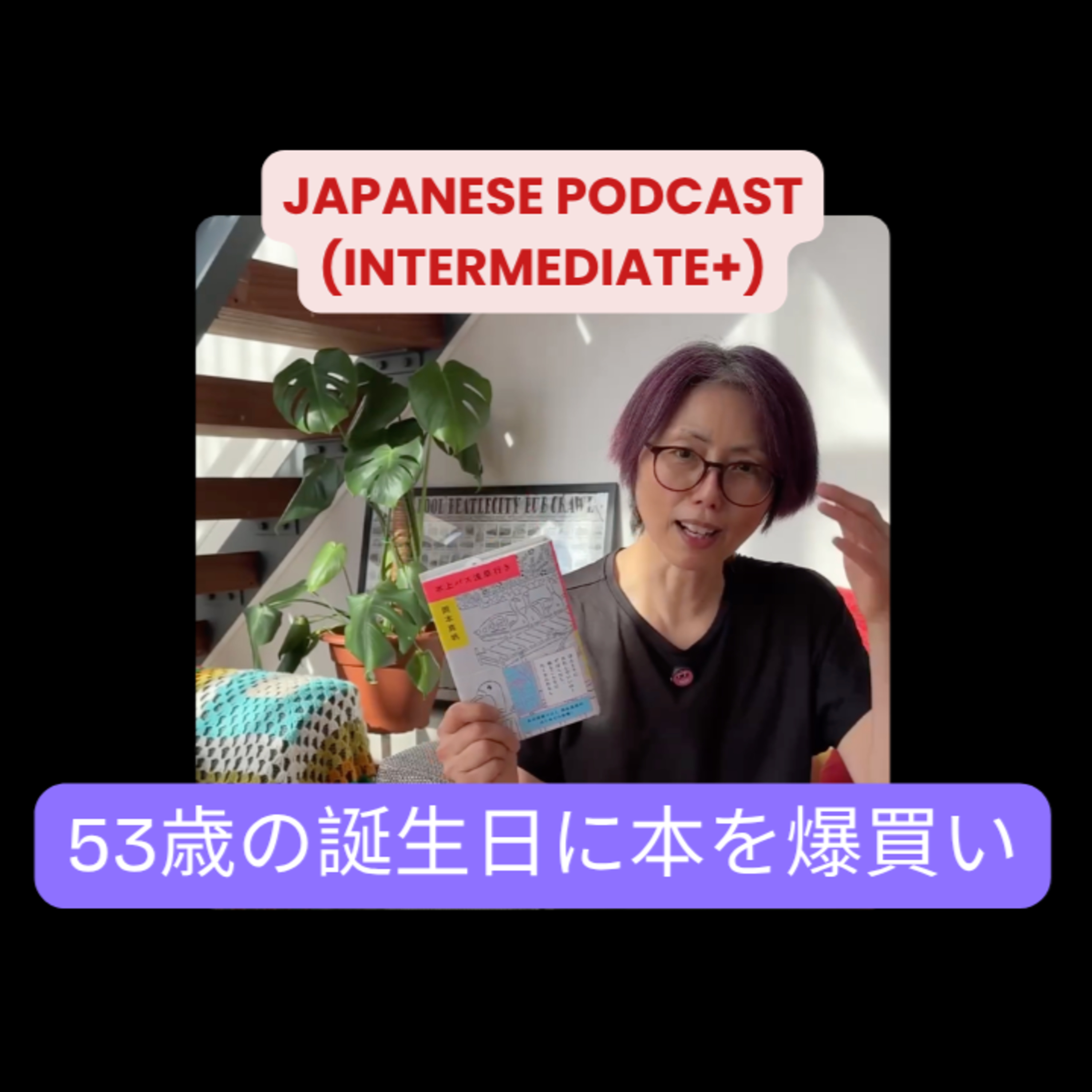
Join our community Japanese Together
Let's Read a Japanese Novel : Apply
小川糸『ツバキ文具店』小川糸『ライオンのおやつ』九段理江『東京都同情塔』九段理江『School Girl』津村記久子『水車小屋のネネ』津村記久子『この世にたやすい仕事はない』津村記久子『サキの忘れ物』村田沙耶香『コンビニ人間』山本文緒『自転しながら公転する』山本文緒『無人島のふたり』短歌の本 岡本真帆『水上バス浅草行き』イ・ヨンミ『魔女の体力』Taiwanese writer Yang Shuang-zi Taiwan Travelogue 『台湾漫遊鉄道のふたり』綿矢りさ『グレタニンプ』児島青『本なら売るほど』Discussion Questions
本を選ぶとき、どのような基準で選びますか。作家、テーマ、評判など、何を一番重視しますか。
海外に住んでいる場合、日本語の本の選び方や優先順位はどのように変わると思いますか。
作家つながりで読書を広げることには、どのようなメリットとデメリットがあるでしょうか。
年齢を重ねる中で、興味を持つ本のジャンルやテーマはどのように変化すると考えますか。
English Summary
In this episode, Noriko celebrates her upcoming 53rd birthday by reflecting on aging with gratitude rather than fear. She shares how her mindset has shifted over time—from worrying about physical changes when she was younger to now appreciating her life, health, and work. To mark the occasion, she treats herself by ordering a large collection of Japanese books from Amazon Japan, shipped all the way to the UK despite high delivery costs.
Living abroad, Noriko explains the challenges of accessing Japanese books and how she carefully chooses what to buy. She avoids purchasing titles available as audiobooks and often selects books based on connections—such as authors she already enjoys, recommendations from students or creators, and themes she’s interested in, like women’s lives and emotional storytelling.
She introduces a wide range of books, including novels, essays, tanka poetry, and manga, featuring works by authors like 小川糸『ツバキ文具店』や『ライオンのおやつ』、九段理江『東京都同情塔』『School Girl』、津村記久子『水車小屋のネネ』『この世にたやすい仕事はない』『サキの忘れ物』など。
Finally, she shares her reading plans for upcoming trave
Season 3-152 小説『こころ』が難しすぎた(Book Talk with Yuko 10)
ファッション雑誌『Oggi』八木 詠美 Emi Yagi Diary of a Void 『空芯手帳』綿矢りさ『グレタ・ニンプ』夏目漱石『こころ』星新一『ボッコちゃん』ビートたけし『テレビじゃ言えない』
In this episode of “Book Talk with Yuko,” the hosts begin with a light conversation about spring and cherry blossoms, comparing experiences in Japan and the UK. They then transition into discussing recently read books and a magazine discovery.
Yuko introduces a magazine she picked up due to interest in a featured model, noting how refreshing it felt to engage with non-algorithm-driven content. She highlights how magazines expose readers to unexpected topics and perspectives. Noriko shares a novel by Emi Yagi, describing its unique premise about a woman who lies about being pregnant at work, sparking a complex narrative.
The discussion continues with a newly published novel about a couple navigatin...
Season 3-151 Noriko’s Philosophy Playground 9 - How Do You Talk About Death in Japanese? - 日本語で「死」をどう語る?
Join our Japanese Together community and explore podcast topics through discussion.
In this reflective episode of Japanese with Noriko, Noriko explores the profound theme of death through language, culture, and personal experience. She begins by drawing a parallel between the fleeting beauty of cherry blossoms in Japan and the transient nature of life, highlighting how different flowers have unique expressions for “falling,” reflecting the nuance of Japanese language and worldview.
Noriko then examines various ways to express death in Japanese, from direct terms like 死ぬ to softer expressions such as 「天国に行く」 or 「旅立つ」, showing how language shapes emotional perception. She shares personal...
Season 3-150 What Is “Normal”? A Deep Dive into Convenience Store Woman
Apply Noriko's A Supportive, One-to-One Program Let's Read a Japanese Novel Together
In this episode, I explore コンビニ人間Convenience Store Woman by Sayaka Murata, focusing on the concept of “normality” in society. I reflect on how the protagonist, Keiko, struggles with being perceived as different from childhood and gradually learns to imitate others in order to fit in. I also discuss how her job at a convenience store provides her with structure and a sense of belonging through clear rules and manuals.
As Keiko reaches her 30s, I explain how societal expectations intensify—questions about marriage, relationships, and...
Season 3-149 Sound Like a Native with Japanese Onomatopoeia オノマトペでネイティブっぽく話す
あかね的日本語教室『生活で使える日本語オノマトペ』
English Summary:This episode introduces Japanese onomatopoeia through a personal story and quiz-style listening activity. Noriko describes her day off using expressions like ぶらぶら, ザーザー, ビュービュー, ゴロゴロ, and だらだら, showing how they add vivid detail and make Japanese more natural.
She also reviews a practical onomatopoeia book, highlighting useful features such as manga for context, podcasts for listening practice, and a reference section for quick review. She stresses that learners should connect vocabulary to real-life experiences to truly use it, not just memorize it.
Noriko encourages learners to choose study methods that suit their style and shares her own approach of starting with listening. The episode ends with a novel example featuring ピンピン, r
Season 3-148 From “Mottainai” to “Washlet”: Japanese in Global English
In this episode, Noriko shares a mix of personal reflections, language learning experiences, and cultural insights. She begins by talking about rereading Kokoro by Natsume Soseki, noting how differently it feels compared to when she first read it years ago. Despite struggling with the old writing style, she’s determined to finish it. She also mentions her progress in learning Korean, especially improving her reading skills.
The main topic focuses on Japanese words newly added to the Oxford English Dictionary. Noriko introduces several examples, such as “washlet,” “senpai,” and “mottainai,” explaining how some retain their original meanings while others e...
Season 3-147 Why Does Manchester Have a Bee Symbol? The Story Behind Its Beautiful Library - やさしく解説:マンチェスターのコットン産業・図書館・蜂のシンボル
Want to take your listening further? Join Japanese Together — our Podcast Conversation Club is the perfect place to discuss each episode and connect with fellow learners!
💬 投げかけの質問(Discussion Questions)
Manchester のどんなところに一番興味を持ちましたか?
あなたの国にも「産業で発展した都市」はありますか?
歴史と今がつながっている場所に行ったことがありますか?
English Summary : Discover the real story of Manchester, England in this episode of Japanese with Noriko.
Known for the Industrial Revolution, football, and working-class culture, Manchester is much more than its stereotypes. In this episode, I share my personal day trip experience, including the stunning John Rylands Library, one of the most beautiful libraries in the UK.
Learn how Manchester became “Cottonopolis,” a global centre of the cotton industry, and how its growth was closely connected to Liverpool through trade, railways, an...
Season 3-146 Book Talk with Yuko 9 癒やされたい?刺激が欲しい?日本語教師2人がハマった対照的な6冊

ビートたけし『アナログ』太宰治『女生徒』九段理江『Schoolgirl』坂木司『和菓子とアン』坂木司『アンと青春』村田沙耶香『世界99上下』村田沙耶香『コンビニ人間』村田沙耶香『消滅世界』星野道夫『約束の川』村田沙耶香『消滅世界』朝井リョウ『時をかけるゆとり』
In this episode of Book Talk with Yuko, Noriko and Yuko talk about several Japanese books they have recently read or want to recommend.
First, Yuko introduces the novel “アナログ” by Beat Takeshi. It is a romantic story about a man and a woman who decide not to exchange contact information and instead meet at the same restaurant every Thursday. The story feels very “analog” in a digital age.
Next, Noriko talks about “Schoolgirl” by Kudan Rie, a short story connected to Dazai Osamu’s “女生徒.” The story explores relationships between three generations of women and touches on modern topics like social media and environmental activism.
Yuko then introduces the “An-chan series” by Sakaki Tsukasa, which takes place in a department store food basement (depachika) and features traditional Japanese sweets. The story focuses on e...
Season 3-145 WHAT IS LUXURY TODAY? Choosing inconvenience in a digital world
My program : Let's read a Japanese novel
1️⃣ Short English Summary:In this episode, Noriko talks about “luxury time” and “analog experiences” in our modern digital world.
She begins by sharing a recent visit to the cinema in Liverpool. The tickets and popcorn were expensive, and the movie itself was not very good. However, she realized that watching a film without checking her smartphone for two hours felt like a luxury.
Noriko reflects on what “luxury” means today. For her, luxury is not expensive hotels or restaurants, but cultural experiences such as going to museums, concerts...
Coffee Break with Noriko - Real Talk & Daily Thoughts 8
🎧 Episode Summary : In this Coffee Break with Noriko episode, recorded in late February 2026, Noriko shares reflections on her month.
She talks about celebrating her 19th wedding anniversary at a high-end restaurant in Liverpool — delicious food, but very small portions! She also shares her disappointment about a postponed rock concert that has been rescheduled for a year later, which makes her reflect on how unpredictable life can be.
A highlight of the month was reconnecting with her husband’s childhood friend, who is currently on a three-month world trip. Hearing about his journey inspires Noriko to think m...
Season 3-144 Noriko’s Philosophy Playground 8 ミイラとモラル:博物館で考える3つの哲学的な質問
🎧 Short English Summary : In this episode of Philosophy Playground, Noriko reflects on a discussion she joined at a museum in Liverpool. The theme was ancient Egyptian mummies and morality. She explores three philosophical questions: Is it morally acceptable to display human remains in museums? Is a mummy still the same person who once lived? And should we judge ancient cultures by today’s moral standards? There are no correct answers. The purpose of this episode is to think deeply and respectfully about history, identity, and human dignity.
道徳(どうとく)– morality
遺体(いたい)– human remains, corpse
展示(てんじ)– exhibition, display
敬意(けいい)– respect
尊厳(そんげん)– dignity
価値観...
Japanese Brain-Friendly Coaching 6: Progress Is Not Perfection: Stepping Outside Your Comfort Zone コンフォートゾーンの外で脳は育つ
🌿 English Summary: In this episode of the Japanese Brain Friendly Coaching Series, Noriko talks about what really happens to your brain when you step outside your comfort zone. She shares her recent experience attending a philosophy discussion meetup in Liverpool. As a non-native English speaker, she felt nervous and unsure, especially in a fast-paced group of native speakers. However, by participating, sharing her opinion, and staying in the conversation, she experienced a strong sense of achievement.
Noriko explains that progress is not about becoming perfect. It is about gently stepping into slightly uncomfortable situations. Moderate nervousness is not...
Season 3-143 聞く人が会話をつくる - Be a Better Listener
English Summary : In this episode, Noriko talks about the importance of listening in communication, inspired by the bestselling book 人は聞き方が9割 by Shigehisa Nagamatsu.
Many language learners feel pressure to speak well, say smart things, or avoid mistakes. But this episode shifts the focus from speaking to listening. According to the book, good communicators are not those who talk the most, but those who make others feel comfortable and heard.
Noriko reflects on her own experiences in Japanese, English, and podcast conversations, and explains why the listener is the true main character of a conversation. She introduces the idea of “魔法の...
Season 3-142 Book Talk with Yuko 8 Reading, Taking Notes, and Learning Along the Way (📘 本を読む、メモを取る、考え続ける — 読書と学びのあいだで)

宮島未奈『成瀬は天下を取りにいく』宮島未奈『成瀬は信じた道をいく』宮島未奈『成瀬は都を駆け抜ける』宮島未奈『婚活マエストロ』新書齋藤孝『思考を整えるメモ力』中林くみこ 『独学で英語を話せるようになった人がやっていること』 齋藤孝『こども孫子の兵法』滝沢 カレン(たきざわ カレン)日本のモデル・タレント片山 龍峯(聞き手)、姉崎等(あねざきひとし・狩人)『クマにあったらどうするか』外山滋比古(とやま しげひこ)『思考の整理学』稲垣 えみ子『老後とピアノ』夏目漱石『こころ』太宰治『人間失格』
English Summary
In this episode of Book Talk with Yuko, we talk about reading during a slump and how books still leave traces even when we can’t fully immerse ourselves.
From novel series and essays to non-fiction, we reflect on taking notes, thinking through reading, and continuing to learn along the way. It’s a gentle conversation about reading as a process, not a goal.
🎧 Listener Questions|リスナーさんへの質問
① 読書スランプについて
🇯🇵最近、読書スランプを感じたことはありますか?そのとき、どんな本を手に取りましたか?
🇬🇧Have you experienced a reading slump recently? What kind of book did you pick up during that time?
② メモと読書
🇯🇵本を読むとき、メモを取りますか?記憶に残った言葉を心の中にとどめるタイプですか?
🇬🇧Do you take notes when you read? Or do you prefer to keep meaningful words in your memory?
③ 学びのプロセスについて
🇯🇵「ゴール」よりも「過程」が大切だと感じた経験はありますか?それは、読書や学びの中でのどんな場面でしたか?
🇬🇧Have you ever felt that the process mattered more than the goal? In what situation—reading or learning—did you feel that way?
Season 3-141 生きているかぎり青春 With Yasuyo
In this episode, Noriko continues her conversation with Yasuyo, reflecting on a deeply inspiring trip to Japan. Yasuyo shares how meeting the works and philosophies of artists and architects she admires renewed her energy and outlook on life.
They talk about creators who stayed active well into old age, including Saburo Yunoki and Tadao Ando, and reflect on the powerful idea that youth is not about age, but about continuing to create, challenge, and feel curiosity.
The conversation explores how art, travel, and music can awaken our senses, lift us during moments of self-doubt, and...
Coffee Break with Noriko - Real Talk & Daily Thoughts 7
📌 ポッドキャスト理解のためのキーワード(10語)
スロースタート ー すろーすたーと ー a slow start調子が出る ー ちょうし が でる ー to get into a good rhythm / to feel back on track積読 ー つんどく ー buying books and not reading them (book pile-up)読書量 ー どくしょりょう ー the amount of reading one does現実逃避 ー げんじつとうひ ー escape from reality道草を食う ー みちくさ を くう ー to take a detour / to get sidetracked寄り道 ー よりみち ー stopping somewhere on the way / a detour急がば回れ ー いそがば まわれ ー more haste, less speed / slow down to go further初心忘るべからず ー しょしん わするべからず ー never forget you are still learning / stay humble as a learner仕組み ー しくみ ー a system or structure (that helps you continue)a system / structure (that helps you continue)Summary (English) In this episode, Noriko shares a relaxed January reflection. She talks about starting 2026 slowly, focusing on reading, writing, and consistency rather than rushing for results. She reflects on reducing her unread book pile, reading across multiple languages and formats, and finding comfort in books amid overwhelming news. Noriko also explores Japanese expressions like michikusa o kuu (taking detours) and is
Season 3-140 今年、何を「やらない」年にしますか?What Will You Choose Not to Do This Year? Creating Space with a New Approach to Goals
Takeaways
やらないことを決めることで心に余裕が生まれる。新年の目標はやりたいことではなく、やらないことを考える。他の人と比べないことが大切。完璧を求めすぎないこと。無理をせず、休むことも大切。一度にたくさん詰め込まない。楽しさを忘れずに勉強する。目的のない作業を続けない。Season 3-139 Noriko’s Philosophy Playground 7 人間の野心と言葉の限界 - バベルの塔 The Tower of Babel (ブリューゲルBruegel)
This episode is the first Noriko’s Philosophy Playground of 2026 and explores The Tower of Babel painted by Pieter Bruegel the Elder.
Noriko reflects on seeing the large version of The Tower of Babel in Vienna at the Kunsthistorisches Museum. Inspired by the painting, she discusses human ambition, limits, and the role of language.
The biblical story tells of people who once shared a single language and tried to build a tower reaching the heavens. Their excessive ambition led to confusion of language, loss of cooperation, and the collapse of the project.
Bruegel’s pa...
