AuDHD Flourishing
The monotropic neurotype of Autism + ADHD holds strengths and challenges. Typical advice often doesn't work for us! Your AuDHD host, Mattia Maurée (they/them), shares research, lived experience, and practical advice from coaching over 400 neurodivergent folks. They focus on feeling better first, before tackling the big life design questions. You're doing great, you belong here, and it's possible to feel a lot better. Hosted on Acast. See acast.com/privacy for more information.
162 How Different Are We?
A thought I've been having recently... how different am I as a human from the other humans who don't (yet lolol) share a neurodivergence label?
I like to remember that we still have a lot in common.
(And in particular am thinking of Dr. Altheria Caldera's talk at BloomCon about connecting first as humans)
AuDHD Flourishing resources:
Transcript Doc (often a few weeks behind, but we do catch up!)Mattia's NewsletterLike Your Brain community space (Patreon/Discord)Hosted on Acast. See acast.com/privacy for more information.
161 When it All Falls Apart
Sometimes things are feeling better than usual, often because routines & supports are going well... and then it all falls apart.
The first week of October was rough for me. Here's that story: what happened, how I handled it during, and how I'm gently starting to put supports back in place. Slowly!
Mentioned in episode:
BloomCon26 Speaker Seriesbday wish listAuDHD Flourishing resources:
Transcript Doc (often a few weeks behind, but we do catch up!)Mattia's NewsletterLike Your Brain community space (Patreon/Discord)Hosted on...
160 Doing Things Mode
Something I've noticed: my brain seems to be in "not doing things" or "doing things" mode.
Pushing myself too much during okay executive function days tends to lead to multiple days of recovery.
So ironically, doing a bit less on those days has made for a more consistent capacity...
AuDHD Flourishing resources:
Transcript Doc (often a few weeks behind, but we do catch up!)Mattia's NewsletterLike Your Brain community space (Patreon/Discord)®
Hosted on Acast. See acast.com/privacy for more information.
159 Imaginary To-Do Lists
A silly hack I use to calm my brain down.
You can also use it to track your interests or other patterns over time.
AuDHD Flourishing resources:
Transcript Doc (often a few weeks behind, but we do catch up!)Mattia's NewsletterLike Your Brain community space (Patreon/Discord)Hosted on Acast. See acast.com/privacy for more information.
An Emmy winner's trick for ADHD idea overload, from The ADHD Channel for Women
AuDHDer Cate Osborn (Catieosaurus) interviews Adam Reid about idea overload... relevant whether or not you're a creative professional or writer like Adam!
Thanks to The ADHD Channel for Women from Understood.org for letting me post this episode.
You can find all of their episodes here.
(And Sep 22 2026 they put out an episode on ADHD & PMDD, which is a thing people ask me about a lot!)
AuDHD Flourishing resources:
Transcript Doc (often a few weeks behind, but we do catch up!)Mattia's NewsletterLike Your Brain community...158 Communicating With Truth-Haters
Many AuDHDers have shared stories with me about some version of the following:
There is a problem staring them in the face
People in power don't want to hear about it
This comes up a lot at work.
The more subtle version is trying to get someone to give a straight answer about exactly what needs to be done, or how. And they act like it's somehow an affront to their authority... so confusing!
If you struggle with communicating with someone who seems resistant to the...
157 Your Brain Learns Fast
Part of what hyperneuroplasticity means is that your brain learns quickly on many fronts... including from negative data. This has some obvious downsides!
The good news is that what might feel like excruciatingly slow learning in other areas (8-18 repetitions) is actually normal. Your brain just learns fast sometimes ;)
The other good news is that 2 data points does NOT equal a predictive pattern yet, no matter how much your brain may want it to.
Join me in person at BloomCon 2026! (Online options too)
AuDHD Flourishing...
156 Hyperneuroplasticity with Dr Patty Gently
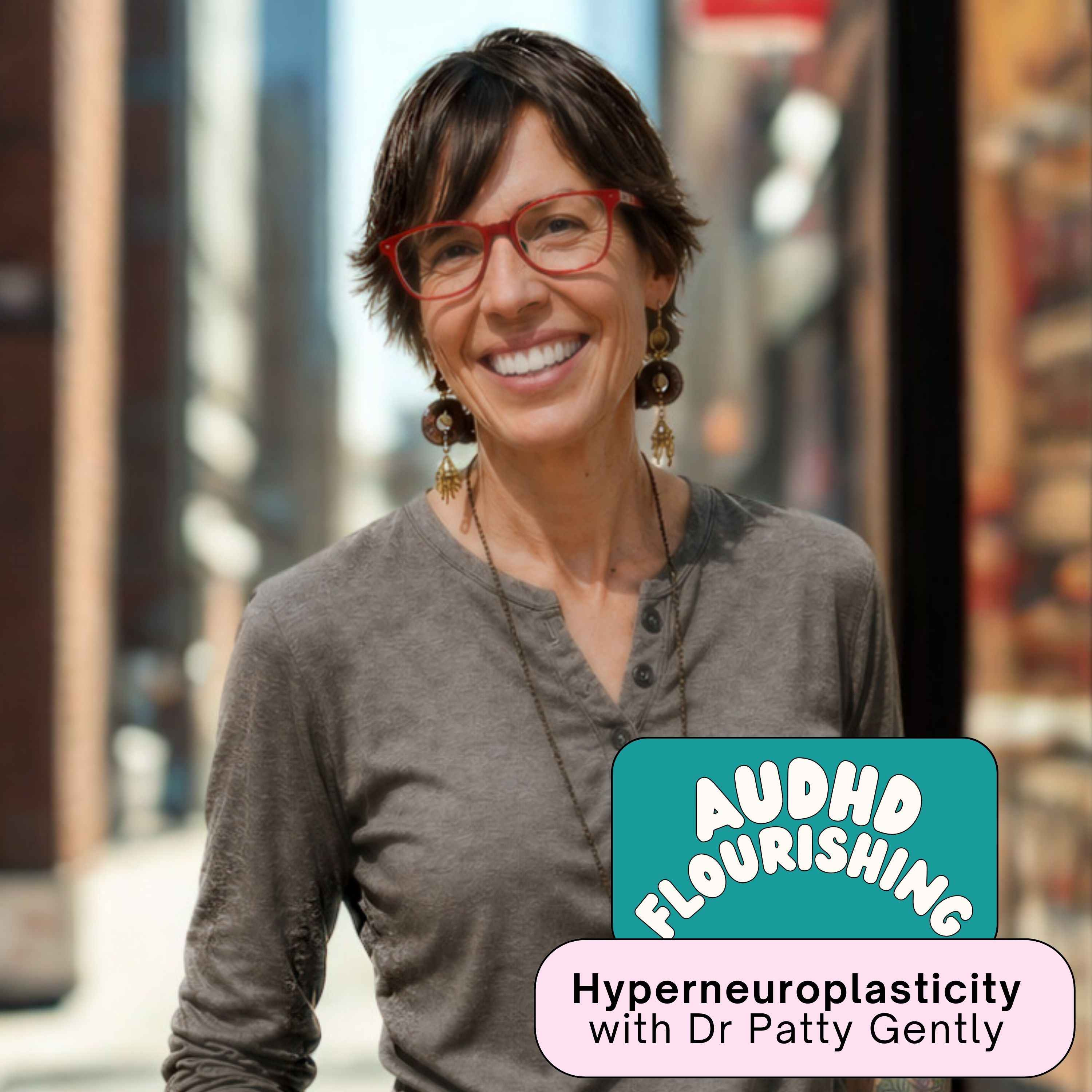
Dr. Patty Gently is one of the most important researchers and voices in the gifted neurodivergence space. Her free online community, Bloomers, has a few thousand mostly 2e members.
And her research around hyperneuroplasticity is filling in some gaps in the literature to explain some of our experiences!
Love Your Brain course (and the Sep/Oct 2026 live round info) - starts Sep 8
Connect with Patty:
Aphantasia, Alexithymia, Autobiographical Memory, and the HNP Mind, post from her free SubstackThe Gentle Heretic, Dr. Gently's website where you can...How to Make Projects Happen - Repost
AuDHD brains face many challenges when it comes to projects. It's something I've put a great deal of time and learning into, both personally and professionally. This episode covers many ideas and approaches that tend to work for us.
Key Takeaways:
We usually learn to use what I call the Adrenaline-Anxiety Approach. While effective short-term, it can lead to burnout and other issues.A monotropic approach is more sustainable and individualized... and it can feel slow at first.Experimentation as a core toolCreating just enough structure and safety to get going, without getting bogged down...155 Making & Keeping Friends
Making friends is hard. Developing and keeping those friendships is hard. It's literally work!
Today I talk about my friendship journey, more to give examples and share what I've learned rather than to teach.
Because this is a deeply personal topic that's affected by your current capacity!
Mentioned upcoming live round of Love Your Brain course (Sep-Oct 2026)
AuDHD Flourishing resources:
Transcript Doc (often a few weeks behind, but we do catch up!)Mattia's NewsletterLike Your Brain community space (Patreon/Discord)Hosted on Acast. See acast.c...
154 Friendship Skills with Caroline Maguire
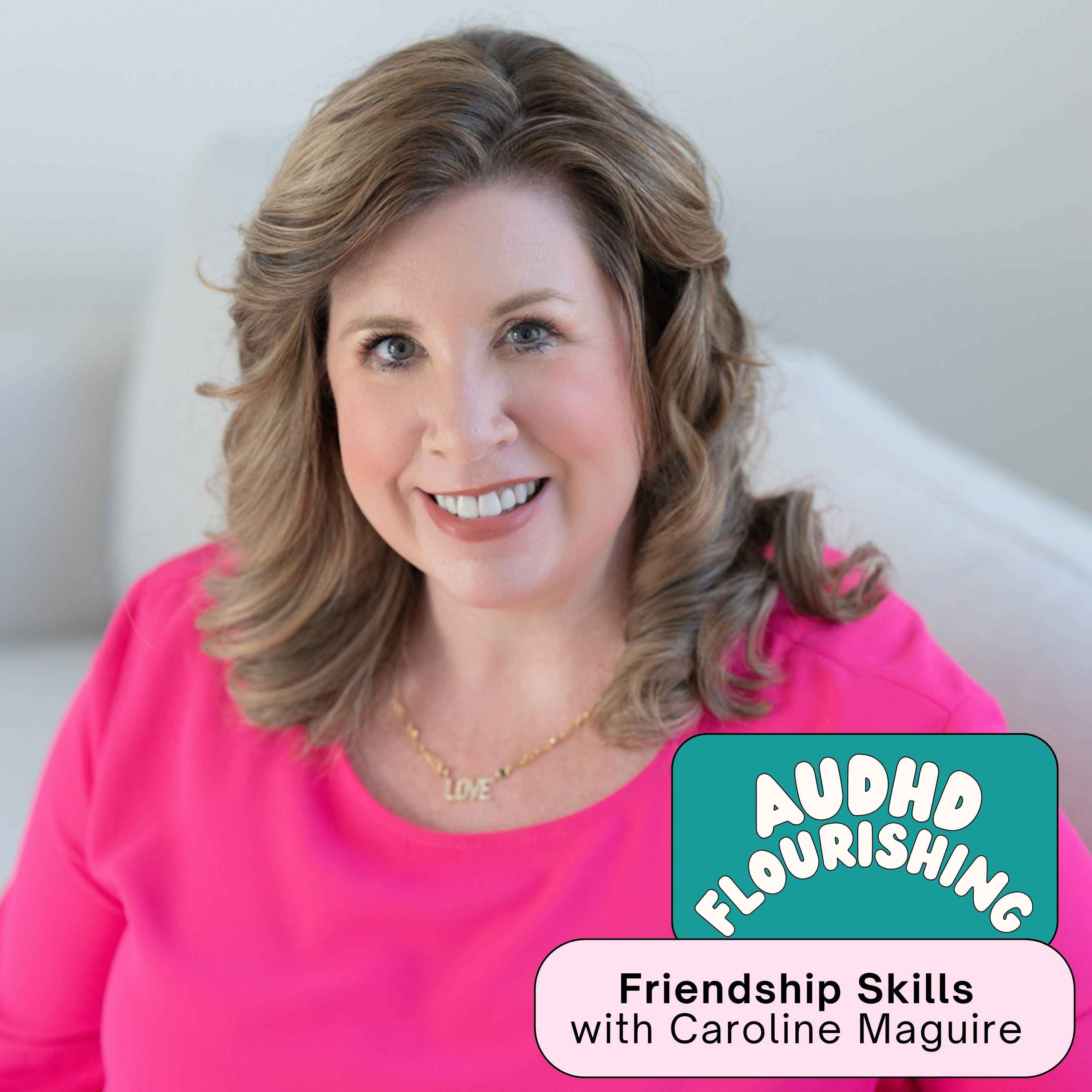
Caroline Maguire is passionate about learning how to bring your whole neurodivergent self to friendships... and not scaring people off!
Her book, Friendship Skills for Neurodivergent Adults, includes not only skills but red and green flags, and info on masking vs adapting (which we also talk about in the episode).
Mentioned in episode: next week's workshop with Grace Bezaire
Connect with Caroline:
Book Friendship Skills for Neurodivergent Adults (affiliate link)Website https://carolinemaguireauthor.com/Instagram @authorcarolinemYouTube channelPodcast The ADHD Social Playbook...
153 Polyamory & Community Bonds
Thanks for the great topic suggestion from the community: polyamory & strengthening community bonds. Those are quite intertwined for me, since I've been out as poly/RA and exclusively in open relationships for almost 20 years now.
This is a collection of thoughts on what I've noticed while being poly, and how it overlaps with community building and relationship maintenance in general.
AuDHD Flourishing resources:
Transcript Doc (often a few weeks behind, but we do catch up!)Mattia's NewsletterLike Your Brain community space (Patreon/Discord)Hosted on Acast. See a...
152 You Can't Trick a Nervous System
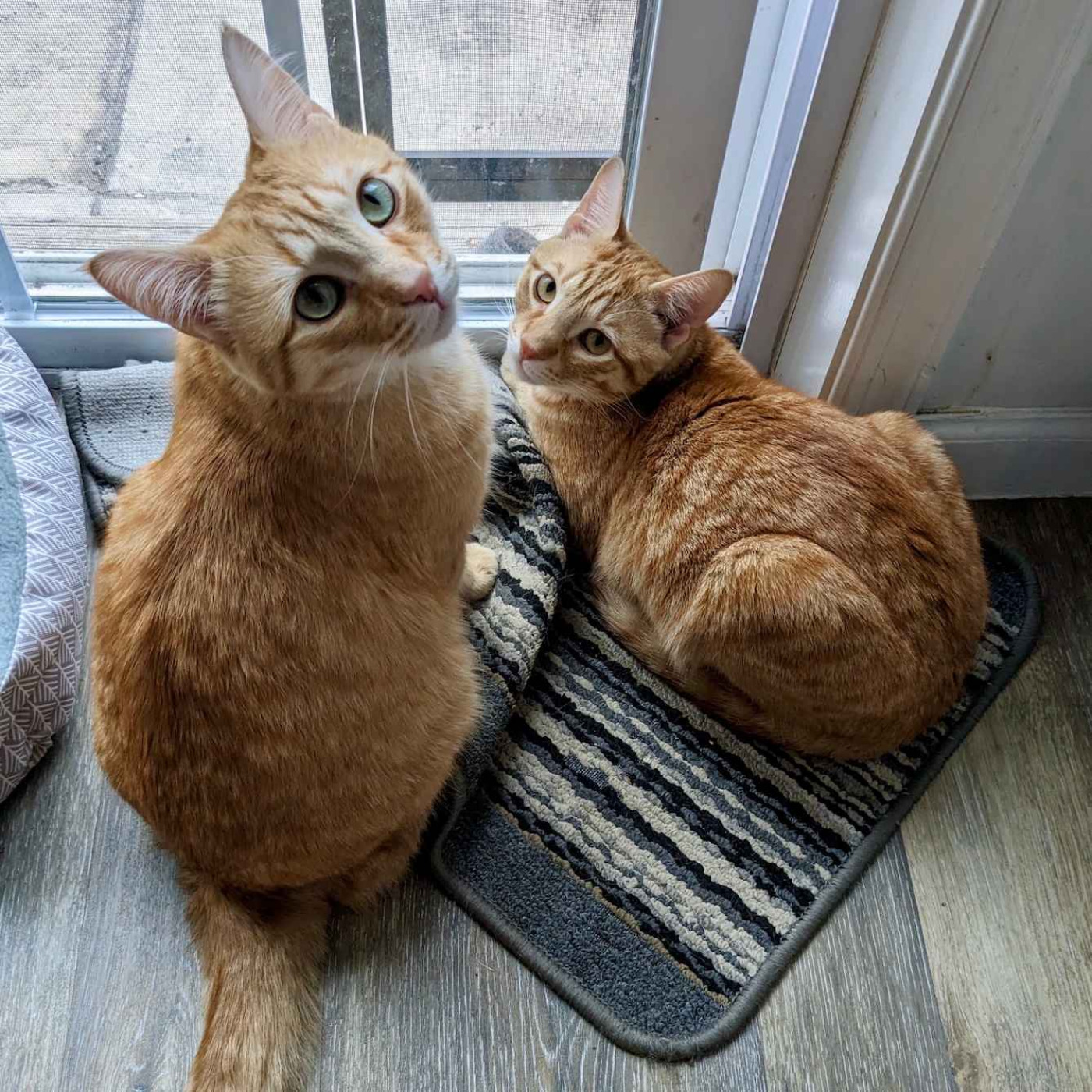
My cats Mac & Cheese (see episode pic) have been having a hard time. I've learned a lot observing their reactive nervous systems because it's so easy to feel compassion for them.
This episode uses that extended metaphor to also talk about when AuDHD nervous systems feel reactive, including with meltdowns that can include anger or violence. Depending on how much reactivity is affecting your life, it may require professional help.
No matter what, you deserve compassion
151 The Skill No One Knew You Needed
The skill no one knew you needed: how to emotionally regulate while doing a task. It's simple yet difficult. And undiagnosed neurodivergent parents were even less likely to be able to help on some fronts, if they never learned how either.
This is a skill you can practice (which the end of the episode covers), and there are many AuDHD factors complicating it for us. Even with different emotional processing or experience, it's still possible to take care of yourself during an activity.
But it requires slowing down and being willing to stop if your...
150 The Wall of Awful with Brendan Mahan
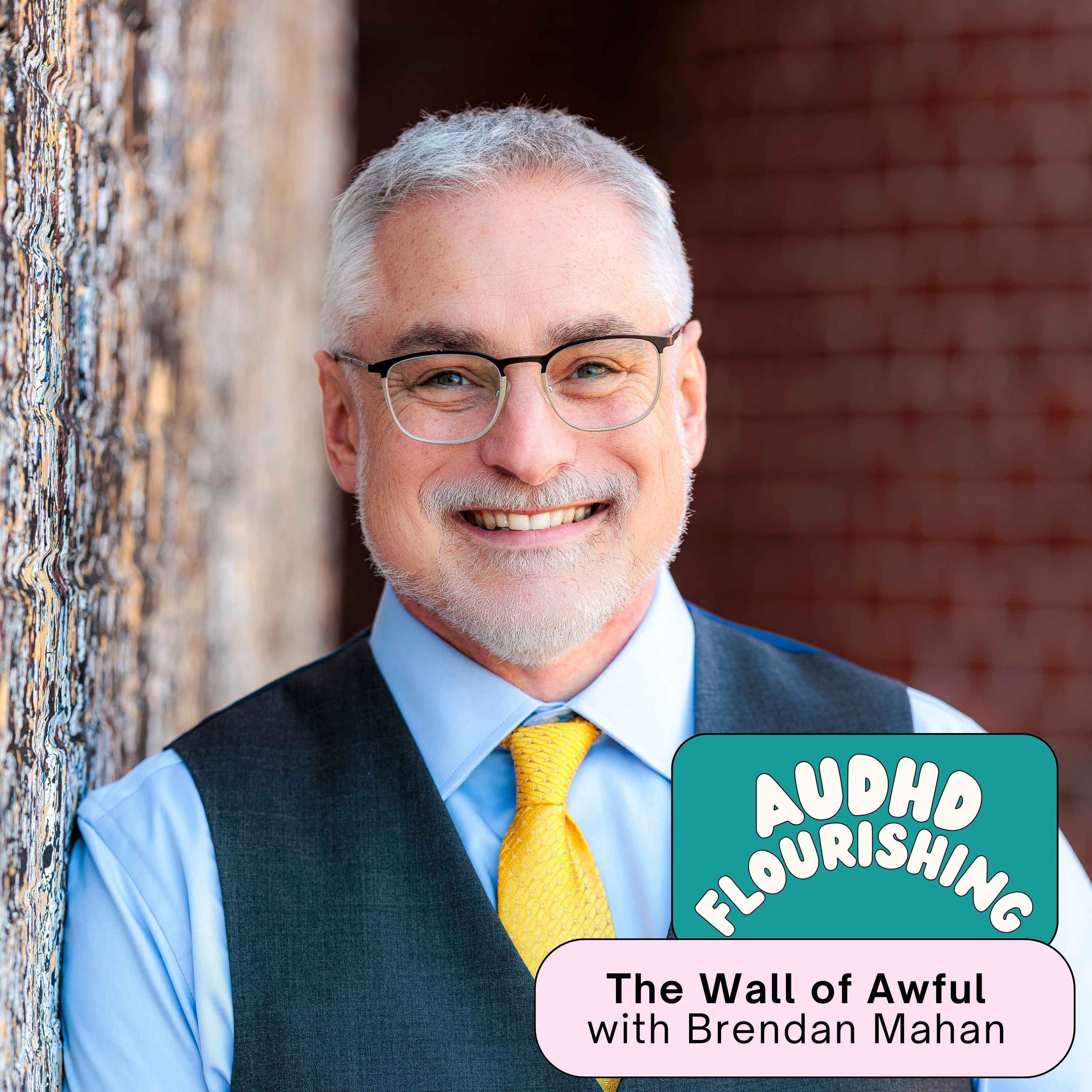
Brendan Mahan's concept of The Wall of Awful has taken on a life of its own. While originally geared toward ADHD, it's also extremely applicable to other neurodivergent folks including autism, AuDHD, OCD, and PDA.
In short, there are a bunch of tough emotions built up over time between you and tasks that are difficult for you (whether or not anyone else believes they are easy). While you may instinctively figure out how to sidestep or smash through the issues, it's not really addressing the deeper problem that still affects you the next time.
<...
149 The Consistency That Matters
"Consistency" can feel like a dirty word in neurodivergent land...
Consistency is a tool, not a final answer. It can be a better fit than habits for our brains (see past 3 episodes) It can be part of building systems that work for us (including reminders, since forgetting is a big reason for inconsistency) Kindness and self-compassion are where consistency REALLY matters, because they build capacity over timeAuDHD Flourishing resources:
Transcript Doc (often a few weeks behind, but we do catch up!)Mattia's NewsletterLike Your Brain community space (Patreon/Discord)148 Breaking Bad Habits
Builds on last two episodes: Self-Awareness vs. Solutions and Habits are Hard (but also very cool)
Breaking "bad" habits is different (and more difficult) than building new habits.
I also recommend not being too aggressive about it if those coping mechanisms are load bearing psychologically ;)
AuDHD Flourishing resources:
Transcript Doc (often a few weeks behind, but we do catch up!)Mattia's NewsletterLike Your Brain community space (Patreon/Discord)Hosted on Acast. See acast.com/privacy for more information.
147 Habits are Hard (but also very cool)
There's some evidence that ADHD brains in particular may have trouble forming habits as they're traditionally thought of. But that doesn't mean they have no value for us!
This episode is about how to lean into the part of habit formation that may work for us (spoiler alert, you may need WEIRD rewards)
Builds on last week's episode, Self-Awareness vs. Solutions
p.s. hopefully the birdsong in the background isn't too annoying... I recorded with the windows open and didn't realize it would pick up!
p.p.s. by the...
146 Self-Awareness vs. Solutions
You may have been told that you're "so self-aware," yet struggle to actually implement solutions. In the moment, you might be lacking the support, the executive function, the initiation energy, etc.
Introspection and self-awareness are great, but they're not the end of the process.
AuDHD Flourishing resources:
Transcript Doc (often a few weeks behind, but we do catch up!)Mattia's NewsletterLike Your Brain community space (Patreon/Discord)Hosted on Acast. See acast.com/privacy for more information.
145 Mediocrity is a Needed Step
In the context of learning a musical instrument, it's obvious that there's a period of not being good at it. Whether you call it mediocrity or a skill gap, there's often a gap between where you are and where you want to be.
There are many cases in which we can only improve by doing, trying, and yes, failing. It's uncomfortable and that's normal. You don't have to like it, but it is a step in learning or improving.
I HATE IT. And I also know it's going to happen.
144 Don't Do All the Things
Trying to do all of the things, all of the time is a recipe for being stuck.
Instead, do some of the things, some of the time.
The episode also talks about a couple of imagination techniques that may help with some types of PDA or other demand avoidance.
AuDHD Flourishing resources:
Transcript Doc (often a few weeks behind, but we do catch up!)Mattia's NewsletterLike Your Brain community space (Patreon/Discord)Hosted on Acast. See acast.com/privacy for more information.
143 Creative Blocks & Insecurities
Last week we talked about creative entrepreneurship.
This episode is about my recent & current creative blocks and insecurities that cover some of the difficulties of being a professional creative.
And because people may ask: here's my pre-transition voice, and more-or-less current voice
Related episodes:
100 Creative Time Limitations24 Redefining Creative Success with Chris HaleAuDHD Flourishing resources:
Transcript Doc (often a few weeks behind, but we do catch up!)Mattia's NewsletterLike Your Brain community space (Patreon/Discord)Hosted on Acast. See acast.com/privacy for mor...
142 Neurodivergent Creative Entrepreneur with Jon Hart
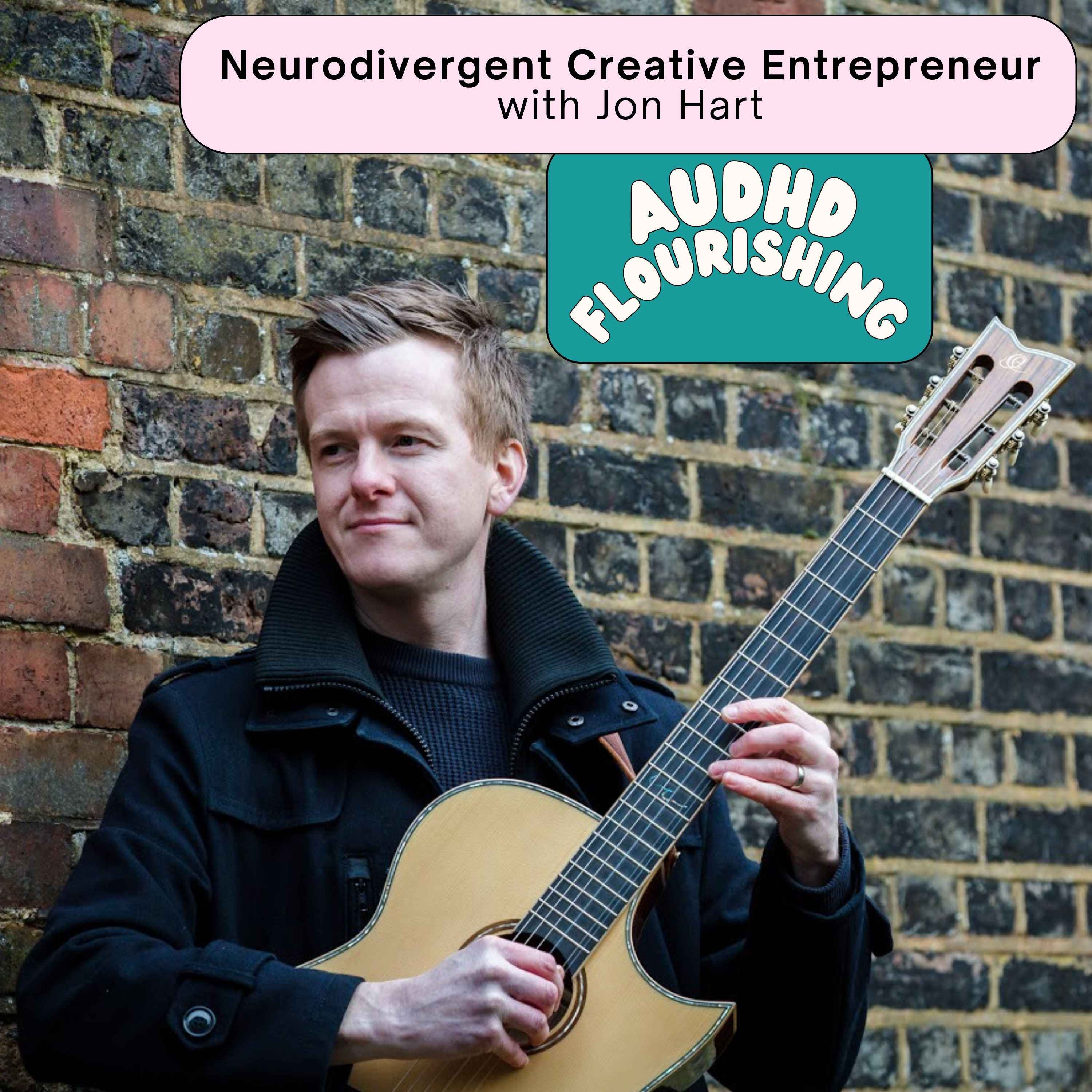
Jon Hart is building an online space for neurodivergent musicians. And our conversation focused on the entrepreneurship side of things, because occasionally our disability disables us!
Being a creative entrepreneur has its own challenges. One of which is having too many ideas...
Connect with Jon:
neurodivergentmusicians.com & the research questionnairejonhartmusic.comAuDHD Flourishing resources:
Transcript Doc (often a few weeks behind, but we do catch up!)Mattia's NewsletterLike Your Brain community space (Patreon/Discord)Hosted on Acast. See acast.com/privacy for m...
141 Predictive Processing - another autism explanation
Predictive Processing (or coding) differences are a relatively new proposed idea about an underlying mechanism of autism. Preliminary studies do show differences, but not necessarily "deficits," which I think is promising.
While it may not explain everything, it's a compelling theory that resonates in my anecdotal experience.
More reading/listening on predictive processing:
The predictive coding theory of autism, explained (article w audio option)Predictive processing as a mechanistic account of Autism (video talk sent to me & I haven't listened yet)Understanding Autism through Predictive Processing (blog post)How the "Predictive...140 What's Your Energy Level?
I just had a shocking experience regarding my own energy levels while on vacation. Truly, I never would have predicted it even if you laid out all of the details going in.
This episode is about figuring out what drains and rejuvenates your energy, so you can start to choose where that (technically limited) bucket of energy goes.
AuDHD Flourishing resources:
Transcript Doc (often a few weeks behind, but we do catch up!)Mattia's NewsletterLike Your Brain community space (Patreon/Discord)Hosted on Acast. See acast.com/p...
You Are Not a Burden - Repost
The story of a meltdown. For me these days, that includes some intrusive thoughts around being a burden.
You are not a burden. And even if we are sometimes, that's okay. I want to be a part of communities that can carry each other sometimes.
repost of ep 23
Like Your Brain community space
Transcript Doc
Email Newsletter
Hosted on Acast. See acast.com/privacy for more information.
When the Body Simply Cannot - Repost
This week I pushed my body way too far, even though I was having trouble parsing that in the moment. The story is also a great analogy for how other ND internal needs feel (including PDA).
Even with all the info, self-kindness, and support, I still struggle to find that exact line of capacity. It's okay that it's hard to figure out!
This is the perfect and slightly ironic follow-up from last week's episode about giving up on NT/ableist expectations ;) (ep 80)
Repost of ep. 81
Mentioned in...
139 Alexithymia - Feeling While AuDHD
Alexithymia is common in AuDHDers, and involves having trouble identifying and communicating emotions.
There are a lot of reasons this can be the case, including:
interoception differences
lack of useful training in emotional skills & language
different emotional experiences than expected in the situation
Childhood Emotional Neglect (which can cause alexithymia)
Alexithymia is NOT a disorder! It's a difference.
And... you may have reasons to question whether there are aspects of it you want to address.
Additional reading:
...138 Your Money Big Picture
I would guess that most AuDHDers struggle with money in one way or another. Saving or planning for the future can be particularly difficult to emotionally attach to in the same way we connect with wanting something in the present moment.
I use several tools to stay emotionally connected to my money big picture, and spoiler alert none of them is a budget:
tracking all income closely a multi-tab finances overview spreadsheet that includes monthly income over time + a debt tab with all monthly paymentscalculating Net Worth* monthly (using a spreadsheet I found online)...
137 Spending and Money Unfairness
This & next week are two episodes on money & finances as a follow up to last week's interview (more from Hyperfocus here).
Justice sensitivity can highlight the unfairness we often feel between our financial situations and those of people who haven't struggled to find and keep work. For example, AuDHDers often experience conflict with bosses who think we ask too many questions or have a bad "vibe."
For me, acknowledging and soothing that unfairness with things beyond just spending has been important.
The episode also touches on comparison with others, consumerism, and...
136 Financial Therapy with Christine Hargrove
Thanks again to Hyperfocus with Rae Jacobson for sharing this interview with financial therapist Christine Hargrove.
She shares ADHD-focused advice that is useful for AuDHD folks as well! And the next two weeks will touch on other financial topics from this foundation.
I especially love the line, "The best budget is one you can follow on your worst day"
Learn more about Hyperfocus with Rae Jacobson here!
AuDHD Flourishing resources:
Transcript Doc (often a few weeks behind, but we do catch up!)Mattia's NewsletterLike Your...Paper Planners & Tasks Feeling Real
I just started using a paper planner again for the first time in many years, and the coolest thing is noticing that calendared blocks of time feel more "real" to my brain when I've written them by hand. That tangibility in turn seems to be making it easier to stick with things.
Caveat that it can always be the initial dopamine surge of any new system! That said, if it's working, I say try new tools anyway, even if they only work for a few months ;)
AuDHD Flourishing resources:
Transcript Doc...135 Slow Processes are Frustrating
Sometimes... a process is happening, internally. It can be integration, change, growth, positive disintegration... and sometimes it's unclear. Either way, the uncertainty can be disconcerting and frustrating!
AuDHD Flourishing resources:
Transcript Doc (often a few weeks behind, but we do catch up!)Mattia's NewsletterLike Your Brain community space (Patreon/Discord)Hosted on Acast. See acast.com/privacy for more information.
134 Worst Tasks for AuDHDers
With an interest-based nervous system + AuDHD cyclical energy, the hardest tasks for us are
Boring
Annoying
High Stakes and/or
Difficult
The episode covers how and why they're difficult, and some starting points for each one.
The steps from later in the episode:
133 Anger and Aloneness
If you're feeling angry lately, that makes a lot of sense! It's not a bad emotion. In fact, it can feel quite motivating to create change.
But what if you are feeling isolated and/or don't have capacity to directly create that change right now?
That's where nourishing and care work come in, even if they're only for you (for now).
While I don't use the word self-care in the episode, that's in part the kind of nourishing I mean.
Once your capacity is higher, you'll be able to build more...
132 Is This Your True Desire?
Sometimes I mix up true desires with interests and hyperfocus. But what about the persistent and even lifelong interests? Where do they fit in?
This episode is for anyone who wants to throw their life out the window and start over when in the throes of a new interest ;) You're not broken!
AuDHD Flourishing resources:
Transcript Doc (often a few weeks behind, but we do catch up!)Mattia's NewsletterLike Your Brain community space (Patreon/Discord)Hosted on Acast. See acast.com/privacy for more i...
131 Disordered Eating and AuDHD
This goes along with the interview about Embodied Exercise. For many people, the other side of that coin is eating. And rates of disordered eating are higher among Autistics, ADHDers (especially women), and trans and gender non-conforming folks.
The episode only briefly touches on ARFID, an eating disorder more likely to affect autistic people for multiple reasons. If you know someone who could be an expert interview on ARFID, please send them my way.
Oh another fun fact I didn't mention... it's possible that the "obesity epidemic" (unscientific nonsense) was literally caused by dieting...
Your Core Self-Care Need - Repost
Most people have one or two core self-care needs that, if they're met, everything else feels easier. This episode is about how to figure out yours... and what to look out for when you hear people preaching about their own!
There's also acknowledgment that your neurodivergent body and brain may process things in different ways, so the following questions may not be that useful for you.
Figuring out your core self-care need or needs (just a jumping-off point!):
Thinking back to times in your life when things felt the easiest, what was your...130 Unclear Discomfort
it is what it is
AuDHD Flourishing resources:
Transcript Doc (often a few weeks behind, but we do catch up!)Mattia's NewsletterLike Your Brain community space (Patreon/Discord)Hosted on Acast. See acast.com/privacy for more information.
129 Embodied Exercise with Martha Munroe
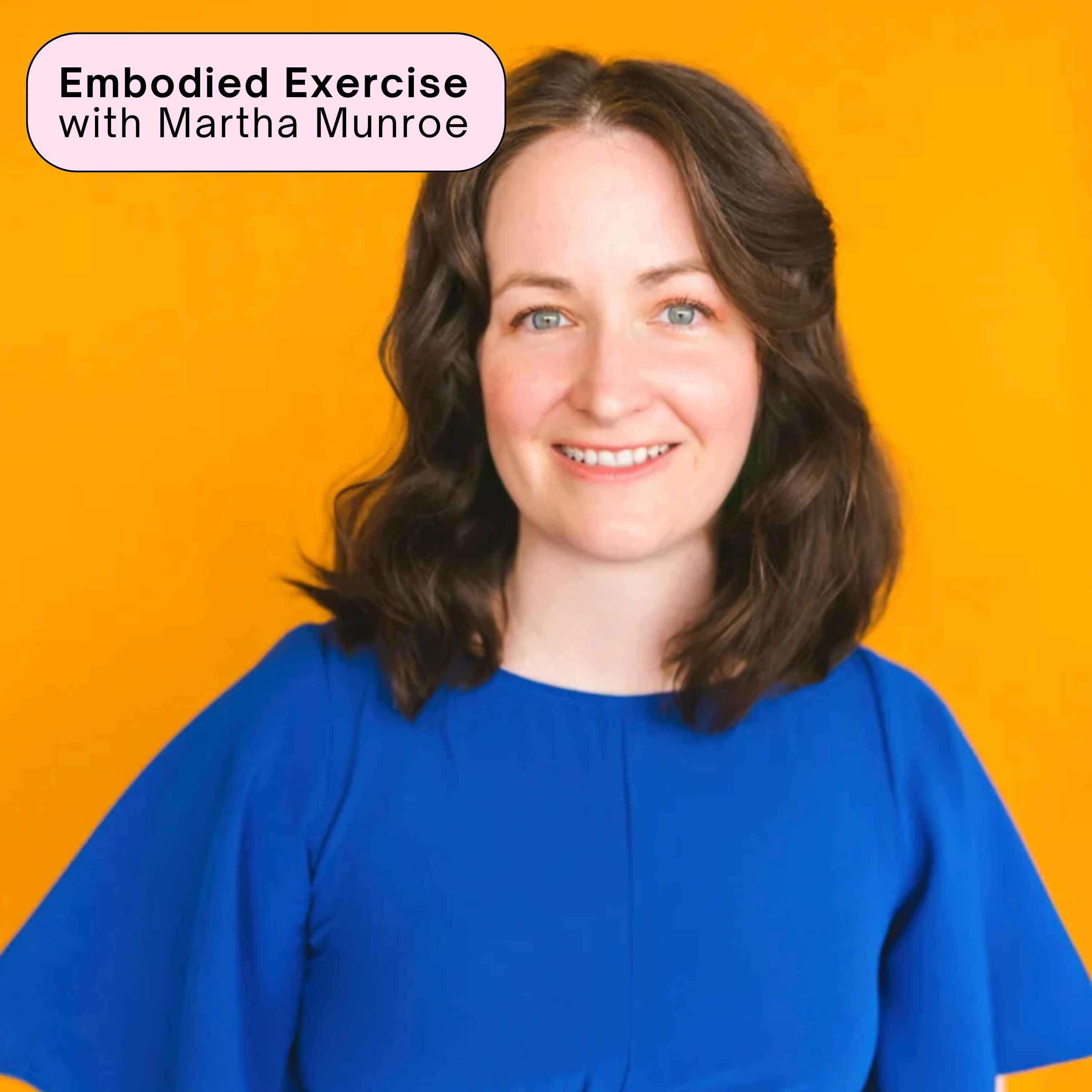
Martha Munroe, a neurodivergent personal trainer, was noticing patterns in the ways her clients talked about exercise and their bodies. They were often driven by external goals (aesthetics, performance, what others think) vs. the internal experience of movement.
She reframes exercise as a way to explore and express through embodiment. Also, reclaiming exercise (not only movement) by offering gentle structure if desired.
I loved her book, Attuned Exercise!
Connect with Martha:
Attuned Exercise websiteMartha's Instagram, @attunedexercisemarthamunroe.comAlso mentioned in episode (book I'm reading):
Girl...
