The LatinNews Podcast

The LatinNews Podcast is a fortnightly deep dive into key developments from across Latin America and the Caribbean.
Unpacking Lula's Victory: Key Strategies and Insights

The recent elections in Brazil have sent shockwaves across the political landscape, with Luiz Inácio Lula da Silva's victory highlighting a significant shift in voter engagement and campaign strategy. In this episode of the Latin News Podcast, Richard McColl speaks with Andre Pagliarini, an expert on Brazilian politics and Assistant Professor in the department of history at Louisiana State University to dissect the factors that led to Lula's success.
Pagliarini explains how Lula turned around Brazil’s runoff election, what the result means for the Bolsonaro movement, and the political and economic challenges facing Lula’s next...
Falkland Islands / Malvinas: Oil, Sovereignty and Rising Tensions

The Falkland Islands / Malvinas sovereignty dispute is entering a new period of geopolitical uncertainty, with shifting international alliances and plans for offshore oil production raising questions about the future of the islands.
In this episode of The LatinNews Podcast, Richard McColl speaks with Professor Klaus Dodds, Professor of Geopolitics at Middlesex University and Senior Research Fellow at RAND Europe, about the historical roots of the dispute, Argentina's relationship with the United States under President Javier Milei, and the strategic importance of the South Atlantic.
The discussion examines the proposed Sea Lion oil project, Argentina's efforts...
Haiti’s Unending Transition to Democracy: Gangs, Politics, and Hope

The current situation in Haiti is dire, marked by a catastrophic security and political crisis. To shed light on this complex landscape, we speak to Robert Fatton, Emeritus Professor of Politics at the University of Virginia and a native Haitian on this episode of The LatinNews podcast.
The assassination of President Jovenel Moïse in July 2021 created a political vacuum filled by Prime Minister Ariel Henry, who promised elections and reforms that never materialized. "The elections didn’t take place, the security situation deteriorated further," Robert explains, expressing skepticism about upcoming elections scheduled for December 13, 2026. He questions the...
Brazil's Polarized Elections: Insights and Implications

Brazil heads to the polls on 4 October in a presidential election shaped by deep political polarization, economic concerns and growing controversy surrounding the country’s Supreme Court.
In this episode of The LatinNews Podcast, Richard McColl speaks with James N. Green, Professor Emeritus of Brazilian History and Culture at Brown University and President of the Board of Directors of the Washington Brazil Office, about the contest between President Luiz Inácio Lula da Silva and Senator Flávio Bolsonaro.
They discuss the divisions shaping the election, the Banco Master scandal and its implications for the Suprem...
How Global Finance Blocks Caribbean Climate Action

In this episode on The LatinNews Podcast, we are joined by Marla Dukharan, economist and advisor on the Caribbean, who discusses the financial challenges Caribbean nations face due to increasing climate disasters, the role of international aid, and potential solutions like insurance and fiscal responsibility.
The conversation delves into the Bridgetown Initiative, which aims to improve access to concessional financing. While acknowledging the initiative's intent, Marla raises concerns about its reliance on debt as a primary solution. She argues that without addressing the underlying fiscal vulnerabilities, such initiatives may fall short in delivering meaningful change.
...
Amazon Gold: How Illegal Mining Reaches the Global Market

Illegal gold mining in the Amazon is about far more than what happens at the extraction site. In this episode of The LatinNews Podcast, Richard McColl speaks with Melina Risso, Research Director at the Igarapé Institute in Brazil, about the networks that allow illegally mined gold to enter legitimate markets and move across borders.
They discuss the growing involvement of organised crime and local elites, regulatory gaps across the Amazon, and how stronger controls and new tracing technologies could help keep illicit gold out of global supply chains.
Follow LatinNews for analysis on economic, po...
Colombia's New Security Strategy: A Bukele-Style Approach?

In this episode of The LatinNews Podcast, host Richard McColl speaks with Glaeldys González, Andean Region Analyst at International Crisis Group, about the challenges facing Colombia at the beginning of President Abelardo de la Espriella's administration.
The recent earthquake provides an immediate test for the new government, adding further pressure to an already serious humanitarian situation. Beyond the emergency response, attention is turning to President de la Espriella's security agenda, which includes forced coca eradication, the capture of criminal leaders and plans to construct ten megaprisons.
Richard and Glaeldys discuss the influence of President N...
Honduras: Unraveling the Current Political Climate and Its Impacts

In this episode of the LatinNews Podcast, we speak with investigative journalist Jennifer Ávila, co-founder of Contracorriente, about the current political and social landscape in Honduras.
We discuss the challenges facing President Nasri Asfura's administration, the influence of US policy on migration and security, the return of former president Juan Orlando Hernández, and the country's evolving political dynamics. The conversation also explores organized crime, violence against women, and Honduras' role as a testing ground for new political and economic ideas.
Follow Jennifer Ávila's work at www.contracorriente.red
Fo...
Can Latin America Lead the Global Critical Minerals Market?

Critical minerals are becoming central to the global economy, underpinning everything from electric vehicles and renewable energy to advanced manufacturing and national security. Latin America possesses some of the world's largest reserves of copper, lithium and other strategic minerals, placing the region at the centre of an increasingly competitive global landscape.
But resource wealth alone is no guarantee of long-term prosperity. Can Latin American countries strengthen governance, attract investment and capture greater value from the energy transition while managing environmental and social challenges?
In this episode of The LatinNews Podcast, Richard McColl speaks wi...
Can Peru Finally Achieve Political Stability?

Keiko Fujimori has secured the presidency at the fourth time of asking, bringing an end to one of the country's longest-running political stories. After years of presidential impeachments, institutional confrontation and economic uncertainty, expectations are high that her government could usher in a period of greater stability.
But significant challenges remain. Can Fujimori build the political consensus needed to govern? Will her administration revive investor confidence and unlock Peru's mining potential? And how will Lima navigate an increasingly competitive international environment shaped by both Washington and Beijing?
In this episode of The LatinNews Podcast<...
Can Guatemala's Democracy Hold?

In this episode, we explore the complex political and security landscape of Guatemala with expert Tiziano Breda. We discuss recent developments, challenges in governance, gang violence, and the influence of international actors, providing insights into the country's future prospects.
When President Bernardo Arevalo took office in 2023, many were hopeful for a fresh start in Guatemalan politics. However, his administration has faced numerous obstacles, including constant legal threats and political maneuvering aimed at undermining his authority. The former Attorney General, Consuelo Porras, has been particularly aggressive in her attempts to nullify the election results and impede Arevalo's legislative...
El Salvador's Security Revolution: Myth or Model?

This episode explores the complex security and political landscape of El Salvador under President Nayib Bukele, featuring insights from expert José Salguero. We discuss the history of gang violence, the security policies implemented, and the implications for democracy and regional influence.
Nayib Bukele's rise to power was marked by promises of security and stability. However, as Salguero points out, the current security situation cannot be attributed solely to Bukele's policies. Instead, it is a culmination of various factors, including previous government actions and historical trends.
Looking ahead, the question remains: will El Salvador ever exit t...
Why Ecuador Feels Increasingly Unstable

Ecuador is undergoing a profound political and security transformation. Once regarded as one of the more stable countries in Latin America, it now faces escalating violence, institutional strain and growing political tension.
In this episode of The LatinNews Podcast, Richard McColl speaks with Samuele Mazzolini, Marie Skłodowska-Curie Global Fellow and researcher at Ca’ Foscari University of Venice and FLACSO Ecuador, about the forces reshaping Ecuador under President Daniel Noboa.
The discussion examines the rapid expansion of organised crime, the fragmentation of local gangs, the limits of the government’s security strategy and the broader weakeni...
Mexico Under Pressure: Politics, Cartels and US Indictments

In this episode of The LatinNews Podcast, we explore recent political developments in Mexico, including US indictments of Mexican politicians, the influence of organised crime, and the implications for Mexico-US relations.
Guest expert Tony Payan provides deep insights into the complex web of politics, crime, and international pressure. Tony Payan, PhD, is the Claudio X. Gonzalez Fellow in US-Mexico Studies, the Françoise and Edward Djerejian Fellow for Mexico Studies, and the executive director of the Claudio X. González Center for the US and Mexico at Rice University’s Baker Institute for Public Policy. He is also...
Understanding Colombia's Upcoming Elections

Colombia's political landscape is gearing up for another crucial election, and with it comes a myriad of questions and debates. Why is this election significant, and how do the political parties stack up against one another?
In this episode of The LatinNews Podcast, we delve into insights shared by Sandra Borda, an esteemed political analyst and Associate Professor of Political Science at the Department of Global Studies and Political Science at the University of Los Andes in Bogota, discussing the current state of Colombian politics and what voters should keep in mind.
Colombia's upcoming elections a...
Brazil's War of Narratives
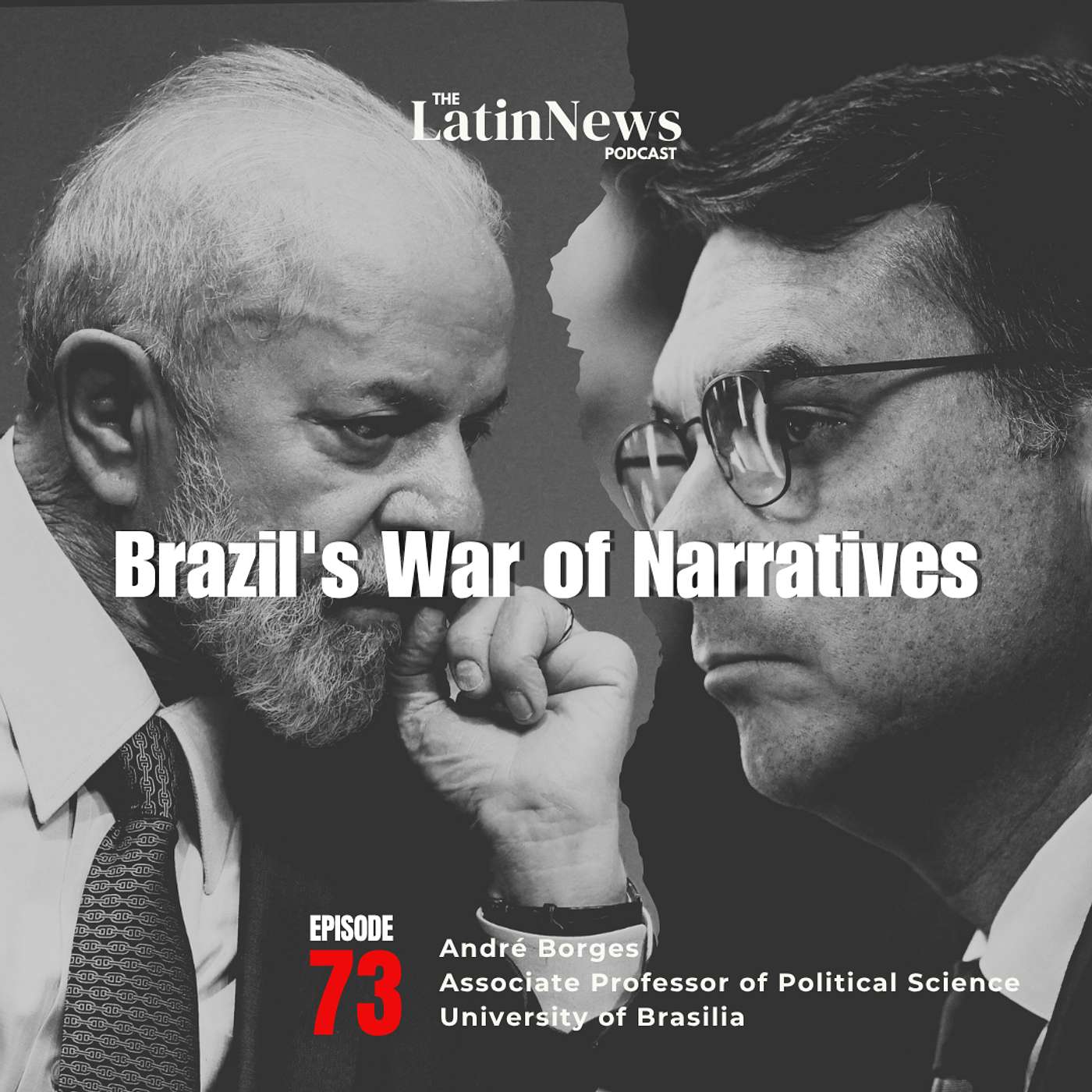
Brazil's political landscape is fraught with complexities as the elections approach. The Banco Master scandal poses significant challenges for Lula's campaign, even as the economy shows signs of improvement.
Understanding these dynamics is crucial for predicting the outcomes of the elections and the future of Brazilian governance. As developments unfold, it will be essential for voters to critically assess the narratives surrounding the candidates and the implications for the country.
And, polls suggest a tight race, indicating that Flávio Bolsonaro - son of former president Jair Bolsonaro - is neck and neck with Lula as...
Decoding Peru's Election Chaos and Economic Resilience
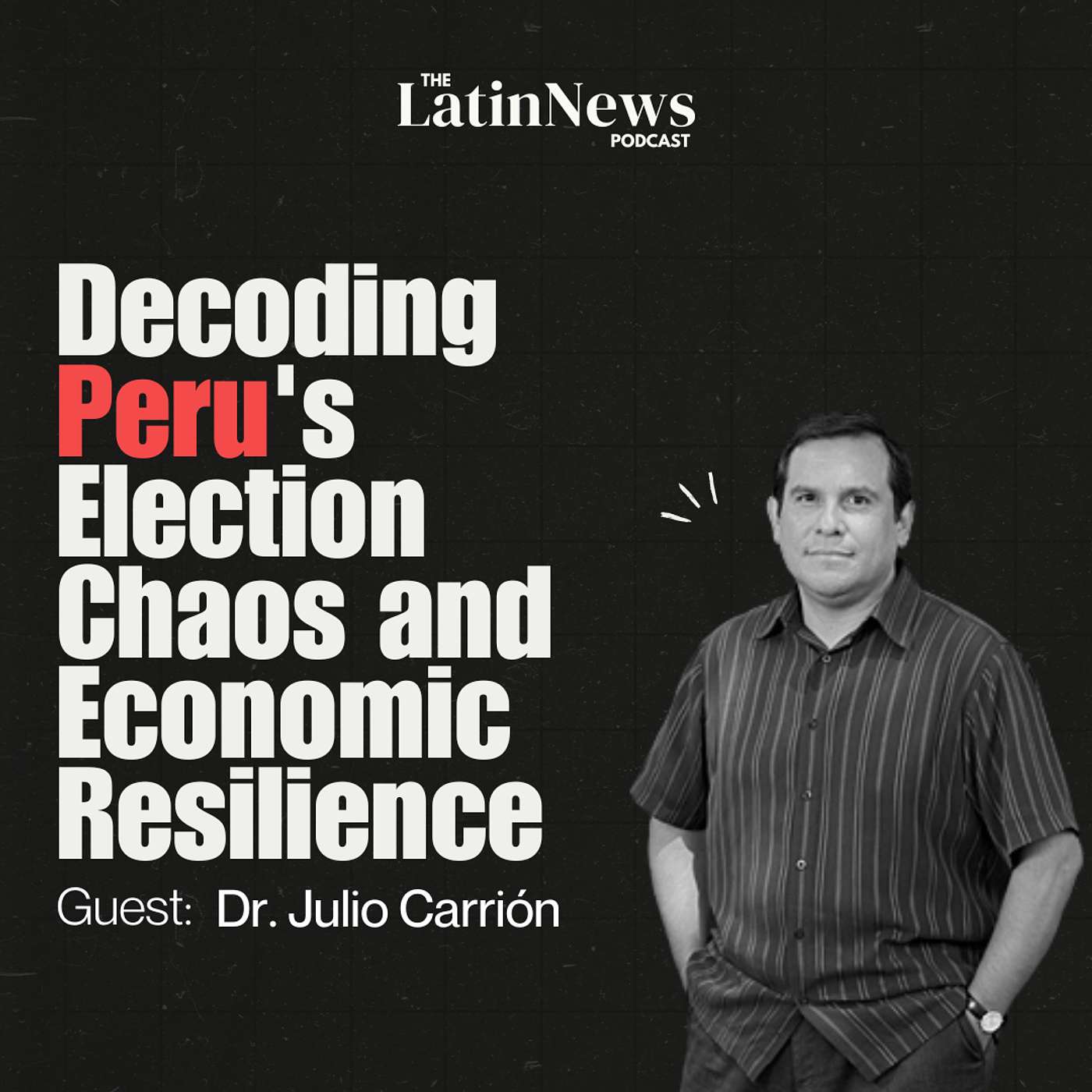
In the ever-shifting landscape of Peruvian politics, understanding the roots of current instability is crucial. With a staggering eight presidents since 2018, the question looms: how did we get here? In The LatinNews Podcast this week, we explore the historical context, the key players involved, and the implications for Peru's future.
Join Richard McColl for an in-depth discussion with Dr. Julio Carrión - specialist in Latin American and Comparative Politics and Professor at the University of Delaware - on the political instability, history, and economic dynamics of Peru, including the legacy of Fujimori, recent elections, and international in...
The Future of Venezuela

On this episode of The LatinNews Podcast, we dive into the complex landscape of Venezuela's political and economic situation following the recent changes in leadership. With insights from Phil Gunson, a senior analyst at the International Crisis Group based in Caracas, we explore what’s happening on the ground, the implications of U.S. involvement, and the challenges ahead for the Venezuelan people.
Phil Gunson provides a unique perspective on the atmosphere in Caracas after the leadership change. While many celebrate Maduro's departure, the existing power structures remain largely intact, leading to a cautious optimism among the po...
Cuba Under US Pressure: Crisis, But Not Collapse

In this episode of The LatinNews Podcast, we assess Cuba’s deepening economic crisis under intensifying US pressure and ask a central question: does severe hardship necessarily lead to regime collapse?
The grinding strategy targeting oil supplies has sharply reduced fuel availability, paralysed transport and worsened daily life on the island. Yet despite visible deterioration, public order remains intact and the Cuban state continues to function.
Joining us is Dr Jorge Domínguez, retired professor at Harvard University and a leading expert on Cuba, who has just returned from Havana. Drawing on first-hand observations, he exa...
Looking at US Policy for Latin America in 2026

In a far-reaching conversation, this week on The LatinNews Podcast, we take a look ahead over 2026 and the possible implications and consequences of US policy towards Latin America.
We ask, how does the US government justify working with a Venezuelan regime that so profoundly espouses the idea of 21st century socialism? Is there any move towards a restoration of democracy in Venezuela? How will President Trump's relationship with President Sheinbaum in Mexico develop and evolve? Will the US intervene in elections in Brazil, Colombia and Peru? And what of Cuba?
Joining us this week is Jo...
Continuity for Costa Rica

Costa Rica has long been the envy of its neighbors in Central America, enjoying economic stability and growth, dependency and security. As we approach the first round of Presidential elections on 1 February 2026, citizens now face the key question of whether they cast their vote for continuity or change?
On The LatinNews Podcast this week, we sit down with Ronald Alfaro Redondo, Professor of Political Science at the University of Costa Rica and researcher at the State of the Nation program, to discuss the upcoming elections and the legacy of outgoing President Rodrigo Chaves.
We talk...
Chile Under President-Elect José Antonio Kast

In our first episode of 2026, we take a look at Chile under president-elect José Antonio Kast who is due to be sworn into office in March 2026, marking a significant swing to the Right in the Andean nation.
Joining us on The LatinNews Podcast this week is Lucia Dammert, Professor of International Relations at the Universidad de Santiago de Chile.
We discuss how Kast won the elections so convincingly and what were the failures of President Gabriel Boric. Will Kast open lithium to private investors, what are his solutions to rising crime in Chile and will he...
Honduras's Knife-Edge Presidential Election

On The LatinNews Podcast this week, we take a look at the recent presidential election in Honduras and explore why the incumbent party performed so poorly, the probable outcomes from this neck and neck contest between Salvador Nasralla and Nasry Asfura, the role of President Trump and the pardon of former president Juan Orlando Hernández.
Joining us is Lucas Perelló, Assistant Professor in the Department of Political Science at Florida Atlantic University.
This episode was recorded before the final vote tally was completed but explores the topics of corruption, drug trafficking, migration, declining remittances and...
Argentina Under President Milei: Two Years In
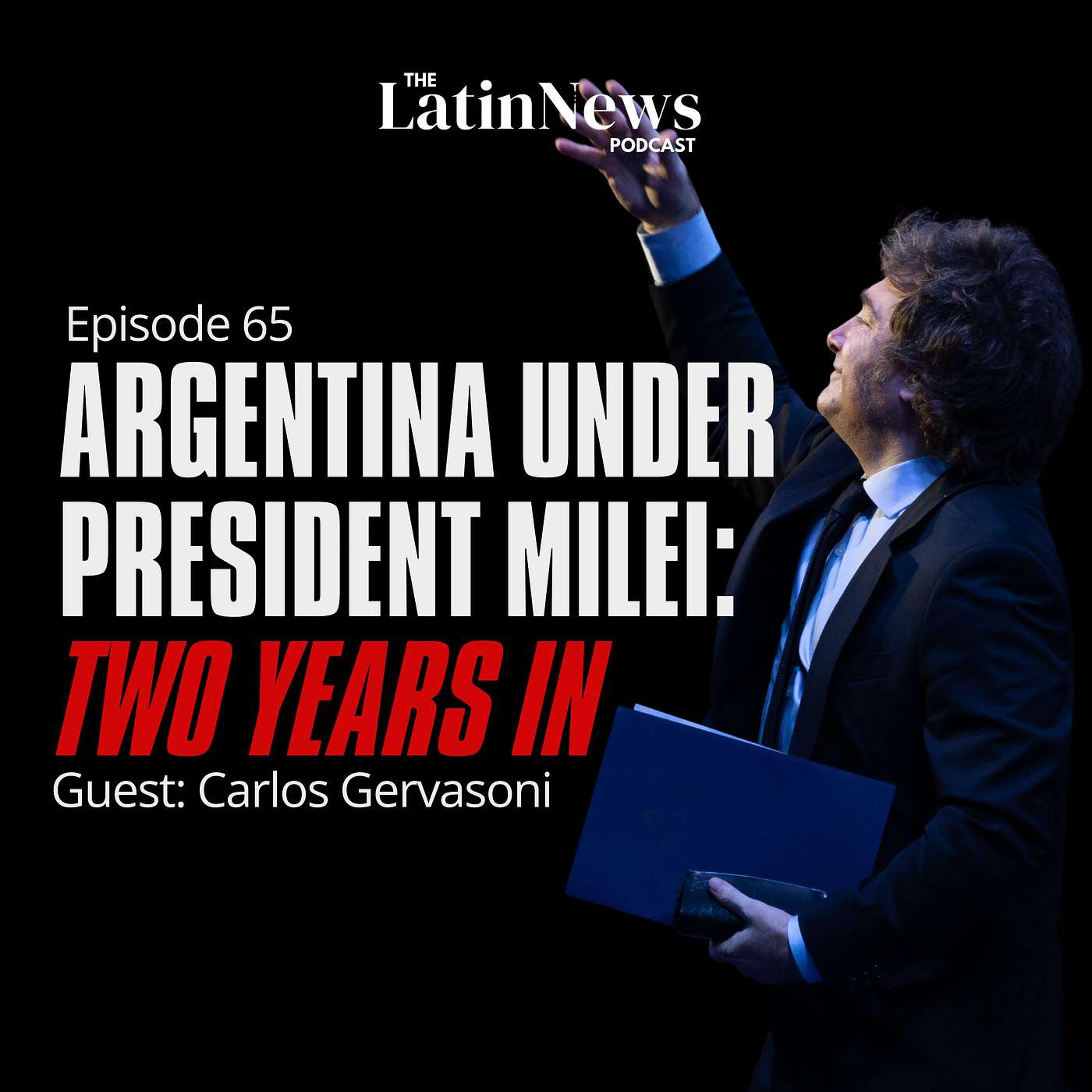
Argentina's colourful President Javier Milei has been in power for two years and on The LatinNews Podcast this week, we take a look at his record so far and possible outcomes for the future after a successful midterm elections and significant public approval for his mandate.
Joining us is Carlos Gervasoni, Associate Professor and chair of Political Science and International Studies at the Universidad Torcuato Di Tella. We discuss Milei's role as a stereotypical outsider, Argentina's disastrous macroeconomic legacy and the political and institutional weaknesses in the country in addition to Argentina's role as a spoiler at m...
Why Jamaica Will Recover After Hurricane Melissa

Over the past 12 years, Jamaica has faced up to challenging hardships in order to earn hard won gains in terms of ordering the economy, reducing the debt to GDP ratio from 150% to 60% and reducing unemployment to 3.3%. It was, in short, an incredible success story.
And then in November 2025, the island was struck by Hurricane Melissa, leaving the country in tatters. The two main industries of tourism and agriculture have been severely damaged and the outlook appears bleak.
However, on The LatinNews Podcast this week, we speak to Caribbean economist Marla Dukharan who believes, in spite o...
Rodrigo Paz: A Presidency of Pragmatism over Ideology in Bolivia?

On The LatinNews Podcast this week, we look at the results of the recent presidential elections in Bolivia and the challenges ahead for president-elect Rodrigo Paz.
Can this pragmatic leader respond creatively to tests including, a contracting economy, the current decline in the MAS party, the revisitation of diplomatic ties between the country and the United States, the Lithium question and regional relationships.
In a far-reaching conversation with Martín Mendoza-Botelho, Professor of Political Science at Eastern Connecticut State University, we discuss Bolivia's immediate needs and how for the first time in a long time, the...
The Risk of Confrontation in Venezuela Rises Yet Further

Why is there a build-up of the US armed forces in the southern Caribbean? According to Dr. Evan Ellis, Latin America Research Professor and General Douglas Macarthur Research Chair at the U.S. Army War College Strategic Studies Institute, our guest on The LatinNews Podcast this week, this is about putting an end to a significant strategic threat to U.S. interests that are threatening the core of things that President Trump said he was going to defend, issues of migration and issues of drugs.
For the Venezuelan people, the importance of restoring Venezuelan democracy, and it’s l...
Guyana's New Political Climate

Newly re-elected President Irfaan Ali will have to move fast on promises to convert his country's sizable oil income into tangible benefits for Guyana's poor, beyond huge prestige infrastructure projects. If President Ali is unable to capitalize and create a coherent development plan and enable a reorientation of Guyana's economy, there will be cause for concern, not least from Azruddin Mohamed, leader of the new WIN (the recently formed, We Invest in Nationhood party) who pulled in 25 per cent of the vote in the general election.
Guyana’s offshore oil fields, discovered by ExxonMobil in 2015, have transformed the...
One in Nine Live Under Criminal Governance in Latin America

On The LatinNews Podcast this week, we look at how criminal organizations offer basic order and security in Latin America and how decades of authorities resorting to repressive strategies in order to address underlying social problems have provided fertile platforms for criminal shadow governments.
Misguided state policies have shown that political questions have to change and there is now the need to rethink how to deal with the engines powering criminal governance in the region. We discuss how mass incarceration and repression strengthens the criminal groups it aims to constrain.
We are joined by Benjamin Le...
An Uncertain Second Round of Elections in Bolivia Ahead

Following the historic defeat of the MAS in the first round of presidential elections in August 2025, Bolivians are left with two options to vote for, both to the right of centre. Former president Jorge Quiroga will face Senator Rodrigo Paz Pereira in a run-off set to take place on 19 October 2025.
On The LatinNews Podcast this week, we take a look at the results of the first round and explore some of the reason for the total collapse of the MAS party, we discuss the legacy of former president Evo Morales, who ruled Bolivia from 2006-2019, and his c...
Mexico's Judicial Reform: A Future Headache for President Sheinbaum?

In one of his final acts as president of Mexico, Andrés Manuel López Obrador pushed through a contentious judicial reform. López Obrador celebrated the overhaul of the judiciary as a necessity and an important legacy of his government.
A primary concern is that the reform weakens judicial independence, reducing checks and balances on the government. There are fears the election process could be open to political influence, reducing the judiciary’s autonomy from government and strengthening the Morena party's dominance. There are also concerns that organized crime groups could interfere in the election of judge...
Political Violence Increasing in Colombia

Threats of political violence and a deteriorating security situation are raising concerns as Colombia approaches its presidential elections in May 2026, while tensions with the United States have also increased. Security challenges are expected to weigh heavily on the upcoming electoral period.
This week on The LatinNews Podcast, host Richard McColl speaks with Elizabeth Dickinson, Senior Analyst for the Andes Region at International Crisis Group, who explains the factors behind the current situation in Colombia and offers recommendations for the months ahead.
Follow LatinNews for analysis on economic, political, and security developments in Latin A...
Economic Stability in Paraguay but Corruption Remains an Issue

Under President Santiago Peña, Paraguay is enjoying economic stability, the fastest growth in Latin America, the lowest debt to GDP ratio in the region, a stable currency and the award of investment grade status for the first time ever.
And, while this is impressive and cause for celebration, analysts are asking what the Paraguayan government is doing to combat corruption?
On The LatinNews Podcast this week, we speak to Andrew Nickson, Honorary Reader in Public Management and Latin American Studies at the University of Birmingham and ask about Peña's successes and his shortcomings over...
Can Ecuador's President Noboa Deliver?

President Noboa’s victory in Ecuador seems to have owed a huge amount to his sweeping crackdown on organised crime, which has seen the military permanently mobilised against gangs. Insecurity is repeatedly identified as voters’ main concern. Can Noboa deliver?
It's clear that Noboa stands and falls on security and voters gave him the benefit of the doubt that he needed more time and that his rival González would be too soft on crime. But, he has to deliver on this as well as addressing an increasingly fraught situation due to massive energy outages, the state of eco...
The Peruvian Government is Failing to Regulate Illegal Mining

The biggest threat to Peru's efforts to further tap into its vast copper ore reserves is the growing number of informal and illegal mining activities. Conflicts between property owners and concession holders have become a critical issue, and the Peruvian government is striving to find a balance. Peru's rich copper and gold ore reserves have attracted hundreds of thousands of small-scale miners, most of whom operate in areas where they do not own mining rights. It is estimated that 40 per cent of Peru's gold exports come from informal mines.
Many use a temporary registration process called REINFO, w...
Inequality and Marginalization on the Rise in Costa Rica

Security and violent crime are the single most pressing issues on the minds of voters regarding the presidential elections in Costa Rica in February 2026 and so, on The LatinNews Podcast this week, we investigate the causes for these troubles - including inequality and marginalization - and what President Rodrigo Chaves has done to combat this.
We discuss the broader trends in the region regarding the elections, Costa Rica's strong identity, Chaves' open admiration for President Bukele in El Salvador and the country's foreign policy plans.
Joining us is Mary Fran T Malone, Professor in the De...
Pope Leo XIV and his deep connections to Latin America

The recent election of American Cardinal Robert Prevost as Pope Leo XIV marks a historic moment for the Catholic Church. Not only is Leo XIV the first pope from the United States, but he is also a pontiff deeply connected to Latin America, where he dedicated nearly forty years to pastoral work, particularly in Peru. In this respect, Leo would appear to be another Latin American pope and there is great excitement in the region resulting from his nomination.
On The LatinNews Podcast this week, we ask whether Pope Leo's deep connections to Latin America will ensure a...
The Rise of the Far-Right in the Southern Cone

How much is historical revisionism in South America's southern cone responsible for a rise in the far-right in Argentina, Brazil, Chile and Uruguay? What does this mean for the largely prevailing consensus on the brutality and the indefensible and egregious human rights violations perpetrated by the dictatorships in the 1970s and 1980s? Can we point to an amnesia of these periods which has contributed to a democratic backsliding in the region? Where do President Javier Milei, former president Jair Bolsonaro, Chilean politician Jose Antonio Kast, and others, fit into this?
In this episode of the LatinNews podcast w...
The Importance of Chile's Pension Reforms

As if we hardly need reminding that Chile's controversial pension reforms were the focal point of protests at the heart of the civil unrest or "estallido social". This has been particularly incendiary in Chile with the AFP's origins dating back to the Pinochet dictatorship.
Chile has always seemed like the Switzerland of Latin America, routinely topping regionally adjusted league tables, but obviously it was massively inequitable and the pension system bred particular resentment over time.
On The LatinNews Podcast this week, we speak to Nicholas Barr, Professor of Public Economics at the London School of Ec...
Trinidad and Tobago's Balancing Act

On The LatinNews Podcast this week, we take a look at the implications of mass deportations from the United States and the possible effects of this on Trinidad and Tobago's society, the current state of emergency due to violent crime as well as the upcoming elections in April.
With the surge in gang-driven crime due to transnational drugs, arms and people trafficking, Trinidad and Tobago finds itself negotiating a precarious balancing act in managing the challenges of being located alongside Venezuela and adhering to demands from the United States.
We speak to Ivelaw Lloyd Griffith, an...