The Remarkable SaaS Podcast
For B2B SaaS founders who are done blending in. The Remarkable SaaS Podcast features unfiltered conversations with SaaS founders navigating the real challenges of building software that matters. Hosted by Ton Dobbe, author of The Remarkable Effect, each episode zooms in on one of the 10 traits that define remarkable software companies—like offering something truly valuable and desirable, and aiming to be different, not just better. Some guests are scaling fast. Others are still in the trenches—but all share hard-won lessons about what it really takes to create pull, shorten sales cycles, and become the only logical choice in t...
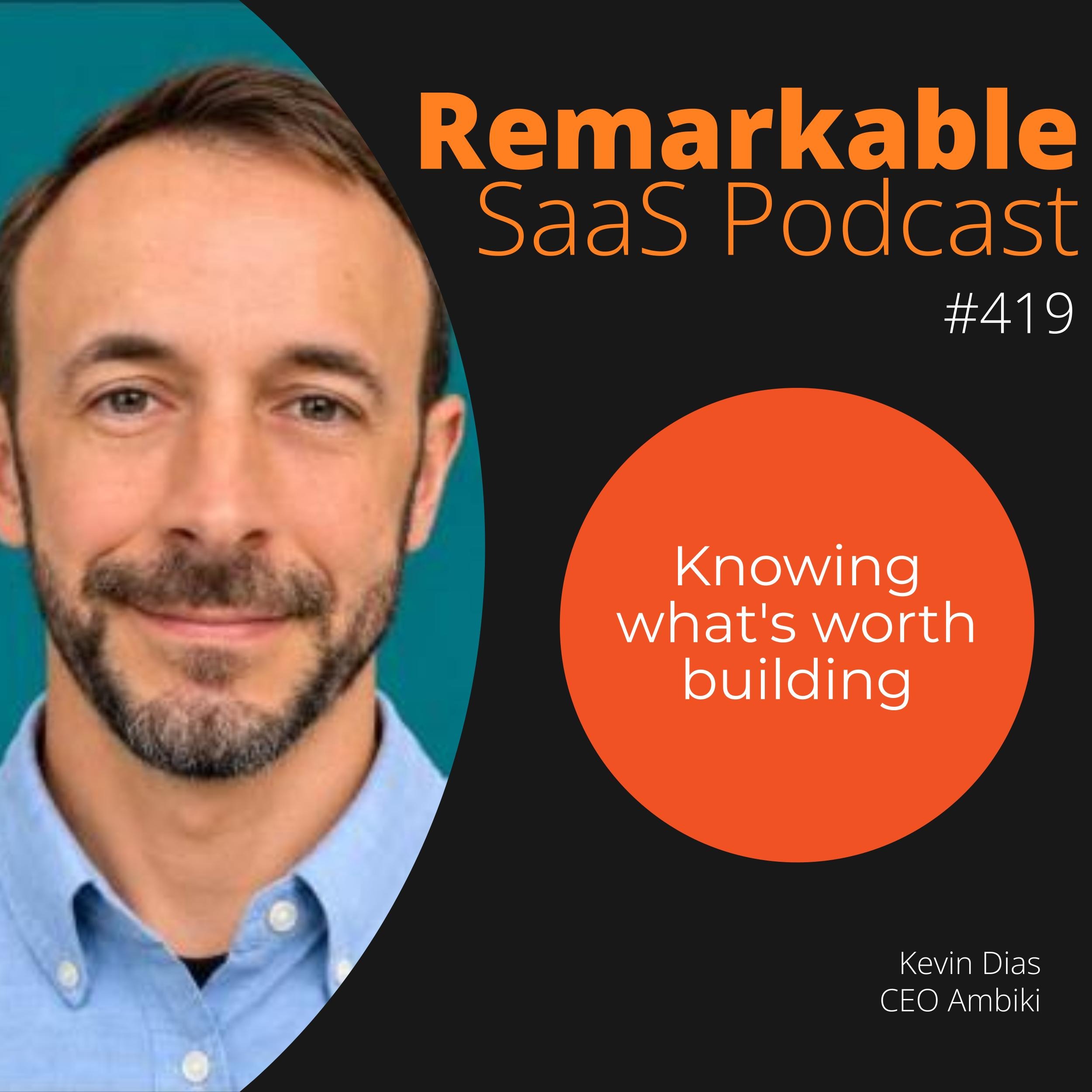
#419 – Kevin Dias on The Problem-First Method
A story about the real problem behind every feature request.
This episode is for SaaS founders who build what customers ask for and still watch new features go unused.
Customer requests are where good teams go wrong.
Kevin Dias, founder of Ambiki, spent three years inside a Tennessee speech therapy practice, listening to therapists and building their software as he went. That software grew into Ambiki.
While building Ambiki, he wrote a book around one question: what problem are we solving, and for whom? Every feature at Ambiki starts there. No...
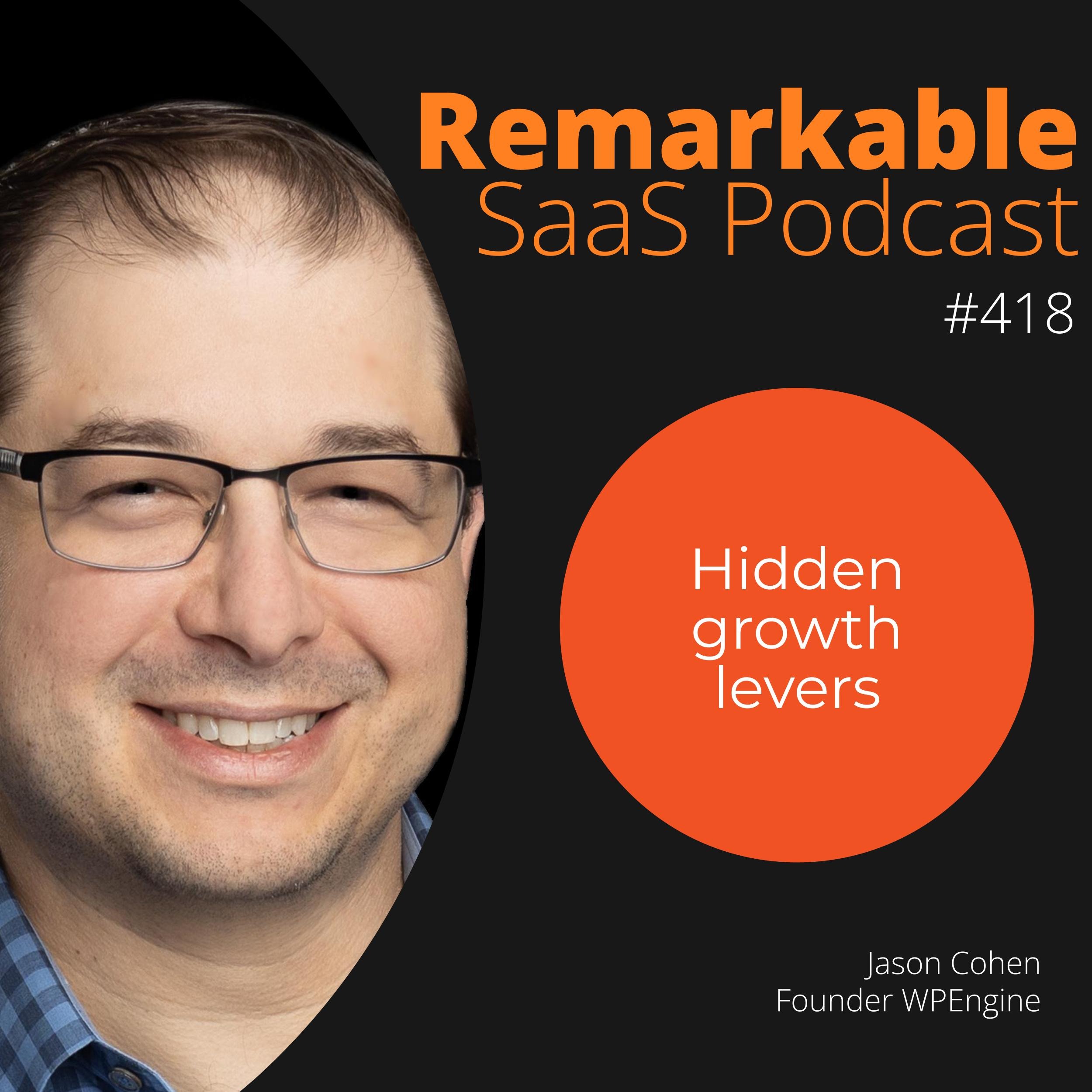
#418 – Jason Cohen on hidden multipliers
A story about the growth levers you can't see from inside.
This episode is for SaaS founders who are working harder than ever and are not seeing the growth they aspired to.
Most growth problems are hiding in plain sight.
Jason Cohen is the founder of WP Engine and author of Hidden Multipliers. He has built four companies over 25 years, two of them now worth billions, and invested in sixty more.
Across all of them he kept finding the same thing. A few small changes moved growth far more than everything...
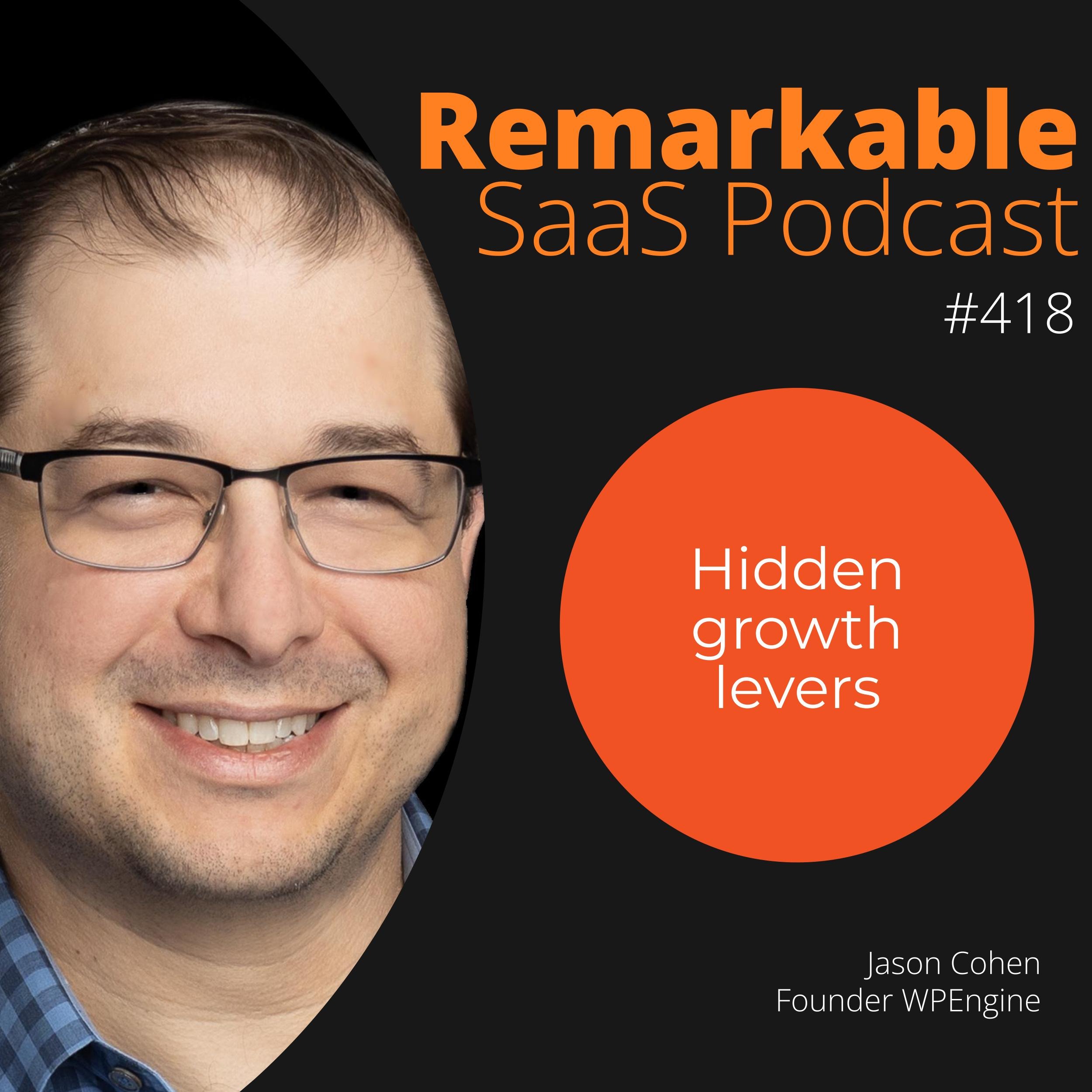
#418 – Jason Cohen on hidden multipliers
A story about the growth levers you can't see from inside.
This episode is for SaaS founders who are working harder than ever and are not seeing the growth they aspired to.
Most growth problems are hiding in plain sight.
Jason Cohen is the founder of WP Engine and author of Hidden Multipliers. He has built four companies over 25 years, two of them now worth billions, and invested in sixty more.
Across all of them he kept finding the same thing. A few small changes moved growth far more than everything...
#417 – Eric Bidinger on the moat that grows while customers use it
A story about letting go of what everyone else protects.
This episode is for SaaS CEOs who still believe their product is the thing competitors can't copy.
Your product is the easy part to copy.
Eric Bidinger is co-founder and CEO of Luca. Before that, seventeen years in private equity, where cash was the only number that counted.
Those years of buying companies taught him what a business can really defend. So when founding Luca, he decided to defend something else.
And this inspired me to invite Eric to...
#416 – Tony Migliore on the growth that isn't worth having
A story about saying no to the volume everyone wants.
This episode is for SaaS founders who assume a big market means there's enough room in it for them to take a share.
Most software companies chase the biggest pile of volume.
Tony Migliore has a different view. He's the founder and CEO of Moova, a last-mile delivery company in Latin America. Thirty years in logistics taught him where he has no right to win.
So for Moova, he consistently turns down high-volume work priced at cents. He'd rather serve fewer...
#415 – How Amarjot Singh picks his focus so he never has to justify the value
A story about saying no to good, paying work.
This episode is for founders whose deals keep stalling, no matter how hard the team works.
A typical mantra in business software is that you build products that technically everyone can use - simply because that creates the biggest market opportunity.
Amarjot Singh, founder and CEO of Skylark Labs, doesn't. He grew up watching his father serve in the Indian Army infantry, in combat. His first project after his PhD was software that helped rescue children from brothels.
This has turned into...
#414 – How Dima Gutzeit rejected three markets and got to dictate the terms
A story about saying no until you're the only option.
This episode is for founders who believe a horizontal product means a horizontal go-to-market.
A product for everyone still needs a market of one.
Dima Gutzeit, founder and CEO of LeapXpert, watched bankers in Hong Kong do their real work on WhatsApp in 2017, then spent two years building before selling anything. He wrote a large part of that first product himself.
He built something that fits any industry. Then he turned down almost every industry that asked. Today he sets the...
#413 – How Cyril Golub chose the ground Amazon can never stand on
A story about picking a fight your biggest competitor cannot win.
This episode is for founders who believe the only answer to a bigger player copying them is to build faster.
Most founders fear the day the giant copies them.
It happened to Cyril Golub, CEO of Jinnify — Amazon shipped what they'd built within months. He'd spent twenty years inside e-commerce, long enough to know how marketplaces actually make their money.
So, his answer wasn't to beat them by building faster.
This inspired me to invite Cyril to my po...
#412 – How Martin Payne turned a flatlined company from $7M to $20M
A story about what he kept, and what he cut.
For SaaS founders whose growth has stalled and who can't tell whether the problem is the company or the plan.
Most new CEOs tear down what they inherit.
Martin Payne, CEO of TextUs, took a different path. He replaced the founder CEO in April 2020. Growth had flatlined, cash was burning, and he laid off a third of the company in his first year.
The business is now at $20M. He'll tell you most of what got it there was already in...
#411 – Alex David: The question AI made everyone forget
A story about thinking harder while everyone builds faster.
This episode is for founders wondering why shipping faster with AI hasn't made their product any better.
Building has never been easier. That's exactly the problem.
Alex David spent a decade in pricing — Simon-Kucher, then Segment — before founding unSurvey, an AI company G2 acquired last year. Today, he leads AI Solutions there.
His worry is simple: the tools got cheap, but good judgment didn't. While everyone rushed to build, he kept asking the question most people skip ”Is this even worth building?”
Thi...
#410 – How Mazy Dar found room in Google and Microsoft's market — and won the world's biggest banks
A story about the market everyone assumed was taken.
This episode is for founders wondering how to find room in a market owned by giants.
The biggest software market in the world looked fully taken.
Mazy Dar, CEO of Here, found room in it anyway. He spent 26 years on one pain the giants' browsers aren't built around — a browser made for work, not the public internet.
The world's biggest banks now run mission-critical work on it.
And this inspired me to invite Mazy to my podcast. We explore how yo...
#409 – How Renaud Charvet chose ownership over speed — and made Ringover impossible to copy
A story about what compounds when you don't take the shortcut.
This episode is for sales-led SaaS founders who invested to grow fast but now realize they forgot to grow their differentiation.
Most software companies buy speed — they build on someone else's foundation — and never count the cost. Renaud Charvet, co-founder and US CEO of Ringover, took the opposite path. He started in 2005 selling cheap international calls, watched Skype and WhatsApp kill that business, and built something new from scratch. Bootstrapped for fifteen years, then raised to expand — and moved his family to the US to mak...
#408 – How Stan Markuze refused the me-too game and made buying a no-brainer
A story about choosing the one thing no competitor would copy.
This episode is for sales-led SaaS founders stuck in a crowded category, wondering how to escape the price-and-features war
In a crowded category, most founders just try to win it. Stan Markuze, CEO of Balance, did something else. Five companies in, with two auto-tech exits and a decade in real estate, he'd seen what a price war looks like. So when seven companies were selling the same treasury tool, he refused to be the seventh.
And this inspired me to invite Stan...
#407 – How Martin Gourdeau refused the commodity race and added $1M ARR in 9 months
A story about choosing the harder fight on purpose.
This episode is for SaaS founders wondering why adding more features to their niche product isn't creating the edge it used to.
Most niche SaaS races to add features—and wonders why margins shrink.
Martin Gourdeau, CEO of Vacation Tracker, took a different path. After running Workleap as President and GM, he took a year off to study what's actually changing in software—then chose a 22-person bootstrapped company over another large stage.
And he didn't pick Vacation Tracker by accident. He pick...
#406 – How Chad Gaydos chose fit over TAM and doubled deal sizes in 12 months
A story about asking the question many CEOs avoid—and finding real money.
This episode is for SaaS CEOs with a nagging feeling that their growth isn't compounding the way it should.
Most CEOs chase market size. And miss what actually matters.
Chad Gaydos, CEO of Procurify, took a different path. With 30 years across SAP, Skillsoft, Talkdesk, and Total Expert, he's learned that growth isn't about how big the market is—it's about how well you fit it. When he took the CEO seat in January 2025, he asked a question most operators skip: Is t...
#405 – Burak Karakan, CEO of Bruin - On the cost of trying to please everyone
A story about an opinionated founder, the customers he turns away, and the ones who stay.
This episode is for SaaS founders quietly wondering whether trying to be a fit for every buyer is what's slowing them down.
Most founders think the goal is to be a fit for as many buyers as possible. Burak Karakan, Co-founder and CEO of Bruin, runs his company on the opposite belief. A former engineering manager at HelloFresh, he built an opinionated product — and he's at peace with the buyers who walk away because of it.
And th...
#404 – How Tim Barker proved the software org chart is now optional
A story about rebuilding how a company runs from the ground up.
This podcast is for SaaS founders wondering whether the playbook they've been running is still enough to keep their edge.
Most software CEOs scale by hiring. Few question that.
Tim Barker, CEO of Attain IP, walked away from the obvious next move. After scaling Salesforce in EMEA, leading DataSift through Twitter's data shutdown, and running a public mental health platform for five years, he turned down PE roles and board seats to start over. New company, new market — white-box AI for pa...
#403 – Why Amos Bar-Joseph rejected the playbook every unicorn ran
A story about questioning the play itself—not the execution.
For SaaS founders quietly wondering whether their next round will fix what the last one didn't.
Most founders who fail try harder the next time.
Amos Bar-Joseph, co-founder and CEO of Swan, took a different path. Three-time founder. Two prior B2B startups built on the unicorn growth-at-all-costs playbook—both ended in failure. On the third one, he didn't tighten his execution. He rejected the play—and reached seven figures in ARR in just nine weeks.
And this inspired me to invite...
#402 – How Joseph Lee refused to outspend his rivals — and outgrew them anyway
A story about advantages that capital cannot buy.
This episode is for SaaS founders who are watching better-funded rivals raise round after round—and questioning whether outspending is really the only way to win.
Most founders chase scale before they've earned the right. Joseph Lee, CEO of Supademo, took a different path. After six years and several pivots in his previous company, he started Supademo in early 2023 with a bootstrap mindset—even after raising. He did the gritty work that bigger competitors refused to do, and shared every harsh lesson in public from day one.
#401 – How Alex Levin grew Regal 4x while ignoring what everyone else was doing
A story about refusing what the market expected—and a business that grew stronger for it.
This episode is for sales-led SaaS founders wondering why adding more people keeps making growth harder, not easier.
When I last spoke with Alex Levin in 2022, Regal was already scaling. Since then, revenue has grown 4x—with the exact same team.
Back in 2022, Regal was growing fast, and the team was expanding with it. Alex made a different call. He stopped hiring to solve problems—and started solving problems instead. Three and a half years later, the team i...
#400 - What 99 CEOs wish they'd known sooner
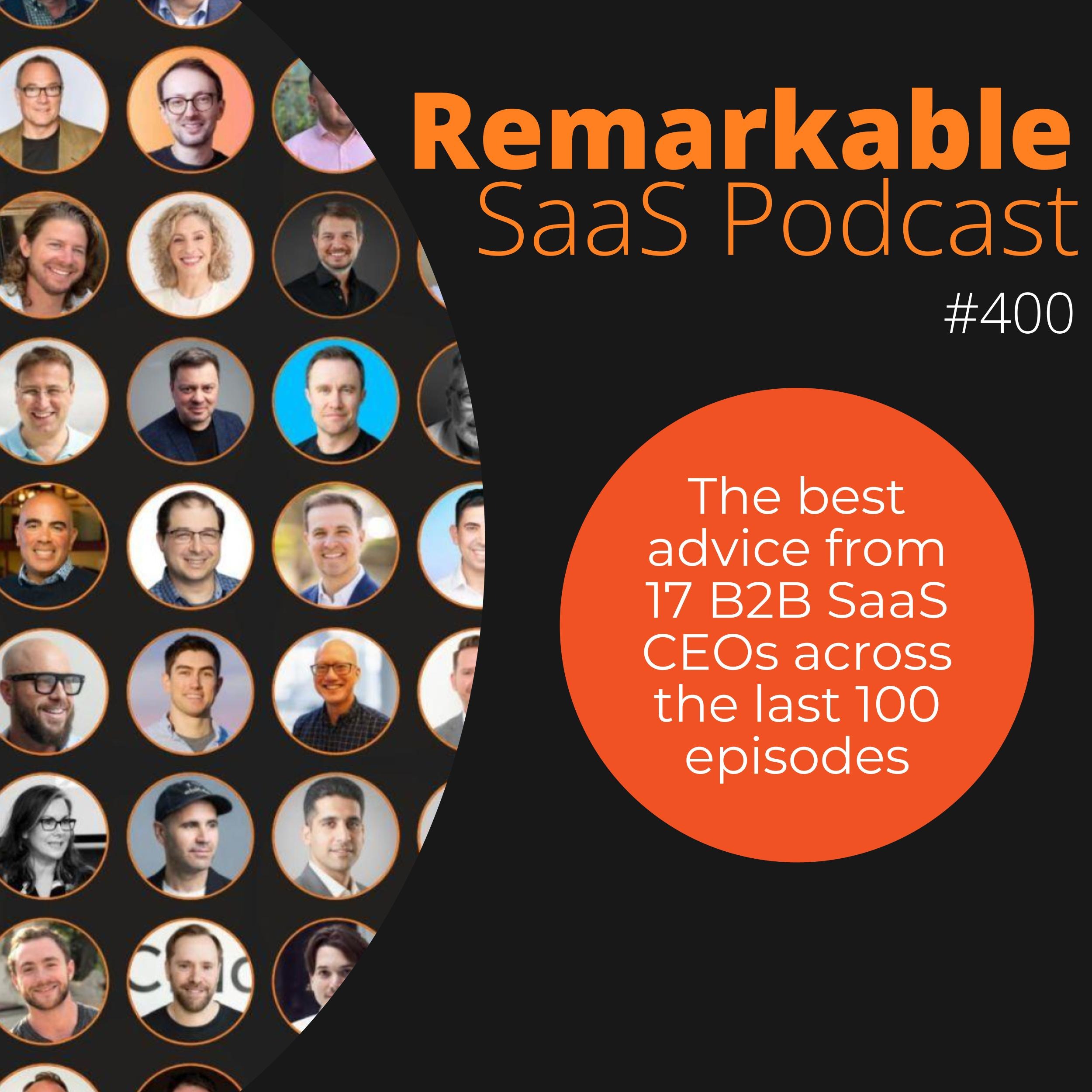
Four hundred episodes.
When I started this podcast, I had one simple belief: the best lessons in building a remarkable software company don't come from business books or consulting frameworks. They come from CEOs who've lived it — the ones who made the hard calls, paid for the wrong assumptions, and built something worth talking about.
I went back through the last 99 conversations — and pulled the 18 insights that I believe will genuinely open your eyes. Not the ones that make you nod. The ones that hold a mirror.
I selected them for one reason: each...
#399 – How Louis Hoch rejected the obvious customers—and grew when rivals collapsed
A story about choosing who not to serve—and building competitive advantage no crisis can touch.
This episode is for sales-led SaaS founders who've never tested whether their revenue would survive a major market shock — and aren't sure they want to know the answer.
Most software companies are built to serve as many customers as possible. Louis Hoch, CEO of Usio, chose differently.
Louis has been building in payments since 1998. He raised $50 million while competitors raised $200 million—and won. He built a company that processes enough direct bank payment volume to rank as the 50...
#398 – How Scott Reynolds bet on depth over breadth and built a position that sticks
A story about choosing the hard problem—and winning because of it.
This episode is for sales-led SaaS founders who feel their product lead shrinking—and wondering what actually creates a position competitors can't close.
Most founders chase obvious markets. Scott Reynolds chose a complicated one nobody else wanted.
Scott, co-founder and CEO of UpCodes, is a trained architect who has lived the pain of navigating construction regulations. Weeks buried in phone-book-sized regulations that no software had organized—until he built it.
While others built broad tools for obvious problems, Scott went n...
#397 – How Dean Mathews rejected conventional growth and built a company 170,000 people rely on every month
A story about measuring success differently—and what that single decision builds.
This episode is for SaaS founders who sense their growth metrics are missing something — and can't put their finger on what.
Many SaaS companies track monthly active users. Dean Mathews asks a different question when he looks at that number.
Dean Mathews, Founder and CEO of OnTheClock, launched his time-tracking company in 2004 after reading complaints in a small business forum. For the next decade, he ran it as a side project — patient, focused, and measuring success by one question: are we actual...
#396 – Why Hewitt Tomlin reversed course at $10M
A story about admitting your own strategy pulled you away from what matters.
This episode is for sales-led SaaS founders wondering whether their expansion strategy is building strength—or spreading them thin.
Most SaaS founders treat $10M as proof the playbook works. Hewitt Tomlin, CEO of TeamBuildr, treated it as a reason to question everything.
He and his college teammate James Peters built TeamBuildr from a frustration with paper workout programs into a $10M strength and conditioning platform—with fewer than 50 employees and zero outside capital.
But at $10M, Hewitt made a ch...
#395 – How Bassem Hamdy created something no competitor can touch
A story about destroying your own work—and creating what lasts.
This episode is for sales-led SaaS founders who suspect their product is slowly becoming a custom shop—and don't know how to stop it.
Bassem Hamdy, CEO and Co-Founder of Briq, has spent 25 years in construction technology—three software revolutions, three companies.
He says Briq found product market fit every 24 months. Each time meant tearing something down to build the next version.
Each time, the same thing triggered the rebuild — the company had started solving for individual customers instead of the mark...
#394 – Jon Jorgensen on how Access Group went from £50M to £9.2B valuation
A story about what happens when you build a Forever Business—instead of chasing the next exit.
This episode is for sales-led SaaS founders who feel the business is getting slower the bigger it gets—and starting to accept that as normal.
Most software companies slow down as they scale. Access got faster.
Jon Jorgensen, Co-CEO of The Access Group, joined as a telesales trainee straight from school. In 2011, the company was doing £24 million. Fifteen years later, it's a £1.2 billion business with 160,000 customers.
His belief: if you build what he calls a "For...
#393 – How Andrei Pitis killed a working product and grew 10x in months
A story about betting on what's coming—not what's working.
This episode is for SaaS founders questioning whether their current traction is real momentum—or just comfortable motion.
Traction can be the most dangerous thing in a startup.
Andrei Pitis, CEO of Genezio, built a serverless developer platform with real users and real momentum. Then he killed it. Andrei Pitis built Vector Watch, a smartwatch with 30-day battery life, and sold it to Fitbit. With Genezio, he did something harder—killed a working product because he spotted a shift most founders missed.
And...
#392 – How Georgi Petrov built four companies on profit, not fundraising
A story about choosing margins over momentum—and letting investors call you wrong.
This episode is for SaaS CEOs stuck around 20% EBITDA and wondering what it actually takes to double it without cutting their way there.
Most SaaS companies treat 20% EBITDA as a healthy number. Georgi Petrov targets 50.
Georgi, CEO of Uxify, has founded four companies in 15 years with two exits—including one to WP Engine. He doesn't get there by cutting. He gets there by building differently from day one: small teams with high ownership, self-service at premium prices, and a refusal to a...
#391 – How Pete Hunt turned a tool into a tribe
A story about users competitors can't steal.
This episode is for SaaS founders wondering why their users like the product but don't love it.
Second movers usually copy the leader's playbook.
Pete Hunt, CEO of Dagster Labs, took a different path. He joined as Head of Engineering in 2022, became CEO ten months later, and inherited a company that was #3 or #4 in a crowded category. Today they're #2 overall—and #1 for greenfield deployments.
The difference? Pete built a product with values so clear that choosing it feels like choosing sides.
And th...
#390 – How Jim Whatmore chose patience over speed to dominate UK field service
A story about building market leadership by saying no to obvious growth—on purpose.
This episode is for SaaS founders chasing international expansion—and questioning if dominating locally first makes more sense.
Most SaaS companies chase international markets early. Get traction locally, then expand globally fast.
Jim Whatmore, CEO of Joblogic, walked away from that playbook. He spent three years attending HVAC shows in the US, picked up customers, then stopped. He saved his marketing budget for UK and Ireland only. He turned down international revenue to dominate his home market first.
Fr...
#389 – How Tal Peretz questioned the AI playbook and created results competitors can't match
A story about choosing what others avoid—and creating competitive advantage no one can copy.
This episode is for sales-led SaaS founders wondering why their AI product investments are not creating the competitive edge they expected.
Most SaaS companies race to add AI features and wonder why nothing changes.
Tal Peretz, CEO of Onfire, took the opposite path. Before writing a single line of code, he interviewed 275 revenue leaders. Then he spent months building a proprietary data layer from the public web—Reddit, Stack Overflow, Discord—tracking 50 million engineers. Only after that foundation was so...
#388 – How Panos Siozos reached 12.5K customers across 150 countries
A story about solving two problems everyone else picks between.
This episode is for SaaS founders with deep domain expertise—and wondering why the market isn't responding the way they expected.
Most SaaS companies struggle because they know what the solution should be.
Panos Siozos, CEO of Learnworlds, came from a research background in educational technology—three generations of teachers, deep pedagogical expertise. He could have built the pedagogically perfect platform.
Instead, he put the scientists in the backseat and listened to what customers actually needed. That decision took him from buil...
#387 – How Mariano Garcia-Valiño proved he could save lives—but couldn't find anyone willing to pay
A story about how "everyone agrees" is the most dangerous lie in SaaS.
This episode is for SaaS founders frustrated watching their solution solve real problems—but wondering why no one actually buys it.
Most healthcare startups don't fail because their tech doesn't work. They fail because they can't find anyone willing to pay for it.
Mariano Garcia-Valiño, Founder and CEO of Axenya, spent 18 months proving his preventive care model worked clinically—reducing diabetes costs by 20% and mortality risk by 18%. Then he spent another year without selling a single dollar because insurers, hospi...
#386 – How Rex Kurzius built a business that funds itself
A story about choosing autonomy over speed—and building something that lasts.
This episode is for SaaS founders tired of chasing growth rounds—and wondering if slow, profitable building could win.
Most software companies raise capital to scale fast. Rex Kurzius, Founder of Asset Panda, rejected that path entirely. His father ran a bakery. His brother built MailChimp. Rex grew up watching immigrant work ethic turn into entrepreneurial success—and applied the same principle to software.
He spent 13 years building Asset Panda from startup to a world-class asset tracking platform. No investors. No board...
#385 – Speed is the strategy: Redefining Enterprise software for a changing world
A story about speed as strategy—and why saying no to billion-dollar deals built a stronger company.
This episode is for SaaS founders who feel stuck between landing big logos and building what actually scales.
Most SaaS companies don't fail because they lack ambition. They fail because they chase the wrong customers.
Mark Walker, CEO of Nue, took a different path. With decades in enterprise software—ERP, CRM, NetSuite—he joined Nue in March 2022 when it was pre-revenue and a "science experiment." He made one decision that changed everything: focus on speed over comple...
#384 – How Wokelo built trust (and premium prices) by choosing depth over speed
When everyone else optimized for instant answers, Sid Masson built for depth and accuracy—and enterprise customers paid more for the difference.
This episode is for SaaS founders who feel trapped competing on speed—and suspect their customers actually want something else.
Most SaaS companies don't fail because they're too slow. They fail because they optimize for speed over trust.
Sid Masson, CEO and Co-founder of Wokelo, took a different path. He started his career as a management consultant doing private equity due diligence with dozens of tabs open, knowing how costly missed insi...
#383 - How Joshua Summers turned a banking crisis into an AI workforce for credit
This episode is for founders stuck building features nobody asked for—who want to discover what customers actually need.
Joshua Summers, CEO of EnFi, took a different path. After helping dozens of startups move their cash during the Silicon Valley Bank collapse, he discovered the real problem wasn't deposits or covenants—it was human capacity to assess risk. While others rushed to capitalize on the crisis, he spent months investigating what actually broke.
And this inspired me to invite Joshua to my podcast. We explore how building from crisis reveals opportunities others miss. Joshua shares hard...
#382 - How Martin Balaam chose depth over scale and built to $7M ARR
This episode is for SaaS founders tired of the "grow at all costs" playbook—who suspect there's power in saying no to the wrong customers.
Most SaaS companies don't fail because of bad product. They fail because they try to please everyone. Martin Balaam, CEO of Pimberly, chose restraint over reach. Former physicist turned serial entrepreneur, he'd already scaled and exited Jigsaw24 at 3x returns. At Pimberly, he refuses customers his team can't delight—even when they're ready to sign.
And this inspired me to invite Martin to my podcast. We explore how qualifying customers as r...
#381 - How David Villalon built AI workers that enterprises actually trust
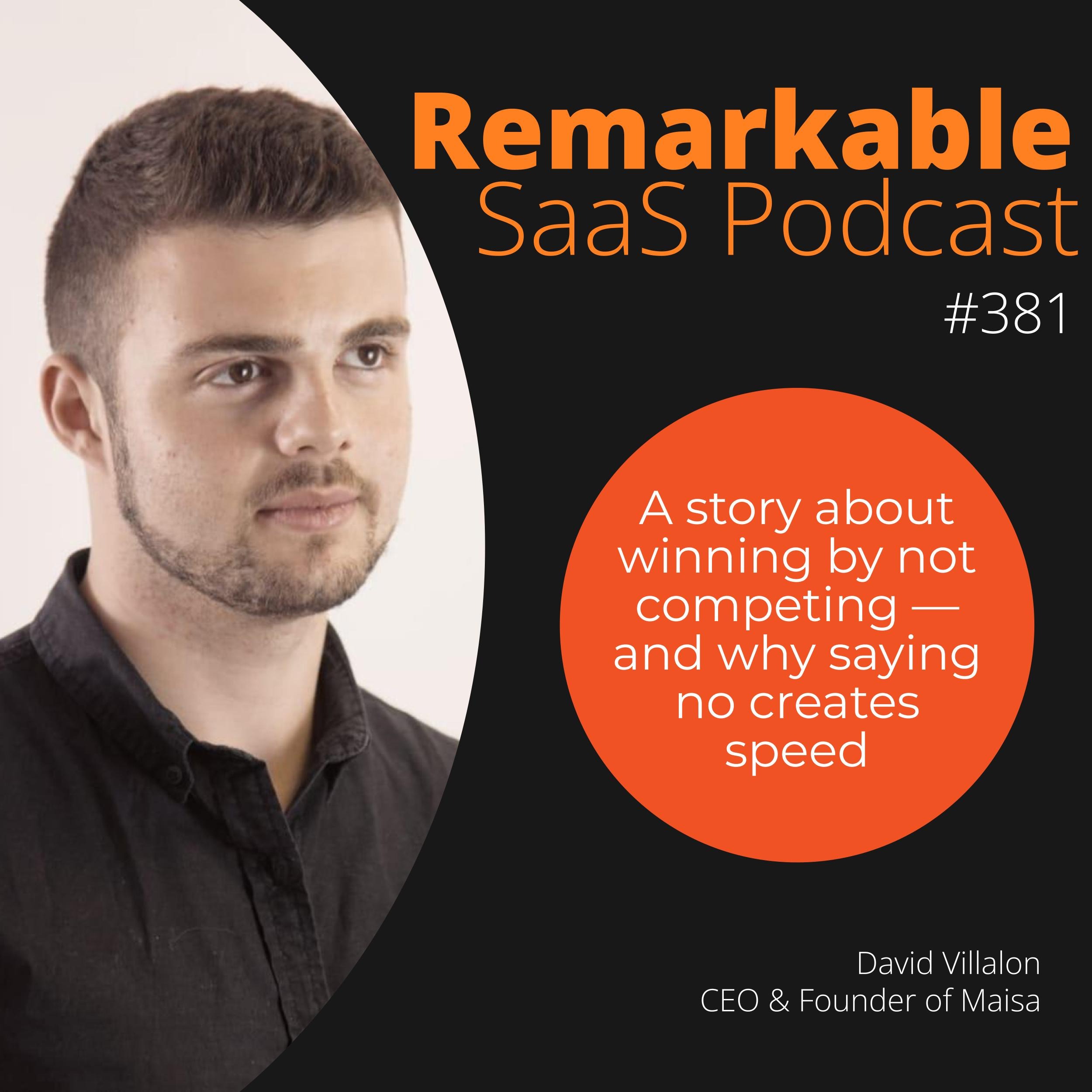
A story about winning by not competing—and why saying no creates speed.
This episode is for SaaS founders who feel the weight of building something that matters—and wonder if being contrarian is worth the risk.
Most software companies fail because they rush to market without questioning what they're building. They see opportunity and chase it.
David Villalon, CEO of Maisa, saw the AI gold rush differently. When everyone was building faster, he spent a year building trust into the foundation. He recognized that when you can see the future—truly see it—you...