Chat GPT Podcast
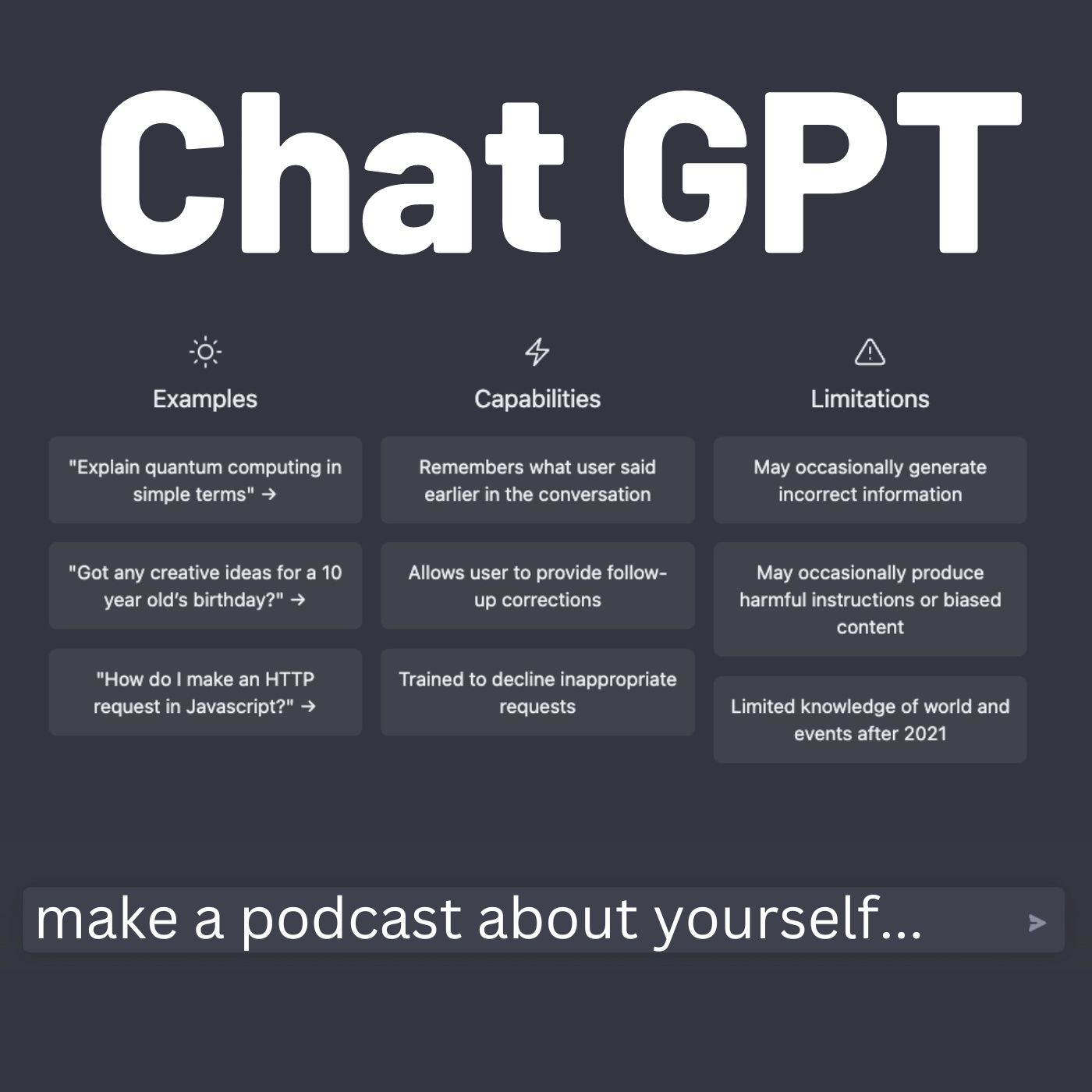
Dive into the fascinating world of artificial intelligence with the "Chat GPT Podcast," a must-listen for anyone eager to understand the intricacies of language models and their transformative impact across various industries. Hosted by Chat GPT itself, this podcast offers an insightful exploration into the daily operations and capabilities of machine learning models, providing listeners with a unique behind-the-scenes perspective. From answering complex questions to crafting compelling narratives, you'll gain an understanding of how these models generate text and contribute to fields like natural language processing and creative writing. The "Chat GPT Podcast" doesn't just stop at the technical aspects...
Enterprise AI Costs and Regulatory Landmines
today we examine the 2026 landscape of artificial intelligence, specifically comparing proprietary and open-source models regarding privacy, cost, and legal compliance. Organizations must choose between proprietary APIs, hosted open-source solutions, and self-hosting to balance performance with data sovereignty requirements like HIPAA or the EU AI Act. While proprietary models currently lead in complex reasoning, open-source weights offer significant long-term cost savings and transparency for high-volume users. However, true total cost of ownership includes hidden expenses such as specialized talent, hardware infrastructure, and continuous model maintenance. Legal frameworks like the EU AI Act introduce strict obligations for high-risk systems, making explainability and...
How AI Influencers Hacked Human Empathy
Today we analyze the diverse risks and economic transformations associated with the rise of generative AI and the potential emergence of Artificial General Intelligence (AGI). One source focuses on immediate governance challenges, detailing technical vulnerabilities such as jailbreaking, the spread of disinformation, and the social dangers of bias and mass surveillance. Complementing this, the second source examines the long-term macroeconomic impact of AGI, arguing that while it could catalyze exponential growth and scientific progress, it will likely cause the labor share of GDP to collapse as income shifts toward owners of computational resources. Together, the texts describe a transition where...
Why liability is your new resume
today we examine the transformative impact of generative artificial intelligence on professional labor, specifically within the legal and medical sectors. Reports from the legal industry highlight a tectonic shift where firms are aggressively investing in technology to meet unprecedented demand, leading to record-breaking profits and evolving operating models. In contrast, academic research introduces a dual-factor model to argue that true automation is strictly bounded by business and safety risks rather than mere technical capability. This suggests a "Cognitive Risk Asymmetry" where symbolic digital tasks face high exposure, while high-stakes roles—such as specialized surgery or infrastructure maintenance—remain resilient due to l...
When human labor becomes a bottleneck
Today we analyze the diverse risks and economic transformations associated with the rise of generative AI and the potential emergence of Artificial General Intelligence (AGI). One source focuses on immediate governance challenges, detailing technical vulnerabilities such as jailbreaking, the spread of disinformation, and the social dangers of bias and mass surveillance. Complementing this, the second source examines the long-term macroeconomic impact of AGI, arguing that while it could catalyze exponential growth and scientific progress, it will likely cause the labor share of GDP to collapse as income shifts toward owners of computational resources. Together, the texts describe a transition where...
The Billion Dollar Business of Fake Influencers
From Reactive to Predictive AI Mobility
AI Is Rewiring Our Streets And Skies
These reports examine the integration of artificial intelligence within the transportation and aviation industries, focusing on economic outcomes and technological growth. The MIT Sloan research utilizes a task-based methodology to assess how AI affects labor productivity, finding that approximately 83% of transportation roles contain tasks susceptible to automation. This analysis suggests that while total job displacement is unlikely, workers with lower education levels face the highest risk of wage stagnation and shifting job requirements. Meanwhile, market data highlights the global expansion of AI in aviation, identifying key applications such as predictive maintenance, air traffic management, and flight operations optimization. Together, the sources project...
Why AI Tutors Make You Forget
Recent research identifies AI tutoring as a transformative force in modern education, capable of accelerating concept mastery and providing highly personalized instruction at scale. These systems benefit both higher education and special education by offering real-time feedback, reducing teacher administrative burdens, and creating non-judgmental environments for student inquiry. However, significant challenges persist, including algorithmic bias that results in unequal feedback across different demographic groups and critical risks regarding student data privacy. Furthermore, experts warn that over-reliance on these tools may impair student self-regulation and decrease vital human interaction. The sources ultimately conclude that a hybrid model—integrating AI efficiency with human men...
When your environment thinks for you
today we explore the evolution of ambient intelligence and the transformative rise of AI agents that function as proactive digital companions. This technology integrates context-aware electronics and autonomous robotics into daily life, enabling environments to recognize and adapt to human presence. While proponents emphasize the efficiency gains and "superpowers" like extended perception and cognitive offloading, researchers warn of risks regarding human authenticity and the erosion of critical thinking. The texts further discuss industry megatrends, highlighting how corporate venture capital and the convergence of biotechnology and advanced computing are accelerating these shifts. Ultimately, the collection examines the delicate balance between utilizing...
Why Developer Momentum Wins the AI War
today we explore the evolving competitive landscape of artificial intelligence in 2026, highlighting a transition from raw power to speed and rapid iteration. Major tech entities like OpenAI, Google, and Meta are pursuing distinct strategies, such as embedding AI into existing ecosystems or championing open-source models to commoditize the industry. This environment is further complicated by the rise of Small Language Models, which offer cost-effective and specialized alternatives for on-device and enterprise use. NVIDIA remains a dominant force through vertical integration, positioning energy efficiency and integrated hardware-software stacks as the ultimate barriers to entry. Additionally, the shift toward autonomous AI agents...
The rise of the synthetic newsroom
today we examine the growing influence of artificial intelligence on the journalism industry, highlighting how newsrooms utilize automated tools to enhance efficiency. News organizations currently employ generative models for diverse tasks, ranging from personalizing user content and translating articles to automating routine reports on sports and finance. While these technologies offer increased scalability and faster reporting speeds, they introduce significant risks regarding content accuracy, human bias, and the potential for job displacement. Many experts emphasize that maintaining journalistic integrity requires strict human oversight and the development of ethical guidelines to govern synthetic media. Ultimately, the materials suggest a future defined...
Beyond Bans and Broken AI Detectors
today we explore the dynamic integration of generative AI into global educational systems, highlighting both its innovative potential and the risks it poses to academic integrity. While early reactions led some districts to implement outright bans, many institutions are now shifting toward responsible adoption by revising syllabi and training teachers to use tools like Khanmigo as personalized learning assistants. Experts emphasize that AI detection software is frequently unreliable, prompting a move toward alternative assessment methods that prioritize critical thinking over easily automated tasks. National initiatives, such as those in Singapore, demonstrate a trend toward systemic policy frameworks designed to ensure...
The Shift to Private Agentic AI Networks
today we examine the rapid transition of generative AI from experimental phases to core enterprise operations and high-level governance. Large corporations are moving away from relying on a single provider, instead adopting a multi-model strategy that increasingly incorporates open-source technology for greater data security and customization. To support this growth, corporate budgets for AI have surged, shifting focus from pure innovation toward practical software implementation and internal productivity tools. However, this expansion brings significant legal and regulatory risks, necessitating a robust oversight framework for boards of directors. A strategic four-step roadmap is proposed to help leaders identify AI deployment, manage...
Why one AI model isn't enough
today we discuss a comprehensive evaluation of the artificial intelligence landscape in early 2026, highlighting a shift from simple generation to advanced agentic reasoning. While OpenAI's GPT-5.4 is recognized for its structured logic and superior production-grade coding, Google's Gemini 3.1 leads in massive context processing and native multimodal integration. The reports emphasize a narrowing performance gap, noting that open-source models like GLM-5 and DeepSeek V4 now rival proprietary systems at a fraction of the cost. Benchmark data from 2026 indicates that choosing a model now depends more on specific workflow needs and ecosystem compatibility than on raw intelligence. Additionally, some independent research suggests...
Safe AI workflows for scaling brand content
today we explore the modern landscape of AI-driven content automation, highlighting how integrated workflows can significantly reduce production time while increasing output. Key platforms like Claude, 11 Labs, and HeyGen are identified as essential tools for generating text, synthetic voices, and realistic avatars to scale marketing efforts. The collective text emphasizes that while AI handles repetitive tasks like research, drafting, and distribution, human oversight remains vital for maintaining brand voice, accuracy, and emotional resonance. Strategies such as multimodal content blending and Answer Engine Optimization (AEO) are presented as necessary evolutions for visibility in an AI-centric search environment. Ultimately, the materials serve...
AI bypasses biological limits in space
today we explore the transformative role of artificial intelligence in modern space exploration and astronomical research. Scientists are currently utilizing machine learning algorithms to process vast quantities of data from telescopes, significantly accelerating the identification of celestial objects and potential extraterrestrial signals. Beyond data analysis, autonomous AI systems are being integrated into off-Earth missions to handle real-time navigation and the prediction of hazardous solar flares. On the International Space Station, interactive technology like CIMON serves as a hands-free assistant to improve astronaut efficiency during complex experiments. Collectively, these texts highlight how AI acts as a vital partner in overcoming the p...
Who is liable for AI mistakes
today we examine the legal, economic, and ethical landscapes of artificial intelligence as it integrates into global society. They highlight active regulatory efforts like the EU AI Act and the U.S. Algorithmic Accountability Act, alongside international agreements focused on frontier AI safety and corporate responsibility. Economic analysis from the collection indicates that AI is already reshaping the labor market, specifically impacting white-collar sectors and shifting the risks for high-wage occupations. Expert reports clarify that U.S. tort law and liability frameworks will increasingly govern AI-related harms, even as debates persist regarding the security trade-offs between open-source and closed-source models...
How machines learn right from wrong
Today we examine content based on a user's name or dialect. To combat these issues, experts propose integrating clinical expertise and dynamic rationality parameters into the training process to filter out unreliable data. Ultimately, the texts warn that without robust safeguards, AI may reinforce existing social inequalities and cognitive fallacies. Careful monitoring and intervention remain essential as these tools are increasingly used for high-stakes tasks like medical diagnosis and employment evaluations.
Berkeley's blueprint for selling your data
we describe the transition into agentic commerce, a new economic era where autonomous AI agents act as intermediaries in digital transactions. These intelligent systems are moving beyond simple search functions to independently navigate marketplaces, negotiate deals, and execute complex purchases on behalf of users. To support this shift, businesses must adopt Model as a Service (MaaS) frameworks and robust API infrastructures that prioritize machine-readability over traditional human interfaces. The reports emphasize that this evolution necessitates a radical change in SaaS unit economics, as token-based costs replace fixed-seat pricing and introduce higher margin volatility. Consequently, leaders are encouraged to implement hybrid...
Why AGI timelines jumped 13 years closer
we present a comprehensive analysis of the current state and future trajectory of Artificial General Intelligence (AGI) from the perspective of leading researchers and safety experts in 2026. A RAND Corporation report synthesizes various forecasting methodologies, noting that expert predictions have shifted significantly toward the near term, with many now expecting AGI to arrive in the 2030s. This research highlights a lack of mature infrastructure for validating these models and emphasizes the need for adaptive policy frameworks that can respond to deep uncertainty. Complementing this, a survey of AI safety leaders reveals a median expectation for AGI by 2033, alongside an estimated 25...
Surviving the 2026 AGI timeline collapse
we examine the multifaceted impacts of artificial intelligence on human health, the global economy, and societal stability. Psychological research suggests that relying on AI for companionship can intensify loneliness, emphasizing that authentic human connection remains essential for biological and mental well-being. From an economic perspective, experts advocate for forward-looking policies and "socially responsible automation" to protect workers from mass displacement while fostering innovation. Business frameworks are proposed to shift the focus of technology from mere cost reduction to "human-centered" systems that prioritize the professional growth of employees. Finally, governance reports highlight the urgent need for international coordination, standardized safety audits...
ChatGPT Hallucinate 17,000 Times Every Minute
today we collectively examine the operational mechanics and common misconceptions surrounding ChatGPT and similar large language models. They clarify that AI does not "think" or possess knowledge like a human but instead uses statistical probability to predict the next token in a sequence. Experts emphasize that these systems rely on static training data rather than real-time internet browsing by default, leading to factual errors known as hallucinations. Furthermore, the texts highlight critical privacy and security risks, noting that user conversations may be stored and used to refine future models. The sources also compare AI to search engines, explaining that tools...
Winning Citations In AI Search Results
These sources detail the rise of Google AI Overviews, a search feature that provides automated summaries of information but has triggered significant declines in website traffic and a surge in legal disputes. While Google maintains that the feature improves the quality of user engagement, major publishers and educational platforms report click-through rate losses of up to 89%, threatening the traditional digital economy. To survive this shift toward zero-click searches, content creators are moving beyond simple keywords to focus on information gain, which prioritizes original data and unique expert analysis. Strategic success in 2026 relies on source-worthiness and "Bottom Line Up Front" (BLUF) formatting...
Why AI Models Forget and Collapse
we investigate the functional limitations, environmental costs, and security vulnerabilities inherent in modern artificial intelligence and the Transformer architecture. Research from MIT and various technical papers highlights how AI faces "model collapse" when trained on synthetic data, as well as "catastrophic forgetting" where new information causes the system to lose prior knowledge. Mathematical analyses demonstrate that Transformers struggle with function composition and complex logic, often leading to factual hallucinations and reasoning errors. Furthermore, the texts identify prompt injection attacks as a significant security risk, where malicious instructions can bypass safety guardrails to leak data or spread misinformation. Collectively, the documents...
Why AGI Timelines Collapsed to 2029
Today we explore the rapidly shifting landscape of artificial intelligence and the growing debate over the timeline for achieving Artificial General Intelligence (AGI). Experts such as Geoffrey Hinton warn that the accelerating pace of technology significantly increases the existential risk to humanity, potentially leading to extinction within decades if safety regulation is ignored. While OpenAI has established a strategic roadmap aiming for automated researchers by 2028, other sources offer a more skeptical perspective, highlighting persistent structural flaws like hallucinations and a history of failed "hype-driven" predictions. These sources contrast the optimistic pursuit of superintelligence for economic and scientific gain with the...
Why workplace AI needs human oversight
These sources examine the diverse practical applications and ethical challenges of utilizing ChatGPT across specialized fields such as law, healthcare, and customer service. While the technology offers significant efficiency gains in streamlining research and content generation, researchers warn of persistent systemic biases involving gender and ethnicity. Various legal bar associations emphasize that while AI can assist in practice, it does not alleviate an attorney’s ethical duty to maintain client confidentiality and verify work for factual accuracy. Frequent technical limitations are noted, specifically the tendency for models to produce fictitious information known as "hallucinations" and their lack of real-time internet access. Ultimately...
The trillion dollar AI productivity gap
Current economic research and market reports suggest that artificial intelligence will have a nontrivial but modest impact on global productivity over the next decade. While some analysts fear an AI bubble driven by massive infrastructure spending and circular investments, others point to a productivity J-curve where firms experience early performance dips before achieving long-term gains. To mitigate risks like Ghost GDP or widespread white-collar unemployment, experts advocate for sovereign AI ecosystems that align national interests with secure, localized technology. Ultimately, the transition depends on moving beyond general conversational tools toward reliable, task-specific applications that integrate with existing labor markets. Although total factor produ...
AI Rewiring the Scientific Method
Artificial intelligence is fundamentally redefining scientific research and medicine by accelerating discovery cycles and automating complex experimentation. These sources describe a transition from traditional data analysis to a "digital biology" era where AI models like AlphaFold predict protein structures to streamline drug development and clinical diagnostics. Innovations such as symbolic regression allow researchers to uncover interpretable mathematical laws directly from physical data, while automated laboratories enhance productivity. However, the integration of these technologies introduces significant ethical risks, including data privacy concerns, model hallucinations, and high environmental costs. Consequently, experts emphasize the need for rigorous oversight and transparent frameworks to ensure AI serves as a r...
Predictive AI surveillance from orbit to streets
Law enforcement and national security agencies are increasingly relying on automated intelligence systems to predict criminal activity and global threats. Domestically, police departments utilize predictive policing tools that often ingest "dirty data" rooted in historical civil rights violations, racial bias, and manipulated statistics. These systemic flaws risk creating harmful feedback loops where past constitutional abuses are codified into future law enforcement actions. On a global scale, the National Reconnaissance Office operates Sentient, a classified AI-powered "artificial brain" that autonomously integrates multimodal satellite data to forecast adversary behavior. While these technologies aim to increase operational efficiency, they raise significant concerns regarding public trans...
Human experience is the new search currency
we examine the shifting landscape of search engine optimization and digital marketing as AI-powered results and Google’s 2026 core updates reshape user behavior. The texts highlight a dramatic decline in click-through rates for traditional links, noting that visibility now depends on being cited within AI-generated overviews. Strategy recommendations emphasize building E-E-A-T signals through first-hand experience, verifiable author authority, and structured content formats like comparison tables and direct answers. Technical insights reveal that AI bots prioritize high-speed, server-side rendered pages and frequently target long-tail queries that differ from traditional human search patterns. Ultimately, the collection serves as a guide for brands to...
Agentic AI kills legacy software seats
we examine the global shift toward agentic AI, a phase where autonomous systems move beyond simple assistance to execute complex, end-to-end business workflows. This transition poses a significant challenge to established SaaS business models, as traditional per-user pricing faces pressure from increased worker efficiency and architectural displacement. While legacy vendors struggle with technical debt and the "retrofit trap," agile startups are gaining a competitive edge by building AI-native architectures from the ground up. Small teams are further disrupting the industry by fine-tuning small language models, which provide specialized, high-performance results at a fraction of the cost of large API rentals...
How Native Multimodal AI Kills Lag
This research examines the development and scaling laws of Native Multimodal Models (NMMs), which are AI systems trained from scratch to process both images and text simultaneously. The sources compare early-fusion architectures, which integrate raw multimodal signals from the start, against traditional late-fusion models that rely on separate pre-trained encoders. Findings indicate that early-fusion models are more efficient to train, easier to deploy, and perform as well as or better than late-fusion counterparts at lower compute budgets. Furthermore, the study highlights that incorporating a Mixture of Experts (MoE) significantly boosts performance by allowing the model to learn modality-specific weights. This special...
Small AI Models and the SaaSpocalypse
we examine the global shift toward agentic AI, a phase where autonomous systems move beyond simple assistance to execute complex, end-to-end business workflows. This transition poses a significant challenge to established SaaS business models, as traditional per-user pricing faces pressure from increased worker efficiency and architectural displacement. While legacy vendors struggle with technical debt and the "retrofit trap," agile startups are gaining a competitive edge by building AI-native architectures from the ground up. Small teams are further disrupting the industry by fine-tuning small language models, which provide specialized, high-performance results at a fraction of the cost of large API rentals...
AI labor disruption and political mimicry
These documents explore the multifaceted existential and systemic risks posed by the rapid advancement of artificial intelligence. The primary focus is on superintelligence, where a machine's capabilities surpass human control, potentially leading to global catastrophe or human extinction through misaligned goals. Beyond physical survival, the texts examine how generative AI threatens democratic institutions by enabling large-scale disinformation, eroding political trust, and undermining genuine constituent representation. To address these threats, the sources discuss various mitigation strategies, ranging from technical alignment research to international regulatory frameworks and bans. Ultimately, the materials highlight a profound debate between skeptics and safety advocates regarding the timing, feasibility...
UNESCO Guidance for Generative AI
The provided text introduces UNESCO’s 2023 global guidance regarding the implementation of generative AI within educational and research settings. This framework advocates for a human-centered approach that prioritizes ethical standards, data privacy, and the protection of human agency. It outlines the technical mechanics of Large Language Models and image generators while addressing critical risks such as digital poverty, misinformation, and the potential for academic dishonesty. By proposing specific regulatory steps for governments and institutions, the document seeks to ensure that these emerging technologies support inclusive and equitable learning rather than undermining pedagogical values. Ultimately, the source serves as a roadmap for policy-make...
AI Resurrects The Beatles and Replaces Artists
These sources examine the evolutionary trajectory and societal impact of generative artificial intelligence within the creative economy. They trace the transition from early algorithmic tools to modern multimodal systems like Midjourney and ChatGPT, which now produce sophisticated visual art, music, and text. While these technologies enhance production efficiency and enable restorative feats—such as the Beatles’ final AI-assisted song—they also trigger significant concerns regarding job displacement and authorship. Legal and philosophical debates are highlighted, specifically focusing on the US Supreme Court's stance on copyright eligibility and the devaluation of human intentionality. Ultimately, the texts argue for a redefinition of creativity as the industry adapts...
The Multi-Billion Dollar Wreckage of Rogue AI
Regulating AI Before It Outpaces Law
These sources examine the complex challenges and strategies involved in regulating artificial intelligence as technology advances at an exponential rate. Researchers and legal experts debate the merits of risk-based frameworks, which prioritize oversight for high-stakes applications like hiring and healthcare, versus rights-based approaches that apply broad standards to all AI systems. Public surveys and academic perspectives highlight diverse concerns ranging from algorithmic bias and deepfakes to the existential risks of autonomous weaponry and large-scale job displacement. International perspectives, particularly regarding the European Union’s AI Act, illustrate the "pacing problem" where legal oversight struggles to keep up with rapid technical deployment. Ult...
Microscopic Bees and Confident AI Hallucinations
today we examine the multifaceted challenges and rapid growth of artificial intelligence, focusing on its ethical, social, and technical risks. One major theme is the emergence of AI hallucinations, which are identified as a unique form of misinformation that lacks human intent but threatens the accuracy of public knowledge. The sources also highlight rising concerns regarding algorithmic bias, the environmental impact of large models, and the labor practices involved in data labeling. To address these issues, UNESCO has established a global framework of values and principles designed to promote transparency, accountability, and fairness. Collectively, the texts emphasize that as venture...
Are your favorite podcast hosts human?
we collectively examine the shifting landscape of the podcasting industry through 2026, emphasizing a transition toward video-native content and AI-integrated production. While reports highlight explosive market growth and the dominance of platforms like YouTube and Spotify, they also caution against "podfade" and the limitations of traditional audio-only metrics. Artificial intelligence is identified as a dual-edged tool that enhances editing, transcription, and ad targeting, yet poses risks to human authenticity and content discovery through "AI slop." The data suggests that successful creators must now manage multi-platform identities, using short-form clips to drive listeners to long-form episodes. Furthermore, the rise of automated journalism...