ASH CLOUD

This is series of conversations discussing global food sustainability with guests who bring a deep understanding of the environmental and cultural challenges facing our society and creative ideas on how to address them.
Beef sustainability, methane, and efficiency with Tom McDonald, US Roundtable for Sustainable Beef

Beef sustainability frequently gets framed as something imposed on the ranchers and the industry from outside—regulatory requirements, consumer pressure, climate obligations driven by environmental groups and activists, leaving the industry industry to respond or resist.
But this frame misses something fundamental.
My guest today, Tom McDonald, is chair of the U.S. Roundtable for Sustainable Beef and sustainability lead at Five Rivers Cattle. His reframing is powerful because it turns sustainability from an external demand into something the beef industry has been pursuing for generations. As he puts it: "Sustainability is a journey and no...
Feed efficiency on pasture: The next frontier with Matt Beck, Texas A&M

The beef industry has spent decades optimizing feed efficiency in one place: the feedlot. Genetics have been selected for finishing performance, cattle are placed on feed at lighter weights and fed to heavier carcasses, and the result is measurable improvement in how much feed converts to pounds of beef. Al Rotz's 50-year life cycle assessment comparing 1972 to 2022 documents this clearly—the industry has made tremendous progress.
But this optimization has created a misalignment: the most profitable cattle for the finishing sector are not the most profitable cattle for cow-calf operations.
Today we are joined by Ma...
Why telling people to eat less meat will never work - and what we can do instead with Bruce Friedrich, The Good Food Institute

Meat consumption has risen every single year that the United Nations Food and Agriculture Organization has been measuring. Despite warnings about climate impacts spanning over a century, from carbon and methane's effects to James Hansen's congressional testimony in 1986, to a book called "Diet for a Small Planet" published 52 years ago, global meat production continues its upward trajectory. All available analysis indicates the world will eat at least 50% more meat by 2050.
But here's the challenge: human beings struggle with anything requiring self-denial. Energy consumption keeps rising. Miles driven keeps rising. Meat consumption keeps rising. This is not a f...
Regenerative agriculture with Anastasia Volkova, Regrow Ag

Forty leading global food and agriculture companies recently declared their commitment to regenerative agriculture. This unprecedented industry alignment signals that the sector has moved beyond looking at sustainable farming an aspirational ideal and into investment and scale. Yet challenges remain as adoption of regenerative practices is sliding backward in North America.
Satellite imagery processed with AI and biogeochemical modeling reveals that cover cropping and conservation tillage adoption have declined over recent years. In many Midwest states, the losses reach double digits percentage points.This data comes from monitoring 1.5 billion acres globally, representing 52% of global arable land. Simultaneously...
Feed efficiency and methane emissions with Ermias Kebreab, UC Davis

The poultry and swine industries have transformed feed efficiency over the past two decades. Through systematic improvement in nutrition, enzyme utilization, and animal genetics, they now produce vastly more protein from fewer resources. The challenge is not simply reducing methane emissions from cows, but reducing methane per unit of milk produced while maintaining farmer profitability and food security.
But here's the complexity: feed intake in dairy cattle is difficult to measure in controlled research facilities; in pasture-based systems where 88% of global cattle graze, measurement becomes extraordinarily challenging. Yet without precise data, researchers cannot translate laboratory findings into re...
Artificial Intelligence, the need for reliable data, and where it will have the greatest impacts on agriculture with Aidan Connolly, Agritech Capital

Artificial intelligence is advancing at an astonishing pace—improvements measured in five-thousand-fold increases from week to week according to AI researchers at Singularity University. Yet in agriculture, most farmers remain largely disconnected from these advances, using AI only at the most basic level for administrative tasks like finance, report writing, and form filling. This widening gap threatens to leave the agricultural sector further and further behind as the world accelerates into what might be called the "bullet train moment" of AI adoption.
Today we are joined by Aidan Connolly, CEO of Agritech Capital, who has spent the pa...
Building a company that leverages biological complexity to improve livestock productivity with a reduced climate impact - Tom Williams Number 8 Bio

“I’m yet to meet a grazier that doesn’t want a 5-15% feed conversation ratio improvement.” says Tom Williams, CEO of Number 8 Bio.
Producers motivated by not losing 10% of their feed to the atmosphere.
Enteric methane from livestock represents one of the rare climate challenges where environmental impact aligns with economic opportunity. Methane is a potent greenhouse gas and it also represents wasted nutrition. Approximately 10% of feed energy consumed by ruminants escapes as methane rather than supporting growth or milk production. Few climate solutions offer both emissions reduction and immediate productivity gains for those implementi...
Building resilient agrifood systems across conflict zones and climate stressed regions with Bram Govaerts, CIMMYT

The green revolution resulted in unprecedented improvements in the efficiency and productivity of food production. Recent decades of increasingly globalized free trade has further imporved efficiecies across the supply chain. These improvements that have benefited millions have done so largely at the expense of resiliance and the shock waves of this vulnerability are starting to be felt as fertilizer and energy prices rise.
Today I am joined by Bram Govaerts, Director General of the International Maize and Wheat Improvement Center (CIMMYT), to his efforts to build resilient agrifood systems across conflict zones and climate-stressed regions.
S...
Leading US beef sustainability with Steve Wooten, Beatty Canyon Ranch

The journey toward sustainable beef production in the United States began before the term "sustainability" entered common usage.
Today we are joined by Steve Wooten, a rancher in southeastern Colorado's shortgrass prairie and a founding member of the U.S. Roundtable for Sustainable Beef. Wooten manages Beatty Canyon Ranch in a region receiving 11-14 inches of annual rainfall, where the same perennial grass species documented in Native American archaeological sites continue thriving today under rotational grazing systems.
Steve approach to grazing and sustainability changed when he met Alan Savory and learned of his work on h...
Data driven livestock production for feed efficiency with Andrew Freshwater Clear Creek Pastoral Co.

Feed efficiency remains one of the biggest gray areas and least understood aspects of livestock production. Yet understanding how much grass a cow consumes to produce a calf or a ewe to produce a lamb is critical not only to farmer and ranch profitability, but also to the sustainability of the industry. At 19 cents per kilogram to grow dry matter, inefficiency compounds rapidly. The difference between efficient and inefficient animals can determine whether operations generate profit or struggle to cover overhead costs.
Today we are joined by Andrew Freshwater, who has spent over 30 years using...
Cow feed efficiency, the greatest area of untapped potential for beef production, with Matt Wilson West Virginia University

Feed efficiency, despite its importance from both an environmental sustainability and farm profitability perspective, remains one of the biggest gray areas and least understood aspects of livestock production.
Today we are joined by Matt Wilson from West Virginia University, who has spent his career studying how efficiently cattle convert grass into food. In 2003, Wilson installed the first individual feed intake system at a central U.S. performance test facility. Since 2019, his team has collected daily individual feed intake, water intake, and body weight data on 600-900 animals annually, building machine learning approaches to determine intakes of grazing...
Investing in regenerative agriculture, the food system, and metabolic health with Carter Williams - iSelect Fund

There is a huge amount we can learn from understanding the connections between soil health, food production, and human metabolic health. Over the last 50-60 years, modern agricultural systems have become increasingly reliant on synthetic inputs that boost yields but degrade soil microbiomes and reduce micronutrient density in our food. This degradation contributes to the chronic disease epidemic costing the United States trillions of dollars annually.
The impact of regenerative agriculture on both environmental and human health cannot be understated. Healthier soils with robust microbiomes produce crops with superior nutritional profiles—more micronutrients and beneficial phytochemicals that ex...
Breeding for profitable, efficient, locally adapted and sustainable cattle with Troy Rowan University of Tennessee

Currently beef cattle production faces a profitability challenge driven by rising feed costs and efficiency gaps. For cow-calf operations, particularly where producers operate on forage-based systems, the biggest variable cost is cow feed, yet geneticists lack precise selection tools for measuring and improving forage intake and conversion efficiency.
Today we are joined by Troy Rowan from the University of Tennessee, where he investigates economically important traits in beef cattle with particular emphasis on cow efficiency, local adaptation, and genetic approaches to increasing sustainability. His research focuses on developing novel measurement approaches to create practical selection tools for g...
Low cost, locally produced zero emissions nitrogen fertilizer with Frere Byrne PlasmaLeap Technologies
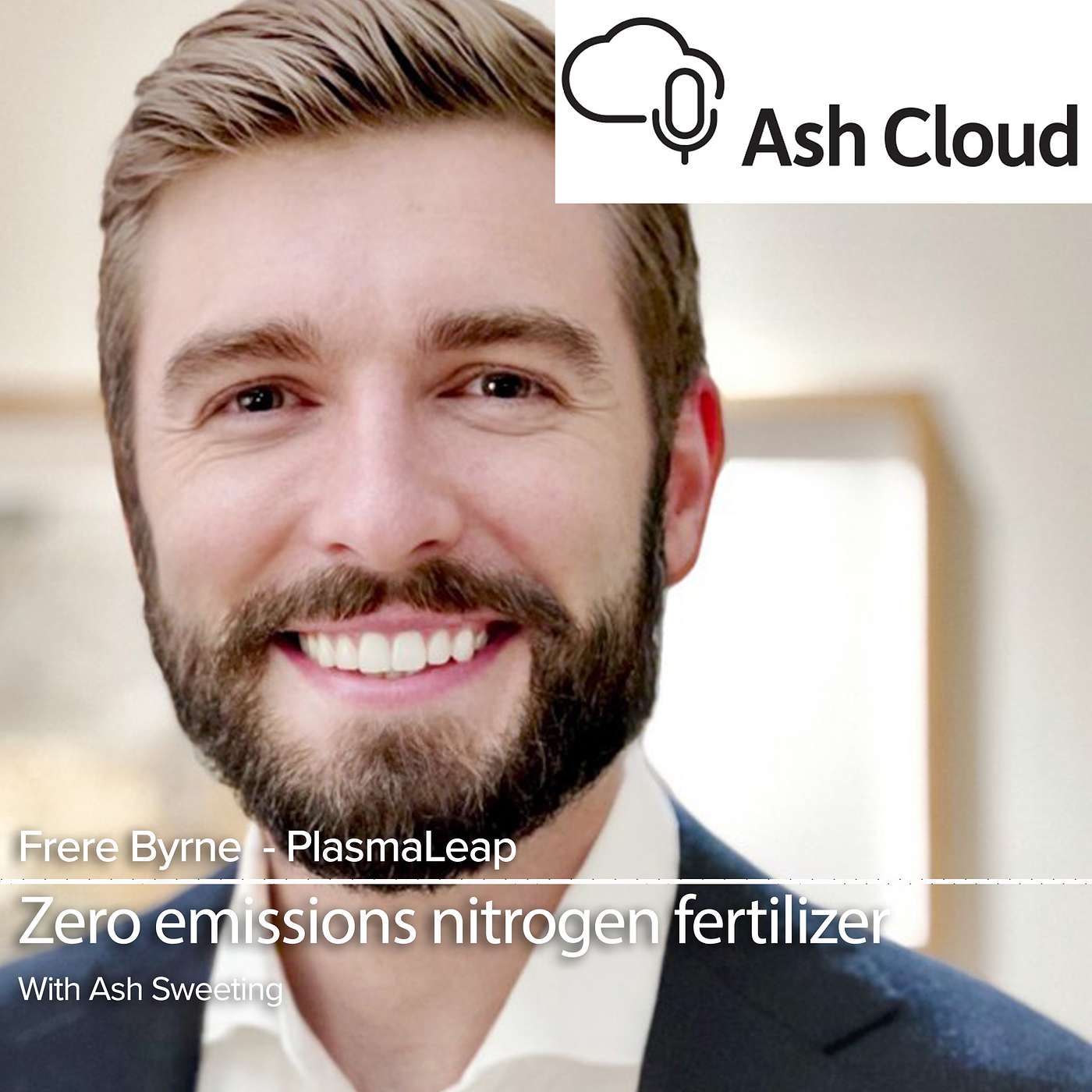
Over the last century our food systems have become increasingly reliant on synthetic nitrogen. This nitrogen fertilizer is mostly made through the energy intensive haber-bosch process in centralized production plants, often located in politically sensitive location, that have a carbon footprint multiple times greater than the aviation industry.
Today we are joined by Frere Byrne of PlasmaLeap Technologies who is developing low cost mobile technology to systhesis zero emissions ammonia from air and water. I caught up with Frere to discuss the impact of locally produced nitrogen that is not relaint on fossil feuls and long and c...
Addressing the Climate, Agriculture, Landscape and Food Security Nexus through policy with Tobias Gräs Danish Agriculture and Food Council

Denmark made headlines in 2024 as the first country to implement a carbon tax on livestock emissions. The country's ambitious 70% emissions reduction target by 2030 includes agricultural reductions of 55-65%. What makes Denmark's policy truly remarkable isn't the tax itself—it's the 60% tax deduction corresponding to mitigation potential. This signals that Denmark's approach isn't anti-livestock, but rather pro-innovation, explicitly avoiding targets on livestock numbers while incentivizing farmers to adopt technologies and practices that can reduce emissions by up to 40%.
The impact of Denmark's inclusive policy-making approach through the tripartite agreement cannot be understated. Ministers, farmer representatives, nature organizations, labor un...
Animal health as a climate solution with Nick Wheelhouse, Edinburgh Napier Univeristy
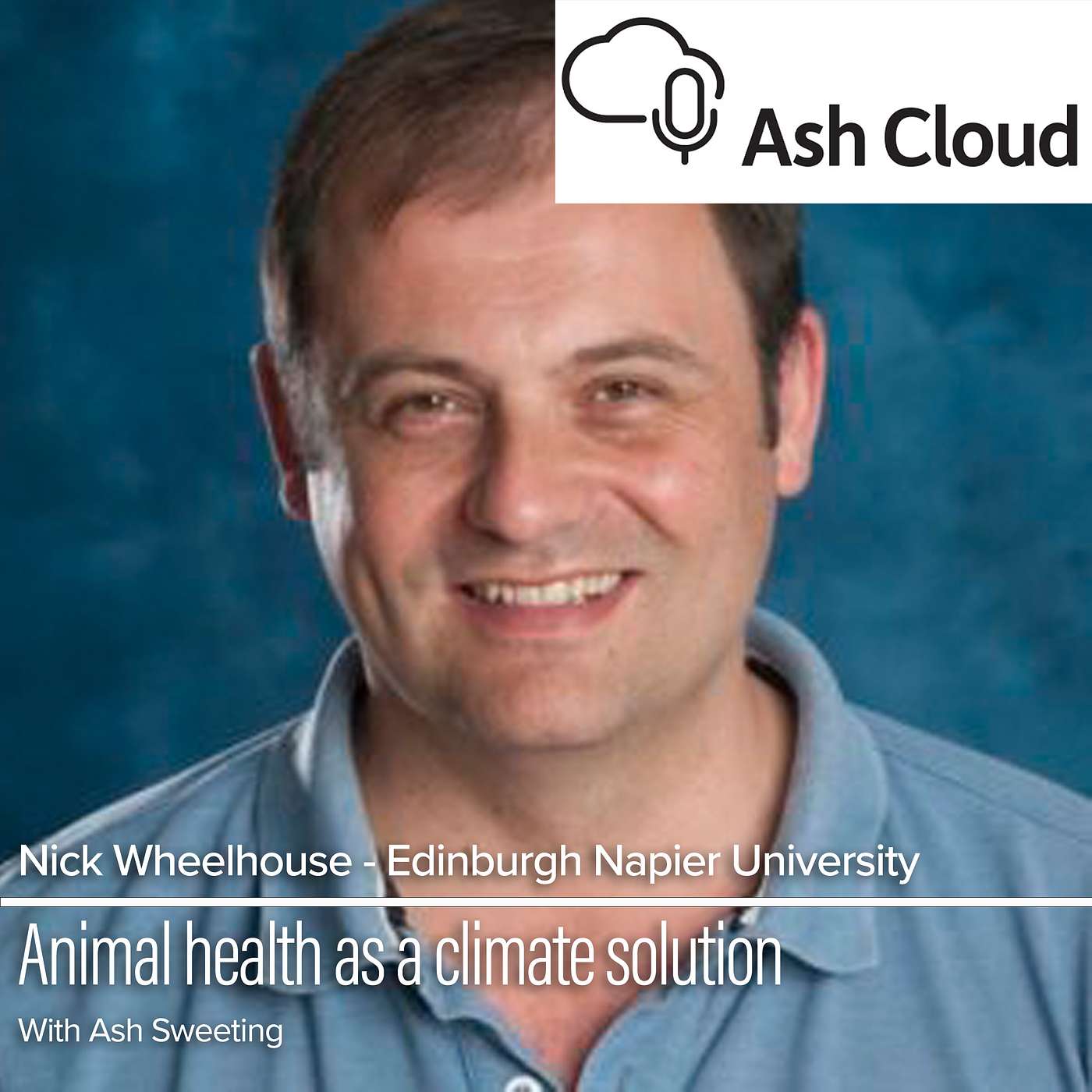
Animal Health as a Climate and Food Security Solution
In this episode of the Ash Cloud podcast, we explore an often-overlooked opportunity in the fight against climate change with Dr. Nick Wheelhouse, Professor of Comparative Infectious Disease at Edinburgh Napier University and co-lead of the Global Research Alliance Animal Health and Greenhouse Gas Emissions Intensity Network.
Dr. Wheelhouse brings unique expertise spanning both veterinary research and animal science. After completing his BSc in Agricultural Biochemistry and Nutrition at Newcastle University and PhD in Animal Science at the University of Aberdeen, he worked as...
Global food security, innovation, and the investment gap with Maximo Torero UNFAO

The cost living is an increasing global challenge. Food inflation in 2023 was 13.6%, however food prices increased by up to 30% in many low income countries. Currently 60-80% of voters consider food price as a decisive factor in their choice of candidate and across 60% of countries food costs represent more than 25% of the CPI basket.
Right now, 670 million people—8.2% of our global population—are going hungry. By 2030, projections show that 300 million people in Africa alone could face food insecurity. But here's the paradox: we have the technology, the knowledge, and the resources to address this crisis. So what's holding us ba...
Creating a carbon neutral beef operation with Robert Mackenzie, Mackas Australian Black Angus Beef

"Sustainability means leaving the land in a better place, preparing the next generation for a turbulent future in agriculture... and it's probably also a license to produce." Robert MacKenzie and his farms on the mid north coast of NSW was the first Australian beef operation to become net zero through pasture carbon sequestration. Roberts journey began with a dedication to understand the numbers around all metrics on the farm and then adjusting his management to improve these metrics.
The initial seed in his journey to sustainability was planted by Meat & Livestock Australia announcing in 2015 that...
Building a profitable animal biotech company with Mike Seely, Native Microbials

AgriFoodTech Venture Capital investment is down by roughly 90% from the high of 2021 with the lack of exits or creation of profitiable agtech companies resulting from the billions invested frequently taking the blame for investors looking for alternative places for put their money. But there are success stories.
Today we are joined by Mike Seely, the CEO of Native Microbials. Over the last 10 years Mike and his team has built a profitable animal biotech company. I recently caught up with Mike to hear about this journey and how Native created a product farmers wanted, were willing to pay f...
Brazil's transition from a net food importer to one of the world's leading exporters over the last 50 years with Bruno Brasil, Brazilian Ministry of Agriculture and Livestock

There is a huge amount we can learn from Brazil’s transition from being a net food importer to one of the world’s largest food exporters over the last 50 years. Since deforestation across the Amazon peaked in the mid 1990’s Brazil has continued to invest in both driving productivity increases alongside increasing efforts to preserve wilderness areas and restore degraded lands. To help address climate change the government has doubled investment including doubling investment in low carbon agriculture from $1Billion to $2 Billion through their ABC plan. This program includes making low interest credit available for Brazilian farmers to adopt...
Regenerative agriculture with Jason Rowntree, Michigan State University

Today we are joined by Jason Rowntree from Michigan State University where he is working on systems increase the resilience and to reduce the environmental harm of our food systems. Finding the driver across rural America that encourage farmers and ranchers to adopt management practices that improve soils, and protect local environments and the climate are a key priority of his work. Jason has built and runs the centre for regenerative agriculture at Michigan State University where he is increasingly seeing benefits for farmers that adopt regenerative principles to improve soil health which include:
no tillcover cropsimproved biodiversityincorporation...Epigenetics with Travis Bayer, Decibel Bio

The epigenome is essentially the control software for plants and animals that dictates when, where, and to what level different genes in the genome are expressed. Moderating the epigenome has the potential to upgrade crops in real time, during the season, to adjust photosynthesis and warn crops of upcoming droughts, diseases, or other threats. While traditional plant breeding and genetics requires trait selections to be made prior to planting and establishing the crops, epigentics enables these traits to be managed after the plant is already growing.
Today we are joined by Travis Bayer who recently founded Decibel B...
Is meat a luxury that is becoming increasingly difficult to afford with Paul Behrens, Oxford University

Over human history animal protein has always been a luxury food. Meat is the first thing people generally chose to buy when they rise from lower to middle income. With the current cost of living crises across the world, further food price inflation predicted due to climate change, geopolitical instability, and biodiversity loss, increasing impacts on productivity due to climate change, as well as the growing impact of dietary related disease, the big question is how much longer will we be able to afford this luxury.
The answer is it’s complex.
Today we are joine...
Building sustainable supply chains with Lamar Steiger and Neil Mellers, Ranch2Retail

Beef supply chains have been described as the most dysfunctional and least organised supply chains of everything available in the supermarket. Today we are joined by Lamar Steiger and Neil Mellers from Ranch2Retail who are building connected beef supply chains to improve economic performance of the whole chain and environmental outcomes. Data across all participants is a key component of creating and sharing the extra value.
It took over 100 conversations before Lamar found a rancher who was interested in rising to the challenge of creating a premium supply chain for Walmart that provided consistent product, reliably a...
The link between obesity and poverty, rising obesity, and how GLP-1s are changing the game with Jack Bobo UCLA

In this episode I am exploring the rapidly growing rates of obesity globally, the rapid rise in the use of GLP-1s or obesity drugs, how these are impacting our food systems, and how obesity and poverty seem to be linked. In the US around 10% of all Americans are either using GLP-1s or have tried GLP-1s, with early data showing a 5-10% decrease in food spending and a significant change in the foods people are purchasing. Yet, it's only the wealthiest that can afford these drugs.
Today we are joined by Jack Bobo, Director of th...
Sustainable Livestock Transformation Initiative with Aimable Uwizeye UNFAO

Today we are joined Aimable Uwizeye, Livestock Policy Officer for the Food and Agriculture organization of the United Nations where he is part of the team that implements the Sustainable Livestock Transformation initiative within the Animal Production and Health Division. Increasingly the impartance of animal health is being identified as a key aspect of improving sustainbility and reducing emissions.
Aimable's mission is to promote global change towards a sustainable livestock sector by tackling climate change, reducing methane emissions, enhancing biodiversity, and reducing nitrogen and phosphorus pollution. Join me in this journey to create a more...
Capitalizing on opportunity with Jason Strong, former Managing Director Meat and Livestock Australia

The Australian livestock industries now produce high quality product, that is full tracebale, quality assured, with real time market information coming from a sophisticate supply chain that sells into high quality markets with preferential access including 16 FTAs. This has transitioned from an absolute commodity industry with only one free trade agreement, no traceability, national ID system, limited market information and a disconnected supply chain just 30 odd years ago.
Today we are joined Jason Strong, a long time advocate and leader in the Australian livestock industries including as the former Managing director of Meat and livestock Australia and f...
Breeding for sustainable livestock, how genetic selection can provide significant and permanent reductions to livestock emissions with Matthew Cleveland

Humans have been selectively breeding animals since before Roman times. Modern technologies and tools including genomics and artifical intelligence has hugely increased the rate of progress. Increasingly, sustainability traits such as the enviromneatl footprint of production are being included in breeding programs in addition to productivity, efficiency, and profitability traits.
Today we are joined Matthew Clevlend, a geneticist who leads sustainability at ABS Global across their beef and dairy genetic improvement programs. Early indications are that the heritability of methane emissions are between 20-30% which is similar to many traditional production traits. In addition, these improvements are bo...
Challenging meat politics and promoting regenerative agriculture with Sparsha Saha, Harvard University
Political scientist Sparsha Saha from Harvard University joins us to challenge the status quo in meat politics. How can a sector so vital be so overlooked? Sparsha shares groundbreaking insights, exposing the unusual political dynamics surrounding animal welfare and the unexpected urban-rural divide on climate policies related to meat consumption. We grapple with the low prioritization of food and water in political discourse and the urgent need for heightened awareness in tackling ecological crises.
Our conversation takes a deep dive into the path toward building inclusive strategies in the plant-based and regenerative agriculture sectors. By bridging gaps...
Incentivizing the least productive farmers to change with Jason Clay, World Wildlife Fund

The least productive 10-20% of producers are causing 60-80% of the environmental impacts but only produce 5% of the food. Incentivizing these farmers and ranchers to change can significantly improve the sustainability of our food systems with minimum impact on global food production.
Today I am joined by Jason Clay from WWF who focuses on working with the private sector to improve supply chain management especially addressing habitat, biodiversity, soil health, irrigation, effluent, and green house gases. Jason leads the Markets Institute to improve sustainability in internationally traded food and soft commodities, known as Codex Planetarius.
W...
Irrigation is colonising fresh water with Bruce Lankford, University of East Anglia

The 350 million hectares of global irrigation consume 3-4 Mississippi’s worth of fresh water every day. This volume of fresh water used for Irrigation is continuing to increase, especially across the global south, exacerbating the challenge of how we produce more food with less water. Today we are joined by Bruce Lankford, who has been working on Water and Irrigation Policy across the developed and developing worlds for over 30 years.
In a recent blog post Bruce wrote about how Irrigation is colonising water and is being colonised; on research and teaching gaps in irrigation. He concluded that be...
Wolves reduce vehicle deer collisions with Nick Parker Hoover Institution

Economics, markets, and policy all have significant impacts on human behavior and decision making. Nick Parker is an environmental economics professor at the University of Wisconsin-Madison and the Hoover Institution who has been studying the human interaction with wolves, and especially the indirect effects wolves have on environments they live, to examine if it was possible for wolves to actually benefit humans and reduce threats to human lives and property. He found that the reintroduction of wolves into Wisconsin and other US States led to a 25% decrease in deer vehicle collisions. The research suggests that two thirds of this...
The politics and science of addressing the 2050 global demand for protein with Alison Van Eenennaam UC Davis

Low- and middle-income countries house 76% of the global cattle herd, and by 2050 will be home to 8 billion people. They are the projected epicenter of both increased animal source food demand, and livestock-related emissions. The most promising approach to address this demand while limiting greenhouse gas emissions is to improve the efficiency of livestock production systems in sub-Saharan Africa and South Asia through interventions in genetics, feeding and health. Boosting livestock productivity can improve both food security and producer incomes. Alternative proteins may play a limited role in addressing projected demand, but currently most companies are located in high-income countries...
Artificial intelligence is neither artificial nor intelligent? with Aidan Connolly

Our food systems are orders of magnitude more complex than other sectors of our economy so how can tools such as Artificial intelligence help farmers across the world make better decisions to improve the sustainability and productivity of our food systems.
Today we are joined by Aidan Connolly a animal agtech entrepreneur, investor, and author of The Future of Agriculture who has spend his career working on agricultural innovation.
Send us Fan Mail
Biosecurity with Andy Sheppard CSIRO

Today Ash Cloud is partnering with CSIRO to bring you Andy Sheppard, the Chief Research Scientist Biosecurity at CSIRO where he leads efforts to protect Australia, it’s neighbours, and trading partners from plant, animal and human pests and disease threats. Building local and global partnerships to understand the biology of the threats across their native and invaded range so intervention opportnities can be implemented is a key part of his work. Andy is also the Co-Executive Director of Department of Agriculture, Fisheries and Forestry and CSIRO Catalysing Australia's Biosecurity Initiative.
You can listen to our conversation here...
Climate change and national security with Sherri Goodman - International Military Council on Climate & Security

The US military has recognized climate change as a national security threat for decades our guest today, Sherri Goodman, has been credited with educating a generation of US military officers and government officials about the complex interactions between climate change and national security. She is Secretary General of the International Military Council on Climate & Security and the author of Threat Multiplier: Climate, Military Leadership, and the Fight for Global Security.
I recently spoke with Sherri about her 30 odd years experience working on the nexus of climate and security, including the risks posed by climate change and the ma...
Climate related violence, a messy marriage of climate stress and poor governance with Peter Schwartzstein Environmental Journalist

The intersection between climate change and armed conflict is complex. For those who have not witnessed the difference between the devastation and social upheaval that results from war compared with any other form of social upheaval it is almost impossible to explain. This is why I see great importance in further understanding these intersections. Climate related violence is a messy marriage of climate stress and poor governance.
ISIS profited from collapsing agricultural positions to bolster its ranks in Iraq and Syria. The recruitment rate of jihadis was three times higher from villages reliant solely on rain than...
How the livestock methane conversation has evolved with Frank Mitloehner UC Davis

Depending on who you speak with cattle can be vital to the sustainability of our food systems and our ability to provide health nutrition to humanity or they can be one of the largest sources of climate pollution. The culprit in this debate is methane, especially enteric methane emissions that is derived from the foregut of all ruminants including cattle.
Frank Mitloehner is the Director of the UC Davis Clear Center that researches the intersection of animal agriculture and the environment and leads communication efforts across the complex interactions between the environmental health, human health, our food...
Regenerative ranching with Rich Bradbury

Regenerative ranching has recently gained traction across the main stream media but the idea of using livestock to mimic nature and managing a landscape holistically was largely led by Allan Savory from the 1980s. Rich Bradbury' parents attended the Savory Institute in the 1980's which was when he was first exposed to the holistic approach that Allan Savory brings to ranching. I recently caught up with Rich to hear how this has impacted his thinking and the way he manages his ranch to this day.
Send us Fan Mail
Nitrogen 2.0 with Eric Davidson University of Maryland Center for Environmental Science and Spark Climate Solutions, and Charles Brooke from Spark Climate Solutions

Nitrogen is absolutely essential for all forms of life, plants, animals and microbes. Nitrogen is the basis for making amino acids, and amino acids are the basis for making proteins, enzymes. The historic nitrogen system was balanced and based on microbial activity transforming atmospheric nitrogen into soluble forms usable by plants and microbes.
Eric Davidson's has been working to transform our food systems through better understanding terrestrial nutrient cycling, cycling, greenhouse gas emissions from soils, global biogeochemical cycles, and how they impact sustainable agriculture.
Charles Brooke has been working to accelerate the rate of action...
