Fictionable
Interviews, book chat and everything about the short stories and graphic fiction from all around the world appearing in Fictionable. "Storytellers, readers and creatives alike will love" – The Independent Hosted on Acast. See acast.com/privacy for more information.
Rolli: 'When I sat down to write something, the story just assembled itself'
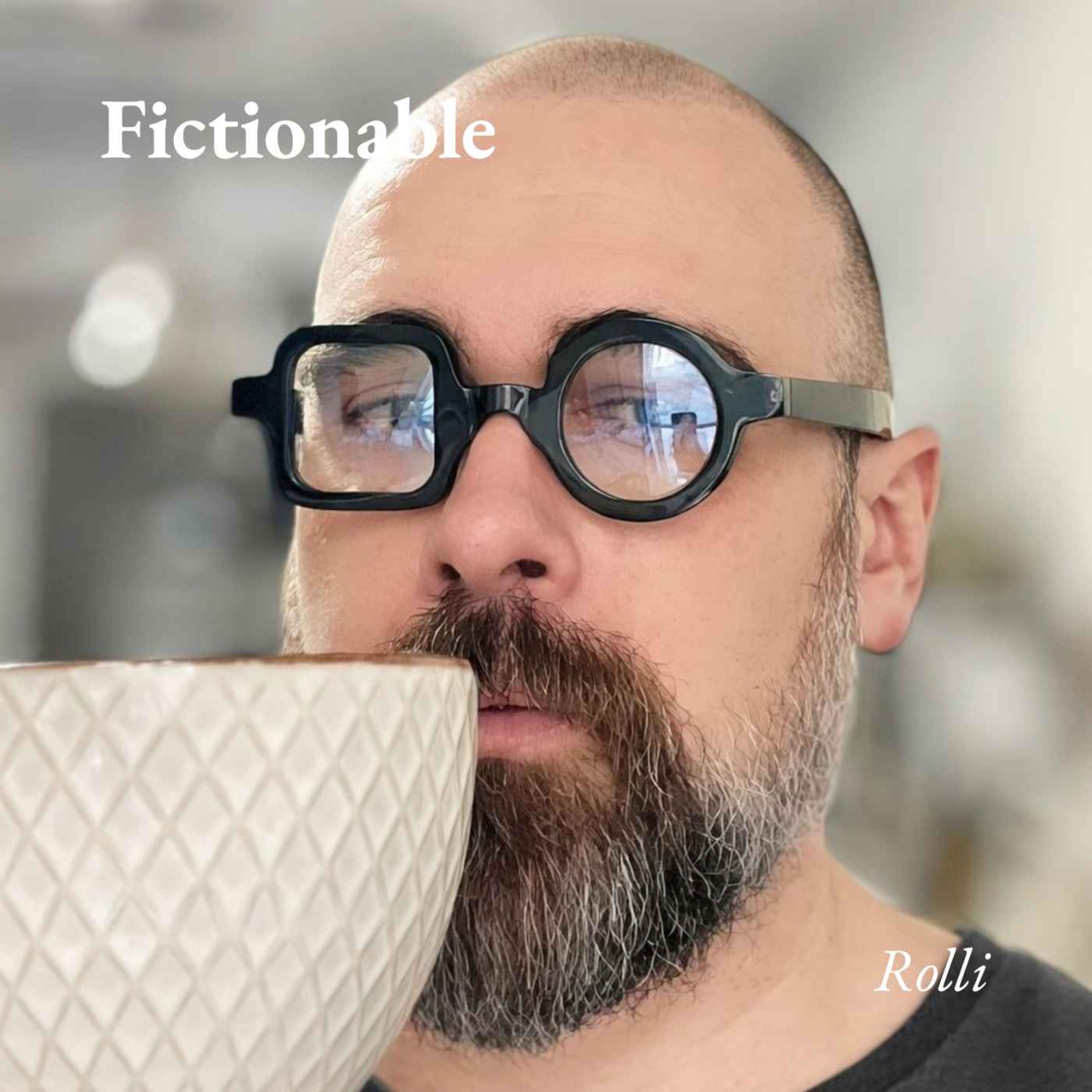
This season we've heard from Mark Haddon and Laura O'Meara, and we'll be welcoming tony lashden and James Young over the next couple of weeks. But this time we take a ride with Rolli and his short story Hearse/Limo.
The author explains that this story came together from three slices of life: a man he met who drove a hearse by say and a limousine at night, a conversation overheard in a coffee shop, and a top hat getting soaked in the rain.
"After that missing ingredient," he recalls, "I guess, when...
Laura O'Meara: 'If you want to run and scream into the sea that's probably not very practical, but you can write a story'
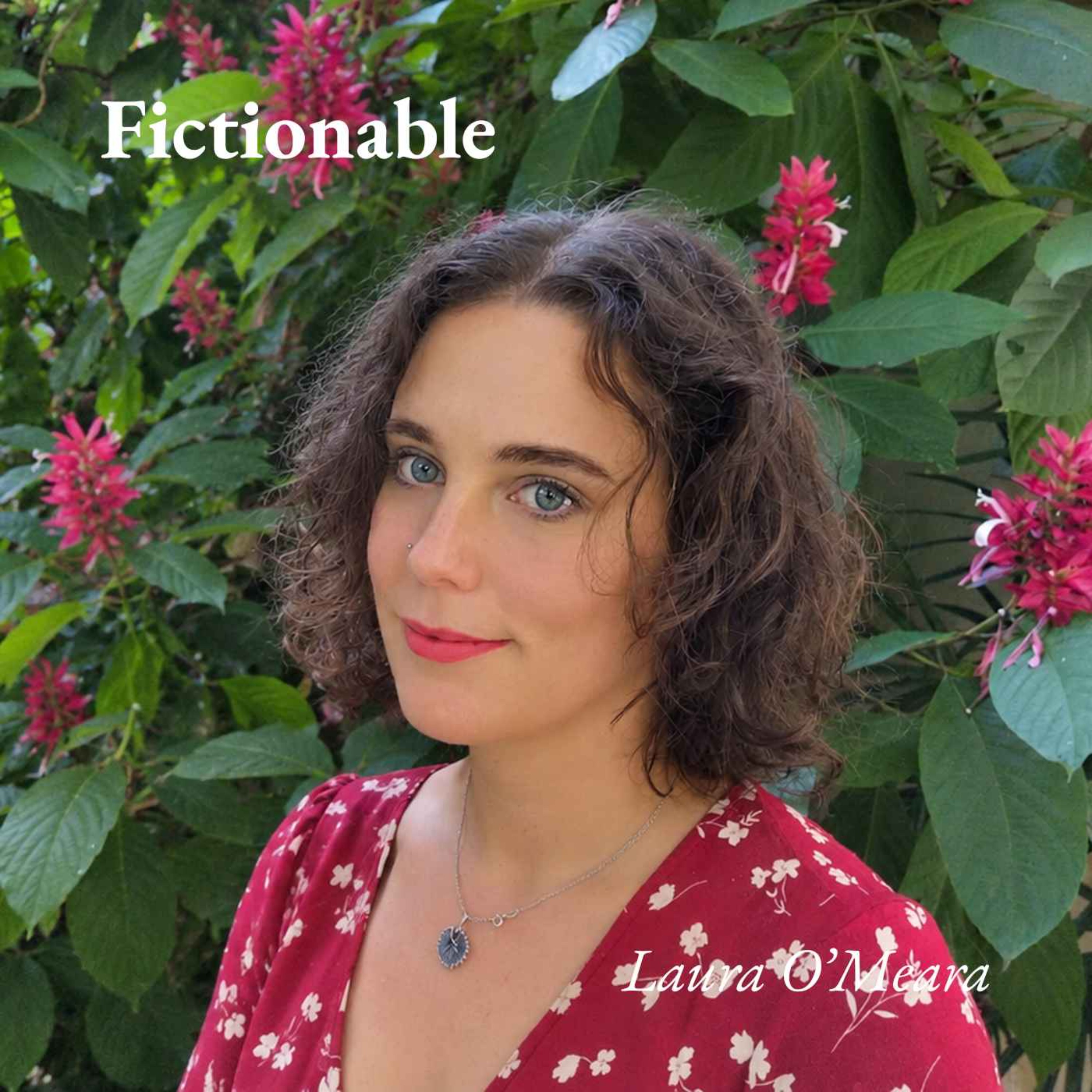
We began this Autumn series of podcasts with Mark Haddon, who spoke about the tension at the heart of fiction. Over the next few weeks we'll be hearing from tony lashden, Rolli and James Young, but this time we welcome Laura O'Meara and her short story, Monolith/Stone Teal/240×340cm.
The monolithic rug is "an off-white oblong that covers half the room", a lush, woollen accessory that forms the centrepiece of this unsettling story. But according to O'Meara it doesn't actually exist.
"The rug is a fictional construct," she says. "I've never had a...
Mark Haddon: 'So much about writing, so much about art in general, is about solving a paradox'
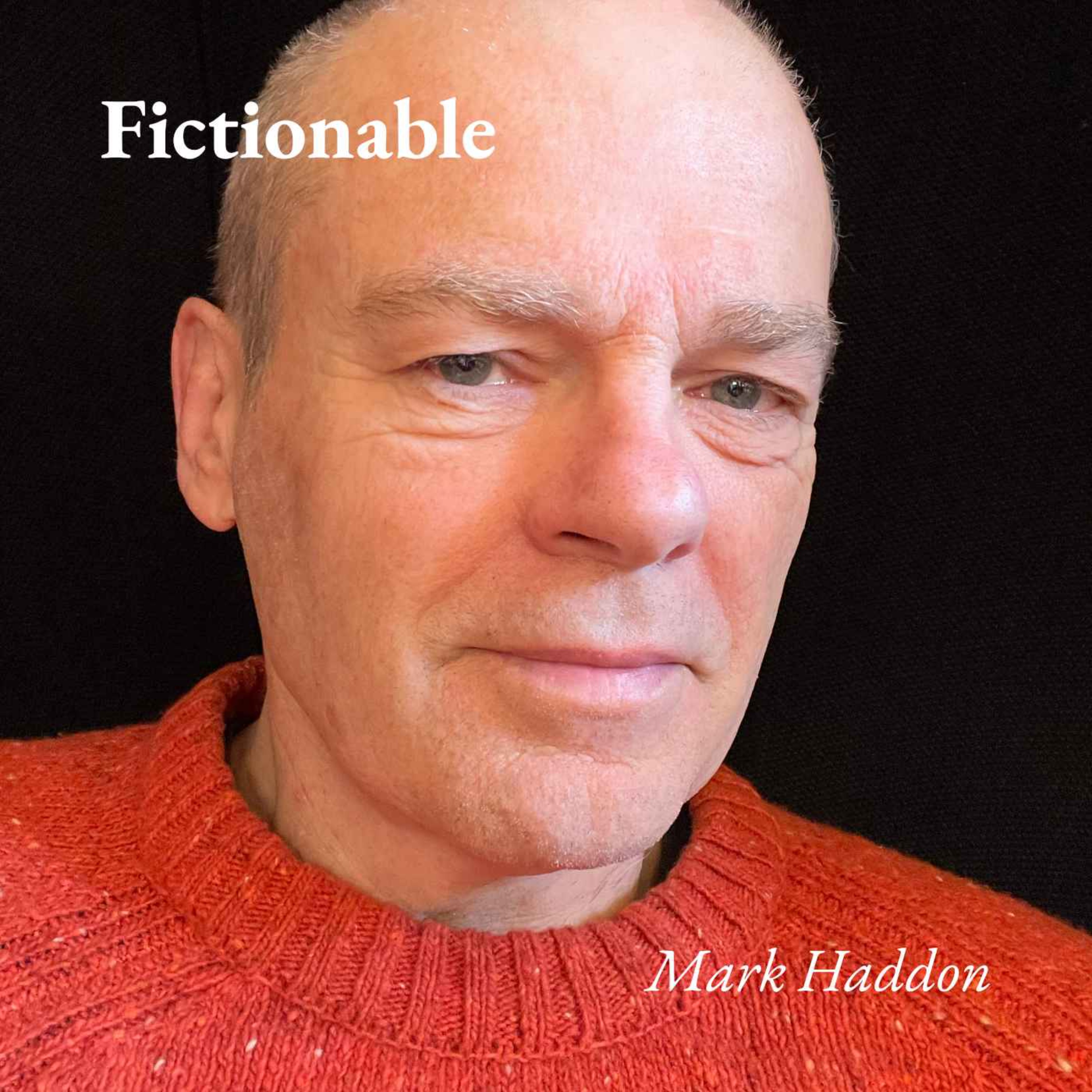
The storms are barrelling across the Atlantic, the nights are drawing in, so it's time for some more exclusive short stories and another set of podcasts. We'll be hearing from tony lashden, Rolli, Laura O'Meara and James Young in this Autumn set, but we start with Mark Haddon and his short story The Vickers House.
Haddon explains that this story came from "a fascination with houses".
"My father was an architect," he says, "and houses are a way of thinking about the world for me."
As a boy, the author...
Elaine Vilar Madruga: 'I’m always thinking about Kafka when I write'
This Summer series we've already heard from Will Boast, EC Osondu, Robin Munby and Zhenya Oliinyk. But we bring it to a close with Elaine Vilar Madruga and her short story Wild, translated from Spanish by Samantha Luna.
Wild is not only a story about vengeance, Vilar Madruga says, it's also "a story about hope".
"It's about sisterhood and it's about resilience," she continues. "It's about the possibility of survivors telling their own stories. Having their own agenda, Having our own words."
Women have always spoken about male violence, Vilar...
Zhenya Oliinyk: 'Drawing and writing comics is more like journalism to me'
We've heard from Will Boast, EC Osondu and Robin Munby already in this Summer series of podcasts, and Elaine Vilar Madruga is lined up next. But this week we welcome Zhenya Oliinyk and her graphic short story A Night in Kyiv.
This story is short and made up of unsettling images, but Oliinyk tells us it's "not exactly fiction".
"It is a documentation of one particular night," she says, "in terms of the numbers, because the numbers are real."
Oliinyk charts the night in a series of alerts as the...
Robin Munby: 'You're always writing in some sense for yourself'
This summer we've already heard from Will Boast and EC Osondu, and we'll be welcoming Elaine Vilar Madruga and Zhenya Oliinyk on to the podcast over the next few weeks. But this time we're heading north with Robin Munby and his short story Of All Who Sorrow, Joy.
Munby's narrator is adrift in language, an experience the author says is drawn from his own life.
"This is especially about that early phase of learning a language or living in a new place," he explains, "when you have some proficiency, but things are still...
EC Osondu: 'The writer is also a strange animal'
Will Boast kicked off this Summer series of podcasts, discussing the bureaucracy and hostility that immigrants face all around the world. We'll be hearing from Elaine Vilar Madruga, Zhenya Oliinyk and Robin Munby over the next few weeks. But this time we welcome EC Osondu and his short story Uber Chat.
Osondu explains that he didn't start using Ubers because they were convenient. As a Black man in New York City, he was struggling to hail a cab until a passer-by told him about Uber.
"In less than five minutes," he says, "I...
Will Boast: 'You almost have to make your characters feel interestingly doomed'
The heat is on in London, so it's time for another set of exclusive short stories and another series of podcasts. Over the next few weeks we'll be hearing from Elaine Vilar Madruga, EC Osondu, Zhenya Oliinyk and Robin Munby, but we launch into Summer with Will Boast and his story The Line.
Boast explains that this story came out of his own family's struggles with the US immigration system in the 1990s, after they moved from the UK when he was a child.
"We would get to the Federal Building in downtown," he...
Takiguchi Yūshō: 'When I’m writing fiction, I have very little sense I’m the one inventing the story'

We've already heard from Diana Evans, Bruna Martini, Joel Cox and Holly Edwards in this Spring series of podcasts. Now we bring it to a close with Takiguchi Yūshō and the translator Jesse Kirkwood.
Takiguchi tells us that the wandering narrator in Peppermint is following the same method as his author.
"It's when things start heading somewhere unexpected and when unexpected things begin to happen that it really starts to feel like the novel is working properly," he says.
Just as in life, Takiguchi continues, "even if you don't wa...
Holly Edwards: 'There's obviously something political about presenting trans characters'
Diana Evans, Bruna Martini and Joel Cox have already joined us on this Spring series of podcasts, and next time we'll be hearing from Takiguchi Yūshō and the translator Jesse Kirkwood. But this time we welcome Holly Edwards.
The country comes calling in her short story Little Lamb, Who Made Thee? But Edwards has always lived in the city, so she doesn't have a store of memories to draw on.
"What I have is – from very much an urbanite's perspective – an obsession with what it must be like to live i...
Joel Cox: 'It's fine to have jerks in stories, but you have to have something that makes the reader keep reading'
We've heard from Diana Evans and Bruna Martini already in this Spring series of podcasts, and we'll be welcoming Takiguchi Yūshō and the translator Jesse Kirkwood, and Holly Edwards over the next couple of weeks. But this podcast is devoted to Joel Cox and Variable Rewards.
Cox explains that this short story came out of his own move to the suburbs and his love for Richard Yates's novel Revolutionary Road.
"A few months into living in the suburbs," he recalls, "I was thinking this story sounds really familiar."
But wh...
Bruna Martini: 'I have spent too many months without drawing'
This Spring series of podcasts began with Diana Evans, who took us back to the 1990s. We'll be hearing from Takiguchi Yūshō and the translator Jesse Kirkwood, Holly Edwards and Joel Cox over the next few weeks. But for this episode we welcome Bruna Martini and her graphic short story One Day at at Time.
Martini says that this story of looking after a young child was drawn from her own experiences – but she had to go back to the notes she took at the time to remember it properly.
"There are some...
Diana Evans: 'Writing is an act of hope'
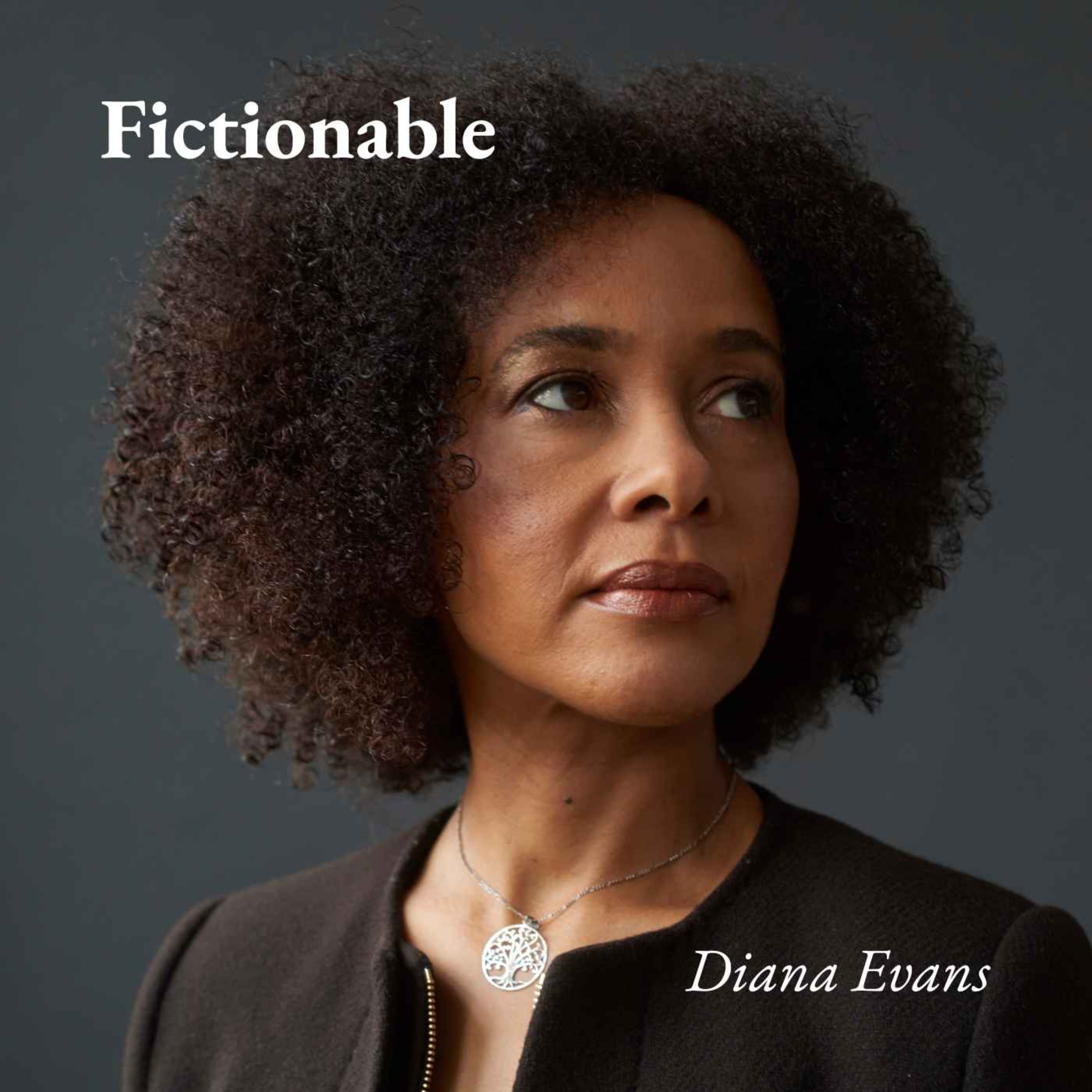
Spring is here and so is Fictionable, with another set of exclusive short stories and another series of podcasts where we meet our fantastic authors. During the next few weeks we'll be hearing from Takiguchi Yūshō and the translator Jesse Kirkwood, Bruna Martini, Holly Edwards and Joel Cox. But this Spring series marks a return to Fictionable for Diana Evans, who joined us on the Fictionable podcast way back in 2022 to talk about her short story Broth.
This time she brings dessert, with Ice Cream, which catches a young woman in that awkward gap between gr...
Cynthia Banham: 'Writing is a dangerous act'
In this Winter series we've already welcomed Cynthia Zarin, Rodrigo Urquiola Flores and the translator Shaina Brassard, Tim Conley and Samuel Rigg. We bring down the curtain with Cynthia Banham and her short story Swimming With Crocodiles.
Banham confesses that she shares her protagonist's passion for rewilding, but insists that her short story both is and isn't about the author: "You don't really control what finds its way into your story."
After losing her legs following a plane crash in 2007, Banham says that one of the few things that gave...
Samuel Rigg: 'Often I find I'm writing about people who are not me'
After hearing from Cynthia Zarin, Rodrigo Urquiola Flores and the translator Shaina Brassard, and Tim Conley, this Winter series of podcasts enters the final stretch. We'll be rounding off with Cynthia Banham next time, but stepping out on to the ice this week is Samuel Rigg and his short story, At the Rink.
Although a short story that explores parenthood and loss is far from his own life, Rigg tells us his short fiction rarely starts close to home.
"Often I find I'm writing about people who are not me," he says, "or...
Tim Conley: 'Short fiction is a lot more liberating'
We've already heard from Cynthia Zarin, Rodrigo Urquiola Flores and the translator Shaina Brassard in this Winter series – we'll be welcoming Cynthia Banham and Samuel Rigg on to the podcast over the next few weeks. But this time we're putting Tim Conley on the turntable with his short story Records.
While Conley does confess to owning a few vinyls, he's fascinated by the idea that a record can also be "something that we regret". If you look at where the word comes from, he continues, "to record something is to have it by heart, again. That in...
Rodrigo Urquiola Flores: 'Everything in this short story is true'
We began this Winter series of podcasts with Cynthia Zarin, who suggested that every single one of us is torn in different ways. We'll be examining those cracks with Tim Conley, Cynthia Banham and Samuel Rigg over the next few weeks, but this time we welcome Rodrigo Urquiola Flores and the translator Shaina Brassard.
According to Urquiola, his short story DYSNEYWORLD is all true. The author says that – just like his character – he grew up in a couple of small rooms on the edge of La Paz and sometimes stayed in the big...
Cynthia Zarin: 'You write out of the world that you're living in'
It's cold, it's wet, it's January. Time for another series of exclusive short stories and another series of podcasts. Over the next few weeks, we’ll be hearing from Rodrigo Urquiola Flores and his translator Shaina Brassard, as well as Tim Conley, Cynthia Banham and Samuel Rigg. But we kick off this winter series with Cynthia Zarin and Housekeeping.
Zarin reveals that both the houses in her short story are taken from life, but with a certain amount of embroidery.
"Everything is drawn from life," she says, "because what else is there?"
Ephameron: 'My work is always at the crossroads between literature, graphic arts, painting, comics'
This Autumn series of podcasts has already brought us Helon Habila, Caroline Clark and Kasimma. We round it off with Ephameron and her graphic short story .
This enigmatic comic imagines a couple divided by distance but reaching for connection by talking about the weather. So when Ephameron joined us down the line from Antwerp, we began with an update on the skies.
Clouds are endlessly fascinating, the author says, "A lot of painters have been interested in painting skies and how you do the textures right."
In , Ephameron uses watercolours...
Kasimma: 'Because I’m writing fiction, I can get away with anything'
We've already heard from Helon Habila and Caroline Clark in this Autumn series of podcasts, and we'll be rounding out the set with Ephameron in the next couple of weeks. But this time we welcome Kasimma and her short story Mama Taught Me That.
This story is set in the 16th century.
"We are not really sure what life was like then," Kasimma explains. "After colonisation, a lot of our culture was destroyed or merged with the beliefs of the colonisers, so that we don't really – in my opinion – have the original culture and...
Caroline Clark: 'This story completely surprised me'
This Autumn series of podcasts started with Helon Habila confronting the difficult legacy of slavery in the US. Over the next few weeks, we'll be talking with Ephameron and Kasimma. But this time we welcome Caroline Clark and I Will Go.
Clark tells us she isn't really sure where this haunting story started.
"I could tell you a story about how this story came together," she says, "but it probably wouldn't be the real one."
The author explains how she assembles her writing mosaic fashion, instead of a "linear, chronological...
Helon Habila: 'What fiction does is make you live the life of the other'
Here in the northern hemisphere it's getting misty and mellow all over again. Time for Autumn 2025 and another fruitful harvest of podcasts, ripened to the core. Over the next few weeks, we'll be hearing from Caroline Clark, Kasimma and Ephameron. But we launch into autumn with Helon Habila and his story Paradise.
Habila tells us how, after twenty years of living in the USA, in this story he's trying to "make sense of America".
"History is not past," Habila says, "it's still with us, and we're living the consequences of that history of...
Sheyla Smanioto: 'It's a haunted story, where you know something is going to happen'
This summer series of podcasts has taken us from the snow and ice of AL Kennedy's Expedition Skills to the blunt heat of Ali McClary's Proper Magic, and from the staccato fragments of Pete Segall's Bolex Man to the unstoppable momentum of Dafydd McKimm's The Nosebleed.
We bring this season to a close with Sheyla Smanioto and the haunting threat of her short story Intruder, translated by Laura Garmeson and Sophie Lewis.
Speaking with the help of the interpreter Jaciara Topley Lira, Smanioto tells us that the story came to her with "almost...
Dafydd McKimm: 'I write this kind of story in a bit of a fever'
This summer, we've heard from AL Kennedy, Pete Segall and Ali McClary. We'll be bringing this series to a close with Sheyla Smanioto, but this time Dafydd McKimm steps into the consulting room with his short story The Nosebleed.
McKimm tells us how The Nosebleed was a story that came to him with the ending already in place, citing the translator Michael Hofmann and his notion of Kafka time, where it's "already too late".
With this type of story, the author says, "You just set the ball rolling and the characters fruitlessly struggle...
Ali McClary: 'This story started as a conversation between two young women'
We've already heard from AL Kennedy and Pete Segall in this summer series of podcasts, and we’ll be hearing from Sheyla Smanioto and Dafydd McKimm over the next few weeks. But this time we're summoning up Ali McClary and her short story Proper Magic.
McClary confesses that the intense friendship between Min and Hazel is drawn from her own experience.
"I hope that all girls, all women have these kinds of friendships," she says, "that feel a little bit magic, a little bit disgusting."
They may not always end we...
Pete Segall: 'I don’t feel like it’s my job as a writer to answer questions'
We began this Summer series of podcasts with AL Kennedy arguing that the empathy which powers fiction makes writing it a political act. We'll be talking fiction – or maybe politics – with Sheyla Smanioto, Ali McClary and Dafydd McKimm over the next few weeks. But this time we're zooming in on Pete Segall and his story Bolex Man.
Segall tells us that this series of snapshots emerged after he took up analogue photography. He was wandering around the neighbourhood taking pictures of "the same buildings, the same places" and he began to ask himself "if there are post...
AL Kennedy: 'It's all political, if you're writing fiction'
It's raining in London, but it's time for another issue – and another series of Fictionable podcasts. Over the next few weeks we'll be hearing from Sheyla Smanioto, Pete Segall, Ali McClary and Dafydd McKimm. But we begin Summer 2025 with AL Kennedy, and her icy short story Expedition Skills.
Kennedy says that the story emerged out of the "very strange day" earlier this year which saw the commemoration of Martin Luther King and the second inauguration of Donald Trump. Upstate New York was covered in snow and ice, she explains and "it seemed good to put people in...
Susanna Clarke: 'You’ve got to play with things being very fantastical and also slightly humdrum'
This spring we've heard from Fríða Ísberg, Bronia Flett, Jeremy Wikeley and PR Woods already. But we bring this series to a close with Susanna Clarke and her short story The Bishop of Durham Attempts to Surrender the City.
Clarke tells us that it's a story she's been thinking about for some time.
"I have never really stopped thinking about Strange and Norrell," she says. "It's a world that keeps summoning me back."
In the novel, The Raven King was very young when he first arrived in England, Clarke exp...
Jeremy Wikeley: 'I would always defend the notion of being able to write about a place called England'
We've already welcomed Fríða Ísberg, Bronia Flett and PR Woods in this Spring series, and Susanna Clarke will be joining us next time. But now we're hearing from Jeremy Wikeley with his short story Kent's Oak.
According to Wikeley, his main character's disconnected connection with his neighbours on the estate is just how it felt when he was growing up in the suburbs of a small town.
"You were very familiar with a lot of places and a lot of things," he says, "and you were at home. But you...
PR Woods: 'I would never write anything against Wolf Hall'
We've already heard from Fríða Ísberg and Bronia Flett in this Spring series, and we'll be welcoming Susanna Clarke and Jeremy Wikeley on to the Fictionable podcast over the next few weeks. But this time we're going back in time with PR Woods and her short story Our Lady of Sorrows.
Woods tells us how Sister Avis came to her after someone wrote to the Guardian about Hilary Mantel's novel Wolf Hall arguing "It's a great story, but it didn't happen like that."
In the 16th century, the dissolution of...
Bronia Flett: 'This is obviously all fiction'
Fríða Ísberg got this Spring series of podcasts started, with a dialogue on monologues and a reading from her short story Fingers, translated by Larissa Kyzer. We'll be welcoming Susanna Clarke, Jeremy Wikeley and PR Woods on to the podcast over the next few weeks, but right here and right now we're talking transformation with Bronia Flett.
Flett tells us how her short story Leopard, Spots fell into her lap, and explains why she wanted to put female friendship under the lens.
"We do form these close bonds," she says, "and more oft...
Fríða Ísberg: 'We are always just looking for simple stories'
Everything is changing, but one thing you can rely on is a new set of stories and a new series of podcasts from Fictionable. Spring 2025 brings us stories from Susanna Clarke, Bronia Flett, Jeremy Wikeley and PR Woods – we'll be hearing from them all over the next few weeks. But we begin with Fríða Ísberg and her short story Fingers, translated by Larissa Kyzer.
Like much of her work, Ísberg explains, Fingers began with the cadence of a character's thought.
"You don't need to know what the mother's name is," she says, "or the...
Joanna Kavenna: 'We all make fictions about the future'
After hearing from Helga Schubert, Ben Sorgiovanni, Julian George and Rachida Lamrabet, we bring this Winter series of podcasts to a close with Joanna Kavenna and her short story Notes on the Future.
Kavenna tells us how this story was born from an obsession with patterns and a robust detachment from her characters.
"I like to have quite questing narrators," she says, "who are desperately trying to find meaning in a world that keeps depriving them of meaning. Which is probably quite autobiographical."
When you’re writing, Kavenna continues, you’re c...
Rachida Lamrabet: 'Fiction gives me the opportunity to introduce another perspective'
In this Winter season we've already heard from Helga Schubert, Ben Sorgiovanni and Julian George. Joanna Kavenna will be rounding off the series next time, but right here and now we welcome Rachida Lamrabet and her short story Two Girls on Bicycles, translated by Johanna McCalmont.
Lamrabet recalls how this story was set in motion by a chance encounter with an old friend, which brought back memories of pedal-powered escapades while she was a teenager.
"Everyone had a bike," she remembers. "If you didn't have a bike you'd steal a bike…"
...
Julian George: 'Any word out of place, the whole thing is worthless'
So far we've heard from Helga Schubert and Ben Sorgiovanni in this Winter season. We'll be welcoming Joanna Kavenna and Rachida Lamrabet over the next couple of weeks, but for this feature we present Julian George and The Movie Lovers.
George tells us how this short story emerged from the classic 1950s sitcom, The Honeymooners.
"I just thought of the character played by Audrey Meadows, Alice," he says. "Sometimes that character wanted something else, or there were moments of unexpected poignancy."
The cinema on East 14th Street...
Ben Sorgiovanni: 'What fiction does really well is capture the nuance of human experience'
This Winter series of podcasts got underway with Helga Schubert, who told us how she put together her short story On Getting Up from pieces of her past. This season we'll be hearing from Joanna Kavenna, Rachida Lamrabet and Julian George, but this time we meet Ben Sorgiovanni and his story No One Here Knows You.
He tells us how this story grew out of a philosophical thought experiment about how you would know there was a tiger in a forest if you'd never seen it, and why his characters were looking for a tiger, not...
Helga Schubert: 'There's got to be distance between the writer and their story'
As the world lurches into 2025 we launch into another series of Fictionable podcasts. We'll be hearing from Joanna Kavenna, Rachida Lamrabet, Ben Sorgiovanni and Julian George over the next few weeks, but we start with Helga Schubert and her short story On Getting Up, translated by Aaron Sayne and Lillian M Banks.
Banks turns interpreter as Schubert explains how this story was awakened by an appearance on a panel discussing one of German literature's most prestigious awards, the Ingeborg Bachmann prize.
"The joke is," Schubert says, "the only reason I was even selected...
Esther Karin Mngodo: 'I am more myself when I write in Swahili'
Last year we heard from Daisy Johnson, Judith Vanistendael, Scott Jacobs and Hannah Webb. We bring our Autumn series to a close – just in time for Winter – with Esther Karin Mngodo and the translator Jay Boss Rubin, who join us to talk about First Date.
Mngodo tells us how this story ate another of her short stories, Without Sun.
"It came from the idea of how things are within other things," she says, "how everything is interconnected."
In First Date, the links stretch across an entire millennium. Mngodo feels that we s...
Hannah Webb: 'I always seem to end up writing at the extremes'
We opened this Autumn season with Daisy Johnson and followed up with Judith Vanistendael and Scott Jacobs. We'll be sitting down with Esther Karin Mngodo over the next week or so, but this episode is devoted to Hannah Webb and her short story Titanic.
While Jacobs told us Be Careful Who Your Friends Are was drawn from his own life, Webb insists that her story is definitely not autobiographical.
"I have been on one of those holidays," she says, "but it didn't end up like that. There was much less cruelty."
<...
Scott Jacobs: 'I made a few things up along the way'
This season we've already heard from Daisy Johnson and Judith Vanistendael. Over the next few weeks we'll be sitting down with Esther Karin Mngodo and Hannah Webb, but this time we welcome Scott Jacobs and his short story Be Careful Who Your Friends Are.
According to Jacobs, this curious tale was a "real-life experience".
"I changed the names, to protect the innocent," he says, "including the name of the restaurant."
But the last-minute invitation, the bottle of Primitivo, the bowler hat and that curious note were all drawn from life.<...
