Giving Voice to Depression: Real Stories & Expert Support for Depression and Mental Health

Giving Voice To Depression unites lived experience and expert insight to shine a spotlight on depression and mental health. Each week, we bring you honest personal stories, evidence-based strategies, and compassionate conversations to help you understand, cope with, and recover from depression. Whether you’re navigating your own journey, supporting a loved one, or simply seeking to better understand mental-health challenges, this podcast offers real voices, trusted guidance, and a path toward hope. Subscribe now for new episodes every week and join a community where depression isn’t silenced—it’s voiced, understood and overcome.
Life After Suicide Loss: Finding Hope, Healing, and Joy Again

Ten years after losing her 24-year-old son Richard to suicide, Ann Marie Farino wants other suicide loss survivors to know something she once believed was impossible: grief and joy can exist together.
When the meals stopped arriving, friends returned to their routines, and the world moved forward, Ann Marie was left asking a question familiar to many grieving families:
"How do I live now?"
In this deeply moving conversation, she shares the small, intentional steps that helped her rebuild a life she never expected to enjoy again—from working wi...
What to Do If Your Friend Is Suicidal: A Teen's Guide to Getting Help and Saving a Life

What would you do if your best friend told you they were thinking about suicide—and begged you not to tell anyone?
For many teenagers, this isn't a hypothetical question.
In the final episode of our three-part Suicide Prevention Month series, suicide prevention expert Dr. Stacey Freedenthal explains why keeping suicidal thoughts secret can place an overwhelming burden on another young person—and why telling a trusted adult is an act of courage, not betrayal.
She offers practical guidance for recognizing the difference between an immediate emergency and a situ...
Teen Suicide Prevention: How to Respond When Your Child Talks About Suicide

When a teenager tells a parent they're thinking about suicide, it's one of the most frightening conversations a family can face.
How do you respond without minimizing their pain—or overwhelming them with your own fear?
In Part 2 of our conversation with suicide prevention expert Dr. Stacey Freedenthal, we explore five more reasons many teens hesitate to tell their parents they're having suicidal thoughts, along with practical ways adults can respond that build trust instead of shutting down communication.
Dr. Freedenthal explains why both underreacting and overreacting can make it harder fo...
How to Help a Suicidal Teen: Why Kids Don't Tell Their Parents They're Struggling

One of the greatest fears many parents have is learning that their child was struggling—and never told them.
Why do so many teenagers share suicidal thoughts with friends but keep them from the adults who love them most?
In this important conversation, suicide prevention expert Dr. Stacey Freedenthal explores the reasons many teens stay silent and offers compassionate, practical guidance for parents who want to create safer, more supportive conversations.
Drawing on both her professional expertise and her own lived experience, Dr. Freedenthal explains why teens often fear be...
LGBTQ+ Depression: Coming Out, Mental Health, and Finding Hope Through Authenticity

"How are you?"
Instead of giving the automatic answer—"Fine"—Nick paused.
Then he said something most of us rarely admit:
"Actually, I've been really struggling."
That honest response became the beginning of this conversation.
In this deeply personal episode, Nick shares how years of hiding his sexuality contributed to clinical depression, why coming out brought an unexpected sense of relief, and how learning to understand his own patterns has helped him navigate depression with greater awareness and self-compassion.
Nick also opens up about surviving leukemia as a ch...
Part 2: How to Stay Productive with Depression: 5 Practical Strategies for Work and Burnout

When depression affects your concentration, confidence, or energy, staying productive can feel like a constant battle with yourself.
But working harder is not always the answer.
In the second half of this practical conversation, Terry and Bridget continue speaking with writer Sarah Fielding, author of the Healthline article, “Nine Ways to Motivate Yourself to Work When You’re Struggling Mentally.”
Sarah shares five additional strategies for navigating work while living with depression, anxiety, or burnout. Her advice is not about forcing yourself to perform at full capacity every day. It is...
Part 1: How to Get Things Done When You're Depressed: Overcoming Lack of Motivation and Getting Started

When depression steals your motivation, even the smallest task can feel impossible.
Getting out of bed. Answering an email. Folding laundry. Starting a work project.
From the outside, it may look like procrastination or laziness. From the inside, it can feel like trying to move through wet concrete.
In this practical episode, Terry and Bridget welcome writer Sarah Fielding, whose article on staying motivated while struggling with mental health inspired a conversation full of realistic, compassionate strategies for navigating days when depression makes everything feel harder.
Together...
How to Ask for Help with Depression: Finding Support, Therapy, and Hope

Hundreds of thousands of people know Shannon for making them laugh.
Her videos have gone viral. Her social media is full of humor, energy, and outrageous comedy.
What most people didn't see was that behind the camera, she was learning one of the hardest lessons of her life: she couldn't heal from depression alone.
In Part 2 of Shannon's story, she shares the biggest changes she's made since seeking treatment—and why asking for help became one of the most powerful tools in her recovery.
She talks candidly about learning to...
Complex PTSD Recovery: From Suicidal Thoughts to Healing, Hope, and Self-Worth
Nearly a decade ago, Davey shared one of the darkest depression stories we've ever featured on Giving Voice to Depression. He was living with relentless depression, frequent suicidal thoughts, and believed he simply couldn't do life anymore.
Today, he comes back with a very different story.
After years of searching for answers, one conversation with a physician led to a diagnosis of Complex PTSD (CPTSD)—a discovery that completely changed how he understood his depression, his childhood, and, ultimately, himself.
In this powerful follow-up, Davey sh...
How to Cope with Depression: Daily Routines, Medication, and the Healing Power of Humor

Instagram creator ShannyPants has built a community of hundreds of thousands of followers by making people laugh.
But while millions of people saw the funny videos, very few knew she was quietly living with depression.
In this episode, Shannon shares what depression really looked like behind the scenes, why she finally sought treatment, how antidepressants and therapy changed her life, and why humor became one of the tools that helped her heal.
In today's podcast episode, you'll hear about:
What daily life with depression really looks like Why simple routines can...Healing from Childhood Trauma: Understanding Complex PTSD, Depression, and Self-Worth

For years, Davey believed he had depression.
What he didn't know was why.
After nearly a decade of living with severe depression—including years of suicidal thoughts—a conversation with a physician changed everything. Within minutes of hearing Davey's childhood story, the doctor wrote two words on a piece of paper:
Complex PTSD (CPTSD).
That diagnosis became the beginning of a completely different healing journey.
In this follow-up episode—nearly ten years after his first appearance on Giving Voice to Depression—Davey shares how understanding childhoo...
How to Cope with Depression: Small Steps, Daily Tools, and Hope That Lasts

What do you do when depression makes even getting out of bed feel impossible?
Davey knows that battle firsthand.
After years of pushing through exhaustion and believing something was physically wrong, he was eventually diagnosed with major depressive disorder. What followed wasn't a quick recovery—it was a daily commitment to learning everything he could about depression and building a toolbox of coping strategies.
In this deeply practical conversation, Davey shares the lessons that have helped him survive some of his darkest days.
You'll hear about:
Why getting out of bed...Living With Depression: 10 Lessons About Stigma, Therapy, Medication, and Finding Hope

Why do so many people wait years before asking for help with depression?
For award-winning television journalist Ted Perry, the answer was simple: stigma.
In this candid conversation, Ted shares why he kept his depression hidden for years, how grief after his father's death intensified his symptoms, and why finally accepting therapy and antidepressant medication changed his life.
He also reflects on the relationships depression affected, the shame that kept him silent, and the hope that ultimately carried him through.
In this episode, you'll hear about:
Why depression often hides b...How to Help Someone with Depression: What Actually Helps (and What Makes It Worse)
How do you help someone with depression when they believe they're a burden?
Pam knows that feeling all too well.
After years of suppressing depression, childhood trauma, and overwhelming life stress, she experienced a severe depressive episode that lasted more than three years. During that time, she was hospitalized four times, survived a suicide attempt, and struggled to believe she would ever experience joy again.
Today, Pam shares not only how she recovered, but what family members, friends, and caregivers can do to support someone living with depression—and what often causes even mo...
EFT Tapping for Depression: A Self-Help Technique for Stress, Anxiety, and Emotional Relief

What if there were a free, portable tool you could use almost anywhere to help reduce stress and emotional overwhelm?
In this episode, Terry and Bridget explore Emotional Freedom Technique (EFT) — commonly known as tapping — with EFT expert Brad Yates.
Tapping combines gentle stimulation of acupressure points with focused attention on thoughts and emotions. Supporters of the technique describe it as a way to calm the body's stress response while creating space for emotional healing.
Brad explains:
What EFT tapping is How tapping may help reduce stress and anxiety...Father's Day Special: When Dad Has Depression — Helping Children Understand Mental Health

How do you explain depression to a child?
For Todd Rennebohm, that question became deeply personal.
After years of living with depression, anxiety, ADHD, alcoholism, suicidal thoughts, and multiple hospitalizations, Todd found himself facing one of the darkest nights of his life. What began as a desperate attempt to leave something behind for his children eventually became Sometimes Daddy Cries, a children's book designed to help families talk openly about mental health.
In this Father's Day special episode, Todd shares the powerful story behind the book and the lessons he learned as a...
Suicidal Thoughts vs. Suicide Planning: How to Understand and Manage Daily Ideation

What does it mean to live with suicidal thoughts — and not be actively suicidal?
In this powerful episode, Wally shares what it’s like to experience daily suicide ideation while actively managing their mental health.
With the increased visibility of the 988 Suicide & Crisis Lifeline, conversations about suicide are more public than ever. But there’s often confusion:
Does having suicidal thoughts automatically mean someone is suicidal?
As this episode explains, suicide ideation exists on a spectrum. There’s a critical difference between:
Passive thoughts (“I don’t want to wake up.”) Active...Reasons We Deny Our Depression: High-Functioning Depression and the Signs We Miss

Can you be depressed and not even realize it?
Psychologist, author, and TEDx speaker Dr. Margaret Rutherford joins us to explore a powerful and often overlooked topic: high-functioning and perfectly hidden depression.
In Part 1 of this two-part conversation, we unpack why so many people deny their depression — even to themselves.
Dr. Margaret explains the difference between:
Classic depression (observable changes in mood and behavior) High-functioning depression (still productive but internally struggling) Perfectly hidden depression (deep emotional pain compartmentalized and denied)She shares how some people:
Believe depression is a persona...High-Functioning Depression and Denial: Signs You’re Depressed But Don’t Know It

Can you be depressed and not even realize it?
Psychologist, author, and TEDx speaker Dr. Margaret Rutherford joins us to explore a powerful and often overlooked topic: high-functioning and perfectly hidden depression.
In Part 1 of this two-part conversation, we unpack why so many people deny their depression — even to themselves.
Dr. Margaret explains the difference between:
Classic depression (observable changes in mood and behavior) High-functioning depression (still productive but internally struggling) Perfectly hidden depression (deep emotional pain compartmentalized and denied)She shares how some people:
Believe depression is a persona...How Talking About Depression Reduces Stigma and Helps People Feel Less Alone

What happens when people speak openly about depression?
In this Ripple Report episode, we hear how honest conversations about mental health create real-world change — from classrooms to hotlines to theater stages.
A New York theater director shares how listening to personal stories of depression helped her manage anxiety during a major life transition. She describes how having voices in her ear “held her hand” during a difficult travel day and prevented her from spiraling.
Her theater ensemble now listens to the podcast together — then sits in a circle and talks about it.
They r...
How to Manage Depression and Bipolar Disorder: CBT Tools, Relapse Prevention, and Support Strategies

What does a bipolar depressive episode actually feel like?
In this early archive episode, 28-year-old Brooklyn artist Ben shares candidly about living with bipolar disorder and depression — including what happens when medication changes trigger a rough patch.
Ben describes:
What a “code level orange or red” depressive episode looks like The emotional contradictions of depression (lonely but avoiding people, hungry but not eating) Why changing medications can temporarily intensify symptoms How cognitive behavioral therapy (CBT) helps him self-diagnose and regulate The importance of daily “practice” — biking, yoga, creative focus — to maintain mental health Why suppressing depression on...Depression Help That Works: Suicidal Thoughts, 988 Crisis Support, Therapy, and Antidepressants Explained

Depression isn’t laziness. It isn’t weakness. And it’s not just sadness.
In this powerful and deeply honest conversation, licensed therapist and suicide attempt survivor Aja Chavez joins Terry McGuire to unpack what depression really looks like — including the intrusive, convincing lies it tells us.
They explore:
How to recognize depression in yourself or someone you love Why suicidal thoughts are symptoms — not truths When and how to call 988 (and what actually happens when you do) How to support someone who says “I’m fine” but clearly isn’t The role of therapy and antidepressants...Am I Depressed? Signs, Symptoms, and High-Functioning Depression Explained

What does depression actually feel like?
In this special crossover episode with Recoverable, Terry interviews licensed therapist and suicide attempt survivor Aja Chavez about what depression really looks like — beyond the stereotypes.
They discuss:
Why depression doesn’t always look like sadness The difference between laziness and clinical depression What high-functioning depression is (and why it can be dangerous) Early warning signs to watch for Why depression can show up “for no reason” The lies depression tells about worth and value How medication, therapy, and contrary action save livesAja describes depression as:
A “warm, heavy weig...How to Help a Partner with Depression: Real Relationship Advice That Works

What do you do when someone you love has depression — and you don’t?
In this episode, Chris shares her experience living with depression since middle school, while her boyfriend Chris offers an honest look at what it’s like to support someone through depressive episodes without having depression himself.
They discuss:
The impact of stigma on seeking help Why many people hide depression from employers and even doctors The difference between sadness and clinical depression What depression paralysis actually feels like How to support someone during a depressive episode Why trust is essential in mental health...Hidden Depression and the Mask We Wear: Signs, Stigma, and How to Get Help

What is hidden or "smiling" depression?
It’s showing up to work, cracking jokes, caring for your family — while a loop in your mind repeats, “I want to die.”
In this episode, Andrew shares his experience with high-functioning depression and the exhausting mask he wore for decades before receiving a formal diagnosis. For twenty years, he knew something was wrong — but didn’t seek professional help until suicidal thoughts became harder to ignore.
He describes “The Mask” as both savior and enemy: “It saves my life as it drowns my soul.”
This conversation ex...
Episode 500 (Part 2): Coping with Depression, Community Support, and Why You’re Not Alone

In Part 2 of our 500th episode special, Terry McGuire, Carly McCollow, and Dr. Anita Sanz reflect on the most powerful lessons learned from five hundred consecutive weeks of conversations about depression.
This episode moves beyond statistics and milestones and into something far more meaningful: what actually helps people survive, manage, and live with depression.
You’ll hear reflections on:
Managing depression versus trying to “cure” it Recognizing early warning signs before sliding deeper Living with chronic or treatment-resistant depression Why depression shows up differently for everyone The life-saving power of community support Emotional literacy and learning the...500 Episodes Later: Coping with Depression, Finding Language, and Real Stories That Help

What does it mean to reach 500 episodes of a podcast about depression?
In this milestone episode, Terry and Carly are joined by psychologist & former co-host Dr. Anita Sanz to reflect on the journey from 106 downloads in the first month to over 3 million plays across 171 countries.
But this episode isn’t about numbers. It’s about people.
It’s about the listener lying in bed wondering how they’ll get through the day. The person driving home holding it together. The parent unsure how to talk to their child. The friend who wants to help but...
Depression Coping Strategies Learned As Co-Host of A Mental Health Podcast: Safety Planning, Shared Stories, and Managing Suicidal Thoughts

If you’re struggling with depression, what actually helps?
In Part 2 of this special retrospective conversation, Terry and her sister Bridget reflect on five years of lived-experience interviews and the practical tools guests have used to manage depression and suicidal thoughts.
This episode moves beyond awareness and into action.
They discuss:
Journaling techniques (including creative ways to safely “get the ugly out”) Building structured morning, afternoon, and evening routines The importance of sleep in managing depression Comedy, music, and distraction as mental reset tools Creating a “comfort box” for difficult days Writing affirmations in your...Lessons Learned As Co-Host of Depression Podcast: Talking About Depression Out Loud — and Why Naming It Changes Everything

What does depression really feel like — especially when you don’t even realize you’re experiencing it?
In this special retrospective episode, Terry sits down with her sister and original co-host, Bridget, to reflect on hundreds of conversations about depression — and what they’ve learned along the way.
After hearing more than 300 stories of lived experience, one thing has become clear: depression isn’t “just a number.” It’s people. Real people with names, families, jobs, responsibilities — and internal battles most of us never see.
Bridget shares powerful insights about:
How she experienced depressi...Overwhelmed by the News? Grounding Techniques for Depression and Emotional Burnout

If the world feels heavy right now — you're not imagining it.
In Part 2 of our conversation with Dr. Jeffrey Rubin, we explore how to cope with depression and anxiety during overwhelming times. From constant news cycles to collective trauma, many of us are operating in survival mode.
Dr. Rubin offers practical strategies to protect your mental health without disengaging from reality:
How to “titrate” your exposure to newsWhy empathy becomes overwhelming when we try to fix everythingSomatic reset techniques to physically release tensionHow to stop fighting your own emotionsWhy building in self-care is more effect...How to Deal with Depression: Finding Meaning, Self-Compassion, and Emotional Resilience

What if depression isn’t an enemy — but a message?
In this episode, Dr. Jeffrey Rubin, a pioneer in integrating Eastern meditation with Western psychotherapy, shares a powerful reframing of depression. Instead of viewing it as proof that something is wrong with us, he invites us to consider what it might be trying to tell us.
Dr. Rubin explains:
Why depression often feels permanent (even though it isn’t)How shame and self-criticism deepen sufferingThe three illusions depression createsWhy we feel like we’re the only one strugglingHow to build self-care into your life instead...What Depression Really Feels Like: Symptoms, Negative Thoughts, and How Recovery Happens

What does depression actually feel like from the inside?
In this candid conversation, Terry McGuire shares the origin story behind the Giving Voice to Depression podcast — and opens up about her own experience with major depression, antidepressants, intrusive thoughts, and the isolating voice of the illness.
She describes how depression “talks in your own voice,” how it infiltrates your thinking before you realize what’s happening, and how it convinces you that you are a burden, alone, and beyond hope.
But this episode is not just about the darkness — it’s about what helped her c...
Childhood Depression Warning Signs: What Parents Missed — and How We Can Do Better Today

What if the “sad kid” in school wasn’t just sensitive — but struggling with depression?
In this powerful episode of Giving Voice to Depression, Sally looks back at her childhood and teenage years and recognizes signs of depression that were misunderstood or overlooked. Excessive sleeping. Dark poetry. Persistent sadness. Thoughts about suicide. A lonely letter written at age ten.
At the time, mental health education was limited. Her teacher raised concerns. Her parents didn’t know what to do. Therapy wasn’t discussed. Medication wasn’t considered.
Now, nearly 70, Sally shares her story not with blame...
Spreading Love, Saving Lives: The Little Heart Project’s Impact on Depression and Suicide Prevention

When Kathleen’s life fell apart near age 50 after a traumatic family event, she found herself battling severe depression, anxiety, PTSD, and suicidal thoughts. After years of therapy and treatment-resistant depression, a turning point came through an unexpected source — crocheting tiny hearts.
In this episode of Giving Voice to Depression, Kathleen shares how creating and distributing these handmade hearts evolved into The Little Heart Project, a grassroots movement spreading kindness, connection, and suicide prevention awareness one heart at a time.
Through the project, strangers exchange hope — crocheters, volunt...
Breaking Family Cycles of Depression: Alexander’s Story of Healing, Honesty, and Hope

When depression runs in families, so can silence.
In this deeply personal episode, Giving Voice to Depression listener Alexander shares his journey from hiding his pain to opening up about it — and helping his family do the same.
After years of quietly managing chronic illness, anxiety, and depression, Alexander realized he couldn’t keep pretending he was “fine.” What began as a search for understanding led him to Giving Voice to Depression, where hearing others share openly gave him permission to speak about his own struggles.
Now, Alexander is choosing a differ...
Why Depression Makes Daily Life Feel Impossible — and How to Ask for Help Without Shame
When depression takes hold, even the smallest tasks — doing the dishes, making your bed, sending a text — can feel insurmountable. In this honest and compassionate conversation, writer Molly Bacchus joins host Terry McGuire to talk about what she calls “The Impossible Task.”
Molly’s viral description of this experience gave language to something millions silently endure: the crushing paralysis of depression that turns simple responsibilities into emotional mountains. Together, they explore why this happens, why it’s not laziness or weakness, and how asking for help can make all the difference.
Through pers...
The Connection Between Mental and Physical Health: Darin Olien on Depression, Nutrition, and Recovery
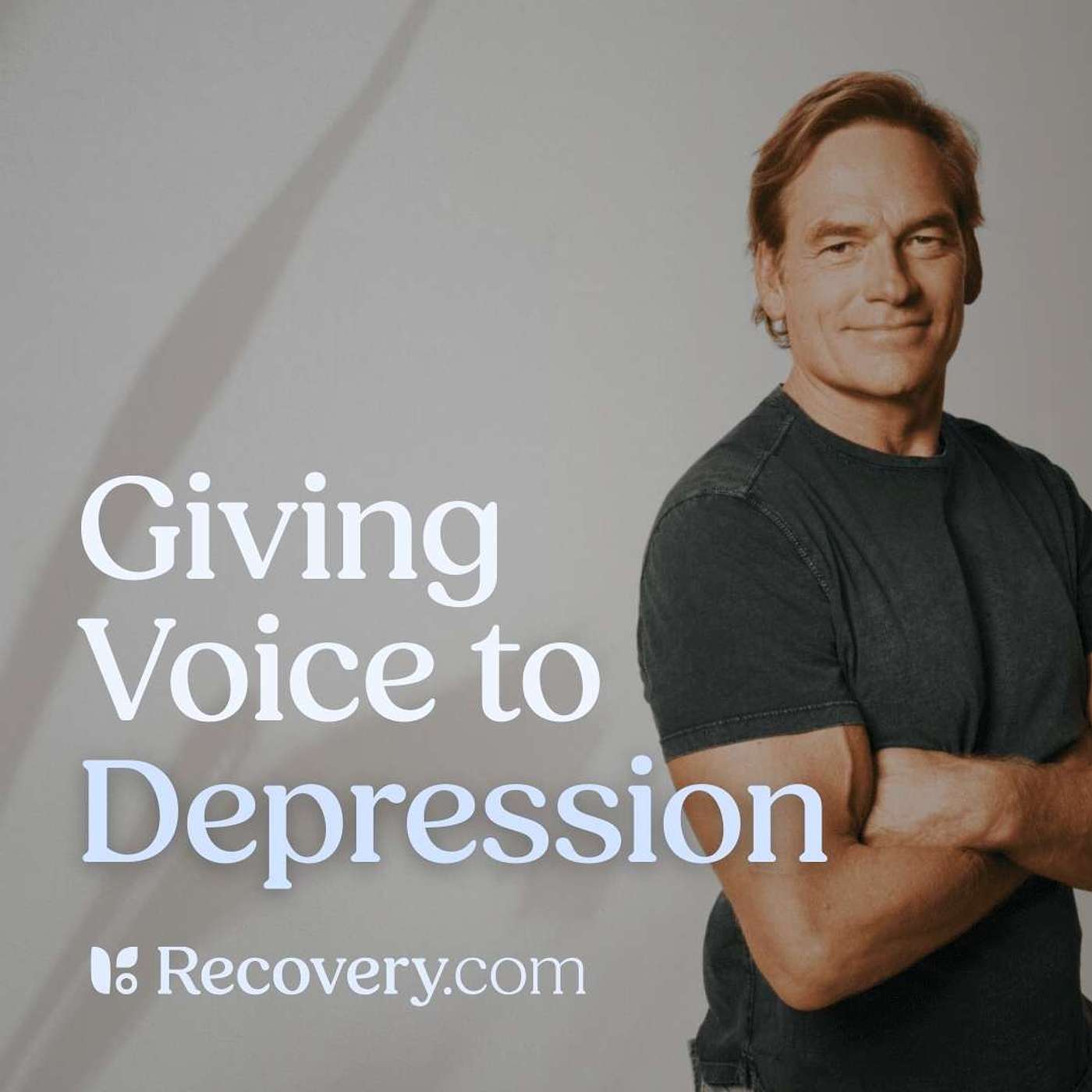
In this inspiring episode of Giving Voice to Depression, wellness expert and author Darin Olien — co-host of Netflix’s Down to Earth with Zac Efron — opens up about his personal experiences with depression and shares how physical and mental health are deeply connected.
Olien, known for his best-selling books SuperLife and Fatal Conveniences, discusses how diet, hydration, sleep, trauma, and emotional awareness play crucial roles in improving mental health. He shares candid reflections on grief, loss, and rebuilding his life after his Malibu home burned down — revealing how embracing vulnerability and self-compassion became essential parts of his h...
Depression, Suicide, and Hope: Andre Henry on Music, Self-Compassion, and Surviving the Darkest Days

In part two of his conversation with Giving Voice to Depression, musician, author, and activist Andre Henry continues sharing how creativity, self-compassion, and community have helped him survive depression and suicidal thoughts.
Following his song “Make It to Tomorrow”, Andre walks listeners through the tools that keep him grounded — self-hugs, breathing exercises, and reframing shame into self-acceptance. He explains how therapy helped him build a “safety plan” that brings him back from despair to agency.
Hosts Terry McGuire and Carly McCollow join him to discuss the power of communi...
Make It To Tomorrow: Andre Henry on Depression, Suicide, and Hope Through Song
When everything feels unbearable, how do you keep going?
In this deeply moving conversation, musician and author Andre Henry shares how writing his song “Make It To Tomorrow” helped him survive one of his darkest moments.
Growing up in the Black community, Andre faced the silence and stigma surrounding mental health. Through his art, he began to name his pain — transforming suicidal thoughts into words and melodies that resonated with thousands of listeners.
In this episode, Andre opens up about his lifelong relationship with depression, the systemic and cultural pressures that intensified his str...
Mental Health New Year Resolutions: Dr. Margaret Rutherford on Self-Care, Therapy, and Real Change
A new year often brings the pressure to reinvent ourselves — to lose weight, quit bad habits, or be more productive. But what if this year, your most important resolution was simply to take better care of your mental health?
In this insightful Giving Voice to Depression episode, psychologist and author Dr. Margaret Rutherford joins Terry McGuire and Bridget to talk about setting mental health resolutions that actually help — ones rooted in self-compassion instead of shame.
Dr. Rutherford explains why traditional resolutions often fail and how to r...
