The Biblical Mind

The Biblical Mind is dedicated to helping its audience understand how the biblical authors thought, promoting Bible fluency through curious, careful reading of Scripture. It is hosted by Dr. Dru Johnson and published by the Center for Hebraic Thought, a hub for research and resources on the intellectual world of the Bible.
Can You Believe & Doubt at the Same Time? Cognitive Science's Take on Faith (Joshua Mugg) Ep. #266

What does it mean to believe something—and can we genuinely believe while also experiencing doubt? In this episode of the Center for Hebraic Thought and the Biblical Mind Podcast, Mike Tolliver talks with philosopher Dr. Joshua Mugg about his book From Human Reasoning to Belief and his alternative to the influential “dual process” theory of human reasoning.
Mugg explains why he rejects the idea that the mind is simply divided between fast, intuitive thinking and slow, rational thinking. Instead, he proposes that human reasoning operates across multiple dimensions, allowing us to adjust how we think, gather eviden...
Healthy Tools: How Our Tech Can Work for Us (Felicia Wu Song) Ep. #265

How is technology shaping the way we live, relate to one another, and understand what it means to be human? In this episode, Dru Johnson talks with sociologist Dr. Felicia Song about digital technology, AI, social media, Christian discipleship, and the spiritual consequences of living in a world of constant connection.
Song argues that Christians should resist both technological hype and fearmongering and instead develop a more thoughtful, historically informed approach to digital culture. Rather than simply asking whether technology is “good” or “bad,” she encourages us to consider what our devices are actually doing to our relation...
The Puritans, Mosaic Law, and the Roots of Christian Nationalism (Yisroel Benporat) Ep. #264

What did the Puritans really believe about the Old Testament, Mosaic law, Jews, and Israel? In this episode of the Biblical Mind Podcast, historian Dr. Yisroel Benporat explores the fascinating and often misunderstood relationship between Puritan theology and the Hebrew Bible.
Benporat explains why Puritans attempted to apply biblical judicial laws to early American society, including laws concerning adultery, the Sabbath, and criminal punishment. He unpacks the distinction between moral, ceremonial, and judicial law and shows how Puritan thinkers wrestled with the relationship between the Old and New Testaments.
The conversation also challenges the popular...
How the Bible Reads the Bible (Gary Edward Schnittjer) Ep. #263

How should Christians study the Bible? Does Scripture itself teach us how it should be read? In this episode of The Biblical Mind, Dru Johnson is joined by Dr. Gary Edward Schnittjer, distinguished professor of Old Testament for Cairn Theological Seminary at Cairn University, to discuss his new book, Connected: How Scripture Guides the Study of Scripture. Together they explore why the Bible should be interpreted on its own terms rather than through modern assumptions, and how the biblical authors model faithful reading of Scripture itself.
The conversation begins with the challenges of teaching today's college students...
Can International Politics Be ‘Biblical’? Laws, Nations, & Ordered Loves (Robert Joustra) Ep. #262

Dr. Robert Joustra joins The Biblical Mind Podcast to explore one of the most neglected questions in Christian ethics: What does the Bible have to say about international politics? Beginning with difficult questions like the bombing of Hiroshima and Nagasaki, Joustra argues that Christians need more than political pragmatism—they need a distinctly biblical framework for thinking about war, diplomacy, justice, nationalism, and global responsibility.
Drawing from the theological tradition of Augustine, Calvin, and Abraham Kuyper, Joustra explains how concepts like just war theory, ordered loves, sphere sovereignty, and the common good help Christians navigate today's geopolitical ch...
Reconstructing Deconstruction: It Doesn't Have to Be This Way (Joel Wentz) Ep. #261

Faith deconstruction has become one of the defining conversations in modern Christianity—but what does it actually mean to deconstruct your faith? In this episode of The Biblical Mind Podcast, Dru Johnson sits down with pastor, YouTuber, and book reviewer Joel Wentz to explore why so many Christians are questioning their beliefs and how those questions can lead to deeper spiritual maturity rather than cynicism.
Drawing from his own experience growing up in evangelical Christianity, Joel shares how wrestling with doctrines like hell, eschatology, and biblical interpretation led him through a season of deconstruction before discovering a ri...
QAnon, Conspiracy Theories, and the Church (Michael W. Austin)

Dr. Michael W. Austin is a Professor of Philosophy at Eastern Kentucky University, an author, and a speaker. He has published 12 books; most recently, he co-edited and contributed to QAnon, Chaos, and the Cross: Christianity and Conspiracy Theories.
Most of his teaching, writing, and speaking is focused on ethical questions related to character and human flourishing. He believes that philosophy has much to offer us, in our individual, social, and spiritual lives. For many years, he's also been a speaker for the Kentucky Humanities Council, and he contributes to a blog for Psychology Today, “Ethics for Everyone.”
Israel-Palestine Conflict: More Complicated Than You Think (Robert Nicholson) Ep. #260

The Israel-Palestine conflict is one of the world's most complex and emotionally charged issues—but how should Christians think about it with both historical honesty and theological humility?
In this episode of The Biblical Mind Podcast, Dru Johnson welcomes Robert Nicholson for a thoughtful response to a previous conversation about Being Christian After the Desolation of Gaza. Together, they explore competing historical narratives surrounding Israel, Palestine, Zionism, Hamas, the Oslo peace process, and the lasting impact of October 7. Rather than reducing the conflict to political slogans, they examine the fears, aspirations, and failures on both sides while as...
Israel-Palestine Conflict: More Complicated Than You Think (Robert Nicholson) Ep. #260

The Israel-Palestine conflict is one of the world's most complex and emotionally charged issues—but how should Christians think about it with both historical honesty and theological humility?
In this episode of The Biblical Mind Podcast, Dru Johnson welcomes Robert Nicholson for a thoughtful response to a previous conversation about Being Christian After the Desolation of Gaza. Together, they explore competing historical narratives surrounding Israel, Palestine, Zionism, Hamas, the Oslo peace process, and the lasting impact of October 7. Rather than reducing the conflict to political slogans, they examine the fears, aspirations, and failures on both sides while as...
Should Christians Watch Horror Movies? Fear as a Spiritual Teacher (Kutter Callaway) Ep. #259

Can Christians watch horror movies? Is horror merely entertainment, or can it reveal profound theological truths? In this episode of The Biblical Mind Podcast, Dru Johnson sits down with theologian and film scholar Dr. Kutter Callaway to explore why horror has become one of today's most influential storytelling genres—and why Christians should take it seriously.
Drawing from his new book, Be Afraid: What Horror Reveals About Facing the Darkness, Callaway argues that great horror doesn't simply frighten audiences; it exposes deep truths about evil, suffering, trauma, sin, and the human condition. Together, Dru and Kutter examine th...
Should Christians Watch Horror Movies? Fear as a Spiritual Teacher (Kutter Callaway) Ep. #259

Can Christians watch horror movies? Is horror merely entertainment, or can it reveal profound theological truths? In this episode of The Biblical Mind Podcast, Dru Johnson sits down with theologian and film scholar Dr. Kutter Callaway to explore why horror has become one of today's most influential storytelling genres—and why Christians should take it seriously.
Drawing from his new book, Be Afraid: What Horror Reveals About Facing the Darkness, Callaway argues that great horror doesn't simply frighten audiences; it exposes deep truths about evil, suffering, trauma, sin, and the human condition. Together, Dru and Kutter examine th...
Were Ancient Synagogues Town Halls with a Torah? (Jordan Ryan) Ep. #258

What were synagogues actually like in the time of Jesus? Were they places of worship, centers of local government, or something entirely different?
In this episode, archaeologist and New Testament scholar Dr. Jordan Ryan joins Dru Johnson to challenge common assumptions about ancient synagogues. Drawing on archaeological discoveries, ancient texts, and the writings of Josephus, Philo, and the New Testament, Ryan explains why synagogues in the first century looked and functioned very differently from both modern churches and modern synagogues.
The conversation explores the origins of synagogues, their possible connection to city gates in the...
Were Ancient Synagogues Town Halls with a Torah? (Jordan Ryan) Ep. #258

What were synagogues actually like in the time of Jesus? Were they places of worship, centers of local government, or something entirely different?
In this episode, archaeologist and New Testament scholar Dr. Jordan Ryan joins Dru Johnson to challenge common assumptions about ancient synagogues. Drawing on archaeological discoveries, ancient texts, and the writings of Josephus, Philo, and the New Testament, Ryan explains why synagogues in the first century looked and functioned very differently from both modern churches and modern synagogues.
The conversation explores the origins of synagogues, their possible connection to city gates in the...
Israel, Palestine, & Christian Responsibility: A Challenging Conversation (Fisk & Bannoura) Ep #257

In this wide-ranging conversation, Dru Johnson sits down with theologians Daniel Bannoura and Bruce Fisk, contributors to Being Christian After the Desolation of Gaza, to explore the Israel-Palestine conflict through the lens of Palestinian Christian experience. Drawing on history, theology, and personal experience, Bannoura and Fisk argue that the crisis in Gaza cannot be understood apart from the broader history of Zionism, Palestinian displacement, and the ongoing struggle for justice and human dignity in the region.
The discussion examines the relationship between Christianity, Christian Zionism, and modern Israeli politics, while also addressing questions of antisemitism, Palestinian identity...
Israel, Palestine, & Christian Responsibility: A Challenging Conversation (Fisk & Bannoura) Ep #257

In this wide-ranging conversation, Dru Johnson sits down with theologians Daniel Bannoura and Bruce Fisk, contributors to Being Christian After the Desolation of Gaza, to explore the Israel-Palestine conflict through the lens of Palestinian Christian experience. Drawing on history, theology, and personal experience, Bannoura and Fisk argue that the crisis in Gaza cannot be understood apart from the broader history of Zionism, Palestinian displacement, and the ongoing struggle for justice and human dignity in the region.
The discussion examines the relationship between Christianity, Christian Zionism, and modern Israeli politics, while also addressing questions of antisemitism, Palestinian identity...
Reimagining Biblical Politics: A New Podcast (Michael Rhodes, Marshall Teague) Ep. #256
What does the Bible actually say about politics, and how should Christians engage public life in an age of division and polarization?
In this inaugural episode of Reimagining Biblical Politics, biblical scholar Michael Rhodes joins co-host Marshall Teague to explore the foundational claim at the heart of Scripture: God reigns. Rather than offering partisan talking points or commentary on current political controversies, Rhodes argues that the Bible presents a rich and often-overlooked vision of political discipleship rooted in the kingdom of God.
Drawing from his experiences living and serving in economically marginalized communities in Memphis...
Are we Doomed to Lonely and Isolated Lives? No. (Alan Noble) Ep. #255
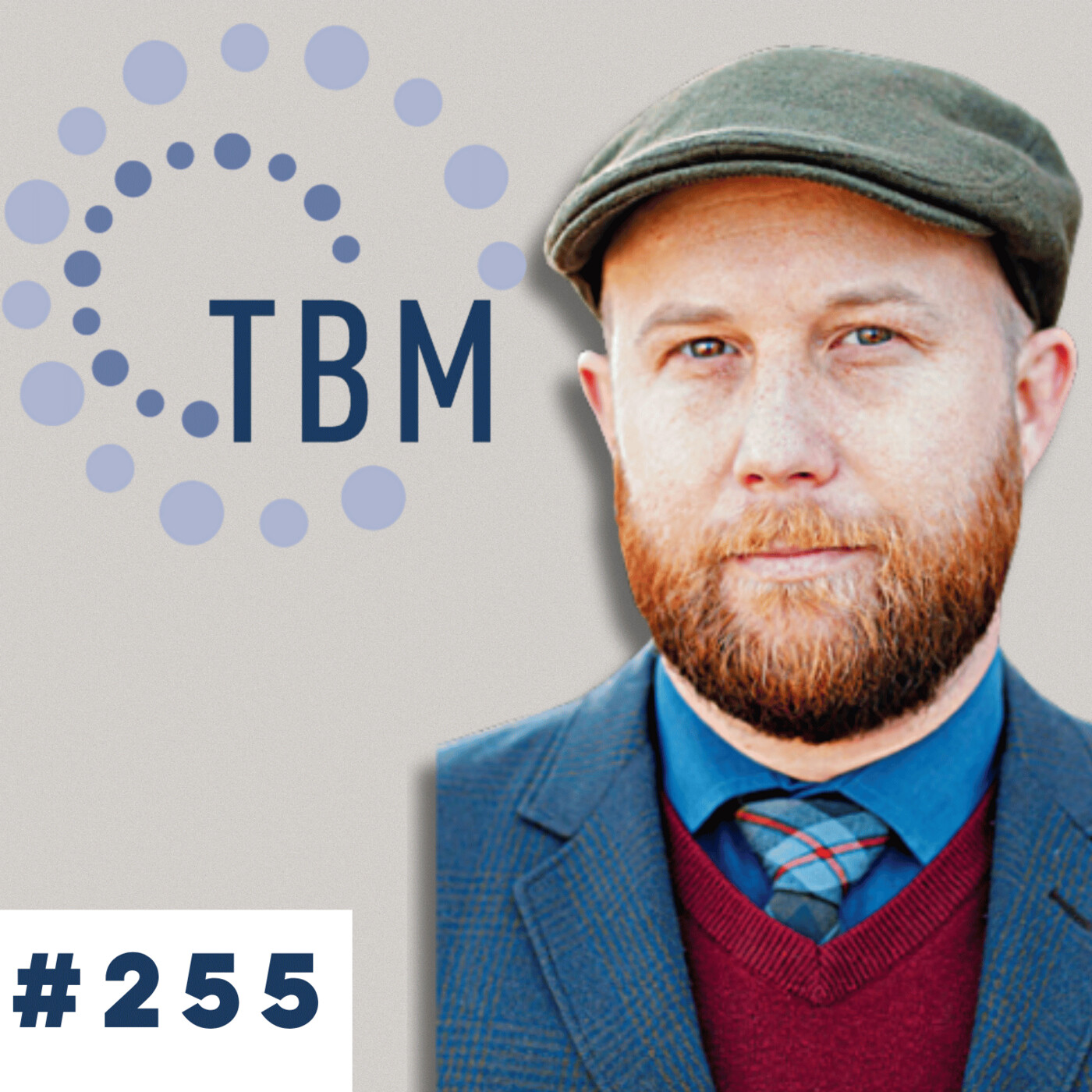
What does it mean to truly live well in an age of loneliness, distraction, and endless self-improvement advice?
In this episode, Dru Johnson sits down with Alan Noble to discuss his new book on the seven Christian virtues and why recovering ancient wisdom may be the key to human flourishing today. Together they explore how virtues such as courage, temperance, prudence, justice, faith, hope, and love shape a life rooted in Christ rather than in modern self-help culture.
The conversation examines the growing loneliness epidemic, the difference between "thin" online communities and meaningful relationships, and...
When Helping Still Hurts (Brian Fikkert) Ep. #254

In this episode, Dru Johnson interviews Dr. Brian Fikkert about poverty, charity, economic development, and the role of the church in helping vulnerable communities flourish. Drawing from decades of experience in poverty alleviation and Christian mission, Fikkert explains why many well-intentioned efforts to help the poor can unintentionally create dependency, undermine dignity, and fail to address the deeper relational causes of poverty.
The conversation explores key themes from When Helping Hurts, including the difference between relief, rehabilitation, and development, as well as how churches and nonprofits can better serve communities both locally and globally. Fikkert also discusses...
Are There Other Gods in the Bible?: James Duguid on Divine Council (James Duguid) Ep. #253

Did the biblical authors believe in a divine council of heavenly beings surrounding God? In this episode, Dru Johnson sits down with Hebrew Bible scholar Jamie Duguid to unpack one of the most controversial debates in modern biblical scholarship: the meaning of “sons of God” in Deuteronomy 32 and the growing influence of Michael Heiser’s Divine Council worldview.
The conversation explores the Hebrew phrase bene elohim, the Divine Council interpretation of Deuteronomy 32:8, and whether the Bible presents Yahweh as ruling among other divine beings. Duguid and Johnson examine the textual evidence behind the debate, including the Masoretic Text...
Is Job a Trauma Survivor?: Suffering, PTSD, and Healing in the Bible (Michelle Keener) Ep. #252

What if the Book of Job is not primarily about explaining suffering—but about surviving trauma?
In this episode of The Biblical Mind Podcast, Dru Johnson sits down with Old Testament scholar and licensed therapist Michelle Keener to explore the Book of Job through the lens of trauma, PTSD, lament, and healing. Drawing from her book Comfort from the Ashes, Keener argues that the long poetic sections of Job—often skipped by modern readers—may actually portray the slow process of trauma recovery rather than abstract theological debate.
Together, Dru and Michelle discuss why Job’s friend...
What Hegseth Gets Wrong About Pharisees (Jeffrey Garcia) Bonus Episode

In this episode, biblical scholar Jeffrey Garcia joins Dru Johnson to unpack one of the most misunderstood groups in the New Testament: the Pharisees. Prompted by recent public comments from U.S. Secretary of War Pete Hegseth, the conversation explores how the term “Pharisee” has often been used as a caricature for hypocrisy—and why that misunderstanding can contribute to anti-Jewish and anti-Semitic attitudes.
Drawing from the Gospels, Acts, ancient Judaism, and the Dead Sea Scrolls, Dr. Garcia explains that the Pharisees were not simply legalistic villains opposed to Jesus. Instead, many Pharisees shared substantial theological ground with J...
Vocation vs. Career vs. Calling (Steven Garber) Ep. #251

What does it truly mean to have a vocation—and how is it different from a career? In this thought-provoking conversation, Steven Garber and Dru Johnson explore the deep disconnect between faith and everyday work, challenging the dualism that separates “spiritual” callings from ordinary life.
Garber argues that vocation is not reserved for clergy or religious roles but is integral to the mission of God. Drawing from biblical theology, church history, and lived experience, the discussion highlights how modern culture often reduces calling to career success, income, or personal fulfillment—leaving many disillusioned.
Together, they unpack t...
C.S. Lewis Under the Microscope: Biblical Accuracy, Errors, and Influence (Leslie Baynes) Ep. #250

In this thought-provoking episode, Dr. Leslie Baynes explores the complex relationship between C.S. Lewis and the Bible. While Lewis is widely celebrated for his theological insight and literary brilliance, Baynes’ research uncovers a more nuanced reality—one where Lewis occasionally misquotes scripture, relies heavily on memory, and even attributes statements to Jesus that do not appear in the Gospels.
Drawing from her book Between Interpretation and Imagination: C.S. Lewis and the Bible, Baynes examines both Lewis’s profound contributions and his interpretive missteps, including his famous “liar, lunatic, or Lord” argument.
The episode also tackle...
Rethinking Women in Ministry: From Genesis to Paul (Preston Sprinkle) Ep. #249

What does the Bible actually say about women in church leadership—and are we asking the wrong questions? In this episode, Dru Johnson sits down with biblical scholar Preston Sprinkle to explore the complex, often misunderstood topic of gender roles in Scripture. Drawing from his book From Genesis to Junia, Sprinkle shares his “exegetical journey,” a multi-year study that avoids predetermined conclusions and instead carefully examines key biblical texts.
Together, they challenge modern assumptions often imposed on Scripture, including Western ideas about equality, hierarchy, and leadership. The conversation highlights how women are portrayed throughout the Bible—from influent...
Inside the Bible Business: The Story behind Publishing the NIV (Paul Caminiti) Ep. #248

In this episode, former Bible publisher Paul Caminiti shares an insider look at the global Bible industry, revealing surprising truths about how Scripture is translated, marketed, and consumed. From his leadership role at Zondervan to overseeing millions of Bible sales annually, Caminiti uncovers the business dynamics behind modern Bible publishing—including why Bibles remain the bestselling book every year.
The conversation dives into the creation of the New International Version (NIV), exploring the complex, expensive process of translation and the ongoing scholarly debates between “word-for-word” and “thought-for-thought” approaches. Caminiti also recounts the intense “Bible wars,” where cultural, theological, a...
Was Paul a Philosopher? Rethinking the Apostle as Rabbi and Thinker (Joseph Dodson) Ep. #247

How should we understand Paul—as a rabbi, a philosopher, or something else entirely?
In this episode, Dr. Joseph Dodson explores Paul as a figure who operates within both Jewish and Greco-Roman intellectual worlds. Rather than forcing a choice between “rabbi” or “philosopher,” the discussion shows how Paul embodies elements of both. He is deeply trained in the Scriptures of Israel and interprets them with methods recognizable within Jewish tradition, yet he is also conversant with the philosophical categories and rhetorical practices of the wider Greco-Roman context.
This dual identity helps explain both the content and the fo...
Bible First: The Bible And Politics Go Great Together, But How? (Mike Tolliver) Ep. #246

In this episode, Mike Tolliver and Dru Johnson reflect on the inaugural Bible First conference on politics, assessing both its successes and its limitations. Designed to “cut through the noise” of contemporary political commentary, the conference aimed to resource Christians with biblically grounded thinking rather than culturally inherited assumptions.
The conversation highlights a central tension: while many speakers engaged important historical and theological insights, fewer fully embodied the “Bible First” methodology by tracing political concepts directly through Scripture. This revealed a broader challenge within the church—namely, the difficulty of grounding political theology in the narrative and legal frame...
The Truth About Iran: Religion, Power, & the Rise of Underground Churches (Farhad Rezaei) Ep. #245

Is Iran truly an Islamic nation—or is that a misconception shaped by politics and media?
In this episode, Dru Johnson speaks with political scientist Dr. Farhad Rezaei, who offers an insider’s perspective on religion, culture, and power in modern Iran. Contrary to common assumptions, Rezaei explains that only a minority of Iranians actively identify as Muslim, with many describing themselves as secular, non-religious, or spiritually unaffiliated.
At the same time, Iran is experiencing what Rezaei calls a “religious revolution”: a dramatic rise in Christian conversions, growing from just a few hundred in 1979 to millions...
Where Is the Ark of the Covenant? Legends, Evidence, & Real Possibilities (Chris McKinny) Ep. #244

What happened to the Ark of the Covenant—and why does it still capture the imagination of both scholars and the public?
In this episode, Dru Johnson speaks with archaeologist Dr. Chris McKinny about his documentary Legends of the Lost Ark and the enduring mystery surrounding Israel’s most sacred object. McKinny explains that while many assume the Ark was destroyed in the Babylonian invasion, the biblical text never explicitly says so—leaving open a range of historical and legendary possibilities.
The conversation explores why popular imagination is often shaped by pseudo-archaeology, conspiracy theories, and figure...
Embodied Knowing: Polanyi, Scripture, and the End of the Mind-Body Divide (Dru Johnson) Ep. #243

Why does Michael Polanyi matter—and why should Christians care?
In this episode, Dru Johnson and Mike Tolliver reflect on the Hebraic Thought Community’s recent book study of Personal Knowledge and explore why Polanyi’s work remains so influential. A chemist-turned-philosopher, Polanyi challenged the modern view of knowledge as detached, purely mental, and objective. Instead, he argued that all knowing is embodied, communal, and tradition-shaped.
Science, he insisted, is not merely the collection of neutral facts but a “social fabric” in which communities train people to see significance where others cannot. Learning to read an x-ray...
Antisemitism and the Holocaust: Or, How Normal People Become Killers (David Pileggi) Ep. #242

Is the Holocaust fading from living memory—and if so, what are the consequences?
In this sobering and historically grounded conversation, Dru Johnson speaks with longtime Jerusalem resident and Anglican rector David Pileggi about why the Holocaust must be understood not merely as Jewish history, but as a defining event in modern human history. Pileggi argues that the Holocaust was not simply a tragic episode within World War II—it was central to the war’s origins and its catastrophic consequences.
Drawing on Christopher Browning’s Ordinary Men, the discussion explores how middle-aged, non-ideological German reservis...
Syndicated: The Bible Bar - Genesis 1 (Joshua Berman & K Lawson Younger) Ep. #241

In this syndicated episode, The Biblical Mind features the inaugural release of The Bible Bar, a new podcast from Bar-Ilan University hosted by Dr. Joshua Berman. The first episode dives into one of the most debated chapters in Scripture: Genesis 1.
Dr. Berman welcomes eminent Assyriologist and Old Testament scholar Lawson Younger to explore how the biblical creation account relates to ancient Near Eastern cosmogonies and theogonies. What makes Genesis similar to Egyptian and Mesopotamian creation stories—and what makes it radically different?
Younger explains how ancient Near Eastern cultures viewed creation and divinity as intertwined, wh...
Is “I’m Sorry” Biblical? Honor, Social Order, and Forgiveness in Scripture (Joshua Berman) Ep.#240

Does it matter whether we feel sorry when we ask for forgiveness?
In this conversation, Rabbi Dr. Joshua Berman returns to discuss the surprising findings of his long-term research into forgiveness in the Hebrew Bible. The biblical word slicha (“forgiveness”) appears only in relation to God—not between people. In fact, there is no word for “apology” in biblical Hebrew.
So how were offenses resolved?
Drawing on honor culture studies and examples ranging from Jacob and Esau to Judah and Tamar, Dr. Berman argues that ancient Israel operated within a different moral economy. Reconcilia...
Love, Justice, and the American Prison System: A Biblical Rethink (Abigail Pasiuk) Ep. #239

In this eye-opening conversation, PhD researcher Abigail Pasiuk joins Dr. Dru Johnson to explore how the Hebrew Bible can inform modern conversations about mass incarceration. Drawing on her personal experience—her father’s time in federal prison—and academic research at Oxford, Abby offers a theologically rich critique of retributive justice models prevalent in the U.S. prison system.
She explains how biblical justice prioritizes restoration and dignity rather than dehumanization, citing key themes such as the Shema and imago Dei. Abby shares firsthand accounts from interviews with incarcerated individuals, exposing everyday indignities—from food labeled “not for human...
Archaeology of the Everyday: Grounded Theology in Ancient Israel (Backfish & Shafer-Elliott) Ep. #238

What if theology isn’t something abstract but grows directly from the soil beneath our feet? In this episode, Dr. Cynthia Shafer-Elliott and Dr. Libby Backfish discuss their new book Grounded Theology, which argues that Israel’s theological reflections were deeply intertwined with daily life—especially as subsistence farmers in a land marked by both promise and struggle.
Drawing on archaeological discoveries from ancient households, the conversation explores how everyday artifacts like loom weights and ovens reveal Israelite religious practices not just in temples, but in kitchens. The land itself—its fertility, harshness, and rhythms—shaped covenantal faithfulne...
Redeeming Eden & Eve: How the Bible Strategically Uplifts Women (Ingrid Faro) Ep. #237

Why does Scripture so often portray women as central to God’s work of redemption—even in stories of deep dysfunction and failure? In this episode, Dr. Ingrid Faro, Old Testament scholar and interim president of Northern Seminary, joins Dru Johnson to explore her groundbreaking work in Redeeming Eden: How Women in the Bible Advance the Story of Salvation.
Dr. Faro shares how her personal journey through theological trauma, cultic church experiences, and academic discovery led her to reexamine Genesis 1–3 and the women of the Bible. She explains how Hebrew terms like ezer and tzelah (often translated “helper”...
Seeing What’s Really There: A Guide to Biblical Allusions (Matt Swale) Ep. #236
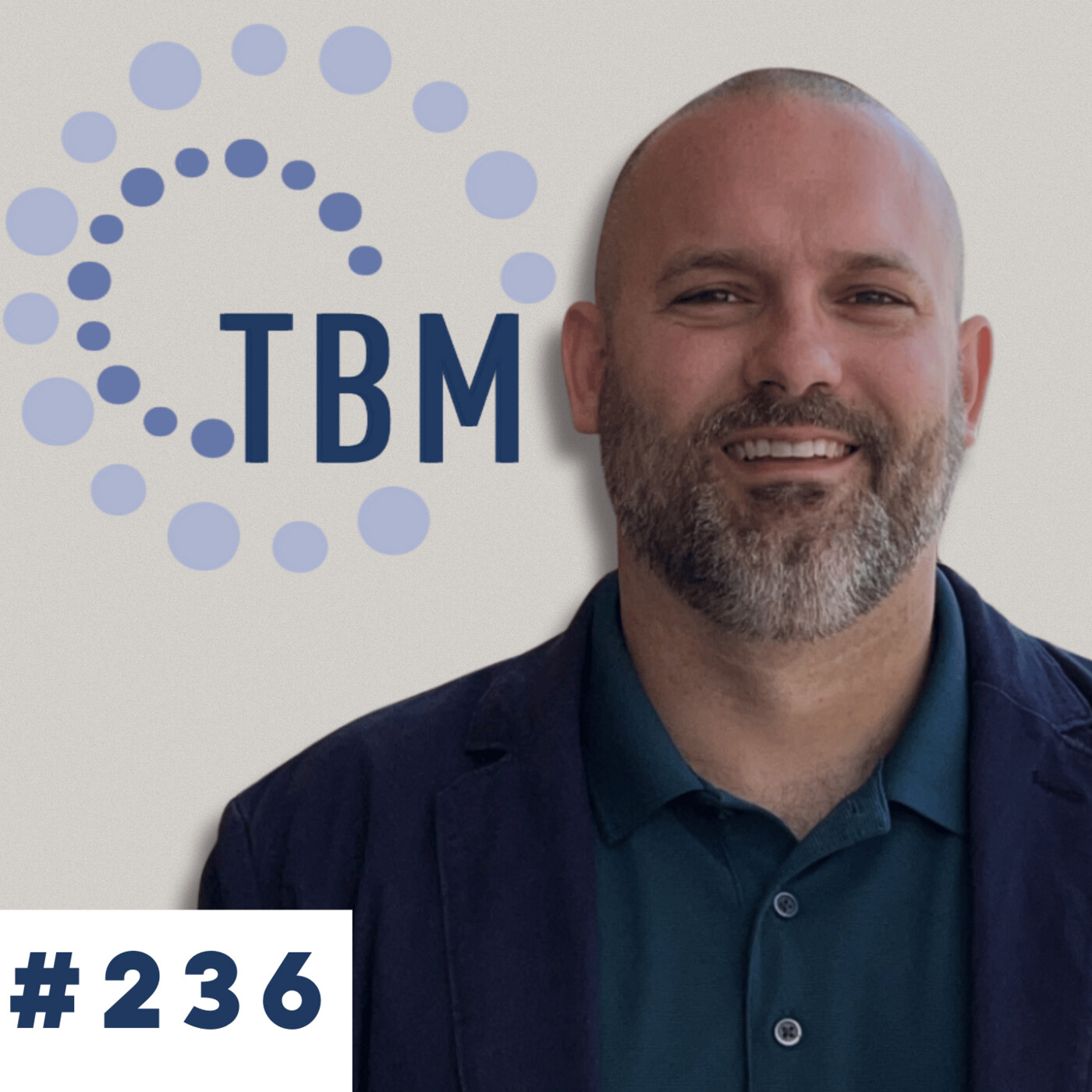
Can you trust that viral “Bible connection” you just saw on TikTok?
In this episode, Matt Swale, author of "Scripture’s Use of Scripture in the Old Testament," joins Dr. Dru Johnson to discuss how biblical allusions really work—and why we need better instincts and better tools when interpreting Scripture. Swale wrote the book to help lay readers and undergraduates navigate the exciting (and sometimes overhyped) world of intertextuality: how one passage of Scripture evokes another, often subtly, and with profound rhetorical effect.
They explore his criteria for spotting allusions—rare terms, thematic coherence, and rhetor...
The State of Hebraic Thought In 2026 (Dru Johnson) Ep. #235

In this episode, Dru Johnson and Mike Tolliver reflect on the Center for Hebraic Thought’s evolving impact and expanding community. They revisit the promise made in 2025 to annually assess their work and celebrate how that commitment has borne fruit: from the flourishing Hebraic Thought Facebook community and its scripture reading groups, to the launch of a Michael Polanyi reading club. They announce the inaugural Bible First Conference Series, co-hosted with the American Bible Society, exploring how various Christian traditions engage politics through a biblical lens.
The conversation highlights recent standout books—many by past podcast guests—includ...
Sacrifice, Atonement, and Presence: Maybe Leviticus Doesn't Mean What We Think? (Phil Bray) Ep #234

What happens when an Australian butcher starts reading Leviticus—and finds it fun? In this unique episode, Dru Johnson speaks with Phil Bray, author of Leviticus on the Butcher’s Block, about how his day job cutting lambs and steaks helped him see the book of Leviticus in a whole new light. Phil traces his journey from casual Bible reader to Leviticus superfan, exploring how rituals, sacrifice, and atonement make far more sense when you’ve broken down hundreds of animals by hand.
Phil shares how ancient sacrificial rituals weren’t necessarily about violent death but about preparin...
ICYMI: How Old Testament Laws Can Shape Christians Today (Carmen Imes) Ep. #233

In this episode, Old Testament scholar Dr. Carmen Imes unpacks widespread Christian misunderstandings of Torah and shows how the laws of the Old Testament were never meant as a means of salvation, but as a way of living out Israel’s covenant identity. Rather than a legalistic burden, Torah was a gift of freedom—a lifestyle for a people already redeemed.
Dr. Imes explains how Jesus wasn’t raising the bar beyond Sinai but calling his followers back to its original heart: internal transformation, not external compliance. Through examples like the command against coveting and teachings on oath-m...
