Uncanny Japan

Uncanny Japan is a podcast about all the more obscure corners of old Japan, from strange superstitions, cultural curiosities, to creepy creatures. Here you can discover all the lesser known gems that author Thersa Matsuura digs up while doing research for her writing. Every episode is uniquely soothing, brought to life by immersive sound design or relaxing binaural soundscapes (ocean waves, autumn crickets, rice field frogs) all recorded right here in Japan. Thersa Matsuura is a writer, folklorist, and graduate of the Clarion West workshop. Drawing on her over thirty-five years of living in Japan, she is the author of...
The Yōkai That Drops from the Trees *squish*: Tsurube Otoshi
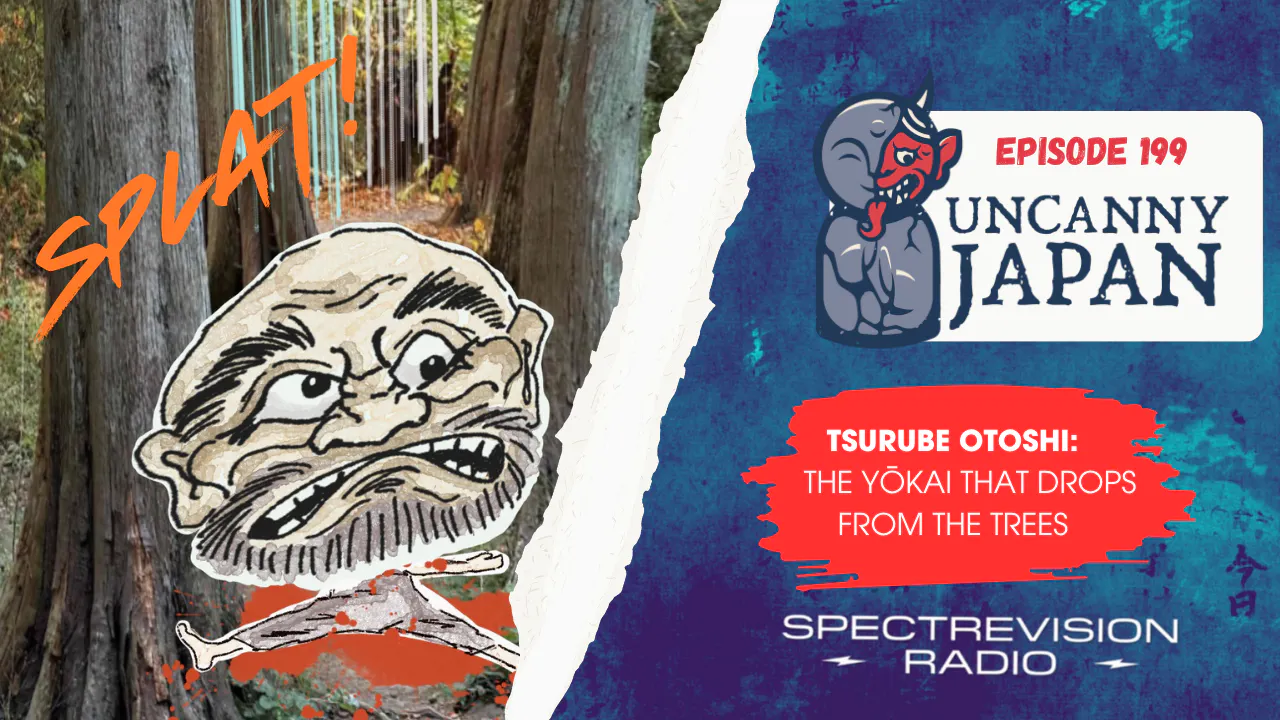
The cicadas are fading, the bell crickets are singing, and autumn is beginning to creep into Japan. There’s an old saying: aki no hi wa tsurube otoshi—“an autumn day falls like a well bucket”—describing how suddenly darkness arrives this time of year.
But Tsurube Otoshi is also the name of a very strange yōkai.
Depending on where you are, it might be a well bucket dropping from an old tree, a mysterious ball of fire, a severed head, or something waiting above the road to haul unlucky travelers into the branches and eat the...
Folklore Story Time: The Sea Monster of the Oki Islands (Ep. 198)

This episode is story time. We’re traveling to the remote Oki Islands in the Sea of Japan for an old Japanese tale collected by Richard Gordon Smith in his 1908 book Ancient Tales and Folk-Lore of Japan.
When young Tokoyo sets out to find her banished father, her journey leads her to an island haunted by a terrible tradition: every year, a young woman must be sacrificed to a mysterious creature beneath the sea. Tokoyo decides to do something about it.
A tale of courage, curses, sea monsters, and one very determined daughter.
Learn mo...
100 Ghost Stories in the Dark: Why Summer Is Ghost Season in Japan (Ep. 197)

In Japan, ghosts don’t wait for October.
Summer—especially the hot, humid weeks around Obon—has long been the season for ghost stories, strange encounters, and deliberately scaring yourself silly.
In this episode of Uncanny Japan, we’ll sit down for hyakumonogatari, the old practice of telling one hundred frightening stories while extinguishing candles one by one. We’ll look at summer ghost plays on the kabuki stage, venture out for a kimodameshi test of courage, and step inside an obakeyashiki, Japan’s own style of haunted house.
Along the way: cicadas, cemeteries...
How to Welcome the Dead Home: Obon in Japan (Ep. 196)
Every Obon, Japan’s ancestral spirits return home—guided by tiny fires and carried on cucumber horses. This year, for the first time, I’m responsible for preparing my father-in-law’s family altar. Join me for cauldron lids, lost ghosts, strange noises in an old house, eggplant cows, and the rituals used to welcome the dead home and send them safely away again.
Learn more about your ad choices. Visit megaphone.fm/adchoices
Creepy Story Time: "By the Japanese Sea" -- Lafcadio Hearn
On the final days of Obon, fishermen along Japan’s western coast once believed the sea belonged to the dead.
In this episode, I read Lafcadio Hearn’s eerie and beautiful essay “By the Japanese Sea.” Along the journey, we encounter drowned spirits rising from the waves, cats carried aboard fishing boats to ward off ghosts, delicate straw vessels made for lost souls, and a haunted futon whispering in the voices of two freezing children.
This reading originally appeared as one of the bedtime stories shared with Uncanny Japan Patreon supporters.
Learn mo...
Tanabata: Star-Crossed Lovers (Ep.55) -- From the Vault
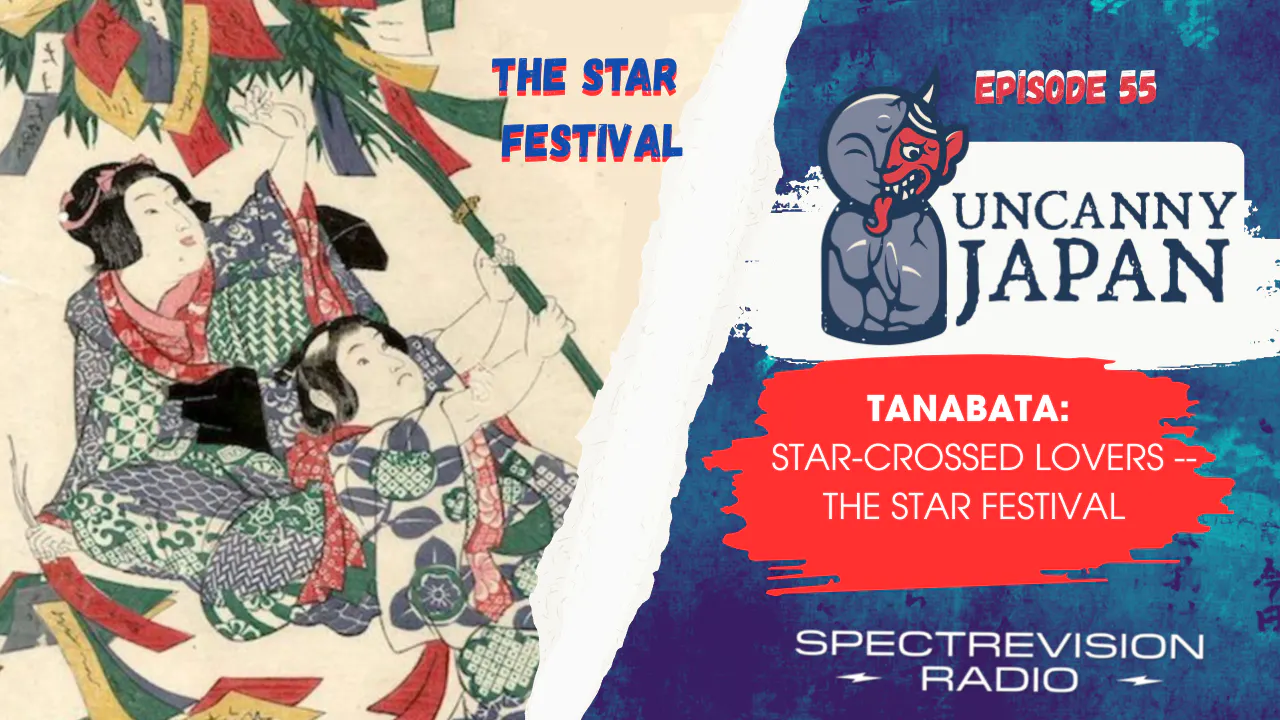
A short Tanabata tale from the Uncanny Vault: Orihime the weaving princess, Hikoboshi the cowherd, and the river of stars that keeps them apart. On the seventh night of the seventh month, wishes are written on colorful strips of paper, tied to bamboo, and sent into the summer sky.
Learn more about your ad choices. Visit megaphone.fm/adchoices
Childhood Incantations: Engacho, Pain Magic, & Severed Pinkies! (Ep. 194)
Two little boys find a dead bird on a mountain path. One accidentally touches it with his shoe, and suddenly the invisible contagion begins. Fingers cross. A circle is made. A hand chops through it. “Engacho!”
In this episode of Uncanny Japan, we explore the everyday magic words and protective spells of childhood in Japan. There’s engacho, used to cut away contamination, bad luck, and all things spiritually “yucky.” There’s kuwabara kuwabara, a charm against thunder and lightning. Tsuru kame tsuru kame cancels out bad omens, while yubikiri genman turns a pinky promise into something surprisingly...
Utsuro-Bune: The Hollow Ship Revisited (Ep. 193)
In 1803, fishermen on Japan’s Hitachi coast spotted something round and unfamiliar drifting offshore. They hauled the hollow vessel onto the beach—and discovered a mysterious young woman inside.
Step into the story as one of those fishermen. Examine the vessel’s clouded windows and iron-plated hull, hear the woman speak in a language no one understands, and watch as she fiercely protects a box she refuses to surrender. Who was she, what was hidden inside—and why did the villagers send her back out to sea?
Learn more about your ad choices. Visit me...
The Big Three UFO/UAP Incidents in Japan + One! (Ep. 192)
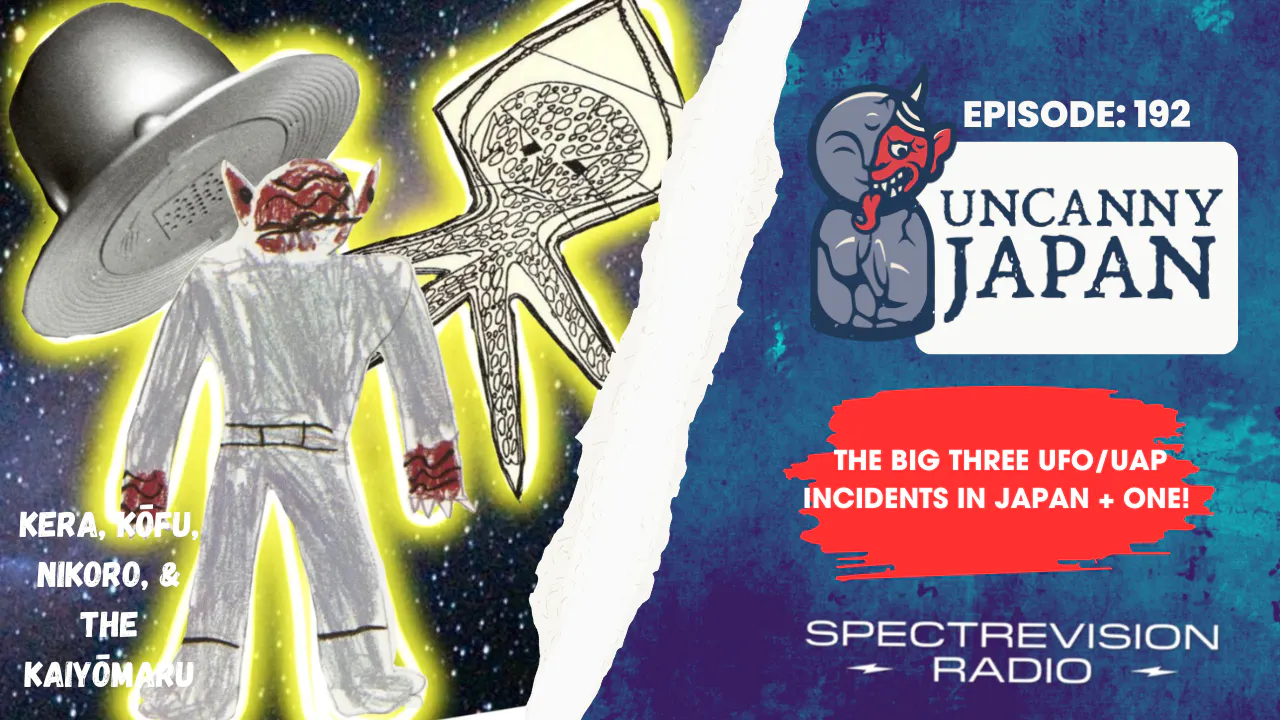
Japan’s 1970s UFO boom gave us some wonderfully strange cases: children capturing a tiny hat-shaped UFO in Kōchi, two boys encountering wrinkled aliens in a Yamanashi vineyard, and a Hokkaidō farmer who claimed repeated abductions, spoon-bending powers, and telepathic contact with beings from the Samon Call Galactic Planetary Federation.
In this episode, we look at Japan’s “Big Three” UFO incidents — Kera, Kōfu, and Nikoro — plus one especially intriguing 1980s case involving the Kaiyō Maru, a government research vessel whose crew recorded strange lights and radar-only objects moving at impossible speeds.
Learn more abo...
The Ghost-Playing Actor Who Became a REAL Vengeful Ghost: Kohada Koheiji (Ep. 191)
Not all Japanese revenge ghosts are wronged women. Meet Kohada Koheiji: a failed Edo-period actor who became famous for playing ghosts, only to be murdered, drowned, and returned as the very thing he once performed. In this episode, we explore the tangled history of the “real” Koheiji, Santō Kyōden’s gruesome tale, Nanboku’s kabuki adaptation, strange actor superstitions, severed fingers, rotten revenge, and one very silly sushi pun.
Learn more about your ad choices. Visit megaphone.fm/adchoices
All That Flows: Benzaiten, White Snakes, and Human-Headed Serpents

In this episode of Uncanny Japan, we follow Benzaiten — also known as Benten — from her origins as Saraswati to her place among Japan’s Seven Lucky Gods. Along the way: Enoshima’s five-headed dragon, white snakes as divine messengers, snake-skin wallets, house snakes, and Ugajin, the wonderfully strange human-headed snake deity linked to rice, water, fertility, fortune, and wealth.
Learn more about your ad choices. Visit megaphone.fm/adchoices
Everyone Has a Throat Buddha / What is it and Why? -- Nodohotoke & Story Time: "The Buddha Bone" (Ep. 189)

Have you ever heard of the nodo-hotoke, or “throat Buddha”? In everyday Japanese, it usually refers to the Adam’s apple. But after death, especially in the context of cremation, the nodo-hotoke becomes something else entirely, the actual seat of your soul.
In this episode of Uncanny Japan, I talk about the fascinating and beautiful funeral custom of gathering bones after cremation, using long chopsticks to place them into the urn from feet to head, with the nodo-hotoke placed last. I’ll also touch on the taboo against passing food from chopsticks to chopsticks, the role of the crem...
Ofuda & Omamori: Lucky Talismans & Charms
After exploring animal spirit possession last episode, Thersa turns to the Japanese ways of staying safe, getting a little lucky, and maybe even finding love through ofuda and omamori, talismans and charms filled with divine power and everyday hope. With birdsong in the background and stories woven throughout, the episode ends on a quietly unsettling note that has ushi no koku mairi (cursing your enemies) vibes.
Learn more about your ad choices. Visit megaphone.fm/adchoices
Tsukimono: Possessed by an Animal (Ep. 187)

What is tsukimono? In Japanese culture, it’s the unsettling idea of possession—when a human or animal spirit attaches itself to you and usually does harm.
In this episode of Uncanny Japan, I explore animal possession: foxes, dogs, snakes, and even horses that cling to people for reasons both known and unknowable. What causes it? How can you tell if someone is possessed? And what happens when superstition crosses into real-world harm?
I talk about real eerie (and sometimes silly) historical accounts to my own deeply personal experience. I also look at the strange, the...
Takiyasha Hime & the Gashadokuro: Japan's Frog-Riding Witch & Giant Skeleton
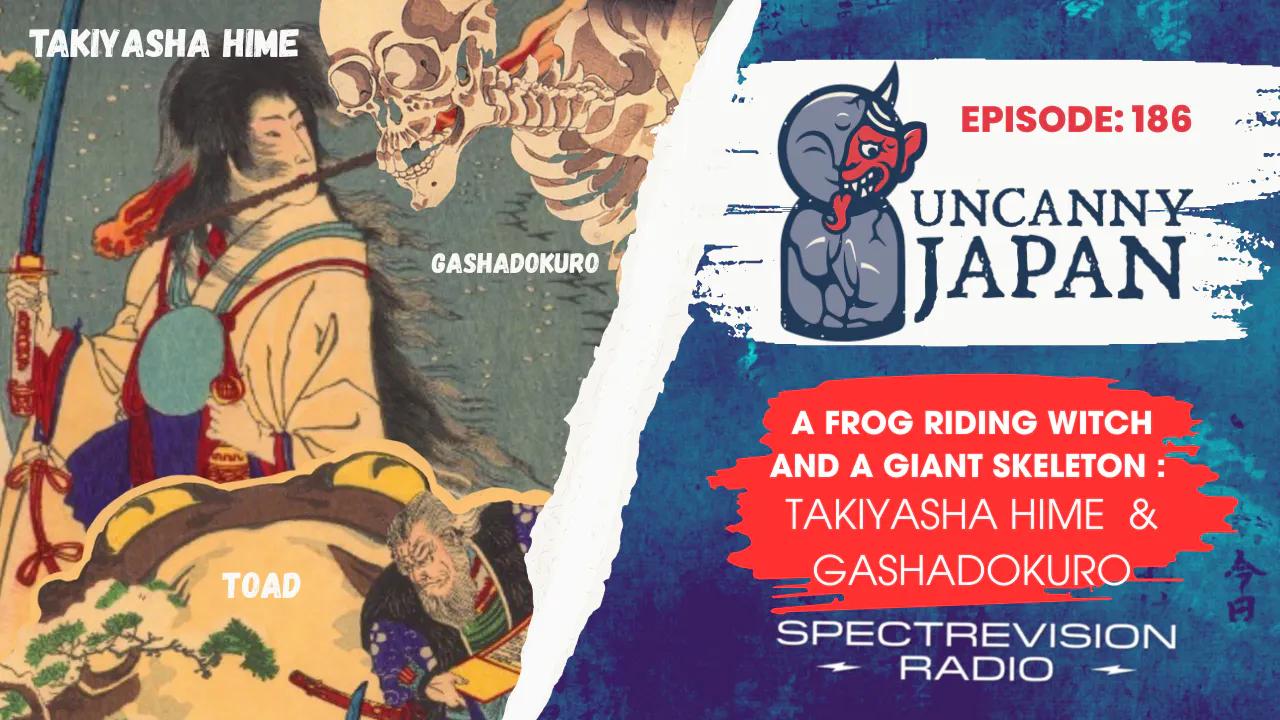
A vengeful princess rides a giant toad into battle while a monstrous skeleton tears through castle walls — and these two legends are connected in ways you might not expect.
In this episode, I dig into the story of Takiyasha Hime, daughter of the infamous Taira no Masakado, and the terrifying Gashadokuro. How did a princess become a sorceress? What kind of magic involves frogs? And is that famous skeleton in Kuniyoshi's print really what everyone thinks it is?
I even found the actual spell she used to summon the skeleton. Should I read it aloud?
...Why the Year of the Fire Horse is Dreaded in Japan and Cursed Kimonos
2026 is the year of the fire horse—a year that happens only once every 60 years. Across East Asia, it symbolizes transformation, intensity, and bold action. But in Japan? It's feared. Birth rates actually plummet during fire horse years because of a superstition that dates back to Edo-era Japan.
What does a cursed kimono that burned down 70% of a city have to do with this? And why was a young girl named Oshichi burned at the stake in 1666? Come with me as I explore the tragic story behind this uniquely Japanese superstition, the Great Fire of Meireki that ki...
Osechi: Japanese New Year Food Traditions
What if the meal sitting in those beautiful lacquered boxes held messages from the gods?
In Japan, osechi-ryōri isn't just New Year's food—it's a sacred offering. Each dish carries specific wishes: black beans for health, herring roe for prosperity, lotus root for clear vision into the future. Families prepare them before midnight, then rest for three days while Toshigami-sama, the deity of the coming year, visits every home.
But why can't you use knives during the first three days? What happens to the kitchen god? And why do martial arts schools break open mir...
Japanese Moon Lore: Selfless Rabbits, Murdered Goddesses, and Tsukimi
Don't point at the moon—you might wake up without your ears.
In Japan, the moon rabbit isn't just making mochi. Its image was placed there by the gods to honor an act of pure sacrifice, a Buddhist tale that traveled from India through China and transformed along the way.
In this episode we explore Tsukimi moon-viewing traditions, the violent origin of the moon god Tsukuyomi, protective pompous grass rituals, and dozens of poetic names for moonlight—from the "moon you can stand and wait for" to the "moon that rises deep into the night."
<...Hōichi the Earless: A Lafcadio Hearn Reading
A blind musician is summoned to perform in the darkness. But who is listening? And what terrible price awaits a moment's oversight?
Today I read to you one of Lafcadio Hearn's most famous Japanese ghost stories: "Mimi-nashi Hōichi" or "The Earless Hōichi."
Please Note: Some of the links are affiliate links (both Amazon and other). This means that at no cost to you, if you use and purchase through them I receive a small compensation. This is paid by the retailer. It also helps support me and my artistic endeavors. Thank you.
...
What Empty Spaces Need (An Audio Drama)
🎃 HALLOWEEN SPECIAL 🎃
This year's Halloween episode is a full-length audio drama based on the urban legend of Sukima-onna—the woman who watches from the gaps.
An American English teacher in Japan loses everything: his job, his apartment, his passport. Drunk and desperate during a snowstorm, he finds shelter in an abandoned house. But he's not alone. Something lives in the cracks, the spaces between things. And it's been waiting for him.
Content Warning and Huge Spoilers, do not read unless you're a very sensitive person who needs content warnings before listening to a FRIKKIN...
Ame-onna - Rain Woman's Original Ghost Story
We're getting closer to Halloween. How about another ghost story?
Ame-onna, the rain woman - a haggard looking thing, soaked to the bone, wandering rainy nights. There's lore about her, rumors, theories... but she doesn't have her own ghost story. So I fixed that.
First, I'll tell you the fascinating history: from Toriyama Sekien's 18th century yokai art (where she secretly represented courtesans) to the evolution into a grief-stricken mother searching for her stolen child. The Chinese literary connections. The "morning clouds, evening rain" idiom. The transformation from ephemeral beauty to child-stealing spirit.
...
Japan's Most Famous Ghost: My Retelling of Oiwa and the Yotsuya Kaidan
It's October. Time to pull a blanket around your shoulders, light a candle against the dark, and listen to a good old-fashioned ghost story.
There are many versions of the tragic tale of Japan's most famous ghost, Oiwa-san. But today, let me tell you my own retelling of her classic tale.
I told the story of Yotsuya Kaidan back in episode 42, but for this episode I rewrote the tale, telling it like a short story. The most famous version was a kabuki play written by Tsuruya Namboku IV called "Tōkaidō Yotsuya Kaidan" which premiered on...
Sanshi: The Three Body-Parasite Problem
I finally got to go on a walk again after all the oppressive August heat. I live around rice fields, mostly. There are some houses, of course, along the main road, and then every so often, a knee-high stone tower or stele. These are called kōshintō.
What I found particularly intriguing was how these connect to some rather unsettling beliefs about spiritual parasites. According to the traditions I discovered, we have three of these sanshi living inside our bodies.
Come with me as I explore how entire communities once stayed awake all night just to...
A Handful of Deadly Beach Beauties
Japan's summer heat is inescapable, driving people to seek relief at the beach. But what if I told you there are supernatural dangers lurking along Japan's 14,125 islands that make rip currents seem harmless?
In this episode, I share what I discovered about two particularly deceptive coastal yōkai: the iso-onna (coastal woman) who drains visitors of their blood, and the terrifying nure-onna - part woman, part massive snake, who uses cunning tricks to lure unsuspecting beach-goers.
You'll hear authentic ocean waves Richard and I recorded while researching this episode, plus stories from the Edo period a...
Introducing Uncanny Japan
Uncanny Japan is a podcast about all the more obscure corners of old Japan, from strange superstitions, cultural curiosities, to creepy creatures. Here you can discover all the lesser known gems that author Thersa Matsuura digs up while doing research for her writing. Uncanny Japan is a uniquely soothing podcast brought to life by immersive sound design or relaxing binaural soundscapes (ocean waves, autumn crickets, rice field frogs) all recorded right here in Japan.
Thersa Matsuura is a writer, folklorist, and graduate of the Clarion West workshop. Drawing on her over thirty years of l...
Japanese Afterlife Guide: Navigate Buddhist Hell & Death
So, you've died in Japan. Let me help you navigate the underworld and if we can, avoid the nastiest hells.
What does Japanese Buddhism suggest happens after death? I found these traditional afterlife concepts fascinating - there's this whole intricate spiritual bureaucracy that kicks in once you die. I'm talking about a 49-day underworld journey, fearsome judgment ceremonies, and some surprisingly specific strategies for avoiding the worst punishments.
Come with me as I explore what I've discovered about these ancient Japanese Buddhist death traditions and how they still influence Japanese culture today.
Episode...
Taira no Masakado: The First Samurai's Flying Head & Tokyo's Cursed Shrine
Have you ever woken up in the middle of the night wondering who Japan's first samurai was? And then maybe wondering if severed heads can actually fly? Well, that's exactly what I want to talk to you about today.
Today I'm going to tell you about the fierce, the legendary Taira no Masakado, who's been dubbed the first samurai. Was he a bad guy? Was he a good guy? And yeah, we'll get into airborne heads too, and curses. His story is wild - a 10th-century warrior whose severed head refused to decay and flew 200 miles home...
Saiō ga Uma: The Old Man's Horse & Finding Peace with Uncertainty
It's very strange, but this ancient Japanese proverb "Saiō ga Uma" has been popping up in my thoughts a lot lately. I kept hearing it mentioned, so I thought I'd share what I discovered.
"Saiō ga Uma" means "the old man's horse" - it's a 2,000-year-old parable about a man whose good and bad fortunes are never what they first appear. His horse runs away, villagers say "how unlucky." But the old man says "who's to say what's good or bad?"
I share why this wisdom has been resonating with me, especially after my hospital st...
Susanoo: Japan's Storm God - Chaos to Redemption
Ever wonder what happens when a Japanese god has serious anger management issues? This is the second episode in my Myth Tales series, and I want to share what I discovered about Susanoo, the storm deity whose story completely surprised me.
This isn't your typical heroic god story. Without giving too much away, let's just say his relationship with his sister (who happens to be the sun goddess) gets... complicated. And the consequences affect literally everyone.
This tempestuous deity's journey takes him from cosmic family drama to facing something truly terrifying - but I'll let...
Tsuyu: Japan's Dreaded Fifth Season - Rain, Mold, and Yokai Spirits
Don't let anyone tell you Japan has four distinct seasons. You'll hear that a lot. But it's not true. Japan actually has five seasons. Everyone forgets tsuyu, the rainy season, and all that entails.
In this episode, I explore Japan's most dreaded time of year - the humid, moldy, relentlessly gray weeks of tsuyu. From the architecture designed to combat moisture to the rain spirits that emerge during this soggy season, here's what you need to know about Japan's overlooked fifth season.
You'll discover why traditional Japanese houses have those beautiful transom windows, meet the...
Tōdaiki: The Candlestick Demon & Tang Dynasty Diplomatic Horror
Think modern travel is stressful? At least you probably won't end up transformed into a living candlestick by dark magic.
I've always been fascinated by stories about people who leave home and never come back. But what I'm about to tell you is worse than just disappearing.
I'm sharing two incredible tales from Japan's most dangerous era of international travel. One involves a family's worst nightmare - finding their missing father transformed into something called the Candlestick Demon. The other features magical adventures and clever problem-solving that will make you smile.
Both stories...
Lafcadio Hearn's "Readings from a Dream Book": Mystical Meditations on Consciousness (Ep. 170)
Sometimes we all need a little break from reality, and that's exactly what I'm offering in this deeply contemplative episode. Against the backdrop of soothing Pacific Ocean waves recorded on the Japanese coast, I read Lafcadio Hearn's complete mystical piece "Readings from a Dream Book."
This work from his collection "Shadowings" takes us into a dream realm where text appears and vanishes on phantom pages, revealing fragments of cosmic wisdom. We encounter a wave that fears breaking, pleading with the sea about the nature of eternal return, and souls trapped within a failing body, discussing the consequences...
Ryūjin: Harnessing the Power of Japan's Undersea Dragon God (Ep. 169)
Let's journey down to the bottom of the ocean to an underwater dragon palace called the Ryugu, or sometimes Ryugu-jo, owned and lorded over by Ryujin, the dragon god. And while we're there, let's learn more about all the myth and lore surrounding him and how you can personally connect with the spirit of the dragon god if you want.
[Please Note: Some of the links are affiliate links (both Amazon and other). This means that at no cost to you, if you use and purchase through them I receive a small compensation. This is paid by...
Mt. Fuji: A Fire-Resistant Goddess and a Sword-Licking Mystic
Mount Fuji isn't just Japan's tallest peak - it's home to some of the most extraordinary legends in Japanese folklore. In this episode, I tell you about two remarkable figures who shaped its mystical identity.
First, meet Konohanasakuya-hime, considered the most beautiful of all Shinto goddesses - so stunning that cherry blossoms were modeled after her appearance.
Then there's the legendary Enno Gyōja (also known as Enno Ōzuna), a 6th-century mountain ascetic who founded the Shugendō tradition. His devotion to Mount Fuji was so profound that when captors threatened him with execution, he simply lic...
Kanto vs Kansai: How Japanese Regional Food Differs
In this episode I talk about one of my favorite topics, one of the things that makes Japan special to me. It still gets me excited after all these years, and that is food.
I absolutely love that wherever you go in Japan, there are local specialties. But there are also certain foods that are prepared completely differently depending on what area you're in. And I'll get into those too.
I start by telling you about a friendly little rivalry we have here on Honshū. That's the Kantō versus Kansai. I live near there, kind of...
The Golden Pavilion Has Weird Ghosts
What happens when you think you know everything about Japan's most famous temple? I discovered I knew almost nothing at all about Kinkaku-ji. Its real name isn't even what most people call it – there's an interesting story behind that. It wasn't always the size you see today either. Plus, high school students visiting on school trips have been capturing some pretty extraordinary photos that suggest there might be more to this place than meets the eye. Join me as I uncover the hidden history and gentle mysteries behind its golden facade.
[Please Note: Some of...
Walking in Old Japan: The Historical Gokaidō Routes
In today's episode, I'll be taking you on a stroll along the walking routes of Old Edo. There were five main ones, called go-kaidō - the five Edo routes, or the five historical roads of Japan. All five started at the exact same point on the Nihonbashi Bridge in then-Edo, now Tōkyō. Today, let's learn specifically about the two longer ones that led travelers to the old capital of Kyōto, the Tōkaidō and the Nakasendō.
Starting from the Nihonbashi Bridge, there are two main routes to Kyōto: the popular coastal Tōkaidō and the mounta...
Fudō Myō: The Unshakable Buddhist Deity and Sacred Fire Ceremonies
In this episode, I'll be telling you about someone I've had a crush on for the past couple years, Fudō Myō, and also about a very cool fire ceremony that will burn away all your worldly desires, ignorance, and purify you.
Meet Fudō Myō, the fierce Buddhist deity who burns away ignorance and worldly desires through Goma fire ceremonies.
Learn about the name meaning "the immovable or unshakable one," his role as a wisdom king in esoteric Buddhism, and how he converts rage into salvation. I'll also share my personal experiences attending Goma fire ceremonies, wher...
Bodhidharma and Daruma Dolls: Zen Buddhism Origins
In today's episode, I'll be taking you on a journey that involves supernatural balance, a touch of kung fu fighting, cringeworthy acts of concentration, a lucky toy that heals disease and helps you achieve your dreams, and will end delightfully in a moment of sheer, utter unadulterated and quite literal zen.
Let's start with a baby, a mysterious baby, born in southern India in the 5th or 6th centuries. He was a studious child who was drawn to Buddha's teachings. Let's call him Bodhidharma.
What happened after he traveled to China? How did he cross...
The Salt God and the Magic of Salt
During the 2011 Tōhoku tsunami, the water rose to the exact edge of Shiogama Shrine and retreated. At Japanese funerals, you're given salt to sprinkle on your shoulders before going home. Tiny salt pyramids guard shop entrances across Japan.
What connects these practices to a 2,000-year-old deity? Why does salt purify sumo rings, stop crematorium ghosts, and protect businesses? How did a warring states proverb about sending enemies salt become a code of samurai honor?
Meet Shiotsuchi-oji-no-kami, the Salt God, and discover the ancient seaweed technique that changed Japan forever.
[Please Note: Some o...