This Week in Space (Audio)
The new space age is upon us, and This Week in Space leaves no topic untouched. Every Friday, join Editor-in-Chief of Ad Astra magazine, Rod Pyle and Managing Editor of Space.com, Tariq Malik as they explore everything related to the cosmos.You can join Club TWiT for $10 per month and get ad-free audio and video feeds for all our shows plus everything else the club offers...or get just this podcast ad-free for $5 per month. New episodes posted every Friday.
TrekMania - Michael Okuda Talks LCARS, Easter Eggs, and Sci-Fi Innovation

Hold onto your phasers, but it's been 60 years since Star Trek's debut, and the franchise is still going strong. For 40 of those years, Mike Okuda, working with a gifted team that included his wife Denise, has been central to the look, feel, and substance of the Star Trek universe. From the LCARS computer graphical system to alien languages to the designs and color schemes, and even the digital effects remastering of the original series, Mike has been the Cardinal of Canon when it comes to all things Trek. He has also been involved with many more space-related shows, books...
Who Owns the Moon? - Capitalism and Property Rights in Space

Capitalism—and a strong profit motivation—has driven enterprise for centuries. Two notable examples are the East India Company and the US transcontinental railroad, and the various tycoons who built it. In neither case, by today's standards, were the operations fair or ethical on a number of fronts. Can we do better in space? Dr. Rainer Zitelmann joins us to discuss capitalism and the importance of extraterrestrial land ownership as an enabler of human expansion off-Earth. He's got a lot to say, and not all of it is what you might expect. Join us for this fascinating and informative look...
Get a Grip! - New Technologies for Orbital Salvage
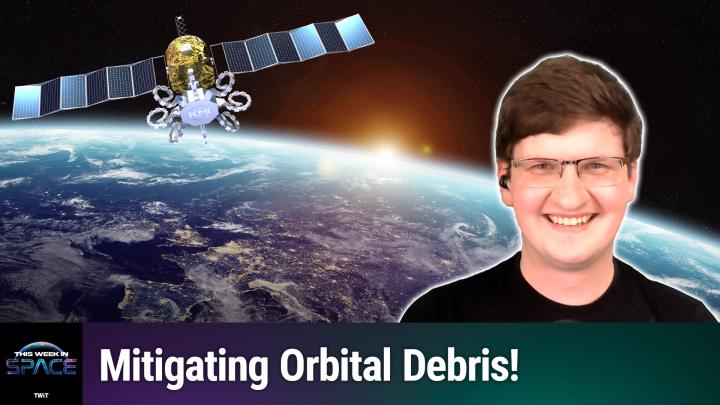
The mitigation of orbital debris is an increasingly serious problem that has not gotten enough attention, but this is changing. Commercial companies are addressing orbital debris, and one of them, KMI Space, has flown its experiments aboard the International Space Station, performing over 170 individual rendezvous-and-grab operations. The results are very promising, and the company is moving ahead with ever more ambitious designs. Adam Kall of KMI joins us to discuss their work on the ISS, the goals of the company, and how nature—via the humble octopus and gecko lizards—may have provided the answers for this vexing problem.
...The Science of Artemis - What We'll Do on the Moon

It has been said that the Moon is a harsh mistress, and nowhere is this more apparent than at the lunar south pole. That is, however, where the Artemis program is headed, and we need to figure out how to best explore the region. Dr. David Kring of the Universities Space Research Association's Lunar and Planetary Institute joins us to explore the where, whys, and hows of the Artemis Program's lunar exploration plans, and the answers--and risks--that await us.
Headlines:
Starship Flight 12 Survives Indian Ocean Landing nd Long Sea Journey China's Chang'e 7 Lunar Hopper Mission Targets...The Lunar Domain - Our Future on the Moon with Dr. Scott Pace

We're headed for a space renaissance, and it will be focused on the Moon. The US, China, and international partners of both are vying to land people there and construct a permanent lunar base. Meanwhile, NASA is evolving to embrace commercial enterprise unlike any time in its past, and American lunar efforts are lagging. What are the stakes? Does it matter who returns humans there first? What does the future of lunar commerce look like? Dr. Scott Pace, the Director of the Space Policy Institute at George Washington University, joins us.
Main Topic: The Evolving Lunar Domain...
How to Invade Earth in 22 Easy Steps - With Rich Edwards

We've all seen the movies... the aliens come to Earth, the aliens overcome the inferior humans, and the aliens fall prey to something dumb they overlooked, like microbes, Windows 95, or most absurdly, water. From the 1950s through yesterday, some of the best movies we've seen were about the invasion of our planet. They can be clever, scary, or even downright dumb, but they are all fun. Veteran space writer Rich Edwards joins us to give advice on how to repel the invaders!
Headlines:
Starship Can Float? - Roman Space Telescope Ready to Launch!
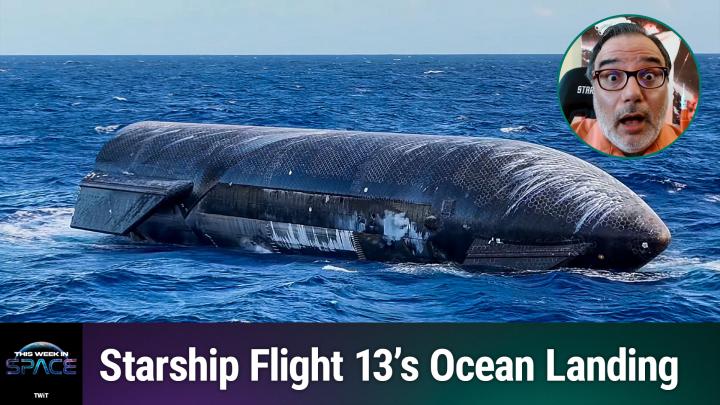
Rod Pyle is out this week, so Rick Jenet of the National Space Society joins Tariq Malik this week to talk about SpaceX's Starship Flight 13, which deployed new Starlink V3 satellites and stunned viewers when the ship survived reentry intact enough to float in the ocean for days afterward. They also discuss NASA's Roman Space Telescope, now just a month from launch, and an in-progress emergency effort to save the ailing Swift Space Observatory using a servicing spacecraft that is itself now experiencing technical trouble. Finally, they look into Boeing's continued Starliner delays and India's first successful private orbital...
First on Mars - The 50th Anniversary of Viking 1

This week, we cover how Starship Flight 13 finally prepares to launch amid a legal battle over SpaceX's proposed land swap at Starbase, plus a Chinese Long March 3B rocket gets struck by lightning during liftoff, yet still delivers its satellite safely. Then, guests Dr. Pascal Lee and astrobiologist Dr. Penny Boston join the show to mark the 50th anniversary of Viking 1's landing on Mars and revisit the mission's groundbreaking life-detection experiments and the decades-long controversy over what they actually found. The conversation traces Mars exploration from the earliest Mariner flybys through Viking's ambiguous, still-debated results—later explained by pe...
SpaceX Goes to War! - And Other Space Headlines
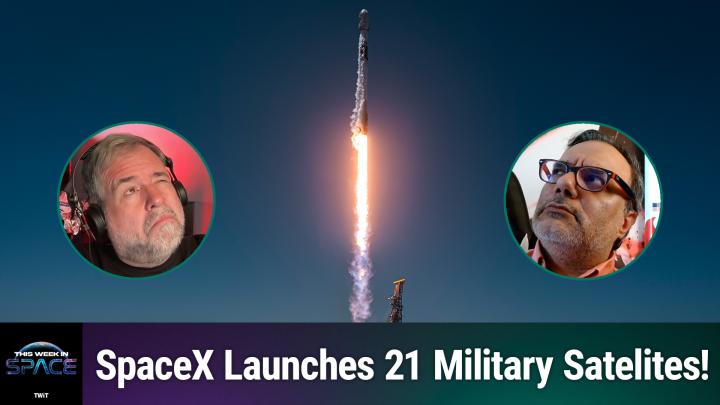
This week we're jumping into the space headlines for the past few weeks. It's been busy, and some exciting things are happening! A couple of companies are moving into the space solar power arena--something we've long advocated--and that's welcome progress. Starship is set to fly Starship test number 13, and a lot is riding on this--the system is overdue for some proof of concept to keep up with NASA's HLS contract. An exoplanet spotted a decade ago has shown signs of a potentially habitable atmosphere; there are landslides--big ones--on Pluto, and evidence of "space candy" sugars in an interstellar cloud...
Which Way to the Moonbase? - With Dr. Pascal Lee
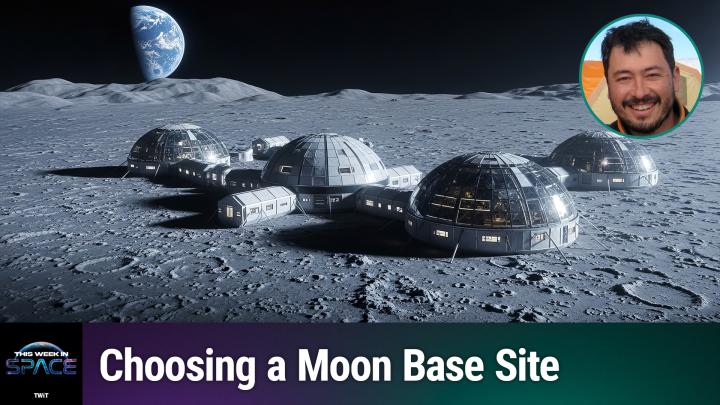
We've been hearing a lot about NASA's new moonbase plans, and they are ambitious. Starting with Artemis V (so far), the US plans to begin preparations for a permanent base situated in the south polar regions of the moon. Details are somewhat fluid, but one thing stands out: the poles are likely to be the most challenging places to set up shop in an already hostile environment. Planetary scientist Dr. Pascal Lee joins us to discuss moonbase siting options and why the poles may not be the best choice at first.
Headlines:
America in Space - 250 Years of Bold Firsts & Our Favorite Missions!

Since 1958, the United States has been part of the spaceflight adventure, and since the mid-1960s has led in just about any category that counts. In this episode, we discuss the progression of American space efforts, review which flights launched or landed on July 4, and relive some of our very favorite US space missions of all time!
"Headlines:
• NASA's Swift Boost Mission Aims to Rescue Swift Space Telescope
• Astronomer Avi Loeb Tapped to Chair White House UAP Panel
• Celebrating 30 Years of the Film Independence Day
Main Topic: 250 Years of America in Space
...
Dark Matter Intelligence - With Physicist Dr. Daniel Whiteson
We've had endless conversations about aliens and first contact--but what if a conversation with other intelligences is beyond our scope? Dr. Daniel Whiteson, particle physicist at CERN's Large Hadron Collider and professor at UC Irvine, joins us to explore less conventional thoughts on first contact. We look at the challenges of communicating with extraterrestrial intelligences, potential difficulties of communicating via non-terrestrial mathematics and physics, and the possibility that extraterrestrials might actually be terrestrial... but existing as denizens of the dark energy universe. One might be sitting in your lap right now! Join us for the far-ranging discussion.
...
Disclosure Day - With Dr. David Brin
If you've seen "Disclosure Day" or "Age of Disclosure," you're going to want to join us for this fascinating discussion with famed bestselling sci-fi/sci-fact author Dr. David Brin. Long known for his universe-spanning visions, storytelling skills, and occasionally contrarian viewpoints, this episode will not disappoint! Our discussion ranged from reactions to Spielberg's "Disclosure Day" to why people believe in AI and more. This week's guest co-host is ace science journalist Susan Karlin.
Headlines:
Moon Man - With Former NASA Administrator Jim Bridenstine
There are NASA Administrators, and then there are NASA Administrators—all are very accomplished individuals, but some stand out for their unique backgrounds and on-the-job successes, and Jim Bridenstine is one of the latter. Entering service as the new NASA Administrator in 2017 with a background as a Navy pilot, Congressman, and museum director, he was an unconventional choice, and faced some headwinds in the appointment—but Jim turned out to be exceptional in the job, especially given the state of NASA when he took it on. Join us to hear his experiences with our favorite space agency and what he's...
Live From ISDC With Gerry Griffin - NASA Flight Director Breaks Down the Realities of Spaceflight
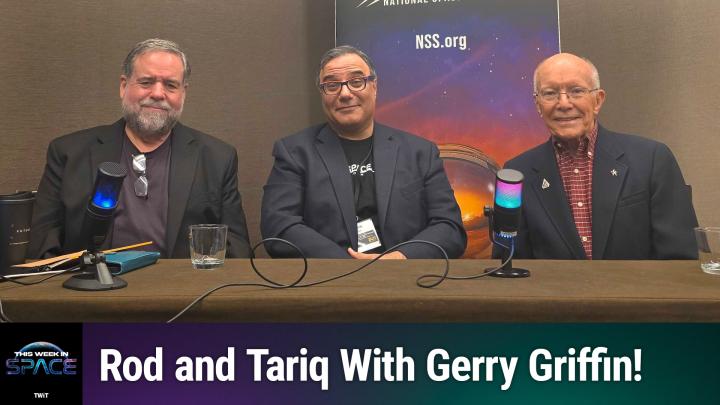
Recorded live from the International Space Development Conference in McLean, Virginia, Rod Pyle and Tariq Malik are joined by Apollo legend and former Johnson Space Center director Gerry Griffin. Griffin takes us on a journey through his extraordinary career, from his appointment as a flight director in the wake of the Apollo 1 fire, through the audacious decision to send Apollo 8 around the moon, all the way to the nail-biting rescue of Apollo 13. We also venture behind the scenes of Ron Howard's Apollo 13 film, where Griffin reveals the real story behind some of Hollywood's most famous dramatic liberties. It's a...
Kabooms, Starship, and a Moon Base - What New Glenn's Explosion Means for NASA's Moon Base
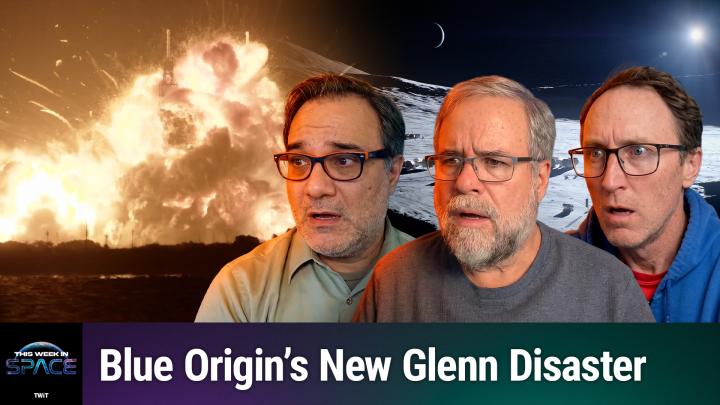
What a wild week in space news! We were all set to discuss Starship Test Flight 12 and NASA's recent press conference updating their lunar base plans, when on Thursday night, Blue Origin lost a New Glenn rocket on the pad during a static test. The explosion appears to have severely damaged the launch structure, LC36, along with the loss of the rocket. Fortunately, there were no casualties. But this does throw NASA's schedule for returning American astronauts to the moon into question, given that the agency had recently signaled their choice of Blue Origin's Blue Moon lander for Artemis 4...
Oysters in Space - With Jacob Scoccimerra of Monolith Space

When one ponders the diet of Mars-bound astonauts, oysters don't often come to mind... but they should. As it turns out, the plucky bivalves have much to offer space voyagers, including water filtration and a ready source of protein. Jacob Scoccimerra, formerly of Nanoracks and now with Monolith Space, initiated a research project with students from the Harrisburg University of Science and Technology, to design, build, and operate a closed-circuit, automated support environment for oysters in a simulated space analog. It's a fascinating discussion that may leave you hungry.
Headlines:
ESCAPADES at Mars - Dr. Robert Lillis of the Mars ESCAPADE Mission
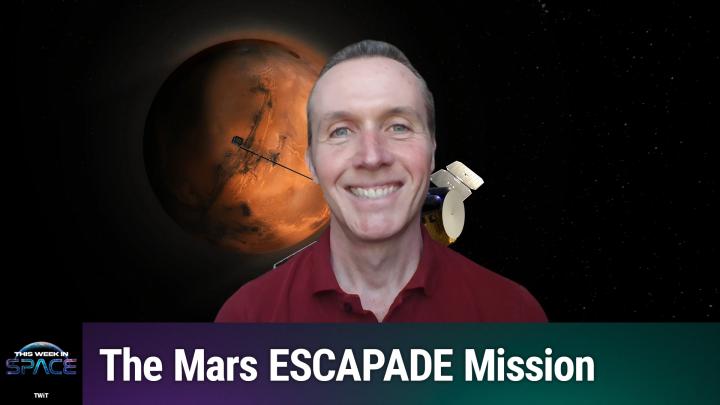
Poor Mars. After a warm, wet childhood, the planet dried out and became cold and arid. And why? Mostly because it lost most of its atmosphere, scraped away by solar radiation. NASA's Maven mission studied the phenomenon of atmospheric loss for years, but has now gone silent. Enter Mars ESCAPADE—the Escape and Plasma Acceleration and Dynamics Explorers—twin orbiters that will study the loss of Martian atmosphere more closely than ever before. The mission has been executed at a budget price. was largely built by industry upstart Rocket Lab, and launched on a New Glenn rocket. It will arri...
Astronauts for America - The Best of the Best Speak Out
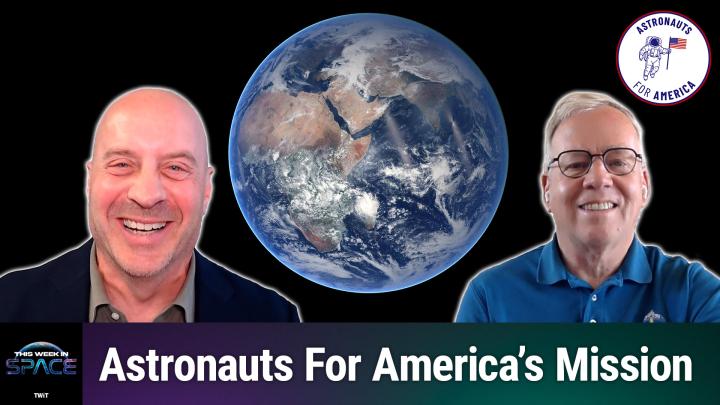
Many of us grew up idolizing astronauts as the best of the best that America—and other nations—have to offer. After leaving NASA, many of them go on to relatively routine careers in business or academia, but some stay "on mission" and continue striving to improve the human condition. The 100-plus astronauts behind Astronauts for America, led by Garrett Reisman and Steve Lindsey—a Democrat and Republican—have decided to speak out about their concerns for our democracy. As the nonprofit's website says, "Astronauts For America is a nonpartisan organization of former NASA astronauts who have sworn to defend t...
Lander, Lander, Who's Got a Lander - Will SpaceX or Blue Origin Touch Down First?
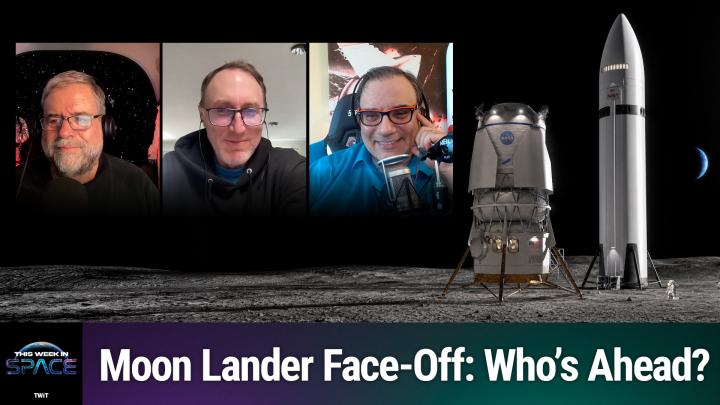
Lander, lander... who's got a lander? With NASA planning orbital tests of the Artemis landers in 2027 and a crewed landing in 2028, the pressure is on for SpaceX and Blue Origin to make good on their Human Landing System contracts. Who's actually going to put American astronauts back on the Moon first? This week's episode digs into the high-stakes race between the companies, surfacing new details and doubts about whether either lander will be ready in time. Both have to fly into Earth orbit, refuel multiple times, and perform robotic test landings on the moon (in addition to the Artemis...
What, This Again? - Attempted Cuts to the NASA Budget

As you have doubtless heard, the White House has once again proposed drastic budget cuts of about 24% for NASA's 2027 budget. It's deja vu all over again for us, as we followed an almost identical story last year. And as with last year, Congress has signaled the new budget to be DOA. This time, however, we had a NASA administrator in the seat when this budget arrived and he said he could work with it—despite a near halving of the NASA science budget and proposed cancellation of well over 50 science missions, many already successful and returning great science after th...
I Want to Believe - When We Meet the Aliens

What happens next when science can confidently announce the discovery of an alien life form? Whether it's a fully functioning civilization or a lowly Martian microbe, the implications are vast. Dr. Brianne Suldovsky of Portland State University has studied this mostly ignored question and come up with some interesting conclusions--and, like the best science, more questions. How this can best be communicated in an age of mistrust in large institutions and science is a vexing one, and the conversation looked at it from a variety of angles. And--it was fun. Join us!
Headlines:
All About Artemis - The Brilliance of Artemis 2

This week's episode is devoted to the flight of Artemis II. From the spectacular, on-time launch to the lunar flyby to reentry preparation, we chart all the major events of the mission. Some are technical and scientific--the interest in the small meteoritic impacts on the lunar farside and the spectacular solar eclipse witnessed by the crew—and some are more human interest, such as the messages to the crew from Apollo moonwalker Charlie Duke and the posthumous message from Apollo 8/13 astronaut Jim Lovell, to the very emotional moment where the crew named a crater after Reid Wiseman's recently deceased wi...
A New NASA - Artemis 2 Firsthand, and Isaacman Shakes up NASA!

We've seen NASA go through a lot of drama this year, and recently, some remarkable changes have been announced under the new administrator, Jared Isaacman. We're taking a deep dive into what's changed, what's the same, and what to expect. But first: Tariq and Rod are in Houston monitoring the Artemis 2 mission, which launched flawlessly on Wednesday. It's been a thrill since launch day, which Tariq saw in Florida, and shows no sign of slowing. We're bringing it to you from the field, so strap on in and join us!
Headlines:
A New NASA - Artemis 2 Firsthand, and Isaacman Shakes up NASA!
We've seen NASA go through a lot of drama this year, and recently, some remarkable changes have been announced under the new administrator, Jared Isaacman. We're taking a deep dive into what's changed, what's the same, and what to expect. But first: Tariq and Rod are in Houston monitoring the Artemis 2 mission, which launched flawlessly on Wednesday. It's been a thrill since launch day, which Tariq saw in Florida, and shows no sign of slowing. We're bringing it to you from the field, so strap on in and join us!
Headlines:
China Rising - With Dr. Namrata Goswami
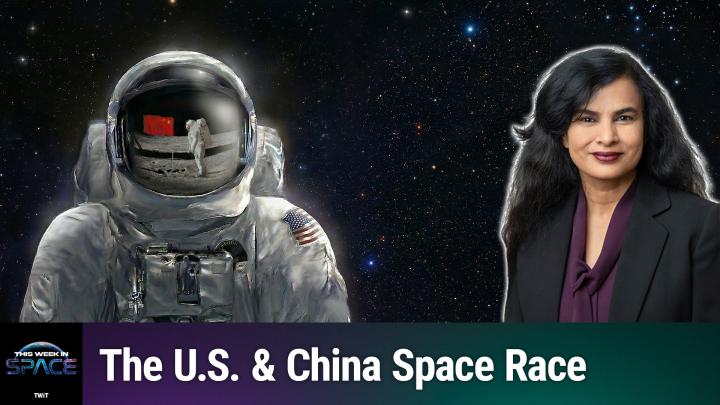
Many suggest there is a new space race afoot, this time between the US and China. We've also seen that America seems to be at its best in innovation and achievement when challenged by some external force. Will the Chinese human lunar program light the fuse of American innovation and accomplishment when it comes to our lagging lunar program and other spaceflight initiatives? Dr. Namrata Goswami of Johns Hopkins University joins us to examine the intricacies of potential threats to American leadership in space and the possible outcomes. Who will be first to land astronauts on the moon? Does...
Artemis Imminent - Artemis II Back on the Pad!

We've waited, and we've waited, and it looks like Artemis 2 might be ready to go in early April! It's moved back to the launch pad, LC-39B, and will begin preparations for a launch as early as April 1. There will be no wet-dress rehearsal this time — associate administrator Lori Glaze said in a recent press conference that once they fuel successfully, she just wants to go to launch. The crew of Artemis 2 will soon arrive at KSC for pre-launch quarantine, as will Tariq, who will be covering the launch. We invited Mike Wall, the spaceflight and tech editor at Sp...
Born to Explore - With Jay Gallentine
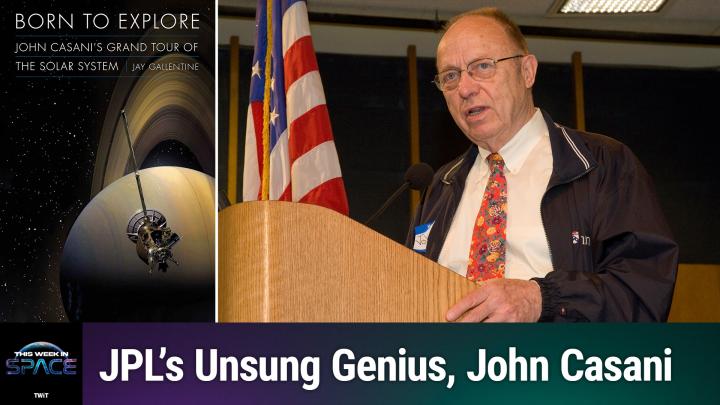
When most people think about deep space exploration, management acumen is generally not the first thing they settle on—but without it, no robotic mission would ever succeed. This week we are joined by Jay Gallentine, author of multiple books on the robotic exploration of space. Each of these tomes is a somewhat of a masterpiece; a deep dive into a topic that few explore in such detail. His newest book, "Born to Explore," started off as a book about robots exploring Mars, but his interviews with former JPL manager John Casani was so compelling that he transformed it in...
Our 200th Episode Listener Special! - We're Talking to You!
It's our 200th episode, our annual listener special! We took your comments, suggestions, advice, and insults and wove them into a rollicking, fun-filled hour of mishaps, mayhem, and mirth! Plus space headlines and a whole passel of your space jokes! This is a fun one, so don't be shy—join us!
Headlines:
Hosts: Rod Pyle...
The Obsolete Astronaut? - And a New Report on Crewed Mars Missions
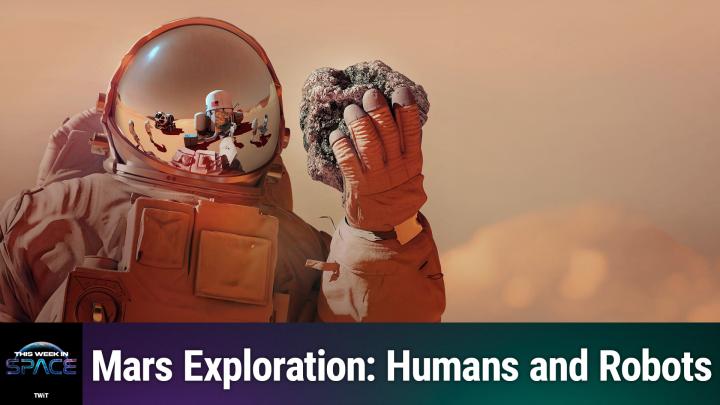
In this age of rapidly advancing AI and robotic technology, do we still need to send humans into space? The argument has long been that people can do things better and faster off-Earth, but the changing face of robotic tech has some feeling otherwise. This week's guest is a returning friend of the show, Dr. Pascal Lee, who has thoughts on how and when robots may perform better--and more safely--than humans in space, and then, of course, Tariq and I worry about how our mechanical masters might take our place in the cosmos. Pascal also reports on his recent...
A Dragonfly on Titan - Inside the Dragonfly Mission
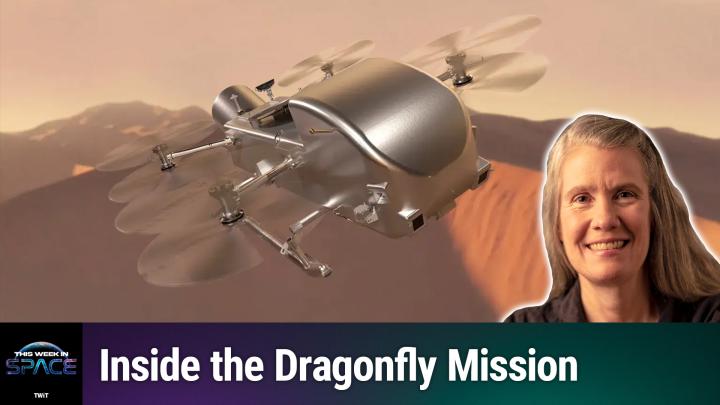
One of the most exciting missions to ever journey to the outer solar system has the be the Dragonfly multi-rotor helicopter that will head to Saturn's moon Titan in 2028. The car-sized probe will arrive at that strange, frozen world in 2034, descending into the soupy, smoggy atmosphere and then taking flight before it even touches the ground! We spoke with the mission's Principal Investigator, Dr. Elizabeth "Zibi" Turtle, about the mission's origins, current progress, and what to expect in the coming years. She also took us through a narrated tour of the surface of Titan, with its hydrocarbon sand dunes...
Inside UNOOSA - The UN and Space
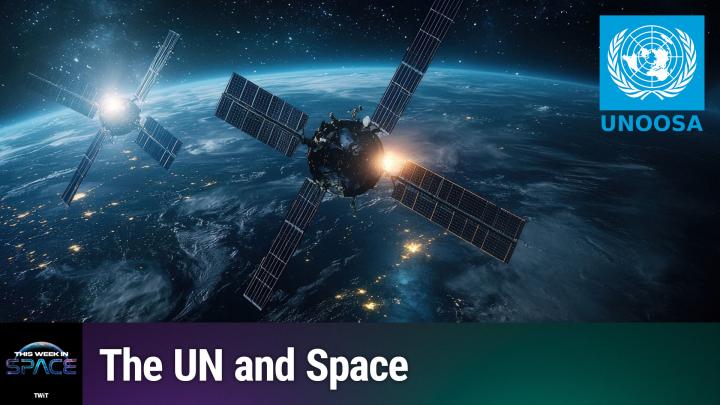
Most people don't think of spaceflight when talking about the United Nations, but the UN, through its Office of Outer Space Affairs, or UNOOSA, has been pivotal in securing agreements on space poilicy and behavioral norms. This week, we speak with Aarti Holla-Maini, the director of UNOOSA, and Dr. Rick Jenet, the executive director of Expanding Frontiers and the National Space Society's representative to the UN, about the importance of this office. It's a wide-ranging discussion of the intersection of international space efforts and the intersection with commercial space as we expand activities into Earth orbit, the moon, and...
Becoming Martian! - How Will Human Beings Evolve on Mars?

It is widely accepted that over time, humanity will need to expand its presence into the solar system. What are the challenges? Well, space and our nearby worlds have proved to be a much greater challenge than we had long thought. While the rigors of zero-g have been well researched on the International Space Station, the challenges of living in lower gravity, such as that found on the moon and Mars, has not yet been explored. And human reproduction in space, along with genetic challenges, is a complete unknown. Rice University professor and researcher Scott Solomon joins us to...
Remembering Apollo 1, Challenger, and Columbia - NASA's Week of Remembrance with Gerry Griffin
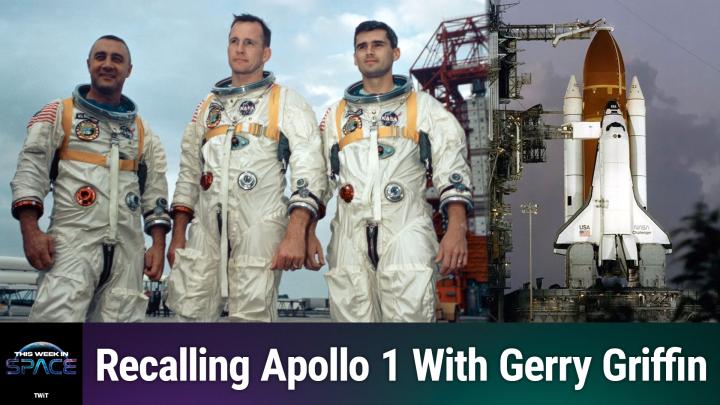
This month marks a bitter annual anniversary for NASA. On February 1, 1967, the crew of Apollo 1 was killed in a horrific fire on the pad in Florida. Years later, as the space shuttle Challenger ascended on February 28, 1986, it was destroyed mid-flight with a loss of seven crewmembers. Finally, on February 1, 2003, the shuttle Columbia was lost during reentry, again with a crew of seven. This episode is a remembrance of these tragic events with Gerry Griffin, former Apollo Flight Director and Director of the Johnson Space Center among his many other roles with NASA and beyond. Gerry brings a personal touch...