Grating the Nutmeg

Connecticut is a small state with big stories. GTN episodes include top-flight historians, compelling first-person stories and new voices in Connecticut history. Executive Producers Mary Donohue, Walt Woodward, and Natalie Belanger look at the people and places that have made a difference in CT history. New episodes every two weeks. A joint production of Connecticut Explored magazine and the CT State Historian Emeritus.
Paul Rudolph, New Haven's Brutalist Architect

New Canaan, Connecticut may be the epicenter of Mid-Century Modern residential architecture, but New Haven is the home of a world-class collection of Modernist buildings of all kinds - schools, churches, fire houses, offices, libraries, community centers, and even a nationally significant parking garage, that are visited by architecture buffs from around the world!
Host Mary Donohue interviews Anne Barrett, an architect who has practiced residential architecture for over thirty years in Massachusetts and Los Angeles. She is the creator of the website The Modernist's Guide to Cocktails, a meeting place for design enthusiasts who...
Civil War Memorials at the Connecticut State Capitol

The Civil War has been memorialized more than any other conflict in America's history. In Connecticut, war memorials and monuments began to spring up before the war ended. In Hartford, the monument industry was promoted by businessmen such as James G. Batterson. In addition to establishing, in 1864, the Travelers Insurance Company, of which he was the president, he was the owner of a cemetery monument company. He employed Carl Conrads, a German-born sculptor, to design soldier-figures in stone to rest on tall bases.
No where else in the state can this drive to memorialize and...
239. Sam Colt Mines the West (10th Anniversary Encore Release)

In celebration of our 10th anniversary, we are bringing you a remastered edition of an episode recorded in 2017 at the University of Hartford as part of the Presidents' College and Connecticut Explored's "Connecticans in the American West" lecture series.
In this episode, Dr. Leah Glaser tells the story of Sam Colt's investment in the Sonora Exploring and Mining Company in the 1850s, a company that was incorporated in Cincinnati, Ohio to exploit silver mines in the new Arizona Territory. As we found out in Grating the Nutmeg episode #129 Sam Colt and the Six-Shooter that Changed A...
Living on the Edge: New England, New Netherland, and New Sweden

In the 1600s, Connecticut settlers had to contend with a multitude of threats to their survival, both as individuals and as a colony. Those threats weren't just internal — poor harvests, disease, religious strife — but external, too. The colonists were caught up in a complicated web of international diplomacy, vulnerable to the ambitions of imperial powers like the Spanish, the Dutch, the English, and....the Swedes?
In this episode, Natalie Belanger chats with Elizabeth Hines, Assistant Professor at the University of South Florida. Dr. Hines is working on a book about Anglo-Dutch relations in the 1...
Mary Barlow: Hartford's Fallen "Six-Triple-Eight" Soldier

This episode tells the story of one of the women depicted in The Six Triple Eight, a 2024 WWII war drama film by Tyler Perry that tells the true story of the 6888 Central Postal Directory Battalion. Mary Jewel Barlow was one of only three members of the 6888th Postal Directory Battalion who died in service during World War II and one of only four women buried in the Normandy American Cemetery in France. The 6888 was an all-Black, all-female Women's Army Corps battalion. A real young woman from Hartford's North End, Barlow's life and sacrifice deserve recognition.
Greater Hartford's West Indian Diaspora (10th Anniversary Encore Release)

In celebration of our tenth anniversary, we are bringing you a remastered edition of an episode recorded in 2018 by Dr. Walter Woodward, Connecticut State Historian Emeritus with Dr. Fiona Vernal and former Hartford History Center Program Manager Jasmin Agusto.
Dr. Vernal serves on the Connecticut Explored magazine Editorial Board. She holds a BA in history from Princeton University and a PhD. from Yale University. She is an associate professor of history and Africana studies and director of EPOCH: Engaged Public, Oral, and Community Histories at the University of Connecticut.
Since this episode was...
235. Awakenings and Revolutions: The Harts, Saybrook, and the New Nation

From the high seas to the town square, we're bringing you the story of a New England family navigating revolution, economic expansion, and nation building.
Awakenings and Revolutions: The Harts, Saybrook, and the New Nation is a new look at the residents of the Old Saybrook Historical Society's Gen. William Hart House and the Hart family of Old Saybrook, Connecticut. Moving between the Connecticut River estuary, Hartford, New London, Boston, New York, and as far as Ohio and the West Indies, the story reveals the Harts' surprising connections to major moments of Connecticut's an...
Saving Connecticut's Historic Barns

In 2006, Preservation Connecticut, then the Connecticut Trust for Historic Preservation, realized that historic barns across the state were being demolished or allowed to fall down. What could be done to save them? Where were they? How many are there? How can we get people across the state to be interested in barns? All of this was unknown. My guest, Todd Levine, was hired to help answer those critical questions. Todd is currently the Environmental Review officer and Connecticut Freedom Trail Coordinator at the Connecticut State Historic Preservation Office of the Dept. of Economic and Community D...
Rough Justice for Connecticut State Hero Nathan Hale (10th Anniversary Encore Release)

Happy 250th birthday to our nation and 10th anniversary to Grating the Nutmeg! In celebration of our 10th anniversary, we are bringing you a remastered edition of an episode recorded in 2020 with Dr. Walter Woodward, Connecticut State Historian Emeritus.
Dr. Woodward takes a new look at the actions surrounding the Revolutionary War execution of State Hero Nathan Hale, and finds there are still some burning questions left to be answered about this hasty and irregular event. It's a story from Walt's book Creating Connecticut: Critical Moments That Shaped a Great State from Globe Pequot Press. As y...
Guides for Black Travelers: New London's Green Book Sites

What's the first thing you do when you want to take a trip? Look through Instagram to find things to do? Or Yelp for restaurants that serve local cuisine? Today travelers can follow social media influencers and websites that promise to give you an insider's look at places to stay or the best discounted hotel rates. But for Black travelers in the Jim Crow era through the 1960s, it wasn't easy to find places to eat or stay overnight. In this episode, we are going to talk about two national guides for Black travelers, both published beginning...
John Hooker: Hartford's Abolitionist Lawyer

In this episode, you'll be introduced to John Hooker, a Hartford lawyer, judge, and abolitionist as well as a reformer for women's rights. Hooker was the president of the anti-slavery committee in Hartford, published the Charter Oak anti-slavery newspaper with the Connecticut Anti-Slavery Society of Hartford, and co-authored with his wife Isabella Beecher Hooker, the state bill in 1877 that gave married women more control of their property. Why isn't he better known?
Our guest for this episode is Erika Slocumb, Director of Interpretation & Visitor Experience at the Stowe Center for Literary Activism. Erika is...
Pursuing Happiness: New Horizons Village

In 1955, a group of disabled young adults living at New Britain Memorial Hospital signed a letter declaring their intention to seek out "adventuresome living for the physically handicapped." They formed a nonprofit called New Horizons and set out on a thirty-year journey to raise money and navigate legal barriers in order to realize their most cherished dream: a housing complex for the disabled, run by the disabled. In 2026, New Horizons Village in Farmington turns 40. In this episode, Natalie Belanger of the Connecticut Museum gives you a capsule history of the New Horizons movement and speaks with current r...
229. Irish Immigration in Art from the Fairfield Great Hunger Museum at the Lockwood-Mathews Mansion Museum

Famine Irish, lace-curtain Irish, shanty Irish: the Irish Diaspora has shaped Connecticut's European immigrant history from the 1840s. Traces of Irish history and culture in the state are not only found in archival and artifact collections but also through the historic buildings, neighborhoods, and cemeteries that stand across the state. Whether they were immigrants, expatriates, refugees, or indentured servants when they arrived from Ireland, 14 percent of Connecticut's current residents claim Irish ancestry.
In today's episode, we take you to a new exhibition, A Journey of Hope: The Irish American Immigrant Experience curated by Ireland's Great Hu...
Sports Heaven: The Birth of ESPN in Bristol, Connecticut

If you are driving in Bristol, Connecticut-maybe you're going to Lake Compounce Amusement Park - and suddenly you spy a cluster of huge satellite dishes, you might wonder if space aliens had really landed. But what you've discovered is the home base of ESPN - originally entitled the Entertainment & Sports Programming Network - shortened to ESPN in 1985.
Every year tens of millions of fans watch ESPN but 47 years ago, a 24-hour sports television cable network was considered a wild and impossible idea. Our guests on this episode are the authors of the new a...
227. Pioneering Woman Sculptor Evelyn Beatrice Longman

I've got a story about an artist that I've been obsessed with for years. In this episode, Patricia Hoerth Batchelder talks about her new biography of Evelyn Beatrice Longman, The Woman Who Sculpted Golden Boy, Thomas Edison, and Other Monuments. Poor, motherless at five, and uneducated after elementary school, Longman made the highly ambitious claim at nineteen that she could create monumental sculpture. The book tells the story of how she created beauty, moved into upper class society, and succeeded in a field of art that was overwhelmingly dominated by men.
Ms. Batchelder has worked...
226. Abby (and Julia) Smith and Their Cows

Last year, in Episode 217, listeners were introduced to Hannah Smith. Born in 1767, Hannah was the matriarch of the non-conformist Smith Family of Glastonbury. In the 2020s, her diaries inspired Leonard Raybon, a music professor at Tulane, to compose an original mini-musical based on her writings. You can view the debut performance of "Hannah and Her Daughters" here. This episode focuses on the next generation of the Smith family. Hannah Hickock married Zephaniah Smith of Glastonbury in 1786, and their marriage produced five daughters. Two of the daughters became nationally famous in the 1870s, around the time of the Bicentennial, for their stance in...
225. On Trial: Alfred Marder and Catherine Roraback - A Communist's Arrest in 1950's McCarthy-era New Haven (10th Anniversary Encore Release)

Grating the Nutmeg is 10 years old! In celebration of our 10th anniversary, we are bringing you a remastered and re-edited edition of an episode we recorded in 2016 at the New Haven Museum with Alfred Marder, Judge Andrew Roraback and his father Charles Roraback. This compelling first-person interview with Alfred Marder shares his experiences as a defendant in New Haven's Smith trial. Mr. Marder died in 2023 at the age of 101. He was defended by civil rights attorney Catherine Roraback, an inductee in the Connecticut Women's Hall of Fame.
In 1954, 32-year-old Alfred Marder was arrested i...
Scholar, Activist, Trailblazer: The Enduring Legacy of Dr. Lorenzo Greene

Connecticut is a small state that has had a huge national impact. In this episode, we celebrate someone that we are proud to say was born in Connecticut and went on to be a pioneering historian in Black history. Dr. Lorenzo Johnston Greene received his BA in from Howard University in 1924, his MA from Columbia University in 1926 and his Ph.D. in 1942. He was born in Ansonia, Connecticut. We can learn more about his family from the 1900 federal census record. His father Willie was born in 1858 in Virginia before the end of slavery, and his mother was...
The 'Great Temperance Times' in Nineteenth-Century Black Connecticut

At first glance, alcohol and racial equality might seem unrelated—but for Black activists, the temperance movement was a powerful vehicle for social change. In this episode of Grating the Nutmeg, Natalie Belanger of the Connecticut Museum chats with Mackenzie Tor about her research into Black temperance activism in 1830s and 1840s Connecticut. Mackenzie talks about how people like Maria Stewart, James Pennington, and the Beman family used temperance as a strategy for civic inclusion. Through their words and organizing efforts, from newspaper columns to church halls, abstaining from the bottle became a radical tool for po...
Cabbage Patch Kids and West Hartford's Toymaker Coleco

During this holiday season, it seems like the perfect time to bring you the story of one of the bestselling toys ever - Cabbage Patch Kids! Inducted into the Toy Hall of Fame in 2023, Cabbage Patch Kids set every toy industry sales record for three years running from 1983-86, and has become one of the longest-running doll franchises in the United States. How did a Connecticut company produce the hottest toy of the 1980s - and then go broke?
The license to produce Cabbage Patch Kids has gone through a record 7 toy companies. This episode...
New Haven's Lt. Augusto Rodríguez, First Civil War Soldier from Puerto Rico

More than twenty thousand Hispanic Americans served in the Civil War. When Cuban-born Loreta Velázquez's husband would not allow her to join him on the battlefield, she assumed the role of First Lieutenant Harry T. Buford to be near him. Philip Bazaar, born in Chile, was awarded the Medal of Honor for his courageous exploits during the assault of Fort Fisher. The spying efforts of Floridian Maria Dolores Sánchez and her two sisters led to a Union defeat at the Battle of Horse Landing.
Delving into the lives of these...
Connecticut Yankee Atomic Power Plant: The Promise and Peril of Nuclear Energy

The Connecticut Yankee atomic power plant was one of the earliest commercial nuclear reactors in New England. Though it was dismantled at the turn of the 21st century, its legacy remains, both for the landscape of the Connecticut River Valley where it once stood, and for contemporary debates about energy today. This episode explores the plant's life and afterlife, the activists who opposed it, and the promises and perils of nuclear power in the 1960s and today, through the reminiscences of Paul Gionfriddo, a former state legislator and longtime president of People's Action for Clean Energy, a...
Transgender History and Connecticut Transgender Pioneer Dr. Alan L. Hart
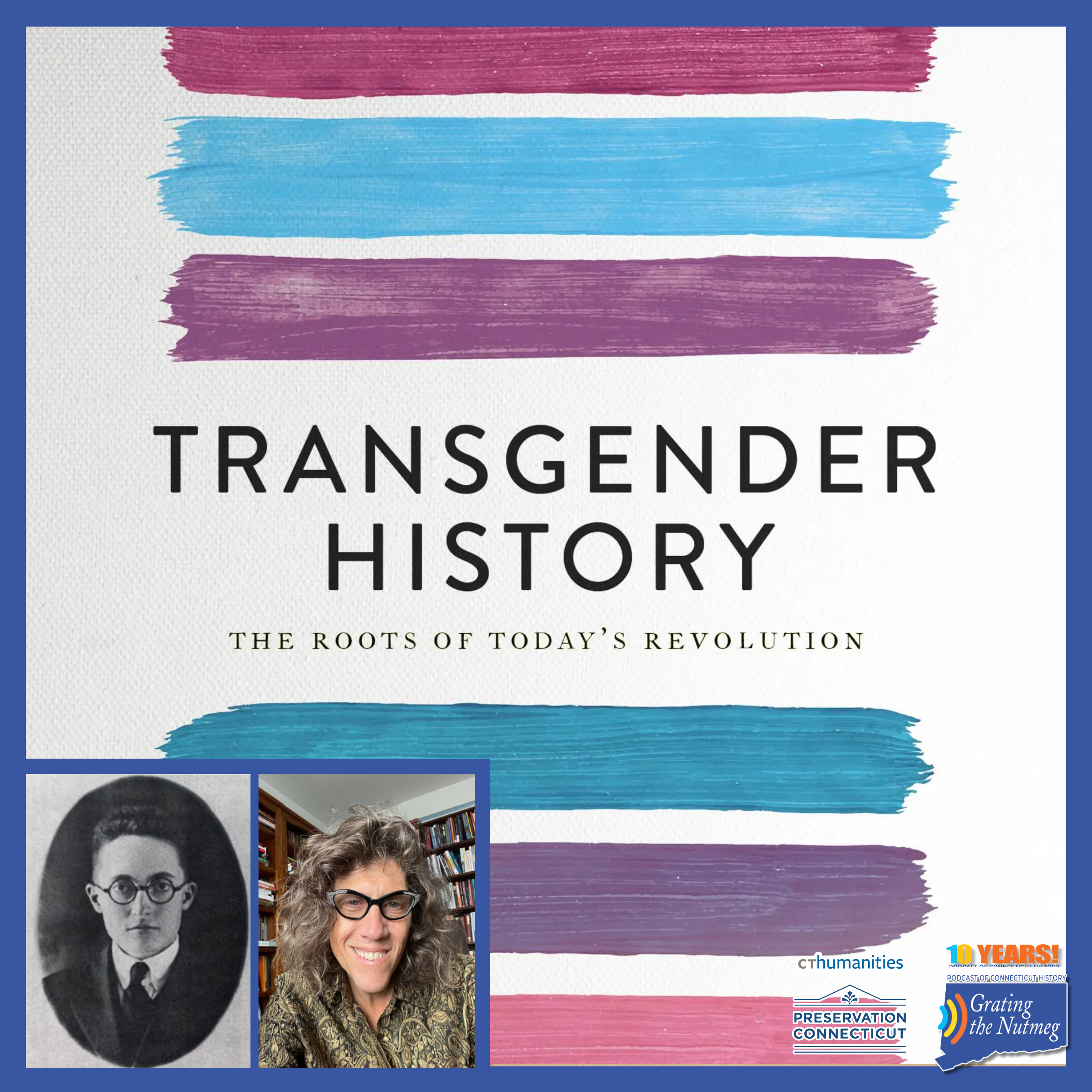
The transgender community has struggled to receive recognition and equality. In this episode, we explore the history of the transgender community over the last 100 years with Dr. Susan Stryker and the life of Dr. Alan L. Hart, a transgender medical doctor working on the forefront of an urgent public health crisis, tuberculosis, in Connecticut. Hart, Director of Connecticut's Office of TB Rehabilitation, is credited with saving countless lives.
My guest is Dr. Susan Stryker, author of Transgender History, the Root of Today's Revolution, published in 2017. Transgender History, Third Edition: A Resource for Today's...
Connecticut in the Industrial Revolution: Making Buttons in Cheshire
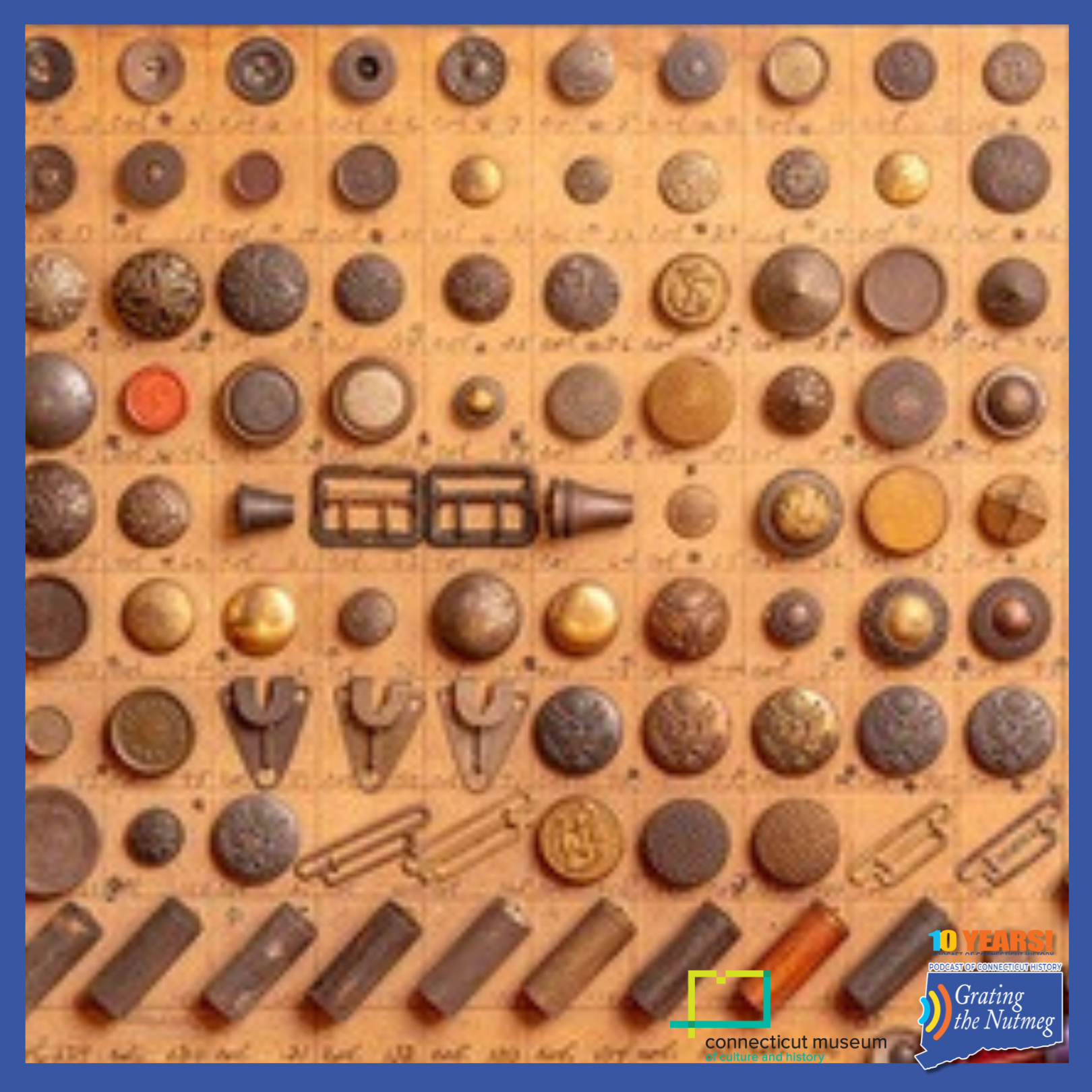
A button sounds like a very ordinary thing. But button production in Cheshire was part of Connecticut's pioneering role in the precision manufacturing revolution of the nineteenth century. According to connecticuthistory.org, button production began with pewter buttons in the mid-eighteenth century but quickly turned to brass in the early nineteenth century. By 1860s, machines in the Scovill Brass factory in Waterbury produced 216,000 buttons per day. This type of industrial production volume for an everyday necessity such as buttons propelled investors and entrepreneurs to establish companies such as the Ball & Socket Manufacturing Company. But what were the...
The Smith Family of Glastonbury: Hannah and Her Daughters
In this episode of Grating the Nutmeg, Natalie Belanger tells us about how two journals kept by a Revolutionary War-era girl in the Connecticut Museum of Culture and History's collection have inspired an original work of music.
Several years ago, Leonard Raybon (Associate Professor of Music at Tulane University) encountered two journals and other writings by Hannah Hadassah Hickok, held at the Connecticut Museum. Hannah was the matriarch of the non-conformist Smith Family of Glastonbury. Her daughters would go on to became nationally famous for protesting their lack of voting rights in th...
Brewing Community: Labor, Alcohol, and Unrest in Industrial New Britain
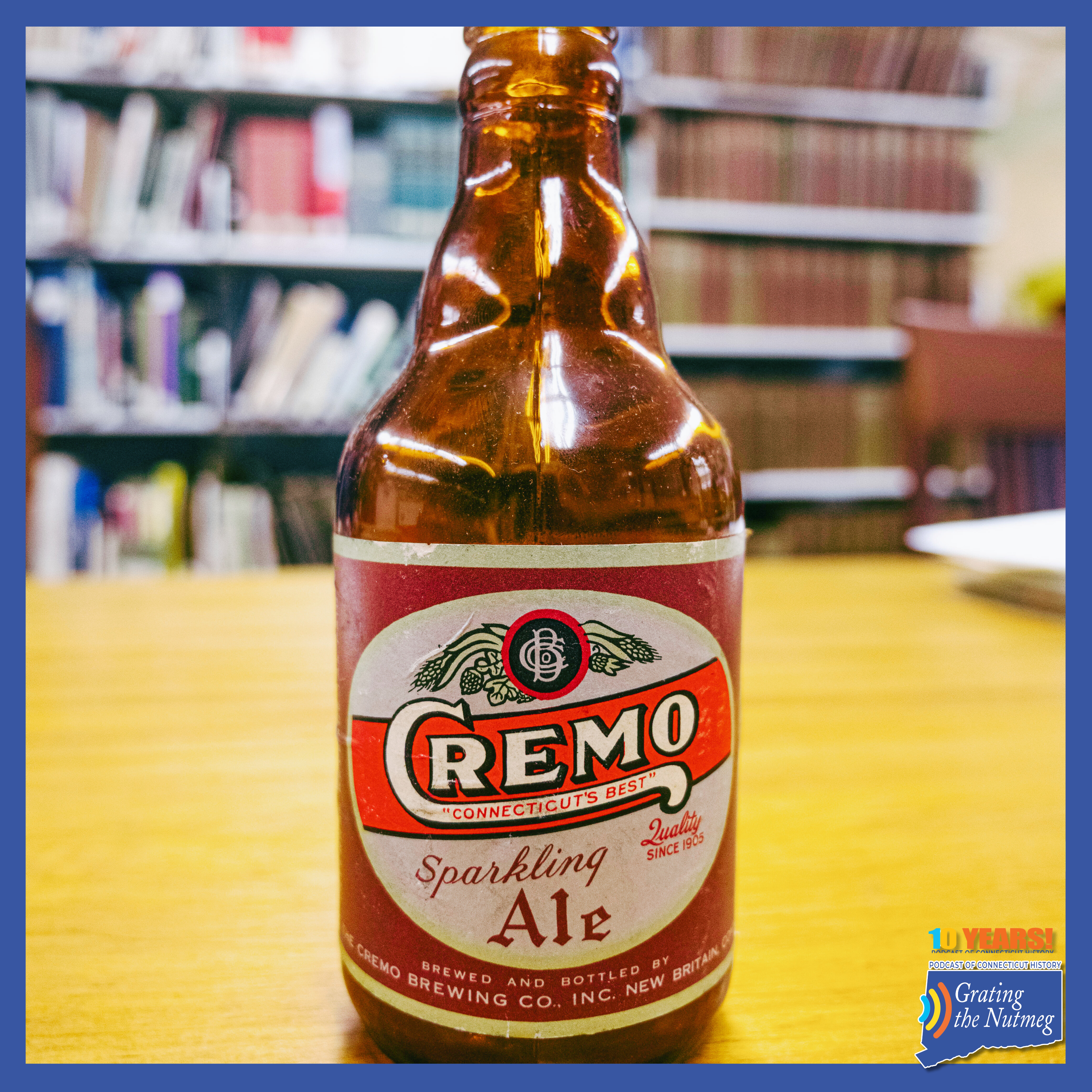
Immigrants from Lithuania who made their way to New Britain, Connecticut at the beginning of the twentieth century found work in the city's factories turning out tools and hardware. Their weekly routine included work, church and socializing at neighborhood saloons. But major upheavals in American society were happening at the time that affected their lives including the rise of organized labor, the temperance movement, anti-immigrant sentiment, and labor strikes.
In this episode, we have two new voices in public history, Central Connecticut State University students Jon Kozak and Nathaniel Smith. They produced the...
Connecticut's Wild Visionary: Children's Author Maurice Sendak

Artist and author Maurice Sendak was able to achieve significant and enduring success in art and children's literature during his lifetime. But what secrets did he had to keep from his family, publishers, parents, librarians, and readers as a gay, Jewish man negotiating the field of children's literature?
Sendak wrote and illustrated books that nurtured children and adults alike. Winner of the 1964 Caldecott Medal for Where the Wild Things Are, in 1970 Sendak became the first American illustrator to receive the international Hans Christian Anderson Award, given in recognition of his entire...
Monstrous: The Business of Whaling

Whaling was big business. Connecticut and her sister New England states built ships, forged cast iron tools, produced wooden storage casks and outfitted sailors. Stonington, Mystic, New London, and New Haven were part of New England's predominance in successful whaling. We're going to get into the nitty gritty of the trade in this episode and hear about some of the striking artifacts from Mystic Seaport's whaling collection - tools, ship logs, harpoons, blubber hooks and scrimshaw - that are on view. They speak to the staggering risks and rewards of the whaling industry that lit...
When the Continental Army Camped in Connecticut

The Redding Encampment, Connecticut's first State Archaeological Preserve, is located in Putnam Memorial State Park. Understanding of the Revolutionary War has emphasized the battles, maneuvers, and war meetings; but far more time was expended during the long periods of winter encampment. The winter months were a brutal test of individual fortitude, unifying command, and local support. In the journal Joseph Plumb Martin kept at the time, he wrote, "We arrived at Redding about Christmas or a little before and prepared to build huts for our winter quarters. And now came on the time again between g...
212. Ingredients for Revolution: Feminist Restaurants featuring Bloodroot Restaurant

Connecticut Explored and our podcast, Grating the Nutmeg, have featured many of the heritage trails that mark the important histories and sites of Connecticut's people. Preservation Connecticut has undertaken a survey of LGBTQ+ heritage sites across the state. Now, Grating the Nutmeg and Preservation Connecticut have teamed up to bring you a three-episode podcast series that pairs new research on LGBTQ+ identity and activism with accounts of the Connecticut places where history was made. The episodes include a thriving vegetarian cafe-bookstore run by lesbian feminists in a working-class former factory town, a transgender medical researcher...
Leviathan: New Englanders and the History of Whaling

American whale oil lit the world. The Industrial Revolution couldn't have happened without it. Connecticut was part of the whaling industry of the nineteenth century that sent thousands of American ships manned by tens of thousands of men to hunt whales across the world's oceans. Stonington, Mystic, New London, and New Haven were part of New England's predominance in successful whaling. In fact, New London, Connecticut is known today as the "Whaling City".
My guest Eric Jay Dolan is the author of sixteen award-winning books on maritime history. In this episode, we wi...
The Mattatuck Museum: Waterbury and Summer Leisure

In this episode, host Mary Donohue visits the Mattatuck Museum in Waterbury, a place that includes stellar architecture, art by some of the most renowned artists of the nineteenth and twentieth centuries, and an exhibition that tells the story of Waterbury's rise as a manufacturing powerhouse. The Mattatuck Museum is an art and regional history museum on the Green in downtown Waterbury, that started out as a historical society in 1877.
Our guest is Rebecca Lo Presti, Assistant Curator. She served as the curator for " The Art of Leisure" an exhibit that is...
Mary Hall and the Good Will Club

In this episode, Natalie Belanger of the CT Museum of Culture and History tells the story of the Good Will Club, the forerunner of the youth club movement that got its start in Hartford. But the story of the club can't be separated from that of its founder, a woman who's an inductee of the CT Women's Hall of Fame for her barrier-breaking work in the legal field.
There are lots of ways to learn more about the history of the Good Will Club and about Mary Hall. Here's a partial...
Saving Connecticut's Mid-Century Modern Homes

We're celebrating May, Historic Preservation Month, with an episode on the Modern houses of the 1950s and 1960s.
Could you live in a glass house? New Canaan, Connecticut's Mid-Century Modern homes designed after the Second War are world famous. In addition to Philip Johnson's Glass House, now a museum, New Canaan has homes designed by Marcel Breuer, Eliot Noyes, Frank Lloyd Wright and Edward Durell Stone. Each one is a part of architectural history and is a masterwork of the era's most talented architects. But by the 1990s, people began to...
Book and Dagger: Yale Professors Become Successful WWII Spies

In her new book, Book and Dagger, How Scholars and Librarians Became the Unlikely Spies of the World, Dr. Elyse Graham tells the story of academics, like Yale literature professor Joseph Curtis, who hunted down German spies and turned them into double agents, and Sherman Kent, a Yale history professor who rose to become the head of analysis for all of Europe and Africa.
At the start of World War II, the United States found itself in desperate need of an intelligence agency. The Office of Strategic Services (OSS), a precursor to...
Hartford's Rural Cemetery: Cedar Hill

Last year in episode 186, we talked about Grove Street Cemetery's pioneering role as the first planned cemetery in the country. The design of Grove Street Cemetery in New Haven in the 1790s used several of the features that became standard, like family plots and established walkways.
Today, we're going to move the clock forward and discuss the rural cemetery movement of the 19th century with Cedar Hill Cemetery in Hartford as a signature example.
Established in 1864, Cedar Hill Cemetery encompasses 270 acres of landscaped woodlands, waterways, and memorial...
Coffee — A Connecticut Story

Coffee is more than a hot drink or a boost of caffeine. For Connecticans, it's hundreds of years of history. It has fueled new ideas, social reform, and workers' rights. It is comfort in wartime and connections across cultures. It is universal, yet distinctly local. In this episode, the Connecticut Museum of Culture and History's Natalie Belanger chats with her colleague, Karen Li Miller, about the Museum's new exhibition exploring these connections, Coffee — A Connecticut Story. Make sure to visit the Museum's web site to see upcoming programs!
https://www.connecticutmuseum.org/exhibition/coffee-exhibition/
<...
Artistry, Charm, and Whimsy: Connecticut's Carousel Museum

Carousels are marvels of brightly painted animals, mechanical excellence, music and lights. Located in a historic mill building in Bristol, the Carousel Museum houses well over 100 antique wooden carousel animals including white rabbits, pigs, lions and even an alligator. The museum has a full-size carousel inside the building complete with beautifully painted horses and Wurlitzer music - and you can take a merry-go-round ride during any season of the year. Plus, you can take a peek into their restoration workshop. Our guest for this episode is Morgan Fippinger, Executive Director.
Plan your visit...
Amistad Retold: New Haven and the 1839 Amistad Revolt

The New Haven Museum staff and their community partners have reinterpreted the Amistad story in an exhibition that takes a new angle on the familiar story of the Amistad.
The 1839 Amistad Revolt was led by 53 West African captives who were being trafficked from Havana's slave markets on the schooner La Amistad after being kidnapped from their homeland. For nearly 19 months in New Haven, the Amistad captives worked closely with anti-slavery activists who formed the Amistad Committee and connected with networks of engaged citizens to organize and fundraise for their legal defense.
<...
Miss Crandall's School for Black Women

After a campaign initiated by schoolchildren, Prudence Crandall was designated the Connecticut State Heroine by the Connecticut General Assembly on Oct. 1, 1995. You may not know Connecticut has a state heroine, or you might have some inkling that Crandall was maybe a spinster Quaker schoolmarm, who had an unsuccessful school in the hinterlands of eastern Connecticut. Founded in 1833, the Crandall Academy educated more than two dozen Black women during its eighteen-month existence. In this episode we'll hear how a trio of like-minded women helped to get the academy off the ground, and the tremendous impact the...
