The Podcast For Inquiry

A podcast for scientific, skeptical, secular, rational and humanistic inquiry. They've got answers? We've got questions.
Two Solitudes of Secularism: Is Quebec religious symbols law secular or anti-theist legislation?

No issue has split the secular community in Canada like Quebec's Bill 21. Several secular organizations have come out strongly in favour of the legislation, with some saying its only flaw being that it doesn't go far enough. Many other secular groups, including CFIC, have come out strongly against Bill 21. It was challenged in court immediately after its passage in June 2019, and the Supreme Court is in the midst of hearing from a record 38 interveners as this episode is released.
In January, the New Enlightenment Project organized an online conversation between Michel Virard, founder of the Association humaniste du...
Sahrawis Fight for Western Sahara Rights in an Overwhelmed World, with Najla Mohamed-Lamin

In 1975, Najla Mohamed-Lamin's grandmother fled Moroccan troops entering Western Sahara. For 50 years, Najla's family, and 200,000 of the Saharawi people, have lived in refugee camps in western Algeria.
Despite a clear legal case under international law for self-determination and a promise from Morocco to hold a referendum on the future of Western Sahara, the Saharawi people remain separated from their land, and are almost invisible to the international community.
In 2023 Najla was one of the BBC's one hundred most influential women in the world, and she is today's guest on Podcast for Inquiry.
Podcast fo...
Assistance in dying: Not what it's MAiD out to be, with Jackie Nemni

Dr. Jackie Nemni is a physician specializing in respiratory medicine and spent decades looking after patients in the ICU. She retired from active practice in 2023 and has since been working part time as a MAiD assessor and provider. It is the most meaningful and rewarding thing she has ever done and wishes she had started sooner. Jackie is also an officiant with Humanist Canada and serves on its board of directors.
Today's episode is about MAiD in Canada - that is, Medical Assistance in Dying. Jackie and I start by discussing two Supreme Court of Ca...
Jesse Brown asks: Why are Canadian Jews targeted for hate crimes?

Jesse Brown is the founder and editor of Canadaland, Canada's largest independent podcast network. We start our conversation talking about the state of journalism in Canada, four years after Podcast for Inquiry's inaugural episode with Jonathan Kay on the same topic. The bulk of our conversation is focused on Jesse's latest investigative reporting series, What Is Happening Here. Jews in Canada are the targets of hate crimes radically disproportionate to their numbers in Canada, which has been the case for many years but made worse since the start of the Hamas - Israel war. Jesse talks about why he...
Could we communicate with aliens if we found them? Daniel Whiteson wants to know.

Daniel is a professor of physics at UC Irvine, researching particle physics at CERN's Large Hadron Collider. He is the co-host of the podcast 'Daniel and Kelly's Extraordinary Universe' and the author of several books about physics for a general audience, including "Do Aliens Speak Physics?" And "We have no idea".
In today's episode, Daniel explores many questions, including:
Would we recognize an alien message if we received one?
If aliens landed in Central Park, would we be able to communicate?
How can we catch a baseball if we ignore all...
Dr. Rodney Schmaltz says Scientific Skepticism can Save Society
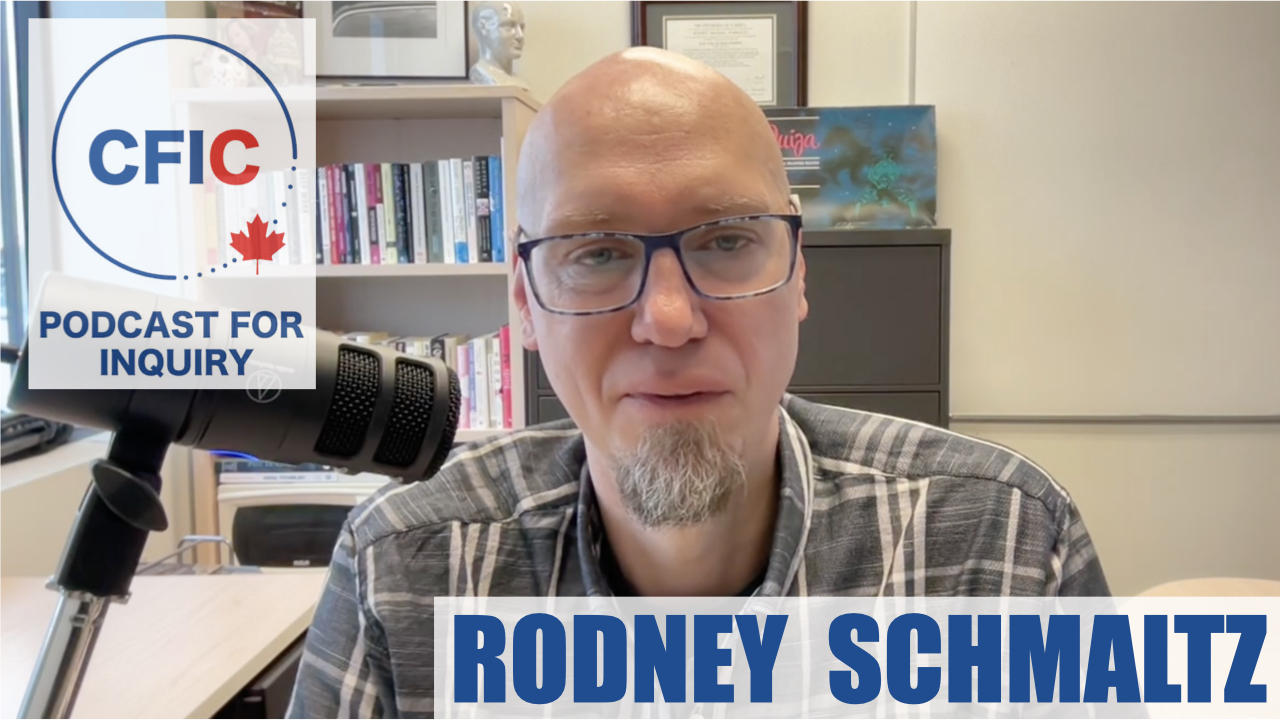
Dr. Rodney Schmaltz is a professor in the Department of Psychology at MacEwan University. His research focuses on the psychology of belief, with a particular interest in how people evaluate extraordinary claims. He is committed to helping people develop strong critical thinking skills and an appreciation for the value of scientific evidence in everyday life. His work aims to improve scientific literacy in both academic and public settings, using research-based strategies to help people separate good information from bad.
In today's episode, Rodney explains the importance of critical thinking - though he prefers the term scientific skepticism...
Living life as a Humanist, with Steve Ghikadis

Steve Ghikadis is a Humanist Officiant, who conducts secular marriages, memorials, and other life affirming celebrations. Raised as a freethinker, Steve has been married to a Christian for over a decade. Steve serves as an Ambassador for Humanist Canada, Recovering from Religion, and Sunday Assembly.
Leslie speaks with Steve about his book, Humanism from the Heart. They discuss the many themes and ideas in Steve's book, including:
- Why Steve tried to become a believer many times throughout his life
- Purpose, meaning, and destiny
- What "soft determinism" means
<...Can We Have a Conversation? Exploring Polarization to Find Common Ground, with Jasmin Faulk

Leslie's conversation with Jasmin Faulk begins with what Saudi Arabia was like when she was growing up, and what has and hasn't changed since then. Jasmin talks about the fire of youth, the wisdom that comes from age, and how society needs both activists and advocates to move forward. She also shares her desire to have genuine and difficult conversations with people with very different worldviews in an attempt to find, or create common ground.
Podcast for Inquiry is hosted by Leslie Rosenblood and brought to you by the Centre for Inquiry Canada. Join today! Produced by Za...
The building blocks of corporate scandals: Guido Palazzo reveals the Dark Pattern
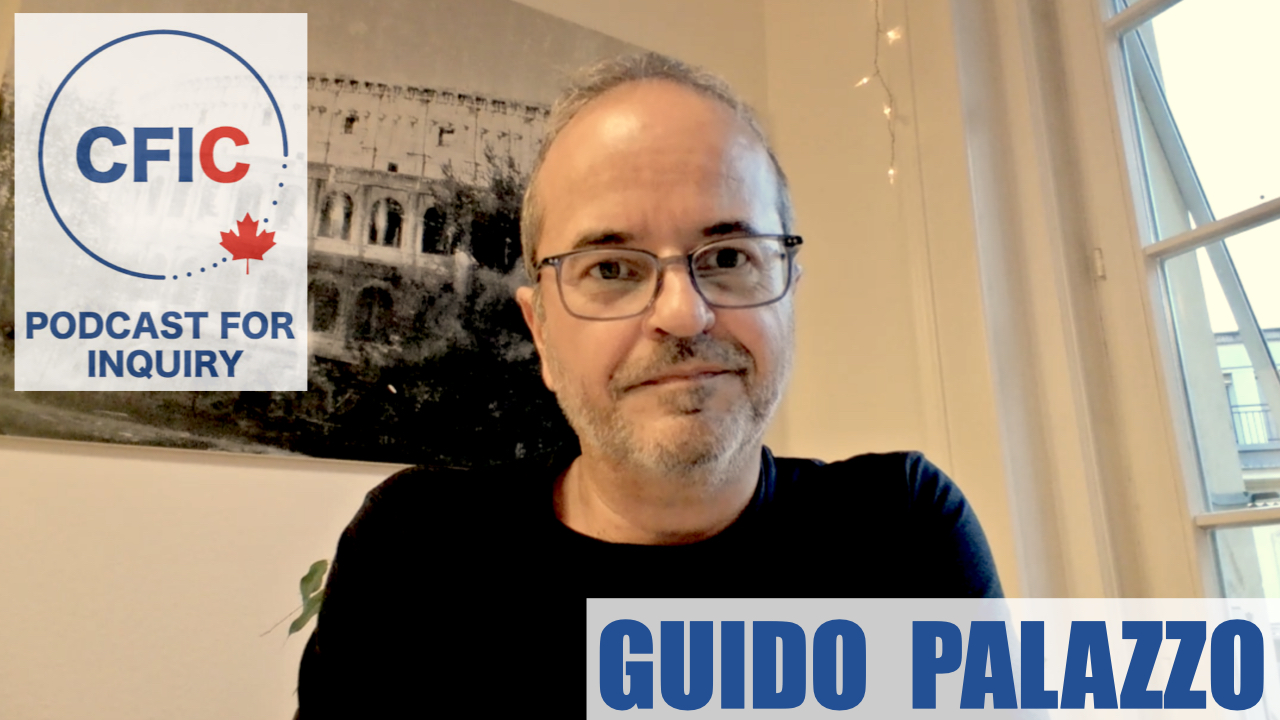
Corporate scandals are depressingly common, and it's all too easy to chalk them up to individual bad apples. Unfortunately, this simple explanation is not accurate. Guido's research led him to write The Dark Pattern: The hidden dynamics of corporate scandals, which details the nine building blocks that lead otherwise good people to do bad things. He explains the importance of context, why psychopaths are wildly overrepresented in corporate boardrooms, and the societal structures that too often lead to egregious behaviour from companies across the globe.
Podcast for Inquiry is hosted by Leslie Rosenblood and brought to y...
Andrew Coyne on the Crisis of Canadian Democracy

Andrew Coyne (@acoyne) is a columnist for The Globe and Mail and author of The Crisis of Canadian Democracy. In today's episode, Andrew makes the case that Canadian democracy is headed for a crisis. He talks about the problems of Canada's first past the post or "winner takes all" election system. The conversation includes an analysis of a wide range of issues: the diminishing contributions that MPs are allowed to make; how candidates, cabinet members, and even party leaders are selected; and the ever increasing concentration of power within the Prime Minister's Office. Andrew outlines steps that can be...
Once Upon a Prime with Sarah Hart
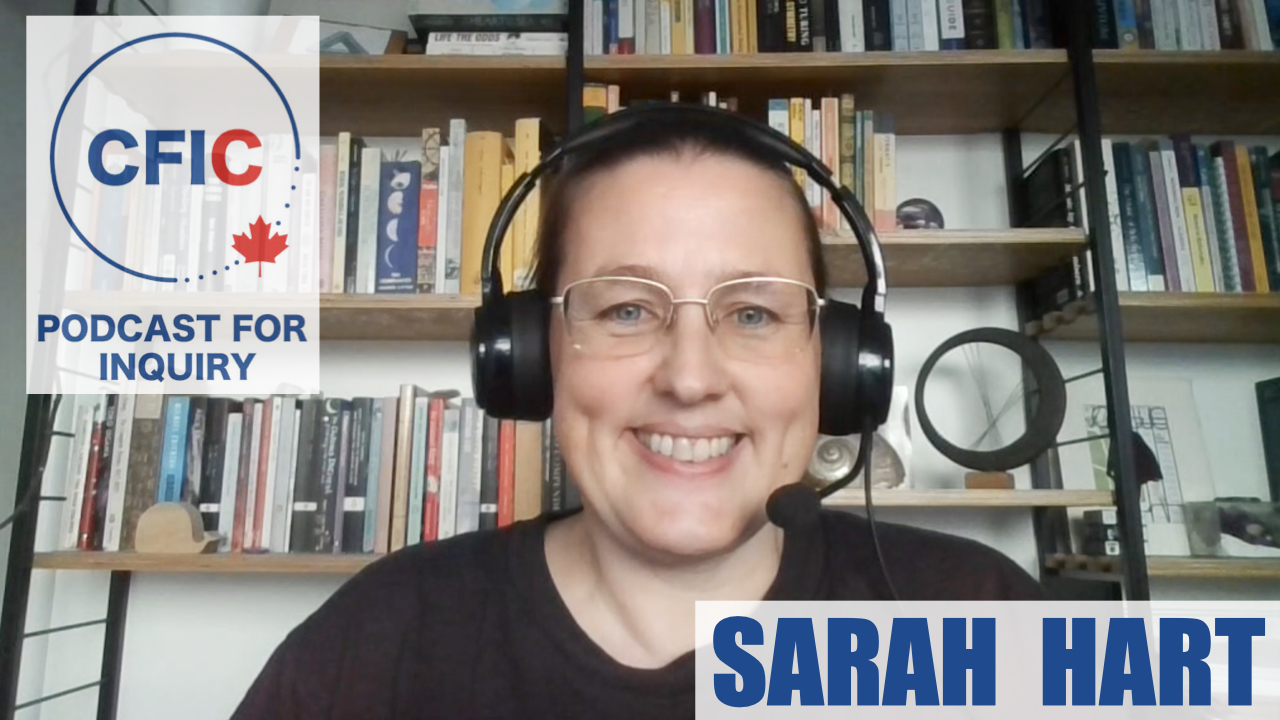
Leslie's conversation with Sarah starts with the connections between mathematics and literature, including references to Shakespeare, Herman Melville, George Eliot, Lewis Carroll, Douglas Adams, and more. Good writing has structure, and structure can be understood in mathematical terms, and Sarah explains how mathematics can greatly enrich one's enjoyment of literature. Sarah also describes how mathematics can be used to obfuscate rather than clarify, and how being a female mathematician today is different - and similar! - as in the 19th century.
Podcast for Inquiry is hosted by Leslie Rosenblood and brought to you by the Centre for In...
Modern Stoicism for modern life, with modern Stoic Donald Robertson
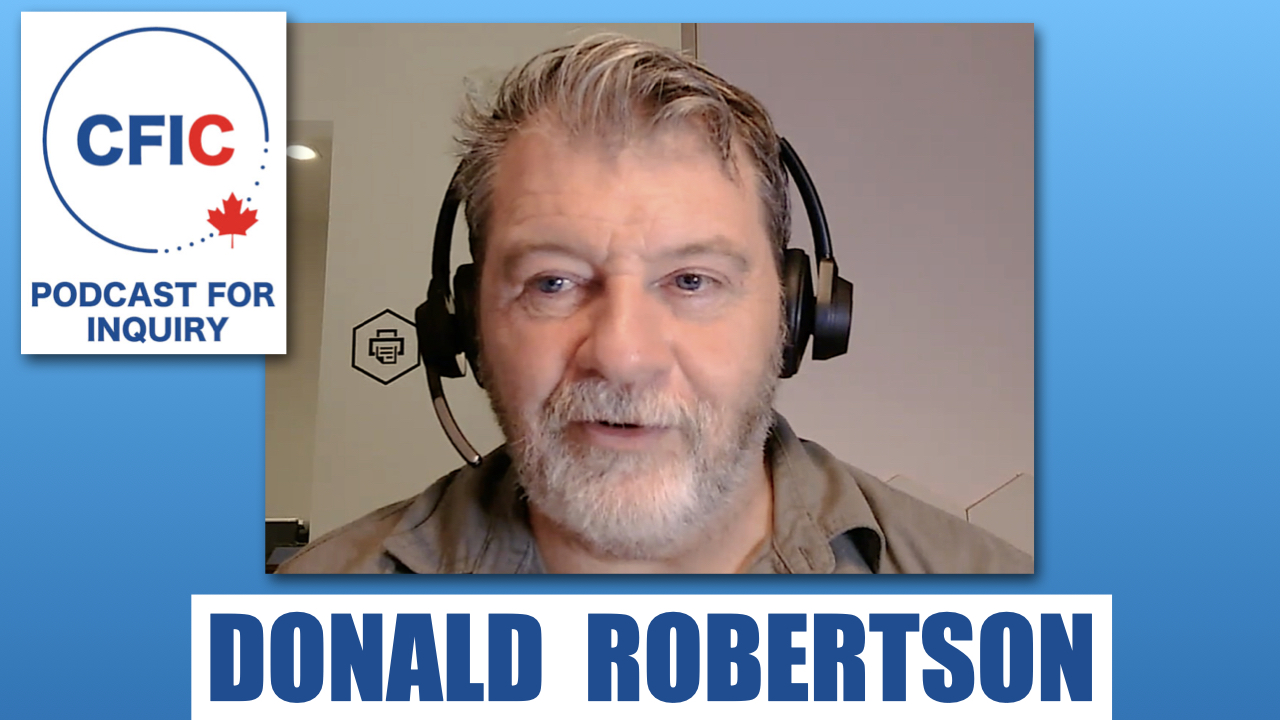
Donald Robertson (Substack) is a writer, cognitive-behavioural psychotherapist, and trainer. He is one of the founding members of the Modern Stoicism nonprofit, and the founder and president of the Plato's Academy Centre nonprofit in Athens, Greece.
Leslie's conversation with Donald traces the path from ancient Stoicism to the modern day. The word stoicism had come to mean something very different over time, but that has started to change as Stoicism the philosophy has been more popular in recent years. Stoic principles lie at the heart of cognitive behavioural therapy, and we talk about how incorporating Stoic principles...
Justin Ling on the right wing media ecosystem
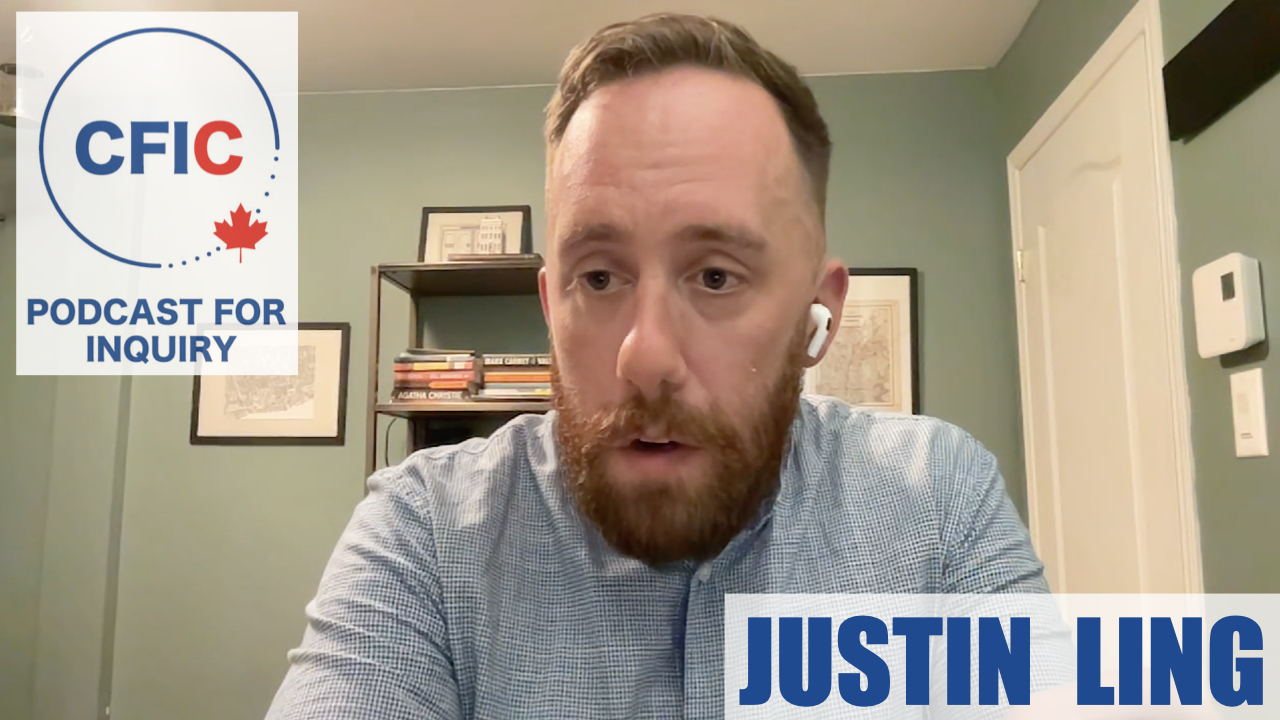
Justin Ling (@justinling.ca) is an investigative journalist who writes the Bug-eyed and Shameless newsletter and recently published the book The 51st State Votes.
The conversation begins with the right wing media ecosystem, and its effect particularly on US politics. Justin explains why there isn't really a counterpart on the left, and what makes Canada different from the United States in this regard. Leslie and Justin move on to democracy and authoritarianism on the international stage, and how to develop healthy media consumption habits in today's world.
Podcast for Inquiry is hosted by Leslie Rosenblood a...
The Examined Run with Sabrina Little
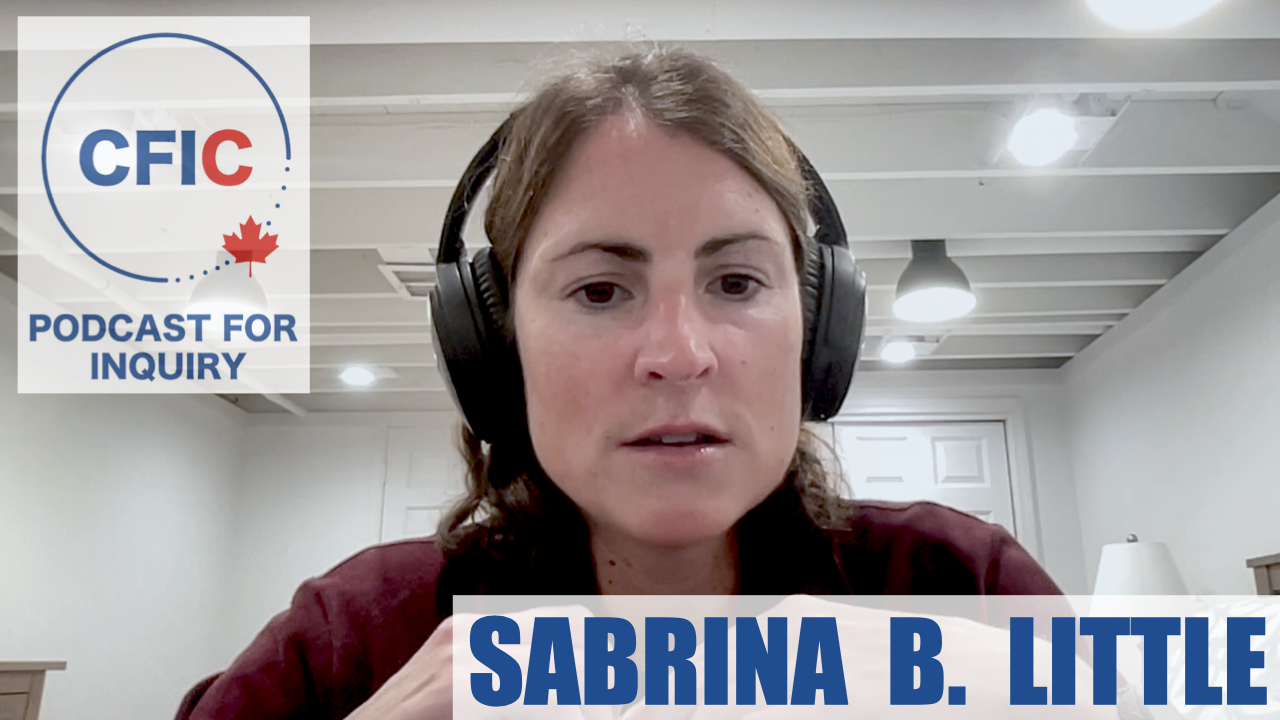
Sabrina Little is a philosopher, ultra-runner, and the author of The Examined Run: Why Good People Make Better Runners. She is a five-time U.S. National Champion in trail and ultrarunning, a former American Record Holder, and World Silver Medalist.
In today's episode, Sabrina answers the question: Why do good people make better runners? What are the performance enhancing virtues, and do they outweigh the performance enhancing vices? She talks about the difference in taking a short vs long term perspective, the importance and challenge of balancing the multiple areas of life that need your time and a...
ENCORE: Gretchen Morgenson on her book These are the Plunderers: How Private Equity Runs -- and Wrecks -- America
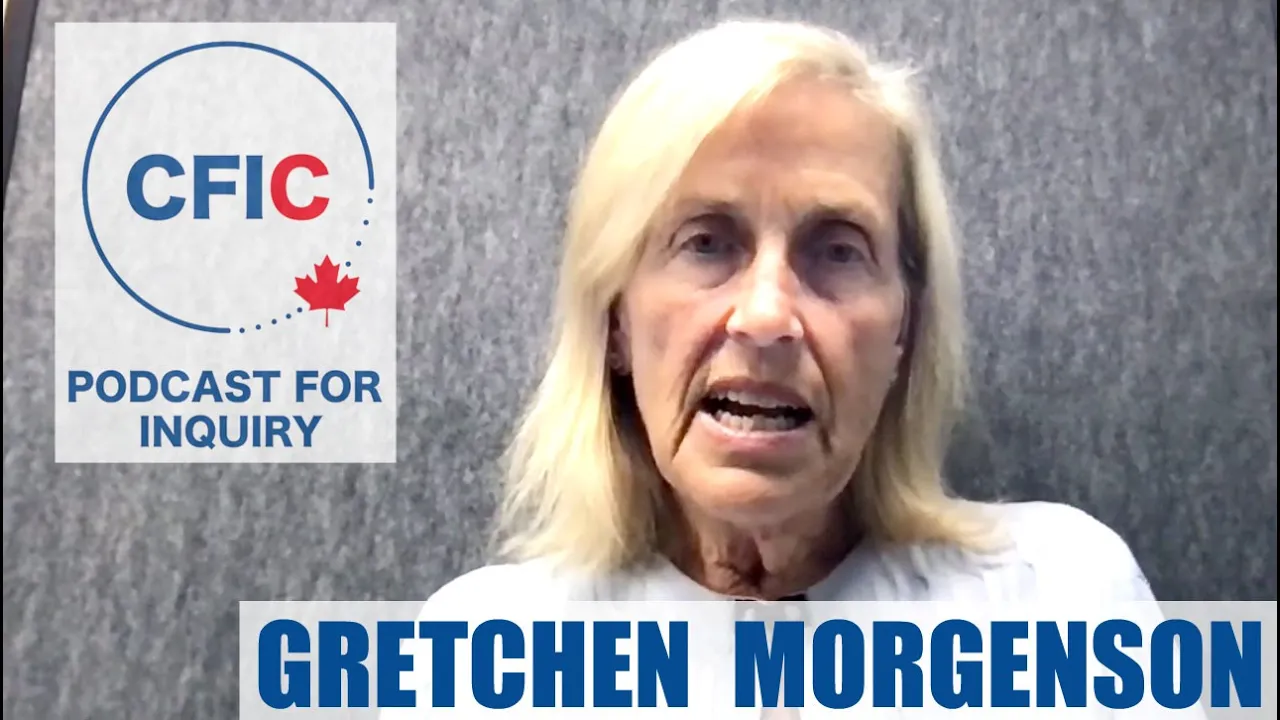
What is Private Equity, and how does it work? Gretchen Morgenson (@gmorgenson) is a Pulitzer-winning journalist whose latest book is These are the Plunderers. Gretchen exposes the bad and often illegal activities of Private Equity firms, and tries to explain why they have been allowed to get away with it for so long. She explains how Private Equity firms operate behind the scenes to ensure the loopholes that substantially reduce their tax bills are never closed, and details recent events that might give cause for hope.
Podcast for Inquiry is hosted by Leslie Rosenblood and brought to...
ENCORE - The Christian Destruction of the Classical World with Catherine Nixey
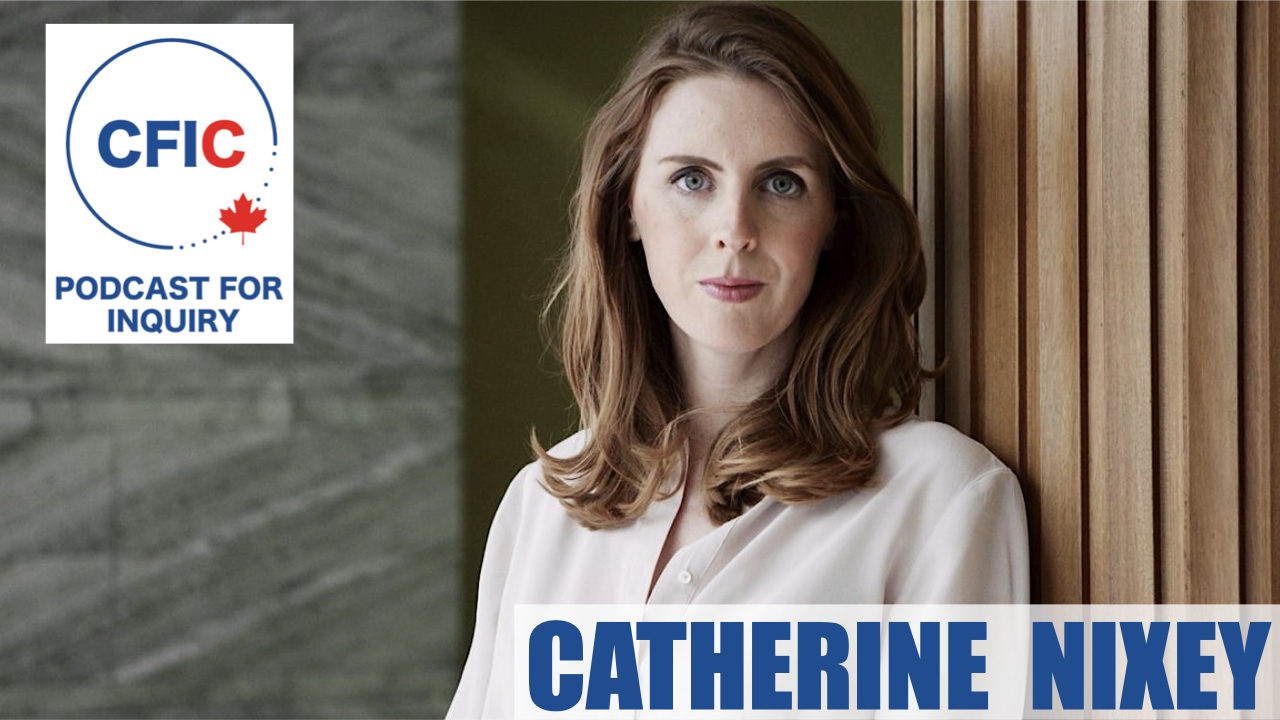
Catherine Nixey is the author of The Darkening Age, which documents how early Christians burned texts, defaced or demolished statues, and became increasingly intolerant of any thought or behaviour that deviated from their interpretation of Scripture. Catherine and Leslie discuss religious pluralism in the Roman Empire and how it changed after the Emperor Constantine's conversion to Christianity - and why Christianity, despite its similarity to many other cults that arose at that time. It is a rare book that is well-researched, engrossing, on an interesting topic, and superbly written, but The Darkening Age is all of these.
...
ENCORE: Seth Andrews, host of the Thinking Atheist, on Christians acting in un-Christian ways
Seth Andrews (@SethAndrewsTTA) is the host of The Thinking Atheist, a very popular podcast and online resource for nonbelievers. Seth talks about his life as an evangelical Christian and what led him to leave his faith. He and Leslie talk about how many Christians embrace seemingly un-Christian beliefs and policies, and what Humanists need to do to make the world a better place.
Podcast for Inquiry is hosted by Leslie Rosenblood and brought to you by the Centre for Inquiry Canada. Join today! Produced by Zack Dumont, Martin Zielinski, and Leslie Rosenblood. Support Podcast for Inquiry...
Leslie's Diatribes #4: AI: Show Me the Money!

There are many critiques that people have made about the AI industry: privacy, piracy, electricity and water usage, hallucinations, and more. Leslie focuses on one aspect he doesn't understand at all: Where does the money come from? Each AI datacentre costs tens of billions to build - hundreds of billions have been spent across the industry. And answering each question, or generating each image, sound, or video - is also very expensive. Hardly any consumers, and very few companies, are paying for AI services. If they're not profitable, and there's no clear path to become so, why are the...
ENCORE: What It Means to be Moral with Phil Zuckerman
PfI is on hiatus for the summer, so we're bringing you some of our favourite episodes from our back catalogue. New shows will resume in September.
Phil Zuckerman is a professor of Secular Studies at Pitzer College. Phil describes what the Secular Studies program entails from philosophical, political, and sociological perspectives. Phil is the author of What It Means to be Moral, and he and Leslie discuss how leading an ethical life does not require a religious foundation. Phil is the Executive Director of Humanist Global Charity, and you can read his most recent articles and essays...
Aaron Devor explains the ABCs of the Trans+ community
Leslie speaks with Aaron about many issues related to transgender people, or the Trans+ community. They discuss how the perceived binaries of sex, sexual preference, gender, and gender expression are more complicated and nuanced in reality. Aaron details how many people identify as transgender and nonbinary in Canada, and provides insights into many current controversies including pronouns, sports, puberty blockers, and incarceration.
Dr. Aaron Devor, PhD, FSSSS, FSTLHE, is an internationally recognized leader in Transgender Studies who has been studying and teaching about transgender topics since the early 1980s. He established and holds the world's first Chair i...
Is nuclear energy low carbon, cost efficient, and sustainable? Jason Donev has the answers.
If uranium in a nuclear power plant emits so much radiation it boils tons of water, how safe is it for workers? Given the huge facilities required and massive mining efforts, is nuclear truly carbon neutral? Is there enough uranium in the earth for nuclear energy to be a long term source of electricity? If we build more nuclear plants, will we retire fossil fuel sources of electricity or simply increase our electricity usage accordingly?
Jason Donev answers all these questions, and more, in our second conversation on nuclear energy.
References from our conversation:
ht...BONUS: BAHACON 4 in Sarnia Ontario, August 8-10, 2025
The fourth BAHACON is coming in a little over two month's time. Leslie speaks with Jeff Brooks about the conference's location, speakers, and other attractions that makes the Bluewater Atheists, Humanists, and Agnostics conference so popular for attendees from across North America. Learn more and register at https://bahacon.com/
Podcast for Inquiry is hosted by Leslie Rosenblood and brought to you by the Centre for Inquiry Canada. Join today! Produced by Zack Dumont, Martin Zielinski, and Leslie Rosenblood. Support Podcast for Inquiry on Patreon: https://patreon.com/PodcastforInquiry. Send your thoughts and feedback to podcast...
New clear nuclear news, with Jason Donev
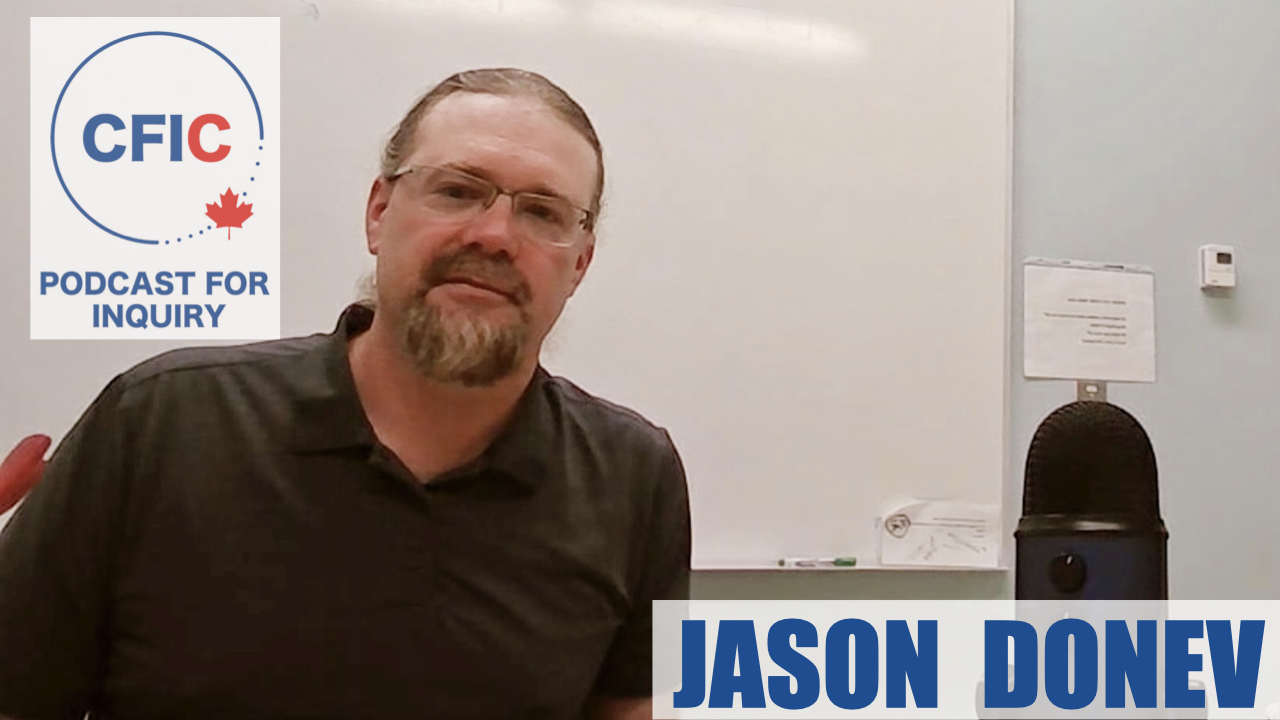
Prof. Jason Donev is tenured at the University of Calgary. He leads the world's largest and most used energy resource for adults, www.EnergyEducation.ca. As a reviewer for the Intergovernmental Panel on Climate Change, Prof. Donev works to help people understand nuclear power's role in providing reliable energy without emitting greenhouse gases.
Jason talks about how much energy people around the world use, with a reminder that electricity is only a fraction of our overall energy budget. Jason describes nuclear energy's advantages and disadvantages compared with the other major sources of electricity. We also discuss some c...
A little less livestock, a lot more action - with Mark Lynas

Mark Lynas is the author of several environmental books, including Seeds of Science (2018), Our Final Warning (2020), and the forthcoming Six Minutes to Winter. Until 2024 he was research and climate lead with the Alliance for Science at the Boyce Thompson Institute, an affiliate of Cornell University. Mark is now the policy lead with the pro-science environmental campaign network WePlanet, launched in 2021 and now active in 18 countries.
Our conversation starts with a recognition of the dire emergency presented by climate change, and that human food production is a significant contributor to humanity's greenhouse gas emissions. Three changes can greatly r...
Nigerian Nightmare: The personal toll of being a Humanist, with Mubarak Bala
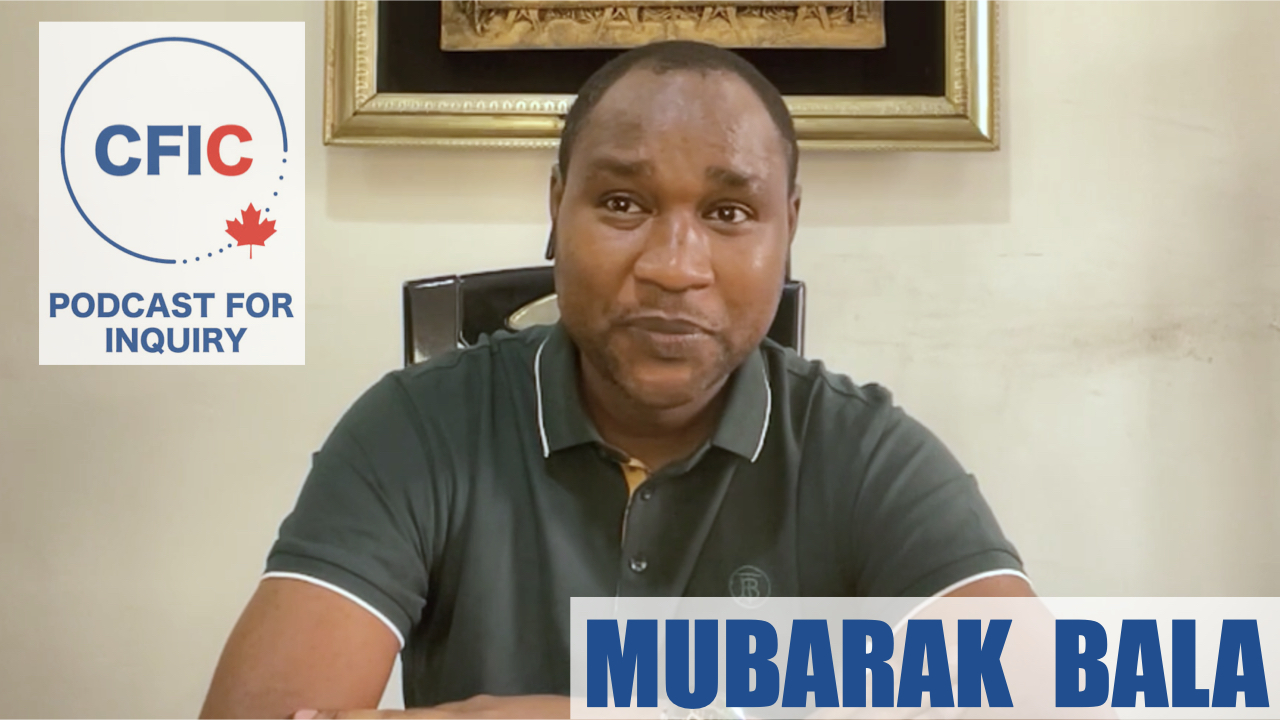
Mubarak Bala was born in Nigeria's Kano State, on the southern coasts of the Sahara Desert, in 1984. He was schooled in both the Islamic and modern education system. This makes him an outlier, since most families believe the two school systems are mutually exclusive. Boko, Western Education, is Haram, or unIslamic.
When Mubarak started doubting the existence of demons, he was told that displaying any doubt was denying the word of the prophet. When his beliefs evolved to atheism, he paid an enormous price for saying so publicly. We talk about his experiences and also a...
Cell phones, Cinemas, and Comestibles: Canada's Conundrum with Monopolies, with Vass Bednar
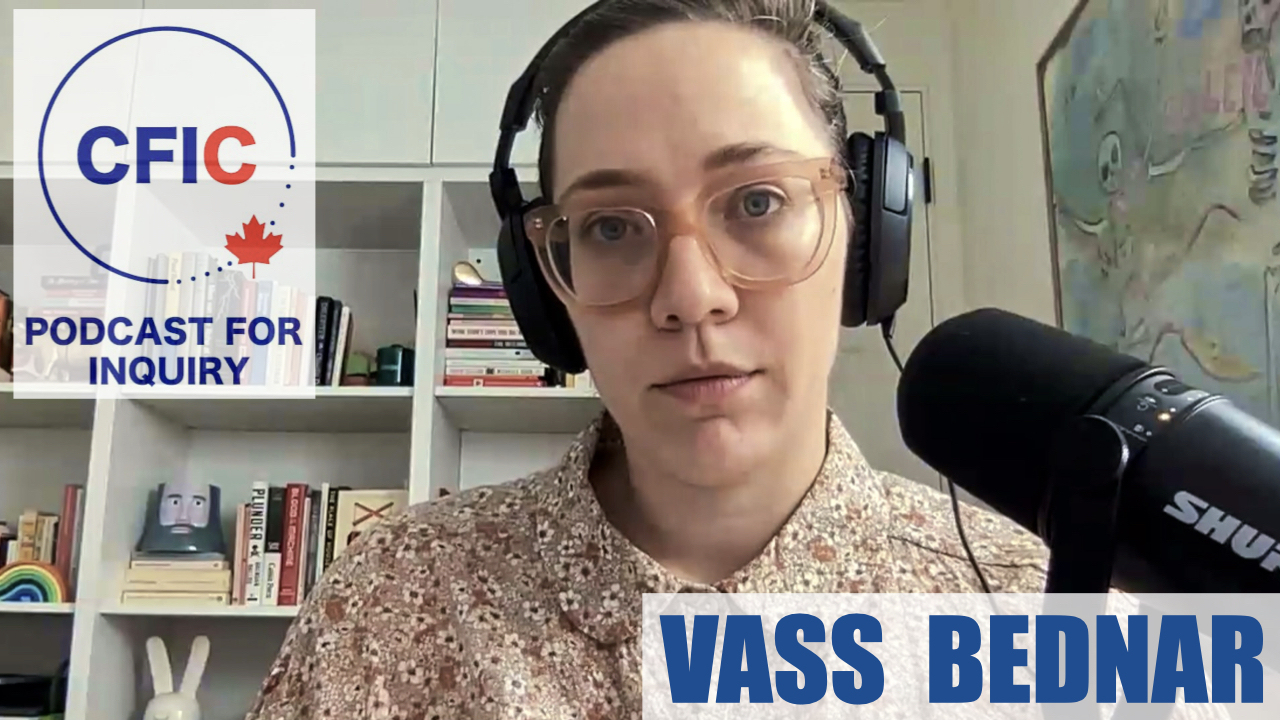
Vass Bednar is the Executive Director of McMaster University's Master of Public Policy program, and the co-author of The Big Fix: How Companies Capture Markets and Harm Canadians. Our conversation starts with the observation that many sectors in Canada's economy are dominated by one or only a few firms. Vass and Leslie discuss whether that is good or bad for Canadians, including an analysis of cinemas, grocery stores, and banking. They debate the role of government, the tools it has at its disposal, and what the future might hold.
Relevant resources:
NICE, the Network of I...
Trials and tribulations trying to bring a refugee to Canada
In 2019, Brian and Brent (members of the Calgary-based Rocky Mountain Atheists) joined a "Group of Five (G5)" sponsorship committee (one of the ways Canada allows private citizens to resettle refugees in Canada) to bring a UN recognized refugee, Omer, to Canada.
When Omer expressed doubts about his faith, he had to flee his native country of Pakistan due to threats on his life. Omer has been living in hiding in Nepal for several years.
Though Omer's should have been a straightforward case, the experience of navigating the bureaucracies of several nations - as well as the...
Distinguishing jargon from gobbledygook - Dr. Jonathan Stea on evidence-based medicine over wellness industry misinformation
Jonathan Stea (BlueSky, Facebook) is a full-time practicing clinical psychologist and an adjunct assistant professor in the Department of Psychology at the University of Calgary. In today's episode, Jonathan reveals that many mental health practitioners have no scientific grounding for their treatments, which can lead to disaster - yet it can be very difficult for an layperson to distinguish between a new technique they don't understand that works, and a new technique they don't understand that is gibberish. "Quantum neurological reset therapy" should get your spidey sense tingling, and Jonathan shares a few other signs of pseudoscientific grift as...
Burkas, beatings and bicycles - The life of Yasmine Mohammed

Yasmine Mohammed is a human rights activist and author of Unveiled: How the West Empowers Radical Muslims. Yasmine is one of the most prominent and vocal figures supporting persecuted freethinkers across the globe, from elevating the voices of marginalized freethinkers on her podcast, to creating a global network of allies across religious and political divides through the CLARITy Coalition.
Yasmine shares how her childhood was dramatically changed when her mother became an unofficial "second wife" to a devout Muslim man, and how Canada failed to protect her due to the bigotry of low expectations. She describes her...
Everything you always wanted to know about the solar system* (*but were afraid to ask), with John E. Moores
John E. Moores (X, Bluesky) is a planetary scientist and associate professor at York University. He is a member of the Royal Society of Canada, formerly served as the Science Advisor to the President of the Canadian Space Agency and has contributed to five NASA and ESA-led space missions. He is the co-author of Daydreaming in the Solar System, which imagines a future when visiting other planets is as common as hiking in a national park. The book is also grounded in the latest scientific knowledge about planetary geophysics. In addition to talking about the book, John answers some...
Gaia Vince identifies the four horsemen of the Anthropocene
Gaia Vince (@wanderinggaia) is an award-winning science writer and author. She is particularly interested in the interaction between human systems and Earth's planetary systems. Her research has taken her around the world. Gaia's latest book is Nomad Century: How Climate Migration Will Reshape Our World. We are already at 1.6 degrees Celsius above pre-industrial temperatures, with significantly more to come. The four horsemen of the anthropocene - fire, heat, drought, and flood - will lead human migration on an unprecedented scale. Gaia describes what we must do, individually and collectively, to prepare.
Podcast for Inquiry is hosted...
Canada has not reconciled with its Indigenous peoples, say Maureen Bulbrook and Christina Ninham

Maureen Bulbrook and Christina Ninham are Indigenous lawyers who know from direct experience that Canada has never stopped discriminating against its First Nations people, from the Doctrine of Discovery at the time of contact to current day (with Prime Minister Harper arguing that residential school records should be destroyed even as he apologized for Canada's treatment of Indigenous peoples and Prime Minister Trudeau failing to deliver on his promise of clean drinking water in all Indigenous communities). Canada passed a law in November 2024 banning forced sterilization because of the ongoing commonplace practice of doing so to primarily Indigenous women.
Paco Calvo considers the possibility of plant intelligence
Paco's thesis is a provocative one: plants are, in a meaningful sense, intelligent. Paco discusses what intelligence is, and how we might recognize it in other beings. People used to believe that only humans are intelligent. Over time, other mammals were deemed to also think and feel. Today, most people grant that many animals, such as birds and octopi, exhibit intelligent behaviours. Paco extends this to plants by detailing what science has to say - both theoretically and empirically - about the hypothesis of plant intelligence. The conversation concludes with some thoughts about the moral and philosophical implications if p...
Heresy: Jesus Christ and the Other Sons of God, with Catherine Nixey

Why do scholars now refer to early Christianities instead of early Christianity? How has the meaning of the word "Heresy" changed from its original definition to taking on its current connotations? Why did Christianity grow from a fringe cult with few followers and disdained by the intelligentsia and people in power to becoming the largest religion in the world today? What did humanity lose with Christianity's rise?
Catherine Nixey answers all these questions and more as she discusses her new book, Heresy, on Podcast for Inquiry.
Podcast for Inquiry is hosted by Leslie Rosenblood and br...
Saving civilization is about more than climate change, says Professor Katherine Richardson

All life on earth ultimately depends on energy and how it flows between biological and geochemical systems on the planet. Katherine Richardson and her team identified nine boundaries which need to be respected if our planet is to remain conducive to human thriving. Climate change is just one of them.
We are exceeding six boundaries, and in recent years they are all getting worse.
Katherine discusses how she and her team identified the nine planetary boundaries and why it is essential to consider how they interact, instead of viewing them as independent issues. The effects...
Melanie Trecek-King defines and discusses critical thinking

Many people - especially those in skeptical organizations like CFIC - talk about the importance of critical thinking. But what is it? How can we use it effectively? How do people navigate complex subject areas without developing deep expertise? Melanie Trecek-King, creator of Thinking is Power, discusses how people internalize beliefs, how they can be a part of one's identity, why some issues become politicized, what constitutes good evidence, and much, much more.
Podcast for Inquiry is hosted by Leslie Rosenblood and brought to you by the Centre for Inquiry Canada. Support Podcast for Inquiry on Patreon: h...
Does the Bible endorse slavery and genocide? Dr. Joshua Bowen provides receipts.

In his first appearance on Podcast for Inquiry, Dr. Josh Bowen compared what we know about history from archaeology and contemporaneous literature with the stories from the Old Testament.
In today's episode, Dr. Bowen reveals what the Bible has to say about slavery and genocide, and goes a bit outside his comfort zone to talk about whether the Old Testament should be considered a guide to a moral and ethical life.
Referenced during the conversation:
Read Dr. Bowen's latest book: Did the Old Testament Endorse Slavery? (Extensively Revised and Expanded Second Edition) Watch Josh rap...Kate Cohen believes atheists should be out and proud
Kate Cohen talks about her journey from privately knowing she was a non-believer to writing We of Little Faith: Why I Stopped Pretending to Believe (And Maybe You Should Too). She discusses how being an atheist and a commitment to honesty informed how she raised her children, and how being forthright about her lack of belief in social interactions has simplified her life. We also talk about some of the challenges associated with being an open atheist.
Kate is a Washington Post columnist and some of the articles she references in the conversation are below.
A...
Greg Oliver asks: Why is religious discrimination official provincial educational funding policy?

Greg Oliver, founder and president of the Canadian Secular Alliance, believes that governments should not favour one faith over another, nor believers over non-believers. That three Canadian provinces continue to this day to fully fund a Separate school system for a single faith - Catholicism - is an egregious violation of secular principles that should guide our public policy. Greg explains why Catholic schools are funded, how two provinces stopped funding sectarian schools, addresses many myths about the separate school system, and what we can do about it. (Check out the new organization Alumni to Amend Section 93.)
Science Denial: Why It Happens and What To Do About It, with Gale Sinatra
Everyone is vulnerable to fallacies that can lead to misunderstanding scientific topics. In her book (written with Barbara Hofer), Science Denial: Why It Happens and What To Do About It, Gale investigates many of these, including:
Cognitive biases
Emotions
Motivated reasoning
Identities
Gale also explains what all of us can do to increase our scientific literacy. Science is better understood as a process, with different disciplines advancing knowledge via different means, employing various techniques. It is much more than just a collection of facts to be understood. We can al...


