The Neurodivergent Entrepreneur

The Neurodivergent Entrepreneur is a podcast for ADHD, Autistic, and all other neurodivergent entrepreneurs who are building businesses, creative work, and lives that actually fit how their brains work. Hosted by Patrick Casale, LCMHC, this show is for people who want to create meaningful work, create outside of the box, grow their impact, and build something sustainable without losing themselves in the process. Being a neurodivergent entrepreneur can feel like holding a lot of contradictions at once. You may have big ideas, deep passion, creative energy, and a strong desire to do things differently. You may also be navigating burnout...
Neurodivergent-Friendly Spaces Aren’t Built by Accident

What happens when hundreds of neurodivergent people come together in a space intentionally designed with their needs in mind?
Patrick Casale sits down with ADHD advocate, content creator, and community builder Trina Haynes to talk about Neurodiversion, a large-scale event built around neurodivergent connection, creativity, and joy. They explore what it takes to create more accessible events, the power of collective unmasking, and what they’ve learned from hosting conferences and retreats for neurodivergent communities.
3 Key Takeaways:
Neurodivergent-friendly spaces require intentional design. Sensory environments, quiet spaces, communication preferences, breaks, and flexibility can dramatically change so...The Energy Cost of Being a Chronically Ill Entrepreneur

What happens when your capacity changes—but the demands of being alive don’t?
In this vulnerable solo episode, Patrick Casale talks about the exhaustion of navigating chronic illness, chronic pain, Autistic burnout, and being neurodivergent while still needing to work, make money, create, maintain relationships, and find meaning in life.
It’s an honest conversation about changing capacity, invisible disability, grief, pacing, and learning to be gentler with yourself when simply existing requires more energy than most people can see.
3 Key Takeaways:
Capacity and necessity don’t always match. Having less energy d...Beyond Private Practice: Turn Your Ideas Into Something Real

What if your career could be bigger than the path you originally imagined?
In this solo episode, Patrick Casale shares lessons from building businesses, hosting retreats, podcasting, speaking, and leading a group practice—and why self-doubt, perfectionism, or waiting until you feel ready shouldn’t keep your ideas stuck in your head.
He also introduces his Beyond Private Practice intensives, designed to help therapists and entrepreneurs take those ideas and turn them into something real.
3 Key Takeaways:
Your career doesn’t have to follow a predetermined path. There are countless ways to build...Healing Isn’t Just in Your Head: Rethinking What Therapy Can Be

What if caring for your mental health isn’t just about what’s happening in your head?
Patrick Casale sits down with holistic therapist and educator LeNaya Crawford to rethink what therapy can look like when we consider the whole person. They explore how movement, breathwork, mindfulness, spirituality, and other practices can complement traditional talk therapy—and why integrating them responsibly matters.
The conversation also touches on burnout, hustle culture, self-worth, and the importance of finding approaches to healing that actually fit the individual.
3 Key Takeaways:
Healing can involve more than talking. The bo...The Hardest Thing I’m Learning to Do Is Nothing

What happens when your brain wants creativity, stimulation, and momentum—but your body is telling you to stop?
In this personal solo episode, Patrick Casale reflects on navigating Autistic burnout, chronic illness, and the uncomfortable reality of entering a season where pushing harder simply isn’t an option.
He explores the complicated relationship between productivity and self-worth, why slowing down can feel so threatening for an ADHD brain, and what it means to trust that creativity will return without forcing it.
3 Key Takeaways:
Rest doesn’t mean you’re failing. Sometimes stepping back is...Creating Through the Chaos of a Neurodivergent Life

What happens when the chaos you spent years trying to understand becomes the fuel for something meaningful?
Patrick Casale sits down with artist, musician, tattoo artist, and creator Bre (professionally known as BR3) for a raw conversation about neurodivergence, creativity, sensory seeking, Autistic burnout, representation, and the complicated relationship between pain and art.
BR3 reflects on behaviors he once understood as recklessness or destruction—including an intense encounter with police—and what it has been like to recognize those experiences through the lens of neurodivergence and sensory seeking. He and Patrick also explore an important comp...
Your Symptoms Are Real—Even When Medicine Doesn’t Have The Answers

What happens when neurodivergent burnout, chronic illness, stress, and medical trauma all start colliding?
Patrick Casale sits down with Dr. Zachary Spiritos for an in-depth conversation about complex chronic illness and why conditions like POTS, dysautonomia, ME/CFS, mast cell activation, hypermobility, and unexplained GI symptoms can be so difficult to navigate.
They explore the potential roles of stress, trauma, environmental exposures, illness, and nervous system dysregulation—and why so many Autistic and ADHD people find themselves struggling with both neurological burnout and worsening physical symptoms at the same time.
Dr. Spiritos also sh...
Your Brain Isn’t the Problem. The System Needs Reimagining.

What if neurodivergent people aren't failing the systems around them—what if those systems are failing them?
Patrick Casale sits down with Autistic and ADHD (AuDHD) physician Dr. Mel Houser, founder of All Brains Belong, to explore why navigating healthcare, employment, chronic illness, and burnout can be so exhausting for neurodivergent people—and what it could look like to build something better.
From advocating for yourself in medical appointments to understanding the connections between neurodivergence and complex health conditions, Patrick and Dr. Houser discuss why so many people spend years believing they're the problem. They also...
Dragons, Dopamine, and Autistic Special Interests

What happens when a TV show, book series, fictional universe, or character becomes so much more than entertainment?
Patrick Casale is joined by returning guest and ADHD Executive Function Coach Mandi Dixon for a deep dive into Game of Thrones, House of the Dragon, and the powerful role special interests can play in neurodivergent lives.
From favorite characters and dragons to Autistic-coded characters, PDA, hyperfixation, and the emotional devastation of a terrible series finale, Patrick and Mandi explore why fictional worlds can become sources of joy, nervous system regulation, connection, belonging, and escape. They also...
ADHD Isn't a Superpower—Or a Life Sentence

What if the goal isn't to "fix" your ADHD—but to finally stop fighting yourself?
In this episode, Patrick Casale sits down with mental health advocate, content creator, and digital strategist Kyrus Keenan Westcott, whose honest, anti-toxic positivity approach has resonated with nearly 3 million followers. Together, they explore the realities of living with ADHD, executive dysfunction, burnout, perfectionism, and the lifelong process of self-acceptance.
From navigating corporate life and social media to unpacking internalized ableism and learning to work with your brain instead of against it, this conversation is a grounded reminder that progress isn't ab...
The NeuroPreneur Circle: More Than Business, It's Belonging

Building a successful business isn't just about strategy—it's about finding people who truly understand how your brain works.
In this episode, Patrick Casale shares the deeply personal story behind the creation of the NeuroPreneur Circle and why he believes community is one of the most important ingredients for sustainable entrepreneurship. Drawing from his own experiences with autism, ADHD, chronic illness, masking, and searching for belonging, he explains what makes this space different and why connection can be just as transformative as business coaching.
Whether you've struggled to find your place, felt misunderstood in traditional en...
Success Is Only Half the Story

In this episode, Patrick Casale and Gabrielle Juliano-Villani pull back the curtain on what entrepreneurship really looks like when you're neurodivergent.
From burnout and chronic illness to purpose, friendship, travel, and creating businesses that actually fit your brain, this conversation explores the realities that rarely make it onto social media. They also share why they created the free Diverge Summit—a first-of-its-kind event bringing together more than 20 experts to talk about the intersection of neurodivergence, entrepreneurship, nervous system regulation, chronic health, creativity, and sustainable success.
Whether you're autistic, ADHD, living with chronic illness, or simply tr...
Why Most Membership Communities Fail (And What Actually Works)
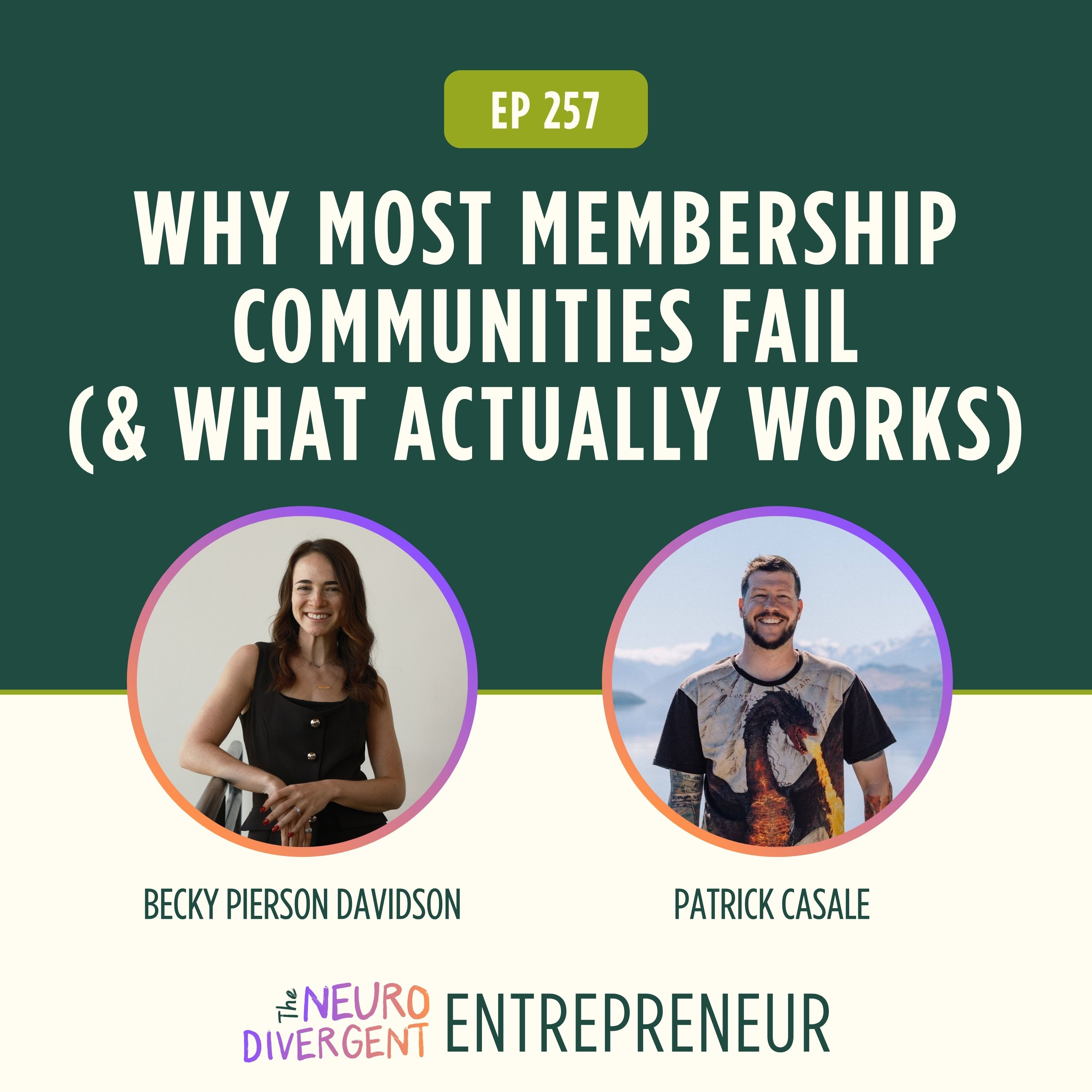
In this episode, Patrick Casale talks with Becky Pierson Davidson, founder of Affinity Collective, about what it really takes to build meaningful, sustainable online communities—including for neurodivergent entrepreneurs.
Becky shares insights from her journey in product strategy, UX, and community design, plus the hard truths about memberships, monetization, and why passion-driven communities thrive.
3 key takeaways:
Community is the long game: Success doesn’t happen overnight. It’s built on real relationships, consistency, and showing up, not just choosing a platform or chasing quick wins.Engagement beats audience size: It’s not about how many fol...Why Living in a Bendy Body Changes Everything
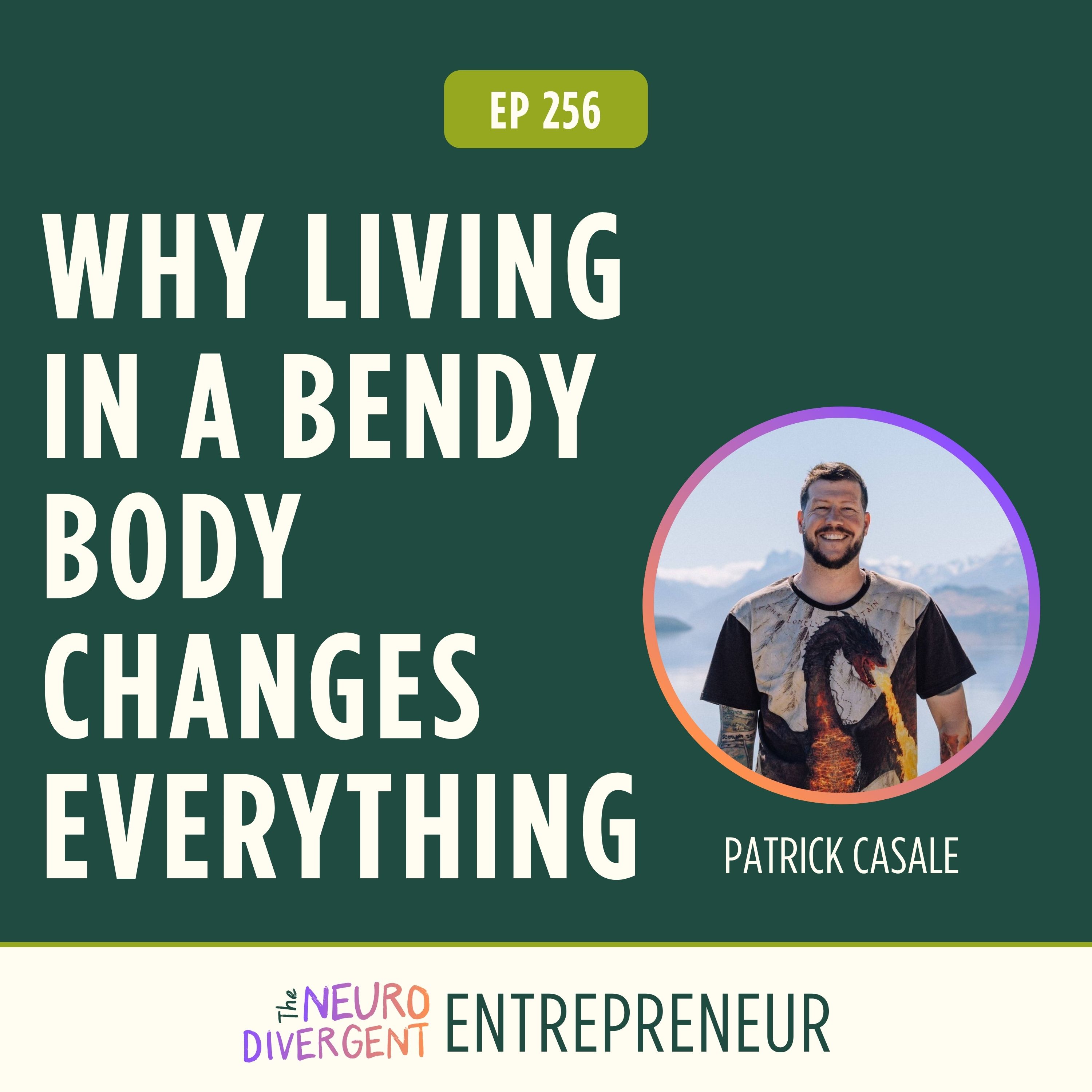
Living and working with Hypermobile Ehlers-Danlos Syndrome (hEDS), along with comorbid conditions like Mast Cell Activation Syndrome (MCAS) and Postural Orthostatic Tachycardia Syndrome (POTS), means navigating a world that isn’t built for bendy bodies. In this episode, Patrick Casale reflects on his journey from college athlete to entrepreneur with mobility aids, and the realization of how much internalized ableism he's had to unpack—and how critical it is to reshape our understanding of disability in business and life.
A key theme that emerged is the interconnectedness of neurodivergence, chronic illness, and entrepreneurship. Patrick shares not just the...
The Medical Gaslighting That’s Keeping People Sick

In this episode, Patrick Casale talks with Alexandra (Alex) Wildeson, online content creator and host of the "Calling in Sick" podcast, about the realities of living with invisible and chronic health conditions, from gaslighting in the medical system to redefining success outside of capitalism's narrow achievement lens.
Here are 3 key takeaways:
Community is Essential: Connecting with others who understand your experience is a game-changer in battling loneliness and advocating for yourself.Redefine Success and Identity: Chronic illness often forces a personal reckoning with what truly matters. Prioritizing health, authenticity, and relationships can bring unexpected fulfillment, even...Stop Calling Autism and ADHD a Trend

In this episode, Patrick Casale talks with Dr. Emma Offord, a UK-based clinical psychologist and founder of Divergent Life, about the landscape of autism and ADHD assessment, both in the U.K. and U.S., and the urgent need to move past deficit-based models to truly affirming, accessible care.
3 Key Takeaways:
Systemic barriers to diagnosis are everywhere: Whether it’s a years-long wait for a free assessment in the U.K. or gatekeeping and prohibitive insurance premiums in the U.S., neurodivergent individuals face enormous hurdles in accessing meaningful support. The current system often invalidates lived ex...The Burnout Trap Every Neurodivergent Entrepreneur Faces

Navigating business ownership as a neurodivergent entrepreneur can be both challenging and empowering, offering independence and autonomy in work life while also requiring constant self-assessment of needs and capacity. In this episode, Patrick Casale talks with Natalia Rivera, a trauma-informed therapist specializing in high-masking Autistic adults, about how late-in-life neurodivergence discovery impacts entrepreneurship and the importance of honoring authentic capacity.
Here are 3 key takeaways:
Capacity isn't fixed: Burnout plays a role in how our energy and cognitive capacity change over time, and it's critical to continually assess and honor those limits as we grow professionally.Rest...Introducing "The Neurodivergent Entrepreneur" Podcast (Formally All Things Private Practice)
I've been sitting with this for a while, and honestly? It's been unfolding naturally, in real time, for longer than I've cared to admit.
If you've been listening to All Things Private Practice over the past year or two, you may have noticed something shifting. The conversations were changing. I wasn't just talking to therapists about starting group practices or building caseloads anymore — I was sitting across from neurodivergent entrepreneurs, late-diagnosed creatives, people building businesses that looked nothing like the traditional path. And in those conversations, I have felt the most alive.
So, I'm making it...
Late Autism and ADHD Diagnosis and Advocacy for Neurodivergent Families

In this episode, Patrick Casale talks with Katherine L’Etang (A.K.A. @TheNeurodiversityMom) about her journey as a late-diagnosed Autistic and ADHD adult, which is both powerful and relatable, especially for advocates, parents, and neurodiverse professionals.
Here are 3 key takeaways:
Self-advocacy is essential: It's important to seek validating, knowledgeable professionals—and not settle for invalidating experiences, especially when it comes to late diagnosis and mental health support. Doing your homework on assessors and trusting your self-knowledge is crucial.Diagnosis is just the beginning: Receiving an autism or ADHD diagnosis in adulthood can trigger a profound shif...More Than Empty Claims: Creating Truly Neurodivergent-Affirming Events

In this episode, Patrick Casale talks with Yael Clark and Liam Spicer about building neurodiversity-affirming mental health spaces and the Neurodiversity Affirming Therapy Conference Australia & LOAPAC Expo.
They discuss how collaboration among neurodivergent professionals can drive change—whether by centering lived experience, innovating inclusive practices, or redefining what “professional” environments look like.
3 Key takeaways:
Practice What You Preach: Every layer of event planning—from speaker selection to seating arrangements—should be infused with neurodiversity-affirming values, not just the content itself.True Accessibility Means Change: Accommodations like sensory-friendly spaces, alternative seating, open movement, and even alternativ...Legal Perspectives on Neurodiversity and Thriving at Work

In this episode, Patrick Casale talks with Jodie Hill, who is the founder & managing partner of Thrive Law, a neurodivergent solicitor, and a passionate advocate for mental health, equity, and neuroinclusion in the workplace. Her lived experience and legal expertise shed light on the daily realities—challenges and opportunities—for neurodivergent professionals and their employers.
Here are 3 key takeaways:
Psychological safety is critical: Many neurodivergent employees hesitate to fully disclose their diagnosis due to concerns about how managers will respond, highlighting the urgent need for organizations to foster safer, more inclusive environments.One size DOES NOT fit...Neurodivergent Bodies, Chronic Illness, and The Struggle to Participate in Life

In this episode, Patrick Casale shares a brutally honest look at living with chronic neuroimmune conditions while trying to keep up with plans, business, and even just daily life. If you’ve ever felt like your body is working against you and struggled to keep up with the demands of life, you’re not alone.
Patrick opens up about the exhausting intersection of autism, ADHD, POTS, MCAS, Ehlers-Danlos, chronic pain, burnout, and more. The challenges are real: unpredictable energy, inconsistent capacity, medical gaslighting, and the constant guilt of letting others down.
Here are 3 key takeaways:
Pa...How Perimenopause is Different for ADHD Women

In this episode, Patrick Casale talks with Mandi Dixon, LPC, EMDR therapist, and ADHD executive functioning coach, about the intersection of ADHD and perimenopause, an area with far too little research and awareness—despite how profoundly it impacts so many lives. Mandi shares both expertise and lived experience, highlighting the real challenges faced by neurodivergent individuals navigating this transition.
3 Key Takeaways:
Perimenopause and Neurodiversity: The intersection of ADHD (and often autism) with perimenopause leads to increased and earlier symptom onset, more intense sensory sensitivity, sleep disruption, and overwhelming emotional changes.It’s Not All in Your Head...Therapy for Religious Trauma and Spiritual Abuse

In this episode, Patrick Casale talks with Michelle Moseley, LCMHC, who provides trauma-informed, weight-inclusive, and neurodivergent-affirming counseling for survivors of religious/spiritual harm and individuals who struggle with body image.
They discuss the factors that play into religious and spiritual harm, including the impact it can have on a person, and what therapeutic approaches are helpful vs. harmful.
Here are 3 key takeaways:
Specialization Goes Beyond Lived Experience: Lived experience with religious trauma can inform our work as clinicians, but true specialization comes from doing our own healing and seeking diverse, continuing education, not just...Neuroinclusive Workspaces That Truly Support All Neurotypes

In this episode, Patrick Casale talks with Pasha Marlowe, a mental health expert, neuroinclusion speaker, consultant, and coach, about her neuroinclusion work on improving workplace culture and leadership, which stemmed from seeing the real harm that some non-inclusive systems can inflict on neurodivergent employees. Neuroinclusion isn’t just about supporting and attracting Autistic or ADHD team members—it’s about fostering a culture where every kind of mind can thrive, be seen, and be respected.
Here are 3 key takeaways:
Inclusion means everyone: Don’t silo support only to autism or ADHD—embrace neurodiversity as an expansive umbrella...Merge Passion and Therapy: Working with Athletes, Brands, and Creatives

In this episode, Patrick Casale talks with Liz Ridgway about her career journey—how growing up as an athlete in small-town Pennsylvania ultimately led her to founding MENTL.SESH, collaborating with brands like Nike and NASCAR, and supporting high performers and creatives through therapy and consulting.
After years in nonprofit and foster care settings, Liz realized the importance of bringing all passions and parts of herself into work. By building a brand that authentically reflects who she is, she's connected with incredible clients and partners in some of the world’s most high-pressure spaces.
Here are...
Marketing: For Therapists Who Hate Marketing

In this episode, Patrick Casale talks with Carrie Wiita, M.S., an adjunct professor, consultant, former actor, and creator of Interpersonal Branding. Carrie offers eye-opening insights into what makes marketing for therapists truly authentic—without the cringe and echo chambers.
Here are 3 key takeaways:
Niching Down Is Not Everything: The advice to "niche down" is only one marketing strategy. It works for some, but it’s not the end-all-be-all for sustainable success. Therapists can also thrive through a differentiation strategy—by standing out based on who they are as people and clinicians.Therapists Face Unique Marketing Challe...Implementing DEI: The Antidote to Toxic Workplace Culture

In this episode, Patrick Casale talks with Angela Howard, founder of Call for Culture and former head of People and Culture, about transforming workplace culture and leading substantive organizational change. Angela shares insights on building truly equitable, people-centered organizations and offers a much-needed reality check on performative vs. authentic DEI efforts.
Here are 3 key takeaways:
True Culture Change Starts at the Top: Diagnose gaps within your organization. Often, leadership habits are the real barrier to progress, not the employees. Addressing leadership resistance is vital for sustainable transformation.Beware the Red Flags: Language like “we’re all fami...Advocacy Beyond 1:1 Therapy: Equity, Access, and Healing for Marginalized Communities

In this episode, Patrick Casale talks with Marvin Toliver, LCSW, TEDx speaker, and founder of Dear Black Man, You Good?, about the realities of mental health work, decolonizing therapy, and building healing communities outside of traditional systems.
3 Key Takeaways:
Reclaim Your Accomplishments: As Marvin emphasized, marginalized clinicians are often taught to shrink themselves—owning your achievements creates space for others to see what’s possible.Therapist Sustainability is Essential: The mental health field can leave therapists depleted, and viewing burnout as a sign of systemic issues—rather than personal failure—is so important. Therapy shouldn’t cost you y...If I Could Do Things Differently...

I just returned from an unforgettable month in Queenstown, New Zealand, which was top of my bucket list as a lifelong Tolkien fan, and my wife and I even did a vow renewal at Hobbiton. Beyond the scenery, the trip highlighted some powerful contrasts with life and business in the US, especially around community, culture, and personal well-being.
After years of building a "dream career"—hosting 22 international retreats, running multiple ventures, and chasing “success”—I’ve learned some hard lessons about burnout, intentionality, and redefining what matters.
3 Key Takeaways:
Intentionality over Hustle: Success fueled by constan...Affirming Autism Assessments for High-Masking Adults

In this episode, Patrick Casle and Dr. Salena Justice, a psychologist who specializes in working with high-masking autistic adults, talk about the realities of autism assessment and the ongoing need for affirming care in the mental health field.
Here are 3 key takeaways:
Affirming Approaches Matter: Many traditional training programs still lack truly affirming perspectives on autism, often focusing on stereotypical or high-support presentations. It's important for providers to move beyond outdated models and truly listen to the lived experiences of autistic individuals.Telehealth Can Be Empowering: Contrary to common hesitation, effective and affirming autism assessments are...Be Annoying: Your Voice is Needed

In this episode, Patrick Casale talks with Caryn Zaner, PsyD, founder of Therapy for the Apocalypse and Felt Not Fixed, about what it means to run a business—and a life—rooted in values, authenticity, and a commitment to community, especially while navigating the challenges of a capitalist system that isn’t designed for equity or collective care.
Here are 3 key takeaways:
Embrace Value Alignment, Even When It’s Hard: If your business decisions don’t feel authentic or congruent with your values, it’s nearly impossible to stay motivated or feel good about your work. It’s okay to...Speak Like a Badass: Confidence, Clarity, and Opportunities for Therapists

In this episode, Patrick Casale talks with Azizi Marshall, an award-winning entrepreneur, psychotherapist, and media trainer who recently pivoted from running a group practice to founding a cutting-edge video and podcast recording studio, about empowering professionals to communicate with confidence and clarity, as well as what opportunities might open up as a result.
Here are 3 key takeaways:
Embracing Career Pivots: Sometimes your true calling means letting go of what no longer serves you—even if it’s been a big part of your identity. Azizi’s decision to close her group practice wasn’t easy, but it creat...Why Therapists Should Talk About Politics

In this episode, Patrick Casale talks with Lauren Roberts, LPC, and ADHD-Certified Clinical Service Provider from South Louisiana, about the complexities and realities of therapists speaking (or not speaking) about politics in their practice. In today’s challenging climate—especially for marginalized and neurodivergent communities—this conversation feels more important than ever.
Here are 3 key takeaways:
Therapy is Political: Simply existing is political. For many clients, finding a therapist who affirms their values and needs isn’t a luxury—it’s a necessity. Silence or neutrality can inadvertently alienate those who need support most.Relatability Equals Accessibilit...Navigating the Messy Middle: Liminal Spaces in Private Practice

Navigating the in-between phases of life isn’t easy—especially for private practice owners, leaders, and entrepreneurs pivoting in uncertain times. In this episode, Patrick Casale and Imani Harrison talk about liminal spaces—those in-between moments when something has ended but the next phase hasn’t yet begun—offering valuable insight for anyone building something new, feeling stuck, or doubting what comes next.
3 Key Takeaways:
Growth Always Involves Endings: Every transition—whether chosen or forced—brings grief and discomfort. Each ending has valuable information, and sometimes things have to crumble for us to rebuild better.Get Comfortable wi...Why Talk Therapy Alone Falls Short for Healing

As mental health professionals, we are overdue for a change in how we approach healing and support. In this episode, Patrick Casale talks with Dr. Colleen Cira—a nationally recognized trauma expert, group practice owner, and more—about the limitations of traditional one-on-one talk therapy and the urgent need for more community-focused solutions.
Here are 3 key takeaways:
The Traditional Model Leaves People Out: One-on-one talk therapy is valuable, but it’s rooted in a medical model that assumes a “sick person/expert fixer” dynamic. This leaves many clients—and even therapists—feeling disconnected and unsupported.Community is Essential f...Beyond Picky Eating: How to Recognize and Treat ARFID

In this episode, Patrick Casale and Dr. Marianne Miller break down critical myths about Avoidant/Restrictive Food Intake Disorder (ARFID) and offer practical, compassionate approaches for clinicians, parents, and anyone supporting neurodivergent folks with eating challenges.
Here are 3 key takeaways:
ARFID is not “picky eating”: Labeling someone as a “picky eater” implies willfulness or stubbornness, when ARFID is in fact a complex, involuntary experience often tied to sensory processing and interoceptive cues.A collaborative, sensory-affirming approach matters: Treating ARFID requires asking nuanced questions about sensory preferences, hunger awareness, and family dynamics. Pressure, shame, and coercion do more har...Navigating ADHD and Rejection Sensitivity as a Therapist

As an ADHD therapist, coach, and entrepreneur, navigating professional and personal life comes with unique challenges—and opportunities.
In this episode, Patrick Casale and Bobbi-Jo Molokken, psychotherapist, ADHD coach, and founder of Embrace the Muchness, LLC, dive into topics like Rejection Sensitive Dysphoria (RSD), real-life ADHD accommodations for therapists, and the importance of authentic self-disclosure with clients.
Here are 3 key takeaways:
Accommodations Are Essential, Not Optional: Implementing simple strategies like concurrent note-taking, scheduled sending of emails, and pausing to address recurring thoughts can increase effectiveness in both sessions and business operations.Name and Normalize Yo...Push-Pull of AuDHD Burnout: ADHD Excitement vs. Autistic Exhaustion

AuDHD Burnout goes beyond overwhelm felt from external forces in life and into an internal struggle of navigating the everyday tug-of-war needs and desires stemming from being both Autistic and ADHD.
In this episode, Patrick Casale talks with Atsede Scarseth, an AuDHD LPC, Coach, and Certified Yoga Teacher, about the complexities of AuDHD (Autistic + ADHD) burnout, masking, and the necessity of both self-acceptance and truly restorative rest, particularly as a neurodivergent entrepreneur.
Here are 3 key takeaways:
Burnout is Nuanced: It’s not just about overworking; neurodivergent people often burn out from sensory overload, masking, or...Neurodivergent Friendships and Social Struggles

In this episode, Patrick Casale talks with Caroline Maguire, ACCG, PCC, M.Ed. Caroline is an award-winning author and coach whose work inspires crucial conversations around social skills, friendship, and belonging—especially for neurodivergent adults. Patrick and Caroline discuss everything from unmasking and authentic connection to the real-life struggles and victories of forming meaningful relationships as adults who think differently.
Here are 3 key takeaways:
Go with Your Gut: Whether you’re writing, working, or building friendships, trust your instincts. Embracing confidence in your own voice—even when it means not pleasing everyone—is essential for authenticity and fulf...