Spirituality & Mindfulness · The Creative Process: Spiritual Leaders, Mindfulness Experts, Great Thinkers, Authors, Elders, Artists Talk Faith & Religion
Spirituality and Mindfulness episodes of the popular The Creative Process podcast. We speak to spiritual leaders, mindfulness experts, great thinkers and authors, elders, artists, musicians and others discuss paths to faith, connection, and creativity. To listen to ALL arts, education and spirituality episodes of "The Creative Process · Arts, Culture and Society", you’ll find our main podcast on Apple: tinyurl.com/thecreativepod, Spotify: tinyurl.com/thecreativespotify, or wherever you get your podcasts! Exploring the fascinating minds of creative people. Conversations with writers, artists and creative thinkers across the Arts and STEM. We discuss their life, work and artistic practice. Winners of...
The Circle of Life: Artists & Scientists on Reconnecting with the Natural World
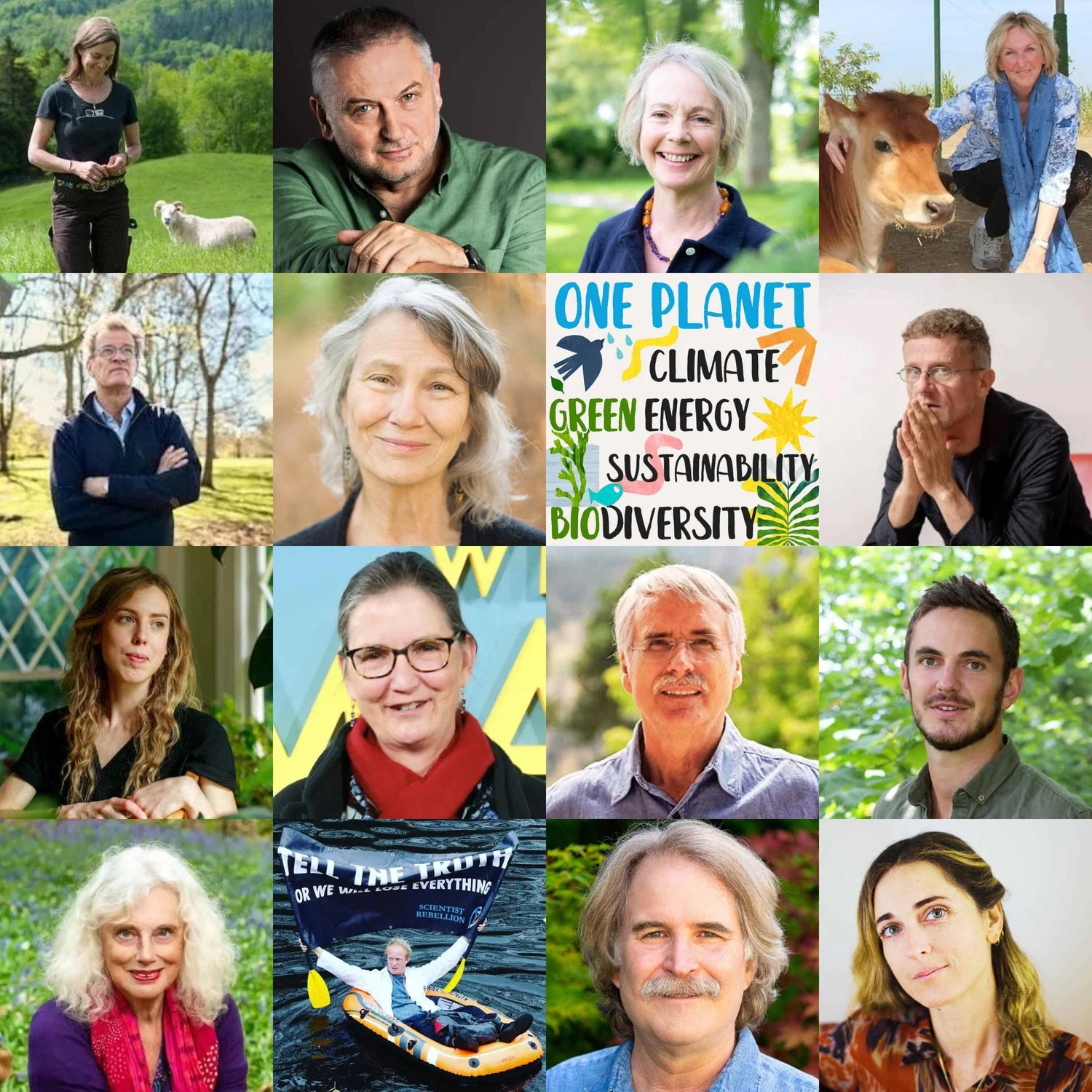
"We need to learn from the animals how to live more gently, consume less and look out for each other in this great circle of life.":
Our shared moment in time reminds us that we are one part of a vast ecosystem. Today, we explore how humanity can live in harmony with the Earth by paying attention to the land and lives of animals around us. We listen to those who translate the voices of the living world: authors Yann Martel, Georgi Gospodinov, Chiara Barzini, Erica Berry, Kristin Ohlson, Helen Whybrow, screenwriter-director Caroline Thompson and Existential Therapist...
Voices for the Earth: Writers, Composers & Biologists on the Landscapes of Childhood
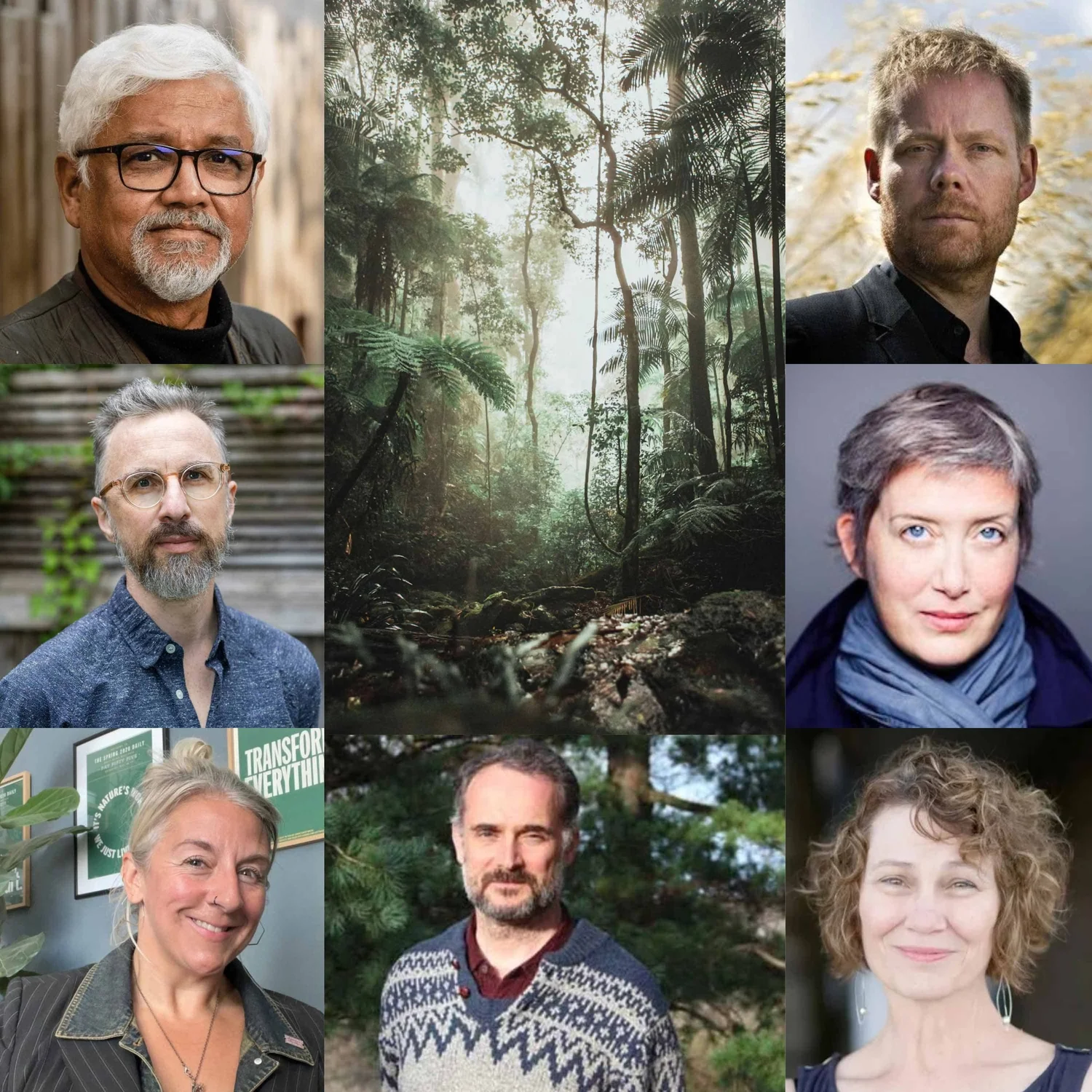
“ So that's what I would love for people to see and to realize is that nature is so incredibly beautiful and diverse. And so are we.”
Today, we’re looking at how the landscapes of our childhood shape the way we see the world. We explore memory, nature, and attunement to the present moment with composer Max Richter and writer and biologist David George Haskell. We’re joined by authors Kristin Ohlson and Dan Werb who revisit the freedom of youth. Novelist Amitav Ghosh shares his sensory his experiences of Calcutta. Writer and musician Eiren Caffall reflects on finding...
Beginning to Live: The Art of Existential Freedom w/ EMMY VAN DEURZEN
“As a psychotherapist, I've worked with thousands of people over my 53 years of practice, and I have had to learn to love each and every one of them. There is something about opening your heart and stopping judging and arguing, and listening again, inquiring until you find what is most lovable about another person, and that is a very difficult thing to do. We're all inclined to reject one another, even the people we love. It is very difficult to systematically seek to accord the other respect, your attention, your care, your capacity for appreciating and valuing what is go...
24th US Poet Laureate ADA LIMÓN on Memory, Wonder & Listening to the Living World - Highlights
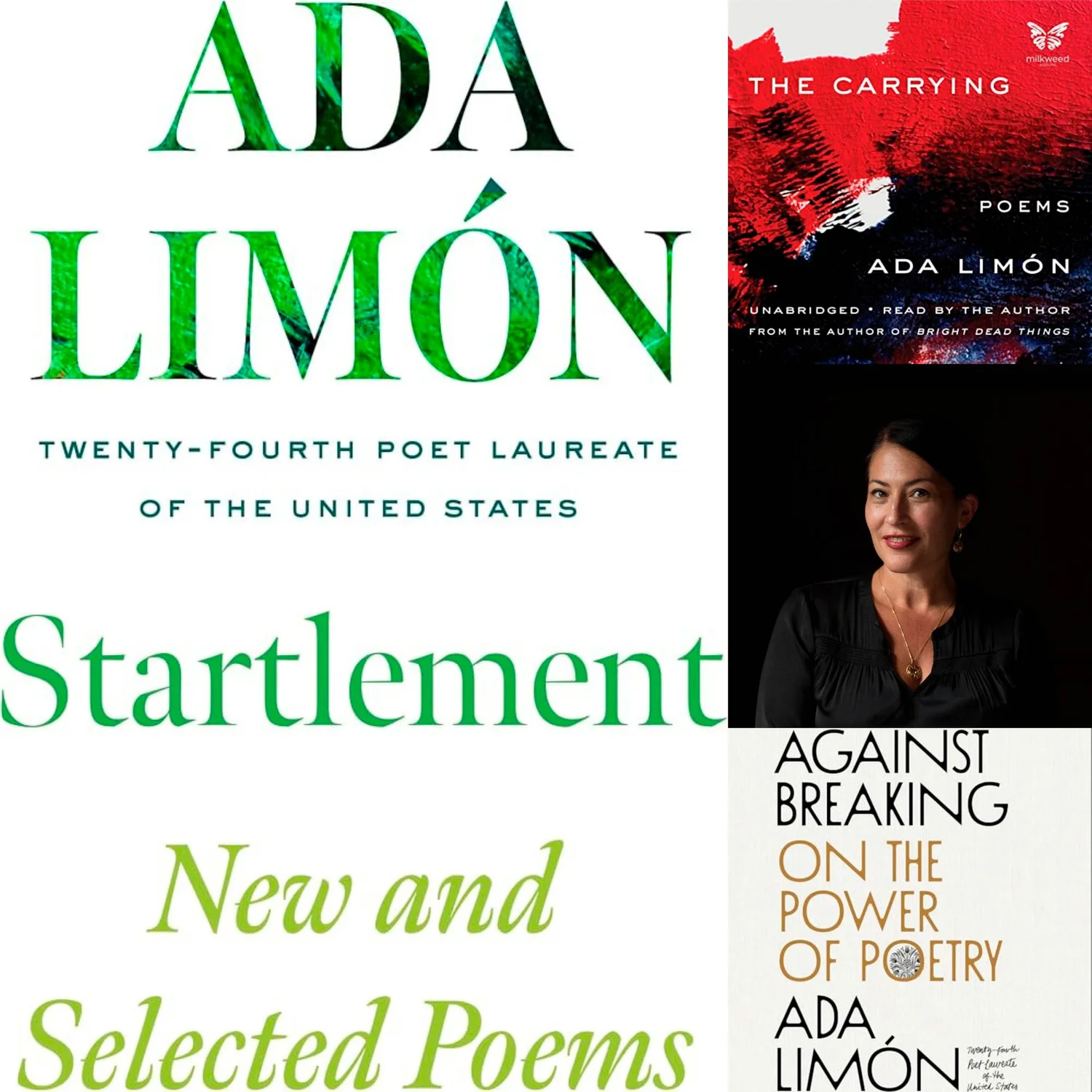
“It’s always very interesting that we have to make a case for art because we don’t have to make a case for fast food. Like, we don’t have to make a case for all of these sort of things in our lives that we do not need, and yet we have to make a case for beauty? We have to make a case for the soul? We have to make a case for humanity? We have to make a case for singing back the wounded world? That to me is fascinating”
My guest today is Ada Lim...
Loving-Kindness Meditation, Memory & Listening to the Music of the World
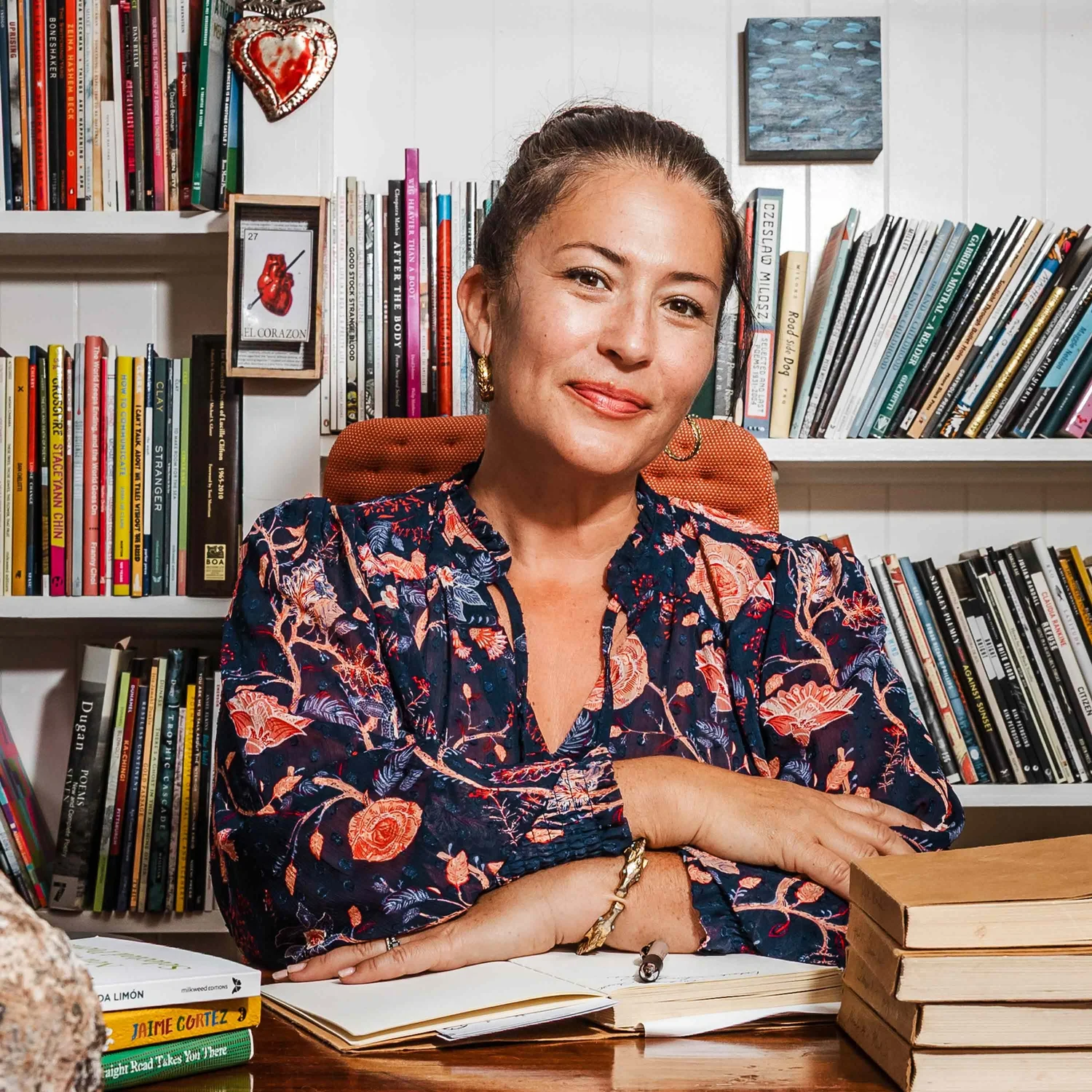
My guest today is Ada Limón. She served two historic terms as the 24th poet laureate in the United States. She has brought poetry to public parks across the US, and her words have traveled through deep space, engraved on NASA’s Europa Clipper spacecraft. In over 20 years of writing in celebrated collections like Bright Dead Things and The Carrying and her new book, Startlement: New and Selected Poems, Ada has brought a sincerity to American poetry rooted in connection to the natural world.
She’s written with inspiring honesty about the death of loved ones, tryin...
Existential Freedom, Spirituality & Finding Meaning in the Unknown with EMMY VAN DEURZEN - Highlights
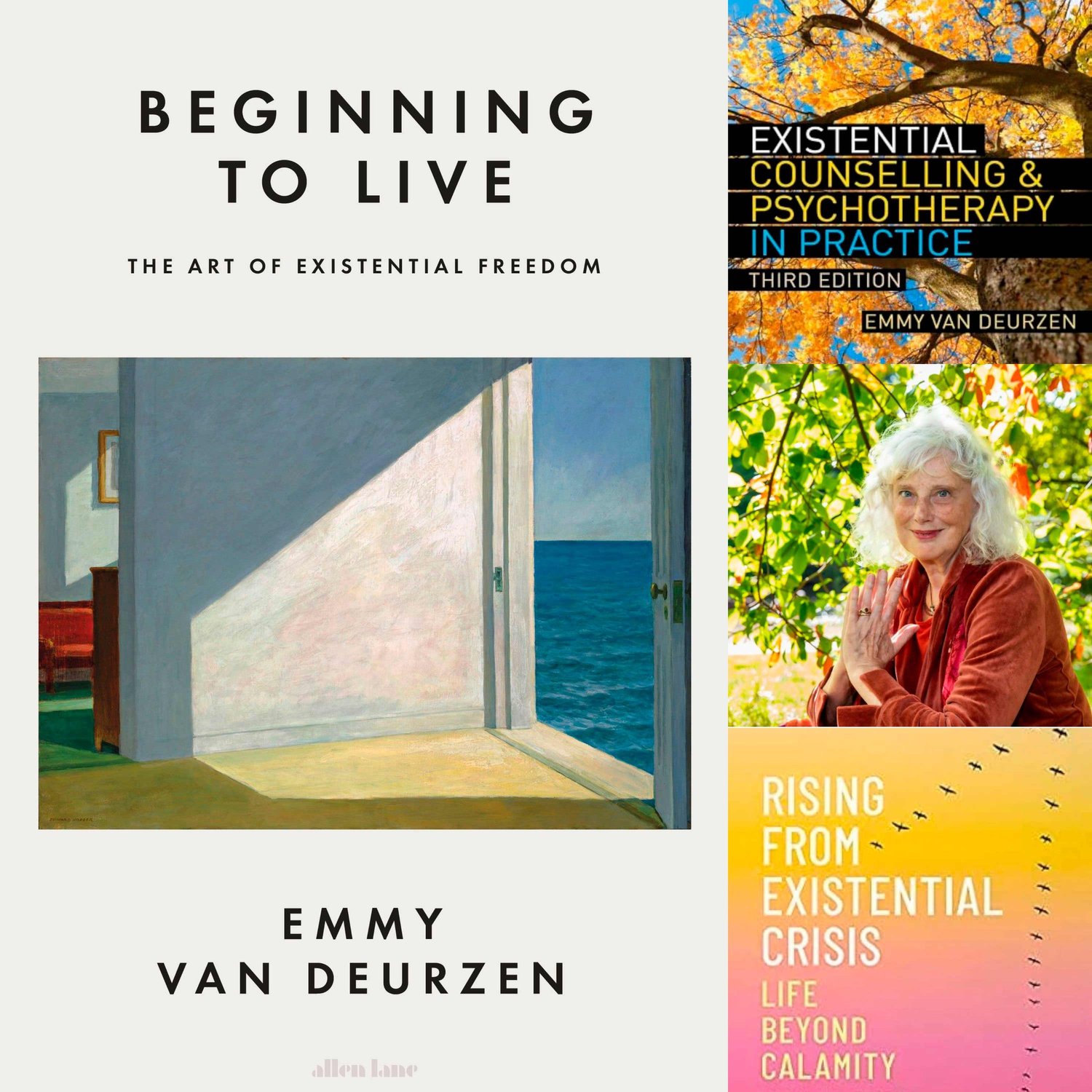
Emmy van Deurzen is a philosopher, a therapist and a pioneer who has spent five decades mapping the architecture of human existence. Born in the Netherlands and trained in the radical psychiatric wards of France, she came to London in 1977 to work alongside R.D. Laing, only to realize the anti-psychiatry movement had kind of lost its way. She decided to build something new. Today, she's the founder of the New School of Psychotherapy and Counselling and the leading voice of existential therapy in the United Kingdom and founded the Existential Movement.
Her work challenges the medical...
AQUA: A Story of Water & Lost Dreams w/ Author, Screenwriter CHIARA BARZINI
“I think first of all that in order to have disillusion, you need to have illusion and I really want to sort of take a stand in the name of being a delusional person, you know? I do think illusions are necessary to our sense of creativity, and we need to fall in love with extreme projects, and we need to have ideas that are sometimes unsustainable. We need to dream big in order to be creative and feel alive. The illusions that are a part of Aqua are larger illusions. They're illusions that have to do with my ad...
Etruscan Wisdom, Los Angeles, Lost Dreams & Illusions - A Road Trip w/ CHIARA BARZINI
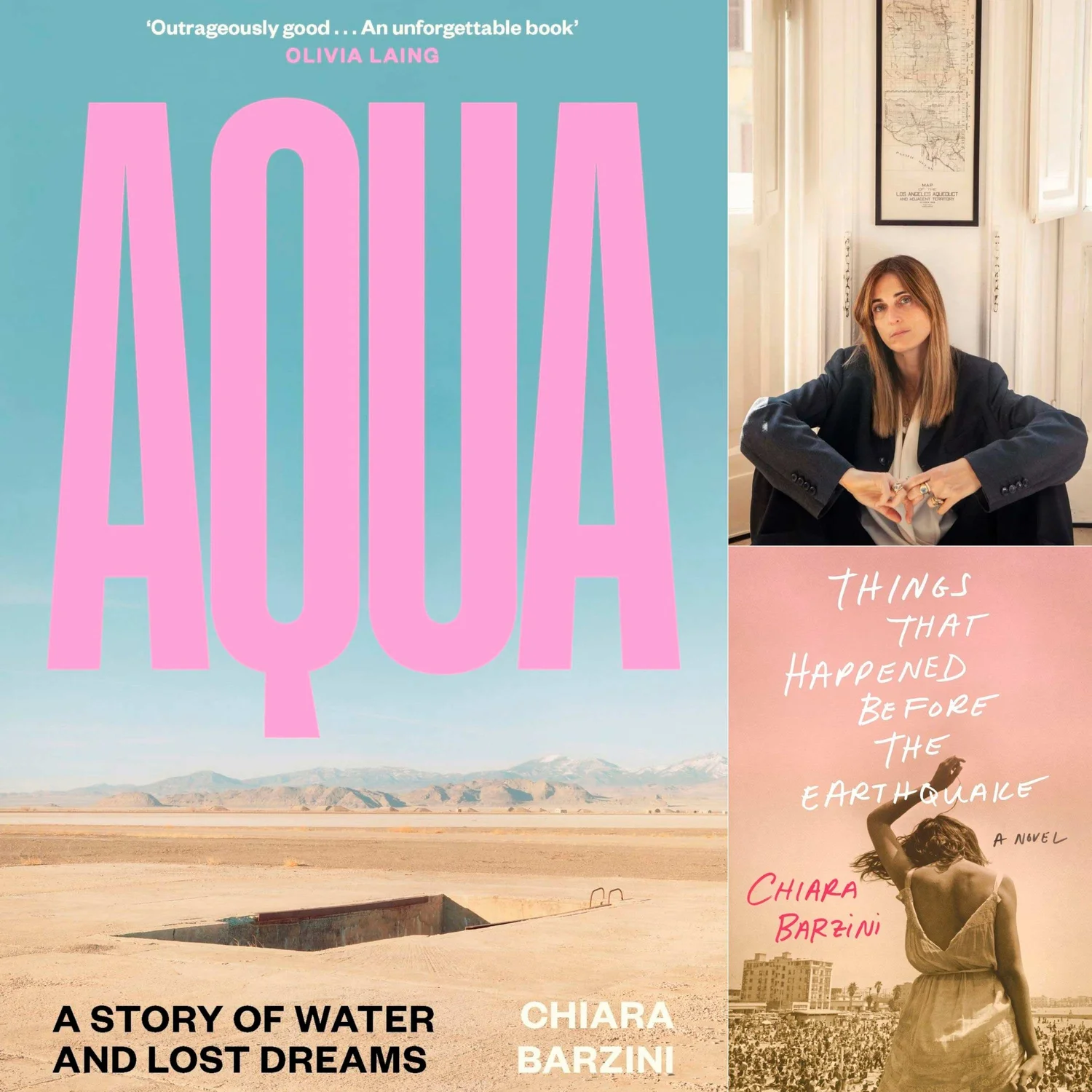
Chiara Barzini has spent her life navigating the literal and cultural fault lines between Italy and California. Today we will discuss her book, Aqua: A Story of Water and Lost Dreams, and her life as an artist living between two countries. In her acclaimed 2017 novel, Things That Happened Before the Earthquake, she wrote about arriving in the San Fernando Valley just weeks after a catastrophic natural disaster and the illusions of the '90s.
In Aqua, she examines nature, the California water crisis and the broken dreams of the Hollywood machine. We talk about family, film, art...
Finding the Sacred in the Everyday: Literature, Meditation & the Garden of Time w/ GEORGI GOSPODINOV & ANGELA RODEL
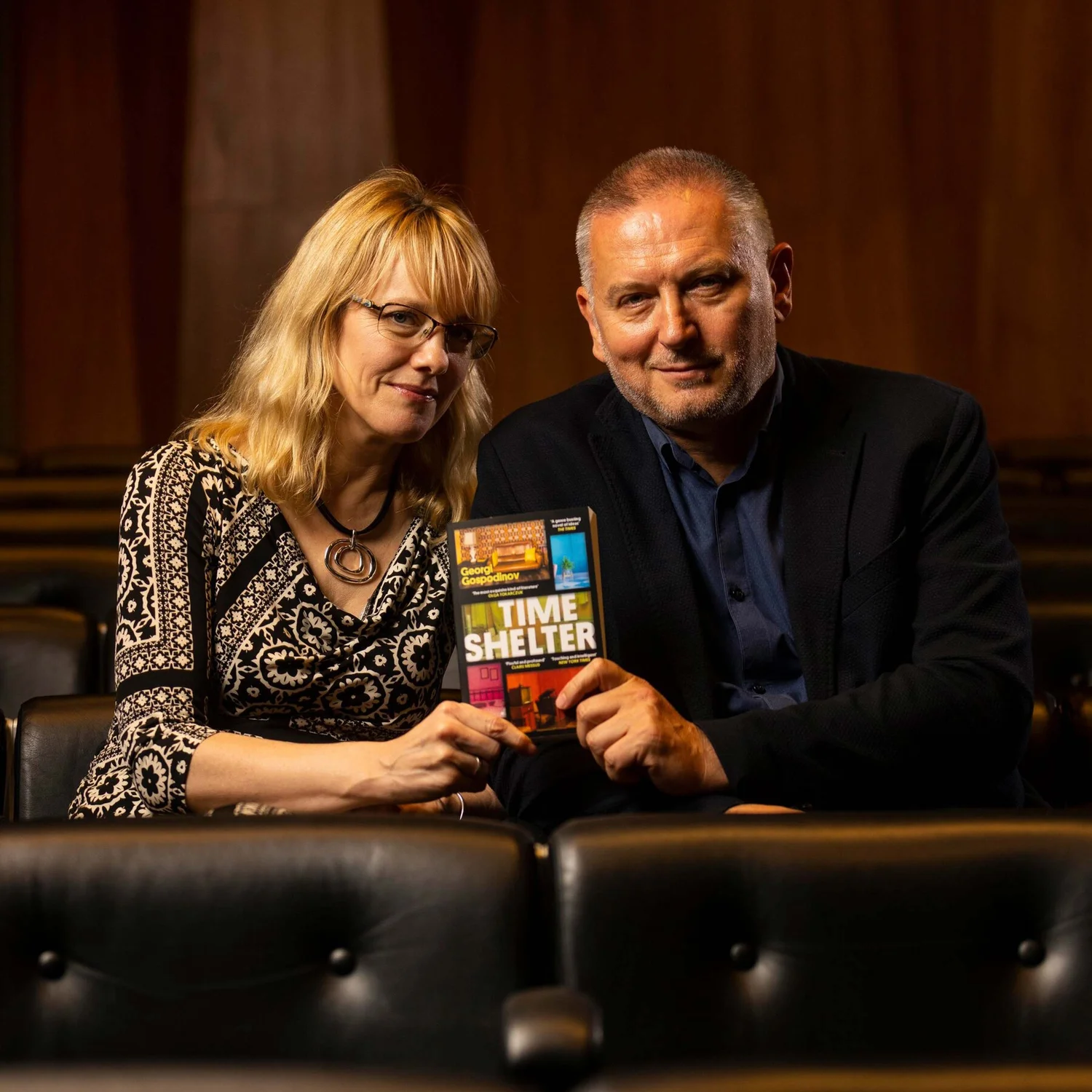
“We are in the middle of a labyrinth which suggests to us many fake corridors. What's the superpower of literature? Literature is like an antidote against propaganda. Propaganda explains the world easily in a two-dimensional way. Literature gives you a more complex explanation. Literature tells personal stories.”
Today, we have a conversation about time, memory, and the bittersweet geography of human sorrow. Georgi Gospodinovis widely considered one of the most daring voices in contemporary European literature. His acclaimed novel, The Physics of Sorrow, won the prestigious Jan Michalski Prize in 2016, blending ancient myth and quantum physics to chroni...
The Gift of Pause: Cultivating Mindfulness, Spirituality, Music & Shared Contemplation w/ LINCOLN CENTER’S SHANTA THAKE
"I really do believe that the arts are critical to how we move forward together, and live performance in particular, I think, is a way of us practicing how to move across our ideological boundaries and find one another and imagine these new worlds together and create together."
Shanta Thake is the Chief Artistic Officer at Lincoln Center for the Performing Arts—the nation's largest performing arts complex. Before stepping into this role, she spent nineteen years at The Public Theater, shaping the city's cultural landscape through Joe's Pub and expansive community initiatives. Today, she is tearing do...
Literature is an Antidote to Propaganda - Grief, Memory & Humanity w/ G. GOSPODINOV & A. RODEL - Highlights
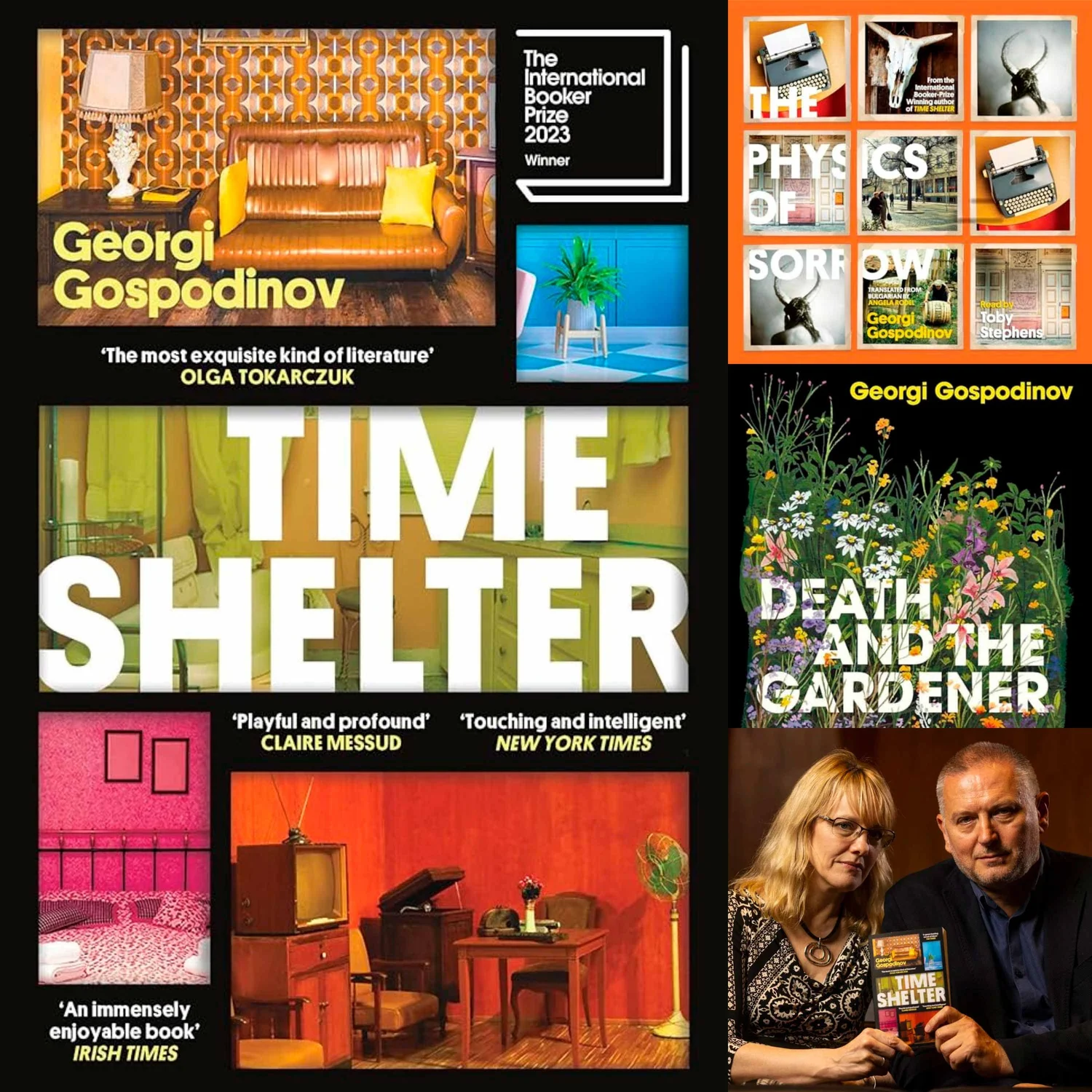
Today, we have a conversation about time, memory, and the bittersweet geography of human sorrow. Georgi Gospodinovis widely considered one of the most daring voices in contemporary European literature. His acclaimed novel, The Physics of Sorrow, won the prestigious Jan Michalski Prize in 2016, blending ancient myth and quantum physics to chronicle the delicate realities of post-socialist Eastern Europe. Joining him is Angela Rodel, a brilliant linguist, musician, and translator whose profound artistic empathy carries the flowing cadences of the Bulgarian language into vivid English. Together, this extraordinary creative duo made history by winning the 2023 International Booker Prizefor Time Shelter—th...
Our Wild Familiars - DR. DAN WERB on Animals that Live Among Us & Urban Wildlife Conservation - Highlights
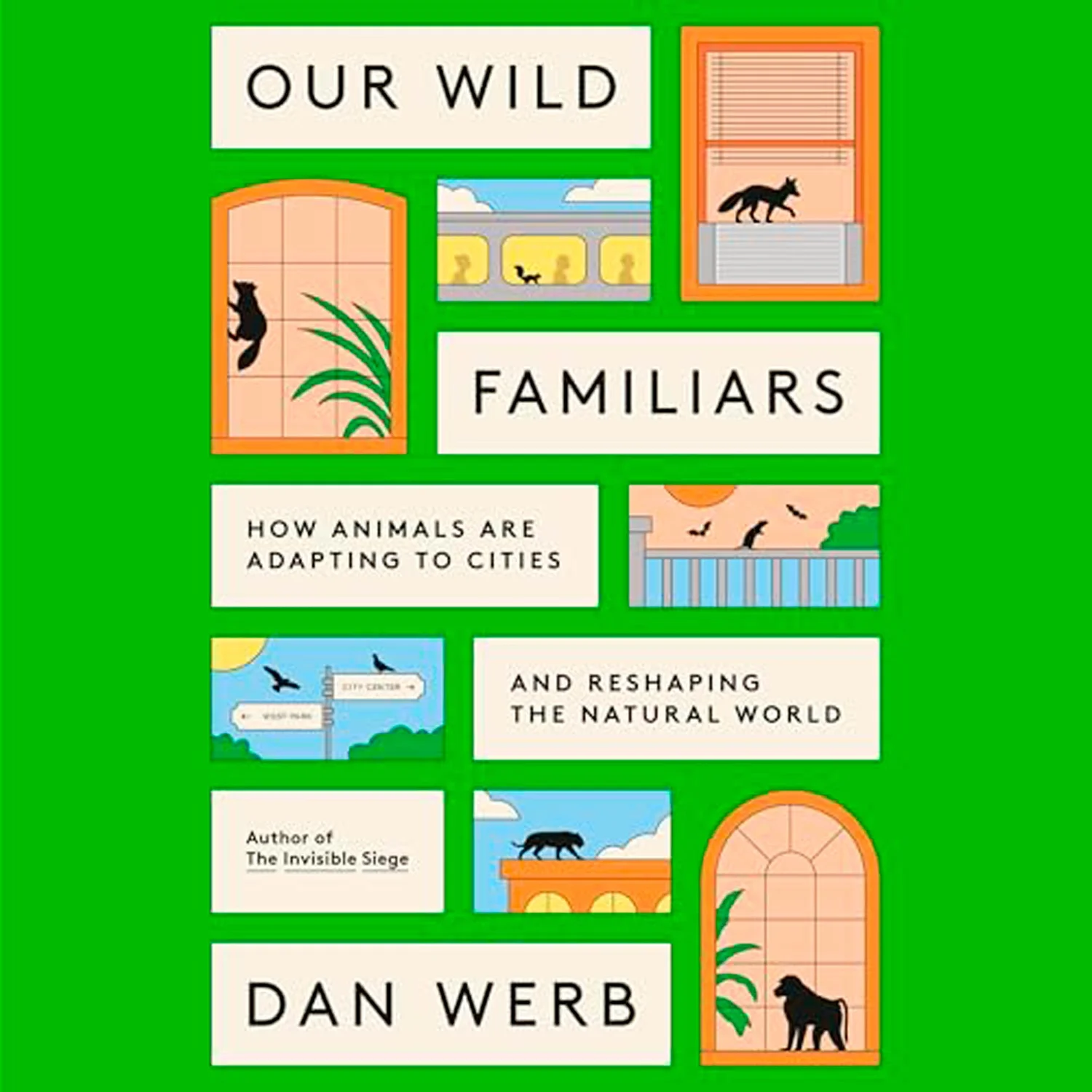
If you live in a city, you’ve probably had that moment in the middle of the night. You hear a scratching in the walls, or you catch the glowing eyes of a raccoon peering out from a dumpster, and for a second, the concrete world feels a lot less 'controlled' than we like to pretend. We’ve been taught to think of cities as 'biological deserts'—places where nature goes to die. But my guest today, Dan Werb, says that’s a myth we tell ourselves to feel safe. Dan is an award-winning epidemiologist and a musician, and in his n...
The Architecture of Wellbeing: How do buildings shape the way we think, learn & remember? SALWA & SELMA MIKOU - Highlights
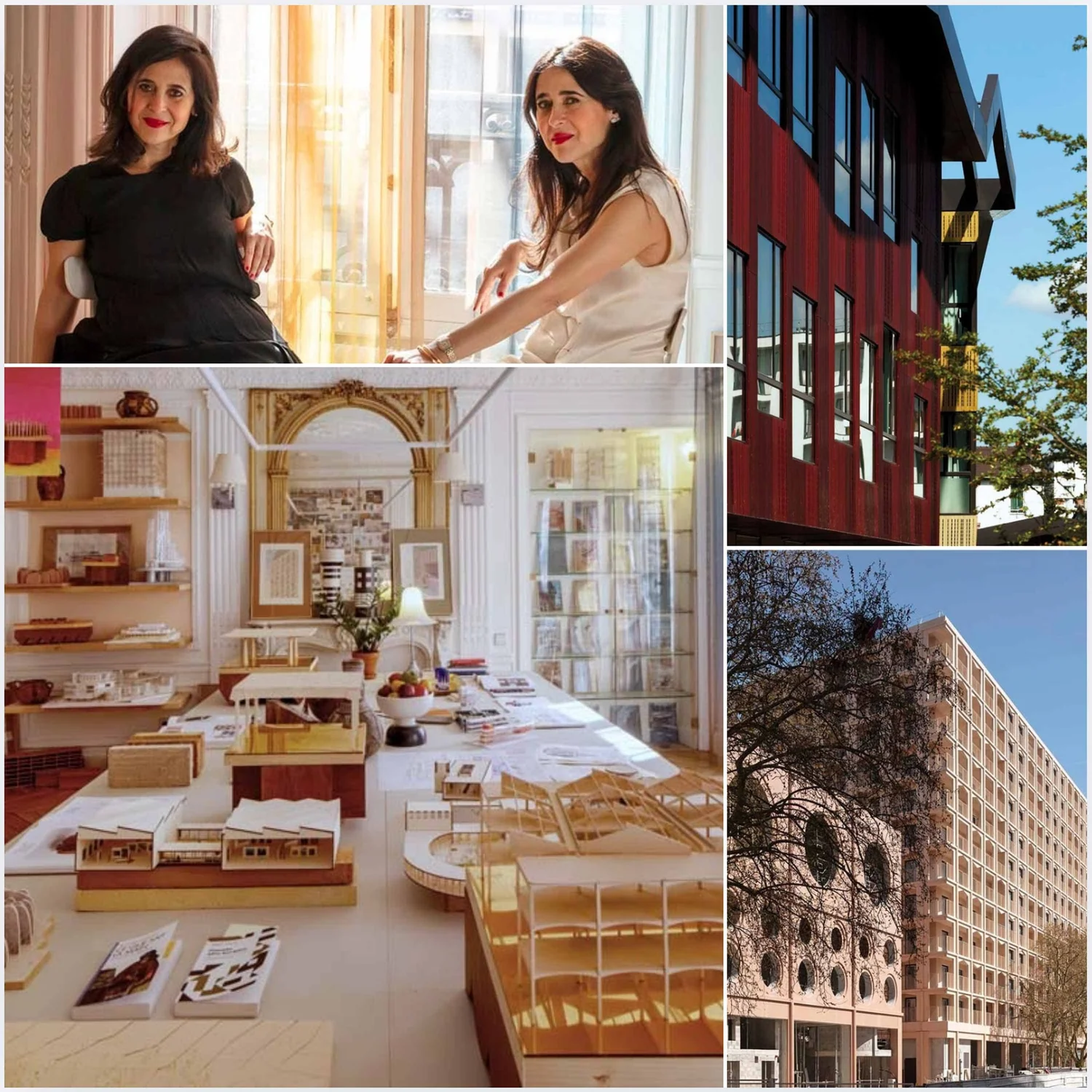
Salwa and Selma Mikou are the founders of Paris-based Mikou Architecture. Born in Fez, Morocco and educated in Paris, they have spent the last two decades reimagining the relationship between the built environment and the cultural landscape.
After honing their craft under two of the world’s most iconic architects, Jean Nouvel and Renzo Piano, they founded their own studio. For them, architecture is a living interaction with landscape and what they call the Atlas of Resonance, interpreting the hidden layers of a territory, geology, memory, and craft. It is a philosophy that rejects the generic, seeking in...
Listening to the Living World: Biologist DAVID GEORGE HASKELL on Flowers, Forests & Songs of Nature - Highlights
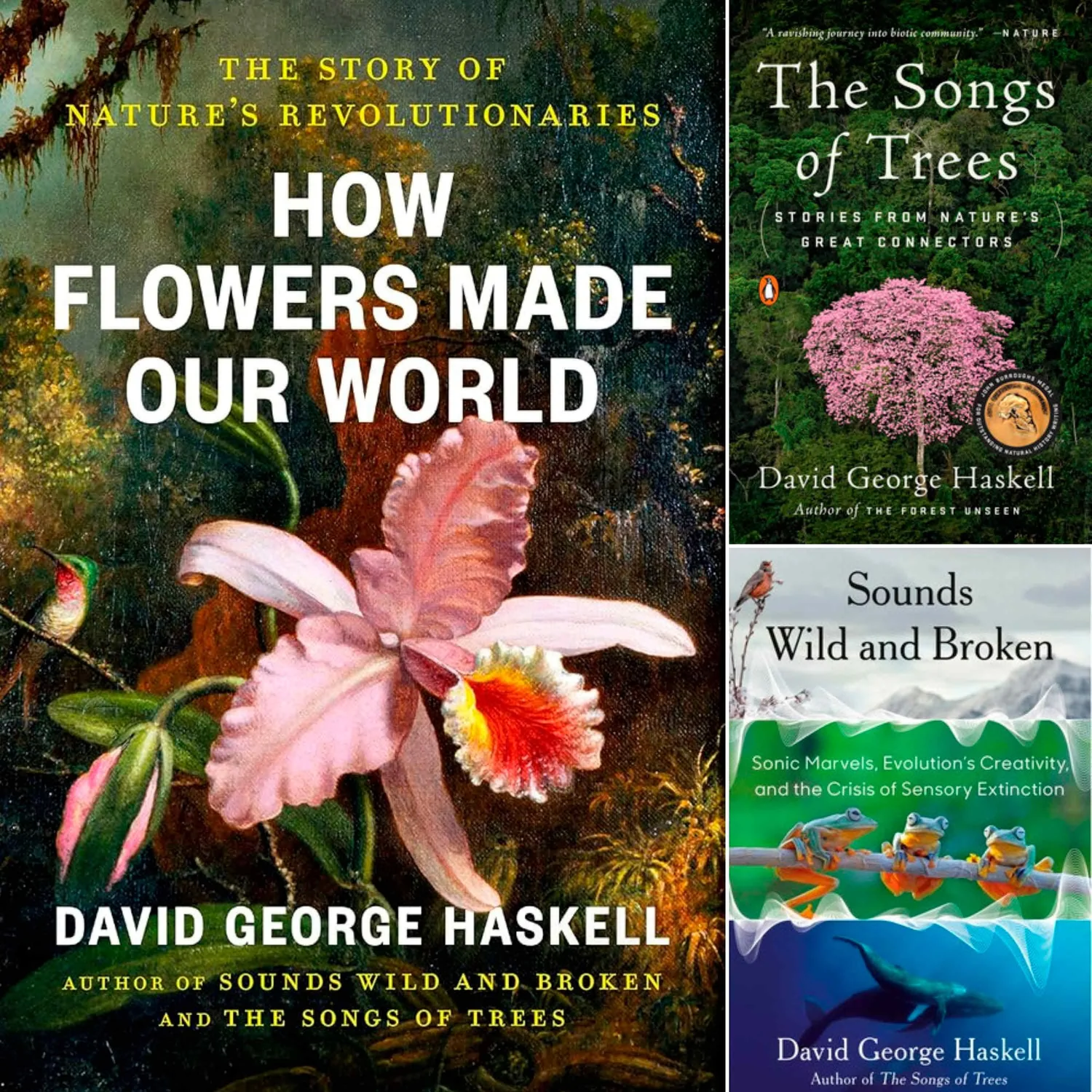
Step into the deep time of the forest floor, where a single fallen leaf contains the history of the world, and invisible fungal networks hum with ancient conversations. Biologist and acclaimed author David George Haskell reveals a staggering truth: we are completely dependent on the botanical world, and our belief in strict human individuality is a biological illusion.
Haskell has spent much of his life training himself to see the universal within the infinitesimally small. He's famously sat for a year in a single square meter of Tennessee's forest, a mandala experience that revealed the deep history...
How Flowers Made Our World: DAVID GEORGE HASKELL on Deep Time, Plant Intelligence & Listening to the Living World
What if the defining revolution of Earth's history wasn't led by animals or humans, but by flowers? Are we truly individuals, or are our bodies and minds just walking ecosystems?
Our guest today is David George Haskell, a biologist who has spent much of his life training himself to see the universal within the infinitesimally small. He's famously sat for a year in a single square meter of Tennessee's forest, a mandala experience that revealed the deep history of the world through a single fallen leaf. He's a two-time finalist for the Pulitzer Prize for his books Th...
SIRI HUSTVEDT on Love, Grief & Her Late Husband PAUL AUSTER - Highlights
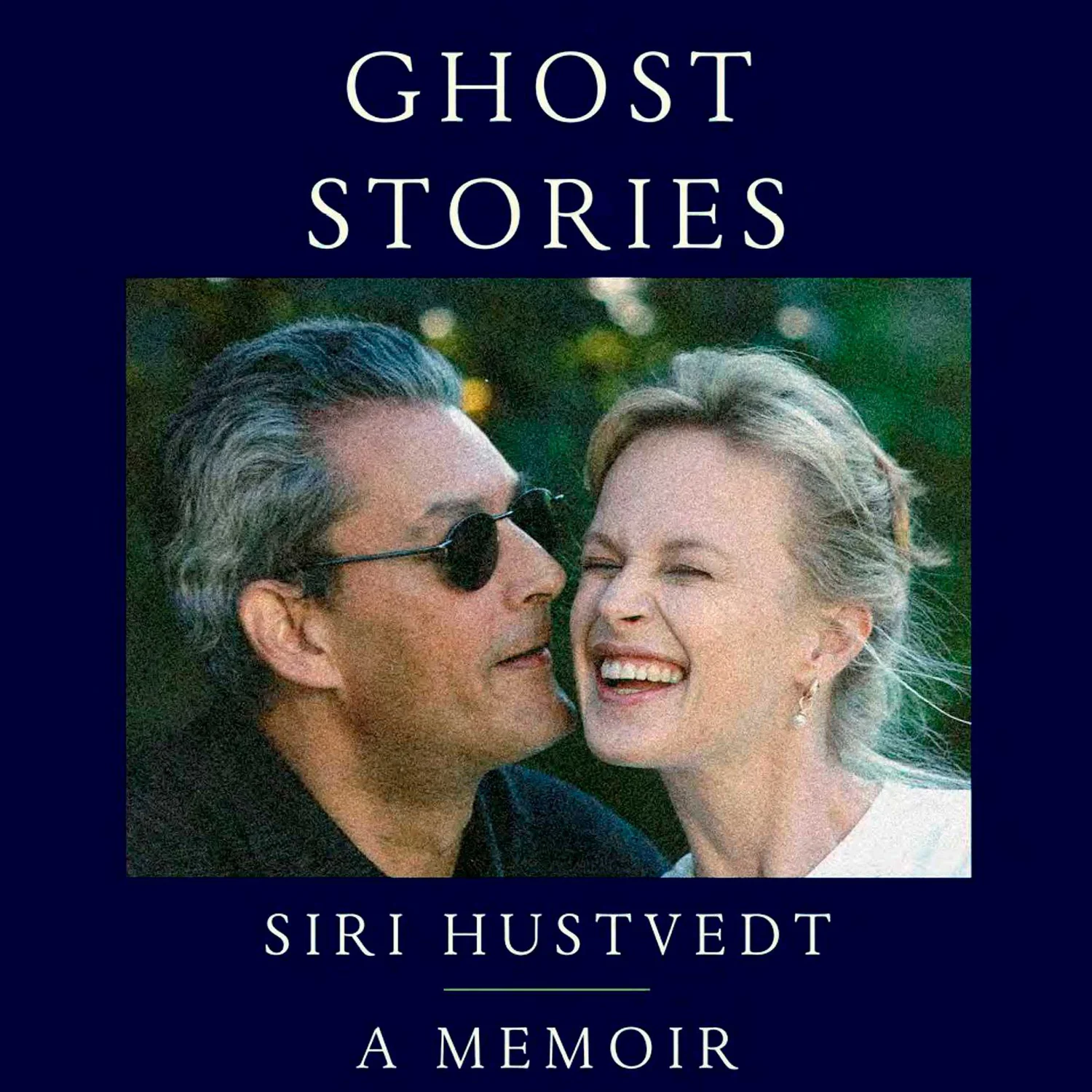
“Grief is a particular kind of unrequited love. It wasn't unrequited in the past. Usually, we think of unrequited love as you never got to do it, you never had it for yourself. But, in fact, there can be requited love, which is then unrequited love in the paroxysms of grief.”
Today, we are honored to welcome a writer whose work has long explored the intimate landscapes of the mind, memory and the heart. Siri Hustvedt’s writing moves between the personal and the philosophical, the literary and the deeply human. Her work bridges collections of essays, non-fi...
Ghost Stories: A Memoir of Love & Grief with SIRI HUSTVEDT
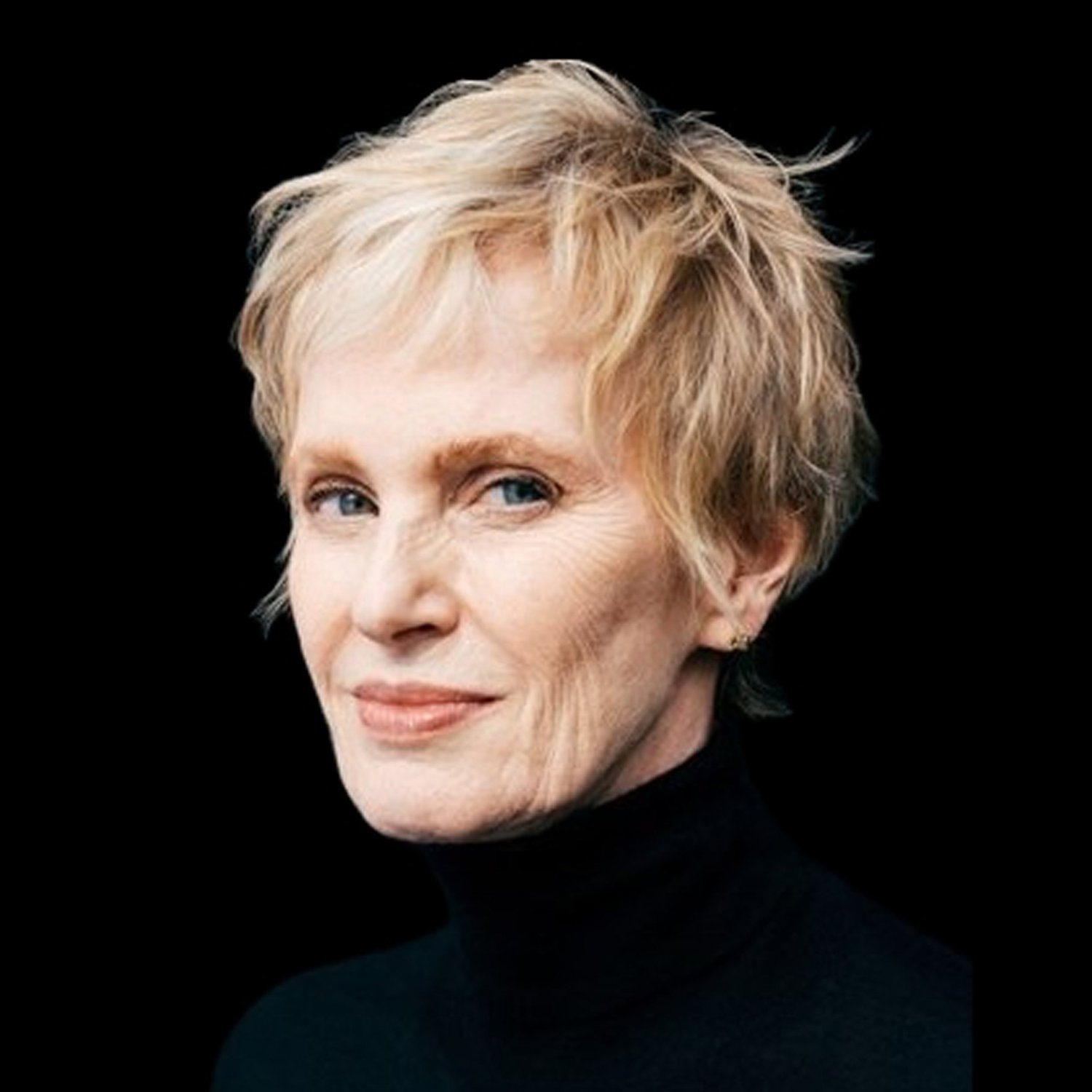
“Grief happens because you don't stop loving the person who died. The person doesn't exist in your reality anymore. The everyday is not colored and shaped by this other human being, but you don't stop loving the person. So grief is a particular kind of unrequited love. And probably without that dynamic relationship with this person, I would be someone else. And he would've been someone else. I mean, Paul died before me. But we were, I think, hugely important to the drama of becoming in our own lives.”
Today, we are honored to welcome a writer whos...
ART CURE: How the Arts Can Transform Our Health with DAISY FANCOURT

"Within society, we seem to have separated the arts out, so they're not so much a part of our daily lives. Often there's something that we feel we should do as a kind of leisure activity or hobby if we have enough time or if we have enough money to engage in them. And this is so fundamentally different to how humans engaged with the arts. When we look back thousands of years, it just was part of the everyday, and I feel like that's a major loss within contemporary societies."
Daisy Fancourt is a Professor of...
Who Are We? What Makes Us Care? Jim Shepard, Neil Patrick Harris, John Patrick Shanley & Artists Share Their Stories

Can curiosity and empathy be taught? How can we expand our sense of solidarity through stories? In this episode, we explore the internal dialogues of artists, actors and writers to ask what it means to step into someone else's shoes.
(0:00) Novelist Jim Shepard discusses Literature as a Tool for Emotional Education and Exploring History
(2:05) Tony Award-winning Actor Neil Patrick Harris on Being Moved by Theater and its Ability to Bridge Worlds
(3:55) Novelist Katie Kitamura on How a Book is Made in Collaboration with the Reader
(5:00) Screenwriter, Playwright Laura Eason on Inhabiting t...
The Wisdom of Nature: Artists & Scientists on The Beauty & Fragility of Our Planet

In this special edition, we hear from our guests from across the arts and sciences. From composers and poets to forest ecologists and climate envoys, they tell the story of our planet. Moving beyond the data of destruction, we explore the intelligence of nature, the ethics of what we eat, and the empathy required to save our future.
MAX RICHTER, Composer, Sleep, The Blue Notebooks
CARL SAFINA, Author, Becoming Wild
ADA LIMÓN, 24th US Poet Laureate
CYNTHIA DANIELS, Grammy Award-winning Sound Eng.
SUZANNE SIMARD, Finding the Mother Tree
The Musician Who Sings to Animals - PLUMES on Trust & Cross-Species Communication - Highlights

On Music, Trust and Connection with the Animal World
“Mostly I’ll play in a minor key, something sad, which I think can work for an animal because they can sense the sadness, and they try to reassure me and comfort me. I chose love songs because I'm convinced they are very intuitive and they can sense what I am trying to say to them, and profess my love in a way. I think there's always a way to connect, and if you're being cautious and don't threaten the animals, something beautiful can happen.”
Musician Plumes...
Animals & The Healing Power of Music with Musician PLUMES

How is music a pathway to understanding animals?
Musician Plumes takes his guitar to the world's most unlikely concert halls—farms, sanctuaries, and wild habitats. A passionate advocate for veganism and animal welfare, we discuss what animals hear, how trust forms, and what music can reveal when it enters a world not made for humans alone.
“Mostly I’ll play in a minor key, something sad, which I think can work for an animal because they can sense the sadness, and they try to reassure me and comfort me. I chose love songs because I'm convince...
Speaking Out of Place - DAVID PALUMBO-LIU on Reclaiming Our Political Voices - Highlights

On the urgent need to reclaim our political voices, the forces that silence dissent, and how art and poetry are crucial tools for survival
Our guest today is an activist scholar who believes the classroom is inseparable from the public square. David Palumbo-Liu is the Louise Hewlett Nixon Professor of Comparative Literature at Stanford University and a founding faculty member of Stanford’s Program in Comparative Studies in Race and Ethnicity. But his work has long reached beyond the academy. Through his book, Speaking Out of Place: Getting Our Political Voices Back, and his podcast of the sa...
Reclaiming the American Dream with DAVID PALUMBO-LIU – Stanford Professor, Author & Host, Speaking Out of Place

On the urgent need to reclaim our political voices, the forces that silence dissent, and how art and poetry are crucial tools for survival
“There is a dispute about what the American Dream is or how it would play out in different circumstances. The American dream has essentially been narrowed into a white Christian nationalist notion of things so that everything that falls outside what they imagine that to be is not only undesirable, but should be the subject of extermination, deportation, and detention. I am heartened by the fact that more of our 'better angels' are em...
Writers on Memory, Language & the Power of the Unconscious

How can we use negative spaces in fiction to engage with readers’ imaginations? How are memory and trauma passed onto us through language? How do we become more than the stories we tell ourselves?
KATIE KITAMURA (Author, Audition, Intimacies) emphasizes that a book is created in collaboration with the reader, using negative spaces in the narrative structure to allow for reader interpretation, paralleling the space between audience and actor in performance.
PAUL LYNCH (Booker Prize-winning Novelist, Prophet Song) discusses the richness and slipperiness of the English language in Ireland, shaped by the overlay of English on...
On Oneness and Self-Healing w/ LD Chen - Head Coach, Oneness Institute, US and EU - Highlights

Today’s episode is about something most of us long for: feeling healthy in our bodies and calm in our minds – not by pushing harder, but by letting the body restore itself. Our guest today is LD Chen, an entrepreneur-turned-author who discovered the ancient wisdom that healing doesn’t come from trying harder, but from restoring the body’s natural intelligence. LD believes everyone has the right to live peacefully and free from constant stress and anxiety – to move through life with genuine joy, peace, and appreciation. After quickly building a 1,000-person company and then facing burnout and serious health iss...
Oneness: A Way of Living with LD Chen - Author and Head Coach, Oneness Institute, US and EU

“Oneness is actually not about learning in the usual way. Most teachings tell you how to learn – how to let go, how to calm down, how to manage anger. Oneness does the opposite: we stand, we train the body to correct the heart, and then we live from that heart.”
Today’s episode is about something most of us long for: feeling healthy in our bodies and calm in our minds – not by pushing harder, but by letting the body restore itself. Our guest today is LD Chen, an entrepreneur-turned-author who discovered the ancient wisdom that healing doesn’t co...
In the Presence of the DALAI LAMA - Doc. Director of WISDOM OF HAPPINESS Discusses her Path to Joy - Highlights

“I can change my mind. I can reduce anger, hatred. Nothing to do with religion. All religions carry the message of love, loving kindness, and tolerance. With different views, there is a possibility to synthesize new ideas. If majority of the world leaders become female, world become safer. I feel that. Compassion is the key factor. Non-violence, compassion and self-confidence, these are key factors for happy individual, happy community, peaceful world. This century should be century of compassion, century of peace. No more bloodshed. We should develop a big “we,” rather than “we” or “they.” With these wings, you can fly.” -DAL...
WISDOM OF HAPPINESS - Heart-to-Heart w/ DALAI LAMA - Conversation w/ Director Barbara Miller

“ Everybody wants happiness, joyfulness, peaceful world. Our 21st century will not be easy century. Fear, anger, hatred. In our mind we created distinctions. Different nationality, different color, different religion. Strong concept of “we” and “they”. Brothers and sisters of this small planet, we are same human beings. Meanwhile, global warming is a serious problem. Destruction of this planet is actually destruction of yourself. Our common responsibility should be work together, to save our world. We all have this marvelous human brain. The problem is, when negative emotions develop, our whole mind is taken over. So, we must deal with emotions.
Listening to the Planet - Writers' Perspectives on Nature, Place & Interconnectedness

How do our environments shape who we are and how we care for the world and each other? There are many solutions to climate change, inequality, and poverty around the world. How can we learn from them and transform our society?
Eiren Caffall (All the Water in the World) discusses the importance of embracing complexity and emotional flexibility in facing ecological grief.
Irvin Weathersby Jr. (In Open Contempt) discusses the transformative power of meditation and nature, drawing inspiration from Emerson and Thoreau.
Jay Parini (Biographies of Steinbeck, Frost, Faulkner…) on the significance of pl...
Art Without Borders - RAJIV MENON'S Vision for South Asian Art

“I want people to understand South Asian art as broader than a single gallery or a single artist, but as a larger cultural movement. I want people to encounter art in all parts of their lives, and I’m constantly thinking about new ways to achieve that. I was very aware, as someone launching a South Asia-focused gallery, that this was the cultural dynamic that undergirded the way that most people in the West were thinking about art from the region. Taking that on directly and inviting artists to work with that theme was a really important ground for sett...
What Do We Do with the One Life We’re Given? - Scientists, Writers, Philosophers & Changemakers Share their Stories
In this time of rapid technological change, how do we hold onto our humanity? How do stories, traditions, and community help us find meaning in loss and face an uncertain future? How can science, art, and spirituality open new pathways to understanding ourselves and the human experience?
PAUL SHRIVASTAVA (Co-President of The Club of Rome) discusses the need for a holistic, eco-civilizational future, emphasizing that science, technology, and economics are important but not the whole picture. He urges us to design our own lives and livelihoods to meet diverse ecological futures, and later highlights the importance of...
From 'Bee: Wild' to the 'Kiss the Ground' Regenerative Agriculture Documentary Trilogy w/ REBECCA TICKELL - Highlights

"For the last two decades, I've made over 20 films about the environment, starting with oil and carbon emissions. Those films, Kiss the Ground and now Common Ground, talk about how we can stabilize the climate, reverse climate change, grow nutrient-dense food, and help farmers make a profit through biodiversity and regenerative practices and principles.
There's incredible intelligence in nature; it knows how to be resilient. We thought we could do it better, and in trying to mechanize and industrialize the entire system, we created a linear system that doesn’t make sense. We’re growing animals to produce...
All About Bees, Soil & Regeneration with Documentary Filmmaker REBECCA TICKELL

“I didn't really appreciate bees until I became a farmer, and then I started to understand how essential bees are for our food. They pollinate 70% of our food, and that feeds 90% of the world. There's a whole world of insects that creates the color in our food; it's what creates the flavor in our food. It's part of our biodiversity, and it's essential for human life on Earth to protect and understand how to protect these bees and pollinators.
If you look at the COP, the Conference of the Parties, they haven't even been talking about soil re...
AI, UFOs, Perception & Reality with Artist, Geographer, Author TREVOR PAGLEN - Highlights
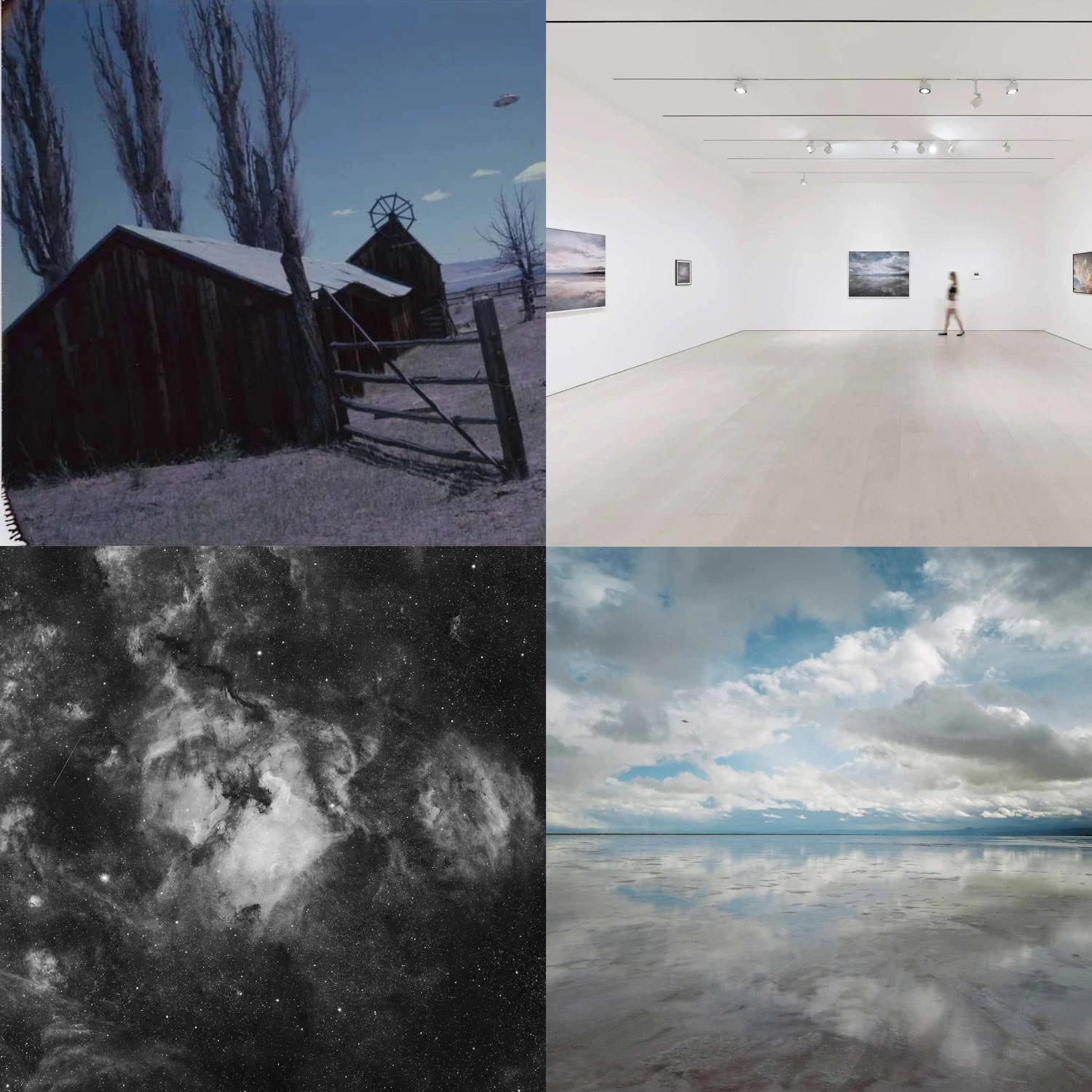
“If we look at the entire history of the human experience, if you saw some text or you heard some spoken language, you could 100 percent reliably infer that there was a human who created that. Our experience of having that text or that image generated for us is very akin to the experience of a magic trick, and we sort of pre-subconsciously want to attribute some kind of intelligence to what's going on on the other side.
At the core of the work is that sense of curiosity, that sense of joy, that sense of beauty, and th...
How AI is Shaping Perception, How Deception is Sculpting Our Reality with Artist TREVOR PAGLEN

“There's a word for this brain rot, right? I think that's very real. There are studies coming out now that are showing that the more and more of our cognitive labor we offload to AI systems, the less creative we become, the less critical we become, and the less of our human faculties for reason we use. There's something sad about that, but there’s also something dangerous about it because that leaves us very open to being manipulated. The surveillance capitalism kind of economy of extracting data from every possible moment of everyday life in order to extract valu...
Ten Cases of Hope for Our Future w/ MONICA FERIA-TINTA - Highlights

“I guess the book was about giving hope because I realized how much we could do together. I believe that ordinary people are the ones bringing changes here. I believe that the communities gathering together – for example, I am seeing that in this country around the protection of rivers – are the ones that will mark the change. It's not going to come from above; it's going to come from below, up. We all have a role. Working for the protection of what we love the most will make you happy. So get into a positive mindset. Learn all you can. B...
The Theory of Water with LEANNE BETASAMOSAKE SIMPSON

“So I think that part of colonialism for Indigenous peoples has been this idea that Indigenous peoples aren't thinking peoples and that we don't have thought on a kind of systemic level. One of the things that I was interested in doing is intervening in that because I think Indigenous people have a lot of beautiful, very intellectual, theoretical contributions to make to the world. A lot of our theory is encoded in story, but a lot of our theory is also encoded in land-based practice. You can't learn about it from reading books or from going to lectures. Yo...
JAY PARINI - Author of Jesus: The Human Face of God, & The Damascus Road

“Poetry is the prince of the literary arts to me. It's at the very top because it's language refined to its apex of memorability. I am interested in poetry as memorability and poetry as something you live by. These are the words you live by. These words stay in your brain and guide your life. That's what I am interested in. My memoir slash autofiction is called Borges and Me, and as you know, it's a story of my time in 1970 when my best friend Billy was drafted for the Vietnam War, and so was I. He went to Vi...
A Barrister for the Earth: Ten Cases of Hope for Our Future w/ MONICA FERIA-TINTA

“I like young people to know that they're extremely powerful. So I'm one person, but I think I always had this positive idea about my role. You cannot let anyone tell you what limitations are there, so you shouldn't feel limited by anyone telling you this is as far as you can go, or this is what you can do. I think only you know about that, and I think you start step by step. When I did the first case, I learned some things. Then was the next case. When the time to learn comes, learn with all yo...
