Climate One

We’re living through a climate emergency; addressing this crisis begins by talking about it. Co-Hosts Greg Dalton, Ariana Brocious and Kousha Navidar bring you empowering conversations that connect all aspects of the challenge — the scary and the exciting, the individual and the systemic. Join us.Subscribe to Climate One on Patreon for access to ad-free episodes.
Does it Pay To Go Green? Let Us Count The Ways

As the cost of living climbs, can clean energy technology help ease the burden? That seems to be the case in West Texas, where revenue from a wind farm is helping fund a rural county’s senior center, Meals on Wheels, and even a Valentine’s Day dance!
But the benefits of clean energy aren’t always spread evenly, largely because of how policies shape incentives and cost distribution. In some cases, utility scale solar lowers electricity prices while rooftop solar can shift costs onto households without it. Meanwhile, new balcony solar panels are helping renters cut their b...
CEO of Nation’s Biggest Utility Talks Affordability, Fires, Outages, and Public Outrage

After PG&E pled guilty to 84 counts of involuntary manslaughter in the 2018 Camp Fire, Patti Poppe was brought on as the utility’s new CEO. Her stated mission: to fix it.
Now, rising electricity prices, repeated power outages, and the growing impact of climate change have put PG&E in the crosshairs of the public and legislators. Again.
This summer, California lawmakers rejected a bill that would have capped the utility’s liability if their equipment sparks another fire. In response. PG&E announced it would defer roughly $2 billion in capital investments planned for 2027 as it wo...
Kate Marvel on Fear, Wonder, and Leaving NASA

Climate scientist Kate Marvel made headlines this year when she publicly resigned from NASA, drawing coverage from Bloomberg to The New York Times. Marvel says her resignation wasn’t newsworthy on its own. What made it notable is that she was one of more than 10,000 Ph.D. scientists to leave the federal government during President Trump’s second term, part of what she calls a “mass nerd exodus.”
She is now senior climate scientist at Project Drawdown and author of “Human Nature: Nine Ways to Feel About Our Changing Planet.” Marvel argues that scientists need to stop hiding their...
We Got $9.99 Problems, and Energy is One
The war in Iran and closure of the Strait of Hormuz created a global energy supply crisis. And while gasoline prices didn’t reach the extreme highs some predicted a few months ago, the global markets are still in flux.
“What has been disrupted most is the confidence in the old energy system where you could reliably and affordably dig up a source of energy thousands of kilometers away from where you expected to ignite it and expect that process to be smooth,” says Gerald Butts, chairman of political risk consultancy the Eurasia Group.
What has the...
How Can Cities Be Green and Affordable? Live from NY Climate Week
New York set some of the country's most ambitious climate goals, from slashing emissions to bracing for rising seas. But living in the city is freaking expensive. So what does it take for NYC to be affordable and climate-conscious?
In collaboration with Grist, we put that question to the city’s chief climate officer, a Grist reporter, and a grassroots leader during New York Climate Week. Listen as we discuss the places where climate, decarbonization, and affordability collide – and the ways people are working to make life better for New Yorkers while keeping both costs and carbon down...
Sen. Sheldon Whitehouse Won't Stop Talking About Climate

How should Democrats campaign on climate? Some are quietly shelving climate-specific language ahead of the midterms in favor of terms like “energy crisis” and “affordability.” But Sen. Sheldon Whitehouse of Rhode Island has been talking about climate change on the Senate floor for more than a decade, and he has no plans to stop now.
“The most important thing that can be accomplished on the climate front is to end the pollute-for-free business model of the fossil fuel industry. It is morally wrong, it is economically wrong, it is an environmental sin, and there's literally no merit to it, which...
As the Midterms Approach, What’s Electrifying the Electorate?

As the 2026 midterms approach, voters are contending with concerns around affordability, the AI boom, and climate disruption in their daily lives. AI data centers have become the wild card in energy politics, driving up energy demand and utility bills, and playing a large role in a battleground House primary. A year after the One Big Beautiful Bill Act rolled back key parts of the Inflation Reduction Act, many climate advocates assumed the energy transition was stalled out, but new research suggests otherwise.
How will climate and energy shape the ballot box this year? And what's it like t...
New Nuclear, Old Challenges. What Now?

Growing power demands – coupled with increasingly frequent climate-driven disasters – have led even staunch environmentalists like NRDC head Manish Bapna to rethink their past opposition to nuclear power.
Three Mile Island didn't kill anyone or cause major public harm, but it fundamentally changed U.S. nuclear policy for 40 years. Why did an accident with a relatively contained consequence have such a chilling effect – and what’s really different today? With dozens of new, purportedly safer designs at various stages of development and construction around the world, is it time for all of us to give nuclear energy a fresh loo...
The Little EVs That Could Displace Big Oil

While most Americans think of a truck or a sedan when they hear “electric vehicle,” a quiet revolution is happening in other countries on two and three wheels. In China and India, the electric vehicles doing the most to push out oil aren't cars – they're scooters, mopeds, motorcycles and the three-wheeled rickshaws and tuk-tuks that move people and packages through some of the world's busiest cities.
According to BloombergNEF’s EV Outlook report, 46% of global sales of two- and three-wheelers were electric last year. Collectively, they’re displacing more oil than cars. Electric delivery vehicles are also starting t...
ENCORE: Protest and Beyond: Annie Leonard On What You Can Do

Protest is the ultimate in equal-opportunity political action. As Annie Leonard, former executive director of Greenpeace USA says, “Making change is like laying a stone path across the garden. Peaceful protest may be every 4th or 8th or 200th stone; it helps us get where we want to go but also we need a lot of other stones too.” Leonard explores the history of protests in her book “Protest: Respect It. Defend It. Use It.”
And while protest is the loudest and most visible tool, it’s only one of many ways to take action. Through community building, c...
It’s Too Damn Hot… So What Can We Do?

We all complain about the heat, yet it's a climate threat we routinely underestimate. In the U.S., extreme heat kills more people each year than floods, fires and hurricanes combined. About 16,000 excess deaths were recorded during Europe's June heatwave – a striking and tragic number. What does extreme heat do to our bodies, our wallets and our cities, and what can we actually do about it?
From creating insurance programs that pay out before the disaster to protecting workers who labor in the heat, many people are working on solutions. Cities are finding ways to prepare for tem...
ENCORE: Benji Backer and Katharine Hayhoe on Finding Common Ground
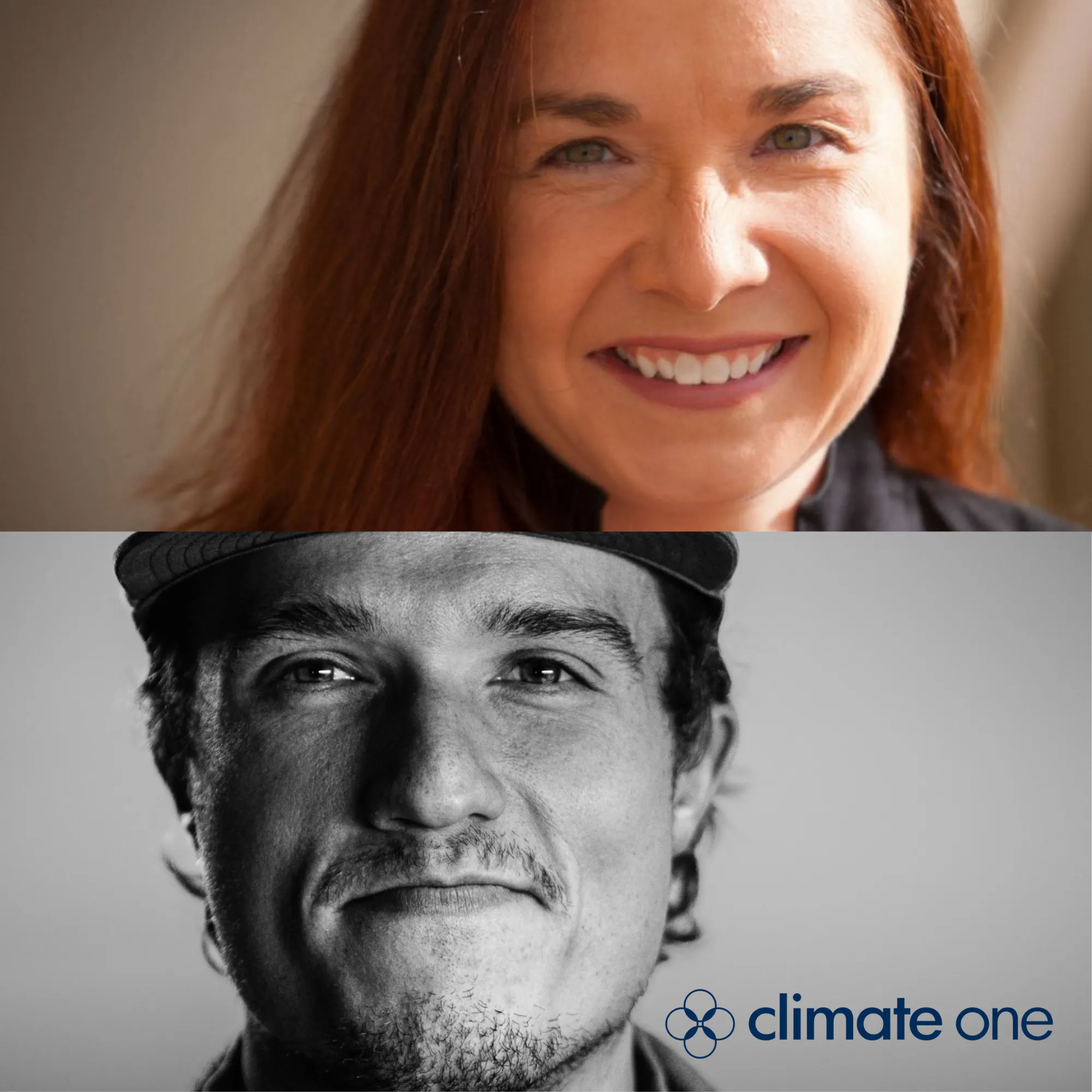
At a time when nearly everything feels polarized, Benji Backer is trying to carve out a different path, one where caring about the natural world isn’t a partisan issue. As the founder of Nature Is Nonpartisan, he’s bringing together voices from across the political spectrum who might disagree on climate policy, but still share a desire to preserve public lands, wildlife, and the outdoors.
Similarly, climate scientist Katharine Hayhoe firmly believes conversation – even with people you disagree with – can be one of the most powerful tools for climate action. And it starts from a place of respec...
A Cancer Diagnosis Reframed How Ben Santer Thinks About Climate Science

Atmospheric scientist Ben Santer pioneered the research that connects human activity to specific climate events. Now, pursuing treatment for a rare type of lymphoma, he sees his own diagnosis and his climate science as the same kind of detective work: using essential and basic science to conduct tests, read complex markers, and rule out every other cause. Even while ill, he's calling out efforts by the Trump administration to reject, defund and ignore the science we all depend on.
“If we leave basic science behind because the administration doesn't like the results of the science, then as Ame...
Hollywood, Baseball, Cage Fights, and… Climate

When it comes to climate, we have the facts, but we aren’t moving fast enough. So we need to get climate education and solutions into the places where people already spend their time. Pop culture offers endless opportunities to influence audiences – your favorite movie or TV character can feel like a friend whose views on climate might affect your own.
In this episode, we connect moments like this to the broader media environment shaping how we understand the world. Can you be masculine and care about the climate? Can watching a character take charge of the futu...
How Do I Say This…

It’s becoming increasingly clear that how we talk about climate change matters as much as the science or policy itself. The words we use carry weight, and climate communicator Susan Joy Hassol says specific word choices, like “heat-trapping pollution” rather than “greenhouse gases,” can cut through polarization and help messages resonate with a wider range of people. Equally important is listening to what people and communities need to better handle the impacts from climate disruption.
And different audiences need different approaches. For example: adults can help children process climate fear and grief without overwhelming them by offering a...
Cleaner Steel is Coming. Will the Communities That Built the Industry Benefit?

Making steel accounts for around 11% of global greenhouse gas emissions. But the industry could reduce that number by removing coal from the steel-making process entirely. Three of the U.S.’s last seven coal-based steel mills are situated along Lake Michigan. Together, these facilities produce nearly half of the steel made in the U.S., supplying skyscraper beams, car doors, and appliances across the country. And right now, in Northwest Indiana, a once-in-a-generation decision is on the table.
Nippon Steel, the owners of the Gary Works steel mill, can either extend the life of their aging blast fur...
Beyond the Rights of Nature: Land that Owns Itself

The “rights of nature” is the idea that if a corporation can have legal standing as a person, why can’t a river or a mountain? Thomas Linzey, one of the early architects of a legal framework for granting rights to nature, now believes that structure doesn’t go far enough: Even when ecosystems are granted rights, the land is still owned by someone or some entity, even if that is a land trust or conservancy.
Through Linzey’s work in collaboration with the Sacred Contract Coalition, a 30-acre mountain in Colorado was recognized in June 2025 as the first mo...
ENCORE Dead Heat: The Danger Of Home Power Shutoffs

Summer is here, temperatures are rising — and so are electric bills. That also means many people are facing a severely overlooked issue: power shutoffs. According to a report by the U.S. Energy Information Administration, in 2024 utility companies disconnected U.S. households from electricity more than 13.4 million times due to a customer’s inability to pay. When that happens, people can’t turn on their lights, keep food refrigerated, or cool down the home. And regulations preventing shutoffs during extreme heat events are woefully inadequate.
But when utilities help pay the upfront costs of efficiency upgrades, the custome...
When Your New Neighbor Is… a Data Center

Across the country, developers are racing to build huge new buildings to house computers to fuel the AI boom, creating an explosive demand for new energy. While some hyperscalers seek renewable energy, others are turning to fossil fuels. But concerns around high electric bills, air and noise pollution and water depletion have generated widespread community pushback against these giant facilities, and it seems opposing data centers is a bipartisan issue. Many cities and states are working to rapidly update zoning and other local regulations to respond to the dual pressures of developer interest and constituent backlash.
Since...
Making Solar Great Again

More and more, conservative voices are making the case that the U.S. can’t achieve energy dominance without solar power. Even the leading industry trade group is changing its strategy.
Earlier this year, Politico reported that the American Clean Power Association launched the “American Energy First” campaign to engage Kellyanne Conway and conservative influencers like Katie Miller “to amplify the benefits of solar energy” and “note the harm that could result from reckless trade policy.” Meanwhile, conservative groups at the state and federal level are advocating for building out solar power in service of private property rights, econom...
Medium Rare: What’s Next For Meat?

Industrial agriculture accounts for a significant share of global emissions, but meat alternatives face real hurdles in becoming a mainstay of consumer diets. The hype around plant-based meat has cooled: hurt by price gaps, ultra-processed rhetoric, and culture-war politics around masculinity and food identity. Yet feeding a growing planet will require eating less beef, wasting less food, and producing more food with less land. Cultivated meat – made from animal cells and grown in a lab – could offer a different path forward, especially in hybrid form combining plant and cultivated proteins. What might the future of meat look like?
Gues...
ENCORE: Cities Leading the Way

While the federal government has all but abandoned trying to address the climate crisis, cities around the world are stepping up. C40 is an international network of 97 cities representing 920 million people and 23% of the world’s economy. Seventy-three percent of these cities have already peaked their emissions. Here in the US, Climate Mayors is a bipartisan network of nearly 350 U.S. mayors, representing 48 states and over 70 million Americans. How are cities innovating on reducing emissions, adapting to increasing climate risks, and — perhaps most importantly — sharing their knowledge?
Guests:
Eric Garcetti, C40 Ambassador for Global Climate Diploma...
Healing Ourselves and the Planet with Katharine Wilkinson and Uncle Pappy

When real and internal maps come up short, and the path ahead is uncertain, how do we find our way? In her new book “Climate Wayfinding," Dr. Katharine Wilkinson (co-founder of the All We Can Save Project) offers a compassionate and empowering guide for navigating through ache to action, doubt to possibility. Whether we’re steeped in climate or newly curious, we can look inward with care, outward with curiosity, and forward with courage to shape our unique contributions to healing the planet we call home.
In Florida, social media star Uncle Pappy blends his unique mix of ph...
Fighting Fire with Fiery Passion: 2026 Goldman Prize Winners

The Goldman Environmental Prize is known as the Nobel for grassroots environmental champions, for good reason. Award-winners are earth defenders, often bucking entrenched systems and powerful interests in order to protect and restore the natural environments we all depend on. This week we feature conversations with two of the 2026 Goldman Prize winners:
Iroro Tanshi, a tropical conservationist and bat ecologist who rediscovered a species that hadn't been seen in half a century. When climate-amplified wildfire threatened to destroy her new find, she built a community movement to virtually eliminate the wildfire risk.
Sarah Finch, a ti...
Protest and Beyond: Annie Leonard On What You Can Do

Protest is the ultimate in equal-opportunity political action. As Annie Leonard, former executive director of Greenpeace USA says, "Making change is like laying a stone path across the garden. Peaceful protest may be every 4th or 8th or 200th stone; it helps us get where we want to go but also we need a lot of other stones too.” Leonard explores the history of protests in her new book “Protest: Respect It. Defend It. Use It.”
And while protest is the loudest and most visible tool, it’s only one of many ways to take action. Through community...
Mother is Mothering

Sometimes mothers are biological; other times, they’re chosen. But often, they're the fiercest people you can have on your side.
In this special Mother’s Day episode, we’ll hear stories about the vital role mothers and caregivers play in confronting the climate crisis. From a midwife providing essential healthcare in one of the most climate-stressed regions on the planet to an organizer who leads a network of over a million caregivers demanding cleaner air and a healthier future — these women show what it means to protect people in a changing world.
Guests...
John Doerr and Ryan Panchadsaram: Speed & Scale’s Reality Check

In 2021, legendary investor John Doerr outlined his plan to solve climate change in his bestseller “Speed & Scale.” The plan outlines 10 objectives, each with their own set of key results, to cut emissions to net zero. And in true John Doerr style, the results are to be measurable and trackable.
Now, five years later, Doerr and co-author Ryan Panchadsaram unveil their 2026 update, revealing where the world is winning, where it's falling behind, and what it will take to close the gap.
Guests:
John Doerr, Venture capitalist; Chair, Kleiner Perkins
Ryan Pa...
Nancy Pelosi’s Seat is Open. Meet Two Candidates Vying to Succeed Her.

This year, one of the most powerful politicians in the country decided not to seek re-election. For nearly 38 years, Nancy Pelosi has represented the people of San Francisco in the US House of Representatives. As one of the most powerful House Speakers in U.S. history, Pelosi played a central role in advancing landmark environmental and climate laws, and bringing energy and climate policy to the forefront of the national agenda.
Her retirement opens up a space for a new person to take up her mantle as an advocate for climate and energy policies, as well as th...
ENCORE: Taylor Brorby and Suzie Hicks Tell The Stories We Don’t Always Hear

Finding one's voice in climate action can come in many forms. Author and activist Taylor Brorby grew up in Center, North Dakota as a fourth-generation member of a fossil-fuel family. He struggled to find his place as a young gay kid who loved art, music, nature and poetry. Over time, he turned that tension into writing that challenges the fossil fuel industry, makes space for others stuck in a broken system, and inspires a more just future.
Suzie Hicks felt the weight of climate concerns but after college, didn’t know what to do with those feelings. Aft...
Two Stories That Prove Change Is Possible

We are living through a time where big positive change seems unachievable, but there are two instances from the recent past that prove change is possible. For over a century, Indigenous people along the Klamath River fought to protect their way of life, and the salmon they depend on. Their persistence helped remove four dams and restore hundreds of miles of river. In Los Angeles, decades of science, activism, and policy turned toxic smog into cleaner air.
Both stories reveal that progress takes persistence, coalition-building, and time. But when communities push and institutions respond, meaningful change is p...
Press Start: Video Games and the Climate Crisis

About half the global population spends some amount of their leisure time playing games, whether it’s a board game after dinner with friends or online role-playing experience through an alternate world. While many video and board games have long incorporated elements we can imagine in a climate-altered future — such as resource scarcity, conflict, and survival — some in the industry are working to shift players’ mindsets towards protecting nature and reducing their own climate impacts in the process.
Daybreak is a cooperative board game about stopping climate change. Cities: Skylines lets players do urban planning with climate-friendly policies...
Benji Backer: Nature is Nonpartisan

In a moment when nearly everything feels polarized, Benji Backer is trying to carve out a different path, one where caring about the natural world isn’t a partisan issue. As the founder of Nature Is Nonpartisan, he’s bringing together voices from across the political spectrum who might disagree on climate policy, but still share a desire to preserve public lands, wildlife, and the outdoors.
Can conservation still serve as common ground in a divided country? What does it take to make environmentalism resonate beyond traditional audiences? Is a bipartisan movement possible in today’s political climate...
What the Rise of the Electrostate Means for Petrostates… And Everyone Else

For decades we’ve seen nations exercise geopolitical dominance tied to their production and control of fossil fuels – especially oil. But that leverage may be changing. Last year, China installed nearly twenty times the amount of wind and solar as the United States.
In this essay in The National Interest, the authors lay out a global political and economic realignment already underway. Petrostates, like those in OPEC, are increasingly at odds with electrostates like China and many in the EU. This isn’t to say that electrostates are not without resource challenges – they’re seriously dependent on mineral su...
Hawaii Gov. Josh Green Says Aloha to Decarbonization

More than perhaps any other state, Hawaii has major incentives to decarbonize. Imported oil accounts for about 90% of Hawaii's total energy consumption, and electricity prices are more than three times the national average. So it may not be surprising that Hawaii was the first state in the nation to set a 100% renewable energy goal by 2045. But that’s a hard goal to achieve, especially given the realities of geographic isolation and the costs of importing fuel and materials.
Hawaii Governor Josh Green is bullish about the island state’s decarbonization and wants all options on the table. That...
Trash Talk: Fresh Takes on Food Waste

Food loss and waste account for up to 10% of global greenhouse gas emissions and cost $1 trillion annually, according to the United Nations. About a third of all food grown on the planet gets wasted, rather than eaten. In developing countries, waste usually occurs between the field and the store, due to poor infrastructure, lack of refrigeration, and broken supply chains. In rich countries, most waste happens after food reaches the store, where consumers don’t buy imperfect food – or buy too much and toss what they don’t get around to consuming. How much pollution, deforestation and starvation could be red...
Cities Leading the Way

While the federal government has all but abandoned trying to address the climate crisis, cities around the world are stepping up. C40 is an international network of 97 cities representing 920 million people and 23% of the world’s economy. Almost three out of four of these cities have already peaked their emissions. Here in the U.S., Climate Mayors is a bipartisan network of nearly 350 municipal leaders, representing 48 states and more than 70 million Americans. How are cities innovating on reducing emissions, adapting to increasing climate risks, and — perhaps most importantly — sharing their knowledge?
Episode Guests:
Eric...
Electric Bills are Bonkers. What Can We Do About It?
Rising electricity rates across the country are adding pressure to families and businesses already dealing with inflation in other aspects of their lives. Most Americans get their power from a utility that needs to turn a profit for its investors. And people are fed up with the status quo.
“Across the country, the utilities have just gotten greedy and are asking for more than they need,” says Arizona Attorney General Kris Mayes.
Some communities are considering cutting out the profit motive for utilities, taking on the complicated and expensive prospect of moving to public power. But s...
EPA Cancels Billions in Grants. Recipients Won’t Back Down

Congress approved billions for federal grants and programs through the EPA during the Biden administration. Those dollars were meant to help disadvantaged communities and fund community resilience projects, public health programs, and initiatives to reduce energy insecurity on tribal lands. But just as these projects were getting underway, the Trump administration froze many of the grants, put others under indefinite review, or canceled them outright.
Now, some of the groups that were awarded federal funds have banded together and are suing the federal government for the money they’re owed. Others are seeking alternative funding streams. In thi...
Figure It Out…Or Else: Feds to Colorado River States

It’s been an unusually warm and dry winter across the west, and that’s bad news for the seven states and 40 million people that rely on water from the Colorado River. The water flowing into the river from snowmelt and rain is dwindling, partly because of climate change. The basin's two major reservoirs are at historic lows, and without a sudden influx of snowstorms, streamflow forecasts for the coming year aren’t looking good. That adds stress to an already drought-stricken region where negotiations on how to share the river’s water in the future are tense and stalled...
Crude Behavior: Venezuela and the Global Politics of Oil

On January 3, U.S. forces captured Venezuela’s president, Nicolás Maduro, and his wife, and flew them to New York to stand trial for drug trafficking and narco-terrorisim. At the same time, President Trump has not been shy about stating his other motivation for intervening in the country: Back in December, he said, “We had a lot of oil there. As you know they threw our companies out, and we want it back." So what are the geopolitical ramifications of these actions? And in a world increasingly powered by renewable energy, could fossil-fueled conflicts become a thing of the pa...
