Silicon Valley Astronomy Lectures

Listen to exciting, non-technical talks on some of the most interesting developments in astronomy and space science. Founded in 1999, the Silicon Valley Astronomy Lectures are presented on six Wednesday evenings during each school year at Foothill College, in the heart of California's Silicon Valley. Speakers include a wide range of noted scientists, explaining astronomical developments in everyday language. The series is organized and moderated by Foothill's astronomy instructor emeritus Andrew Fraknoi and jointly sponsored by the Foothill College Physical Science, Math, and Engineering Division, the SETI Institute, the Astronomical Society of the Pacific, and the University of California Observatories (including...
Why Do We Exist: The Nine Realms of the Universe that Make You Possible

May 20, 2026
Dr, Hakeem Oluseyi (CEO, Astronomical Society of the Pacific)
n his new book, Why Do We Exist, Dr. Oluseyi suggests that the story of our existence can be told as a passage through nine interwoven realms—each revealing a new layer of cosmic information. In this public talk, he introduces each of the realms, but then focuses on cosmic connections to the Middle Realm, where we humans live, and to the Realm of Life, where organisms flourish across the vastness of space. He explores these realms with humor and honesty, weaving in stories from hi...
The NASA Psyche mission: First Journey to an Unknown World

Dr. Lindy Elkins-Tanton, Space Sciences Laboratory at the University of California, Berkeley,
Apr. 8, 2026.
The NASA Psyche mission is on its way to orbit a small but immensely ancient world in our asteroid belt: A metallic object, the first humans will ever have visited. When our solar system was in its infancy, thousands of planetesimals (tiny planet-like objects) formed in less than a million years. Many planetesimals later melted, allowing metal cores to form inside rocky mantles. One of these metal cores may be revealed in the asteroid (16) Psyche. Dr. Elkins-Tanton, the Mission Lead, takes us...
Pictures of Distant Worlds

A nontechnical talk by Dr. Bruce Macintosh (University of California Observatories)
Mar. 11, 2026
In the past three decades, more than 6000 planets have been discovered orbiting other stars. Advances in technology have allowed a handful of giant planets around other stars to be imaged directly. Dr. Macintosh tells us about the first-ever images of other solar systems — and the technology that has allowed us to discover them, such as the Gemini Planet Imager — as well as the future planet-hunting space telescopes. The ultimate goal is detection of a second ‘pale blue dot’ — an Earth twin where we could even...
Dark Energy in the Universe and the Largest Telescope Ever
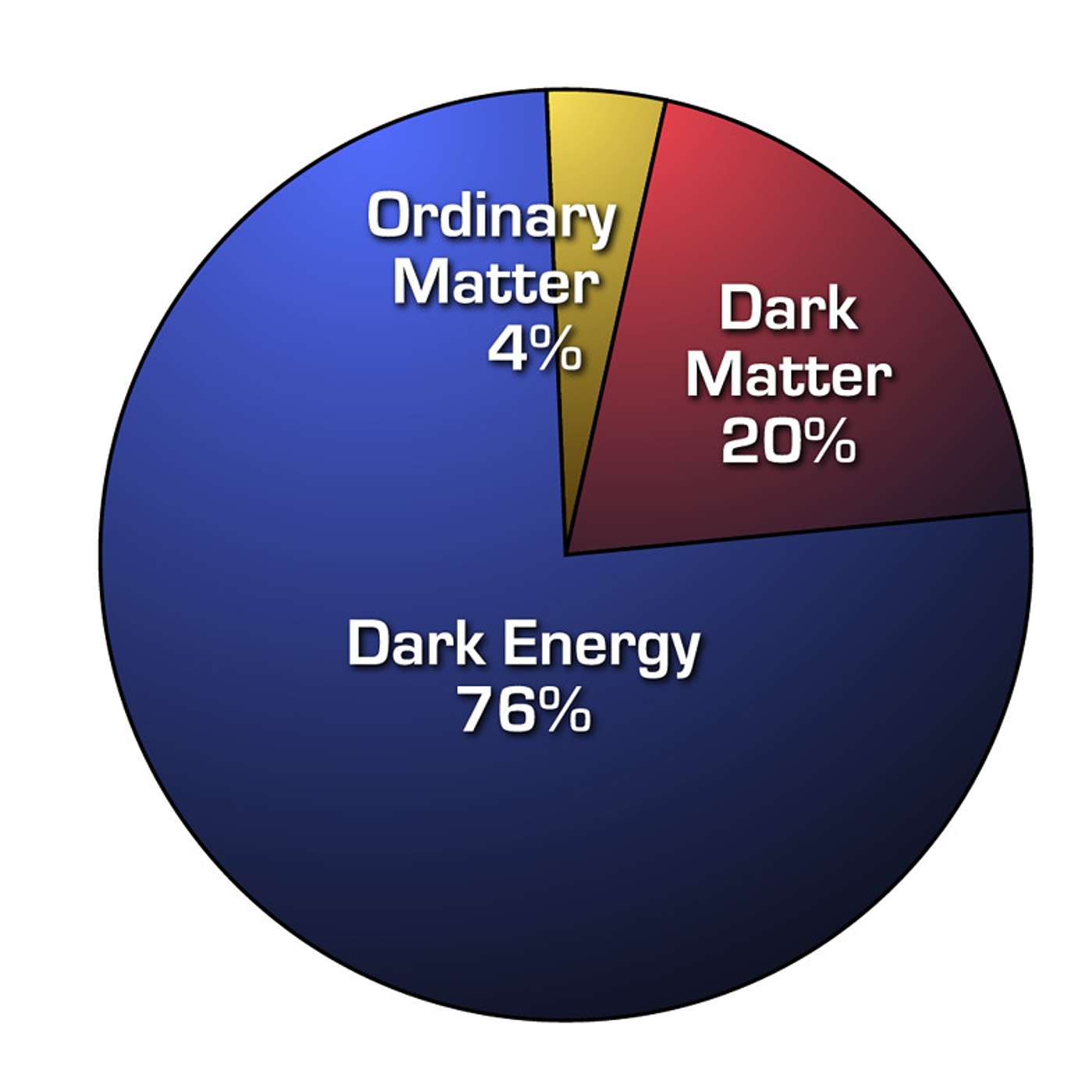
A nontechnical talk by Dr. Robert Kirshner, Jan 28, 2026.
One hundred years ago, Edwin Hubble showed that the universe is expanding. In the 1990s, astronomers found that the expansion is not slowing down, as expected, but speeding up. This led to a Nobel Prize in Physics (for our speaker's students) and a consensus that we live in a universe that is made up of invisible dark matter, mysterious dark energy, and only a pinch of the atoms we, and everything we can see in the Universe, are made of. Dr. Kirshner explains this history in everyday language and...
The Search for Life on Saturn’s Intriguing Moon Enceladus

Dr. Alfonso Davila (NASA Ames Research Center)
Nov. 24, 2025
In 2005, NASA's Cassini spacecraft made a groundbreaking discovery—it found massive plumes of ice and gas erupting from the south pole of Enceladus, a small but geologically-active moon of Saturn. These plumes are now believed to originate from a subsurface ocean of liquid water beneath the moon’s icy crust, with conditions compatible with life, as we know it. The talk focuses on our current understanding of Enceladus' plume and subsurface ocean, and on past and future strategies to search in them for possible evidence of life.
...
The Amazing Vera Rubin Observatory and Its Movie of the Sky

A Nontechnical talk by Dr. Steven Kahn (University of California, Berkeley)
Oct. 8, 2025
The amazing Vera Rubin Observatory is a unique astronomy facility just built in Chile, with the largest digital camera in the world, designed to provide a time-lapse “movie” of the entire sky from the Earth’s southern hemisphere. Over its planned ten years of operation, the Rubin Observatory will obtain nearly 1,000 images of every part of that sky. By comparing the various images, we will be able to detect everything that varies in brightness and everything that moves across the sky. By adding together...
Science at the Edge of the Solar System

A Talk by Dr. Oliver White (SETI Institute)
May 28, 2025
Ten years ago, the New Horizons spacecraft flew by the Pluto system and revealed an unexpectedly diverse range of landscapes on that dwarf planet and its largest moon Charon -- implying much more complex geological histories for these distant worlds than anyone expected. Dr. White leads a vivid tour of their often bizarre terrains, some of which are still evolving, and explains what processes scientists think molded them into their present appearances. After a brief stop at Pluto's four small moons, Dr. White extends the tour 2...
New Worlds: Analyzing the Atmospheres of Exoplanets with the James Webb Space Telescope

Non-technical Talk by Prof. Jonathan Fortney (U. of California, Santa Cruz)
Apr. 9, 2025
Over 6000 planets have now been found around other stars, but we only have information about what their atmospheres are like for a few dozen. NASA's powerful James Webb Space Telescope (JWST), which features a 20-foot mirror in space, is currently being used to understand planetary atmospheres. Prof. Fortney explains how we can look for atmospheres around rocky planets the size of the Earth, and how his group and others are already measuring the abundances of molecules like water, methane, ammonia, and carbon dioxide in...
Copernicus 4.0: How the Views of Earth's Importance and the Search for Life are Changing

Mar. 5, 2025
Dr. Simon Steel (SETI Institute)
Dr. Steel discusses the Copernican revolution and how it changed humanity's view of its place in the universe. He then talked about other "Copernican" discoveries that displaced us from a central perch, including the revision of our place in the Galaxy, the discovery of other galaxies, and now our finding a remarkable number of planets (including Earth-like planets) orbiting other stars. He explains how such discoveries give context for, and have prepared us for, the next potential Copernican revolution, the discover of intelligent life elsewhere in the cosmos. He con...
Human-Robotic Exploration from the Moon to Mars

Jan. 29, 2025
Dr. Darlene Lim (NASA Ames Research Center)
NASA's Volatiles Investigating Polar Exploration Rover (VIPER) is a planned mission to go to the South Pole of the Moon and get a close-up view of the locations that can sustain water ice – ice that could eventually be harvested to support human exploration on the Moon, on Mars — and beyond. Dr. Lim discusses how, for the first time in NASA’s history, the science team would be fully integrated into the mission operations team and will provide near real-time input on where to explore on the Moon. While the fat...
Observing with the James Webb Space Telescope: Glimpsing the First Stars

Nov. 13, 2024
Dr. Dan Coe (Space Telescope Science Institute)
The Webb Telescope was designed to look back in time, to study the first generation of stars, and reveal our cosmic origins. Now in its second year of operation, JWST has already brought us tantalizingly close to our dream of seeing those first stars. Dr. Coe takes us on a tour of some of the latest results from the telescope, and tells us about his and others' observations of the most distant stars and galaxies astronomers have ever seen, providing a view of the universe as it was 13 b...
Profound and Staggering: The Impact on Religion of the Discovery of Life around Other Stars

Recorded Oct. 9, 2024
Astronomers have now discovered thousands of planets in orbit around other stars. Dr. Weintraub discusses those discoveries, and predicts the progress astronomers are likely to make in their more detailed studies of these planets over the next fifty years. Then he considers the consequences of those potential discoveries for Roman Catholicism, Mainline Protestantism, Christian Creationism, Seventh Day Adventism, Judaism, Islam, and Hinduism -- for all of which the discovery of a planet with life on it may be profound. These thoughts are based on the writings of key religious leaders on this topic -- in the...
The Copernicus Complex: Are We Special in the Cosmos

With Prof. Caleb Scharf (Columbia University)
Is humanity on Earth special or unexceptional? Extraordinary discoveries in astronomy and biology have revealed a universe filled with endlessly diverse planetary systems, and a picture of life as a phenomenon intimately linked with the most fundamental aspects of physics. But just where these discoveries will lead us is not yet clear. We may need to find a way to see past the mediocre status that Copernicus assigned to us 500 years ago. Dr. Scharf helps us to come to grips with the implications of some of the latest scientific research, from the...
Black Widow Pulsars: The Vengeful Corpses of Stars

With Dr. Roger Romani (Stanford University):
NASA's Fermi Gamma-ray Space Telescope has revealed a violent high-energy universe full of stellar explosions, black hole jets, and pulsing stars. These cosmic objects are often faint when observed with visible light, but glow bright with gamma rays. Dr. Romani describes the quest to discover the true nature of the most puzzling of these gamma-ray sources. Several turn out to be a kind of bizarre star corpse called a 'black widow' pulsar -- where a dead star has a companion that it is slowly destroying.
This is a talk from 2014, but it...
Europa Clipper: Exploring Jupiter's Ocean World

Presenter is the Project Scientist, Dr. Robert Pappalardo (JPL)
May 22, 2024
Jupiter's moon Europa may be a habitable world, containing the “ingredients” necessary for life within its ocean. Data from NASA’s earlier Galileo mission suggest that a global, salty ocean exists beneath the icy surface. Tides have broken that floating ice shell to create impressive ridges, bands, and chaotic terrains. The Europa Clipper mission will explore Europa with a suite of instruments, through multiple close flybys from Jupiter orbit, examining the moon’s ice shell, ocean, and geology. And it will search for current activity –including plumes that...
The Allure of the Multiverse (with Dr. Paul Halpern)

Apr. 17, 2024
In this talk, physicist and popular author Paul Halpern (St. Joseph's College) examines the history of the concept of a multiverse in science, and discusses the ideas by Einstein and other noted physicists that have led scientist today to take the notion of multiple universes seriously. He also contrasts the scientific view of a multiverse to the picture we get in popular culture (think Marvel movies) and notes how significantly the two differ. Dr. Halpern is the author of a new popular-level book also called "The Allure of the Multiverse" and many other nontechnical science bo...
The Black Hole Wars: My Battle with Stephen Hawking

With Dr. Leonard Susskind (Stanford University)
Black holes, the collapsed remnants of the largest stars, provide a remarkable laboratory where the frontier concepts of our understanding of nature are tested at their extreme limits. For more than two decades, Professor Susskind and a Dutch colleague had a running battle with Stephen Hawking about the implications of black hole theory for our understanding of reality — a battle that he has described in his well-reviewed book The Black Hole Wars. In this talk Dr. Susskind tells the story of these wars and explains the ideas that underlie the conflict. What's at...
Black Holes and the Technology to Find Them

A Non-technical Talk by Dr. Jessica Lu (University of California, Berkeley) on March 13, 2024
The population of black holes, objects left over from dead stars, is almost entirely unexplored. Only about two dozen black holes are confidently known in our Galaxy. As a result, some of the most basic properties of black holes remain unknown, including the true number of black holes in the Galaxy, their masses and sizes, and how the black holes were formed. Dr. Lu discusses how she and other astronomers are using "gravitational lensing" -- something predicted by Einstein’s work -- to open a ne...
Exploring the Gravitational Wave Universe

Speaker: Dr. Brian Lantz (Stanford University)
Feb. 7, 2024
Measuring gravitational waves is a revolutionary new way to do astronomy. They were predicted by Einstein, but it was not until 2015, that LIGO (the Laser Interferometer Gravitational-wave Observatory) first detected one of these waves. They were tiny ripples in space itself, generated by the collision of two black holes. Since then, LIGO and its international partners have measured nearly 100 signals. Dr. Lantz explains what we can learn from these bursts of energy and just how it is possible to measure a wave which stretches our detector 1000 times less than the d...
Water Above, Water Below: The Many Roles of Water in Making Planets Habitable

Dr. Laura Schaefer (Stanford University):
Water is everywhere. Its atoms, hydrogen and oxygen, are the first and fifth most abundant elements in the universe. Water is found in abundance in many environments; it finds its way into planets of all shapes and sizes, where it modifies the properties of everything it touches. Water is crucial to life, both as a habitat and as a solvent. But it also has many other roles in the evolution of habitable and uninhabitable environments on a planetary scale. In this talk, Dr. Schaefer discusses the ways in which Earth acquired its water...
The Peril and Profit of Near-Earth Objects

A Talk by Dr. Robert Jedicke (U of Hawaii)
Oct. 11, 2023
Near-Earth objects present both an existential threat to human civilization and an extraordinary opportunity to help our exploration and expansion across the solar system. Dr. Jedicke explains that the risk of a sudden, civilization-altering collision with an asteroid or comet has markedly diminished in recent decades -- due to diligent astronomical surveys -- but a significant level of danger persists. At the same time, remarkable strides have been made in advancing technologies that pave the way for a new vision of space exploration – one that involves mi...
SPECIAL: An Interview with Frank Drake: The Founder of SETI Science (conducted by Andrew Fraknoi)

June 2012
Frank Drake (1930-2022) was known as the "father of SETI science" -- he was the scientist who conducted the first radio survey for signals from extraterrestrial civilizations, and came up with the formula for estimating the likelihood of such civilizations, now called the Drake Equation.
In June 2012, the SETI Institute sponsored a three-day public event called SETICon. One highlight of the program was an interview with Drake (who served as the founding President of the Institute board. ) It was conducted by SETI Institute board member and veteran astronomy educator Andrew Fraknoi. The discussion ranged widely ove...
Ashes to Ashes, Earth to Earth, Dust to Dust: The Birth and Death of Worlds

with Dr. Eugene Chiang (University of California, Berkeley)
June 21, 2023
We now know that our solar system is but one of countless others. Where did all these planets come from? What are their fates, and ours? Dr. Chiang describes the life cycle of planets, how they are born and die, and how they are born again. The story combines the latest observations from a wide range of telescope with our evolving theoretical understanding of the role planets play in the development of the cosmos.
An Eclipse Double-Header: Two North American Eclipses of the Sun in 2023 & 2024 (with Andrew Fraknoi)

North America will be treated to two eclipses of the Sun in the 2023-24 school year: an annular eclipse on Oct. 14, 2023 and a total eclipse on Apr. 8, 2024. Some 500 million people will be in a position to see at least a partial eclipse on each date. Astronomer Andrew Fraknoi (Fromm Institute, University of San Francisco) discusses the cause of eclipses (and why Earth's eclipses are unique), the circumstances of each coming eclipse and where each will be visible, plus how to view eclipses safely. He shows maps of the eclipse paths and provides URLs to where you can get free in...
The First Results from the James Webb Space Telescope (with Dr. Alex Filippenko)

Dr. Alex Filippenko (University of California, Berkeley)
Mar. 8, 2023
We have a new supersensitive eye in the cosmic sky. Parked nearly one million miles from Earth, the James Webb Space Telescope (JWST) is 100 times more sensitive than the Hubble Space Telescope. JWST observes at the red to the mid-infrared parts of the spectrum, offering new insights into a vast array of objects and processes -- including solar system formation, star birth and death, galaxy evolution, and, perhaps, the origins of life. Dr. Filippenko is a member of several teams of astronomers who are and will be observing using...
Our Boldest Effort to Answer our Oldest Question: Breakthrough-Listen Search for Intelligent Life

For centuries, humans have gazed at the night sky and wondered if any intelligent life forms like us might be out there. In 2015, the Breakthrough Foundation gave a $100 million grant to the University of California at Berkeley to undertake the most comprehensive search for signals from an extra-terrestrial civilization. Dr. Steve Croft, of the University of California, Berkeley, SETI Center, describes the project, introduces the many radio telescopes around the world it is using in the search, and explains how modern technology, including AI, is being used to include more stars, more frequencies (channels) and more ways a signal mig...
Spacetime Symphony: Gravitational Waves from Merging Black Holes

Talk by Dr. Lynn Cominsky (Sonoma State University)
Gravitational waves are predicted by Einstein's General Theory of Relativity. They travel at the speed of light, but are much harder to detect than light waves. On September 14, 2015, the Laser Interferometer Gravitational-wave Observatory (LIGO) received the first direct gravitational wave signals. The event that produced them was the merger of two distant and massive black holes that were in mutual orbit. Prof. Cominsky presents an introduction to LIGO, to gravitational waves and how they were detected, and to the kinds of black holes that "make waves" in the fabric of spa...
100 Years of Einstein's Relativity (And How it Underlies Our Modern Understanding of the Universe)

With Dr. Jeffrey Bennett (University of Colorado)
2015 marked the 100th anniversary of Einstein's completion of his General Theory of Relativity, the comprehensive theory of space, time, and gravity. In everyday language, Dr. Bennett explains the basic ideas of Einstein's work (both his special and general theories) and shows how Einstein's remarkable ideas are being confirmed today by a range of astronomical observations. He concludes with four reasons why relativity should matter to everyone. (Recorded in 2015)
Dr. Jeffrey Bennett is the lead author of one the most popular introductory astronomy textbooks, and has written a number of...
Space Weather and the Question of Human Survivability (with Dr. Tom Berger)

The Sun can unleash violent “space weather” -- storms that can radiate X-rays and even gamma rays into space, send giant clouds of magnetic plasma slamming into the Earth and other planets, and spray firehoses of charged particles throughout interplanetary space. On Earth, we are mostly protected from the Sun’s wrath by our magnetic field and atmosphere, but astronauts venturing to the Moon and Mars will be vulnerable to these potentially deadly solar storms. Dr. Tom Berger (University of Colorado) discusses our current understanding of the interplanetary space environment, describes some extreme space weather events in history, and examin...
Is Anyone out There: The Hundred-Million Dollar "Breakthrough: Listen" Project

with Dr. Dan Werthimer of the University of California, Berkeley
What is the possibility of other intelligent life in the universe and how might we detect signals from alien civilizations? Dr. Werthimer describes current and future projects searching for such signals, including the new $100-million Breakthrough Prize Foundation "Listen" project to "tune in" on messages that civilizations around other stars might be sending out. He shows how new technologies are revolutionizing the search for extra-terrestrial intelligence (SETI).
Dr. Werthimer was one of the founders of the SETI@home project, which analyzed data from the world's largest radi...
A Planet for Goldilocks: Kepler and the Search for Living Worlds

With Dr. Natalie Batalha (NASA, Kepler Mission Project Scientist)
NASA's Kepler Mission launched in 2009 with the objective of finding "Goldilocks planets" orbiting other stars like our Sun -- those that are not too hot, not too cold, but just right. The space telescope opened our eyes to the many terrestrial-sized planets that populate the galaxy (including several right in our neighborhood,) as well as to exotic worlds unlike anything that exists in the solar system. Dr. Batalha gives an overview of the science legacy of the Kepler Mission and other key planet discoveries (including some results that w...
The Fast Radio Sky: A New Window on the Violent Universe

In this episode, Dr. Victoria Kaspi (McGill University) introduces us to a brand-new mystery in the skies -- superfast bursts of radio waves whose source is still unknown. These energetic bursts come from all over the sky (and all over the universe,) pack a huge amount of energy, and typically last a few thousandths of a second. Like a detective in the middle of a case, Dr. Kaspi fills us in on the story of how new observations (especially with the CHIME telescope project which she heads) have been revealing tantalizing new aspects of these bursts, without yet giving us...
Colliding Neutron Stars, Gravity Waves, and the Origin of the Heavy Elements

with Prof. Eliot Quataert (University of California, Berkeley)
In the previous decade, one third of the world's astronomers became involved in a single project -- observing a distant and violent event, when two "star corpses" called neutron stars collided and exploded. This represented the first time in the history of astronomy that a cosmic event was observed with both gravity waves (first predicted by Einstein) and light. We now call this event the birth of "multi-messenger astronomy." Dr. Quataert gives a non-technical history of how we are now able to find gravity waves, what happens during such a merg...
When Mars Was Like Earth: Five Years of Exploration with the Curiosity Rover

Speaker: Dr. Ashwin Vasavada, of NASA’s Jet Propulsion Laboratory
For five years, Curiosity explored Gale Crater, one of the most intriguing locations on Mars -- once the site of an ancient lake. In this talk, the mission's Project Scientist discussed what the rover was capable of and the many things it discovered on and about the red planet. In particular, he fills us in on the evidence that ancient Mars, billions of years ago, was much more like the Earth -- with a thicker atmosphere and flowing water on its surface. (Recorded Feb. 28, 2018)
Rubble Piles in the Sky: The Science, Exploration, and Danger of Near-Earth Asteroids

with Dr, Michael Busch (SETI Institute)
Near-Earth asteroids are a population of small bodies whose orbits around the Sun cross or come near our planet’s orbit. They turn out to be unusual physical environments: essentially rubble piles. They represent a natural hazard we ignore at our peril, because some of these bodies have the potential to impact Earth. Dr. Busch reviews the near-Earth asteroid population, programs to track and characterize such asteroids, and current efforts to address the danger of asteroid impacts.
Chasing New Horizons: Inside the Epic First Mission to Pluto (with Alan Stern & David Grinspoon)

In July 2015, the New Horizons spacecraft flew by Pluto, revealing its surface to our view for the first time. In this program, Drs. Alan Stern and David Grinspoon give us an insider's view of how this complex mission came to be and what it discovered at the edge of our solar system. Their recent book (with the same title) tells the full story of the mission, its ground-breaking discoveries at Pluto, and where it's going next. Here is the story of path-breaking exploration and new science, straight from the source, with insight into what it's like to be part of...
Do Humans Have What it Takes to Thrive in this Universe?

Dr. Sandra Faber (University of California, Santa Cruz)
Do Humans Have What it Takes to Thrive in this Universe?
In this thought-provoking talk, cosmologist (and National Medal of Science winner) Dr. Sandra Faber takes a look at our cosmic origins, the future of the Earth as a habitable planet, and what humans need to do to thrive in the long-term future. She draws some sobering conclusions from the laws of physics and the sustainability of our present-day use of energy and resources. And she provides some clear guidelines on what we will need to do, as a...
A Sharper Image: Seeing Colliding Galaxies with Adaptive Optics (with Dr. Claire Max)

When light from space enters Earth’s atmosphere, it is distorted and displaced, something our eyes perceive as “twinkling.” Adaptive optics can remove a great deal of this distortion, essentially restoring much of the detail we’ve been robbed off in our view of the stars and galaxies. Dr. Max, a world-renowned pioneer in this technique, shows us how modern lasers allow her to do this very precisely. And she discusses how this technique is giving us sharper views of such cosmic events as the collision of nearby galaxies.
Speaker: Dr. Claire Max (University of California Observatories)
Oct. 3,
Cosmobiology: Recent Progress in Cosmology, Exoplanets, and the Prerequisites for Life in the Universe

In this talk, astrobiologist Charles Lineweaver discusses the history of life on Earth and what we can deduce from our understanding of the universe about the existence and history of life elsewhere. He recounts the ongoing discovery of large numbers of exoplanets -- planets orbiting other stars -- and what we can learn from the varieties of planets that are being found. He challenges us to think about what parts in the development of intelligent life on Earth would necessarily happen elsewhere and what parts might be unique to our planet.
Charles Lineweaver is an honorary associate pro...
Cosmology and Ambition: Losing the Nobel Prize (with Dr. Brian Keating)

What would it have been like to be an eyewitness to the Big Bang? In 2014, astronomers using the powerful BICEP2 telescope at the South Pole thought they’d glimpsed evidence of the period of cosmic inflation at the beginning of time. Millions around the world tuned in to the announcement, and Nobel whispers spread like wildfire. But had these scientists been deceived by a galactic mirage? In this popular-level talk, cosmologist Brian Keating tells the inside story of BICEP2’s detection and the ensuing scientific drama. He provocatively argues that the Nobel Prize actually hampers scientific progress by encouraging spee...
