War & Peace Podnotes, A Study Guide
The episode and episode descriptions will provide information, context and commentary on how each chapter plays out. The goal is for each episode to be under 10 minutes. There are multiple English versions of W&P containing variations in the translation of Tolstoy's French and Russian. The original work fluctuates back and forth between these two languages. There are also variations on how War & Peace is chaptered. This podcast follows the commonly used chapters contained in Penguin Classics and the Everyman's Library.
1806: A Very Good Year for L'Homme du Destin
As War & Peace delves into to fiction to a much greater degree than the previous section, exploring the Rostov family dynamic throughout 1806, there is a great deal that historically transpired which Tolstoy does not bring you through. In this stretch, Bonaparte was a continental Behemoth, who sets his sights on Prussia, then an industrial power with a highly organized military. The centers that made up the Prussian Kingdom were: Berlin, Potsdam, Königsberg and Danzig.
You should recall that based on the battle of Austerlitz, Napoleon replaced the Habsburg Family as the principal authority in Central Europe. Austria n...
Bk. 2, Pt. 1, Ch. 10: Even Feydor Dolokhov Has A Mother
We now get taken from March of 1806, through the warmer months and then to the end of the year. Quite the fast-forward!
This chapter provides insight into the surprise loser of the duel, Feydor Dolokhov, through the Book’s closest examination of his psychology. We also get rare insight into his poor mother, Mary Ivánovna.
There is a note that the Duel remained matter of scandal. If Dolokhov would have won, he likely would have faced the wrath of the Czar. Since the new Count won, there is a wisdom in the authorities ignoring the aftermat...
Bk. 2, Pt. 1. Ch. 9: Death & Life
We have reached the pivotal chapter involving the death of the Little Princess and birth of the Andrei’s son.
Andrei was the one thought lost. Yet Tolstoy has him return home as his wife endures child labor. Her suffering is a subject personal to Tolstoy as his own mother succumbed five months after the birth of his sister, when Tolstoy was nearly two years old.
This loss can be viewed as a punishment for Andrei’s vanity even though Andrei acknowledged and is trying to overcome his impiety. A lesson may be: there is no sin...
Bk. 2 Pt. 1 Ch. 7-8: The Most Solemn Mystery
We move further into March of 1806 and return to Bald Hills, the estate of Andrei’s father. Despite letters and official inquiries, Andrei’s body had not been found nor was he on the list of prisoners.
The newspapers had reported the defeat at Austerlitz in brief and vague terms -- after months of detailing a series of optimistic and brilliant engagements. Nikolai was able to read between the lines and intuited the extent of the defeat. Eventually came a correspondence from Kutuzov: “Your son fell before my eyes, a standard in his hand and at the head of a reg...
Le Duel - Tolstoy's Influences

This episode examines some likely influences in Tolstoy’s writing of the Duel between Pierre & Dolokhov.
Dueling is a romanticized part of aristocratic life that stemmed from Western Europe, where the precursor were the jousts and mêlées of medieval knights. With the later development of militaries, there were where occasions were tribunals & commanders could order disputing officers to fight it out in organized affairs.
In Moscow of the early 19th century, engaging in a duel was a mark of sovereignty among the nobility. Just like in Western Europe and America, the practice was carrie...
Bk. 2, Pt. 1, Ch. 6: Devil in The Galley

Pierre wins the Duel and thereafter cannot stand to be in the presence of his wife. The night after the conflict he avoids the marital bedroom in preference of his late father’s room. Pierre desires to fall asleep and forget all. Yet a storm of emotions prevents any rest.
Pierre relives his rash decision to marry, which he now realizes would inevitably lead to dreadful consequences. He acknowledges that even when he first expressed love for Hélène, it was not a genuine.
Tolstoy brings you into Pierre’s soul. Pierre recognizes his own sinful pr...
Bk. 2, Pt. 1, Ch. 5: Better Lucky Than Good
This chapter involves Tolstoy’s craftsmanship of one of the most famous duels in fiction.
It starts with Captain Denísov announcing the formalities and giving a vigorous countdown. On the count of three, each can advance and fire their one shot before reaching sabres that marked ten paces from the other.
Dolokhov walked calmly without raising his pistol. He donned a wry smile and looked intently as he traveled though a fairly clear path. Pierre, however, ambulated clumsily and found himself encumbered by snow. Pierre held the pistol in a way that made little sen...
Mazepa!
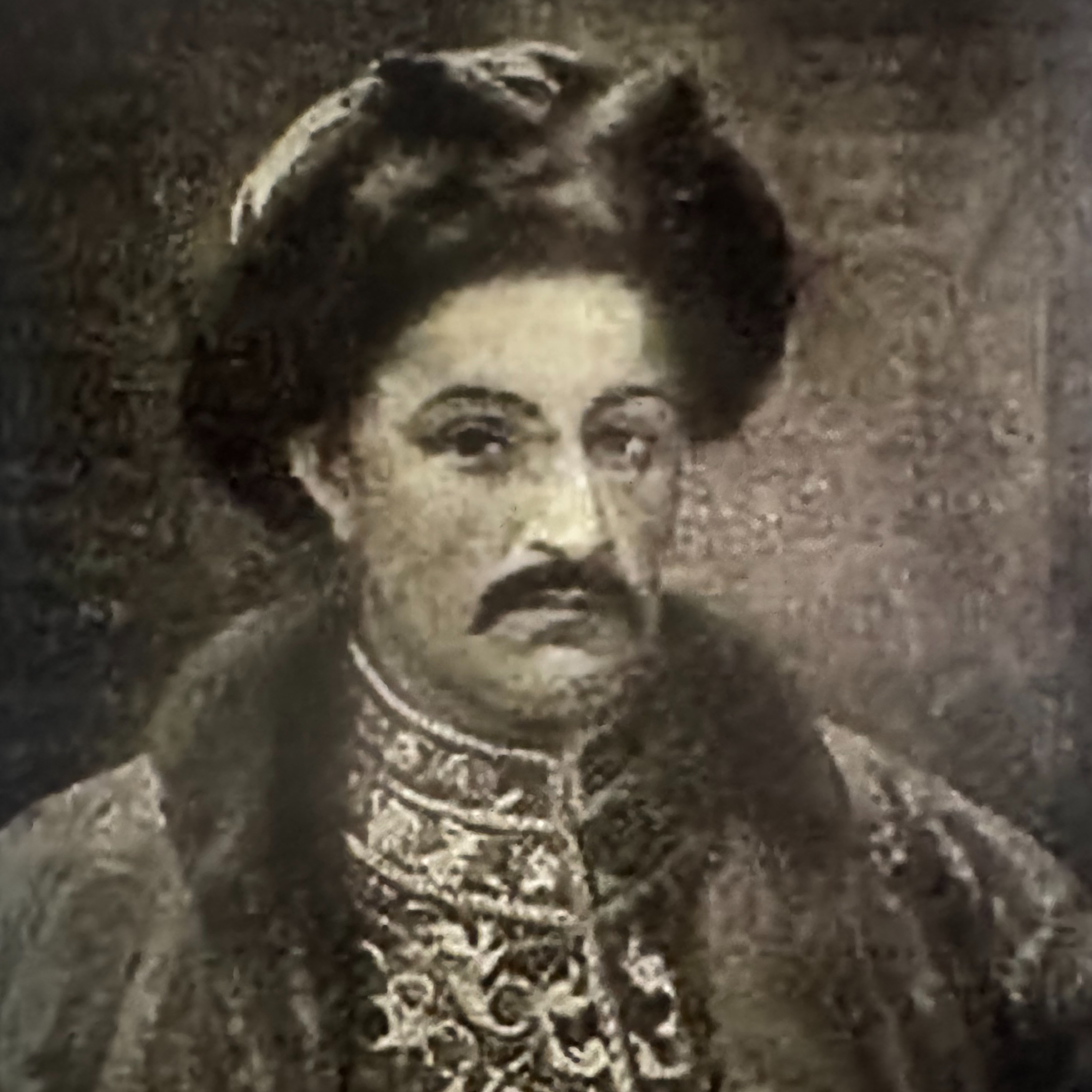
After Oleksandr Usyk defeated Tyson Fury in late 2024 for the heavyweight championship, the Ukrainian boxer held up a sabre that once belonged to the 17th Century Ukrainian Cossack Hetman, Ivan Mapeza, who this episode is dedicated to.
Usyk’s fortitude spoke to Ukraine’s resilience against a larger foe who initiated the type of vainglorious War Tolstoy condemns, with all of his soul, in W&P.
Showcasing the weapon was a transcendent moment of Usyk bringing history to Life. This ability is something Tolstoy shares given who often he reaches into the past to make literary p...
Bk 2, Pt. 1, Ch. 4: Mad As Hell And Not Going To Take It!
Pierre was stewing over his wife’s perceived infidelity with Dolokhov, who was sitting right across from him at the celebration for Bagration. As too often of late, Pierre was a glutton - eating and drinking in excess. He sensed what marrying into the Kuragin family would devolve into -- but could not resist that Siren’s call of Hélène.
Pierre’s suspicions were roused by rumor as well as an anonymous letter informing him that his wife’s connection with Dolokhov was a secret to no one but himself. Pierre reflects while others give toasts. He rec...
Second Epilogue: Ch. 8: Hauling the Log
Tolstoy addresses how divided opinions persist through the ages. There will be a prominent crisis grabbing Your attention where every opinion under the sun is stated. He posits there is a perception afforded to a select few people involved in whatever conflict is at hand. There will naturally be some who get close to an accurate prediction of how a matter turns out and are often mistaken with being responsible for the event. For example, if Napoleon orders an advance and wins the field, he will get credit for taking ground. Tolstoy has us examine if there is more to t...
Bk. 2, Pt. 1. Ch. 3: The Cuckold
The magnificent banquet honoring General Bagration was held in Moscow on March 3, 1806 at the English Club, a great marble hall with a series of smaller saloons. This celebration is remembered for its fervor amidst defeat.
A source Tolstoy used for this was the first-hand account by the English writer & diplomat, Robert Ker Porter, who ironically notes that by 1806, there were not three English members of this social club. Tolstoy has all the rooms humming with conversation, like bees swarming in Spring.
Many guests were elderly and respected personages who could be found at their usual plac...
Bk. 2, Pt. 1, Ch. 2: In Need of a Hero
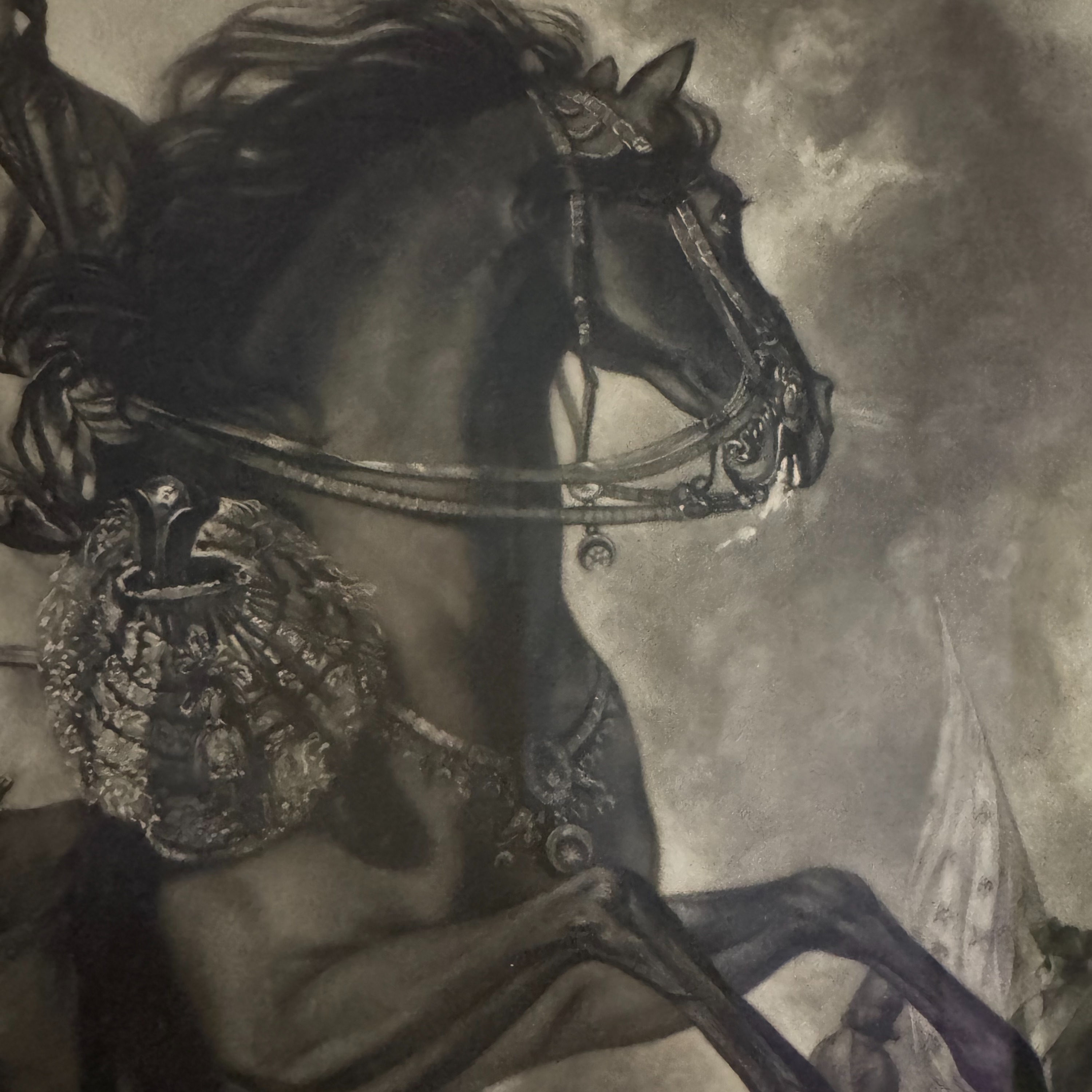
On his return as a lieutenant in a fancy military jacket laced with silver as well as possessing a St. George’s Cross for bravery, Nicholas is treated magnificently. Nicholas gets used to it and develops an ego that leaves him open to being taken advantage of. The finances of his aristocratic family are brought out, noting how his affable father, Ilya, was bestowing a trove on his Prodigal son, as well as other celebratory events after remortgaging his estates. Illya purchased his son a fine horse that could enter races and also the most fashionable outfits.
With...
Bk. 2, Pt. 1, Ch. 1: Welcome Home

We are brought to early 1806, where Tolstoy uses Nicholas and Denisov to transition the story to Peace. Rostov has went from witnessing Czar Alexander crying under a tree near Austerlitz to returning to his Moscow estate. This chapter addresses his warm embrace.
Nicholas was traveling with Denisov, who is partially based on the literary Hussar, Dennis Davydov. Rostov persuaded Denisov to accompany him and the wild hussar enjoyed a great deal of wine on the journey. During the home stretch, it meant a great deal for Rostov to notice recognizable streets, stores and most especially his mansion. Rostov r...
Sevastopol Sketch II (Part 2 of 3): Mikhailov & Co.

This is part 2 of 3 on Tolstoy’s 2nd Sevastopol Sketch, which focuses on May of 1855 and declares the ineffable value of Truth as hero.
I’m presenting this episode after covering Austerlitz, a conflict symbolic of the vain pursuits of rulers. Further, similar to the result of Austerlitz, the Crimean War was a extraordinary humiliation for Russia that forced societal change. This sketch also contains memorable depictions of death amidst armed conflict.
This story places the reader 6 months into the 11-month siege where “the Angel of Death hovers over all. “ This includes the 4.5 mile-long defensive line made of...
Bk. 1, Pt. 3, Ch. 19: little napoleon

Andrei lies moaning from a head wound on the Pratzen Heights, symbolic of the numerous souls dead or wounded.
The depiction of Andrei chasing military glory but falling short, was influenced by how Kutuzov historically lost his son-in-law, Theodor von Tiesenhausen, at Austerlitz. Kutuzov sent the young noble, who served as an aide-de-camp, to rally retreating troops. After Tiesenhausen seized a fallen standard and ran forward, he was quickly shot in the chest. Frenchmen swarmed him and there was a barbaric scuffle over his military decorations. When Napoleon took a victory lap, he noticed the “glorious” sight of the barel...
Aleksei Nikitin: In the Spirit of Tolstoy

This project is approaching the final chapter of Book I, a critical juncture with Napoleon victorious and holding the greatest reputation man can bestow. Even after Napoleon suffered a string of defeats years later, his reputation was colossal when Tolstoy wrote War &Peace.
Many readers coming to this book do not realize Napoleon is something of a dark force utilized to portray how to view those who send others to die for a ruler's vain ambitions. In this regard, it is important to recall how Tolstoy was influenced the Bible book of Ecclesiastes, which comments on vainglorious ambi...
Bk. 1, Pt. 3, Ch. 18(B): Breaking the Ice

This pivotal short section depicts one of the iconic episodes of Austerlitz, namely retreating Russian forces falling through ice amidst an artillery barrage.
French General Adolphe Marbot provided a contemporary report on this phenomenon and Czar Alexander appears to have relayed to his inner circle, years later in 1814, that he watched helplessly as thousands of his men perish in the frozen waters. A large number is realistic given accepted casualty figures. Estimates of allied losses indicate 12,000 Russians and 4,000 Austrians dead or wounded and 12,000 captured. French losses were around 1,400 killed and 7,000 injured.
For nearly a century, which...
Czar Alexandr: A Background
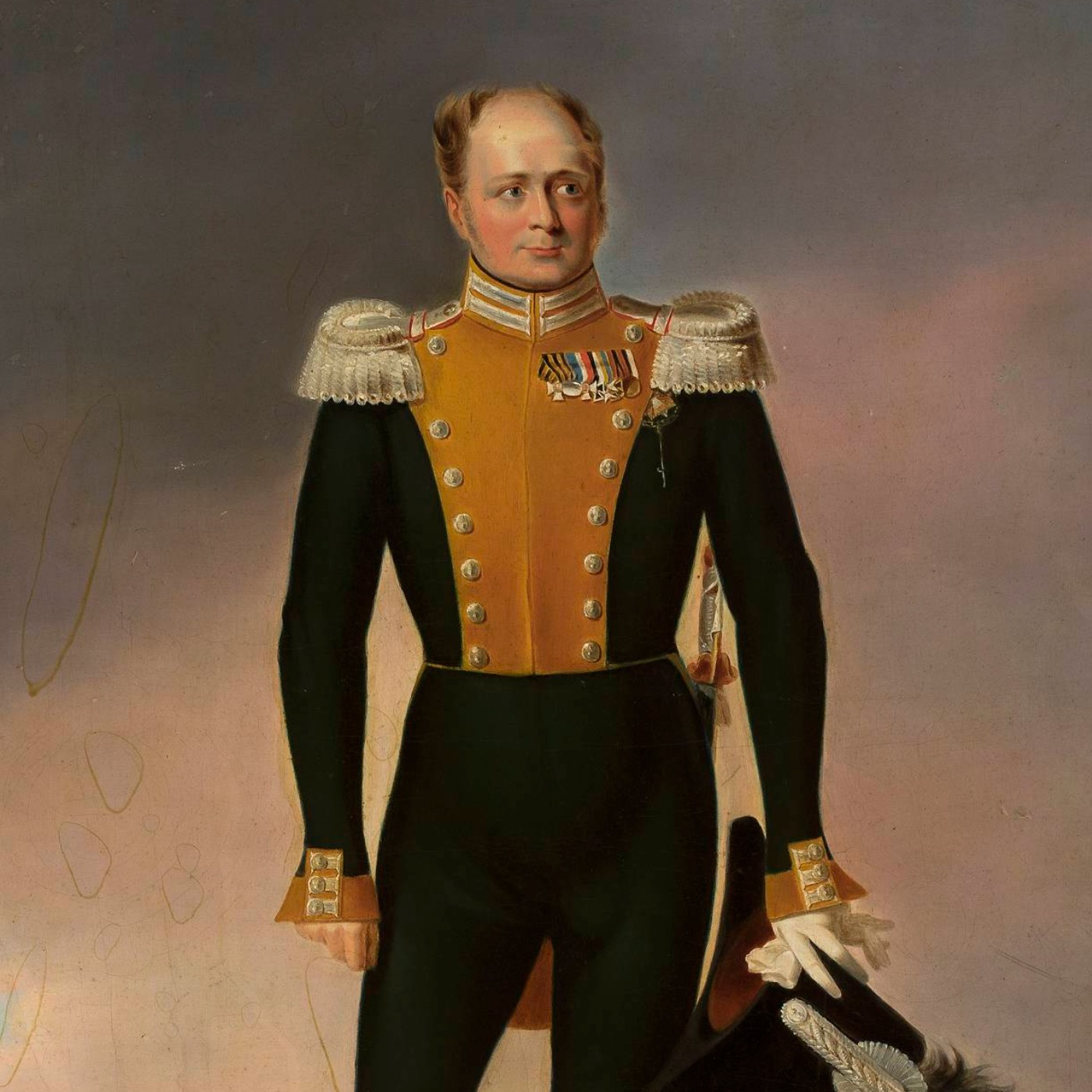
This episode explores the background of the Czar reduced to tears after the Battle of Austerlitz.
Many readers know little of the ruler Nicholas Rostov and countless officers were so devoted to.
Over the last few years, you may have watched Ridley Scott’s film “Napoleon.” I argue that the casting of Alexandr embraces a view of the filmmaker that aligns with the perception the fictional Nicholas held.
Edouard Philipponnat as Alexandr was the standout in the film and embraced a youthful exuberance. Handsome and dashing, Scott captured the energy that Tolstoy depicts.
Should y...
Bk. 1, Pt. 3, Ch. 18(A): Alexandr Among the Ash Heap

Nicholas continues on his mission looking for Kutuzov or the Emperor. He notices broken carriages along the roads and hordes of troops in worsening levels of disorganization. Many are wounded. He reaches an area safe from cannon fire coming from the Pratzen Heights and slows to realize that there is no point to what he is doing. He has nothing of import to convey to the Tsar or to Kutuzov, should they remain alive. He learns the direction surviving commanders headed and hears conflicting reports about Alexandr being wounded or killed. One soldier, however, expressed confidence the Tsar was dr...
For Whom Do You Sacrifice?

Tolstoy hardly ends the novel with the revelation imparted to Andrei. Instead, it continues for another 1000 pages, in substantial part, exploring the triviality so paramount to those without such vision.
The story moves back to earth to focus on the historic disgrace for Alexandr and Francis. It is entirely the opposite for Napoleon, who came out on top of The Battle of Three Emperors. Yet the bravado with which men enter a fight for those like Bonaparte, has lost some of the luster.
So many of us can be brought to both planes by the right...
Bk. 1, Pt. 3, Ch. 17: Decimation of Uvaróv's Calvary

Tolstoy brings you back from Andrei’s spiritual revelation to focus on Nicholas Rostov, who is imbued with the Confidence of Youth. General Bagratión had assented to Rostov’s request to be brought off the reserve line and selected him for a fool’s errand – as Bagratión is presented as understanding the futility of the attack.
This is in contrast to Prince Dolgorúkov, part of Alexandr’s inner circle, who felt victory was ordained. Dolgorúkov holds much of the blame for this debacle as reports indicate that he told Alexandr it would be cowardice to avoid co...
Bk. 1, Pt. 3., Ch. 16: Oh, Chapter of Chapters!

This paramount chapter involves Tolstoy using Andrei to grasp the transcendence of the Almighty God which the author revered. More particularly, when Andrei takes in the vastness of the sky, Tolstoy conveys the vulgarity of this earth compared with His infinite nature. Further, Tolstoy lays bare the senselessness of war for most of the men shooting and hacking each other. There will be a depiction of opposing soldiers in a tug-of-war over the most insignificant object – a broomstick, highlighting the meaninglessness many sacrifice themselves for.
The chapter begins with the battle intensifying while Kutuzov was riding near the rea...
Second Epilogue: Ch. 6: Only The Almighty Stands Alone

Tolstoy affirms that only the will of the Deity, who is not dependent on time, can make sense of any monumental event or series of events.
Tolstoy acknowledges his belief in an omnipotent God, who determines the Way. This majestic being is something we can never come close to understanding. Even the most renowned, like Napoleon, cannot veer humanity in the direction they intend. This is because man acts in his limited time and sphere. Thus, historians who attribute grand events to so-called “Great Men,” are engaged in a vain pursuit. This outlook is not surprising given Tolsto...
Bk. 1, Pt. 3, Ch. 15: Advance! Advance to Ignominy!

At 8 a.m. Kutuzov rode towards Pratzen Village. He took command of a regiment he came across and led it into the Village. The other columns were advancing towards a massive valley, where the battle was picking up. Andrei, who was among Kutuzov’s suite, was in a state of constrained excitement. He was convinced this day would be his Toulon, the battle that made Napoleon. Andrei’s motivation to be hero of this world was at an apex. He would give his life, his family, even his soul, to be admired.
Andrei was keen to troop positions an...
Bk. 1, Pt. 3, Ch. 14: Target Pratzen

The doomed advance commenced around 5 a.m., when still quite dark. The idea was for General Bagration’s left flank to initiate the attack on the French right flank and drive the enemy into the mountains.
Officers were hurriedly drinking tea and eating a decent breakfast while buttoning their coats and buckling their swords. Battalion and regimental commanders, along with their adjuncts, mounted their horses and gave final instructions. Austrian guides were now moving among the troops and heralding the advance.
Those who would be moving were anxious amidst the cold and mist. The soldiers had been...
Bk. 1, Pt. 3, Ch. 13: Vive l’Empereur!
In the early morning hours of December 2nd, 1805, Rostov was patrolling the skirmishing line near Bagration’s detachment. Behind him he could see his army’s campfires glowing. In front the French were covered by misty darkness.
Rostov was exhausted. His eyes would close and his fancy appeared—now the Emperor, then Denísov or whirling Moscow memories. His hussar companion occasionally alerted him to steer his horse out of bushes. He was disappointed his unit was not advancing and wanted to ask for permission to join the attack. He was dreaming about The Czar, envisioning how they would...
Look Up Beyond the Vanity

In a few chapters, you will read one of the triumphs in literature, borrowed from the Wisdom Literature of the Old Testament.
Tolstoy will have the fictional Andrei recognize the Vanity of our world. On the battlefield, Andrei is placed in a posture that makes him attuned to absorbing the nature of war & peace; and much more.
In preparation for this moment, I ask you to take a tiny step toward developing the ability to see behind the vanity & vexation of our existence.
If inclined, read the beginning of Ecclesiastes – as Andrei will par...
Bk. 1, Pt. 3, Ch. 12: Vainglorious Aspiration
The night before the Battle, General Weyrother, who coordinated the advance, traveled to Kutuzov’s quarters in a castle near Austerlitz for a council of war. Kutuzov was a reluctant and relegated host.
Weyrother is presented as full of vigor while Kutuzov was morose, with his uniform unbuttoned and nearly asleep in a chair. Weyrother was familiar with the terrain but was unable to competently explain the nature of this Moravian land. He spoke in front of an enormous map and went through the battle-plan. It involved a flanking maneuver and pursuit over a forest as well as d...
Bk. 1, Pt. 3, Ch. 11: Gen. Savary Perceives Vulnerability
This chapter continues to examine the precipice of Austerlitz, where misguided confidence continues to build. Yet we can observe cracks in that veneer, namely relating to how Tolstoy portrays the Czar.
As the Emperor occupied Wischau, his French physician was summoned. While Alexander was initially excited by the movement of the troops, calvary charges, and clashes, he became ill upon observing casualties and the reality of war.
Ten days prior, while in Olmütz, French General Anne-Jean-Marie-René-Savary, requested and received an audience with the Czar. Savary quickly noticed the overconfidence of Alexander’s inexperienced advisers...
Tolstoy Fusing Own Vice Into Story
On the precipice of the Battle of Austerlitz, Tolstoy illustrates the bravado and immaturity of youth.
Here, I explore how Tolstoy incorporates elements of his own vice from his younger days, including pride and ambition. Both his early and late material speak to this, most notably personal journals from his time at university as well as the spiritual work, My Confession, written in 1879, when in his early 50s. The latter was an attempt to grapple with eternal questions such as: What am I doing?, and Why am I here? Tolstoy pursues answers in the mold of how So...
Bk. 1, Pt. 3, Ch. 10: Toast to the Czar
Three days after the review and a near 40 mile march south, Denisov’s squadron was assigned to be a reserve unit in the early stages of the monumental Battle of Austerlitz.
Rostov was in something of a depression, as he wasted the inner struggle it took to conquer his apprehension. While idle, he observed squadrons of Cossacks, hussars, infantry and artillery pass. Around 9 a.m., he heard firing and shouts. Later, a handful of French prisoners were brought back. A successful small affair culminated and the Village of Wishau was taken, building false confidence. The morning glitter of the...
Bk. 1, Pt. 3, Ch. 9: Adam Czartoryski: A Most Remarkable Man
The day after the review, Boris rides to Olmütz to build on his burgeoning relationship with Andrei, with the goal of obtaining a position of adjutant. He reflected, “It is all well for Rostov, whose father sends him 20,000 rubles at a time, to NOT wish to be anyone’s lackey, but I who have little but my brains, must not miss any opportunity!”
Olmütz was transformed into the headquarters where the Emperors resided. When Boris inquired of Andrei, he was shunned by officials who grew tired of the number of low-level officers who were coming and going...
Bonus: Calvary Maiden II, Durova's Formative Years
This second episode on the Calvary Maiden takes you through some of the formative years of the author, Nadezhda Durova.
Durova wrote briefly of her years growing up then focused on her time dressing as a man and serving for 10 years as a low-level officer in the Czar’s army, starting around 1806.
Her journals were source material for Tolstoy as to the lives of those who served in the period War & Peace is set, 1805-1812. It is presented to give you a glimpse into those frequently nameless and overlooked, who often gave their lives in the...
Bk. 1, Pt. 3, Ch. 8: Old Fashioned Emperor Worship
Tolstoy addresses the over-confidence of Napoleon’s adversaries prior to the battle of Austerlitz, when Kutuzov’s forces and the Austrians reached their limit of no further retreat, winding up near Olmütz. Here, Emperors Alexandr & Francis would review their troops that numbered around 80,000 (both seasoned and reinforcements) before a 40-mile march south to fight the French, who had around 50,000 soldiers near Brünn.
Napoleon’s supply lines were extended after traveling so far into the Holy Roman Empire and Kutuzov is historically thought to have been reticent to engage Napoleon as he thought it better to draw the Fre...
Sevastopol Sketch II (Pt.1): Truth As Everlasting Hero, May of 1855

This edition examines the second Sevastopol Sketch, where Tolstoy covers an all-too-common artillery battle and truce afterward. It focuses on May of 1855, roughly six months into the 11-month Siege during the Crimean War.
In the recent W&P episode, Tolstoy describes how young soldiers are typically unable to speak the truth and will conform their wartime stories to the expectations of their audience, as well as put themselves in the best light. He plays this out using the fictional Rostov, who was fearful and shaky on this horse as he headed into one of his first calvary ch...
Bk. 1, Pt. 3, Ch. 7(B): Andrei v. Rostov
The latter part of this chapter has Nicholas Rostov continuing his parley with Boris and Berg. I broke it into two episodes because the latter section deals with the first interaction between Andrei and Nichols, who surprisingly are not familiar with one another.
After Rostov alludes to his award, Boris retrieves the money and letter from Rostov’s family. Upon reading a few lines, Rostov hid his face, ashamed he frightened his family over his trivial injury. Berg then makes the mistake of commenting on Rostov’s bounty; as Rostov was given an excuse to turn his frustr...
Bk. 1, Pt. 3, Ch. 7(A): The Confidence of Youth
This chapter begins to highlight the optimism of the Coalition approaching the Battle of Austerlitz. We also experience a rare crossing of the major characters, Nicholas and Andrei.
While Nicholas was riding with the Pavlograd Hussars, Boris was serving more comfortably with the Imperial Guard, accompanying Czar Alexander as he traveled toward Olmütz, Moravia, a mostly German speaking enclave of the Holy Roman Empire that sits along a tributary of the Danube River. The allies were uniting in their largest numbers with plans to square off against Napoleon’s Grande Armée. Kutúzov’s forces already r...
Bonus: Calvary Maiden Intro - W&P source material
This is an introduction to Calvary Maiden, a source Tolstoy used to portray the experiences of soldiers during the Napoleonic Wars. Tolstoy utilized a variety of such works to craft, more than 50 years after the events depicted in War & Peace, the spirit of that first decade and a half of the 19th century.
This source material was an unconventional choice as Calvary Maiden contains the journals of a young woman, Nadezhda Andreyevna Durova, who presented as a man to pursue military ambitions. Her material was first published in 1836, well-after her 9 years of service that commenced in 1806. It wa...
Bk. 1, Pt. 3, Ch. 6: A Mother's Love
Though always in their hearts, it had been months since the Rostovs received news of Nicholas. When Count Ilya finally received a letter from his son, he ran his study with it. Anna Drubetskaya, Boris’ mother, was living with the family and aimed to be useful. She found Ilya sobbing and laughing. His darling boy suffered a small wound but was promoted. He found this reason to thank God. Still, he wonders how to tell his wife of the injury. Anna therefore took the rest of the day preparing the Countess.
Young Natasha convinced Anna to reveal the nat...
Bk. 1, Pt. 3, Ch. 5: I Will Never Marry Your Son
Once separated for the evening, Anatole fell right asleep. The charmed women did not.
Marya considered, “Is he really to be my husband? This stranger who is so kind.” However, she soon feels the force of evil near her as a Satanic image mixed with Anatole’s. She rang for her maid, asking her to sleep in her room. Lise grumbled how uncomfortable she was in bed. Anatole’s presence reminded her of when she was not impacted by pregnancy and loneliness. Amélie Bourienne walked about the winter garden, working out this scenario where she would allow herself...
