Analyse Podcast

A weekly podcast exploring the pulse of business, technology, and media worldwide. Hosted by Bernard Leong, the show features in-depth conversations with leading journalists, executives, entrepreneurs, and thought leaders on the ideas and forces shaping global markets — from Asia to the rest of the world.
What Comes After Christensen's Disruption Theory? with Horace Dediu

Fresh out of the studio, Horace Dediu, Founder of Asymco, closes our three-part conversation by looking ahead to John Ternus's Apple and the AI capital cycle. Horace predicts that Ternus will bring Apple, reluctantly, into AI and face wearables. He calls hyperscaler capex an unprecedented transfer of wealth to Nvidia's shareholders, which makes Apple's decision to sit it out genius. He argues that consumers need AI to help with loneliness and health rather than productivity, and he warns that AI could amplify the harms of social media a thousandfold. Last but not least, he draws on Schumpeter and Christensen...
Stay Hungry, Stay Foolish: The Secret of Perpetual Companies with Horace Dedi

Fresh out of the studio, Horace Dediu, Founder of Asymco, returns for the second part of our conversation, on Apple's engineering DNA and Tim Cook's legacy. Horace explains why John Ternus emerged as the consensus candidate over Johny Srouji, how Steve Jobs turned the CEO into a showman, and why large companies rarely last beyond 20 years while some Japanese family firms have lasted centuries. He argues that Vision Pro is Apple's most important product since the iPhone, because eyewear can reach 80% of humanity. Last but not least, he sums up Cook's legacy in four contributions: separating Apple from its...
If You Believe in Consumer AI, You Have to Own Apple with Horace Dediu from Asymco

Fresh out of the studio, Horace Dediu, Founder of Asymco, joins us for the first of a three-part conversation on Apple's strategy as the AI era arrives. Horace argues that Apple is the last consumer company: only 15% of sales at the world's 20 largest companies go to consumers, and Apple accounts for half of that exposure. He explains why infrastructure builders, from railways to telephony, rarely profit, why Big Tech keeps failing at consumer devices, and how the Cook and Ternus doctrines differ.
"There's never been more concentration in non-consumer market caps in history. All the largest market caps...e-Conomy SEA 2026: Inside Southeast Asia's AI Economy with Nitin Gajria, Florian Hoppe & Cassie Wu
Fresh out of the studio, this marks the 11th year of the e-Conomy SEA report with Nitin Gajria, Managing Director, Southeast Asia & South Asia Frontier Markets, Google; Florian Hoppe, Partner at Bain & Company; and Cassie Wu, Director of Investments, Asia Pacific (excluding China and India), Temasek. Generative AI reached 240 million users, or 60% of the working population, in three years — a milestone the Internet took ten years to hit. Yet per capita token usage is one-tenth of the US, with the gap almost entirely in enterprises outside Singapore and Malaysia. The panel shows AI-assisted shopping journeys lifting average order value by...
Mapping the China AI Ecosystem with Rui Ma

Fresh out of the studio, Rui Ma, founder of TechBuzz China, returns to examine China's AI ecosystem on its own terms rather than as a horse race with Silicon Valley. She maps the atlas of China's AI labs by strategy, from DeepSeek's "cost curve rebels"; to the big-tech war over office agents, and explains why cheap intelligence comes from brutal domestic competition rather than an export plan. Rui Ma unpack why robotics enjoys a homegrown market that pure AI lacks, why robot hardware and software must co-evolve, and how China prices insurance for brain-computer interfaces before the devices ship...
China AI: From Challenger to Export Industry Globally with Jon Russell

Fresh out of the studio, Jon Russell from Asia Tech Review and executive director at Ellerton & Co., returns to trace how Chinese AI crossed from technological challenger into a commercial industry and a geopolitical export model. He unpacks the first public earnings from Z.ai and MiniMax, where revenue growth above 300% still cannot explain the valuations, and why cutthroat domestic competition makes international expansion existential for Chinese labs. Bernard and Jon examine the hidden on-premises market, the sovereignty stacks forming in Europe and Asia, why the copying narrative around distillation collapses under scrutiny, and China's remaining bottleneck in lithography...
Simular AI and Computer Use is the Final Frontier in AI with Ang Li
Fresh out of the studio, Ang Li, CEO and co-founder of Simular and previously a research scientist at Google DeepMind, joins us to explore why computer use is the last mile to AGI. Ang traces his path from studying catastrophic forgetting and continual learning at DeepMind to founding a company on a single conviction: models break in production because the data distribution never stops moving, and the only place to close that loop is the real world. He explains why the chatbot metaphor misleads enterprise buyers, why the right unit of measurement is tokens per task rather than price...
Attention Is the Scarce Resource, Not Creativity in the Age of AI with Steve Clayton

Fresh out of the studio, recorded in Singapore, Steve Clayton, Senior Vice President and Chief Communications Officer at Cisco, joins us to discuss what it takes for AI to scale inside enterprises globally. Steve argues that narrative belongs at the top of the AI pyramid, not the bottom — in an era when models generate more material than any organisation can absorb, the story a company can credibly tell becomes the scarce asset, not the technology itself. He explains why the truth lies in the field rather than at global headquarters, how regional dynamics reshape where a story lands, and wa...
AI Is Not an Efficiency Tool for Humanitarian Causes with Nur Hafiza Mutalif

Fresh out of the studio at the Dataiku Summit Singapore 2026, Nur Hafiza Mutalif, Assistant Head of International Affairs at the Singapore Red Cross, joins us to explore why the humanitarian sector distrusts AI, and what her team built once they worked through that scepticism. Coming to this from international law rather than data science, Nur Hafiza explains why the sector's caution is a feature rather than a lag: humanitarian work rests on doing no harm and on neutrality, and any solution must clear that bar before it clears a business case. Dataiku cleared that bar. Its pro bono experts...
The Three Ingredients That Turn AI Into Value with Sophie Dionnet

Fresh out of the studio, Sophie Dionnet, Senior Vice President of Product and Business Solutions at Dataiku, joins us at the Dataiku Summit in Singapore to discuss what turns enterprise AI investment into measurable value. She lays out the three ingredients Dataiku builds around — the right people, orchestration across technologies, and supporting controls — and makes the case that governance is a scaling mechanism rather than a brake. She points to Roche, where a patent lawyer encoded his own professional expertise into a working system of agents, discusses Dataiku's answer to agent sprawl with agent management launching in October, and clos...
Inside the War on Southeast Asia's Industrial Scam Economy with Rafael Frankel

Fresh out of the studio, Dr. Rafael Frankel, Head of Public Policy for Asia Pacific at Meta, joins us to unpack how Meta is stepping up on the fight against scam syndicates in Southeast Asia along with a coalition of partners. He explains why today's syndicates operate with state-like capabilities and forced labor at scale and how AI has become both the scammers' sword and Meta's shield, powering the removal of hundred million scam accounts in 2025. Frankel walks through the disruption-sprint model that took down the million accounts in a single week alongside the FBI, Microsoft and Starlink, and...
How to Actually Read the China's AI Ecosystem with Jing Yang

Fresh out of the studio, Jing Yang, Asia Bureau Chief at The Information, joins us to explore how China is building frontier AI under chip constraints, state capital, and open source ambition. Jing breaks down her scoop on DeepSeek's $7.4 billion round at a $50 billion valuation, unpacking a deal structure in which the founder wrote two-fifths of the check and outside investors got no voting rights. She explains why Chinese AI valuations trail US labs, why seven to eight language model players refuse to consolidate, and why DeepSeek chose Huawei chips before Huawei knew about it. Last but not least...
We Never Left the Industrial Age: AI and the Future of Work with Aneesh Raman
Fresh out of the studio, Aneesh Raman, Chief Economic Opportunity Officer at LinkedIn and co-author of Open to Work: How to Get Ahead in the Age of AI, joins us to dismantle the flattened narrative that AI is simply taking jobs. His counter-thesis: work is changing, not ending — and we never truly left the industrial age, only traded the factory floor for the office floor. Aneesh walks through his three-bucket framework for auditing your week, the move from the career ladder to the career wall, and why the org chart is giving way to the work chart. He closes by...
If AI Models Have No Moat, What Are Investors Buying? with Benedict Evans

Fresh out of the studio, Benedict Evans, independent technology analyst and author of AI Eats the World, returns to explore whether the AI model layer is becoming commodity infrastructure. Benedict argues there is no winner-takes-all effect in models yet, drawing parallels to telecoms, cloud, chips and the fiber bubble to ask where durable value actually accrues when everyone runs similar infrastructure on similar tokens. He unpacks why the chatbot remains a poor interface, introduces the "blank screen" and "jagged frontier" problems that keep software companies alive, and explains why large language models inherently give you "the average." Closing the...
Inside "Defending Taiwan": How to prevent a war between China and the US with Eyck Freymann

Fresh out of the studio, Eyck Freymann, Hoover fellow at Stanford and author of Defending Taiwan: A Strategy to Prevent War with China, joins us to explore why the Taiwan question will be decided by economics and coercion, not by invasion. Eyck unpacks the Thucydides Trap as a warning, not a prophecy, traces how Xi Jinping's Belt and Road statecraft shapes his approach to Taiwan, and contrasts a kinetic invasion with the "quarantine" scenario he fears most. He reframes 2027 as a capability milestone, recasts TSMC as a "silicon magnet" binding America to Taiwan, and flags Taiwan's 2028 election as the...
Innovationism: A New Philosophy for the Age of AI with James Liang
Fresh out of the studio, James Liang — Co-founder and Executive Chairman of Trip.com Group, economist, and author of Innovationism: A New Philosophy for the Age of AI — joins us to explore what becomes of human meaning when AI does the work. James argues that innovation and heritage are "the same coin": innovation measured by how much heritage it leaves behind. He unpacks why the individual, not the nation or firm, is the binding constraint on innovation, why aging societies stop producing startups, and how his Nature 2024 hybrid-work study reframes family-friendly policy as economically rational. Closing the conversation, James expl...
Incorruptible: The Chapter The Lean Startup Missed with Eric Ries

Fresh out of the studio, Eric Ries — author of the new book Incorruptible, founder of the Long-Term Stock Exchange, co-founder of Answer.AI, and author of The Lean Startup — joins Bernard Leong to discuss his blueprint for building mission-controlled companies that resist financial gravity. Eric explains why trustworthiness is the most underrated asset in business and why success, far from being a shield, makes companies a target worth capturing. He walks through the governance fortresses that have kept Costco, Novo Nordisk, and Patagonia true to mission for decades, and argues that today's so-called best practices have destroyed billions in shar...
Steve Jobs in Exile with Geoffrey Cain

Fresh out of the studio, Geoffrey Cain, author of Steve Jobs in Exile and Samsung Rising, returns to the Analyse Podcast to argue that the twelve years between Jobs's 1985 ouster and his 1997 return to Apple were not a footnote but the forge. Drawing on private archives at Carnegie Mellon and Stanford, unbroadcast footage from inside NeXT, and interviews with the people who lived it, Cain reframes the wilderness decade as the cause, not the gap, in Jobs's transformation. We trace the NeXT collapse and the failed IBM licensing deal, the parallel crucible of Pixar where Catmull and...
Inside Singapore's AI Bet for 2030 with Kiren Kumar

Fresh out of the studio, Bernard Leong sits down with Kiren Kumar, Deputy Chief Executive of the Infocomm Media Development Authority (IMDA) Singapore, for a conversation on how Singapore is building trusted AI at national scale. Kiren traces IMDA's arc from the 2018 Model AI Governance Framework to the Agentic AI framework launched at Davos this year, the four AI missions — advanced manufacturing, finance, connectivity, and healthcare — anchoring the next strategic bound, and the programs moving enterprises from pilots to production. He argues the real blocker is leadership rather than policy, that trust is Singapore's enduring competitive moat, and that the...
Inside Pulse ID's Playbook for AI-Driven Banking with Alex Topaloski

Fresh out of the studio, Alex Topaloski, CEO and Co-founder of Pulse ID joined us in a conversation on his company's customer engagement infrastructure powering Visa's cardholder offers across Asia Pacific. Drawing on Pulse ID's recent white paper, The Age of Knowing, Alex unpacks the three forces reshaping bank loyalty: interchange, partnerships, and intelligence. He explains why banks have solved the data problem but still struggle with engagement, walks through agentic AI architectures and the minimum effective nudge principle, and lays out why Asia-Pacific diversity demands distinct playbooks for Australia, Japan, and Southeast Asia. Closing out, Alex argues the...
From Copier to Innovator: The Tech Titans of China with Rebecca Fannin
"Many of these AI advancements, where the U.S. is more on the innovative theoretical side of creating new models... China's really ahead on commercializing them, and that's their advantage. I think saying that China and the U.S. are equivalent in AI is probably an overstatement. I think the AI center of innovation continues to be in Silicon Valley. This could change—the gap is closing. I do think the U.S. is still ahead, but I think China is catching up."
Fresh out of the studio, Bernard Leong reconnects with Rebecca Fannin, founder of Silicon Dragon Ventures an...
How AI Is Rewriting the Future of Trust and Safety with Yoel Roth

"The word I always come back to when I think of the future of trust and safety is governance. We are no longer just making moderation decisions. We're no longer just banning people or deleting posts or removing accounts. We are ultimately responsible for overseeing the health of the platforms and communities that we've created. Especially in an age of AI, I think there's a huge role for the field of trust and safety in overseeing the decisions that AI makes. In a world where we automate more of our decisions, that doesn't mean that we don't have jobs anymore...
From Token2049 to SuperAI: Architecting Global Tech Convergence with Peter Noszek

Fresh out of the studio, Peter Noszek, co-founder of SuperAI and TOKEN2049 join us on a conversation that maps the widening gap between Silicon Valley's creative intensity and Asia's underutilised compute infrastructure — including 900 megawatts of GPU capacity in Johor, Malaysia sitting at low utilisation because the routing layer between US demand and Asian supply simply doesn't exist yet. Peter introduces Pax Silica, his thesis that Singapore can serve as the neutral ground where fragmented AI communities from East and West converge through curated rooms, cultural bridging, and unreasonable hospitality. They explore why the Bay Area still doesn't understand Asia, th...
The Agentic SOC: How Splunk Security Transforms Enterprises in the Age of AI with John Morgan

Fresh out of the studio with John Morgan, Senior Vice President and General Manager of Splunk Security at Cisco. The conversation unpacks the AI inflection point reshaping security operations — from the explosion of machine data (set to more than double in three years) to the rise of the agentic SOC, where AI agents handle detection, investigation, and response while humans focus on high-stakes decisions. John breaks down why attackers armed with AI now exploit zero-days in hours instead of weeks, why security must start with observability (including the challenge of "shadow AI"), and how CISOs are evolving from technical ga...
Building the World's Largest Podcast Studio Network: Poddster & Podyx with Borko Kovacevic

Fresh out of the studio, Borko Kovacevic, Co-founder of Poddster and Podyx, joins us to explore how he is building the world's largest podcast studio network and the operating system behind it. He shares his career journey from nearly 17 years at Microsoft across Central Europe and Asia Pacific, to making the entrepreneurial leap and launching Poddster's first flagship studio in Dubai, followed by Singapore. Borko explains how Poddster scaled by treating operations like software — standardizing over the operational framework to run studios from UAE and Singapore to now globally across the world while building a flywheel connecting corporate brands wi...
Elastic: From Search Recipes to AI Infrastructure at Scale with Ken Exner

Fresh out of the studio, Ken Exner, Chief Product Officer at Elastic, joins us to explore how Elastic evolved from the world's most popular open-source search engine into the context layer powering modern AI applications and agent systems. He shares his career journey from database programming to over 16 years at Amazon building AWS resilience practices, and now leading product strategy where search, observability, and security converge into a unified AI platform. Ken explains why context engineering is the defining discipline of the AI age, where developers become managers of agents, and how Elastic's 15-year enterprise head start positions it...
Beliefs Are Tools, Not Truths: Beyond Belief with Nir Eyal

"Motivation is a triangle. It requires: Behavior: What am I going to do? Benefit: Why am I going to do it? Belief. If you don’t have those three areas of your life in concert, all the advice in the world is going to go in one ear and out the other. Beliefs are tools, not truths. The majority of our problems today—cultural, geopolitical, personal—come from the fact that we think our faith is fact, and we confuse facts for what are beliefs. Everything worth having in life is on the other side of discomfort. So if you can le...
Arize AI in Asia Pacific: LLM Evaluation, Observability & Scale with Patrick Kelly
Fresh out of the studio, Patrick Kelly, Vice President for Asia Pacific at Arize AI, joins us to explore the critical world of AI observability, evaluation, and infrastructure and how Arize AI will start their go to market across the region. Beginning with his transition from Databricks to Arize AI, Patrick explained how the company's mission centers on making AI work for people by helping teams observe, evaluate, and continuously improve their AI agents in production. Emphasizing that evaluations are the most important requirement for AI systems in 2025-2026, he revealed a striking insight: approximately 50% of AI agents fail...
This Week in Asia: Is the AI Bubble About to Pop? with Daniel Cerventus and Michael Smith Jr

By popular demand, Michael Smith Jr., co-host of The Generalist podcast, and Daniel Cerventus Lim, semi-retired entrepreneur and community builder in Malaysia, return for another candid deep-dive into Southeast Asia and India tech landscape. Fresh off India's record-breaking IPO wave that's drawing regional companies like Pine Labs to redomicile, they dissect what this exit boom means for a Southeast Asian ecosystem still struggling with venture returns. Michael delivers his characteristically unflinching take on why "the year of [insert country]" never materializes beyond Singapore and Indonesia, while making the provocative case that most VCs fundamentally misunderstand B2B distribution strategy—sp...
Raise Your Level of AI Ambition - Microsoft's AI Strategy for Developers with Jay Parikh

Fresh out of the studio, Jay Parikh, Executive Vice President of Core AI at Microsoft, joins us to explore how Microsoft is fundamentally transforming software development by placing AI at the center of every stage of the development lifecycle. He shares his career journey from scaling the internet at Akamai Technologies during the dot-com boom, to leading infrastructure at Facebook through the mobile revolution, and now driving Microsoft's AI-first transformation where the definition of "developer" itself is rapidly evolving. Jay explains that Microsoft's Core AI team, is moving beyond traditional tiered architecture to a new paradigm where large language...
Solving Asia's Private Market Information Crisis with Raghav Kapoor

"Public markets are behaving more like private markets. Private markets want to behave more like public markets. So actually, they're just one market.What's not the same is the level of research, information, data disclosure. Correct. That's the only difference. It's this information gap that, to us, is the single biggest opportunity now.We think over the course of the next five to 10 years, there'll be more trading venues, more liquidity providers, more market makers, more investor types—all of that. And I think what Smartkarma has always done is be the information flow for part of capital markets.In fa...
The AI Industry Is Building Modern Empires with Karen Hao
Fresh out of the studio, Karen Hao, investigative journalist and author of "Empire of AI" joined us in a conversation to unravel how companies like OpenAI, Anthropic, and xAI have become modern empires reshaping society, labor, and democracy itself. Karen traces her journey from mechanical engineering at MIT to becoming one of the tech industry's most critical voices, sharing how Silicon Valley's innovation ecosystem has distorted toward self-interest rather than the public good. She unpacks the four characteristics that make AI companies mirror colonial empires: resource extraction through data scraping, labor exploitation of annotation workers, knowledge monopolies where most...
Open Source AI: Faster Innovation Through Community Across Asia Pacific with Simon Milner

Simon Milner, Vice President of Public Policy for Asia Pacific at Meta, joins us to explore how Meta's deliberate commitment to open source AI is reshaping innovation across the world's most diverse and dynamic region. He shares his journey from the BBC to nearly 14 years at Meta, where he built policy teams from the ground up to lead Meta's Asia Pacific strategy. Simon unpacks Meta's open source philosophy behind the Llama models, explaining how openness accelerates innovation through community scrutiny, provides governments greater control over sensitive data, and enables local developers to fine-tune models for languages like Korean, Vietnamese...
How Oracle Became the Backbone of Enterprise AI with Chris Chelliah

Fresh out of Oracle AI World 2025, Chris Chelliah, Senior Vice President of Technology and Customer Strategy for Japan and Asia Pacific at Oracle, joins us to unpack how Oracle is positioning itself as the definitive enterprise AI platform across the region. He shares his career journey from a computer science geek working on distributed databases to leading technology strategy across a market representing two-thirds of the world's population. Chris explains Oracle's comprehensive four-tier AI stack—infrastructure, data platform, applications, and agentic orchestration—emphasizing how this unique full-stack ownership enables enterprises to consume AI out of the box and extend seam...
Southeast Asia's $300B Digital Economy: How They Exceeded Everyone's Expectations with Sapna Chadha, Florian Hoppe & Cassie Wu
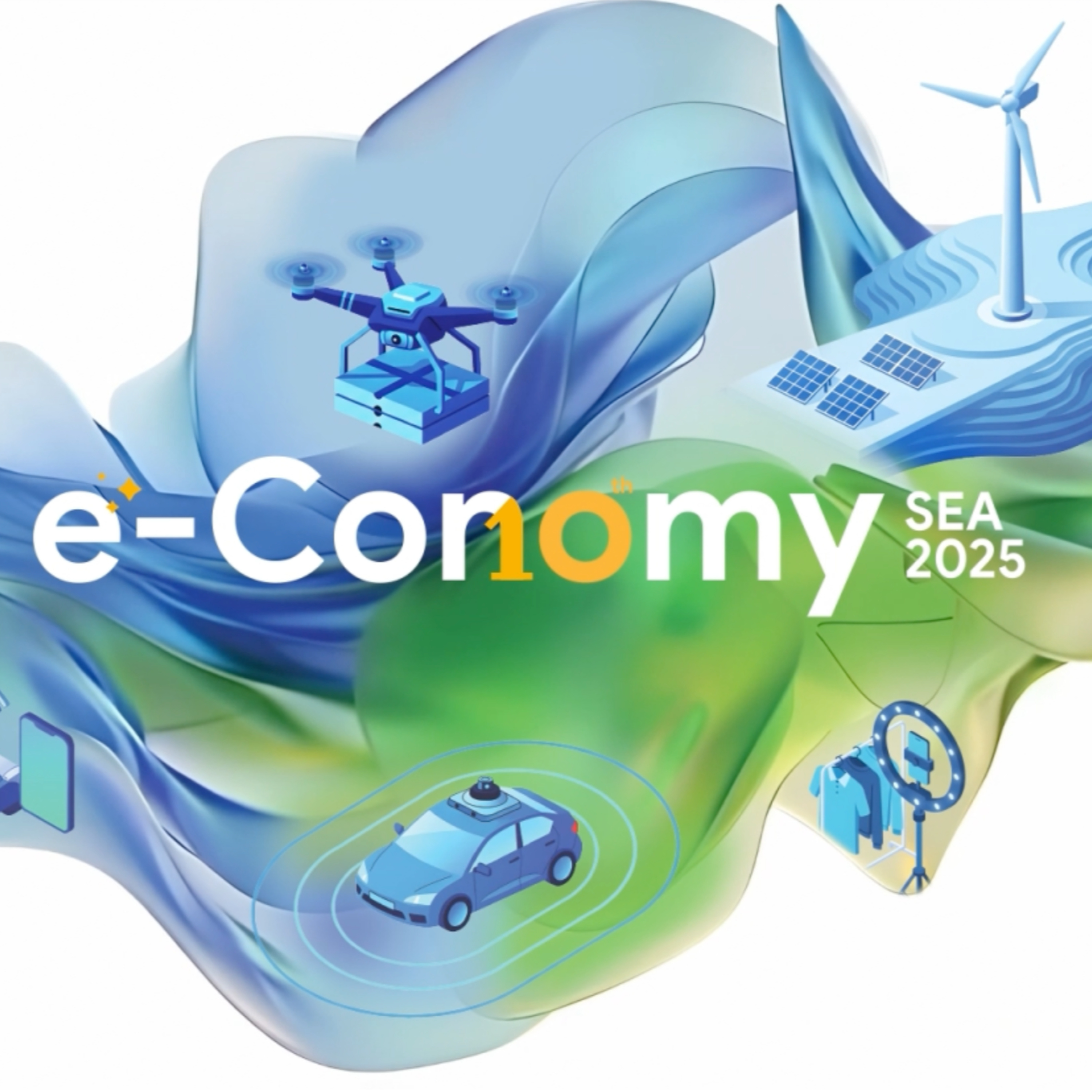
Fresh out of the studio, we commemorated the 10th anniversary of the e-Conomy SEA [Southeast Asia] Report with Sapna Chadha from Google, Florian Hoppe from Bain & Company, and Cassie Wu from Temasek, celebrating a decade of tracking Southeast Asia's digital transformation. The panel reflected on the region's remarkable achievement of reaching $300 billion in GMV—exceeding the original $200 billion goal by 1.5x—alongside revenue growth of 11x over the past decade. The panellists examined pivotal themes including Southeast Asia's position as the world's most AI-curious region with three times more interest than elsewhere, the explosive rise of video commerce and the...
The Sentient Startup: Building Companies in the Age of AI with Arnaud Frade

Fresh out of the studio, Arnaud Frade, Managing Partner at Mesh Advisory and author of the upcoming book The Sentient Startup, joins us to explore how AI is fundamentally transforming entrepreneurship through the radical concept of AI as a true co-founder rather than merely a tool. He distinguishes between startups that are merely "AI-onboard" versus true sentient startups where AI operates as part of how the business is run, and introducing the concept of Machine Resources (MR) as a new organizational function alongside Human Resources to manage evolving AI models and maintain knowledge integrity. He emphasizes the...
Microsoft's Global Partner Strategy: 400M Businesses & 1 Platform with Ralph Haupter

Fresh out of the studio, Ralph Haupter, President & CRO, Small Medium Enterprises and Channels at Microsoft, joins us to explore how Microsoft is empowering 400 million small and medium businesses globally across 56 counties through a partner-first strategy that combines platform standardization with deep specialization. He shares his career journey spanning over 20 years at Microsoft, from running Europe to leading Greater China, building Asia's geographical operations in Singapore, and eventually taking on global SME strategy. Ralph explains that Microsoft's unique advantage lies in being a platform company at its finest, offering a complete technology stack from productivity to infrastructure, security, and...
500 Episodes Later: What I Learned From 11 Years of Podcasting with Bernard Leong
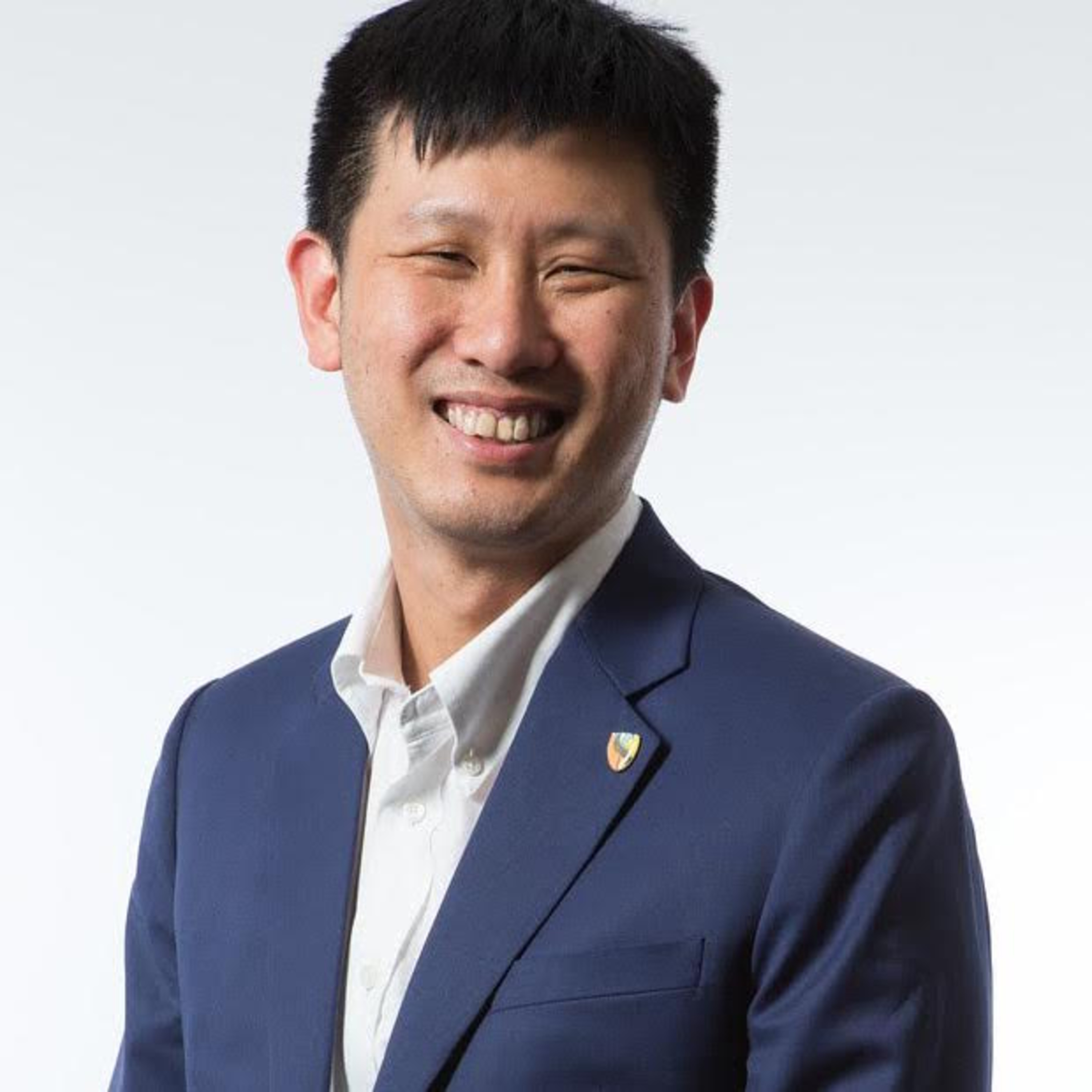
Fresh out of the studio and we hit our 500th episode milestone, guest host Yana Fry from Yana TV turns the tables on Bernard Leong, CEO of Dorje AI and host of Analyse Asia, in a special ask-me-anything format. We start with Bernard's journey from finding his first guest to navigating 11 years of podcasting, revealing his 12-word life philosophy: "Learn from everyone, follow no one, observe the patterns, work like hell." Following on, Bernard shares how his theoretical physics background provides the tools on everything from digital transformation to building Dorje AI's vision of reimagining ERP systems. The conversation...
Mastercard and The Future of Money: Crypto, AI Agents & Digital Payments with Ling Hai
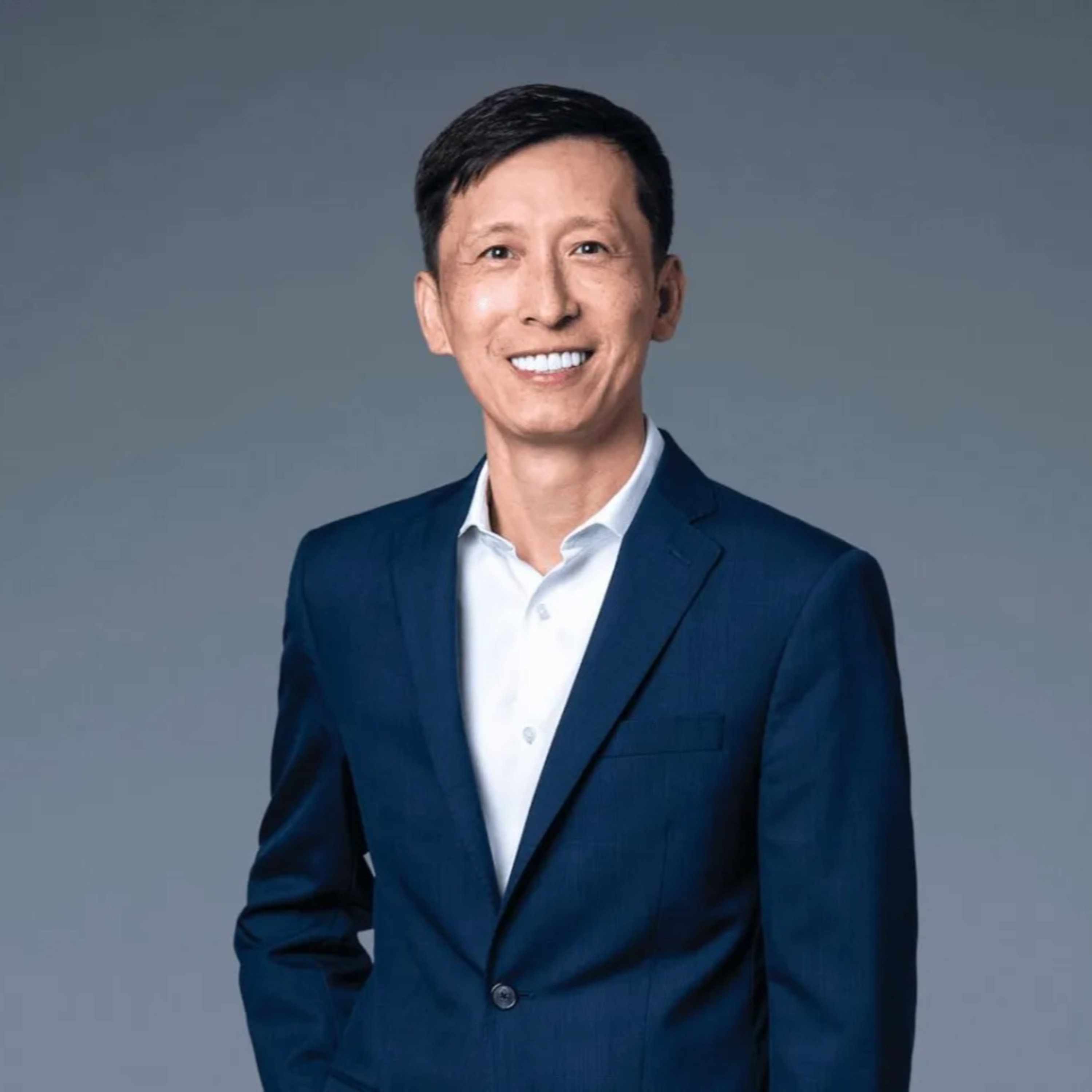
Fresh out of the studio, Ling Hai, President of Asia Pacific, Europe, Middle East, and Africa at MasterCard, joins us to explore how payment networks are evolving to embrace stable coins, AI agents, and the future of digital commerce across diverse global markets. He shares his career journey from management consulting to retail banking and eventually to MasterCard. Ling Hai shares that MasterCard is a global technology company that creates interoperability and universal acceptance, with technology services like cybersecurity, data insights, and consulting increasingly contributing to revenue beyond traditional payment processing. He highlights compelling innovations from Asia Pacific leading...
How to Scale Global Teams Without an Office through Esevel with Deng Yuying
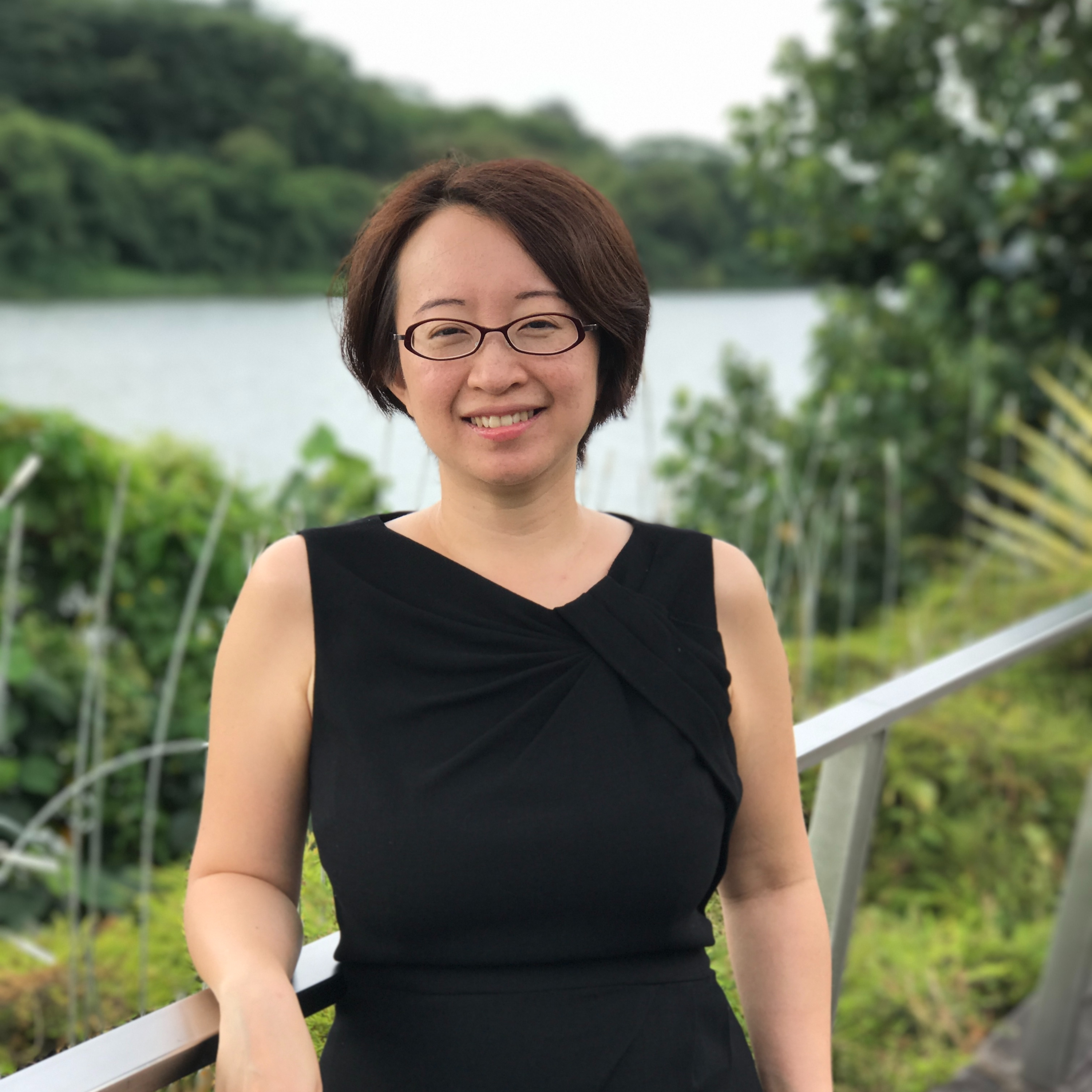
Fresh out of the studio, Yuying Deng, Co-founder and CEO of Esevel, shares her transformative journey from corporate lawyer to healthcare operator to tech entrepreneur with our guest host Yana Fry from Yana TV. Yuying discusses how the pandemic's sudden shift to remote work in April 2020 revealed critical gaps in IT infrastructure for distributed teams, inspiring her to launch Esevel—a platform now serving companies across 88 countries. Yuying challenges the traditional HQ-centric worldview, advocating that "HQ should be a mindset, not a location," and shares how Esevel deliberately builds leadership opportunities for talented professionals regardless of whether they're based in...
