The Colonial Department
Lost stories from 🇵🇭 history 🔊 Narrative nonfiction pod 📖 Book version published by @factionpress 📻 Written, produced, engineered by @liomangubat
PREVIEW Kakapon: Bolomen and Beheadings in Wartime Northern Luzon
This is a preview of a bonus episode that's exclusive to Patreon Scholars. Become a Scholar-tier member on Patreon to listen to the full episode.
When the Japanese invaded the Philippines, the worlds of the indigenous peoples of northern Luzon were upended in the wake of the occupation. The violence that had begun in Manchuria, Poland, and Pearl Harbor crept up the slopes of the Cordilleras and the Sierra Madre, rekindling old feuds and igniting new ones. High up in the mountains, the old ways returned… and the blades that had been kept sharp for so long wer...
INTERVIEW: History and psychology as kapwa (feat. Sikodiwa)
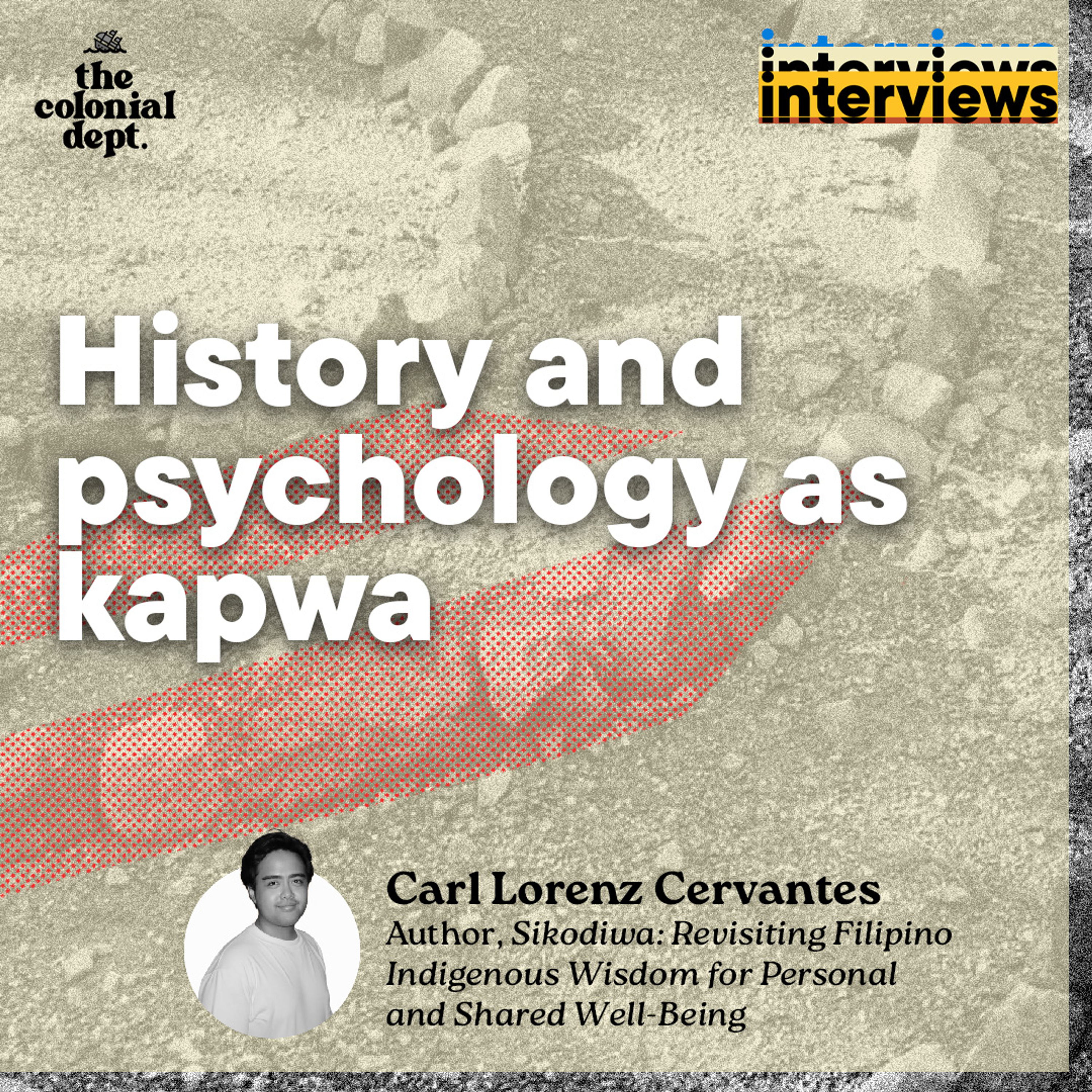
Since 2022, scholar and teacher Carl Lorenz Cervantes has been sharing his thoughts on psychology, folk wisdom, and spirituality through a series of social posts, podcasts, online essays, and even zines. Collectively, he calls this ongoing project “Sikodiwa”, which combines the words for psychology—sikolohiya—and the word for spirit or essence—diwa. His work often frames the concepts of sikolohiyang Pilipino through a very spiritual, very approachable, and very uplifting lens. In 2025, the book version of Sikodiwa was published under North Atlantic Books, based out of Berkley, California. The book is subtitled “Revisiting Filipino Indigenous Wisdom for Personal and Shared Well...
S8E13 The Philippines-India Express
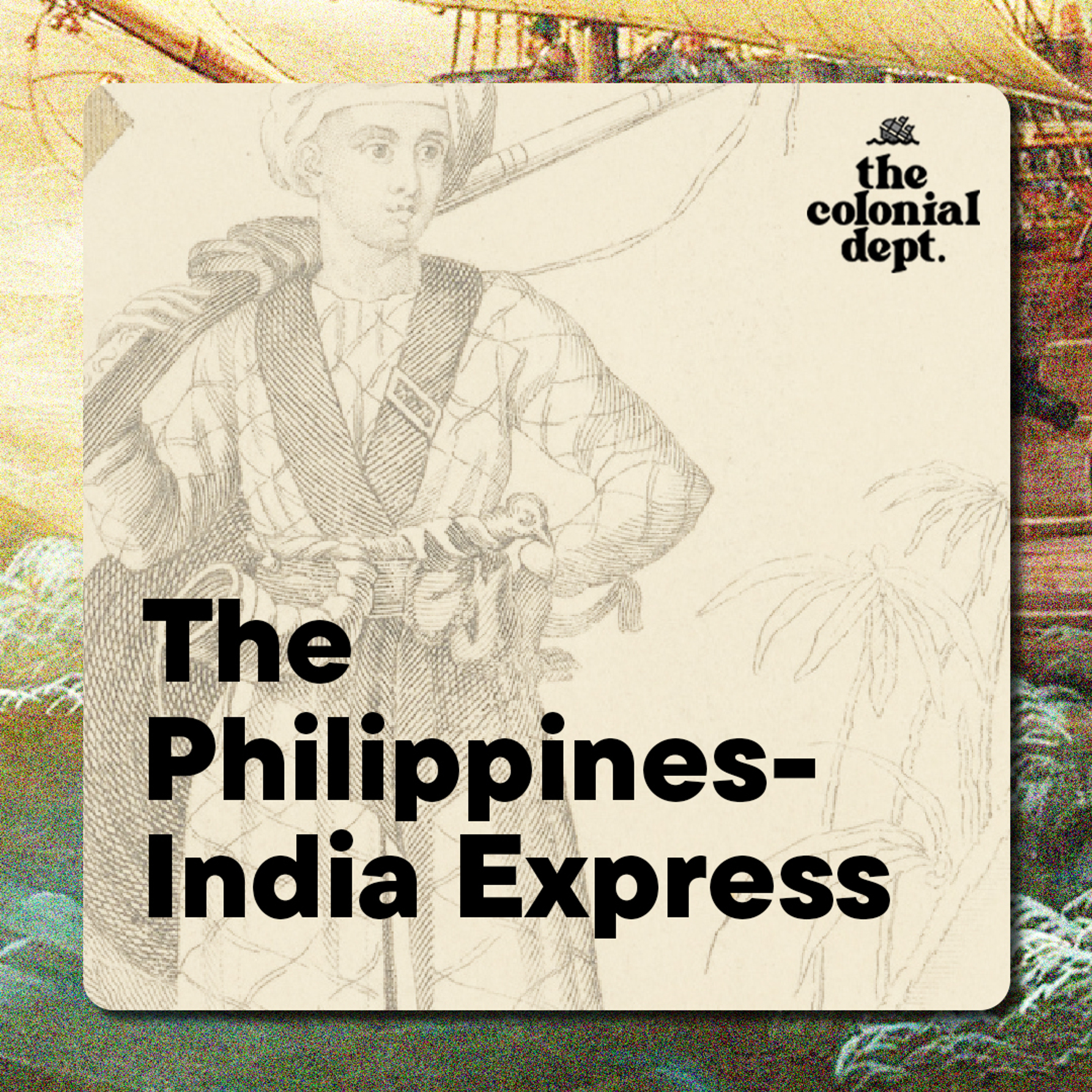
The threads that connect the Indian subcontinent to the Philippine archipelago stretch back centuries. Some have been lost to time, survived only by goldwork and the testimonies of Spanish missions. Some survive as actual threads—as textiles that captured the fancy of Philippine residents. Some are remembered as painful history; an invasion engineered by empires, followed by a brutal and fruitless occupation. And some survive to the present day—in the words formed from our throats, and perhaps even the food that passes through our mouths.
My book Silk, Silver, Spices, Slaves is now available on S...
S8E12 Borderline Bureaucrats: An Early History of La Union
As La Union historian Adriel Obar Meimban writes, La Union fits neatly into its geography: bound by rivers on the north and south, by the Cordillera mountain range on the east, and then, on its west side, the pounding surf that has made San Juan one of the country’s most popular tourist spots. But even in its earliest days, the borders of La Union were drawn and redrawn in bureaucratic squabbles. The newly minted province and its neighbors could not decide where one ends and another begins—and caught in the middle of these disputes were ordinary townsfolk whos...
INTERVIEW: Mapping a life on time—the making of a historian
In 2018, I first encountered The Sulu Zone and Iranun & Balangingi—two important books by James Francis Warren that opened my eyes to the rich, roiling history of the seafaring cultures of the Sulu Sea. His groundbreaking work laid out a way of looking at the past that was neither stoic nor static—a historiography that truly widened horizons.
At the launch of his newest book, Valentina Mendoza and the Great Ilocos Flood of 1867, I spoke with Dr. Warren about his long and fruitful career as a scholar. In the thoughtful, hour-long conversation that followed, he dissected for me h...
S8E11: We're Off to the 1924 Paris Olympics!

More than a century ago, the Philippine flag was unfurled for the first time on the biggest sports stage in the world. It was—and is—a matter of great pride to our nation. But it was also an event that was bizarrely marked with mystery and controversy. From disappearing athletes to extra flags, let’s head to Paris in 1924, as we join two sports legends in their journey to the Olympics!
The thumbnail image is from the book The First Filipino Olympians, written by Isidra Reyes, Gerard Lico, and Lorenzo Manguiat. Additional audio in this episode is fro...
S8E10 In Paracale, the Faintest Gleam of Gold

According to historian Linda Newson, Bicol did not bow down easily to the Spanish occupation. For their resistance, they paid a dear price. Population showed Camarines lost almost half of its population from 1591 to 1649. With no major plagues or Moro raids recorded, Newson could only conclude that it must have been because of brutal conflict with the Spaniards. Either the Bicolanos were killed, or they fled so far inland that they escaped the census takers.
One of the things the Spaniards were looking for in Camarines were the gold mines of Paracale. By the time of the o...
S8E9 White-Hot Heat: Climate and Culture in the Late 1800s

Writing in June 1889, the Manila-based correspondent for La Solidaridad listed down the calamities afflicting the archipelago: cholera, fires, earthquakes, and economic ruin. In those days, even the sky seemed to be on fire. Our reporter told his ilustrado readers in faraway Europe that standing in the shade in Manila would give you no comfort, because the temperature was 39 degrees. 39 degrees!
How did the way we talk about and think about heat change our culture and our history? For the 100th episode of The Colonial Dept., join us in a journey that takes us from a Roman poem t...
INTERVIEW: What was it like to commute in Manila 100 years ago?

Just the thought of commuting around Manila is enough to set one’s teeth on edge. But do our current-day problems of congestion and overcrowding have their roots in decisions and policies made a century ago?
There’s no one better to answer this question than our podcast guest today. For more than ten years, Michael Pante, Ph.D., an associate professor at the Ateneo de Manila University, has been researching the history of transportation, mobility, and urbanization in the capital city. He even has a forthcoming book on the topic entitled The Immobile Metropolis: A History of M...
S8E8 Pacific Sick Ships: Medicine Aboard the Galleons

In the long journeys from Manila to Acapulco, disease was the clingy passenger no one wanted around. But it wandered around the decks, knocked on every cabin, stalked everyone on board—until one day, you woke up, and disease was just everywhere. How could it not be? There was food rotting inside the barrels, slick and moldy woodwork, crew and passengers and officers packed into tight spaces, pests crawling over the meals, the overpowering smell of human waste. And so they came, that grim parade: fever, chills, dysentery, infection, dermatitis, beriberi, the dread scurvy.
How did the shi...
S8E7 The Fractured Plateau: Bukidnon in World War II

The word Bukidnon means “people of the mountains”, but historian Ronald K. Edgerton also gives another name for them: the people of the middle ground. As he writes in his book of the same name, “Many Bukidnons mastered the art of borrowing from the new without losing touch with the old. [...] And over time they developed a capacity to envision themselves [...] as negotiators between worlds, skilled at including both in a new, more accommodating world view.”
This middle ground was pushed to the limit during World War II, when Japanese troops invaded the fastness of the mountains and Phil...
INTERVIEW: Making a Magellan Comedy Manga
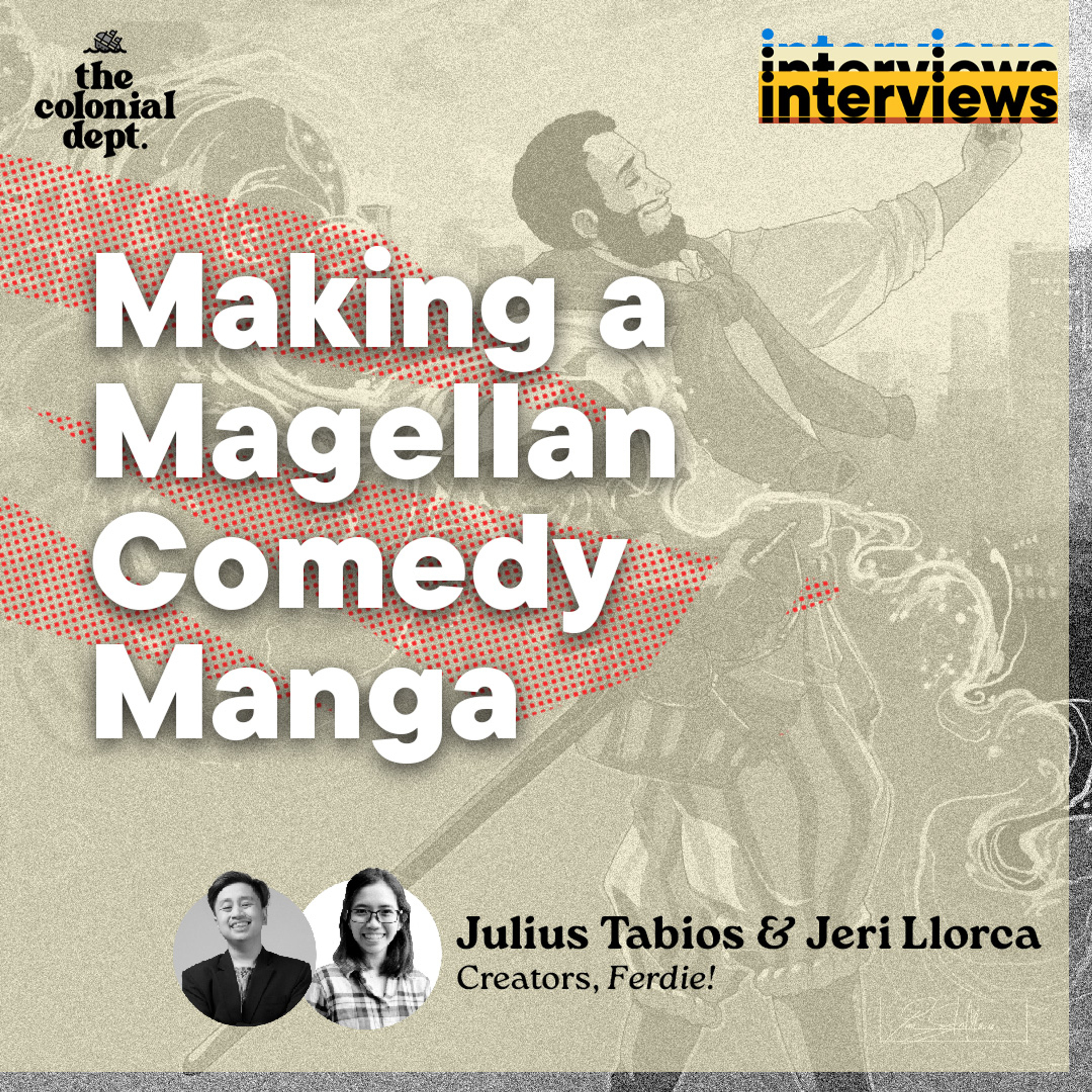
In the offbeat manga Ferdie!, Ferdinand Magellan and Antonio Pigafetta are caught up in a storm right before they arrive in the Philippines…and find themselves transported five hundred years into the future into a place that’s beyond anything they could have imagined. So what is an explorer and colonizer to do in 2020s Philippines? Why, become a content creator, of course!
In this Interview episode, I talk to Ferdie! creators Julius Tabios and Jeri Llorca about their comic book. Where did this crazy idea come from? How did their understanding of the historical Magellan craft thei...
S8E6: After the Black Ships Departed
The island of Balangingi stands halfway between Borneo and Mindanao. Surrounding Balangingi were sharp reefs and surging cross-currents that would be lethal to any boatman… except for the Balangingi Samal, of course. Surrounding the main landmass were little islets that would wink in and out with the tides. On the coast were thick snarls of mangrove; in the parched interior were swaying groves of coconut.
During the Spanish occupation, the Balangingi Samal—also known as the Banguingui Sama or the Sama Balangingi—visited the Philippines twice a year, raiding coastal villages across the Philippines and capturing many of thei...
S8E5: Rajio Taisō; Or, How to Get Fit in a Time of War

At seven o’clock on the dot, a high-pitched Japanese voice blared out from speakers and switched-on radios all across the archipelago. The program came on like clockwork, chirping in immediately after every station signed on for the day—a cheery signal of a brand-new day under Imperial rule.
In wartime Philippines, Rajio Taisō was everywhere—schools, private companies, government offices, military camps. If you browse through pictures from World War II, you can see many pictures of dozens or even hundreds of citizens stretching and twisting in unison. But how was this radio regimen baked into the live...
INTERVIEW: Restoring historical markers with Project Panandito
You pass by them every day: plaques of metal set onto walls and plinths, heavy with text and history. You may have wondered—how do you maintain these historical markers?
A group of students in the University of the Philippines Diliman wondered the same thing. So, for their required NSTP initiative, they formed Project Panandito, a student-led project that, during the sweltering summer months of 2026, went around historical sites in Manila to clean and restore some of these markers. In this interview, I talk to them about the nuts and bolts of cleaning a plaque, what to ex...
S8E4: Edison’s Cameras, Manila’s Trenches
Yes, Edison as in Thomas Edison, the light bulb guy. At the turn of his century, the tech wizard of Menlo Park produced thousands of movies as a showcase for his company’s vitascopes. Among those movies are five films about the Philippine-American War, produced in a flurry all throughout June of 1899.
It turns out that the boom of cinema dovetailed neatly with America’s growing imperial ambitions. But what made this faraway war so compelling for wide-eyed audiences captured by the magic of the silver screen?
Support us on Patreon: patreon.com/theco...
S8E3: Nobody Expects the Philippine Inquisition!
When you pulled up to the dock, they were there waiting for you, those holy men of God.
But beyond inspecting ships that docked in the ports of Manila and Cavite for blasphemers and banned items, the Inquisition in the Philippines also investigated Protestants. Jews. Masons. Muslims. Non-Catholic Christian sects, like Armenian Christians or Jansenists. Its investigators monitored cases of heresy, blasphemy, apostasy, bigamy, and contempt. They kept tabs on witches, sorcerers, palm readers, fortune tellers, astrologers, and peddlers of superstition. And they dutifully recorded all their investigations and sent them to their head office in Mexico.<...
S8E2: Riding a Tram in 1911 Manila
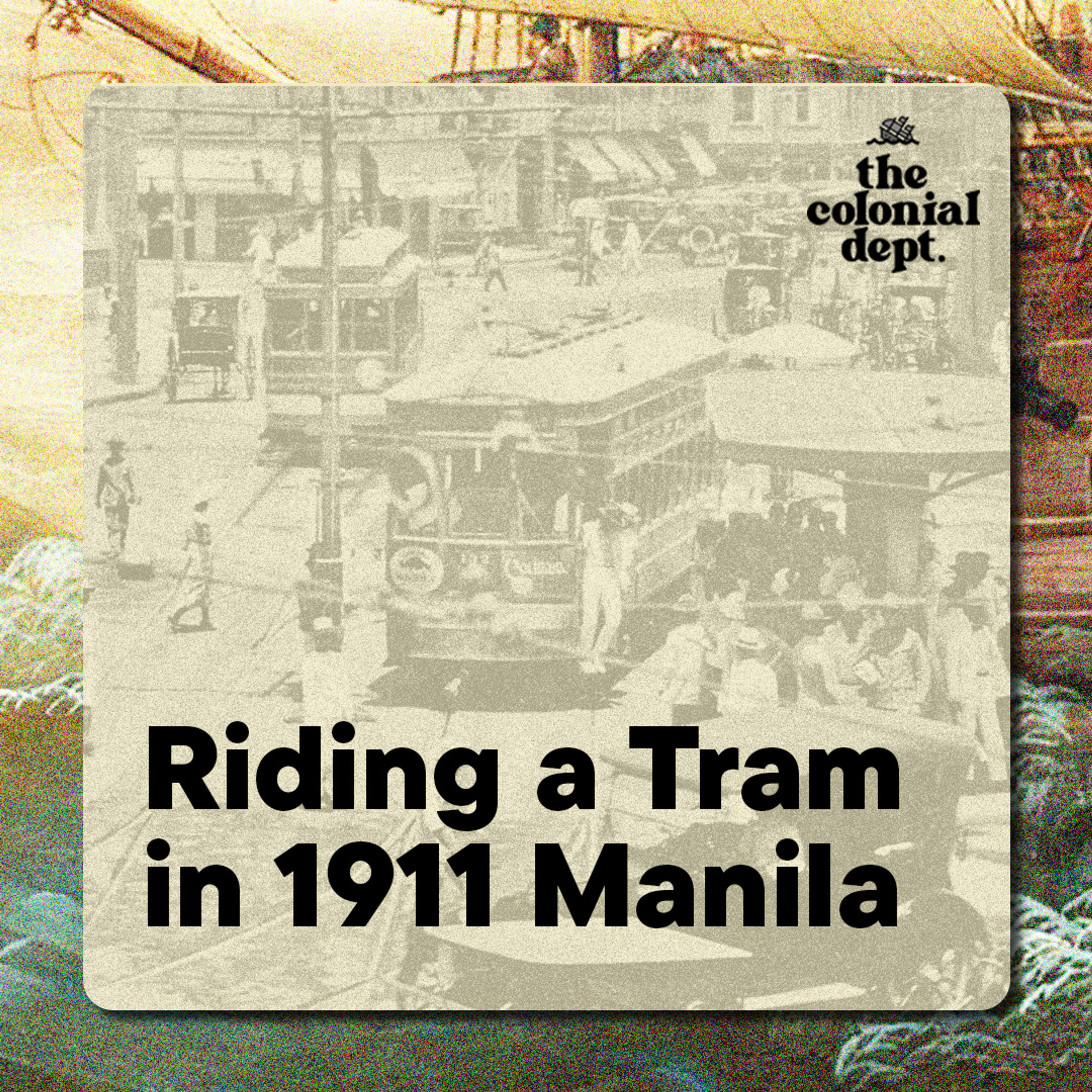
What kind of city was waiting for Dutch scholar Gerret Pieter Rouffaer when he got to Manila?
After more than a decade of occupation, the Americans had given the colonial capital some thorough nips and tucks. Aside from the glimmering roads and shady plazas, the Americans also laid down more tramways. Trams were already up and running during the latter part of the Spanish occupation, but in 1905, the US rehabilitated the old system. Unlike the old Spanish versions, these new streetcars barrelled along on double-wheeled trucks and could fit fifty people. They also ran on electricity.
INTERVIEW: Exploring the food history of the Philippines
“There’s a message to it: It’s our responsibility to keep Filipino food popular!”
At the launch for her book What Recipes Don’t Tell: Philippine Food History in Fifty Words, author and historian Felice Prudente Sta. Maria talked to a rapt audience at the Philippine Book Festival about a long career of writing about food. What new things can food tell us about our own history? How did we adapt techniques and ingredients from abroad… while still preserving our own? And how should we nurture this knowledge for future generations?
Joining her in this panel w...
S8E1: The Philippine Sour-chipelago
Sourness, according to Doreen Fernandez, “is a favored Philippine flavor.” Just how sour is sour? “Sour enough to savor, to make the lips pucker and the eyes squint slightly, and yet not too sour—just at the point of perfection.”
In the spectrum of sensation, sourness can be both sharp and sudden, an acetic shudder down the spine. Asim, the Tagalogs call it. From the earliest written records about the Philippines, it is this taste that has come to define our cooking. “Spanish colonials from the 1500s through the 1800s described indio food as primarily salty and sour,” write...
An important announcement about the future of The Colonial Dept.
Before we start Season 8, I have an important announcement about this little podcast. For more info, check out this Instagram post.
INTERVIEW: Twin timelines, entangled histories
“What does it take for a culture that has caused a lot of pain and suffering to have any chance at redemption… or any sense of justice?”
Tom Sykes’ riotous new book—a collision of a neon-powered 1980s Manila and a disaster-stricken barangay in the 1570s—attempts to answer the question… with many seedy side quests in between. How did he attempt to write his wild, genre-bending vision of the Philippines? And how does Back to the Future figure into it?
The Colonial Dept. Interview is a bonus show where I talk to researchers and authors who ar...
INTERVIEW: Sungka as a wargame?
What a folk game can tell us about how a datu waged war. An interview with Micah Perez of the UP Diliman Department of History.
The Colonial Dept. Interview is a bonus show where I talk to researchers and authors shining a light on our past. Know a historian or author I should talk to? Email me at [email protected].
Thumbnail image: Usernameko/Wikimedia Commons
Extra Credit: The supersized storms that hit the Philippines

From the archives of Philippine history, meteorologist Fr. Manuel Selga makes a historical list of some deadly typhoons. (Listen to S7E13 before listening to this one!)
S7E13: The War and the Weatherpriests
Ever since its founding in the 1860s, the Manila Observatory had stood watch against the typhoons and hurricanes that threatened to strike the Philippines. But decades later, they were unprepared for a different kind of approaching storm: the Second World War!
Cover photo from the Illustrated London News.
Additional audio from British Pathe.
Follow us on IG: @thecolonialdept
Follow us on TikTok: @thecolonialdept
Email us: [email protected]
References:
Warren, James Francis (2024). Typhoons: Climate, Society, and History in the...
Extra Credit: What we can still learn from the Laguna Copperplate Inscription

One of the Philippines’ most important archaeological finds, this thin sheet of metal still contains many mysteries. (Listen to S7E12 before listening to this one!)
S7E12: Turbulent Times at Manila Bay
In the late 1500s, sultans, kings, and outlaws alike all wanted a little slice of Manila. And over two turbulent decades, everyone from faraway Spain to neighboring Brunei asserted their claims over the rajahs and datus that lived there. This is the turbulent origin story of the city that we know today.
Follow us on IG: @thecolonialdept
Follow us on TikTok: @thecolonialdept
Email us: [email protected]
Cover photo from “Ataque de Li-ma-hong a Manila en 1574” by Juan Caro y Mora
Re...
Extra Credit: The Indian-Armenian who preserved and produced Philippine art

Born in Calcutta and in love with Philippine fashion, Rafael Daniel Baboom was a true partner in the creation of 19th-century Philippine art. (Listen to S7E11 before listening to this one!)
S7E11: Paint Me By Your Name
The nineteenth century—steamships, family names, world trade, foreign firms, liberal ideas. Great tides of change are roiling Manila. In the middle of the chaos, a new art trend captures the imagination of local elites. How are these letras y figuras holding a mirror to Philippine society?
Cover Photo from the Ayala Corporation Collection.
Follow us on IG: @thecolonialdept
Follow us on TikTok: @thecolonialdept
Email us: [email protected]
References:
Blanco, John D. (2009). Frontier Constitutions: Christianity and Colonial Em...
Extra Credit: On Tomas Claudio and other Filipinos in the frontlines of World War I

Tomas Claudio wasn’t the only Filipino who fought in the trenches of the Great War. Thousands of others also enlisted. (Listen to S7E10 before listening to this one!)
S7E10: Abaca World War
It was the Great War, the War to End All the Wars… and Philippine abaca merchants were raking in sky-high profits. The world’s most powerful navies relied on this plant—which is native to the Philippines—to keep their warships in battle-ready shape. But what the First World War giveth, the First World War also taketh away.
Follow us on IG: @thecolonialdept
Follow us on TikTok: @thecolonialdept
Email us: [email protected]
References:
Dacudao, Patricia Irene (2023). Abaca Frontier: The Socioeconomic and Cultural Transfor...
Extra Credit: A bullfight in Sulu

A story of a Philippine bullfight…in the unlikeliest place of alll! (Listen to S7E8 and S7E9 before listening to this one!)
S7E9: Running of the Bulls, Part Two
In the second part of our look at the lost sport of Philippine bullfighting, we go deep into its heyday in the 1800s, with social clubs, provincial arenas, and matadors with nicknames like “Fatiguitas.”
Then, we look at how and why bullfighting faded away in our archipelago.
Follow us on IG: @thecolonialdept
Follow us on TikTok: @thecolonialdept
Email us: [email protected]
References:
Vibal, Gaspar (2022). Bullfighting in the Philippines, 1602-2022. Vibal Books.
Cornwell, Zach (Host). (13 December 2021). “Gore: The Brutal History...
S7E8: Running of the Bulls, Part One
In fiestas in a bygone age, the corrida de toros—the coursing of the bulls—would always be part of the festivities and celebrations in town plazas across the Philippines. Why did this tradition disappear from our shores?
In this two-part episode, we examine the history of bullfighting in the Philippines. In Part One, join Antonio Luna as he watches his first bullfight… and then travel back in time to the very start of the Spanish occupation, when the fiesta de toros became a fixture in our holidays!
Follow us on IG: @thecol...
Extra Credit: Bits and pieces about Bagumbayan

We know it now as the place where Rizal was executed, but the history of Bagumbayan reaches back centuries! (Listen to S7E7 before listening to this one!)
S7E7: Extramuros
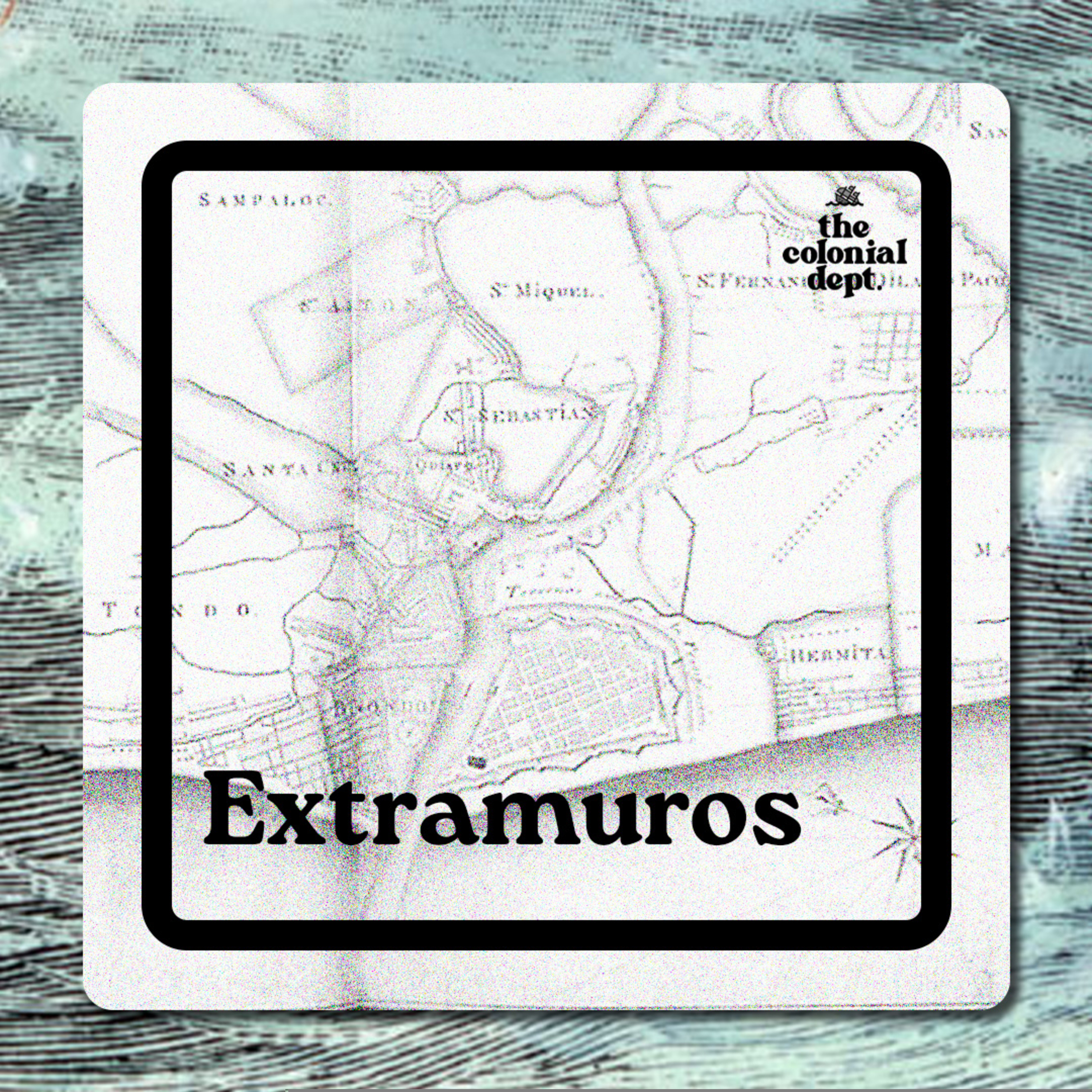
For centuries, Spain ruled the Philippines from within the closed, claustrophobic walls of Intramuros—the walled city of Manila. But right outside these walls, Manila, too, grew and developed, following the contours of migration, enterprise, and yes, even conflict. Let’s track the evolution of the districts and arrabales outside the walls, or extramuros.
Follow us on IG: @thecolonialdept
Follow us on TikTok: @thecolonialdept
Email us: [email protected]
References:
Camagay, Ma. Luisa (1993-1996). “Urban Development of Manila During the 19th Century.” In Victoria...
Extra Credit: The “cultural fighters” of the Japanese Propaganda Corps

A brief look at the team of novelists, poets, painters, cameramen, filmmakers, and other creatives who invaded the Philippines as part of the Propaganda Corps. (Listen to S7E6 before listening to this one!)
S7E6: Shisōsen—A Japanese Propagandist Confronts the Filipino Psyche
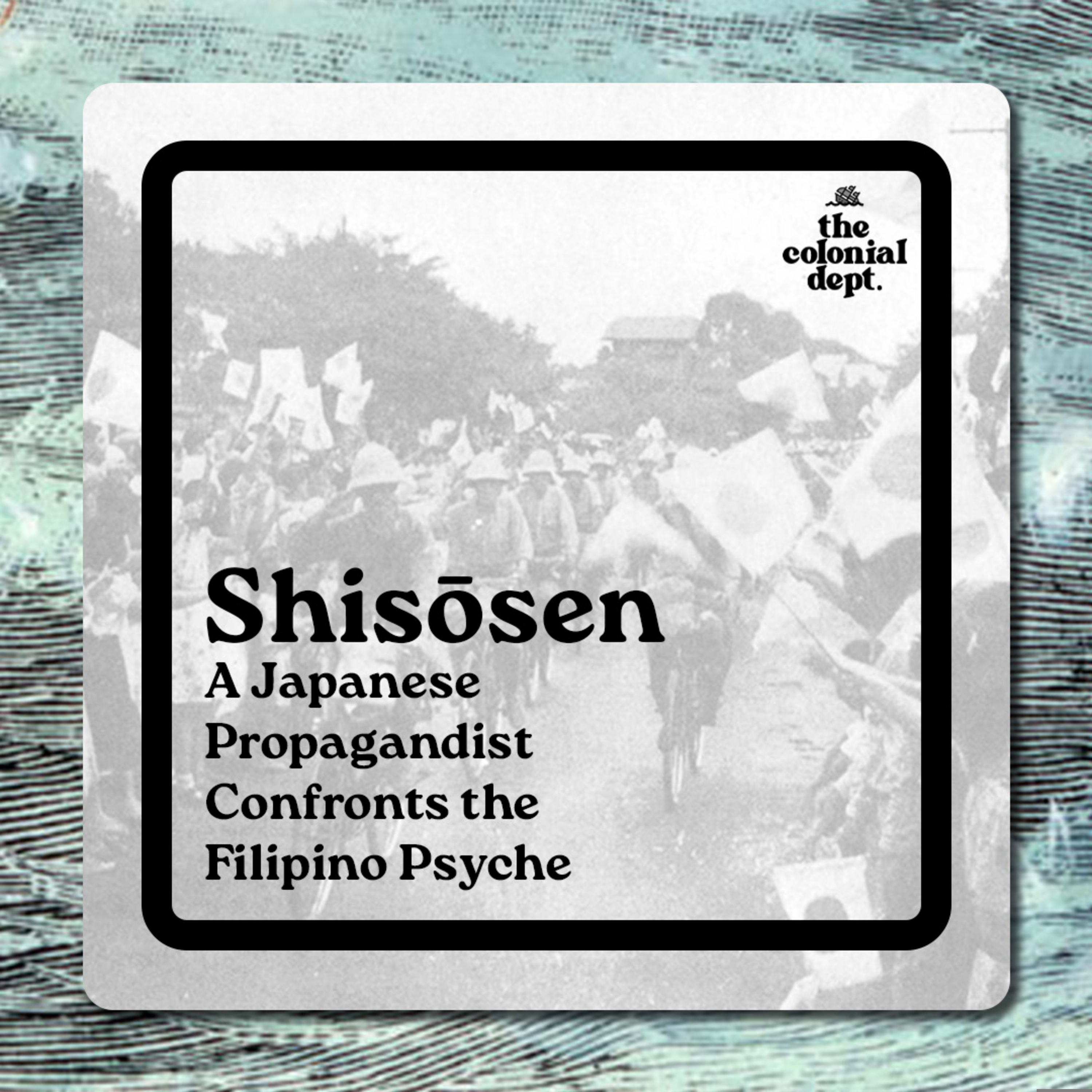
Beyond the bullets, the tanks, the planes, the bombs, the Japanese also brought other weapons to bear against the Filipinos: Typewriters. Radio waves. Movie theaters.
Here is one story from the frontlines of shisōsen, or "the thought war."
Follow us on IG: @thecolonialdept
Follow us on TikTok: @thecolonialdept
Email us: [email protected]
References:
Campoamor II, Gonzalo (2017). “Re-Examining Japanese Wartime Intellectuals: Kiyoshi Miki during the Japanese Occupation of the Philippines.” Asian Studies: Journal of Critical Perspectives on Asia, 53(1), pp. 1-38.
...
Extra Credit: The socialites, spies, and convicts who dined at Tom’s Dixie Kitchen

From the Panlilios of Pampanga to future gangster Jack Riley, Tom’s Dixie Kitchen pops up in the biographies of some unexpected people. (Listen to S7E5 before listening to this one!)
S7E5: Inside Tom’s Dixie Kitchen, Prewar Manila’s Hottest Restaurant
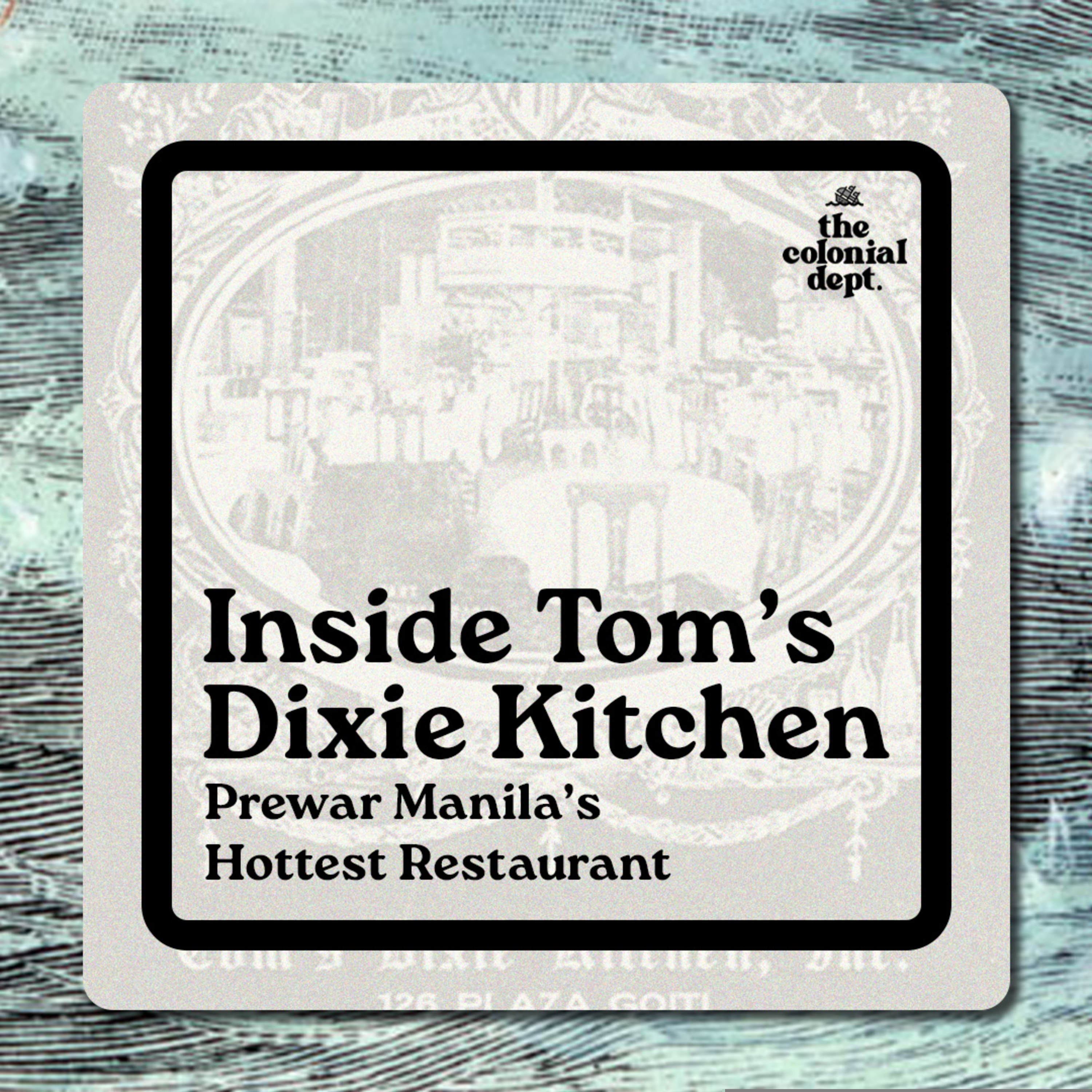
Governors and gangsters, spies and socialites—it seemed that all of Manila dined out at the two-floor restaurant that rose above the bustle of Plaza Goiti. Inside, waiters handed you menus with more than three hundred dishes on offer, and, for special guests, directed you to special themed dining rooms upstairs. But there was enough entertainment on the first floor. There was a jazz band playing live music. There was a boxing promoter hamming it up at the next table. There was a steady stream of VIPs coming in through the front door.
This is the story of...
