SilviCast

SilviCast is a podcast devoted to silviculture: the science, practice, and art of forestry. We explore current topics in forest management, highlight innovative practices, and interview practitioners and researchers aiming to solve challenges facing today’s managers. The show is tailored for foresters and other land managers, whether it’s listening at the office or in the truck on the way to the field. SilviCast is hosted by Wisconsin Department of Natural Resources silviculturists Greg Edge and Brad Hutnik and produced by the University of Wisconsin-Stevens Point’s Wisconsin Forestry Center.
S.7 Ep.9 - Plant the Seed

In this episode of SilviCast, we talk with regeneration experts Mike Reinikainen, Roger Bohringer, and Tom Hill about direct seeding—a challenging and often misunderstood approach to reforestation that establishes forests by planting seeds rather than seedlings. Direct seeding can be an economical and effective way to establish new forests, but success depends on getting the details right. We explore seed rates and timing, site preparation, planting depth, and the challenges of seed predation and seed procurement. Because little has been written about the practical application of direct seeding, success requires careful planning, patience, and diligence—as well as a wi...
S.7 Ep.8: Rethinking Black Locust

Black locust doesn't have many fans among foresters in North America. It's often criticized for growing crooked, spreading aggressively, and producing poor-quality stems. But is the problem really the tree, or is it how we've been growing it? In this episode, Zsolt Keserű, Ph.D., Head of the Department of Plantation Forestry and Senior Research Fellow at the Hungarian Forest Research Institute, University of Sopron, shares how decades of European research and silvicultural innovation have made it possible to grow straight, high-quality black locust timber. Join us for this episode of SilviCast as we talk about the genetics and m...
S.7 Ep.7: Beaviculture

Beavers are often seen as a nuisance, but what if they're actually some of nature's most effective forest managers? In this episode of SilviCast, we welcome renowned ecohydrologist Dr. Emily Fairfax to explore the surprising role of beavers as ecosystem engineers. Learn how beaver-created wetlands improve water storage, reduce wildfire risk, enhance biodiversity, store carbon, and influence forest management. Dr. Fairfax highlights practical strategies for addressing challenging beaver activity that impact roads, infrastructure, and timber production. This episode offers a fresh perspective on how one species can reshape landscapes and strengthen forests in a changing climate.
...
S.7 Ep.6: The Fire Forest: Restoring the Long-leaf Pine

What tree begins life looking more like a tuft of grass, survives repeated fires for years on the forest floor, and then suddenly bolts toward the canopy in a remarkable growth spurt? The longleaf pine (Pinus palustris) is one of the most unique and ecologically important tree species in North America. Once dominating the coastal plains of the southeastern United States, longleaf pine forests have been reduced to less than 5% of their historic range. Yet these forests remain among the most biologically diverse ecosystems on the continent. In this episode of SilviCast, we explore the fascinating life history of l...
S.7 Ep.5: The View from the Cab

Good silviculture isn’t just about knowing the science—it’s about building strong partnerships. One of the most critical relationships in forestry is the collaboration between foresters and loggers. Successfully marking a timber sale, for instance, means understanding not only the forest but also the equipment and capabilities that will bring the prescription to life. In this episode of SilviCast, we dive into the world of modern logging equipment used across eastern North America. Joined by Carl Lockhart, Forestry Products Consultant with John Deere, we explore how today’s machines shape on-the-ground decisions—and why aligning knowledge between planning a...
S.7 Ep.4: Down Home Carbon: Climate Solutions from Family Forests

Managing forests for carbon—and navigating emerging carbon markets—can feel overwhelming, especially for family forest owners managing smaller parcels. So how can landowners with just a couple forty-acre parcels participate in these opportunities? And what does carbon-enhanced silviculture actually look like at that scale? In this episode of SilviCast, we sit down with Brittany VanderWall, Lynn Riley, and Richard Campbell from the American Forest Foundation to break down the essentials of the Family Forest Carbon Program. They share practical insights on how family forest owners can access carbon markets, implement climate-smart forest practices, and make the most of thei...
S.7 Ep.3: The Old-Growth Project

Many of us in forestry remember the spotted owl controversy of the 1980s — a pivotal moment that put old-growth forests of the Pacific Northwest in the national spotlight. But what’s less often told is how that same moment sparked a wave of old-growth research here in the Lake States, launching more than three decades of work to better understand how old-growth northern hardwood forests differ from those we actively manage. In this episode of SilviCast, we sit down with Julia Burton, Associate Professor of Silviculture at Michigan Technological University, to explore what we’ve learned...
S.7 Ep.2: The Restoration Forester
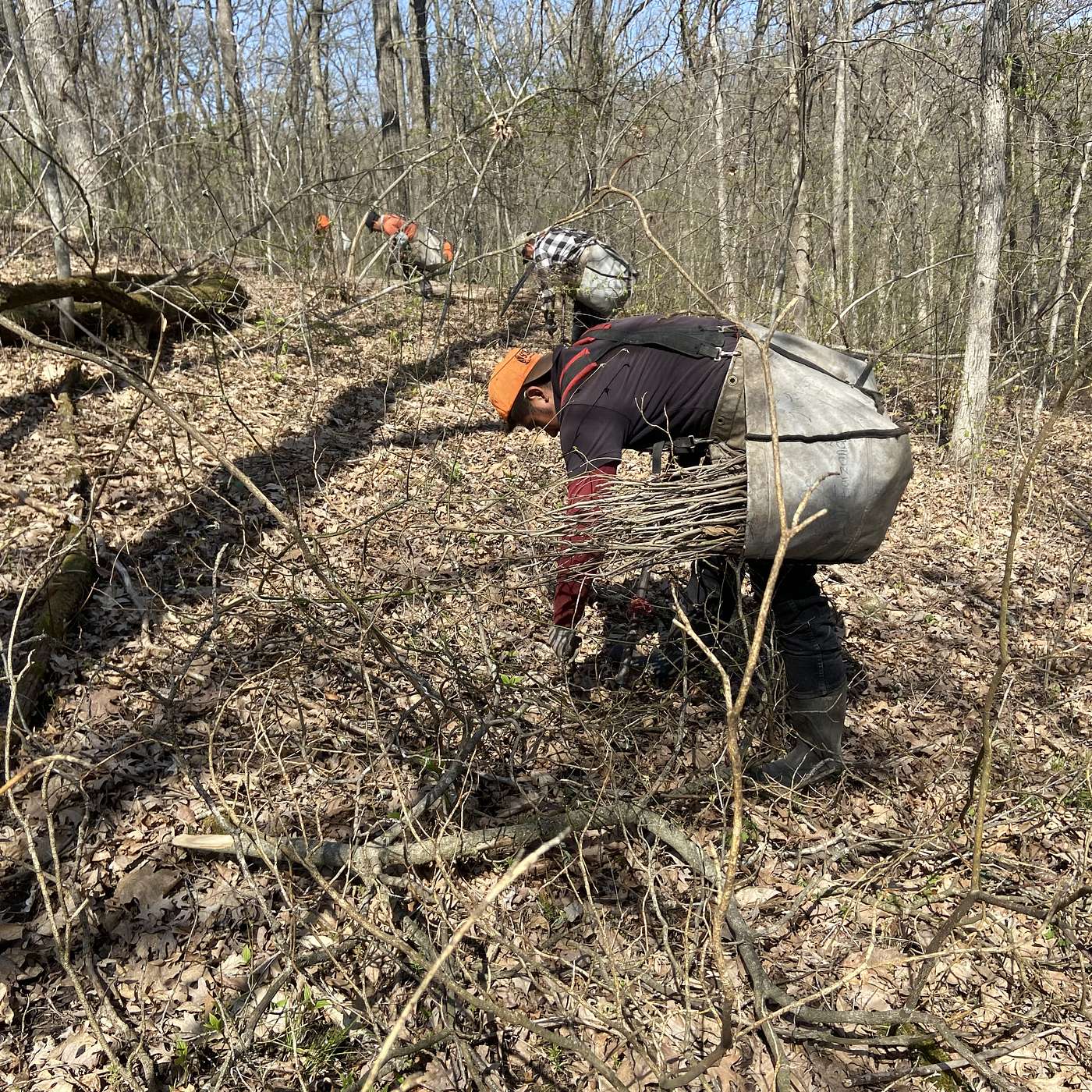
Foresters know degraded forests all too well. You’re out on a woods-walk with an enthusiastic landowner, but your eyes go straight to the poor growing stock, invasive plants, and eroded forest soils – the fingerprints of past degradation. Regardless, you set about the complex task of developing a prescription that will nudge this forest towards a brighter future. Foresters don’t always think of themselves as restorationists, but in many ways, the tools of silviculture are the tools of restoration. In this episode of SilviCast, we dive into the science and practice of forest restoration with John Stanturf, visiting profes...
S.7 Ep.1: Morticulture

A dead tree is not truly dead. As trees die, they become snags, downed logs, and eventually return to the soil as organic matter. Along this journey, they host a wide range of organisms and play essential roles in forest ecosystems. How foresters think about and manage dead trees can be just as important as how they manage living ones. In this episode of SilviCast, we explore the concept of morticulture - the intentional management of deadwood in forests. Join us for a conversation with Mark Harmon, professor emeritus in the Department of Forest Ecosystems and Society...
S.6 Ep.11: How To Love a Forest

Sometime the hardest thing and the right thing are the same. It is true of relationships, and it is true of forests. In this episode, we talk with author Ethan Tapper about his new book, How to Love a Forest. A Vermont Forester, Ethan dives deep with us into what it means to love a forest as a landowner and a forester, and to work with those who may not see the potential in restoring their forest.
Send us Fan Mail
S.6 Ep.10: Uneven by Design

The legacy of the “cutover” has left much of the Lake States—and many other regions—with a dominance of even-aged forest stands. Today, both landowners and foresters increasingly consider converting these stands to uneven-aged management to achieve a range of ecological, economic, and aesthetic goals. However, the outcomes of these efforts—even after multiple stand entries—have sometimes fallen short of expectations. Significant silvicultural challenges remain in determining the most effective approaches for even- to uneven-aged conversion. To explore these challenges, we’re joined by Dr. Ralph Nyland, Distinguished Service Professor Emeritus of Silviculture at the SUNY College of Environment...
S.6 Ep.9: River Trees

Restoring and reforesting floodplain forests is no small feat—these ecosystems are as fascinating as they are complex. While they face many of the same disturbances as upland forests, bottomland ecosystems are uniquely shaped by water. Adding to this challenge of hydrology are the profound impacts of levies, agriculture, dams, and other disturbances. In this episode of SilviCast, we dive deep into the world of bottomland forest restoration with insights from national experts at the 2025 Northeastern and Southern Forest and Conservation Nursery Meeting. Join us for an engaging panel discussion featuring Dan Dey (recently retired, USFS Northern Research Station), An...
S.6 Ep.8: Bird's Eye View

Sometimes, a simple “silvicultural tweak” can make a big difference in achieving diverse forest management goals. The real challenge lies in knowing when—and how—to make those adjustments. To help with that, several states have created Forestry for the Birds guidebooks, offering practical strategies to enhance forest habitat for birds. In this episode of SilviCast, we’re joined by Christian Nelson, Lake States Coordinator for the Forest Stewards Guild, to discuss the newly released Forestry for Minnesota Birds guidebook and how it can support better habitat outcomes across the region.
Photo Credit: Mark Schocken
Send us Fa
S.6 Ep.7: Black Gold

Eastern black walnut holds an almost legendary reputation as one of the most valuable timber species in central and eastern North America. A single, high-quality tree can fetch thousands of dollars—sometimes even influencing the outcome of an entire timber sale. With that level of interest, you’d think we’ve uncovered everything there is to know about this remarkable species. And while researchers and foresters have developed extensive knowledge around its silviculture and genetics, there’s still a lot to learn! In this episode of SilviCast, we delve into the silviculture of black walnut with Lenny Farlee, Extension Forester...
S.6 Ep.6: Landscape Change: Dynamic Forest Restoration Blocks

Foresters are pretty good at stand-level silviculture. But what if we want to make changes to forest vegetation at a much larger scale? Silviculture at scale to impact landscape-level change is much trickier, whether that’s aiming for a target age-class distribution or meeting the broad habitat needs of birds. Where do we even begin? In walks the concept of Dynamic Forest Restoration Blocks, or the strategy of breaking up the landscape into manageable and biologically meaningful units where we can focus on specific forest management objectives. Join us on this episode as we talk with pioneers of this con...
S.6 Ep.5: To Treat, Or Not To Treat, That Is the Question

Garlic mustard blooms, panic ensues! Many foresters in the eastern hardwood forests of North America can appreciate this sentiment as they see yet another invasive plant, garlic mustard, colonize their woodlands and forests. Maybe they just make note of it on the inventory or maybe they prescribe an aggressive treatment plan of pulling and herbicides. But maybe there is a different approach… time. Join us on this episode of SilviCast as we talk with Dr. Bernd Blossey, Professor at Cornell University, about his interesting and innovative research on garlic mustard invasions.
Send us Fan Mail
S.6 Ep.4: My Buckthorn Chia Pet

Buckthorn has been the bane of many foresters and forest landowners throughout eastern North America. This long-lived, woody plant is capable of forming dense thickets, degrading native understory plant communities and impeding tree regeneration. While herbicide control measures can be effective, managers have struggled for long-term control of this prolific plant. Join for this episode of SilviCast as we explore ways to disrupt the buckthorn cycle with Dr. Mike Schuster, Researcher at the Minnesota Invasive Terrestrial Plants and Pests Center.
Send us Fan Mail
S.6 Ep.3: Line of Sight

It’s hard to turn around these days without seeing or reading something about UAVs or Unmanned Aerial Vehicles. Drones are becoming an increasingly important tool in many fields, including within the practice of silviculture. On this episode of SilviCast we explore the soaring use of drones for site preparation and release treatments. Join us for a conversation with Rick Hill, Regional Silviculturist and Reforestation Specialist with Michigan DNR and Kyle Schempp, Project Manager and Drone Pilot at Wildlife and Wetland Solutions.
Send us Fan Mail
S.6 Ep.2: Toast Me Timbers!

Foresters are increasingly aware of the importance of prescribed fire as a silvicultural tool in the maintenance and management of fire-adapted forest ecosystems. At the same time concerns remain over the impact of those fires on the timber resource. Join us for a conversation with Mike Saunders, Professor of Silviculture in the Department of Forestry and Natural Resources at Purdue University, as we explore the effects of prescribed fire on tree wounding and timber quality in the oak-hickory forests of North America.
Send us Fan Mail
S.6 Ep.1: Acadian Femelschlag

German foresters sometimes named silvicultural systems after the region where the treatment was developed and practiced. So it is with the Acadian femelschlag, a locally developed gap-based system designed to restore species diversity and structure to the mixedwood Acadian forests of Maine and eastern Canada. Join us on this episode of SilviCast as we talk with Robert Seymour, Curtis Hutchins Professor Emeritus of Silviculture at the University of Maine, about what he has learned from over four decades of innovative silvicultural research and teaching in the Acadian forests.
Send us Fan Mail
S.5 Ep.12: Practical Wisdom

Foresters need to make decisions every day, and sometimes difficult decisions as we attempt to understand and address the diverse needs of the land, the landowner, and others. Similar to marking a tree, these decisions often require us to walk all the way around to see an issue from all sides. Join us on this season 5 finale of SilviCast as we talk with Marianne Patinelli-Dubay, Environmental Philosophy Program Coordinator at the State University of New York, College of Environmental Science and Forestry, about ethics and silviculture.
Send us Fan Mail
S.5 Ep.11: Ecological Memory

We’ve all seen it in the field… Aldo Leopold alluded to it… parts of a forest ecosystem are missing or changed. Now the forest doesn’t respond the same to silvicultural treatments that worked in the past. The forest is less predictable. In other words, the forest has lost memory, specifically ecological memory. Join us on this episode of SilviCast as we explore the concept of ecological memory with Chris Webster, professor of quantitative ecology at Michigan Technological University. Learn how memory can get lost and how thoughtful silviculture can help restore these memories.
Send us...
S.5 Ep.10: Why Does My Paint Gun Hate Me?

The paint gun is a basic tool of the forestry trade. But what happens when we’re two forties into the woods and our paint gun goes down? This can put a major clog in our day. Maybe the problem with our paint gun is us? Join us on this episode of SilviCast as we talk with three experts in the field about Trecoder, Panama, and Nel-Spot paint guns. Ethan Tapper with Bear Island Forestry, John Freeman with Panama Forestry Equipment, and Ryan Holm with Nelson Paint give us tips to keep our paint guns flowing freely!
Sen...
S.5 Ep.9: Forest Farming: Planting the Seed

Most of us enjoying a little on-the-job foraging… some blackberries here, some morels there. But how often do we think about intentionally managing non-timber forest products? Forest farming is an agroforestry practice than involves the intentional stewardship of edible, medicinal, and decorative crops beneath a forest canopy. Join us as we discuss the integration of forest farming and silviculture with Eric Burkhart, Teaching Professor in the Department of Ecosystem Science and Management at Penn State University.
Send us Fan Mail
S.5 Ep.8: Deer, Oh Deer!

If you are a forest practitioner in the eastern forests of North America (and maybe elsewhere) at one time or another you have likely been frustrated by white-tailed deer. Browse impacts on forest vegetation are significant and long-lasting, but those impacts are not the same everywhere making deer browse a challenging issue to both understand and address. Join us on this episode of SilviCast as we seek to better understand how deer impact our forests and what clues the latest science holds for mitigating browse impacts through silviculture. We spoke with two leading researchers on deer-forest interactions, Alex Royo...
S.5 Ep.7: Tsuga Science

It’s an all too familiar scenario to foresters…a new pest is introduced into another part of the range and slowly works its way to a forest near you. So it goes with the hemlock woolly adelgid (HWA) that was introduced into eastern North America over 70 years ago. HWA has not yet arrived in Wisconsin, but can we learn from the research and field experience of our colleagues in the east? Are there silvicultural approaches that can be used to make hemlock trees and stands more resilient, along with other integrated pest management approaches? Join us on this episo...
S.5 Ep.6: Green, Red, Dead

If foresters have a super-power, it might just be the power of observation. They notice change in the forest and correlate facts that would otherwise be isolated and missed. As a result, foresters have the unique ability to adapt and find management solutions in a changing environment. In this episode of SilviCast we will explore an example in Iowa of changing environmental conditions and the cumulative effects on white oak (Quercus alba), and one forester’s quest to find answers. Join our conversation with Iowa DNR Forester, Joe Herring, as we try to solve the mystery of the dying wh...
S.5 Ep.5: An Old-New Idea: Cluster Planting

It pays to be observant! Ogijewski, a forest scientist working in Russia in the early 1900s observed that oaks sometimes regenerated in small clusters where wild boars disturb the forest floor. From this simple observation he developed a reforestation method called cluster planting, the planting trees or seeds in tightly-spaced, small functional groups. The method caught on in Europe and is now practiced as a way to decrease planting costs and restore stand diversity. In this episode of SilviCast we explore the practice of cluster planting with Dr. Somidh Saha from the Institute of Technology Assessment and Systems Analysis i...
S.5 Ep.4: Putting the B in BDq

It’s not worth saying anything unless it’s worth taking a long time to say, to paraphrase Treebeard in The Lord of the Rings. And sometimes you need to play the long game if you’re a research forester too. Long-term silvicultural studies are surprisingly rare, but extremely valuable. That is why a recent paper on six decades of selection cutting results got our attention. The Cutting Methods Study is a long-term investigation of cutting systems in second-growth northern hardwood stands on the Argonne Experimental Forest in northern Wisconsin. Join us on this episode of SilviCast as we explor...
S.5 Ep.3: Ash: A Lingering Hope

Sometimes foresters in eastern North America may feel as if they are in a Lemony Snicket novel, with chestnut blight, spongy moth, Dutch elm disease, and emerald ash borer creating a continuing series of unfortunate events. Emerald ash borer or EAB is one of the most recent invasive pests with the potential to eliminate an entire tree species. And foresters have many questions on how to manage EAB impacted stands and what they can do to help maintain ash trees as a component of our forests. On this episode of SilviCast we talk with two of North America's leading r...
S.5 Ep.2: Digging into the Wood Wide Web

As foresters we spend a great deal of time looking up, to evaluate forest composition, structure and growth. The story below ground is equally as interesting however, with complex interactions between soils, nutrients, water, roots, and a host of other flora and fauna. As they say in Vegas, what happens below ground, stays below ground! Everything here is more difficult to study. This is particularly true about a class of organisms critical to trees, mycorrhizal fungi. We know that mycorrhizal fungi play an important role in allowing trees to uptake more nutrients and water. But does it go further...
S.5 Ep.1: Putting the Old in Old-Growth

No matter how you define it, old-growth forests are scarce as hen’s teeth in the eastern United States. More than 99% of our forests are second growth. While we can’t speed up time, we can speed up the development of old-growth characteristics through creative silviculture. Join us on this episode of SilviCast as we talk with Paul Catanzaro, Professor and State Extension Forester at the University of Massachusetts - Amherst, about a range of silvicultural techniques to restore old-growth characteristics.
Send us Fan Mail
S.4 Ep.11: The Art of Silviculture

The official Society of American Foresters' definition of silviculture describes it as both an art and science. Are foresters both artists and scientists? What role does creativity play when developing a silvicultural prescription or setting up a timber sale? In forestry school we learn the foundational sciences of silvics, forest ecology, soils, wildlife, and water. And through experience and time spent in the forest we learn how to best apply that science to particular stands and site conditions. Join us on this season 4 finale of SilviCast as we talk with Marcella Windmuller-Campione, Associate Professor of Silviculture at the University...
S.4 Ep.10: White Oak, Whiskey, and Wildlife

If you're a whiskey enthusiast, you are probably aware of a lesser-known federal law that requires all bourbon (an American whiskey) to be aged in a “charred new oak container." And those containers or casks are made almost exclusively from white oak (Quercus alba). But white oak has been popular long before the recent rise in whiskey-sipping Gen Xers! It is simply hard to overstate the importance of this tree species to forest products, wildlife habitat, and ecosystem services. In fact, stakeholders from across eastern North America have joined forces to promote the long-term sustainability of white oak forests th...
S.4 Ep.9: Vision of Chief Oshkosh

Good silviculture is about using the best available science, along with the experience and local knowledge we accumulate in the field. What if we practiced forestry in an area for not only one lifetime, but for generations upon generations. Imagine the knowledge-base we could draw from to guide our silviculture! Indigenous peoples have been managing forest vegetation for various purposes for generations, accumulating a great understanding of how forest ecosystems work, sometimes referred to as Traditional Ecological Knowledge. On this episode of SilviCast we explore this topic by looking at silviculture on the Menominee Forest. The Menominee Tribe has...
S.4 Ep.8: ICO ICO a Nae

They say if you want forest heterogeneity, just get a larger group of foresters to mark the stand. While it is true that not every forester marks the same, it is often challenging if we want to intentionally create spatial variability. Especially if we want to emulate spatial patterns that would be typical for a specific forest type and natural disturbance regime. The ICO method (which stands for individuals, clumps, and openings) is a stand-level tool developed in the western US to help foresters restore the patterns of individual trees, clumps, and openings commonly found in pine/mixed conifer...
S.4 Ep.7: The Cedar Club

Foresters love a challenge! And one such challenge in eastern Northern America has always been northern white-cedar (Thuja occidentalis). A both ecologically and commercially valuable tree species that can be slow-growing, tricky to regenerate, and highly susceptible to deer browse. Join us on this episode of SilviCast as we introduce you to the Cedar Club, a passionate group of forest practitioners and researchers who have been tackling the cedar management question for the pat 23 years. Explore the challenges and opportunities to sustainable management of northern white-cedar.
Featured "Cedar Club" Guests: Dr. Laura Kenefic, Research Forester an...
S.4 Ep.6: Green Side Up

It seems that every young forester may have heard the old adage “green side up" tossed at us half-jokingly while learning to plant our first tree seedlings, almost as if to say "don't overthink this one kid." As experienced foresters we soon learn that achieving tree planting success is a whole lot more complicated. There are critical variables from stock type to site preparation to planting technique. If the world is going to get the trillion tree initiative right, all of these variables must be addressed. And there may be no group of professionals who know these variables better th...
S.4 Ep.5: The Seedling and the Flame

We all know that oak and fire go together like peanut butter and jelly. What we have been missing is the practical knowledge of where, when, and how to apply fire in oak ecosystems. There are few who have contributed more to this knowledge base than Dr. Patrick Brose from the US Forest Service's Northern Research Station. Dr. Brose's research has developed key silvicultural applications of fire to regenerate and sustain oak forests and woodlands. Join us on this episode of SilviCast as we talk with Dr. Brose about what he has learned over the past 25 years of studying...
S.4 Ep.4: How Now Brown Cow?

Foresters have been warning landowners for years about the potentially damaging impacts of cows in their woods. So it is not surprising that we raise an eyebrow when conversations start about intentionally integrating livestock and forests. In this episode of SilviCast we explore the management practice known as silvopasture, or the intentional integration of trees, forage, and livestock. Join us as we discuss what silvopasture is and is not, with Rich Straight, Technology Transfer Leader at the U.S. Forest Service’s National Agroforestry Center.
To earn CEU/CFE credits, learn more, or interact with SilviCast, visit th...