Volts
Volts is a podcast about leaving fossil fuels behind. I've been reporting on and explaining clean-energy topics for almost 20 years, and I love talking to politicians, analysts, innovators, and activists about the latest progress in the world's most important fight. (Volts is entirely subscriber-supported. Sign up!) www.volts.wtf
So, how about those midterm elections?

This is a public episode. If you'd like to discuss this with other subscribers or get access to bonus episodes, visit www.volts.wtf/subscribe
Last week’s election was a blue wave all the way down the ballot: Democrats took the House and Senate, went from 16 state trifectas to as many as 22, flipped utility commissions, and rejected data centers almost everywhere. Caroline Spears of Climate Cabinet, which won more than 100 of its 120-plus races, joins me to sort through the statehouses, PSCs, and ballot measures. Then we ask the harder questions of whether these new majorities ca...
Best of October 2026
This is a free preview of a paid episode. To hear more, visit www.volts.wtf
Volts published eight conversations in October, which is a lot for anyone to listen to. We’ve rounded up the highlights into less than an hour. Enjoy!
Chapters
00:00 – Introduction
01:52 – Leah Stokes on passing the IRA
07:52 – Daniel Palken on the permitting bill
13:26 – Matt Traldi on local clean energy fights
19:38 – Kristian Jensen on Denmark’s utilities
24:56 – Nick Chaset on consumer protection
30:11 – Sam D’Amico on engineers and factories
35:4...
The transformative potential of solid-state transformers

This is a public episode. If you'd like to discuss this with other subscribers or get access to bonus episodes, visit www.volts.wtf/subscribe
Power electronics have taken over almost everything in our lives, with the exception, oddly, of the power grid itself — it is still held together by tens of millions of analog, iron-and-copper transformers, the design of which has barely changed in a century. Solid-state transformers replace the dumb gray box with something that can monitor and steer power or convert it from AC to DC and vice versa. In this episode, Enphase co-founder Ra...
The (climate) case against (AI) data centers

This is a free preview of a paid episode. To hear more, visit www.volts.wtf
Volts guests have argued that data centers can be good for the grid if they’re built right. Here I hear the case against, from Ketan Joshi, a former wind-industry analyst who now tracks Big Tech’s climate claims. He sees data centers as the wrong kind of demand growth: lumpy, concentrated, unwanted by neighbors, and largely met with gas. Underneath it all is the worry that the backlash against data centers will become a backlash against electrification itself.
Chap...
The PAC taking out clean energy opponents

This is a public episode. If you'd like to discuss this with other subscribers or get access to bonus episodes, visit www.volts.wtf/subscribe
Clean energy is the cheapest, fastest-growing source of power in the country, yet politically it barely registers. Republicans gutted its tax credits last year without fearing any consequences. The Invest in Tomorrow Coalition, a super PAC backed by clean energy investors, is trying to change that the old-fashioned way: by punishing the industry’s enemies. It went six for six in this year’s primaries; it’s now spending at least $15 million agains...
Building our piece of the electric stack
This is a public episode. If you'd like to discuss this with other subscribers or get access to bonus episodes, visit www.volts.wtf/subscribe
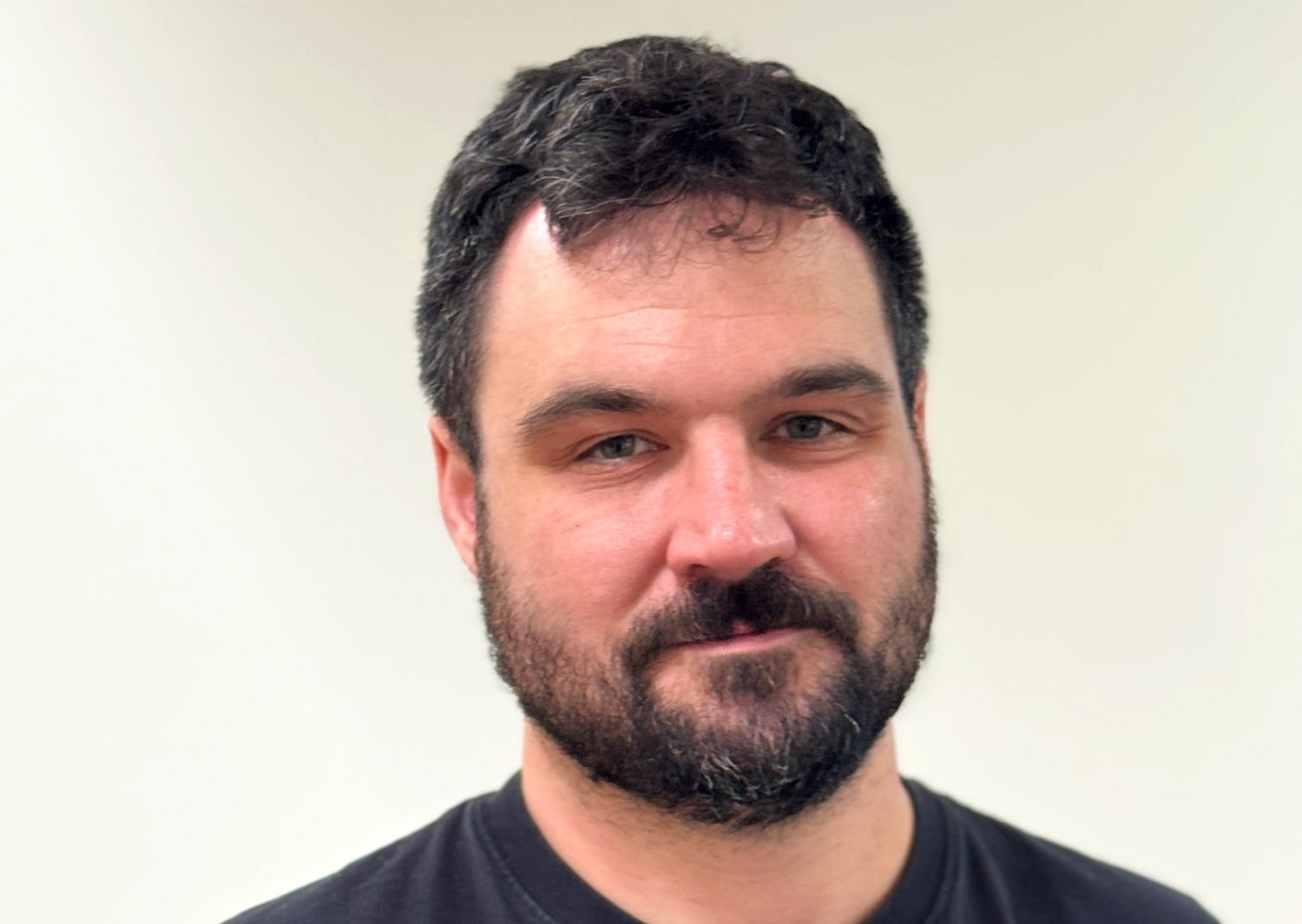
Collectively, the electric stack (batteries, motors, chips, power electronics) has gotten about 99% cheaper since 1990. It is quietly remaking every machine that turns electricity into motion, heat, or work. Problem is, China makes most of it. Sam D’Amico, co-author of “The Electric Slide” and founder of Impulse Labs, is betting the US can still claim a piece of that stack. He’s starting with a battery-powered induction cooktop. We talk about why domestic...
Can distributed energy work around American utilities?
This is a public episode. If you'd like to discuss this with other subscribers or get access to bonus episodes, visit www.volts.wtf/subscribe
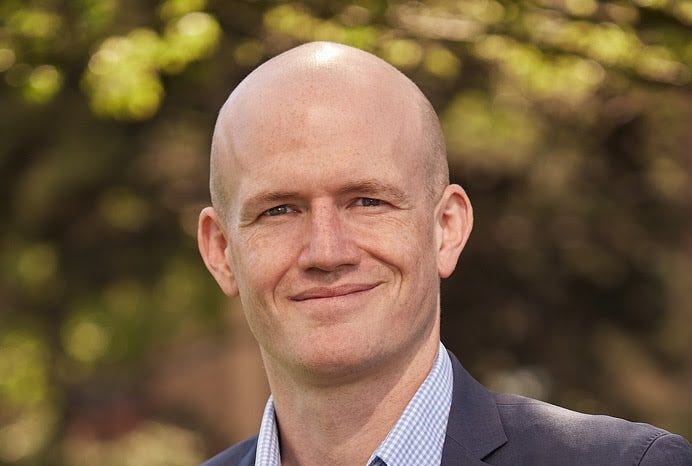
American homes are filling up with batteries, EVs, and smart thermostats that could be coordinated to make the grid cheaper and more reliable — but almost none of them are. To understand why, it helps to watch what happens when the company best in the world at this tries to do it here. In Britain, Octopus Energy has built a giant virtual power plant out of its customers' devices. In the US, it ha...
What’s up with Denmark?

This is a public episode. If you'd like to discuss this with other subscribers or get access to bonus episodes, visit www.volts.wtf/subscribe
Denmark gets a large share of its power from wind and other renewables and has cut its emissions roughly in half since 1990, but independent analysts doubt it will hit its 70 percent target for 2030. Kristian Jensen, CEO of Green Power Denmark and a former Danish minister of taxation, foreign affairs, and finance, argues the next stage is electrifying how Denmark uses energy: heat, transport, and industry. I talk with him about district heating...
Checking back in with Greenlight America

This is a public episode. If you'd like to discuss this with other subscribers or get access to bonus episodes, visit www.volts.wtf/subscribe
On this episode, recorded live at Climate Week NYC, I talk with Matt Traldi. He’s the founder and CEO of Greenlight America, which finds the local meetings where clean energy’s fate is being decided and recruits supporters to attend. Traldi argues that siting and permitting approvals turn on who shows up, and that local partners, conservative groups included, outperform outside advocates. We discuss how to measure impact, recent wins and loss...
What’s up with the new federal permitting reform bill?

This is a public episode. If you'd like to discuss this with other subscribers or get access to bonus episodes, visit www.volts.wtf/subscribe
The proposed bipartisan federal permitting bill is 417 pages filled with extremely consequential provisions that have left the climate community some mix of excited, infuriated, and confused. In an attempt to bring some clarity, I asked Daniel Palken of Arnold Ventures, a veteran of Senate permitting fights, to walk through what’s in it. We cover the blockbuster transmission reforms, the rule making data centers pay more than their share of grid costs, th...
The grueling fight to pass the Inflation Reduction Act

This is a public episode. If you'd like to discuss this with other subscribers or get access to bonus episodes, visit www.volts.wtf/subscribe
On September 14, I sat down with Leah Stokes in front of a live audience at Seattle’s Town Hall to talk about her new book, The Carbon Wave. It’s an insider account of how the Inflation Reduction Act got made, braided with the story of the high-risk twin pregnancy she went through while helping to make it. We get into why electrification is the heart of decarbonization, the enduring mystery of what...
Best of September 2026
Volts published seven conversations in September, which is a lot for anyone to listen to. We’ve rounded up the highlights into less than an hour. Enjoy!
This is a public episode. If you'd like to discuss this with other subscribers or get access to bonus episodes, visit www.volts.wtf/subscribe
What’s up with heat-pump water heaters?
This is a public episode. If you'd like to discuss this with other subscribers or get access to bonus episodes, visit www.volts.wtf/subscribe
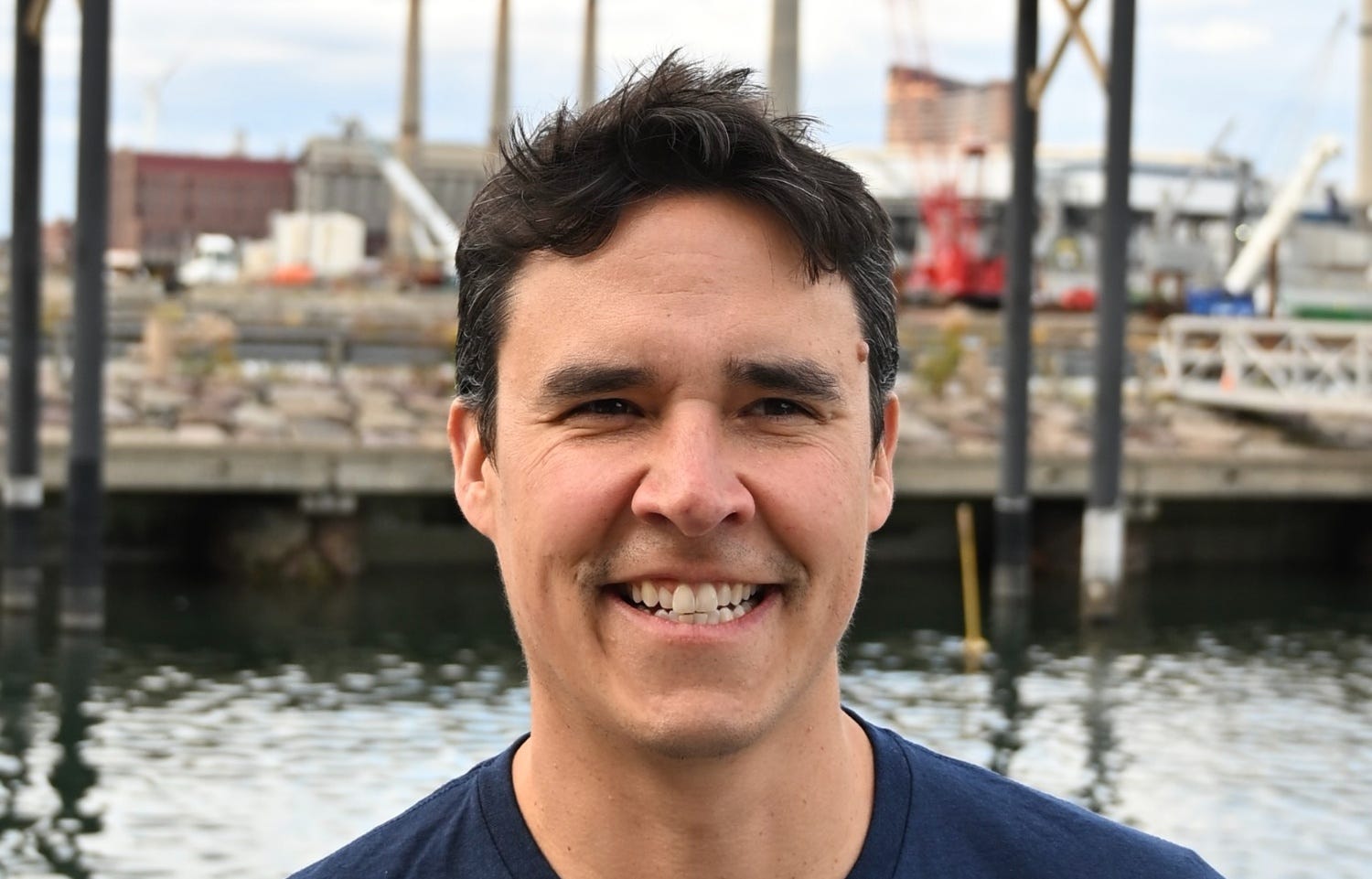
Heat pump water heaters use a fraction of the energy of conventional electric resistance heaters — which use more electricity in a year than an EV — but they're only 2 percent of the market, mainly because they tend to cost more, be slow and loud, and require a plumber and an electrician. Reservoir is a Boston company trying to fix all that, with a smarter, quieter machine and its own plumbers. I talk with CEO...
Do small residential batteries make sense?

This is a public episode. If you'd like to discuss this with other subscribers or get access to bonus episodes, visit www.volts.wtf/subscribe
Home batteries like the Tesla Powerwall are nice, but what about people who can’t afford them, or renters who aren’t allowed to install them, or people who just don’t want the hassle of dealing with a permit and an electrician? A company called Pila is selling small (1.6 kWh) batteries that simply plug into a normal electrical socket. They can serve as backup for a refrigerator or other appliance in the ev...
How energy politics work inside DC

This is a free preview of a paid episode. To hear more, visit www.volts.wtf
Back in 2011, I wrote that fossil fuel interests had a much better media game than clean energy. My example was Frank Maisano, a media relations guy for coal utilities and the natural gas industry. Thirty years on, he’s still at it — still writing his newsletter, still connecting reporters to sources, still better at it than anyone on the clean side (sigh). So I’m finally talking to him about it: clean energy trade groups nobody in Washington fears, Trump’s daft eff...
How to build a more flexible, quieter, less obnoxious data center

This is a public episode. If you'd like to discuss this with other subscribers or get access to bonus episodes, visit www.volts.wtf/subscribe
Verrus is building data centers designed to address every objection the public has raised: they use batteries instead of diesel generators, which makes them grid assets that help hold down power prices; they use closed-loop cooling, which uses a tiny fraction of the water; their equipment is quieter; and as a bonus, they squeeze more servers into the same grid connection. Yet both of Verrus’s proposed sites, in Michigan and Oregon, ar...
Building a big, abundant, clean grid

This is a public episode. If you'd like to discuss this with other subscribers or get access to bonus episodes, visit www.volts.wtf/subscribe
Jane Flegal has worked inside philanthropy at the Hewlett Foundation, industrial emissions policy at the Biden White House, and carbon-removal market development at Frontier; she's now a senior fellow at the Searchlight Institute, writing some of the smartest climate policy analysis around. We cover a lot of ground: industrial policy versus market approaches, what the IRA got right and wrong, philanthropy's proper role, data centers and the case for an infrastructure fund...
Is there way more conventional geothermal than we thought?

This is a public episode. If you'd like to discuss this with other subscribers or get access to bonus episodes, visit www.volts.wtf/subscribe
Zanskar argues that the US is badly underestimating its conventional geothermal resources — that there are far more undiscovered hydrothermal systems, and that each one can produce far more power, than people think. They think AI can help find those resources, and they have drilled three sites to back it up, including a “blind” discovery in Nevada with no surface signs and no prior exploratory wells. If they're right, terawatts of firm, carbon-free power...
Best of August 2026
Volts published eight conversations in August — with two Idaho state legislators, a grid cybersecurity expert, the architect of Uruguay's energy transition, an EV charging exec, and more — which is a lot for anyone to listen to. We've rounded up the highlights into a single hour. Enjoy!
Chapters:
00:00 – Introduction and how the best-of series works
01:59 – Saleem Chapman on why every market design fails ratepayers the same way
07:51 – Patrick Miller on Chinese inverters and commodity boards
12:22 – Ben Toews and Megan Egbert on how Idaho's housing bills happened
18:34 – Seth Cutler on why an IONN...
How to respond to disinformation about clean energy, at scale

This is a public episode. If you'd like to discuss this with other subscribers or get access to bonus episodes, visit www.volts.wtf/subscribe
Disinformation about clean energy is showing up everywhere — online after every blackout, at county commission meetings about siting new projects, in regulatory dockets stuffed with fake comments. GoodPower, which combines a C3 education arm with a C4 advocacy arm, is trying to fight back with a network of thousands of content creators, rapid-response campaigns around storms and grid failures, and an AI tool that detects manufactured public comments. I talk with CEO Le...
Could we use Trump's tricks to make good green policy?

This is a public episode. If you'd like to discuss this with other subscribers or get access to bonus episodes, visit www.volts.wtf/subscribe
Even as he has torn down climate policy, Donald Trump has normalized the use of more powerful & aggressive tools of economic statecraft, like equity stakes in private companies, new federal authorities, and sovereign wealth funds. The Roosevelt Institute recently issued a collection of 17 essays exploring how a future administration could use the tools Trump has assembled for decarbonization. I talk with Todd Tucker, editor of and contributor to the volume, about these...
Making data centers flexible so they can serve the grid rather than stress it out

This is a public episode. If you'd like to discuss this with other subscribers or get access to bonus episodes, visit www.volts.wtf/subscribe
Typically, AI data centers are large, inflexible loads that the grid has to build around, which is one reason utilities take so long to connect them. Emerald AI has designed a “digital brain” that can ramp down, move, or delay computing jobs in a data center on demand, making a data center a flexible asset to the grid. I talk with CEO Varun Sivaram about how the software works, what flexibility costs the...
Why can't utilities innovate?

This is a public episode. If you'd like to discuss this with other subscribers or get access to bonus episodes, visit www.volts.wtf/subscribe
When it comes to innovative new grid technologies, every utility wants to be the third in line to try them. None of them want to be the first to take risks and iron out new processes. That's one reason grid-enhancing technologies, better software, and smarter internal procedures stay stuck in pilot purgatory, even as the industry faces the biggest buildout since rural electrification. PG&E's Quinn Nakayama and Microsoft's Hanna Grene discuss...
He helped Uruguay decarbonize. Can he help other countries do the same?
This is a public episode. If you'd like to discuss this with other subscribers or get access to bonus episodes, visit www.volts.wtf/subscribe
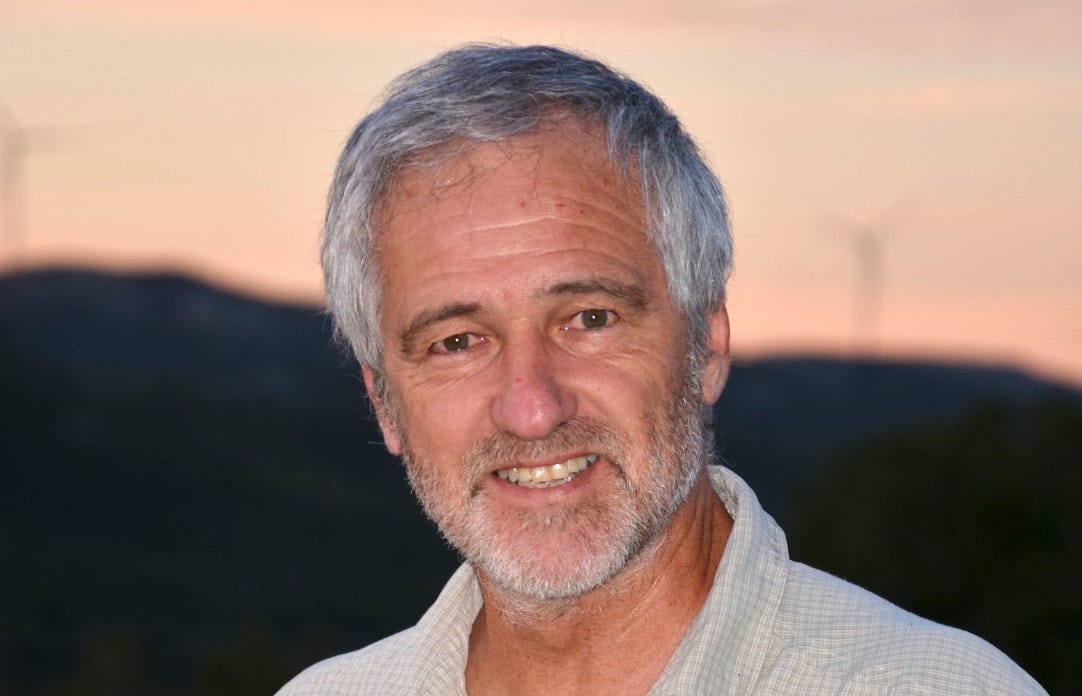
Ramón Méndez Galain helped Uruguay decarbonize its grid (today it’s 98% fossil-free) while keeping the utility public and letting private capital foot the bill. Now he’s trying to export the same playbook across the global South. We talk through how Uruguay pulled it off — the hydro “battery” for wind & solar “baseload,” the cross-party political deal, the market redesign — and what actually transfers to countries without the same advantages. We also discuss why...
Can public EV chargers be as reliable as gas stations?
This is a public episode. If you'd like to discuss this with other subscribers or get access to bonus episodes, visit www.volts.wtf/subscribe
As the U.S. EV market slows and federal charging support recedes, IONNA, a fast-charging network backed by eight major automakers, is still expanding. On Volts, CEO Seth Cutler makes the case that public charging is entering a new phase focused on reliability and customer experience, but the economics remain difficult, with low utilization and demand charges squeezing margins. With roughly 1,300 bays live and a target of 30,000, IONNA is testing whether a...
Another bipartisan housing miracle, this time in Idaho

This is a public episode. If you'd like to discuss this with other subscribers or get access to bonus episodes, visit www.volts.wtf/subscribe
Last year I did a pod on Montana’s surprising burst of bipartisan housing legislation. Turns out Idaho was watching. This year its legislature passed six housing bills of its own (two others failed). Republican state Sen. Ben Toews and Democratic state Rep. Megan Egbert join me to walk through what passed, what didn’t, and what they gave away to get it done — plus the property tax cap that quietly works agains...
Grid cybersecurity: how big is the threat & what should we do about it?

This is a public episode. If you'd like to discuss this with other subscribers or get access to bonus episodes, visit www.volts.wtf/subscribe
Could the US grid be brought down by Chinese hackers? To find out, I talked with Patrick Miller, who helped write the cybersecurity rules for the bulk power system and became the first person with federal authority to enforce them. We get into what's actually been hacked, why those "rogue devices" in Chinese inverters are less sinister than they sound, and why squirrels still do more damage than hackers.
Chapters:<...
What should state policymakers do about data centers?

This is a public episode. If you'd like to discuss this with other subscribers or get access to bonus episodes, visit www.volts.wtf/subscribe
State legislatures are writing data center rules faster than they can verify the demand forecasts underneath them. Fifteen states accounted for 80 percent of data center electricity demand in 2023, a single hyperscale campus can arrive as 15 to 20 percent of a utility's demand, and the transmission to serve it takes five to 15 years to build. On this episode of Volts, David Roberts works through Climate Cabinet's Taming Data Center Turmoil series with Saleem Chapman...
Best of July 2026
Volts published eight conversations in July on subjects with nothing obvious in common: an Arizona utility board election, Minnesota smart meters, land value taxes in Spokane, silicon battery anodes. Yet six of them arrived at the same constraint. What stops energy infrastructure from getting built in the United States is more often written into law than into physics. On this episode, David Roberts pulls one stretch from each July conversation into a single hour, with two Minnesota utility regulators, a Spokane city council member, a Hawaii state senator, a co-founder of a battery materials company, and more.
...
Silicon anodes for batteries unlock greater energy density and faster charging times

This is a public episode. If you'd like to discuss this with other subscribers or get access to bonus episodes, visit www.volts.wtf/subscribe
Materials in lithium-ion battery cathodes have continuously evolved since the 1990s, but anodes have stubbornly remained graphite. Now, finally, there’s some innovation on that side: silicon anodes, which engineers have struggled to master for a decade, are finally coming into wide commercialization. They enable up to five times the energy density of graphite anodes, charge many times faster, and are poised to revolutionize the battery market. In this episode, I talk wi...
Should we feel good about the trajectory of clean energy post-Trump?

This is a public episode. If you'd like to discuss this with other subscribers or get access to bonus episodes, visit www.volts.wtf/subscribe
The Inflation Reduction Act (IRA) established substantial tax credits for wind and solar power. Trump’s One Big Beautiful Bill Act (OBBBA) eliminated those tax credits. How much damage did that do to the overall trajectory of clean energy in the post-Trump world? A new research commentary argues that the damage was less than many had feared and that the road forward for clean energy is less about restoring those credits than ab...
The US is terrible at building public transit. Here's how to get better.

This is a public episode. If you'd like to discuss this with other subscribers or get access to bonus episodes, visit www.volts.wtf/subscribe
America once led the world in building transit and now leads the world in what transit costs, roughly three times the international average per mile, measured not against authoritarian megaprojects but against Italy, Spain, and Japan. On this episode of Volts, David Roberts talks with Will Poff-Webster of the Institute for Progress, who put together the new Transit Abundance Playbook, and Stephanie Pollack, former head of the Massachusetts Department of Transportation and...
Making sense of the data center backlash

This is a public episode. If you'd like to discuss this with other subscribers or get access to bonus episodes, visit www.volts.wtf/subscribe
Data center opposition has gone from nonexistent to organized in about two years, roughly 120 moratoriums across 38 states, and it does not track proximity: Gallup finds 70% of Americans oppose a data center near them, while only 8% of opponents live near one. On this episode of Volts, David Roberts joins Energy Empire hosts Jigar Shah and Jamie Nolan, along with Arnab Pal of Deploy Action, for a crossover conversation, and his argument is that...
Spreading the good news about electrification

This is a public episode. If you'd like to discuss this with other subscribers or get access to bonus episodes, visit www.volts.wtf/subscribe
Most of the energy decisions that touch daily life in America get made in state legislatures, and the people making them are increasingly new to the job. In smaller states, a freshly elected lawmaker gets a pad of paper, no staff, and about 150 lobbyists at the door, then votes on billion-dollar energy budgets in a landscape where the technology changes faster than anyone can track. On this episode of Volts, David Roberts...
Want less sprawl and more urban infill? Try a land value tax!

This is a public episode. If you'd like to discuss this with other subscribers or get access to bonus episodes, visit www.volts.wtf/subscribe
Property taxes are two taxes stapled together: one on the land, one on whatever gets built on it. Put up an apartment building and the bill goes up. Pave the lot for parking and it stays low. It discourages building and rewards land speculation. The answer? Tax the buildings less and the land more. The idea of a “land value tax” goes back 150 years, but implementing it today involves navigating tricky constitutional issu...
Forcing utilities to justify their distribution-system spending

This is a public episode. If you'd like to discuss this with other subscribers or get access to bonus episodes, visit www.volts.wtf/subscribe
Minnesota regulators Sydnie Lieb and Pete Wyckoff on why utility distribution spending — now a third of capital budgets and the biggest driver of rising bills — escapes the scrutiny the rest of the grid faces, and how to fix that.
00:00 - Introduction
04:23 - How distribution is regulated differently than generation and transmission
09:25 - Why distribution matters now: an aging system and the build-more incentive
14:00 - Cont...
A key Arizona race will test clean energy's electoral power

This is a public episode. If you'd like to discuss this with other subscribers or get access to bonus episodes, visit www.volts.wtf/subscribe
Following a stunning clean energy victory over right-wing donors on an obscure Arizona utility board, organizers are setting their sights on a much bigger prize: the state’s powerful utility commission. I chat with Charlie Fisher and Ning Mosberger-Tang about how they used disciplined messaging to overcome massive opposition spending and historically abysmal voter turnout. We discuss whether this localized ground game can scale to a massive statewide electorate and help build a...
How to keep people cool without making the planet even hotter

This is a public episode. If you'd like to discuss this with other subscribers or get access to bonus episodes, visit www.volts.wtf/subscribe
You might have noticed that it’s kind of hot out there. And it’s only going to get worse: global demand for cooling is projected to triple by 2050. Finding a way to cool spaces and people without frying the planet is a crucial climate challenge. I’m joined by RMI’s Ankit Kalanki to unpack the hidden world of AC refrigerants and testing standards, the crucial distinction between lowering temperatures and dehumidi...
America's flagship automaker enters the home energy market

This is a public episode. If you'd like to discuss this with other subscribers or get access to bonus episodes, visit www.volts.wtf/subscribe
In this episode, I talk with GM Energy executive Aseem Kapur about General Motors’ move into bidirectional EV charging and home energy management. We dig into the practicalities of turning hundreds of thousands of EVs into mobile backup generators, how to navigate a patchwork of 4,000 different utilities, and what it takes to get everyday consumers to see their cars as grid assets.
Can the UK stay the course with its climate plans?
This is a public episode. If you'd like to discuss this with other subscribers or get access to bonus episodes, visit www.volts.wtf/subscribe
The UK has just released its seventh carbon budget, recommitting to the aggressive climate targets suggested by its nonpartisan Climate Change Committee. Can the Labour government actually hit those targets while keeping energy prices for the British people under control, even amidst a newly hostile political landscape? In this episode, I talk with the UK’s new climate minister, Katie White, about those challenges and more.
