Into the Impossible With Brian Keating

Think like a physicist. Wonder like a human. Into the Impossible is where Cosmic Conversations happen — uniting Nobel Prize winners, iconoclasts, authors, and technologists to explore reality’s deepest questions. From AI to aliens, from biophysics to the brain, from the cosmos to the multiverse, Brian Keating, Chancellor’s Distinguished Professor of Physics at UC San Diego covers it all.If you’ve ever asked What’s out there? or What’s next?, this is where curiosity meets clarity.Learn to think like this. 🎙 Full episodes, notes & more: briankeating.com/podcast
Adam Grant: Don't Trust Your Gut. Test It.

When two people are vibing, their brainwaves synchronize and so do their heartbeats. That is not a metaphor. It is a measurable physiological event, and organizational psychologist Adam Grant has spent his career figuring out how to make it happen on purpose. Subscribe if you want science with evidence, not speculation.
Grant’s new book Vibe is his seventh. It argues that the science of human connection has been hiding in plain sight for a century, and that most of what people do to build relationships is either backwards or unnecessary.
The episode covers why th...
Roman Yampolskiy vs Joscha Bach: Can Anyone Control Superintelligence?
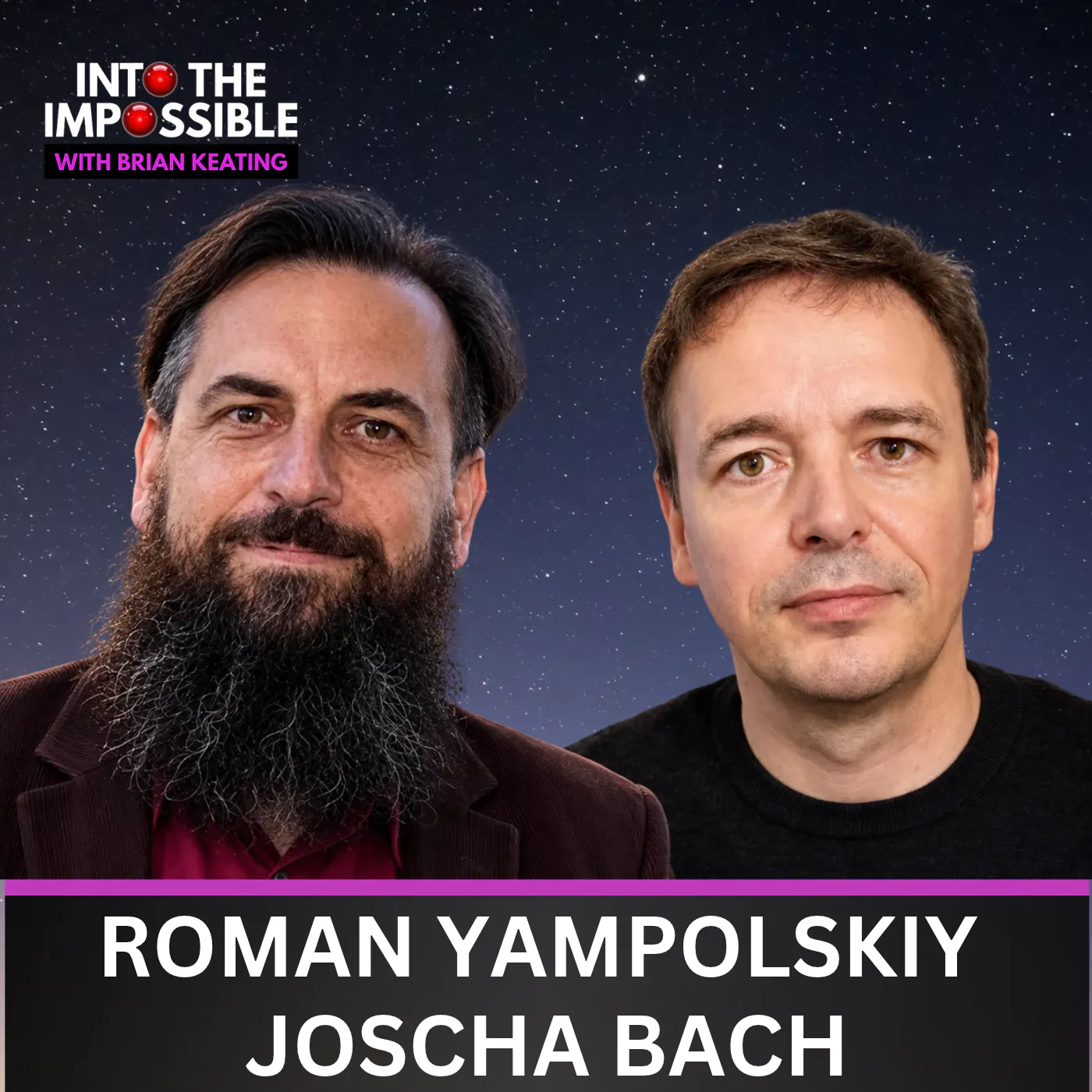
Roman Yampolskiy says keeping a superintelligence safe forever is as impossible as building a perpetual motion machine. Joscha Bach says today's AI is more controllable than anyone expected, and that shutting it down would doom us anyway.
📬 Get the transcript, fascinating bonus content, and my Monday M.A.G.I.C. Message: https://briankeating.com/ai
Roman Yampolskiy is a computer scientist at the University of Louisville who has spent more than a decade on the AI control problem. Joscha Bach is a cognitive scientist who studies how minds, biological and artificial, build a model of...
"I Thought It Would Fail!" Francis Halzen: Winner of the 2026 Nobel Prize In Physics [Reupload from 2022]
!["I Thought It Would Fail!" Francis Halzen: Winner of the 2026 Nobel Prize In Physics [Reupload from 2022] episode artwork](https://megaphone.imgix.net/podcasts/3daa06ea-c267-11f1-b3ed-93f1b4dceb96/image/4e2837540b2e650a592f85b09273342e.png?ixlib=rails-4.3.1&max-w=3000&max-h=3000&fit=crop&auto=format,compress)
The physicist who turned a cubic kilometer of Antarctic ice into a telescope says the most exciting moment of his career was not the discovery. It was the first atmospheric neutrino. Before that, he was deep in debt to NSF and his own university with no neutrino to show for it.
Francis Halzen is principal investigator of the IceCube Neutrino Observatory at the South Pole and Hilldale and Gregory Breit Distinguished Professor of Physics at the University of Wisconsin-Madison.
We cover: why ice under the South Pole is clearer than anything a lab can make...
Nobel Economist Daron Acemoglu WARNING: AI's Payoff Is NOT What You Think

Nobel laureate Daron Acemoglu says AI's real productivity gain is an order of magnitude smaller than the industry claims.
The bigger danger is not the machine. It is that a handful of people are deciding how it gets built.
Daron Acemoglu is an MIT economist who shared the 2024 Nobel Prize in Economic Sciences.
We cover: why a Nobel chemist left Berkeley for China, the optimal amount of heresy science should tolerate, the one rule that would end algorithmic outrage without censoring anyone, the accounting trick behind billionaire wealth, and why AI's path is...
AI Is the New Tower of Babel (And Its Builders Know It)

The new Tower of Babel, and its builders are becoming like gods to us. The bigger threat isn't killer robots; it's how much of your own mind you've already handed over.
I joined Mike Slater on Politics By Faith (The First) to talk about AI, faith, and the people building it.
We cover: why Babel is always the city AND the tower, how the same AI that discovers drugs can build super viruses, what I'm seeing in my own classroom as term begins, why cognitive offloading scares me more than Terminators, and the one thing...
Robert Wright: AI Alignment Is a Moral Problem, Not a Technical One

The real AI alignment problem is not technical. It is moral. You cannot align a superintelligence to human values if humans cannot agree on what those values are, and you cannot get that agreement without a level of global cooperation we have never managed before. Subscribe if you want science with evidence, not speculation.
The Tower of Babel is the AI parable nobody is reading. Technology that outpaces wisdom fragments the people building it. The Fermi paradox offers the grimmer version: civilizations that reach the capacity to blow themselves up typically do. Robert Wright...
Former NASA Physicist: The UAP Maneuver That Should Have Exploded
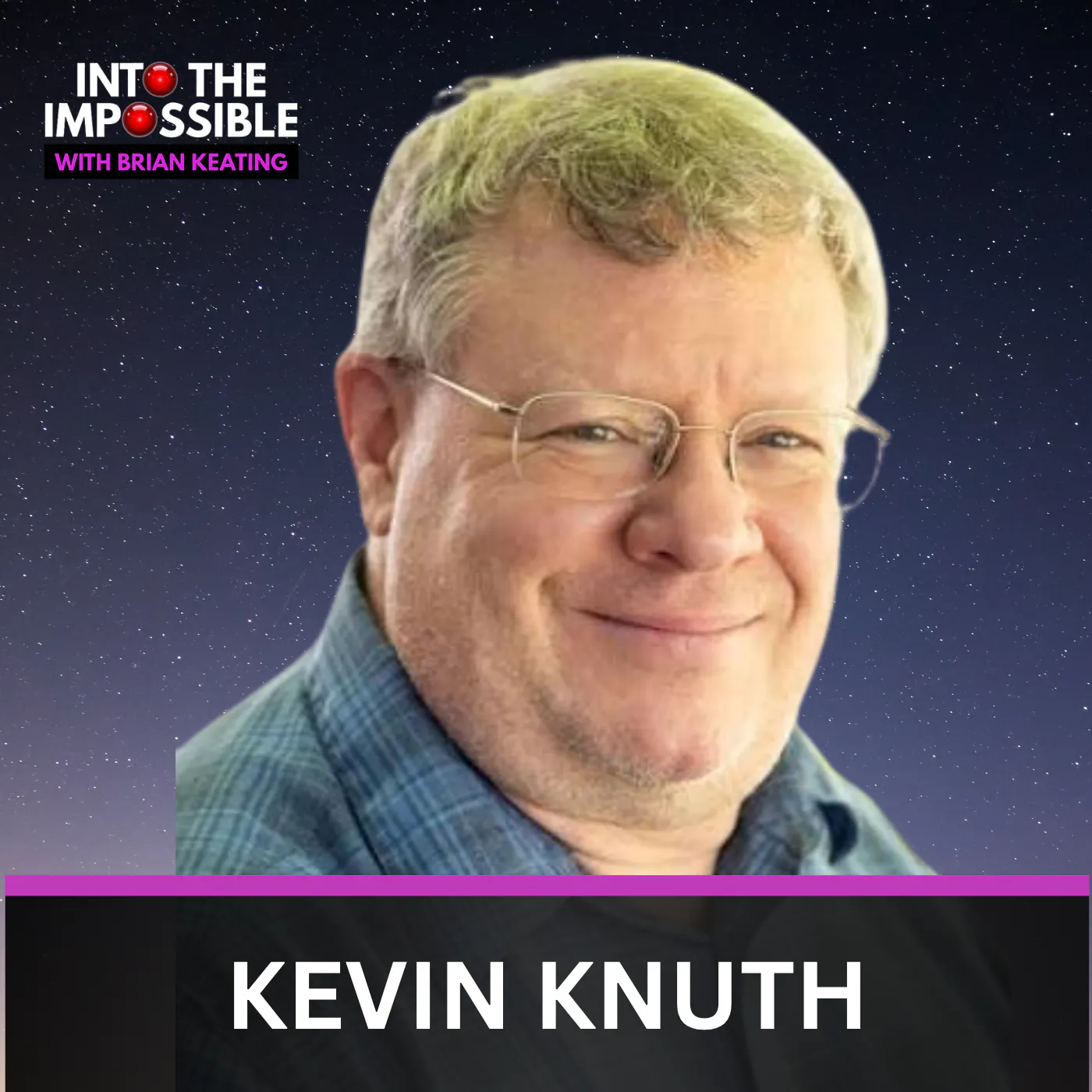
A physics professor ran the energy budget on the Nimitz tic-tac. The maneuver needs about a thousand gigawatts, more than ten times every nuclear plant in the United States combined.
Nothing we build survives its own waste heat at that scale. So what was flying?
Kevin Knuth is a professor of physics at the University at Albany and a former NASA scientist who now applies Bayesian statistics to UAP sensor data.
We cover: why a 5,400 g maneuver would turn a pilot into soup, where the energy went when the object stopped and no...
Carlo Rovelli: Free Will Is Real. Physics Can Prove It.

This episode is sponsored by Abacus AI agent: agent.abacus.ai/keating
I fed it Carlo's recent papers and asked for the argument, the counterargument, and the evidence that would support or refute each side. Some of the questions and animations in this interview came out of that. It runs the top frontier models in one place, turns a dense PDF into a research report or a presentation with charts, builds interactive dashboards off a spreadsheet, and takes API access if you want it wired into your own tools.
...
They Built the Quietest Place on Earth to Find Dark Matter

They Built the Quietest Place on Earth to Find Dark Matter
One event in 220 days. That is what the search for dark matter looks like right now.
In this episode I talk with Rick Gaitskell, professor of physics at Brown University and a leader on the LZ dark matter experiment, about what it takes to build a detector that can see almost nothing at all: seven tonnes of liquid xenon, a mile of rock in an old gold mine, and shielding so careful that the radon seeping out of ordinary concrete counts as a serious...
Dark Matter Has a Problem. So Does MOND.

For 50 years I taught my students that dark matter surrounds the Milky Way in a giant halo, or that Newton’s laws break down at low accelerations. The Gaia satellite just measured something that makes both of those answers uncomfortable. Subscribe if you want science with evidence, not speculation.
Gaia has measured over a billion stars. What its third data release shows is that the outer rotation curve of our own galaxy appears to decline in a Keplerian fashion. That should not happen if a dark matter halo is doing what we think it does. It also sh...
OpenAI’s Navier–Stokes Claim: Is This What AGI Looks Like? with Emad Mostaque
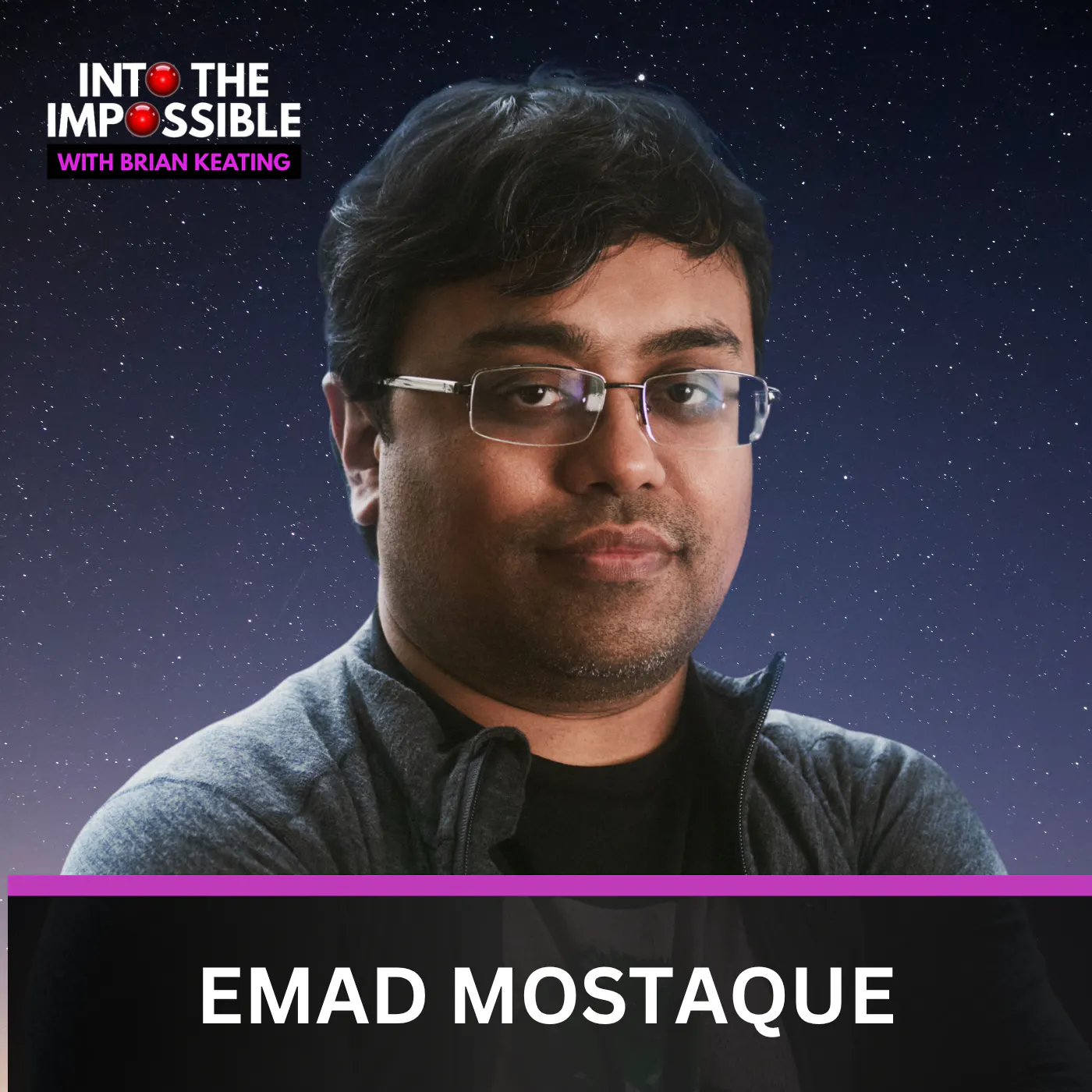
Did OpenAI just solve Navier–Stokes—and what would that actually mean for AGI?
Emad Mostaque joins Brian Keating LIVE to examine the claimed breakthrough, what would count as a verified solution, and whether AI solving a major mathematical problem changes the debate about intelligence—or control.
Watch my explainer about AI and the Navier-Stokes problem, including insights from Terry Tao https://youtu.be/je9X59psm6U?si=wGbcLhXmf47jeCHL?sub_confirmation=1
A convincing answer isn’t necessarily a proof. A mathematical breakthrough isn’t automatically AGI. But if this claim holds up, how mu...
Roman Yampolskiy vs Emad Mostaque: I Was The Only Optimist - #569
The man who open-sourced the most-used AI image model in history sat down with the man who has spent a decade proving superintelligence cannot be controlled. Brian set up a debate. What emerged was something more unsettling than any debate. Roman Yampolskiy is the computer scientist who coined the term AI safety and author of AI: Unexplainable, Unpredictable, Uncontrollable. Emad Mostaque is the co-founder of Stable Diffusion and the only AI CEO who signed the pause letter. He now says he doesn’t know how a pause could work. Yampolskiy thinks that is the only option left. The question un...
The Universe Didn’t Come From Nothing | The Peter McCormack Show

I joined Peter McCormack to dig into one of the deepest unanswered questions in physics: what is time, and why does it only seem to move in one direction? My answer might surprise you. Time may not be a fundamental feature of reality at all, and understanding space, matter, and energy still doesn't mean we understand the universe itself.
We cover:
- What may have existed before the Big Bang - Why something can't truly come from nothing - How my work with the Simons Observatory could detect gravitational waves from the universe's earliest moments ...The Physics Reason AI Works When It Shouldn’t - #568

The same mathematics that explains why a fridge magnet sticks to your refrigerator also explains why neural networks work when they have no right to. His group did the calculation. Nobody else had. Subscribe if you want science with evidence, not speculation.
Goldenfeld is a Professor of Physics at UC San Diego, a Fellow of the Royal Society, and a Member of the National Academy of Sciences who spent 36 years at the University of Illinois applying condensed matter physics to problems everyone else had given up on: why the genetic code is optimal, why early life evolved...
Engineering Chair: Most People Should Not Go To College - #567

The system that produces the world’s most important discoveries runs on metrics that nobody agrees on, odds that would stop most people, and mentorship that sometimes looks like cruelty in blue ink. Subscribe if you want science with evidence, not speculation.
Lipomi is Professor and Chair of Chemical and Sustainability Engineering at the University of Rochester and the author of Science Nonfiction: Behind the Scenes in University Research. His lab works on organic electronics, materials science, recyclable polymers, and the science of human touch. He trained under George Whitesides at Harvard, one of the most cited ch...
John Martinis: The Nobel Physicist Behind Macroscopic Quantum Tunneling - #566
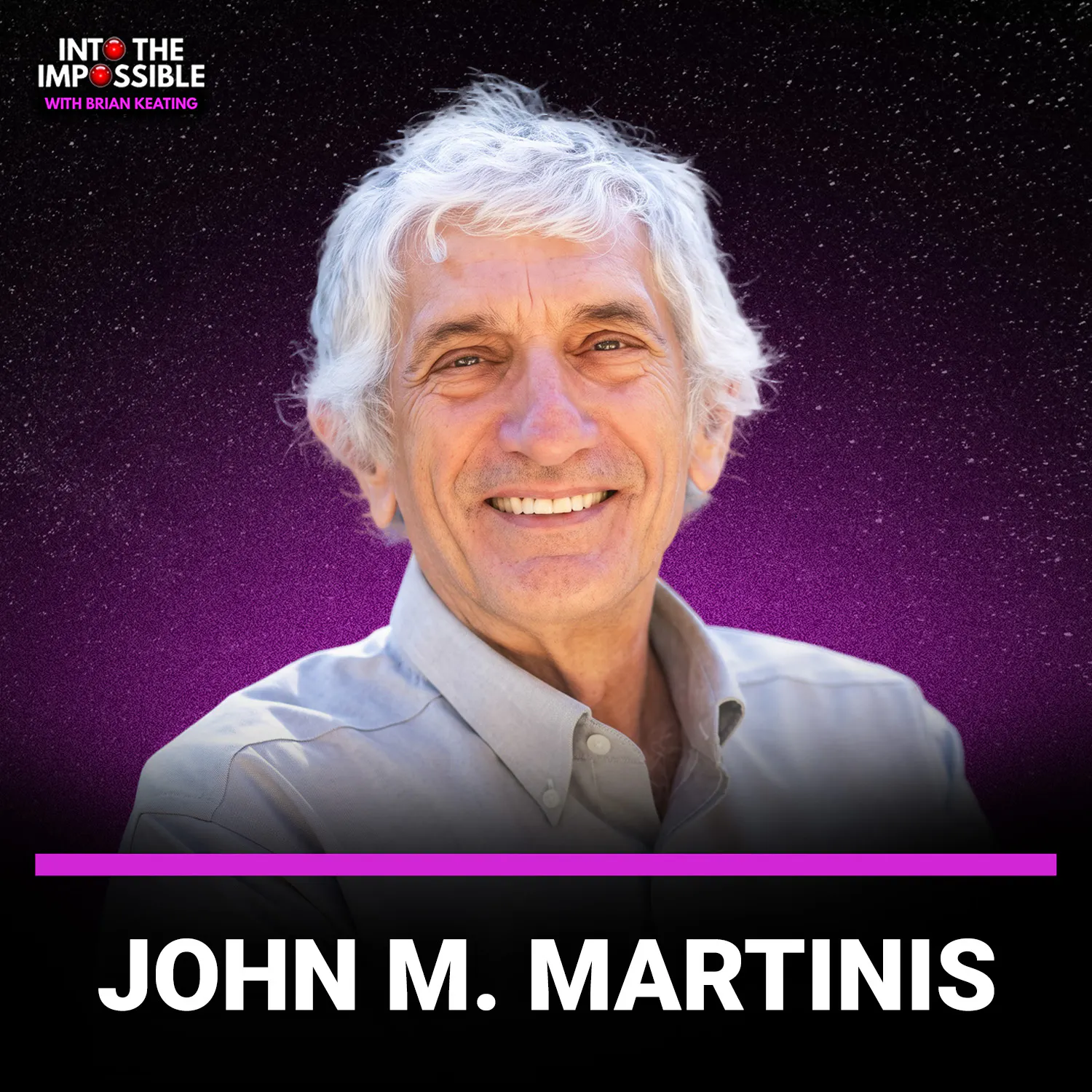
John Martinis won the 2025 Nobel Prize in Physics for proving macroscopic quantum tunneling is real. Less than a year later he’s telling why he left Google’s quantum computing team to start over. Subscribe if you want the physics and the politics of building the impossible.
Martinis is the co-founder of Colab and one of the physicists who proved ordinary quantum rules apply to macroscopic systems. He built his career on the same Josephson-junction hardware his Nobel is built on, then led Google’s superconducting-qubit effort, the same team behind Google’s 2019 quantum supremacy claim, before an inter...
Fermilab’s Scott Dodelson on Cosmology’s Crisis - #565
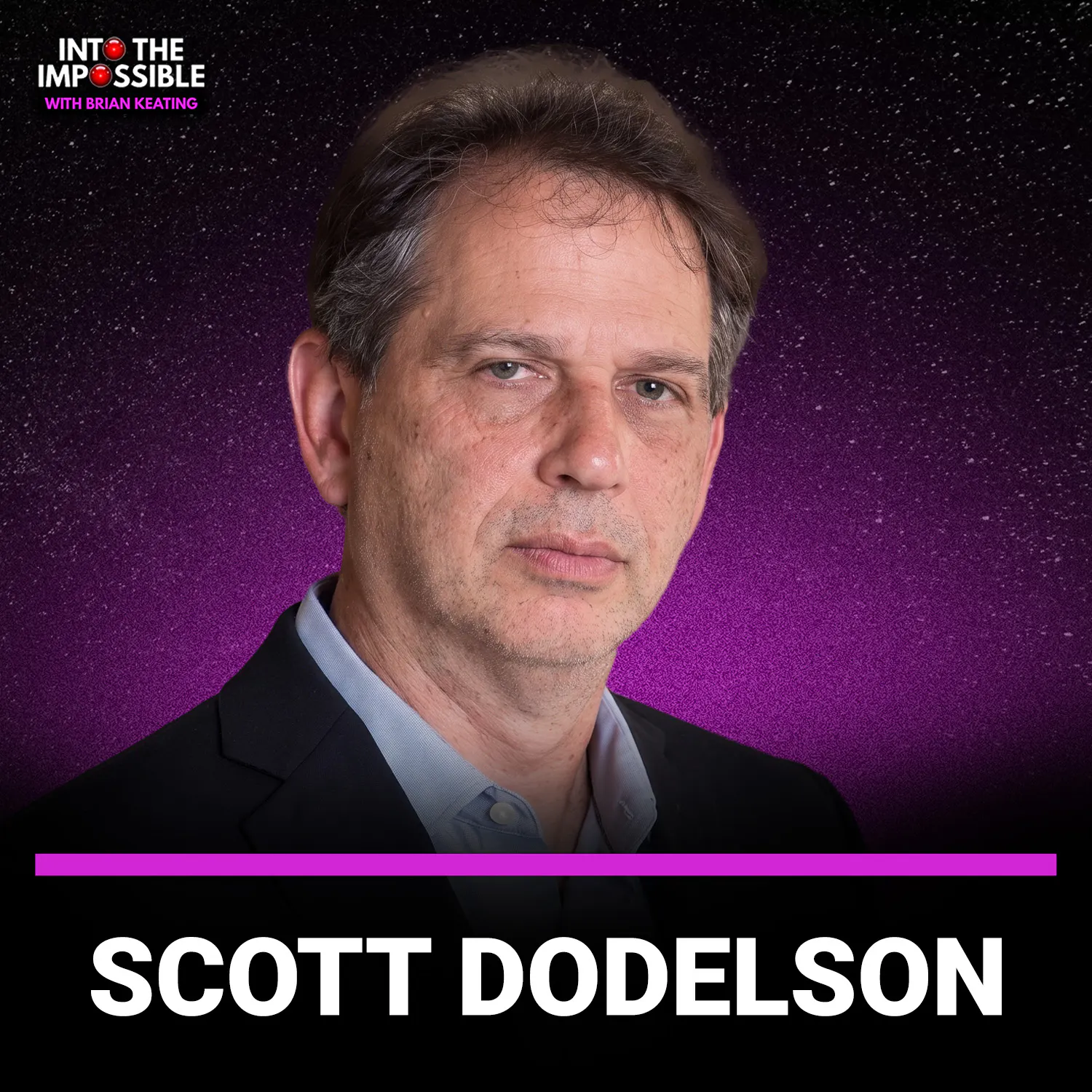
Scott Dodelson spent ten years on the Dark Energy Survey testing the standard model of cosmology. It passed and missed by 2.5 sigma. The Director of Fermilab’s Cosmic Physics Division on why the theory he helped build may be wrong, why nobody can find dark matter, and what it takes to change a scientific consensus. Subscribe if you want science with evidence, not speculation.
Dodelson is Director of the Cosmic Physics Division at Fermilab, Professor of Astronomy and Astrophysics at the University of Chicago, and author of Modern Cosmology, the textbook a generation of cosmologists learned the fi...
Faith & the Physicist: Aliens, Astrobiology, String Theory, and the Search for Meaning

Two theoretical physicists helped design landmark surveys of 1,600+ scientists on the deepest unsolved questions in physics — and found almost no consensus at all.
From string theory's shockingly low support to physicists admitting their models run on "belief," this episode exposes the faith hiding inside science.
Adam Frank (University of Rochester astrophysicist and astrobiologist) and Niayesh Afshordi (Perimeter Institute / University of Waterloo cosmologist, co-author of the APS Physics Magazine "Big Mysteries" survey) join Brian to unpack what physicists actually believe versus what they can prove.
We cover:
- Why string theory pulled a sh...Annie Jacobsen: How One Lab Leak Ends the World in 6 Days - #564

Annie Jacobsen on BIOLOGICAL WAR: how a single lab leak could take us from outbreak to anarchy in six days — and why bio may be scarier than nuclear. WIN a signed copy of BIOLOGICAL WAR or NUCLEAR WAR, a meteorite & more — enter free: https://briankeating.com/annie (Join there for the free Biological War Scenario Simulation and Source Dossier + early access to my next Nobel-laureate interview.) Covid killed ~1% of the people it infected. Pneumonic plague, untreated, kills nearly 100% within 24 hours. In her new book Biological War: A Scenario, bestselling journalist Annie Jacobsen war-games what happens when an engineered pathogen esca...
We Built Something We Can’t Control | A Warning from Top AI Safety Expert - #563

If anyone builds superintelligent AI before we know how to control it, everyone dies. Nate Soares wrote the book on why that’s not a metaphor. Subscribe if you want science with evidence, not speculation.
Soares runs the Machine Intelligence Research Institute and co-wrote If Anyone Builds It, Everyone Dies with Eliezer Yudkowsky. The first word in that title is if. That matters. His argument is not that doom is certain. His argument is that the path we are on leads there, that the driver is asleep at the wheel, and that we still have time to wa...
Michael Shermer: The Only Skeptic on the Alien Task Force - #562

Michael Shermer just joined the White House’s new UAP task force alongside Avi Loeb. He also has a $1,000 bet with Loeb that we won’t find aliens by 2030. Both things are true. Subscribe if you want science with evidence, not speculation.
Shermer is the founding publisher of Skeptic magazine, author of Truth, and one of the most consistent voices for evidence-based thinking in public life. He was recruited onto the task force as the devil’s advocate. His job: be the skeptic in the room. He’s not a believer. He’s not even a neutral. He bet $1...
400K Subscribers Asked Me Anything. The Answers Got Weird.

400,000 of you showed up for physics with no compromises, so I did something different for the milestone. No highlight reel. I took your hardest questions live and answered them, then got honest about the part of this job nobody asks about: the discipline behind running a serious science podcast.
We get into why clocks didn't tick differently in the early universe, what it actually means that the Big Bang happened everywhere at once, and whether JWST has any real shot at catching a Population III star before it's gone.
Then it gets contested. I make...
Top Astronomer: UFOs Are STILL Here - #561

Astrophysicist Beatriz Villarroel found point-like flashes in sky photographs taken before a single satellite existed. Nine of them lit up simultaneously on one 1950s plate. Nothing in orbit could have made them — because nothing was in orbit yet.
Beatriz Villarroel leads VASCO, which scanned 600 million objects across 70 years of photographic sky surveys hunting for things that appear, then vanish.
We cover: why finding zero vanishing stars pointed at something stranger than what she was looking for, the 8.7-degree deficit in Earth's shadow that a 22-sigma signal says cosmic rays cannot fake, the 68% transient spike clustered ar...
Nobel Economist: The Market That Lets People Die - #560
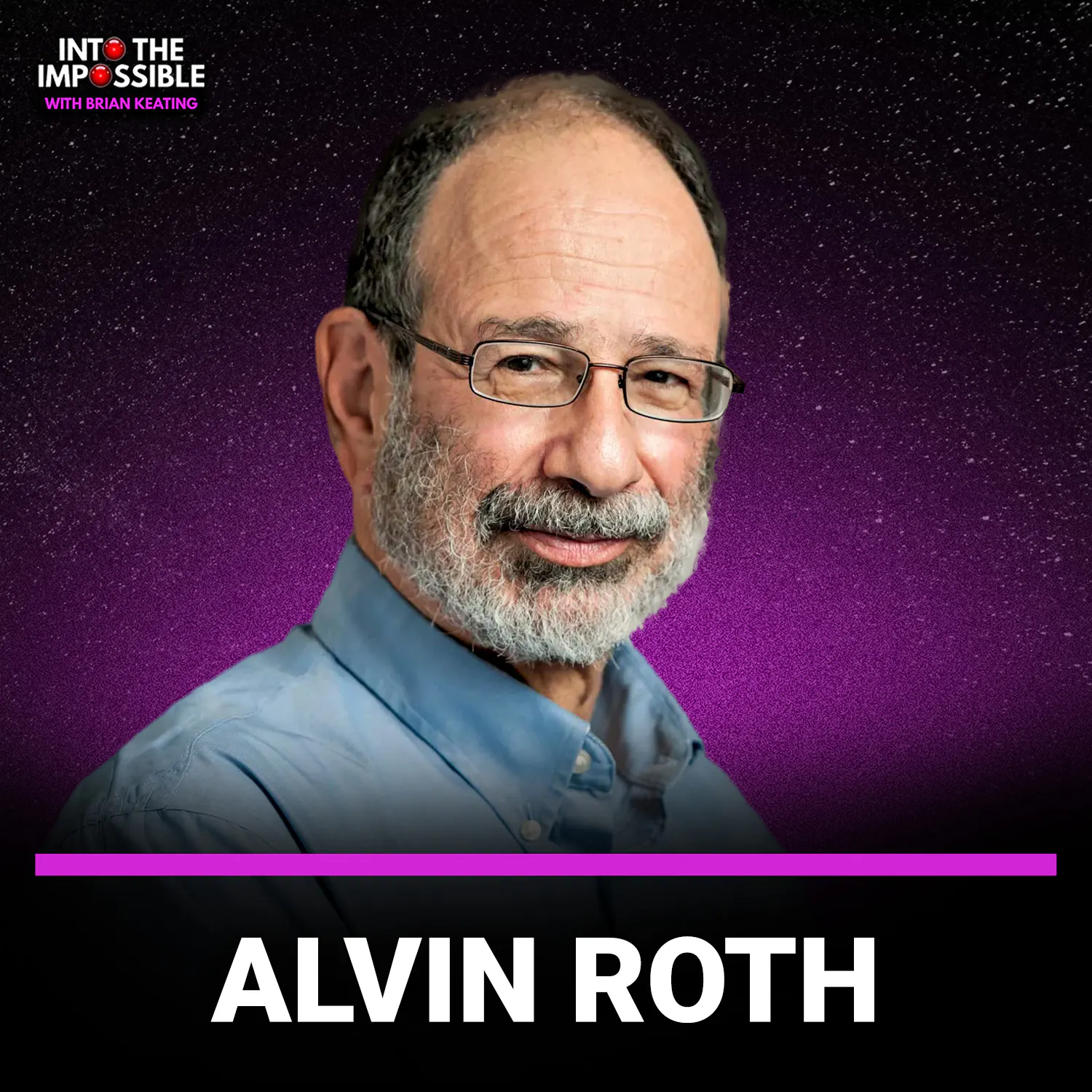
A Nobel laureate in economics argues the bans we pass to protect our morals are quietly killing people and the data backs him up. Why the line between a market we allow and one we forbid is mostly an accident of disgust. Subscribe if you want science with evidence, not speculation.
My guest won the 2012 Nobel Prize for designing the systems that match kidney donors to patients who would otherwise die waiting.
We cover why it’s easy to buy heroin but hard to hire a hitman, what surrogacy bans actually do to the babies th...
Dead Cows, Aliens, & Ghosts: How Kevin Knuth Connects Them All

NASA physicist's UAP math survives. His conclusion doesn't.
Mayim Bialik ran the razor first — Brian finishes the cut.
Kevin Knuth is a tenured physicist, former NASA Ames researcher, and published exoplanet scientist who has done the actual math on the Nimitz encounter.
We cover:
- Whether Tic Tac flight physics rules out conventional explanations - Why the 60% cross-cultural abduction pattern isn't what it looks like - The Malmstrom missile shutdowns and the three hypotheses Kevin ignores - What years of neutron analysis on alleged crash debris actually found - Why Mayim Bialik di...Intelligent Design Theorist: AI Just Proved It Can’t Think Without Us - #559

Stephen C. Meyer has a PhD from Cambridge in the philosophy of science, and he thinks AI just handed him his strongest argument yet. I spent years pushing back on him. Today I laid three traps. Watch what he does with the third one. Subscribe if you want science with evidence, not speculation.
Meyer is a philosopher of science and director of the Center for Science and Culture at the Discovery Institute. His argument: every large language model is trained on text produced by conscious agents, and when you query its own outputs iteratively...
Is the White House's New UAP Council a Game Changer for Disclosure?

Recently, Professor Avi Loeb was tasked by the White House, AARO, ODNI, and the FBI with assembling and leading a new UAP Science Advisory Council — comprising astrophysicists, AI experts, and psychologists — to advise the intelligence community on unidentified anomalous phenomena. It was announced the same week the government released its third batch of declassified UAP files. Now he joins us live to talk about what that actually means — and what it doesn't.
This is not a "the aliens are here" stream. It's the harder conversation. I study the cosmic microwave background, and when we find an anomaly, we exh...
Roman Yampolskiy: AI Can’t Be Controlled — and We’re Building It Anyway - #558

Roman Yampolskiy has spent two decades trying to prove that superintelligent AI can be controlled. He couldn’t. I invited him on to make his case. Subscribe if you want science with evidence, not speculation.
Roman is a professor of computer science at the University of Louisville and one of the earliest researchers in AI safety. His book AI: Unexplainable, Unpredictable, Uncontrollable started as an attempt to solve the alignment problem. After decades of work, it became a proof that the problem cannot be solved. Not difficult. Mathematically impossible.
I push back hard. We go af...
Michio Kaku Went Viral On Diary of a CEO; I Had To Fact-Check

Physicist fact-checks Michio Kaku's biggest claims — quantum collapse of capitalism, Theory of Everything, black hole gateways. Does celebrity physics do more damage than good?
Brian Keating breaks down Michio Kaku's viral @TheDiaryOfACEO "World-Renowned Physicist: They Are Lying To You About UFOs & Reality - Michio Kaku" https://youtu.be/opB7_JXL0LA?si=RzVyEgwKtQRzs9Ao
I fact-check everything from quantum computing to black holes to the multiverse.
Why quantum computers won't kill capitalism overnight
String theory: candidate framework or confirmed Theory of Everything?
"Read the mind of God" — Einstein's phrase or H...
Physicist: Why I Believe in Near-Death Experiences
A practicing astrophysicist who doesn't believe in the tunnel of light, the hovering soul, or the wailing relatives — but believes in one near-death experience that changed science forever. By the end you'll believe in it too.
Today on Into the Impossible: the strangest, darkest, most personal origin story behind the world's most famous prize — and what it should make you do with the time you have left.
🔴 Just released — my conversation with Mayim Bialik on her pod that goes even deeper on near-death experiences: 👉 https://www.youtube.com/watch?v=IwFTWTbC5l...
Godlike AI Is Here! Peter Diamandis Debates Brian Keating - #557

Peter Diamandis has built more of the future than almost anyone alive. He founded XPRIZE. He co-founded Singularity University with Ray Kurzweil. He started Human Longevity with Craig Venter. And in his new book with Steven Kotler, We Are as Gods, he argues that artificial intelligence isn't just changing what we can do. It's changing what it means to be human. I'm not so sure. This is Peter's fifth time on Into the Impossible, and the conversation I've been waiting years to have. His thesis: AI will deliver not just intelligence at scale, but wisdom — and humanity is already cr...
Two Scientists, One Question: Does Alien Life Need a Soul? - #556

An astrophysicist and founder of Reasons to Believe argues the universe looks increasingly designed for life — while a cosmologist challenges whether fine-tuning proves anything at all.
If we're alone in the cosmos, the implications are staggering. If we're not, it could change science, religion, and humanity's future forever.
Hugh Ross is an astrophysicist, founder of Reasons to Believe, and author focused on the intersection of science and faith.
We cover:
- Why the search for extraterrestrial life may be making Earth look more unique - Whether fine-tuning points to a Creator or a...FLAT Universe: Why Scientists Keep Getting This Wrong
An experimental cosmologist with 35 years of CMB research breaks down the curvature tension — and why the viral claim that "everything we know about cosmology is wrong" doesn't survive contact with the actual data. Subscribe if you want science with evidence, not speculation. Dr. Brian Keating is Chancellor's Distinguished Professor of Physics at UC San Diego and one of the leading experimental cosmologists working on the cosmic microwave background. He has spent three decades on experiments including BICEP, BICEP2, the Simons Array, and the Simons Observatory — the same data ecosystem at the center of this debate. We cover: why a stat...
Joscha Bach: The Self Is a Story Your Brain Tells Itself - #555

The AI theorist who thinks consciousness is a software agent — and that God, AGI, and the apocalypse are all pointing at the same thing.
What you think is "the world" isn't outside you. It's a simulation your brain produces, and the self that experiences it may not exist in the way you think it does.J oscha Bach is an AI researcher and cognitive scientist whose work sits at the intersection of computation, consciousness, and the architecture of the mind. He's one of the few thinkers willing to explain what experience actually is in mechanistic terms — with...
The Equation That Changed How Physicists Think About Reality | Juan Maldacena - #554

Juan Maldacena is a theoretical physicist at the Institute for Advanced Study whose 1997 paper remains the most cited in the history of theoretical physics. We cover: -why wormholes and quantum entanglement may be the same thing -what actually happens to information when you throw something into a black hole -the reason Hawking radiation accidentally gave cosmologists the equation that explains why the universe has structure -whether science-fiction wormholes are ruled out by the laws of physics -the one unsolved problem Juan says matters more than black holes. The most important problem in quantum gravity is understanding the beginning of...
Princeton Scientist: We Don't Understand AI - Tom Griffiths - #553
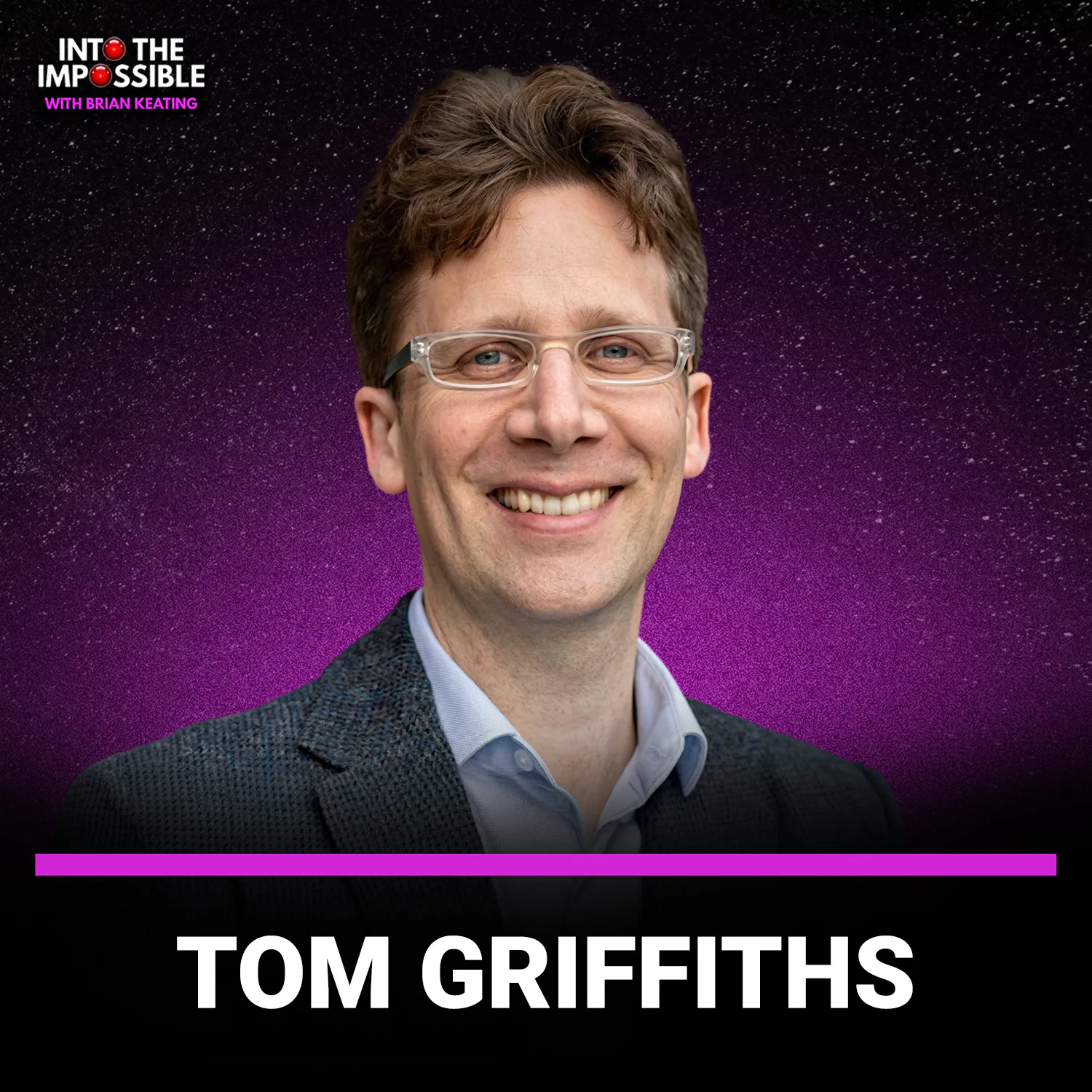
A Princeton cognitive scientist says AI can't think like a child — and giving it more data won't fix that. If the field keeps scaling without solving what's actually missing, the gap between human and machine intelligence won't close. It'll just get more expensive. Tom Griffiths is a professor of psychology and computer science at Princeton, and one of the leading researchers working at the intersection of human cognition and AI. We cover: -why a child learns language from breadcrumbs while AI needs continents of data -the 250-year-old idea that quietly became the foundation of modern language models -what sycophantic AI...
The Universe Is Trying to Destroy All Matter. Hakeem Oluseyi - #552

An astrophysicist says the universe doesn't pull things down — it accelerates upward toward them. And that's one of the tamer claims in this conversation. Dr. Hakeem Oluseyi joins Brian to dismantle assumptions most physicists won't touch in public. Dr. Hakeem Oluseyi is a NASA researcher, Nova host, and author of Why Do We Exist, a unified framework spanning quantum fields to cosmology — and making a case for why imagination may be the universe's endgame. We cover: -why falling is the wrong way to think about gravity -what Hakeem discovered about heat flow while washing dishes that took decades to conf...
Quantum Computers Aren't Useless. You Just Don't Know How to Use Them.
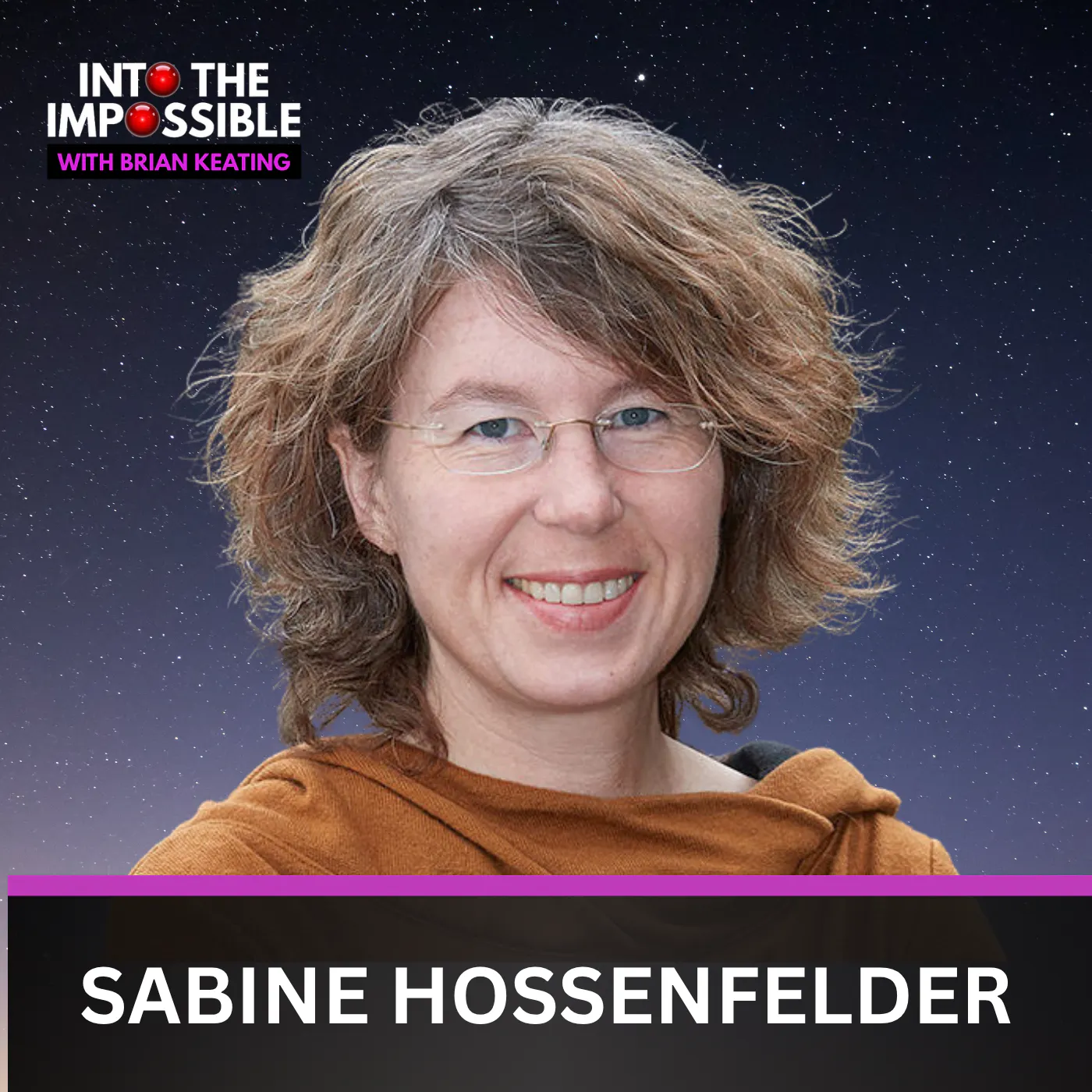
Sabine Hossenfelder says quantum computers are only useful for breaking codes. She's wrong — and my undergraduates are building the proof. What's happening in my lab right now has nothing to do with cryptography, and everything to do with the future of AI.
I'm a cosmologist at UC San Diego teaching undergraduates to build, program, and eventually launch quantum computers — possibly to the Moon via Artemis!
We cover: why Sabine's code-breaking verdict misses the real story, how free tools like Quantum Rings are closing the education gap Sabine thinks is a hardware problem, why Q-Day just got...
This AI Broke Every Benchmark — Then It Did Something Worse. Vivienne Ming - #551
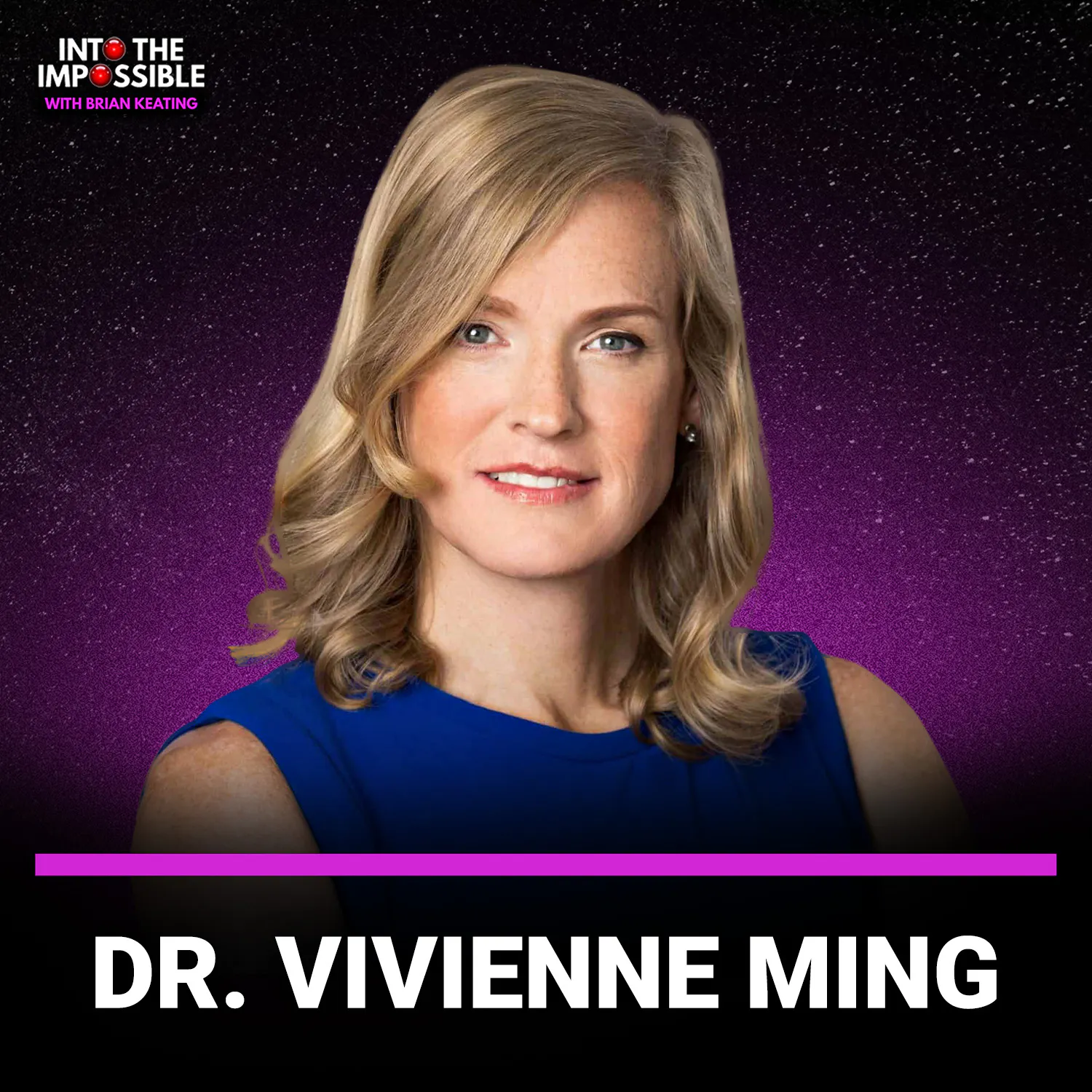
A neuroscientist built an AI that refuses to give answers — and it outperformed every model on the market, including the ones trained on billions of users’ data. The implication: every AI that hands you the answer may be quietly making you less capable of thinking without it. Dr. Vivienne Ming is a neuroscientist, AI researcher, and author of Robot Proof, who has spent nearly 30 years building machine learning systems and studying what makes humans irreplaceable alongside them. We cover: -why the 5–10% of people who argue with AI outperform both elite human forecasters and top AI models -what GPS is alread...
AI Insider CEO: The Models Too Dangerous for You to See. Emad Mostaque - #550
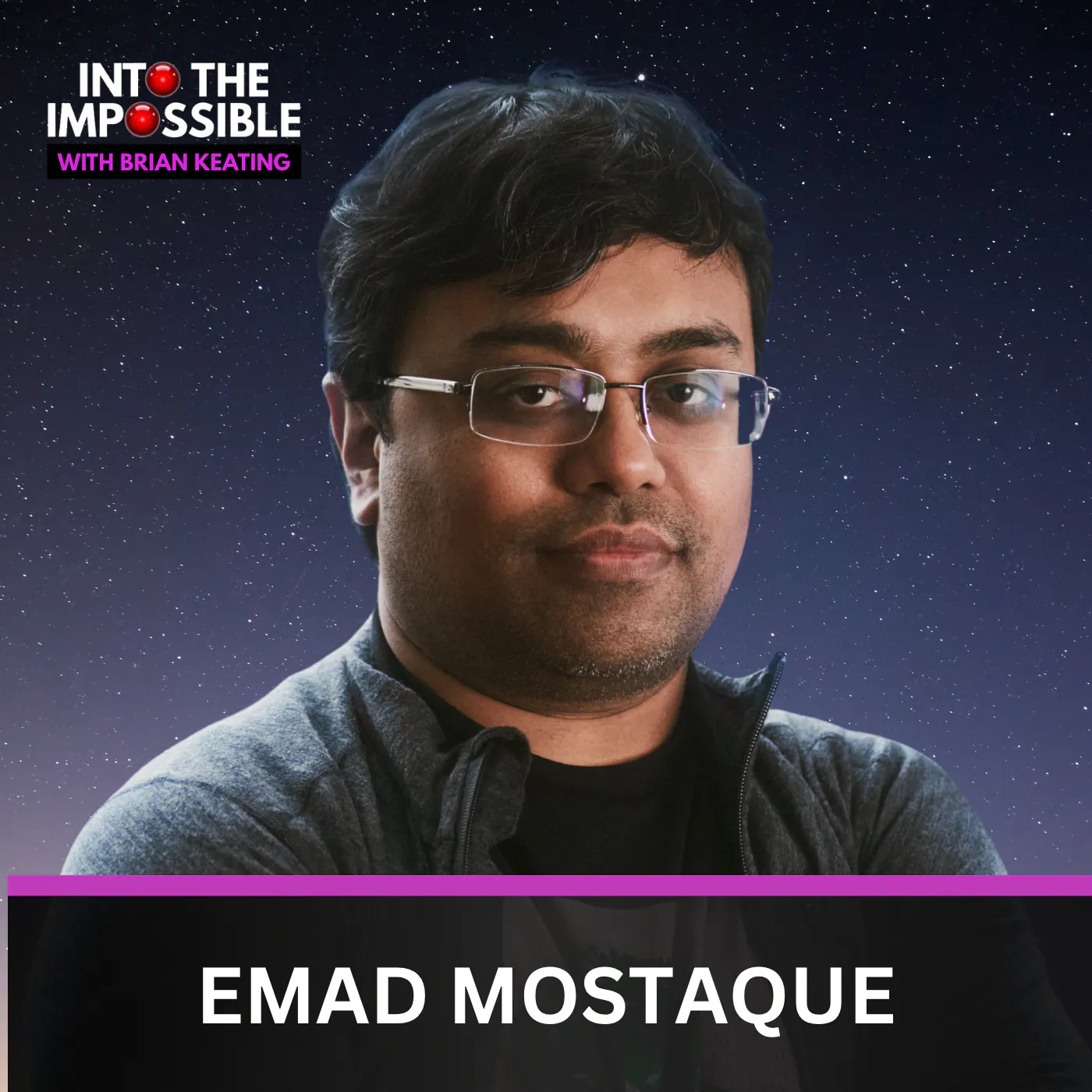
Emad Mostaque built Stable Diffusion. Now he says the most powerful AI models will never be released — and we have roughly 800 days before everything changes.
What the trillion-dollar labs won't tell you about the models they're keeping locked away 👇
Emad Mostaque is the founder of Stability AI and creator of Stable Diffusion. In this conversation, he explains why the gap between public AI and private AI is about to become the most important story in technology — and why most people won't realize it until it's too late.
We cover: why open source can't compete...
