The Vital Center
Both the Republican and Democratic parties are struggling to defend the political center against illiberal extremes. America must put forward policies that can reverse our political and governmental dysfunction, advance the social welfare of all citizens, combat climate change, and confront the other forces that threaten our common interests. The podcast focuses on current politics seen in the context of our nation’s history and the personal biographies of the participants. It will highlight the policy initiatives of non-partisan think tanks and institutions, while drawing upon current academic scholarship and political literature from years past — including Arthur M. Schlesinger Jr.’s 1949...
Reforming our way to dynamism, with Philip K. Howard
Philip K. Howard is a New York-based lawyer and civic reformer, who across his public career has tilted against the accumulating layers of procedural law and bureaucratic rule that have made it increasingly difficult for Americans to exercise individual initiative, judgment, and accountability. Since the 1995 publication of his bestselling first book, The Death of Common Sense, he has pointed out that the urge to make decision-makers accountable by subjecting them to highly specified rules has paradoxically produced a system that is both unaccountable and paralyzed. In his most recent book, Saving Can-Do: How to Revive the Spirit of America, Ho...
Rethinking feminism and dependence, with Leah Libresco Sargeant

Leah Libresco Sargeant is a Senior Policy Analyst in Family Economic Security at the Niskanen Center as well as a writer and journalist whose work focuses on religion and family policy. She is the author of three books, of which the most recent is The Dignity of Dependence: A Feminist Manifesto. In her book, Sargeant argues that liberal feminism — and American culture more generally — champions an ideal of freedom based in autonomy that is poorly suited to human beings as they are. Instead, she advocates for a culture that sees dignity in mutual dependence.
Sargeant agrees with femin...
From material abundance to mass flourishing, with Brink Lindsey

Since our species first emerged on the planet some 300,000 years ago, the overriding problem for most humans has been the struggle for food and shelter. But in 1930, the British economist John Maynard Keynes foresaw that economic growth (despite the Great Depression) would mean that in a century, the vast majority of people in developed societies would enjoy mass plenty and only a small number of unfortunates would still struggle with material deprivation. This would mean that “for the first time since his creation man will be faced with his real, his permanent problem — how to use his freedom from pres...
Reevaluating the New Liberals, with Henry Tonks
When most people think about the 1970s, they’re likely to conjure up images of Watergate, oil shortages, disco, and outrageous hairstyles. When academic political historians have thought about the 1970s, they have tended to see the era largely as one in which the forces of conservatism gained strength, setting the stage for Ronald Reagan’s election as president in 1980 and the subsequent decades of “neoliberalism,” in which both parties tended to agree that market forces needed to be liberated from the heavy hand of government.
But a new generation of historians argues that this reading shortchanges many of t...
Why everyone hates white liberals, with Kevin Schultz
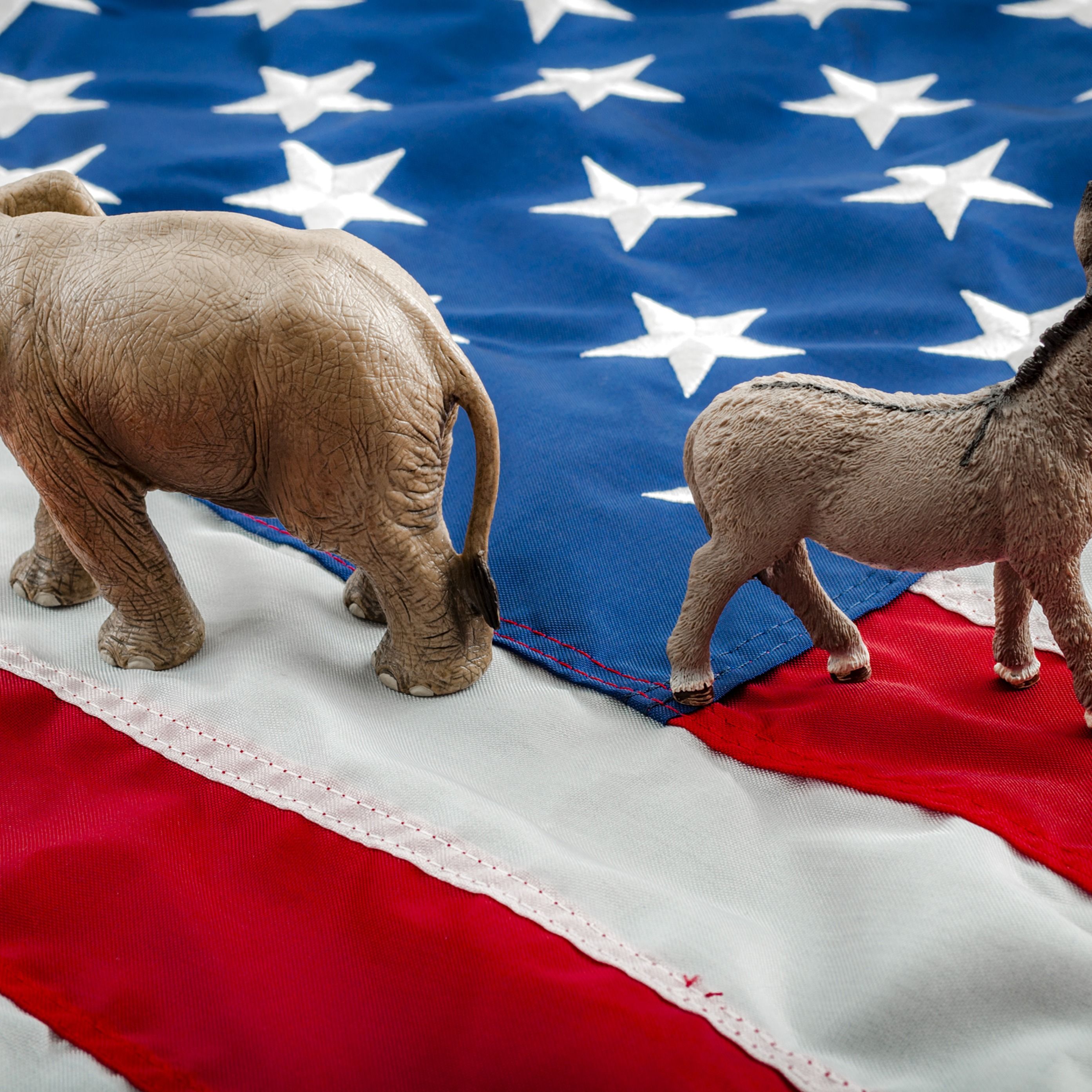
From the 1930s through the early 1960s, roughly half of Americans described themselves as liberals. But in the decades that followed, liberalism has suffered near-continuous reputational decline. The critics, rivals, and enemies of liberalism sought to redefine its public image downward, and nearly all succeeded.
Among these opponents were the conservatives around William F. Buckley Jr., who attempted to portray liberalism as a combination of militant secularism and socialism or even communism; while a majority of Americans didn’t buy this definition, Buckley and his confreres succeeded in equating liberalism with leftism, to the point that more tha...
Germany and the dangers of America abandoning Europe, with Jan Techau

On February 27, 2022, three days after the Russian invasion of Ukraine, Olaf Scholz, who was then the Chancellor of Germany, gave a speech to an emergency session of the German parliament at which he described the attack as a Zeitenwende – an historic turning point. This watershed moment, he declared, meant “that the world afterwards will no longer be the same as the world before. The issue at the heart of this [change] is whether power is allowed to prevail over the law: whether we permit Putin to turn back the clock to the nineteenth century and the age of great powers...
Reflections on DOGE and the abandonment of the West, with Michael Kimmage

For many decades, practitioners and scholars of foreign policy used to refer to “the West,” but today, for the most part, they don’t. What happened to the idea of “the West”? Michael Kimmage, a professor of history at Catholic University, wrote The Abandonment of the West: The History of an Idea in American Foreign Policy to trace the rise and decline of this concept from the late nineteenth century through the present day. In this podcast discussion, Kimmage discusses the idea of the West — as a geopolitical and cultural concept rather than a geographic place. He analyzes how it developed i...
Going local to heal politics and institutions, with Steve Grove

This podcast was recorded in late August 2025. Much has occurred since then, both in Minnesota and nationally, and listeners are asked to consider the episode’s treatment of politics and current events in the context of the time in which it was recorded.
Steve Grove is the publisher and CEO of the Minnesota Star Tribune. For many years, he had been a high-flying executive in Silicon Valley, working for firms like Google and YouTube. Then in 2018, he and his wife — who worked for a venture capital firm investing in startups outside of the coasts along with AOL founde...
The Legend of Murray Kempton, with Andrew Holter
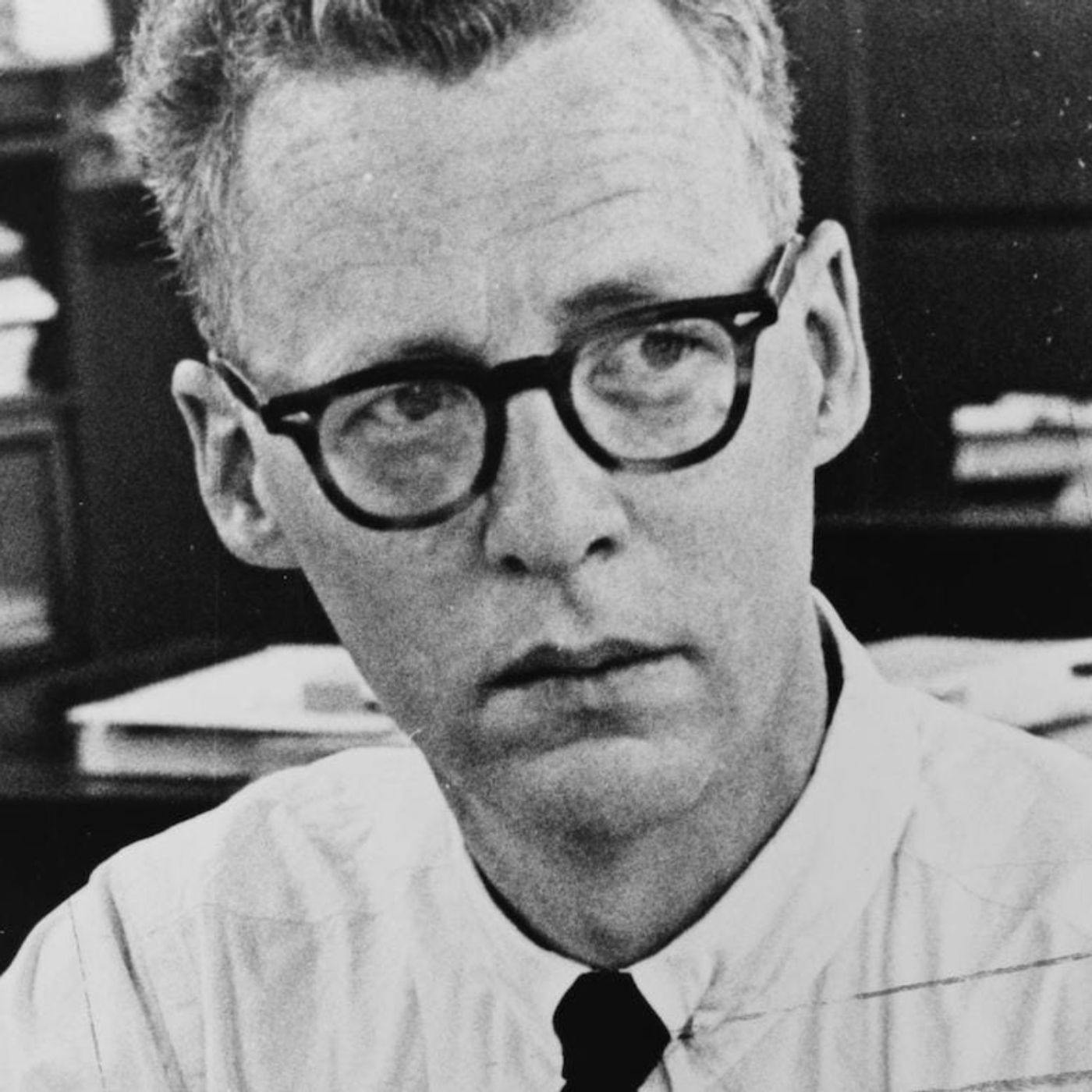
Murray Kempton (1917-97) was one of the greatest American journalists of the twentieth century. His career extended across seven decades, during which he produced somewhere around 11,000 columns, essays, and pamphlets, nearly all of them marked by his distinctive dry wit, insight, and stylistic elegance. He wrote about government and politics but also the civil rights movement (of which he was one of the earliest and most incisive white chroniclers) and a range of subjects that included jazz, sports, the arts, religion, history, and philosophy. He won the Pulitzer Prize for Distinguished Commentary in 1985 but was not widely known to...
The politics of abundance, with Misha Chellam

Misha Chellam, a leader in the Abundance movement and co-founder of the Abundance Network, joins The Vital Center to discuss how YIMBYism, state capacity, and Progress Studies relate to abundance. Chellam analyzes the successful alliances of growth-focused Abundants and good-government moderates in San Francisco. He also envisions future Abundance policies that expand beyond California and adapt to meet local needs and priorities.
How William Buckley shaped the American right, with Sam Tanenhaus
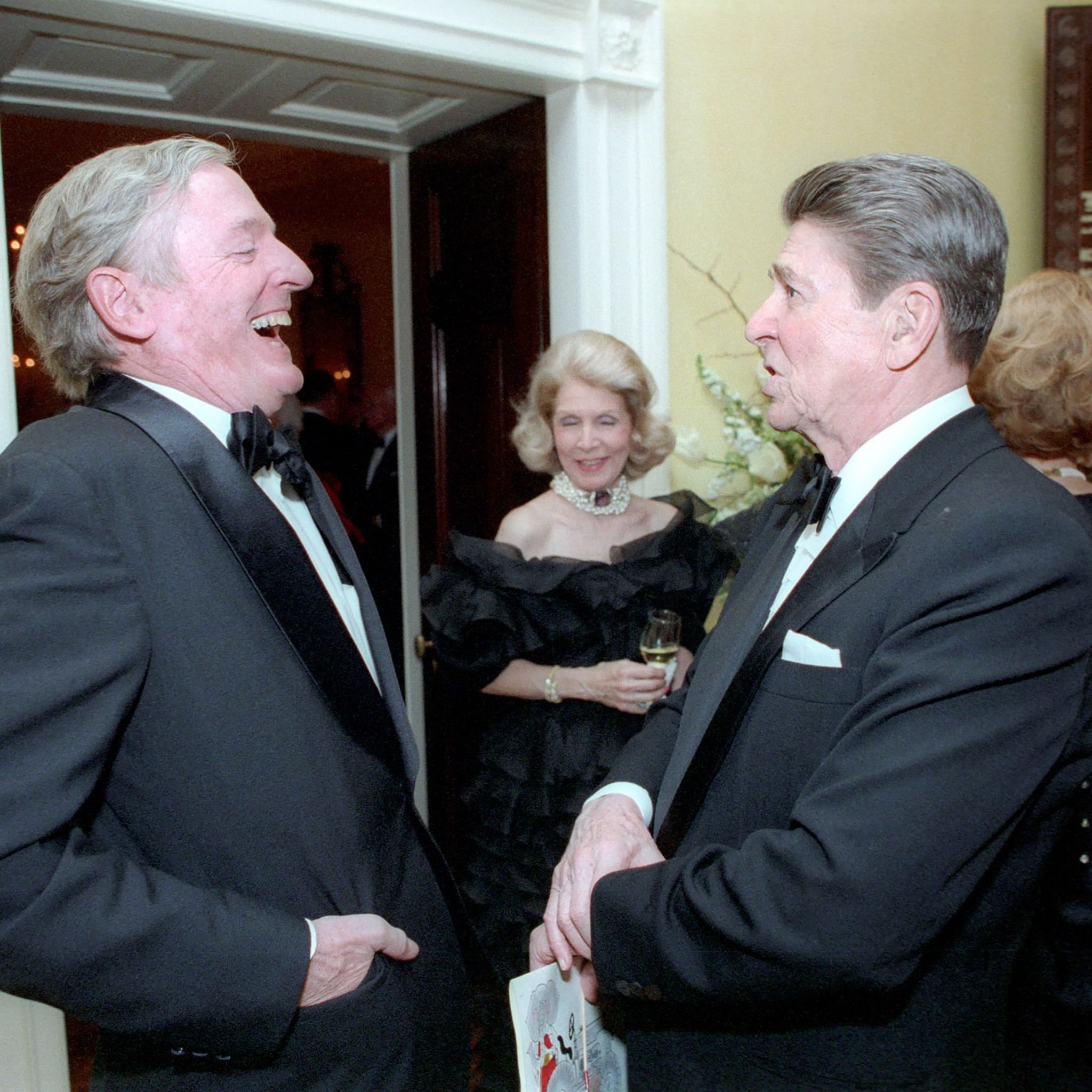
Sam Tanenhaus, an esteemed journalist and biographer, joins The Vital Center to discuss his biography of William F. Buckley Jr. Buckley, a towering figure in American conservatism, helped to pave the way for the political realignment that Ronald Reagan accomplished. Tanenhaus exposes Buckley’s darker origins, including his support for racial segregation in the South— a view which he later distanced himself from. Tanenhaus also speaks to Buckley’s personal life and the conversations that led Buckley to select him as his biographer.
The libertarian prophet of the abundance movement, with Virginia Postrel

The intellectual-political discussion of the so-called abundance movement typically is described as a debate taking place almost entirely on the left. But in fact many of its major themes were being discussed in right-leaning circles decades ago. Virginia Postrel, a libertarian thinker and journalist who was the former editor-in-chief of Reason magazine, anticipated much of the current discourse around abundance in her classic 1998 book The Future and Its Enemies: The Growing Conflict Over Creativity, Enterprise, and Progress. Even earlier, in 1990, Postrel was among the first to see that the most important ideological division that was emerging in American politics was...
Populism and working-class nostalgia for the 1950s, with Alan Ehrenhalt

Donald Trump’s most resonant political slogan has always been the one he borrowed from Ronald Reagan: “Make America Great Again.” Trump rarely has been pushed to define when exactly he believes America experienced the greatness he promises to recapture. But many of his followers believe that America’s golden age — particularly for its working class — was the 1950s. A 2024 PRRI survey found that some 70 percent of Republicans think that America’s culture and way of life has changed for the worse since the 1950s. But what is it that Republicans miss about the 1950s?
Alan Ehrenhalt, who has been a lo...
Exploring the Secrets of Political Charisma, with Molly Worthen

We all have an opinion about charismatic leaders — but do we really know what “charisma” means? Molly Worthen, in her new book Spellbound: How Charisma Shaped American History from the Puritans to Donald Trump, points out that charismatic leaders historically haven’t always been distinguished for their charm or compelling oratory. Rather, charismatic leaders are those who enter into a mutual exchange with their followers, in which the leader “draws back the veil on an alternative world in which followers find that they have secret knowledge, supernatural promise, and special status as heroes.” Worthen, who is a professor of history at th...
The old, weird history of libertarianism, with Matt Zwolinski
When U.S. President Donald Trump announced the imposition of his “Liberation Day” tariffs against most of America’s global trading partners in April 2025, he seemed to harken back to a centuries-old form of economic nationalism known as mercantilism, which sought prosperity through restrictive trade practices. Opponents of mercantilism from the eighteenth century onward, such as Adam Smith and John-Baptiste Say, became known as classical liberals. In the fullness of time, classical liberalism gave rise to the political philosophy we now know as libertarianism.
When most people think of libertarianism, they typically have in mind a small number...
Understanding the diploma divide, with Matt Grossmann and Dave Hopkins
The most important U.S. political trend of the 21st century, according to most observers, is the increasing tendency of college-educated voters to support the Democratic Party and for non-college-educated voters to support the Republican Party. In many ways, the two parties have swapped their historic bases. When John F. Kennedy won the presidency in 1960, Democrats still considered themselves to be a working-class party. Kennedy carried white voters without college degrees by a two-to-one margin but lost college-educated whites by an identical margin. Now those ratios are reversed, as Democratic presidential nominee Kamala Harris in 2024 won college-educated voters by...
Our contentious universities, with Neil L. Rudenstine
In the first few months of the second Trump administration, the White House in effect declared war on the nation’s colleges and universities, and particularly the most selective and prestigious among them. Vice President JD Vance had famously declared in 2021 that “the universities are the enemy,” but conservative antipathy against higher education for its alleged role as the breeding ground of progressive ideology goes back at least to the 1960s. In that turbulent decade, the universities became entangled in national debates over the Vietnam war, the civil rights movement, and the counterculture. The present-day controversies over political activism on coll...
Reevaluating Christianity’s bargain with democracy, with Jonathan Rauch

Jonathan Rauch would seem to be an unlikely defender of American Christianity. The eminent author, Brookings senior fellow, and Atlantic magazine contributing editor is a gay Jewish atheist — “I won the marginalized trifecta,” he observes — who grew up deeply suspicious of Christianity and its potential for (and past history of) oppression.
As he describes in his recent book Cross Purposes: Christianity's Broken Bargain with Democracy, his attitude began to change at college, when his freshman year roommate was a Christian believer who exemplified the best aspects of the religion. But Rauch also came to appreciate that as the country...
Why nothing works, with Marc Dunkelman
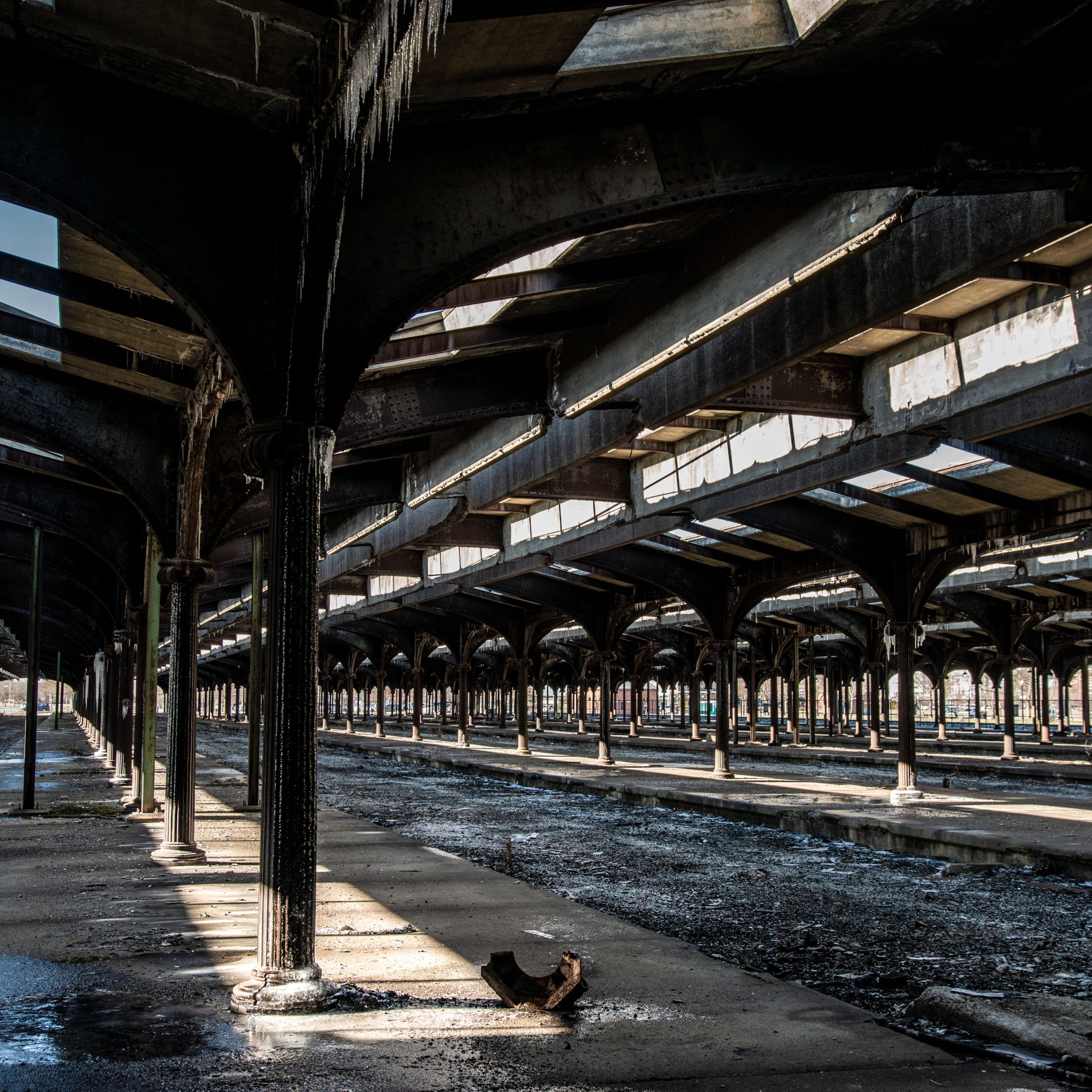
Why can’t America do big things anymore? Marc Dunkelman, a fellow at Brown University’s Watson Institute for International and Public Affairs, addresses this question in his new book, Why Nothing Works: Who Killed Progress and How to Get It Back. The book’s inspiration came from his thinking about the now-vanished Pennsylvania Station, formerly New York City’s majestic gateway, which was one of the most beautiful buildings in the country and a monument to metropolitan greatness. Its closure and demolition in the early 1960s amounted to what a New York Times editorial called a “monumental act of vandalism...
Race, class, education, and the 2024 election, with Steve Bumbaugh

Many Democratic voters — and not a few pundits — have found the 2024 presidential election outcome to be profoundly puzzling and disorienting: How could so many minorities and working-class Americans have voted for Donald Trump?
One observer who found Trump’s showing with these groups to be unsurprising is Steve Bumbaugh. Ever since the 1990s, he has worked on issues involving college access, upward mobility, race, and class. For some of that time, he worked with large organizations such as the College Board, which is the one of the key institutions that has shaped the modern meritocracy through college entrance...
Why Britain (and the US?) face a governance crisis, with Sam Freedman

The 2024 U.S. election was to a large extent driven by voter frustrations with what seems to many to be a sluggish economy and dysfunctional government that no longer delivers for its citizens as it used to. But similar frustrations are felt in developed countries all around the world, and perhaps nowhere more acutely than in Great Britain. Its economy has stagnated for fifteen years, with the lowest rates of productivity registered over such a span since the beginning of the Industrial Revolution. Child poverty levels have risen to record levels, prisons are dangerously overcrowded, sewage spills increasingly pollute...
Exploring Norman Holmes Pearson's legacy, with Greg Barnhisel

Norman Holmes Pearson, who in the middle years of the twentieth century was a professor of English and American Studies at Yale University, is now a largely forgotten figure — and someone who was never that well known during his lifetime. But Duquesne University professor Greg Barnhisel, in his intriguing new biography of Pearson, sees him as a critical figure in several important areas of American life and culture. Code Name Puritan: Norman Holmes Pearson at the Nexus of Poetry, Espionage, and American Power, demonstrates how Pearson was an important force in legitimizing American modernism (particularly in literature) as a sig...
Hollow political parties, with Sam Rosenfeld and Daniel Schlozman

America’s founders deeply mistrusted political parties. James Madison decried “the mischief of faction” while George Washington, in his farewell address, warned that “the spirit of revenge natural to party dissension” might lead to despotism. But the disunity that Washington warned that parties would bring has always been present in America, and still is. What political parties can do at their best is to make disunity manageable by facilitating compromise and preventing political conflict from turning into violence.
Sam Rosenfeld (an associate professor of political science at Colgate University) and Daniel Schlozman (an associate professor of political science at...
Why the center must hold, with Yair Zivan

Yair Zivan is a young British-Israeli who for the past decade has served as foreign policy advisor to Israel’s Opposition Leader, Yair Lapid, head of the centrist party Yesh Atid (“There Is a Future”). He is the editor of a new collection of essays entitled The Center Must Hold: Why Centrism Is the Answer to Extremism and Polarization. Contributors include leaders and commentators from around the globe including former British prime minister Tony Blair, former Australian prime minister Malcolm Turnbull, former New York City mayor Michael Bloomberg, and some forty other essayists. In this volume, Zivan and the other c...
The online misinformation epidemic, with Renée DiResta
In late December 2014, several visitors to Disneyland fell ill with measles, a disease that supposedly had been eliminated in the United States more than a decade earlier. Over the next month, the outbreak spread to more than 120 people in California, including a dozen infants; nearly half of the infected weren’t vaccinated. The outbreak was a predictable outcome of the state’s having allowed parents to opt out of having their school-age children vaccinated because of “personal belief” unconnected to medical or religious reasons.
Renée DiResta was then a mom looking for preschool programs in San Francisco...
The conservative vision of Edward C. Banfield, with Kevin Kosar

Edward C. Banfield (1916-99), the conservative political scientist who spent most of his career at Harvard University, was one of the most eminent and controversial scholars of the twentieth century. His best-known work, The Unheavenly City (1970), was a deeply informed but unsparing criticism of Great Society-era attempts to alleviate urban poverty. His New York Times obituary observed that Banfield “was a critic of almost every mainstream liberal idea in domestic policy,” who argued that “at best government programs would fail because they aimed at the wrong problems; at worst, they would make the problems worse.” In many respects, he was one of t...
The Latino century, with Mike Madrid

In the 1990s, Mike Madrid was a student at Georgetown University writing his senior thesis about Latino voting patterns and trying to predict how this group might change American politics in the future. The prevailing interpretation at the time was that Latinos were likely to become a permanent underclass, would almost certainly vote Democratic as a bloc for the foreseeable future, and would express themselves largely through oppositional, anti-establishment grievance politics. A contrasting conservative interpretation, advanced by Linda Chavez and a few other dissenters, was that Latinos would mostly follow the upwardly mobile path of previous immigrant groups. Recent...
America Last: Right-wing admiration for foreign autocracies, with Jacob Heilbrunn

When the Soviet Union came into being in 1917, some American left-wing intellectuals hailed the establishment of the new “workers’ paradise” as the model for the United States (and indeed the rest of the world) to follow. Some even traveled to Russia to pay homage to the communist dictatorship – as for example journalist Lincoln Steffens, who upon returning from Moscow and Petrograd infamously declared: “I have seen the future, and it works.” In later years, some American leftists saw similar visions on their visits to left-wing authoritarian regimes such as Mao’s China and Castro’s Cuba.
But this fascination...
Slouching and the posture panic, with Beth Linker

Probably all of us have, at one time or another in our younger years, been told to stand up straight. If you’re part of Generation X or the early Millennial cohort, you probably had to undergo an exam during middle school for scoliosis, an abnormal curvature of the spine. If you’re a Baby Boomer, you might have had to take a posture test upon entering college — or even to pass one before you could graduate. But where did this concern for proper posture come from? Beth Linker, a historian and sociologist of science at the University of Pennsy...
The case for incremental change, with Greg Berman and Aubrey Fox

If you spend enough time in Washington D.C., you come to realize that activists of left and right, for all their mutual enmities, unanimously agree on the need for radical and even destructive change. They agree that gradualism is boring, compromise is betrayal, and that the finest thing in life is, as the notable political philosopher Conan the Barbarian once observed, to crush your enemies and drive them before you. But as Greg Berman and Aubrey Fox argue in their terrific 2023 book Gradual: The Case for Incremental Change in a Radical Age, bold and sweeping policy proposals rarely c...
Understanding inequality and rising mortality rates in America, with Angus Deaton

Sir Angus Deaton is a British-American economist, and one of the world’s most eminent in his profession. He was the sole recipient of the 2015 Nobel Memorial Prize in Economic Sciences, principally for his analysis of consumer demand, poverty, and welfare. But he is also among the world's most famous (perhaps even notorious) economists for the work he has done to shine a light on inequality in America.
He is perhaps best known for his influential 2020 bestseller, Deaths of Despair and the Future of Capitalism, co-authored with his wife Anne Case, who is likewise an eminent economist at...
Conservative voices in 1960s campus activism, with Lauren Lassabe Shepherd

In the early 1960s, colleges and universities in the United States had been politically quiescent for over a decade, following the changes and controversies that had roiled higher education in the 1930s and the post-World War II years when the G.I. Bill had paid the tuitions of large numbers of returning veterans. The demonstrations that erupted on campus by the later 1960s are usually associated with the causes of the political left, including the civil rights, antiwar, countercultural, and feminist movements. But for a while in the early part of the decade it was possible to think that...
Illiberal vanguards in Russia and the U.S., with Alexandar Mihailovic

February 24 will mark the second anniversary of Russia’s brutal and unprovoked invasion of Ukraine. Although Vladimir Putin’s dictatorial power made the invasion possible, it’s still unclear to many observers why the Kremlin’s leader took this fateful decision. One of the more persuasive explanations is that since Putin’s return to the presidency in 2012, his domestic and foreign policy increasingly has been shaped by Eurasianism. It’s a socio-political movement animated by the idea that Russia is a distinctive civilization, neither European nor Asian, rooted in absolutism, and aligned with China and the Global South in opposition t...
Is America's past hurting us now? Deep dive with Fergus Bordewich
Many Americans would agree with Henry Ford’s famous statement that “History is bunk.” Do the events of a century and a half ago really have any relevance to our daily lives in the twenty-first century? Fergus Bordewich, in his new book Klan War: Ulysses S. Grant and the Battle to Save Reconstruction, argues that America’s critical missed turning point in the 1860s and ‘70s continues to haunt the present. In the wake of the Confederacy’s defeat in the Civil War in 1865, federal forces attempted to rebuild the post-slavery South as an industrial, biracial democracy. The policy of this Reconst...
Milton Freidman's unexpected legacy, with Jennifer Burns
In 1951, Milton Friedman received the John Bates Clark Medal, a highly prestigious prize given to an American economist under the age of 40 who has made a significant contribution to economic thought and knowledge. As Jennifer Burns points out in her monumental new study of Friedman — the first full-length, archivally researched biography to have been published — the academic economic profession viewed Friedman as a promising young pioneer in the fields of statistics and mathematics at the time. Ironically, at that very moment, Friedman redirected his intellectual interests toward the seemingly outdated and even retrograde studies of the quantity of money, the cons...
Minnesota's progressive Republican tradition, with Lori Sturdevant
On January 20, 1981, Minnesota Republican Senator David Durenberger sat with his colleagues outside the U.S. Capitol to watch Ronald Reagan's inauguration as America's fortieth president. Durenberger considered himself a progressive Republican, which he defined as a combination of fiscal prudence and social conscience. He was a pioneer in legislative efforts to combat climate change and also a champion of charter schools; his other priorities included equal rights for women and minorities, high-quality public education, affordable health care, accountable government, and what he called "a fair, business-friendly tax code to pay for it all." At the time of Reagan's inauguration, Durenberger...
Seth D. Kaplan on how to repair our fragile society, one neighborhood at a time

Seth D. Kaplan gained an international reputation early in his career as an expert in fixing fragile states — lawless places around the globe with deeply flawed political, economic, and legal structures. The United States is not a fragile state in that sense. But it is a fragile society in which too many areas (rich and poor alike) are suffering from anomie and decay, the symptoms of which include family disintegration, rising rates of loneliness and depression, the opioid crisis, and deaths of despair. In his new book Fragile Neighborhoods: Repairing American Society, One Zip Code at a Time, Kaplan applies les...
The decline of the American Dream, with David Leonhardt

David Leonhardt, a senior writer for the New York Times, has tracked the U.S. economy for decades. Starting in the late 2000s, he began to notice that the statistical evidence was telling him a disheartening story about the decline of the American dream. Whether it was stagnating wages for most workers, the decreasing likelihood of children born into each generation to economically outperform their parents, technological slowdowns, or the life expectancy of Americans relative to other high-income countries — by every indicator, the United States as a whole seemed to be losing the sense of inevitable progress that had long def...
The political reform that might matter most, with Katherine Gehl
In 2013, Katherine Gehl was a young CEO when she crossed paths with Harvard Business School professor Michael Porter, who revolutionized corporate strategy with his famed “Five Forces” analysis. Through working with Porter on efforts to revive U.S. economic competitiveness, Gehl — who describes herself as “politically homeless” — realized that the same Five Forces analysis could be applied to the business of politics. Looking at politics through this lens helped explain why the current political primary system produces polarization and paralyzed government. In particular, she was struck by how the Republican and Democratic parties, for all their differences, act as a duopoly in p...
The two-parent privilege, with Melissa Kearney

In decades past, most Americans married, and most American children were raised within two-parent families. But now marriage rates have fallen; 40% of American children are born outside of wedlock, and approximately a quarter live in single-parent homes. The United States has by far the world’s highest rate of children living in single-parent households — more than three times the global average.
Melissa Kearney, who is an economics professor at the University of Maryland and Director of the Aspen Economic Strategy Group, investigates the reasons for this sea change in American family formation and its consequences in her impor...


