Beginner's Mind

Blueprints for Builders and InvestorsHosted by Christian SoschnerFrom pre-seed to post-IPO, every company—especially in deep tech, biotech, AI, and climate tech—lives or dies by the frameworks it follows.On Beginner’s Mind, Christian Soschner uncovers the leadership principles behind the world’s most impactful companies—through deep-dive interviews, strategic book reviews, and patterns drawn from history’s greatest business, military, and political minds.With over 250 interviews, panels, and livestreams, the show ranks in the Top 10% globally—and is recognized as the #1 deep tech podcast. With 35+ years across M&A, company building, board roles, business schools, ultrarunning, and martial arts, Christian...
EP 186: Deb Houry | 30% of the CDC Gone in Eight Hours: How an ER Doctor Decides

On one day in 2025, the Centers for Disease Control and Prevention lost about 30 percent of its workforce and had eight hours to shut down programs, labs and data systems.
She had expected 30 days. Instead, as the agency's top career official, she ran that day the way she ran a shift in the emergency department: gathering her leadership team, resetting priorities every two hours, deciding on incomplete facts, and holding steady while everyone watched.
Deb Houry, MD, MPH, is the founding director of the PHNIX Innovation Institute in California and the former Chief Medical Officer of...
Spark 20: Alex Dang | Everyone Agrees? Think Again. How Venture Capitalists Decide

Invest in the wrong startup and you lose one times your money. Miss the next Google and you lose ten thousand times. Most boards are built to avoid the first mistake.
Venture capitalists play by different rules. They back the team before the market, read full agreement in the room as a warning sign, place small bets, double down on the ones that work and kill the rest. Then they give the winners five to seven years.
Alex Dang led products at Amazon and at Amazon Web Services and was a partner at McKinsey in...
EP 185: Ivy Nguyen | IQ, EQ and the Execution Quotient Investors Fund

The trait a Silicon Valley AI investor rewards most in a management team has a name almost nobody uses: XQ.
IQ brings the idea and EQ reads the people across the table. The execution quotient shows in something as small as how fast a team follows up after a meeting, and in her experience the people who score high on it have no patience for those who do not. Meanwhile the money in AI moves in waves, from models to tools to packaged products, and only some of those waves leave room for an early-stage fund.
<...EP 184: Ivy Nguyen | 10,000 AI Pitches and the One Test That Matters

In 2017 another investor told Ivy Nguyen that artificial intelligence was too small a niche to dedicate a fund to.
More than ten thousand AI pitches later, every pitch deck says AI. Single funding rounds have grown larger than entire venture funds, and from the outside the companies that will matter look exactly like the ones a fast follower overtakes within three years.
Ivy Nguyen is a Partner at GFT Ventures in Palo Alto, the early-stage firm founded by former NVIDIA and Samsung executives to invest in AI and frontier technology. Before GFT she held investment...
EP 183: Marie Schroeder | Send the Rough Deck, Not the Perfect One

A seed investor at Novo Holdings would rather read your rough idea than your finished pitch deck.
Most founders spend a year building the deck, forming the team and waiting until the story holds together. By the time it is ready the science has moved, the money has gone somewhere else, and nobody told them the fund they were preparing for creates companies out of raw material.
Marie Schroeder is a Principal on the Seed Investments team at Novo Holdings, the investment company owned by the Novo Nordisk Foundation. Before that she spent five years...
#182 - How to Lead When You Don't Know Where You Are Going: 4 Lessons from Ben Horowitz (Part 2 of 2)

What does it mean when the most respected adviser in Silicon Valley tells you that you are the best chief executive he works with, while your company is heading straight into a wall?
Bill Campbell said exactly that to Ben Horowitz. Campbell was advising Steve Jobs, Jeff Bezos and Eric Schmidt at the time, so Horowitz assumed the compliment was absurd. Campbell explained himself: there are plenty of good peacetime chief executives and plenty of good wartime ones, and almost nobody who can do both.
Horowitz's own accounting of his career: peacetime chief executive for...
#181 - When Things Fall Apart: 3 Lessons from Ben Horowitz on Leading Through the Struggle (Part 1 of 2)

What do you do on the morning when there are no good moves left?
In March 2001, Ben Horowitz took Loudcloud public in the middle of the dot-com collapse. The bankers cut the price from ten dollars a share to six in the week of the offering. The day before the deal, Yahoo announced its chief executive was stepping down. Neither of the two banks that took the company public offered the traditional closing dinner. On the plane home, Horowitz turned to his director of finance and said they had done it. The reply was that the company...
EP 180: Eric Ries | Why Good Companies Go Bad After Success
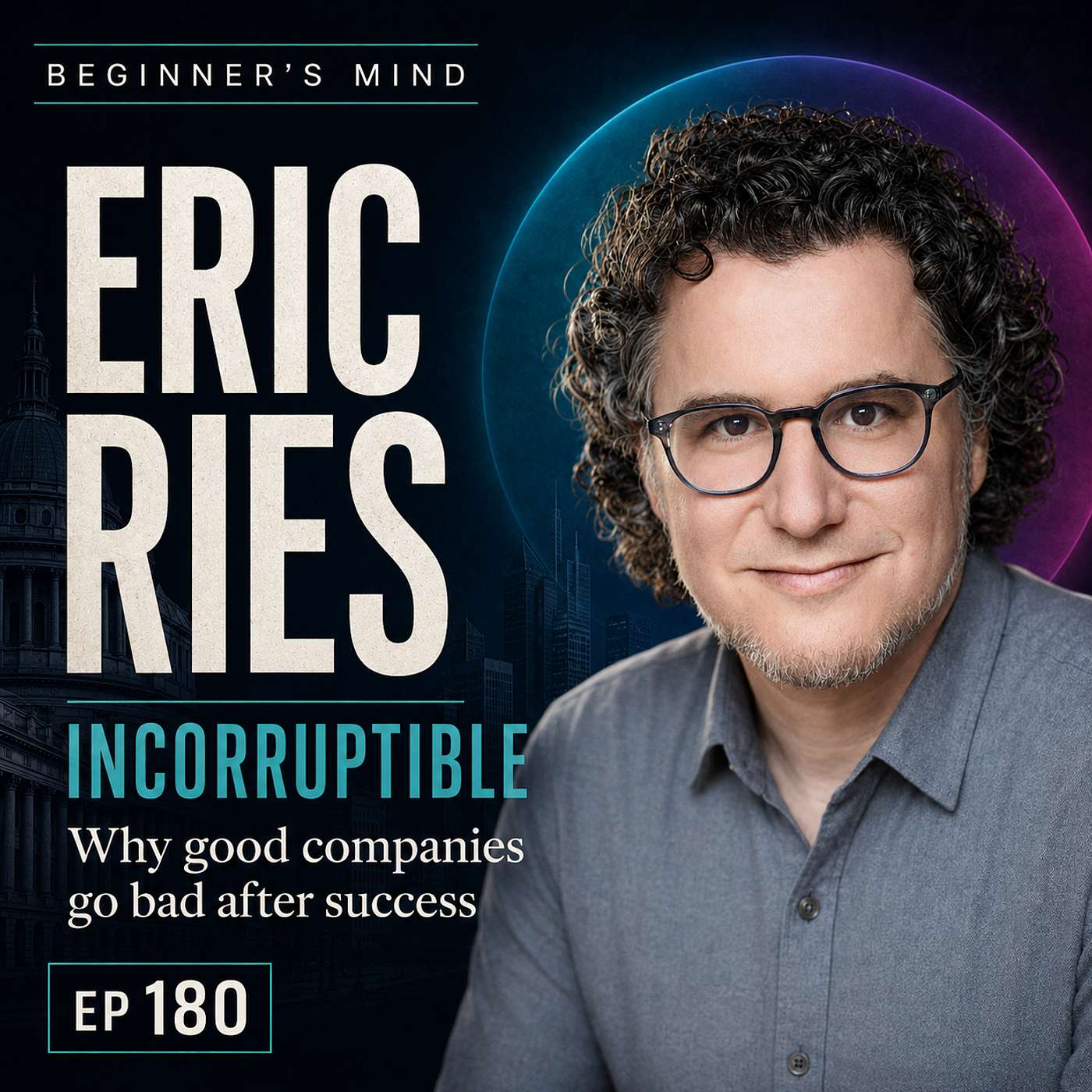
What happens when the moment a company finally succeeds is the moment it becomes most likely to be destroyed? Most founders assume the market rewards the better product and protects what they built. The legal reality runs the other way. The dominant theory of the corporation treats a company as a financial instrument designed to enrich its shareholders, and treats everything else as optional.
That theory has a name, shareholder primacy, and nobody voted for it. It hardened in courtrooms and boardrooms about forty years ago. Founders sign it into their own charter on day one without...
EP 179: Joško Bobanović | Why Venture Capital Fights Human Instinct

What happens when the instinct to help a struggling company is exactly what prevents the strongest companies from succeeding? Venture capital forces investors to make decisions that can feel deeply uncomfortable: stop rescuing the weakest, concentrate scarce capital behind the most promising, and accept that most investments will fail.
Deep tech intensifies this conflict. Investors must commit capital while the technology remains unproven, customers are still uncertain and the eventual exit may be more than a decade away. The wrong team, an inflated valuation or a fund timeline that does not fit the technology can destroy an...
#178 - The Elon Musk Method: 7 Rules for Building What the Market Thinks Is Impossible

How can a company have the right numbers and still reach the wrong strategic conclusion?
In 2017, Volkswagen’s chief executive mocked Tesla as one of the “world champions of big announcements.” At the time, Volkswagen sold roughly eleven million cars a year, while Tesla sold fewer than eighty thousand. The facts supported the criticism, but the conclusion missed the change already underway.
That moment explains why Elon Musk remains worth studying.
Most public discussion focuses on his personality, political views, wealth, or communication style. This episode takes a different approach and examines the method...
EP 177: Alberto Chalon | Liquidity Before the IPO Window Opens

Private companies are staying private longer, and that changes who gets liquidity, when, and why.
Founders, employees, and early investors can wait a decade or more for an IPO or acquisition. Meanwhile, venture funds face growing pressure to return capital, and many of Europe's best companies struggle to access the growth capital needed to scale.
In this conversation, Christian Soschner speaks with Alberto Chalon, Co-Founder of Giano Capital, about the rise of single-asset secondary investments and why they have become an important part of the European innovation ecosystem.
Topics include:
<...Alasdair Milton, KPMG | Why Precision Medicine Still Fails Patients (SPARK20 – 168)

Only one in three eligible lung cancer patients receives the targeted therapy they should get.
That is not a failure of science.
It is a failure of delivery.
After more than two decades of precision oncology, biopharma has never had better tools: cell and gene therapy, in vivo CAR-T, antibody-drug conjugates, AI-enabled diagnostics, organoids, multi-omics, and global clinical data.
Yet too many breakthroughs still fail to reach the bedside.
Patients fall through fragmented systems.
Data does not move cleanly.
Community oncologists are overloaded.
Tests are missed...
#176 - Why Smart People Say Yes: 7 Lessons from Influence by Robert Cialdini

Some books explain how the world works.
Influence explains why people move.
Why someone takes the meeting.
Why an investor leans in.
Why a customer trusts.
Why a team follows.
Why a board stays stuck.
Why a founder keeps defending a decision that stopped making sense months ago.
Robert Cialdini’s Influence: The Psychology of Persuasion is one of those books that becomes more valuable the longer you build, invest, sell, negotiate, hire, and lead.
Because at some point, you realize something un...
EP 175: Stefanie Schubert | Why Smart People Lose Negotiations Before They Start

Most leaders think negotiation begins when both sides sit down to talk numbers.
By then, trust, incentives, timing, internal alignment, and first impressions have already shaped the outcome.
That is why smart founders, executives, investors, and board members can have the right facts and still walk away with the wrong result.
In this episode of Beginner’s Mind, Stefanie Schubert explains why negotiation is not a last-minute performance at the table. It is a leadership capability that starts much earlier, in the way people prepare, build trust, frame value, listen, manage emot...
EP 174: Wanwipa Siriwatwechakul | Funding the Next Industrial Era

Most people still treat climate solutions as a cost.
Wanwipa Siriwatwechakul argues that this is exactly why so many leaders miss the real opportunity.
The next industrial era will not be built by patching old systems, but by redesigning them from the ground up.
In this episode of Beginner’s Mind, Wanwipa explains why industrial decarbonization is not mainly about sacrifice, compliance, or adding expensive fixes to yesterday’s infrastructure. It is about building better systems, stronger companies, and entirely new categories of value creation.
A chemical engineer trained at MIT and...
EP 173: Bret Kugelmass | The West Bet on the Wrong Energy Future
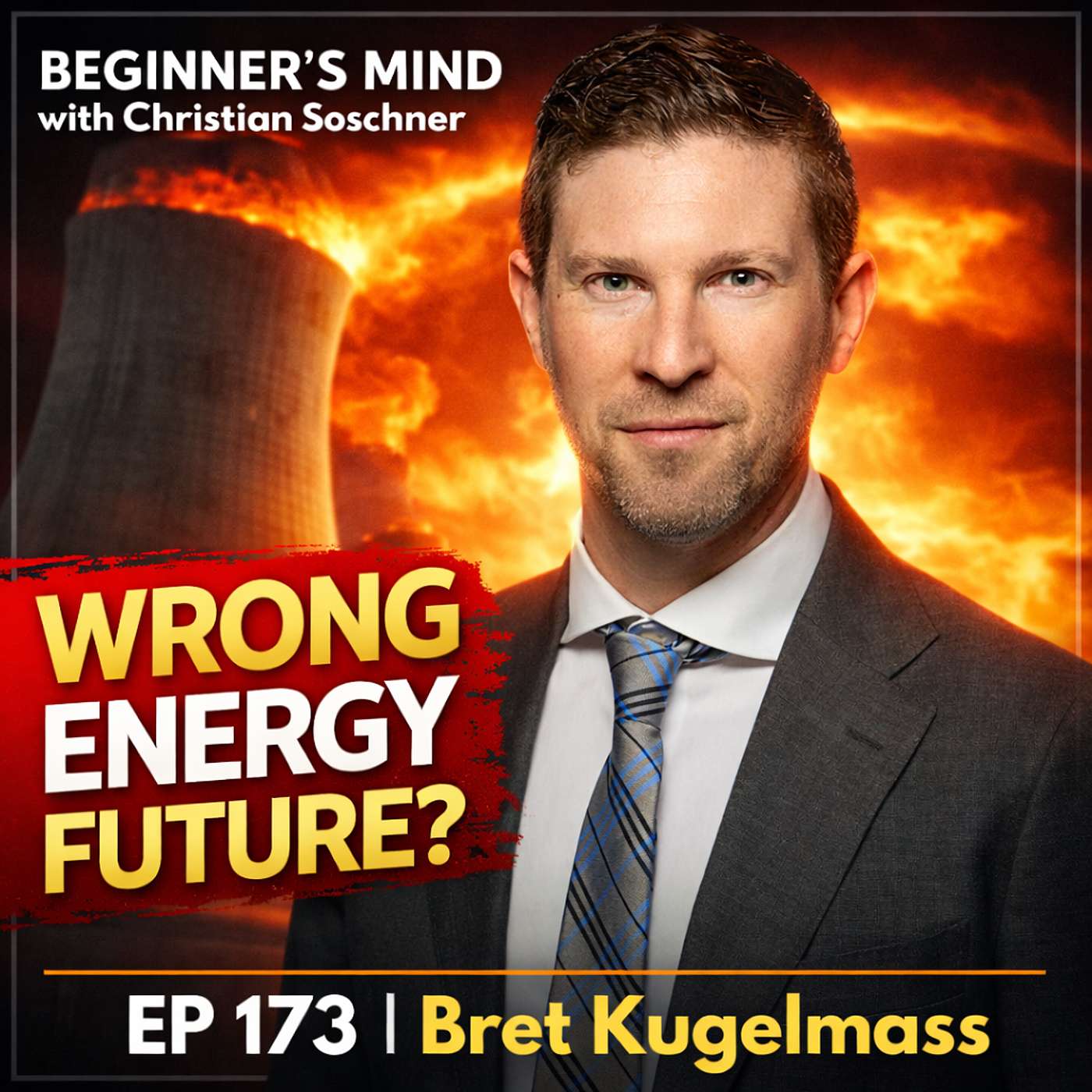
Power demand is rising faster than the systems meant to support it.
AI, electrification, and industry all need stable energy, but the dominant story sold to the public was far simpler than reality.
In this episode, Bret Kugelmass explains why the real bottleneck was never just climate ambition, but how the West misunderstood energy itself.
For years, nuclear was framed as too dangerous, too slow, too expensive, and politically untouchable. Meanwhile, electricity demand kept rising, industrial resilience became strategic again, and the gap between energy ambition and physical reality widened.
This conversation gets u...
#172 - Fast Forward Thinking: Why Most Investments Fail — And How Elite VCs Think Differently

Most investors think they’re rational.
Most founders think they’re disciplined.
Most boards think they’re strategic.
They’re usually wrong.
In this episode, we unpack Fast Forward Thinking by Luis Pareras — a physician turned deep-tech venture capitalist who distilled decades of investing under scientific uncertainty into 40 brutally structured rules.
This is not a summary.
It’s a decision upgrade for founders, operators, board members, and capital allocators navigating the high-stakes terrain from Series A to IPO and beyond — where bias compounds, capital misallocates, and timing determines sur...
EP 171 - Björn Cochlovius: Why Brilliant Biotech Breaks at Manufacturing
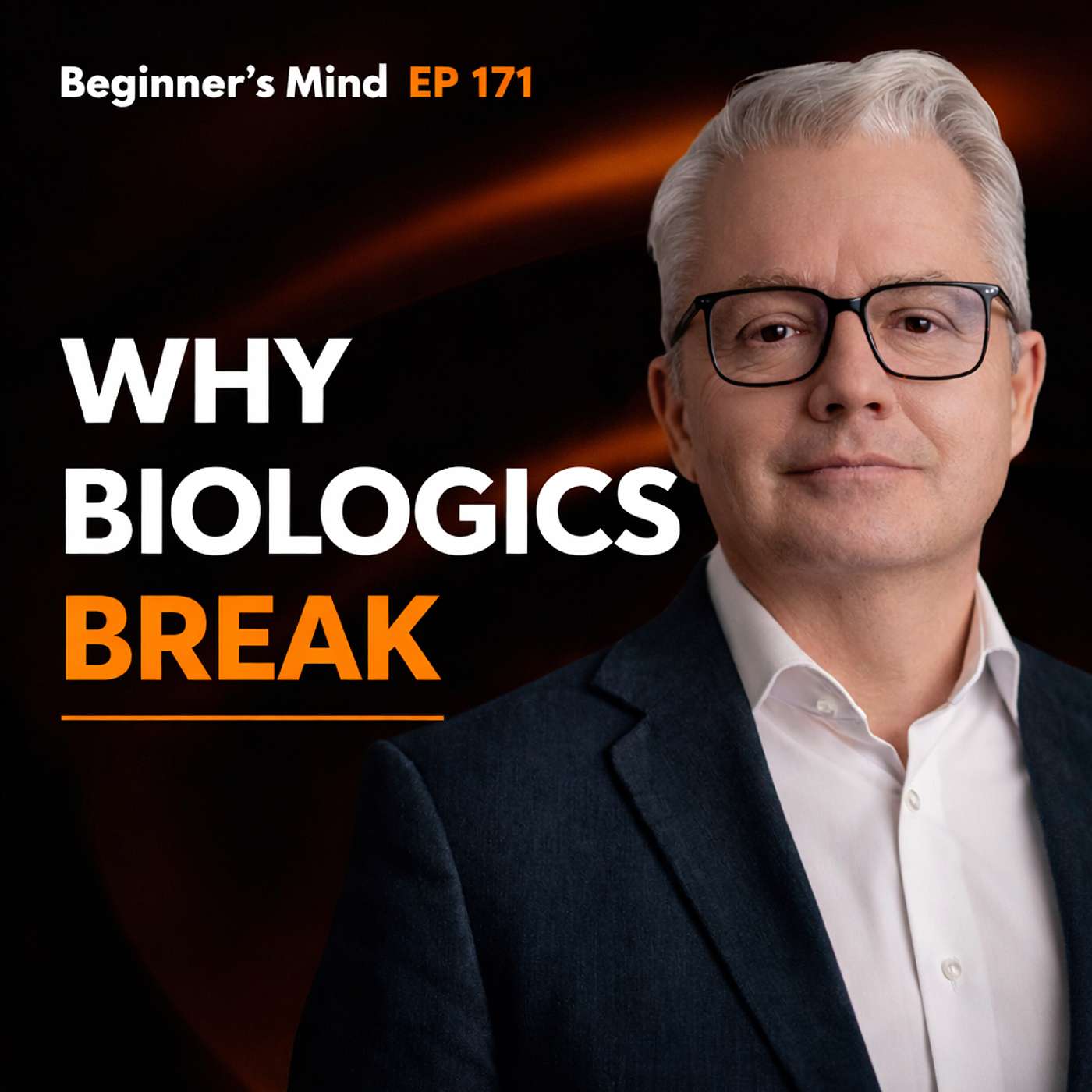
Most biotech breakthroughs don’t fail in the lab.
They fail when science meets manufacturing reality.
And by the time this bottleneck appears, tens of millions are already sunk.
This episode examines the most under-discussed failure point in modern biotech: the gap between scientific discovery and scalable, usable healthcare solutions.
While science has never been stronger—and big pharma excels at market access—companies that can translate breakthrough biology into industrialized medicines remain rare. Manufacturing, regulation, clinical design, usability for patients and physicians, and global scalability still form a narrow bottleneck where most value...
EP 170 - Jim Pulcrano: Why Most Venture Capital Fails And What Europe Still Gets Wrong

Nine out of ten startups fail, yet Europe keeps funding them the same way.
Governments replace judgment with bureaucracy, capital replaces experience, and failure is misunderstood instead of learned from.
This conversation exposes why venture capital is a profession, not a policy tool — and why getting this wrong quietly kills innovation.
In this episode, Jim Pulcrano, Adjunct Professor at IMD and longtime venture investor, explains why most venture capital systems fail before capital is even deployed.
Drawing on four decades across Silicon Valley, Europe, and academia, Jim dismantles the myth that VC...
EP 169 - Why New Year’s Goals Fail by February - Even for Disciplined People

Most goals don’t fail because of laziness or lack of ambition.
They fail quietly — buried under daily noise, competing priorities, and forgotten intentions.
By March, even the most meaningful goals have slipped down the list… replaced by urgency, meetings, and excuses.
In the last years, whenever I work with companies or people in my executive coaching a pattern showed up frequently.
In private life: marathons abandoned, educations postponed, mountains left unclimbed.
In business: bold visions diluted, priorities scattered, companies losing momentum — not because the goal was wrong, but because i...
EP 168 - Why Breakthrough Medicines Don’t Reach Patients | Alasdair Milton, KPMG

A breakthrough medicine can exist. A patient can qualify. The treatment can still never reach them.
What breaks between scientific discovery and patient care? And what does that mean for the people building, financing and leading biotech companies?
Alasdair Milton, PhD, Principal at KPMG, joins Christian Soschner to connect three forces reshaping biopharma: the search for new growth through deals, China’s expanding role in drug development, and the promise of precision medicine.
The conversation moves from in vivo CAR-T and gene therapy to the practical questions th...
#167: Pattern Breakers — 7 Laws Behind Category-Defining Companies

Most founders obsess over ideas.
Breakthrough companies obsess over inflections, conviction, and structure.
This episode unpacks Pattern Breakers by Mike Maples Jr.—a book that quietly explains why most startups never break out… and why a small minority reshape entire categories.
But this isn’t a book summary.
It’s a thinking upgrade for founders, operators, board members, and investors navigating the most fragile phase of company building: Series A to IPO, where timing, conviction, and structure matter more than features or pitch decks.
Across s...
SPARK20 – 156: Janos Pasztor | The Climate Diplomat Who Refuses to Give Up on Humanity

The world has grown quiet about climate change. Too quiet.
We scroll past floods, fires, droughts… and move on with our day.
As if the problem solved itself.
As if we’ve earned the luxury to look away.
Janos Pasztor (full episode) has spent 40 years inside the rooms where climate decisions are made — from serving as UN Assistant Secretary-General for Climate Change to advising presidents, prime ministers, and global institutions.
And in this SPARK20 highlight episode, one truth stood out:
We are not done with c...
EP 166 - Karl Nehammer: Why Europe Fails to Scale – And How the EIB Plans to Fix It

Europe leads the world in discovery — yet too often, its breakthroughs never become global companies.
Billions in research funding turn into patents, not products.
While others build empires from ideas, Europe risks becoming the world’s laboratory — brilliant, but broke.
That’s the paradox at the heart of this conversation.
In this episode, Karl Nehammer, Vice-President of the European Investment Bank (EIB) and former Chancellor of Austria, joins Christian Soschner live at BIO-Europe 2025 to discuss how Europe can turn its world-class science...
EP 165 – Jason Foster: 153 Rejections Later — What Every Founder Must Learn About Resilience

Most founders dream of raising millions. Few survive the 153 “no’s” it takes to get there.
Behind every biotech breakthrough lies exhaustion — late-night calls, failed rounds, and investors who walk away at the finish line.
What separates the ones who make it isn’t luck or timing — it’s resilience built into process.
In this episode, Jason Foster, CEO of Ori Biotech, shares how he transformed relentless rejection into a billion-dollar trajectory. From rebuilding cell-therapy manufacturing to leading global teams through economic storms, Jason reveals how founders can systematize grit, master s...
EP 164 - Kat Kozyrytska: AI in Pharma Is a Yesterday Problem – Why Ethical Frameworks Can’t Wait

Imagine waking up to find your company’s most valuable IP leaked—not by hackers, but by the very AI tools you trusted.
This isn’t a distant scenario; it’s happening inside pharma and biotech right now.
And the cost isn’t just financial—it’s patient lives, broken trust, and an industry on the edge of losing credibility.
In this episode, Kat Kozyrytska shares how leaders can act before invisible risks become catastrophic. From her personal journey in post-Soviet Ukraine to building frameworks in global biotech, Kat reveals why “yesterday problems” with AI demand urgent atten...
#163: The NVIDIA Way — 7 Scaling Lessons from Jensen Huang’s Playbook

Most founders obsess over products. Jensen Huang built a $3 trillion company by obsessing over inevitabilities.
This episode unpacks The NVIDIA Way by Tae Kim—the definitive account of how NVIDIA went from near-death startup to the world’s most valuable chipmaker. More than a history, it’s a manual for founders and VCs navigating the messy, high-stakes stretch between Series A and IPO.
But this isn’t just about NVIDIA.
It’s about you—if you’re scaling in deep tech, where survival depends less on genius inventions and more on how you engineer resilienc...
Marc Penkala | Why Being Wrong is the Secret to Venture Success (SPARK20 – 139)

How do you succeed in a business where being wrong is the norm?
Marc Penkala has lived both sides of the table: as an entrepreneur who built, sold, and failed with companies—and now as a venture capitalist running his own fund. What makes his story different is the radical honesty about what actually drives success in venture: failure, timing, and taking risks that look stupid at first.
This Spark20 episode distills Marc’s hard-earned lessons into a 20-minute masterclass for founders, investors, and policymakers navigating uncertainty.
What you’ll learn
Why...EP 162 - Alex Oppenheimer: The Secret Investors Use Before Writing the First Check

Here’s the harsh truth: If your business model can’t survive a spreadsheet, it won’t survive the market.
Every year, ambitious founders pour months into product, pitch, and brand—yet the single biggest reason startups die isn’t funding, it’s flawed modeling.
What are the four variables investors use to spot winners before anyone else?
In this episode, investor and hands-on builder Alex Oppenheimer (Founder & GP at Verissimo Ventures, ex-Facebook IPO, ex-NEA, Monday.com advisor) reveals why most startup advice misses the point—and how the best founders reverse-engineer success long before a...
EP 161 - Enis Hulli: VC Secrets Exposed: Why Only US-Based Startups Dominate (and How to Beat the Odds)

Why do Europe’s brightest founders still feel forced to leave for Silicon Valley—no matter how much money or talent we pour into the region?
Every year, ambitious startups across Europe and CEE struggle to scale—not for lack of ideas, but because of invisible barriers that keep global success out of reach.
Is it really just about capital—or is there a deeper mindset and playbook that only a handful of founders ever discover?
In this episode, venture insider Enis Hulli (General Partner at e2vc, investor in 40+ startups, 3 unicorns, and build...
EP 160 - Vadim Fedotov: Elevate Your Wellbeing: How Data-Driven Choices Create Peak Performance

Still trying to optimize your health with guesswork and generic advice?
Most people settle for “one-size-fits-all” supplements and hope for the best-missing out on the breakthroughs that only real data and personalization can offer.
In a world flooded with empty promises, few realize how quickly tailored, science-backed solutions can transform energy, focus, and longevity.
Enter Vadim Fedotov—ex-pro athlete, CEO, and co-founder of Bioniq, the health tech company bringing truly personalized care to the world’s top leaders, innovators, and athletes.
In this eye-opening conversation, Vadim reveals why your...
Angeli Möller | Building the Future of Health with Precision, Vision, and Heart (SPARK20 – 142)

How do you lead at the cutting edge of health, data, and AI—while staying deeply human?
Angeli Möller has led global data science teams across pharma giants, co-founded one of Europe’s most ambitious AI alliances, and now builds high-performance biotech strategies with precision. But what truly sets her apart isn’t just her technical fluency—it’s her clarity, courage, and care in how she builds teams, solves problems, and pushes the boundaries of innovation.
In this episode, Angeli opens up about the quiet frustrations that fuel her mission, the invisible c...
#159: No Rules Rules — 7 Culture Principles That Made Netflix Unstoppable

Most founders add layers to gain control. Reed Hastings built an empire by removing them.
This episode unpacks No Rules Rules—the leadership playbook behind Netflix’s rise from a DVD mail service to a global entertainment powerhouse. Co-authored by founder Reed Hastings and INSEAD professor Erin Meyer, the book reveals how to scale not through policy, but through trust, talent density, and extreme transparency.
But this isn’t just about Netflix.
It’s about you—if you’re building or investing in companies between Series A and IPO, where culture either compound...
EP 158 - Rafael Rosengarten: Why 90% of Cancer Drugs Fail — and the Radical AI Fix You’ve Never Heard Of

Most cancer drugs fail. Not because the science is wrong—because we’re solving the wrong problems.
The cost? Over $2 billion per failure. And for the patient waiting on a miracle—there’s no second chance.
Behind the headlines of “precision medicine,” there’s a deeper story nobody’s telling. Until now.
🎯 Enter Rafael Rosengarten, the scientist-turned-founder who’s rewriting the rules of drug development.
In this gripping conversation, we unpack how RNA, AI, and deep empathy could finally close the loop between biology, data, and the patient in the...
EP 157 - Fabrizio Conicella: Why Europe Keeps Losing the Next Breakthroughs in Medicine

Europe has the science. The talent. The breakthroughs.
But when an idea feels too uncertain, our systems shut it down before it has a chance to breathe.
And with every safe bet… we quietly lose the next cure, the next Car-T, the next AI that could change everything.
🚨 Risk-aversion, fragmentation, and bureaucracy are draining Europe’s innovation power—and nobody dares to name it out loud.
But Fabrizio Conicella, VP of Open Innovation at Chiesi Group, isn’t holding back.
💡 In this deep, urgent conversation, Fabrizio shares how Europe can b...
EP 156 - Janos Pasztor: The Most Controversial Fix for Climate Change

What if the only way to save the planet... is to cool it?
Not figuratively—literally.
Because the heatwaves, floods, and fires you’ve seen so far? They’re just the beginning.
🌍 Emissions keep rising. Global cooperation is slowing. And the window to act is closing fast.
Now, world leaders are quietly weighing a radical idea: Should we artificially cool Earth before it’s too late?
💥 In this explosive episode, we dive into the most controversial climate strategy on the table today: solar radiation modification.
But who decides how...
#155: Ray Dalio’s Playbook — 7 Principles for Building Scalable, Resilient Companies

What if your business ran like a well-designed machine—one that could evolve, self-correct, and outperform your competition over decades?
In this episode, I unpack Principles by Ray Dalio, the billionaire investor and founder of Bridgewater Associates, the world’s largest hedge fund. It’s not a traditional business book—it’s a blueprint for decision-making, culture design, and long-term scaling, rooted in clarity, transparency, and radical self-honesty.
This episode is built for venture capitalists, executives, and operators leading at scale—those who are no longer improvising but building enduring systems.
You’ll hear the 7 most...
Suzanne Heywood | From Shipwreck to Boardroom Leadership (SPARK20 - 133)

What does it take to turn extreme adversity into extraordinary leadership? Suzanne Heywood’s life reads like a novel—shipwrecked at seven, isolated at sea for a decade, forging her father’s signature to survive, and ultimately earning a place at Oxford through sheer determination. Today, she’s a top executive and investor, steering multi-billion-dollar companies with resilience, clarity, and innovation.
In this episode, Suzanne shares the defining moments that shaped her, the mindset that helped her thrive in crisis, and the leadership lessons she applies in business today. Whether you’re an investor, entrepreneur, or leader, this conve...
EP 154 - Kristina Levan: Why Life-Saving Therapies Aren’t Reaching Patients—And How to Fix It

ATMPs, gene therapies, and cancer breakthroughs are here—but outdated regulations, high costs, and logistical bottlenecks are blocking access. What needs to change for hospitals to deliver these cures to patients who need them most?
💡 Here’s the harsh reality:
Patients are waiting, but hospitals aren’t ready.The science exists, but regulations haven’t caught up.The treatments work, but they’re too expensive to scale.So what’s the solution? And who’s taking action?
📌 In this episode, Kristina Levan—ATMP innovation leader and biotech strategist—breaks down the challeng...
EP 153 - Christopher Uhde: The Biotech IPO Boom is Over. Now What?

In 2021, biotech IPOs were soaring. Valuations hit record highs. Investors were throwing money at anything that moved.
Then… the market crashed. Funding dried up. Growth stalled. Biotech founders and investors were left scrambling.
So what really happened? And more importantly—how do you navigate what’s next?
📌 In this episode, Christopher Uhde—Senior Pharma & Biotech Equity Analyst at SEB—breaks down the brutal realities of biotech IPOs, investor sentiment, and the high-stakes game of survival in a post-boom world.
🎧 Watch now to learn:
1️⃣ Why...
