Cannabis Cultivation and Science Podcast

Welcome to the Cannabis Cultivation and Science podcast, I’m your host, Tad Hussey of KIS Organics. This is the podcast where we discuss the cutting edge of organic growing from a science based perspective and draw in top experts from around the industry to share their wisdom and knowledge. If you want to hear the latest in growing technology and methods, this is the place..
Episode 171: Heavy Metals & Living Soil: How to Pass Compliance Testing with Greg Larson
How do you maintain a high-fertility organic living soil program in states with near-zero tolerance for heavy metals?
In this episode, Tad Hussey (KISS Organics) sits down with Greg Larson, a commercial cannabis consultant specializing in organic soil systems and heavy metal mitigation. Together, they break down the science and practical management of heavy metals in commercial cannabis cultivation, drawing on real-world data from facilities operating under tight compliance limits in South Dakota and Minnesota.
What You'll Learn in This Episode:
Root Cause Testing: How to use ICP-MS lab testing to audit every facility...Episode 170: Unlocking Soil Potential: Dr. Colin Bell on Microbial Consortia, Rhizosphere Ecology, and Mammoth P
Key Takeaways & Highlights
Mammoth P Relaunch & Product Updates
The Return: After stepping away in late 2022 and spending three years working with the Microbial Mass Pro team, Colin bought back and officially relaunched the Mammoth brand.
~70% Price Reduction: Streamlined, scalable manufacturing allowed Colin to drop the price by roughly 70% compared to legacy pricing, making it significantly more accessible for all growers.
3-Year Shelf Life: A subtle reformulation extends the active, non-spore liquid shelf life out to three full years.
Application Rate: Continuous weekly applications at 0.6 mL per gallon throughout veg...
Episode 169: Uncovering THC Potency Variability with Cannabis ChemLab
This episode covers the key scientific drivers behind lab result variability, from instrument calibration down to field sampling practices.
Understanding Reference Standards: How analytical instruments use commercially available reference standards to construct calibration curves for testing unknown samples.
The Potency Variability Study: Insights from Cannabis ChemLab’s study overlaying 35 different THCA standards, demonstrating how variance between standard manufacturers and product lots leads to drastic differences in reported THC percentages.
The Mechanism of Potency Inflation: How calibration curves at the high end of concentration explain "impossible" lab results exceeding 100% cannabinoids in concentrates and diamonds.
...Episode 168: Is It Really "Bad Weed"? The Science and Data of CHS with Dr. Codi Peterson
The Reality of CHS and the 1,100+ Patient Study
Dr. Peterson highlights the scope of his landmark survey, which gathered data from 1,134 CHS sufferers. The study reveals that CHS is not an acute reaction to a single session, but rather a chronic, low-level dysregulation of the endocannabinoid system (ECS) that predominantly impacts heavy, long-term consumers.
Frequency of Use: 96.5% of study participants consumed cannabis daily, and 45% consumed more than six times per day.
The "Buoy" Metaphor: Dr. Peterson explains the ECS as a master regulatory buoy. While occasional cannabis use gently nudges the buoy, chronic...
Episode 167: Genetic Degradation in Propagation: Why Clones Lose Vigor Over Time
The Mechanics of Genetic Drift Plants are natural genetic mosaics. As they grow and divide over time, typos naturally accumulate in their DNA code, which are known as somatic mutations. Traditional vegetative cuttings and field-grown plants accumulate these mutations at a very low, linear baseline rate over decades. However, the extreme genomic degradation highlighted in the paper is driven by rapid generational cell cycling in vitro. Forcing an unorganized mass of cells to constantly divide and regenerate bypasses the plant's normal cellular quality control checkpoints.
Somatic Embryos vs. Meristem Cultures Somatic embryogenesis involves stripping a plant down...
Episode 166: Debunking Cannabis Cultivation Myths with Dr. Deron Caplan
In this conversation, host Tad Hussey (KIS Organics) and Dr. Deron Caplan (CannaCribs Horticulture Consulting) discuss the intersection of agricultural science and commercial cannabis cultivation, focusing heavily on irrigation, lighting, and research methodologies.
Drought Stress vs. Drybacks: Dr. Caplan clarifies a major industry misconception by distinguishing standard irrigation "drybacks" from actual "drought stress." He explains that drybacks work primarily by pulling oxygen into the root zone (which cannabis loves), whereas true drought stress requires pushing the plant past the point of water availability.
The Nuance of Cannabinoid Bumps: While Dr. Caplan’s landmark PhD research fo...
Episode 165: Boosting Yields 50% with a 13-Hour Photoperiod? Debunking Cannabis Science with Dr. Youbin Zheng
In this episode, we discuss:
Bridging the Genetic Gap: Looking critically at how horticultural research transfers between high-THC cultivars and industrial hemp.
The 13-Hour Photoperiod: Breaking the traditional 12/12 cycle to achieve a 39%–50% yield increase and a 9% THC boost.
Linear Light Scaling: The direct relationship between light intensity and flower yield scaling all the way up to 1,800 micromoles under ambient CO2.
The UV Reality Check: Why modern high-THC genetics actually showed a decrease in final cannabinoid and terpene content under supplemental UVA and UVB.
Light Response Curves: Why relying on a...
Episode 164: Mycotoxins & Microclimates: The Science of Cannabis Pathology with Dr. Nicole Gauthier
o keep the audience engaged while highlighting the technical value of the episode, this version focuses on the "why" and the high-level takeaways, leaving the "how" for the audio.
Podcast Summary
In this episode, Tad Hussey of KIS Organics talks with plant pathologist Dr. Nicole Gauthier to separate fact from fiction regarding cannabis pathogens. The discussion moves past the basics of "mold" to look at the specific science of Fusarium, Botrytis, and the reality of mycotoxins in the supply chain. From the limitations of soil testing to the importance of bud microclimates, Dr. Gauthier provides...
Episode 163: Concrete Botany: Reconnecting with the Living World in the Age of Disturbance with Joey Santore
Key Takeaways & Discussion Highlights
The Railroad Roots: Joey’s transition from a Union Pacific engineer to a "vigilante botanist." He discusses the influence of Carl Sagan’s The Demon-Haunted World and using science as a "candle in the dark" in a consumerist society.
Botany for the "Jaded Working Class": Why academic botany often fails to connect with the public and why Joey targets the "cynical, maladjusted stiff" who needs the living world the most.
Horticultural Atrocities: A critique of "horticultural fluff"—boxwoods, crepe myrtles, and cloned cultivars that offer no ecological value. Joey explai...
Episode 162: Dips, Sprays, & Phytotoxicity: Mastering Oils in Cannabis Cultivation with Julie Graesch
Why can't you just use canola oil from your kitchen to kill spider mites? If you’ve ever wondered about the true science behind oil-based pesticides, this episode is a deep dive into the physics and chemistry of plant protection. Tad and Julie Graesch explore why oils remain one of the most effective tools for managing resistant pest populations like two-spotted spider mites and thrips.
In this episode, we cover:
Physical Modes of Action: How oils kill through suffocation and desiccation, and why pests can’t develop resistance to being physically smothered.
Mineral vs...
Episode 161: The Secret Lives of Pathogens with Dr. Zamir Punja
Key Takeaways for Cultivators
The Week 3 Strategy: Preventive sprays for Botrytis must occur when the flowers are still small and "open." Once the bud swells (Weeks 6+), the pathogen is already locked inside.
Airflow is Everything: Buds act as heat sinks. Use fans 24/7 to cool the internal temperature of the flower, which is significantly higher than your room’s ambient temperature.
Identify Your Mold: If your bud rot looks pink or white rather than grey, it may be Fusarium. This is a systemic issue that requires a different mitigation strategy and poses a mycotoxin ri...
Foundations Series #5: Reading the Soil: Agronomy, Soil Testing & Crop Health with Lee Briese
Key Topics & Notes
• Why experienced crop consultants rely heavily on chemical soil analysis for making management decisions
• The limitations of relying solely on biological soil testing
• Why soil structure and aggregation play a critical role in plant health
• How soil physical properties influence water movement, aeration, and root development
• The importance of walking fields and directly interacting with soil
• Using smell, texture, and visual indicators to understand soil conditions
• How agronomists diagnose soil problems using multiple indicators at once
• Why soil management is similar to medical diagnosis — identifying root causes rather than sympto...
Foundations Series #4: What's Your Garden Missing? Cracking the Code of Applied Horticulture with Don Marshall
Key Takeaways:
Botany vs. Hacks: Moving past "quick fixes" to understand the biological lens of plant science.
The Limiting Factor: Learning to identify the specific environmental or nutritional gaps holding your plants back.
Timeless Principles: Why botanical fundamentals are the most reliable tools in a cultivator’s shed, regardless of changing trends.
Applied Horticulture: Bridging the gap between academic theory and high-level landscape maintenance.
About Don Marshall: Don is a Certified Professional Horticulturalist, Certified Arborist, and ecoPro. He founded the Environmental Horticulture program at Lake Washington College, where he ta...
Foundations Series #3: The Soil Food Web: Science, Dogma, and Controlled Ecosystems with Tad Hussey
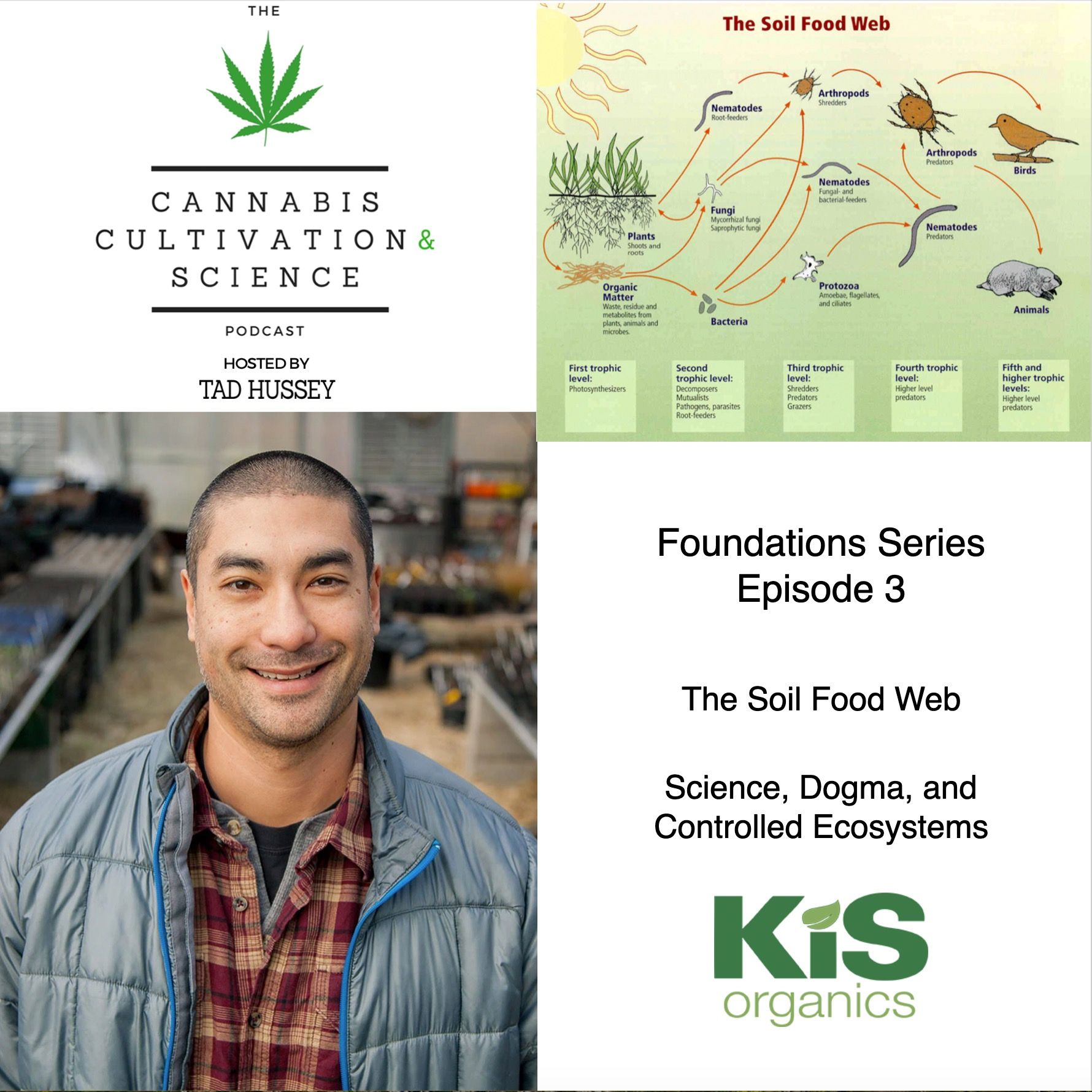
The Underground Economy: Carbon as Currency
Biological Gold: Why photosynthesis isn't just about plant growth—it’s about minting the "carbon currency" required to hire a microbial workforce.
The Exudate Menu: A breakdown of Monosaccharides (fast cash), Polysaccharides (savings accounts), and Organic Acids (specialized mining tools).
The Trading Post: How the plant uses targeted "buy orders" to trade energy for the specific minerals it needs.
The Rhizophagy Revolution
The "Commuter" Microbes: Understanding the research from Dr. James White’s lab at Rutgers.
The Microbial Car Wash: A techni...
Foundations Series #2: Lean Farming & Efficient Cultivation Systems with Ben Hartman (Originally Episode 20)
This episode is part of the Foundations of Soil & Plant Science series — a selection of conversations that continue to influence how I approach soil health, plant performance, and cultivation systems. I’ve added a short new intro to each re-release with updated perspective and context.
Originally released as Episode 20
My guest for this episode is Ben Hartman, farmer and author of The Lean Farm.
Ben operates Clay Bottom Farm in Goshen, Indiana, and is known for applying lean manufacturing principles to agriculture. His work focuses on improving farm efficiency, reducing wasted time and mate...
Foundations Series #1: Silicon in Plant Health & Stress Resistance with Dr. Wendy Zellner (Originally Episode 98)
My guest for this episode is Dr. Wendy Zellner.
Dr. Zellner received her doctorate from the University of Toledo in 2012, where she trained in molecular and cellular biology with a focus on the role of silicon in plant defense responses. She then completed a four-year postdoctoral position with the USDA-ARS, continuing her research on how silicon can alleviate both abiotic and biotic stress in crops such as tomato and tobacco.
Her work has included developing standard methods for quantifying silicon uptake from fertilizer materials, identifying uptake mechanisms for silicon in model species, and evaluating how...
Episode 155: Entomopathogenic Fungi Explained: Blastospores, Beauveria, and Smarter IPM with Julie Graesch
Guest: Julie Graesch
Biological Scientist | IPM Specialist
Currently with BioWorks
Formerly: BASF, Becker Underwood, Iowa State University
Topics Covered:
What “entomopathogenic fungi” actually means
How fungi like Beauveria and Metarhizium infect insect pests
Differences between blastospores and conidia
Why formulation and environmental conditions matter
Common reasons fungal biocontrol applications fail
Preventative vs. reactive use of entomopathogenic fungi
Integrating fungal biologicals into a broader IPM strategy
Key Takeaways:
Entomopathogenic fungi are biological tools, not chemical knockdowns
Un...
Episode 154: Is Seed Based Cultivation the Future of Cannabis? - with Dr. Matthew Indest
n this conversation with plant scientist and commercial cultivation strategist Dr. Matthew Indest, we explore the emerging frontier of seed-based cannabis production and what it would take for the industry to move beyond clonal propagation.
We cover:
The agronomic upside of seed-grown plants (disease resistance, vigor, adaptability, cost savings)
The scientific and operational barriers preventing widespread seed adoption
How genetic stability, inbreeding depression, and trait selection differ between cannabis and traditional crops
Data-driven cultivation strategies for evaluating new seed lines
Whether seed-based production can truly rival clonal...
Episode 153: Rethinking the Basics: pH, Water, Light & Nutrients with Bryant Mason
This wide-ranging conversation with Bryant Mason covers a series of essential—but frequently misunderstood—topics in organic cultivation. We explore why simple, low-tech data collection strategies often outperform high-tech systems and how to interpret those readings in the real world. From there, we break down how pH truly behaves in biologically active soils, what your water test results do and don’t tell you, and how water chemistry shapes nutrient availability.
We also discuss practical considerations for under-canopy lighting, when it helps and when it’s a distraction, and dig into the recurring challenges Bryant sees around phosphor...
Episode 152: Light, Spectrum, and Plant Signals — A Practical Guide with Dr. David Hawley part 2
In this conversation, Tad and Dr. David Hawley (Chief Science Officer at Fluence) unpack what really matters when dialing in your lighting strategy for cannabis and other high-value crops. They get deep into how plants perceive light, what “good spectrum” actually means, and how to think about intensity, uniformity, and plant response in a more scientific (and practical) way.
Topics covered include:
Understanding Daily Light Integral (DLI) and how it relates to plant metabolism
When to use far-red and what to expect from it
The truth about UV lighting and secondary meta...
Episode 151: Light, Spectrum, and Plant Signals — A Practical Guide with Dr. David Hawley part 1
In this conversation, Tad and Dr. David Hawley (Chief Science Officer at Fluence) unpack what really matters when dialing in your lighting strategy for cannabis and other high-value crops. They get deep into how plants perceive light, what “good spectrum” actually means, and how to think about intensity, uniformity, and plant response in a more scientific (and practical) way.
Topics covered include:
Understanding Daily Light Integral (DLI) and how it relates to plant metabolism
When to use far-red and what to expect from it
The truth about UV lighting and secondary meta...
Episode 150: Plants Under Pressure: How Stress Shapes Secondary Metabolites (w/ Dr. José Leme)
Can stress actually improve flower quality? In this episode, I sit down with Dr. José Leme to dive into the science of plant stimuli and how growers can apply it in practice. We cover:
🌿 Mechanical cues — how super cropping and vibration trigger plant defense pathways.
💧 Water restriction — why moderate, timed drought can shift carbon toward secondary metabolites like terpenes and cannabinoids.
🧪 Jasmonates (MeJA) — when they increase trichome density, and what trade-offs you need to consider.
🔬 Trichome measurement pitfalls — why bracts are the gold standard for consistent data.
🌱 Propagation & trial design — the importance...
Episode 149: Lighting Cannabis Right: 2025 Science & Strategy with MIGRO
This week on the Cannabis Cultivation and Science Podcast, we're diving deep into lighting and photobiology with MIGRO. With a background in engineering and construction, Shane turned his passion for growing into a global grow lighting company known for trusted reviews and educational content.
We break down what’s working—and what’s not—in cannabis lighting for 2025, including:
Far-red and intra-canopy lighting
LED vs. HPS and how to transition
Maximizing PPFD without added CO₂
Dimming schedules at sunrise/sunset
The impact of lenses on LED light penetratio...
Episode 148: 15,000 Clones a Year — Cannabis Propagation with Connor Ockfen

📝 Episode Highlights:
Connor’s journey from greenhouse grower to propagation leader
Scaling propagation: key infrastructure and protocols
Hormonal treatments and substrate selection for optimal rooting
Managing cultivar libraries and mother plant health
IPM and environmental control strategies tailored for veg
Writing and refining SOPs for compliance and consistency
Track-and-trace integration in a regulated cannabis market
The role of living soil vs. hydroponics in Connor’s career
🧪 Mentioned in This Episode:
Collective Elevation: www.collectiveelevation.com
KIS Organics Products...
Episode 147: The Chemistry of Survival: Plant Stress Responses with Dr. Michael Gutensohn

In this episode of the Cannabis Cultivation and Science Podcast, we’re joined by Dr. Michael Gutensohn, an expert in plant physiology and secondary metabolism, to explore the intricate relationship between environmental stress and the production of secondary metabolites in cannabis. We discuss how various abiotic stressors—such as light intensity, temperature fluctuations, and nutrient availability—can influence the biosynthesis of key phytochemicals, including cannabinoids, terpenes, and flavonoids. Dr. Gutensohn shares insights from his research on plant defense mechanisms, metabolic signaling pathways, and how growers might harness controlled stress to enhance both plant resilience and phytochemical output. Whether you’re a cultiva...
Episode 146: Logan Labs, Soil Testing, & Nitrogen Management with Bryant Mason

Welcome to the Cannabis Cultivation and Science podcast, I'm your host Tad Hussey of KIS Organics. This is the podcast where we discuss the cutting edge of growing from a science based perspective and draw on top experts from around the industry to share their wisdom and knowledge. My guest this week is Bryant Mason. I’ve had Bryant on the podcast a few times in the past and he’s one of my favorite guests.
Bryant is a Certified Crop Advisor who specializes in organic cannabis nutrition. He has spent the last 8 years working to combine preci...
Episode 145: Practical Greenhouse Management Advice with Jared Ferguson

Before starting the podcast, I wanted to share about an exciting new conference that we are hosting in conjunction with Collective Elevation in Bozeman, Montana. I’ve been talking to Suzanne Wainwright Evans about hosting a conference for years, and Adam at Collective graciously offered to open up his doors and let us host it on his property. The event is happening on September 5-7th, 2025 and I’m super excited. We are kicking it off with workshops from The Bug Lady Suzanne and Dr. Greenhouse, followed by a facility tour and then a bunch of excellent speakers and netw...
Episode 144: Pest Management Tips and Tricks with Saul Alba

Saul began his agriculture work in vineyard and winery operations on the Central California coast. After deciding to focus his career on crop protection he moved north where he managed IPM programs at Monterey Mushroom Company and Jacobs Farm/Del Cabo. This work led to a position as IPM Manager at Harborside Farms where he directed their bio-intensive greenhouse cannabis IPM program. Saul now works as a Technical Sales Representative for BioBee USA.
Hosted by Simplecast, an AdsWizz company. See pcm.adswizz.com for information about our collection and use of personal data for advertising.
Episode 143: Trends in Environmental Controls with Dr. Greenhouse

Dr. Nadia Sabeh is the President and Founder of Dr. Greenhouse, Inc., an agricultural and mechanical engineering firm that specializes in the design of HVAC systems for indoor plant environments. Dr. Sabeh has her PhD in Agricultural Engineering from the University of Arizona’s Controlled Environment Agriculture Center (CEAC) and is a licensed Mechanical Engineer in the State of California. For over 20 years, she has dedicated her education and career to helping farmers control their environments, allowing them to grow crops indoors, in greenhouses and in facilities that would otherwise be impossible or impractical to do so.
Nadia has a f...
Episode 142: Isopods, Pyrethrins, REIs, and More with Suzanne Wainwright Evans Pt. 2

My guest this week is my good friend, Suzanne Wainwright-Evans also known by many as The Bug Lady. She is an Ornamental Entomologist specializing in integrated pest management. Suzanne has been involved in the Green Industry for more than 25 years with a primary focus on biological control and using pesticides properly. She is a graduate of the University of Florida with degrees in both Entomology and Environmental Horticulture. Suzanne has been on the podcast multiple times and I highly suggest folks go back and listen to some of her other podcasts if you haven’t already. Her website is bugla...
Episode 141: Isopods, Pyrethrins, REIs, and More with Suzanne Wainwright Evans

My guest this week is my good friend, Suzanne Wainwright-Evans also known by many as The Bug Lady. She is an Ornamental Entomologist specializing in integrated pest management. Suzanne has been involved in the Green Industry for more than 25 years with a primary focus on biological control and using pesticides properly. She is a graduate of the University of Florida with degrees in both Entomology and Environmental Horticulture. Suzanne has been on the podcast multiple times and I highly suggest folks go back and listen to some of her other podcasts if you haven’t already. Her website is bugla...
Episode 140: The Sustainability of Peat and Other Substrates with Dr. James Altland

This was a fun podcast for me because I think there's a lot of misinformation around this topic and it was great to hear from an expert! Sphagnum Peat Moss is the gold standard for the horticulture industry. In N. America we use the majority of our peat for growing plants. Are there better options? What's the current research tell us about the sustainability of peat moss? In this episode we talk about why peat moss is such a popular choice for media as well as the pros and cons of the current substrates on the market.
Episode 139: The Challenges of a Vertical Tier Farm with Christine DeJesus

My guest this week is Christine DeJesus. Christine operates at the intersection of regenerative organic agriculture and social justice. For five years she’s been perfecting a highly efficient organic cultivation model while managing operations for Galenas Cannabis in Akron, Ohio. Prior she worked in food justice, ran a farm for Great Lakes Brewing Company, functioned as campaign coordinator for Marijuana Policy Project, and co-founded the Midwest CannaWomen. She was featured in the documentary “Polycultures: Food Where We Live,” with Michael Pollan, and at the “My Global Kitchen” exhibit at the Cleveland Museum of Natural History. Christine is a creative w...
Episode 138: Cannabis in Education & Critical Thinking with Christine Goedhart

Christine Goedhart is an experienced educator and educational developer with a specialization in teaching undergraduate biology courses. Currently serving as a Science Education Specialist at the University of British Columbia, she supports faculty in making their courses more equitable and student-centered, and she recently developed and taught an undergraduate Biology of Cannabis course. Previously, Christine spent eight years as a full-time faculty member at Citrus College, where she taught a variety of biology courses for non-major students. With a strong commitment to student-centered and inclusive education, Christine has effectively implemented innovative pedagogical and assessment strategies to enhance student engagement...
Episode 137: Cannabis and Giant Pumpkins with Matthew DeBacco
My guest this week is Matthew DeBacco. Matthew received his Bachelors degree in Pathology with a secondary degree in horticulture, then going on to receive a master’s degree in agronomy 2011 and a masters in education in 2014, both from the university of Connecticut. Then in 2020 he received his PhD from Ashford University. Matthew started the first cannabis course at a public university at the University of Connecticut. I first found out about Matthew from his research on powdery mildew with cucurbits using raw milk, as it was circulating around the giant pumpkin community. Matthew also enjoys growing giant pumpkins an...
Episode 136: Tissue Culture and Micropropagation with Dr. Adel Zarei

My guest this week is Dr. Adel Zarei. Dr. Zarei earned his Ph.D. degree from Leiden University in the Netherlands, specializing in molecular mechanisms governing defense and secondary metabolism in plants. Dr. Zarei spent a decade as a Research Associate at the University of Guelph, where his research focused on stress physiology in plants. His primary passion lies in the study of plant secondary metabolites, many of which possess pharmaceutical significance. In 2017, Adel transitioned to the Cannabis industry, serving as a Scientific Advisor and Cannabis Micropropagation Expert. He played a pivotal role in designing and establishing multiple Cannabis...
Episode 135: Running One Of The Largest Living Soil Facilities in the US with Adam Arnold

My guest this week is Adam Arnold is a founder/ Owner at Collective Elevation in Bozeman Montana. Collective Elevation is one of the largest living soil cannabis greenhouse facilities in the country. Adams been growing cannabis for 20 years, the last 10 at his facilitiy in Bozeman which was designed and built from the ground up by him and his team. Prior to recreational legalization in Montana he built off grid greenhouse facilities in Montana during the medical days and has founded Collective Elevation on a platform of sustainability utilizing sun assisted living soil practices. He went to school at the unive...
Episode 134: Cannabis Viruses and Viroids with Dr. Tassa Saldi

Dr. Tassa Saldi is an accomplished molecular biologist with more than 25 years of research experience in RNA biology, infectious disease, and molecular pathogen detection. Dr. Saldi graduated Summa Cum Laude with a degree in Molecular Biology. She completed her graduate and postdoctoral studies at the University of Colorado, where she studied RNA structure, small RNAs and RNA processing. She was awarded a prestigious fellowship from the American Cancer Society and was one of eighteen doctoral fellows nationwide invited to present her research at the Aspen Cancer Conference. Dr. Saldi has authored more than 20 peer-reviewed articles in top-tier journals. As t...
Episode 133: Molds, Mildews, & Mycelium with Dr. Nicole Gauthier

My guest this week is a returning guest. Dr. Nicole Gauthier is a pathologist, and Professor and Extension specialist at the University of Kentucky. Her program focuses on disease management of specialty crops, including hemp. In her Extension role, she develops educational and outreach programs to help growers manage disease through identification, understanding of pathosystems, and integration of management strategies. Her research program focuses on a range of hemp diseases, including Fusarium head blight. Dr. Gauthier earned her BS in Horticulture Science and her PhD in Plant Pathology from Louisiana State University. She joined the UK College of Agriculture in 2...
Episode 132: Optimal Cultural Practices and IPM Advice with George Grant

George has degrees in Horticulture from the University of Georgia and the University of Florida. He is the GGSPro Technical Services Manager with Griffin Greenhouse Supplies. GGSPro assists ornamental, edible, and hemp/cannabis growers across the country with their cultivation issues ranging from sanitation, IPM, fertility, lighting, and water quality. GGSPro fields over 17,000 grower related calls and emails annually. This amount of valuable interaction helps Griffin collaborate with chemical vendors, academic researchers, and plant producers to implement change within the green industry.
Hosted by Simplecast, an AdsWizz company. See pcm.adswizz.com for information about our c...
