Barbell Medicine Podcast

Sunday Morning Protocol 2049: A Halloween Story About Optimization
A Halloween story about a man who does every wellness protocol, then an honest grading of each one. Dr. Jordan Feigenbaum tells the story of Dale Mercer, Unit 4471, who lives through a fully optimized Sunday in the year 2049: morning light panels, cold plunges, a 31-capsule supplement tray, grey-market peptides, methylene blue, an eccentric-only lifting machine, a protein IV timed to the anabolic window, sleep and readiness scores, a glucose sensor, mouth tape, Zone 2 with lactate pricks, and a 174-degree sauna.
Then Jordan grades each one on a zero-to-five pumpkin scale. He covers what the studies actually tested...
How Much Cardio Should You Do? How Much is Too Much?
How much cardio should you do, and does more of it ever become harmful? Cardiorespiratory fitness keeps improving with training load and nobody has found a ceiling. Getting fitter keeps lowering mortality risk as far out as anyone has measured. The one dose dependent harm that survives scrutiny is atrial fibrillation, and it shows up around six to seven hours a week of hard endurance training sustained for years.
This episode goes through the Danish jogging study behind the “fast running is as deadly as sitting on the couch” headlines and why two deaths in f...
How Much Lifting is Enough? How Much is Too Much?
How much resistance training do you actually need, and is there a point where more stops helping? We trace the "lift weights twice a week" recommendation back to the 1989 study it came from, which found that three days beat two, and to the citation loop that turned it into a guideline anyway. Then we go through the evidence on whether lifting is dangerous, including the heart, injury rates, and the J-shaped mortality curve, and work out where the dose-response actually saturates for strength, muscle mass, bone mineral density, and how your body handles fuel.
The short answer...
Where did the advice to not lift heavy weights come from?
Nearly every warning you've heard about lifting weights was written down before anybody checked it. We trace where those warnings came from, starting with a Harvard student in 1854 and ending with a curve on a graph that's being used today to argue you can lift too much.
Along the way: the men who built themselves with barbells and then sold the public five-pound dumbbells, because iron was expensive to mail and a booklet cost pennies. The muscle-bound myth, which nobody could define when a graduate student surveyed 45 physiologists about it. The 1961 report that took the deep squat...
Is It Safe to Train When the Air Is Full of Wildfire Smoke?
Parts of the country now get a few weeks of wildfire smoke every year, and the obvious question is whether there is a point where the air is bad enough that the workout costs you more than it gives you. We went and looked. There is a real number, it comes from about 1.5 million people, and it is not the number that gets quoted.
This is a free preview of Direct Line, our monthly ask-us-anything for Barbell Medicine Plus subscribers. Two of this month's twelve questions are here in full.
First: training in wildfire smoke...
Do You Need a Calorie Surplus to Build Muscle? | Dr. Eric Helms
Most lifters have been told they need to eat in a Calorie surplus to build muscle. That rule has always come with a list of exceptions: unless you're new, unless you're carrying extra body fat, unless you're coming back from time off. Dr. Eric Helms joins Dr. Jordan Feigenbaum to work out what the rule is actually tracking, starting from a question with a real number attached: what does a pound of muscle cost to build? And then, do you need to be in a surplus to build muscle?
Timestamps:
0:00 The rule, and its exceptions2:08 Where "y...Is Obesity A Muscle Problem?
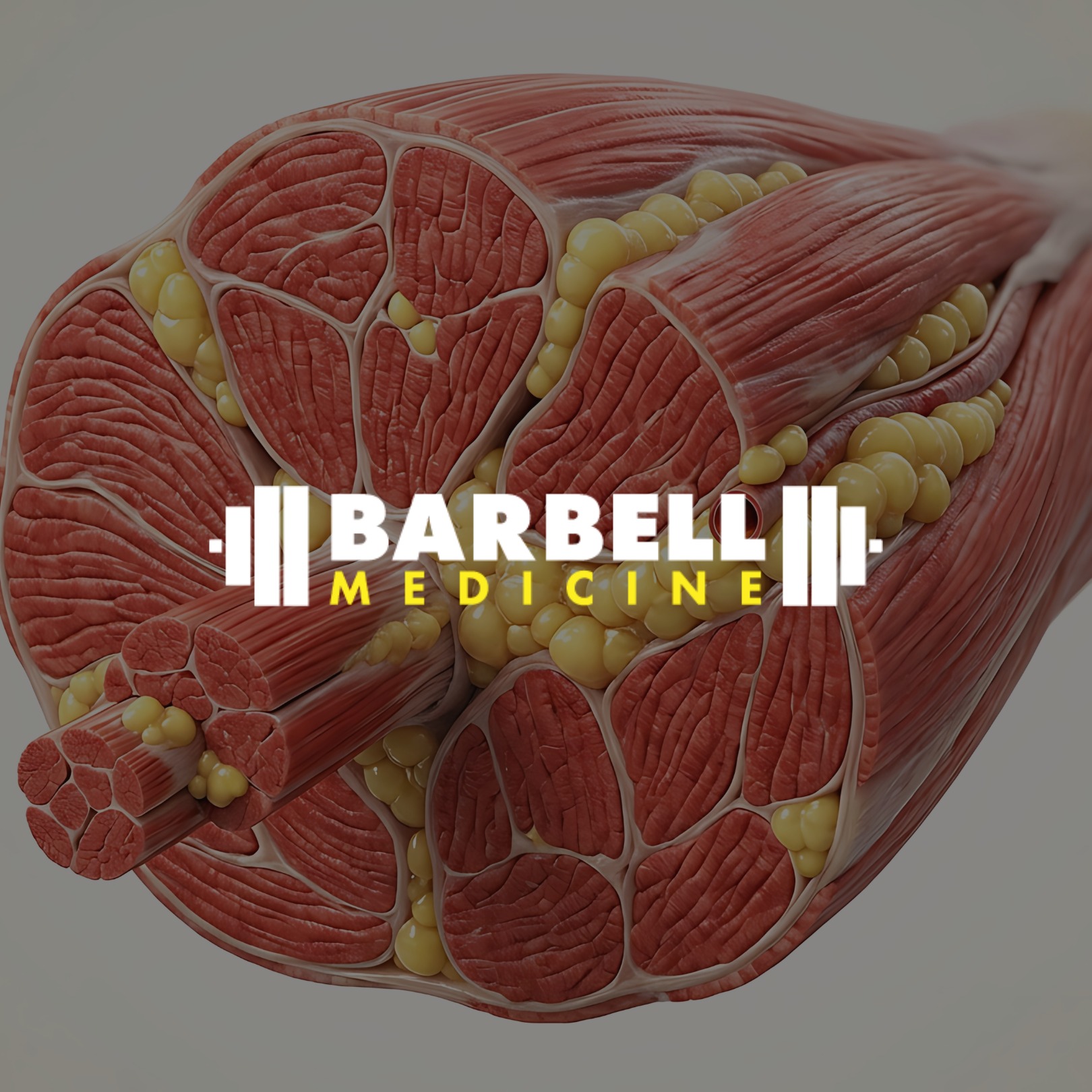
Muscle is where most of the glucose goes, and muscle insulin resistance is the first thing that breaks on the road to type 2 diabetes. Both of those are true, and neither one means that building more muscle is the treatment for obesity. This episode works through what actually decides whether a tissue handles fuel well: not how much of it you have, but how fast it's moving fuel through. We go through the one-legged exercise studies, the 18,000-person analysis of what body composition actually predicts, the athlete's paradox, the energy cost of building a kilogram of muscle, the GLP-1...
Who Needs Testosterone, and Who's Not Getting It I Signal Episode 4
Most men who start testosterone never needed it, and some who genuinely do never get treated. In the final episode of the Signal series, Dr. Jordan Feigenbaum and Dr. Austin Baraki work through who actually needs testosterone replacement, who got sold it, and what the evidence says about the risks that scared the field for a decade. We cover the blinded trial where men couldn't tell real testosterone from placebo, what the heart and prostate data actually show now that we have the trials, what testosterone does to fertility, and the framework we use to decide. We also close...
Your Fat Has a Storage Limit
In 2004 a surgeon removed about ten kilograms of fat from fifteen women and measured everything that mattered. Nothing improved. Four years later, it still hadn't.
That result should have ended an argument about body fat. Instead the argument got more specific, and the version you've heard most recently is that visceral fat, the fat around your organs, is the dangerous kind. I've said a version of that myself on this show, and in this episode I expand upon it.
This one starts from the beginning: what your fat is...
Lifting and longevity: is 1 hour a week really the limit? Plus GLP1s and mood, training with ME/CFS, and Protein vs. Calories
A popular paper claimed the longevity benefit of lifting disappears once you train more than an hour a week. It's a real paper, but the claim is a misread. This is the free cut of this month's Direct Line, where Drs. Feigenbaum and Baraki also take on whether GLP-1s affect your mood, the "same calories, more weight loss" protein argument, and what you can actually do in the gym when you have chronic fatigue syndrome.
For education and infotainment, not medical advice.
To become a member and have us answer YOUR questions, join today:<...
The FDA Voted for 6 Peptides. Its Own Scientists Said No
An FDA advisory committee just voted to open a legal compounding supply line for six of seven peptides, including BPC-157 and TB-500, over the objection of the FDA's own scientists, who recommended against all seven. Dr. Jordan Feigenbaum walks through what the Pharmacy Compounding Advisory Committee actually voted on, why a vote about ulcerative colitis ends up governing tendon and joint use, what the single human BPC-157 trial does and doesn't show, and why "a pharmacy makes it safe" and "there's no money to study it" don't hold up. Evidence-based, no hype, no nocebo.
...
The Man Who Couldn’t Stop Gaining Weight | A Medical Mystery
A previously healthy 21-year-old shows up with seven months of headaches and 30-plus pounds of weight gain he can’t explain. He’s eating the same and training more, and the scale climbs anyway. We hand the case to Dr. Austin Baraki cold and work it in real time: the exam, the labs, the MRI, and two diagnoses that turn a headache workup into the clearest proof we’ve got that body weight is set by the brain, not by character. This is the capstone of our weight series (willpower, calories, protein), and it ends on the drug that, this y...
The Protein Scaries: What the Research Says About Your Kidneys, Cancer, Bones, and Body Fat
Every couple of years a new headline warns that the protein you eat is quietly hurting you. This year the target is your kidneys. Before that it was cancer, then your bones, then the claim that your body can only use twenty or thirty grams of protein at a meal. In this episode, Dr. Jordan Feigenbaum goes through the actual studies behind each scare: the kidney trials, the 2014 IGF-1 and cancer paper that started the panic, the acid-ash bone hypothesis, and the per-meal "cap." Each fear starts from a real mechanism, and each one was run straight to a...
Is It Really Just Calories In, Calories Out? Metabolism, Insulin, Hormones and Why Counting Fails
Is weight loss really just Calories in, Calories out? The equation is true, but "just count your Calories" is bad advice for most people, and almost every objection to it is pointing at something real. In part two of our energy balance series, Jordan Feigenbaum takes the biggest "it's not Calories, it's ___" claims (metabolism, thyroid, cortisol, PCOS, insulin, the type of food) and tests each against the best evidence. The verdict: none of them breaks the equation. Every one is a hand on a lever that moves Calories in or Calories out, not a hole in the math.
<...Is Obesity a Willpower Problem? The Biology of Weight, Diets, and GLP-1s
Obesity roughly tripled in about 60 years, and the genes didn't change in that time. So if body weight isn't a willpower problem, what is it? Dr. Jordan Feigenbaum and Dr. Austin Baraki walk through what actually sets your weight: the adoption and twin studies behind the genetics, the "defended range" your biology fights to hold, the food environment that does most of the eating for you, and where GLP-1 medications actually work. Along the way — why diets regain after you white-knuckle them, what The Biggest Loser six-year data show about resting metabolism, and four willpower myths worth retiring.
H...
Direct Line (Free): GLP-1 Muscle Loss and Creatine, Bulking vs Cutting, One-Hour Training, & Detraining
Once a month we answer Barbell Medicine Plus subscribers’ questions on the Direct Line. This is a free look at June’s episode. We start with GLP-1 drugs and muscle: why DEXA overstates the loss, what resistance training actually does, and whether creatine is worth taking. Then whether bulking and cutting does anything the scale can’t already tell you, how to get real benefit from one training hour a week, and what happens to your muscle, strength, tendons, and bone when you take time off, including why muscle memory brings it back faster than you built it.
What...
Menopause Part 4: Training, Protein, Cortisol, Hormone Therapy, & Bone Density
Is there really a “menopause-specific” way to train, eat, and supplement — or is most of it marketing? In the finale of our 4-part menopause series, Drs. Jordan Feigenbaum and Austin Baraki go straight to the evidence on building muscle and bone before, during, and after the transition.
We cover whether menopause blunts your response to lifting (the Isenmann 2023 head-to-head trial and the 2026 meta-analysis of ~4,000 women say it doesn’t), the one-index-card prescription that actually works. Then we work through the loudest claims in the space — cortisol “wrecking” your fat loss, anabolic resistance, the protein and creatine h...
Menopause Part 3: Body Composition, Bone, Brain, & the Fitness Changes (The Data vs the Influencers)
Most women in 2026 are told menopause affects everything, the weight, the belly fat, the bones, the heart, the brain, and that the fix is hormones, supplements, and a proprietary protocol. The data tell a different story. Menopause does some of it, but not all of it.
In this episode, Dr. Jordan Feigenbaum and Dr. Austin Baraki, with OB-GYN Dr. Loraine Baraki at the clinical handoffs, put real numbers on what menopause actually changes, e.g. body composition, the cardiometabolic shift around the final menstrual period, bone, cognition and sleep — and on the single biggest mo...
Menopause, Part 2: The 2,000-Year-Old Lie About Women and Exercise
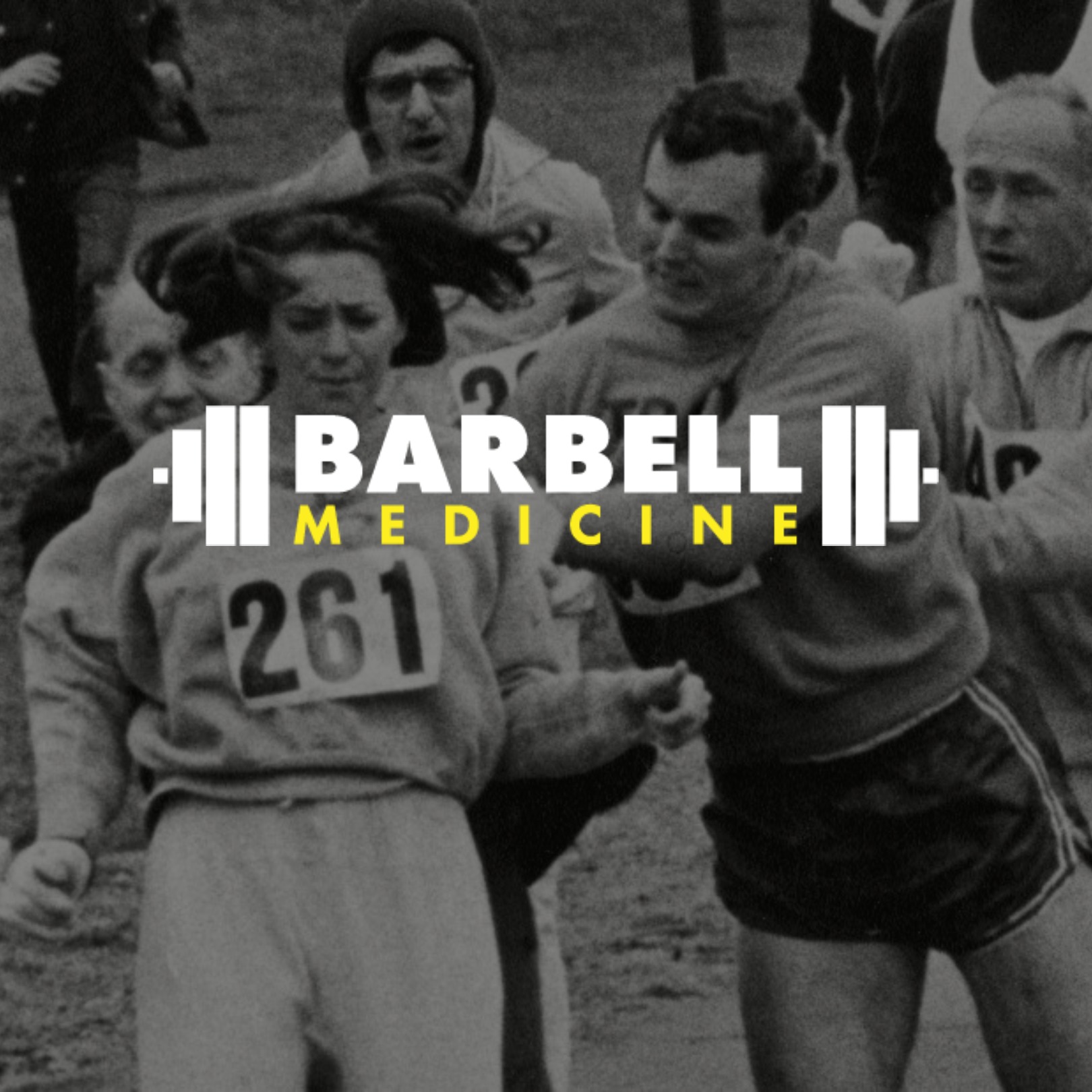
The story goes that hard exercise is risky for women, and that the idea is ancient. Both halves fall apart on contact. In this solo episode, Dr. Jordan Feigenbaum follows the claim that physical effort harms the female body across twenty centuries, and shows that almost every version of it arrived as a verdict first, with the science bolted on afterward.
It runs from antiquity to the present: what Galen actually wrote, why Sparta trained its women on purpose, the Victorian “vital force” panic and Edward Clarke’s claim that studying would sterilize girls, the doctor who prescr...
Menopause, Part 1: What It Actually Is and the 24-Year WHI Correction
In 1889 a French physiologist injected himself with guinea pig and dog testicle extract and published a claim of self-rejuvenation in The Lancet. That announcement kicked off a 200-year medicalization of menopause that ran through leeches and bromides, Premarin, the 2002 Women's Health Initiative, and the contemporary menopause-content space.
In Episode 1 of our three-part menopause series, Dr. Jordan Feigenbaum and Dr. Austin Baraki walk through what menopause actually is at the hormonal level, which midlife symptoms are menopause-driven and which are not, the KNDy neuron mechanism behind hot flashes (and the new medication that blocks it), and the 24-year f...
Is Creatine Causing Your Shin Pain? + Splitting Training, Endometriosis for Lifters | Direct Line · May 2026
This is the free preview of the May 2026 Direct Line, our monthly AMA for Barbell Medicine Plus subscribers. Three reader questions answered in full.
We open with a mid-30s woman with bilateral shin pain and exertional foot numbness who started creatine a month ago and is asking whether the supplement is the cause. We walk through the compartment syndrome literature, the 2025 case report being passed around online and misinterpreted, what creatine actually does to total body water (and what it doesn’t), the four compartment pressure studies that exist, the Waterman 2013 demographic data on who actually ge...
What’s Actually Driving Your Testosterone Down? | Signal Ep 3
Most cases of low testosterone in modern men are not a problem with the testes. The number is downstream of body composition, sleep, and energy availability. The wellness-clinic algorithm walks past every one of them.
Jordan and Austin walk through what actually drives men’s testosterone down, the mechanisms behind it, and the modifiable levers that bring it back up. MOSH, the leptin and Kisspeptin pathway, the aromatase loop, the sleep apnea picture most clinics never ask about, the GLP-1 and weight-loss data on testosterone recovery, the low energy availability case th...
Progressive Loading Part 3: Why the Novice / Intermediate / Advanced Framework Doesn't Work, and What to Do Instead
Three weeks of stalled squats. The conventional answer is to switch programs because you've crossed into intermediate territory. The data says something else. In Part 3 of the Progressive Loading series, Dr. Jordan Feigenbaum and Dr. Austin Baraki walk through why the standard novice / intermediate / advanced framework runs into trouble in real training, what the four adaptive systems are actually doing across a training career, and why most of what gets called a stall is impatience with the noise floor at your current strength level.
This is Part 3 of the Progressive Loading series. Part 1 covered why loading should...
Is Your Testosterone Actually Low? Why Higher Testosterone Doesn't Do What You Think | Signal Ep 2
Out of 32 symptoms commonly attributed to low testosterone, only 3 actually correlate with it. All three are sexual. The other 29 — fatigue, brain fog, low mood, weight you can't lose, feeling not quite like yourself — are real, but they are produced by something else, and the wellness-clinic funnel runs on getting that wrong.
Episode 2 of our Signal book launch series. Dr. Jordan Feigenbaum and Dr. Austin Baraki cover how testosterone actually works, what the number on your lab report is really measuring, and what a real evaluation of low T looks like.
Pre-o...
Direct Line April 2026: Stopping Ozempic and Lifting With Osteopenia
Stop a GLP-1 and about two thirds of the weight loss comes back within a year. Three randomized withdrawal trials (SURMOUNT-4, STEP 1 extension, STEP 4) and a new BMJ 2026 systematic review of 37 RCTs and nearly 10,000 adults all land on the same signal. The cardiometabolic benefits, blood pressure, fasting glucose, lipids, drift back in parallel with the weight. The framing that actually fits the data: GLP-1s behave like a statin. There is a cumulative benefit during exposure, but this does not extend indefinitely,
This month's Direct Line covers two subscriber questions. The first asks what the new BMJ...
Is the Testosterone Crisis Real? The Numbers Behind the Headlines | Signal Ep 1
Every week there's a new headline saying men are losing testosterone. A quarter of men now start testosterone replacement therapy without ever getting their blood tested. The supplement aisle is full of boosters that either do nothing or contain undisclosed steroids. And the lab test that gets everybody to the pharmacy? Half of low results normalize on their own.
In Episode 1 of the Signal launch series, Dr. Jordan Feigenbaum and Dr. Austin Baraki (both MDs and strength coaches) walk through the three-layer problem with how testosterone gets diagnosed and treated in 2026, then take apart the "testosterone is...
Medical Mystery: The Man Who Got Weaker When He Started Training
A 43-year-old man starts exercising and ends up in the ER with a CK over 100x the upper limit of normal. His doctor says it’s from training. We don’t think so. In this episode, Dr. Jordan Feigenbaum and Dr. Austin Baraki walk through the full case — history, labs, diagnosis, and what actually went wrong — then break down the mechanisms behind the answer, the nocebo research, and what the brand-new 2026 guidelines mean for the 40 million Americans on a drug class you’ve definitely heard of.
We also cover the STOMP trial (do statins actually i...
Overtraining Syndrome: Causes, Diagnosis, and What's Actually Going On
In 2022, researchers conducted the most rigorous systematic review ever performed on overtraining syndrome — looking specifically for controlled studies that documented a human transitioning from a healthy training state to an overtrained state. Zero studies met those criteria.
The word "overtrained" appears in coaching certifications, wearable device dashboards, and clinical sports medicine guidelines — and in each context it means something different. That definitional chaos has consequences: it delays real diagnoses, produces nocebo effects with measurable physiological outcomes, and leads athletes to reduce training they didn't need to reduce.
In this episode, Drs...
Episode #391: VO2 Max vs. Cardiorespiratory Fitness, GLP-1 Costs, and the 10,000-Step Myth | Direct Line March 2026 (Free)
In this free preview of the March 2026 Direct Line AMA. Drs. Feigenbaum and Baraki cover: VO2 max versus cardiorespiratory fitness for longevity (are Peter Attia’s targets evidence-based? — with Goodhart’s Law and the JAMA evidence), what GLP-1 medications actually cost now via manufacturer programs ($149–449/month), and whether 7,000–10,000 daily steps actually meet the bar for cardiovascular training.
Full episode for Barbell Medicine Plus subscribers at https://barbellmedicine.supercast.com/
Timestamps:
0:00 — Introduction
3:26 — VO2 Max vs. Cardiorespiratory Fitness for Longevity
14:11 — GLP-1 Costs: What you should actually be paying now...
Episode #390: Why Your Waist Matters More Than Your Weight — The Science of Visceral Fat
You can have a completely normal BMI and be on your way to cardiovascular disease, type 2 diabetes, and metabolic syndrome without triggering a single alert on a standard health screening. The fat that predicts metabolic risk most accurately isn't the fat your scale or your doctor is tracking. Dr. Jordan Feigenbaum breaks down the science of visceral fat — what it is, how it causes disease, how to measure it correctly at home for free, and what the evidence actually shows about exercise, GLP-1 medications, and testosterone.
Timestamps:
Episode #389: Your Liver Enzymes Are Elevated — But It Might Not Be Your Liver
A fit, healthy 39-year-old was nearly sent for a liver biopsy. The cause? Was it that he went to the gym before every blood draw or because his supplement was throwing his labs off?. Dr. Jordan Feigenbaum and Dr. Austin Baraki break down the blind spot that sends thousands of healthy athletes down an expensive, potentially unnecessary diagnostic rabbit hole every year.
Timestamps:
00:01:09 Introducing the Case00:03:44 How to Read a Liver Panel: ALT, AST, GGT, Alk Phos, Albumin Explained00:10:50 What Is GGT and Why Does It Matter Clinically?00:16:38 Why Exercise, Protein, and Creatine Aren't on the Differen...Episode #388: Muscle Imbalances, Red Meat Risk, and the Science of Body Fat Set Points
In this special preview of the Barbell Medicine Plus Direct Line, Dr. Jordan Feigenbaum and Dr. Austin Baraki move past the fitness basics to tackle high-level technical nuances. We dive into the persistent myth of "muscle imbalances" and why your asymmetry might actually be a functional feature of your training.
We also address the "meat" of the cardiovascular debate: is red meat and saturated fat consumption still risky if you are highly active and have a high-fiber diet? Finally, we explore the Dual Intervention Point Model to explain why the body defends its energy stores and how...
Episode #387: The Valsalva Maneuver- Blood Pressure & Safety in Lifting
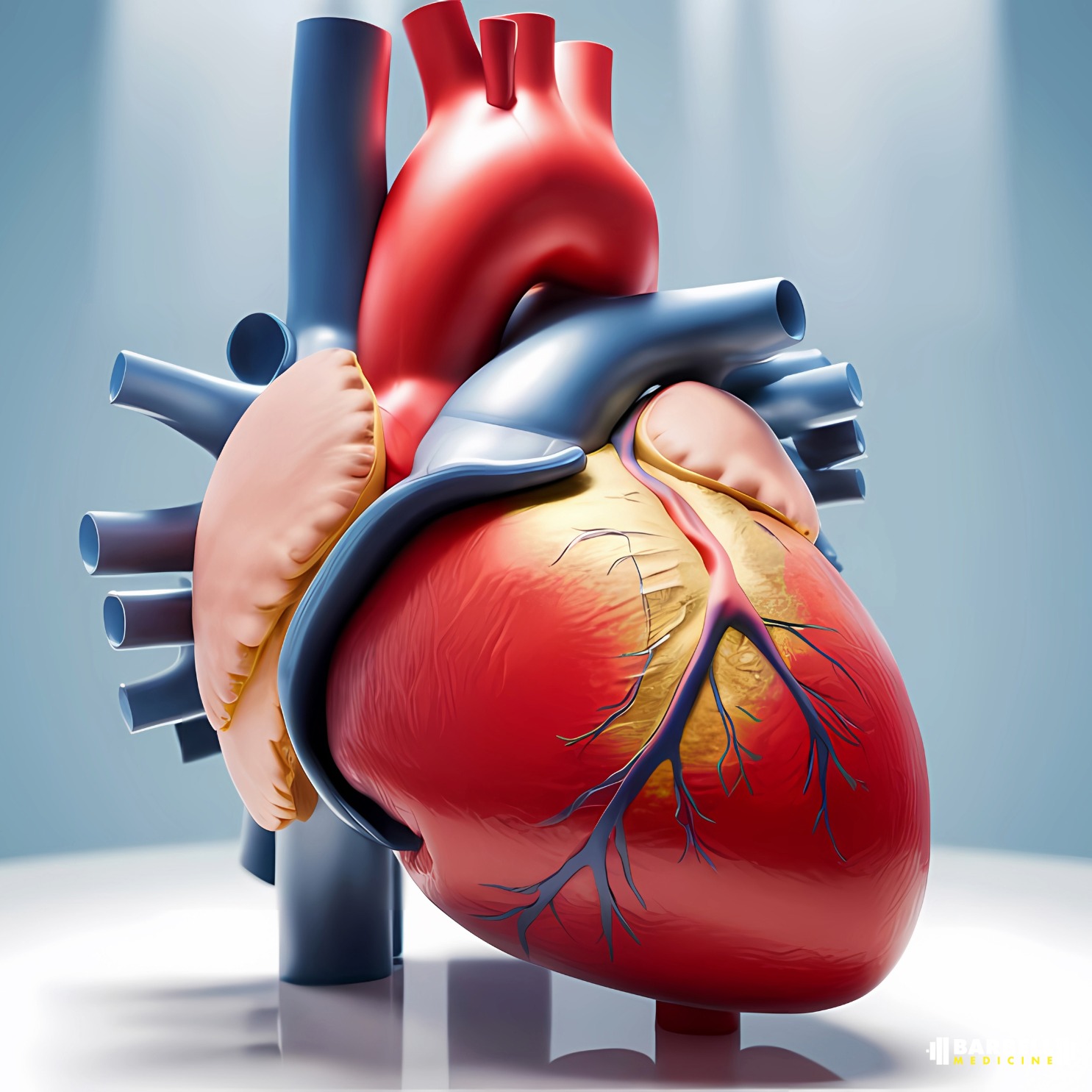
Most doctors, trainers, and "safety-first" influencers warn that holding your breath while lifting is a dangerous habit that could lead to a stroke or heart failure. By looking back at the 300-year history of the Valsalva maneuver—from a 1704 ear treatment to the "boogeyman" blood pressure studies of the 1980s—we dismantle the myth of the "fragile tube." Discover the science of the "pressurized suit" and why your body is actually designed to handle extreme internal pressure during heavy exertion.
Key Takeaways
The 'Ear Trick' Origins: Originally described in 1704 by Antonio Maria Valsalva as a...Episode #386: Longevity Myths- Biological Clocks, GLP-1 Muscle Loss, and What Actually Predicts Lifespan
The longevity industry is now worth over $100 billion per year. From DNA methylation clocks to multi-cancer blood tests and GLP-1 medications, the promises are bold.
But what actually predicts lifespan?
In this episode, Dr. Jordan Feigenbaum and Dr. Austin Baraki break down the science behind biological clocks, the real story on GLP-1–related muscle loss, and introduce the Barbell Medicine “Vital Five” — a clinically grounded framework for health and longevity.
Key Points:
How-To Fix Your Stalled Progress (Strength Edition)
Lifting more weight doesn't always mean you've gotten stronger. In this foundational session, Dr. Jordan Feigenbaum and Dr. Austin Baraki introduce the Fitness-Fatigue Model to explain why "stalled" progress is often just a temporary masking of strength by accumulated fatigue. By learning to differentiate between a lack of fitness adaptation and a lack of recovery, you can avoid the "panic pivot" and maintain the long-term signal necessary for elite-level gains.
Supercast Sign-Up
For the 6-part audio series and Training Plateau Action Plan, sign-up for Barbell Medicine Plus:
https://barbellmedicine.supercast.com/
Ke...
Episode #385- Why Grip Strength Predicts Death (And Why You Shouldn't Train It)
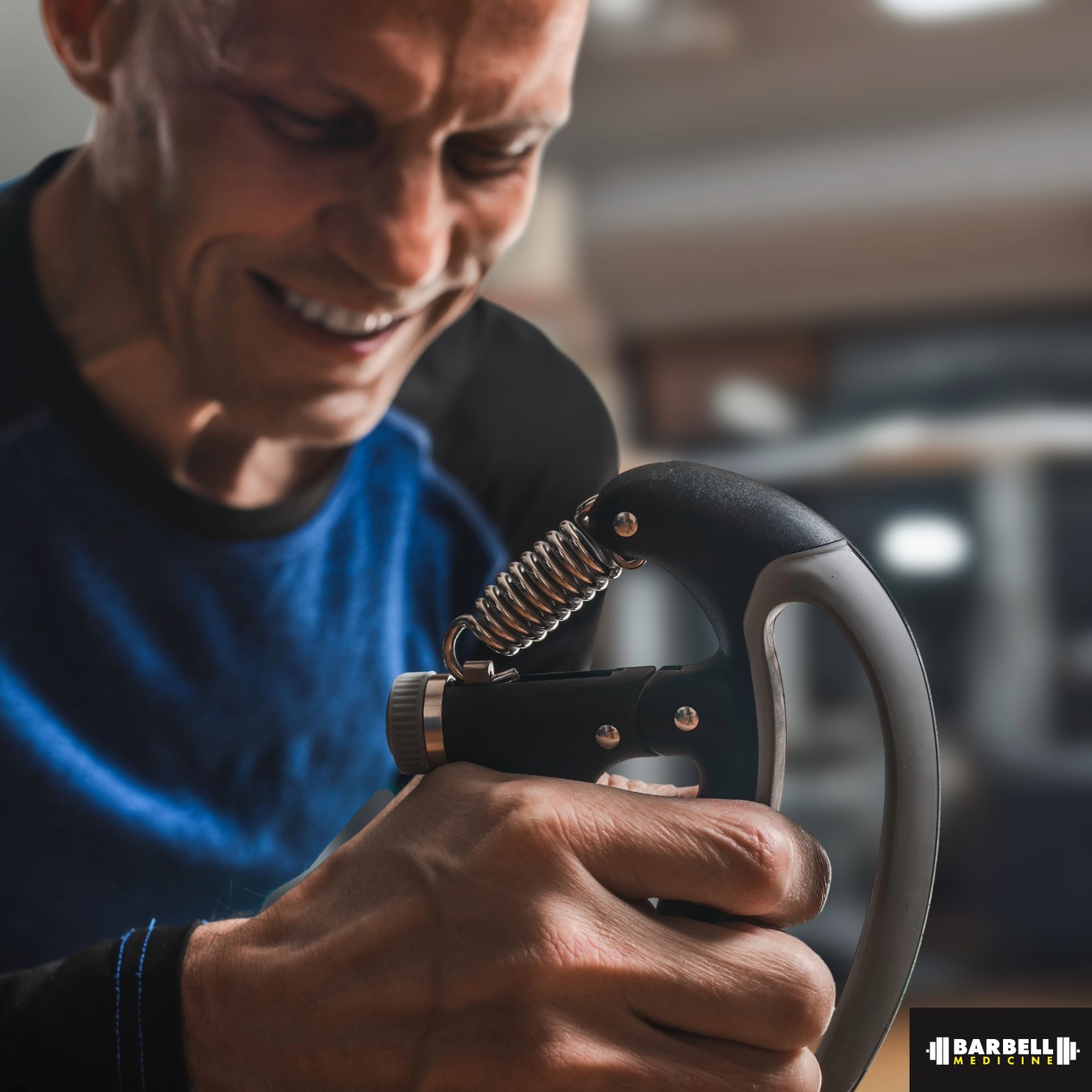
Can a simple one-second squeeze predict your risk of cardiovascular disease, cognitive decline, and all-cause mortality? Dr. Jordan Feigenbaum and Dr. Austin Baraki explore why grip strength has become the go-to metric for the longevity industry and why most people are interpreting the data incorrectly.
Timestamps:
[00:00] Intro: The Longevity Industry’s Thermometer Error[01:42] The Neuro-Axis: Anatomy of a Maximal Squeeze[06:43] The 35-3-5 Rule: Biomechanics of Grip[09:12] Asymmetries and Clinical Red Flags[17:31] Dynapenia vs. Sarcopenia: Why the Hand Fails First[18:41] Normative Data and the PURE Study Statistics[27:16] Genetics, Lean Body Mass, and Predictive Power[31:44] Absolute vs. Relative G...Episode 384: The Paralyzed Personal Trainer (Mystery Case)

Dr. Feigenbaum and Dr. Baraki walk through the clinical workup of a 24 year old male presented with persistent weakness in his foot following weight loss of 22 pounds in two weeks. What could've possibly caused this?
The discussion pivots to the science of how fast one should lose weight. While athletes should prioritize slow loss to preserve performance and lean mass, the data for individuals with obesity suggests that the speed of loss may be less critical than protein intake and resistance training.
Timestamps:
00:00 - The Case of the Paralyzed Personal Trainer 03:48...Episode #383: Scientific Populism vs. Consensus - The 2026 Food Pyramid
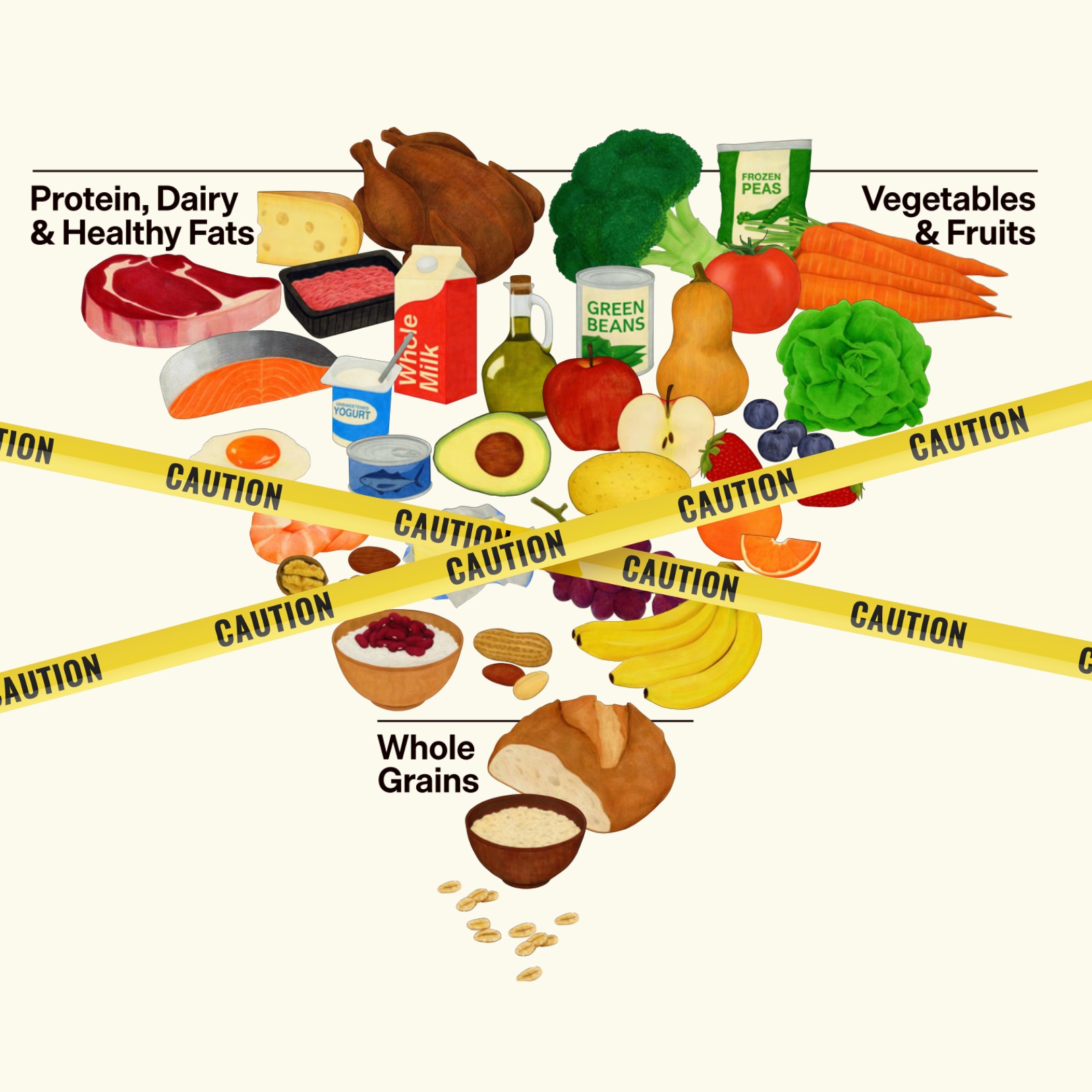
In this episode, Dr. Jordan Feigenbaum and Dr. Austin Baraki dissect the federal government’s 2026 Food Pyramid Reset and its radical shift in nutrition policy. They explore the history of industry lobbying that shaped previous guidelines and evaluate whether the new emphasis on protein and animal fats aligns with current clinical evidence. Finally, the doctors provide the framework for the Barbell Medicine Dietary Guidelines, offering a practical, evidence-based framework for managing the modern food environment.
Timestamps
00:00 - Introduction: The 1992 Food Pyramid vs. the 2026 Reset03:11 - A History of Lobbying: From th...Trailer: The Fiber Action Plan is Here
Fiber is the most underutilized tool in human nutrition. While the internet is currently buzzing about the new food pyramid and debating processed foods versus beef tallow, most people are missing the actual structural levers that dictate health and performance.
Today, we are launching the Barbell Medicine Fiber Action Plan to bridge the gap between clinical science and your next trip to the grocery store.
If you are a Barbell Medicine Plus subscriber, you can binge the entire 4-part audio series and download the full Action Plan right now in the Plus feed. If you...
Episode 382: The Trial of Big Food

For decades, the health and fitness industry has blamed rising obesity rates on a lack of individual willpower and "poor choices." However, a landmark lawsuit in San Francisco argues that the modern food environment is a public nuisance engineered by food giants using a literal tobacco playbook. By manipulating "Bliss Points" and dismantling the natural food matrix, these companies have created an environment where healthy choices are the path of highest resistance. Understanding the shift from personal responsibility to environmental accountability is the first step in reclaiming your health.
Next Steps
For evidence-based resistance training...
