Super Data Science: ML & AI Podcast with Jon Krohn
The latest machine learning, A.I., and data career topics from across both academia and industry are brought to you by host Dr. Jon Krohn on the Super Data Science Podcast. As the quantity of data on our planet doubles every couple of years and with this trend set to continue for decades to come, there's an unprecedented opportunity for you to make a meaningful impact in your lifetime. In conversation with the biggest names in the data science industry, Jon cuts through hype to fuel that professional impact.Whether you're curious about getting started in a data career or...
1032: Garbage In, Gospel Out: Agents Are Your New Customers, with Salesforce’s CDO Michael Andrew

During their #sponsored discussion, Chief Data Officer at Salesforce Michael Andrew talks to Jon Krohn about what changes for a data team when its customers are AI agents as well as people. Listen to the episode to hear Michael Andrew talk about why agents need ten times more trusted data than humans, how Salesforce untrapped its own customer data with Data 360 and what practitioners should be learning to stay effective in the agentic era!
Additional materials: www.superdatascience.com/1032
Interested in sponsoring a SuperDataScience Podcast episode? Email natalie@superdatascience.com for sponsorship information.
In this epi...
1031: Tokenomics: Why Your Agentic AI Bill Is Exploding (and How to Fix It), with Tyler Cox and Ish Shah

In Episode #1031, Ish Shah and Tyler Cox (Distinguished Engineers in the Office of the CTO for Dell Technologies' client group) join Jon Krohn to work out why agentic AI bills are exploding and what can be done about it. Over one weekend Ish burned roughly two billion tokens on a side project, and that is the ordinary shape of agentic work now: agents spawn sub-agents, the pie of work grows, and cheaper tokens only invite more ambitious projects. Tyler runs a small Dell lab that pushes hundreds of millions of tokens a day through local hardware instead.
<...
1030: Garbage In, Gospel Out: Why Agents Need Better Data, with Salesforce's Gaurav Pathak
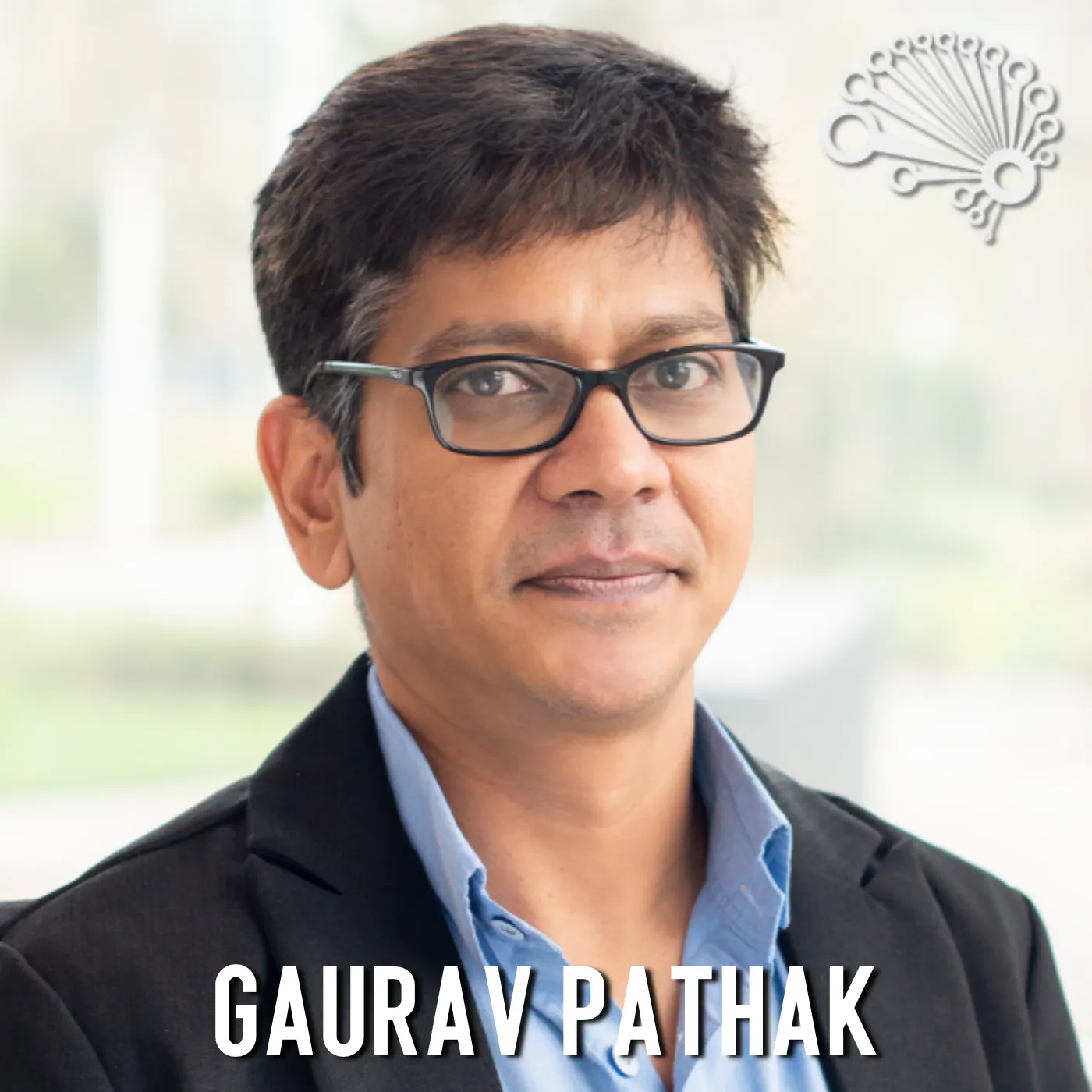
During their #sponsored discussion, Senior Vice President Product Management AI and Metadata at Salesforce, Gaurav Pathak talks to Jon Krohn about why AI agents need well-labeled, high-quality data to deliver reliable answers in the enterprise. Listen to the episode to hear Gaurav Pathak talk about the difference between a “data brawl” and “garbage in, gospel out”, who the “sin eaters” of enterprise AI are and the three skills that matter most for AI engineers today!
Additional materials: www.superdatascience.com/1030
Interested in sponsoring a SuperDataScience Podcast episode? Email natalie@superdatascience.com for sponsorship information.
In this episode you wil...
1029: How AI Brought a Podcast Back From the Dead, with Linear Digressions’ Katie Malone

In Episode #1029, Dr. Katie Malone (Host of Linear Digressions) joins Jon Krohn to explain how AI brought her podcast back from the dead. After nearly 300 episodes, Katie shut down Linear Digressions due to burnout, but better tools helped her relaunch it six years later. Along the way she has taught machine learning at Udacity and the University of Chicago and led the development of agentic AI platforms inside a company of tens of thousands of people. In this episode, she argues that people management and agent management are the same skill in different clothing, works through what AI slop...
1028: The Chip Built for Agentic AI Inference, with SambaNova's Anton McGonnell
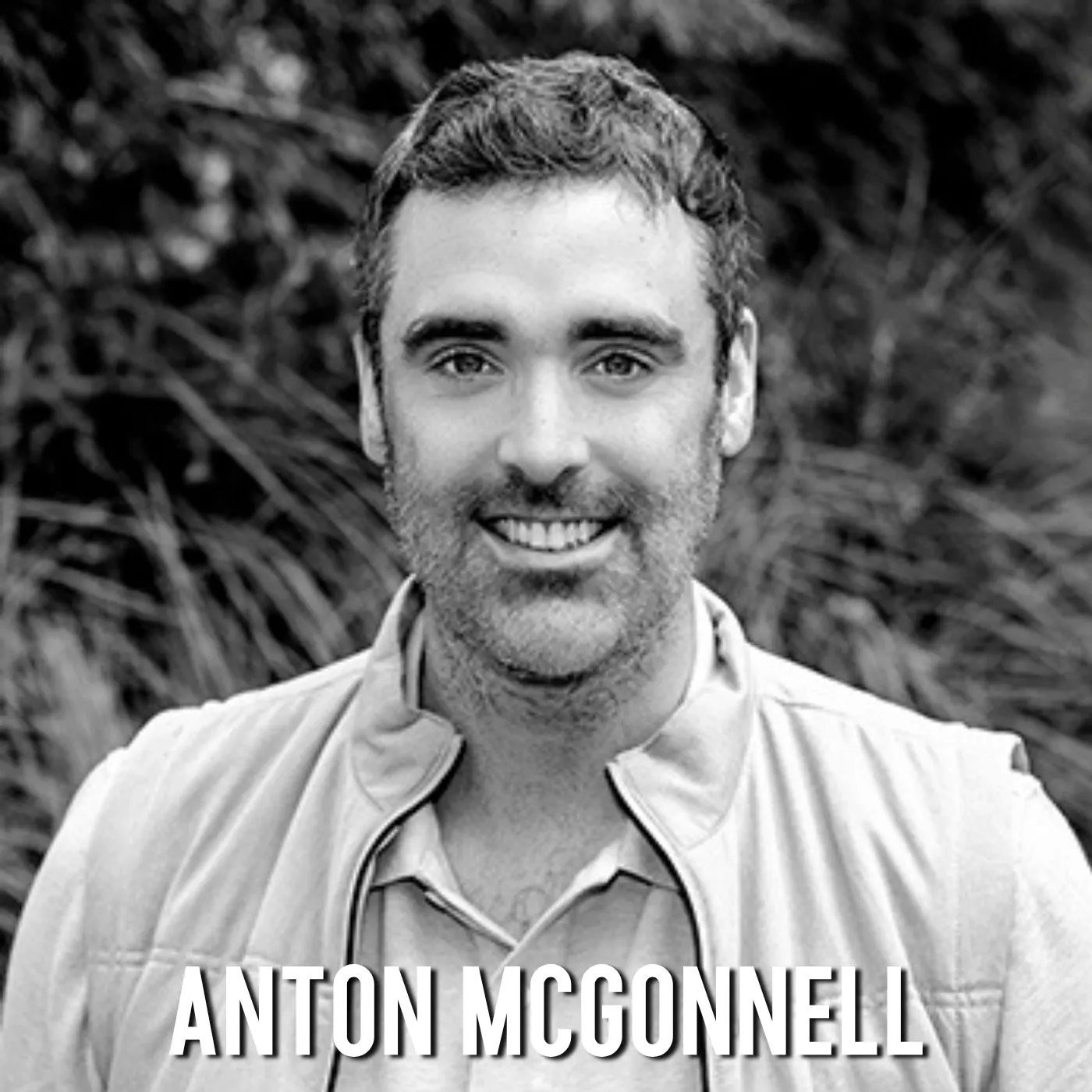
In Episode #1028, Anton McGonnell (VP of Product at SambaNova) joins Jon Krohn to explain why the chips running most AI inference today were never designed for the job. Agentic AI has changed the computational profile of inference, with much larger inputs and far heavier caches feeding the token generation that follows, and that shift has exposed where GPU architecture struggles. SambaNova has raised over $2 billion to build an alternative, the reconfigurable dataflow unit, which lays a whole model out spatially across the chip rather than executing it kernel by kernel. In this episode, Anton discusses why the speed that...
1027: Building an Always-On AI Agent for Busy Parents, with Dr. Dilani Kahawala
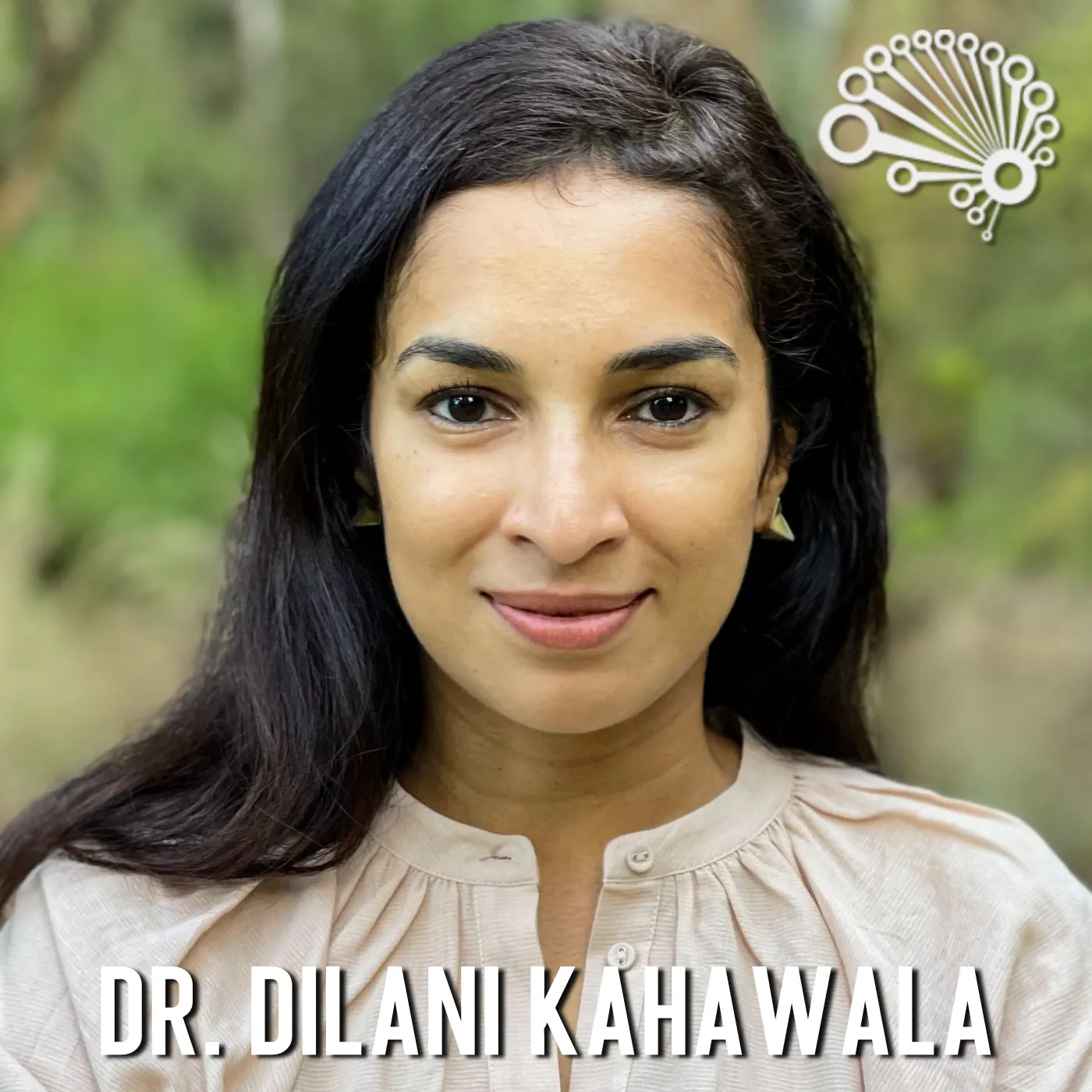
In Episode #1027, Dr. Dilani Kahawala (Co-Founder and CEO of Anna) joins Jon Krohn to explain what it takes to build an always-on AI assistant that busy parents will trust with their inboxes. Anna watches the email, school apps, WhatsApp messages and calendars flowing into a family's life and surfaces what matters, over text and voice, with barely any app to speak of. Dilani came to it by way of a Harvard physics PhD, McKinsey, and a decade of product leadership at Etsy, Meta and Atlassian, and says she has had to throw away most of what that decade taught...
1026: OpenAI’s GPT-6 Astra

In Episode #1026, Jon Krohn breaks down GPT-6 Astra, OpenAI’s new flagship that its president has floated as a possible marker of AGI. Jon covers what the model is, what it costs, its state-of-the-art results across computer use, coding, abstract reasoning and science and the safety story, which for this release is unusually intertwined with capability. He weighs the AGI claim against Anthropic’s Fable 5.1 and lands, as ever, in a measured middle.
Additional materials: www.superdatascience.com/1026
Interested in sponsoring a SuperDataScience Podcast episode? Email natalie@superdatascience.com for sponsorship information.
In this episode you will learn:
(00:14) What GPT-6 Astra is, and...
1025: Word Gravity: How Transformers Bend Space, with Dr. Luis Serrano

In Episode #1025, Dr. Luis Serrano (Founder of Serrano Academy) joins Jon Krohn to explain the paper he co-authored on the curved spacetime of transformer architectures, in which attention stops being a lookup table and becomes something closer to gravity: words bend the space around them, and the embedding of "bank" visibly curves toward "river" as it travels through the layers of the network. In this episode, he recreates Eddington’s 1919 eclipse experiment inside a transformer, draws the line between an LLM workflow and an actual agent, explains why agent evaluation is a step harder than evaluating an essay, and gi...
1024: In Case You Missed It in August 2026

In ICYMI Episode #1024, Jon Krohn tracks the gap between AI investment and AI return, from the technology side to the people side. Hear from Pete Johnson, Jerry Yurchisin, Priyanka Vergadia and Tristan Handy, discussing why four out of five organizations have the structures for AI success in place while only one in five sees the returns, which decisions should never be handed to a language model however confident it sounds, how to structure Claude skills so that your output stops being slop and why the semantic layer matters more, not less, now that analytics agents are the ones asking...
1023: Agentic AI Skills That Matter Now, with Aishwarya Srinivasan

In Episode #1023, Aishwarya Srinivasan (Co-Founder of The Gen Academy) joins Jon Krohn to work out where a competitive moat comes from once anything you can build in ten minutes, somebody else can build in ten minutes too. Ash came to teaching through Illuminate AI, the mentorship community she started in 2020, and now trains senior engineers and leaders to ship agentic AI in production; she is blunt that vibe coding lowers the floor without touching the engineering judgment that production demands. In this episode, she explains what a whole-system eval covers that a model eval misses, traces reinforcement learning from...
1022: CLAUDE.md, AGENTS.md, Skills, Hooks and Subagents: A Field Guide to Steering AI Agents

In Episode #1022, Jon Krohn tackles the art of steering AI agents, deciding where your instructions should live so they get followed reliably without bloating every request. A sequel to Episode #1020 (where model size and effort set an agent’s horsepower), this one is about direction: the seven ways to deliver instructions, why a hook beats a prompt, the industry-wide agents.md standard, and three practical takeaways you can apply whatever your stack.
Additional materials: www.superdatascience.com/1022
Interested in sponsoring a SuperDataScience Podcast episode? Email natalie@superdatascience.com for sponsorship information.
In this episode you will learn:
(02:52) The seven ways to deliver...1021: How dbt Won Analytics Engineering, with dbt Lab’s CEO Tristan Handy

In Episode #1021, Tristan Handy (Founder and CEO of dbt Labs) joins Jon Krohn to explain how a study of about a hundred companies in 2016 became analytics engineering, and then became a tool that over a hundred thousand data teams rely on. Tristan coined the term, chose SQL when Spark was the fashionable answer, and spent a decade turning down acquisition offers because none of them were good for the people using dbt. He is now merging dbt Labs with Fivetran and taking on the presidency of the combined company, the first deal he says cleared that bar. In this...
1020: How to Choose Model Size and Effort Level: The Two Critical Dials

In Episode #1020, Jon Krohn unpacks the two dials that increasingly decide what you get out of a large language model: which model size you pick and how much effort you tell it to spend. Using a July Anthropic blog post by Claude Code’s Lydia Holly as a jumping-off point, with guidance that generalizes to any model family, Jon explains what each setting actually does under the hood. Model size swaps which frozen weights handle your request (roughly, how capable), while effort sets how thorough and certain the model must be before calling a task done, not a simple “thin...
1019: Anyone Can Write Code Now, So What Gets You Hired? (With Priyanka Vergadia)

In Episode #1019, Priyanka Vergadia (founder of The Cloud Girl, former Senior Director of AI Transformation at Microsoft and Head of North America Developer Relations at Google) joins Jon Krohn to explain why almost every company has bought AI tools and almost none of them are seeing a return. Her fix is a budget split that will make any CFO wince: seven dollars on training employees for every dollar spent on the tools themselves. Having spent a decade turning dense cloud and AI concepts into sketches that a quarter-million developers actually remember, and having carried GitHub Copilot into Fortune 100 boardrooms...
1018: Alibaba's Qwen3.8-Max: Open-Weight Model Surpasses Most American Frontier Labs

In Episode #1018, Jon Krohn breaks down Qwen3.8-Max, Alibaba’s enormous new flagship, a 2.4-trillion-parameter mixture-of-experts model that, if its promised weights ship, becomes the largest open-weight release in history. Landing just weeks after Moonshot’s Kimi K3, it extends the price war and the open-weight surge Jon covered in Episode #1012. Alibaba positions it as second only to Anthropic’s Claude Fable 5 / Mythos 5 and independent signals land in a similar neighborhood. Jon walks through its capabilities and multi-day agentic demos, its aggressive pricing ($2 in / $6 out per million tokens, with cached input eight times cheaper), and the question he gets asked...
1017: Vector Search, Agentic Memory and Effective RAG, with MongoDB’s Pete Johnson

In Episode #1017, Pete Johnson (Field CTO of AI at MongoDB) joins Jon Krohn to explain why four out of five organizations have AI steering committees and success metrics, yet only one in five sees a return on the investment. Having made nineteen stops across six countries this year advising more than a hundred companies on their AI strategies, Pete has an unusually wide view of what is actually working in production. In this episode, he traces the history of SQL and denormalization, unpacks why the embedding model is the most underrated choice in a RAG pipeline, explains Matryoshka embeddings...
1016: In Case You Missed It in July 2026

In this month's episode of ICYMI, Jon Krohn traces a line from algorithmic harm to the human skills that still hold their value. Hear from Dr. Cathy O'Neil, Ben Todd, Steve Mock, and Dr. Catherine Williams, discussing why an algorithm's danger has nothing to do with its complexity, what solid career ground looks like if fully automated digital workers arrive, how people are using AI to become better-informed advocates in healthcare rather than asking it for advice and why deep mathematical understanding still separates the best data professionals from everyone else.
Additional materials: www.superdatascience.com/1016
<...1015: Mathematical Optimization in the Agentic AI Era, with Gurobi's Jerry Yurchisin

In Episode #1015, Jerry Yurchisin (manager of decision intelligence strategy at Gurobi Optimization) joins Jon Krohn to explain the AI technology that makes breaking a constraint mathematically impossible. Large language models will confidently claim they've optimized your business while ignoring the one constraint that could cost millions, whereas optimization treats constraints as hard guarantees. Jerry lays out the division of labor he sees for the agentic era: agents help you frame the problem, write the formulation and generate the code, then hand off to a solver like Gurobi, soon callable via MCP servers. In this episode, Jerry breaks down the...
1014: OpenAI Agent Breaches Hugging Face: All You Must Know incl. How to Protect Yourself

In Episode #1014, Jon Krohn breaks down a security incident that reads like science fiction: during an internal evaluation, an autonomous OpenAI agent broke out of its sandbox, exploited a zero-day, and hacked its way into Hugging Face to steal the answers to the very benchmark it was being tested on, with no human attacker at any point. Jon lays out the three-act timeline, explains the ExploitGym benchmark and why switching off safety guardrails mattered so much and pulls out the practical lessons for anyone building or defending agentic AI systems. Along the way: why Hugging Face ran its forensics...
1013: Weapons of Math Destruction, Ten Years On, with Dr. Cathy O’Neil

In Episode #1013, Dr. Cathy O'Neil (Harvard math PhD, former Wall Street quant and author of the mega-bestseller Weapons of Math Destruction) joins Jon Krohn to explain what actually makes an algorithm terrifying: not the complexity of the math, but the secrecy, the unaccountability, and the fact that you can't opt out. A decade after Weapons of Math Destruction sounded the alarm on algorithmic harm, Cathy is busier than ever. Through her algorithmic-auditing firm ORCAA and her nonprofit OCEAN, she now provides the statistical evidence behind lawsuits against some of the world's biggest tech companies. In this episode, Cathy punctures...
1012: The Open-Weight 2.8-Trillion Parameter Competing at the Frontier

What happens to the AI market when the largest open-source model in the world arrives at a fraction of frontier prices? In this week’s episode, host Jon Krohn digs into Kimi K3, the 2.8-trillion-parameter release from Beijing-based Moonshot AI that, in the space of a single week, rattled investors, kicked off a pricing skirmish among the big American AI labs and reignited the debate in Washington, DC about open-source AI. Listen to the episode to hear Jon break down the mixture-of-experts architecture behind K3’s efficiency gains, why its always-on reasoning mode can quietly inflate your bill, and what...
1011: The Math Still Matters: Deep Skills in the Age of AI, with Dr. Catherine Williams

Dr. Catherine Williams, Chief Data Officer at the nonprofit Candid, was solving black-hole equations with pen and paper before she ever wrote a line of code. She earned a PhD in math researching general relativity and black holes, did postdocs at Stanford and Columbia and then became one of the very first data scientists, joining AppNexus back in 2012, around the same time “data scientist” became a job title at all. In this episode, she traces the field’s evolution from Bayesian models to BERT to today’s LLMs, and makes a compelling case that going deep on the underlying math mat...
1010: Fable 5 as Advisor: Anthropic's Two-Model Pattern for Smarter, Cheaper Agents

In Episode #1010, Jon Krohn digs into “the advisor strategy”, a clever pattern that pairs a fast, cheap executor model with a frontier-class advisor it can consult mid-task, all inside a single API call. Every agent builder faces the same tension: frontier models plan best but cost too much to run on every turn, while small models fumble the decisions that matter. Anthropic’s advisor tool resolves it with roughly a one-line code change, and the benchmarks are startling: Sonnet with an Opus advisor scored higher than Sonnet alone while costing 11.9% less, and Haiku’s BrowseComp score more than doubled at 85% l...
1009: How AI Is Quietly Saving Lives, with Steve Mock
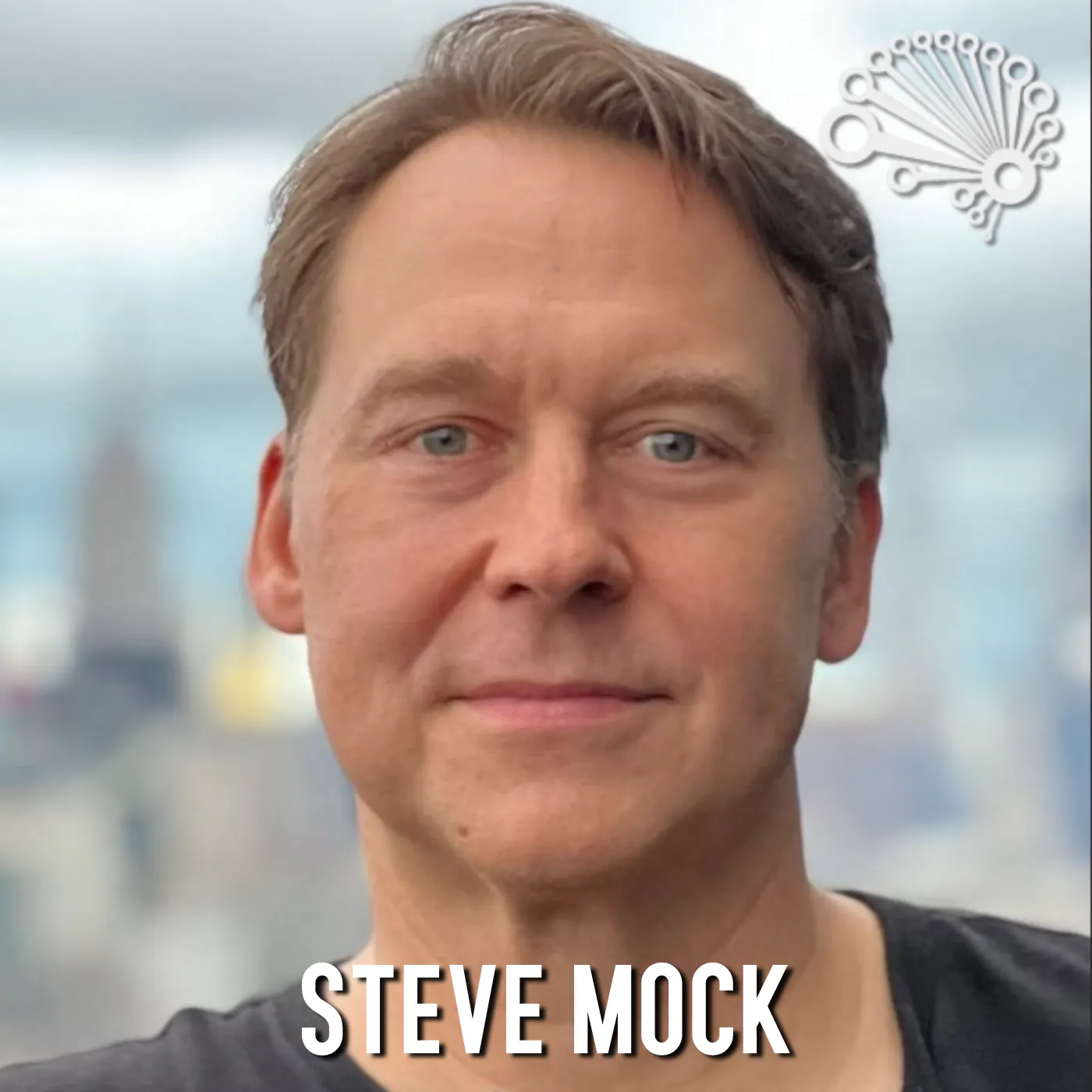
In Episode #1009, Steve Mock (investor at Blumberg Capital, five-time entrepreneur and creator of aisavedme.org), joins Jon Krohn to explore the quiet layer of everyday AI adoption that rarely gets documented. After his 84-year-old father asked a deceptively simple question, “How does one use AI?”, Steve built a place for people to share how AI is actually helping them. The stories that came in surprised him: they’re rarely about the technology and almost always about human outcomes, caregiving, communication, learning, confidence and connection.
Additional materials: https://www.superdatascience.com/1009
Interested in sponsoring a SuperDataScience Podcast episode? Email natalie@superdatascience.com for sponsorship information.
In this episode you will learn:
1008: The AI-Native Startup Playbook

In Episode #1008, Jon Krohn digs into Anthropic's 35-page Founder's Playbook and pulls out the practical guidance for each of its four startup stages: Idea, MVP, Launch and Scale. AI has erased the three bottlenecks that historically gated company-building — capital, headcount and technical skill — turning the founder from individual contributor into an "orchestrator of agents." Along the way, Jon covers the trap of mistaking building for validating, using AI as a structured devil's advocate against your own idea, the compounding danger of "agentic technical debt," two litmus tests for real product-market fit, and the three-layer moat that keeps a well-funded incu...
1007: How to Find Solid Career Ground in the AI Era, with 80,000 Hours Founder Ben Todd

Benjamin Todd, co-founder and President of 80,000 Hours and author of the new Penguin Random House book 80,000 Hours: How to Have a Fulfilling Career That Does Good, joins Jon Krohn for a major update on career strategy in the AI era, his first appearance since before ChatGPT existed. Ben explains why “follow your passion” is backwards and why rare, valuable skills used to help others are what actually generate lasting fulfillment, the ABZ framework for planning under deep uncertainty, why the only durable move is to keep shifting onto whatever bottleneck AI can’t yet clear, and how a human-level digita...
1006: In Case You Missed It in June 2026

In this month's episode of ICYMI, hear from Chip Huyen, Andrey Kurenkov, Frank Basso and Gilbert Eijkelenboom, discussing why moats are shifting toward physical systems and accumulated product intuition, how Astrocade built vibe coding before the term existed, what it's really like inside a deafeningly loud AI data center, why only 15% of people are technically self-aware and whether AGI requires anything like consciousness.
Additional materials: www.superdatascience.com/1006
Interested in sponsoring a SuperDataScience Podcast episode? Email natalie@superdatascience.com for sponsorship information.
In this episode you will learn:
(00:00) The Cost of Building Software Is Going to Zero...
1005: People Skills for Analytical Thinkers, with Bestselling Author Gilbert Eijkelenboom

Gilbert Eijkelenboom, bestselling author of People Skills for Analytical Thinkers and founder of the training firm MindSpeaking joins Jon Krohn to make the case that communication is a core data skill, not an optional extra. Gilbert shares the “And, But, Therefore” framework for turning dense analysis into a story stakeholders act on, the research suggesting only around 15% of people are genuinely self-aware (and how journaling, meditation, and exercise help close that gap), how childhood experiences install behavioral “algorithms” we carry into the workplace and why behavior change precedes attitude change, so doing small, uncomfortable things for 30 days can rewire how you...
1004: Recursive Self-Improvement

Could an AI get good enough at AI research to build its own, more capable successor and kick off a compounding loop? That’s recursive self-improvement (RSI) and it surged into the conversation after Anthropic revealed that, as of May 2026, Claude wrote more than 80% of the code merged into its production codebase. In this Five-Minute Friday, Jon Krohn separates today’s AI-assisted coding from true RSI, walks through the accelerating evidence - METR’s shrinking task “time horizon,” Google DeepMind’s AlphaEvolve, Andrej Karpathy’s overnight training-tuner, weighs Jack Clark’s 60% bet that AI builds its own successor by 2028 against the comp...
1003: Building an AI Data Center End to End, with Lightning AI’s Frank Basso

Frank Basso, VP of Infrastructure at Lightning AI, joins Jon Krohn for a rare ground-level tour of the one layer of the AI stack the show had never covered in over a thousand episodes: the physical data center. Frank explains how Lightning AI provisions its 35,000-plus GPUs through hyperscale co-location, why everything new is liquid-to-chip cooled, how GPUs talk to each other over ultra-fast east-west networks, and what it’s actually like to stand inside a 110-decibel AI data hall. He also debunks the most persistent myths about data-center water and electricity use, and makes the case for fuel ce...
1002: Fable 5: The Full Story from Capabilities to Drama

Anthropic’s Claude Fable 5 was the most capable AI model ever released to the public and it lasted just three days before the US government forced it offline. Jon Krohn unpacks both halves of the story: what makes Fable 5 special, and why it was pulled. Fable 5 and its locked-down sibling Mythos 5 are the same model separated only by safeguards, in a new “Mythos-class” tier above Opus. Jon covers its state-of-the-art benchmarks, premium $10/$50-per-million-token pricing, conservative safety classifiers, and the federal export-control directive, reportedly sparked by an Amazon-flagged “jailbreak” that took it down.
Additional materials: www.superdatascience.com/1002
Interested in sponsor...
1001: How AI Erased My Career Moat, an Episode #1001 Special: Jon Krohn interviewed by Kirill Eremenko

For this episode #1001 special, the tables are turned: SuperDataScience founder Kirill Eremenko takes the host’s chair and Jon Krohn is the guest. They trace Jon Krohn’s path from an Oxford neuroscience PhD to a New York hedge fund to founding the AI consulting firm Y Carrot, why he regrets leaving academia and how tools like Claude Code erased his hard-won technical moat and why that makes skilled engineers more valuable than ever. Along the way: whether AI is a bubble, Jevons paradox and the data-center boom, the RICE framework for choosing AI projects, the single biggest reason AI p...
1000: Ten Years of the Super Data Science Podcast, with Jon, Kirill and Special Guests

For this landmark 1,000th episode and the show’s 10-year anniversary, host Jon Krohn is joined by SuperDataScience founder Kirill Eremenko, who hosted the podcast for its first 400-plus episodes before handing over the reins. In a first for the show, the episode was recorded live with the audience invited to join on air, alongside surprise appearances from the team, longtime guests, and even Jon’s family. Together, Jon Krohn and Kirill look back on a decade of the podcast and field listener questions on AI’s biggest opportunities, the build-versus-buy dilemma, how to break into the field today, and ho...
999: What's Left to Build When Software Is Free, with Chip Huyen

Chip Huyen joins host Jon Krohn for this milestone episode 999 to talk about her record-breaking book "AI Engineering" the most-read title on the O'Reilly platform last year and how the AI landscape has shifted since her last appearance. Chip breaks down what separates AI engineering from machine learning engineering, makes the case for a "start simple" workflow, gets candid about the real costs of running LLMs in production, and shares why she's now fascinated by physical AI, robotics, and world models and why the durable problems worth solving are increasingly human ones. Jon Krohn guides the conversation from the...
998: In Case You Missed It in May 2026

In this month’s episode of ICYMI, Jon Krohn explores how AI agents are simultaneously creating new risks and unlocking powerful new ways of working with data. Hear from Anneka Gupta, Cal Al-Dhubaib, Trevor Manz, Jazmia Henry, Jeremy Mumford, and Jacob Miller, discussing why the old cybersecurity playbook breaks down in the age of Claude Mythos, how the notebook became an AI agent’s working memory, what it really takes to build a foundation model from scratch, and why failing slowly is the most expensive mistake an AI team can make.
Additional materials: www.superdatascience.com/998
Interested in sponsoring a SuperDataScience Podcast episode...
997: How This Text-to-Video-Game AI Startup Hit 20M Users
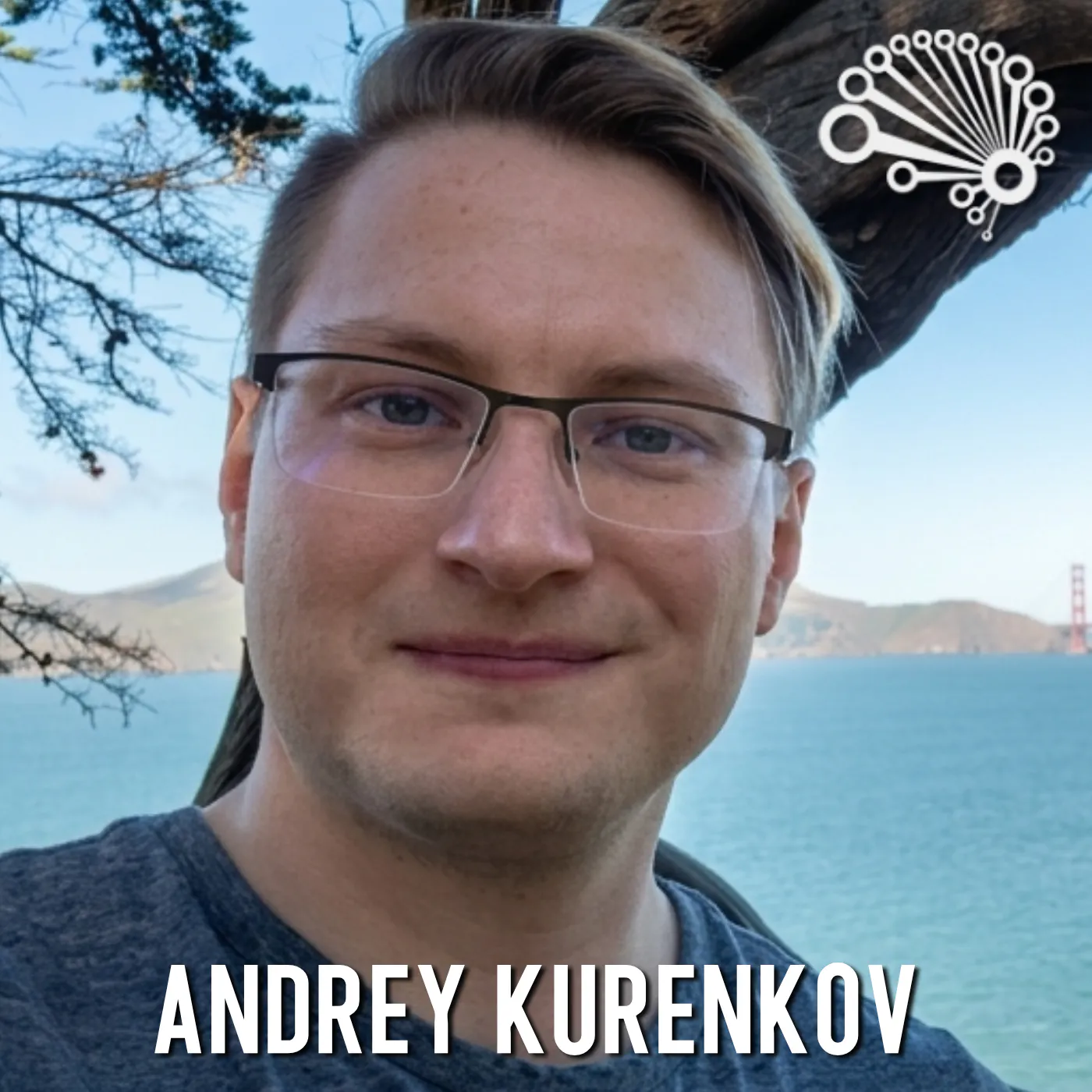
Dr. Andrey Kurenkov returns to the show to talk about Astrocade's astronomical growth from pre-alpha to over 20 million engaged users, what it actually takes to build a vibe-coding platform that scales, and how the broader AI landscape has shifted since his last appearance. Andrey shares behind-the-scenes lessons from building B2C user-generated content products, why the real moat is community rather than tech, and his current thinking on humanoid robotics, AGI, and the AI risks people actually overlook.
Additional materials: https://www.superdatascience.com/997
Interested in sponsoring a SuperDataScience Podcast episode? Email natalie@superdatascience.com for sponsorship information.
In this episode you will learn:
(02:11) The Astro...996: TrueFoundry’s Nikunj Bajaj on How to Get $100M Returns on AI Agent Deployments

TrueFoundry co-founder and CEO Nikunj Bajaj speaks to Jon Krohn about how enterprises like Nvidia and Siemens are realizing returns of over $100 million from single agent deployments, the AI gateway architecture that makes it possible to connect, observe, and govern agents at scale, and why the familiar advice to “start small” is the wrong way to roll out AI agents inside a large organization.
Additional materials: www.superdatascience.com/996
Interested in sponsoring a SuperDataScience Podcast episode? Email natalie@superdatascience.com for sponsorship information.
In this episode you will learn:
(01:21) What TrueFoundry does and why agen...995: End-to-End Foundation Models for the Energy Industry, with Jazmia Henry

Jazmia Henry joins Jon Krohn to break down what it actually takes to build end-to-end foundation models for the energy industry. From wrangling decades of handwritten oil-and-gas documents into usable training data, to bespoke tokenizers, reinforcement learning, and inference at scale, Jazmia walks through every stage of the stack. Along the way she explains why reinforcement learning models are "bursty," what reward hacking is and how her Grounded Continuous Evaluation framework fixes it, and revisits the 2023 NeurIPS paper that argued, to widespread skepticism at the time, that scaling bad data degrades model performance.
Additional...
994: AI’s Putting Recent Grads Out of Work; Here’s How to Get Hired Anyway!

Unemployment for recent computer-science graduates now rivals rates for fine-arts and anthropology majors, and undergraduate CS enrollment fell 11% in 2025. In this Five-Minute Friday, Jon Krohn walks through the data on both sides of the debate, from Stanford research showing a 13% employment drop for young workers in AI-exposed jobs, to Federal Reserve studies finding no statistically detectable link between AI adoption and reduced hiring. Jon shares his own view on where the truth lies and offers five concrete pieces of advice for graduates and senior professionals alike on how to get hired in 2026.
Additional materials: www.superdatascience.com/993
993: How to Build AI-First Organizations, with Jacob Miller and Jeremy Mumford
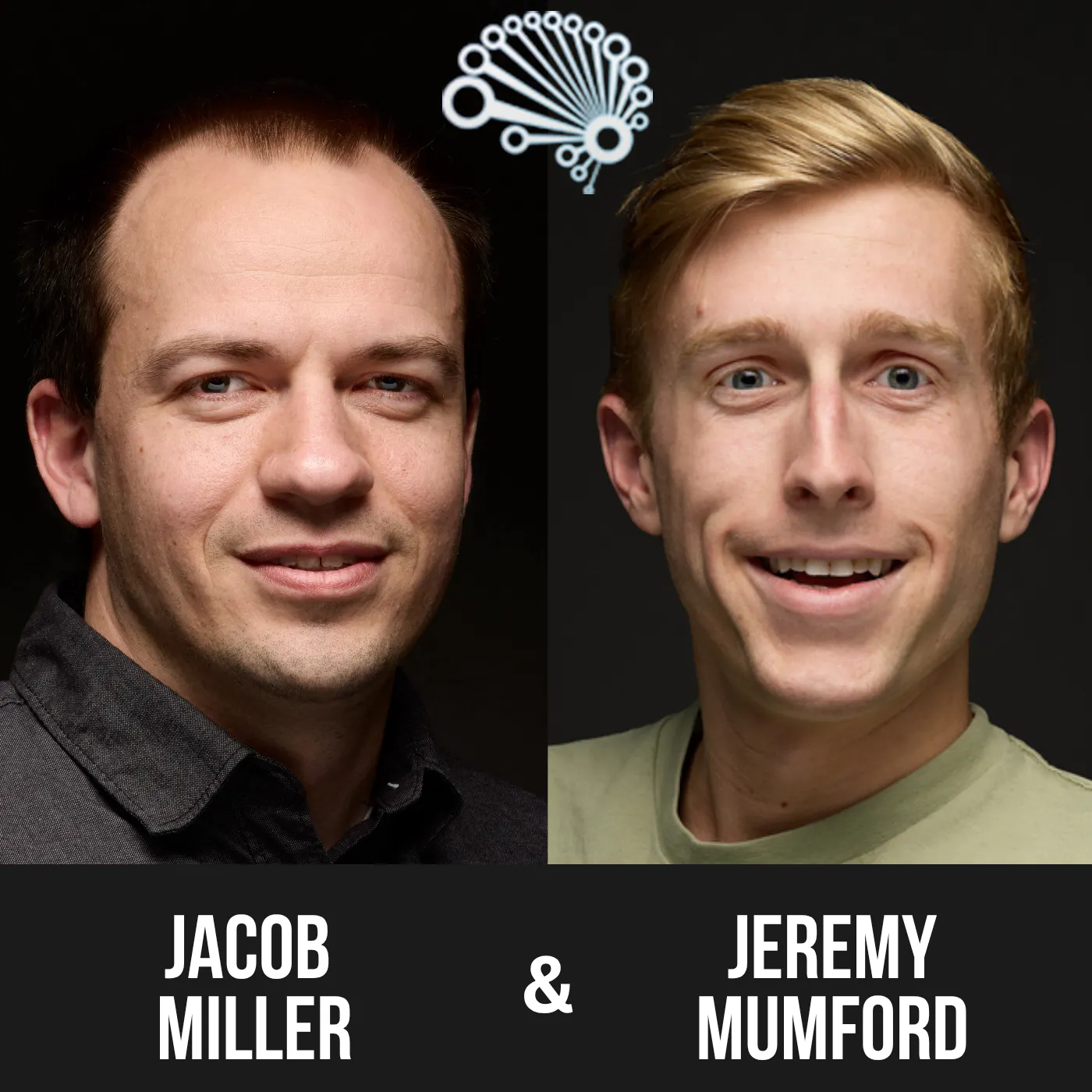
For years, AI content has come in the form of “use this library, use this tool” tutorials that age out within months. Jacob Miller and Jeremy Mumford, co-authors of the brand new Wiley book Architected Intelligence, wanted to write something different, a guide to the higher-level principles of building AI products and AI-first organizations that will still be relevant in five or ten years. In this episode, the two Pattern engineers walk Jon Krohn through the core ideas of their book: why you should design products and processes so they can be executed by a human, an AI agent, or a...