Lowy Institute
The Lowy Institute is a leading international think tank that looks at the world from Australia’s perspective. This channel aggregates audio from across all of our event and podcast channels.
Cuts all round: Aid to Southeast Asia hits a decade low
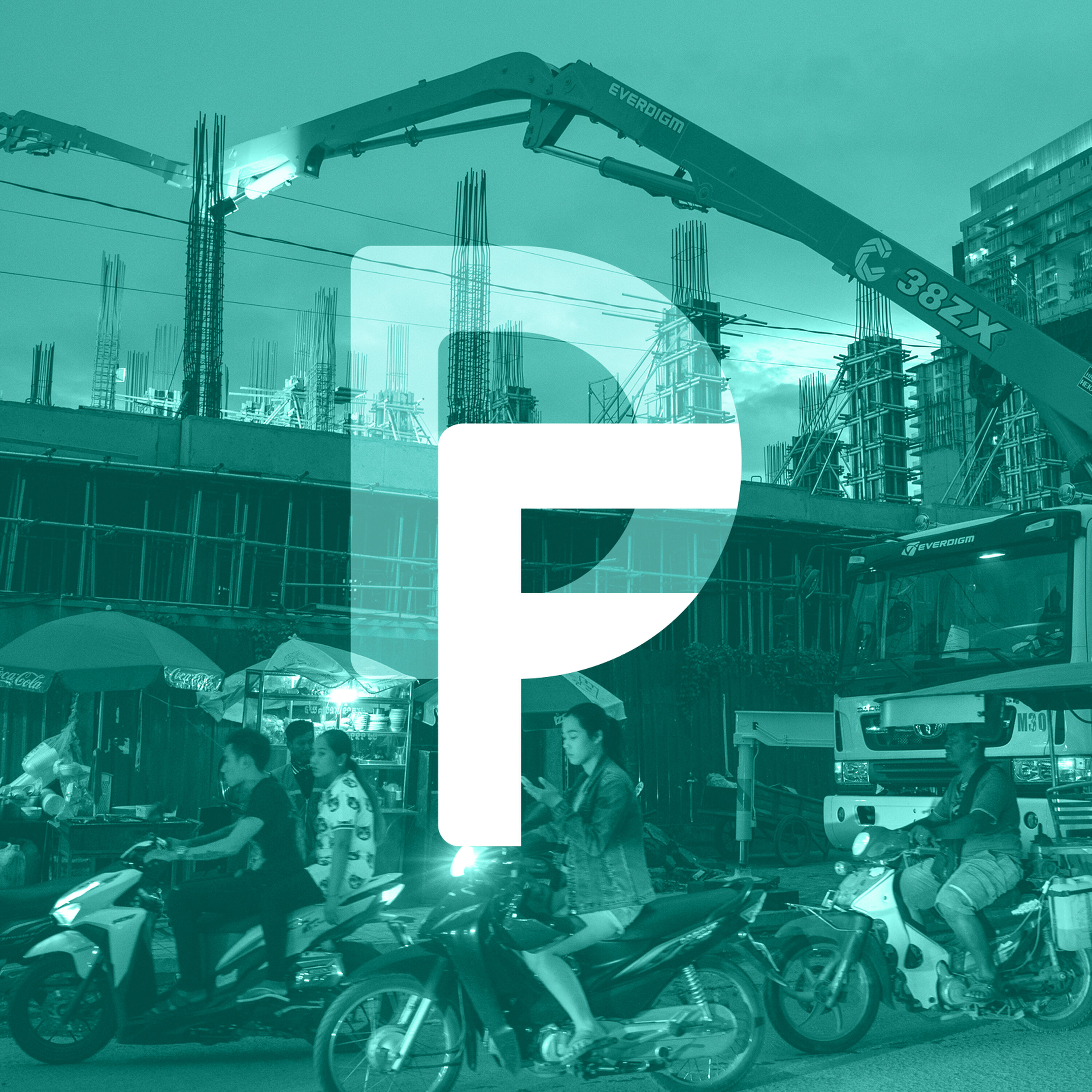
Official development finance to Southeast Asia has fallen to its lowest level in a decade, just as the region faces a run of overlapping economic shocks. Contrary to some expectations, China isn’t stepping into the gap left by retreating traditional donors, such as Japan and the United States.
In this episode of Development Futures, the Lowy Institute's Lead Economist and Director of the Indo-Pacific Development Centre Roland Rajah speaks with Rahul Nath and Taili Ni, two of the researchers behind the Lowy Institute’s Southeast Asia Aid Map, about what the latest data shows and what developments to w...
From treaty to trust: The next chapter in the Australia–PNG relationship
Despite being close neighbours, Australia and Papua New Guinea have only recently become formal allies through the Pukpuk Treaty. But what does this new alliance mean beyond government-to-government ties?
In this episode of Lowy Institute Conversations, Dominic De Moura McCarthy, President and Founder of the Pacific-Australia Youth Association, and Sharon Bala Woruba, Environment and Sustainability Manager for PNG at Coca-Cola Europacific Partners, join the Institute's Sarah Thompson to discuss the future of the bilateral relationship.They discuss PNG's forthcoming NRL team, the Chiefs; what real economic opportunity for small businesses and grassroots communities looks like; the underused...
2026 Lowy Institute Media Lecture: Dennis Richardson AC
At the 2026 Lowy Institute Media Award dinner, former ambassador and intelligence chief Dennis Richardson AC traced five decades at the sharp end of government-media relations, from running the Commonwealth's first media monitoring unit in 1972 to advising ambassadors on when to dodge the cameras. He's blunt on AUKUS and the government's reluctance to sell it, sharper still on what he sees as media silence in the face of rising anti-Semitism after the Bondi attack, and unsparing about a public service he says too often confuses self-censorship for prudence.
See omnystudio.com/listener for privacy information.
Prime Minister of Thailand Anutin Charnvirakul
The Lowy Institute was delighted to welcome Thailand's Prime Minister Anutin Charnvirakul to Bligh Street for a roundtable discussion, chaired by the Institute's Executive Director Michael Fullilove.
The Prime Minister delivered a brief speech, discussing the roles of Thailand, Australia, and middle-sized countries in addressing an increasingly uncertain world.
See omnystudio.com/listener for privacy information.
Lowy Institute debate: Does AUKUS strengthen Australia's security?
Two prominent Australian strategists from opposite sides of the defence debate discuss the AUKUS partnership.
Jennifer Parker makes the case that AUKUS is vital for Australian security and that the nuclear-powered submarines will be delivered.
Sam Roggeveen argues that AUKUS is unachievable and unnecessary.
The debate features opening statements from each speaker, followed by a moderated discussion led by Lowy Institute Research Director Mihai Sora, and concludes with an audience Q&A.
See omnystudio.com/listener for privacy information.
Pacific unity on the line: The 2026 PIF Leaders' Meeting
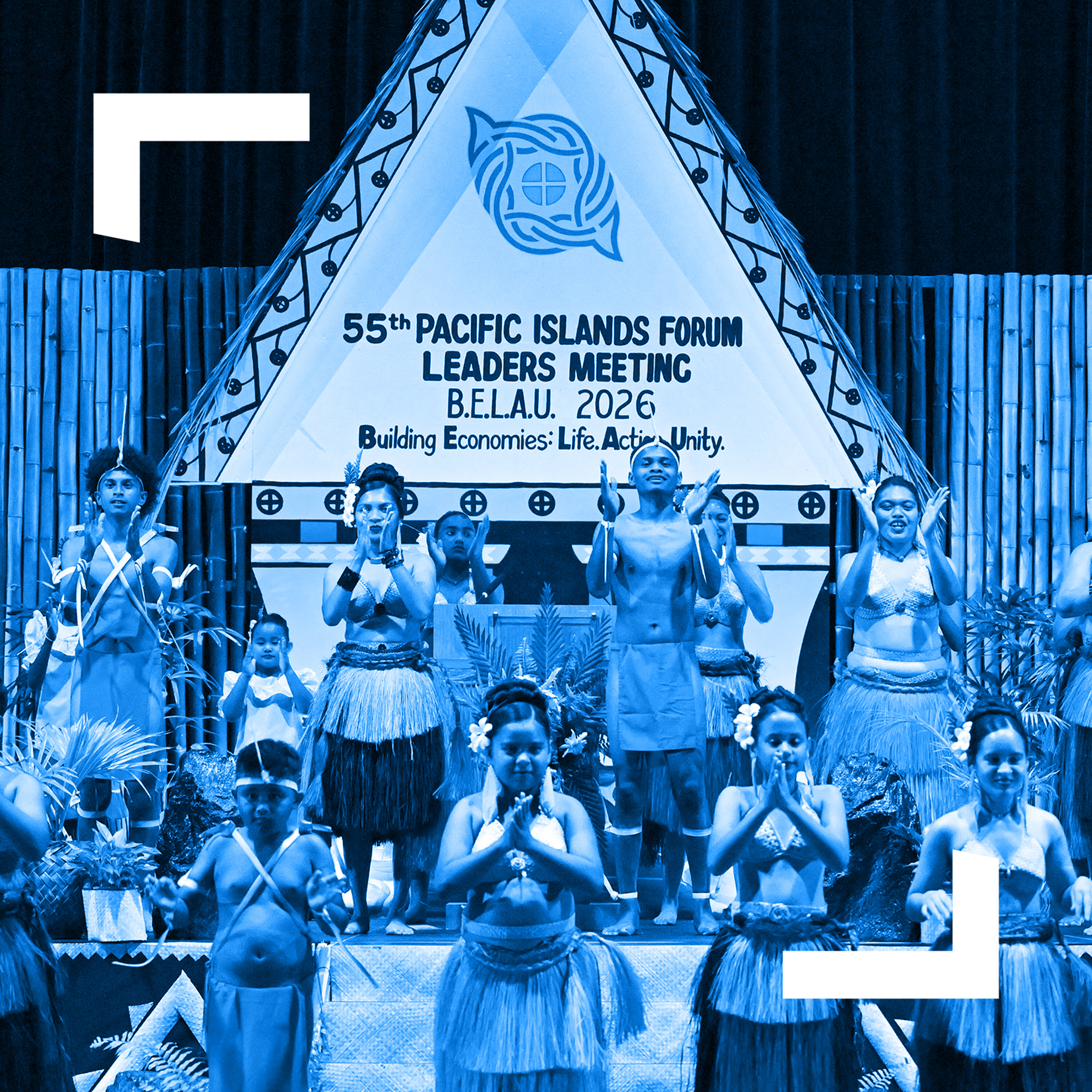
As the 55th Pacific Islands Forum Leaders' Meeting opens in Palau, the region faces a series of major challenges. These include a Chinese missile test that the Forum couldn’t agree to condemn, a contested region-wide security treaty, Taiwan's return to the Forum, an El Niño event, and a global fuel crisis.
In this episode of Lowy Institute Conversations, Oliver Nobetau is joined by Dr Connor Graham and Sarah Thompson to examine what these developments mean for Pacific security, regional unity, and economic resilience.
See omnystudio.com/listener for privacy information.
2026 Allan Gyngell Lecture: Senator Penny Wong
The 2026 Allan Gyngell Lecture was delivered by the Minister for Foreign Affairs, Senator the Hon Penny Wong. Senator Wong paid tribute to Allan Gyngell’s influence on her thinking, reflected on multiculturalism as a source of national strength, and framed Australia’s strategic choices in an increasingly uncertain world.
Following her address, the Foreign Minister joined the Lowy Institute's Executive Director, Dr Michael Fullilove AM for a conversation. They discussed the stabilisation of Australia's relationship with China, AUKUS, Senator Wong’s dealings with the Trump administration and Secretary Rubio, and the declining relevance of the United Nations.
See...
The Pacific’s deep-sea fault line

As great powers race for the critical minerals scattered on the ocean floor, the Pacific is splitting into two camps — those betting on deep-sea mining as an economic lifeline, and those warning the environmental risks are too great. In this episode of Lowy Institute Conversations, Dr Connor Graham speaks with Dr Philippa Louey, Senior Research Associate at the Lancaster Environment Centre, about what's driving the rush, where Australia fits in, and whether the region can find common ground before mining starts.
See omnystudio.com/listener for privacy information.
Southeast Asia’s supply chain squeeze

Southeast Asia has become the connector economy of the global tech race — building the chips, batteries, and clean energy components for which both Washington and Beijing now compete. But as US–China tensions harden into economic security policy, the region’s most valuable supply chains are being squeezed from both sides. In this episode of Development Futures, Research Fellow Robert Walker joins Roland Rajah to discuss which strategic industries are worth backing, which aren’t, and why decarbonisation might be the region’s smartest long-term play.
See omnystudio.com/listener for privacy information.
Mission critical: Why India matters for Australia’s economic future
The Australia–India relationship has taken on growing significance in recent years, a point echoed by policy leaders as they welcomed Prime Minister Narendra Modi on his recent visit.
Hear from leading experts as they analyse the recent visit by PM Modi and explore how the two countries can deepen their collaboration and work together in a range of strategic areas. The panellists discuss the opportunities and challenges across defence, trade, investment and energy.
The conversation will be led by Shruti Pandalai, the inaugural Lowy Institute India Chair, and feature Dhruva Jaishankar, the inaugural Dr Ra...
Stabilisation with caveats: Former ambassador Graham Fletcher on the Australia–China relationship
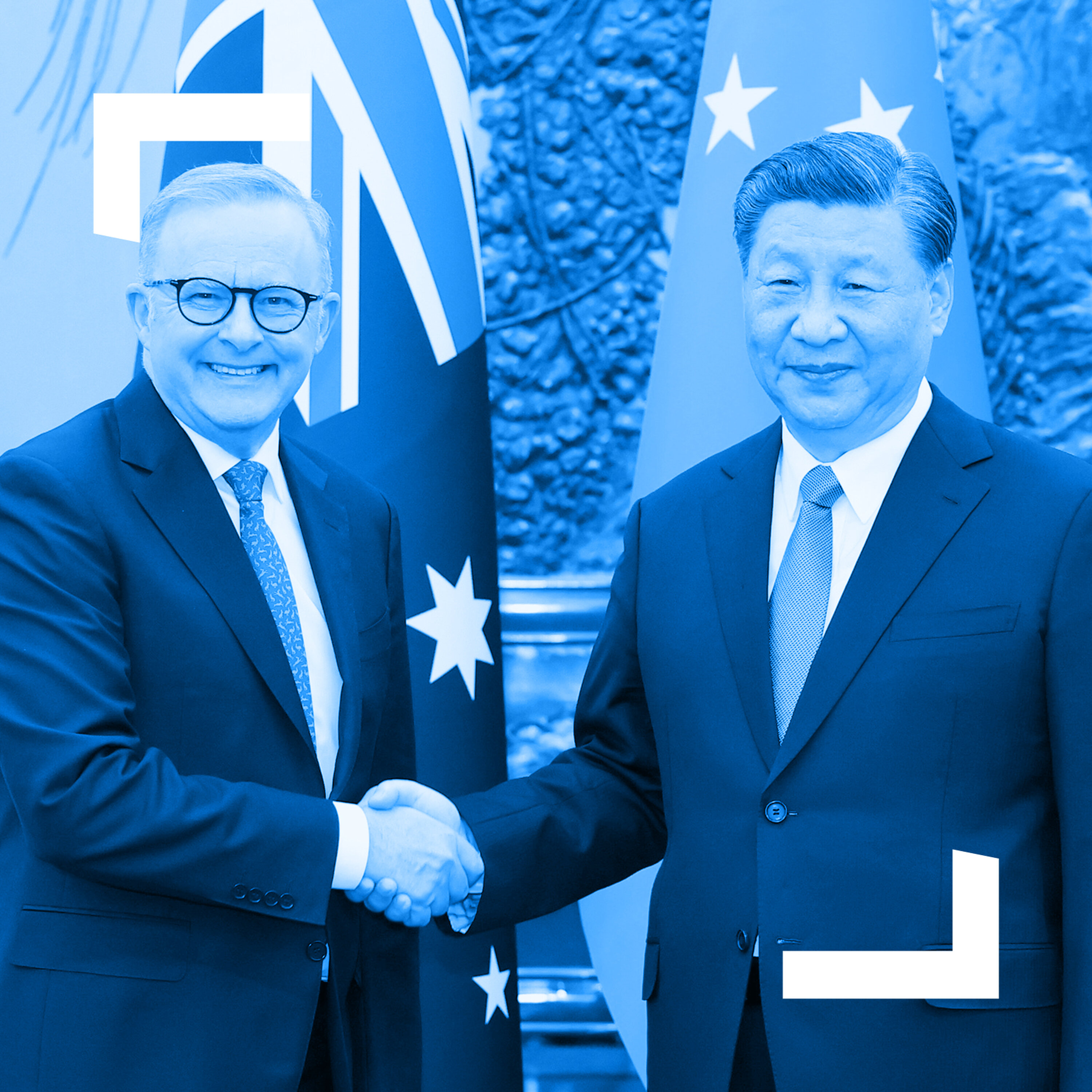
China blocked trade, froze out ministers, and left lobsters rotting on the tarmac, and still couldn't force Australia to budge. In this episode of Lowy Institute Conversations, former Australian ambassador to Beijing Graham Fletcher joins Research Director Mihai Sora to discuss what "stabilisation" really means for the Australia–China relationship — from rare earths and the Port of Darwin to Taiwan and the ever-present shadow cast from Washington. Fletcher argues the current "sweet spot" is harder won — and more fragile — than it looks.
See omnystudio.com/listener for privacy information.
Are we entering a new illiberal order?
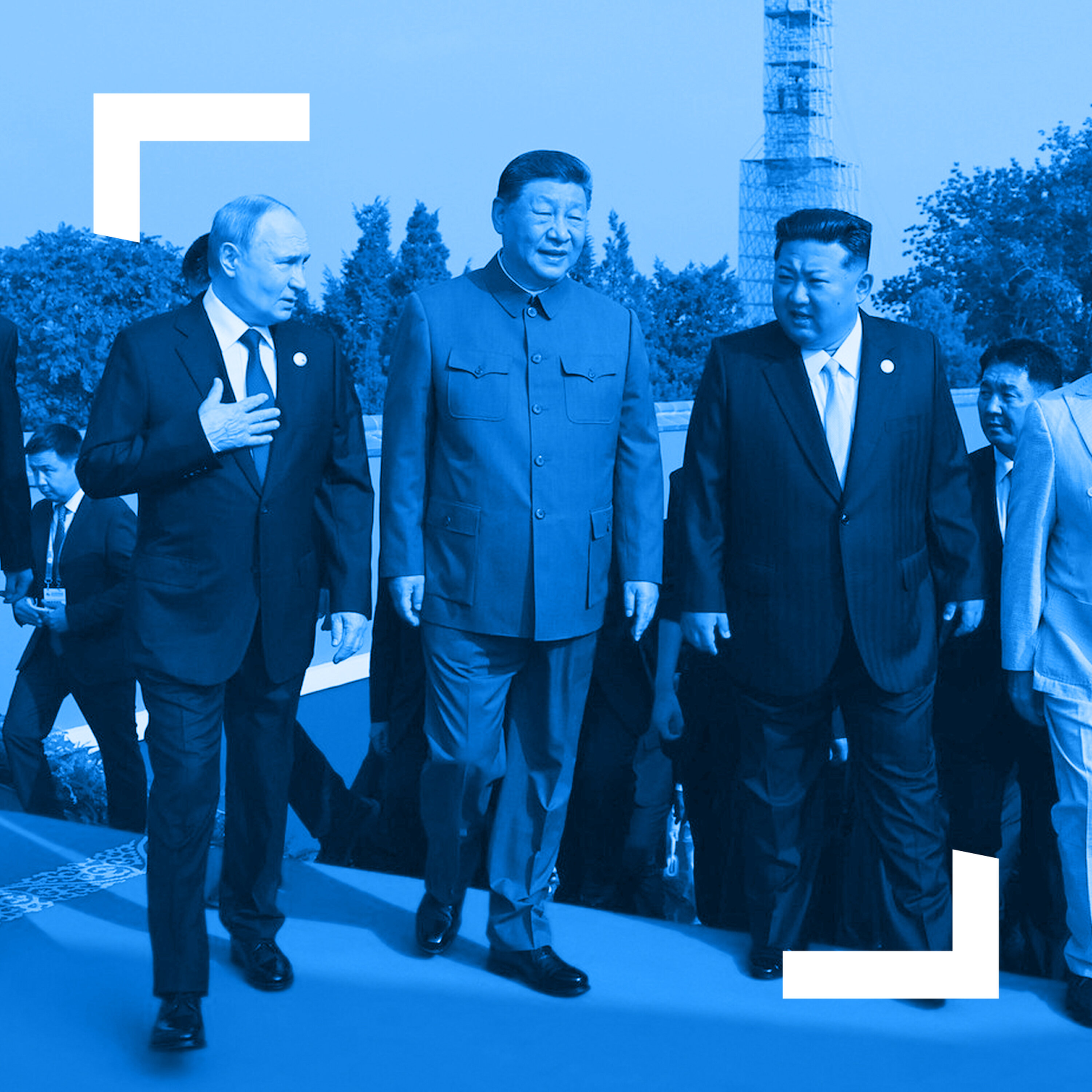
The way authoritarian and illiberal states interact has changed. China, Russia, Iran and North Korea have gone from defending themselves against perceived liberal pressure to actively building the institutions of an alternative order. In this episode of Lowy Institute Conversations, Nick Bisley, the author of a new Lowy Institute paper analysing this cooperation, speaks with the Institute's Sam Roggeveen about the boot camps teaching authoritarian states how to control information, the improbable rise of BRICS, and why this messy, opportunistic coalition might be harder to counter than a formal alliance ever was.
See omnystudio.com/listener for...
Preferred partners: India-Australia defence cooperation in a changing Indo Pacific
India matters to Australia more than ever — as a strategic partner, a major trading economy, and a fellow member of the Quad — at a moment when Indo-Pacific security is deeply contested. Hear from leading experts as they examine the India–Australia relationship and how the two countries can deepen their collaboration to help shape a secure and prosperous Indo-Pacific.
Building on the momentum of Prime Minister Modi's recent visit to Australia, the panel explores the evolving architecture of defence cooperation between the two nations, and whether this partnership is consolidating into a strategic entente capable of meeting the de...
Neighbours, not family: Rethinking Australia’s Pacific story
Australia calls itself the Pacific's partner of choice. But is the relationship built on mutual understanding, or is it driven by Canberra’s anxiety about China?
Professor Joanne Wallis, the author of a new book with Jack Corbett, Neighbours, joins the Lowy Institute’s Serena Sasingian to discuss Australia's uneasy colonial history in the region, the gap between its "Pacific family" rhetoric and its strategy of denial, and why aid hasn't bought the influence Canberra hoped for.
Wallis makes the case for a different frame altogether: not family, not chessboard, but neighbours.
See omnystu...
Pessimistic and unsafe: How Australians feel about the world today
Power politics is intensifying. Economies are sputtering. Living standards are falling. Societal change is dizzying. When Australians look at the world today, they don’t like what they see.
Now in its 22nd year, the 2026 Lowy Institute Poll captures how Australians feel about a world order that is rapidly slipping away.
With economic pessimism on the rise and feelings of safety deteriorating, Australians have come to see the United States and China as two superpowers they distrust in equal measure.
As the liberal international order gives way to something that is illiberal and dis...
Dire straits: Strategic chokepoints in the South China Sea and Taiwan Strait
What can Southeast Asia learn from the conflict in the Persian Gulf and should we be worried about the next maritime flashpoint closer to home?
At a Lowy Institute event at the National Press Club, Sam Roggeveen was joined by three leading Southeast Asia experts to explore Asia's maritime hotspots.
They discussed the economic shockwaves from the Strait of Hormuz conflict, the very different dynamics of the Strait of Malacca, the Taiwan contingency and what it means for regional states, and the persistent question of whether AUKUS is stabilising or complicating the region's security environment.<...
179 years to parity: The Indo-Pacific’s gender equality backslide
Global progress on gender equality is stalling, and in some places going backwards. The World Economic Forum estimates that, at current rates, Asia and the Pacific won't reach gender parity for 179 years. In this episode, host Roland Rajah is joined by Grace Stanhope (Lowy Institute) and Professor Katrina Lee-Koo (University of Queensland) to analyse why gender equality is under siege. They discuss shrinking aid budgets, the politicisation of gender in foreign policy, and the retreat of the United States from global development. They ask what's working, why "gender mainstreaming" might have hit its limits, and where Australia could make...
Australia's Pacific diplomatic blitz and China's missile test
It's been the busiest fortnight in Australia–Pacific diplomacy in recent memory. In the space of ten days, Australia signed the Nakamal Agreement with Vanuatu, the Vuvale Union and a surprise Ocean of Peace Alliance with Fiji, and saw the Pukpuk Treaty with Papua New Guinea come into effect — all while marking Solomon Islands Independence Day and flagging a comprehensive treaty with Honiara by year's end.
On the very same day the Fiji deals were signed, China tested a submarine-launched ballistic missile over the Pacific, sparking claims of a deliberate signal to the region.
Sam Rogge...
The India paradox: Trusted more, but not understood
As India’s Prime Minister Narendra Modi visits Australia for the third time, new Lowy Institute polling reveals a curious paradox: Australians now trust India more than the United States or China, yet many Australians can't name its leader. The Lowy Institute’s Dr Ram Sethi Fellow, Dhruva Jaishankar, joins India Chair Shruti Pandalai to analyse what's driving the relationship's rapid growth in defence, trade and education — and why understanding remains stubbornly shallow.
More episodes of the Lowy Institute's podcasts are available on your favourite podcast apps, including Spotify, YouTube and Apple.
Follow the Lowy Institute...
The trust deficit: Why Australians' attitudes towards America and China are shifting
Australians increasingly see China as an economic partner rather than a security threat — while still bracing for it as a long-term military risk.
That's one of the striking findings from the 22nd Lowy Institute Poll, launched in Sydney. At the launch, Poll author Charlie Lyons-Jones joined Lowy Institute India Chair Shruti Pandalai and The Interpreter's Managing Editor Dan Flitton, moderated by Research Director Mihai Sora, to unpack a poll that shows record numbers of Australians feeling unsafe in the world, trust in the US at an all-time low, and the gap between how much Australians trust America an...
Southeast Asia in the crossfire: Can ASEAN hold the line?
Southeast Asia has always sat at the intersection of great power competition, but the pressures bearing down on the region today are testing its institutions, alliances and sense of common purpose like never before. Since the United States went to war with Iran and blockaded the Strait of Hormuz, soaring fuel and fertiliser costs have pushed several Southeast Asian nations into a state of emergency. Border tensions, the ongoing civil war in Myanmar, and an increasingly fierce rivalry between Washington and Beijing are all straining the region's capacity to hold together.
In this episode, Lowy Institute Southeast...
Whose rules, whose order? Southeast Asia and China’s growing power
Southeast Asia’s economic and geostrategic significance is on the rise, but China’s expanding dominance and a more transactional United States are challenging the region’s future. As Washington and Beijing force unwanted choices on Southeast Asia, regional states are struggling to defend the open and interconnected order that undergirds their security and prosperity. Hear from international experts about how Southeast Asian countries are navigating China’s growing power, increasing uncertainty from the United States, and a more fragmented global order.
Featuring Lowy Institute Research Director Dr Hunter Marston, Dr Lina Alexandra from the Centre for Strategi...
Pressure test: Can ASEAN meet the Indo-Pacific's security challenges?
Great power competition, maritime expansionism, and disruptions to global supply chains are heightening geopolitical tensions in the Indo-Pacific. Many observers question whether the Association of Southeast Asian Nations (ASEAN) is capable of responding to a crisis or conflict in the region. The Lowy Institute hosts three leading experts to discuss traditional and non-traditional security challenges in the Indo-Pacific, existing crisis coordination mechanisms and gaps in regional response capabilities.
The conversation features Dr Bec Strating, Don McLain Gill, and Murni Abdul Hamid and is moderated by Dr Hunter Marston, Director of the Southeast Asia Program.
More e...
The nuclear arms race nobody is talking about
The New START Treaty has expired, China is quadrupling its nuclear arsenal, and the Trump administration has yet to prioritise arms control. Rose Gottemoeller, a former chief US negotiator of New START and ex-Deputy Secretary General of NATO, speaks with the Lowy Institute’s Sam Roggeveen about the growing risks of a three-way nuclear stand-off, what the wars in Ukraine and Iran reveal about the future of warfare, and why she will always be a believer in arms control agreements.
More episodes of the Lowy Institute's podcasts are available on your favourite podcast apps, including Spotify, YouTube and A...
India and Australia: Shaping economic and regional security
India has never mattered more to Australia — as a strategic partner, a major trading economy, and a fellow Quad member. In this event, recorded on 28 May 2026, leading experts discuss the Australia–India relationship and what it will take for both countries to deepen collaboration and help shape a secure and prosperous Indo-Pacific.
The discussion was moderated by Dr Michael Fullilove, Executive Director of the Lowy Institute, and will feature Dr Samir Saran, President of the Observer Research Foundation (ORF) — one of Asia's most influential think tanks — Dr Shruti Pandalai, inaugural Lowy Institute India Chair, and Ryan Neelam, CEO of t...
The West's systemic failure to learn from modern war
"On pretty much every measure, Putin is failing and he doesn't really have a lot of options moving forward."
Russia is losing ground, its defence industry has plateaued, and Ukraine is striking deeper into Russian territory than at any point in the war. So what does that mean for how the conflict ends — and what can Australia learn from the battlefields of Europe and the Middle East?
Lowy Institute Senior Fellow for Military Studies Mick Ryan joins International Security Program Director Sam Roggeveen to assess the shifting momentum in the Ukraine war, the emergence of a n...
Australia’s sports diplomacy playbook
Sport can be one of the great unifying forces in international affairs. But is Australia making the most of its opportunities off the field?
In this episode, Andrew Griffits speaks with Mark Falvo, Interim CEO of Netball Australia and one of Australia’s most experienced sporting administrators, about how Australia approaches major sporting events as tools of foreign policy.
They also cover the diplomatic missed opportunities of the past, the soft power potential of the upcoming 2027 Netball World Cup and 2026 FIFA World Cup, Australia's sporting engagement with Asia and the Pacific, the legacy of the 2023 FIFA...
A world with two Americas
The old international order is over, and a competition is underway to determine what comes next. In a discussion on his Lowy Institute Paper, Inflection Point: Biden, Trump, and the Future World Order, former Biden White House official Thomas Wright explained how there are now two Americas — one internationalist and the other America First — competing with each other to shape the world. Dr Wright argued that nations will need to hedge against this dramatic fluctuation in US strategy for many years to come. The discussion was moderated by Lowy Institute Executive Director Dr Michael Fullilove.
More episodes of t...
Myanmar at a crossroads: Five years after the coup
Myanmar has been in a state of violent upheaval since the military seized power in 2021, leading to a nationwide resistance and the collapse of vital state functions. Myanmar’s parliament recently convened for the first time in five years, with the former commander-in-chief Min Aung Hlaing appointed as president. Hunter Marston, Director of the Lowy Institute’s Southeast Asia Program, and Sean Turnell, a Senior Fellow in the Southeast Asia Program and former economic adviser to Aung San Suu Kyi, discuss the current state of the resistance in Myanmar, prospects for the country’s economy, and what the international communi...
Thomas Wright: From the White House to world disorder
Thomas Wright, Senior Fellow at the Brookings Institution and former senior director at the National Security Council, joins Lowy Institute Director of International Security Sam Roggeveen to discuss the Iran conflict, the future of AUKUS, and what an era of alternating American foreign policies means for Australia and its allies. Dr Wright's Lowy Institute Paper, Inflection Point: Biden, Trump, and the Future World Order, is available now.
See omnystudio.com/listener for privacy information.
Trump-Xi summit: Has America abandoned strategic competition with China?
On the eve of the upcoming Trump-Xi summit, Donald Trump's approach to China looks less like strategic competition and more like a search for a deal. In this episode, Richard McGregor speaks with Lowy Institute Nonresident Fellow and former Biden White House official, Thomas Wright, about what the Trump–Xi summit reveals, why the 2025 tariff war ended badly for Washington, and how the Democratic Party is reckoning with its own foreign policy legacy. Wright also makes the case that the world now faces not one American foreign policy, but two — and must plan accordingly.
You can access Tom...
Catching up and pulling ahead: Inside America’s 2025 China report
For years, the conventional wisdom held that the United States retained a decisive lead over China in the technologies and industries that will define the 21st century. The 2025 report of the US–China Economic and Security Review Commission to Congress challenges that view, and its conclusions make for sobering reading.
Ahead of the Trump–Xi summit where trade and technology are on the table, the Commission finds that China has not only caught up with but in multiple sectors now leads advanced economies including the United States. From electric vehicles and solar panels to quantum computing pathways and p...
After the unravelling: Confronting the new world order
The post–Cold War international order hasn't collapsed from a single shock. It's been deliberately unwound.
Thomas Wright, a former Senior Director for Strategic Planning in President Biden's National Security Council, argues that China, Russia, and the United States have each adopted foreign policies that broke the foundational restraints holding the system together. By historical measures, what's emerged has the hallmarks of a pre-war environment.
Drawing on his time inside the White House, Dr Wright diagnoses how we got here and what may come next. From Xi Jinping's strategy of asymmetric economic dominance, to Putin's war...
A multilateral green trade pact?
International trade has faced multiple shocks in recent years, making the need to reform the architecture of global trade more urgent than ever. Aligning new trade rules with global net-zero ambitions will be crucial to providing the necessary incentives for firms and economies to decarbonise. Many have already recognised the need to “green” trade. But how to do it?
The Lowy Institute’s Grace Stanhope and Robert Walker are joined by Ryan Mulholland, a senior fellow for international economic policy at the US-based Center for American Progress, to discuss what green trade is, how it fits into global...
The decline of the West: Samir Puri on “Westlessness” and the new global order
Samir Puri, former UK diplomat and author of Westlessness: The Great Global Rebalancing, joins Transnational Challenges Program Director Lydia Khalil to explore the long decline of Western dominance in world affairs. They discuss why the rise of the non-West is about far more than China's challenge to the United States, and how the BRICS bloc is reshaping global networks. They also explore what a more multipolar world means for a country like Australia — Western by heritage, but increasingly embedded in Asia.
More episodes of the Lowy Institute's podcasts are available on your favourite podcast apps, including Spotify, YouT...
Cartel Paradise: Unpacking the Pacific’s drug superhighway
Australia's appetite for methamphetamine and cocaine is reshaping Pacific communities, turning island nations into key transit points on a global drug superhighway, and exposing them to violence, corruption and addiction.
In this special panel discussion, the Lowy Institute's Oliver Nobetau is joined by three ABC Pacific Local Journalism Network reporters who have reported from the front lines of the crisis: Lice Movono in Fiji, Marian Kupu in Tonga, and Chrisnrita Aumanu-Leong in Solomon Islands. All three played a pivotal role in Foreign Correspondent's two-part investigation Cartel Paradise.
Drawing on their deep local knowledge and hard-won a...
Strait of Hormuz crisis: Iran, shipping, and Australia's strategy
When Iran deterred shipping from the Strait of Hormuz following Operation Epic Fury, it sent shockwaves through global energy markets and exposed uncomfortable truths about Australia's dependence on maritime trade.
Jennifer Parker, a Nonresident Fellow at the Lowy Institute and former Royal Australian Navy warfare officer, joins Research Fellow Charlie Lyons-Jones to explain what a naval blockade means for the crisis. They also unpack Australia’s new National Defence Strategy and discuss why Australia’s surface combatant fleet is the smallest it's been since the 1950s.
This episode was recorded on Wednesday 15 April 2026.
More e...
Globalisation always wins: Parag Khanna on the emerging world order, Iran, and Asia's multipolar future
Geopolitical strategist Parag Khanna joins the Lowy Institute's Sam Roggeveen to make sense of a world in flux.
In a wide-ranging conversation recorded on the day President Trump declared the Iran war nearly over, the pair discuss what the conflict reveals about multipolarity, why Mark Carney's Davos speech resonated more than expected, and why every attempt to unwind globalisation ends up deepening it.
More episodes of the Lowy Institute's podcasts are available on your favourite podcast apps, including Spotify, YouTube and Apple.
Follow the Lowy Institute on our website, X,
British MP Darren Jones on Labour, Brexit and the United Kingdom's place in the world
British Cabinet Minister the Rt Hon Darren Jones MP joins the Lowy Institute’s Executive Director Dr Michael Fullilove AM for a wide-ranging conversation about politics, power and the transatlantic relationship.
Serving as Chancellor of the Duchy of Lancaster, Minister for Intergovernmental Relations, and Chief Secretary to the Prime Minister, Jones is one of the most senior figures in PM Keir Starmer's government.
In this episode, Darren Jones and Michael Fullilove discuss the MP’s rise from a council estate in Bristol to the Cabinet table, the lessons UK Labour learned from Hawke and Keating, and...
Decoding ‘America First’: The origins of Trump’s foreign policy
Stephen Biegun, former US Deputy Secretary of State and Trump administration chief North Korea negotiator, joins the Lowy Institute's International Security Program Director Sam Roggeveen at the National Press Club in Canberra for a wide-ranging conversation on American foreign policy.
They discuss President Trump's worldview and its roots in the 1980s, the historical precedents behind US policy on Greenland, the war with Iran, nuclear proliferation, and the health of American democratic institutions.
Biegun brings four decades of experience in government and the private sector to bear on some of the most pressing questions in international...
