History of the Second World War
History of the Second World War is a weekly podcast which will cover World War 2, beginning with the tumultuous years after the First World War, continuing into the descent into war during the 1930s, through the war years, and then into the post war aftermath.
268: War at Sea '41 Pt. 6 - Aces Down

This episode follows the Battle of the Atlantic through the costly weeks of March 1941, when Germany lost three of its most celebrated U-boat commanders: Günther Prien, Joachim Schepke, and Otto Kretschmer. It examines the expanding British convoy-escort system, the battle surrounding convoy HX-112, and the decisions that pushed Dönitz to disperse his boats farther west and toward West Africa. Those losses marked the end of one phase of the U-boat war, even as rising German production and the approaching entry of the United States pointed toward an even larger struggle ahead.
"One sc...
267: War at Sea '41 Pt. 5 - The Undersea Hunters

This episode shifts the focus of the naval war from German surface raiders to the U-boats, tracing why they became the central German weapon in the Battle of the Atlantic and why there were still too few of them in late 1940 and early 1941. It covers the effect of French Atlantic bases, the construction of U-boat pens, cooperation with Fw-200 Condors, early combined attacks on convoys, and the contrasting struggles of British Coastal Command. The episode ends with the return of celebrated U-boat commanders like Günther Prien and Otto Kretschmer as the campaign enters a dangerous new phase.
266: War at Sea '41 Pt. 4 - The End of Operation Berlin

Operation Berlin reaches its conclusion as Scharnhorst and Gneisenau continue their Atlantic cruise, repeatedly finding merchant shipping but also repeatedly being checked by the presence of British battleships. This episode follows Lütjens through further searches, missed opportunities, encounters with Malaya and Rodney, and the final run into Brest, before turning to the RAF attacks that badly damaged Gneisenau and disrupted the Kriegsmarine's plans for an even larger surface-raiding operation. The result is a look at both the promise and the fragility of Germany's surface-raider strategy in the spring of 1941.
Credit Episode Image: https://www.f...
265: War at Sea '41 Pt. 3 - Operation Berlin

In early 1941, the German battleships Scharnhorst and Gneisenau set out on Operation Berlin, an attempt to break into the Atlantic and strike at Britain's convoy lifeline. This episode follows Admiral Günther Lütjens as he weighs weather, fuel, British patrols, and strict orders against the promise of a major commerce-raiding success, while also examining how the absence of German carrier aviation limited what the surface fleet could accomplish. When the two battleships finally found convoy HX-106, the presence of the aging battleship Ramillies revealed the central tension of the operation: Germany's most powerful raiders could threaten the Atlantic, bu...
Listener Question Pt. 5
Start off this one with a few quick hitters, then a question that takes 15 minutes to answer. Allied invasion of France in 1942? That Churchill guy you may have heard of? How did occupied economies work?
Learn more about your ad choices. Visit megaphone.fm/adchoices
264: War at Sea '41 Pt. 2 - Cruisers Attack

This episode examines Germany's auxiliary cruisers and the heavy cruiser Admiral Hipper as they carried the commerce war into distant shipping lanes during 1940 and early 1941. It follows the disguised merchant raiders that forced the Royal Navy to disperse its strength around the globe, then traces the Hipper's design limitations, encounters with convoys WS-5A and SLS-64, and repeated mechanical setbacks. Together, their operations reveal both the reach and the limitations of Germany's surface-raiding strategy before the battleships Scharnhorst and Gneisenau entered the Atlantic.
Credit Episode Image: https://www.flickr.com/photos/state_library_south...
263: War At Sea '41 Pt. 1 - The Surface Raiders

This episode begins a new look at the German surface raiding campaign of late 1940 and early 1941, when the Kriegsmarine tried to use cruisers and battleships to threaten Britain's Atlantic lifelines. We trace how the fall of France transformed Germany's naval options, why ports like Brest and St. Nazaire mattered, how intelligence shaped the hunt on both sides, and how the Admiral Scheer's attack on Convoy HX-84 forced the Royal Navy to rethink convoy protection just before the campaign reached its most dramatic phase.
Learn more about your ad choices. Visit megaphone.fm/adchoices
262: Crete Pt. 7 - Another Defeat; Another Victory

The evacuation from Crete reaches its final stage as British, Commonwealth, and Greek forces try to escape through Sphakia while others are left behind at Rethymno and across the island. This episode follows the difficult choices made by commanders and naval crews, the losses suffered by the Royal Navy, the surrender and occupation that followed, and the way the defeat shaped later judgments of Freyberg, Churchill, and the battle itself.
Learn more about your ad choices. Visit megaphone.fm/adchoices
261: Crete Pt. 6 - Stick It Out

The battle for Crete shifts toward evacuation as the Royal Navy absorbs severe losses while trying to prevent German reinforcements from reaching the island by sea. This episode follows the aftermath of the disastrous naval fighting around May 22, Cunningham's determination to keep supporting the army, the final British naval operations around Crete, and the beginning of the withdrawal toward Sphakia and Heraklion under relentless Luftwaffe pressure.
Learn more about your ad choices. Visit megaphone.fm/adchoices
260: Crete Pt. 5 - Failed Counterattacks

The Royal Navy's success in turning back the German invasion convoys in the waters north of Crete on the night of May 21st removed the threat of a seaborne landing, but it could not undo the damage done by Commander Freyberg's obsession with that very threat. This episode examines how Freyberg's misreading of Ultra intelligence about the 5th Mountain Division led him to hoard troops along the coast and withhold artillery from targets plainly visible in front of them, all while the Germans steadily expanded their grip on Maleme airfield. The doomed Allied counter-attack of May 22nd — delayed until da...
Listener Questions Pt. 4

War Aims and Strategic Bombing
History of the Second World War is part of the Airwave Media podcast network.
Learn more about your ad choices. Visit megaphone.fm
Learn more about your ad choices. Visit megaphone.fm/adchoices
259: Crete Pt. 4 - Naval Victory, Naval Disaster

As the first day of the German invasion of Crete drew to a close on May 20th, 1941, neither side held the clear advantage they had hoped for — the Germans had failed to secure their primary objectives, while the British commander General Freyberg struggled with poor communications and an overriding fear of a seaborne invasion that would shape his decisions in the days ahead. This episode examines the Royal Navy's critical role in the battle for Crete, exploring both the strengths and significant weaknesses of Admiral Cunningham's fleet — including the limitations of their anti-aircraft systems against the Luftwaffe — and the aggres...
258: Crete Pt. 3 - May 20th a Day of Failures

The first day of the German airborne invasion of Crete, May 20th, 1941, saw paratroopers drop not only around the critical airfield at Maleme but across three other sectors of the island. Near Chania, German forces landing in Prison Valley were held in check by New Zealand and Greek troops under Colonel Kippenberger, while the poorly armed 8th Greek Regiment stopped their attackers and then re-equipped itself with captured German weapons. The people of Crete themselves joined the resistance from the opening hours, with priests and civilians taking up arms in a fierce defense that shattered German assumptions that the...
257: Crete Pt. 2 - May 20th at Maleme

At dawn on May 20, 1941, the German airborne assault on Crete began — the largest parachute operation in history to that point. This episode covers the opening day of the battle at Maleme, where a combination of German intelligence failures and disastrous British command decisions would set the course of the entire campaign. Despite heavy losses among the German paratroopers — many cut down in mid-air or the moment they landed — those who came down near the Tavronitis river were able to organize and push against the Maleme airfield and the critical Hill 107. The New Zealand defenders fought well, but Colonel Andrew, the co...
256: Crete Pt. 1 - Preparations

Following the Allied defeat on the Greek mainland, thousands of British, Australian, and New Zealand troops were evacuated to the island of Crete in late April 1941, many arriving without their heavy weapons and with morale badly shaken. This episode examines the Allied defense of Crete under General Bernard Freyberg, who despite possessing Ultra intelligence pointing clearly to a German airborne assault, fatally misread the threat and positioned his forces to repel a seaborne invasion instead. We explore how a rapid succession of British commanders, chronic shortages of aircraft and artillery, and Freyberg's misplaced confidence in the Royal Navy shaped...
255: Greece Pt. 7 - The Invasion Ends

Just ten days after Germany launched Operation Marita, the decision was made to evacuate all British forces from Greece — and this episode covers the chaotic final weeks of the campaign as that decision unfolded. Greek military commander Papagos had largely given up hope by mid-April, the Greek government and royal family fled to Crete, and the 200,000-strong Greek force in Albania surrendered to the Germans on April 20th in a quiet deal that deliberately excluded the Italians. The RAF fought its last battles over Athens before withdrawing, and the Royal Navy scrambled to organize a night-only evacuation using destroyers an...
254: Greece Pt. 6 - The Invasion Begins

On April 6th, 1941, Germany launched Operation Marita, the invasion of Greece, with the 12th Army under General List striking primarily through the newly conquered territory of Yugoslavia to outflank the well-prepared Greek Metaxas Line. The opening days of the attack were harder than the Germans expected — the Greeks defended stubbornly along the Metaxas Line, particularly at the Rupel Pass, but flanking movements soon made those positions untenable, and the vital port of Salonika fell after just three days of fighting. Meanwhile, the British were dealt a serious blow when a Luftwaffe raid on the port of Piraeus set off an...
Listener Questions Pt. 3
Spanish Civil War Guerillas, the impact of Yugoslavia's transportation infrastructure, and evaluating British generals across the world wars.
History of the Second World War is part of the Airwave Media podcast network.
Learn more about your ad choices. Visit megaphone.fm
Learn more about your ad choices. Visit megaphone.fm/adchoices
253: Greece Pt. 5 - Cape Matapan

While the land campaign in Greece was grinding forward, the Mediterranean was the scene of an equally consequential struggle at sea. This episode tells the story of the Battle of Cape Matapan, one of the most decisive British naval victories of the entire war. When the Italian fleet sortied to intercept a British convoy carrying New Zealand troops to Greece, the Royal Navy was waiting — thanks in no small part to the codebreakers at Bletchley Park, where a young woman named Mavis Lever had cracked the Italian Enigma by exploiting a careless operator's mistake. What followed was a night ac...
252: Greece Pt. 4 - Spring 1941
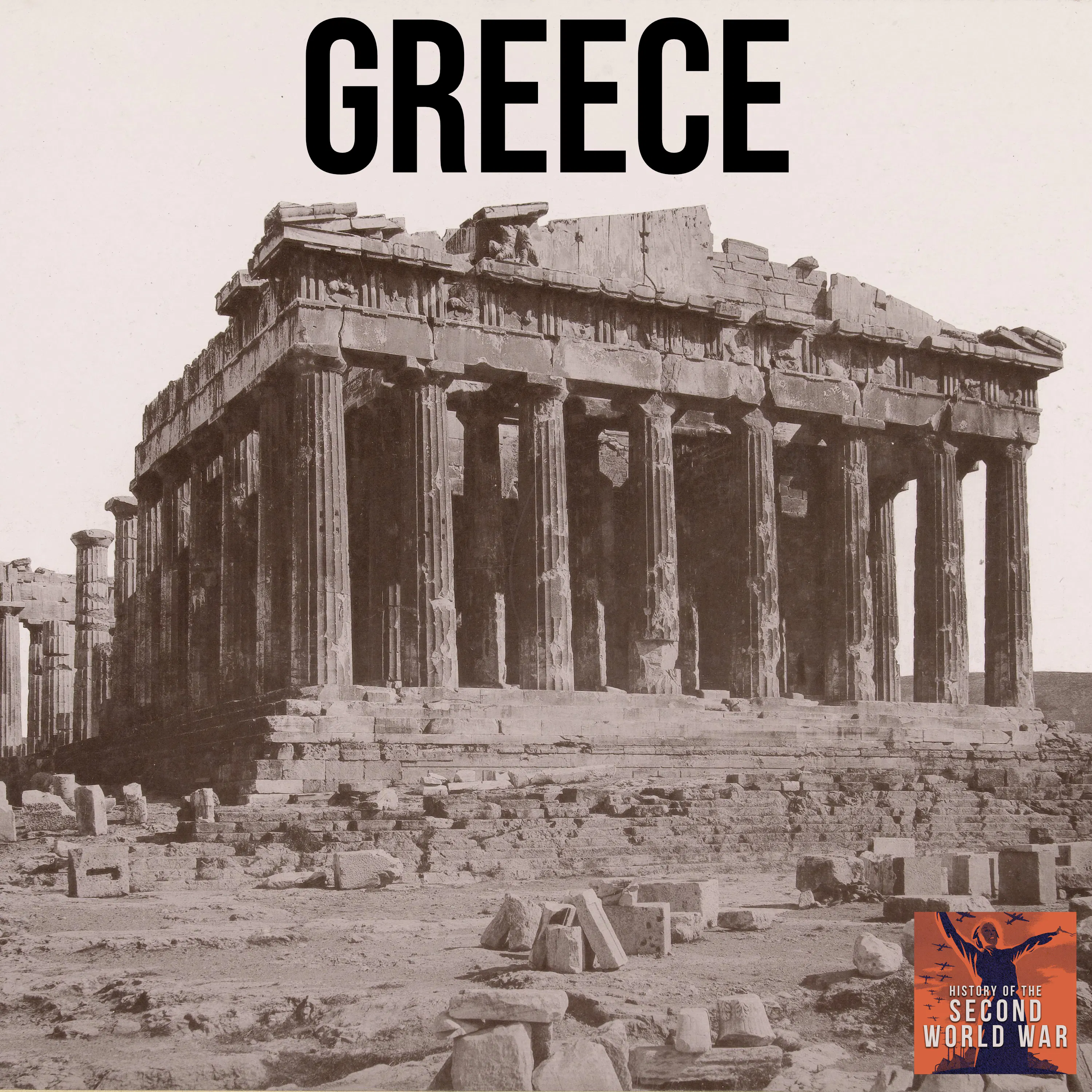
As the spring of 1941 approaches, the war in Greece enters a critical new phase. The Italians launch a major offensive in Albania, staking everything on capturing the heavily defended Hill 731, only to suffer over 12,000 casualties and gain essentially nothing after weeks of futile assaults. Meanwhile, Bulgaria's decision to join the Tripartite Pact and allow German troops to cross its territory fundamentally changes the strategic picture, opening vast stretches of border to a potential German invasion. On the Allied side, the British and Greeks struggle to agree on where to make their stand, ultimately settling on the shorter Aliákmon L...
251: Greece Pt. 3 - The Path to Escalation
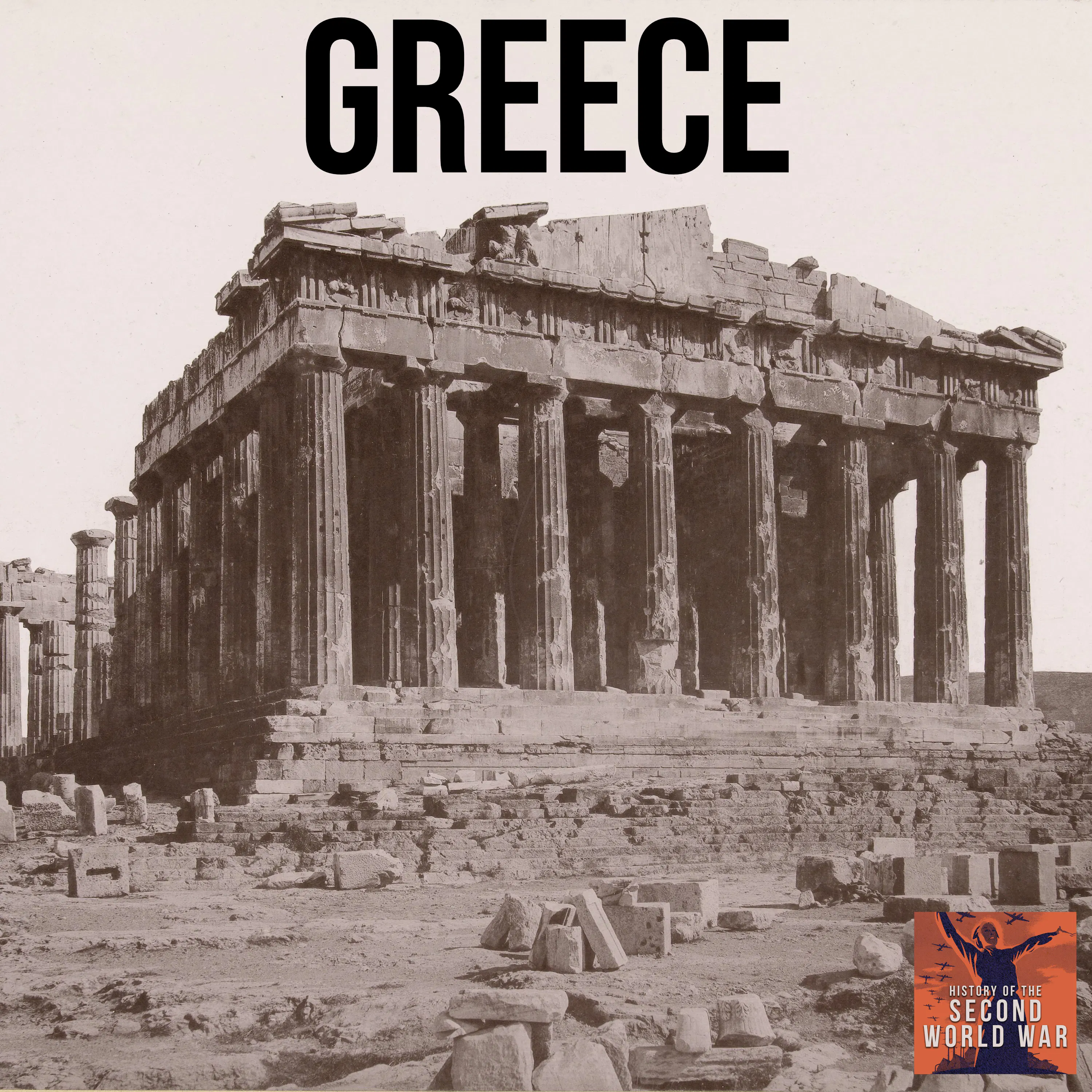
The Italo-Greek War, which began as a purely regional conflict in October 1940, would transform into a broader European confrontation as both Germany and Britain made the fateful decision to intervene in Greece. For the Germans, concerns about protecting vital Romanian oil fields from potential British air attacks, combined with fears of Italian collapse, drove the planning of Operation Marita, an invasion designed to secure the Balkans before the launch of Barbarossa. Meanwhile, Churchill and the British leadership saw Greece as an opportunity to distract Axis forces, demonstrate support for smaller nations, and potentially build a Balkan alliance with Yugoslavia...
Interview 52: Why Barbarossa Failed with Timothy Manion
For this interview I was joined by Timothy Manion to discuss his upcoming book Why Barbarossa Failed: Germany and Russia in the Second World War which released March 5, 2026.
https://www.helion.co.uk/military-history-books/why-barbarossa-failed-germany-and-russia-in-the-second-world-war.php
Contact advertising@airwavemedia.com to advertise on History of the Second World War.
History of the Second World War is part of the Airwave Media podcast network.
Learn more about your ad choices. Visit megaphone.fm/adchoices
Listener Questions Pt. 2
Because so many questions were sent in for the first Questions episode, I had to make another.
If you have First or Second World War Questions send them to historyofthesecondworldwar@outlook.com.
Contact advertising@airwavemedia.com to advertise on History of the Second World War.
History of the Second World War is part of the Airwave Media podcast network.
Learn more about your ad choices. Visit megaphone.fm/adchoices
250: Greece Pt. 2 - After the Failure

This episode continues the story of the Italo-Greek War following the disastrous Italian invasion of Greece in late October 1940. After the Italian defeat at Kalpaki, the Greeks launched a counteroffensive that quickly pushed Italian forces back across the border and into Albania, capturing the city of Korce and taking over 10,000 prisoners. The episode examines the Italian leadership shake-ups that followed, with General Soddu replacing Prasca and Marshal Badoglio being publicly scapegoated before his replacement by Cavallero. As winter set in, both armies suffered terribly from frostbite and harsh conditions that made offensive operations nearly impossible. The RAF arrived in...
249: Greece Pt. 1 - Plans and Preparations
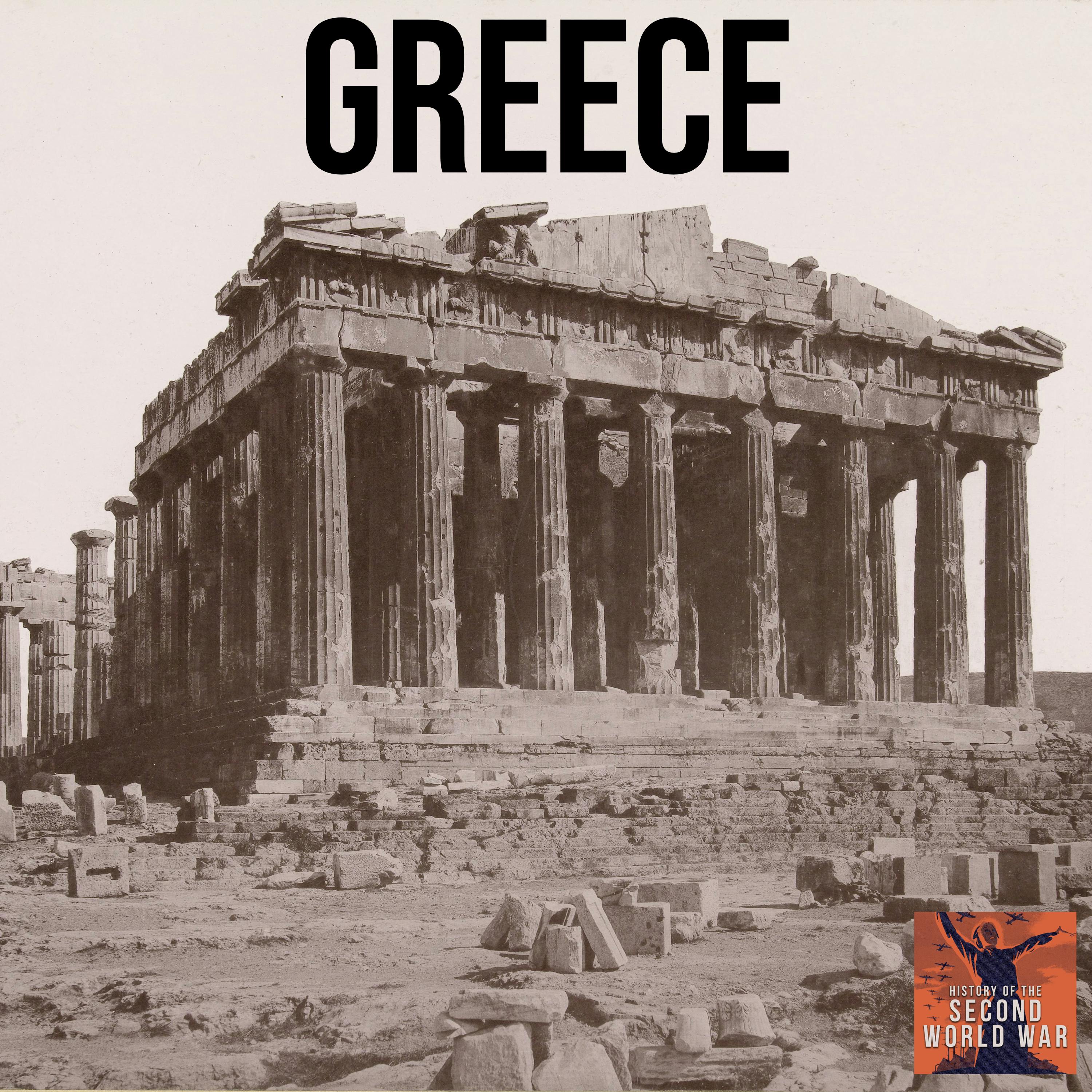
In October 1940, Mussolini launched an invasion of Greece from Albania, determined to secure Italian expansion in the Balkans before any peace could be negotiated. This episode examines the lead-up to the Italo-Greek War, beginning with Greece under the Metaxas dictatorship and its efforts to build up military strength despite limited industrial capacity. We explore Italy's decision to target Greece after delays in North Africa, the flawed assumptions Italian leaders held about Greek willingness to fight, and the fabricated provocations used to justify the invasion. When the Italian ultimatum was delivered at 3AM on October 28th, Metaxas famously rejected it...
248: Taranto Pt. 2 - The Attack

On the night of November 11, 1940, the HMS Illustrious launched two waves of Swordfish torpedo bombers against the Italian fleet anchored at Taranto. Despite losing formation in the clouds and facing intense anti-aircraft fire, the British pilots pressed home their attacks against the Italian battleships. When the smoke cleared, three battleships—the Littorio, Conti di Cavour, and Duilio—had been torpedoed and damaged, with the Cavour never returning to service. This episode covers the dramatic night attack, the damage inflicted on the Italian fleet, and the aftermath that shifted the balance of naval power in the Mediterranean while providing a glim...
247: Taranto Pt. 1 - Plans and Preparations

In November 1940, the Royal Navy launched one of the most audacious carrier operations of the Second World War—a nighttime air attack on the Italian fleet anchored at Taranto. This episode explores the planning and preparations behind Operation Judgement, examining why Admiral Cunningham and his Mediterranean fleet turned to airpower when traditional fleet engagements proved elusive. From the capabilities of the seemingly obsolete Fairey Swordfish biplane and its torpedoes to the Italian defenses protecting their prized battleships, this episode sets the stage for an attack that would fundamentally shift the balance of naval power in the Mediterranean and foreshadow th...
246: Yugoslavia Pt. 2 - The Invasion
In Episode 246 of History of the Second World War, titled “Yugoslavia Pt. 2 – The Invasion,” we explore how the short-lived Yugoslav state collapsed under German military pressure just weeks after its own internal coup. On April 6, 1941, Nazi forces invaded from multiple directions, swiftly overwhelming the disorganized and poorly equipped Yugoslav army — leading to surrender within eleven days. The country was then partitioned between Germany and Italy, setting the stage for fierce resistance movements that would emerge across occupied Yugoslavia. We also examine how the pre-war Yugoslav government-in-exile in London struggled to gain traction amid shifting wartime alliances, limited support from Britain...
245: Yugoslavia Pt. 1 - Belgrade's Impossible Position
In this episode of “History of the Second World War,” we explore Yugoslavia’s precarious position in the early years of WWII — a newly formed nation straddling ethnic diversity and geopolitical tension, created after WWI from the remnants of the Austro-Hungarian and Ottoman empires. As Germany surged into Poland and Italy sought to expand its influence in the Balkans, Yugoslavia found itself caught between competing powers: diplomatically aligned with France but economically entangled with Nazi Germany through vital resource trade. When Italy’s ill-fated invasion of Greece forced it to seek transit routes through Yugoslav territory — a move the neutral coun...
Listener Questions Pt. 1
Late last year I asked for listener questions, this is the result!
If you have First or Second World War Questions send them to historyofthesecondworldwar@outlook.com.
Contact advertising@airwavemedia.com to advertise on History of the Second World War.
History of the Second World War is part of the Airwave Media podcast network.
Learn more about your ad choices. Visit megaphone.fm/adchoices
244 - East Africa

In this episode of “History of the Second World War,” we explore the often-overlooked but strategically significant campaign in East Africa during 1940–1941, where British and Italian forces clashed across rugged terrain. While the Western Desert dominated headlines, behind-the-scenes battles raged in Ethiopia and Somalia — fought not just by Britons and Italians, but by diverse colonial troops including Indian soldiers and African askaris serving under both empires. We’ll examine how logistical challenges, shifting alliances, and Churchill’s broader Balkan ambitions shaped British strategy in the region — even as General Wavell struggled to balance multiple fronts with limited resources.
...
243: North Africa 1940 Pt. 7 - Beda Fomm

In Episode 243 of History of the Second World War, we explore the pivotal Battle of Beda Fomm in North Africa during January 1941 — the decisive follow-up to the British victory at Bardia that shattered Italian morale and control in Libya. With the Italian 10th Army decimated and retreating, British forces swiftly capitalized on their momentum, capturing thousands of prisoners and securing key Mediterranean territory. But this battlefield triumph had far-reaching consequences: it triggered Hitler’s decision to intervene by sending German reinforcements — including future legend Erwin Rommel — to bolster Italy, setting the stage for a new phase in North Africa that wou...
242: North Africa 1940 Pt. 6 - Bardia

In Episode 242 of History of the Second World War, we dive into Operation Compass, Britain’s first major offensive in North Africa in late 1940 — specifically focusing on the critical assault on Bardia, an Italian stronghold along the coast with formidable defenses. After initial successes capturing Sidi Barrani and forcing a chaotic Italian retreat, British forces now face the challenge of overcoming heavily fortified positions to continue their advance westward toward Tobruk and Benghazi. This episode explores how engineers, tanks like the Matilda, and coordinated infantry maneuvers broke through enemy lines — even as British planners gambled on outnumbered troops and unconv...
241: North Africa 1940 Pt. 5 - Operation Compass
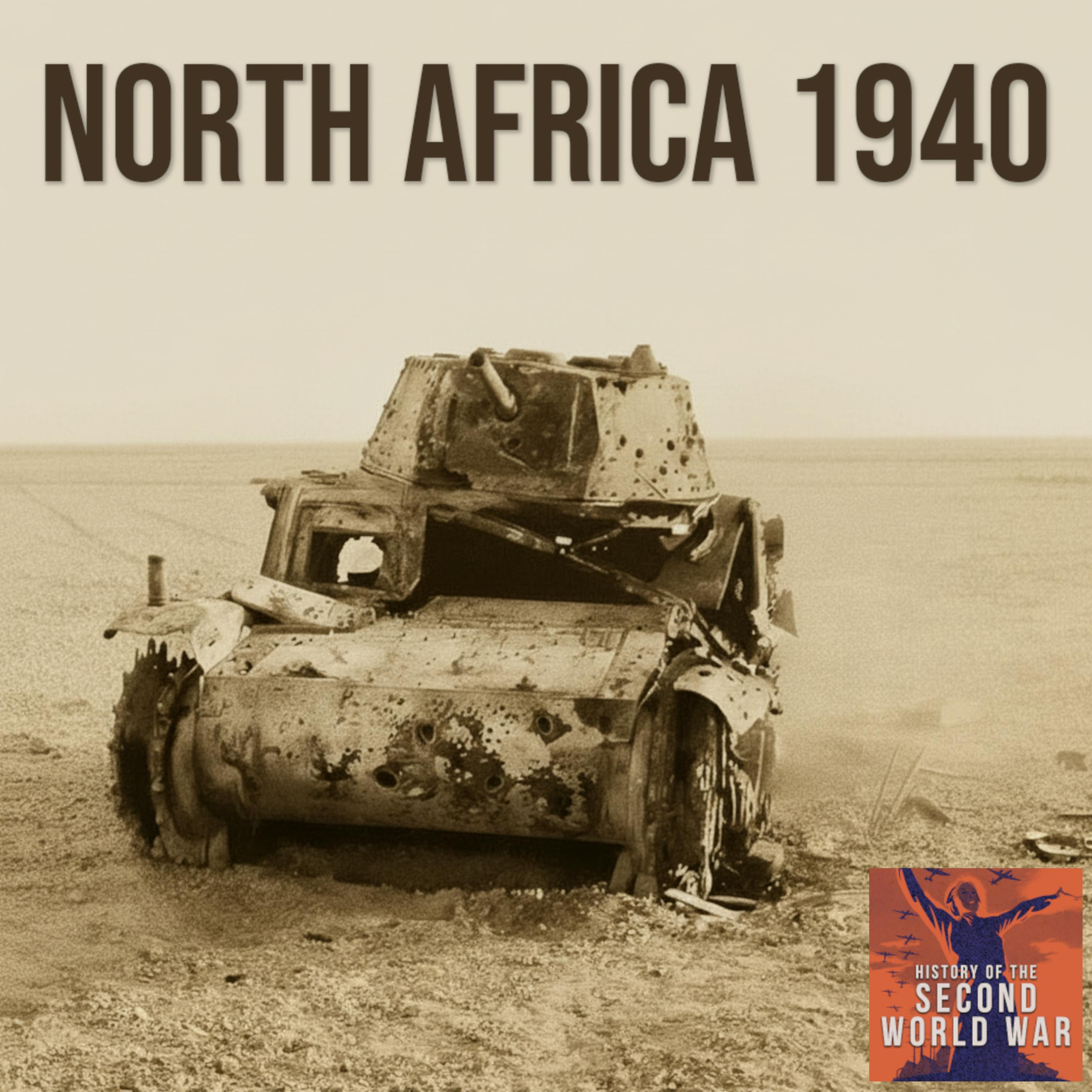
In Episode 241 of “History of the Second World War,” dive into the explosive opening of Operation Compass — Britain’s first major offensive in North Africa during WWII, launched in December 1940 against Italian fortified camps. Witness how British forces, including the 7th Armored and 4th Indian Divisions with their iconic Matilda tanks and devastating artillery, overwhelmed Italian defenses through clever flanking maneuvers and overwhelming firepower — even catching Italians off-guard during breakfast! The episode captures the rapid, almost unstoppable success of the attack, which far exceeded initial objectives, while also hinting at looming logistical challenges that would test British momentum.
Interview 51: Pearl Harbor with Mark Stille
For this interview I was joined by Mark Stille to discuss his latest book, Pearl Harbor: Japan's Greatest Disaster. https://www.ospreypublishing.com/us/pearl-harbor-9781472865311/
Contact advertising@airwavemedia.com to advertise on History of the Second World War.
History of the Second World War is part of the Airwave Media podcast network.
Learn more about your ad choices. Visit megaphone.fm/adchoices
240: North Africa 1940 Pt. 4 - British Build-Up
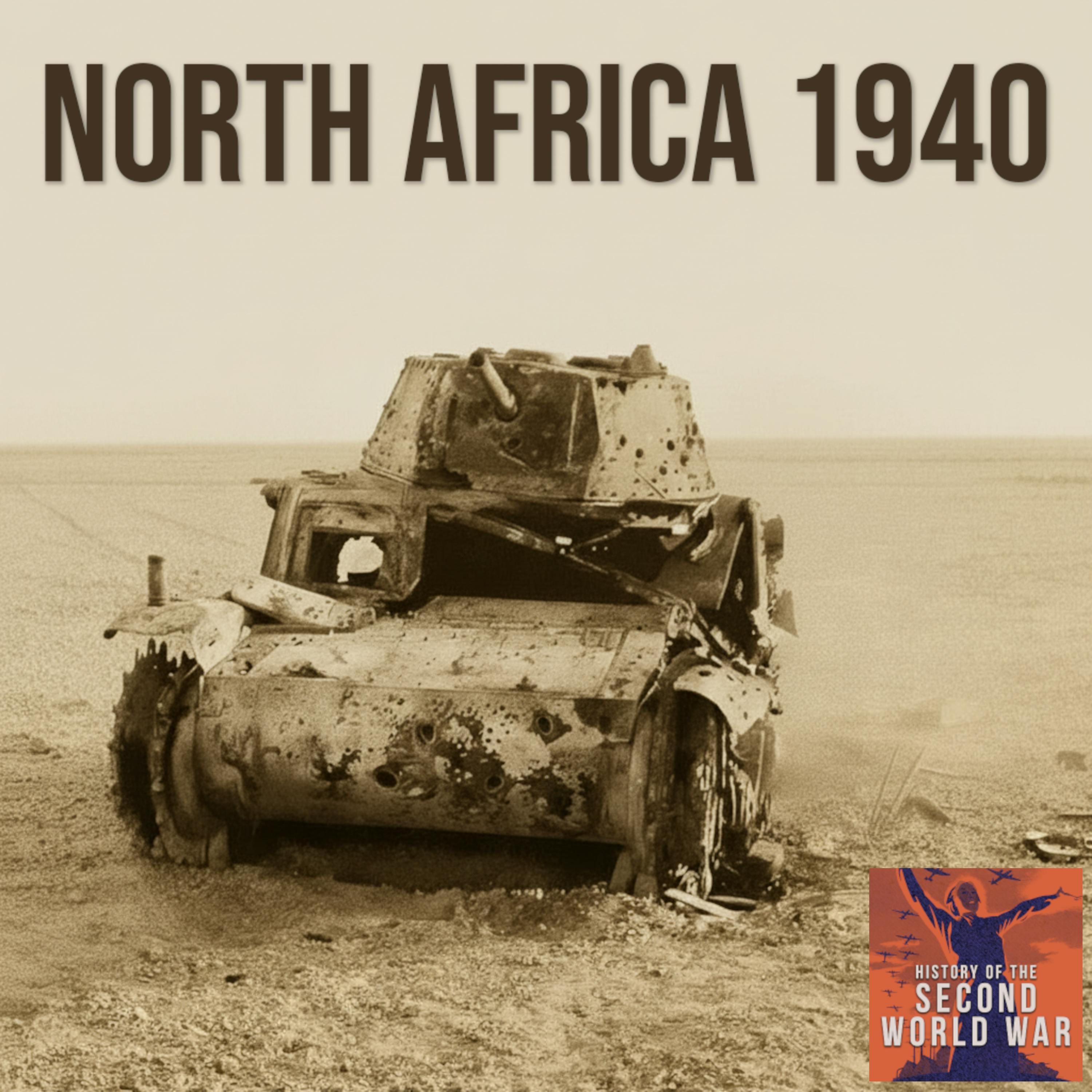
As Italy advances into Egypt, Britain quietly prepares its first major offensive — Operation Compass — in this tense buildup episode. We explore the friction between Churchill’s impatient push for victory and General Wavell’s insistence on realistic desert readiness, while massive reinforcements arrive: Matilda tanks, armored regiments, artillery, and supplies all vital to a bold strike through the Enba Gap. You’ll also see how Italy’s disastrous invasion of Greece shifts British priorities — from Egypt to the Balkans — with far-reaching consequences. This is the quiet storm before Operation Compass, where logistics, terrain, and leadership clash in the desert — setting the stage...
Interview 50: Defenders of the Reich with Robert Forsyth
This time I was joined by Robert Forsyth to discuss his new book Defenders of the Reich: The Luftwaffe's War Against America's Bombers which you can purchase from Osprey publishing here: https://www.ospreypublishing.com/us/defenders-of-the-reich-9781472862860/
Contact advertising@airwavemedia.com to advertise on History of the Second World War.
History of the Second World War is part of the Airwave Media podcast network.
Learn more about your ad choices. Visit megaphone.fm/adchoices
239: North Africa 1940 Pt. 3 - Italy Attacks
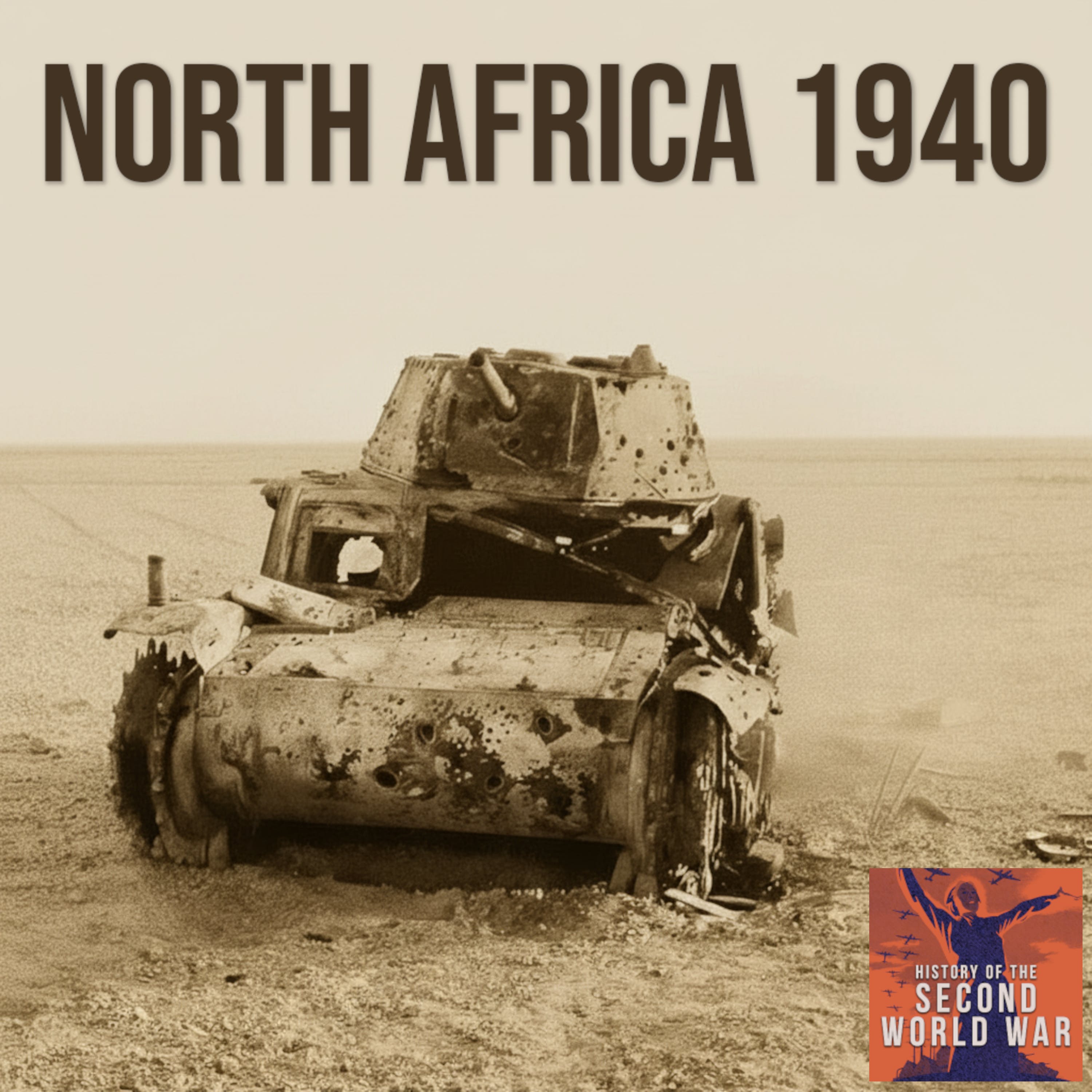
The first shots have been fired in the desert war! This episode covers the opening moves of the North African campaign in 1940. From small-scale raids and skirmishes to the first major Italian offensive, we'll see how both sides tested each other's strengths and weaknesses. While the Italians pushed into Egypt, their advance was hampered by logistical problems and a determined, if small, British resistance. The stage is set for a dramatic confrontation in the desert.
Contact advertising@airwavemedia.com to advertise on History of the Second World War.
History of the Second...
Interview 49: Rhineland: Hitlers Last Defence 1944-45 with Anthony Tucker-Jones
This time I was joined by Anthony Tucker-Jones to discuss his new book Rhineland: Hitlers Last Defence 1944-45 which covers the Allied efforts in late 1944 and early 1945 to move their forces into western Germany.
Buy the Book: https://www.ospreypublishing.com/us/rhineland-9781472859921/
Used code WorldWar20 to get 20% off and Free Shipping!
Contact advertising@airwavemedia.com to advertise on History of the Second World War.
History of the Second World War is part of the Airwave Media podcast network.
Learn more about your ad choices. Visit megaphone...
238: North Africa 1940 Pt. 2 - The Key to Empire

While the Italians were preparing for war, what were the British doing? This episode dives into the British perspective on the North African campaign in 1940. We'll explore the strategic importance of the Suez Canal, the desperate attempts to keep Italy out of the war, and the state of the British army in Egypt. Led by the often-underestimated General Wavell, the British were about to embark on a campaign that would defy all expectations.
Contact advertising@airwavemedia.com to advertise on History of the Second World War.
History of the Second World War...