The Curious Task
Host Alex Aragona and a rotating cast of guests explore philosophy, politics, economics, and other ideas from a classical liberal perspective.
Sean Speer — Is Politics Going Back to Normal?

Matt Bufton speaks with Sean Speer about the observed return to "normie politics," and whether it's a trend that will stick.
References:
The politics of transgression versus the politics of normalcy by Sean Speer
Thanks to our patrons, including Kris Rondolo, Amy Willis, and Christopher McDonald.
To support the podcast, visit: https://patreon.com/curioustask
Jason Sorens — Could Alberta Leave Canada?
In this conversation from 2020, Alex Aragona speaks with Jason Sorens as he explores what it takes for a group to secede or gain independence from a state, and whether Alberta could leave Canada.
References from Episode 32 with Jason Sorens:
You can purchase Jason Sorens’ book on Secessionism on Amazon Canada here You can listen to Jason Sorens’ appearance on the Danielle Smith show in Alberta hereGraeme Thompson—How Can Canada Make Sense of the Current Geopolitical Moment?

In this conversation, Alex speaks with Graeme Thompson about the current economic tensions between Canada and the U.S., and the broader geopolitical contexts that surrounds those tensions.
References
1. Graeme Thompson: Canadians No Longer Take Geopolitics Seriously—and Our Neglect Is Going to Cost Us (The Hub, 2024) https://thehub.ca/2024/03/22/graeme-thompson-canadians-no-longer-take-geopolitics-seriously-and-our-neglect-is-going-to-cost-us/
2. Top Risks 2026: Implications for Canada (Eurasia Group, 2026) https://www.eurasiagroup.net/issues/Top-Risks-2026-implications-for-canada
3. Top Risks 2025: Implications for Canada (Eurasia Group, 2025) https://www.eurasiagroup.net/issues/Top-Risks-2025-Implications-for-Canada
4. Top Risks 2026: Canada (RBC Thought Leadership and Eurasia Group, 2026 — Graeme Thom...
Geoff Kellow - Do Markets Promote Virtue?
In this episode from 2021, Alex speaks with Geoff Kellow about the life and writings of Benjamin Franklin and whether they can help us better understand the connection between markets and virtue.
References
1. “The Autobiography of Benjamin Franklin” by Benjamin Franklin
Link: https://www.amazon.ca/Autobiography-Benjamin-Franklin/dp/1508475091
2. “Benjamin Franklin and Adam Smith: Two Strangers and the Spirit of Capitalism” by Geoff Kellow
Link: https://read.dukeupress.edu/hope/article-abstract/50/2/321/134723/Benjamin-Franklin-and-Adam-SmithTwo-Strangers-and?redirectedFrom=fulltext
3. “The Wealth of Nations” by Adam Smith
Link: https://www.amazon.ca/Wealth-Nations-Adam-Smith/dp/1680920960<
Rachel Lomasky - Can A.I. Be Ethical?

In this conversation from 2023, Alex speaks with Rachel Lomasky about hot-button issues surrounding machine learning and artificial intelligence and the limitations and definitions of each, especially when it comes to ethical decision-making.
References
1. Rachel’s Articles, Law&Liberty
Link: https://lawliberty.org/author/rachel-lomasky/
2. “Artificial Intelligence (AI) vs. Machine Learning” by Columbia Engineering
Link: https://ai.engineering.columbia.edu/ai-vs-machine-learning/
3. “Transcending Technopessimism” by Rachel Lomasky
Link: https://lawliberty.org/transcending-technopessimism/
Matt Zwolinski - Is There Such A Thing As A Free Market?

In this conversation from 2024, Alex speaks with Matt Zwolinski about whether a truly "free market" exists, delving into concepts of freedom, coercion, and property rights. They examine critiques of markets from left-leaning thinkers, such as Robert Hale, as well as conservative perspectives, while discussing libertarian approaches to balancing coercion and freedom in market societies. Zwolinski also references his own Substack essays and reflects on ideas for minimizing coercion without dismissing critiques.
ReferencesMatt Zwolinski's Substack, Bleeding Heart Libertarian
Link: https://bleedingheartlibertarian.substack.com/
"Coercion and Distribution in a Supposedly Non-Coercive State" by Robert Hale (1923)<...
Ross Emmett and Steve Slivinski — What Policies Hurt Business?
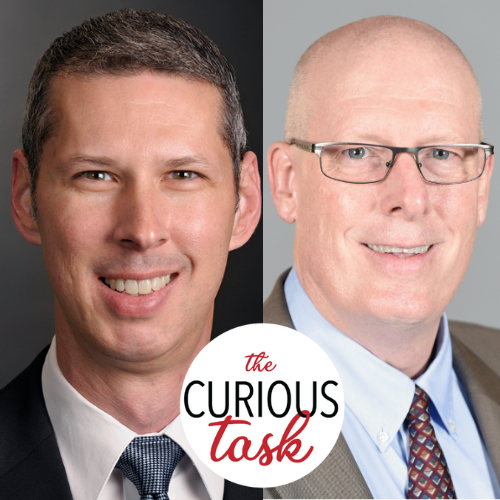
In this conversation from 2021, Alex Aragona chats with Ross Emmett and Steve Slivinski as they explore the policies that can hurt businesses, and their work on the Doing Business North America index.
References from Episode 80 with Ross Emmett and Steve Slivinski
Ross Emmett and Stephen Slivinski are directors of the Doing Business North America project. Their 2020 report forms the basis of this episode and can be found at their website at this link. Here is a link to the Doing Business Report by the World Bank that was briefly mentioned in the podcast. You can read the...Ethan Nadelmann - Is Vaping A Public Health Problem?

In this conversation from 2025, Matt speaks with Ethan Nadelmann about vaping, e-cigarettes, and pouch nicotine alternatives to cigarettes within the broader context of health policy and the drug war. They discuss the misconceptions surrounding nicotine, harm reduction strategies, and how opposition to non-combustible nicotine mirrors past drug war policies. Ethan highlights international case studies, the role of public health organizations, and the influence of figures like Michael Bloomberg in shaping the global discourse - and misinformation - around alternatives to cigarettes.
References
"Thinking Seriously About Alternatives to Drug Prohibition" by Ethan Nadelmann
https://www...
Steve Davies - Why Is Politics Today So Weird?

In this conversation from 2025, host Matt Bufton interviews historian Steve Davies about the political realignment happening across the Western world. Steve explains how traditional divisions in politics, such as socialism versus capitalism, have been replaced by a new axis centered on nationalism versus globalism. He critiques both "national collectivism" and "technocratic liberal progressivism" while discussing the implications for classical liberalism. The conversation also touches on the influence of leaders like Donald Trump, Justin Trudeau, and Emmanuel Macron, and explores what the future holds for liberal ideas in a shifting political landscape.
References
"The Great Realignment...
Andrew Smith - Do Entrepreneurs Help Create Peace?

In this conversation from 2022, Alex speaks with Andrew Smith about capitalist peace theory and discusses a Canadian case study as an example of mutually beneficial exchange leading to peace and prosperity.
References
1. “Canadian Entrepreneurs and the Preservation of the Capitalist Peace in the North Atlantic Triangle in the Civil War Era, 1861-1871” by Andrew D. Smith and Laurence B. Mussio
Link: https://www.cambridge.org/core/journals/enterprise-and-society/article/abs/canadian-entrepreneurs-and-the-preservation-of-the-capitalist-peace-in-the-north-atlantic-triangle-in-the-civil-war-era-18611871/228FB9ECC4A2E2BA40799185F77B0239
Darrell Bricker - Is Canada At A Breaking Point?

In this episode from earlier this year, Alex speaks with Darrell Bricker about whether Canada is at a breaking point, drawing from Bricker and John Ibbitson’s book Breaking Point to explore Canada’s economic stagnation, regional alienation, generational anxiety, and fragile national identity. Bricker argues that Canada’s challenges are serious but not fatal if Canadians are willing to stop kicking hard problems down the road and start building a country that younger generations can actually believe in.
References:
Darrell Bricker and John Ibbitson, Breaking Point: The New Big Shifts Putting Canada at Risk Darrell Bricke...Nathan Goodman - What Does Immigration Have To Do With Climate Change?

In this conversation from 2023, Alex speaks with Nathan Goodman about the implications of Climate Change for immigration policy and how coercion and polycentricity factor into that conversation.
References:
- Adapting to Climate Change through Migration: Justus Enninga and Nathan Goodman https://www.thecgo.org/research/adapting-to-climate-change-through-migration/
- Intergovernmental Panel on Climate Change Summary for Policy Makers https://www.ipcc.ch/report/ar6/wg2/chapter/summary-for-policymakers/#:~:text=Climate%20change%2C%20through%20hazards%2C%20exposure,adapt%20and%20mitigate%20within%20limits
- Beyond Markets and States: Polycentric Governance of Complex Economic Systems: Elinor Ostrom ht...
Erwin Dekker - What Is The Value Of Art?

In this conversation from 2024, Alex speaks with Erwin Dekker about the economics and public policy perspectives on art, examining various theories on how art derives its value in communities. Dekker explores the idea of the separation between art and state, discusses cultural significance and individual perception in determining the worth of art, and how art's intangible qualities challenge traditional economic valuation.
References
"Realizing the Values of Art: Making Space for Cultural Civil Society" by Erwin Dekker and Valeria Morea
Link: https://www.amazon.ca/Realizing-Values-Art-Cultural-Society/dp/3031245970
Erwin Dekker's Website
Link: h...
Aeon Skoble — Is Anarchy Relevant For Classical Liberalism?
In this conversation from 2021, Alex Aragona speaks with Aeon Skoble as he outlines his ideas on what anarchism is, how we should think on it, and how it overlaps with classical liberal ideas.
References from The Curious Task Episode 99 with Aeon Skoble
Aeon Skoble is author of Deleting the State and editor of a collection of essays called The Simpsons and Philosophy. He has a chapter titled “What Is the Point of Anarchism” in The Routledge Handbook of Anarchy and Anarchist Thought. Read more from Aeon Skoble on the blog Radical Classical Liberal here. Aeon Skoble mentions...David Friedman - What Does Law Have To Do With Economics?

In this episode from 2022, Alex speaks with David Friedman about the history of legal systems around the world from an economic standpoint.
References
1. “The Machinery of Freedom: Guide to Radical Capitalism” by David D. Friedman
Link: http://www.daviddfriedman.com/The_Machinery_of_Freedom_.pdf
2. “Law’s Order: What Economics Has to Do with Law and Why It Matters” by David D. Friedman
Link: http://www.daviddfriedman.com/Laws_Order_draft/laws_order_ToC.htm
3. “Who Is David Ricardo and What Is He Famous For?” by the Investopedia Team
Don Boudreaux - Why Are We In A Trade War?

In this episode from 2025, Matt Bufton speaks with Don Boudreaux about tariffs, free trade, and the economic misunderstandings that drive protectionist policies. Don critiques the balance of trade doctrine, drawing from historical examples and economic theory to explain why tariffs harm both consumers and producers. The discussion covers the impact of tariffs on the U.S. and Canada, how politicians exploit economic misconceptions, and why a policy of unilateral free trade would be the best path forward.
References
Globalization by Don Boudreaux
Paperback: https://www.bloomsbury.com/us/globalization-9780313342134/The Essential Hayek by D...
Mark Mercer - What’s Wrong With Universities?

In this conversation from 2023, Matt speaks with Mark Mercer about academic freedom, the changing mission of universities themselves, and what role faculty, administrators, and students should play in shaping the future of the institution.
References:
Mark’s Interview in C2C Journal: https://c2cjournal.ca/2023/05/confronting-the-post-academic-university-in-conversation-with-mark-mercer/ Peter March at St. Mary’s: https://www.cbc.ca/news/canada/nova-scotia/students-protest-prof-who-posted-cartoons-1.623017 Kathleen Lowrey at University of Alberta: https://edmontonjournal.com/news/local-news/u-of-a-professor-says-she-was-dismissed-over-views-that-biological-sex-trumps-transgender-identity-for-policy-decisions Tomáš Hudlický at Brock University: https://niagaraindependent.ca/remembering-professor-tomas-hudlicky-and-how-poorly-brock-university-treated-him/ The Chicago Principles: https://provost.uchicago.edu/sites/default/files/documents/reports/FOECommitteeReport.pdf
Dennis Rasmussen - Did America Fail?
In this episode from 2021, Alex Aragona speaks with Dennis Rasmussen about his findings on how the American Founding Fathers truly felt about the experiment they designed and built as time went on.
References
Dennis Rasmussen previously joined The Curious Task to speak about his book The Infidel and the Professor, and you can listen to that episode here. The book discussed on this episode of The Curious Task is Fears of the Setting Sun by Dennis Rasmussen, which can be purchased from Amazon here. The rising sun armchair can be seen digitally here. More information on the Fe...Moshe Lander - Should Taxpayers Fund The FIFA World Cup?
Alex Eames speaks with Moshe Lander about whether Canada’s billion-dollar FIFA bill is a smart investment, or if politicans and taxpayers are being sold a bill of goods. Moshe argues that while the World Cup will absolutely be fun and meaningful for fans, the public was sold a dollars-and-cents case that does not really hold up once you factor in temporary jobs, displaced spending, security costs, and FIFA’s ability to push expenses onto host cities.
References
Parliamentary Budget Officer, Federal financial support for the 2026 FIFA Men’s World Cuphttps://www.pbo-dpb.ca/en/pub...
Darrell Bricker - Is Canada At A Breaking Point?
Alex speaks with Darrell Bricker about whether Canada is at a breaking point, drawing from Bricker and John Ibbitson’s book Breaking Point to explore Canada’s economic stagnation, regional alienation, generational anxiety, and fragile national identity. Bricker argues that Canada’s challenges are serious but not fatal if Canadians are willing to stop kicking hard problems down the road and start building a country that younger generations can actually believe in.
References:
Darrell Bricker and John Ibbitson, Breaking Point: The New Big Shifts Putting Canada at Risk Darrell Bricker and John Ibbitson, The Big Shift George...James Harrigan - What Does Pop Culture Say About A Society?

In this episode from 2022, Alex speaks with James Harrigan about popular culture as a source of social change and the many ways in which the export of American pop culture has shaped the world.
References
1. “Brown v. Board of Education” by the National Archives
Link: https://www.archives.gov/milestone-documents/brown-v-board-of-education
2. “Roe v. Wade” by Britannica
Link: https://www.britannica.com/event/Roe-v-Wade
Matt Zwolinski - Are Markets Coercive?

In this episode, Alex speaks with Matt Zwolinski about whether markets are coercive, and why the answer is more complicated than either “markets are voluntary” or “capitalism is coercion.” They discuss Robert Hale’s classic argument, the limits of standard libertarian responses, and why a better liberal defence of markets has to take real-world coercion seriously without treating all coercion as morally equal.
References:
Matt Zwolinski, “Are markets coercive?” Robert L. Hale, “Coercion and Distribution in a Supposedly Non-Coercive State” Thomas Nixon Carver, Principles of National Economy Sohrab Ahmari, Tyranny, Inc.: How Private Power Crushed American Liberty—and What t...Matt Dinan - Is AI Ruining Liberal Education?

Matt speaks with Matt Dinan about why AI is not so much ruining liberal education as exposing it's main shortcoming: treating education as a system of credentials rather than a challenging process of reading, writing, discussing, and learning how to learn. Dinan argues that the best response is not to become an "AI cop", but to design courses that incentivize students to learn skills they will need in any scenario where AI has an impact on our society - for better or for worse.
References
“Permission Structures” — Matt Dinanhttps://mattdinan.substack.com/p/the-ai-skeptical-professors-guide Matt D...
Moin Yahya - What Is Inflation Really?

In this episode from 2022, Alex speaks with Moin Yahya about debates both new and old surrounding the causes and history of inflation.
References:
Inflation and Paper Money: An Historical Perspective: https://papers.ssrn.com/sol3/papers.cfm?abstract_id=4076420
In Defense of the Free-Banking Stablecoins: https://papers.ssrn.com/sol3/papers.cfm?abstract_id=4056359
George Selgin's page at the Cato Institute:
https://www.cato.org/people/george-selgin
Thanks to Our Patrons
Thanks to our patrons, including Kris Rondolo, Amy Willis, and Christopher McD...
Nadine Strossen - Is Our Right To Speech In Danger?

Matt speaks with Nadine Strossen about why free speech is under pressure across the political spectrum, from left-wing campus cancel culture to right-wing government coercion and censorship pressures. Strossen argues that the answer to hateful or harmful ideas is not censorship, but a stronger culture of free expression, viewpoint neutrality, and fighting bad speech with better speech.
References
Free Speech: What Everyone Needs to Know - Nadine Strossen: https://a.co/d/0ialIpUc Hate: Why We Should Resist It with Free Speech, Not Censorship - Nadine Strossen: https://a.co/d/0isrx1H3 The W...Casey Kennedy - What Is An Acton Academy?

Matt speaks with Casey Kennedy, co-founder of Acton Academy Calgary Central, about what makes the Acton model different from traditional schooling: guides instead of teachers, Socratic discussions instead of lectures, mastery instead of grades, and an emphasis on letting kids struggle, fail, and become passionate about the process of learning itself. Casey also explains why she and her husband started the school for their daughter, how her earlier work in Dallas and Sierra Leone shaped her view of education, and why she believes every child has a “genius” that education should help uncover.
References
Acton Academy Calg...James Czerniawski - Should Kids Be Banned From Social Media?

Matt speaks with James Czerniawski about proposed bans on children using social media and AI, exploring concerns around mental health, digital literacy, free speech, privacy, and the consequences of regulation. James argues that while online harms are real, outright bans are ineffective and often counterproductive, advocating instead for parental awareness, digital literacy, and a more optimistic approach to AI.
References
James’ website: https://jamesczerniawski.com/
James’ author page at the Consumer Choice Center: https://consumerchoicecenter.org/author/james/
The UK Online Safety Act: https://www.gov.uk/government/publications/online-safety-act-explainer/online-safety-act-explainer
<...Holly Doan - What Is The Role Of Investigative Journalism In A Free Society?

Alex sits down with Holly Doan to discuss Accountability Journalism and the role that non-mainstream journalistic media has in the current Canadian political landscape. They discuss the decline of traditional newsrooms, subsidies for Canadian media companies and the lack of transparency that has led us to a climate where the press is struggling to keep up with the times.
References
Blacklock’s website:
https://www.blacklocks.ca/
The Hub article on government subsidies for traditional Canadian media outlets:
https://thehub.ca/2025/05/05/the-names-of-media-outlets-receiving-government-mandated-funding-released-only-days-after-election/
Carney’s CBC funding announcement:
<...Aris Trantidis - Why Should We Care About Clientelism?

In this episode, Alex speaks with Aris Trantidis about his book Clientelism and why it matters for anyone concerned with democracy, public choice, and the modern state. Trantidis explains clientelism as a system of political exchange in which politicians trade targeted favours, contracts, regulation, and other private benefits for support, campaign resources, and loyalty - arguing that this dynamic is not a "bug" but a structural feature of politics that can distort markets and democracy.
References
Clientelism — Aris Trantidishttps://www.cambridge.org/ca/universitypress/subjects/economics/economics-general-interest/clientelism?format=PB The Calculus of Consent...
Dan Griswold — Can You Win a Trade War?
In this episode from 2020, Alex Aragona speaks with Dan Griswold as he explores the benefits of open markets and free trade, and whether you can "win" a trade war.
References
1. “Mad About Trade: Why Main Street America Should Embrace Globalization” by Daniel Griswold
Link: https://www.amazon.ca/Mad-About-Trade-America-Globalization/dp/193530819X
2. “Section 232 Investigation on the Effect of Imports of Steel on U.S. National Security” by U.S Department of Commerce
Link: https://www.commerce.gov/issues/trade-enforcement/section-232-steel
3. “China Section 301-Tariff Actions and Exclusions Process” by Office of the Un...
Thomas Bunting - What Can Baseball Tell Us About Politics?

In this episode from 2022, Alex speaks with Thomas Bunting about politics, democracy, social progress and more as they relate to baseball and athletics more broadly.
Bryce Tingle - How Are Regulations Damaging Markets?

In this episode from 2024, Alex speaks with Bryce Tingle about corporations, how these unique legal entities are governed, how changes we have made to corporate governance has discouraged companies from joining Canada’s public markets, and how the decline in our public market is hurting Canadians.
Episode Notes:
1. Bryce’s article “Returning Markets To The Centre Of Corporate Law”
https://jcl.law.uiowa.edu/sites/jcl.law.uiowa.edu/files/2023-09/Tingle_Final.pdf
2. Bryce’s profile at UofCalgary
https://profiles.ucalgary.ca/bryce-tingle
3. Jensen and Meckley’s “The Theory Of T...
Nigel Ashford - Can We Change The World For Liberty?

In this episode from 2023, Alex speaks with Nigel Ashford about the prospects for a freer world and how the memory of history, the hope of younger persons, and the teaching of ideas can shape the future of classical liberalism.
Further Reading:
https://libertarianism.uk/wp-content/uploads/2022/03/socin003.pdf
Chapter 2 of this book: https://iea.org.uk/wp-content/uploads/2016/07/Blundell-interactive.pdf
https://fee.org/articles/the-tide-in-the-affairs-of-men/
https://cdn.mises.org/Intellectuals%20and%20Socialism_4.pdf
https://www.libertarianism.org/publications/essays/why-do-intellectuals-oppose-capitalism
http://wordlist.na...
Is An Examined Education Better? - Nick Cowen

In this episode, Alex speaks with Nick Cowen about why an “examined education” is better than an unexamined one. Drawing on his paper, Nick argues that exams are valuable not just as external assessments but as opportunities for students to test themselves, build confidence, develop resilience, and discover what they actually know rather than what they merely think they know.
References
“An Examined Education” — Nick Cowen https://papers.ssrn.com/sol3/papers.cfm?abstract_id=6261178 The Theory of Moral Sentiments — Adam Smith https://a.co/d/0iSQvp4l “Why I Am Not a Conservative” — F. A. Hayek https://pres...Stefanie Haeffele - Can We Live Better Together?

In this episode from 2023, Alex speaks with Stefanie Haeffele about her book Living Better Together, which explores the work of Elinor Ostrom and Viviana Zelizer.
Episode Notes:
"Living Better Together" by Stefanie Haeffele and Virgil Henry Storr:
https://a.co/d/hJNCxw6
Viviana Zelizer's homepage at Princeton:
https://sociology.princeton.edu/people/viviana-zelizer
Elinor Ostrom's bio and short autobiography on the Nobel website:
https://www.nobelprize.org/prizes/economic-sciences/2009/ostrom/facts/
Nonneutrality of Money in a Social Perspective by Julia Włodarczyk
htt...
Eric Mack - Why Read Anarchy, State and Utopia? (Part Two)

In part two of this episode from 2022, Alex speaks again with philosopher Eric Mack about "Anarchy, State and Utopia", this time touching on some of the challenges to Nozick's theory and Eric's own personal connection to Robert Nozick during his life.
References
1. Part 1 of Eric Mack’s The Curious Task Episode on “Why Read Anarchy, State, and Utopia?”
Link: https://thecurioustask.podbean.com/e/ep-145-eric-mack-why-read-anarchy-state-and-utopia/
2. Eric Mack’s Previous Episode “Why Not Socialism?” on the Curious Task Podcast
Link: https://thecurioustask.podbean.com/e/ep-7-eric-mack-%e2%80%94-why-not-socialism/
3. “Anarchy...
Eric Mack - Why Read Anarchy, State and Utopia?

In this episode from 2022, Alex speaks with Philosopher Eric Mack about Robert Nozick's "Anarchy State and Utopia" and how the book shaped the conversation around natural rights theory, philosophical libertarianism, and the study of political utopias for decades to come.
References
1. Eric Mack’s Previous Episode “Why Not Socialism?” on the Curious Task Podcast
Link: https://thecurioustask.podbean.com/e/ep-7-eric-mack-%e2%80%94-why-not-socialism/
2. “Anarchy, State, and Utopia” by Robert Nozick
Link: https://www.amazon.ca/Anarchy-State-Utopia-Robert-Nozick/dp/0465051006
3. “Robert Nozick” by Britannica
Link: https://www.britannica.com/biograp...
Eric Schliesser - Is Post-Liberalism Already Here?

In this conversation from 2024, Alex speaks with Eric Schliesser about the growing declarations of the end of liberalism and what this means for the socio-political future in general.
Episode Notes:
Eric Schliesser’s page at the University of Amsterdam https://www.uva.nl/en/profile/s/c/e.s.schliesser/e.s.schliesser.html#Publications Kevin Vallier’s episode of this podcast discussing religious anti-liberalism: https://thecurioustask.podbean.com/e/197-kevin-vallier-what-are-the-new-religious-threats-to-liberalism/ Adrian Vermeulen’s publications https://hls.harvard.edu/faculty/adrian-vermeule/ Tom Pink’s page at King’s College London: https://www.kcl.ac.uk/people/thomas-pink ...Reem Ibrahim - Did Brexit Succeed?

In this episode, Matt speaks with Reem Ibrahim about whether Brexit can be considered a success six years after the UK left the European Union. They examine the classical-liberal case for Brexit (focused on sovereignty, deregulation, and free trade) and contrast it with a post-Brexit reality in which many EU-era regulations, trade barriers, and interventionist policies remain. While the most catastrophic “Project Fear” predictions did not come true, Ibrahim argues that Brexit’s promised freedoms have largely gone unused, leaving its long-term success still unresolved.
References
Brexit Referendum (2016) — https://www.bbc.co.uk/news/politics/eu_refer...
Franco Terrazzano - What Is Government Waste?

In this episode, Alex speaks with Franco Terrazano about government spending, taxation, and fiscal accountability in Canada, with a focus on how deficits, debt, and expanding bureaucracy effect affordability for ordinary Canadians. Franco outlines where federal spending has grown most rapidly, critiques the lack of clear priorities and performance measurement, and explains how interest payments on the debt increasingly crowd out core public services.
References
Canadian Taxpayers Federation https://www.taxpayer.com/
Federal Budget of Canada (most recent edition) https://budget.canada.ca/home-accueil-en.html
Public Accounts of Canada http...
