Journal of Biophilic Design

Welcome to our podcast series from the Journal of Biophilic Design, where we interview workplace consultants, futurists, interior designers, architects, urban planners and those working in healthcare, wellbeing and other industries to find out the latest on Biophilic Design. www.journalofbiophilicdesign.com
Making Hope visible through Biophilia and Art

For artist Jaime Jackson, creativity is more than a way of making things.
What happens when we stop seeing ourselves as separate from nature and begin to recognise that we are nature? For artist Jaime Jackson, the answer lies in creativity, collaboration and the simple act of paying attention. It is a way of rediscovering our place in the living world, bringing communities together and imagining a more hopeful future.
Through his socially engaged art practice, Jaime brings together children, communities, scientists and fellow artists to explore our relationship with the li...
What If We Put Life Back on Every Roof in our Cities?

What if every roof in London that could support nature became a living habitat? What if, instead of recreating the gardens and meadows we have always known, we designed our cities around the life that can actually thrive in them? For Dusty Gedge, pioneering green roof advocate and urban biodiversity expert, this is more than an appealing idea. It is a practical vision for the future of our cities, challenging the way we think about green roofs, urban nature and the role of biophilic design.
As climate change brings increasingly extreme tem...
Mindful Designing - Freyja Sewell on Biophilia, Neurodiversity and. Positive Futures
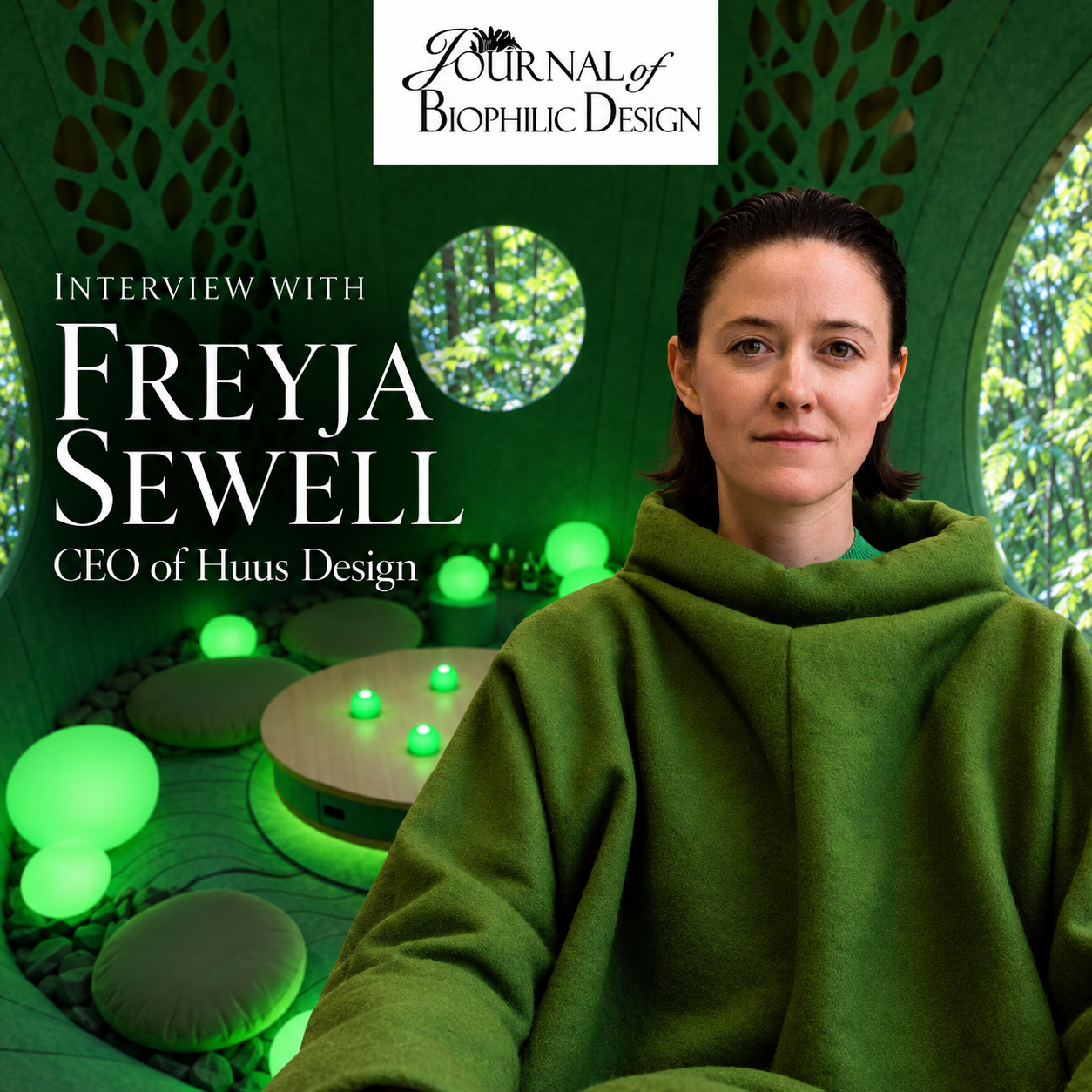
There are many places where we can feel an overwhelm, for some of us, the overwhelm can be, well, overwhelming and trying to find somewhere to recalibrate can be difficult.
So how can design help us feel safe, connected and able to participate in the world? Designer and interdisciplinary artist Freyja Sewell begins with nature, sensory experience and a willingness to imagine things differently.
As a neurodivergent designer herself, Freyja is founder of HUUS Design, where she brings together art, technology, nature and sensory design to create gorgeous woven soft felt po...
The Glasshouse - helping women in custody grow
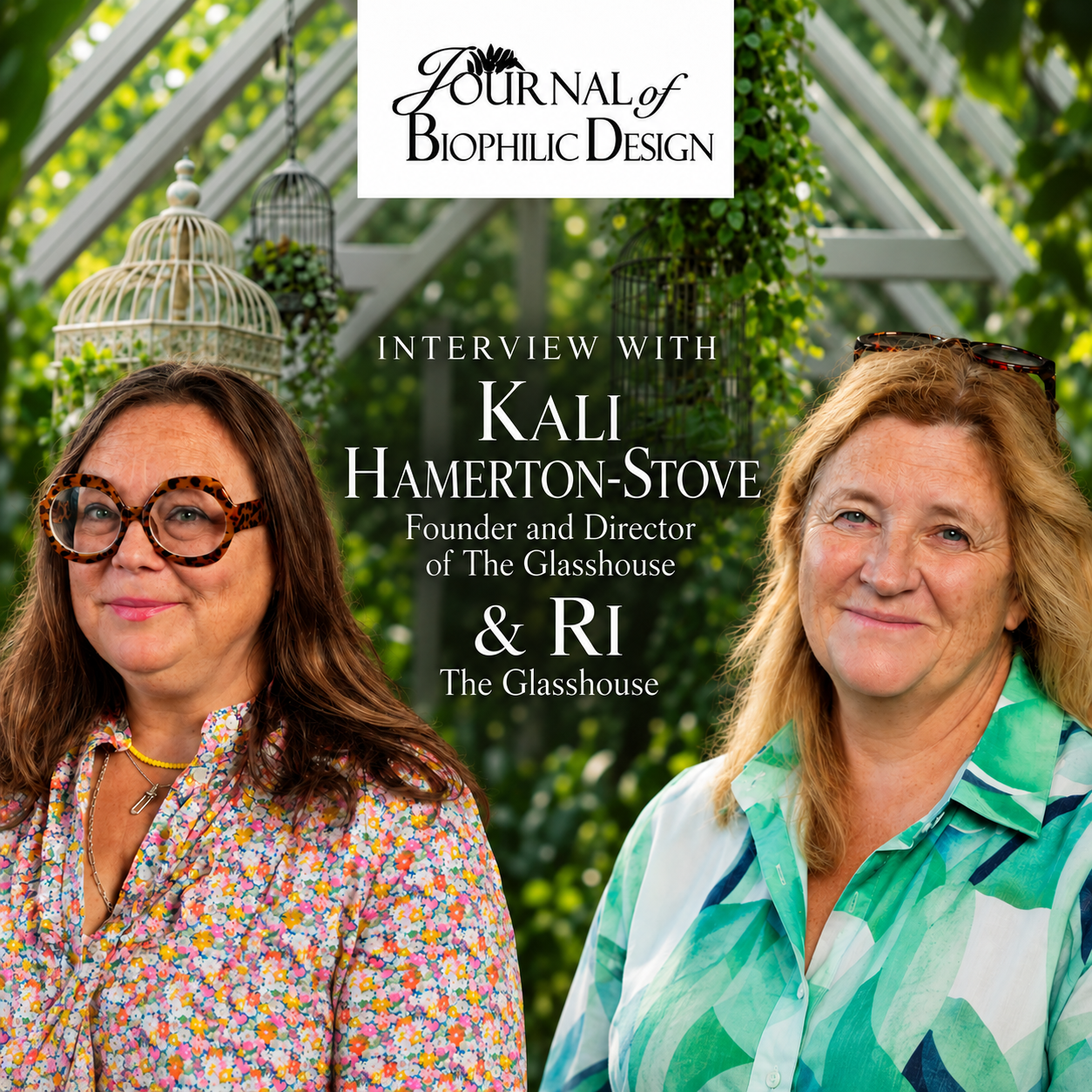
The Glasshouse is using horticulture, employment and a deep connection with nature to give women leaving prison something they often desperately need: dignity, confidence and the chance to build a different future. I am joined by co-founder Kali Hamerton-Stove alongside Ri, who came through the programme herself and now works on the senior team.
A plant needs the right conditions, nourishment, care, light and time. Give it those things and given the opportunity, it grows. For Kali Hamerton-Stove, co-founder of The Glasshouse, this has become the foundation of an extraordinary social enterprise supporting women approaching t...
The Bath, the Bin and the Biology of Light
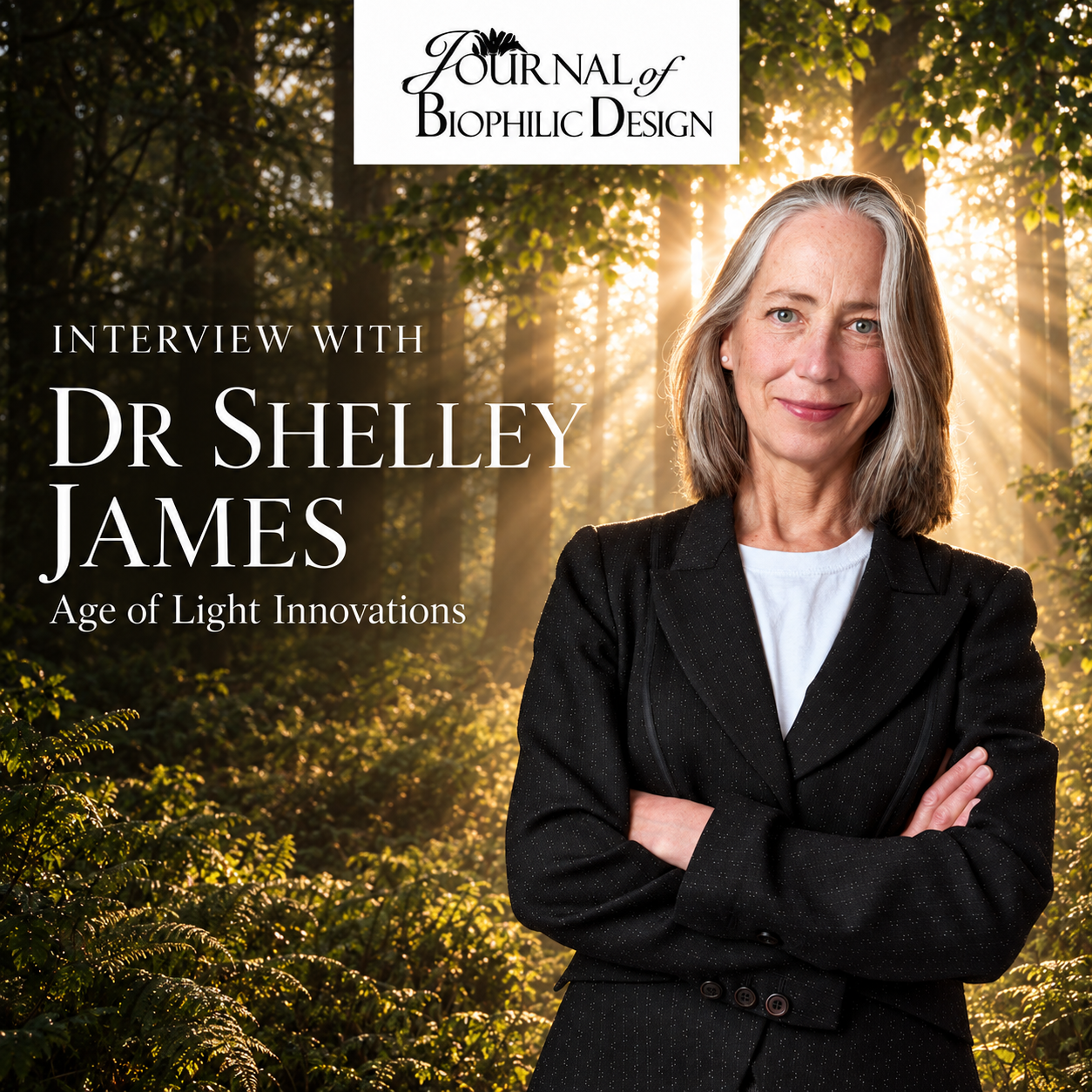
Our bodies evolved under changing natural light. So what happens when we spend our lives beneath a ceiling of artificial illumination? Dr Shelley James, known as the Light Lady, explains why light may be one of the most important — and overlooked — elements of biophilic design.
We often talk about biophilic design in terms of plants, timber, water, natural materials and views of nature. But there is another fundamental element of the natural world that is so pervasive we can easily overlook it: light.
Dr Shelley James, founder of Age of Light Innovations, lighting consul...
Nature Preserved - The Ultimate Guide to Preserved Plants
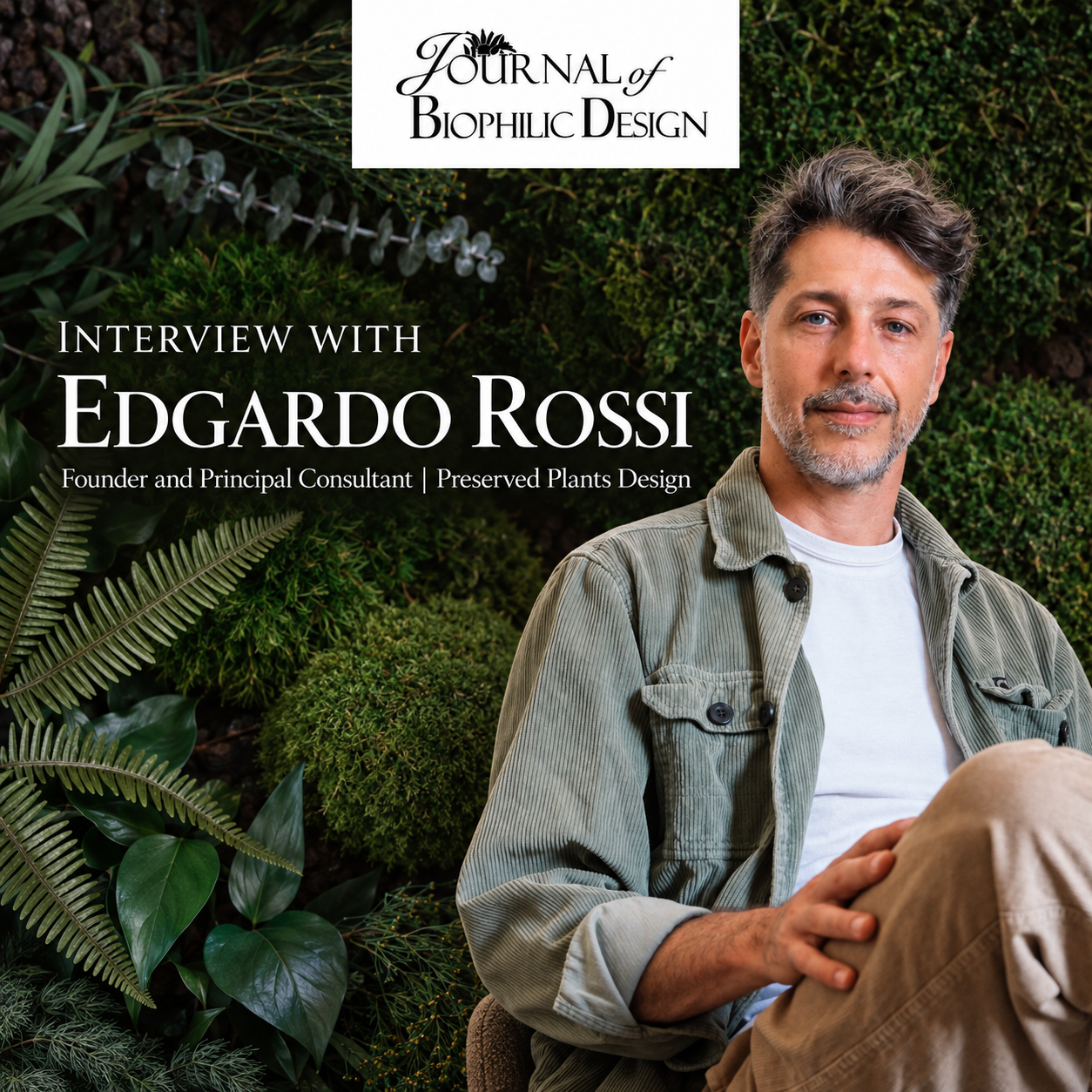
This week, the Journal of Biophilic Design is excited to announce the launch of our latest monograph, Nature Preserved: The Definitive Guide to Preserved Plants, written by Edgardo Rossi, known in the industry as The Green Man. The book takes a close look at preserved plants not simply as beautiful botanical material, but as a serious medium within interior and biophilic design. For Edgardo, the starting point is: go to the space before choosing the plants.
His experience has taught him that the material is rarely the real problem. The problem is often the project. A be...
Nature, Nervous Systems and the Places that Heal us

What happens when we step away from the noise of everyday life and enter a space designed to help us restore and reconnect?
For holistic wellbeing expert Ali Oetjen, the answer begins with something fundamental: safety. Ali is founder of Ali Wellness in Australia and an internationally recognised holistic wellbeing expert. Through meditation, breathwork, retreats and immersive experiences, she helps people reconnect with themselves, each other and the natural world. Her work explores personal transformation, nervous-system regulation and the relationship between human wellbeing and the environments we inhabit. Ali creates retreats and workshops designed to help...
Designing for How We Feel - Robert Hopkins on Biophilic Architecture
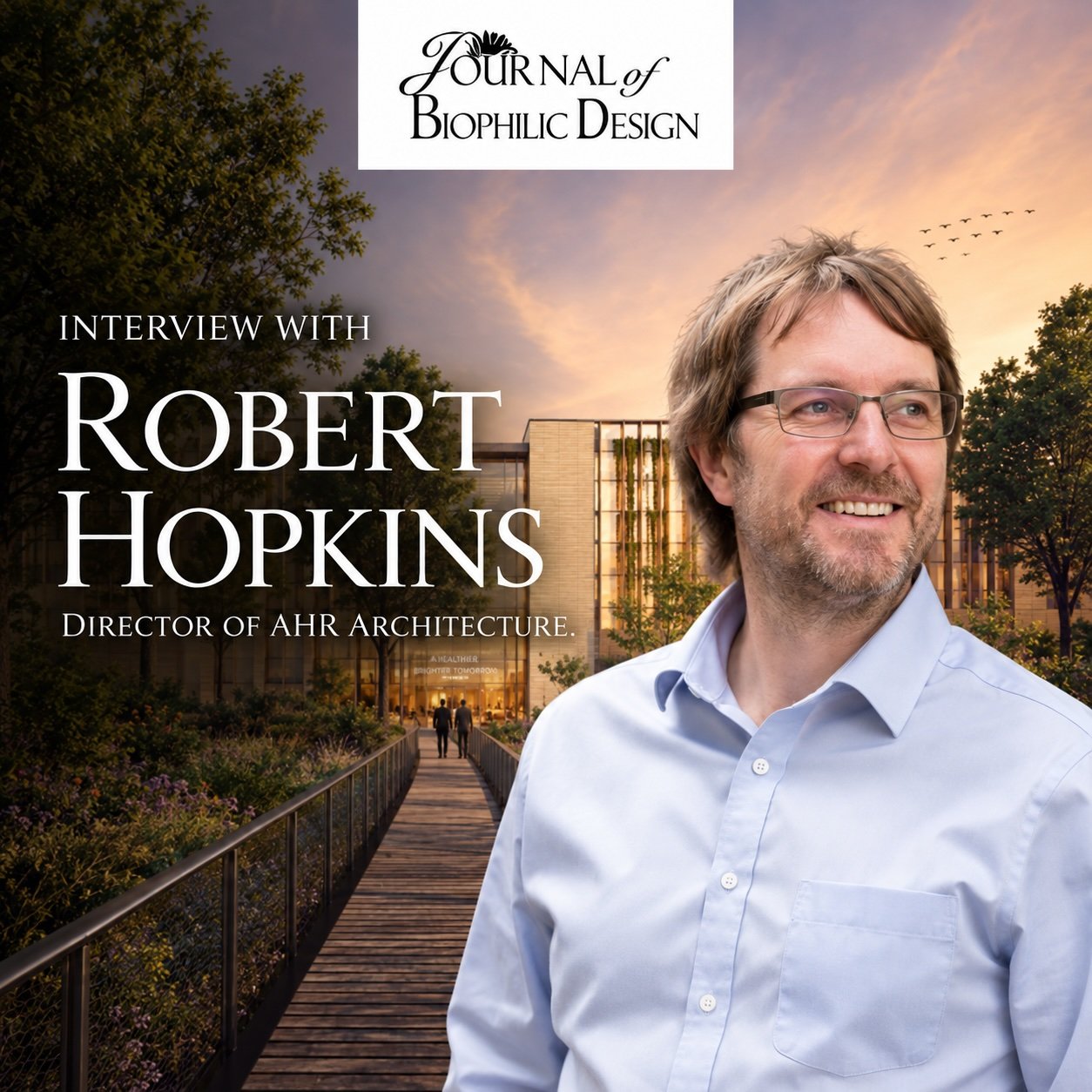
What happens when we stop designing buildings only for what they do, and start designing them for how they make us feel?
For architect and sustainability leader Robert Hopkins, it is a question that has shaped more than 25 years of practice. From the Spine for the Royal College of Physicians to the extraordinary forest at the heart of the Thrive Health and Wellbeing Centre in Salford, Robert’s work brings together sustainability, health, nature and people in ways that feel both deeply considered and surprisingly intuitive.
His journey began at university, wh...
How do we make our cities healthier, greener and more resilient through Biophilic Design
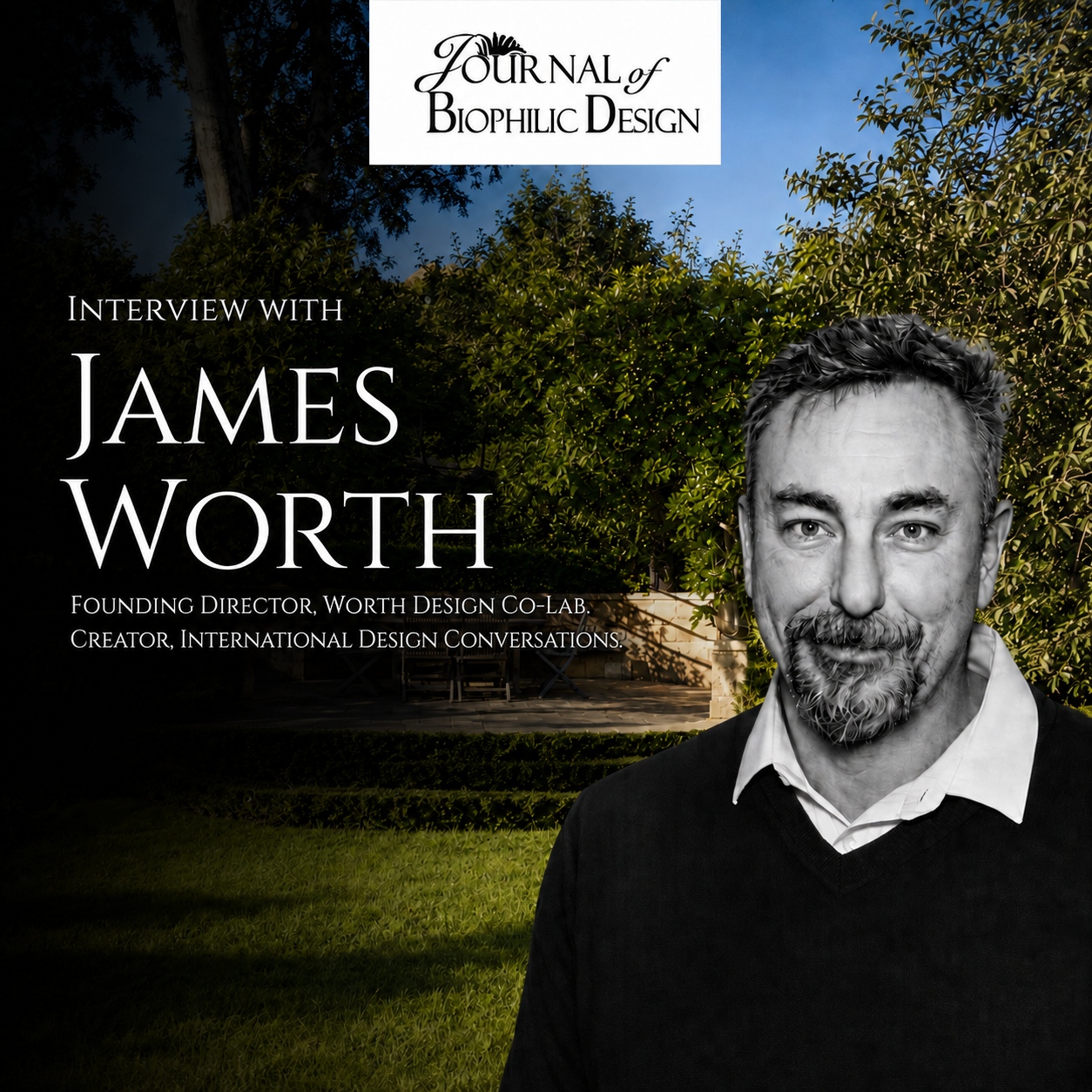
As our cities grow, access to clean air, clean water, biodiversity and meaningful connections with nature will become ever more important.
In this conversation, we explore living architecture, green infrastructure, urban density, clean air and water — and how we can design cities that work better for both people and the planet.
In this episode, we’re joined by James Worth, a landscape architect whose work is focused on finding practical, sustainable solutions for the future of our built environment.
James is particularly passionate about Green Infrastructure and living architecture.
James has...
Can Our Buildings Become Living, Breathing Infrastructure?
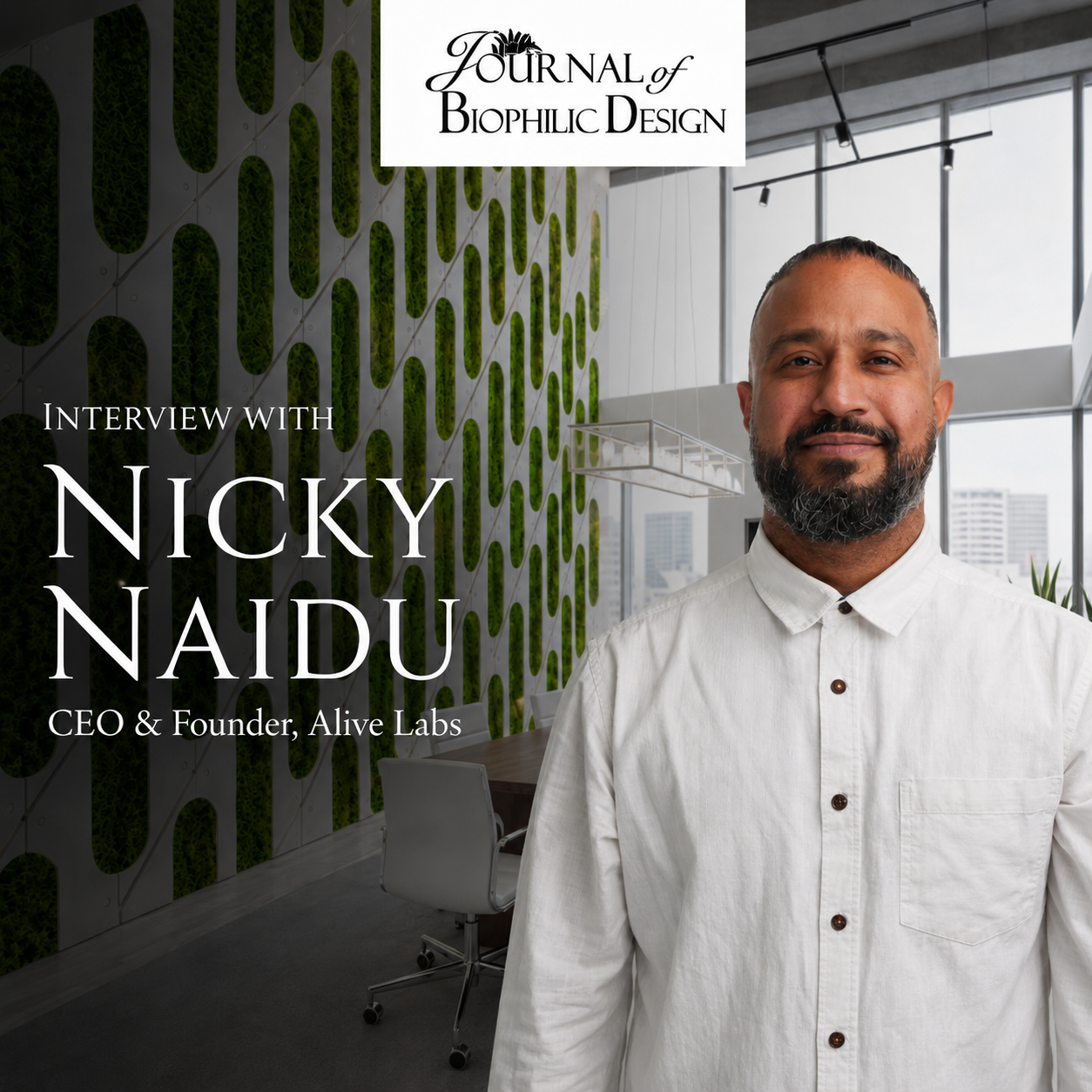
What if the buildings that help us tackle climate change were also the buildings that lift our spirits?
We talk a great deal about the performance of buildings: how to reduce carbon, manage heat, conserve energy, deal with water and increase biodiversity. But perhaps we need to ask another question. What should these buildings look and feel like?
Download a copy of the Monograph for free here: https://journalofbiophilicdesign.com/shop/living-architecture-monograph-journal-of-biophilic-design
For architect and Alive Labs founder Nicky Naidu, the answer is not to choose between performance and beauty. We should expect...
Eye of the Beholder
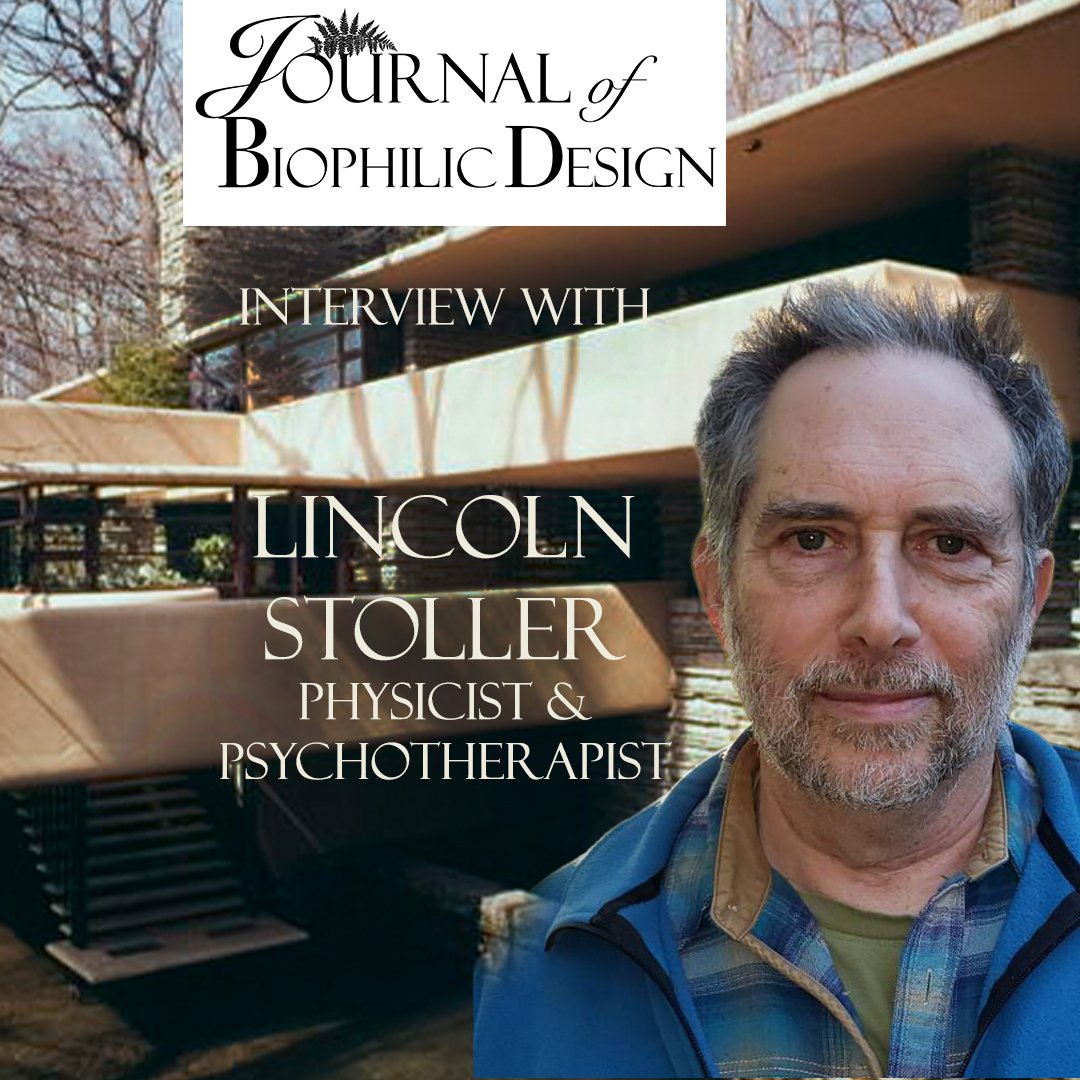
What happens when we stop looking at a building simply as a building?
For Lincoln Stoller, physicist, psychotherapist and son of celebrated architectural photographer Ezra Stoller, the answer lies somewhere between architecture, psychology, nature, photography and the human capacity to experience something beyond the immediately visible.
Ezra Stoller was regarded as one of the pre-eminent architectural photographers of his generation. His extraordinary archive includes some of the most significant buildings of twentieth-century modernism, photographed not simply as objects, but as experiences. His approach was distinctive: rather than producing straightforward images designed to showcase a building...
3.8 Billion Years of Design Intelligence - Why the future of design begins by learning from living systems
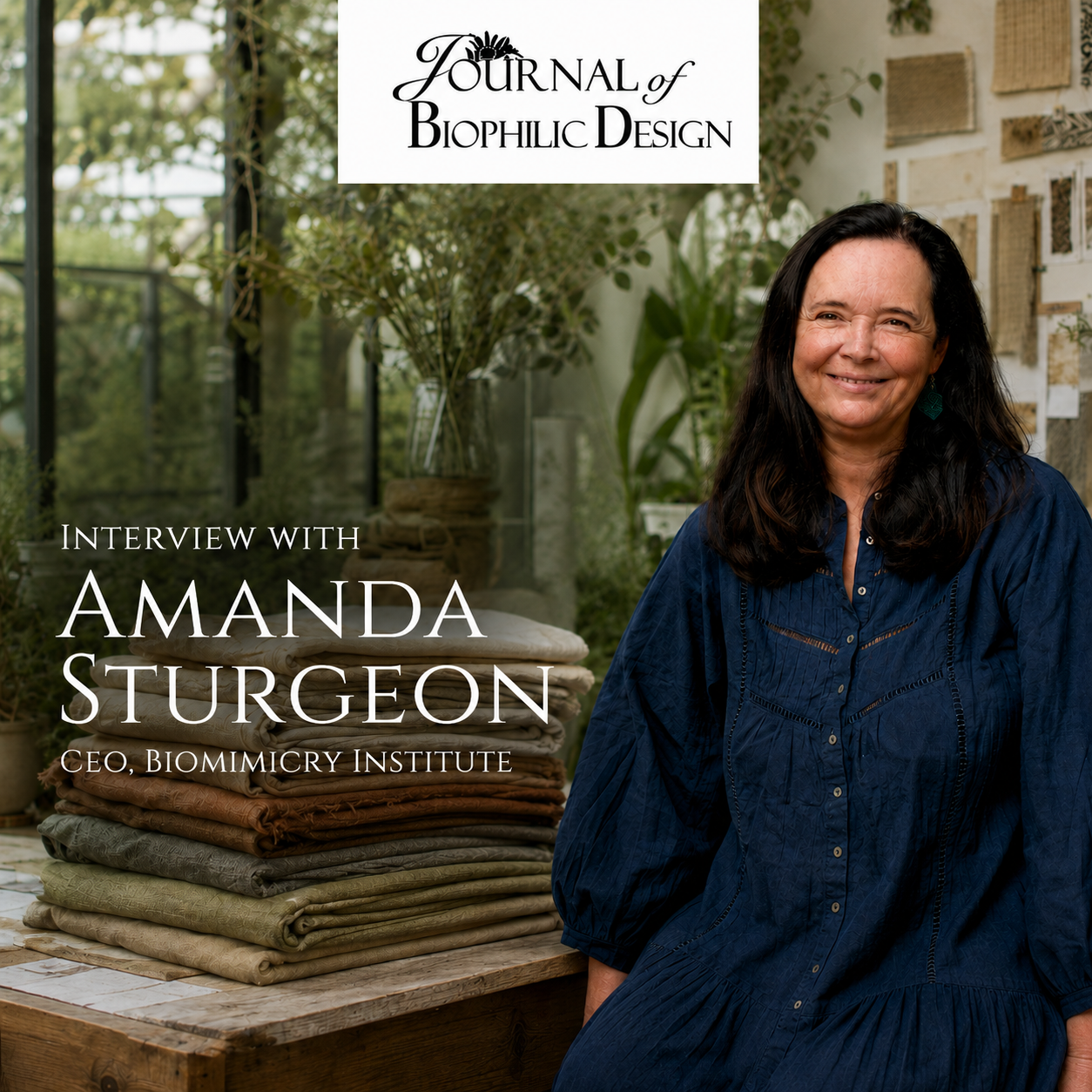
Biophilic Design and biomimicry are often discussed as separate disciplines, yet they are deeply complementary. Biophilic Design reconnects people with nature, creating healthier places that nurture wellbeing and strengthen our relationship with the living world. Biomimicry asks a different, but equally important question: how can nature’s 3.8 billion years of evolution teach us to solve human challenges?
Together they offer a blueprint for creating buildings, products and systems that help all life flourish.
While architecture often looks inward for innovation, one of the most fascinating lessons for the built environment is currently emerging from an une...
Biophilic Design you can Taste....
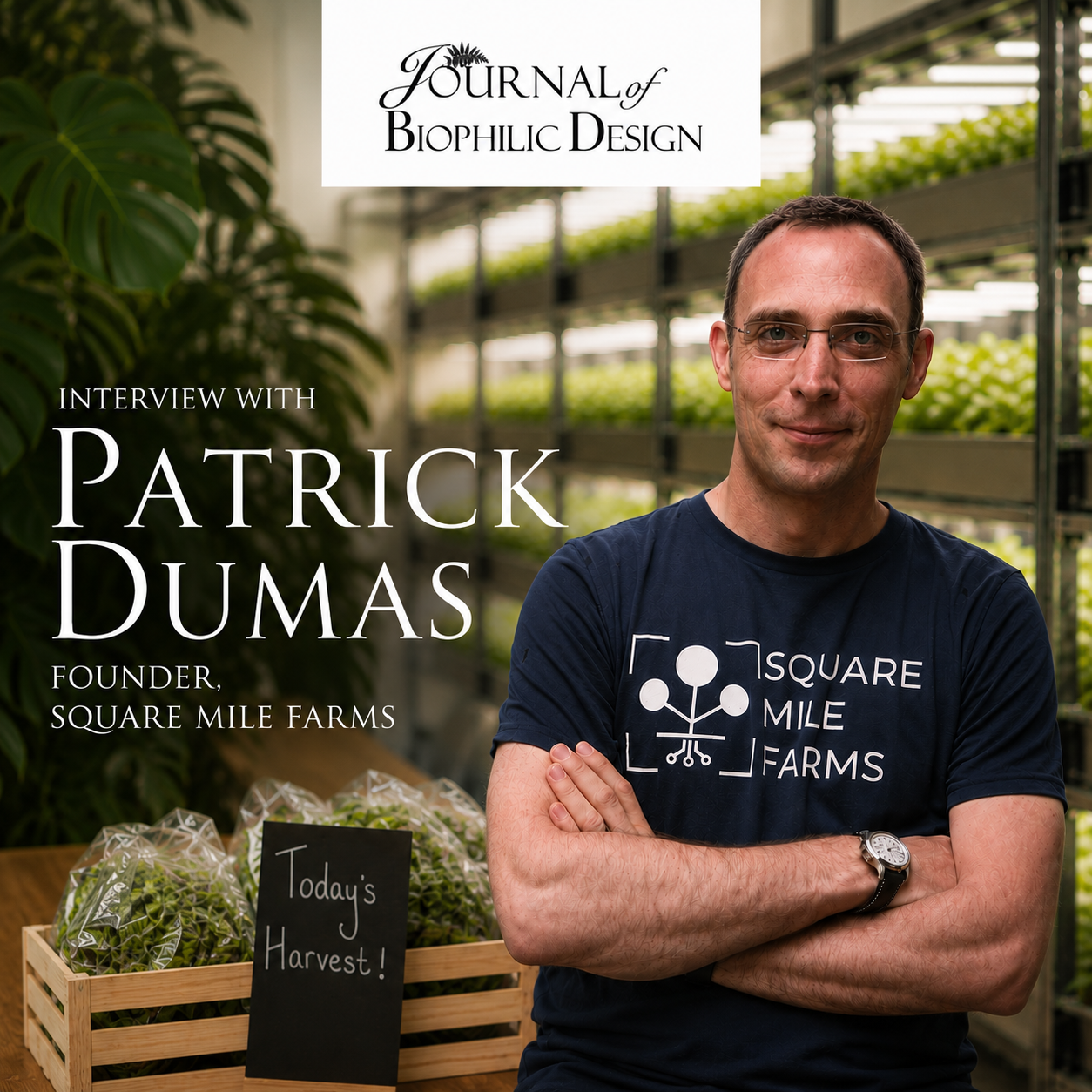
How can our buildings become active contributors to healthier lives rather than passive consumers of resources? Our cities are grappling with climate change, biodiversity loss, employee wellbeing and the changing role of the workplace, for Patrick Dumas, Founder and CEO of Square Mile Farms, the answer begins with growing food.
His concept has evolved into one of the UK's largest networks of indoor urban farms, with more than 120 installations and over 75,000 plants growing inside workplaces and residential developments. Yet the plants, herbs and vegetables are only part of the story.
"We reconnect people with one...
How many plants do we need for wellbeing
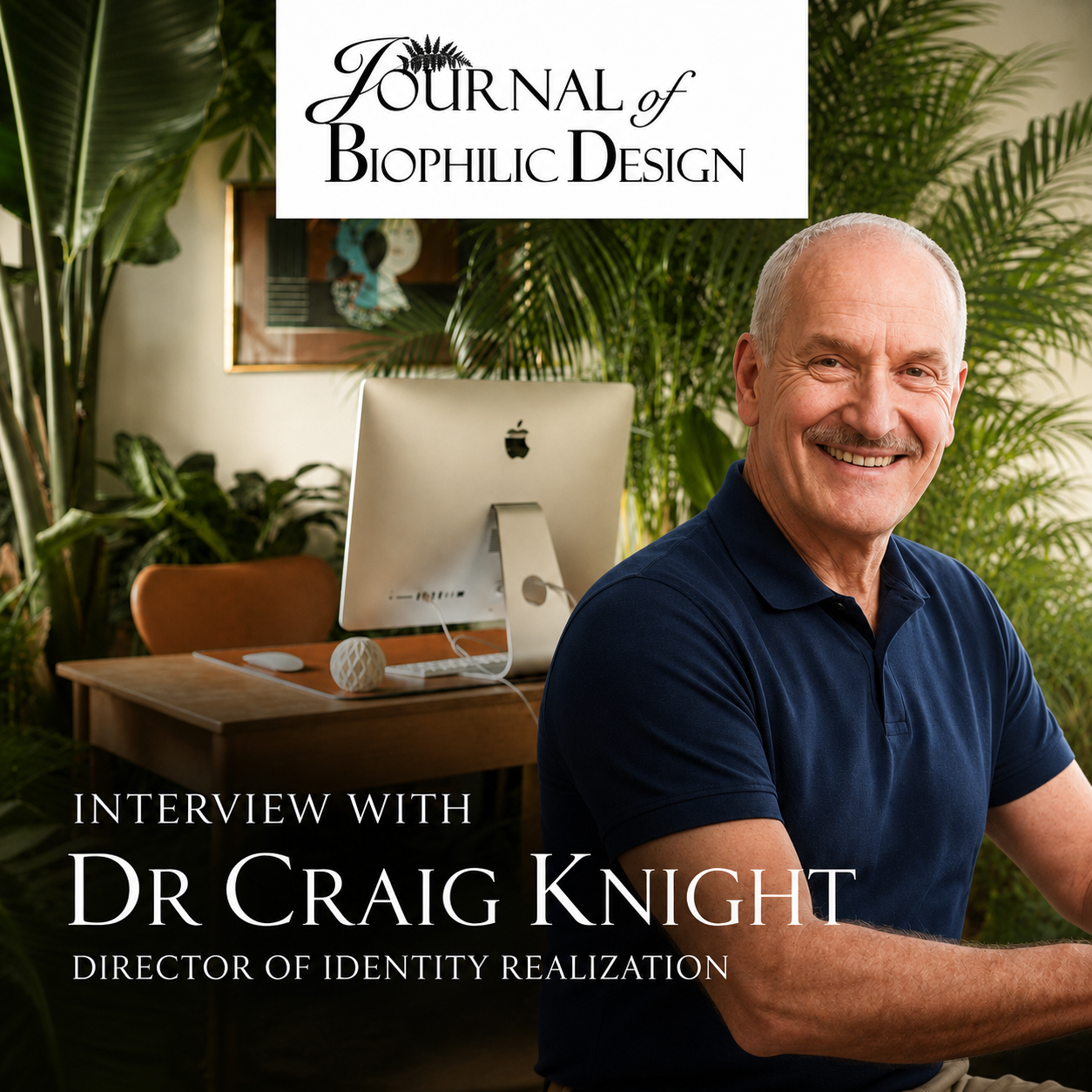
Thankfully… walk into almost any contemporary office and you are likely to find a few strategically positioned plants, a moss wall in reception or perhaps another biophilic feature intended to soften an otherwise corporate environment. Over the past decade, introducing greenery into workplaces has become almost synonymous with employee wellbeing. Yet according to workplace and environmental psychologist Dr Craig Knight, if organisations believe that adding a few plants alone will transform productivity, they have misunderstood the research.
Craig's work at the University of Exeter, challenged one of the most enduring assumptions in workplace design, namely tha...
Biophilia: Africa, Nature and Remembering What It Means to be Human
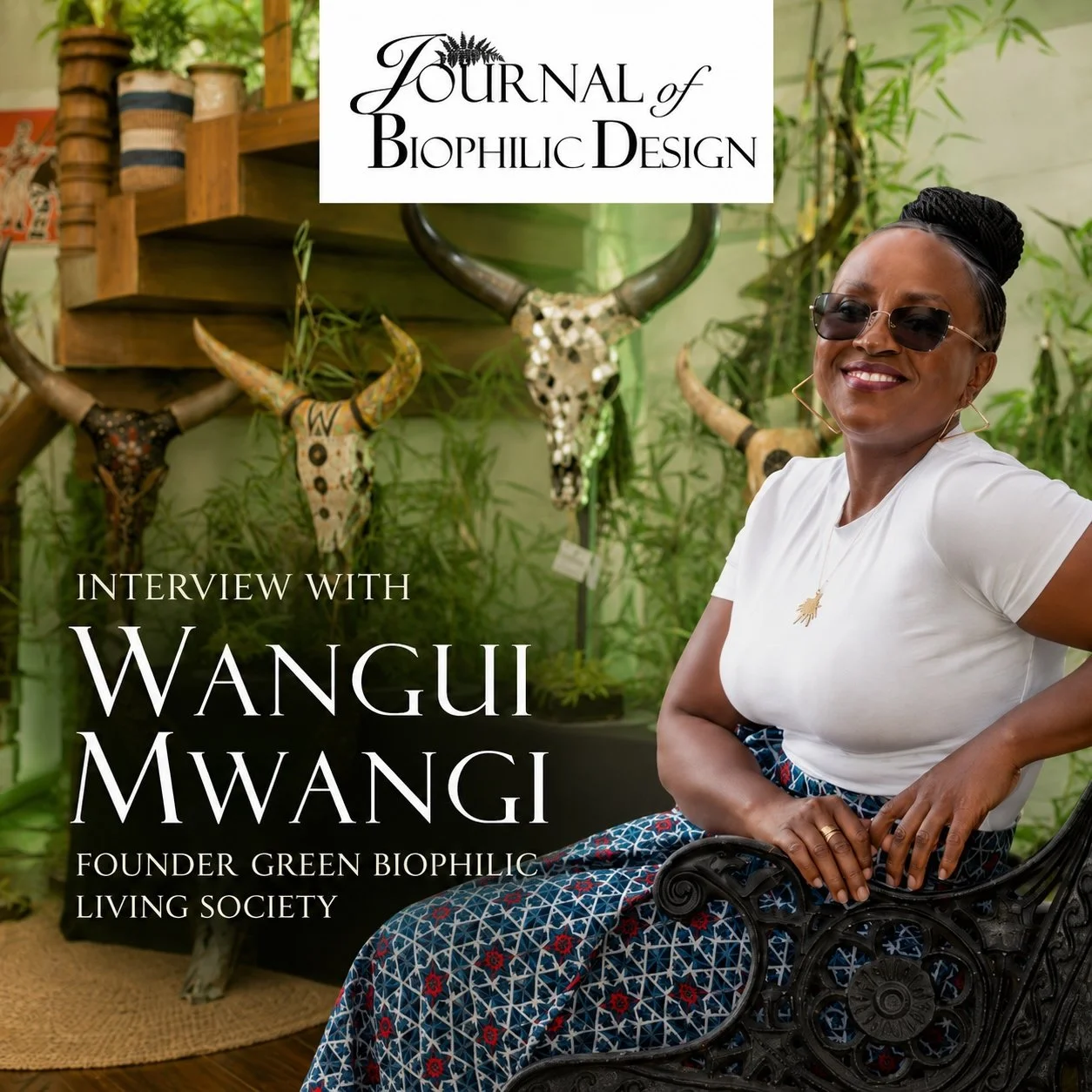
As Biophilic Design continues to gather momentum around the world, much of the conversation has centred on research emerging from Europe, North America and Australia. Yet one of the most powerful perspectives may come from a continent where living with nature has never been considered a design trend at all.
For Wangui Mwangi, Founding Chair of the Green Biophilic Living Society and Convener of the Africa Biophilic Building Conference & Expo 2026, biophilia is less about innovation than remembering.
"Africa has always lived biophilically. Our ancestors have always lived biophilically."
Wangui believes the rest of t...
Dare to Dream - Touching Time
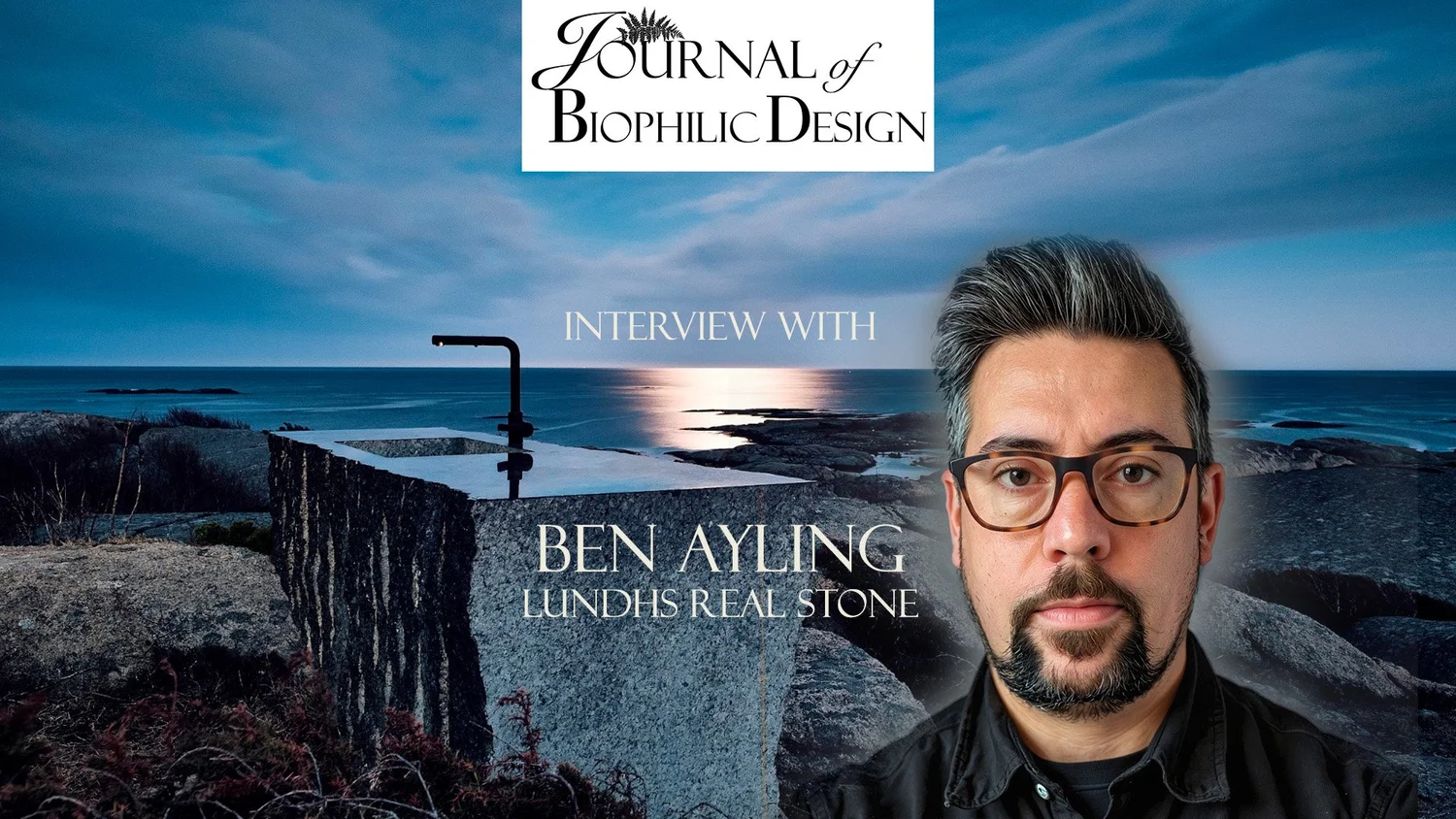
"Engage with the material… don't dictate. Let the material help dictate the design… and dare to dream." — Benjamin Ayling
There is something deeply timeless about holding a piece of natural stone. Perhaps it is the cool surface beneath our fingertips. Perhaps it is the intricate mineral patterns that could never be replicated twice. Or perhaps it is something much older than conscious thought—a recognition that for almost all of human history, stone has been our shelter, our monuments, our meeting places and our memories.
While we are searching for healthier, more sustainable ways to de...
Sleep by Design - Can your bedroom improve your health?
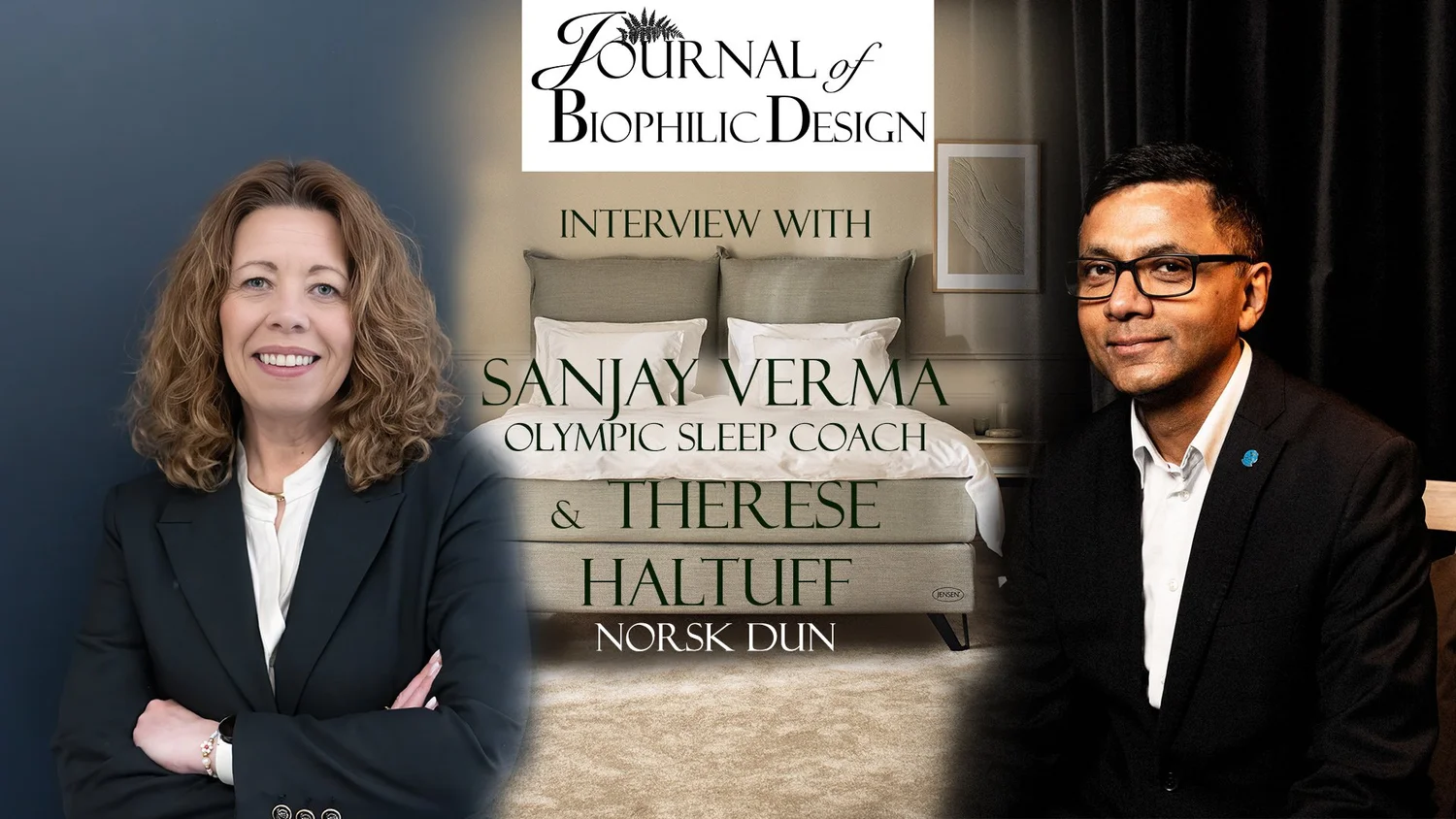
Sleep is not something that simply happens. It is something our environment either supports or undermines."
When we think about improving sleep, many of us immediately turn to wearable technology, sleep trackers or the latest wellness trend. Yet according to Olympic Sleep Coach Sanjay Verma and Therese Haltuff of Norwegian bedding company Norsk Dun, restorative sleep begins long before our head touches the pillow. It begins with the environments we create. Their conversation reveals a fascinating overlap with the principles of Biophilic Design. From daylight and fresh air to natural materials, sensory comfort and our innate need...
Why we need Nature inside our Buildings - The Future of Healthy Buildings with Biophilic Design
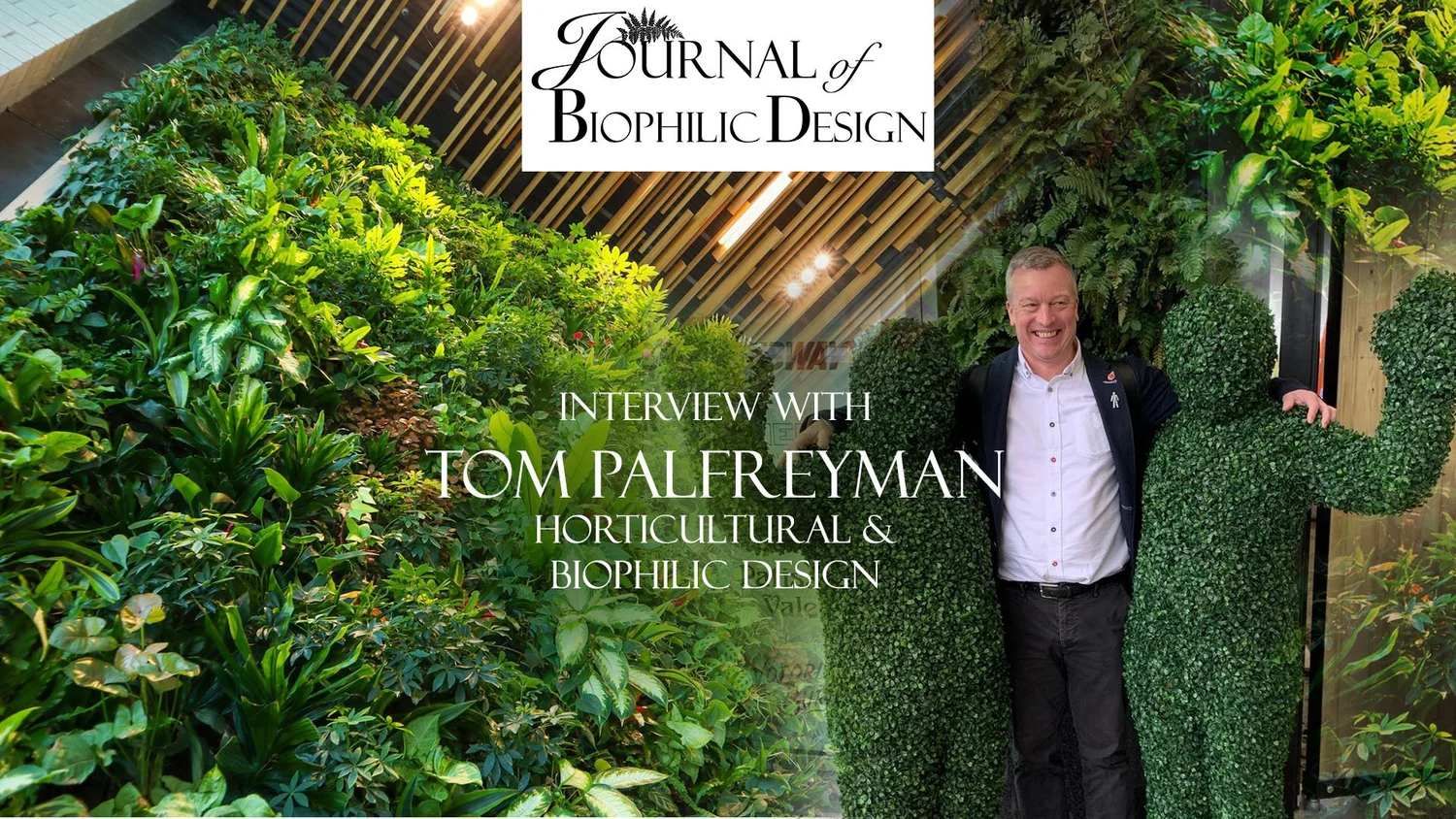
In this episode of the Journal of Biophilic Design podcast, we speak with landscape specialist Tom Palfreyman, whose work across commercial, hospitality, retail and workplace environments has focused on the principle that plants fundamentally change how people experience space. With more than twenty years’ involvement in interior and exterior landscaping, Tom has spent his career exploring how nature can improve the places where we work, rest and play, and why maintenance, care and long-term thinking are just as important as the initial design itself.
As Tom reflects during the conversation, “Plants have transitioned from a nice-to-h...
Is colour the missing link in Biophilic Design?

Ever wondered why some spaces instantly relax you, while others energise or even irritate? The secret might lie in the colour! Karen Haller, is an expert in applied colour psychology, and reveals how understanding the emotional dance of colours can transform our built environments into havens of well-being and productivity. Whether you're an interior designer, architect, or simply a lover of nature-inspired spaces, this podcast dives deep into the unseen forces of colour.
You’ll learn how colour influences behaviour, how to select the perfect hues for different environments, and why true biophilic design demands more...
The Future of Material Innovation and Biophilic Design: Insights from William Knight
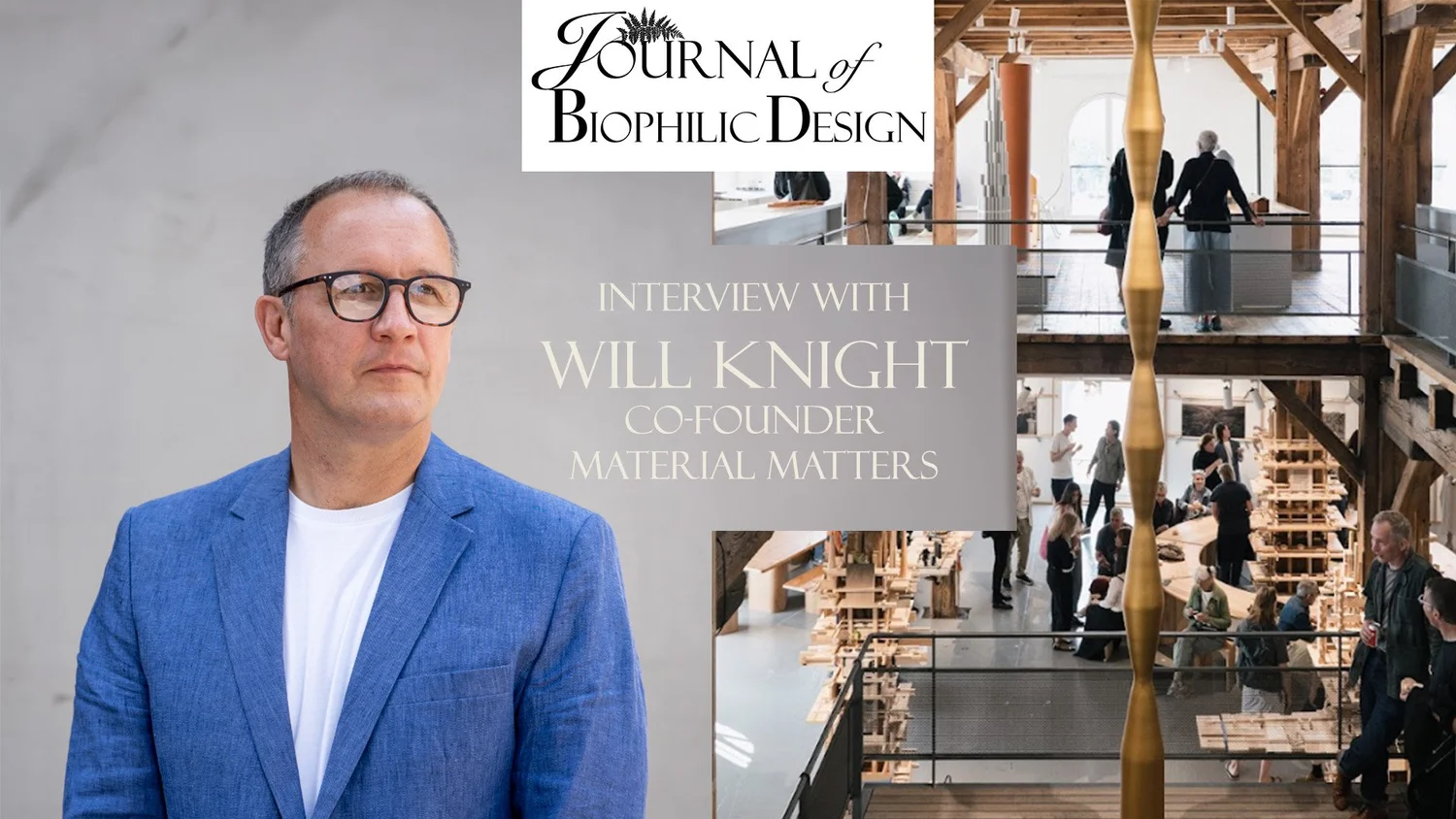
Have you ever wondered how materials shape our environment? What happens when design meets nature? If you’re craving a fresh perspective on sustainable, regenerative design, dive deep with us into the world of materials, creativity, and a future where biophilic principles transform every building, every product, and every space.
William Knight, co-founder of Material Matters, is a passionate advocate for a future where materials tell stories, innovate endlessly, and reconnect us to nature. His journey from politics to design might surprise you, but his journey has driven him to demystify material innovation that truly ins...
The Biophilic Imperative: From Sustainability to Regeneration

Biophilic Regenerative Design
Is it Utopian thinking to imagine a world architected not just to sustain, but to regenerate. A space where every brick, every plant, every human interaction pushes us closer to harmony with nature? Enrique Soler, is Design Director for Major Projects at Area, where he leads a multidisciplinary team of designers. Formerly Head of Design for Willmott Dixon Interiors, Enrique is a design visionary and passionate advocate of biophilic and regenerative spaces. In this podcast interview he takes us on a journey beyond eco-friendly clichés to uncover how biophilic design can fun...
The New Stone Age
Imagine furniture, cities and buildings that tell stories rooted in local geology, where the materials and forms echo the unique landscapes of their region. Imagine a design language spoken with local stones and traditions, elevating cultural identity. Beyond its primal beauty and ancient aura, STONE is a material that embodies sustainability, resilience, and storytelling. If you’ve ever danced barefoot on marble floors or admired the stone facades adorning historic cities, you’ve felt that deep, almost breathing connection to the earth’s history.
But how often do we truly understand this miracle of nature a...
Interview Special - Live from Workspace Design Show London 2026
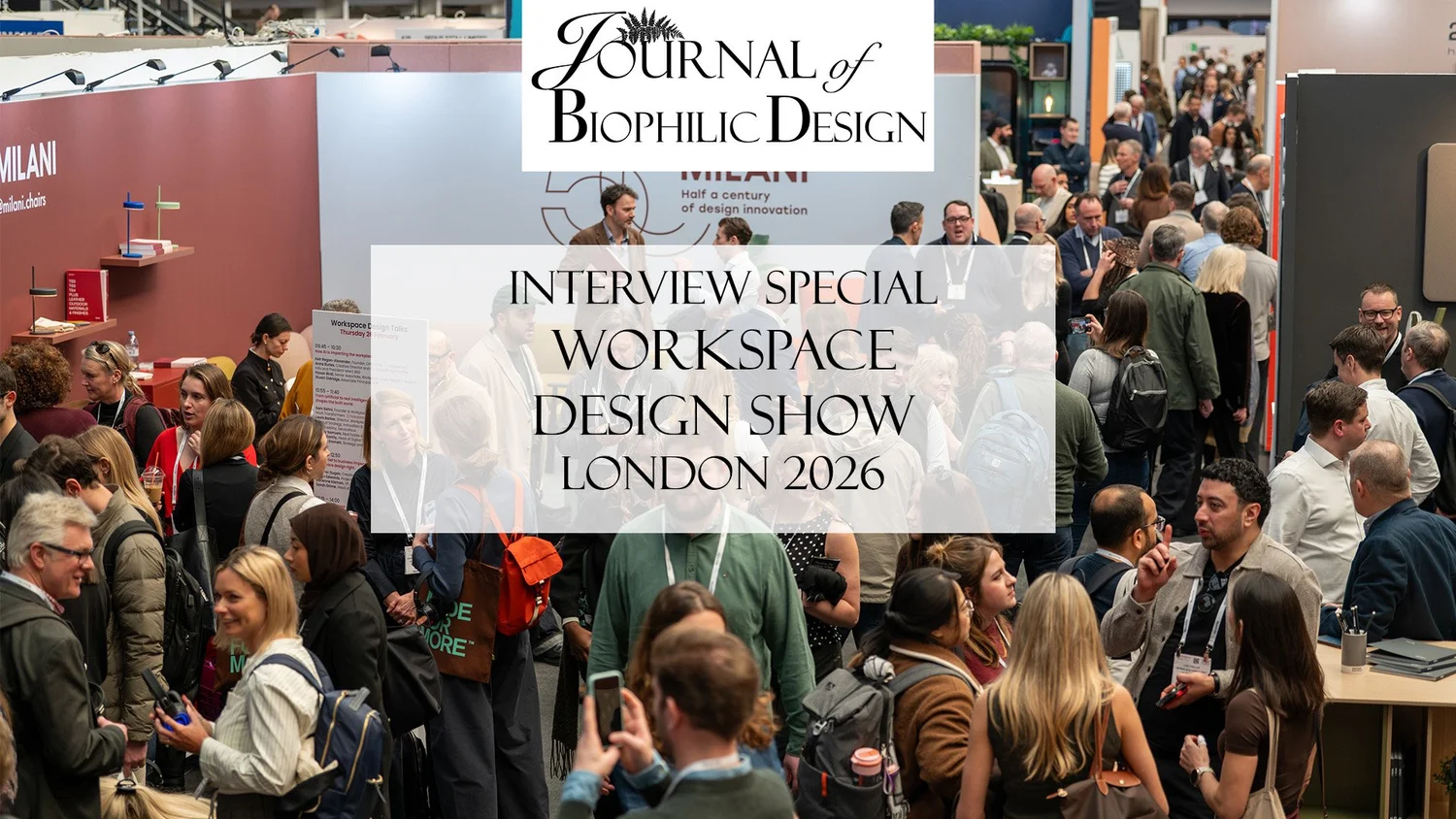
At The Workspace Design Show at the Business Design Centre in London this year, I had the privilege of chairing a dynamic panel featuring industry leaders Nicola Tomkins Head of Design for Major Projects at Overbury, Lidia Johansen Associate Environmental Consultant at chapmanbdsp and Paulo Ribeiro Head of Interior Design at Aecom. It was a lively and dynamic discussion to a full house at the show. We looked at how we could reframe Biophilia, moving from Aesthetic to a Performance System. We explored how through collaboration, sourcing and configuring the brief early we can accelerate biophilic design specification.
<...
How to Fast-track a Regenerative Future
Efforts to tackle the climate and nature crisis often focus on policy, science and activism. But according to Will Hayler, founder and CEO of The Blue Earth Summit, real transformation will only happen when entrepreneurs and investors are fully part of the conversation.
Speaking about the philosophy behind the Blue Earth Summit, Will argues that innovation and enterprise are essential if environmental solutions are to move beyond ideas and into the real economy. “If you're really serious about solving problems, you need entrepreneurs in the room,” he says.
Scaling solutions requires capita...
We spend 90% of our time indoors. Here’s how Biophilic Design can make that healthier.
We spend about 90% of our lives indoors, yet our cities, offices and homes are rarely designed with the biological reality of that fact in mind. That disconnect between humans and the natural systems we evolved within is becoming harder to ignore. Biophilic Design is a growing movement in architecture and planning, which argues that bringing nature back into the built environment is not a luxury or aesthetic flourish but a public-health, economic and social necessity.
Alexandra Bowen, founder of the Biophilic Design Community on LinkedIn, puts it bluntly: “Our minds and bodies evolved over thousands of y...
Collect 2026: Metamorphosis and the Polish Design Connection
Have you ever wondered why we feel so alive when we’re surrounded by nature? Why certain textures, materials, or natural elements spark deep emotions within us? The truth is reconnecting with nature through thoughtful design is a necessity, it is how we restore our bond with the earth and the more we do this, the more we are shaping a new way of living that sustains us all.
Polish craft and innovation is going to take centre stage at Collect 2026 which opens in London on 25 February this year 2026. Nature connection, craft and design is takin...
One minute to breathe. How images of nature can help save our A&E staff
Emergency departments are some of the most punishing workplaces in healthcare. Clinicians move in seconds from breaking catastrophic news to families, to resuscitating a dying patient, to reassuring a parent whose child has a simple fever. We rightly talk a lot about patient experience. We talk far less about what these relentless environments do to the people who work in them.
A pilot study published in the Journal of Biophilic Design suggests that something as simple as one minute of looking at nature-based art can measurably ease that burden.
The research...
Biophilic Design and Innovative Place Typologies for a New Generation of Developers
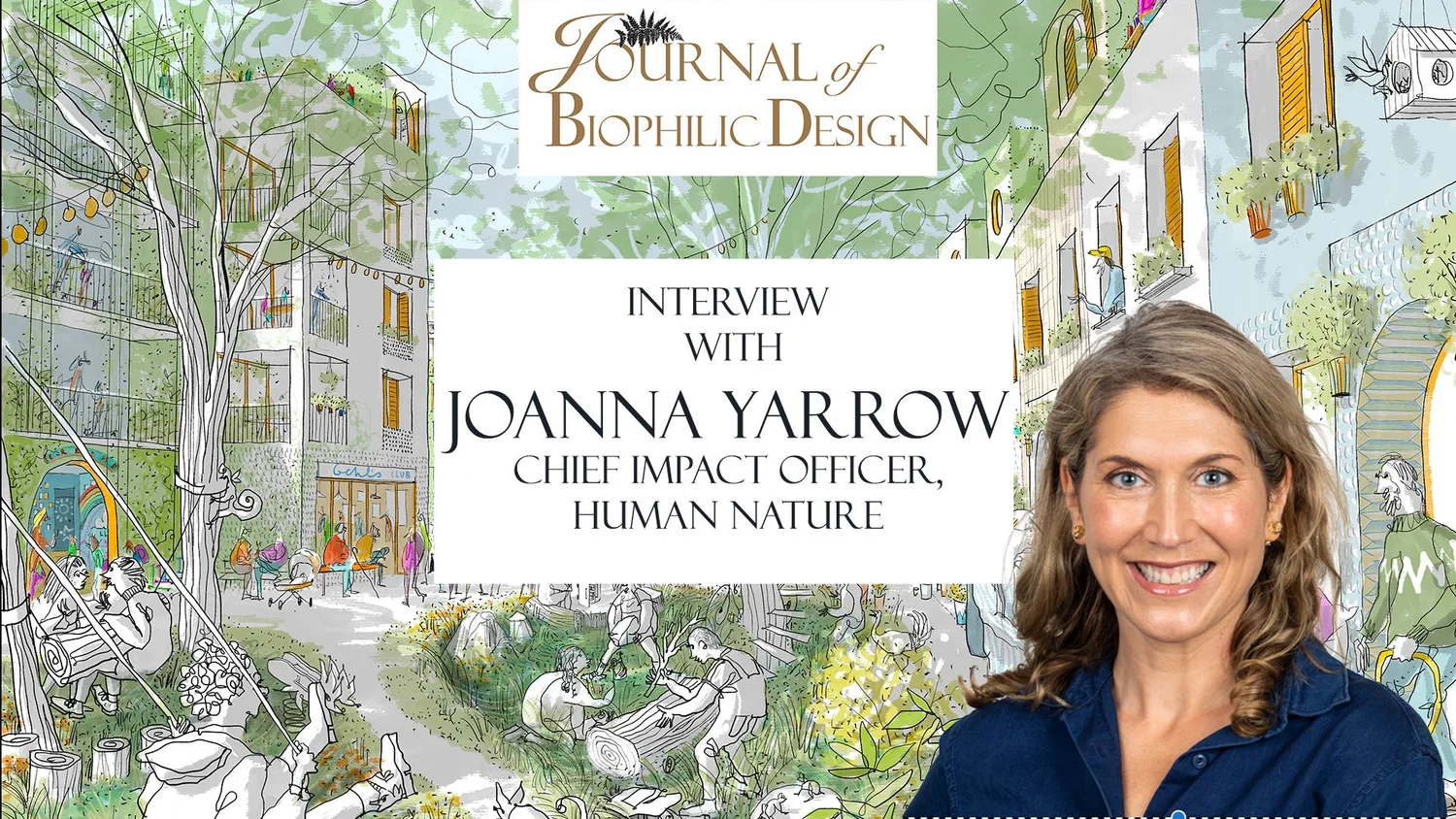
We have a climate crisis, housing shortages, and increasing urban disconnection, we need a pioneering radical approach to development that puts nature and human flourishing at its core. Human Nature, led by Joanna Yarrow, are creating living, breathing ecosystems that challenge how we normally go about urban design.
"We've boxed ourselves into a corner by having the starting point that we are separate from nature," Joanna explains. Places should not just exist alongside nature, they should be fundamentally integrated with it.
Human Nature has identified three critical place typologies that could transform how we live...
Biophilic design: buzzword or big deal? A Workplace Geeks investigation™️

Welcome to this special episode of the Journal of Biophilic Design podcast.
We’re really excited to share this feature from our very first Biophilic Design Conference, which took place at the iconic Barbican Centre in London. It was a landmark moment — the UK’s first-ever conference dedicated entirely to biophilic design — and we were joined by an amazing lineup of experts, designers and researchers exploring how connecting people and nature through design can transform our buildings and cities.
This year’s conference is back — bigger and better than ever — at Westminster Central Hall in London on Sunday, 17th Nove...
Can a Biophilic Strategy redefine our Urban Future?

"The way we've conceived cities for the past 100 years has been far too extractive, far too one-dimensional. We need cities that are more productive, multi-dimensional, and adaptable." Ludo Pittie leads WSP’s 75-strong UK landscape and urban design team, guiding the company’s landscape strategy and design thinking, and is also driving a global WSP exploration of ‘the Future Ready Landscape’ which strives to anticipate future needs, and embed adaptable design practices to create sustainable places that are ready for today and tomorrow.
Urban spaces should be biophilic interconnected systems that prioritise human and ecological wellbeing. T...
Urban Biophilia - SUGi’s Pocket Forests Are Rewilding City Life

SUGi creates pocket forests that breathe life into urban spaces. Founded in London and now operating in over 50 cities worldwide, SUGi uses the innovative Miyawaki method to transform small urban areas into thriving, biodiverse ecosystems.
In a space the size of a tennis court, they can plant approximately 600 trees that grow rapidly, creating a mature forest in just a fraction of the time nature would typically require. Adrian Wong, UK Forest Lead, explains, "If nature did it naturally, it usually takes 150 to 500 years for a forest to mature. We supercharge that process."
Blurring Boundaries, Biophilia and US Modernist Architecture

US Modernist architecture and Biophilic Design share a philosophical alignment, both fundamentally committed to creating human-centric spaces that celebrate our intrinsic connection to nature. By prioritising natural light, material authenticity, and design that responds to human behavioural patterns, these approaches transform buildings from mere shelters into living, breathing environments.
Architects like Frank Lloyd Wright and Richard Neutra were pioneering biophilia decades before the term existed as a design principle, strategically integrating large windows, natural materials, and designs that blur indoor-outdoor boundaries. Their work demonstrates that truly great architecture isn't about imposing human structures on the la...
Digital Nature

Did you know 10 million people watched the first episode of Planet Earth III – the same number who visit the Peak District annually? We're hungry for nature, even if we can't always access it directly.
Imagine escaping the concrete jungle without leaving your desk. What if your smartphone could transport you to a misty bluebell woodland or the thundering heart of an Icelandic volcano? Welcome to the future of nature connection – where technology becomes your gateway to mental restoration. We speak with environmental psychologist Dr Alex Smalley about his research on virtual nature and Tim Daniels co-f...
Beyond Carbon - Oliver Heath on Biophilic Regenerative Design

"We're facing enormous challenges - climate crisis, biodiversity loss, social and economic inequity. These are complex, interlinked issues that we cannot solve by simply focusing on embedded and operational carbon." In the urgent battle against climate change, the built environment stands at a critical crossroads. Oliver Heath, well known global biophilic design expert, explains how Biophilic Design offers a transformative approach that goes far beyond superficial sustainability efforts.
Biophilic design represents a holistic solution, reimagining our built spaces as living, breathing ecosystems that support not just human health, but the wellbeing of all life. It's a...
Playa Viva - where Biophilia meets Living Ecology

Nestled along Mexico's Pacific coast, David Leventhal's Playa Viva is redefining hospitality through a radical commitment to regenerative design. More than just a boutique hotel, it's a living ecosystem where architecture breathes, nature flows freely, and every material tells a story of sustainability.
Imagine waking in a treehouse suspended among palm trees, with no doors or windows—just an uninterrupted connection to the landscape. This is Leventhal's vision: hospitality that doesn't just minimize environmental impact, but actively regenerates it.
The resort's structures are poetry in natural materials. Bamboo "bones" form parabolic ro...
Landscaping Climate Resilient Play wiith Biophilic Design

If two people could combat our growing urban disconnection, it is Adam White and Andrée Davies of Davies White Limited. I met them at our first Biophilic Design Conference at the Barbican, and immediately warmed to their infectious passion for better landscape design. Design which helps reimagine spaces from playgrounds to hospitals through a beautiful and playful biophilic lens, pulling on our emotional responses to nature.
They construct, if you will, beautiful narratives of human-nature coexistence. Instead of viewing landscapes as static backdrops, they help encourage us to understand them as dynamic, living systems tha...
The Urgent Need for Urban Trees and How Biophilic Design can help

Cities face unprecedented environmental challenges, and it’s no secret that trees offer multiple solutions: reducing urban temperatures, mitigating noise pollution, improving air quality, and supporting mental and physical health. So why then aren’t we planting trees wherever there’s opportunity?
As Biophilic Design practitioners, we can help hold this door open to help explain why we need them and how to do it. Sue James is the Convenor for the Trees and Design Action Group (TDAG), which brings together individuals, professionals, academics and organisations from wide ranging disciplines in both the public and private sectors to imp...
Biophilic Eudaimonia!

The concept of eudaimonia, rooted in Aristotelian philosophy, is more than just happiness. Eudaimonia represents a state of good spirit and the realisation of one's full potential. It's about creating environments that support individuals in becoming their best selves across different life stages and circumstances. I sat down with Jenna Mikus to explore the concept and find out how we can weave this into Biophilic Design.
Jenna is founder of the Eudae Group and an Honorary Fellow at the University of Melbourne, and focuses on this concept, bridging engineering, philosophy, and design to create spaces th...
How to Design a Biophilic Community

Nestled in the Chattahoochee Hills, Georgia, is Serenbe, the biophilic community leading the wellness real estate and agrihood movements. It is a neighbourhood focused on wellbeing, full of fresh food and fresh air. This community is set among acres of preserved forests and meadows with miles of nature trails that connect homes and restaurants with arts and businesses.
Importantly it is a real-world example of Biophilic Design in a community development that can help us reimagine urban and town planning.
We speak with Steve Nygren, Founder and CEO who shares with u...
Architecture, Epigenetics, Biophilia and Human Health
Architects are increasingly recognising that our built environments do more than shelter us—they fundamentally shape our physical and mental wellbeing. Dr Tuwanda Green, a leading expert in biophilic design, an architect, and who sits on the board of the Biophilic Institute, has over 32 years of architectural experience including working for government design projects, and holds a doctorate in architecture from Virginia Tech. She argues that thoughtfully designed spaces using the principles of Biophilia can actually alter our genetic expression and improve generational health.
Tuwanda is an expert on Epigenetics—a field of genetic research. In our...
