The Avid Reader Show

Good books keep you thinking long after you close the covers.On The Avid Reader, host and independent bookseller Sam Hankin talks with authors about their books, the ideas behind them, and the questions they leave us asking. From fiction and history to science, philosophy, culture, and current affairs, each conversation follows curiosity wherever it leads.Expect thoughtful questions, lively exchanges, humor, and reading recommendations from someone who has read the book.Brought to you by Wellington Square Bookshop, an independent bookstore in Exton, Pennsylvania.Explore the books and shop:https://wellingtonsquarebooks.com
Amy Westervelt: How Corporations Shape What We Believe | Brought to You By
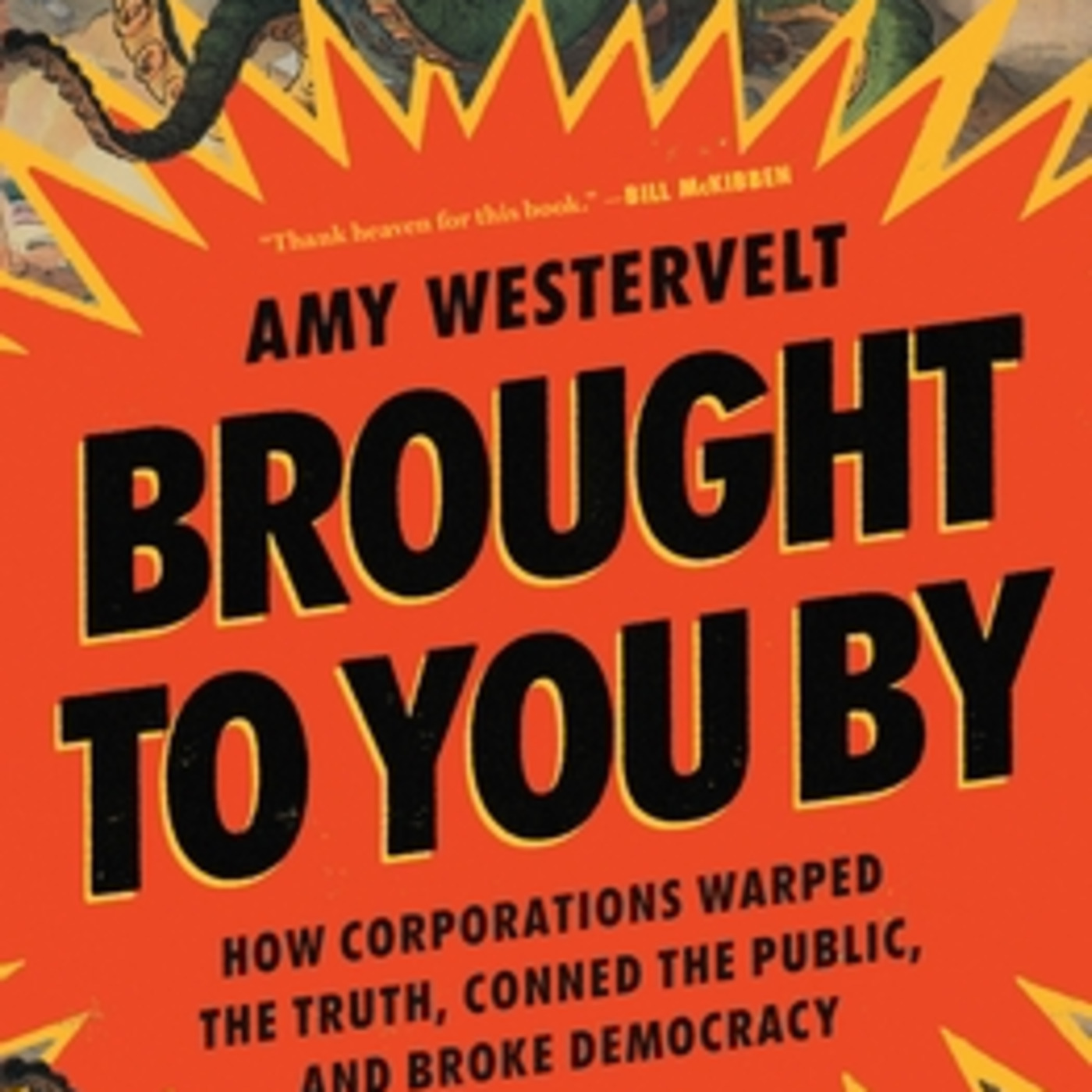
Who shapes the information you trust, and whose interests does it serve?
Investigative journalist and Drilled podcast host Amy Westervelt joins Sam Hankin on The Avid Reader to discuss Brought to You By: How Corporations Warped the Truth, Conned the Public, and Broke Democracy.
Westervelt explains what she calls “information pollution”: the ways corporate interests influence news, academic research, think tanks, and public debate. Tracing the history of public relations through figures such as Ivy Lee and Edward Bernays, she argues that today’s struggles over misinformation and artificial intelligence have roots...
Eli Burnstein: Famous Quotes We Get Wrong | Phrased & Confused
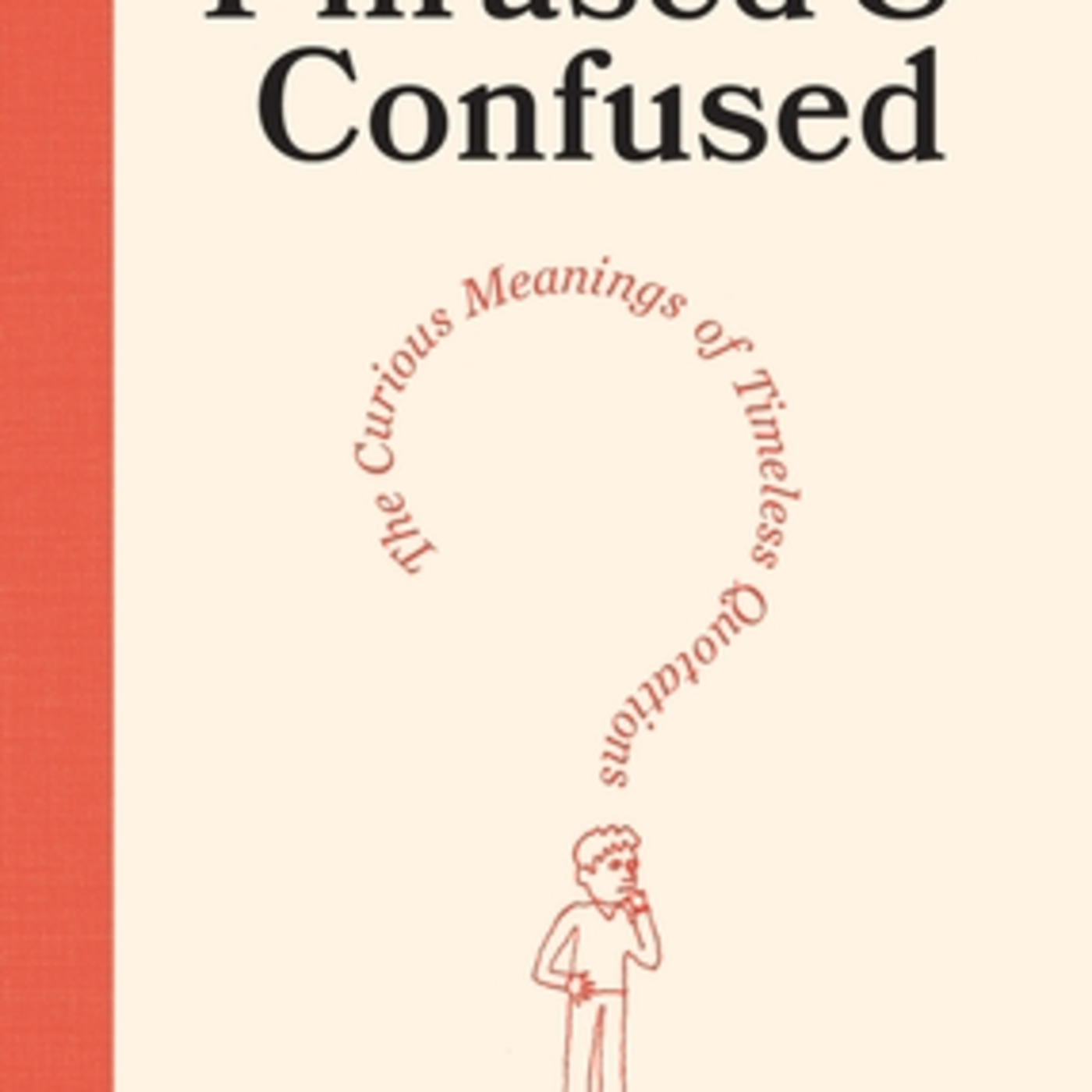
Does “seize the day” really mean what we think it does? And was Robert Frost’s “road less traveled” actually less traveled at all?
Eli Burnstein joins Sam Hankin on The Avid Reader to discuss Phrased & Confused: The Curious Meanings of Timeless Quotations and the context we lose when familiar words become slogans.
They explore Burnstein’s reading of carpe diem, the irony behind Shakespeare’s “to thine own self be true,” and why “let them eat cake” became attached to Marie Antoinette. The conversation also ventures into Descartes’ “I think, therefore I am,” the philo...
Lisa Crites: From Breast Cancer Survivor to Inventor | Beautifully Unbroken
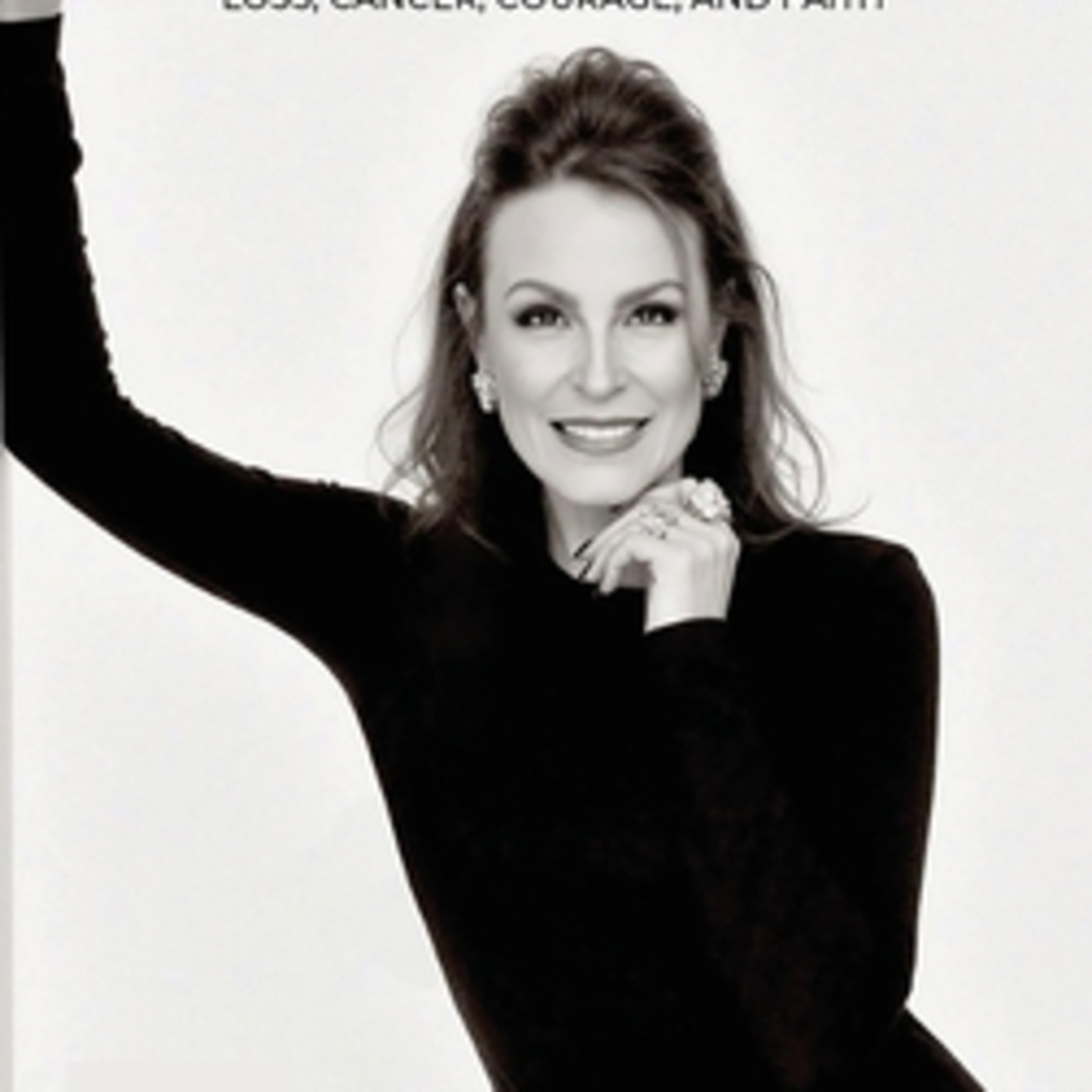
After a bilateral mastectomy, Lisa Crites found herself showering in a plastic trash bag. Her frustration became the starting point for an invention.
The former television medical reporter joins Sam Hankin on The Avid Reader to discuss Beautifully Unbroken and the experiences that led her to create The Shower Shirt, a garment designed to protect surgical sites and drains while showering.
Lisa shares how she sought guidance, challenged doubts, and brought her idea to market. She also speaks candidly about her mother’s sudden death, her own breast cancer diagnosis, and th...
Sam Roberts: Who Gets Remembered? | Are They Dead Yet?
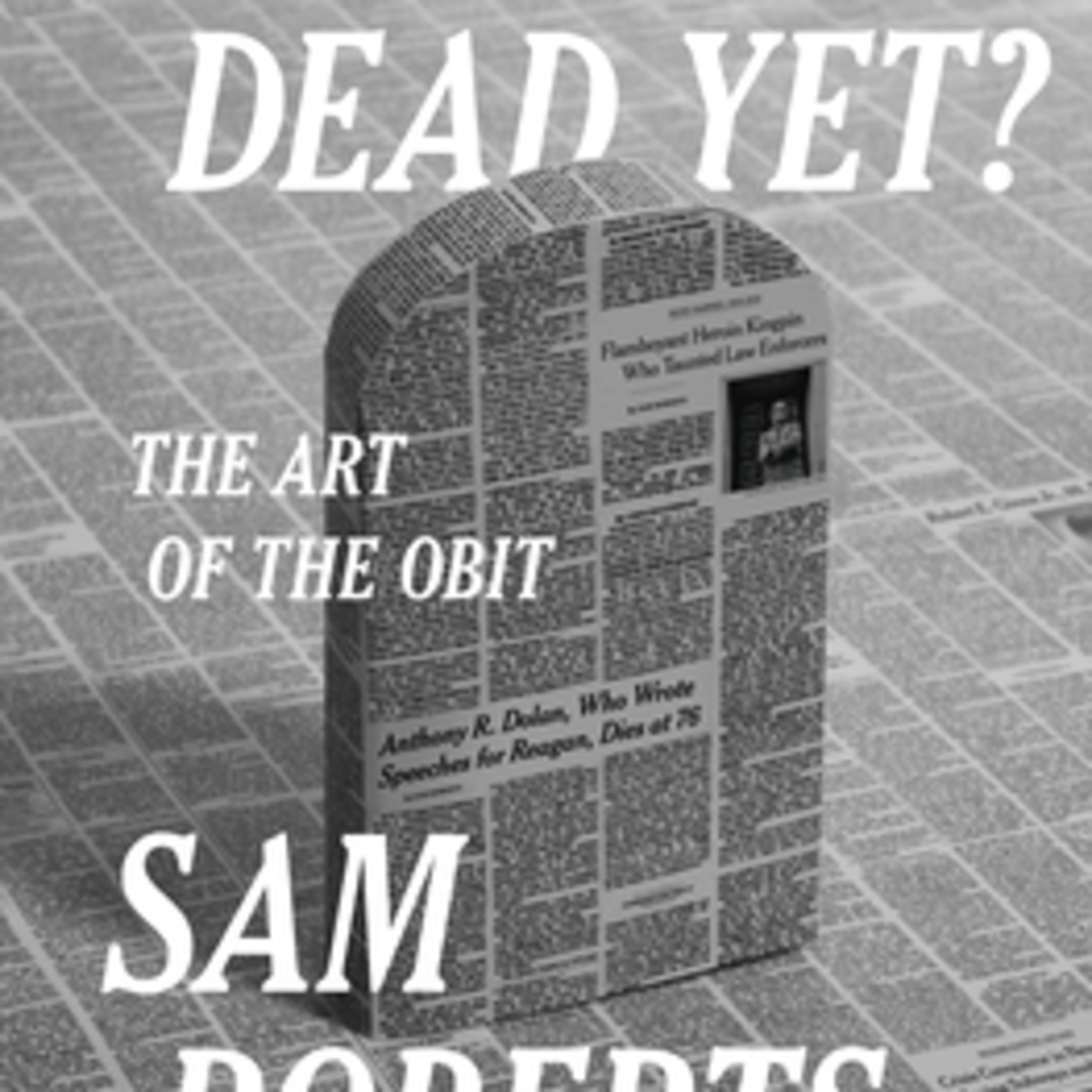
Who gets an obituary in The New York Times, and who gets overlooked?
Obituary writer Sam Roberts joins Sam Hankin on The Avid Reader to discuss Are They Dead Yet? The Art of the Obit and the difficult, revealing, often funny work of capturing a life on the page.
Starting with an AI-written obituary of Roberts himself, their conversation explores what facts alone can’t tell us about a person. Roberts describes his search for the “Rosebud moment” that changed someone’s life, the challenge of weighing achievements against misdeeds, and the deli...
Sam Kean: Lost Cities, Ancient Mysteries & The Museum of Lost Things
What have we lost that could change everything we think we know about the past?
Sam Kean returns to The Avid Reader to discuss The Museum of Lost Things, a journey through vanished treasures, forgotten knowledge, and the discoveries that bring history back into focus.
Sam and Kean explore the lost writings of the ancient world, the rediscovery of Troy, the legends surrounding Genghis Khan’s hidden tomb, and the detective work behind deciphering ancient languages. They also examine the Antikythera mechanism, an ancient Greek mechanical computer whose discovery challenged assumptions ab...
Antonio Damasio: Why We Feel, What Makes Us Conscious, and What AI Lacks
What if understanding consciousness starts with hunger, thirst, and pain?
Neuroscientist Antonio Damasio joins Sam on The Avid Reader to discuss his book, Natural Intelligence & the Logic of Consciousness. Damasio makes the case that consciousness grows out of the body's need to sustain life, with feelings helping us recognize when something is wrong and act to protect ourselves.
Their conversation explores the difference between emotions and feelings, how the vagus nerve carries information from body to brain, what dreams reveal about consciousness, and why Damasio sees biology as essential to understanding...
Keza MacDonald - Super Nintendo: The Game-Changing Company That Unlocked the Power of Play

An exuberant, behind-the-scenes look at the designers and the company that brought us Mario, Zelda, Pokémon, and so much more, illuminating Nintendo's singular ethos, its massive cultural impact, and the innovative solutions behind its creative triumphs
What magical mushroom could have turned an unassuming playing card company into one of the dominant cultural forces of the twenty-first century?
In Super Nintendo, lifelong gamer and a renowned video games journalist Keza MacDonald traces Nintendo back to its quirky beginnings in 1889. Leaping from game to game, she tells the remarkable story of the people who brought u...
Ancient Algorithms - Katrine ØGaard Jensen

In Ancient Algorithms, Katrine gaard Jensen mistranslates, rewrites, and remixes her award-winning translations of Danish Ursula Andkj r Olsen's poetry based on a series of self-imposed rules and rituals in collaboration with poets Sawako Nakayasu, Aditi Machado, CAConrad, Baba Badji, Paul Cunningham, and Ursula Andkj r Olsen herself. Envisioned as a shared debut, this collection of collaborative poems is equal parts exercise and exorcism, a haunting of literary influences that repositions translation as the very act of writing--exploring what it means for something to be an original, a translation, a poem.
Katrine Øgaard Jensen is a Danish p...
Elegy in Blue - Mark Helprin

Told in an exceptional literary voice, mixing comedy and tragedy, Elegy in Blue is a hymn to New York, memory, loyalty, and love.
High in a subsidized studio apartment, the unnamed 82-year-old narrator of Elegy in Blue looks out across the rooftops of Brooklyn all the way to the sea.
His distinguished career on Wall Street is in ruins, his mansion in Brooklyn Heights has been burned to the ground, and most of all, his father, his son, and his wife—the stunningly beautiful and equally kind Clare—have been taken from him, one by one...
Marcus Hall - Our Bodies, Our Planet: A Parasite's History of Us

In praise of parasites, a surprising exploration of the profound impact of biological freeloaders on human history and our daily lives.
Parasites and parasitic relationships are fundamental to life on Earth and to human history. Our Bodies, Our Planet explores how vital they are. Unlike harmful pathogens, parasites may produce no ill effects and may even improve our well-being and the lives of the creatures that surround us. Marcus Hall shows how our fellow travelers have evolved to help keep us alive, or else they themselves will perish. Parasitism is a phenomenon of partnership, and the association o...
Andreas Marks - Japan's Manga Revolution: From Painted Scrolls to Comic Books 1680-1920

Manga didn’t begin in the 20th century — it emerged from a rich, inventive world of illustrated books in early Japan. 🇯🇵📚 In Japan’s Manga Revolution, art historian Andreas Marks takes us through the playful, dramatic, and groundbreaking works that defined Japanese visual storytelling: Hokusai’s sketchbooks, Utamaro’s creature studies, serialized adventure sagas, and the first publication to ever use the word manga.
Discover how these early innovations set the stage for the global manga culture we know today.
Dr. Andreas Marks is the Mary Griggs Burke Curator of Japanese and Korean Art and Director of the Clark Center...
Eric Rath - Kanpai: The History of Sake

Lift a glass to the story of sake—from Japanese homebrew to global phenomenon.
Sake, Japan’s iconic rice-based alcoholic drink, has been central to Japanese culture for over 1,300 years. Traditionally made with rice, water, and koji mold, it was consumed in early brewpubs and was vital to samurai rituals and festivals. Sake’s story includes homebrewers like clan matriarchs, ancient princes, and modern political activists who defied laws to keep homebrewing alive. Temples refined sake-making techniques, laying the foundation for a thriving industry that became a major economic force for shoguns and the modern state.
Kanpa...
Steve Ramirez - How to Change a Memory: One Neuroscientist's Quest To Alter The Past

A disarmingly personal account of the new science of memory manipulation by one of today's leading pioneers in the field
As a graduate student at MIT, Steve Ramirez successfully created false memories in the lab. Now, as a neuroscientist working at the frontiers of brain science, he foresees a future where we can replace our negative memories with positive ones. In How to Change a Memory, Ramirez draws on his own memories--of friendship, family, loss, and recovery--to reveal how memory can be turned on and off like a switch, edited, and even constructed from nothing.
...
William O. Stephens - Marcus Aurelius: Philosopher-King

The moving life and legacy of Rome’s great emperor philosopher.
This book guides us through the fascinating life and writings of Marcus Aurelius, Stoic philosopher and Roman emperor. Philosopher William O. Stephens explores Marcus’s reluctant rise to power, his marriage, and his efforts to mold his son into a just successor. He examines Marcus’s Stoic tenets as he describes the struggles of dealing with a fifteen-year pandemic, the betrayal of a trusted general, social upheaval centered on a new “superstition” (Christianity), and how Marcus’s determination to stabilize the empire’s borders resulted in strife, broken t...
James Barrat - The Intelligence Explosion: When AI Beats Humans At Everything

With the rapid rise of generative artificial intelligence, both existential fears and uncritical enthusiasm for AI systems have surged. In this era of unprecedented technological growth, understanding the profound impacts of AI — both positive and negative — is more crucial than ever.
In The Intelligence Explosion, James Barrat, a leading technology expert, equips readers with the tools to navigate the complex and often chaotic landscape of modern AI. This compelling book dives deep into the challenges posed by generative AI, exposing how tech companies have built systems that are both error-prone and impossible to fully interpret.
Thro...
Michaela Vieser & Isaac Yuen - The Sound Atlas: A Guide to Strange Sounds across Landscapes and Imagination

Mapping the acoustic onto the human soul, moving meditations on the power and meaning of sound.
Nature writers Michaela Vieser and Isaac Yuen set out in search of sounds beautiful and loathsome, melodious and disturbing, healing, strange, and intimate. The phenomena of sound may be fleeting and evanescent, but the memory of it can open a window into the soul, deepening our connections with time, the environment, and each other. From the edge of the solar system to the crackle of arctic sea ice, from the ancient oracle site of Dodona to the singing pillars of Hampi, e...
Mary Roach - Replaceable You: Adventures In Human Anatomy

From the New York Times best-selling author of Stiff and Fuzz, a rollicking exploration of the quest to re-create the impossible complexities of human anatomy.
The body is the most complex machine in the world, and the only one for which you cannot get a replacement part from the manufacturer. For centuries, medicine has reached for what’s available—sculpting noses from brass, borrowing skin from frogs and hearts from pigs, crafting eye parts from jet canopies and breasts from petroleum by-products. Today we’re attempting to grow body parts from scratch using stem cells and 3D printe...
Svend Brinkmann - The Experience Society: Life Beyoned Subjectivity

An enlightening look at how our elevation of the sensorial and the subjective has impaired our ability to connect—and how we might build that connection back.
In today’s so-called experience society, everything is judged by personal experience, from online shopping to funerals. Value is measured by how satisfying an individual finds their experience, and the experience economy thrives on this desire for entertainment and fulfillment. Yet debates often reach an impasse when reduced to subjective feelings—whether offense is taken or criticisms are dismissed. Svend Brinkmann explores this cultural shift, examining how our reliance on subject...
Einstein in Oxford - Andrew Robinson

An intimate account of Albert Einstein’s visit to Oxford in the 1930’s, casting new light on why he continues to be the world’s most famous scientist.
In 1931, Albert Einstein visited Oxford to receive an honorary degree and lecture on relativity and the universe. While teaching, he naturally chalked equations and diagrams on several blackboards. Today, one of these boards is the most popular object in Oxford’s History of Science Museum. Yet Einstein tried to prevent its preservation because he was modest about his legendary status. Having failed, he complained to his diary: “Not even a cart-hor...
Hidden in the Heavens - Jason Steffen

Are we alone in the universe? It’s a fundamental question for Earth-dwelling humankind. Are there other worlds like ours, out there somewhere? In Hidden in the Heavens, Jason Steffen, a former scientist on NASA’s Kepler mission, describes how that mission searched for planets orbiting Sun-like stars—especially Earth-like planets circulating in Earth-like orbits. What the Kepler space telescope found, Steffen reports, contradicted centuries of theoretical and observational work and transformed our understanding of planets, planetary systems, and the stars they orbit. Kepler discovered thousands of planets orbiting distant stars—a bewildering variety of celestial bodies, including rocky planets...
Ciara Greene and Gillian Murphy - Memory Lane: The Perfectly Imperfect Ways We Remember

We tend to think of our memories as impressions of the past that remain fully intact, preserved somewhere inside our brains. In fact, we construct and reconstruct our memories every time we attempt to recall them. Memory Lane introduces readers to the cutting-edge science of human memory, revealing how our recollections of the past are constantly adapting and changing, and why a faulty memory isn’t always a bad thing.
Shedding light on what memory is and what it evolved to do, Ciara Greene and Gillian Murphy discuss the many benefits of our flexible yet fallible memory sy...
David Bates - An Artificial History of Natural Intelligence

A new history of human intelligence that argues that humans know themselves by knowing their machines.
We imagine that we are both in control of and controlled by our bodies—autonomous and yet automatic. This entanglement, according to David W. Bates, emerged in the seventeenth century when humans first built and compared themselves with machines. Reading varied thinkers from Descartes to Kant to Turing, Bates reveals how time and time again technological developments offered new ways to imagine how the body’s automaticity worked alongside the mind’s autonomy. Tracing these evolving lines of thought, An Artificial Histor...
Gareth Gore - Opus

A thrilling exposé recounting how members of Opus Dei—a secretive, ultra-conservative Catholic sect—pushed its radical agenda within the Church and around the globe, using billions of dollars siphoned from one of the world’s largest banks.
In an era of disinformation and deep fakes, here is a real-life conspiracy which hid in plain sight for more than sixty years. Gore tells a shocking story of money and power that spans decades and continents. Documenting Opus Dei’s secret history for the first time, this thrilling work of investigative storytelling raises important questions about the dark forces th...
Jonathan Silvertown - Selfish Genes to Social Beings: : A Cooperative History of Life

For all the "selfishness" of genes, they team up to survive. Is the history of life in fact a story of cooperation?
Amid the violence and brutality that dominates the news, it's hard to think of ourselves as team players. But cooperation, Jonathan Silvertown argues, is a fundamental part of our make-up, and deeply woven into the whole four-billion-year history of life. Starting with human society, Silvertown digs deeper, to show how cooperation is key to the cells forming our organs, to symbiosis between organisms, to genes that band together, to the dawn of life itself. Cooperation...
Elizabeth Winder - Parachute Women: The Women Behind The Rolling Stones

Parachute Women: Marianne Faithfull, Marsha Hunt, Bianca Jagger, Anita Pallenberg, and the Women Behind the Rolling Stones
Discover the true story of the four women who worked tirelessly behind the scenes to help shape and curate the image of The Rolling Stones—perfect for fans of Girls Like Us.
The Rolling Stones have long been considered one of the greatest rock-and-roll bands of all time. At the forefront of the British Invasion and heading up the counterculture movement of the 1960s, the Stones' innovative music and iconic performances defined a generation, and fifty years later, th...
Jim Baggott - Quantum Drama: From the Bohr-Einstein Debate to the Riddle of Entanglement

The definitive account of the great Bohr-Einstein debate and its continuing legacy
In 1927, Niels Bohr and Albert Einstein began a debate about the interpretation and meaning of the new quantum theory. This would become one of the most famous debates in the history of science. At stake were an understanding of the purpose, and defense of the integrity, of science. What (if any) limits should we place on our expectations for what science can tell us about physical reality?
Our protagonists slowly disappeared from the vanguard of physics, as its centre of gravity shifted from...
Lewis Cohen MD - Winter's End: Dementia and Dying

Arguably among the worst of all medical afflictions, the dementias slowly destroy one's personality, take a tremendous emotional, physical, and financial toll on patients and families, and are irreversible and inexorably fatal. Winter's End: Dementia and Its Life-Shortening Options is constructed around a lengthy and detailed nonfiction account that is layered with the voices of approximately 100 palliative medicine practitioners, legal scholars, bioethicists, social workers, nurses, neurologists, psychiatrists, and other authorities from North America and Europe.
This book explores how and when one might prepare to foreshorten life after being diagnosed with a dementing illness, while not ignoring...
Rowan Jacobsen - Wild Chocolate: Across the Americas in Search of Cacao's Soul

When Rowan Jacobsen first heard of a chocolate bar made entirely from wild Bolivian cacao, he was skeptical. The waxy mass-market chocolate of his childhood had left him indifferent to it, and most experts believed wild cacao had disappeared from the rainforest centuries ago. But one dazzling bite of Cru Sauvage was all it took. Chasing chocolate down the supply chain and back through history, Jacobsen travels the rainforests of the Amazon and Central America to find the chocolate makers, activists, and indigenous leaders who are bucking the system that long ago abandoned wild and heirloom cacao in favor...
Debbie Urbanski - After World

A groundbreaking debut that follows the story of an Artificial Intelligence tasked with writing a novel—only for it to fall in love with the novel’s subject, Sen, the last human on Earth.
Faced with uncontrolled and accelerating environmental collapse, humanity asks an artificial intelligence to find a solution. Its answer is simple: remove humans from the ecosystem.
Sen Anon is assigned to be a witness for the Department of Transition, recording the changes in the environment as the world begins to rewild. Abandoned by her mother in a cabin somewhere in Upstate New York...
Roz Dineen - Briefly Very Beautiful: A Novel

Roz Dineen’s Briefly Very Beautiful is a spellbinding dystopian novel about the lengths one will go to for their children in a world teetering on the edge of apocalypse.
In a land destabilized by unsafe air, wildfires, floods, viruses, supply shortages, and homegrown terror, Cass is raising three small children by herself in the city. Her husband, Nathaniel, has gone all too willingly to serve as a medic in an overseas war.
His absence, and Cass’s isolation, has brought her into an exhausted but harmonious rhythm with the children; while it’s a frighte...
Chris French - The Science Of Weird Shit: Why Our Minds Conjure The Paranormal

An accessible and gratifying introduction to the world of paranormal beliefs and bizarre experiences.
Ghostly encounters, alien abduction, reincarnation, talking to the dead, UFO sightings, inexplicable coincidences, out-of-body and near-death experiences. Are these legitimate phenomena? If not, then how should we go about understanding them? In this fascinating book, Chris French investigates paranormal claims to discover what lurks behind this “weird shit.” French provides authoritative evidence-based explanations for a wide range of superficially mysterious phenomena, and then goes further to draw out lessons with wider applications to many other aspects of modern society where critical thinking is urge...
Adam Forrest Kay - Escape From Shadow Physics: The Quest to End the Dark Ages of Quantum Theory

The received wisdom in quantum physics is that, at the deepest levels of reality, there are no actual causes for atomic events. This idea led to the outlandish belief that quantum objects—indeed, reality itself—aren’t real unless shaped by human measurement. Einstein mocked this idea, asking whether his bed spread out across his room unless he looked at it. And yet it remains one of the most influential ideas in science and our culture.
In Escape from Shadow Physics, Adam Forrest Kay takes up Einstein’s torch: reality isn’t mysterious or dependent on human measurement...
Christy Spackman: The Taste of Water Sensory Perception and the Making of an Industrialized Beverage

Have you ever wondered why your tap water tastes the way it does? The Taste of Water explores the increasing erasure of tastes from drinking water over the twentieth century. It asks how dramatic changes in municipal water treatment have altered consumers’ awareness of the environment their water comes from. Through examining the development of sensory expertise in the United States and France, this unique history uncovers the foundational role of palatability in shaping Western water treatment processes. By focusing on the relationship between taste and the environment, Christy Spackman shows how efforts to erase unwanted tastes and smells ha...
Martin Fitzgibbon - Behind The Curtain: My Life And Rocky Horror

It's 1973 and The Rocky Horror Show is about to be launched onto an unsuspecting world for the first time. Martin Fitzgibbon was the young drummer recruited specifically to play an integral part in the show's success. Here, for the first time, Martin gives his unique insight into how the show and its participants became an overnight success and created a cultural phenomenon which fifty years on still reverberates around the world.
But there was a life before and after "Rocky" too, which although not straightforward, was overwhelmingly one of fun, laughter and surprises.
Behind The...
Anne Curzan - Says Who? A Kinder, Funner Usage Guide for Everyone Who Cares About Words

A kinder, funner usage guide to the ever-changing English language and a useful tool for both the grammar stickler and the more colloquial user of English, from linguist and veteran professor Anne Curzan
Our use of language naturally evolves and is a living, breathing thing that reflects who we are. Says Who? offers clear, nuanced guidance that goes beyond “right” and “wrong” to empower us to make informed language choices. Never snooty or scoldy (yes, that’s a “real” word!), this book explains where the grammar rules we learned in school actually come from and reveals the forces that dr...
Sadie Dingfelder - Do I Know You? A Faceblind Reporter's Journey into the Science of Sight, Memory, and Imagination

An award-winning science writer discovers she’s faceblind and investigates the neuroscience of sight, memory, and imagination—while solving some long-running mysteries about her own life.
Science writer Sadie Dingfelder has always known that she’s a little quirky. But while she’s made some strange mistakes over the years, it’s not until she accosts a stranger in a grocery store (whom she thinks is her husband) that she realizes something is amiss.
With a mixture of curiosity and dread, Dingfelder starts contacting neuroscientists and lands herself in scores of studies. In the course of her ner...
Jamie Collinson - The Rejects: An Alternative History of Popular Music

Imagine you've made it. You and your friends have hit the big time in music and you're going to be a star. But then, quite suddenly, it's over. Your best friends don't want you anymore, and you're on the outside. Perhaps they're tired of your bad habits, they think you're not good enough, or they sense you just don't want it as much as they do. Whatever the cause, you're a reject. So, what do you do next?
Featuring a player rejected by both Nirvana and Soundgarden who became a decorated special forces soldier, Britpoppers who spiralled...
Theodore P. Snow & Don Brownlee - The Sixth Element: How Carbon Shapes Our World

A cosmic perspective on carbon--its importance in the universe and our lives
When we think of carbon, we might first think of a simple element near the top of the periodic table: symbol C, atomic number 6. Alternatively, we might think of something more tangible--a sooty piece of coal or a sparkling diamond, both made of carbon. Or, as Earth's temperature continues to rise alarmingly, we might think of the role carbon plays in climate change. Yet carbon's story begins long ago, far from earthly concerns. In The Sixth Element, astronomers Theodore Snow and Don Brownlee tell the...
Kenneth Miller - Mapping The Darkness: The Visionary Scientists Who Unlocked The Mysteries Of Sleep

From award-winning journalist Kenneth Miller comes the definitive story of the scientists who set out to answer two questions: “Why do we sleep?” and "How can we sleep better?”
A century ago, sleep was considered a state of nothingness—even a primitive habit that we could learn to overcome. Then, an immigrant scientist and his assistant spent a month in the depths of a Kentucky cave, making nationwide headlines and thrusting sleep science to the forefront of our consciousness.
In the 1920s, Nathaniel Kleitman founded the world’s first dedicated sleep lab at the University of Chicago...
Chris Haufe - Fruitfulness: Science, Metaphor, and the Puzzle of Promise

Some ideas seem to possess a disproportionate ability to lead to new insights, new discoveries, new ideas, and even entirely new ways of thinking. Such ideas are said to be fruitful. Looking across the history of science and mathematics, we see creative minds preoccupied with the search for ideas of this kind. More precious than truth, but far less plentiful, fruitful ideas provide those in pursuit of knowledge with a seemingly bottomless well of innovation from which to draw as they attempt to solve new problems and to refine solutions to old ones. Seasoned researchers have a nose for...
