Knowledge at Wharton
The Knowledge at Wharton feed features standout episodes from across the Wharton Podcast Network. Discover timely conversations and expert insights on business, markets, leadership, innovation, and the forces shaping the global economy. Hosted on Acast. See acast.com/privacy for more information.
How AG1 Built Trust Through Podcast Marketing
How did AG1 turn podcast advertising into a powerful engine for trust and growth?
Paulie Dery, Chief Marketing Officer at AG1, explains why the company invested early in podcast advertising and built long-term relationships with hosts who genuinely use the product. He discusses how AG1 measures both brand impact and conversions, why authenticity is essential to host-read advertising, and how the company protects its premium positioning.
Dery also shares the strategy behind the transition from Athletic Greens to AG1, lessons from his time at YETI, AG1’s expansion into Costco and Target, and ho...
The Analytics Behind Baseball's Small-Market Success

Baseball's biggest advantages are not always bought with the biggest payroll.
Mike Petriello, Major League Baseball's Director of Stats and Research, explains how teams such as the Milwaukee Brewers use Statcast, plate discipline, player development, and tailored matchups to compete with the sport's biggest spenders. He also examines the data behind Shohei Ohtani's postseason struggles, what swing path and pitch shape reveal about hitters, and why analytics only matter when coaches and players can put them into action.
Hosted on Acast. See acast.com/privacy for more information.
Why Consumers Are Still Spending Despite Inflation

Consumers are still spending, but their priorities are changing.
Barbara Kahn, Patty and Jay H. Baker Professor of Marketing at the Wharton School of the University of Pennsylvania, explains why retail sales remain resilient despite inflation and economic uncertainty.
She explores the growing demand for value, wellness, and memorable experiences, the challenges facing aspirational luxury brands, and the uneven performance of shopping malls. Kahn also discusses how retailers can respond to changing consumer behavior while managing inventory, debt, costs, and expansion.
Hosted on Acast. See acast.com/privacy for more information.<...
The Business of Signing a Superstar Athlete
What happens when a superstar athlete joins a new team? The impact goes far beyond the basketball court.
Kenneth Shropshire, Professor Emeritus of Legal Studies and Business Ethics at the Wharton School, examines the expectations surrounding LeBron James and the Philadelphia 76ers. From ticket sales and team culture to community engagement and special treatment for star players, Shropshire explains the business opportunities and challenges that come with signing a superstar.
Hosted on Acast. See acast.com/privacy for more information.
How Liquid Death Builds Marketing That Wins the Internet
Most brands compete against other brands. Liquid Death competes against entertainment.
Greg Fass, Vice President of Marketing at Liquid Death, joins Barbara Kahn and Americus Reed to explain how the company builds campaigns designed to “win the internet.” From hiring comedians and creators instead of traditional marketers to developing ideas in a writer’s room environment, Greg shares the unconventional approach behind one of the most talked-about brands in marketing.
They discuss why most people distrust marketing, how humor drives sharing, what brands can learn from entertainment, and the creative process behind some of Liq...
AI’s Impact on Financial Services
Artificial intelligence is changing how financial professionals research, analyze information, and get work done — while raising new questions about the skills people will need in an AI-enabled industry.
In this episode, host and Wharton professor Itay Goldstein speaks with Wharton professor emeritus Jeremy Siegel and Jeremy Schwartz, Global Chief Investment Officer at WisdomTree, about AI’s impact on financial services. They discuss the technology’s potential to increase productivity, transform investment research and workflows, reshape the financial workforce, and change how firms think about hiring and developing talent. They also examine why human judgment, trust, and accoun...
AI, Financial Markets, and the Economy
AI is driving enormous investment and soaring valuations, but what do financial markets reveal about its long-term economic impact?
Jesús Fernández-Villaverde, Howard Marks Presidential Professor of Economics at the University of Pennsylvania, and Maryam Farboodi, Associate Professor at Cornell SC Johnson College of Business, examine how investors are pricing the promise and risk of transformative AI. They discuss why Treasury yields fell following major AI announcements, whether high AI stock valuations reflect productivity gains or speculation, and what the dot-com era can teach us about today's AI boom.
The conversation also ex...
AI and the Future of Financial Stability
AI can help financial institutions detect fraud, manage risk, and improve productivity. But when AI systems begin acting autonomously, they may also create risks at a speed and scale people cannot easily oversee.
Sarah Breeden, Deputy Governor for Financial Stability at the Bank of England, explores what agentic AI means for financial markets and financial regulation. She explains why regulators must move beyond a simple human-versus-machine framing, build meaningful accountability and guardrails around AI systems, and prepare for the potential of market feedback loops, manipulation, and collusion between autonomous agents.
Breeden also discusses...
How AI Is Transforming Quantitative Finance
AI is changing what investors can analyze, how quickly they can act, and what it takes to find an edge.
Nikolai Roussanov, Moise Y. Safra Professor of Finance at Wharton, and Ingrid Tierens, Head of the Data Strategy team in the Global Investment Research division at Goldman Sachs, explore AI's expanding role in quantitative finance. They discuss how large language models and alternative data are transforming investment research, the competitive pressure AI creates across financial markets, and why human judgment remains essential when models encounter uncertainty.
They also consider the skills finance professionals...
Tokenomics and the Social Forces Driving Crypto Markets
What determines whether a cryptocurrency succeeds or fades into obscurity? In this episode, Wharton professor Itay Goldstein speaks with Shimon Kogan, adjunct associate professor of finance at Wharton and longtime instructor of Wharton’s fintech course, to explore the economic and behavioral forces behind token success. From network effects and user adoption to coordination challenges and the phenomenon of meme coins, this conversation dives into the mechanics of tokenomics and what drives value in the world of fintech.
Editor’s Note: This episode was recorded in early summer of 2025, shortly before the passage of the GENIUS Act...
Could Stablecoins and CBDCs Be the Future of Money?
Stablecoins and central bank digital currencies (CBDCs) are at the center of a global shift in how money moves. In this episode, professor Itay Goldstein speaks with Heath Tarbert, president of Circle and former CFTC chair, about the role of stablecoins in modern finance, how they compare to CBDCs, and the regulatory frameworks needed to support their growth.
Editor’s Note: This episode was recorded in early summer of 2025, shortly before the passage of the GENIUS Act, which provides a regulatory framework for stablecoins. A lot has happened in the digital asset space since this discussion wa...
Regulating Digital Assets
As cryptocurrency moves further into the mainstream, regulators are stepping up efforts to define its legal and financial framework. But how far will regulation go, and what will it mean for investors, businesses, and the future of digital assets? In this episode, professor Itay Goldstein is joined by Wharton professor Jessica Wachter, recently the chief economist at the SEC, and former CFTC chair Timothy Massad to discuss crypto’s evolving regulatory landscape, the balance between innovation and oversight, and the geopolitical forces shaping crypto policy worldwide.
Editor’s Note: This episode was recorded in early summer of 2...
The Rise of Crypto
Cryptocurrency has evolved from a niche experiment to a global financial force. But how did we get here? In this episode, professor Itay Goldstein is joined by Duke professor Campbell Harvey and Neha Narula, director of the MIT Media Lab’s Digital Currency Initiative, to explore the milestones that led to crypto’s rise, the forces that shaped its growth, and what the crypto landscape will evolve into.
Editor’s Note: This episode was recorded in early summer of 2025, shortly before the passage of the GENIUS Act, which provides a regulatory framework for stablecoins. A lot has hap...
The NFL's Biggest 2026 Questions

Which NFL teams are the numbers backing before the 2026 season begins?
Aaron Schatz, NFL Analyst at ESPN and Chief Analytics Officer at FTN Fantasy, explains why the Houston Texans stand out in the AFC and why the Seattle Seahawks project as one of the league's strongest teams. He breaks down the Rams' Super Bowl outlook, the Bills' defense, the Eagles' path through the NFC East, and the teams that could surprise or regress.
Schatz also explores how DVOA-based forecasts account for quarterback performance, coaching changes, injuries, schedules, and the balance of offense, defense, and...
The Business of National Reputation

David Reibstein, Wharton Marketing Professor and lead researcher behind the Best Countries Report, discusses how a nation’s reputation influences investment, tourism, trade, and global influence. Drawing on data from more than 15,000 respondents worldwide, Reibstein explains why Switzerland continues to rank among the world’s most respected countries, why the United States fell out of the top 10 for the first time, how perceptions of AI differ across the globe, and why countries increasingly need to think like brands in a competitive global marketplace.
Hosted on Acast. See acast.com/privacy for more information.
Navigating Competition and Collaboration in the AI Race
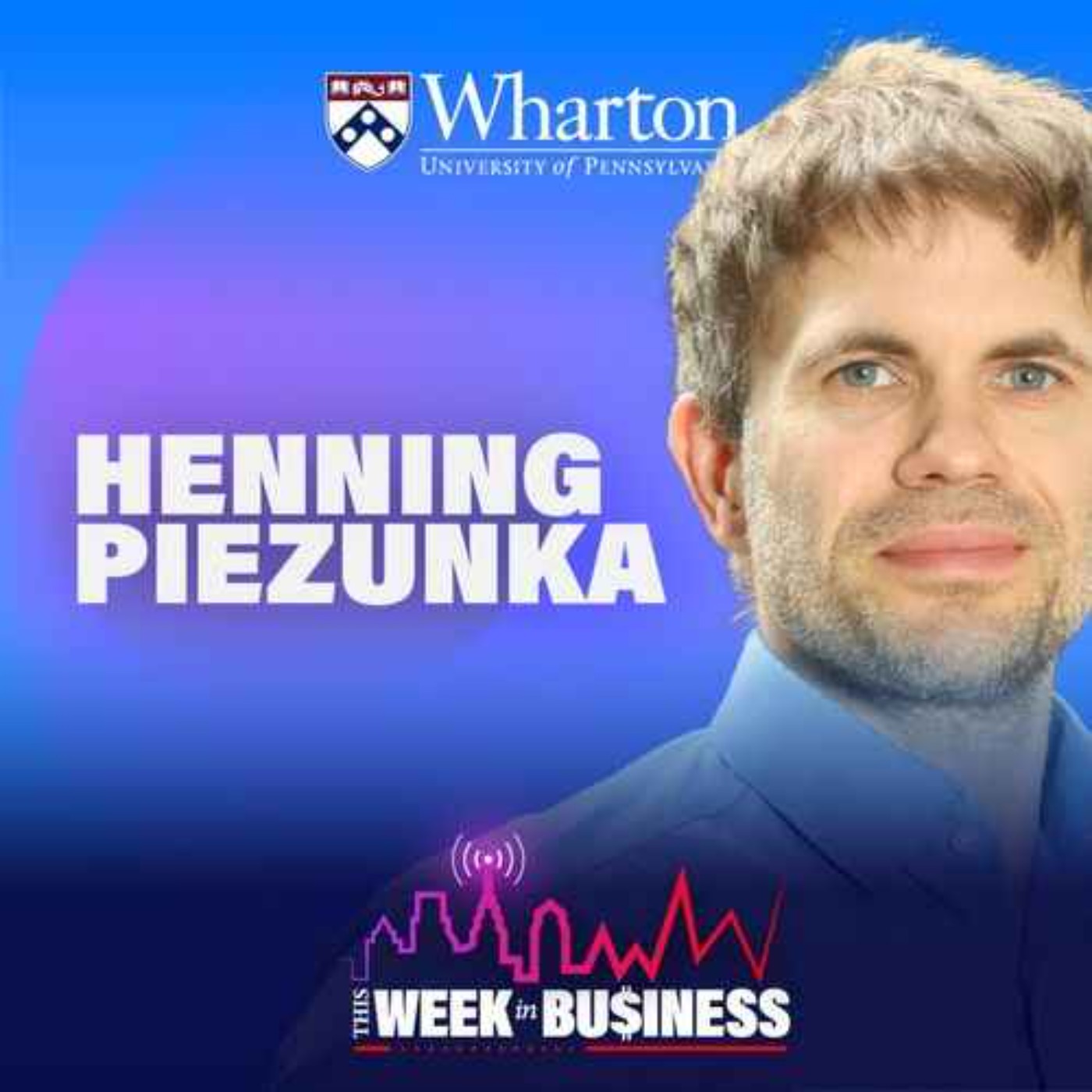
Henning Piezunka, Associate Professor of Management at the Wharton School, explores how competition in the AI industry can shift from healthy rivalry to destructive behavior, discusses the psychology behind executive decision-making, explains why successful organizations balance competition with collaboration, and shares insights from research spanning business, sports, and innovation ecosystems.
Hosted on Acast. See acast.com/privacy for more information.
Athletic Brewing’s Senior Director of Marketing, Rosalie Kennedy
Rosalie Kennedy, Senior Director of Marketing at Athletic Brewing, discusses how the company helped transform non alcoholic beer from a niche category into a mainstream lifestyle brand. Rosalie shares how Athletic Brewing built cultural relevance around wellness, taste, and social connection, why authenticity matters in a crowded beverage market, and how changing consumer behavior is reshaping the future of beer. The conversation also explores category growth, brand positioning, distribution strategy, and how Athletic Brewing is thinking about younger consumers and evolving drinking habits.
Hosted on Acast. See acast.com/privacy for more information.
Can the Sixers’ New Superteam Work?

Can the Philadelphia 76ers turn a roster featuring LeBron James, Joel Embiid, Tyrese Maxey, Jaylen Brown, and VJ Edgecombe into a championship team?
Basketball analytics pioneer and ESPN data scientist Dean Oliver joins the Wharton Moneyball team to examine how Philadelphia might distribute possessions among so many high-usage players, whether LeBron can succeed as a point forward, and who should control the ball in critical late-game situations. The conversation also explores three-point shooting, defensive concerns, and why analytics can measure player performance more easily than it can predict chemistry and fit.
Plus, the...
How to Break into the Workforce in an AI-Driven Job Market

Matthew Bidwell, Professor of Management at the Wharton School, explores how the job search process is evolving for today’s graduates and what it takes to break into the workforce. As hiring has slowed across traditional pipelines like consulting and tech, the path to a first role has become more competitive and fragmented.
In this episode, Bidwell explains how AI is transforming applications, making it easier to apply at scale while increasing competition, and shares how candidates can still stand out by leveraging networking, personal connections, and targeted outreach.
The conversation also highlights th...
How Wharton Invented Modern Business Education

Wharton dean Erika James reflects on the history, impact, and future of business education as part of Knowledge at Wharton's "American Business Innovation" series ahead of the USA's 250th anniversary.
Founded in 1881 by Joseph Wharton, the Wharton School was the world's first collegiate business school, pioneering modern business education and helping professionalize management while shaping generations of business leaders.
Learn more: https://knowledge.wharton.upenn.edu/american-business-innovation-series/?utm_medium=podcast&utm_source=acast_network
ABOUT THE SERIES
As the United States marks its 250th anniversary, hear from Wharton faculty experts as...
This Week In Business: Evaluating Greenspan's Legacy and the Evolution of Monetary Policy

Jeremy Siegel, Wharton Emeritus Professor and Senior Economist at WisdomTree, discusses Alan Greenspan's lasting impact on monetary policy, reflects on the lessons of the 2008 financial crisis, analyzes Federal Reserve Chair Kevin Warsh's early leadership, and explains why more forward-looking economic data could shape future interest rate decisions while also revisiting the long-term economic effects of Brexit.
Hosted on Acast. See acast.com/privacy for more information.
Wharton Moneyball: Breaking Down the Biggest World Cup Ever

Ryan O'Hanlon, ESPN staff writer, author of Net Gains, and Syracuse University instructor, joins the Wharton Moneyball team to analyze the expanded 2026 FIFA World Cup, assess the favorites and dark horses, evaluate the outlook for the U.S. Men's National Team, and explain how analytics-driven innovations such as set pieces and long throw-ins are transforming soccer, before Cade Massey, Adi Wyner, and Shane Jensen discuss the spread of analytics across sports, playoff unpredictability, tournament design, and the evolving impact of NIL on college athletics.
Hosted on Acast. See acast.com/privacy for more information.
This Week in Business: Federal Reserve Leadership Transition Amid Economic and Political Pressures

Patrick Harker, Wharton Professor of Operations, Information, and Decisions, and former President of the Philadelphia Federal Reserve Bank, reflects on Jerome Powell’s tenure leading the Federal Reserve through the pandemic, inflation concerns, and political pressure, while also examining what Kevin Warsh’s leadership could mean for monetary policy, Fed independence, and the U.S. economy moving forward.
Hosted on Acast. See acast.com/privacy for more information.
Wharton Moneyball: How Advanced Analytics Are Changing Professional Hockey

Tyrel Stokes, Senior Manager of Hockey Analytics at Teamworks and a statistician specializing in causal inference, joins the team to break down the Stanley Cup Playoffs, explain how NHL teams use analytics and tracking data for player evaluation and strategy, and explore how emerging technologies like Hawkeye and AI could transform hockey analysis, while the hosts also examine tennis betting odds, MLB home run milestones, and the role of probability across sports.
Hosted on Acast. See acast.com/privacy for more information.
This Week In Business: Measuring the Impact of Europe’s Conservation Targets and Policies

Arthur van Benthem, Wharton Professor of Business, Economics and Public Policy examines how European Union land protection policies—despite meeting ambitious coverage targets—may fall short in delivering meaningful biodiversity and ecosystem restoration impacts.
Hosted on Acast. See acast.com/privacy for more information.
Wharton Marketing Matters: Google's Vice President of AI and Marketing Strategy, Joshua Spanier

Joshua Spanier, Vice President of AI and Marketing Strategy at Google, joins Barbara & Americus to discuss how artificial intelligence is transforming marketing from efficiency-driven automation to creative empowerment, redefining customer value, and enabling more personalized, “quest”-based consumer experiences.
Hosted on Acast. See acast.com/privacy for more information.
Wharton Moneyball: Blending Analytics and Leadership in Major League Baseball Operations

Sam Fuld, Vice President and General Manager of the Philadelphia Phillies, joins the Wharton Moneyball team to discuss his transition from MLB player to executive and how analytics, player development, and business strategy drive success. Cade, Eric and Shane also analyze recent the college basketball finals, NHL playoff races, and Masters Tournament storylines.
Hosted on Acast. See acast.com/privacy for more information.
This Week In Business: Inside Iran’s Payment Network and Global Sanctions Strategy

Philip Nichols, Wharton Professor of Legal Studies & Business Ethics, explains how Iran has built a complex and adaptive banking and payments infrastructure under decades of sanctions while exploring its future in an evolving global financial system.
Hosted on Acast. See acast.com/privacy for more information.
Wharton Webinar Series: The Impact of AI in Sports

This Wharton webinar, featuring Eric Bradlow, Cade Massey, and Adi Weiner, examines how generative AI is reshaping sports analytics, improving efficiency, enhancing decision-making, and helping organizations evaluate tools while balancing data-driven insights with human judgment.
Hosted on Acast. See acast.com/privacy for more information.
This Week In Business: How Leaders Navigate Change, Scale Decisions, and Build Trust

Nancy Rothbard, Deputy Dean, Professor of Management at the Wharton School, and Co-Academic Director of the Owner-President-CEO Program, explains how leaders can navigate accelerating change by fostering clarity, managing emotional signals, delegating decision-making, and developing the next generation of leadership.
Hosted on Acast. See acast.com/privacy for more information.
Wharton Marketing Matters: Groov Founder Dan Cataldi on Reinventing Custom Orthotics

Dan Cataldi, Founder of Groov, joins Barbara and Americus to explain how the company uses iPhone-based 3D scanning to create custom inserts, why proprietary data and speed matter for defensibility, and how brand identity and packaging help build long-term advantage.
Hosted on Acast. See acast.com/privacy for more information.
Wharton Moneyball: Inside KenPom - The Numbers Behind College Basketball

Ken Pomeroy, college basketball statistician and founder of KenPom, joins Wharton Moneyball to break down tempo-free efficiency ratings, the four factors (shooting, turnovers, rebounding, and free throws), and how he evaluates prediction accuracy and calibration across a full season. Plus, Eric, Shane, and Adi discuss what caught their eye in sports — from World Baseball Classic odds and preseason workload questions to tennis dominance and what makes today’s stars so statistically extraordinary.
Hosted on Acast. See acast.com/privacy for more information.
Ripple Effect: Why Women's Networks Are Stronger During Crisis | Tiantian Yang

When organizations face disruption, men and women respond differently to protect their professional networks. New research from Wharton reveals that women intensify their focus on existing relationships with other women during mergers and acquisitions, creating denser, more supportive networks.
Hosted on Acast. See acast.com/privacy for more information.
This Week In Business: Understanding Crypto Sentiment and Market Signals

Dave Reibstein, Professor of Marketing at the Wharton School, explains how the school’s Cryptocurrency Confidence Index tracks U.S. consumer sentiment, explores links between confidence and price volatility, and examines the role of regulation and public perception in shaping the future of digital assets.
Hosted on Acast. See acast.com/privacy for more information.
Wharton Marketing Matters: Zillow's VP of Brand and Product Marketing, Beverly Jackson

Beverly Jackson, Vice President of Brand and Product Marketing at Zillow, joins Barbara & Americus to explain how the company’s two-sided marketplace, consumer-first philosophy, and campaigns like “Someday Starts Today” leverage data, AI-driven tools, and brand storytelling to reduce uncertainty, build trust, and modernize the home buying and renting experience.
Hosted on Acast. See acast.com/privacy for more information.
Wharton Moneyball: Rethinking Tennis Strategy Through Data and Coachability

Craig O'Shannessy, tennis strategist, analyst for multiple Grand Slams, and New York Times contributor, joins the show to discusses how data-driven decision-making, underused tactics like serve-and-volley, and coachability separate today’s champions from the rest of the field. Cade, Eric, and Shane also analyze Seattle’s defensive-driven win in Super Bowl LX, reassess quarterback ceilings under pressure, and connect those insights to Olympic tournament design and the role of randomness in elite sports outcomes.
Hosted on Acast. See acast.com/privacy for more information.
Ripple Effect: Psychology of Love and Relationships in the Digital Age | Pinar Yildirim

In this Ripple Effect episode, Wharton marketing professor Pinar Yildirim explores what research reveals about modern romance, dating apps, and long-term relationship success in an era of digital connection.
Hosted on Acast. See acast.com/privacy for more information.
Ripple Effect: The State of Leadership in Uncertain Times | Mike Useem

In this Ripple Effect episode, Wharton management professor Mike Useem explains how leadership has evolved in recent years and how leaders can better handle economic uncertainty, social change, and innovation.
Hosted on Acast. See acast.com/privacy for more information.
This Week In Business: Why Interest Rates Can’t Fix Deeper Economic Problems

Patrick T. Harker, former President of the Federal Reserve Bank of Philadelphia and current Wharton Professor of Operations, Information, and Decisions, draws on his experience to discuss why monetary policy has clear limits, the need for political follow-through on fiscal and workforce issues, and how investments in education, skilled trades, and digital innovation are essential for securing the nation’s long-term economic future.
Hosted on Acast. See acast.com/privacy for more information.
Wharton Marketing Matters: CEO of GrowthLoop, Chris O'Neill

Chris O’Neill, CEO of GrowthLoop, joins Barbara and Americus to explore how compound marketing, agentic AI, and data-driven experimentation are redefining marketing workflows and customer experiences, using his insights from decades of leadership across technology, data, and brand-driven growth.
Hosted on Acast. See acast.com/privacy for more information.
