LSE IQ podcast
LSE IQ is a monthly podcast from the London School of Economics and Political Science in which we ask some of the smartest social scientists - and other experts - to answer intelligent questions about economics, politics or society. #LSEIQ
Should we still care about net zero?

In 2019, the UK became the first major economy to commit in law to reaching net zero greenhouse gas emissions by 2050. But seven years later, the world looks very different. Since then, we've experienced a global pandemic, Russia’s invasion of Ukraine, energy price shocks, US attacks on Iran, more energy price shocks, and growing political opposition to climate policies.
As governments face competing priorities around economic growth, energy security and the cost of living, some are questioning whether net zero is still achievable, affordable or even necessary.
In this episode of LSE iQ, Anna Bevan as...
Should we take hypnotherapy more seriously?

From stage-show stereotypes to life-changing treatment, this episode explores the science - and the myths - behind hypnosis and hypnotherapy. We uncover extraordinary stories of addiction recovery, pain relief, and everyday healing from a form of talking therapy that remains widely misunderstood.
Asking whether we should take hypnotherapy more seriously, Joanna Bale talks to LSE anthropologist Dr Nick Long, who spent 18 months researching hypnosis and hypnotherapy in Indonesia. There, hypnotic practices are woven into everyday life - used in classrooms, homes and communities to calm, encourage and connect. In the UK, by contrast, hypnotherapy remains marginalised and...
Should animals have rights?
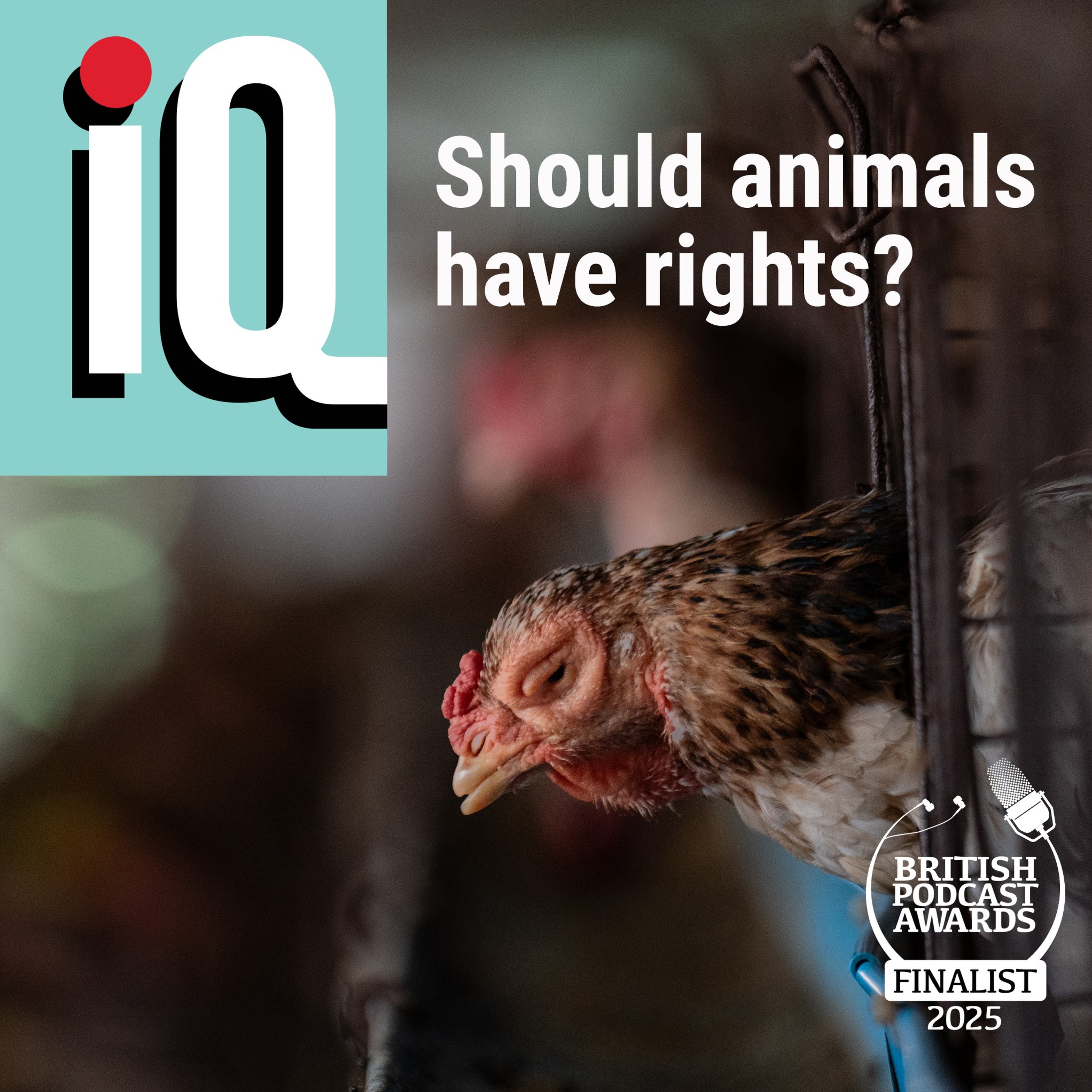
From the pets we love to the animals we rarely see, our relationship with non-human life is full of contradictions. In this episode, we explore what it really means to protect animals and whether welfare is enough, or if rights are the way forward.
Beginning with a simple question inspired by my own dog, Pip, this episode moves from the personal to the global. Through conversations with experts including Jeff Sebo, Jonathan Birch, Jo-Anne McArthur and Carrie Friese, we examine how ideas about sentience, law, and ethics are shaping the future of animal protection.
In...
How can we be more resilient?
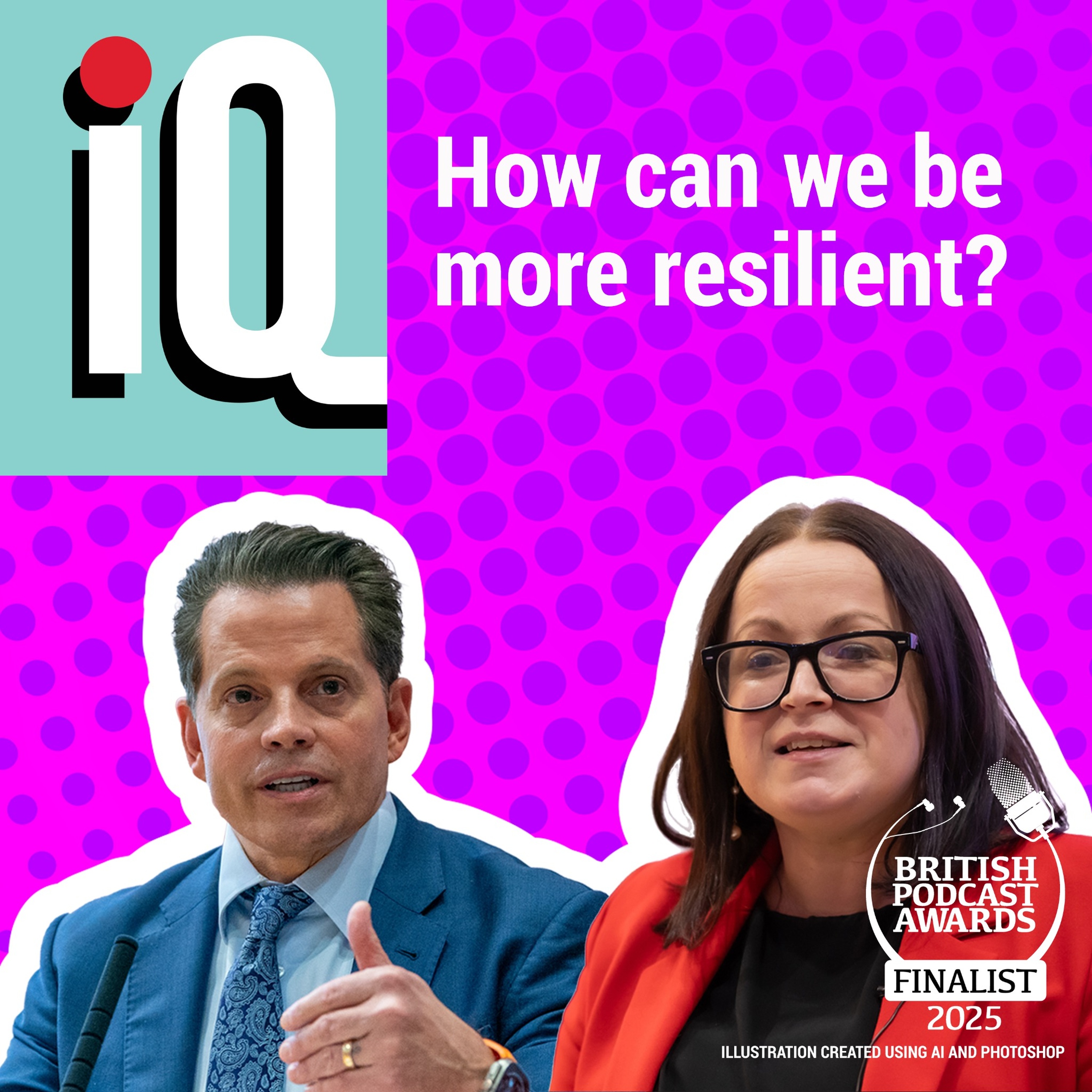
We’ve all had rough days at work. But none of us have been fired by a sitting President after just 11 days in the job. That’s what happened to American financier and LSE alumnus Anthony Scaramucci, whose brief and explosive stint as White House Communications Director in 2017 became global news.
But instead of letting the experience define him, Anthony rebuilt his career, returned to his investment firm SkyBridge Capital, and has since become a prominent political commentator — including co‑hosting The Rest Is Politics: US podcast with the BBC’s Katty Kay.
How do we keep go...
Why are we having fewer children?
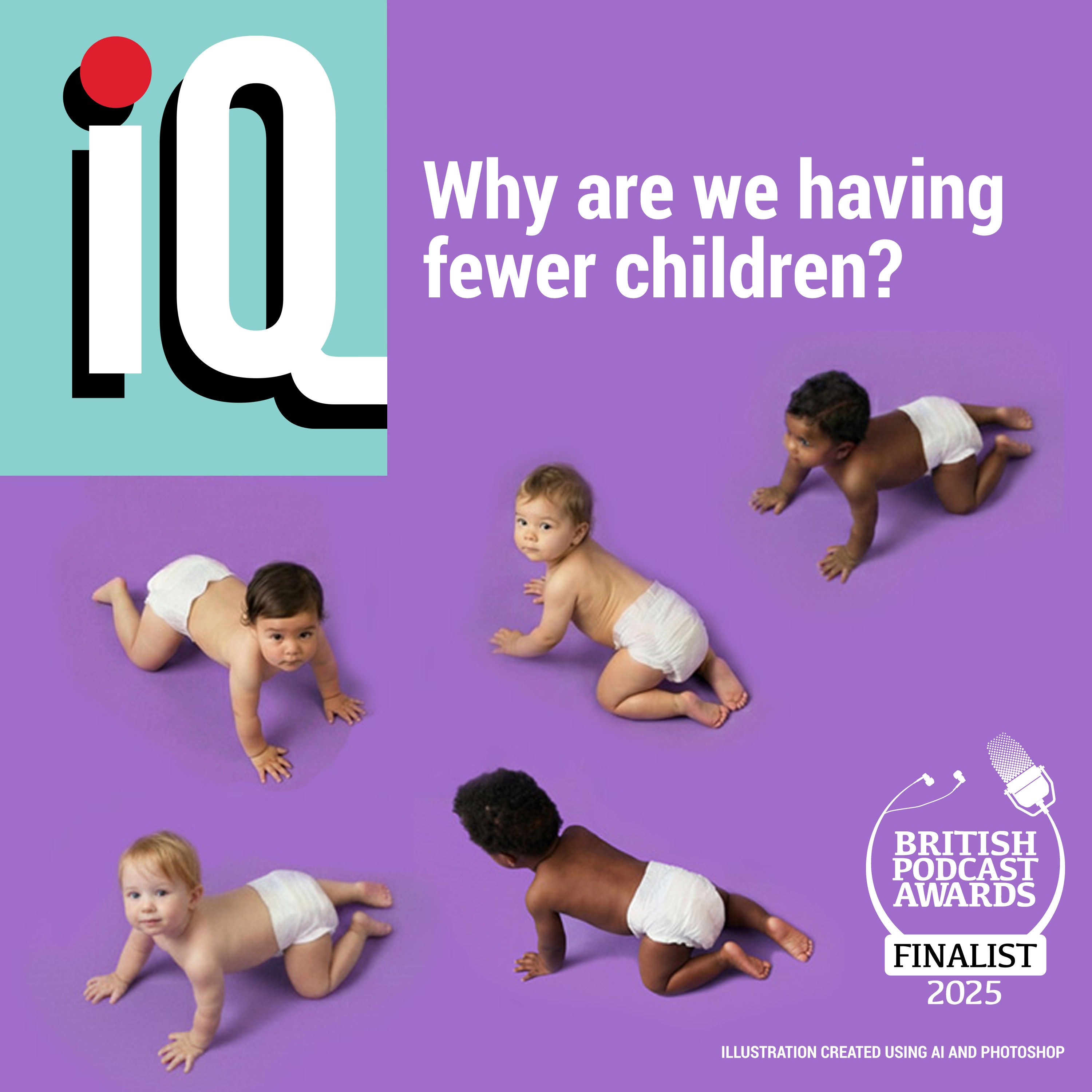
Fertility rates are at record lows around the world, reshaping communities and even forcing some schools to close. In 1950, the global average was around five live births per woman. Today, that number has more than halved to 2.2, and in England and Wales, it’s closer to 1.4. The UK’s falling birth rate reflects what the United Nations has described as ‘a global fertility slump’.
In this episode of LSE iQ, Anna Bevan asks: Why are we having fewer children?
From a closed down primary school in South London to demographic shifts unfolding across the globe, this epi...
Are jobs getting better?
What does the future of work really look like?
LSE: The Ballpark | US-China relations in an era of illiberalism with Dr Scott Kennedy
To talk about the current state of US-China relations, in October 2025 the Phelan US Centre spoke to Scott Kennedy, Senior Adviser and Trustee Chair in Chinese Business and Economics at the Center for Strategic and International Studies
Our Dollar, your problem
Join us for this public lecture where Kenneth Rogoff will discuss his recently released book Our Dollar, Your Problem: An insider's view of seven turbulent decades of global finance and the road ahead.
Power and profit: stresses and futures of market economies
The famous epithet that “the old world is dying, and the new world struggles to be born: now is the time of monsters”, is most often attributed to the Marxist thinker and revolutionary Antonio Gramsci.
Abundant clean energy for all: the technological opportunity
For the past two centuries, growth in energy supply has been fundamental to human progress and economic development. But fossil fuel dependence is driving climate change at an unprecedented scale. Can emerging technologies for producing and using electricity help deliver a sustainable future?
Are revolutions justified?
Ralph Miliband has written poignantly on the limits of parliamentary democracy. But are revolutions justified?
Are jobs getting better?
What does the future of work really look like?
The measure of progress: counting what really matters
Professor Coyle argues that the way we measure the economy—developed in the 1940s—no longer fits today’s realities. The outdated framework underpinning economic statistics distorts how policymakers understand and respond to the digital economy.
How oil rents fuel populist foreign policy
In his inaugural lecture (based on his research with Ferdinand Eibl) Steffen Hertog argues that populist leaders in all but the largest countries can afford radical policies only if they enjoy autonomy from international economic constraints
Women, nature, and 2030: a transformational global climate solution
Climate change is not gender-neutral — not in its impact on women and girls, nor in the solutions women are leading. This lecture will share new research revealing how women’s leadership is providing new pathways to address the climate crisis.
Who trains our doctors? The hidden workers behind medical education
In this lecture, Patricia Kingori examines a striking phenomenon revealed through her documentary Shadow Scholars: highly educated Kenyan scholars ghost writing medical and healthcare assignments for students worldwide.
LSE: The Ballpark | “Is AI a threat or an opportunity for the US?” Master’s students essay competition for 2025
In 2025, the Phelan US Centre ran an essay competition for master’s students with a prompt about AI. In this episode we spoke to the author of the winning essay, Kayode Adeniyi, and the runners-up, Natasha Chávez and Francesca Nicolodi.
Shared prosperity in a fractured world
Join us for this talk by Dani Rodrik where he will talk about his new book, Shared Prosperity in a Fractured World, in which he shows how the nations of the world can achieve all three objectives.
LSE: The Ballpark | How to help left behind regions and workers with Professor Gordon Hanson
The last 40 years have seen a sharp decline in America’s manufacturing industries with growing joblessness in previously prosperous industrial regions. How and why did this happen, and what can be done to help workers in these “left-behind places”?
LSE: The Ballpark | LSE at 130 and the United States with Professor Michael Cox
This year LSE is celebrating its 130th anniversary, and how it has driven change across the world. Much of LSE’s history is linked to the United States, from philanthropic support in the School's early days to famous alumni and American directors.
Living in London: How can we make our communities greener?
The climate crisis affects us all, but young people will have to face its consequences for the longest. Despite this, just 9% of British 18–24-year-olds believe that they significantly input into climate decision-making
Bullying explained by bullies: Lessons from Mexico | Coffee break research at LSE
Although student perspectives on bullying in primary and secondary schools are increasingly studied, few delve into the experiences of those who perpetrate it.
Teaching colonialism in the classroom | Coffee break research at LSE
Social scientists have devised various approaches to studying colonialism, but how can this inform teaching about empire as part of the national curriculum?
LSE: The Ballpark | The promise and peril of Trump’s America First with Professor Charles Kupchan
Since returning to the White House in January 2025, Donald Trump has renewed his “America First” agenda by pursing a transactional approach to diplomacy and a desire to limit the US’ involvement overseas. This in turn is remoulding the global order.
AI, technology and society: shaping the future together
AI is about people – the most sophisticated AI models are trained on trillions of tokens that capture human communication, behaviours, and interactions.
The ins and outs of sustainable supply chains
Presenting insights from over a decade of research, Professor Macchiavello will examine how companies can organise supply chains that are sustainable and resilient, creating value for stakeholders beyond the organisation's boundaries.
What is financial hegemony, and how does it end? | Coffee break research at LSE
Since the mid-20th century, the US government, companies, and financial sector have greatly benefitted from global financial dominance – or ‘‘hegemony’’.
Pharmaceutical policy at a crossroads: perspectives from Europe and the US
Join us for the official launch event of the Pharmaceutical Policy Lab, which also forms part of LSE Health's 30th anniversary celebrations at which our speakers will explore the evolving landscape of pharmaceutical policy.
Common law: a better foundation for Liberalism
In conventional political philosophy, law is understood as consciously created rules that are a necessary mechanism for regulating the excesses of the free market. Although coercive in nature, law is seen as a necessary defence against anarchy.
What's next for quantum computing?
In this video, Dr Seeta Peña Gangadharan explores what quantum computing is, why governments are racing to develop it, and how this emerging technology could reshape power, economics, and everyday life.
Women in economics: progress, challenges and perspectives
Despite decades of progress, women remain underrepresented in the field of economics. This event explores the gender disparities in the discipline and what this means for economics and society.
Economic impacts and legacies of British rule in India
In her latest book An Economic History of India: Growth, income and inequalities from the Mughals to the 21st century, Bishnupriya Gupta builds a new framework for understanding the economic impacts and legacies of British Rule
The politics of hunger in Sudan
The ongoing war in Sudan has produced the world’s largest humanitarian and hunger crisis—devastating a country that could easily feed itself and its neighbours.
Will the next World War be a cyberwar?
Contributor(s): Professor Alexander Evans, Dr Lauren Sukin, Nigel Inkster | It seems every week we hear a new report of a cyber-attack. Recent examples include the hacks on Marks and Spencer's, Jaguar Land Rover, and the Co-op, all causing massive economic disruption. While these attacks seem to have come from cyber criminals working within the UK rather than other nation states, they highlight the destruction that cyber-attacks can wreak. What if those attacks were on our critical infrastructure? Our national grid? Our water supply? Is the UK prepared? Charlotte Kelloway meets former Director of Operations and Intelligence for the British...
Why I am an anarchist: insights into British anarchist thought and politics
Anarchism has had a more powerful impact on political life than most people realise. What are the roots of this radical tradition? How has it had this impact? And what is the contemporary case for embracing it?
Will the next World War be a cyberwar?
It seems every week we hear a new report of a cyber-attack. What if those attacks were on our critical infrastructure? Our national grid? Our water supply? Is the UK prepared?
Should the UK have a wealth tax? The Wealth Tax Commission five years on
In 2020, the Wealth Tax Commission brought together world-leading academics, policymakers and tax practitioners to ‘think big’ about tax policy.
LSE: The Ballpark | AI and deepfakes with Dr Gili Vidan
In the last decade or so, the the public have become aware of “deepfakes”, computer or AI generated fake images. The spread of deepfakes raises questions about truth and authenticity online – can we still trust what we see on screen?
Fiscal threats in a changing global financial system
This lecture will discuss how policymakers should address these challenges by employing a carefully selected mix of tools that spans fiscal, monetary and prudential policy.
America first and the future of Eurasian geopolitics
In this lecture, one of India’s leading strategic thinkers and commentators examines the roots of Donald Trump’s America First agenda and assesses its implications for the future of stability on the Eurasian landmass and its surrounding waters.
